A crochet lace phone case can range from an almost weightless openwork sleeve to a more substantial crossbody pouch with lace used only where it makes sense. The biggest differences are not simply decorative. Mesh size affects exposure and stretch, dimensional flowers can catch on clothing, shell stitches offer more coverage, and granny-square construction changes how the pouch fits around the device.

The 20 ideas below include direct lace and mesh tutorials along with several denser phone-pouch constructions that are useful when you want to introduce lace selectively without sacrificing the base, opening, or strap attachment. Measure your phone with its normal protective case attached and judge every pouch while loaded, not only while lying flat. The focus is on choosing, adapting, and checking the finished object rather than reproducing any creator’s pattern.
Quick List
- Crochet Scallop-Lace Phone Sleeve
- Crochet Diamond-Mesh Crossbody Phone Pouch
- Crochet Floral-Net Phone Bag
- Crochet Shell-Stitch Button Phone Pouch
- Crochet Screen-Window Mesh Phone Sling
- Crochet Granny-Square Flap Phone Case
- Crochet Sunflower Pocket Phone Holder
- Crochet Puff-Heart Convertible Phone Bag
- Crochet Structured Magnetic Phone Pouch
- Crochet Slim Crossbody Phone Bag
- Crochet Soft Mesh Phone Handbag
- Crochet Shell-Compartment Phone Pouch
- Crochet Charging-Hanger Phone Case
- Crochet Textured Button Crossbody Phone Pouch
- Crochet Two-Square Phone Pouch
- Crochet Minimal iPhone Pocket Sleeve
- Crochet Tassel-Closure Phone Bag
- Crochet Spiral-Built Phone Bag
- Crochet Awareness-Ribbon Phone Case
- Crochet Simple Pocket-Style Phone Bag
How Open Should a Crochet Lace Phone Case Be?
Openwork creates the airy appearance that makes a lace phone pouch distinctive, but the amount and location of that open space matter. Large mesh openings expose more of the device and can catch on jewelry, hardware, keys, or objects inside another bag. Smaller shells, clustered lace, and granny-style openings provide more visual coverage while retaining a decorative rhythm.
Think about where the case will travel. A sleeve that stays inside a larger handbag can tolerate a more delicate fabric than a phone pouch worn independently across the body. You can also mix densities: use firmer crochet along the base, sides, opening, and strap anchors while reserving lace for the center panels. This keeps the decorative feature visible without asking an especially open stitch pattern to handle every structural job.
Check Phone Fit, Strap Stretch, and Closures Together
Measure the actual phone with its everyday protective case attached. Width and height are only part of the fit; thickness also determines how much the crochet stretches when the device goes inside. A lace panel that looks neat when empty may spread dramatically once loaded.
Crossbody straps deserve the same test. Crochet cords can lengthen under weight depending on fiber, construction, and strap width, so assess the wearing position with the phone inside. Closures should also be positioned for the filled pouch. A button loop, flap, or magnetic fastener that aligns perfectly on an empty case may pull differently once the device expands the body. If you add a lining behind lace, remember that the fabric becomes part of the design because it will show through the openings.
Crochet Scallop Lace Phone Sleeve

This narrow sleeve is the clearest choice when you want lace itself to define the finished phone case. Cocona Crochet’s tutorial is specifically presented as a lace phone pouch, with decorative openings covering the body instead of appearing as a small accent. That makes the construction especially relevant for a lightweight case intended to showcase stitch definition.
Because the decorative fabric remains visually exposed, yarn character matters more here than on a heavily textured pouch. A smooth surface will show the spaces and edges clearly, while a very fuzzy yarn can soften the pattern until much of the lace effect disappears.
Keep the Lace Pattern Visible
A phone-sized surface has limited room for competing details. If the lace already creates scalloped or repeating shapes, adding several flowers, tassels, and contrasting trims can make those openings difficult to read. Decide whether the stitch pattern or an embellishment should be the focal point. For a true lace-first case, cleaner edging and restrained decoration usually leave more visual space for the openwork.
Test the Upper Edge While Filled
The top of an openwork sleeve can behave differently once a phone stretches the body. Insert the real device and check whether the opening remains reasonably close to its sides. If the upper edge spreads noticeably, consider whether the construction already offers sufficient restraint before adding an optional closure. Do not judge security solely from the empty sleeve.
Original Tutorial and Creator Credit
Creator: Cocona Crochet
Crochet Diamond Mesh Crossbody Phone Pouch
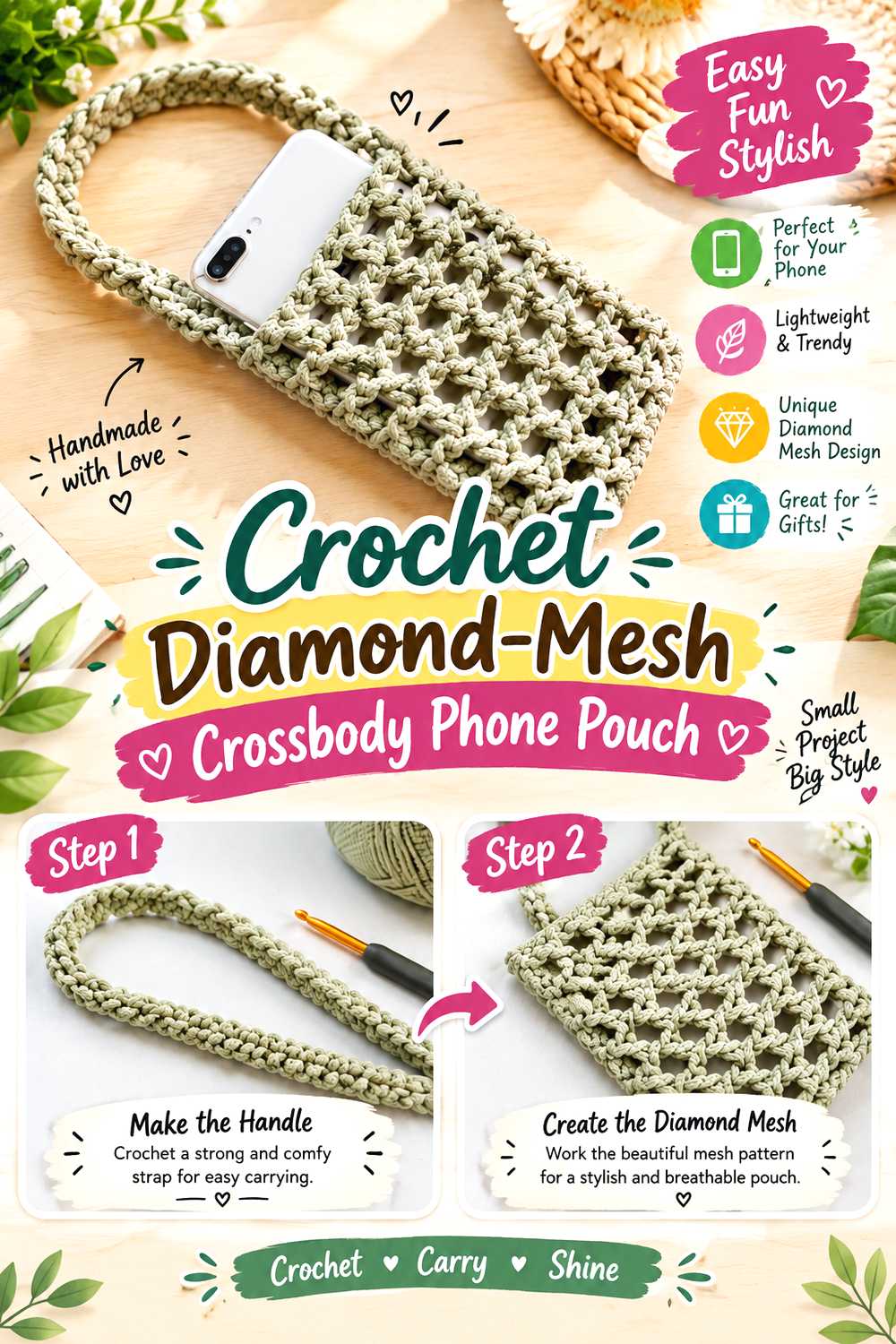
A mesh crossbody pouch moves the lace concept away from a fitted sleeve and toward a miniature bag. Toh Handmade’s tutorial provides a strong reference for a phone-sized mesh body with a separate carrying strap. The repeating openings make the case look visually lighter than a solid pouch even when the overall silhouette remains a straightforward rectangle.
This direction suits someone who wants an obvious openwork effect from a distance. It also makes fit especially important: when the phone pushes outward, the mesh openings can enlarge, changing both the appearance and the amount of device surface left exposed.
Mesh Expansion Is Part of the Fit
Do not measure this style only while it lies empty on a table. Load the pouch and look at the shape of the openings near the middle and bottom. If those spaces distort dramatically compared with the upper section, the device may be asking the fabric to stretch farther than intended. That changes the visual balance as well as containment.
Choose Strap Length by Wearing Position
A short phone strap, shoulder strap, and full crossbody strap create very different accessories. Decide where you want the phone to sit before treating a source strap length as a target. If you lengthen a crochet strap, test it with the phone loaded because the additional length gives flexible yarn more opportunity to stretch.
Original Tutorial and Creator Credit
Creator: Toh Handmade
Crochet Floral Net Phone Bag
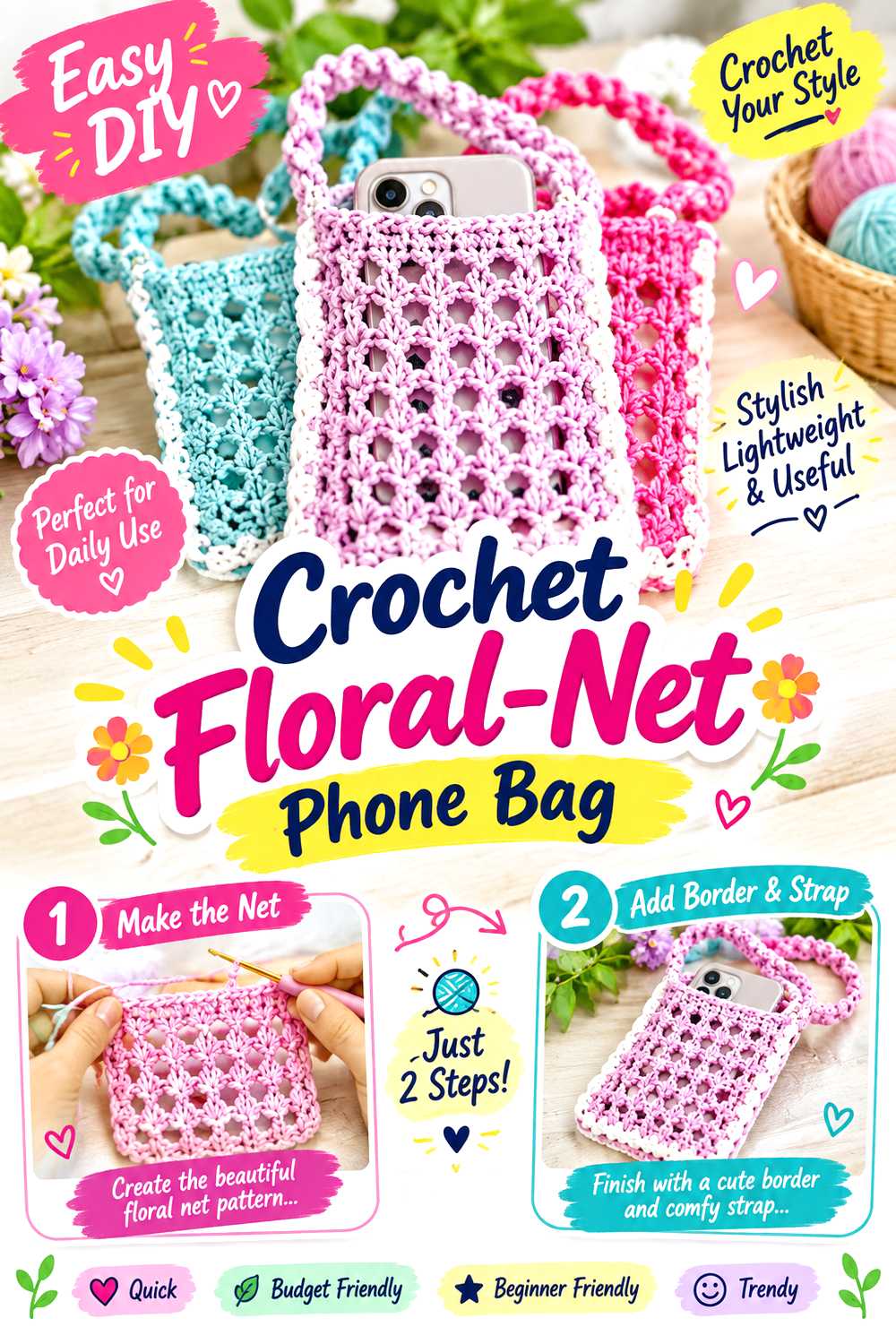
Instead of allowing empty space to provide all the decoration, this idea combines a net-style body with floral detail. Crochet ByLarissa’s phone-bag tutorial gives the mesh a more ornamental character, making it useful inspiration for anyone who wants lace and small motifs in the same accessory.
Flowers create a different design problem from flat lace: their raised edges can brush against clothing and nearby objects. That makes placement more important than simply deciding how many flowers look attractive while the pouch is flat. Keep the phone-sized scale in mind so the floral layer enhances the mesh rather than covering nearly all of it.
Give Dimensional Flowers Low-Friction Positions
Hold the finished or nearly finished pouch where you intend to wear it before committing to raised embellishments. A flower directly beneath a strap connection or on the side facing the body may receive constant rubbing. Moving dimensional details toward the outward-facing center can keep the feature more visible and reduce unnecessary friction.
Let Negative Space Surround the Motifs
Floral lace is most effective when flowers and open areas can both be seen. If you cover every available section with motifs, the net background loses much of its role. Try to maintain a clear hierarchy: one focal floral area, smaller supporting details if needed, and enough uninterrupted mesh for the openwork construction to remain obvious.
Original Tutorial and Creator Credit
Creator: Crochet ByLarissa
Crochet Shell Stitch Button Phone Pouch
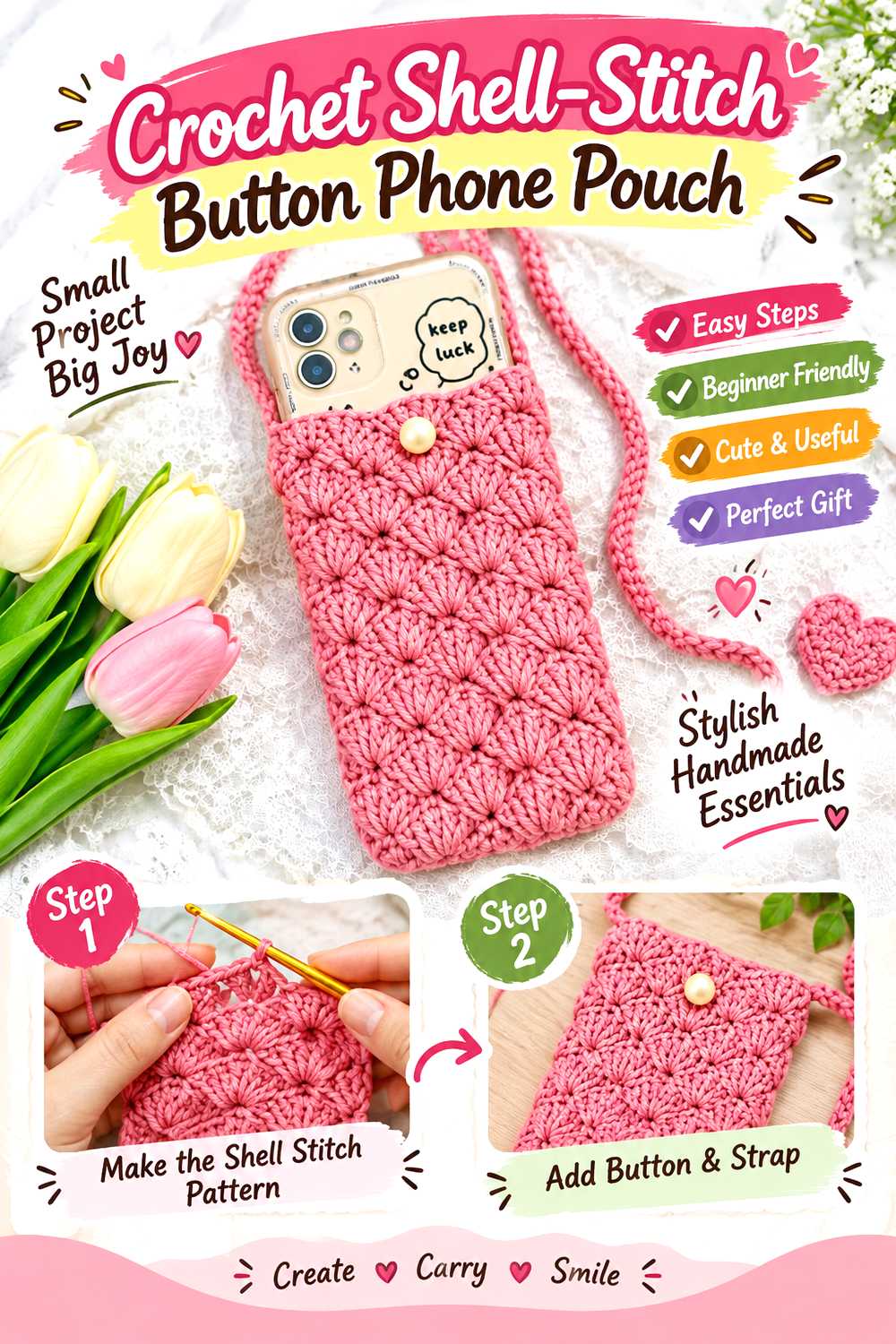
Shell stitches offer a useful middle ground between fine lace and solid crochet. Vivi Crochet’s phone-pouch tutorial uses shell-based texture, giving the surface decorative curves while retaining considerably more coverage than an unrestricted net. The result feels closer to a traditional protective pouch while still producing a lace-inspired visual rhythm.
A button closure also gives the small front surface a defined focal point. This design makes sense when you like open decorative crochet but do not want the phone to remain as visible through the body as it would in large mesh.
Shells Can Make a Narrow Case Look Fuller
Fan-shaped repeats spread visually across the pouch. On such a small item, multiple yarn colors can make each repeat compete for attention, while one main shade places more emphasis on the stitch relief. Before adding stripes or frequent color changes, consider whether the shell geometry itself already supplies enough movement.
Position the Button for the Loaded Pouch
The closing point should be evaluated with the phone inserted. Filling the case can shift the top edge and change how far a loop needs to reach. If you alter yarn thickness or phone size, avoid copying the original button placement mechanically. Mark the most natural closing position on your own filled pouch first.
Original Tutorial and Creator Credit
Creator: Vivi Crochet
Crochet Screen Window Mesh Phone Sling
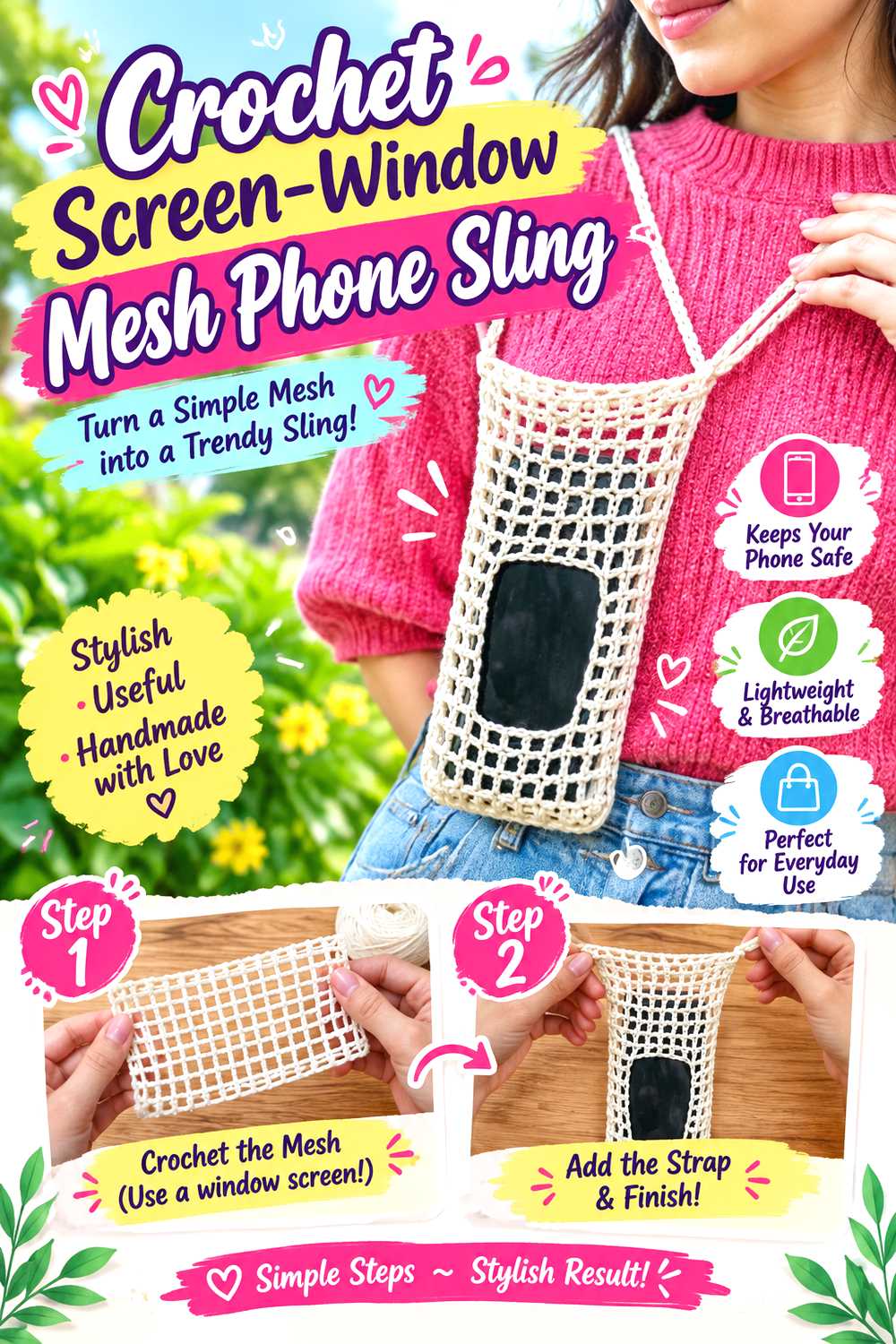
Here, openwork becomes functional rather than purely decorative. Viky Pace’s phone-bag concept incorporates a mesh window intended to leave the smartphone screen visible and accessible. That makes the size and location of the opening much more important than they would be in an all-over decorative lace repeat.
This direction is one of the most distinctive options in the collection because the phone itself becomes part of the appearance. It is also less forgiving of casual resizing. Different devices and protective cases have different proportions, so use the actual phone as the template for evaluating the visible area.
A Screen Window Requires Device-Specific Alignment
Decorative mesh can shift slightly without causing a major problem. An intentional viewing or access window cannot. Insert the phone and check how the opening relates to the display before treating another device’s proportions as transferable. A different case thickness can also change where the screen sits relative to the front crochet panel.
Preserve Fabric Around the Window
Making the central opening larger does not automatically make the case more useful. The crochet surrounding it still needs to contain the phone. If you adapt the shape, watch the side and lower borders for excessive stretching or curling. Enough stable material should remain around the opening for the project to function as a pouch rather than a loose frame.
Original Tutorial and Creator Credit
Creator: Viky Pace
Crochet Granny Square Flap Phone Case
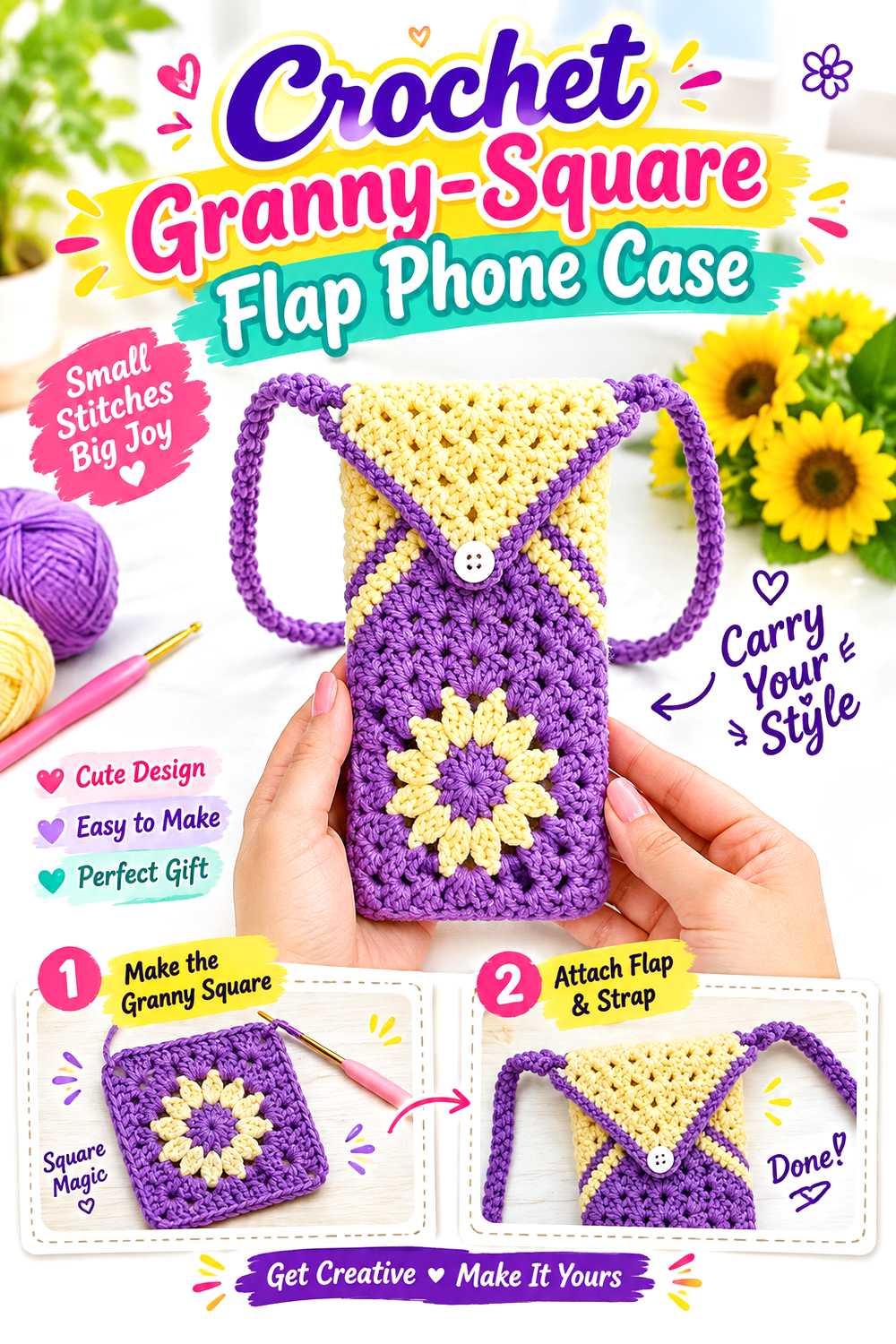
Classic granny openings create lace-like negative space without requiring an all-over lace stitch. Coc Tips & Tricks demonstrates a phone pouch built from granny squares and includes a flap, button closure, and adjustable-strap concept. Those additions make the finished project feel more bag-like than a simple open sleeve.
This route works especially well for crocheters who enjoy motif projects. Instead of shaping one continuous rectangle, the motifs establish the proportions, which means their settled dimensions become one of the most important planning measurements.
Square Size Controls the Case Proportions
Measure the completed motif before deciding it is suitable for your device. A square that is too narrow should not be forced around the phone simply because crochet can stretch. Doing so can widen the motif openings and distort its corners. Borders and joining also affect the final usable space, so compare the complete panel rather than only its center.
Judge Flap Reach After Inserting the Device
A flap can appear generous when the case is empty but sit noticeably higher after the phone expands the pouch. Before fixing a closure point, load the case and let the fabric settle. The flap should reach its intended position without requiring the phone body to be squeezed excessively or the motif panel to be pulled out of shape.
Original Tutorial and Creator Credit
Creator: Coc Tips & Tricks
Crochet Sunflower Pocket Phone Holder

A sunflower granny square turns the open motif into a single statement feature instead of covering the entire case with repeated lace. Emnash Threads combines the floral square with a bow and phone-holder construction, producing a layered accessory that has more decorative depth than a plain rectangular pouch.
This concept works when you want the phone case to read as a miniature fashion accessory. Because a strong sunflower center already attracts attention, the most successful adaptations do not need embellishment on every remaining inch of crochet.
Keep the Sunflower as the Visual Anchor
A radiating flower already contains several colors, shapes, and directional lines. Adding multiple competing appliqués around it can make the phone-sized surface look crowded. Decide which feature should be noticed first. If that is the sunflower, use the surrounding border, bow, or edging as support rather than turning every section into an independent focal point.
Treat an Added Pocket as Extra Bulk
A secondary pocket changes more than storage. It creates another layer against the phone and may alter how the holder bends. Decide what the pocket is genuinely intended to carry before sizing it. Stretchy crochet can tempt you to overfill a small compartment, but added thickness can push against the device and distort the front motif.
Original Tutorial and Creator Credit
Creator: Emnash Threads
Crochet Puff Heart Convertible Phone Bag
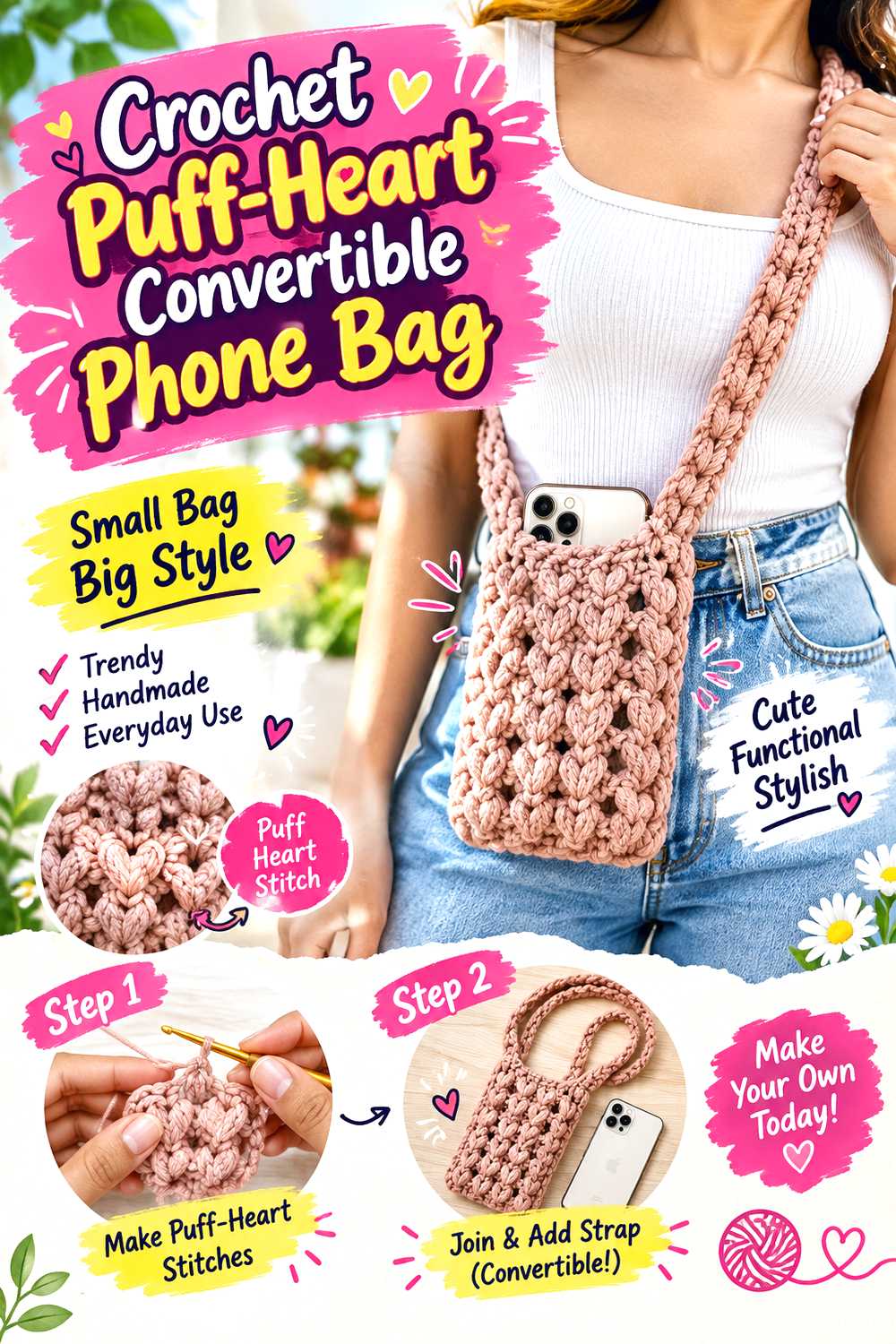
CozyCreativeCrochets uses raised puff texture for a cell-phone bag whose finished concept can be worn in several positions. It is not fine traditional lace, but the small gaps around the puff motifs offer a useful alternative when you want decorative negative space with more visual weight than netting.
The ability to change how the pouch is carried also makes the strap more important than on most sleeves. A bag intended to shift between crossbody, sling, or waist-level use needs to be assessed at the carrying positions you actually expect to use.
Puff Texture Adds Thickness and Friction
Raised stitches create a dimensional surface. That can make the bag feel visually substantial, but it also means the pouch may rub more against clothing or other contents in a larger bag. If you want a flatter profile, consider concentrating the most dimensional texture on the outward-facing panel rather than automatically repeating it everywhere.
Plan the Carry Mode Before Refining the Strap
A comfortable crossbody position is different from a shorter sling or waist-level position. Load the pouch with your phone and evaluate the strap at each intended length. Flexible crochet may hang lower once weighted. If a convertible setup matters, prioritize an adjustment method that remains accessible and does not place excessive pull on delicate corners.
Original Tutorial and Creator Credit
Creator: CozyCreativeCrochets
Crochet Structured Magnetic Phone Pouch
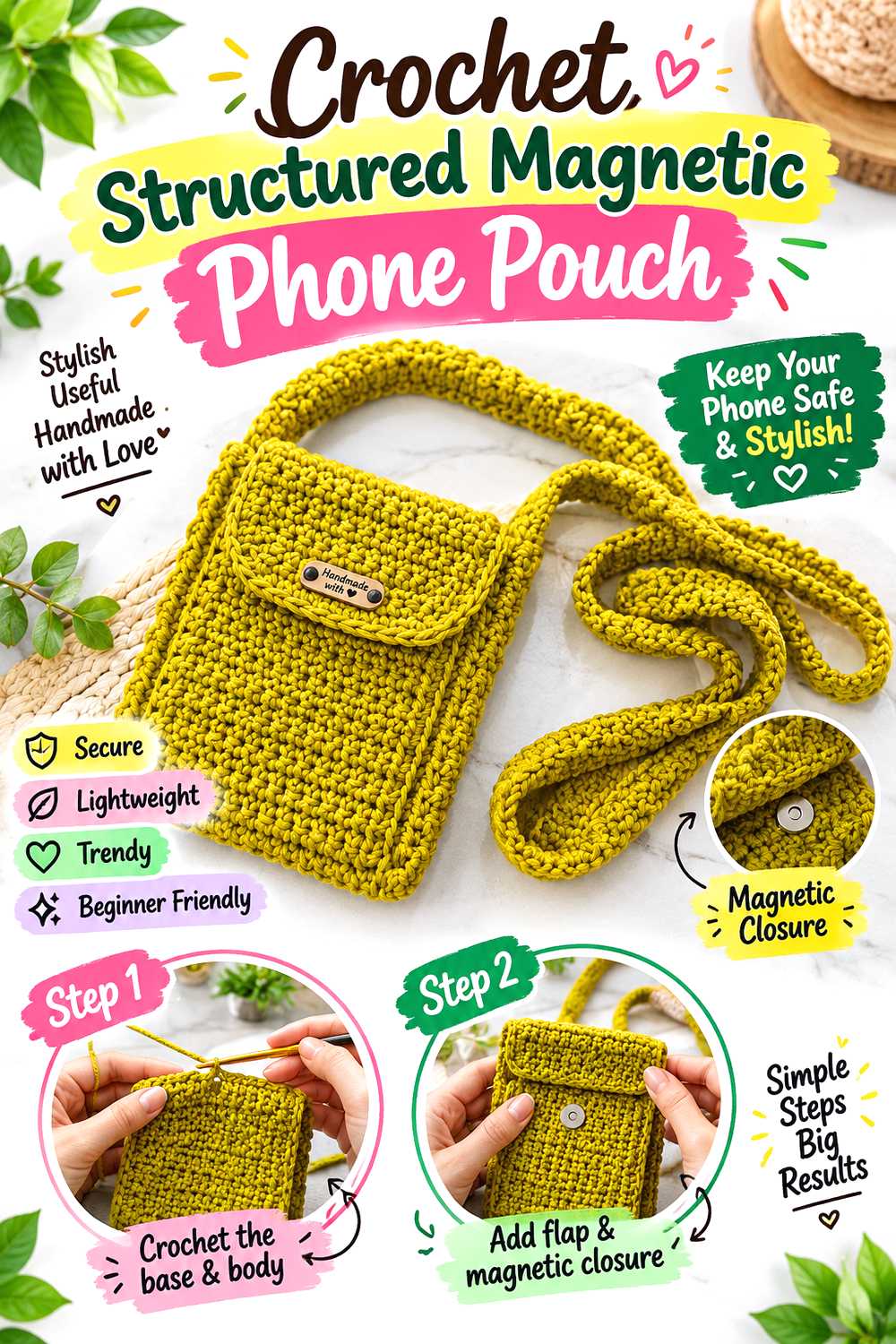
A magnetic closure gives a phone pouch a cleaner top edge than a large button or drawstring. Blog do crochê’s phone-holder tutorial provides a useful structured reference for this approach. For a lace-focused adaptation, the key idea is not to turn every part into openwork: a denser attachment zone can be valuable where hardware needs support.
This is a good option for readers who like delicate crochet visually but want the opening to look more controlled. Think of lace as a panel or decorative field surrounded by firmer crochet rather than as a requirement for every structural section.
Give Magnetic Hardware a Stable Base
A magnetic fastener repeatedly pulls two points toward each other. Very open crochet may distort if that force is concentrated directly in a sparse section. When adapting the concept, look for a denser border or reinforced portion where the hardware can sit without stretching the decorative spaces every time the case opens.
Use Lace Selectively Instead of Everywhere
Selective openwork can create a stronger balance between appearance and function. A firm lower body can support the phone while a decorative lace panel supplies the airy look. This approach also gives you more freedom to keep strap anchors and closure areas dense without sacrificing the overall lace character of the finished accessory.
Original Tutorial and Creator Credit
Creator: Blog do crochê
Crochet Slim Crossbody Phone Bag
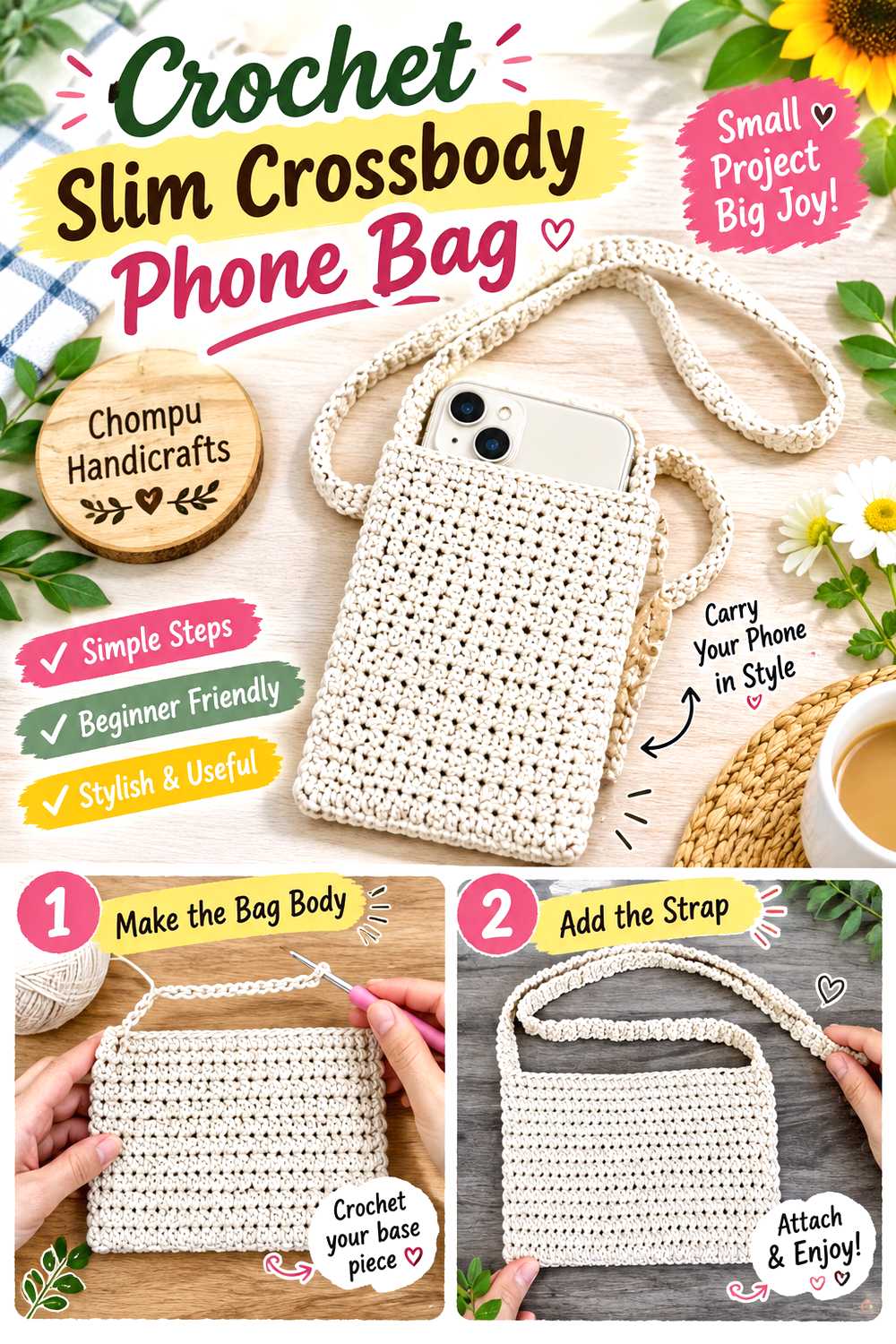
Chompu Handicrafts’ simple phone-bag construction is a useful starting point when you want a narrow crossbody silhouette but prefer to choose your own lace treatment. Rather than relying on large motifs, this concept keeps attention on the compact rectangular shape and long strap.
A restrained silhouette gives you several adaptation routes. You might keep the base and upper border relatively firm while placing a small openwork band in the center, or use the straightforward shape as a test bed for a lace repeat whose finished dimensions you have already sampled.
Sample Lace Before Replacing a Dense Body Stitch
Two stitch patterns worked from the same starting width do not necessarily produce the same finished pouch. Lace can change horizontal spread, vertical growth, and elasticity. Before substituting openwork into a phone-bag construction, make a sample and compare how far the openings expand with gentle tension rather than assuming the original proportions will remain unchanged.
Keep the Base More Controlled Than the Center
The bottom corners take the device’s weight when the pouch hangs vertically. If you are adapting a dense phone-bag tutorial, retaining a firmer base while moving lace higher on the body can make the final shape more predictable. It also prevents the lower openings from becoming the most stretched section whenever the phone is carried.
Original Tutorial and Creator Credit
Creator: Chompu Handicrafts
Crochet Soft Mesh Phone Handbag
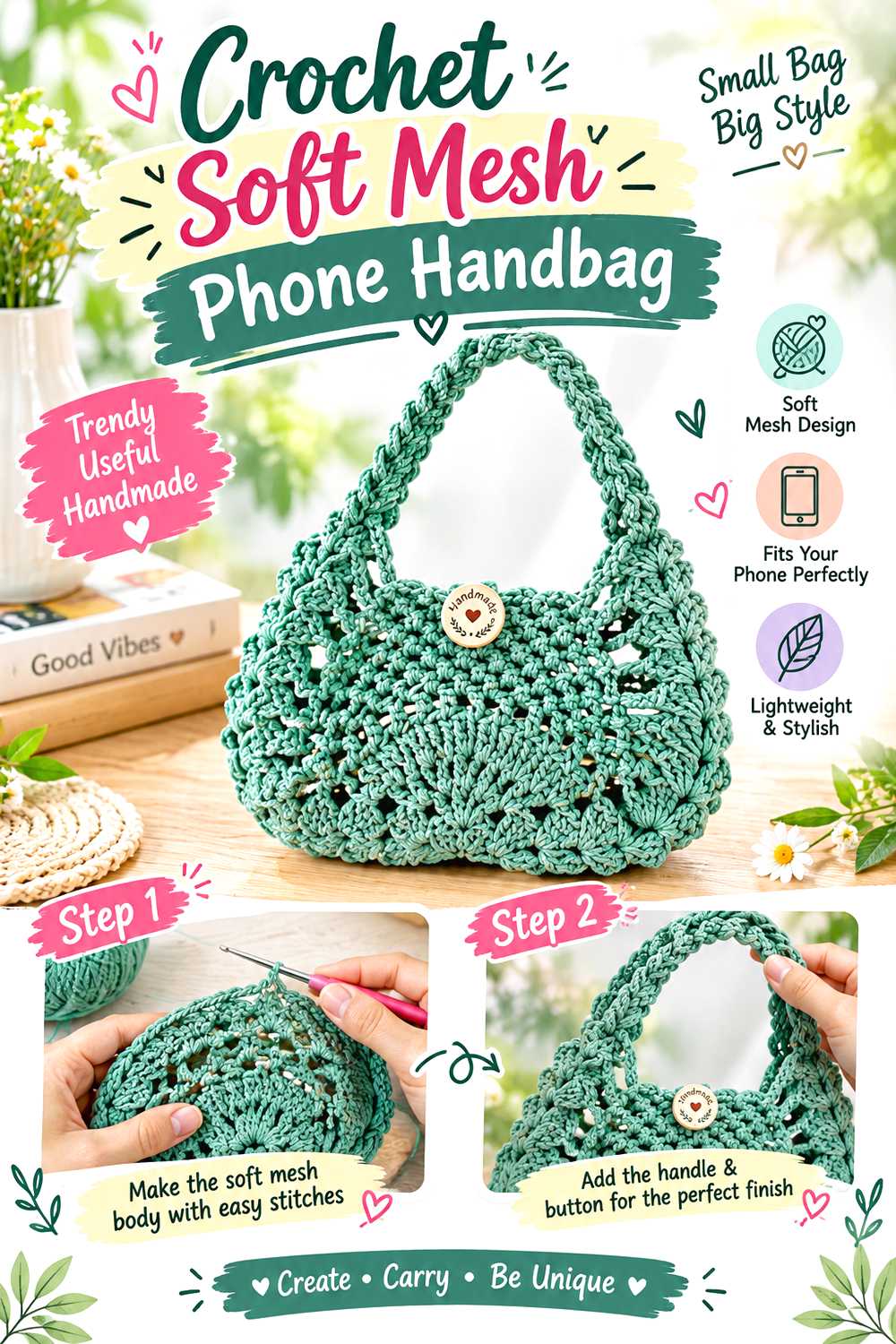
MIMI Handmade’s mesh phone bag uses openwork across a compact handbag-style form, making it a strong choice when you want more room around the phone than a fitted sleeve provides. The repeated mesh keeps the body visually light while the recognizable mini-bag silhouette makes it feel like an accessory in its own right.
This format can also accommodate a card case or similarly sized essential if the finished pouch allows it, but open mesh demands caution with small loose objects. Anything substantially narrower than the openings can work its way through or snag.
Compare Mesh Openings With What You Plan to Carry
A phone may be far larger than every opening, but coins, jewelry, keys, or small cosmetics introduce different containment needs. If you expect the pouch to hold more than the phone, compare those objects with the stretched mesh before relying on the bag. A lining or internal small pouch can change the function, although it will also change the transparent look.
A Lining Becomes Part of the Color Design
With an open mesh body, lining fabric is highly visible. Treat it as a deliberate background rather than an invisible structural addition. High contrast will make every opening more obvious; a closely related tone creates a quieter effect. Check the combination with the phone inside because the device itself may also show through unlined sections.
Original Tutorial and Creator Credit
Creator: MIMI Handmade
Crochet Shell Compartment Phone Pouch
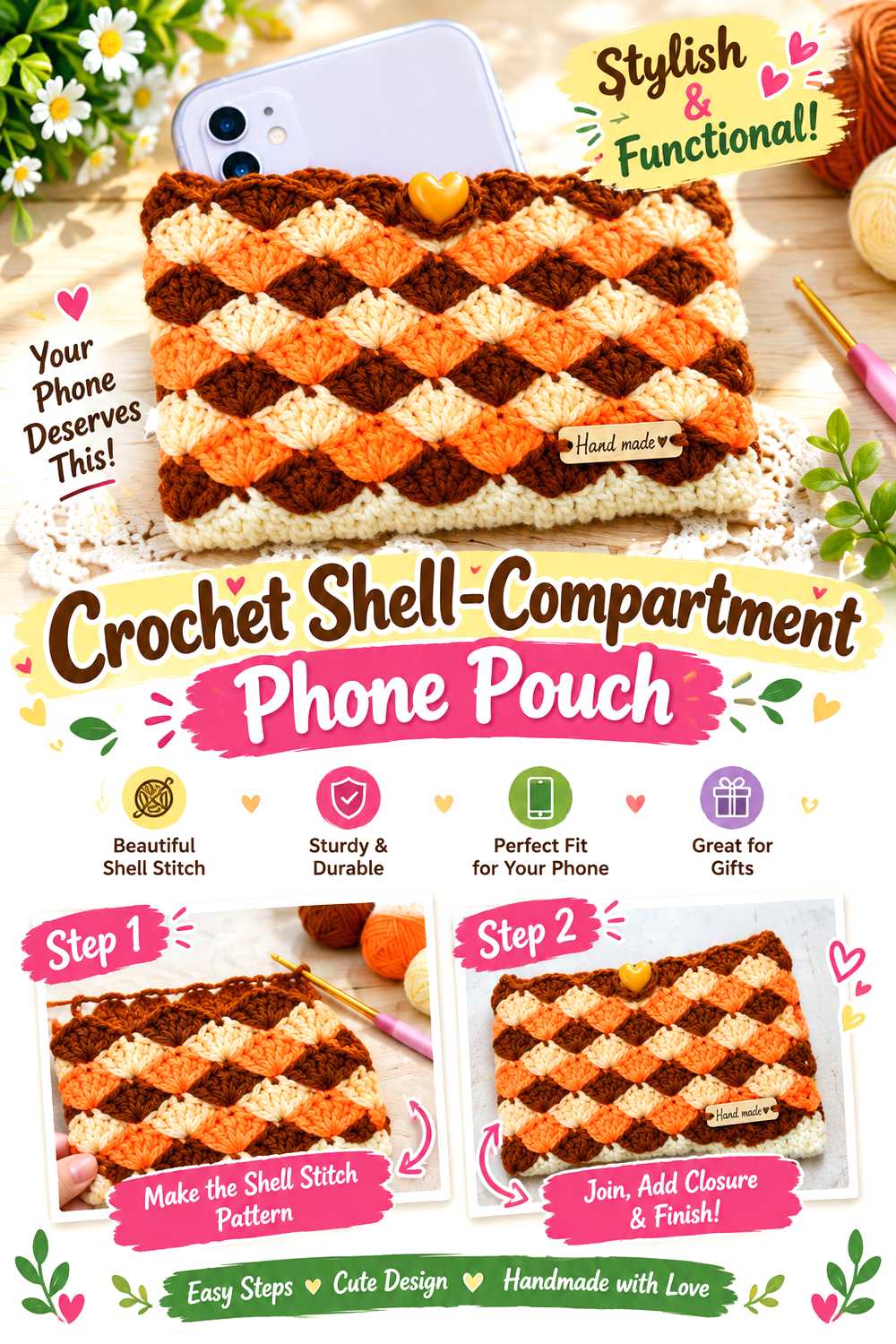
Sharon Lee’s phone-pouch tutorial combines shell stitch with separate storage compartments. That immediately distinguishes it from phone-only sleeves: the project is designed around organizing the device alongside another small section rather than simply wrapping the phone.
Shell texture also supplies a denser lace effect, so this idea works well for readers who want decorative crochet without extremely large openings. The important planning question is how the extra compartment changes bulk and pressure against the device once both sections contain something.
Extra Compartments Need Independent Fit Checks
Do not treat a second pocket as free space. Place the phone in its intended section, then add only the type of item you expect to carry in the other. Watch whether the pouch bows, twists, or presses contents firmly together. A compartment that stretches enough to accept an object is not automatically comfortable or practical when worn.
Shell Fabric Can Balance Coverage and Decoration
Compared with coarse mesh, shell repeats create a more covered surface while still showing curved, lace-like structure. That makes them useful when you want decorative texture but prefer less exposed device surface. If adapting the color scheme, decide whether you want the shell shapes emphasized by contrast or unified into one continuous textured field.
Original Tutorial and Creator Credit
Creator: Sharon Lee
Crochet Charging Hanger Phone Case
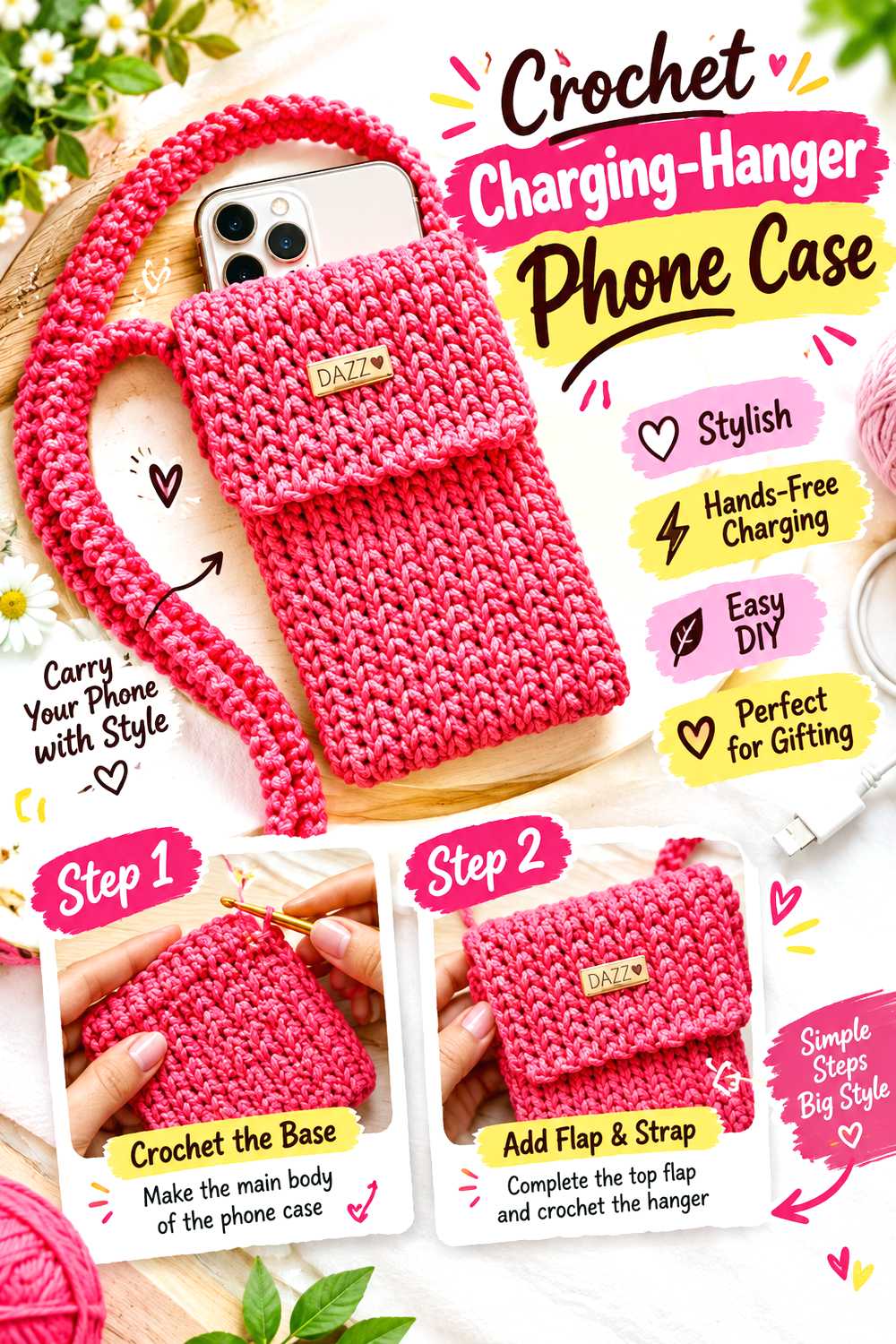
Dazz Crochê’s cell-phone pouch is designed around a charging-use concept, giving this idea a completely different purpose from a crossbody carrier. Rather than emphasizing a long wearable strap, the form provides a useful reference for a phone holder that interacts with the charging area.
For a lace-inspired adaptation, decorative openwork is better treated as secondary to the functional portions of the holder. Any section that supports the device or sits around charging hardware should be evaluated for stability first. The case should never interfere with proper plug seating, cable condition, or device ventilation.
Keep Decorative Openwork Away From Critical Support
If a phone holder depends on a specific opening or load-bearing section while charging, changing that area to very loose lace may alter how the device sits. Place decorative stitches where they will not undermine the support geometry. Function should determine which zones remain firm and which can safely become more open.
Check the Setup With the Actual Charger
Charging bricks, cables, cases, outlet orientations, and devices vary. Do not assume a holder demonstrated with one setup will interact identically with yours. Confirm that the phone sits securely, the connector is not bent or pulled sideways, and the crochet is not interfering with the charger before treating the project as an everyday charging solution.
Original Tutorial and Creator Credit
Creator: Dazz Crochê
Crochet Textured Button Crossbody Phone Pouch
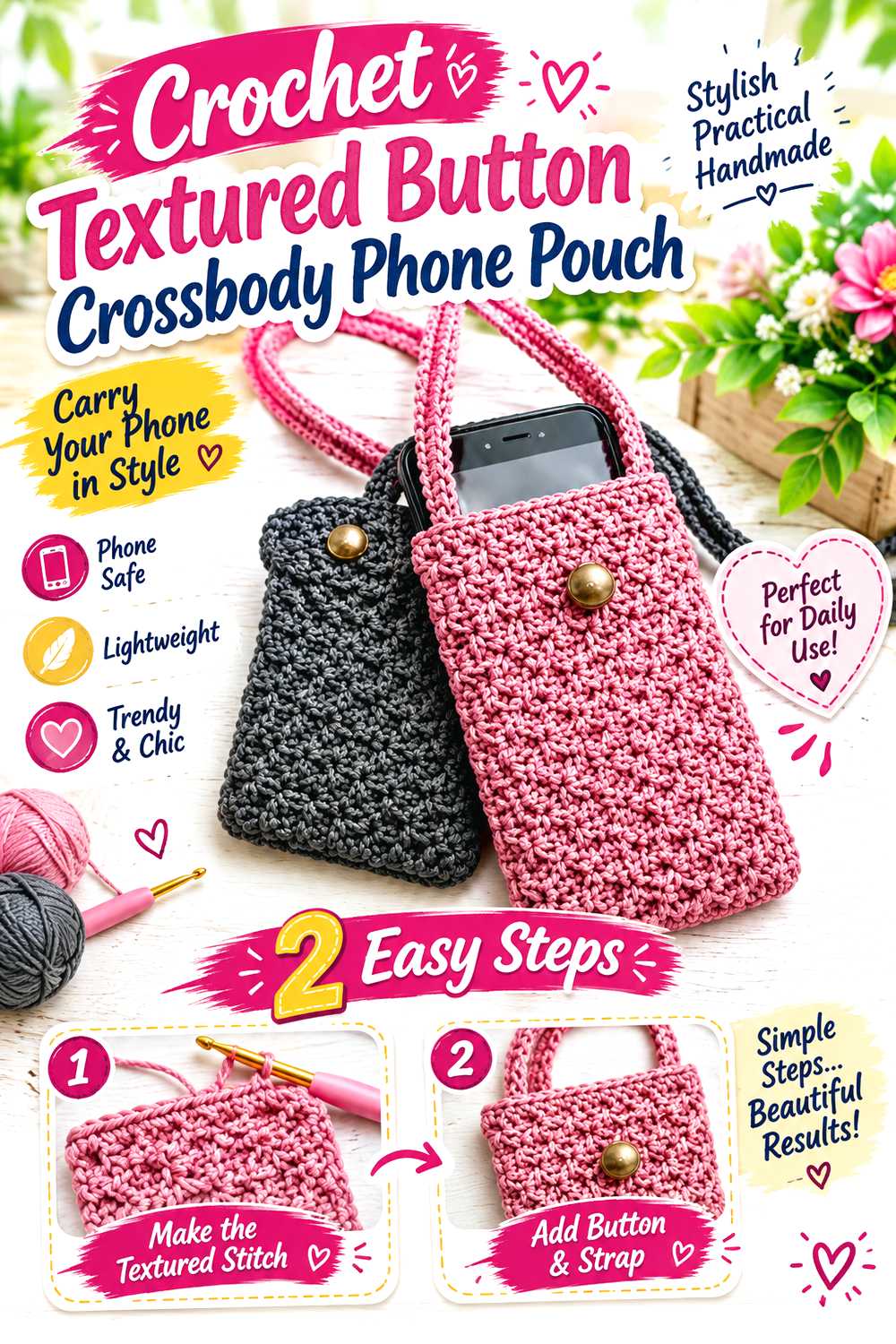
Silvana Crochet Studio’s crossbody phone pouch uses a textured body, button closure, and carrying strap. It is a denser construction reference rather than a pure lace case, which makes it useful if you want openwork only in selected areas while retaining a more controlled opening and strap foundation.
The compact crossbody arrangement gives you several ways to introduce lace without rebuilding the entire design. A narrow open band, a decorative upper panel, or a lace overlay can create the desired visual lightness while leaving high-stress attachment areas more substantial.
Separate Decoration From Strap Anchoring
Strap corners receive repeated pull whenever the phone moves. If you substitute openwork, avoid placing the weakest-looking spaces exactly where the strap connects. Keeping a compact, firm anchor zone allows lace to begin farther inward, where it can remain decorative rather than becoming the main load-bearing structure.
Let the Button Interrupt a Stable Border
A button closure is easier to manage when the loop and button interact with an edge that does not spread unpredictably. If you want lace near the top, consider framing it with a more stable finishing section. Test the closure after filling the pouch so you can see whether the opening shifts under the device’s thickness.
Original Tutorial and Creator Credit
Creator: Silvana Crochet Studio
Crochet Two Square Phone Pouch
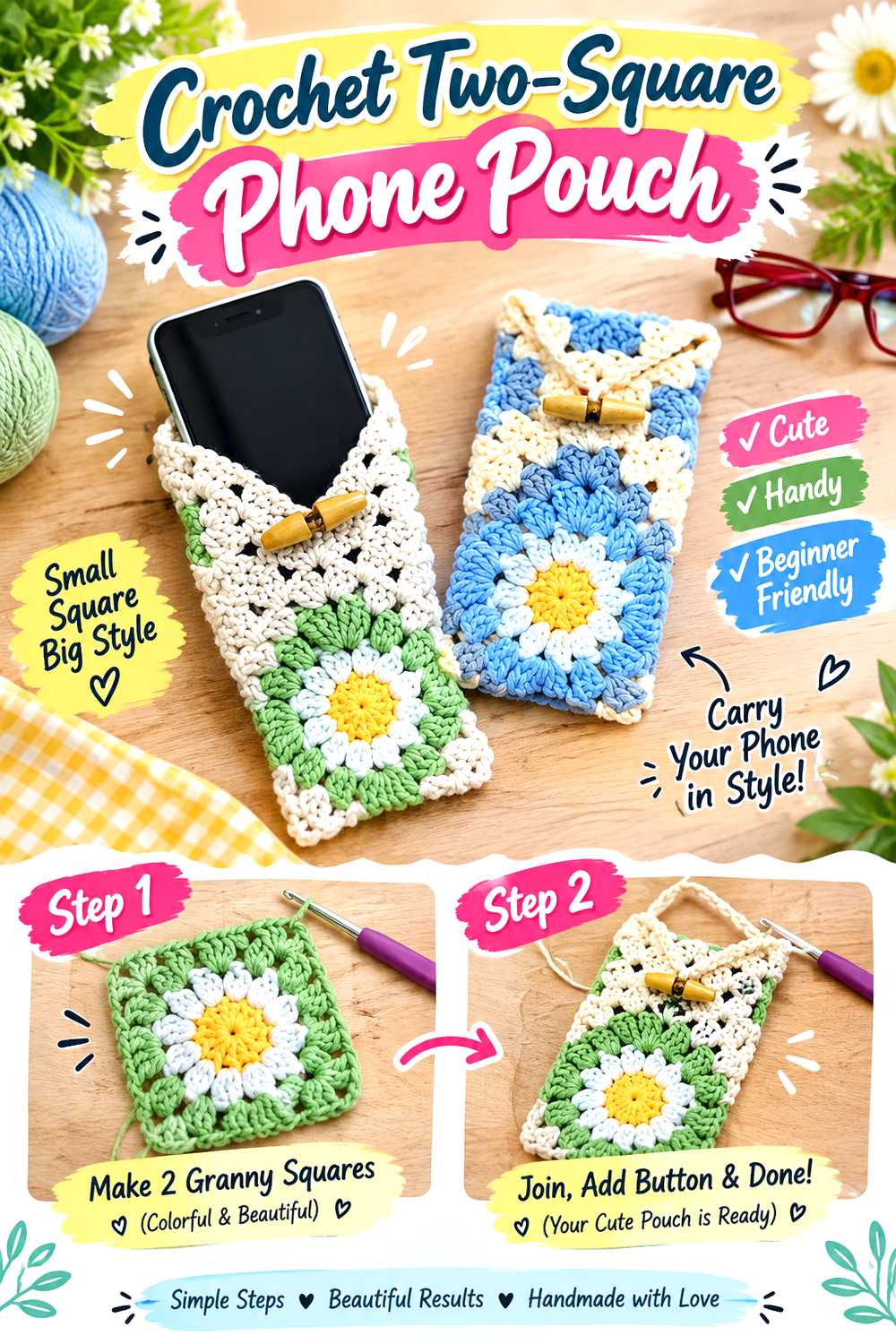
Crochet Musings builds a phone pouch around two granny squares, making the motifs themselves the major structural components. This is a useful direction for anyone who wants the classic holes and color changes of granny crochet without constructing a larger grid of many motifs.
Only two main squares also make visual planning more deliberate. Their centers face outward, so color placement and motif direction remain highly visible. More importantly, both motifs need to settle to compatible dimensions before they are joined around a device.
Match Both Motifs Before Assembly
Two squares made from the same instructions can still differ slightly because of tension, finishing, or yarn behavior. Compare them before joining. If one is noticeably larger, forcing their edges together can create rippling or a twisted pouch. Resolve the dimensional difference first rather than relying on the seam to hide it.
Use the Phone to Judge Motif Ease
The square should surround the device without requiring aggressive stretching. Measure the phone with its protective case and compare that with the usable width created after joining and edging. If the granny openings spread dramatically when the phone goes in, the project may need a different motif scale rather than a tighter seam.
Original Tutorial and Creator Credit
Creator: Crochet Musings
Crochet Minimal iPhone Pocket Sleeve
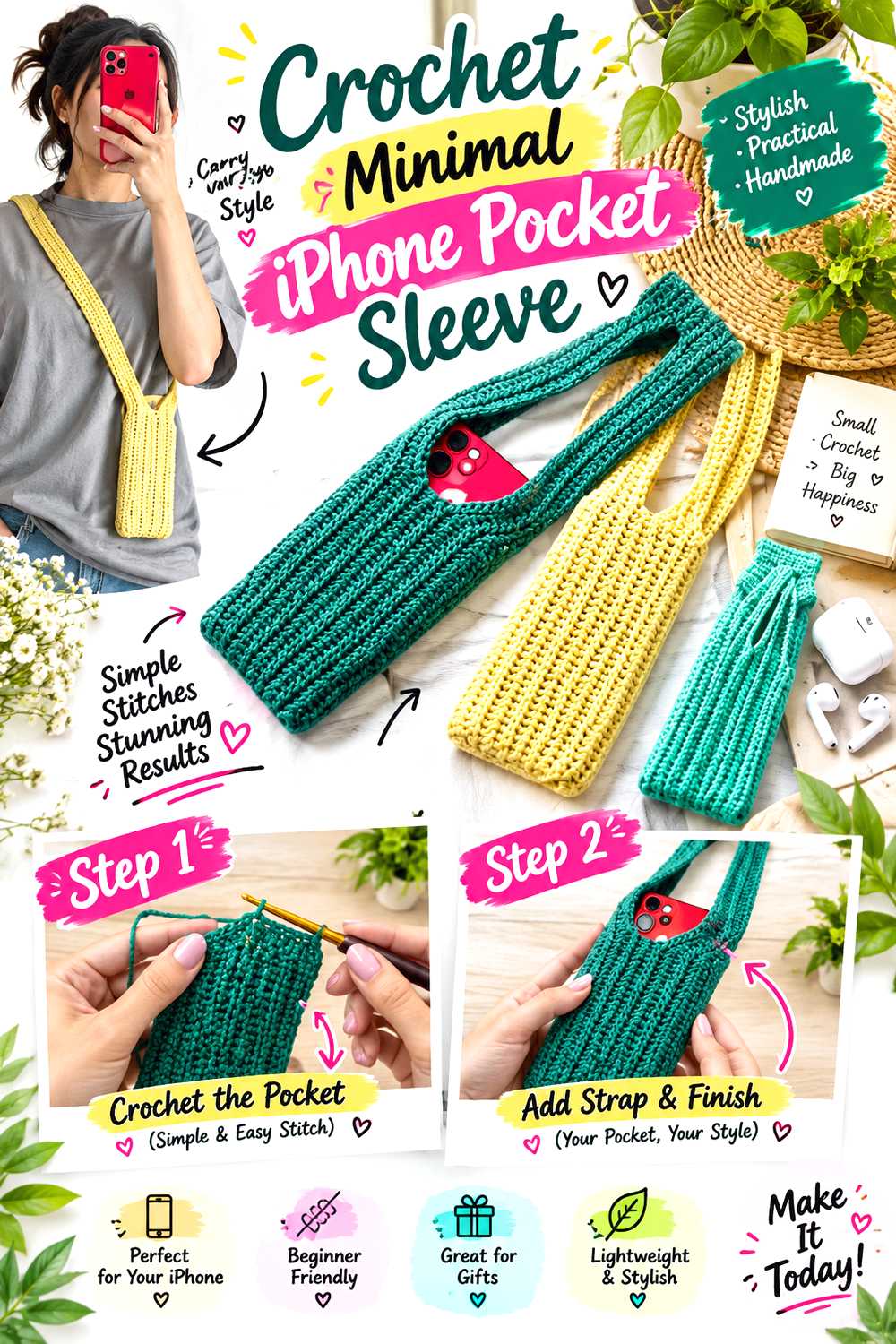
ABoC Studio’s iPhone-pocket tutorial takes a much more minimal approach than the floral and motif-heavy ideas above. The uninterrupted pocket format makes it a useful construction reference when you want to add one carefully positioned lace panel rather than committing to openwork across the entire case.
A clean sleeve also makes proportion errors easy to see. If the pocket is overly wide, the phone can feel lost inside it; if it depends on significant stretch, a decorative lace insert may distort more than expected. Start from the actual device rather than the phone name alone.
A Plain Shape Makes Lace Placement More Flexible
Because the silhouette is visually simple, one lace feature can have a strong effect. Consider a centered vertical panel, an open upper band, or a small motif rather than covering every surface. Keeping part of the original dense pocket structure can also provide a useful contrast that makes the selected openwork more noticeable.
Phone Cases Change Pocket Thickness
Two people with the same phone model may need different pouch dimensions if their protective cases differ. Measure the device in the form you actually carry it. Before adding decorative edging or a closure, make sure the phone slides in and out comfortably without requiring you to stretch a lace section every time.
Original Tutorial and Creator Credit
Creator: ABoC Studio
Crochet Tassel Closure Phone Bag

Chenda DIY’s phone-bag tutorial offers another compact pouch construction and a useful reference for decorative finishing around the opening. Compared with a pure lace sleeve, this approach gives more prominence to the top closure area and exterior finishing, which can be valuable when you want the body to remain relatively restrained.
For a lace version, the decorative strategy can shift toward an open stitch panel paired with a more secure border. A tassel or similar accent should support the overall shape rather than obscuring the small amount of lace visible on a phone-sized surface.
Keep Tassels Clear of the Phone Opening
Decorative hanging elements look best when they do not make routine access awkward. Before finalizing placement, practice taking the phone in and out. A tassel positioned directly over the main grip area can become irritating with daily use, while one placed beside or beneath the closure can remain decorative without constantly getting caught under the device.
Make the Border Firmer Than the Lace Panel
An open center paired with a tighter upper border gives the closure a more predictable foundation. This contrast can also visually frame the lace. If the decorative fabric stretches considerably, keeping the closing loop and strap attachment outside that flexible section can prevent the entire top edge from being pulled out of shape.
Original Tutorial and Creator Credit
Creator: Chenda DIY
Crochet Spiral Built Phone Bag
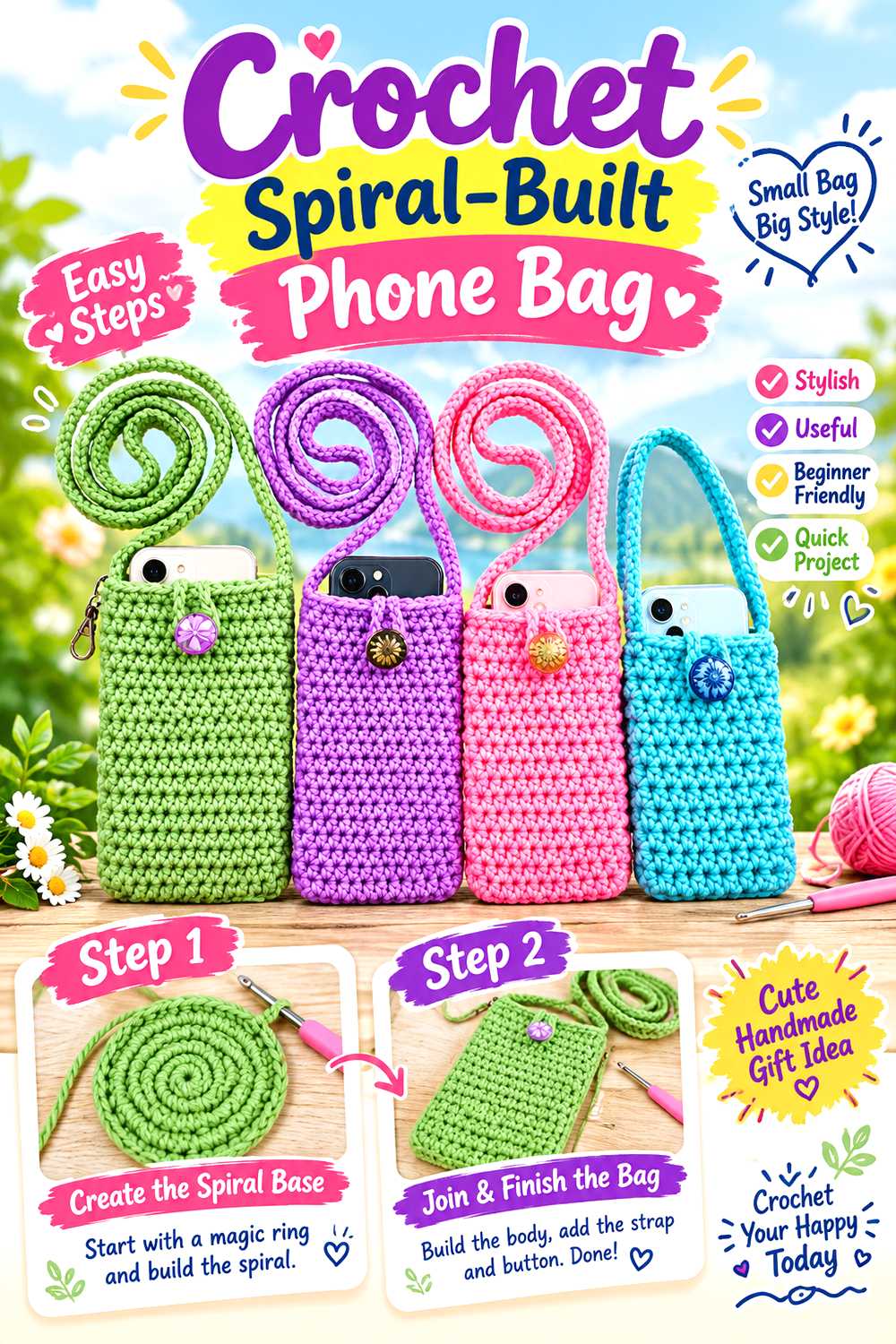
Secret Yarnery’s phone-bag tutorial provides a straightforward bag construction worked as a compact holder rather than a motif assembly. That makes it valuable as a structural reference for crocheters who want to control the shape first and decide where lace belongs afterward.
A continuous or minimally seamed body can create a clean silhouette, but replacing too much of a dense construction with flexible openwork changes how the pouch behaves. Instead of translating the tutorial stitch-for-stitch into lace, preserve its overall functional concept and independently sample the decorative stitch you want to introduce.
Continuous Construction Highlights Uneven Stretch
Without obvious motif seams to divide the surface, any section that stretches more than its neighbors becomes visible quickly. If you introduce a lace band, load the case and look for sudden changes in width. A decorative section that balloons outward may need a smaller repeat, firmer yarn choice, or less prominent placement.
Add Openwork Where It Does Not Carry the Base Load
The phone naturally settles toward the bottom of a hanging pouch. Keeping that area dense while placing lace higher up can preserve more of the original bag behavior. You still get visible openwork, but the most expandable section is not directly underneath the device whenever the case is worn.
Original Tutorial and Creator Credit
Creator: Secret Yarnery
Crochet Awareness Ribbon Phone Case
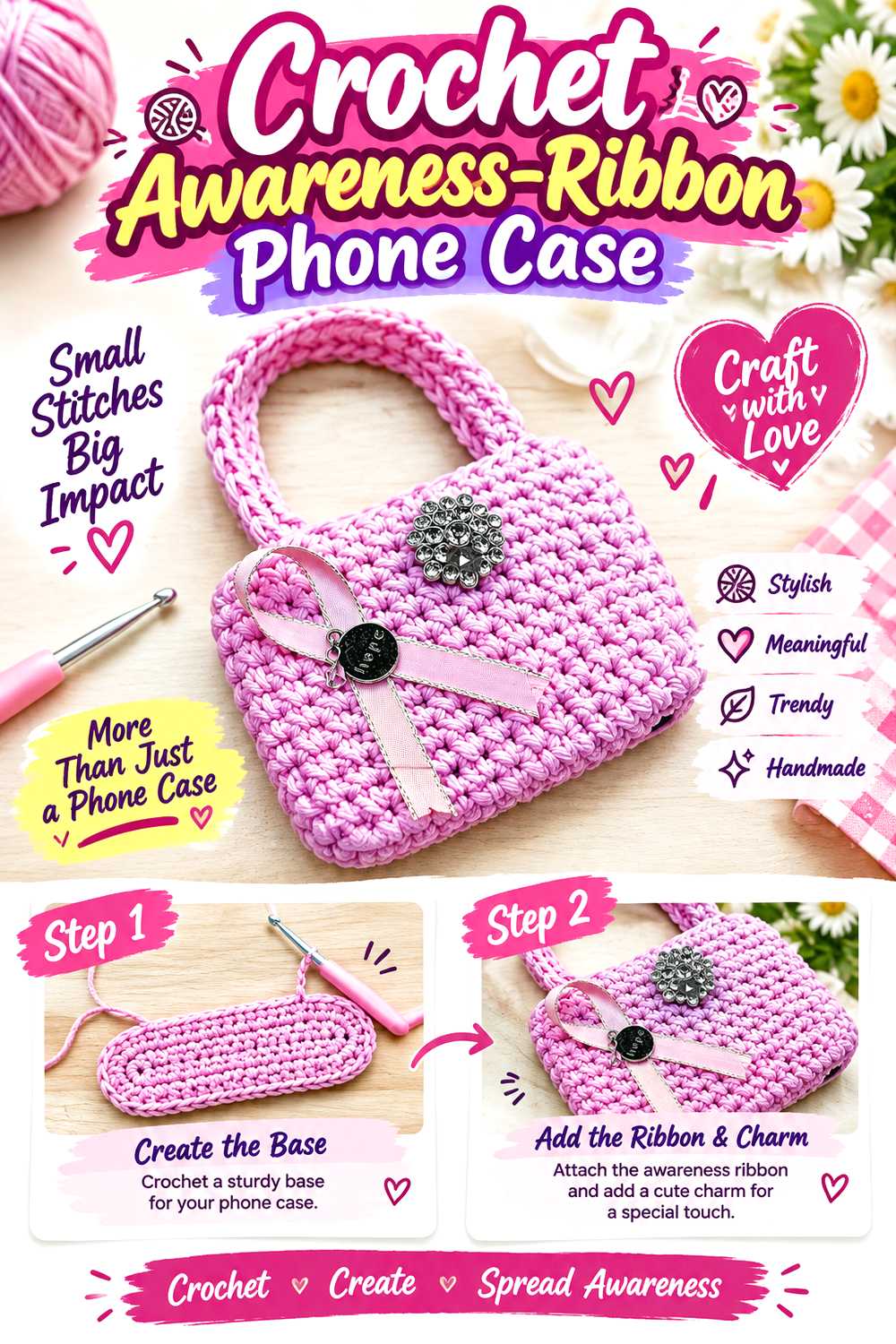
Bag-O-Day Crochet’s phone-case tutorial uses a breast-cancer-awareness theme, giving the project a clear graphic identity rather than relying on lace alone. For this roundup, its value is as a reference for combining a recognizable decorative symbol with a small functional phone case.
If you adapt the structure into a lace-oriented version, keep the distinction clear: lace can frame or support the central motif, but the awareness symbol should not become visually lost inside overly complicated openwork. This approach is especially suitable when meaning or personalization matters as much as texture.
Give a Symbol Enough Quiet Space
A recognizable ribbon or other central motif needs visual separation from surrounding texture. Dense lace, several appliqués, and strong color changes all competing in the same phone-sized area can reduce clarity. If the symbol is the priority, place openwork where it acts more like a frame or background rather than another dominant feature.
Personalization Should Not Obstruct Access
Added motifs can increase thickness around the opening or edges. Before attaching a raised decorative piece permanently, insert the phone and identify where your fingers naturally grip it. Keep bulky embellishment away from that area so the meaning of the design does not come at the expense of ordinary phone access.
Original Tutorial and Creator Credit
Creator: Bag-O-Day Crochet
Crochet Simple Pocket Style Phone Bag
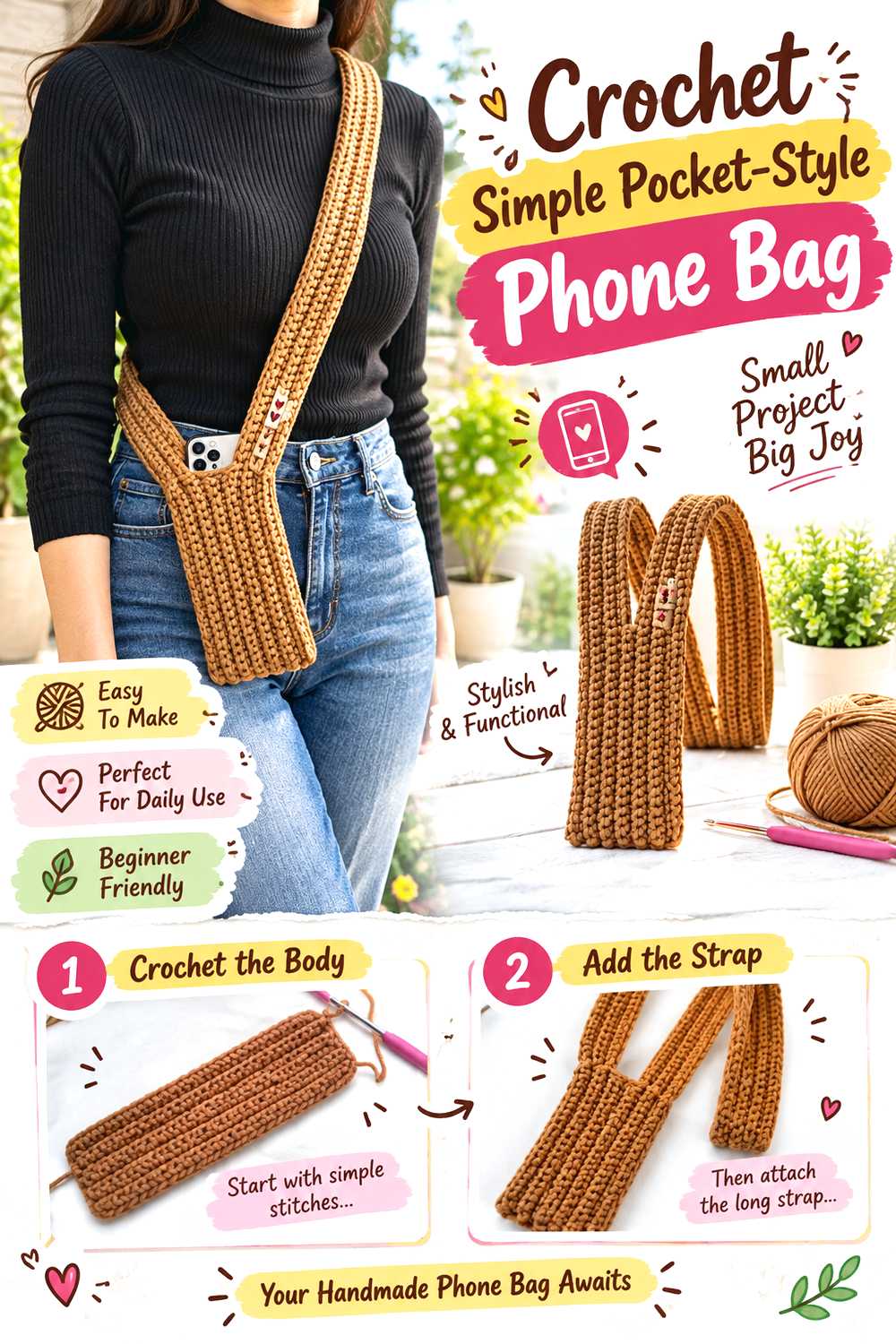
MirrymasCrafts and Mirrymascrochet demonstrates a straightforward phone-pocket format that can act as a blank canvas for lace customization. Unlike floral, shell, or granny-square cases, its value comes from the simplicity of the silhouette. That makes it a practical final option for readers who already have a lace stitch they like but need a restrained phone-pouch concept around it.
The key is to adapt by measurement rather than by replacing stitches mechanically. A lace repeat can behave very differently from the fabric shown in the source, so establish your decorative fabric first and then evaluate how it relates to the device.
Simple Shapes Expose Uneven Side Edges
When a case has few embellishments, crooked sides and inconsistent width become more noticeable. After introducing an openwork repeat, periodically compare both edges rather than focusing only on the lace center. If one side begins to flare or contract, address the tension or repeat placement before adding straps and finishing.
Make the Finished Phone the Final Gauge Test
A swatch tells you how the lace behaves, but the loaded pouch provides the final check. Insert the phone, look at the expanded openings, and confirm that the upper edge is not excessively loose. This is also the right moment to judge whether the design needs a closure or whether the pocket depth already feels sufficient.
Original Tutorial and Creator Credit
Creator: MirrymasCrafts and Mirrymascrochet
Which Crochet Lace Phone Case Style Should You Choose?
Choose the Cocona Crochet, Toh Handmade, Crochet ByLarissa, MIMI Handmade, or screen-window ideas when obvious mesh and negative space are the main attraction. Shell-stitch cases provide more visual coverage, while granny-square constructions are better suited to crocheters who enjoy planning around complete motifs.
For a case worn crossbody, prioritize a dependable top opening, stable strap anchors, and loaded strap length. If the pouch mainly lives inside another bag, a lighter decorative sleeve may be enough. Denser tutorials such as the minimal pocket, spiral phone bag, magnetic pouch, or charging holder are most useful as structural references when you want to introduce lace selectively rather than convert every supporting section into openwork.
Conclusion
The strongest crochet lace phone case is the one whose openness matches how the phone will actually be carried. Choose true mesh or scalloped lace for maximum visual lightness, shell stitches for more coverage, granny squares for motif-focused construction, or a denser pouch with selective lace when strap support and closure stability matter more. Floral and puff designs add dimensional texture, while the screen-window and charging-holder ideas solve more specialized needs.
Whichever direction you choose, size the project against your real phone and case, then check the opening and strap while loaded. Use the original tutorials near each idea for the creators’ exact construction details rather than assuming one lace stitch can simply replace another.
Frequently Asked Questions
How open can a crochet lace phone case be without becoming impractical?
There is no universal opening size because yarn, stitch construction, phone dimensions, and intended use all change the result. Instead, insert the phone and observe how much the holes expand. A decorative sleeve carried inside another bag can tolerate more openness than a standalone crossbody case. Firmer borders around the base, sides, and opening can also help balance a very airy center panel.
Should I line an open crochet phone pouch?
A lining is worth considering when large openings could snag nearby objects or when you want to carry small items in addition to the phone. The trade-off is visual: fabric behind open crochet becomes clearly visible and reduces the transparent effect that makes lace distinctive. Choose the lining color as part of the design and avoid assuming it will remain visually hidden.
Can I substitute a lace stitch into any crochet phone-bag tutorial?
Not without checking the new fabric first. Different stitch patterns can change width, height, stretch, and repeat requirements. Make a sample of the lace you want to use, allow it to settle or block it as appropriate, and compare its dimensions with your phone. It is often safer to preserve firm bases, borders, and strap anchors while replacing only suitable decorative panels.
Why does a crochet phone-case strap become longer when I wear it?
The phone places continuous weight on the strap, and some crochet constructions and fibers stretch more readily than others. A long, narrow strap can show that change more noticeably than a short or reinforced one. Judge length with the phone inside the case and worn in the intended position. If stretching matters, consider an appropriate less-stretchy strap construction or reinforcement rather than relying on the empty measurement.
Are granny-square phone cases harder to size than rectangular lace pouches?
They involve a different kind of planning. With a granny-square case, the finished motif dimensions largely determine the panel size, so you need to compare the settled squares with the phone before assembly. A continuous rectangular pouch gives more freedom to adjust width or height independently. In either case, account for the phone’s normal protective case and avoid relying on aggressive fabric stretching to achieve fit.
Is a button or magnetic closure better for a lace phone pouch?
Neither is automatically better. A button can integrate naturally with granny squares, shells, and decorative borders, while a magnetic closure creates a cleaner-looking top. Magnetic hardware needs a sufficiently stable attachment area because opening it repeatedly pulls on the surrounding fabric. Buttons also need placement based on the filled pouch, since the phone can change where the upper edge and loop naturally meet.