Ivory gives a crochet cardigan a lighter foundation than beige or camel while creating a softer result than bright white. That makes it useful both as the dominant cardigan color and as the lightest shade in a multicolor design. The real decision is where Ivory should remain uninterrupted and where a darker or more saturated supporting color can add enough definition.
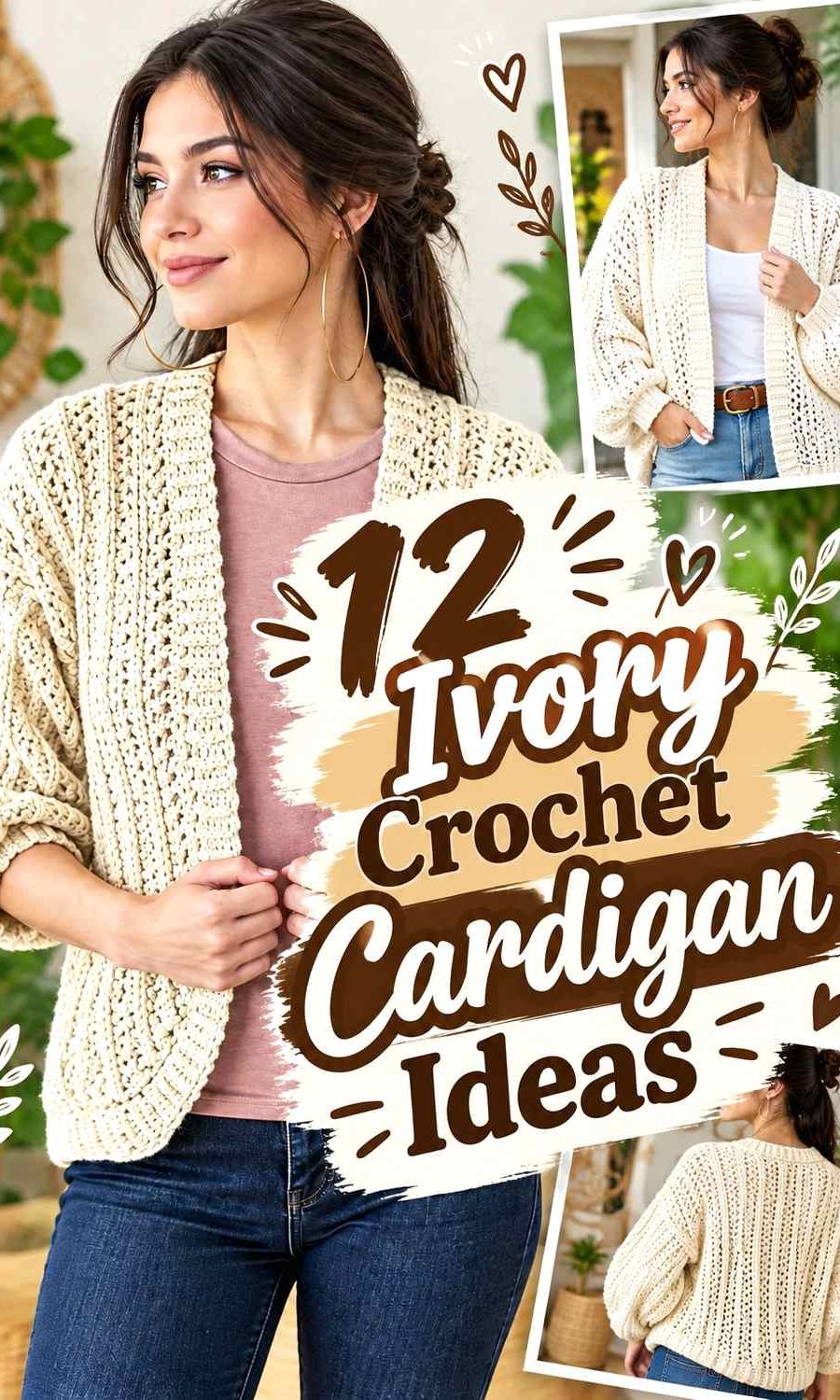
Cardigans offer several natural places to control color: two front panels, a back panel, sleeves, cuffs, pockets, front edging, buttons, motifs, and lower hems. A charcoal border can give an Ivory cardigan a defined frame, while sage or dusty rose creates a gentler transition. Patchwork and granny construction allow the color balance to change again because every square or cluster becomes part of the distribution.
The 12 ideas below use different cardigan constructions and different relationships with Ivory. The credited tutorials support the cardigan concepts and construction styles; the Ivory palettes are independent color adaptations.
Quick List
- Ivory And Camel Classic Crochet Cardigan
- Ivory And Charcoal Oversized Pocket Crochet Cardigan
- Ivory And Sage Patchwork Crochet Cardigan
- Ivory And Black Mesh Crochet Cardigan
- Ivory And Dusty Rose Crochet Cardigan
- Ivory Mustard And Espresso Chevron Crochet Cardigan
- Ivory And Soft Blue Buttoned Mesh Crochet Cardigan
- Ivory And Taupe Long Side Slit Crochet Cardigan
- Ivory Terracotta And Olive Striped Crochet Cardigan
- Ivory And Burgundy Granny Hexagon Crochet Cardigan
- Ivory And Denim Blue Scalloped Hexagon Crochet Cardigan
- Ivory And Mocha Oversized Crochet Cardigan
Decide How Much of the Crochet Cardigan Should Stay Ivory
Ivory works particularly well across large cardigan panels because its light value allows stitch texture, openwork, seams, and motif boundaries to remain relatively easy to see. If Ivory is the main color, consider keeping the back and most of the front panels continuous before adding contrast at the edges.
Supporting colors are often most useful where the cardigan already changes structurally. Cuffs, pockets, button bands, front borders, and lower hems can hold darker shades without making the whole garment look fragmented.
For motif cardigans, think about Ivory differently. Rather than covering one large panel, it may need to repeat consistently through square borders, granny clusters, joins, or motif centers so that the scattered pieces still feel related.
Use Contrast to Keep Ivory Crochet Cardigan Details Visible
Ivory naturally provides strong light-dark contrast with charcoal, black, burgundy, espresso, and other deep colors. That makes those shades useful for narrow details such as edging or cuffs where a low-contrast neutral might disappear.
Camel, taupe, sage, dusty rose, and soft blue create gentler transitions. When using those combinations, compare the yarns from a few feet away. If the shades are too similar in value, small borders or motifs can merge into the Ivory instead of creating the separation you expected.
A grayscale photo can help when the difference is difficult to judge. Two yarns may look very different in hue but still be nearly identical in lightness.
Plan Ivory Around Crochet Cardigan Panels, Sleeves, and Edging
Cardigans have an advantage over pullovers when planning multiple colors because the front opening already divides the garment vertically. You can use that structure rather than adding unnecessary color blocks.
For example, an Ivory body can carry a darker front band without interrupting the center of each panel. Sleeves can repeat the same color at the cuffs, while pockets provide another contained place for contrast. On granny and patchwork cardigans, use Ivory repeatedly around motifs or joins so the colors do not look like unrelated scraps.
1. Ivory And Camel Classic Crochet Cardigan
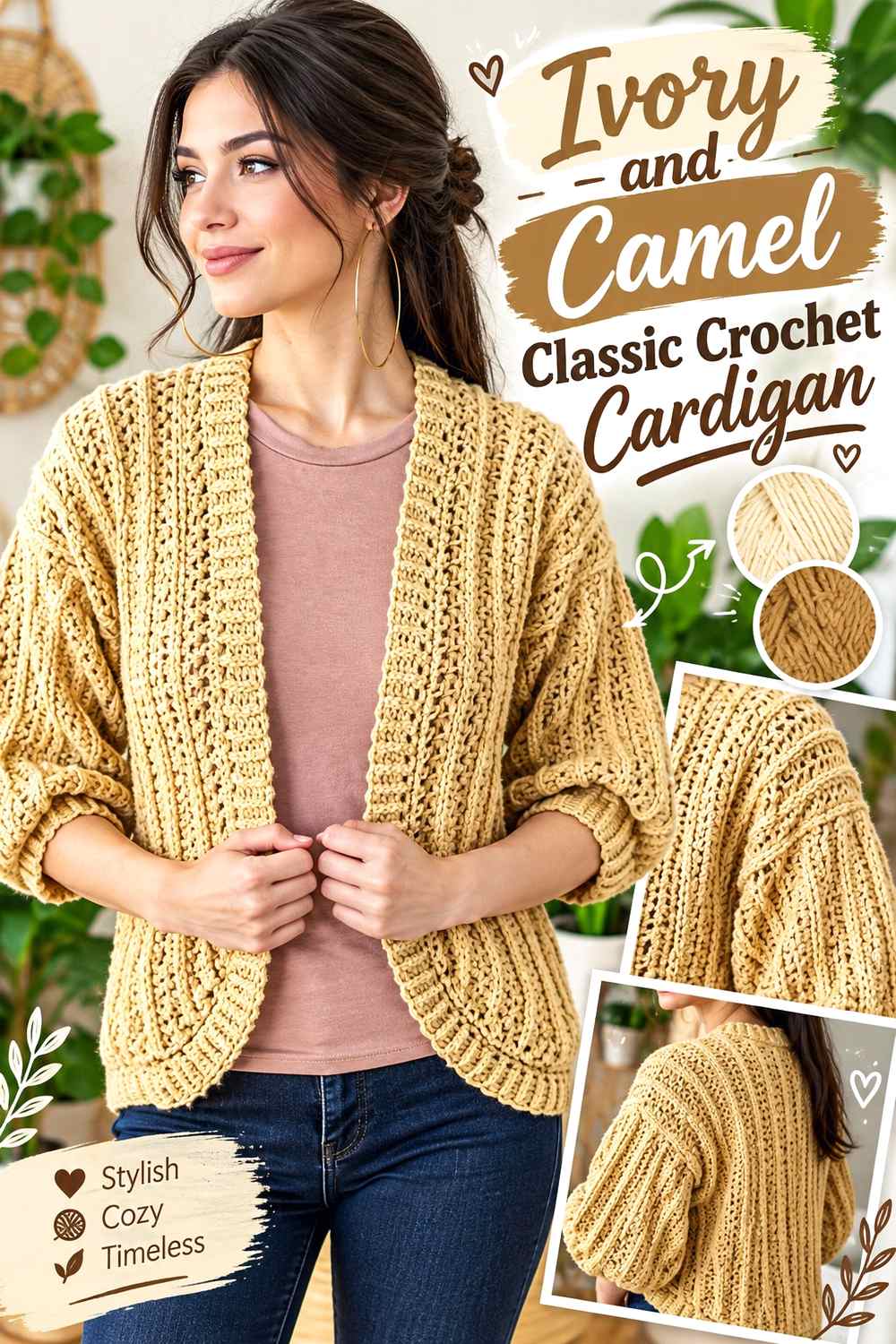
A classic paneled cardigan gives Ivory plenty of uninterrupted surface area, making it a strong choice for the main front, back, and sleeve color. Camel can then warm the edges without turning the cardigan into a sharply divided two-color piece.
Keep Camel concentrated around structural finishing such as the front bands, neckline, cuffs, or hem. That arrangement preserves the light Ivory body while giving the opening enough definition to remain visible over other neutral clothing.
Ivory Should Lead the Main Crochet Cardigan Panels
Use Ivory across the largest front and back sections if you want the cardigan to read as a light neutral garment first. Large Ivory areas also make subtle stitch changes easier to notice than they might be in a heavily striped design.
Before adding Camel, place the panels together and judge how much contrast the cardigan already gets from seams and the center opening. You may need less secondary color than expected.
Camel Can Warm Ivory Crochet Cardigan Edging
Camel works well on a narrow front border because it introduces warmth without creating the dark outline that chocolate or black would. Repeating it at the cuffs can connect the sleeves to the cardigan opening.
If your Camel is quite light, test it directly against Ivory. The two shades need enough difference to prevent the border from disappearing into the body.
Creator Credit: TCDDIY
2. Ivory And Charcoal Oversized Pocket Crochet Cardigan
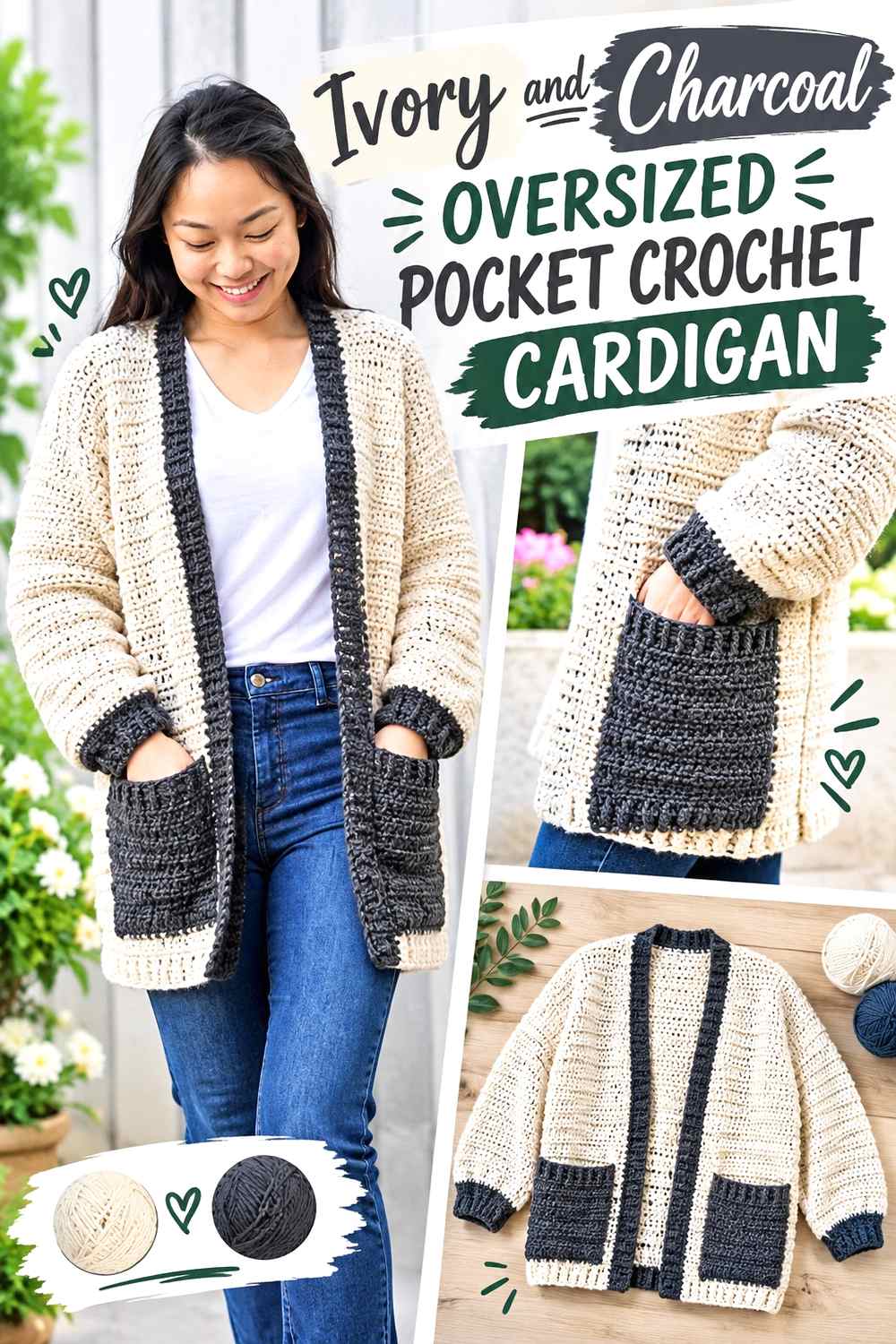
An oversized pocket cardigan gives you several large features that can carry color: the roomy body, wide sleeves, ribbed finishing, and pockets. Ivory can keep the substantial silhouette visually lighter, while Charcoal adds definition where extra visual weight is useful.
Rather than splitting the whole cardigan equally, let Ivory cover the majority of the fabric. Use Charcoal on contained details so the darker shade frames rather than dominates the oversized shape.
Ivory Keeps an Oversized Crochet Cardigan From Becoming Visually Dense
Use Ivory across the body and most of the sleeves so the larger cardigan silhouette still has a light overall appearance. This is particularly helpful when the stitch fabric already has noticeable thickness or texture.
Adding several broad dark sections may make the cardigan feel heavier visually. Start with smaller Charcoal placements before committing to large blocks.
Charcoal Can Turn Ivory Crochet Cardigan Pockets Into Defined Features
Pockets give Charcoal a natural boundary. A darker pocket against an Ivory front panel becomes an intentional design feature rather than a random patch of contrast.
If fully Charcoal pockets feel too strong, reverse the balance: make the pockets Ivory and use Charcoal only around their upper edge. That still repeats the darker color without creating two large blocks on the front.
Creator Credit: forthefrills
3. Ivory And Sage Patchwork Crochet Cardigan
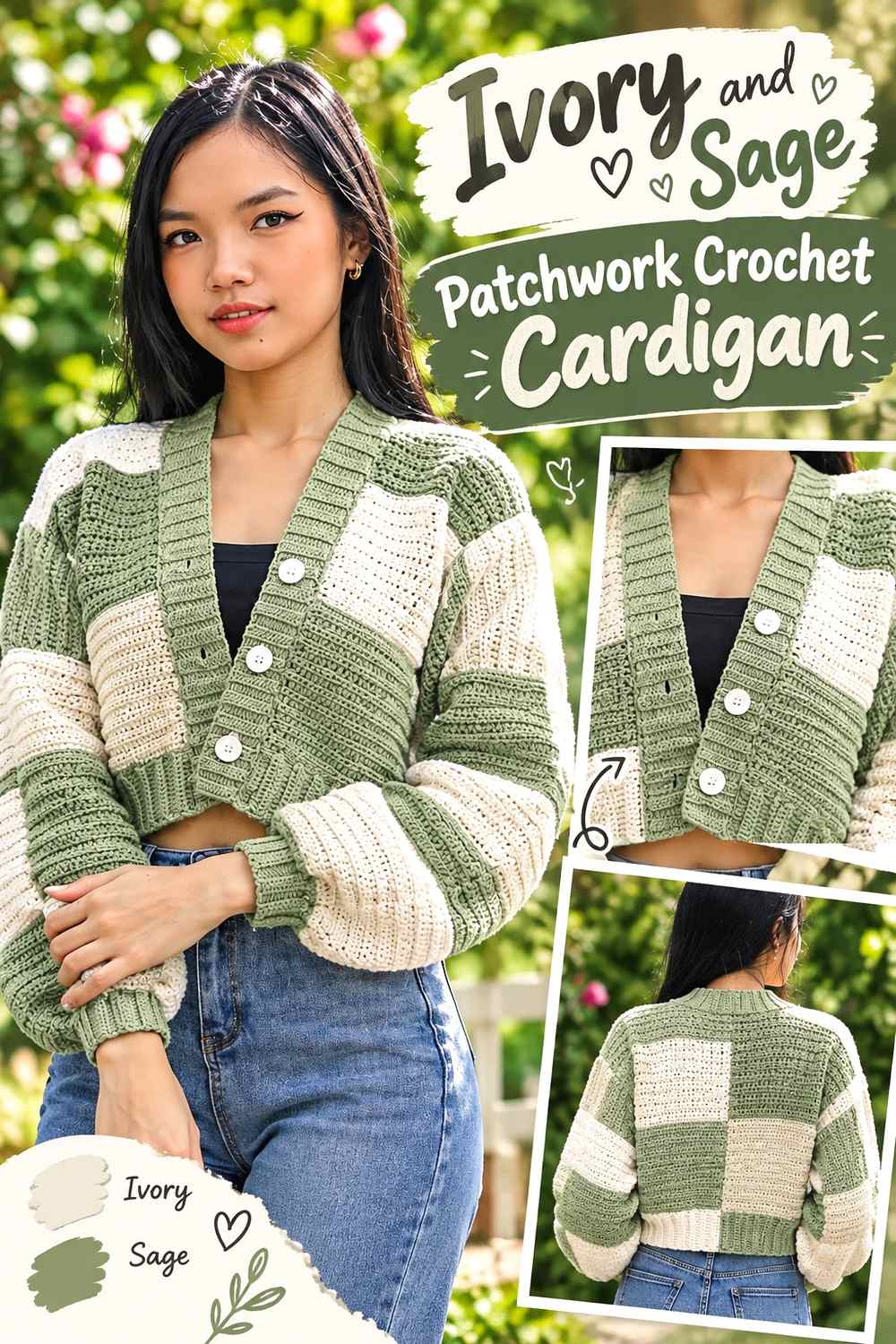
Patchwork makes color distribution more important because the cardigan is already divided into individual sections. Ivory can provide the visual connection between Sage blocks and keep the finished garment from becoming a random collection of alternating squares.
Instead of treating Ivory and Sage equally, decide which color should appear most often. An Ivory-led patchwork cardigan will feel much lighter than one where Sage occupies half or more of every front and sleeve.
Ivory Can Connect Sage Crochet Cardigan Patches
Repeat Ivory across the front, back, and sleeves rather than concentrating every Ivory square in one area. That repetition helps the light color act as a thread running through the whole patchwork layout.
Before joining the sections, arrange them flat and look for large clusters of Sage. Moving one or two Ivory blocks into those areas can produce a more even distribution without following a rigid checkerboard.
Sage Needs Enough Separation From Ivory Crochet Cardigan Blocks
Choose a Sage that remains clearly darker or more muted than Ivory. An extremely pale green may look distinct in a skein but blend once the blocks are joined.
If the two shades are close, a slightly deeper Sage creates more useful definition while still maintaining the soft botanical direction of the palette.
Creator Credit: Chenda DIY
4. Ivory And Black Mesh Crochet Cardigan

Mesh lets the clothing beneath the cardigan show through, which means an Ivory mesh cardigan never has only one visible color. Black makes that interaction especially noticeable because it can appear both as a crochet accent and as a strong layering color underneath the open fabric.
Keep most of the crochet Ivory if you want the mesh itself to remain light. Black can define edges, but the amount you need will depend partly on what shows through the openings.
Ivory Mesh Crochet Cardigan Fabric Needs a Layering Test
Hold or wear an Ivory mesh swatch over both dark and light clothing. Over black, every opening becomes strongly defined. Over cream or Ivory, the mesh looks more continuous and less graphic.
Make this check before adding extensive black crochet trim. A dark underlayer may already provide all the contrast the openwork needs.
Black Can Give Ivory Crochet Cardigan Edges a Clear Frame
Use Black around cuffs, a front band, or a narrow lower edge when you want the cardigan perimeter to remain easy to see. These locations preserve the airy Ivory center instead of filling the mesh with frequent dark blocks.
If pure Black looks too severe, a very dark charcoal can provide similar definition with a slightly softer transition.
Creator Credit: VivCrochets
5. Ivory And Dusty Rose Crochet Cardigan
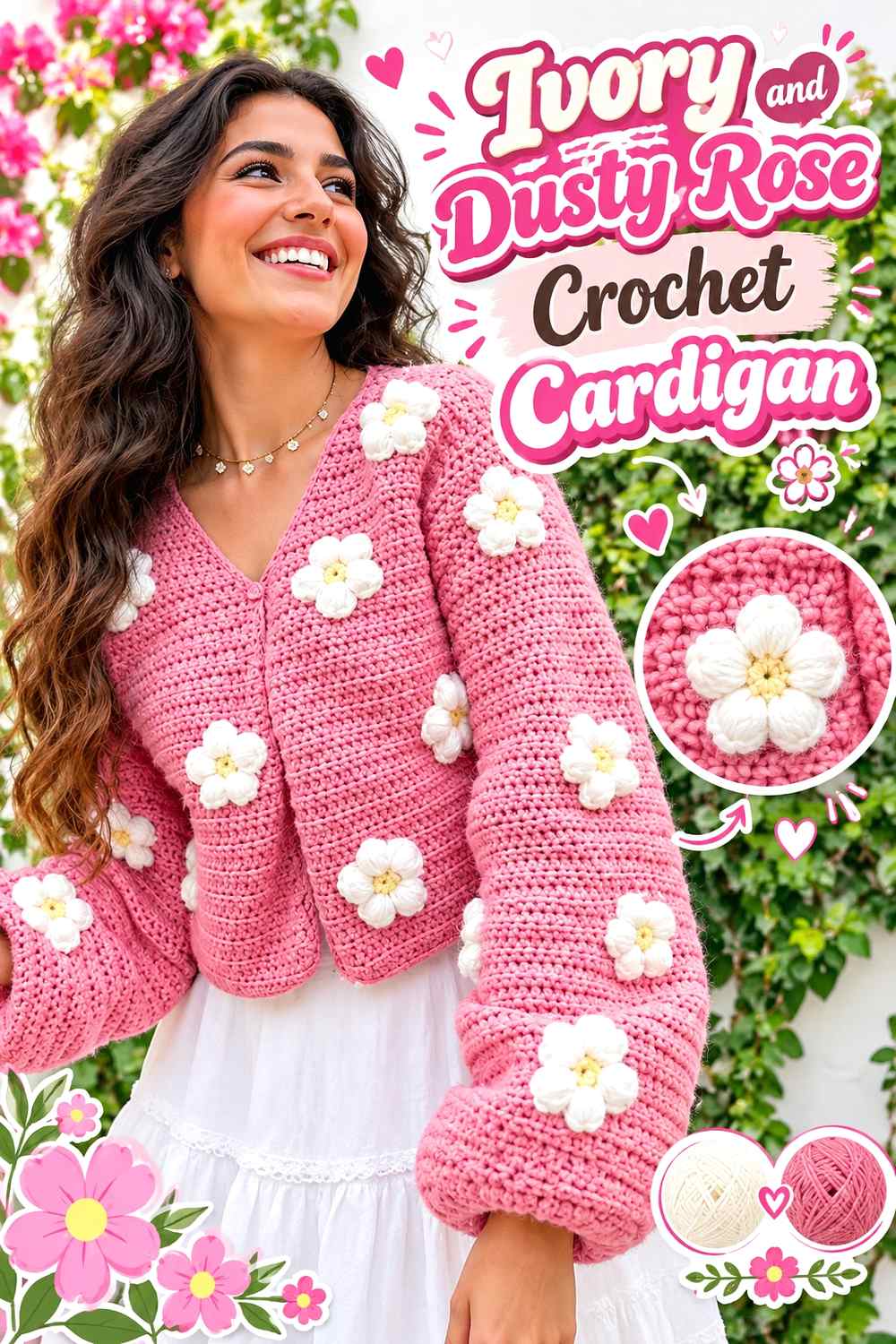
Dusty Rose gives Ivory a muted warm accent without the deep value contrast of burgundy or charcoal. It works particularly well when you want the cardigan to remain light overall while still creating visible changes around the sleeves and opening.
Ivory should continue to cover most of the body. Let Dusty Rose appear in planned sections rather than scattering small pink accents across every panel.
Ivory Gives Dusty Rose Crochet Cardigan Details Room to Stand Out
An Ivory torso provides a quiet field where a Dusty Rose collar, border, or sleeve section can be recognized immediately. Because the contrast is gentler, you do not need to repeat Rose as frequently as a very dark color.
Check the two yarns beside each other before beginning. A pale blush that is almost Ivory may not create enough separation for narrow trim.
Dusty Rose Can Soften Ivory Crochet Cardigan Sleeve Color
Sleeves are a good place to increase Dusty Rose slightly without changing the identity of the entire cardigan. Try keeping the upper sleeve Ivory and introducing Rose closer to the cuff.
This creates a controlled transition and prevents a small amount of color from looking isolated. Repeat a little Rose around the front opening if the cuffs otherwise feel disconnected.
Creator Credit: Krystal Everdeen
6. Ivory Mustard And Espresso Chevron Crochet Cardigan
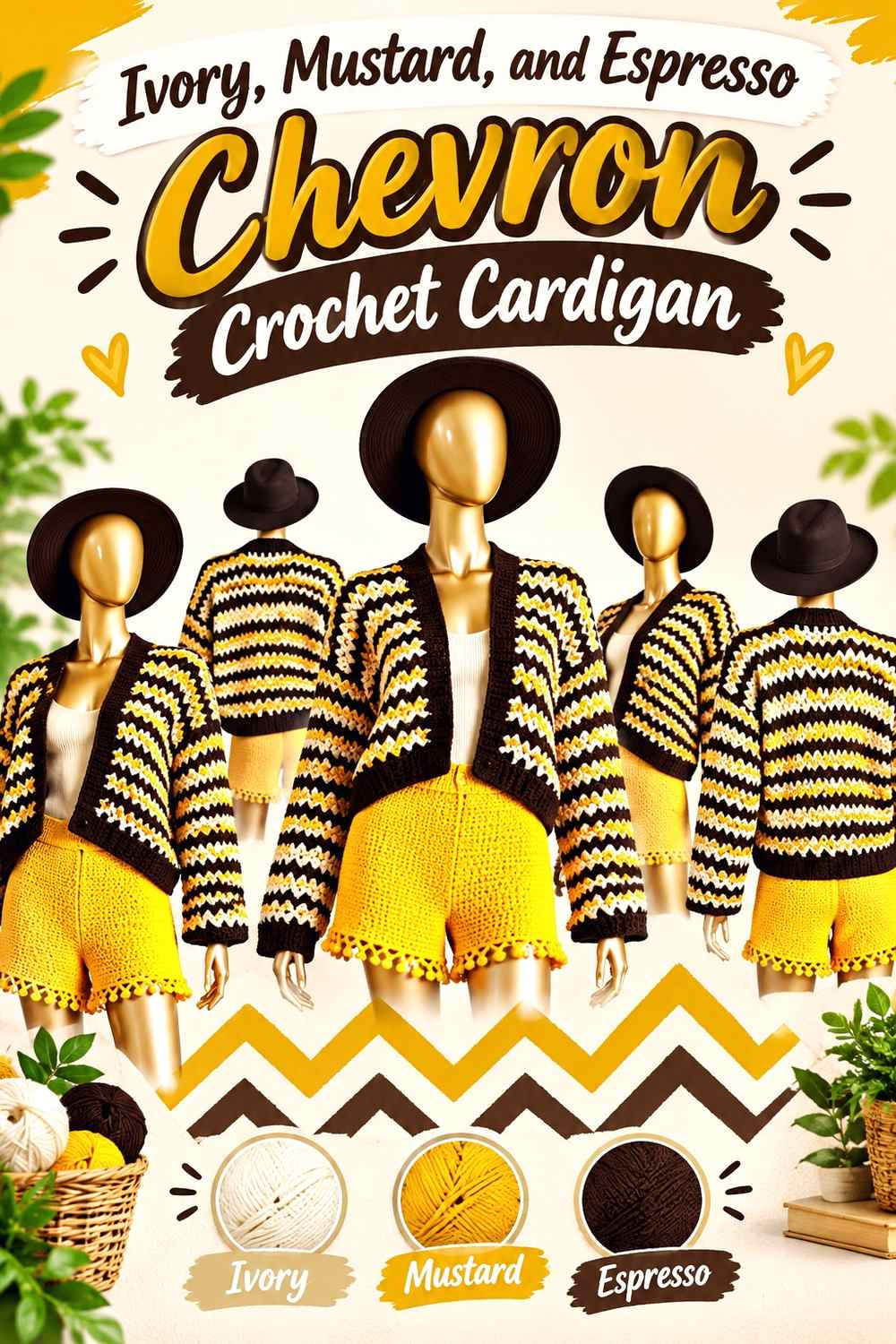
Chevron stripes create movement before color is even considered, so the palette needs a clear hierarchy. Ivory can act as the lightest recurring shade, Mustard provides a warm accent, and Espresso gives the pattern its darkest visual anchor.
Avoid using all three in identical proportions automatically. Let Ivory appear frequently enough that the zigzag cardigan still feels light rather than predominantly brown and yellow.
Ivory Can Separate Mustard and Espresso Crochet Cardigan Chevrons
Mustard and Espresso create a strong warm combination, but large areas placed directly together can feel dense. An Ivory stripe between selected sections creates a visual pause and makes the chevron direction easier to distinguish.
The Ivory stripes do not all need equal width. What matters is repeating the light shade consistently enough to connect the front, back, and sleeves.
Espresso Should Stay Controlled Around Ivory Crochet Cardigan Stripes
Use Espresso as the smallest or second-smallest color if you want Ivory to remain dominant. The dark shade is powerful enough to define a chevron even when it occupies less space.
If the finished swatch looks too dark, reduce Espresso before removing Mustard. Ivory and Mustard can still produce a complete warm palette on their own.
Creator Credit: Shyler crochets
7. Ivory And Soft Blue Buttoned Mesh Crochet Cardigan
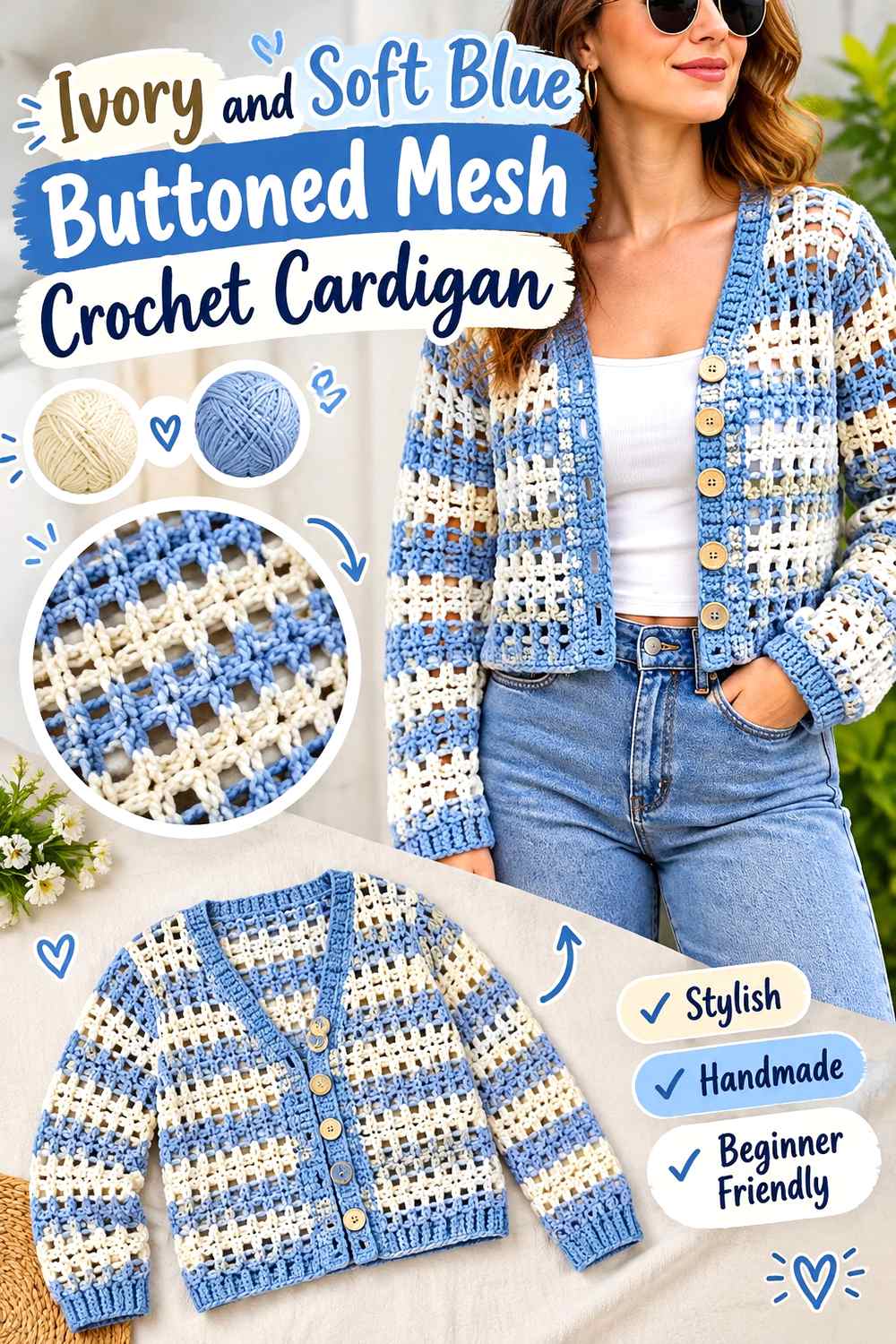
A buttoned mesh cardigan combines three visible elements: open fabric, a defined front closure, and the layer beneath. Ivory can remain the main mesh color while Soft Blue distinguishes selected finishing details without creating the hard contrast of navy.
Keep the Blue near solid or more visually stable areas such as edging and cuffs. Too many color changes inside open mesh can make the negative space and yarn colors compete.
Ivory Mesh Keeps the Crochet Cardigan Light Around the Button Front
Let Ivory continue across most of the front panels so the buttons and opening remain easy to identify. A continuous light field also keeps attention on the mesh structure.
Before adding Soft Blue to the button area, view the Ivory cardigan over the clothing you expect to wear beneath it. The underlayer may significantly affect how visible the opening already is.
Soft Blue Can Define Ivory Crochet Cardigan Cuffs and Edging
Soft Blue provides enough hue contrast to distinguish a cuff without giving the cardigan a dark frame. Repeating it along a narrow front edge can connect the sleeves and closure.
If the Blue is very pale, increase the width of the accent rather than adding many tiny Blue sections. Low-contrast colors are easier to read when given a little more visual area.
Creator Credit: Brunaticality
8. Ivory And Taupe Long Side Slit Crochet Cardigan
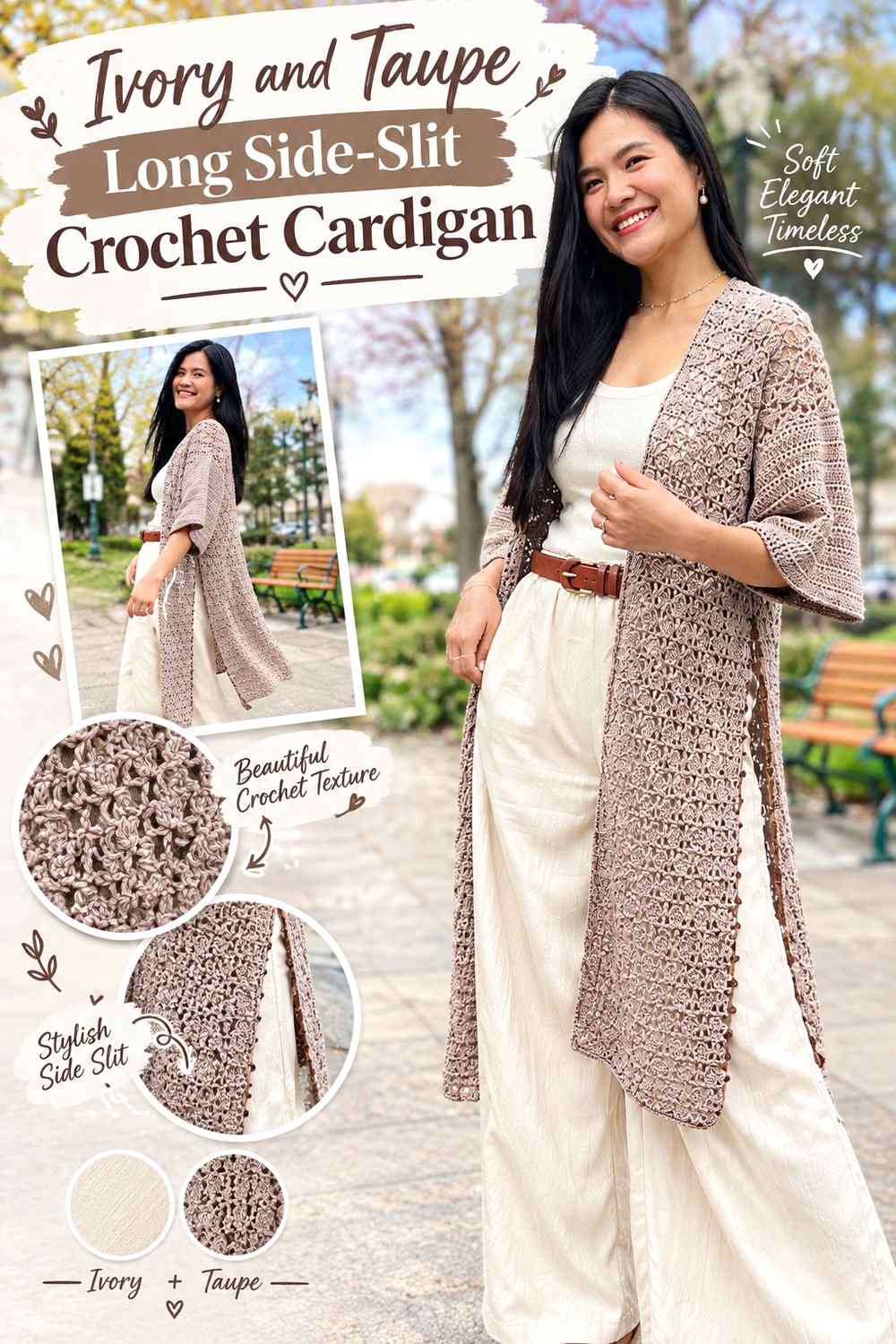
A long cardigan magnifies every color decision because the vertical panels cover more visual space. Ivory is useful as the dominant color because it keeps that extended silhouette from becoming too dark, while Taupe adds quiet definition around the side slits and borders.
Avoid dividing the long body into several equal horizontal blocks. Continuous Ivory helps preserve the cardigan’s vertical direction.
Ivory Should Remain Continuous Through the Long Crochet Cardigan Panels
Run Ivory through most of each front and back section if you want to emphasize length. Large horizontal color breaks can visually divide the cardigan and reduce that uninterrupted vertical effect.
The side slits already create noticeable lower-edge detail, so evaluate the finished shape before introducing extra stripes nearby.
Taupe Can Outline Ivory Crochet Cardigan Side Slits Without Harsh Contrast
Use Taupe around the slit edges or lower finishing when you want to make that construction detail more visible. The neutral contrast is softer than charcoal and keeps the lower cardigan from becoming heavily framed.
If Taupe and Ivory are close in value, widen the Taupe section slightly or choose a somewhat deeper neutral rather than introducing another accent color.
Creator Credit: KnitcroAddict
9. Ivory Terracotta And Olive Striped Crochet Cardigan
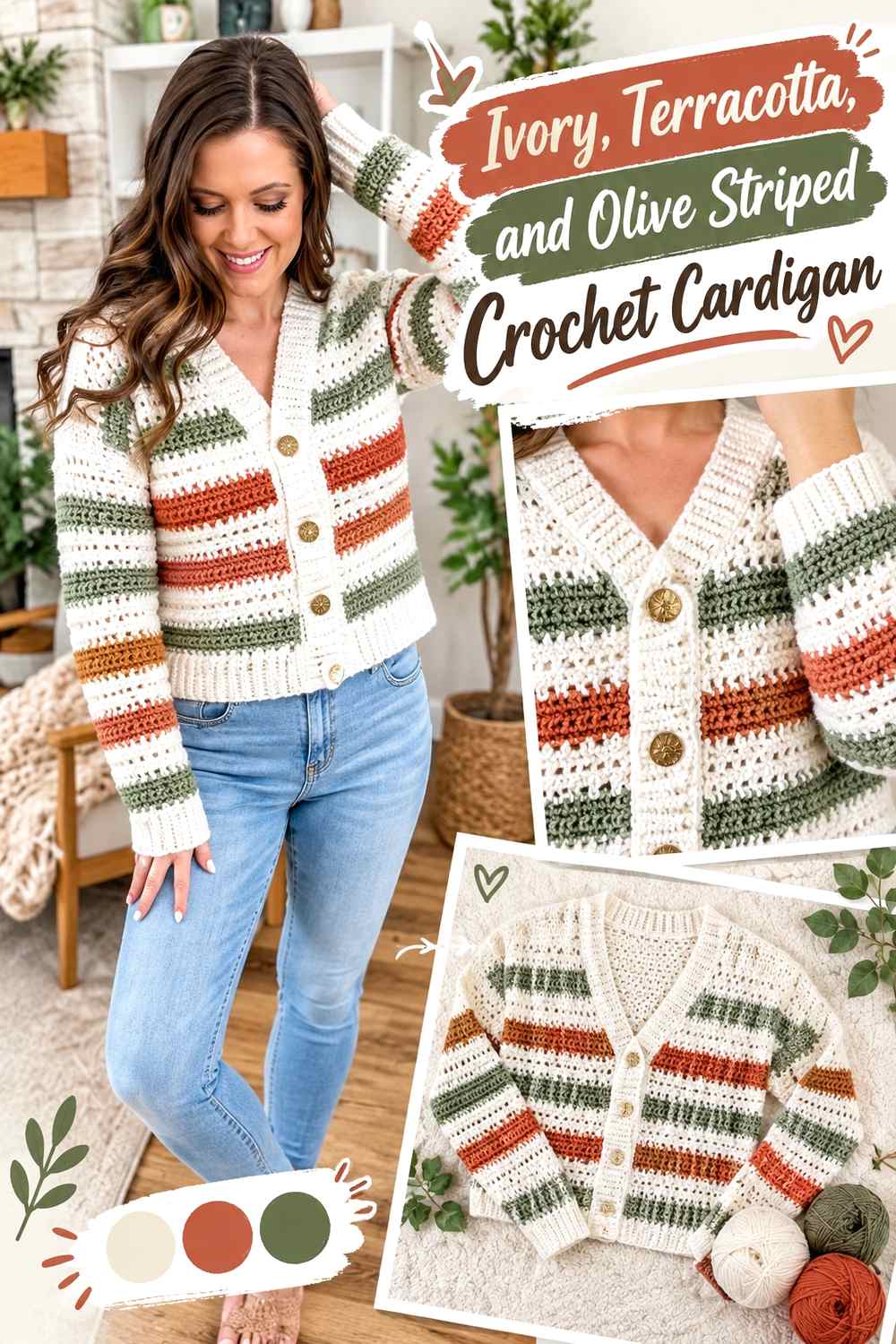
A striped button-front cardigan gives Ivory a useful balancing role between two earthy accent colors. Terracotta contributes warmth, Olive adds a cooler muted direction, and Ivory prevents the two stronger hues from filling every part of the garment.
Let Ivory occupy the largest share or recur most consistently if the final result should still read as an Ivory cardigan.
Ivory Should Repeat Clearly Through Terracotta and Olive Crochet Cardigan Stripes
Place Ivory at regular visual intervals rather than using it only at the beginning and end of the garment. Repetition makes it function as the palette’s foundation.
If Terracotta and Olive both appear across the body, Ivory can separate selected bands so their change in hue feels deliberate rather than abrupt.
Ivory Can Keep a Multicolor Crochet Cardigan Button Band Calm
A striped body already contains substantial color movement. Keeping the button band predominantly Ivory gives the eye a quieter vertical area and prevents the closure from becoming another competing stripe sequence.
You can repeat Terracotta or Olive in a narrow edge if desired, but both do not need to appear again around every button.
Creator Credit: MJ’s Off The Hook Designs
10. Ivory And Burgundy Granny Hexagon Crochet Cardigan
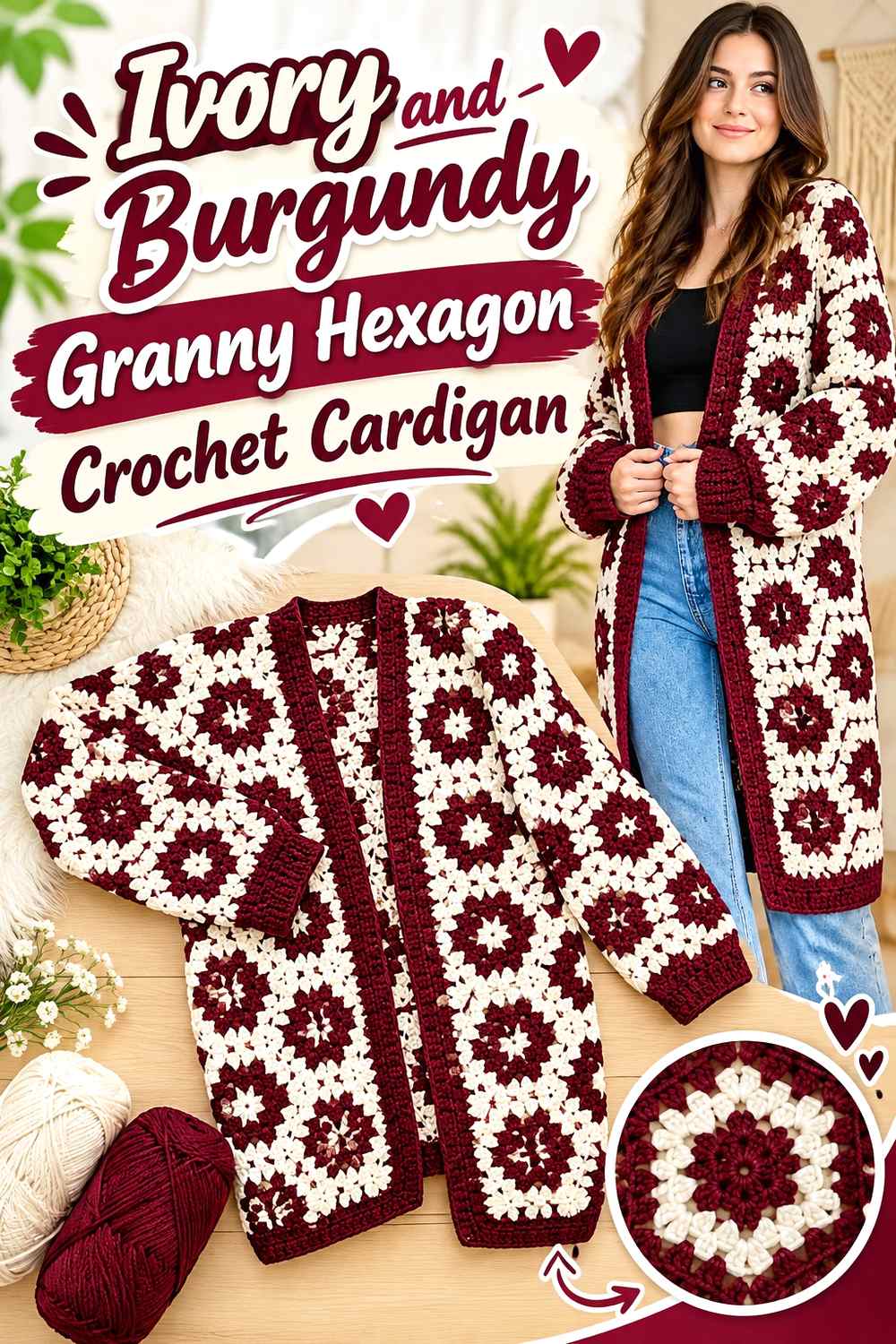
A granny hexagon cardigan lets color spread outward through repeated clusters rather than conventional rectangular panels. Ivory and Burgundy produce strong value contrast, so even a limited Burgundy repeat can become highly visible.
Decide whether Ivory will form the majority of the clusters or whether Burgundy will appear in broader bands. For an Ivory-focused result, keep the lighter shade recurring throughout both halves.
Ivory Should Repeat Through Both Crochet Cardigan Hexagons
Whatever color sequence you choose, make sure Ivory appears consistently on both sides of the cardigan. If one hexagon contains much more Burgundy, the finished front and sleeves can feel visually unbalanced even when the construction matches.
Lay the two sections beside each other periodically and compare the overall color weight rather than judging each hexagon separately.
Burgundy Can Define Ivory Crochet Cardigan Cuffs and Borders
Burgundy works well around cuffs or outer edging because a small amount creates a clear boundary against Ivory. These darker finishing areas can also reconnect Burgundy stripes or clusters used elsewhere.
If the border begins to dominate, narrow the Burgundy and allow Ivory to return at the final edge. The dominant color does not have to disappear at the perimeter.
Creator Credit: PassioKnit Kelsie
11. Ivory And Denim Blue Scalloped Hexagon Crochet Cardigan
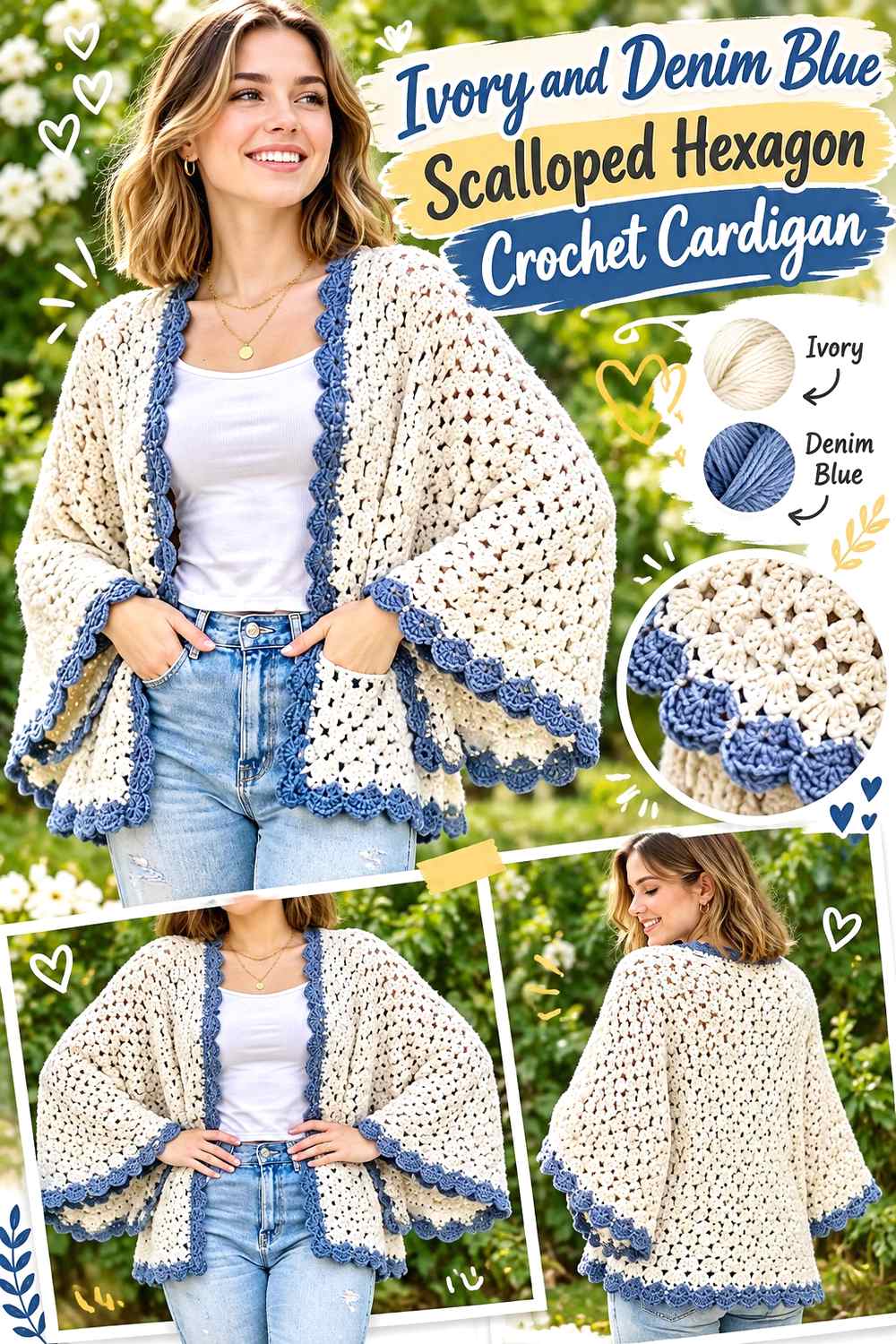
Denim Blue produces a more relaxed contrast with Ivory than Burgundy while still remaining clearly separate. A granny hexagon construction gives both colors repeated opportunities to appear, and a decorative edge can become an additional place to clarify which shade leads.
For a predominantly Ivory cardigan, use Blue to punctuate the clusters rather than allowing long runs of dark color to take over both hexagons.
Ivory Can Keep Denim Blue Crochet Cardigan Clusters Visually Open
Frequent Ivory clusters give the granny fabric a lighter overall appearance and keep darker Denim Blue sections from becoming large visual blocks.
When planning the two hexagons, compare color placement after folding them into cardigan form. A sequence that looks balanced while flat can distribute differently across the front, back, and sleeves.
Ivory Scalloped Crochet Cardigan Edging Can Soften Denim Blue
If Denim Blue already appears strongly through the body, finishing the outer scalloped edge in Ivory can return the main color to the perimeter and create a lighter final outline.
Alternatively, use Blue for only a small portion of the edge if the body contains very little Blue. Let the existing color distribution determine whether the border should reinforce the accent or calm it.
Creator Credit: HayHay Crochet
12. Ivory And Mocha Oversized Crochet Cardigan
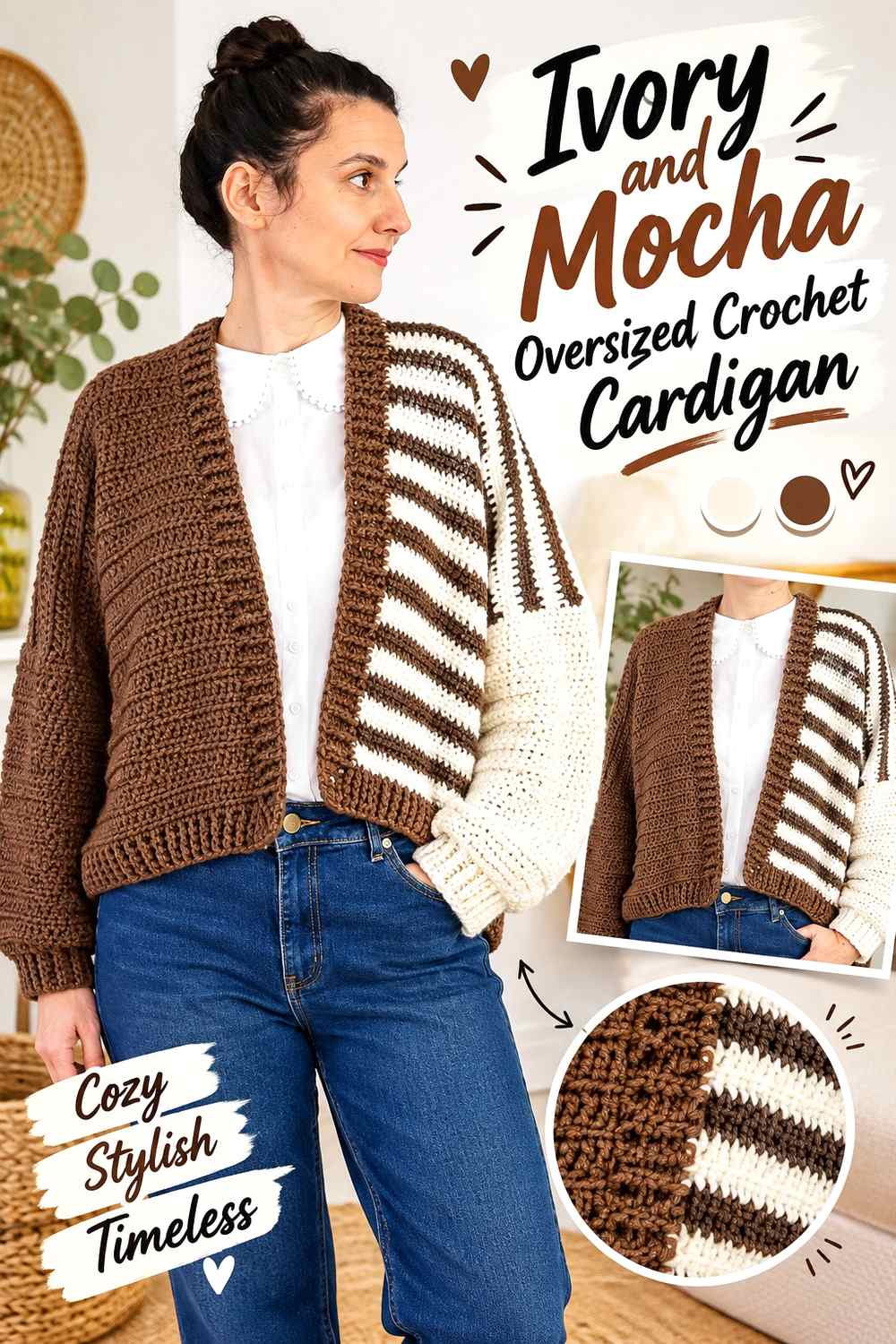
Ivory and Mocha create a warm neutral palette without the sharp contrast of black or burgundy. On an oversized cardigan, Ivory can keep the wide body and sleeves visually light, while Mocha defines finishing details and adds depth near the edges.
Because both colors are neutrals, placement becomes more important than hue variety. Give each shade a distinct role rather than alternating them everywhere.
Ivory Should Carry Most of the Oversized Crochet Cardigan Body
Use Ivory across the broad torso and upper sleeves to create one continuous light area. This allows the oversized shape to remain the primary design feature rather than turning the cardigan into multiple neutral blocks.
If the body stitch has visible texture, keeping it Ivory also gives that texture more uninterrupted space.
Mocha Can Ground Ivory Crochet Cardigan Cuffs and Lower Edges
Mocha works well near the wrists and lower hem because those locations give the warmer neutral a clear boundary. Repeating it around the opening can connect all of the darker finishing sections.
If you prefer less contrast, choose a medium Mocha rather than deep chocolate brown. The aim here is a layered neutral effect rather than a dark outline.
Creator Credit: Sirin’s Crochet
How the 12 Ivory Crochet Cardigan Palettes Differ
For the strongest contrast against Ivory, the Black, Charcoal, Burgundy, and Espresso combinations produce the clearest edges. They are useful when you want borders, cuffs, pockets, or granny clusters to remain obvious from a distance.
Camel, Taupe, Mocha, Sage, Dusty Rose, Soft Blue, and Denim Blue provide softer transitions. These palettes let Ivory remain visually dominant while changing the cardigan’s temperature and overall color direction without creating a heavy frame.
The multicolor options require the most planning. Mustard with Espresso creates strong warm contrast, while Terracotta with Olive introduces two competing accent hues. In those schemes, Ivory works best when it repeats consistently and gives the stronger colors visual breathing room.
Construction also changes the decision. Solid-panel cardigans can reserve contrast for edges, while patchwork and hexagon cardigans need Ivory repeated throughout the actual motif layout. Mesh needs one additional consideration: the layer visible beneath the cardigan effectively becomes part of the palette.
Conclusion
Ivory can support a surprisingly wide range of crochet cardigan styles because it can act as a dominant neutral, a separator between stronger colors, or a repeating motif color. The most useful first decision is not simply which accent shade you like, but where the Ivory should remain uninterrupted.
For a clean paneled cardigan, keep Ivory across the body and move contrast toward cuffs, pockets, borders, or button bands. For stripes, repeat Ivory often enough that it continues to anchor the garment. For patchwork, granny, and hexagon construction, spread Ivory through the complete layout instead of concentrating it in one area.
If you want strong definition, pair Ivory with deeper shades such as Charcoal, Black, Burgundy, or Espresso. For a quieter result, Camel, Taupe, Sage, Dusty Rose, Soft Blue, Denim Blue, and Mocha create more gradual transitions. Compare the yarns together before committing to the complete cardigan, especially when a narrow border or small motif depends on clear value contrast.
Frequently Asked Questions
What colors work well with an Ivory crochet cardigan?
Ivory can pair with deep colors such as charcoal, black, burgundy, navy, or espresso when stronger contrast is wanted. Softer combinations include camel, taupe, sage, dusty rose, denim blue, soft blue, and mocha. Choose according to the amount of contrast the cardigan details need.
How do I keep an Ivory crochet cardigan from looking too plain?
Use the cardigan’s existing structure rather than adding random color. Contrasting cuffs, pockets, front edging, button bands, motif centers, granny clusters, or a lower border can add definition while allowing the main Ivory panels to stay clean.
Should Ivory be the main color in an Ivory crochet cardigan?
For an article or project specifically centered on Ivory, keeping it visually dominant usually makes the concept clearest. It can cover most of the body or repeat most frequently through stripes and motifs. An accent-led cardigan can still use Ivory effectively, but the light shade should remain clearly important to the finished composition.
How can I check whether another neutral has enough contrast with Ivory?
Place both yarns side by side and step back from them. A grayscale photo can also reveal whether their light-dark values are too similar. This is particularly useful for camel, oatmeal, taupe, pale gray, or very light sage.
Where should a darker color go on an Ivory crochet cardigan?
Front edging, cuffs, pockets, hems, button bands, motif borders, and granny clusters are useful locations because they already have a structural purpose. Concentrating dark color in those areas can give Ivory definition without dividing the main panels unnecessarily.
How should I use Ivory in a granny or patchwork crochet cardigan?
Repeat Ivory across the complete garment rather than grouping all of the light motifs together. Distributing it through the front, back, and sleeves helps connect stronger colors and prevents isolated sections from becoming visually heavy.
What should I wear under an Ivory mesh crochet cardigan when planning the colors?
Test the finished or sampled mesh over both light and dark layers. Dark clothing makes the openings more obvious and increases contrast, while a pale layer closer to Ivory makes the mesh look more continuous. Consider that underlayer before deciding how much additional contrast the crochet itself needs.