Champagne Gold gives a crochet shrug a warm, light foundation without requiring the sharper brightness of white or the deeper weight of mustard and brown. On a small layering garment, that matters because even a narrow contrasting cuff, sleeve stripe, or border can noticeably change the finished color balance.
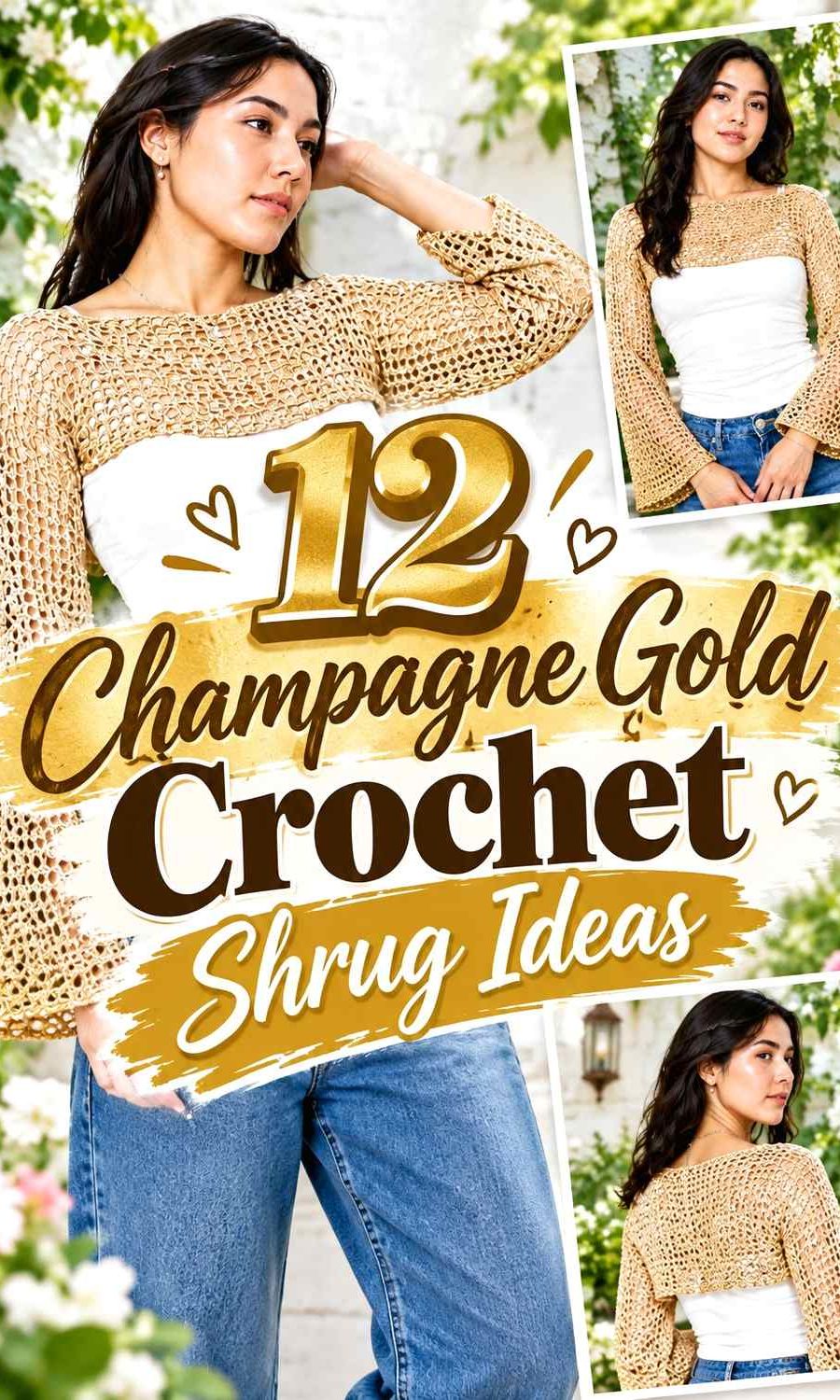
Shrugs also expose more of the outfit underneath than a cardigan or sweater. Mesh sleeves may allow a tank or dress color to show through almost completely, while a dense cocoon shrug places much more emphasis on the crochet itself. Granny squares introduce another decision because Champagne Gold can sit in motif centers, outer rounds, joins, or edging.
These 12 ideas keep Champagne Gold as the consistent anchor while changing the supporting colors, contrast, and placement strategy. The credited tutorials support the crochet shrug constructions; the Champagne Gold palettes are independent color adaptations.
Quick List
- Champagne Gold And Ivory Mesh Crochet Shrug
- Champagne Gold And Black Granny Square Crochet Shrug
- Champagne Gold And Blush Fishnet Sleeve Crochet Shrug
- Champagne Gold And Mocha Ribbed Crochet Shrug
- Champagne Gold And Cream Textured Crochet Shrug
- Champagne Gold And Burgundy Cocoon Crochet Shrug
- Champagne Gold And Taupe Lace Cocoon Crochet Shrug
- Champagne Gold And Sage Bolero Crochet Shrug
- Champagne Gold And Charcoal Striped Mesh Crochet Shrug
- Champagne Gold And Dusty Rose Lace Crochet Shrug
- Champagne Gold And Espresso Meadow Lace Crochet Shrug
- Monochrome Champagne Gold Shawl Collar Crochet Shrug
Decide Where Champagne Gold Should Lead the Crochet Shrug
Shrugs have less body coverage than full sweaters, so color proportions become noticeable quickly. If Champagne Gold is the main shade, give it one substantial uninterrupted role: the full mesh body, most of the sleeves, the central cocoon rectangle, or repeated rounds across granny motifs.
Supporting colors work particularly well around existing construction boundaries. Cuffs, sleeve bands, neckline edges, bolero borders, granny-square joins, and cocoon openings can hold contrast without making the shrug look unnecessarily fragmented.
For sleeve-focused shrugs, consider the two arms together. A darker accent concentrated heavily on one part of each sleeve can become more prominent than it would on a full sweater because the torso section is comparatively small.
Check Champagne Gold Against the Layer Under an Openwork Shrug
Open crochet allows the color underneath to become part of the palette. Champagne Gold mesh worn over black produces a much stronger pattern than the same mesh over ivory, beige, or another light neutral.
Test an openwork swatch directly over clothing you expect to wear. This is more useful than evaluating the yarn by itself because the visible background may provide enough contrast without adding another crochet color.
The same consideration applies to lace. If Champagne Gold stitches need to remain clearly visible, compare the fabric over both light and dark backgrounds before deciding how much contrasting edging the shrug requires.
Keep Champagne Gold Cuffs and Edges Connected to the Shrug Body
A shrug often has visually important sleeve ends because the sleeves occupy such a large percentage of the garment. If you introduce another color at the cuffs, repeat it somewhere else—perhaps the neckline, back edge, or a controlled sleeve band—when the cuff otherwise looks isolated.
The opposite approach also works. A multicolor or striped body can be finished with Champagne Gold cuffs to return the main color to the garment edges.
Think of cuffs, neckline, and outer edging as connected color decisions rather than three separate opportunities to introduce new shades.
1. Champagne Gold And Ivory Mesh Crochet Shrug
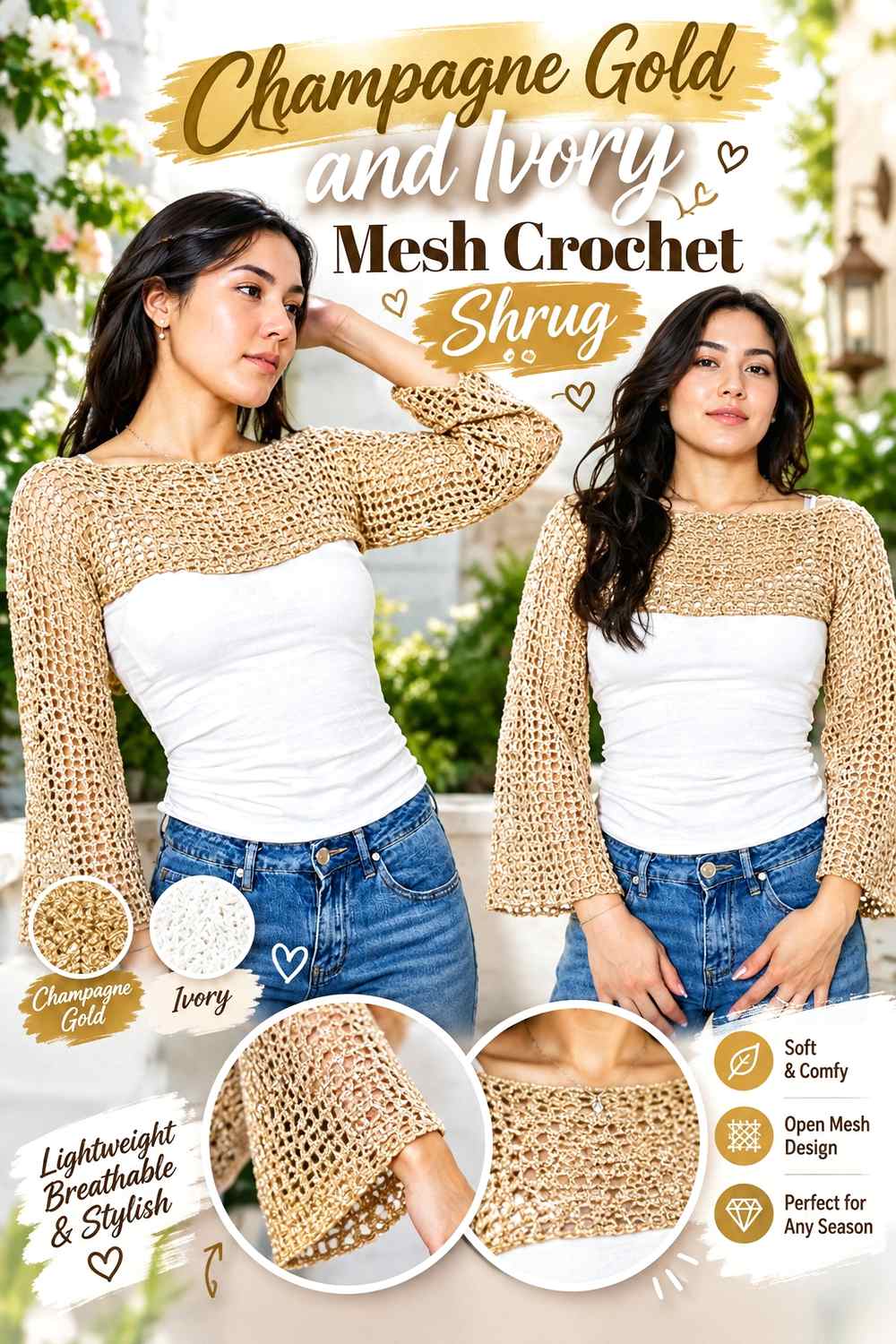
This light-on-light scheme keeps the shrug soft while still providing enough difference to organize its edges. Champagne Gold can cover the main mesh and sleeves, while Ivory stays close to the neckline, cuffs, or selected finishing sections.
Because both shades are pale, their contrast will be quieter than Champagne Gold paired with black or burgundy. Give Ivory enough visual area to remain recognizable rather than relying on tiny isolated details.
Champagne Gold Should Carry Most of the Crochet Mesh
Keep the openwork body and the majority of each sleeve Champagne Gold so the shrug retains one clear foundation. The mesh itself already creates pattern through negative space, so frequent color changes are unnecessary.
Test the Champagne Gold mesh over the intended base layer before adding Ivory. If you plan to wear the shrug over a dark dress or tank, the open fabric may already have considerable visual definition.
Champagne Gold and Ivory Need Clear Placement Around the Shrug Edges
Use Ivory for a cuff, narrow neck edge, or another contained finish where its relationship to Champagne Gold can be seen across a wider section.
If the two yarns almost merge from several feet away, that is not automatically a problem. Keep the palette intentionally tonal rather than adding a third dark color solely to force contrast.
Creator Credit: VivCrochets tutorial
2. Champagne Gold And Black Granny Square Crochet Shrug

Black gives Champagne Gold a strong structural partner in a granny-square shrug. Champagne Gold can occupy the centers or larger motif areas, while black defines outer rounds, joins, cuffs, or the opening.
The biggest risk is allowing the dark grid to take over. Because joins repeat between every motif, even a relatively narrow black join can become one of the most visible elements in the completed shrug.
Champagne Gold Should Occupy the Most Important Granny Square Areas
Use Champagne Gold consistently through the motifs so the garment reads as gold-led rather than as black squares with a pale accent. Centers, broad middle rounds, or repeated outer sections can all achieve this.
Lay several completed squares together before joining. A color proportion that looks balanced in one motif can change considerably when black boundaries repeat across a full back and two sleeves.
Champagne Gold Needs Protection From an Overly Heavy Black Join
If each square already contains substantial black, consider joining with Champagne Gold instead of creating another dark line. This can visually reconnect the motifs and reduce the grid effect.
If you prefer black joins, keep Champagne Gold prominent in the outer motif rounds so the light color continues close to each boundary.
Creator Credit: Anchor Crafts tutorial
3. Champagne Gold And Blush Fishnet Sleeve Crochet Shrug
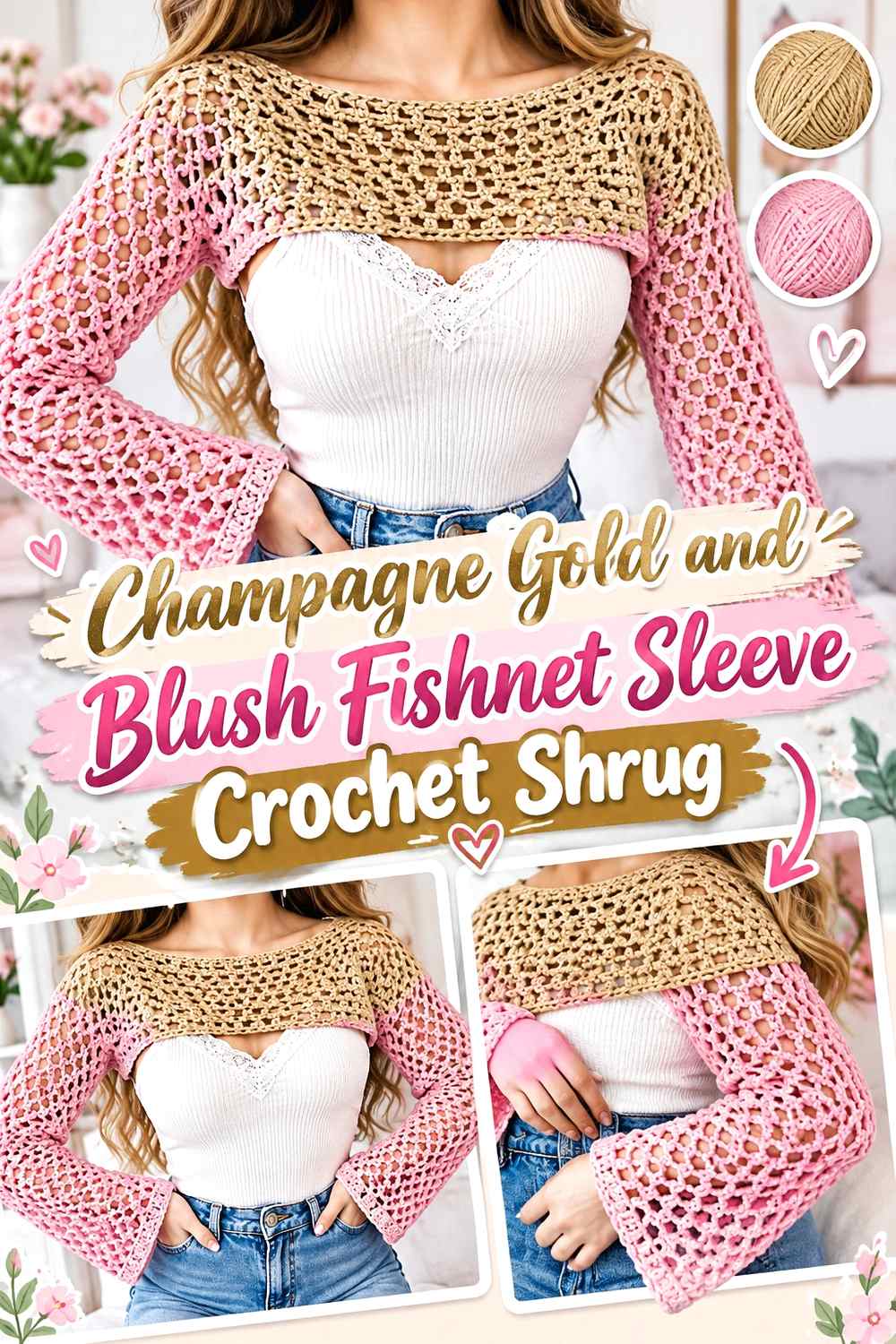
Blush gives Champagne Gold a warmer tonal partner without turning the shrug into an all-neutral piece. A fishnet construction makes this relationship especially dependent on the layer underneath because large openings expose more background color.
Let Champagne Gold cover the main body and most of the sleeves, then place Blush in controlled bands or cuffs where the pink can remain visible.
Champagne Gold Fishnet Should Be Checked Over the Intended Base Color
Hold the Champagne Gold crochet over black, cream, brown, or the actual garment you intend to layer underneath. A dark base makes every opening pronounced, while a similar light shade creates a much quieter texture.
Make this decision before expanding the Blush areas. The visible underlayer may already function as the strongest contrast in the outfit.
Champagne Gold Can Keep Blush Crochet Sleeve Bands From Taking Over
Use Champagne Gold between Blush sections if you want several sleeve bands. Returning to the main color keeps the pink from visually merging into one large block.
For a more restrained version, place Blush only at the cuffs. The contrast will still be noticeable because the wrists provide a natural endpoint for the sleeves.
Creator Credit: 75 emma tutorial
4. Champagne Gold And Mocha Ribbed Crochet Shrug
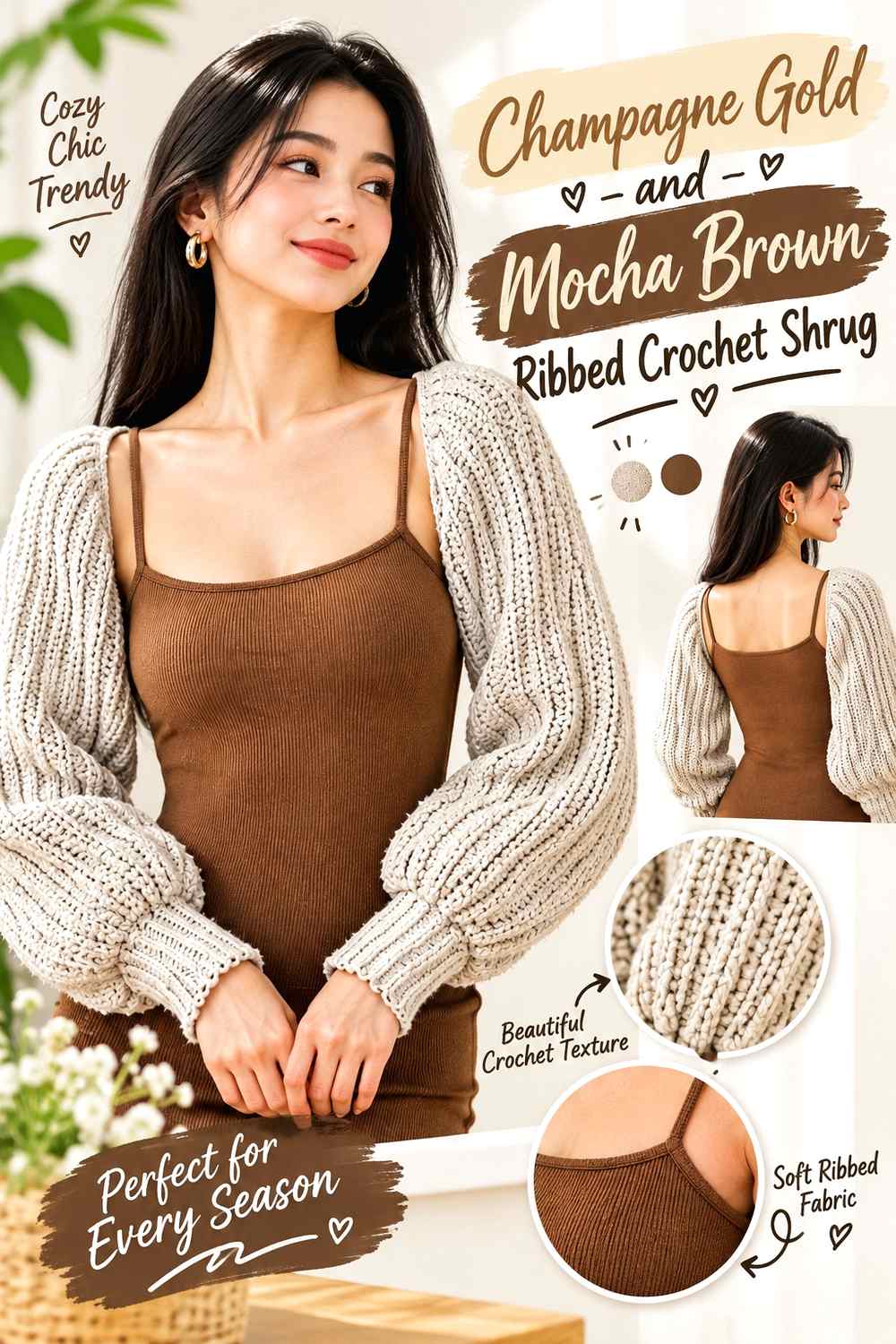
A short-cardigan shrug gives ribbing and cuffs more visual importance than a loose mesh design. Champagne Gold can lead the compact body and sleeves while Mocha adds depth around finishing areas.
Mocha is dark enough to create definition but warmer and less stark than black. Keep it near the garment edges if you want Champagne Gold to remain the first color the eye notices.
Champagne Gold Should Remain Continuous Across the Short Crochet Shrug Body
A small body section can become visually chopped if it contains several color blocks. Keeping that area predominantly Champagne Gold preserves a clean connection from one side of the shrug to the other.
If extra contrast is wanted, move it toward the sleeve ends rather than dividing the limited back or shoulder area.
Champagne Gold and Mocha Can Separate Crochet Ribbing From the Main Fabric
Mocha cuffs provide both a color change and a finishing boundary. Repeating a smaller amount around another edge can prevent those dark sleeve ends from looking detached.
If Mocha feels too heavy once both cuffs are complete, keep the rest of the edging Champagne Gold rather than adding more brown merely for symmetry.
Creator Credit: TCDDIY tutorial
5. Champagne Gold And Cream Textured Crochet Shrug
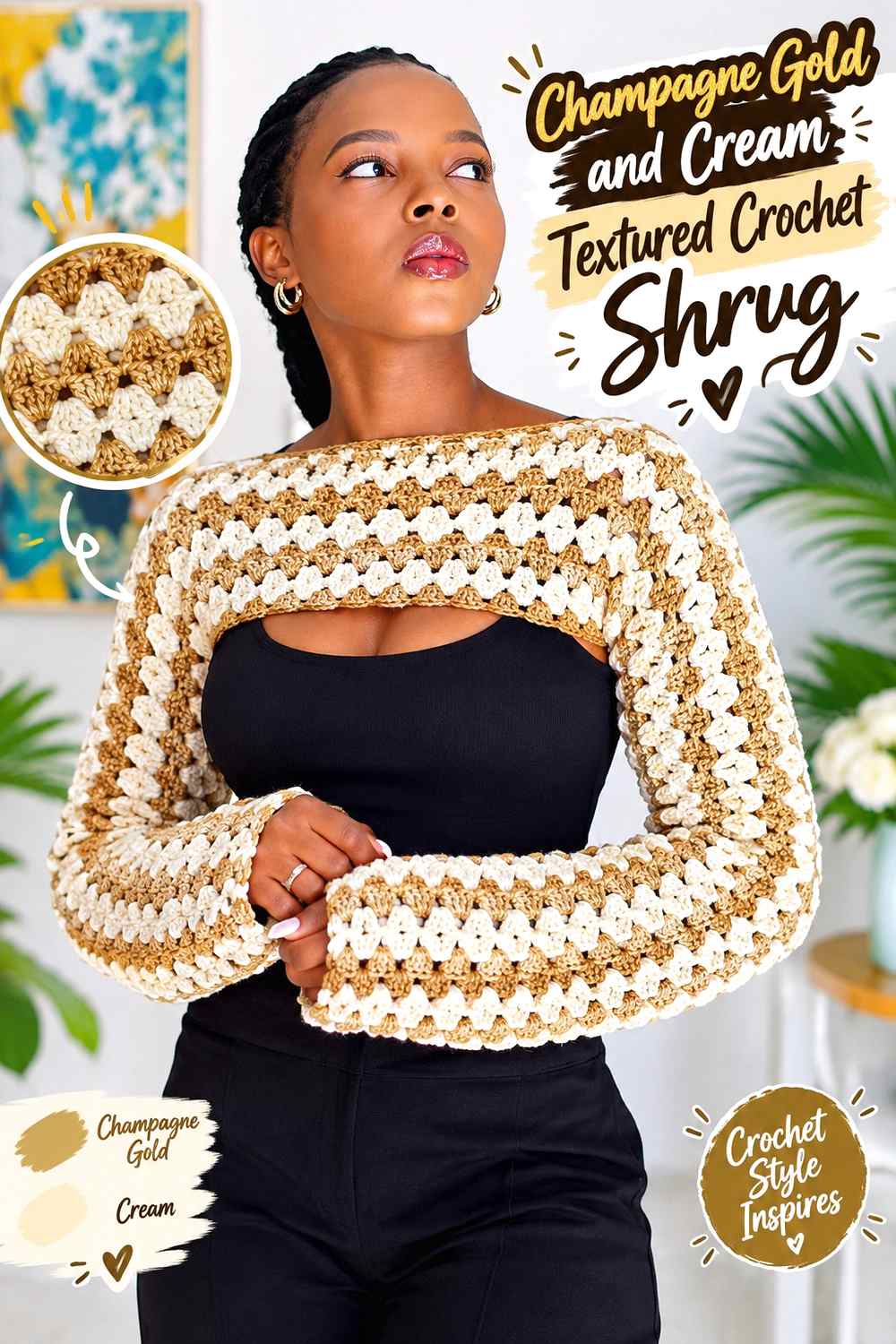
Cream creates a gentle neutral contrast that suits a shrug where stitch texture is already doing much of the visual work. Champagne Gold can dominate the textured fabric, with Cream reserved for the cuffs or another narrow finishing area.
Avoid spreading Cream through every textured section. Too many color changes can interrupt the shadows and raised details that make the crochet surface interesting.
Champagne Gold Texture Needs Enough Uninterrupted Crochet Surface
Give Champagne Gold broad sections where the stitch pattern can remain continuous. This allows changes in stitch direction, depth, and shadow to create visual movement without relying on stripes.
View the sample from normal wearing distance. If the texture remains visible, additional contrast through the center of the shrug may not add much.
Champagne Gold Can Use Cream to Clarify Crochet Cuffs
A Cream cuff creates a light finishing break without dramatically darkening the sleeve. This is useful when the Champagne Gold body already contains substantial texture.
If Cream and Champagne Gold are extremely close, use the color across the complete cuff rather than as a very thin line. A low-contrast accent often needs more area to remain intentional.
Creator Credit: AC Crochets tutorial
6. Champagne Gold And Burgundy Cocoon Crochet Shrug
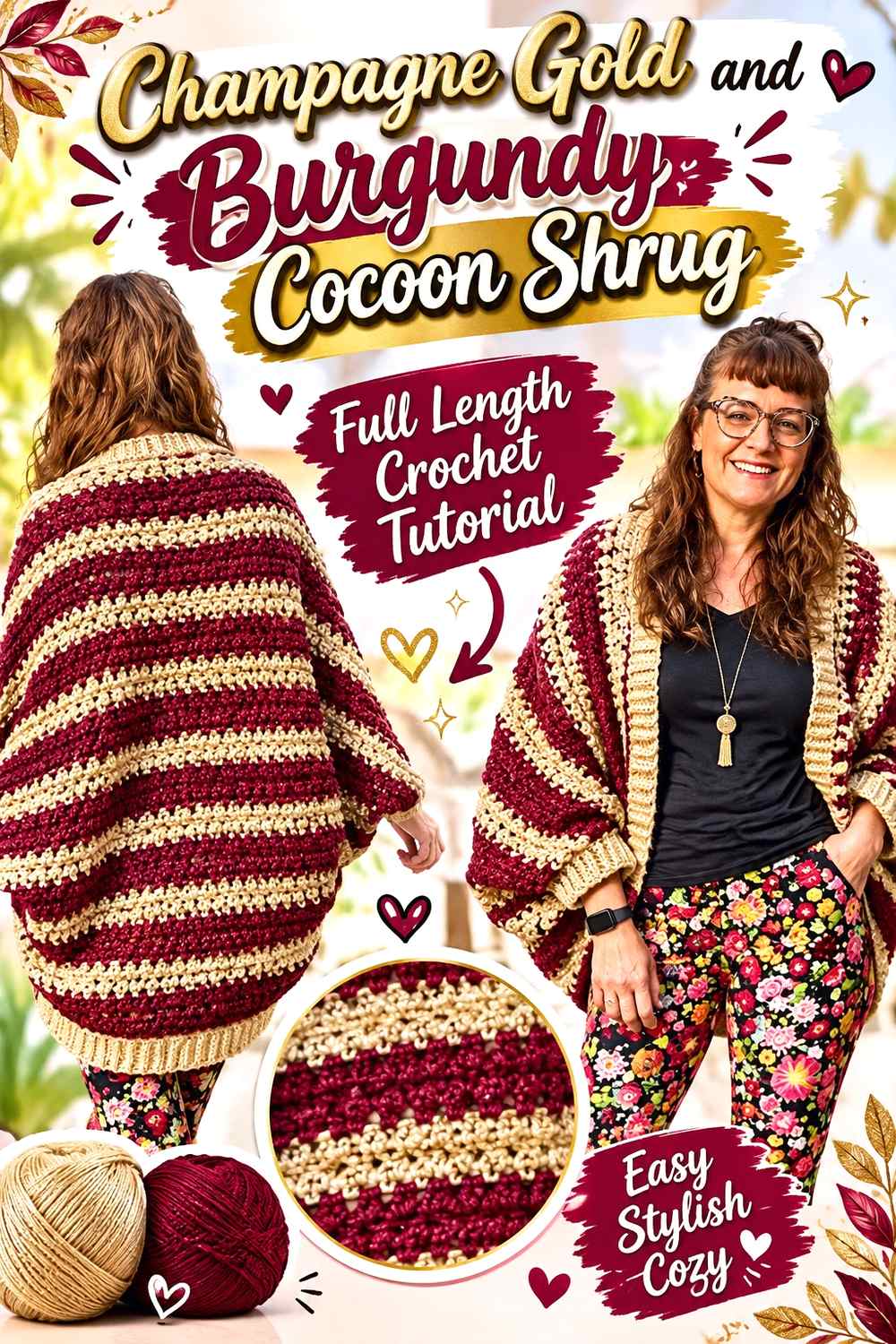
Burgundy creates one of the richest contrasts in this collection. A cocoon shrug provides a large central fabric area, so Champagne Gold can remain dominant there while Burgundy is concentrated around the opening, sleeves, or selected bands.
Keep the Burgundy controlled. A broad dark border running around the complete cocoon opening can become visually stronger than a comparatively light Champagne Gold center.
Champagne Gold Should Cover the Largest Cocoon Crochet Shrug Area
Use Champagne Gold through most of the main cocoon fabric if you want the garment to retain its light golden direction. This large central field also provides a useful buffer between Burgundy sections.
If the construction includes pronounced stitch texture, assess the Champagne Gold fabric before adding stripes. Texture may provide enough variation on its own.
Champagne Gold Needs a Controlled Burgundy Crochet Border
Use Burgundy where a clear frame is useful, but compare border width against the complete cocoon rather than a small swatch. Dark edging accumulates quickly when it surrounds a large opening.
If the Burgundy feels too dominant, keep it at the cuffs and use Champagne Gold around the central opening instead.
Creator Credit: Craft and a Cuppa® tutorial
7. Champagne Gold And Taupe Lace Cocoon Crochet Shrug

Taupe creates a restrained transition against Champagne Gold and allows lace openings to remain the main source of contrast. This makes the palette useful for a cocoon shrug where the stitch structure is more decorative than the color blocking.
Use Champagne Gold across the main lace rectangle and introduce Taupe around edges or sleeve finishes rather than repeatedly interrupting the lace pattern.
Champagne Gold Lace Should Stay Continuous Across the Cocoon Shrug
A large uninterrupted Champagne Gold lace area lets the openings form a recognizable pattern. Switching colors frequently can make individual lace repeats harder to follow from a distance.
Test the lace over different underlayers. A dark base will strengthen the pattern far more than adding another low-contrast neutral within the crochet.
Champagne Gold and Taupe Can Create a Quiet Crochet Cocoon Edge
Taupe can define sleeve openings or an outer border without producing a hard dark frame. This works well if you want the cocoon shape to remain soft rather than graphic.
Choose a Taupe that is clearly deeper than Champagne Gold if the border needs to be noticeable. If the values are too similar, treat the combination as intentionally tonal.
Creator Credit: Let’s All Crochet tutorial
8. Champagne Gold And Sage Bolero Crochet Shrug
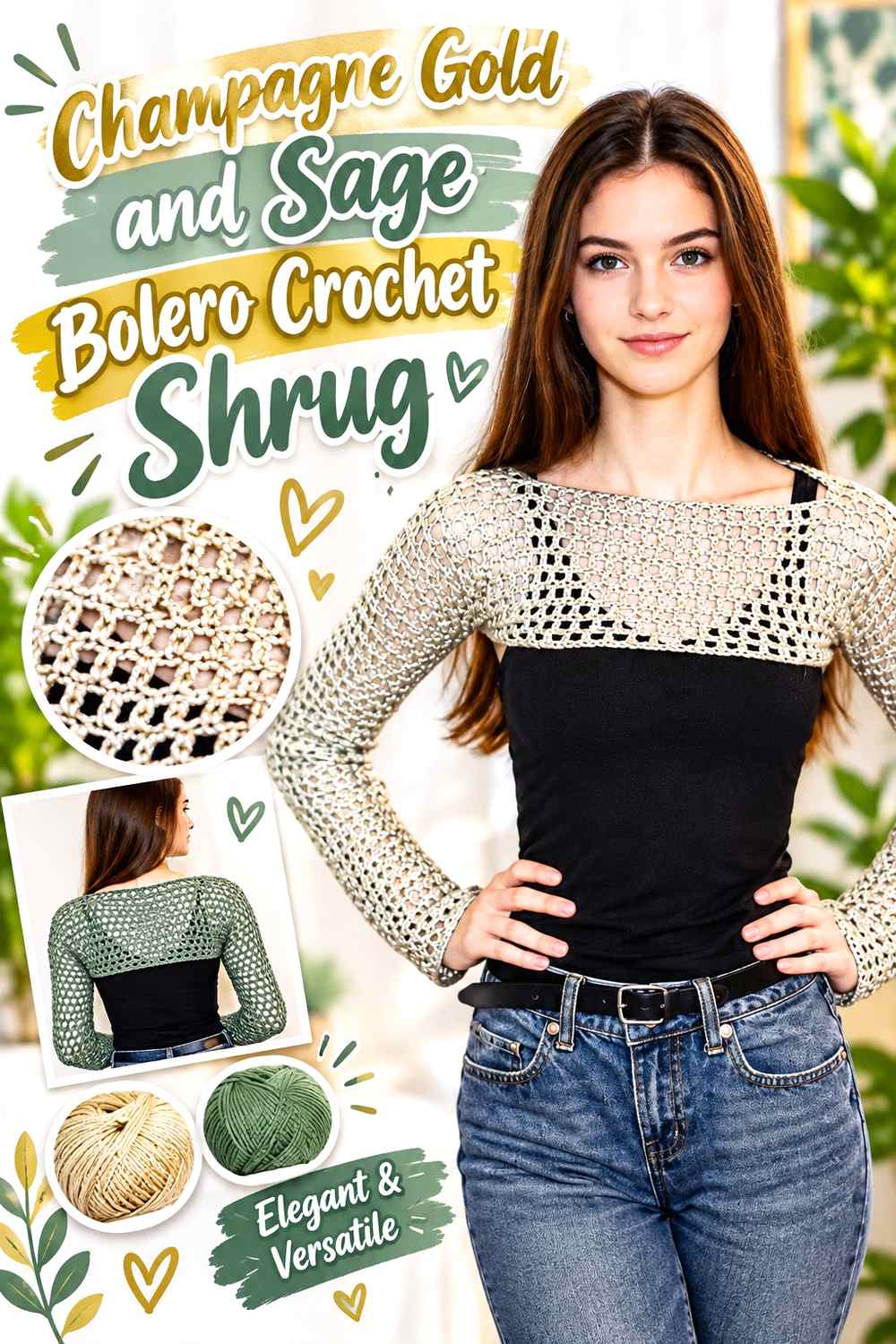
Sage introduces a muted cool contrast to Champagne Gold. On a short bolero, the green works best when confined to places with obvious boundaries, such as cuffs, the outer edge, or a controlled sleeve section.
The small garment scale means Sage does not need much area to be noticed. Champagne Gold should still cover most of the shoulder and back section if it is meant to lead the palette.
Champagne Gold Should Anchor the Main Crochet Bolero Area
Keep the central bolero fabric Champagne Gold so the short garment does not become equally divided between two colors. A compact body benefits from one continuous foundation.
Sage can then appear more prominently on the sleeves, where there is greater length available for a deliberate transition.
Champagne Gold Can Balance Sage Crochet Shrug Cuffs
If Sage covers the cuffs, bring Champagne Gold close to the wrist before the color change rather than ending the green high on the sleeve. This keeps the main color visually connected to the complete arm.
You can repeat Sage around a narrow outer edge if the cuffs feel isolated, but avoid adding it to every boundary automatically.
Creator Credit: Amy’s DIY Frugal Life tutorial
9. Champagne Gold And Charcoal Striped Mesh Crochet Shrug
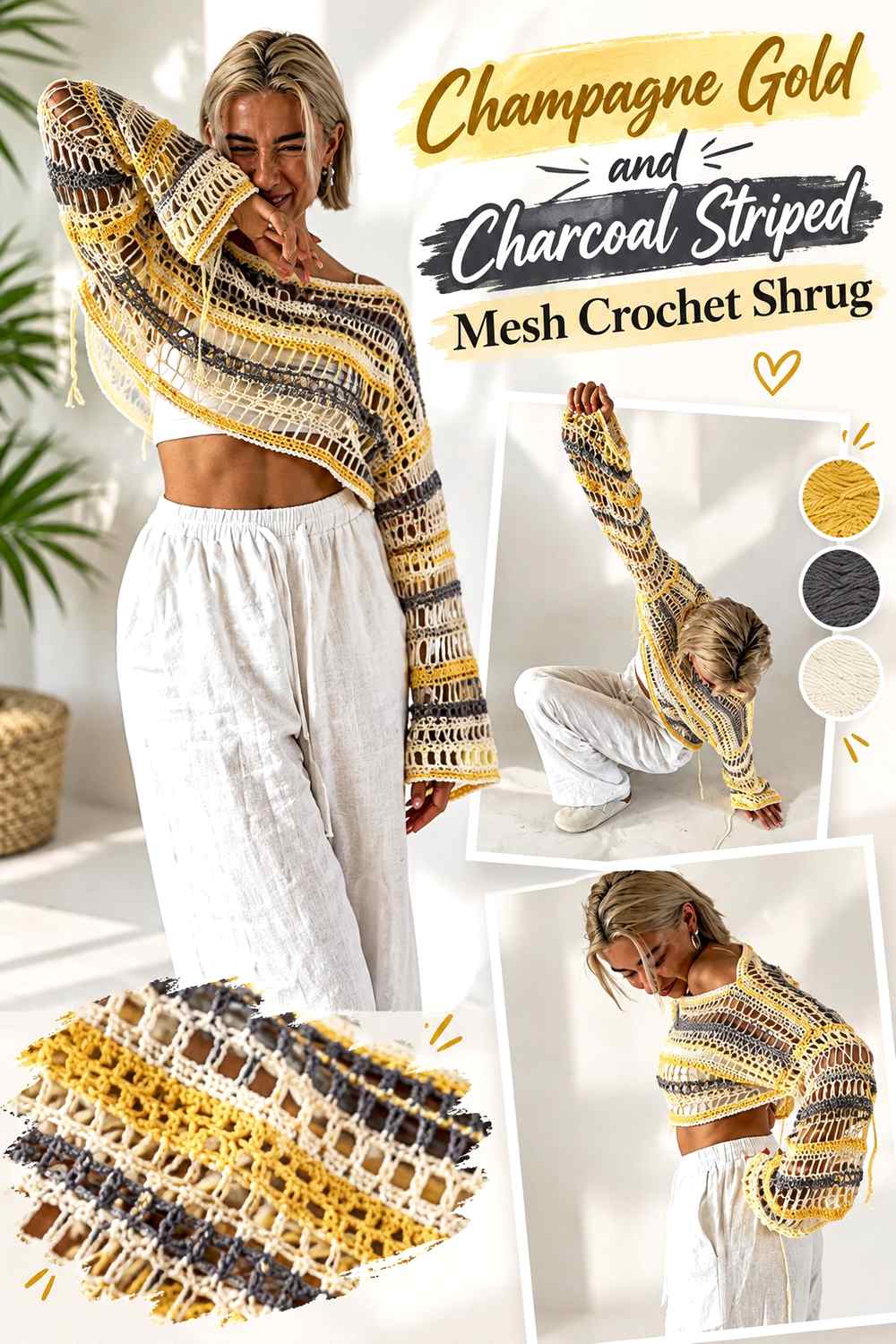
Charcoal creates strong dark punctuation against Champagne Gold, making this combination useful for a striped sleeve shrug. Because mesh already exposes the layer beneath, the stripes should remain relatively controlled.
Champagne Gold can repeat as the dominant band while Charcoal appears less frequently or in narrower sections. That keeps the garment light even when the secondary shade is quite dark.
Champagne Gold Should Repeat More Often Than Charcoal in Crochet Stripes
Use Champagne Gold as the visual reset between darker sleeve bands. Frequent returns to the main color help both arms feel connected to the smaller shoulder or body section.
Equal-width alternating stripes would create a more evenly divided garment. That can work, but it changes the idea from Champagne Gold-led to a balanced two-color shrug.
Champagne Gold Mesh Needs Charcoal Placed Where Contrast Is Useful
Charcoal can define cuffs or a few broader sleeve sections where its darkness remains easy to read. Avoid relying on tiny Charcoal details within very open mesh, especially over a dark base layer where they may visually disappear.
Test the complete Champagne Gold, Charcoal, and underlayer combination together before finalizing the stripe sequence.
Creator Credit: Belina Bellwood tutorial
10. Champagne Gold And Dusty Rose Lace Crochet Shrug
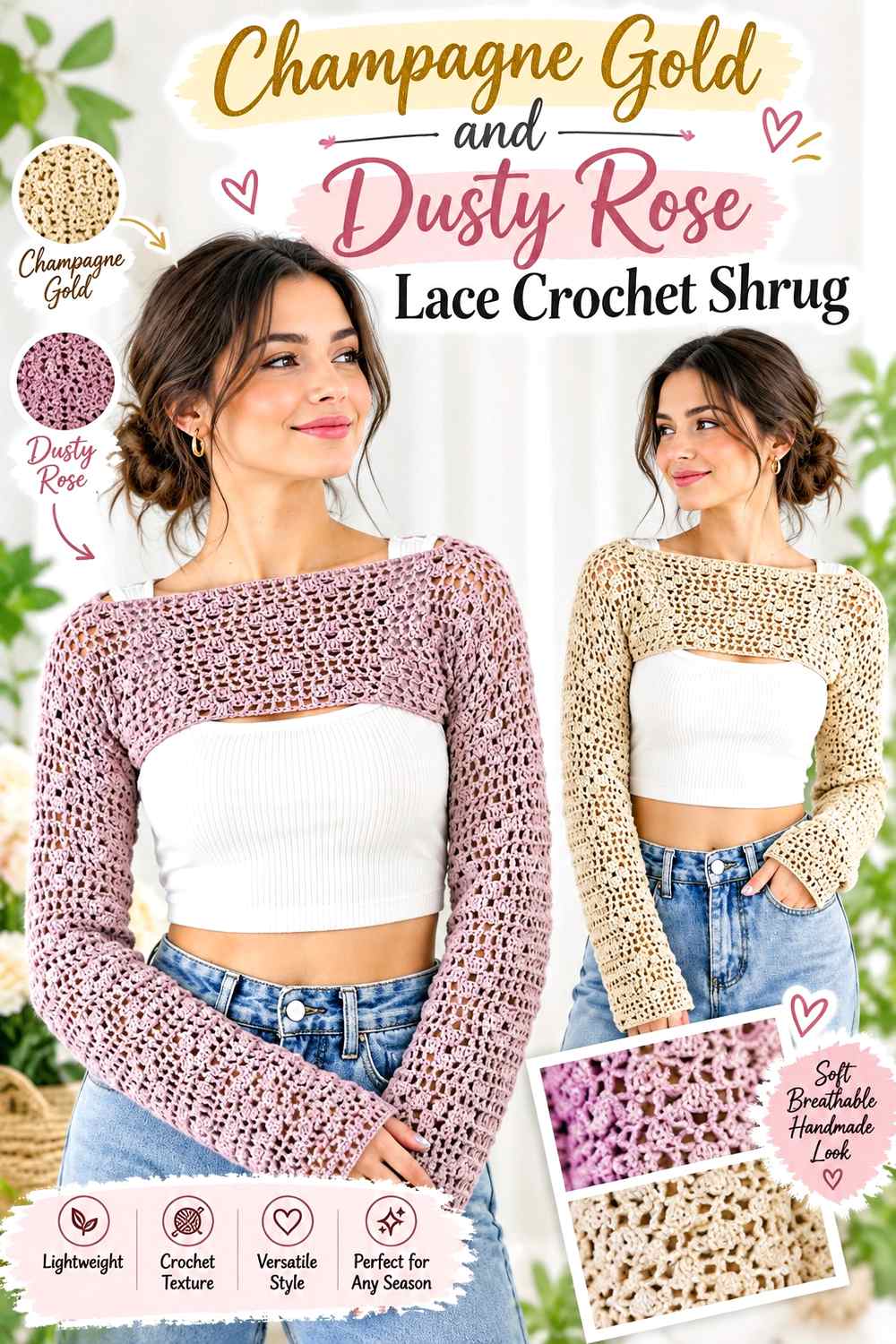
Dusty Rose creates a muted romantic direction while Champagne Gold keeps the overall shrug lighter. A lace construction gives both colors additional variation because negative space remains visible between the stitches.
Use Champagne Gold for the largest lace sections and Dusty Rose where you want sleeve flare or edging to become more noticeable.
Champagne Gold Should Keep the Crochet Lace Pattern Readable
Avoid changing color in the middle of every small lace repeat. Longer Champagne Gold sections make it easier for the pattern to establish itself before Dusty Rose is introduced.
Place a sample over the intended clothing layer to see whether the lace is already prominent enough. The background can have as much visual impact as the Rose accent.
Champagne Gold Can Keep Dusty Rose Bell Sleeves Balanced
If Dusty Rose appears toward a flared sleeve edge, use the same placement on both sleeves and compare the width before finishing. A stronger accent at the wrist attracts attention to small differences.
Keeping Champagne Gold through most of the upper sleeve ensures the flare remains connected to the central shrug instead of looking like a separate pink piece.
Creator Credit: Chenda DIY tutorial
11. Champagne Gold And Espresso Meadow Lace Crochet Shrug
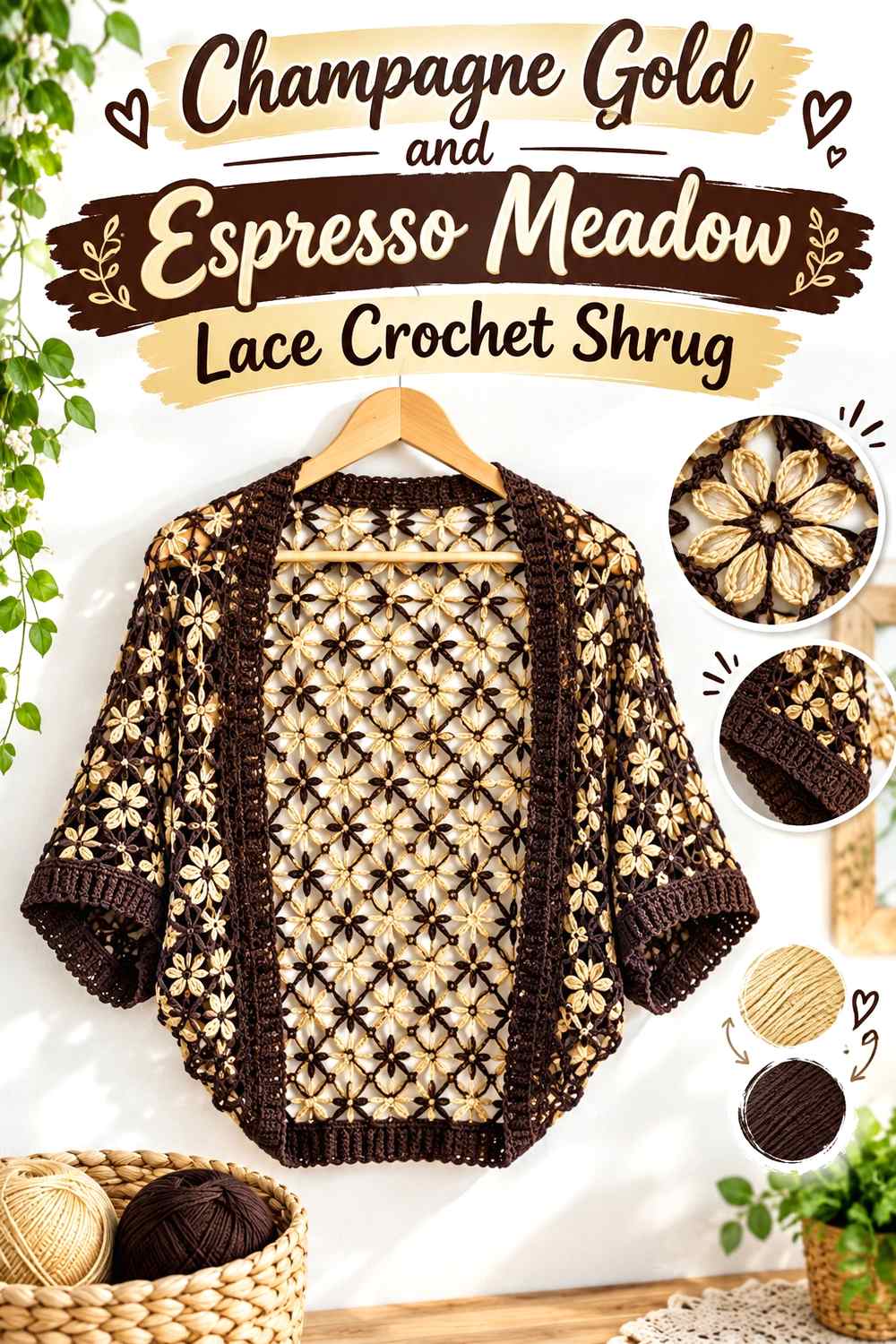
Espresso creates deep warm contrast without moving to black. It works especially well around ribbed or more solid edges where a lace shrug needs visual definition against a Champagne Gold body.
Keep the central lace Champagne Gold and use Espresso carefully around cuffs or the larger opening. The darker neutral can become prominent quickly when repeated on every edge.
Champagne Gold Should Remain the Main Meadow Lace Crochet Surface
A broad Champagne Gold lace panel gives the stitch pattern room to remain recognizable before the fabric is folded and shaped into the shrug.
Because the lace itself contains repeated openings, evaluate the pattern after blocking or finishing according to the tutorial rather than judging only the unstretched working fabric.
Champagne Gold Can Use Espresso to Define Crochet Ribbed Edges
Espresso cuffs create a substantial boundary between the Champagne Gold lace and the hands or base garment. Repeating some Espresso around the shrug opening can connect the finish.
If that border becomes too heavy, keep the central opening Champagne Gold and let Espresso remain a sleeve-only accent. Not every edge needs the darkest shade.
Creator Credit: MyCrochetory tutorial
12. Monochrome Champagne Gold Shawl Collar Crochet Shrug
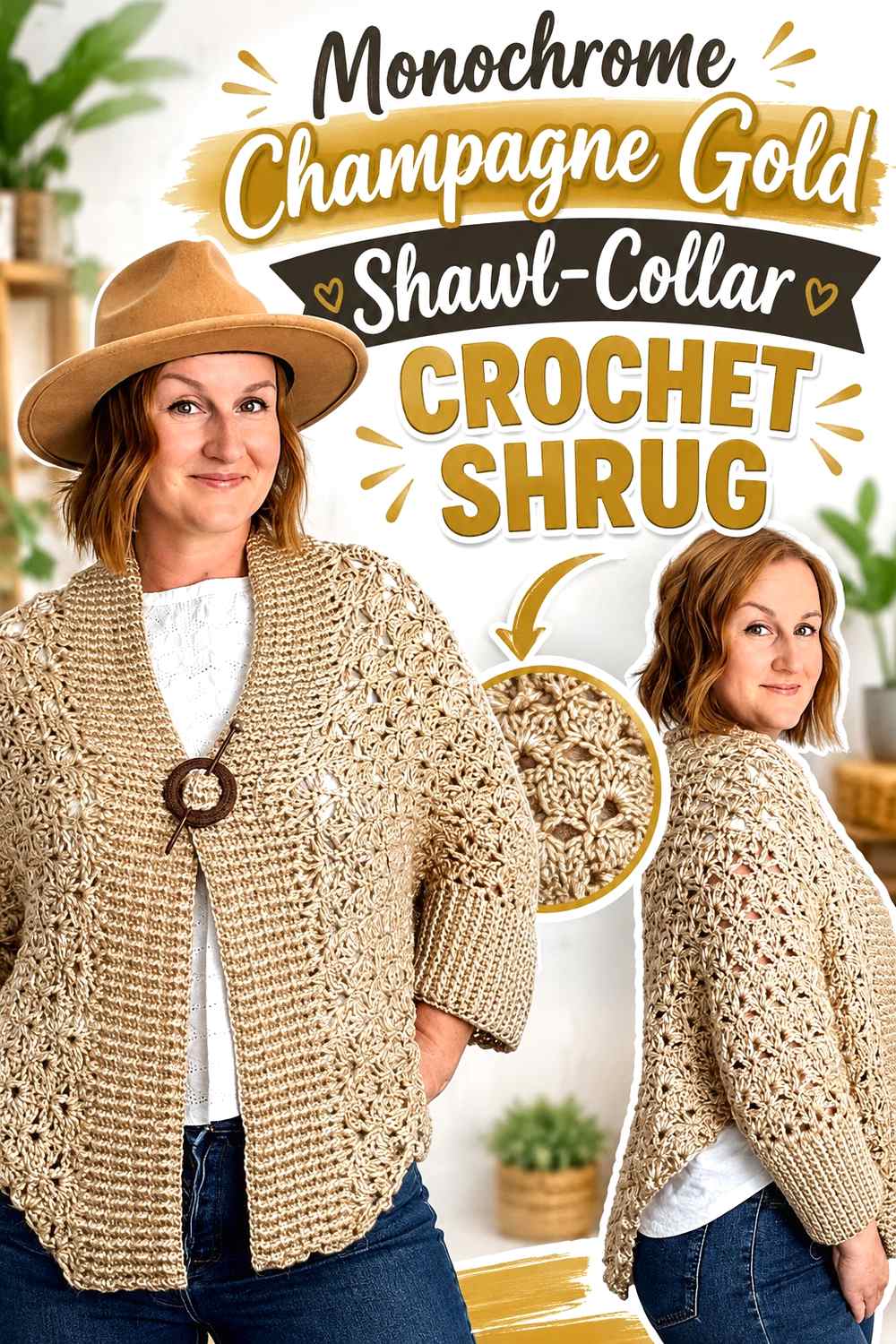
A monochrome Champagne Gold shrug shifts the focus from color contrast to lace structure, collar texture, sleeve finishing, and changes in stitch density. This direction is useful when you want one uninterrupted color but still want the shrug to have several visible design zones.
The shawl collar can remain Champagne Gold while standing apart through texture or construction rather than another shade.
Champagne Gold Lace Can Create Contrast Without a Second Crochet Color
Open lace and more solid finishing naturally react differently to light and background colors. Use that structural difference to distinguish the body from the sleeves or collar instead of assuming a contrasting yarn is required.
View several sections together before deciding the monochrome palette needs another shade. A completed Champagne Gold fabric often has more visual variation than an individual strand suggests.
Champagne Gold Can Separate the Shawl Collar Through Crochet Texture
Keep the collar Champagne Gold but allow its denser or ribbed appearance to distinguish it from the lace body. This preserves the single-color concept while still giving the neckline a clear frame.
The same principle can continue into the sleeve edges. Champagne Gold cuffs in a different texture can provide a finished boundary without breaking the monochrome palette.
Creator Credit: Blue Star Crochet | Veronika Cromwell tutorial
Comparing the Champagne Gold Crochet Shrug Palettes
For the lightest overall direction, Champagne Gold with Ivory or Cream keeps contrast restrained and lets stitch texture or mesh openings do more of the visual work. Taupe creates another quiet option but gives the edges slightly more depth.
Black, Charcoal, Burgundy, and Espresso create much stronger definition. These shades are most useful when you want cuffs, granny-square joins, stripes, or cocoon borders to become obvious structural features. Because they are considerably darker than Champagne Gold, smaller amounts may be enough.
Blush and Dusty Rose keep the palette warm and soft while adding a recognizable hue change. Sage moves in the opposite direction with a muted green contrast.
The monochrome option is different from all of them. Instead of depending on another color, it uses lace openings, ribbing, collars, cuffs, and the visible base layer to create separation within Champagne Gold itself.
Conclusion
Champagne Gold can work across very different crochet shrug styles because it can function as a light main field, a granny-square anchor, or a continuous color that lets crochet texture carry the design.
For stronger definition, Black, Charcoal, Burgundy, or Espresso can outline Champagne Gold around joins, cuffs, stripes, or borders. Ivory, Cream, and Taupe produce gentler neutral transitions. Blush and Dusty Rose keep the palette warm, while Sage introduces a muted cooler contrast.
Openwork shrugs deserve one additional color check before you commit: place a swatch over the clothes you actually expect to wear underneath. The visible base layer becomes part of the finished palette and may change how much additional contrast the Champagne Gold crochet needs.
Frequently Asked Questions
What colors work well with Champagne Gold in a crochet shrug?
Ivory, cream, taupe, mocha, espresso, black, charcoal, burgundy, blush, dusty rose, and sage can all support Champagne Gold. Pale neutrals create softer transitions, while dark shades make cuffs, edges, stripes, and joins more defined.
How can I keep a Champagne Gold crochet shrug from looking washed out?
Give Champagne Gold clear boundaries through texture, edging, or a contrasting layer underneath. You can also use a darker supporting color on cuffs or borders. The entire shrug does not need strong contrast; a few strategically placed darker areas may provide enough definition.
What should I wear under a Champagne Gold mesh crochet shrug?
The choice depends on how clearly you want the mesh openings to show. A dark layer creates stronger contrast through Champagne Gold openwork, while ivory, beige, or another light shade produces a more blended appearance. Test the shrug or a swatch directly over the intended outfit.
Should Champagne Gold be the main color in a multicolor crochet shrug?
If the project is specifically intended to read as Champagne Gold, give it the greatest visual area or repeat it most consistently. It can dominate the sleeves, central back, granny motifs, or main cocoon panel while the second color remains focused on finishing and accents.
How can I use Champagne Gold in a granny square crochet shrug?
Champagne Gold can occupy motif centers, broad middle rounds, outer rounds, joins, or edging. Decide whether you want the squares to remain individually visible or visually merge. A dark join emphasizes the motif grid, while Champagne Gold joins can connect the light areas more smoothly.
Does a Champagne Gold crochet shrug need a contrasting cuff?
No. A monochrome Champagne Gold cuff can still look distinct when the stitch texture differs from the body. Ribbing, denser stitches, or a change from lace to solid fabric can provide enough separation without introducing another yarn color.
How do I choose between a Champagne Gold lace shrug and a denser cocoon shrug?
Focus on how much of the outfit underneath you want visible. Lace and mesh make the base garment part of the color scheme, while a denser cocoon gives Champagne Gold more uninterrupted visual area. Also compare sleeve coverage, outer edging, and overall shape in the original tutorial before choosing your construction.