Evergreen is a strong foundation for a crochet vest because it has enough depth to define a simple solid panel while also working well inside granny squares, stripes, ribbing, and contrasting edges. The important decision is not simply which second color to add, but where that color belongs on a sleeveless garment.
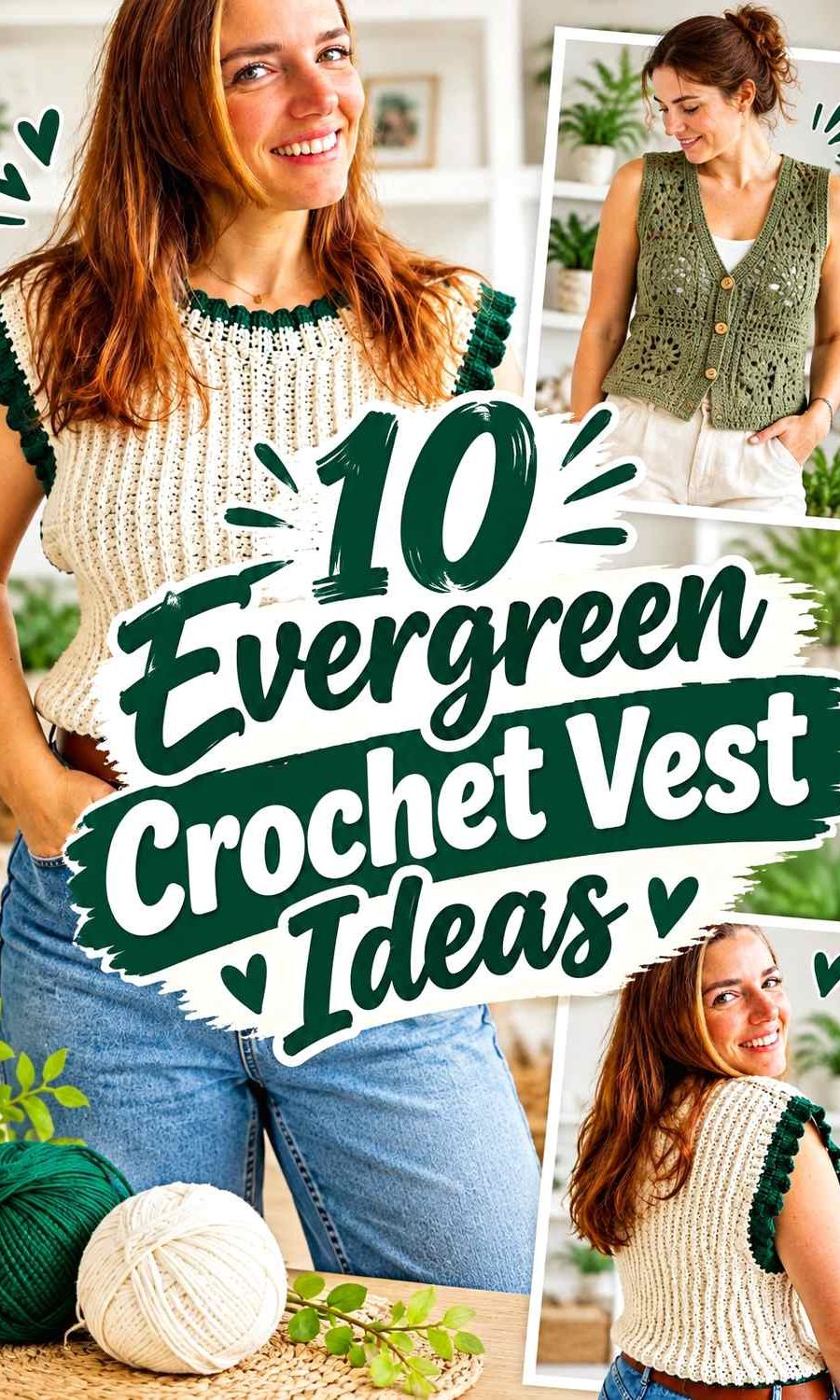
A vest naturally divides into a few useful color zones: the main front and back panels, neckline, armholes, lower ribbing, shoulder sections, and any granny-square motifs. Cream can make Evergreen neckline shaping easier to see, while charcoal creates a quieter dark frame. Camel and rust push the green toward a warmer earthy palette, while blush or gray produce a less expected contrast.
The 10 ideas below use different color relationships and vest constructions. The linked tutorials support the crochet vest concepts; the Evergreen palettes are independent adaptations rather than claims about colors used by the original creators.
Quick List
- Evergreen And Cream Classic Ribbed Crochet Vest
- Evergreen And Camel V Neck Crochet Vest
- Evergreen And Charcoal Modern Textured Crochet Vest
- Evergreen And Blush Simple Crochet Vest
- Evergreen And Oatmeal Granny Square Crochet Vest
- Evergreen Mustard And Cream Granny Square Crochet Vest
- Evergreen And Taupe Relaxed Crochet Vest
- Evergreen And Navy Boxy Crochet Sweater Vest
- Evergreen Rust And Ivory Retro Granny Crochet Vest
- Evergreen And Stone Gray Closed Crochet Vest
Decide Where Evergreen Should Dominate a Crochet Vest
A solid or paneled vest usually looks most clearly Evergreen when the front and back contain the largest continuous areas of green. Supporting colors can then define the neckline, armholes, ribbing, or lower hem without breaking the torso into too many separate blocks.
Granny-square vests need a different strategy because there may be no single uninterrupted body panel. In that case, repeat Evergreen consistently through motif centers, outer rounds, joins, or edging so the color remains visible across the complete garment.
Before committing to a multicolor layout, look at the vest by sections. A front panel that is strongly Evergreen can still feel disconnected if the back or shoulder area contains almost none of the same color.
Use Evergreen Contrast to Define Vest Necklines and Armholes
The neckline and armholes occupy relatively narrow areas, so small differences in color value matter. Cream, ivory, oatmeal, and pale gray usually create much clearer light-dark separation against Evergreen than navy, charcoal, or another deep green.
Dark-on-dark combinations can still work when you want a subtle edge. The key is knowing that the trim may blend into Evergreen from a distance rather than forming a sharp outline.
A quick grayscale photo of the yarns can help reveal this difference. If two colors look almost identical without hue, use them for a tonal effect rather than for tiny details that need strong visibility.
Keep Evergreen Granny Squares and Ribbing Visually Connected
When a vest combines textured ribbing with granny squares or another patterned body, the finishing color can change the overall balance considerably. Evergreen ribbing can unite multicolor motifs, while cream or oatmeal ribbing creates a light frame around a darker body.
Think about the neckline, armholes, and hem as one family of finishing areas. They do not have to use the same color, but repeating one shade in at least two of these locations often makes the palette feel more deliberate.
1. Evergreen And Cream Classic Ribbed Crochet Vest
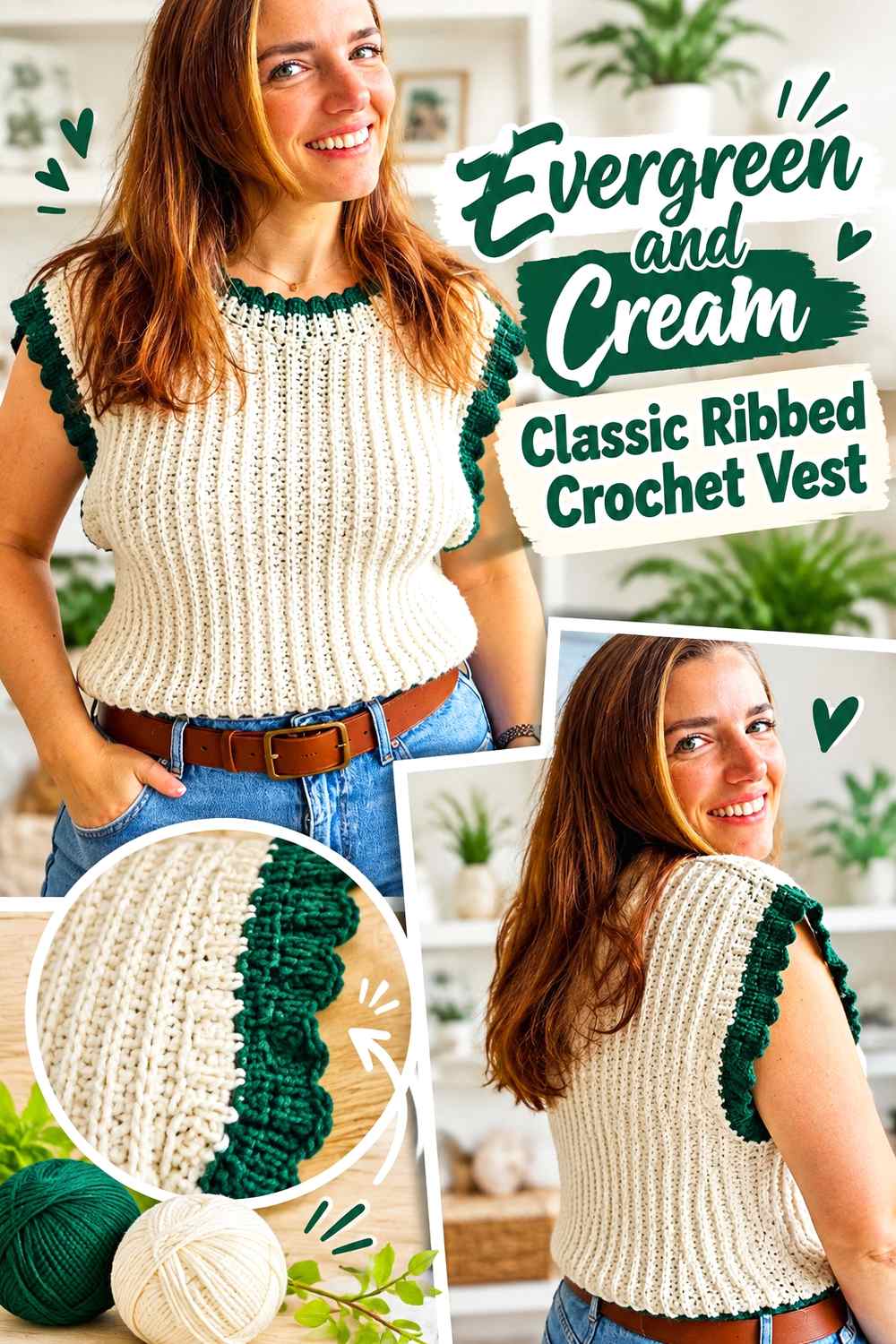
Evergreen can cover the main front and back panels of a classic sweater vest while cream highlights the ribbed neckline and armholes. This puts the deepest color across the largest visual area and reserves the lightest shade for places where the garment already changes direction.
The result is a clearly Evergreen vest rather than an evenly divided two-color piece. Cream can also help separate the neckline from a dark shirt worn underneath, especially when the vest has a compact ribbed finish.
Evergreen Should Cover the Main Crochet Vest Panels
Keep Evergreen continuous through most of the torso if you want the vest to read as a strong solid-color layering piece. A large uninterrupted field also gives stitch texture more room to show without competing with repeated stripes.
Before adding cream, look at the joined or positioned panels from a distance. The neckline and armholes may need less contrasting color than expected because their shapes already create strong boundaries.
Cream Can Give Evergreen Crochet Vest Ribbing Clear Definition
Cream works particularly well at the neckline and armholes because small light sections remain visible against Evergreen. Repeating the same cream at the lower ribbing can create a complete frame, but it is not mandatory.
If a fully cream hem feels too prominent, keep the lower edge Evergreen and use cream only around the upper openings. That shifts attention toward the face and shoulders rather than outlining the entire vest.
Creator Credit: Cat Kemble
2. Evergreen And Camel V Neck Crochet Vest
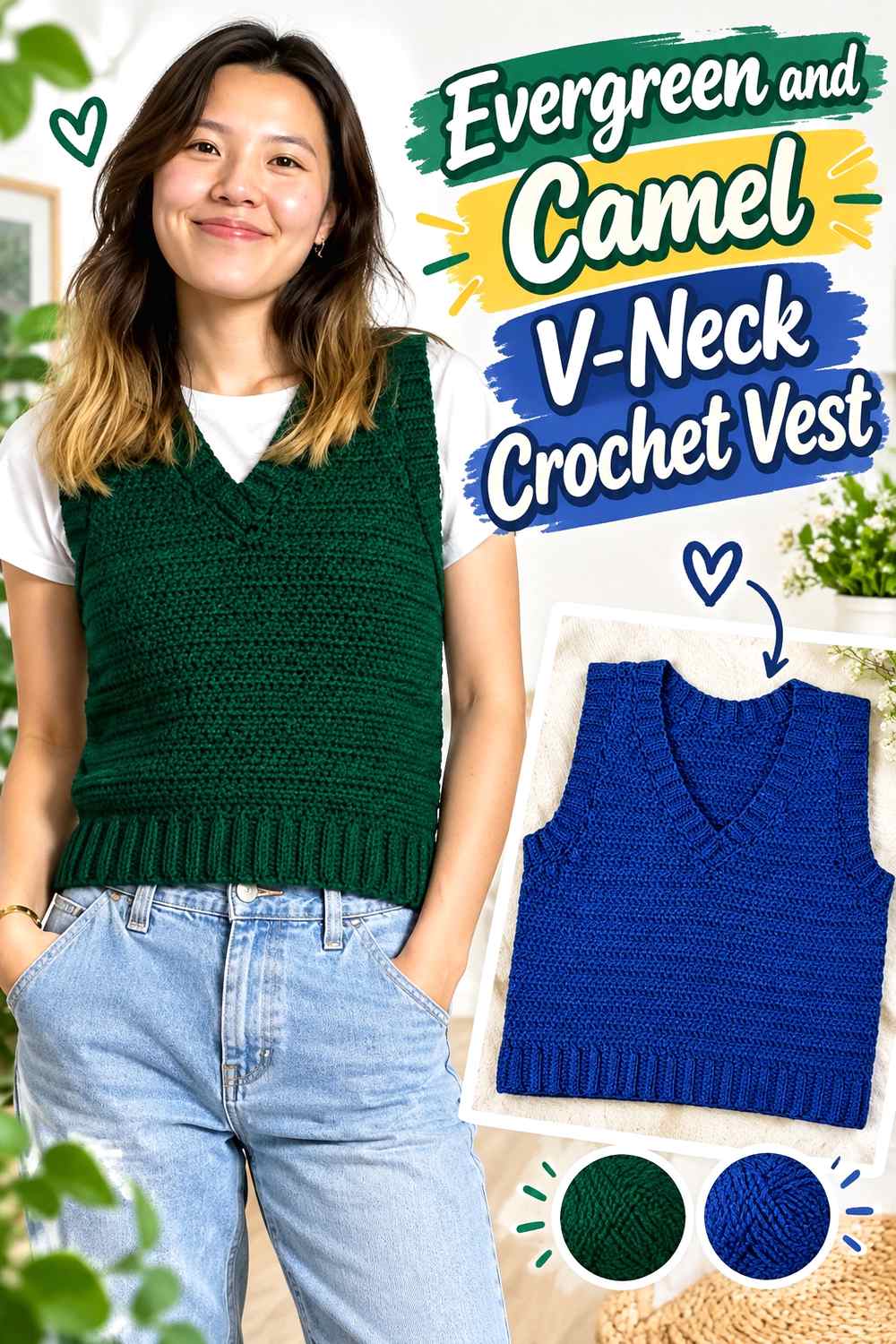
A V-neck gives the supporting color a natural path through the center of the garment. Evergreen can remain dominant across the body while camel traces the V, armhole edges, or lower ribbing.
Camel produces a warmer contrast than cream. It remains lighter than a deep Evergreen but does not create such a sharp boundary, which makes it useful when you want the V-neck visible without turning it into the brightest feature.
Evergreen Should Remain Continuous Around the Crochet V-Neck
Avoid making the camel V so wide that Evergreen disappears from much of the upper chest. A relatively contained trim lets the green front panel remain connected on both sides of the neckline.
This also gives you more flexibility when layering. The Evergreen still reads as the primary garment color even when the shirt underneath is visible through the V.
Camel Can Warm Evergreen Crochet Vest Armhole Edging
Repeat camel around the armholes if the V-neck trim needs another connection point. Since both areas already require finishing, the color repetition follows the vest structure instead of looking randomly applied.
If camel and Evergreen feel too close in value, move toward a slightly lighter tan rather than adding an unrelated third color solely for contrast.
Creator Credit: VivCrochets
3. Evergreen And Charcoal Modern Textured Crochet Vest
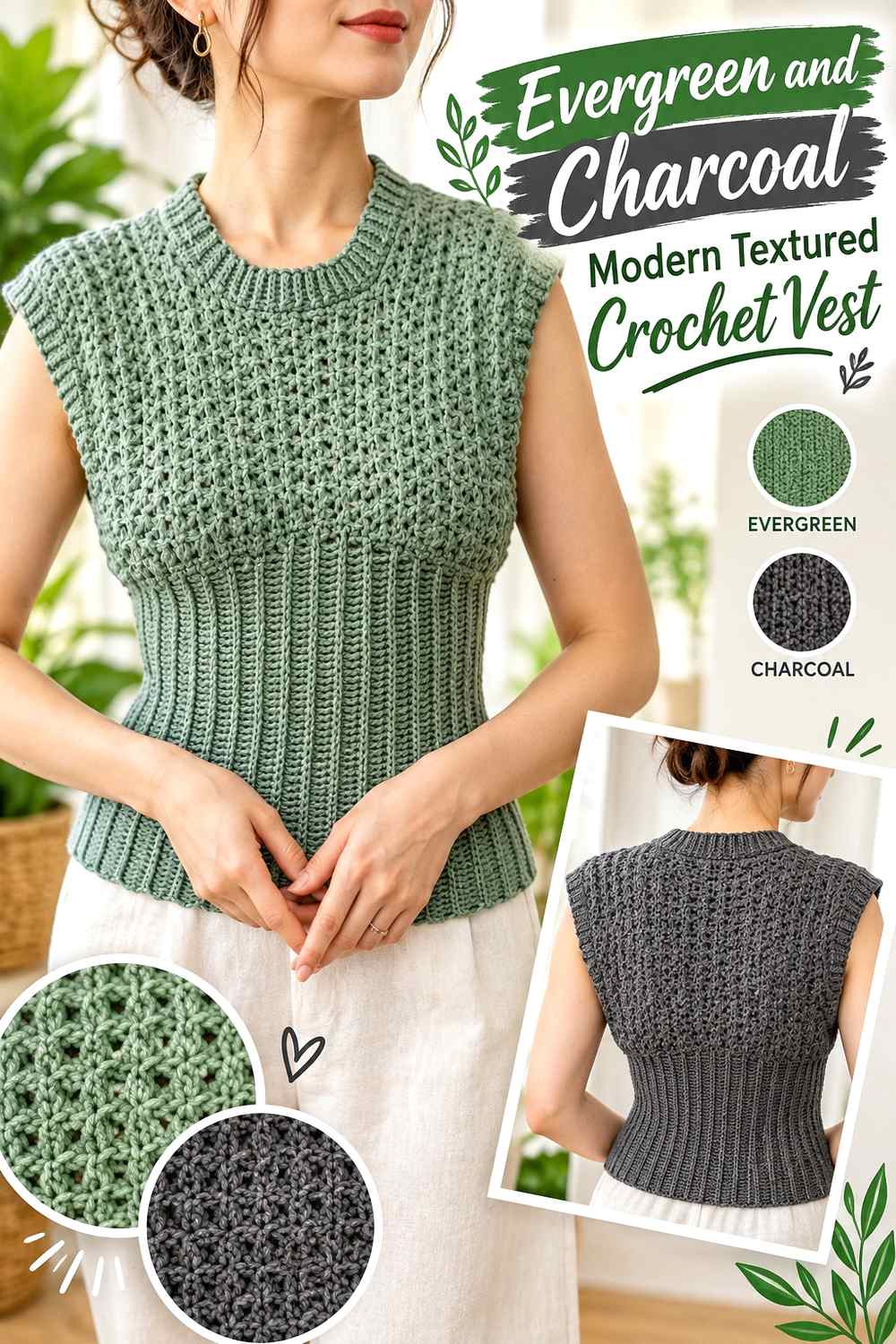
Charcoal creates a restrained dark pairing with Evergreen. This works well when texture rather than color contrast should carry much of the visual interest.
Let Evergreen take the main textured panels and keep Charcoal around controlled edges. Because both colors are dark, broad color blocks may merge visually more than expected, while the stitch surface remains noticeable up close.
Evergreen Texture Should Stay Central on the Crochet Vest
Keep the main textured area Evergreen so changes in light and shadow can create variation within the green itself. Adding frequent Charcoal sections through the center may interrupt the surface before the texture has enough room to establish itself.
View a swatch both close up and several feet away. Strong stitch definition at arm’s length may become much more subtle at normal viewing distance.
Charcoal Gives Evergreen Crochet Vest Edges a Tonal Frame
Charcoal can work around the neckline, armholes, or lower edge when you want finishing that is visible without becoming bright. The result is more tonal than Evergreen paired with cream.
If the colors disappear into each other too much, use Charcoal on broader finishing areas rather than narrow single-row details. More visual area can make a low-contrast accent easier to recognize.
Creator Credit: TCDDIY
4. Evergreen And Blush Simple Crochet Vest
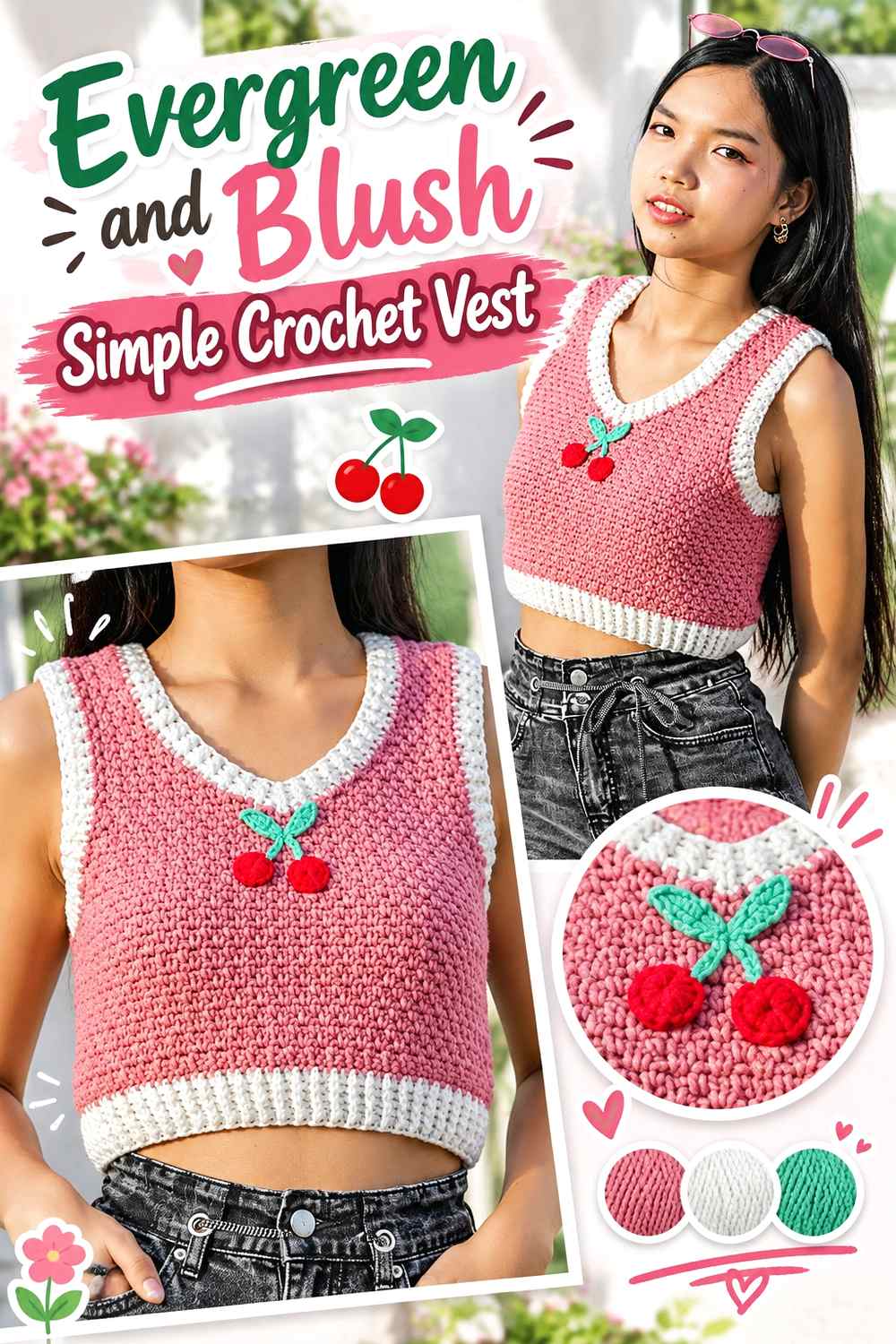
Blush creates a softer and less expected contrast against Evergreen. Since the hues are far apart, you can use relatively small amounts of blush and still make the accent noticeable.
A straightforward paneled vest is a useful setting for this palette because the construction does not already contain many competing color zones. Evergreen can cover most of the torso while blush stays concentrated around the finishing.
Evergreen Should Keep the Simple Crochet Vest Visually Grounded
Use Evergreen across the front and back to maintain one strong foundation. The richer green keeps the garment from becoming overly pastel when blush is introduced near the openings.
Avoid alternating broad Evergreen and blush body bands unless a striped vest is your goal. The contrast is strong enough that even modest pink areas will attract attention.
Blush Can Lighten Evergreen Crochet Vest Neckline and Armholes
A blush neckline provides a softer alternative to cream while remaining clearly visible against Evergreen. Repeating a little blush around the armholes can prevent the neckline from looking like an isolated accent.
If the blush is extremely pale, compare it with white and cream before choosing. A warmer muted pink creates a distinctly different palette, while a near-white blush may function almost like a neutral.
Creator Credit: Chenda DIY
5. Evergreen And Oatmeal Granny Square Crochet Vest
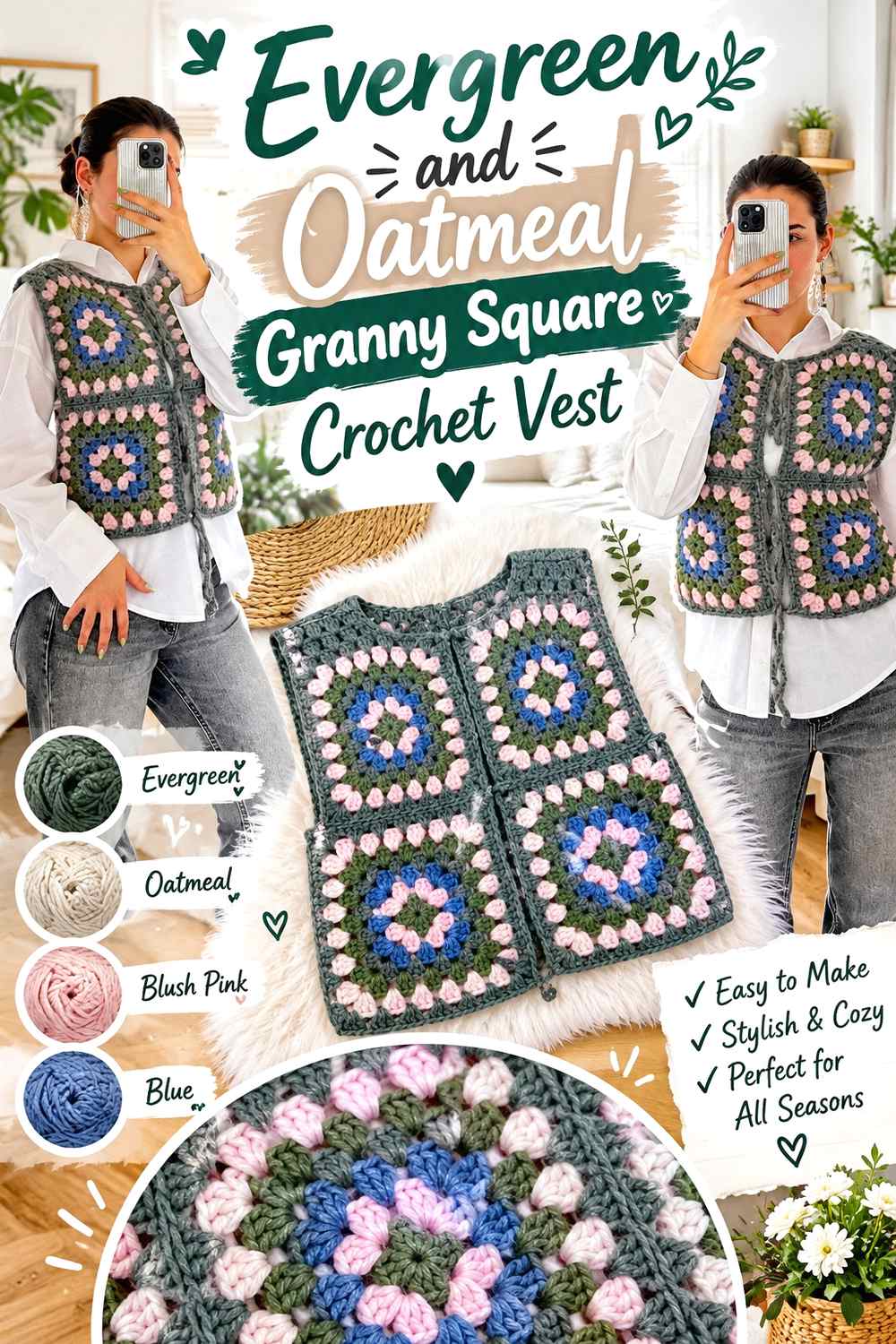
Granny-square construction changes the color-planning problem because Evergreen can appear inside every motif rather than in one large solid panel. Oatmeal gives the squares enough light contrast to show their structure without creating the sharper effect of bright white.
For an Evergreen-led vest, use the green repeatedly in centers, outer rounds, or both. Oatmeal should provide space between the darker sections rather than gradually taking over the majority of every square.
Evergreen Should Repeat Across Every Granny Square Crochet Vest Section
Spread Evergreen-containing motifs through the front, back, shoulders, and side areas. A strong concentration of green on only one panel can make the finished vest look uneven even if the total color amounts are technically balanced.
Arrange completed motifs in their intended garment positions before joining. This makes dark clusters easier to spot while you can still swap squares.
Oatmeal Can Keep Evergreen Crochet Granny Squares Distinct
Use Oatmeal around Evergreen centers or as selected outer rounds when neighboring green areas begin to merge. The lighter neutral gives the eye a clear pause between dark motif sections.
If the vest already contains substantial Oatmeal inside the squares, Evergreen ribbing around the neckline or armholes can restore the main color at the garment edges.
Creator Credit: Kenikse Crochet
6. Evergreen Mustard And Cream Granny Square Crochet Vest
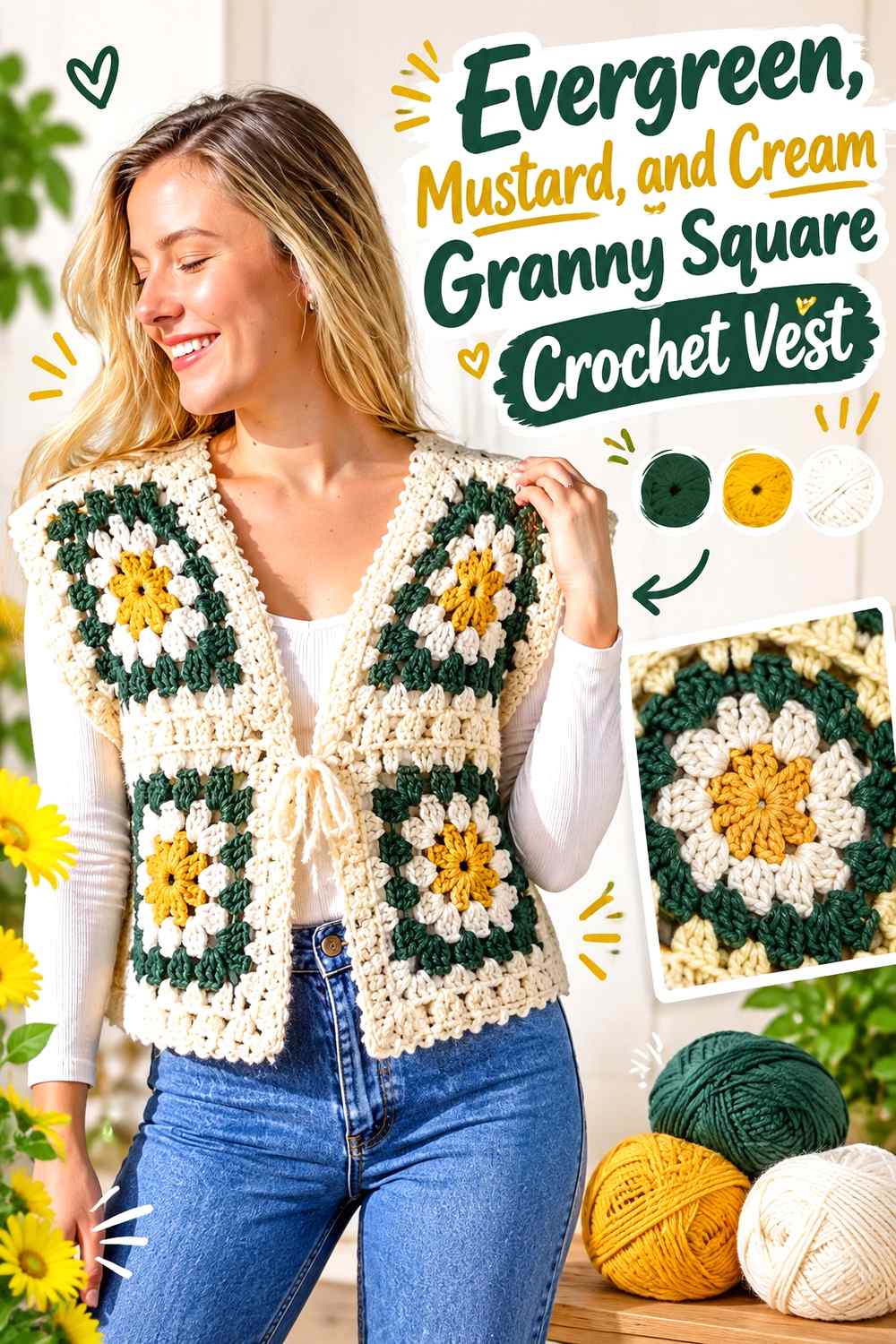
Mustard introduces a warm saturated accent while cream creates the lightest value in this three-color granny palette. Evergreen should remain the most consistent shade so Mustard becomes an accent rather than a competing main color.
Use cream strategically between the two stronger hues when small granny clusters need clearer separation. Giving each color a different role makes the motifs easier to read.
Evergreen Should Appear More Consistently Than Mustard in the Crochet Vest
Evergreen can occupy motif centers, repeat in outer rounds, or return through the joining and ribbing. What matters is that it appears across the whole garment more reliably than Mustard.
Mustard does not require large areas to be noticeable. A smaller repeated amount can create enough warmth without shifting the entire vest toward yellow.
Cream Can Separate Mustard From Evergreen Crochet Granny Squares
Place cream between selected Evergreen and Mustard rounds when the two saturated colors feel too visually dense together. This is especially useful on smaller motifs where every round has a strong influence.
Do not automatically use cream in every possible position. Leaving some Evergreen and Mustard sections adjacent can keep the palette from becoming overly segmented.
Creator Credit: lerugi crochets
7. Evergreen And Taupe Relaxed Crochet Vest
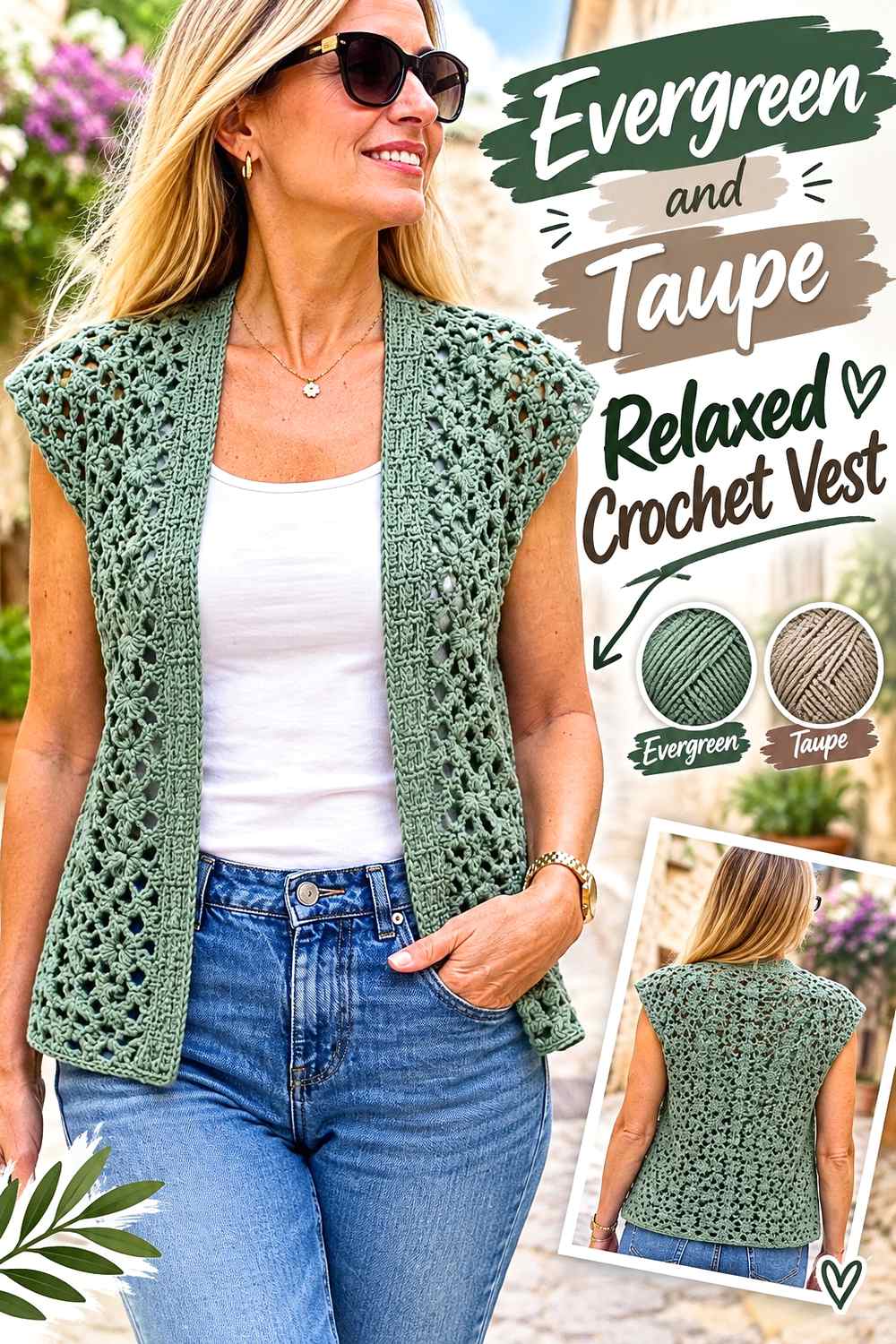
Taupe gives Evergreen a quiet neutral partner that works well when the vest shape itself is relaxed and uncomplicated. The contrast is lower than cream but lighter and warmer than Charcoal.
Let Evergreen dominate the front and back while Taupe handles narrow finishing areas. This keeps the vest easy to layer without creating a heavy border around every opening.
Evergreen Should Carry Most of the Relaxed Crochet Vest Body
A broad Evergreen body gives a relaxed silhouette visual continuity. Multiple Taupe blocks through the torso could make a simple vest look more segmented than its construction requires.
If you want additional color interest, widen the Taupe ribbing slightly instead of adding unrelated stripes through the Evergreen fabric.
Taupe Can Soften Evergreen Crochet Vest Armhole and Hem Edges
Taupe works well at the armholes because it provides visible but moderate contrast. Repeating it at the lower hem connects the upper and lower finishing while leaving the neckline free to remain Evergreen if desired.
When substituting Taupe, preserve its neutral medium-light role. A very dark brown would create a much heavier outline against Evergreen.
Creator Credit: Handwork diy
8. Evergreen And Navy Boxy Crochet Sweater Vest
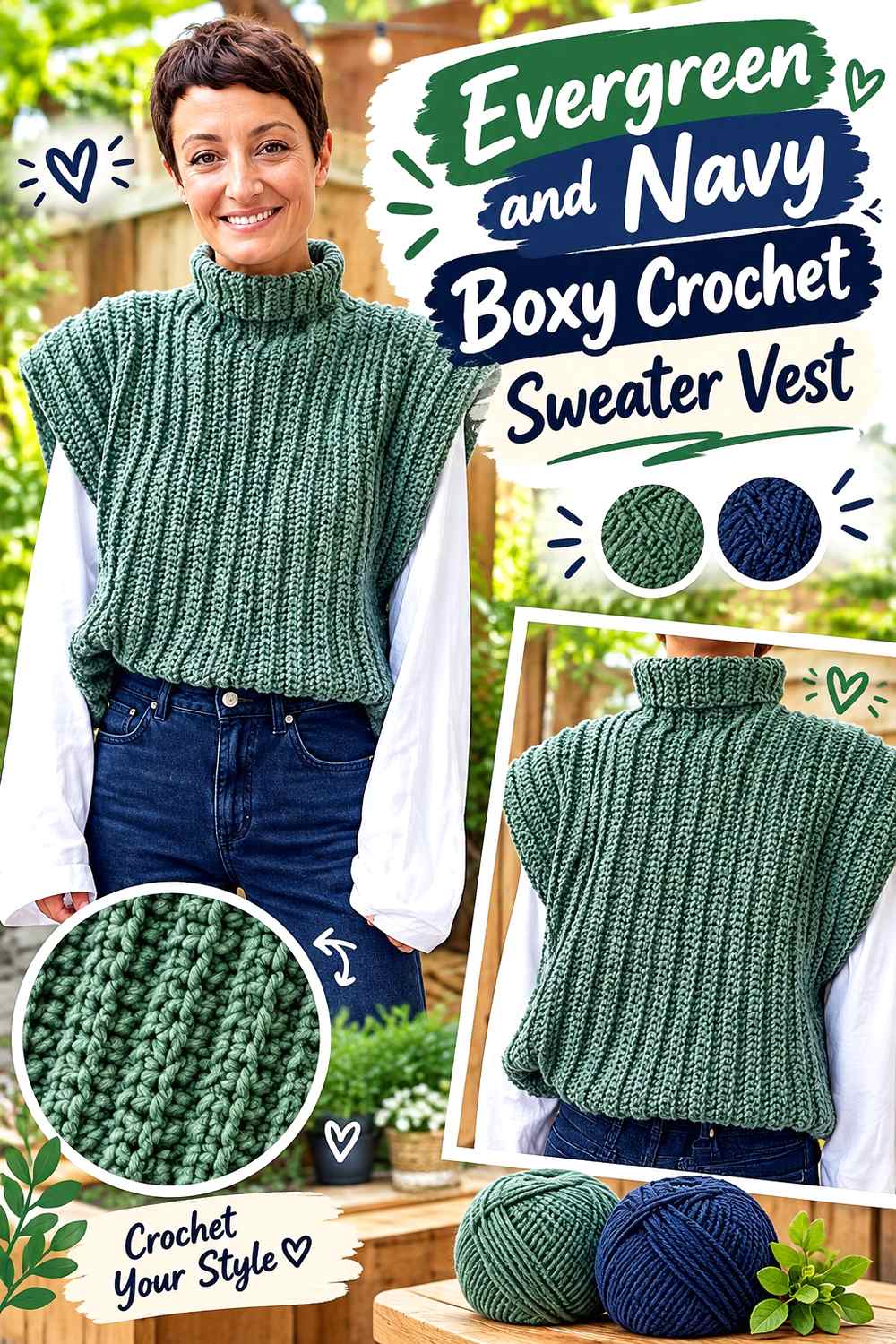
Navy and Evergreen form one of the darkest palettes here. The colors are different in hue, but they may be similar in value, so this combination is more useful for subtle blocking than for tiny high-contrast details.
A boxier vest gives both colors broader surfaces to work with. Keep Evergreen dominant across the torso and use Navy where its dark weight can define the edges without splitting the body evenly.
Evergreen Needs More Visual Area Than Navy on the Boxy Crochet Vest
Use Evergreen across the majority of the front and back so the loose rectangular silhouette still reads clearly as green. An equal half-and-half split could make both dark colors compete for dominance.
Navy can appear at the ribbing, shoulders, or lower section, but check the overall balance after each major color area rather than deciding from a small swatch.
Navy Can Give Evergreen Crochet Vest Ribbing Subtle Contrast
Navy neckline and armhole ribbing will usually look quieter than cream or camel. That can suit a boxy vest where the overall shape already makes a strong statement.
If the colors nearly disappear into one another, a slightly lighter or more muted blue can preserve the cool relationship while improving separation.
Creator Credit: JeggoCrochet
9. Evergreen Rust And Ivory Retro Granny Crochet Vest
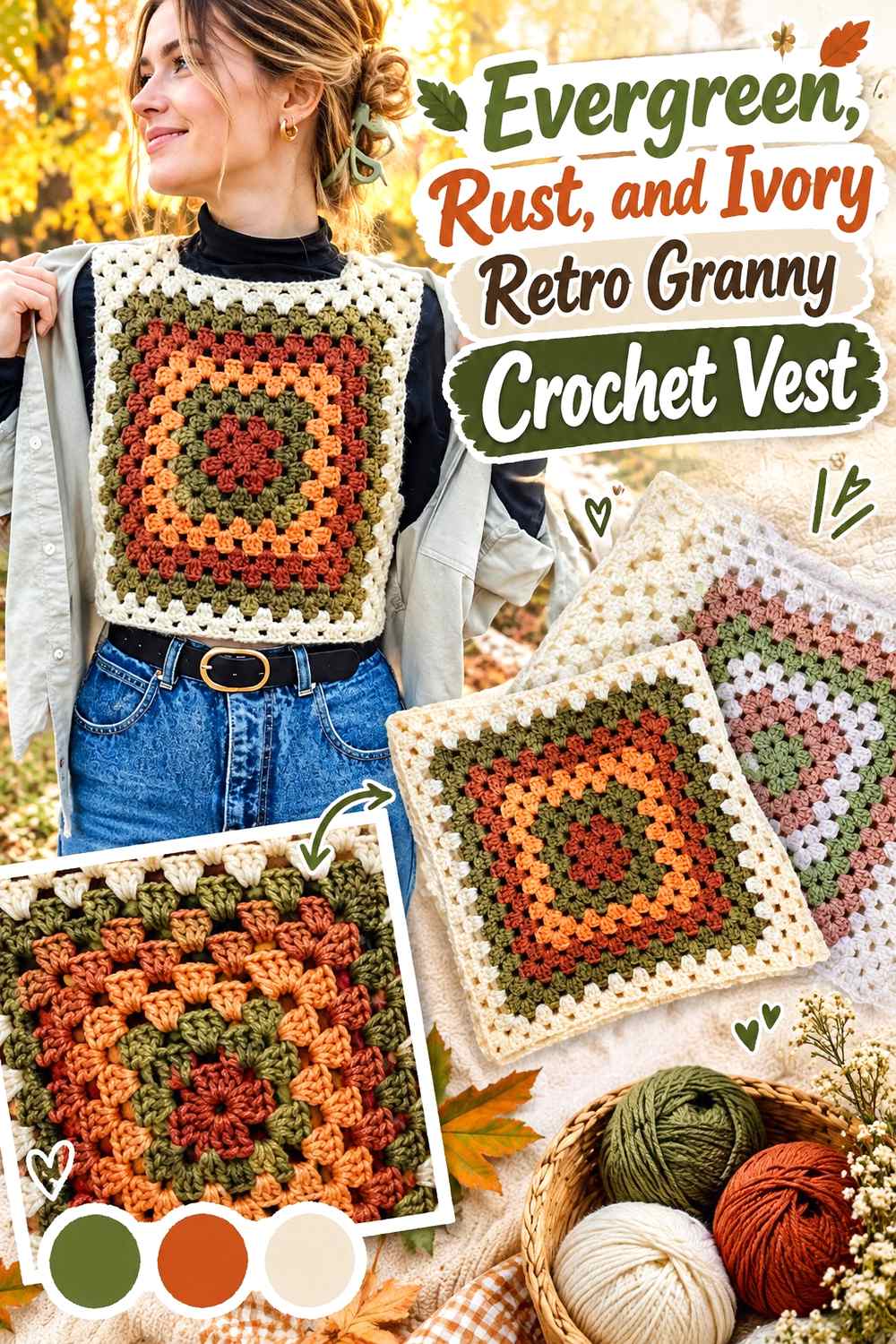
Rust brings warmth to Evergreen, while Ivory prevents the two strong earthy colors from filling every granny round. This combination works especially well when the vest relies on large repeating granny areas that give each shade plenty of room.
Make Evergreen the anchor, use Rust as the secondary warm hue, and let Ivory create the clearest separation. Avoid giving all three shades identical amounts by default.
Evergreen Should Return Through the Retro Crochet Granny Vest
If a large granny section expands through repeated rounds, return to Evergreen often enough that later Rust and Ivory areas do not shift the visual center of the vest.
You can also place Evergreen near the outer portion of a motif so adjacent granny sections share a common dark-green edge.
Ivory Can Keep Rust and Evergreen Crochet Rounds From Feeling Too Dense
An Ivory interval between Evergreen and Rust provides the strongest value break in the palette. This makes the granny structure easier to see while keeping the two deeper colors rich rather than muddy.
If the vest becomes too light, reduce the width or frequency of Ivory rather than eliminating it completely. A small amount can still perform the separation job.
Creator Credit: HayHay Crochet
10. Evergreen And Stone Gray Closed Crochet Vest
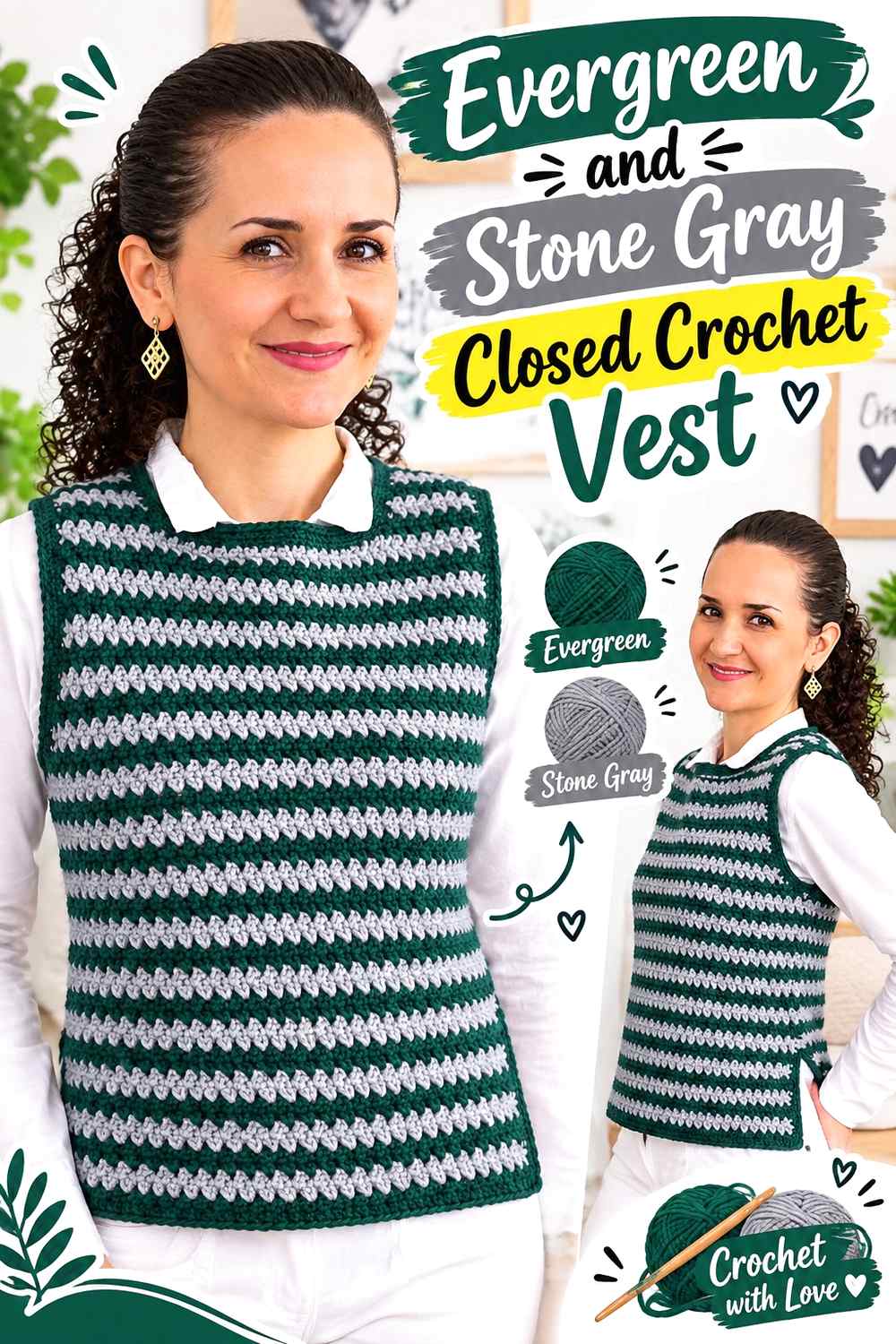
Stone Gray provides a medium-light neutral that can outline Evergreen without creating the brightness of cream. On a more closed vest shape, that contrast works well around the neckline, armholes, and lower edge because the main torso remains one solid visual field.
This is a useful palette when you want the vest to stay restrained but still need enough value separation for finishing details to remain visible.
Evergreen Should Define the Main Closed Crochet Vest Surface
Keep the body predominantly Evergreen so the vest has one continuous foundation. A closed front gives fewer natural breaks than a cardigan, which makes unnecessary body color changes more noticeable.
Let the shape of the neckline and armholes create much of the visual variation before adding Stone Gray elsewhere.
Stone Gray Can Clarify Evergreen Crochet Vest Openings
Stone Gray around the neckline and armholes creates a moderate light-dark boundary that helps those openings stand apart from the main green fabric.
If you want an even quieter finish, use Stone Gray only around the neckline and keep the armholes Evergreen. This concentrates the accent in one location rather than outlining every edge.
Creator Credit: Crochet MC
Comparing the Evergreen Crochet Vest Color Directions
Cream and Oatmeal create the clearest neutral contrast with Evergreen, making them useful when neckline, granny-square, or ribbing definition matters. Ivory plays a similar role in the retro three-color scheme but allows Rust to introduce more warmth.
Camel and Taupe give Evergreen an earthier, more muted neutral relationship. These palettes work especially well when you want visible finishing without a bright outline.
Charcoal and Navy create the darkest combinations. Rather than depending on them for tiny details, use enough surface area for the color change to remain visible. Blush produces the most obvious hue shift, while Mustard and Rust create warmer multicolor directions.
For granny-square designs, look beyond individual motifs. Arrange enough squares to represent the front, back, and shoulder areas before joining so you can judge whether Evergreen is actually distributed across the complete vest.
Conclusion
Evergreen can work as a solid vest color, a repeated granny-square anchor, or the dominant shade in a two- or three-color palette. The most useful first decision is where the green should occupy the largest visual area.
For a classic sweater vest, keep the body Evergreen and move contrast to the neckline, armholes, or ribbing. For granny-square construction, repeat Evergreen through the motifs or joins so the main color does not disappear once several accent shades are introduced.
Cream and Oatmeal give the strongest light separation, Camel and Taupe create softer earthy combinations, and Charcoal or Navy keep the palette dark. Blush offers a contrasting softer direction, while Mustard and Rust introduce warmer accents. Whatever combination you choose, compare both hue and light-dark value before committing to the complete garment.
Frequently Asked Questions
What colors work well with Evergreen in a crochet vest?
Cream, ivory, oatmeal, camel, taupe, stone gray, charcoal, navy, blush, mustard, and rust can all work with Evergreen, but they create different levels of contrast. Pale neutrals produce clearer definition, while navy and charcoal create darker tonal effects.
Should Evergreen be the main color in an Evergreen crochet vest?
For a project centered on Evergreen, keeping it visually dominant usually makes the color concept clearest. On a paneled vest, it can cover most of the body. On a granny-square vest, it can repeat through centers, outer rounds, joins, or ribbing.
What color should I use around an Evergreen crochet vest neckline?
Cream, ivory, oatmeal, or Stone Gray are useful when you want the neckline to stand out clearly. Camel and Taupe create softer contrast, while Navy or Charcoal give the neckline a darker tonal finish.
How can I tell whether Evergreen and Navy have enough contrast?
Place the yarns together and check them from several feet away. A grayscale photo can also show whether they are similar in lightness. If they nearly merge in grayscale, expect a subtle boundary rather than a strong one.
How should I use Evergreen in a granny square crochet vest?
Repeat Evergreen across all major vest sections instead of concentrating it in only one panel. It can appear in motif centers, outer rounds, joins, or finishing. Arrange the completed squares before joining so you can correct areas that look too light or too accent-heavy.
Can Evergreen and Mustard work in the same crochet vest?
Yes. Mustard creates a warm hue contrast with Evergreen, but both can attract attention. Keep Evergreen as the more frequent shade and use Mustard in smaller repeated areas. A light neutral such as cream can separate them when the combination feels too dense.
How can I make an Evergreen crochet vest look lighter?
Increase the amount of a pale supporting shade around the neckline, armholes, hem, or granny-square backgrounds instead of replacing Evergreen entirely. Cream, oatmeal, ivory, or light gray can create visual breathing room while keeping the vest clearly green.