Cranberry and champagne give crochet Christmas bells a richer alternative to bright red and stark white. Cranberry can provide the strongest visual weight, while champagne adds a softer warm contrast around rims, bows, hanging loops, textured sections, and other small details.
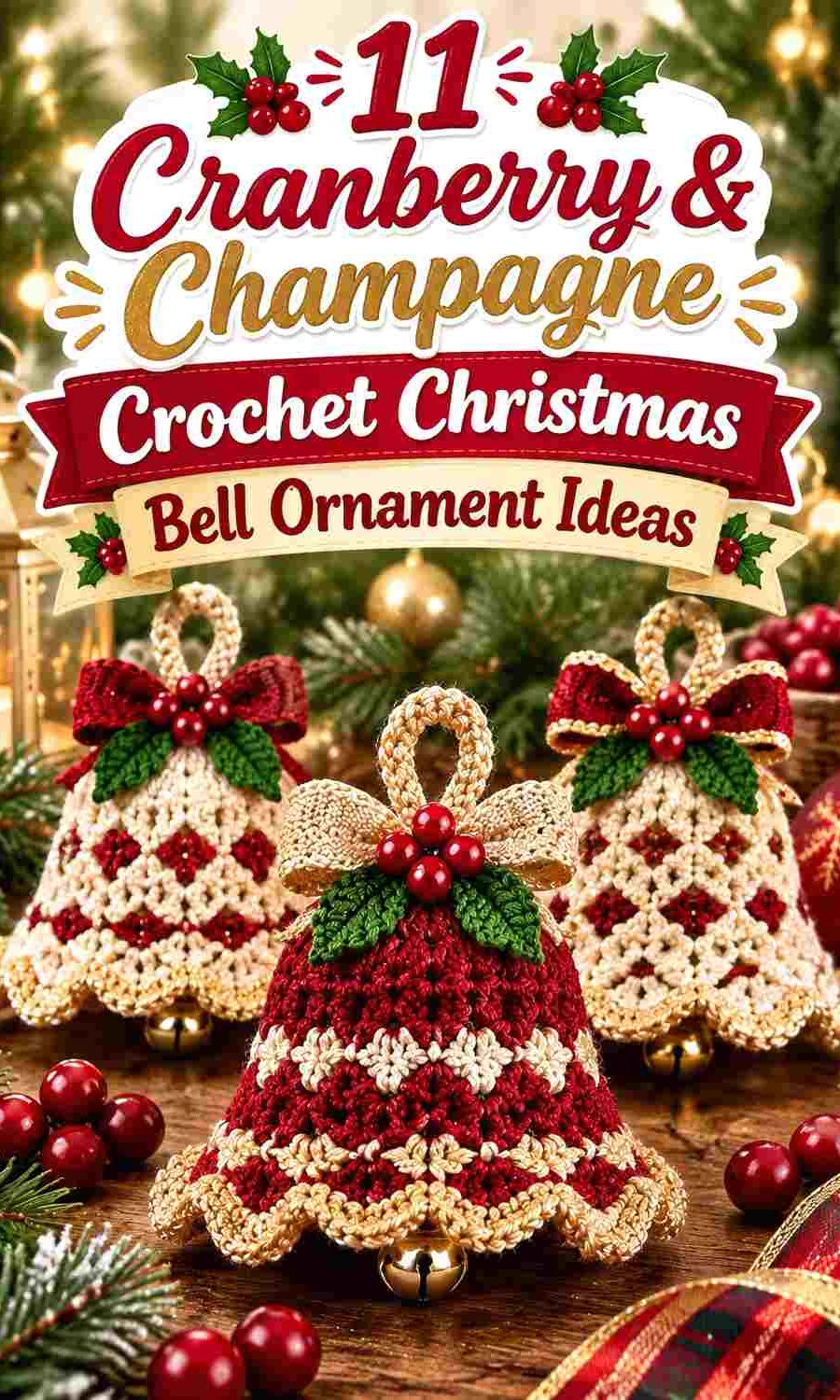
The key is deciding where the color change will strengthen the bell shape. A champagne rim can clarify the flare at the bottom of a cranberry bell, while a cranberry bow can give a champagne-dominant ornament a defined focal point near the crown. Larger color blocks work well for simple bells, while narrow accents can be more effective on textured or openwork designs.
The tutorials credited below support the crochet bell construction ideas. The cranberry-and-champagne palettes are independent color adaptations, so follow each creator for the exact construction details.
Quick List
- Cranberry Crochet Christmas Bell Ornament With A Champagne Flared Rim
- Champagne Crochet Christmas Bell Ornament With A Cranberry Bow Accent
- Cranberry And Champagne Split Color Crochet Christmas Bell Ornament
- Champagne Crochet Christmas Bell Ornament With Cranberry Openwork Definition
- Cranberry Crochet Christmas Bell Ornament With A Champagne Crown And Hanger
- Cranberry And Champagne Striped Crochet Christmas Bell Ornament
- Cranberry Victorian Crochet Christmas Bell Ornament With Champagne Bow Details
- Champagne Crochet Christmas Bell Ornament With A Cranberry Lower Border
- Champagne Ruffle Edge Crochet Christmas Bell With Cranberry Body Accents
- Cranberry Crochet Christmas Bell Ornament With A Champagne Clapper Detail
- Champagne Crochet Christmas Bell Ornament With Cranberry Repeated Holiday Accents
Decide Whether Cranberry or Champagne Should Lead the Crochet Bell
Cranberry naturally carries more visual weight than a pale champagne shade, so equal quantities of both colors may not look visually equal. If you want a cranberry-led ornament, let it cover most of the bell body and move champagne to the rim, crown, hanger, bow, or clapper.
For a champagne-led bell, keep the central bell surface light and use cranberry in one or two controlled locations. A narrow cranberry edge or bow can be enough to establish the Christmas color direction without covering the softer champagne field.
Use Cranberry and Champagne to Define the Bell Silhouette
The lower flare is one of the most useful places for a color change because it helps outline the recognizable bell shape. Champagne against a cranberry body produces a softer border, while cranberry against champagne gives the lower edge more visual weight.
The crown is another useful location. A small contrasting area near the hanging loop can balance color placed around the bottom, creating a top-and-bottom relationship instead of concentrating every accent in one place.
Keep Cranberry and Champagne Texture Easy to Read
Small crochet ornaments do not provide much surface area, so frequent color changes can quickly compete with stitch texture. If a bell contains openwork, ruffles, raised texture, or another decorative surface, consider letting one color cover most of that feature.
You can then place the second shade in a structurally simpler area. This gives both color and texture room to contribute instead of asking every stitch section to perform both jobs.
1. Cranberry Crochet Christmas Bell Ornament With A Champagne Flared Rim

Make cranberry the dominant color across the bell crown and body, then move into champagne at the lower flare. This placement uses the lighter shade to underline the widest part of the ornament, so the bell silhouette remains obvious even when viewed among other Christmas tree decorations.
Cranberry Should Cover the Main Crochet Bell Surface
Give cranberry the largest uninterrupted area from the crown through most of the body. That keeps the deeper holiday shade visually dominant and gives any stitch texture a consistent background.
Avoid inserting several narrow champagne stripes through this central section if your goal is a strong cranberry bell. Save the light color for the area where it contributes more structural definition.
Champagne Can Clarify the Cranberry Bell Rim
Use champagne around the lower edge or flared section where the bell widens. The warm light shade separates the bottom from the deeper cranberry body without introducing a completely unrelated neutral.
If the champagne yarn is very close to cream, compare it directly with cranberry before beginning. The contrast should still be noticeable enough for the rim to read as a deliberate finishing area.
Creator Credit: Iryna Tsokalo Crochet
2. Champagne Crochet Christmas Bell Ornament With A Cranberry Bow Accent
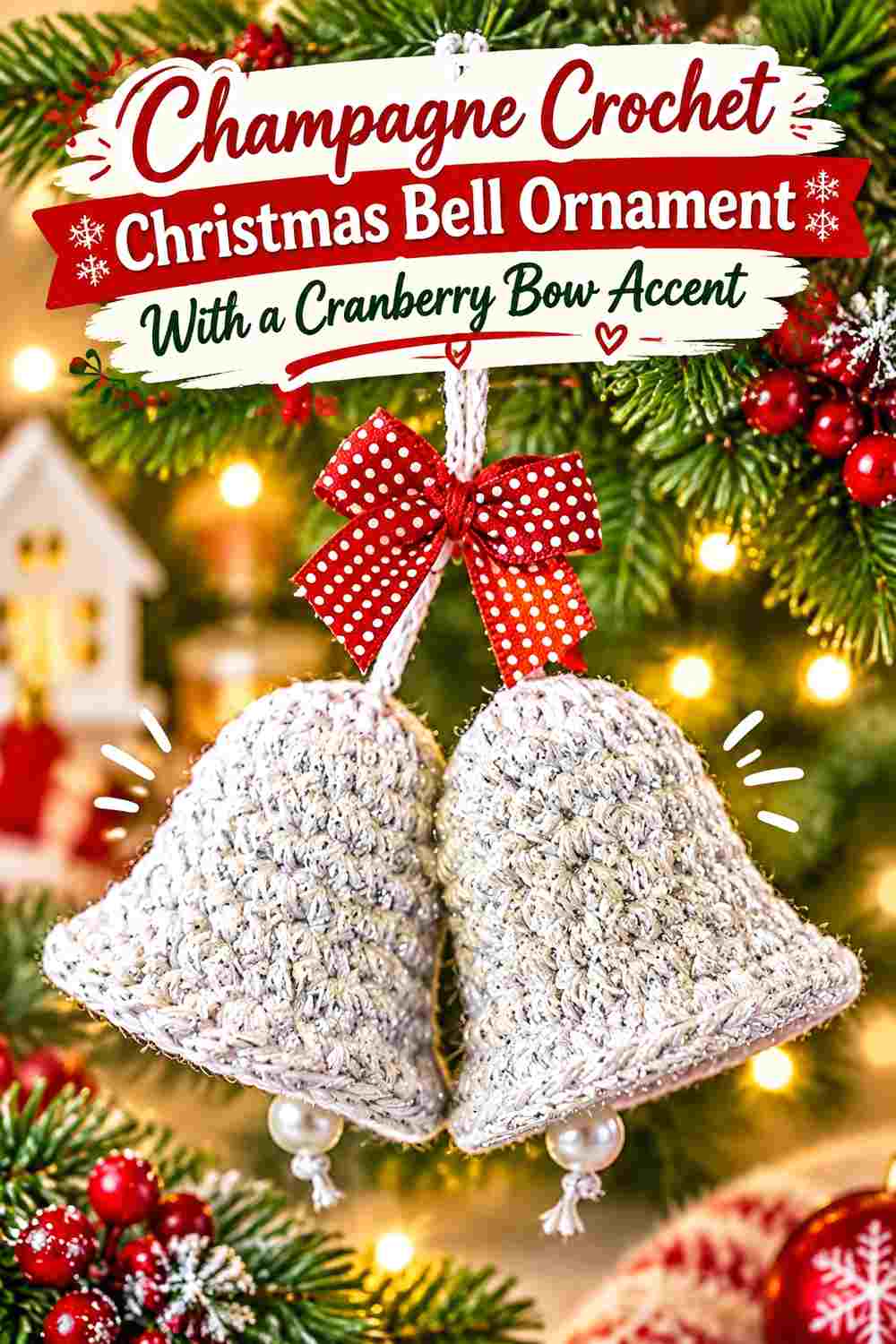
Reverse the hierarchy by covering most of the bell in champagne and concentrating cranberry near the top. A cranberry bow or similar crown accent creates a defined focal point while the champagne body keeps the ornament lighter overall.
Champagne Needs Enough Open Bell Surface to Stay Dominant
Let champagne run continuously across most of the bell rather than alternating it repeatedly with cranberry. The broad light area is what makes this project different from the cranberry-led versions.
This approach is particularly useful when the crochet surface already includes decorative details, because the quieter body color leaves those details easier to see.
Cranberry Can Anchor the Champagne Bell Near the Crown
Place cranberry around a bow, tie, or another small upper accent. A darker color near the hanging point gives the eye a clear starting place before moving down the champagne bell.
If you add cranberry again near the bottom, keep the second accent restrained so the bow remains the principal color feature.
Creator Credit: HappyBerry Crochet
3. Cranberry And Champagne Split Color Crochet Christmas Bell Ornament

A broad two-block design gives both colors meaningful space without creating a busy striped surface. Use cranberry across one large portion of the bell and champagne across the other, with one clear transition between them.
Cranberry and Champagne Need One Deliberate Bell Transition
Choose a color-change point that follows the visible shape of the ornament. A defined champagne lower section beneath a cranberry upper body will generally look more intentional than a color change placed randomly through a decorative stitch area.
Before making multiple ornaments, note the approximate transition position so a set of bells maintains a related appearance.
Champagne Should Have Enough Space to Balance Cranberry
Because cranberry is visually stronger, a very narrow champagne section may read only as edging. Give champagne a larger block if your goal is a genuine two-color division.
Look at the finished bell from normal tree-viewing distance. That gives a better indication of overall color balance than inspecting individual stitches close up.
Creator Credit: Crochet with Tuula Maaria
4. Champagne Crochet Christmas Bell Ornament With Cranberry Openwork Definition
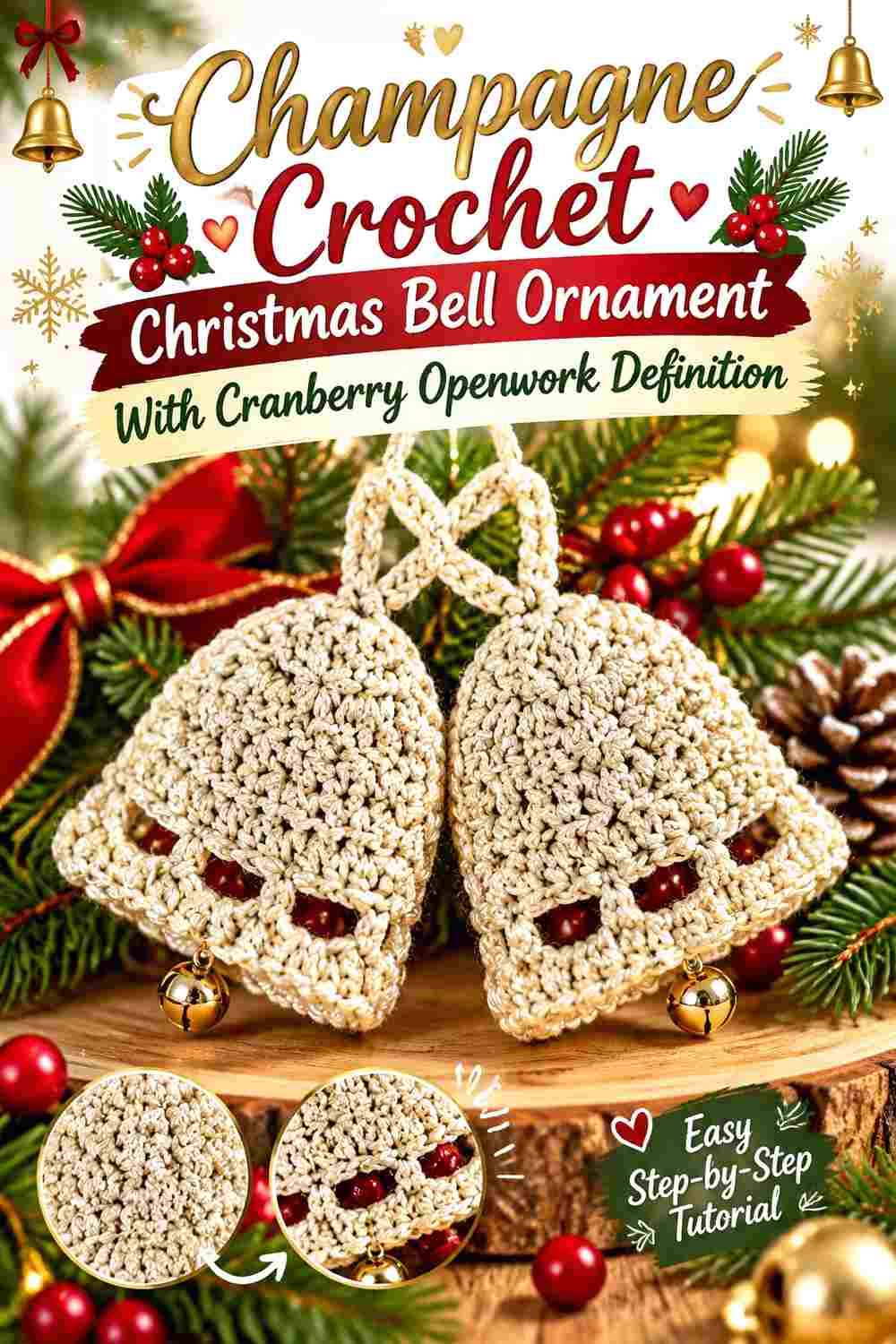
Use champagne across most of an open or decorative bell surface and reserve cranberry for selected boundaries. This allows the openwork itself to stay readable rather than breaking every decorative section into two competing colors.
Champagne Keeps Decorative Crochet Bell Sections Visually Continuous
When the bell includes visible open spaces or intricate stitchwork, a continuous champagne field can help the viewer read the overall pattern. Repeated cranberry changes inside every small section may interrupt that continuity.
Work a small sample first if your champagne yarn is very pale, especially when you plan to hang the ornament against light-colored branches, ribbon, or wall decor.
Cranberry Can Define the Champagne Bell Outline
Use cranberry around a lower edge, upper loop, or another clear perimeter area. The deeper shade can help separate a pale champagne ornament from its surroundings without covering the decorative center.
One strong cranberry outline usually contributes more definition than several tiny accents placed throughout the openwork.
Creator Credit: Rocco Baby Crochet
5. Cranberry Crochet Christmas Bell Ornament With A Champagne Crown And Hanger
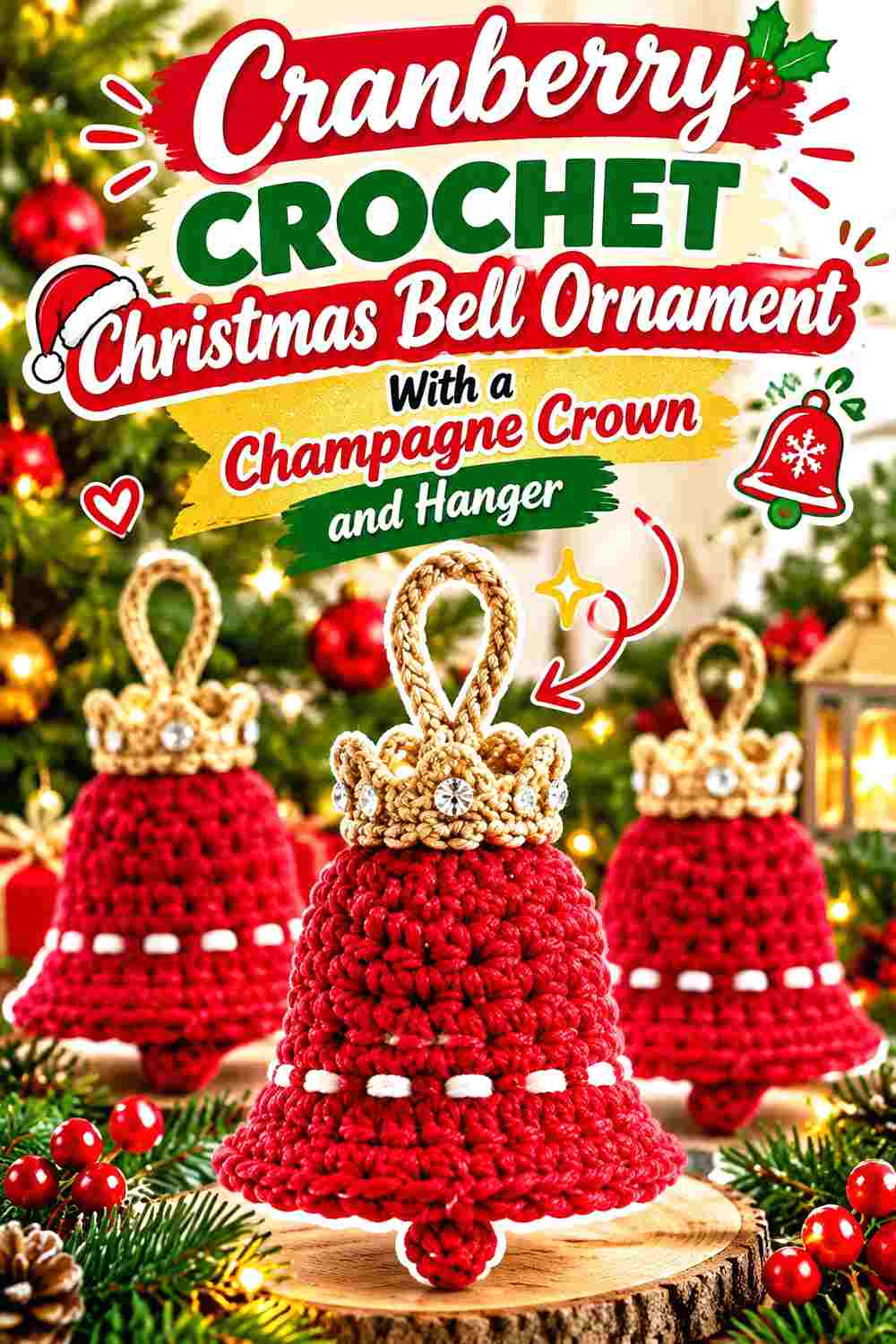
Move champagne to the very top of a cranberry bell rather than the lower rim. A champagne crown or hanging loop creates a lighter starting point while leaving the bell body strongly cranberry.
Champagne Can Separate the Cranberry Bell From Its Hanging Loop
A champagne loop or upper finishing section visually distinguishes the hanger from the cranberry body. This is useful when you want the bell itself to remain dark and substantial but still want a visible second color.
Keep the champagne transition near the crown clear instead of allowing it to drift irregularly down one side.
Cranberry Should Remain Unbroken Through Most of the Bell Body
Once the champagne top is established, let cranberry continue across the main body and lower flare. That long color field maintains the bell’s stronger red direction.
If you want another champagne detail, use a small clapper or narrow lower edge rather than splitting the cranberry body repeatedly.
Creator Credit: Crochet Jewel
6. Cranberry And Champagne Striped Crochet Christmas Bell Ornament

Striping gives both colors repeated visibility and works well when you want the ornament to look deliberately two-tone rather than predominantly cranberry or champagne. The main decision is stripe scale: a small bell can become visually crowded if the changes are too frequent.
Cranberry and Champagne Stripes Need a Simple Repeating Rhythm
Choose a consistent arrangement instead of changing stripe width unpredictably. A stable pattern allows the bell silhouette to remain clear even while both colors repeat across the surface.
Make the same arrangement across a group of ornaments if you want them to read as a coordinated tree set.
Cranberry Stripes Can Control the Visual Weight of Champagne
If champagne covers slightly more area, cranberry can still appear dominant because it is darker. Reduce the width or frequency of cranberry bands when you want a lighter final ornament.
For a deeper holiday look, reverse that relationship and use champagne as the narrower separating stripe.
Creator Credit: Hopeful Turns
7. Cranberry Victorian Crochet Christmas Bell Ornament With Champagne Bow Details

A vintage-inspired bell can handle a more decorative palette arrangement, but cranberry should still have a defined role. Use cranberry across the main bell and let champagne soften details near a bow, hanger, or finishing area.
Cranberry Gives the Victorian Crochet Bell Its Main Color Anchor
Keep the largest bell surface cranberry so decorative elements do not overwhelm the recognizable shape. The darker field also gives champagne enough contrast to appear intentionally placed.
If the construction already includes detailed stitchwork, avoid adding unnecessary alternating stripes through the center.
Champagne Can Lighten Cranberry Bow and Crown Details
Use champagne in a small bow section, tie, crown accent, or hanging detail. This brings the lighter color near the top and helps balance a larger cranberry body below.
For a coordinated set, repeat that champagne placement consistently rather than moving it to a different location on every ornament.
Creator Credit: Brunaticality
8. Champagne Crochet Christmas Bell Ornament With A Cranberry Lower Border

Keep most of the bell champagne and use cranberry exclusively around the bottom. This produces one of the clearest light-to-dark arrangements because the deeper shade visually grounds the widest edge of the ornament.
Cranberry Gives a Champagne Crochet Bell a Stronger Bottom Edge
A cranberry rim can outline the flare and prevent a pale champagne bell from visually blending into nearby light decorations. The accent also draws attention to the shape rather than placing the strongest color randomly in the center.
Keep the cranberry border clearly contained within the lower area for the cleanest effect.
Champagne Should Remain Continuous Above the Cranberry Border
Allow the upper body to stay champagne so the lower cranberry section has a distinct job. Adding several cranberry bands above it would move the idea toward striping and reduce the impact of the single dark frame.
If the champagne body contains visible texture, uninterrupted color also helps preserve that stitch definition.
Creator Credit: Kristines Crochets
9. Champagne Ruffle Edge Crochet Christmas Bell With Cranberry Body Accents

A ruffled or decorative lower edge creates a natural place to contrast the two colors. Let champagne emphasize the expanded edge while cranberry carries the upper bell, or repeat a small cranberry element near the crown to connect the two ends.
Champagne Can Make the Cranberry Bell Ruffle a Separate Feature
Place champagne across the ruffled or flared finishing area rather than changing colors repeatedly within it. The uninterrupted lighter shade makes the edge read as its own decorative zone.
This is especially useful when the ruffle already adds considerable texture and does not need additional color complexity.
Cranberry Can Balance a Champagne Ruffle From the Bell Crown
If champagne is concentrated at the bottom, repeat cranberry strongly across the bell body or near the crown. This creates a clear hierarchy: cranberry defines the ornament, while champagne highlights the finishing detail.
Avoid adding a third prominent color that competes with both parts of this simple two-shade plan.
Creator Credit: Yarn Society
10. Cranberry Crochet Christmas Bell Ornament With A Champagne Clapper Detail
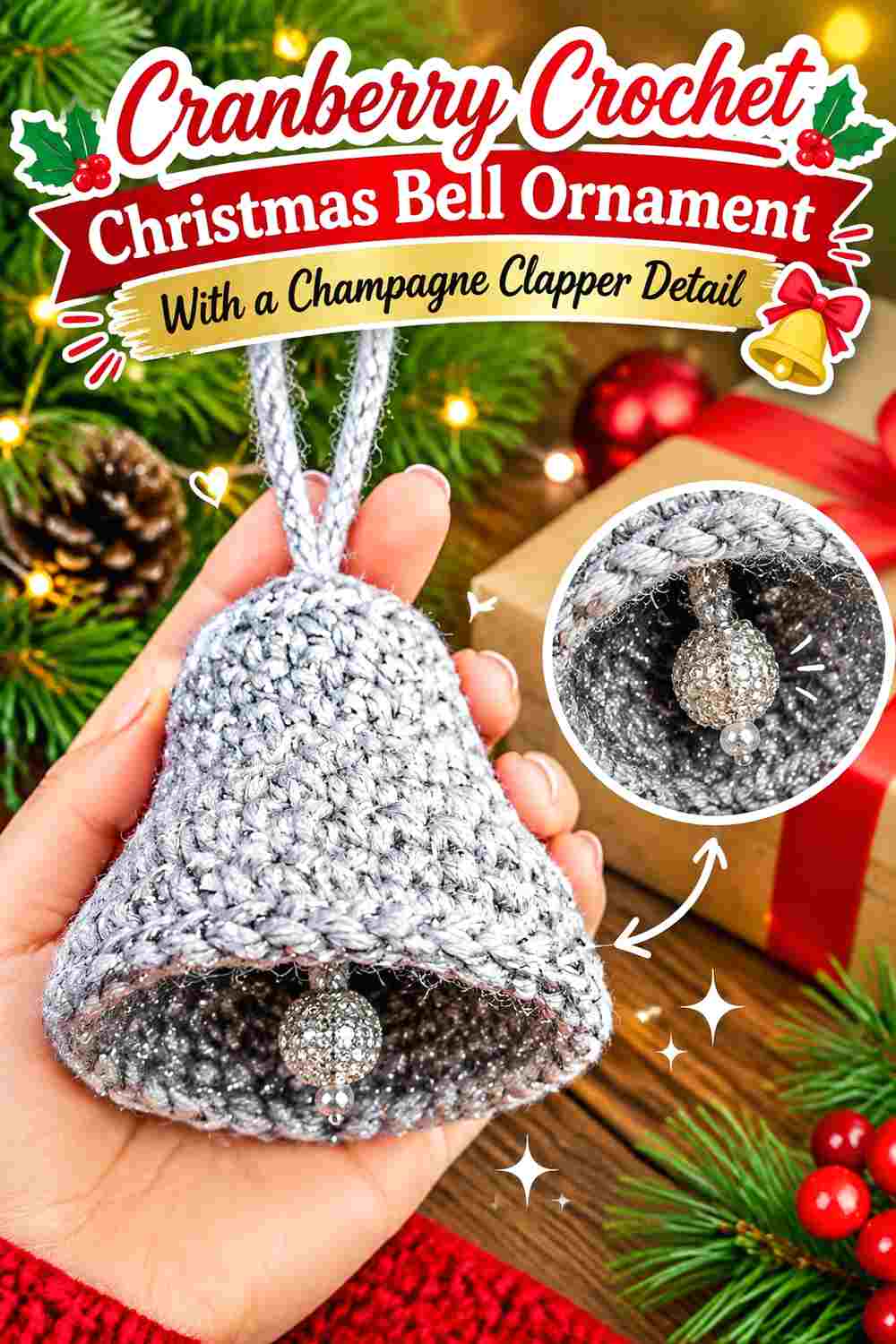
A clapper offers a small but logical location for champagne when the bell body is completely cranberry. This is a good choice when you want a nearly solid red ornament but still want the second color to appear in a functional-looking detail.
Cranberry Can Cover the Entire Main Crochet Bell Shape
Using cranberry continuously from crown to flare produces one of the strongest single-field designs in the collection. The uninterrupted body keeps the silhouette simple and gives the small champagne detail more significance.
This layout also works when the bell surface contains subtle texture that you do not want broken by color changes.
Champagne Makes the Cranberry Bell Clapper a Controlled Accent
Use champagne for the clapper or a small lower hanging detail. Because the accent sits beneath the main body, it remains visible without dividing the bell itself.
You can repeat champagne in the hanging loop if the ornament needs a second light point, but keep both accents small enough that cranberry still dominates.
Creator Credit: Desert Blossom Crafts
11. Champagne Crochet Christmas Bell Ornament With Cranberry Repeated Holiday Accents

Finish the collection with a champagne-led ornament that repeats cranberry in two small areas instead of one large block. For example, cranberry can appear near the crown and again at the rim, leaving champagne visible between the two accents.
Cranberry Repetition Connects the Top and Bottom of a Champagne Bell
When cranberry appears in two separated locations, keep those areas visually related. A small crown accent echoed by a lower edge can create a clear top-to-bottom connection.
The middle champagne field should remain broad enough to stop the ornament from becoming a striped design.
Champagne Needs Space Between Cranberry Bell Accents
The light central area is essential because it separates the two stronger red details. If the accents become too wide, cranberry can visually close over the champagne and change the intended hierarchy.
View the ornament against the tree or display background before adding more cranberry. Small decorations often need less accent color than they appear to need while held close to the work surface.
Creator Credit: Raji’s Craft Hobby
Comparing Cranberry and Champagne Crochet Christmas Bell Color Layouts
For a cranberry-dominant bell, Ideas 1, 5, 7, and 10 keep the deepest shade across most of the main crochet surface. Champagne is limited to rims, hanging areas, decorative details, or a clapper.
For a lighter champagne-dominant ornament, Ideas 2, 4, 8, and 11 give the pale shade the largest field. Cranberry becomes more noticeable because it appears in carefully selected boundaries or focal points.
Ideas 3 and 6 give both colors stronger visual importance. A broad split creates a cleaner division, while stripes make the cranberry-and-champagne relationship repeat around the ornament.
If the bell contains prominent texture or a decorative edge, Ideas 4 and 9 keep color placement organized around those features instead of adding changes everywhere.
Conclusion
Cranberry and champagne can produce very different crochet Christmas bells depending on which color leads and where the transition occurs. A cranberry body with champagne edging creates a deeper traditional direction, while a champagne bell with limited cranberry accents feels lighter and gives the red details more visual emphasis.
Use large color blocks when you want the bell silhouette to remain simple. Reserve stripes for ornaments where repeated color is the main design feature, and use crowns, rims, bows, hanging loops, and clappers when you want smaller accents.
Before making a full collection, place your actual cranberry and champagne yarns together and check their contrast. Then decide whether you want the ornaments to be cranberry-led, champagne-led, or intentionally balanced. Follow the credited tutorials for exact bell construction while adapting the color distribution to your chosen holiday palette.
Frequently Asked Questions
Should Cranberry or Champagne Be the Main Color for a Crochet Christmas Bell?
Either can lead. Cranberry creates a deeper, more strongly defined bell surface, while champagne creates a lighter field that allows small cranberry details to stand out.
Choose the shade you want to notice first and give it the largest uninterrupted area.
Where Should Champagne Go on a Cranberry Crochet Bell?
The lower rim, flared edge, crown, hanging loop, bow detail, or clapper are useful locations. These parts already have a visual reason to look separate from the main bell body.
Using champagne at a structural boundary generally looks more deliberate than inserting isolated light stitches through the center.
How Much Cranberry Should I Use on a Champagne Crochet Bell?
You may need less cranberry than expected because the darker shade carries more visual weight. Start with one defined accent such as a rim or crown.
Add a second cranberry repeat only if the first accent feels disconnected from the rest of the ornament.
Can Cranberry and Champagne Be Striped on a Crochet Bell?
Yes. Keep the stripe arrangement simple enough that the small bell shape remains recognizable. Repeating predictable widths usually creates a more organized result than frequent irregular color changes.
If you want one color to remain dominant, give it either more total area or wider bands.
How Can I Keep Cranberry and Champagne Crochet Bell Texture Visible?
Avoid changing colors through every raised, open, or ruffled stitch section. Let one shade cover most of the textured feature and place the other around an edge or structurally simpler area.
This separates the jobs of texture and color instead of making both compete across the same small surface.
What Can Replace Champagne in a Cranberry Crochet Bell Palette?
Choose another light, warm neutral that preserves a clear distinction from cranberry. Pay more attention to lightness, warmth, and visual role than to finding an exact commercial shade name.
Place the substitute beside your cranberry yarn before beginning to make sure the relationship still gives you the contrast you want.
How Can I Make Several Cranberry and Champagne Crochet Bells Look Like a Set?
Repeat at least one placement rule across the collection. You might keep every rim champagne, every hanging loop cranberry, or use the same cranberry-to-champagne hierarchy even when the bell constructions differ.
That repeated color logic can connect several ornament shapes without requiring every bell to be identical.