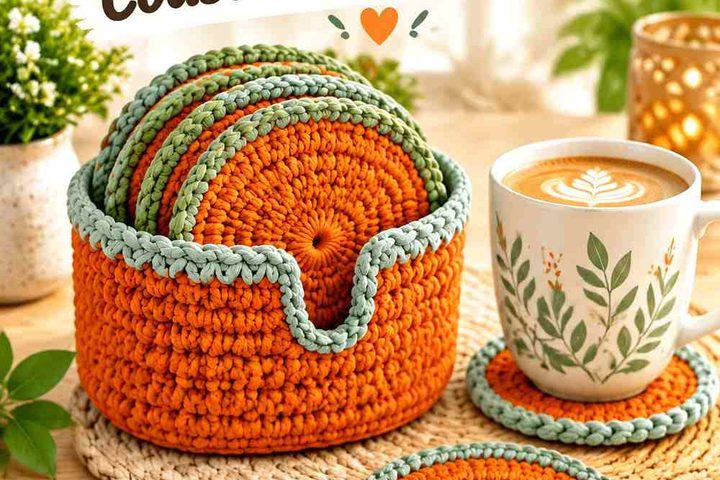
Crochet gothic pumpkin ideas can move far beyond a standard orange amigurumi. A pumpkin becomes noticeably darker when its silhouette is paired with skull faces, bat details, witch hats, jack-o’-lantern expressions, ghost motifs, or a restrained palette of black, charcoal, bone, oxblood, deep plum, and muted orange. The important distinction is whether those features belong to the original tutorial or are styling changes added to a more traditional pumpkin project.
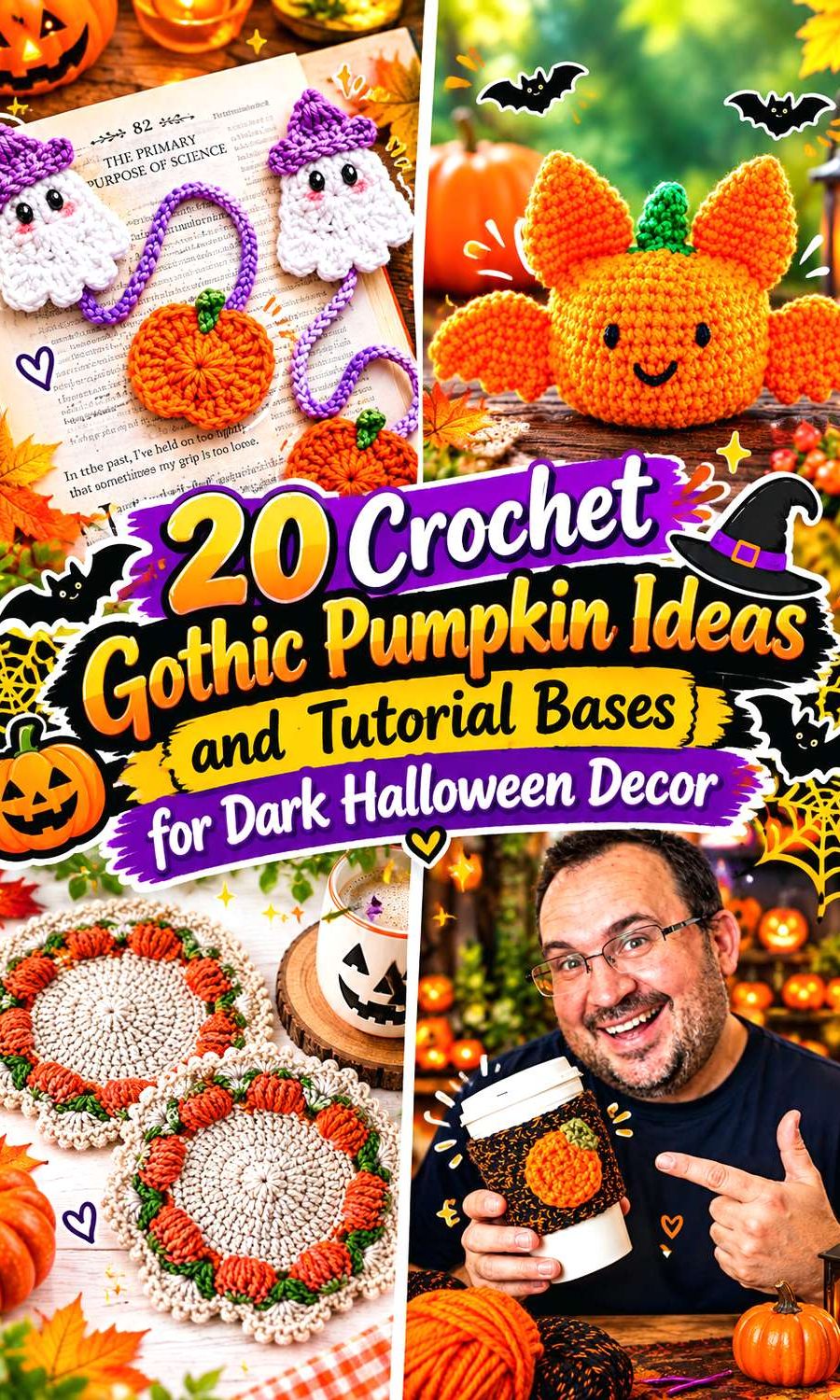
This collection includes both. Several tutorials already teach overtly spooky pumpkins, while others provide useful pumpkin-shaped baskets, pillows, wearables, household pieces, and accessories that can serve as gothic bases. Suggested palette and decorative changes are identified as adaptations rather than features claimed from the original tutorials. That gives you a wider choice of finished objects without pretending every creator designed specifically for a gothic aesthetic.
Quick List
- Crochet Skull-Faced Gothic Pumpkin
- Crochet Witch-Hat Gothic Pumpkin
- Crochet Toothy Jack-O’-Lantern Pumpkin
- Crochet Gothic Jack-O’-Lantern Keychain
- Crochet Gothic Pumpkin Lidded Basket
- Crochet Gothic Pumpkin Candy Bag
- Crochet Gothic Pumpkin Pillow
- Crochet Gothic Pumpkin Placemat
- Crochet Gothic Pumpkin Hat
- Crochet Gothic Pumpkin Granny-Square Afghan
- Crochet Gothic Pumpkin Candy Bowl
- Crochet Gothic Pumpkin Bunting
- Crochet Gothic Pumpkin Mug Cozy
- Crochet Gothic Pumpkin Potholder
- Crochet Gothic Pumpkin Bookmark
- Crochet Gothic Pumpkin Earrings
- Crochet Gothic Pumpkin Wall Hanger
- Crochet Ghost-and-Pumpkin Witch-Hat Bookmark
- Crochet Bat Pumpkin
- Crochet Gothic Pumpkin Coaster
How to Give a Crochet Pumpkin a Gothic Look
A gothic treatment does not require changing the underlying crochet construction. With a conventional pumpkin tutorial, palette is usually the least disruptive place to start. Black, graphite, burgundy, deep purple, rust, bone, and desaturated green can make an ordinary pumpkin form feel darker while preserving the proportions and assembly taught by the creator. High contrast can also be useful when a project has a face, stem, or appliqué that needs to remain legible.
More elaborate additions deserve more thought. Embroidery changes only the surface, while adding wings, hats, raised appliqués, or dangling decorations changes the silhouette and can affect how the object sits, hangs, opens, or fits. Where a tutorial already incorporates those structural details, following its construction is clearer than improvising them onto an unrelated pumpkin.
Choose the Finished Form Before Choosing the Motif
Think first about where the project will live. A skull-faced stuffed pumpkin can carry a detailed expression because it is primarily viewed as a small sculptural object. A coaster, placemat, pillow, or blanket needs its pumpkin shape to remain readable from farther away. Bags and baskets add another consideration: decorative pieces should not make the opening inconvenient to use.
Wearables and small accessories call for even more restraint. A dramatic palette may give a pumpkin hat or pair of earrings enough gothic character without adding bulky surface elements. Flat wall pieces and bunting can support stronger contrasts because their details are meant to be viewed from the front. Choosing the form first helps separate useful adaptation from decoration that simply competes with the original design.
1. Crochet Skull-Faced Gothic Pumpkin
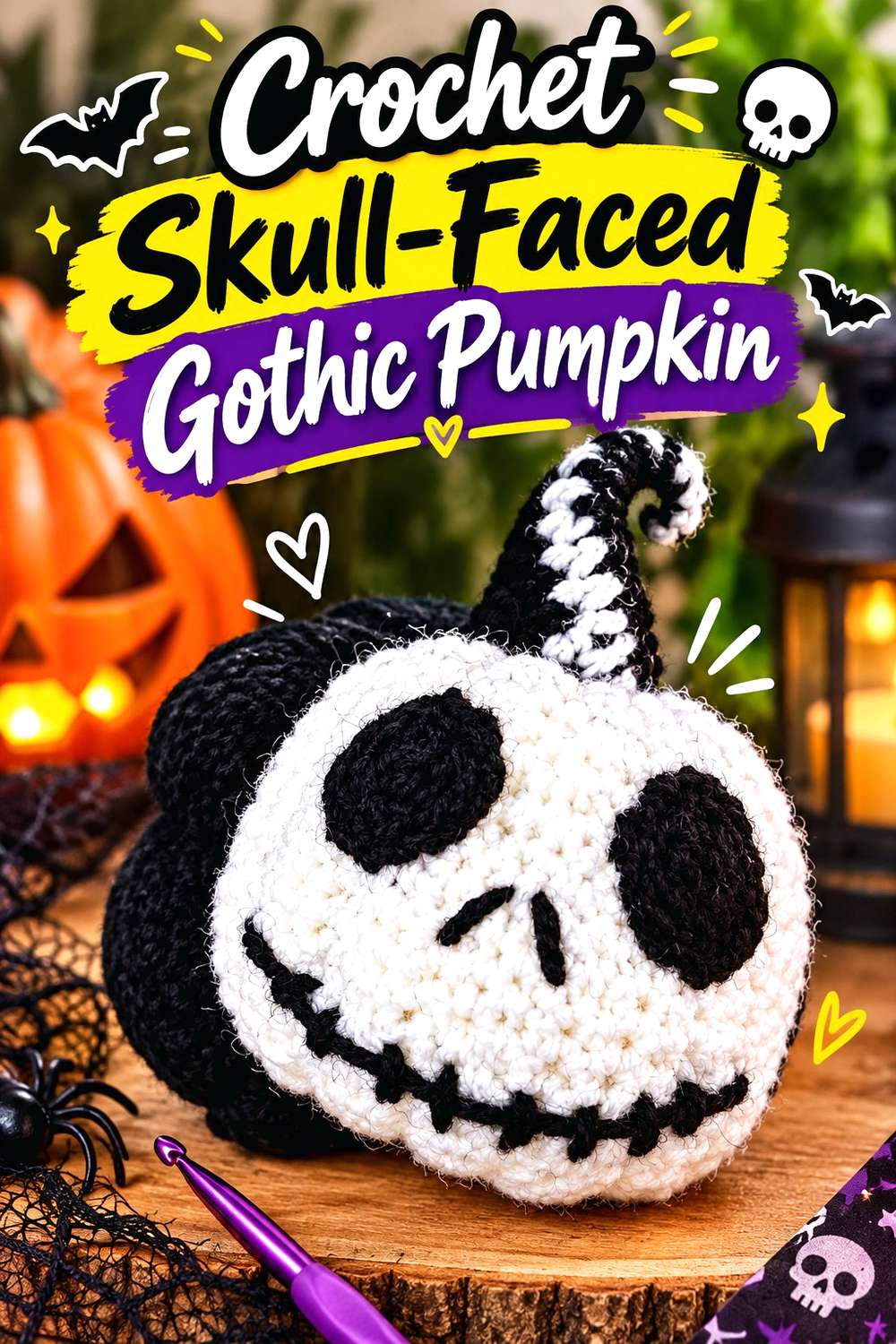
This project places the gothic element directly on the pumpkin instead of relying on color alone. The tutorial teaches a pumpkin-skull character with a crocheted pumpkin body, shaped facial elements, and an embroidered expression inspired by a skeletal Halloween face. That makes it one of the strongest direct matches in this collection rather than a conventional pumpkin being relabeled as gothic.
The appeal is the tension between a rounded harvest shape and a stark skull-like face. You can keep that contrast obvious by separating the facial color from the body color instead of making every component equally dark. A black pumpkin with a bone-colored face would push the result farther into gothic territory, but that palette is a suggested adaptation; the structural character comes from the tutorial itself.
Let the Face Carry the Theme
Because the facial treatment is already elaborate, this pumpkin does not need additional motifs competing for attention. Before adding extra appliqués, consider whether they would weaken the skull expression from the main viewing angle. A limited palette can make the face feel more deliberate than several unrelated Halloween colors.
Plan Display Direction Before Finishing
A face-centered pumpkin has a clear front. That matters if it will sit on a narrow shelf, be grouped with other decorations, or be photographed in a display. Keep the strongest facial details oriented toward the expected viewing direction rather than treating the piece like a pumpkin that looks the same from every side.
Creator: Butterfly Craft
2. Crochet Witch-Hat Gothic Pumpkin

A pointed witch hat immediately changes the outline of a pumpkin, giving this project more theatrical height than a low, rounded seasonal decoration. The source tutorial specifically teaches a stuffed crochet pumpkin topped with a witch hat, so the hat is part of the intended construction rather than an editorial add-on.
For a gothic interpretation, the easiest shift is color. A charcoal or black hat over a dark plum, burgundy, muted rust, or bone pumpkin keeps the witch silhouette clear without changing the taught object. You could also use a nearly monochrome combination if the hat and pumpkin still have enough contrast to read as separate forms. Since the hat is already the dominant vertical feature, extensive extra decoration is unnecessary unless you deliberately want a busier centerpiece.
Decide How Much Contrast the Hat Needs
If both pumpkin and hat are extremely dark, their outlines may visually merge from across a room. Contrast does not have to mean bright color; a lighter neutral pumpkin beneath a black hat can preserve the gothic mood while making the two forms easier to distinguish.
Keep Additional Details Secondary
The pointed hat already tells the story. If you want embroidery, a small appliqué, or another surface accent, position it where it supports rather than competes with the hat. This is especially useful for a compact display where too many projecting details can make the silhouette difficult to read.
Creator: Yui Crochet
3. Crochet Toothy Jack-O’-Lantern Pumpkin

Instead of a simple stitched smile, this jack-o’-lantern uses a more constructed facial treatment. The tutorial breaks the project into the pumpkin itself, eye components, upper and lower teeth, and a lid with a stalk, giving the finished object a deliberately carved-pumpkin character.
That toothy expression works naturally in a gothic collection because the face supplies most of the visual drama. Darkening the body to charcoal, oxblood, or nearly black would be a palette adaptation, while keeping the teeth and eyes lighter could preserve the facial geometry. The lid is another useful point of emphasis: rather than covering it with extra embellishment, consider letting its edge and stalk remain a clean termination to the sculptural form.
Preserve the Mouth Shape
The upper and lower teeth are important to this pumpkin’s identity. If you alter colors, make sure the mouth details do not disappear into the body. A facial element that looks strong at close range can become hard to read when placed among other dark decorations.
Use the Lid as Part of the Composition
Because this is not just a plain spherical pumpkin, the top contributes to the character. Arrange surrounding décor so the lid and stalk remain visible instead of crowding them with tall objects. That keeps the pumpkin’s carved-container impression intact.
Creator: Laura Wilson Designs
4. Crochet Gothic Jack-O’-Lantern Keychain

This miniature project turns the jack-o’-lantern idea into something portable. The tutorial teaches a stuffed pumpkin keychain assembled from crocheted panels and includes facial choices before the pieces are joined, followed by the keychain hardware.
For a gothic variation, the small scale argues for restraint. A dark pumpkin with one clearly readable face is likely to communicate more than several tiny added motifs. Black, deep aubergine, or muted orange could form the body, while bone or pale gray facial details would create contrast. Because the object will be seen from much closer range than a pillow or wall hanging, even a modest expression can become the main design feature.
Finish the Face Before Closing the Pumpkin
When a project is built from panels, the front surface is easier to plan before final assembly. Decide which expression will be the focal point and check its placement against the outer pumpkin shape rather than adding decorations without reference to the finished outline.
Keep the Hanging Point Visually Clear
The keychain attachment already introduces a functional top edge. Avoid clustering large extra decorations around that same point. If you want a more elaborate gothic touch, concentrating it on the face rather than around the hardware keeps the miniature pumpkin easier to identify.
Creator: Jennifer Noelle
5. Crochet Gothic Pumpkin Lidded Basket

A pumpkin basket offers a different kind of seasonal project because the rounded shape has an opening and a removable top rather than functioning only as decoration. The source tutorial teaches the basket body, shaping, a pumpkin lid, stem, leaves, and final assembly. The gothic styling here is an adaptation of that pumpkin-basket base, not a feature claimed from the original tutorial.
A black, charcoal, wine, or deep purple basket could fit a darker room scheme while keeping the familiar ribbed pumpkin form. Another option is to separate the body and lid visually, such as a dark body with a muted rust lid. Because this object opens, any extra surface decoration should be planned around access rather than treated like appliqué on a flat pillow.
Keep the Lid Easy to Identify
An almost monochrome palette can look sophisticated, but the lid still needs to read as a separate part of the form. A subtle color or value difference around the top can emphasize that division without breaking the dark aesthetic.
Decorate Away From the Opening
Raised motifs near the rim may make the basket busier to handle. If you want skulls, webs, or embroidered marks, consider placing them lower on the body where they can be seen without competing with the lid, stem, or opening.
Creator: Crochet Craftsman
6. Crochet Gothic Pumpkin Candy Bag

A handled pumpkin bag brings the theme into a practical Halloween form. The tutorial covers the bottom, sides, handle, and leaf of a pumpkin-shaped candy bag. Its original construction supplies the bag; the darker gothic treatment described here comes from palette and optional surface styling rather than from a separate gothic pattern.
One effective approach is to let the bag remain recognizably pumpkin-shaped while replacing bright harvest colors with black, plum, dirty orange, or charcoal. A contrasting handle can frame the body, while a subdued leaf keeps the top from becoming visually crowded. If you add a face, web, or small appliqué, remember that the bag has to open and be carried, so the center body offers more freedom than the rim.
Protect the Opening From Decoration
Bags differ from plush décor because the opening is used repeatedly. Avoid letting proposed appliqués, dangling charms, or raised motifs cross the rim. A flat embroidered design on the body can add character without changing how the bag is accessed.
Make the Handle Part of the Palette
The handle occupies a large visual arc above the pumpkin. Treating it as an intentional part of the color scheme can make the whole bag look more cohesive than focusing only on the pumpkin body. A dark handle also provides a strong outline against a lighter costume or wall.
Creator: Vicky Crochet
7. Crochet Gothic Pumpkin Pillow

A pumpkin pillow gives the motif enough surface area to work as room décor rather than a small seasonal accent. The tutorial separates the construction into the front, leaves, back, and final assembly, making it a useful complete pillow base for a darker color plan. The gothic palette and styling suggestions here are adaptations rather than features attributed to the original design.
For a moody version, consider building contrast through the broad front surface. A charcoal ground with a muted rust or bone pumpkin can remain readable in low-contrast interiors, while a black pumpkin on a lighter neutral background gives a sharper graphic result. Because a pillow is usually viewed from several feet away, large color relationships matter more than tiny embellishments.
Think in Large Shapes First
Before adding cobweb embroidery or small appliqués, check whether the pumpkin itself is clearly visible across the room. A gothic pillow can feel dramatic through silhouette and contrast alone, which leaves the surface cleaner and reduces competition among motifs.
Consider the Back as Part of the Room
The tutorial includes a separate back, so your palette does not have to stop at the front motif. A dark, quieter back can make the pillow easier to reverse when you want less seasonal emphasis, while still staying within the same color family.
Creator: Jo to the World Creations
8. Crochet Gothic Pumpkin Placemat

A pumpkin placemat turns the seasonal shape into a broad, flat surface. The tutorial teaches a crochet pumpkin placemat, making this a useful base when you want gothic table décor without introducing another stuffed object. The dark treatment described here is a styling adaptation of the original pumpkin design.
Because the piece lies horizontally, its outer silhouette matters more than fine vertical details. Black, deep wine, muted orange, or bone can all change the mood, but the stem should remain distinct enough that the outline still reads as a pumpkin. A nearly monochrome placemat can be effective when paired with contrasting dishes, while a two-tone version may be clearer on a dark tabletop.
Leave the Center Visually Quiet
A placemat already supports a plate or other table setting. Concentrating the gothic character in the pumpkin outline, stem, or outer color relationship avoids hiding a detailed motif underneath whatever is placed on top.
Check the Silhouette Against the Table
A black pumpkin on a black table may lose much of its outline. Before committing to a low-contrast palette, compare the planned colors with the surface where the placemat will actually be used. Contrast can come from value rather than bright color.
Creator: Heartfelt Crochets
9. Crochet Gothic Pumpkin Hat
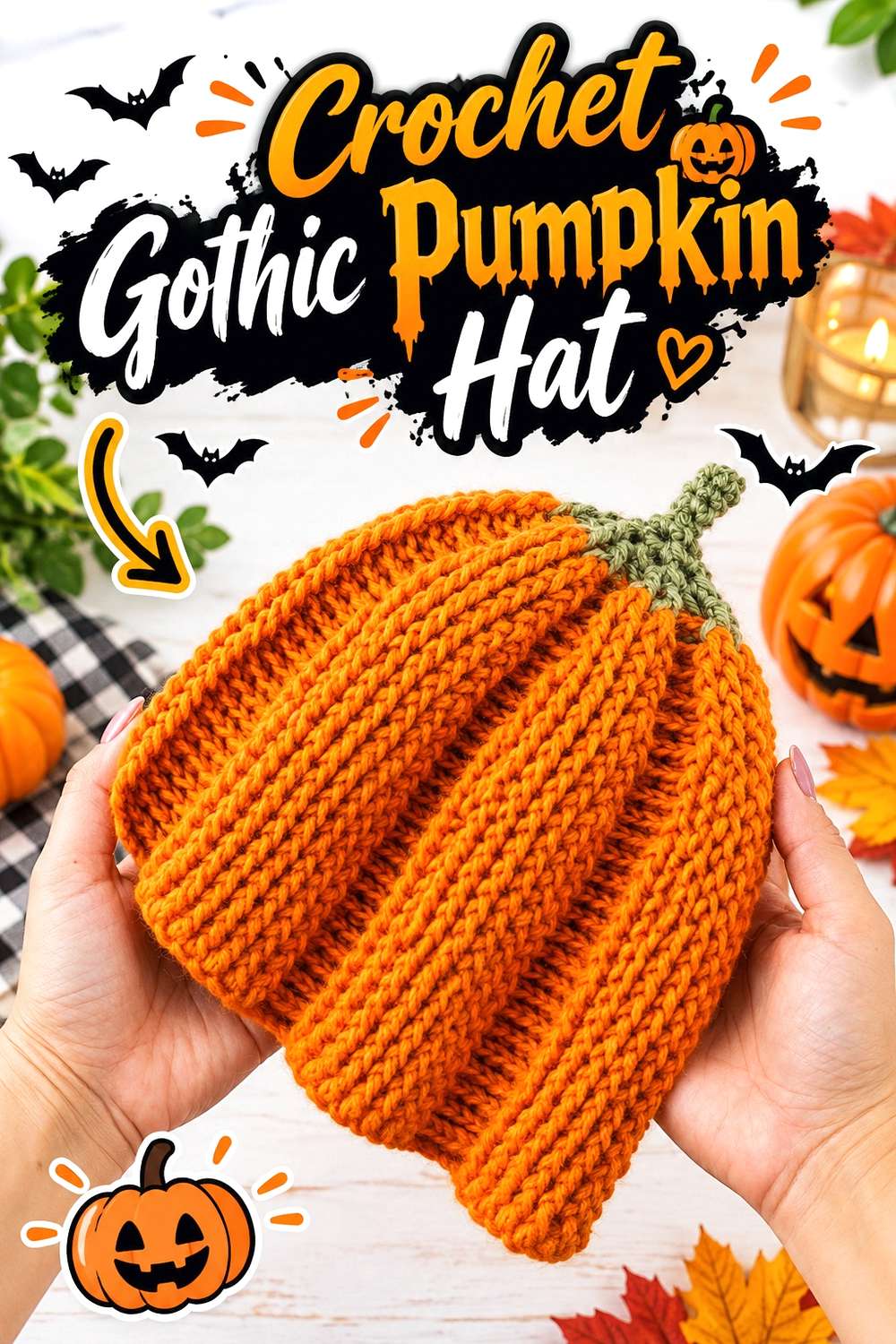
A pumpkin hat carries the theme through silhouette rather than placing a small motif on ordinary clothing. The tutorial is specifically for a crochet Halloween pumpkin hat, giving you a source-built wearable rather than an adaptation from home décor. The gothic change is primarily aesthetic: the same pumpkin concept can shift darker through charcoal, black, burgundy, or muted pumpkin tones.
Wearables benefit from fewer projecting embellishments than tabletop pieces. A strong ribbed or pumpkin-like form can provide enough identity without attaching large spiders, skulls, or dangling decorations. If you want extra contrast, the top detail offers a natural place for it, while the body can remain comparatively restrained.
Keep Fit Decisions With the Tutorial
Color changes are cosmetic, but resizing is structural. If you need a different hat circumference or depth, follow the sizing information supplied by the creator rather than assuming that changing hook or yarn alone will preserve the intended shape.
Let Color Do More of the Work
A hat moves with the wearer, so elaborate surface pieces can alter how it looks and feels. A dark pumpkin body with a contrasting top detail can establish the gothic direction while leaving the original wearable construction intact.
Creator: Sirin’s Crochet
10. Crochet Gothic Pumpkin Granny-Square Afghan
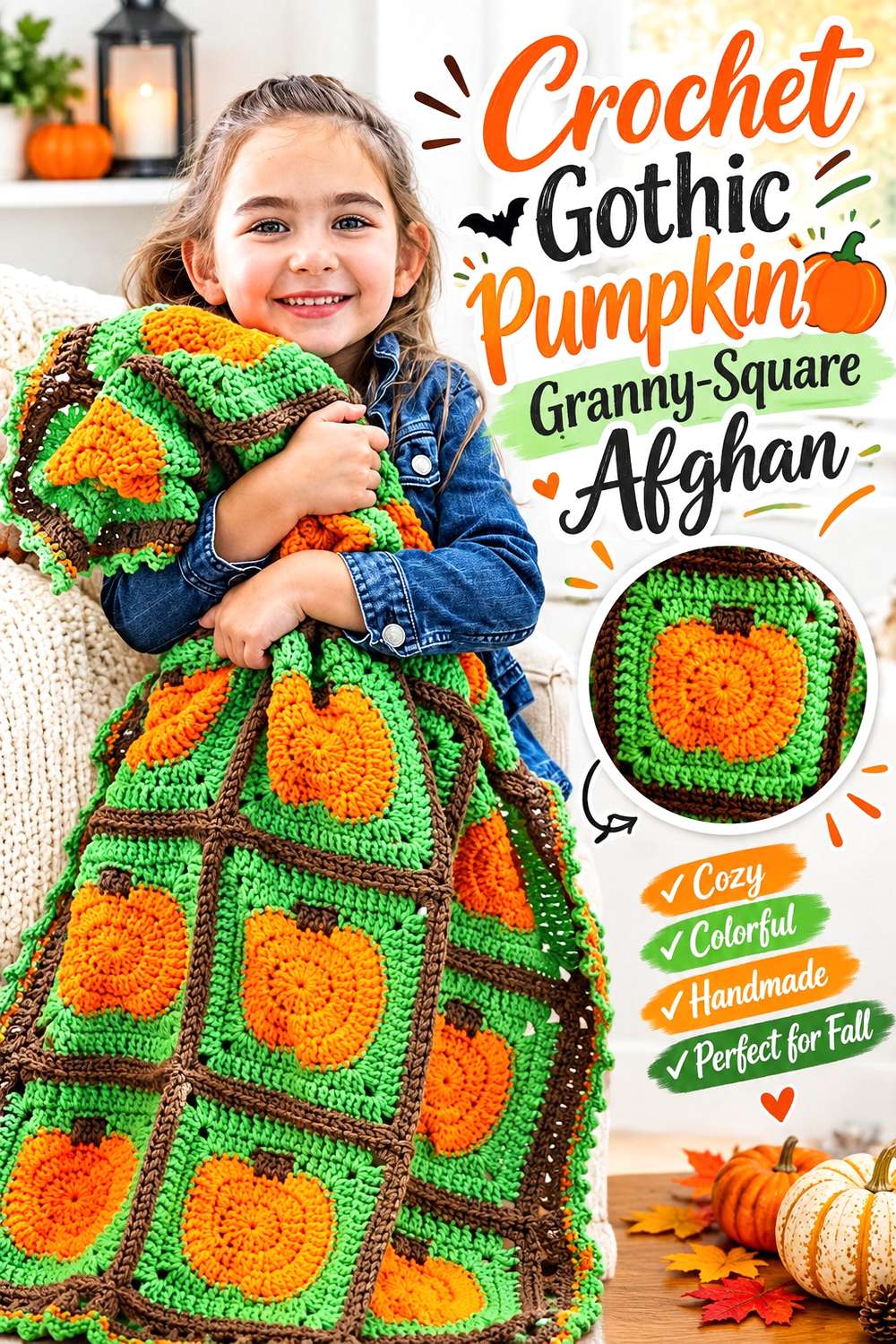
This project expands the pumpkin motif across a much larger surface. The tutorial demonstrates a pumpkin-inspired granny-square afghan, allowing the motif to repeat through a blanket rather than appearing as one isolated decoration. The gothic interpretation comes from recoloring that established pumpkin-square concept rather than changing its fundamental construction.
A dark blanket does not have to make every square black. Alternating charcoal, bone, rust, deep green, or aubergine can preserve individual pumpkin motifs while creating a more atmospheric overall field. Because repetition amplifies even small color decisions, test the relationship among motif, background, and joining color before committing to a large number of squares.
Plan the Repetition Before Making a Full Set
One square can look balanced by itself but behave differently when repeated. Lay out a small group of completed motifs to see whether dark backgrounds merge, whether pumpkins remain distinct, and whether the joining color becomes more prominent than expected.
Use Variation Deliberately
If you want several pumpkin colors, establish a repeat or placement plan rather than changing shades randomly. Controlled variation can create a patchwork feeling while keeping the blanket visually coherent. This is a design choice separate from the creator’s construction instructions.
Creator: Yarnspirations
11. Crochet Gothic Pumpkin Candy Bowl
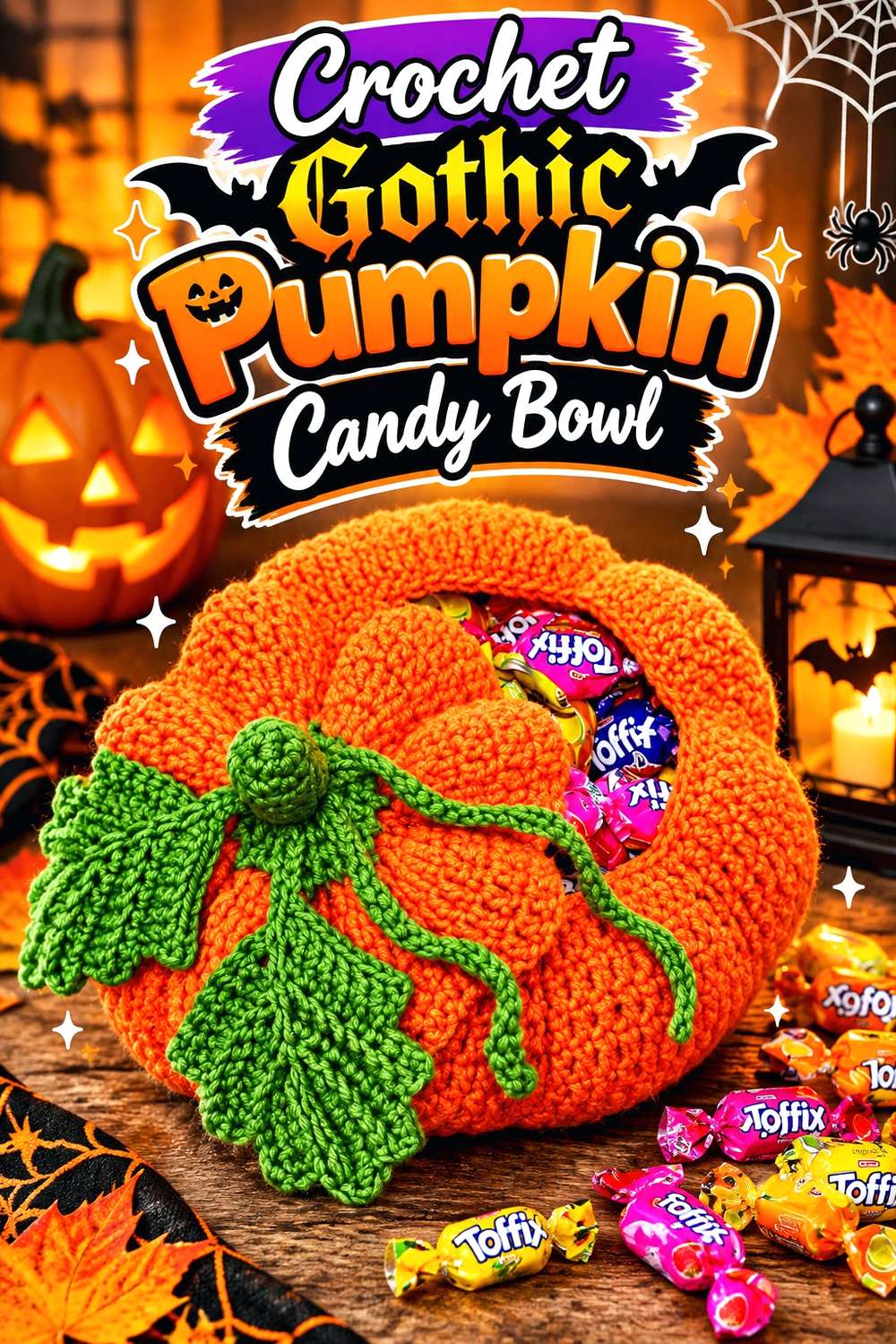
A lidded pumpkin candy bowl has a strong centerpiece quality because it combines sculptural shape with an accessible interior. The tutorial covers the round base, pumpkin bowl, lid, and curling tendrils. Decorative leaves are referenced from another tutorial, so readers interested in those additional pieces should note that the primary video does not teach every decorative component shown.
For a gothic version, the vessel itself can do most of the work. A charcoal or oxblood bowl with a contrasting stem creates a dark focal point without changing the construction. Tendrils add movement around the lid, so adding several more motifs may make the top feel crowded. A small skull or web accent would be better treated as an optional addition than as part of the original source.
Keep the Lid Visually Functional
The lid should remain easy to recognize and lift. If you add embroidery or appliqué, avoid obscuring the boundary between the lid and bowl. A contrast line around that division can be more useful than decorating every surface.
Let the Tendrils Supply Movement
The curling top details already break up the rounded pumpkin outline. Before attaching additional dangling elements, consider whether the existing tendrils provide enough gothic irregularity. Keeping some empty space around them can make their shape more noticeable.
Creator: Игорь Кононенко
12. Crochet Gothic Pumpkin Bunting
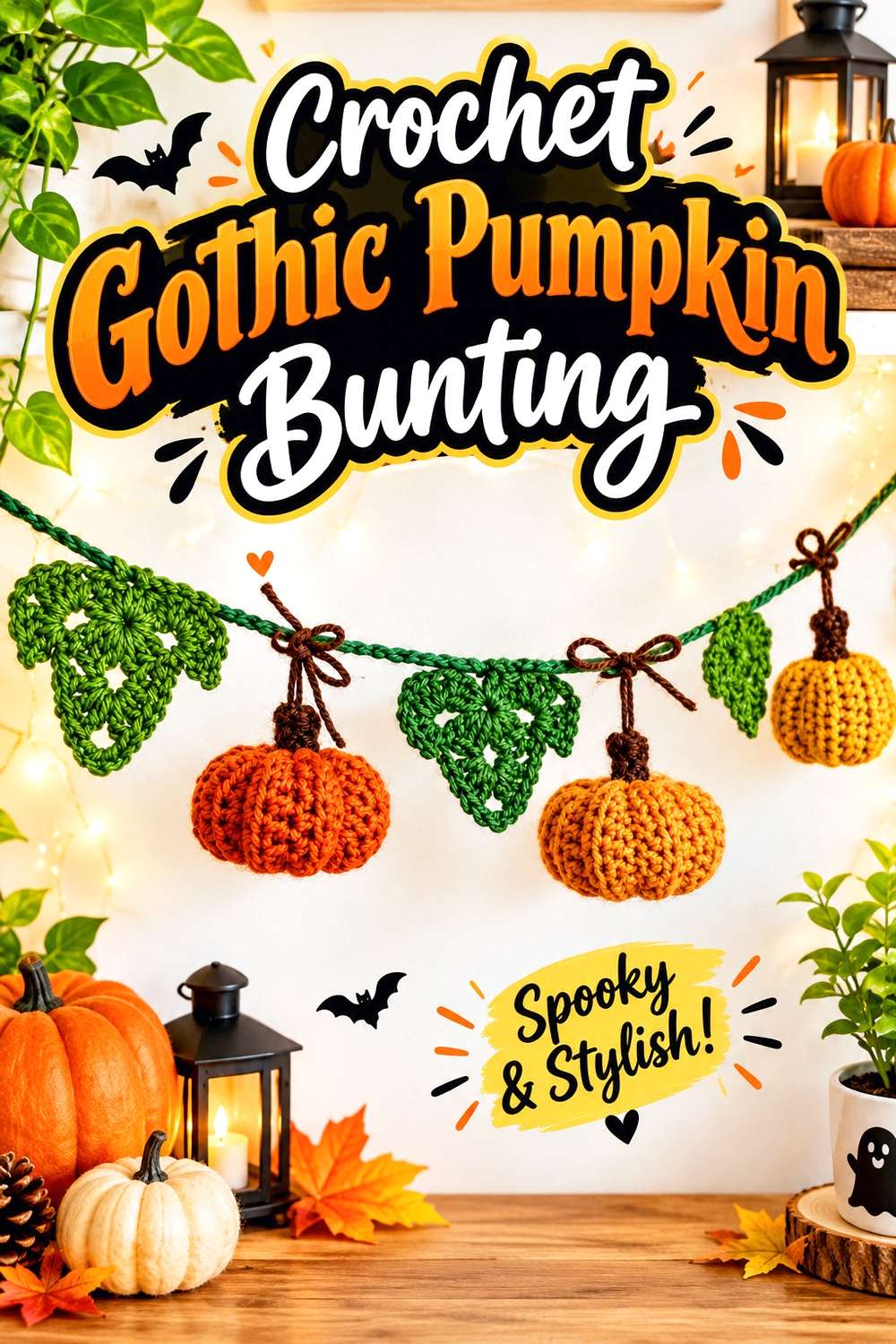
Pumpkin bunting shifts the focus from one object to a repeated line of small decorations. The tutorial teaches stuffed pumpkins, their stem and leaf details, and the assembly of those components into bunting, so the hanging format is part of the source rather than a suggested conversion.
This structure is especially suitable for a gothic palette because each pumpkin can carry a related but different dark shade. Black, bone, deep purple, brown-red, and muted orange could create controlled variation without relying on five completely unrelated colors. Repetition also means that small decorative additions multiply quickly, so a few carefully chosen accents may have more impact than embellishing every pumpkin differently.
Establish a Color Rhythm
Think about the order of the pumpkins before joining the bunting. Alternating light and dark values can make individual forms easier to distinguish, while grouping similar shades produces a heavier, moodier band of color.
Keep Hanging Details Manageable
Bunting already includes repeated projecting forms and connecting structure. Long tassels, chains, or added charms may increase tangling during storage. If you want more gothic detail, flat embroidery or selective appliqués can change the appearance without adding as many loose elements.
Creator: Kara Ella Uy
13. Crochet Gothic Pumpkin Mug Cozy

A mug cozy gives the pumpkin theme a much smaller footprint than a pillow or blanket. The tutorial teaches a Halloween pumpkin mug cozy with a pumpkin appliqué, making the motif an attached focal element rather than turning the entire object into a pumpkin shape.
That separation creates an easy route to a gothic adaptation. The cozy itself can be black, charcoal, or deep plum while the pumpkin remains muted orange, bone, burgundy, or another contrasting shade. Because the appliqué occupies limited space, a strong two-color relationship will usually read more clearly than several tiny decorative additions. The tutorial should remain your reference for the actual cozy construction and fit.
Keep the Appliqué Easy to Read
The pumpkin needs enough contrast from the cozy underneath it. A very dark motif on an equally dark background may lose its outline, especially once the cozy curves around a mug. Test the color pairing side by side before committing to the final combination.
Treat Fit as a Separate Question
Changing the color does not affect the underlying construction, but changing the cozy dimensions does. If you plan to use it on a particular mug, compare the tutorial’s finished fit guidance with that mug rather than assuming one cozy will suit every shape.
Creator: Niki
14. Crochet Gothic Pumpkin Potholder

This pumpkin potholder provides a layered flat project rather than another stuffed decoration. The tutorial includes the pumpkin structure, stem, leaves, a potholder back, and assembly, so the back layer is part of the taught construction.
For a gothic kitchen or hanging display, color is the safest editorial change to make without altering the pattern structure. A black or burgundy pumpkin with muted green, gray, or brown top details can move away from bright harvest colors while preserving the recognizable form. If the piece will actually be used around hot cookware rather than displayed decoratively, follow the creator’s material guidance and independently confirm that the chosen materials are appropriate for that use; a visual crochet collection cannot establish protective performance.
Decide Between Display and Working Use
A potholder hung on a wall can prioritize visual detail. One intended for routine kitchen handling needs a clearer functional priority. That distinction should influence whether you add buttons, beads, raised appliqués, or other surface decorations not included in the tutorial.
Use the Outer Shape as the Gothic Element
The pumpkin silhouette already provides seasonal character. Instead of covering the center with multiple motifs, consider a nearly monochrome dark body with a contrasting stem or edging. That keeps the flat form easy to recognize.
Creator: Creative Grandma
15. Crochet Gothic Pumpkin Bookmark

This bookmark combines a crocheted pumpkin with a connecting chain and leaf detail, giving the pumpkin a purpose quite different from a freestanding ornament. The tutorial specifically covers the stem, leaf, pumpkin, bookmark chain, and completion of the project.
A gothic adaptation could use a black, aubergine, or rust pumpkin with a bone-colored leaf or chain, or reverse that relationship for stronger contrast. Because part of a bookmark sits between pages, the decorative pumpkin can remain the part displayed outside the book rather than forcing elaborate ornamentation into the page area. The result can feel dark and seasonal without requiring a complicated face.
Keep the Page Area Relatively Simple
Bulky surface additions are less useful along the section intended to sit inside a book. Concentrate decorative changes on the visible pumpkin end, where they can be appreciated without adding unnecessary thickness between pages.
Make the Small Pumpkin the Focal Point
A bookmark is viewed up close, so a restrained color shift may be enough. If you add embroidery, one small web, stitched face, or contrasting outline can have more impact than several miniature appliqués competing on the same surface.
Creator: Jess Crafting
16. Crochet Gothic Pumpkin Earrings
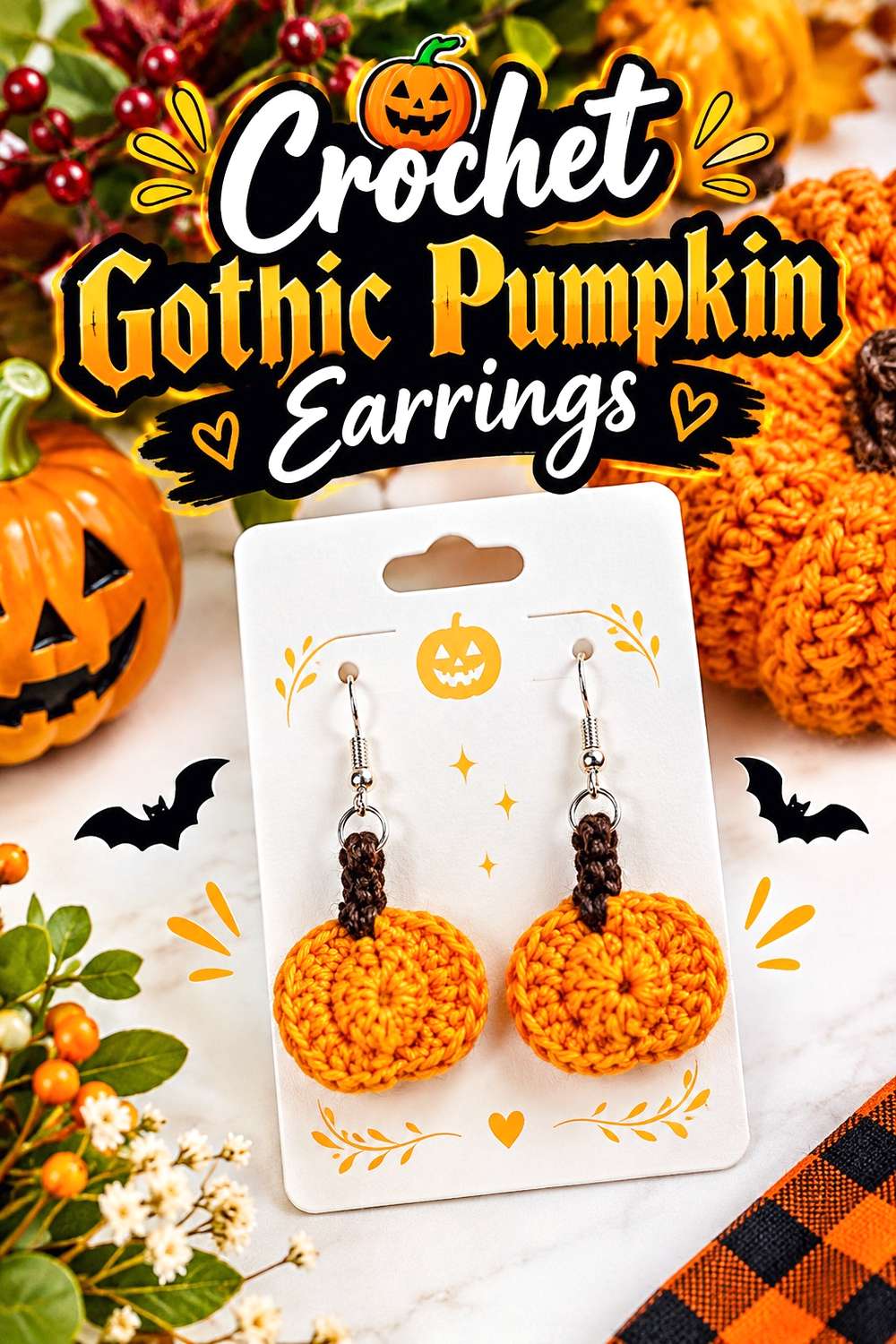
Pumpkin earrings bring the motif down to jewelry scale, where shape and color have to communicate quickly. The tutorial is specifically for crochet pumpkin earrings, so the accessory format is already resolved by the source rather than adapted from a larger pumpkin motif.
At this size, a gothic palette can be more effective than trying to fit multiple thematic motifs onto each pumpkin. Black, dark plum, deep red, muted orange, or bone can each produce a different mood while preserving the recognizable silhouette. If you want the pair to look intentionally matched, pay attention not only to color but also to orientation and how the pumpkins hang.
Aim for a Deliberate Pair
Small handmade motifs can show minor variation. When preparing two earrings, compare them together before final assembly so the pumpkin orientation and visual weight feel related rather than accidentally mismatched.
Avoid Overloading the Motif
A tiny crocheted pumpkin already competes with jewelry hardware for visual space. Large beads, tassels, or additional appliqués can obscure the silhouette. A dark palette or one restrained accent is often enough to establish the gothic direction.
Creator: TheYarnBowl Crochet
17. Crochet Gothic Pumpkin Wall Hanger
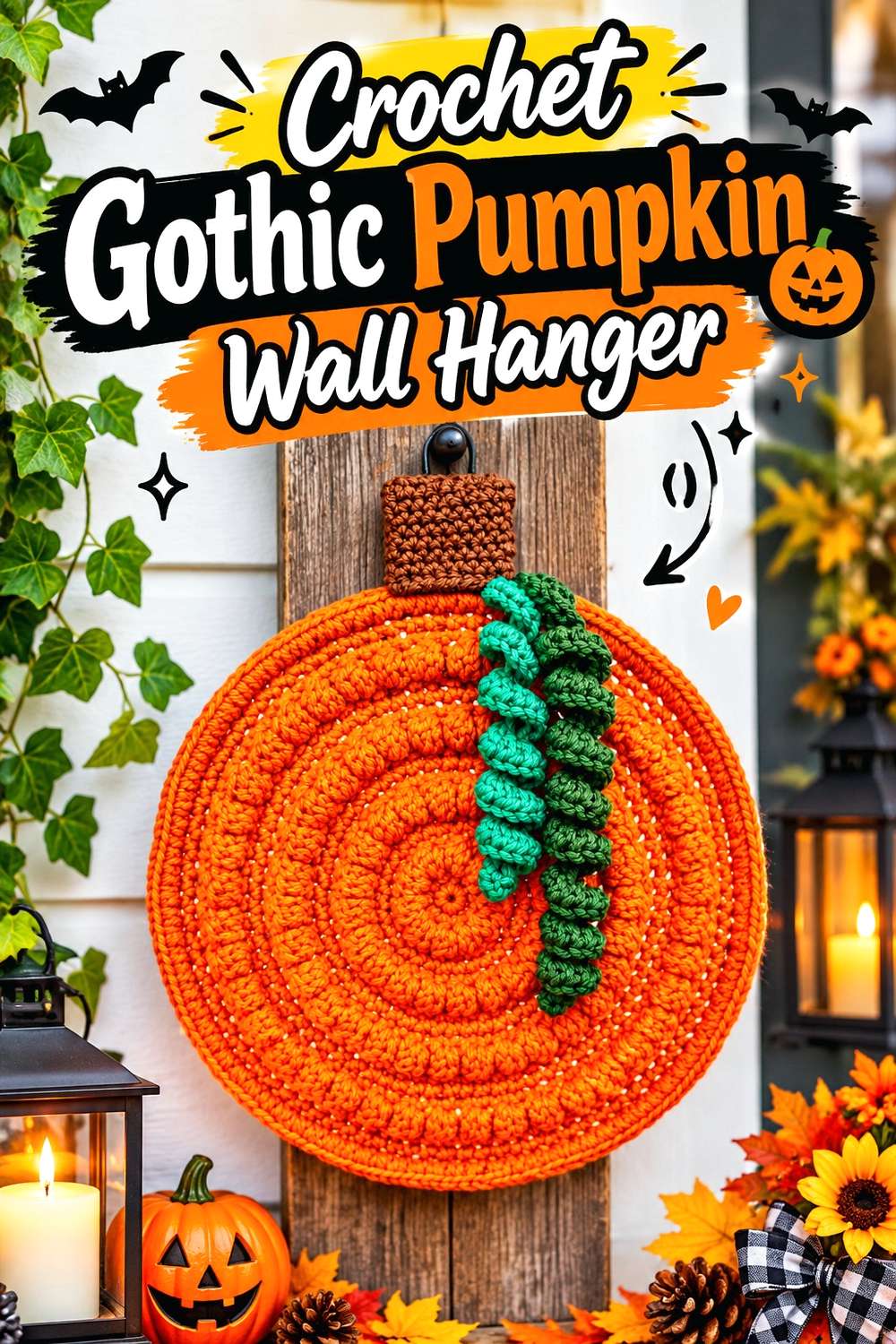
A wall hanger gives the pumpkin motif more negative space than a solid pillow or blanket. The source design uses a crochet pumpkin composition arranged with a metal ring and includes textured pumpkin sections, a stem, and vine details. The tutorial therefore provides a complete wall-decor concept that can be recolored for a gothic interior.
Black, bone, burgundy, or muted rust can change the tone substantially without altering the ring-based structure. Because the surrounding circle remains visible, the empty area becomes part of the design. That makes this project particularly suitable for a restrained palette: the outline and texture can carry more of the visual interest than extra appliqués.
Use the Ring as a Frame
Treat the circular support like a boundary around the composition. If you add a small web, bat, or other gothic element, place it with the existing pumpkin and vine shapes in mind rather than filling every open section.
Preserve Some Negative Space
The openness distinguishes this wall hanger from a solid plaque. Overdecorating the center can remove that advantage. Leaving deliberate gaps lets the pumpkin shape and curved support remain visible from a distance.
Creator: A Crafty Concept
18. Crochet Ghost-and-Pumpkin Witch-Hat Bookmark
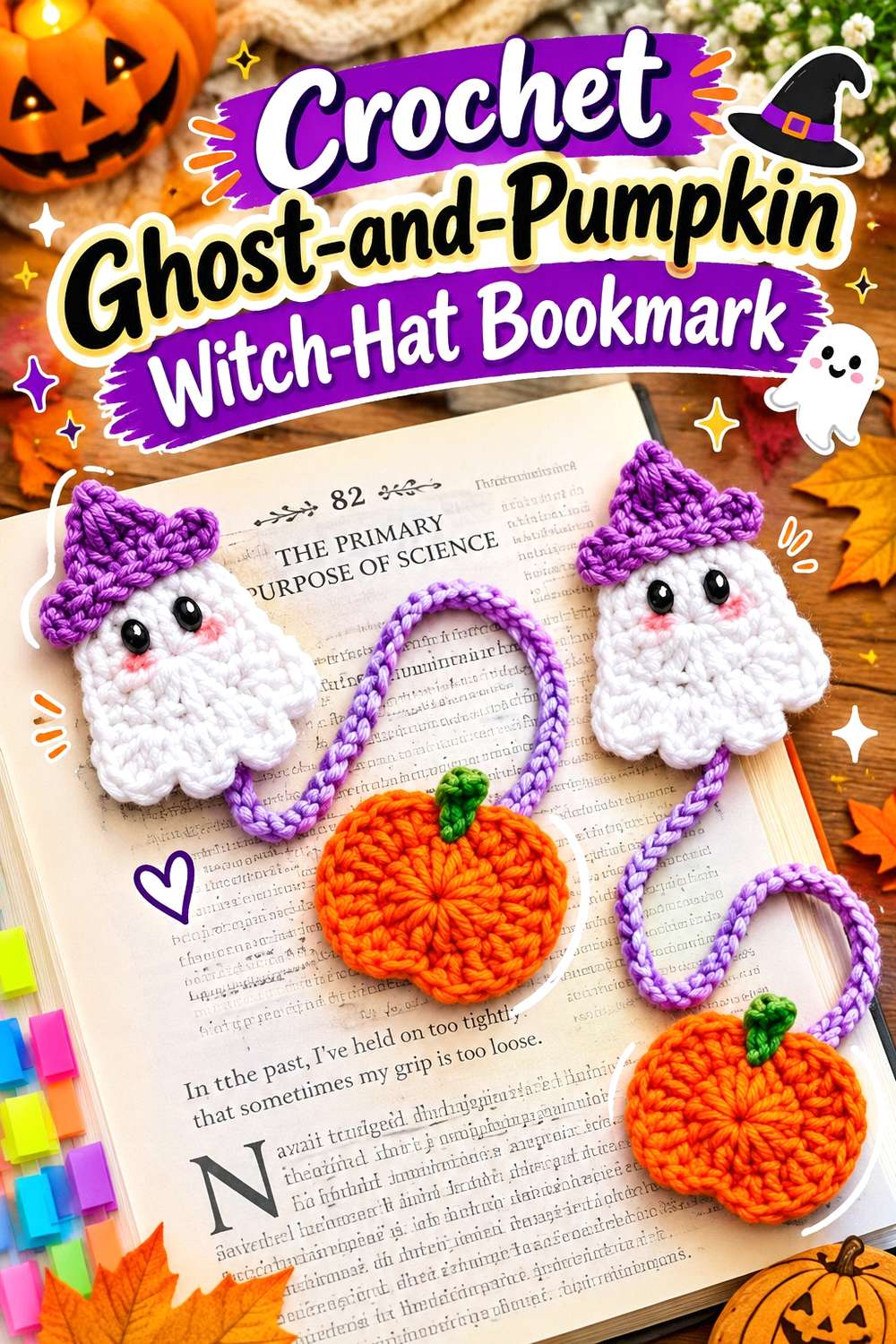
This bookmark is one of the most overtly spooky projects in the collection because it combines several Halloween forms rather than relying on a dark recolor. The tutorial covers a ghost, witch hat, pumpkin, stem, and the joining of the elements into the finished bookmark.
The mixed composition already supplies plenty of gothic character. You could deepen the mood with a black-and-bone palette, muted pumpkin orange, or a dark purple hat, but there is little need to add another motif. The more useful decision is how strongly you want the separate ghost, pumpkin, and hat to contrast with one another so that the composition remains understandable at bookmark scale.
Give Each Motif Its Own Job
The ghost, hat, and pumpkin are visually distinct forms. Keeping at least subtle value differences among them helps prevent the whole project from reading as one dark mass, particularly when it is viewed from across a desk.
Resist Adding a Fourth Theme
Spiders, skulls, moons, and webs might all sound compatible, but this bookmark already combines three recognizable Halloween subjects. A tighter palette can make it feel more gothic without increasing the number of competing shapes.
Creator: Reyra
19. Crochet Bat Pumpkin
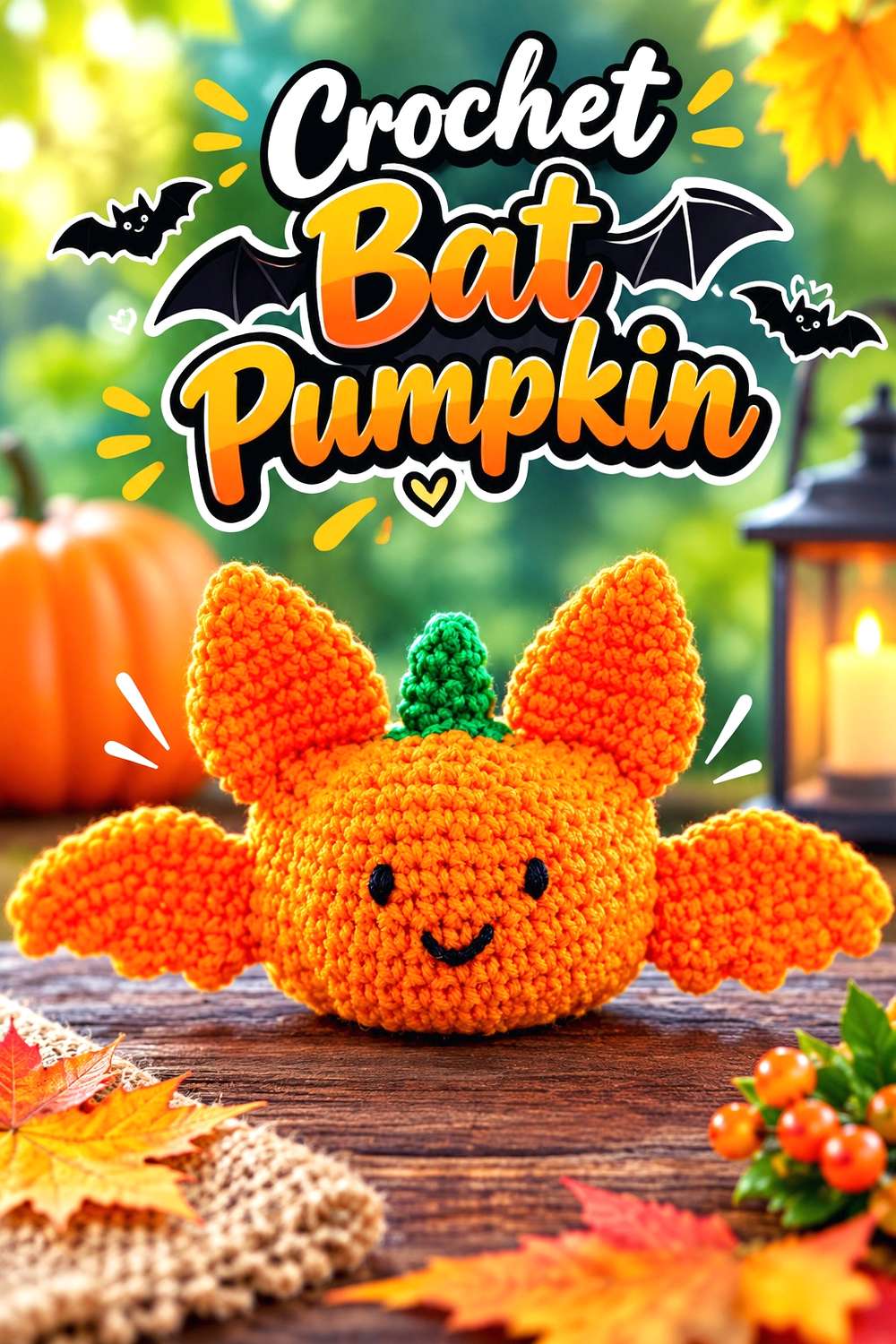
The bat pumpkin merges two silhouettes into a single character: a rounded pumpkin body gains bat-like features instead of merely wearing a Halloween accessory. The tutorial is specifically presented as a bat-pumpkin crochet project, making this another direct spooky match rather than a plain pumpkin base.
That hybrid form is useful for gothic décor because the character remains recognizable even if you move away from standard orange. A charcoal, black, muted violet, or dark red pumpkin body can emphasize the bat association, while contrasting facial or wing details can keep the shape readable. Since the protruding bat elements are already a major part of the outline, extensive extra appliqué would probably distract from what makes this pumpkin different.
Keep the Bat Silhouette Clear
The added bat features distinguish this project from the other stuffed pumpkins. Place it where those projecting shapes are not hidden behind neighboring décor, and avoid adding equally large motifs around the same edges.
Choose Contrast Around the Character
If every component is black, smaller bat details may visually merge into the pumpkin. Using two neighboring dark values, or one lighter neutral detail, can preserve the gothic palette while making the hybrid character easier to recognize.
Creator: Crafty Crochet Castle
20. Crochet Gothic Pumpkin Coaster

A pumpkin coaster is one of the simplest forms in this collection to adapt because its function depends mainly on a flat, recognizable outline rather than a complex sculptural character. The tutorial teaches a crochet pumpkin coaster; the gothic treatment here is a proposed palette change rather than something attributed to the original design.
Try charcoal, black, burgundy, muted orange, or bone depending on the surface where the coaster will be used. Since a cup will cover much of the center, spending time on elaborate embroidery there may have little visual payoff. The outer pumpkin shape and stem are more useful places to establish the theme. A set can also mix several dark shades while keeping the same construction for visual consistency.
Design for the Visible Edge
Most of the coaster’s center disappears when a cup is placed on it. Concentrate color contrast around the pumpkin outline and top detail, which are more likely to remain visible during use.
Consider the Surface Underneath
A dark coaster needs enough contrast from the table to preserve its pumpkin silhouette. On a black tabletop, bone or muted rust may read more clearly; on a light surface, charcoal or deep burgundy can create the stronger graphic effect.
Creator: Crochet Mili
Conclusion
For the most unmistakably gothic results, start with the Crochet Skull-Faced Gothic Pumpkin, Crochet Bat Pumpkin, Crochet Toothy Jack-O’-Lantern Pumpkin, or Crochet Ghost-and-Pumpkin Witch-Hat Bookmark, since their spooky identity is built into the project concept. If you prefer quieter décor, the Pumpkin Pillow, Wall Hanger, Granny-Square Afghan, Basket, and Coaster provide broader surfaces where a restrained dark palette can do most of the work.
The best choice also depends on placement. Bags and baskets add usable openings, earrings and bookmarks keep the motif compact, while bunting and wall décor suit larger displays. Use the linked original tutorials for exact construction details, and treat the gothic recoloring and optional decorative suggestions here as separate styling decisions.
Frequently Asked Questions
Can I turn any crochet pumpkin pattern into a gothic pumpkin?
A color change can often shift the mood without altering the underlying construction, so conventional pumpkin tutorials can be useful bases. Structural changes require more care. Adding a large witch hat, bat wings, handles, or a lid affects the object differently from simply choosing charcoal yarn instead of orange. When the new feature changes fit, balance, openings, or assembly, a tutorial that already includes that feature is the clearer starting point.
Which colors work well for gothic crochet pumpkins besides black?
Charcoal, deep plum, burgundy, oxblood, bone, muted orange, brown, and desaturated green can all support a darker palette. The more important decision is contrast. A black pumpkin with black facial details may lose definition, while black paired with bone or dark purple paired with muted gray preserves the shapes. Consider the background too: a dark project that looks dramatic in your hands may disappear against a similarly dark shelf or table.
Should I add skulls, bats, or spiderwebs to every project?
Not necessarily. Projects such as the bat pumpkin, skull-faced pumpkin, and ghost-and-pumpkin bookmark already contain strong themed elements. Adding several more motifs can weaken the original silhouette. Flat or conventional bases such as a pillow, coaster, placemat, or basket offer more room for optional surface styling, but even there one deliberate motif or a strong palette may be more effective than filling every available area.
Which gothic pumpkin projects are best for a coordinated room display?
The wall hanger, pillow, bunting, basket, candy bowl, and granny-square afghan give you noticeably different scales while sharing the pumpkin theme. Coordination does not require making them identical. Repeating two or three colors across the pieces can connect them while allowing each form to stay distinct. Reserve the strongest character motifs, such as skull or bat details, for one or two focal pieces so the entire display does not compete for attention.
Can I change the yarn, hook, or size from the linked tutorials?
Treat those as construction changes rather than purely aesthetic ones. Different yarn and hook combinations can change dimensions, fabric behavior, and the proportions of joined parts, so the article does not assume that substitutions are interchangeable. When finished size, wearable fit, matching panels, or the relationship between a lid and container matters, use the creator’s tutorial guidance as your starting point and check the result before making multiple pieces.