A lace collar can shift a crochet bomber jacket from sporty and compact to vintage, romantic, oversized, or sharply detailed. The important difference is not simply which lace looks prettiest. Collar depth, neckline shape, yarn weight, front closure, and the amount of structure in the bomber all affect whether the finished collar lies neatly or overwhelms the jacket.
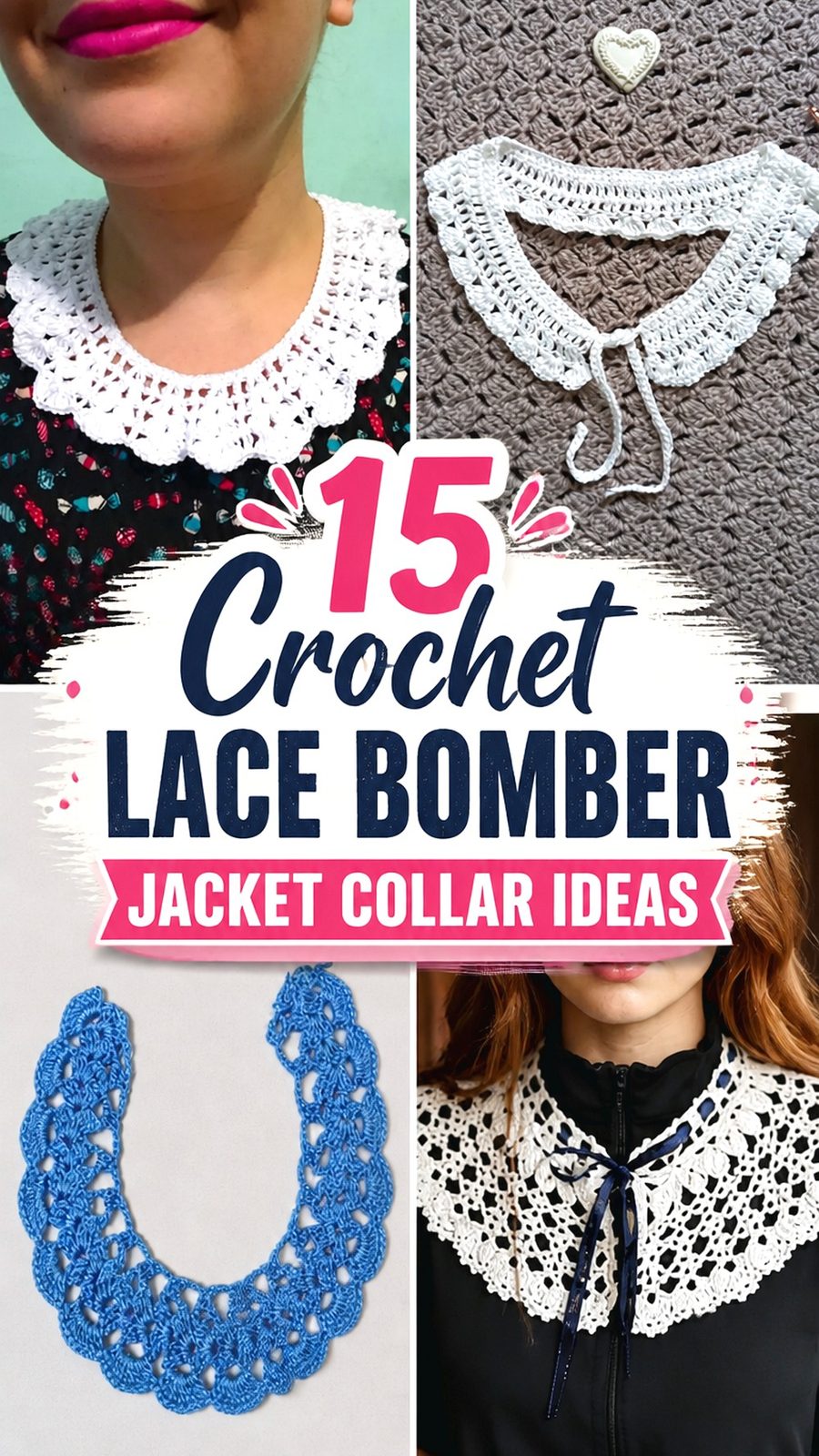
Because exact lace-bomber combinations are relatively specialized, this collection uses two useful types of tutorials. Some demonstrate bomber or collared-jacket construction, while others focus closely on distinctive crochet collar shapes. When a source teaches a separate collar rather than a complete bomber, treat it as an adaptation reference: measure your actual jacket neckline, test the collar against it, and use the creator’s tutorial for the original construction details.
Quick List
- Crochet Fold-Over Lace Bomber Jacket Collar
- Crochet Oversized Shawl-Lace Bomber Jacket Collar
- Crochet Rounded Peter Pan Lace Bomber Jacket Collar
- Crochet Double-Lobed Peter Pan Bomber Jacket Collar
- Crochet Narrow Neck-Lace Bomber Jacket Collar
- Crochet Deep Vintage Lace Bomber Jacket Collar
- Crochet Cottagecore Shell-Edge Bomber Jacket Collar
- Crochet Scalloped Peter Pan Bomber Jacket Collar
- Crochet Buttoned Fine-Lace Bomber Jacket Collar
- Crochet Pearl-Point Vintage Bomber Jacket Collar
- Crochet Structured Vintage Bomber Jacket Collar
- Crochet Poppy-Style Lace Bomber Jacket Collar
- Crochet Tie-Front Cottagecore Bomber Jacket Collar
- Crochet Contrast Collared Bomber Jacket with Lace Insert
- Crochet Cluster-Lace Collared Bomber Jacket
Match the Collar to the Bomber Neckline First
A decorative collar cannot compensate for a neckline that is already too wide, stretched, or uneven. Before choosing a lace design, identify where the finished bomber neckline actually sits and measure along that path rather than relying only on a body neck measurement. This matters especially when the jacket has front bands, a zipper, or an open front.
For a permanent collar, check the finished neckline after the shoulder seams and front edges are established. A detachable collar offers more flexibility, but its inner edge still needs to correspond with the jacket’s neckline rather than floating far outside it. Rounded collars usually tolerate gentle curves well, while deeper or more angular designs need closer attention at the front corners. Block a sample or the finished collar before making final attachment decisions because openwork can change noticeably after shaping.
Balance Lace, Ribbing, and Garment Weight
Traditional bomber styling often gets visual structure from a fitted hem, cuffs, and a relatively defined neckline. Lace introduces the opposite qualities: openness, movement, and sometimes considerable spread. Combining them works best when those differences appear intentional.
A fine lace collar can provide contrast against a dense bomber body without adding much visual bulk. A large cape-like collar makes a stronger statement but may need a firmer neckline beneath it so the jacket does not appear dragged downward. Yarn choice matters as well. A soft, loosely worked collar can drape beautifully but may lose a crisp outline, while a firmer fiber and denser base can make scallops or points easier to read. If the bomber closes with a zipper or buttons, check that the collar ends leave the fastening area clear.
Crochet Fold Over Lace Bomber Jacket Collar

This version keeps the recognizable bomber silhouette and makes the collar an extension of the jacket rather than a separate decorative accessory. The TCDDIY bomber tutorial includes a dedicated collar stage alongside the jacket body, bands, cuffs, and pockets, making it especially useful for understanding where a collar fits into complete bomber construction.
For a lace interpretation, preserve that underlying neckline relationship but replace the visual density of the collar with a compatible openwork treatment. This option suits readers who want their lace to look integrated with the garment instead of layered over it afterward. Keep the collar relatively controlled if the waistband and cuffs already create strong horizontal lines.
Build the Lace Around an Established Neck Curve
The safest point for planning this variation is after you understand the jacket’s front and back neckline shape. Decorative lace often expands more dramatically than a compact collar fabric, so copying only the outer dimensions of a dense collar can produce excessive flare. Compare the lace’s inner edge with the actual neckline and concentrate any decorative spread toward the outer edge instead of allowing the neck edge itself to become loose.
Keep the Front Band Visually Clear
A bomber with a defined front band already has a strong vertical feature. If lace extends too far into that area, the jacket can lose the clean front opening that gives it a bomber-like appearance. Decide whether the collar should stop above the fastening, meet it, or deliberately overlap it. Make that decision before finishing the outer lace edge, particularly if a zipper or button placement must remain accessible.
Crochet Oversized Shawl Lace Bomber Jacket Collar
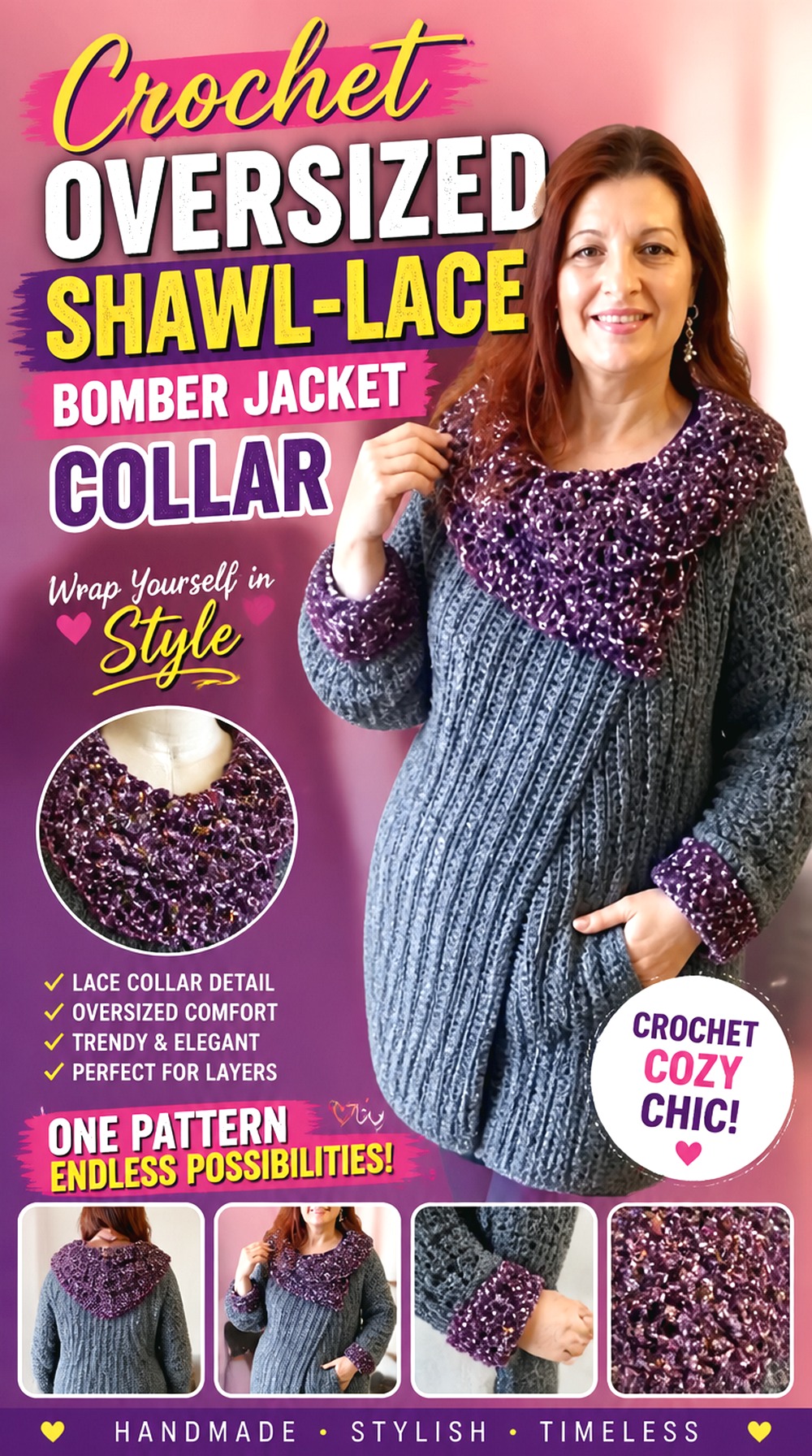
An oversized fold-back collar creates a softer jacket outline and makes the neckline the main design feature. ALEX CROCHET UNCINETTO MODERNO DI ALEX demonstrates a seamless jacket with a large collar, providing a useful reference for understanding how much visual space a broad collar occupies on a crocheted jacket.
To move the concept toward a lace bomber, use the broad collar silhouette but keep the jacket’s hem and cuffs comparatively compact. Openwork across the outer portion can reduce visual heaviness while retaining the dramatic width. This idea works particularly well when the goal is a statement jacket rather than a minimal athletic-style bomber.
A Wide Collar Changes the Shoulder Proportion
The farther a collar spreads toward the shoulders, the more it visually widens the upper garment. That can be useful on a boxy bomber, but it can also hide shoulder shaping or compete with dropped sleeves. Lay a paper or fabric mock-up over the finished jacket before committing to a deep collar. It is a simple way to judge whether the proposed depth looks deliberate on your particular shoulder width.
Let the Lace Become Lighter Toward the Edge
A large collar made entirely in a dense stitch can accumulate more weight than expected. One adaptation is to keep the inner section more stable and allow greater openness toward the outside edge. That preserves a reliable neckline while letting the visible border feel lighter. Whatever stitch pattern you choose, swatch and block it first; a lace section that expands dramatically after blocking can alter the planned collar depth.
Original Tutorial and Creator Credit
Creator: ALEX CROCHET UNCINETTO MODERNO DI ALEX
Crochet Rounded Peter Pan Lace Bomber Jacket Collar
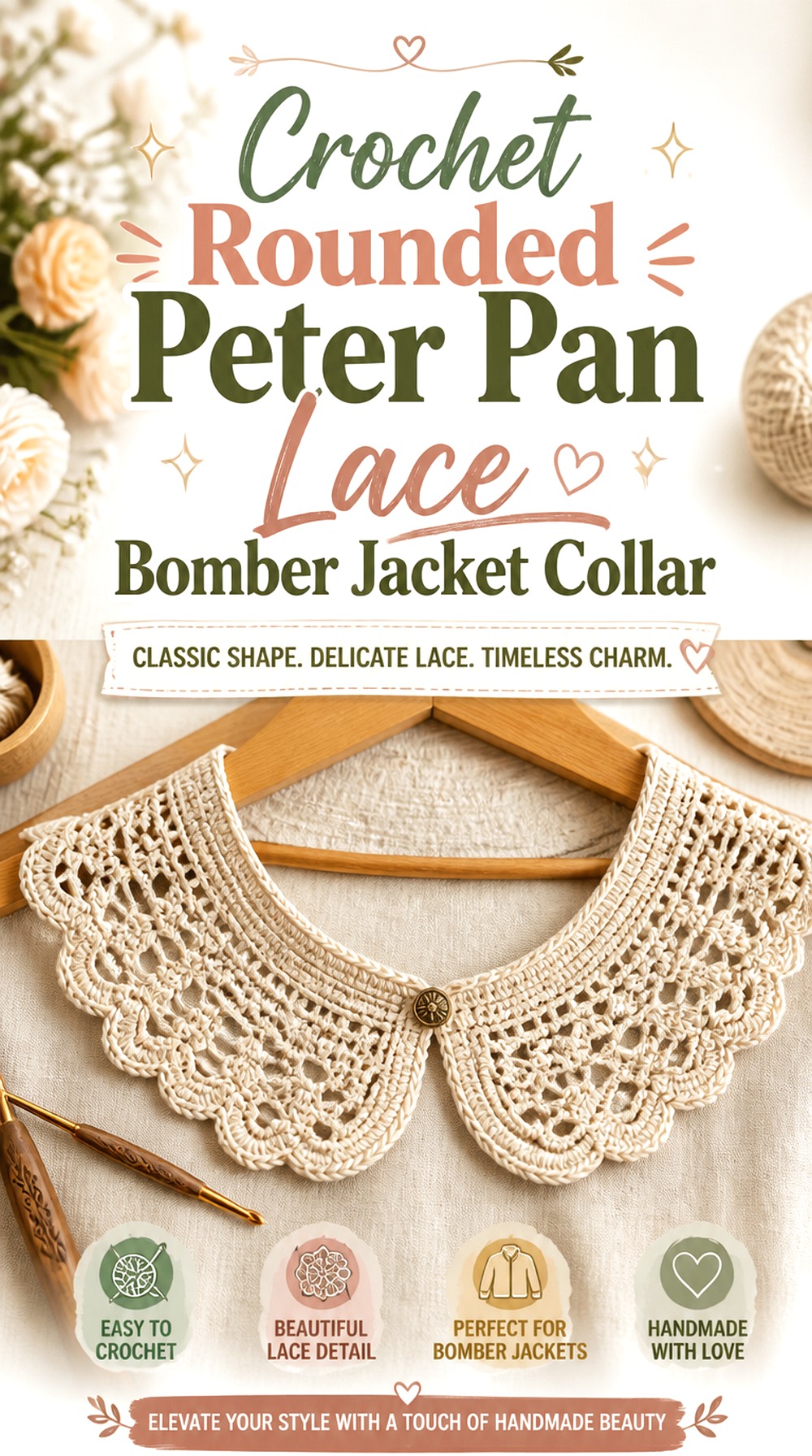
A rounded Peter Pan collar creates one of the clearest contrasts with a bomber jacket’s sporty ribbing. Instead of following a tall or narrow neckband, two softly curved collar sections sit across the upper front and draw attention to the neckline. All Crafts Channel’s tutorial specifically demonstrates a Peter Pan collar with a lace-like appearance.
On a bomber jacket, the result can feel deliberately vintage without requiring lace across the entire garment. This is a useful direction when the bomber body is relatively plain and you want one concentrated decorative element. Keep the collar proportionate to the front panels so its rounded ends do not crowd the jacket closure.
The Two Front Curves Need to Read as a Pair
Rounded collars quickly look uneven if one side falls lower or spreads farther than the other. Before permanent attachment, place the jacket flat, identify its center back and front opening, and compare both collar halves from those reference points. Blocking the collar symmetrically is especially valuable because small differences at the curved edges become obvious when the two sides sit side by side.
Dense Bomber Fabric Can Make Fine Lace Stand Out
You do not need equally intricate stitches across the jacket and collar. In fact, a relatively simple bomber body can provide a useful background for detailed openwork. If you use a contrasting yarn weight or fiber for the collar, test the junction first. The goal is for the neckline seam or attachment edge to remain stable while the decorative section has enough freedom to open.
Original Tutorial and Creator Credit
Creator: All Crafts Channel
Crochet Double Lobed Peter Pan Bomber Jacket Collar
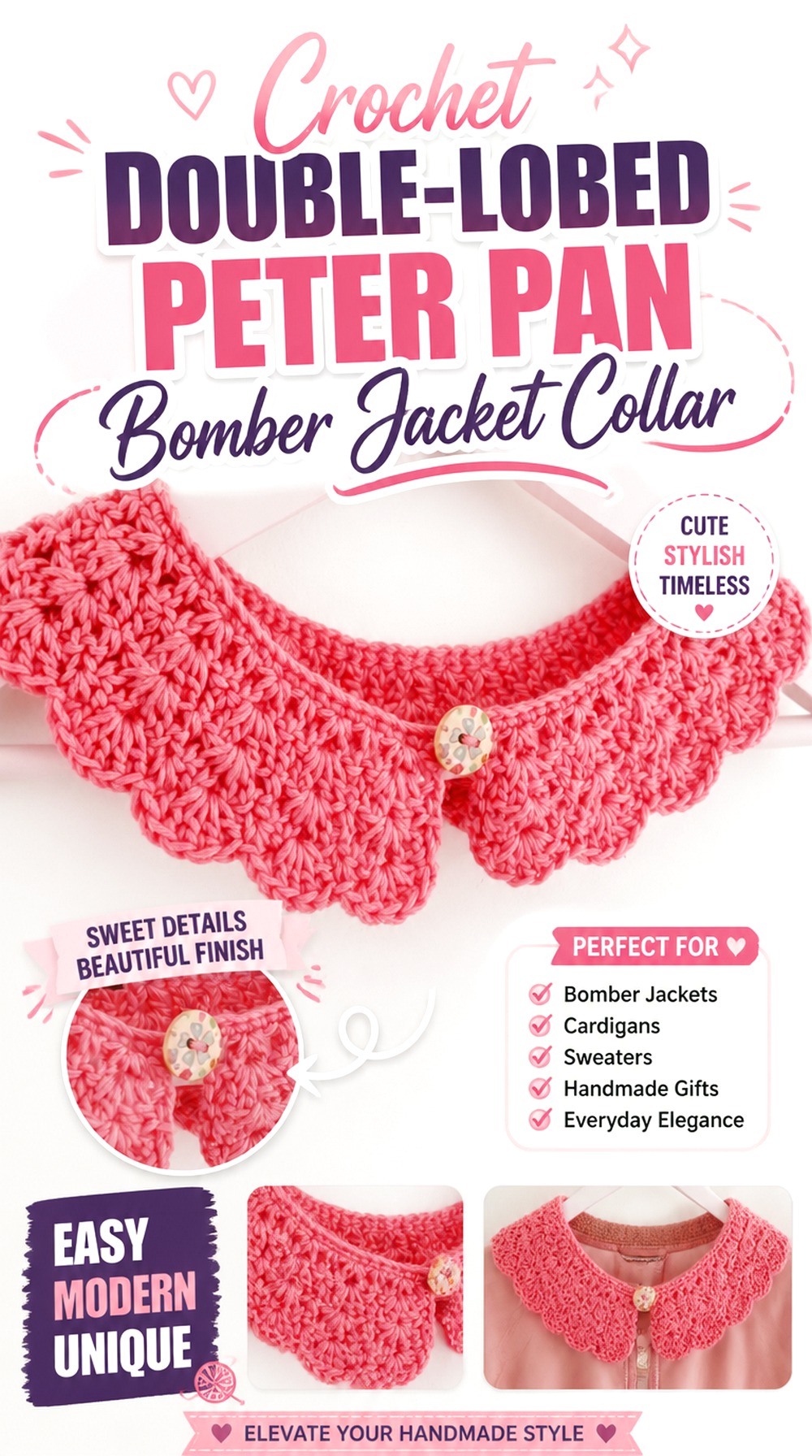
This collar idea emphasizes the recognizable two-part Peter Pan outline while treating it as a deliberate design component of the bomber. Ahuyama Crochet’s tutorial focuses on a Peter Pan collar and presents the collar as an accessory that can be added to garments including sweaters, blouses, and tops.
For a bomber adaptation, the strongest placement is usually close enough to the neck that the rounded lobes remain visible above the front bands. A tonal version can soften the sporty jacket without creating a sharp color break, while contrast yarn makes the collar behave more like a statement trim. Either way, fit the inner edge to the finished jacket rather than assuming an accessory-size collar will automatically match.
Decide Where the Rounded Ends Should Finish
The front tips can stop high near the upper chest or travel farther toward the opening. That placement changes the entire look of the jacket. Shorter lobes keep more of the bomber’s front band visible; longer ones make the collar more dominant. Before attachment, pin or clip the blocked collar temporarily and check the jacket both open and closed so you can judge the balance.
A Detachable Version Preserves More Styling Options
If you are unsure whether you want the bomber to look romantic every time you wear it, consider treating the collar as removable rather than permanent. A detachable construction also lets you wash or block the lace separately when the collar and jacket use different fibers. Any fastening should sit flat and avoid creating a bulky ridge against the neck, especially beneath a jacket that may already have a substantial front edge.
Original Tutorial and Creator Credit
Creator: Ahuyama Crochet
Crochet Narrow Neck Lace Bomber Jacket Collar
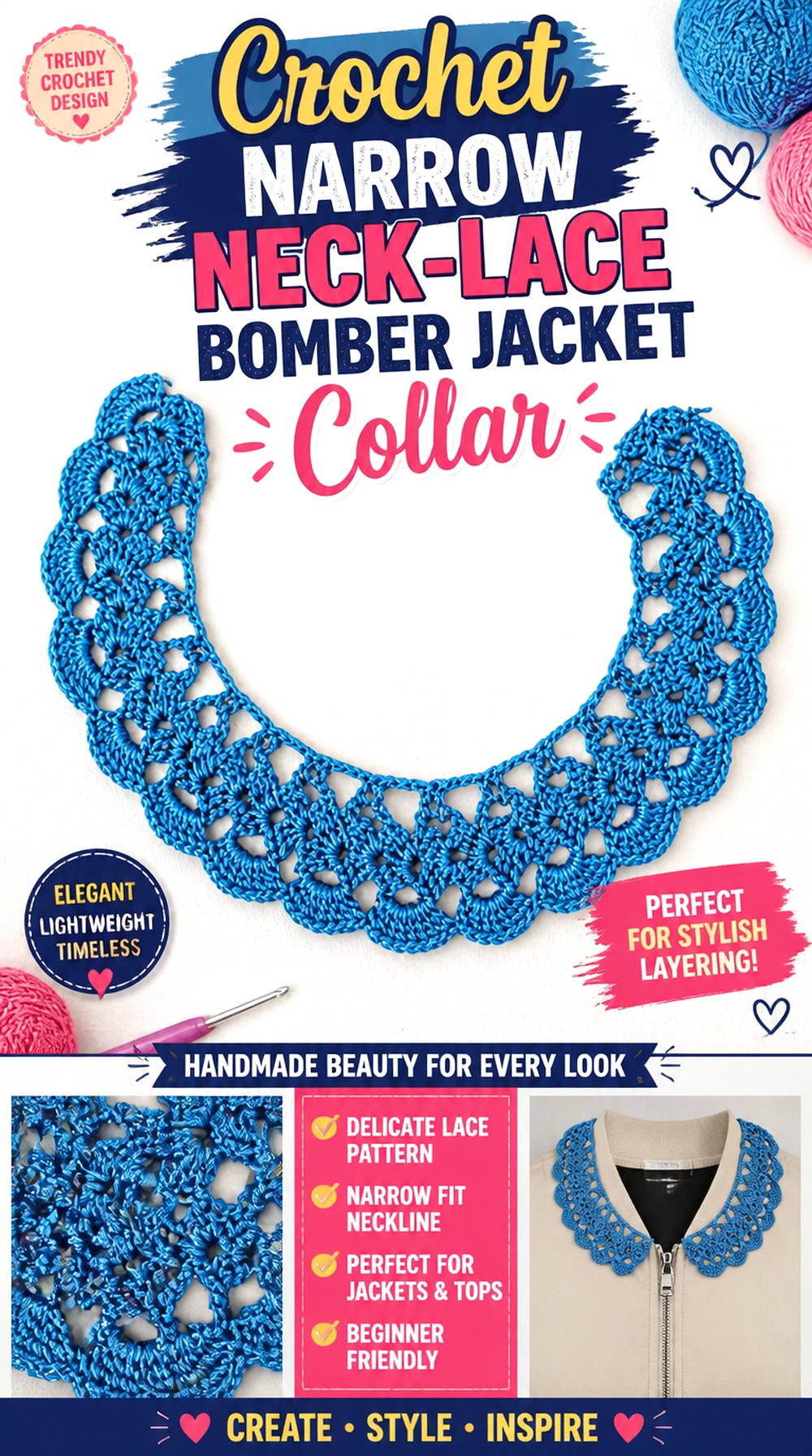
Not every lace bomber needs a broad collar. A narrow band of decorative crochet around the neck can preserve the compact outline of a classic bomber while still adding visible lace detail. Maariyah Creative Arts demonstrates a crochet neck-lace collar, providing a useful source for this smaller-scale approach.
This option makes sense when the body already includes texture, colorwork, or prominent ribbing and a large collar would compete with those elements. The lace can function almost like refined neckline trim. It is also easier to keep away from a front zipper or button band because the decorative depth is intentionally limited.
Narrow Does Not Mean the Neck Edge Can Be Loose
A small collar puts more attention on its inner line because there is less depth to disguise fit problems. Compare the collar directly with the bomber neckline before finishing. If the inner edge is too long, the trim may wave; if it is too short, it can pull the neckline inward. Make any compatibility adjustment before adding a decorative outer edge that would be harder to alter later.
Repeat the Detail Elsewhere Only If It Adds Cohesion
A narrow lace collar can be echoed at pocket edges or cuffs, but repetition is optional. Bomber jackets already have visually strong cuffs and waistbands, so adding lace everywhere can dilute the collar’s role as the focal detail. A useful checkpoint is to photograph the jacket with the collar alone, then temporarily place the proposed secondary trim. Choose the simpler version if the extra lace begins to compete.
Original Tutorial and Creator Credit
Creator: Maariyah Creative Arts
Crochet Deep Vintage Lace Bomber Jacket Collar
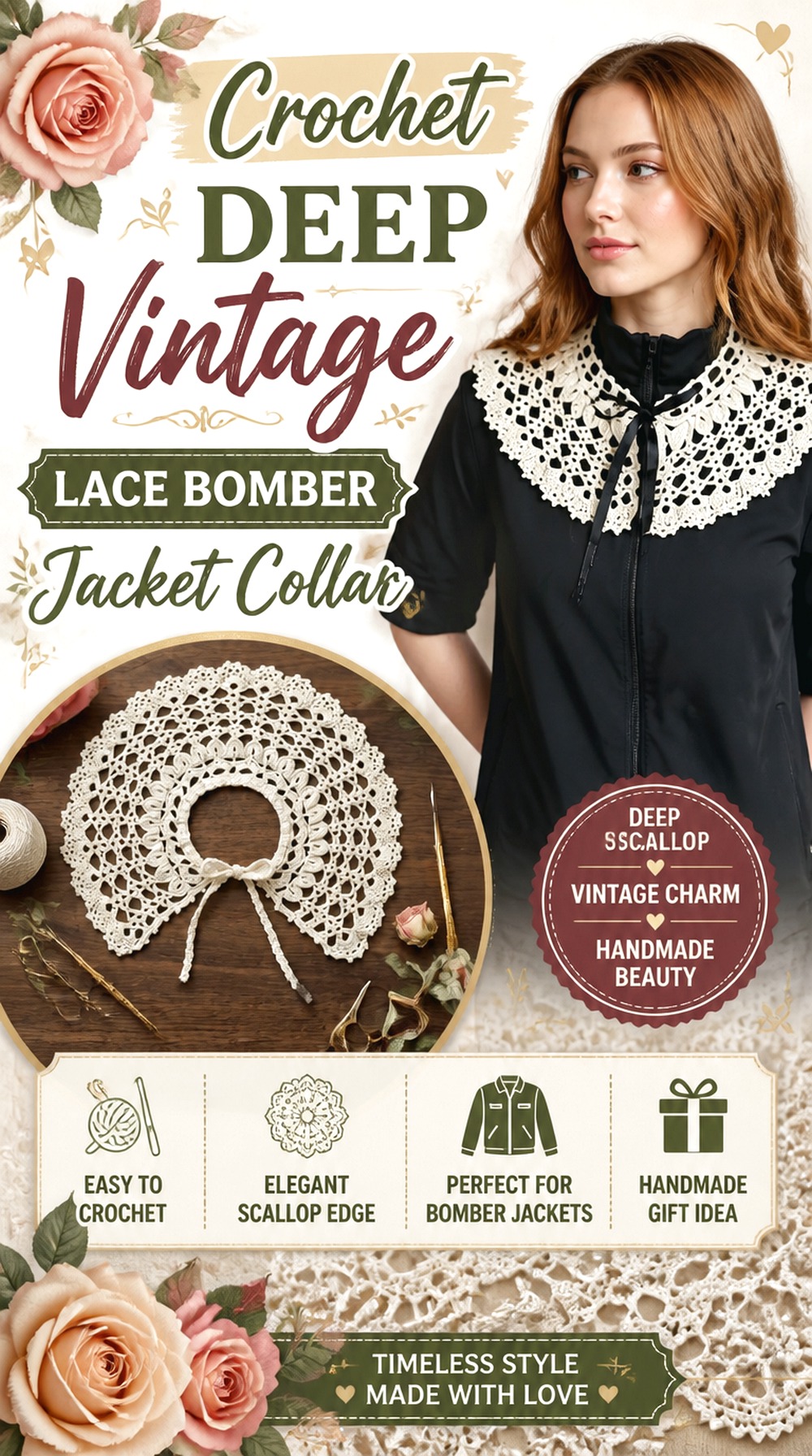
A deeper vintage collar covers more of the upper chest and shoulders, making the lace a significant part of the finished jacket rather than a narrow trim. GraceHandcrafts demonstrates a dedicated vintage lace collar and provides finished measurements for the sample in the source description, which is useful evidence that collar depth deserves as much attention as the neck opening itself.
For a bomber, treat those source dimensions as information about the creator’s example, not a universal bomber size. Your jacket may need a different scale. This design is strongest when the body is simple enough to give the wider lace room to read clearly.
Check Depth Against the Armhole and Shoulder Seam
Before making a deep collar permanent, compare its outer edge with the bomber’s shoulder line. If it extends far toward the sleeve, it may cover decorative shoulder details or bunch where the arm moves. A flat mock-up can reveal that problem early. Measure from the neckline outward on your own garment and decide how much shoulder coverage you actually want before choosing the final lace depth.
Fine Lace Needs a Stable Attachment Zone
A delicate collar can be visually light while still requiring a secure base. Avoid placing all the structural responsibility on the most open section of the lace. A firmer inner edge gives you a more reliable area for joining the collar to the bomber and helps distribute movement around the neckline. This becomes more important as the outer collar grows deeper and gains more surface area.
Blocking Determines the Final Outline
Deep lace may look compressed immediately after crochet and considerably more open after blocking. Shape it to the intended curve before deciding where it should attach. Check that scallops, points, or repeated motifs sit evenly on both sides. If the two fronts differ after blocking, correct that before sewing the collar onto a garment where the asymmetry will be harder to disguise.
Original Tutorial and Creator Credit
Creator: GraceHandcrafts
Crochet Cottagecore Shell Edge Bomber Jacket Collar
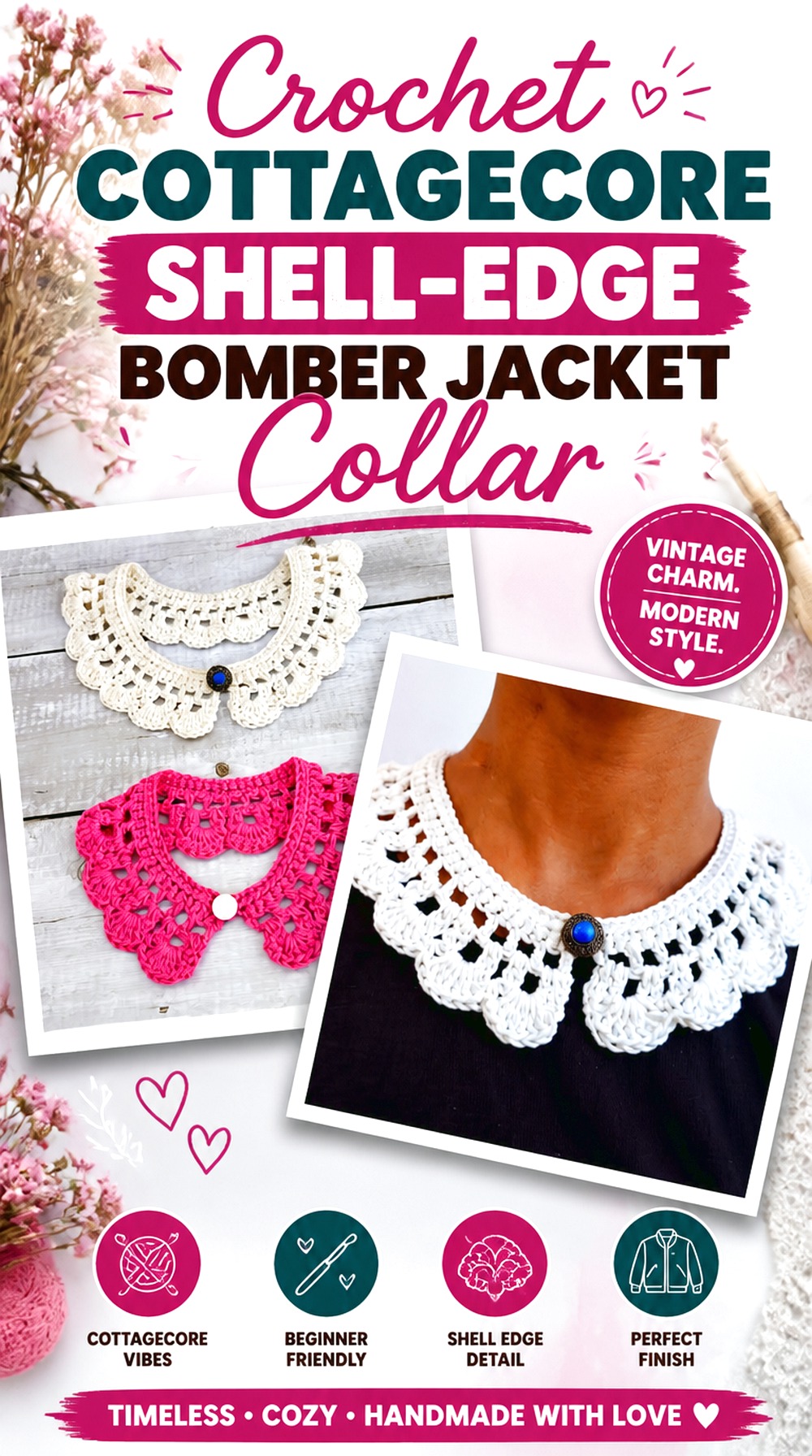
This idea pairs a restrained bomber body with a soft vintage-style lace collar that reads more relaxed than formal. Hopeful Turns demonstrates a vintage lace collar intended to be adaptable in size and suitable for layering over garments such as blouses, dresses, and sweaters.
On a bomber, the appeal comes from contrast: sturdy cuffs and a fitted waistband frame a much softer neckline. Rather than adding lace panels throughout the body, you can let the collar supply the cottagecore influence. This keeps the garment recognizable as a bomber while giving the upper edge a noticeably handmade, decorative character.
Use the Actual Jacket Instead of a Generic Neck Size
A detachable collar can be sized around a person, but a permanently attached bomber collar must also match the garment. Those are not always the same measurement. A jacket neckline may sit farther from the neck, particularly at the front. Lay a flexible measuring tape along the exact path where the collar will attach, then compare that path with the blocked collar before deciding whether the two constructions are compatible.
Soft Scallops Need Space to Be Seen
Shell-like or scalloped edges lose impact if they are trapped beneath a hood, high shirt collar, or heavily textured jacket front. This version works best when there is enough plain surface beneath the collar for its outline to remain visible. If the bomber has bold striping or motif work, consider a simpler lace edge or a tonal yarn so the neckline does not become visually crowded.
Original Tutorial and Creator Credit
Creator: Hopeful Turns
Crochet Scalloped Peter Pan Bomber Jacket Collar
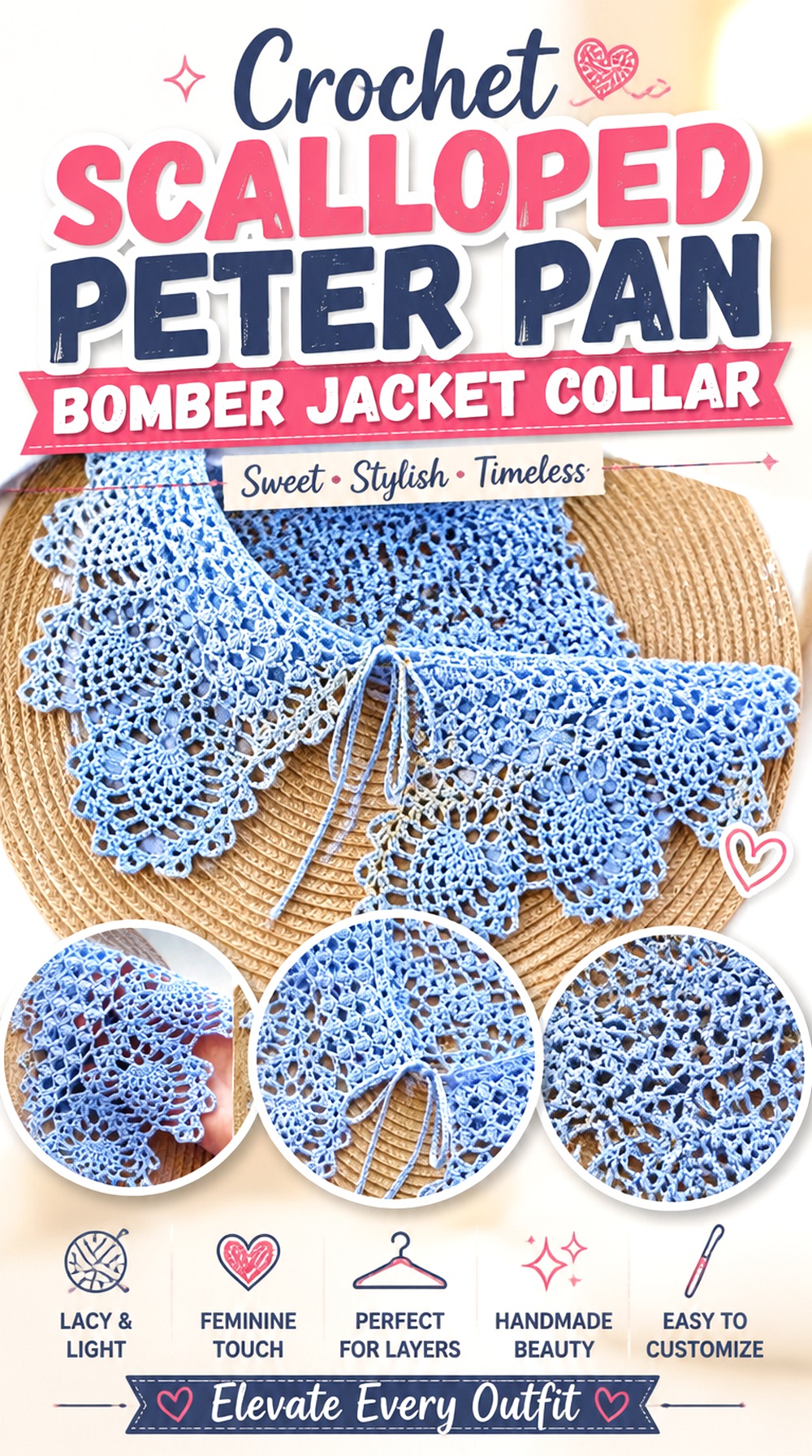
A scalloped Peter Pan collar makes the outer edge more prominent than a plain rounded collar. Crochet Swan’s tutorial specifically combines a lace treatment with a Peter Pan neckline, making it a useful reference for a bomber where you want both recognizable collar geometry and decorative openwork.
Keep the bomber body relatively straightforward and let the repeating edge provide the detail. This style can work especially well with a cropped or boxy jacket because the curved collar offers a visual counterpoint to the straighter hem and front bands. The main challenge is controlling how the lace spreads around the neckline so the scallops remain orderly.
Place the Largest Curves Deliberately
If the outer edge has a pronounced repeat, check where those repeats land at center back, shoulder transitions, and the two fronts. Random-looking partial scallops at highly visible points can make an otherwise polished collar appear poorly centered. You do not need to reconstruct the tutorial to solve this; simply compare the complete blocked repeat with your jacket neckline and decide which alignment matters most before attachment.
Contrast Color Makes Every Alignment Error More Visible
A pale collar on a dark bomber, or the reverse, can look crisp and graphic. The same contrast also exposes uneven joins, inconsistent collar depth, and mismatched front ends. If you choose high contrast, spend extra time pinning the collar in position before sewing. Tonal color combinations are more forgiving when the goal is texture rather than a sharply outlined neckline.
Original Tutorial and Creator Credit
Creator: Crochet Swan
Crochet Buttoned Fine Lace Bomber Jacket Collar
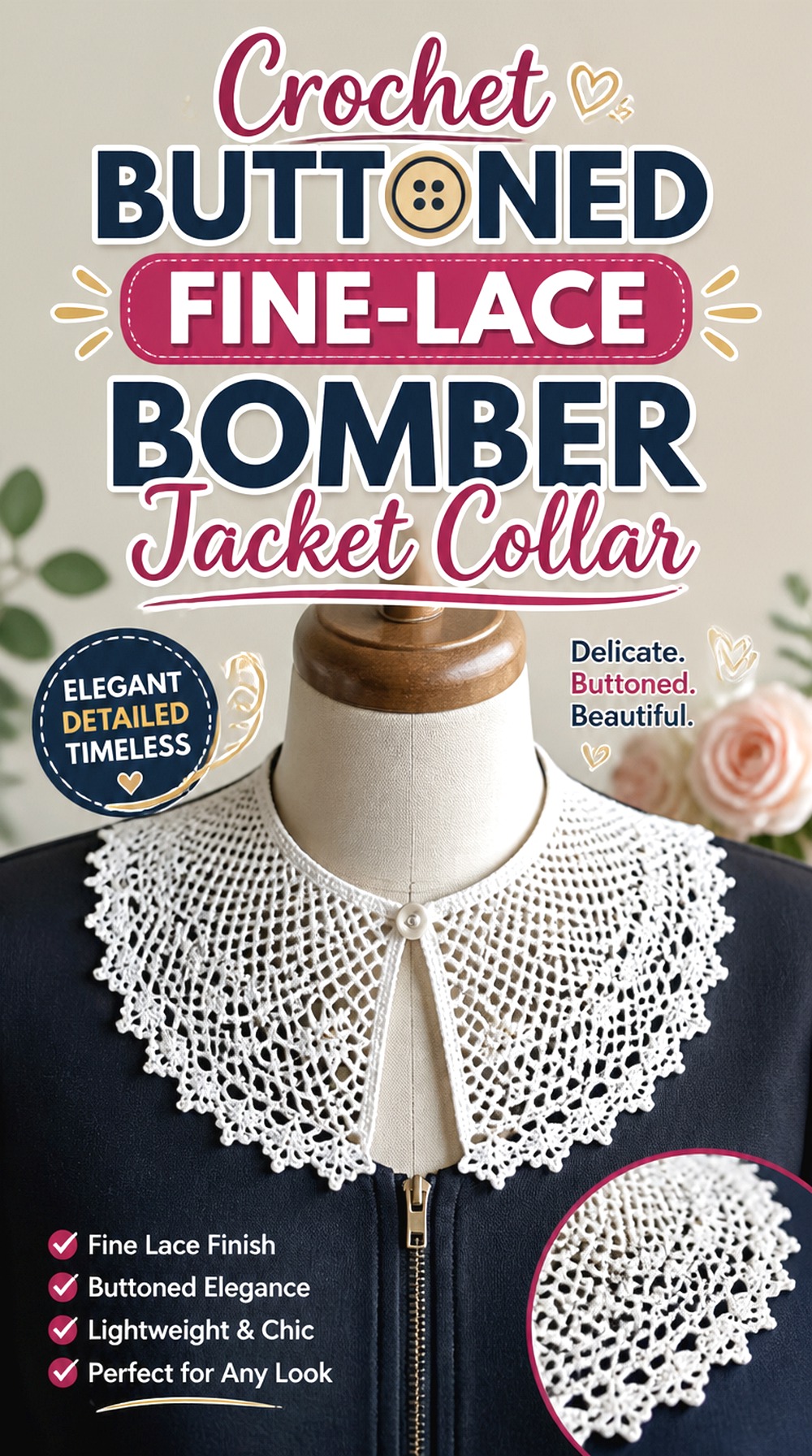
A fine detachable lace collar gives the bomber a lighter neckline and avoids permanently committing the jacket to one styling direction. DoilyDreams demonstrates a delicate lace collar and includes a button at the closure, making the source particularly relevant when you want a defined fastening rather than long ties.
For a bomber adaptation, a removable collar can sit over a plain neckband when desired and come off when you want the jacket to look cleaner. That flexibility is useful when the collar uses a finer yarn than the jacket. The different pieces can also be cared for independently if their fiber requirements differ.
Test the Button Position While Wearing the Jacket
A detachable collar that looks flat on a table may shift when worn over the thickness of a bomber neckline. Fasten the jacket as you normally would, place the blocked collar over it, and only then decide where the collar’s closure should sit. Make sure the button does not stack directly over a bulky zipper pull or another jacket fastening that would create uncomfortable thickness.
Fine Yarn Magnifies Finishing Quality
With lightweight lace, loose ends, uneven attachment points, or a bulky closure can be more noticeable because the rest of the fabric is visually delicate. Plan where ends will be secured and how the button will be supported without distorting the collar. If the button feels disproportionately heavy against the lace, choose a lighter closure solution compatible with the design rather than forcing the original scale onto the bomber.
Original Tutorial and Creator Credit
Creator: DoilyDreams
Crochet Pearl Point Vintage Bomber Jacket Collar
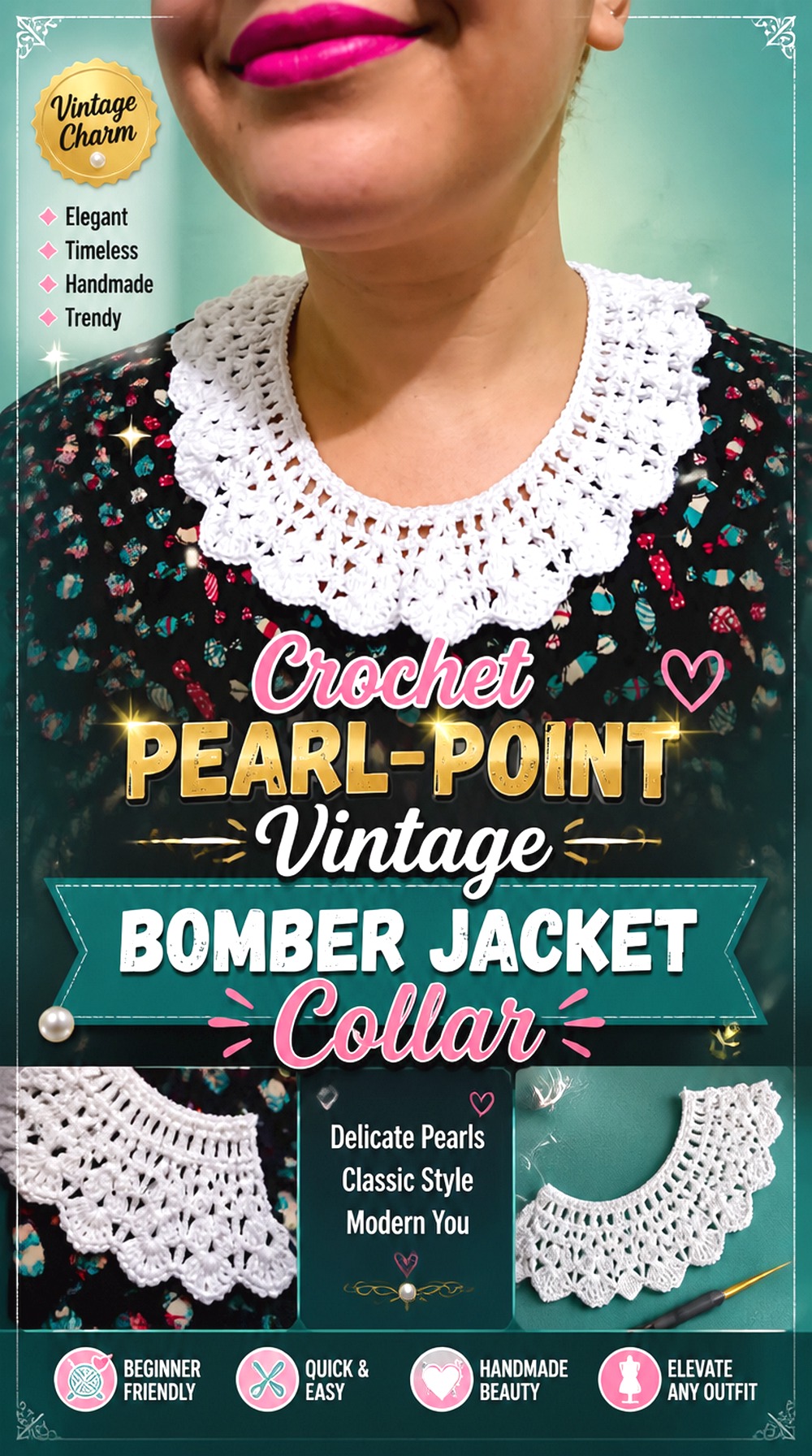
A vintage collar with a small decorative fastening creates a more jewelry-like finish at the neckline. Deise Bordando a Vida’s tutorial demonstrates a vintage crochet collar and lists a pearl among the materials for the original project.
On a bomber jacket, that small focal point can soften a sturdy front without requiring a large bow or tie. The idea works best when the collar remains the decorative feature and the rest of the jacket hardware is restrained. If your bomber already has a prominent zipper pull, large buttons, or other embellishment, consider whether another visible fastening makes the neckline feel intentional or unnecessarily busy.
Treat the Decorative Fastener as Part of the Weight Balance
A bead or pearl may be visually small but still pulls on the exact point where it is attached. Fine lace needs enough support around that location to prevent sagging. Before using any decorative closure, hold it against the finished collar and check whether the edge distorts. If it does, use a lighter element or reinforce the attachment area in a way that does not stiffen the entire collar.
Pointed Edges Need Careful Symmetry
A collar with stronger points or pronounced scallops directs the eye toward alignment. Block the two sides to matching outlines and compare where the edge sits relative to the jacket’s center front. When the bomber is open, both sides should still appear intentional rather than one falling farther down the chest. Temporary clips are useful for checking this before permanent sewing.
Original Tutorial and Creator Credit
Creator: Deise Bordando a Vida
Crochet Structured Vintage Bomber Jacket Collar

The same basic collar silhouette can change dramatically when the yarn creates more structure. Fios Cruzados por Joana Gouveia demonstrates two versions of a vintage crochet collar made with different yarn choices, specifically showing how the material can influence the finished result.
That comparison is highly relevant to bomber design. A soft collar can blend into a relaxed jacket, while a firmer one can create a clearer architectural outline above fitted ribbing. Instead of choosing yarn only for color, decide first whether you want the collar to drape, flare, or hold its shape. Then swatch the intended yarn before committing to the full neckline.
Structure Should Match the Jacket’s Body Fabric
If the bomber itself is dense and substantial, an extremely flimsy collar may appear disconnected from the rest of the garment. A slightly more structured lace can hold its outline against that heavier background. Conversely, a lightweight bomber may not need a stiff collar. Compare the blocked swatch directly against the jacket fabric and judge how the two behave together rather than relying only on yarn labels.
More Body Can Sharpen the Outer Silhouette
Firm stitch definition can make rounded edges, points, or scallops look more deliberate, but excessive stiffness may stop the collar from settling naturally around the shoulders. The useful target lies between those extremes. Bend the blocked swatch around a curved surface similar to the neckline. If it refuses to follow the curve, consider a softer yarn or a more open treatment before making the entire collar.
Original Tutorial and Creator Credit
Creator: Fios Cruzados por Joana Gouveia
Crochet Poppy Style Lace Bomber Jacket Collar
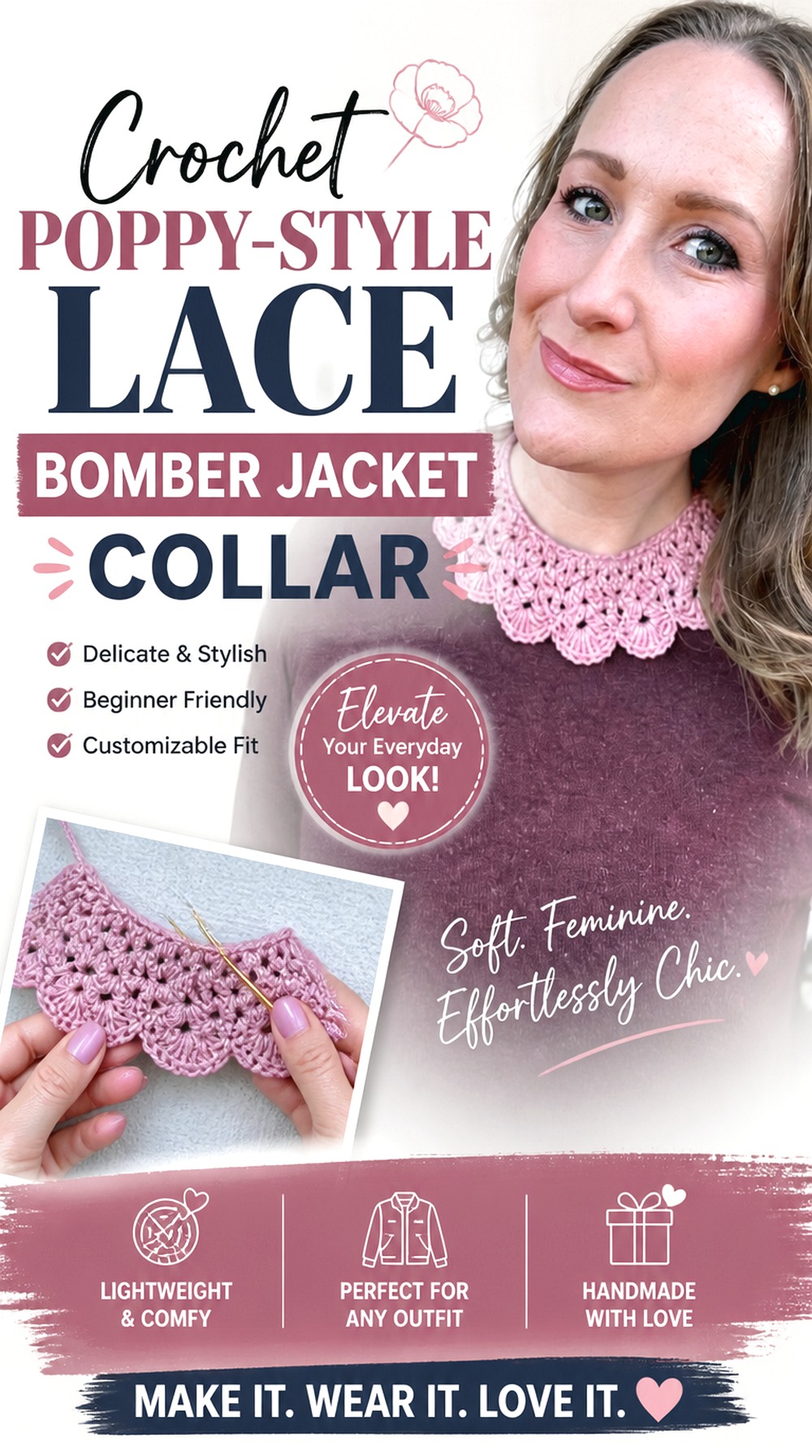
A compact lace Peter Pan collar is a practical choice when you want decorative detail without covering much of the bomber’s upper body. HanJan Crochet’s tutorial demonstrates a Peter Pan crochet collar with a button closure and offers the design across multiple size categories.
For bomber use, the important lesson is not to select a labeled size blindly. A jacket neckline may sit differently from the neckline of a dress or top, so compare the collar directly with the finished garment. The tidy rounded shape can work particularly well on a jacket with broad sleeves or strong ribbing because it contributes detail without adding another oversized element.
Button Placement Can Control How the Front Sits
A front or near-front closure can influence whether the two sides meet cleanly or separate when the jacket moves. Check the collar over the actual bomber before fixing the fastening position. If the jacket has a zipper, make sure the button and zipper pull do not occupy the same spot. A slight change in where the collar closes can make the layered neckline noticeably more comfortable.
Small Collars Reward Precise Edging
Because this design does not rely on dramatic depth, its quality is read through the outline. Uneven scallops or a wavy inner edge become proportionally more visible. Block the collar to a controlled shape and compare both ends before attaching it. If the bomber has a strong center-front line, use that line as a visual reference for centering the collar rather than judging by eye alone.
Original Tutorial and Creator Credit
Creator: HanJan Crochet
Crochet Tie Front Cottagecore Bomber Jacket Collar
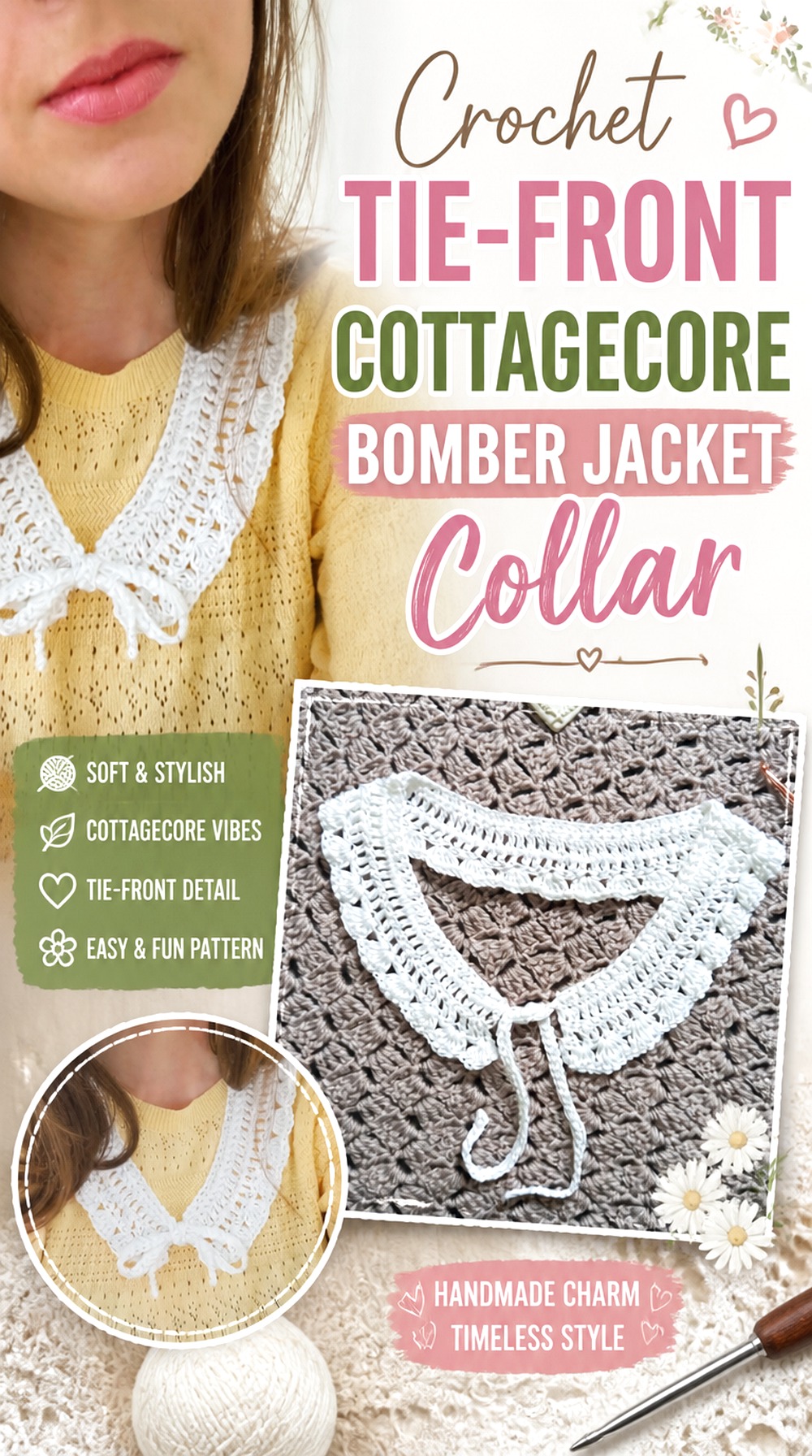
A tie-front collar removes the need for the collar to meet with a rigid button or other fixed fastening. Selina Veronique Crochet’s cottagecore-inspired Peter Pan collar is made as a vintage accessory with side straps integrated into the design.
That makes it an interesting partner for an open-front bomber or a jacket where you do not want to interfere with existing hardware. The ties introduce a softer, more decorative front detail than a standard bomber neckband. Keep them proportionate, however; very long ties can compete with a zipper or swing into the jacket opening during wear.
Keep Ties Away From Moving Hardware
If the bomber uses a zipper, test the collar while repeatedly opening and closing the jacket. The ties should not naturally fall into the zipper path. A bow positioned slightly higher or a collar worn over an open bomber may work better. This is primarily a compatibility check: a decorative closure that looks attractive but continually interferes with the jacket’s main closure will become frustrating in normal use.
A Shell-Like Edge Can Provide Enough Detail on Its Own
The source collar uses a decorative edge, so there is little reason to add several competing lace treatments to the bomber. Pairing the collar with a simpler body lets that finishing line remain readable. If you want a stronger connection between collar and jacket, repeat the collar yarn at the cuffs or waistband rather than repeating the entire lace pattern across multiple areas.
Original Tutorial and Creator Credit
Creator: Selina Veronique Crochet
Crochet Contrast Collared Bomber Jacket with Lace Insert
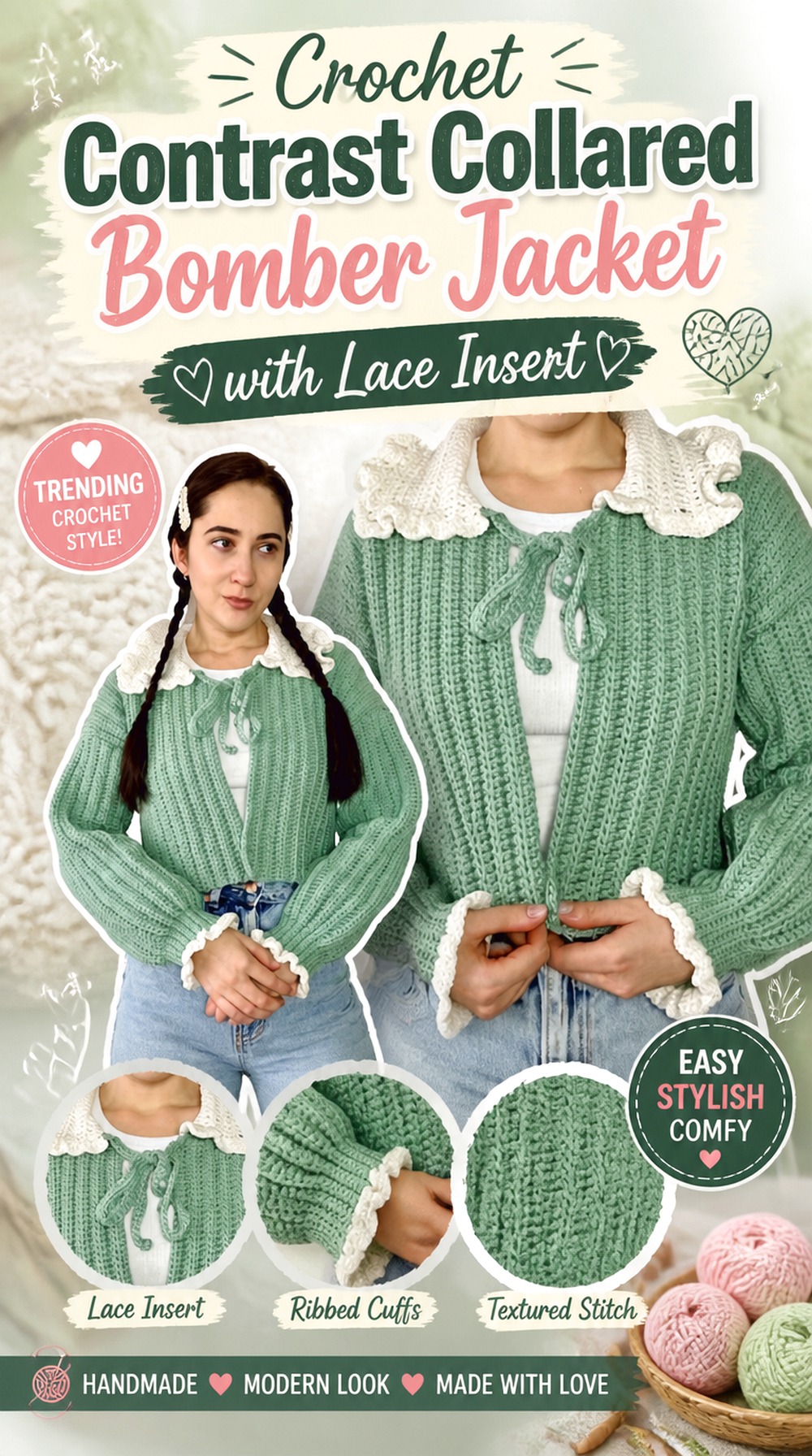
Instead of attaching a completely separate lace accessory, this concept starts with an ordinary collared crochet jacket and uses contrast between the body and collar to create a clear design boundary. The tutorial from Вика с крючком🧶 demonstrates a cardigan with a separate contrasting collar and includes the collar as part of the garment construction.
For a bomber-inspired adaptation, preserve the cropped or compact jacket proportions and use an openwork panel or lace-edged treatment within the collar area rather than turning the entire jacket into lace. The result can feel more integrated than a detachable accessory while still emphasizing the neckline.
Use Contrast to Separate Structure From Decoration
A different collar color already tells the eye that the neckline is a separate design element. Adding lace increases that distinction, so you may not need a dramatic stitch contrast as well. Decide which feature should dominate: color, texture, or collar shape. When all three are equally strong, the neckline can become busier than the rest of the bomber can visually support.
Check the Collar Before Adding the Final Front Closure
An integrated collar affects how the upper fronts meet. Pin or temporarily secure the collar before deciding where a tie, button, or zipper should end. You want the fastening to support the intended neckline rather than forcing the collar into an awkward position. This matters especially if the collar has enough depth to fold over the front edge.
Original Tutorial and Creator Credit
Creator: Вика с крючком🧶
Crochet Cluster Lace Collared Bomber Jacket
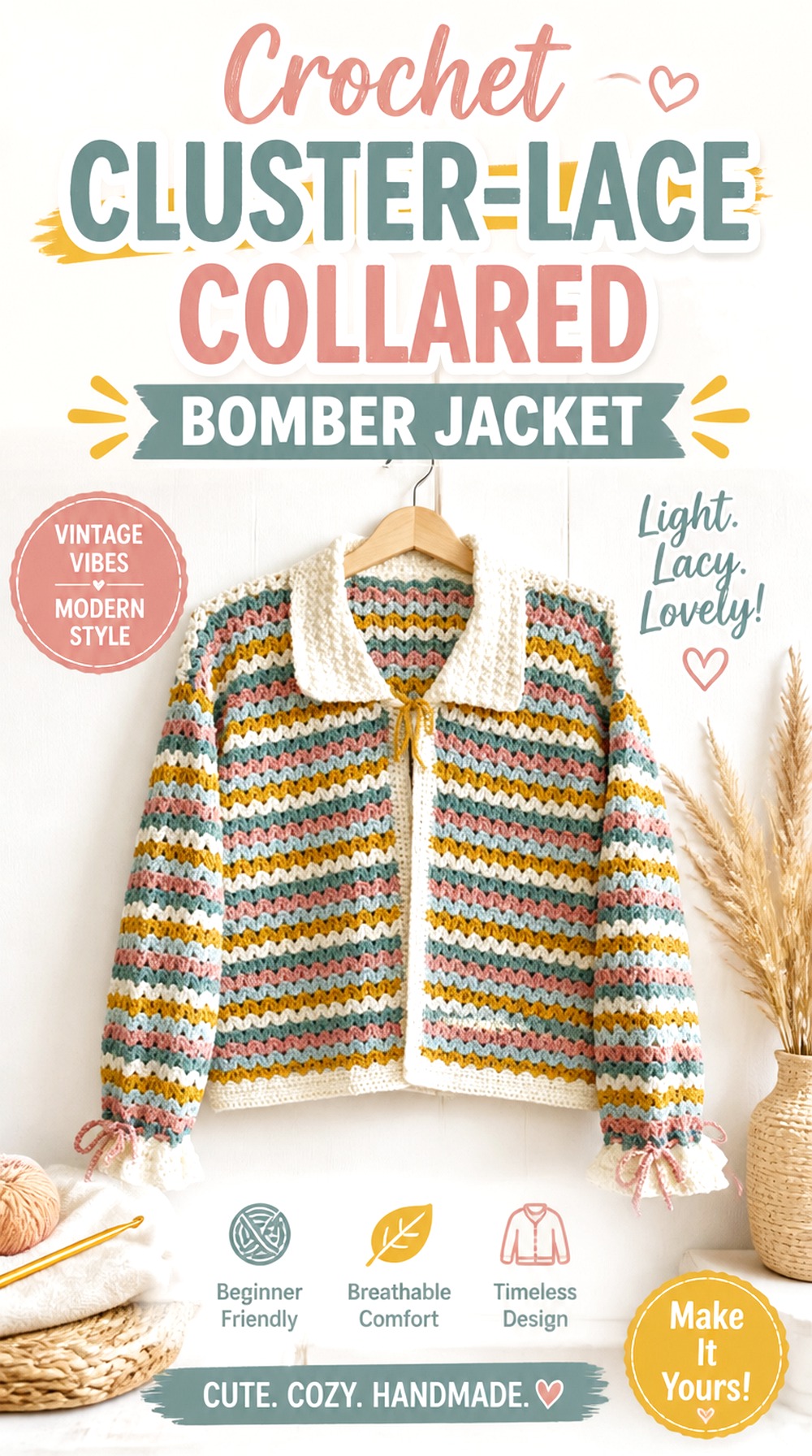
The final idea brings lace texture into more of the upper garment instead of limiting it to a narrow decorative edge. CROCHET BY BEV’s collared cardigan tutorial uses a cluster V-stitch pattern and made-to-measure construction, giving this option a useful openwork foundation for a bomber-inspired redesign.
Keep the characteristic bomber cues—compact body length, firm cuffs, and a defined lower band—while allowing the collar and perhaps the upper panels to share a lighter stitch texture. This creates a more unified lace jacket than the detachable-collar ideas, but it also requires more attention to stretch and garment stability.
Openwork Across the Body Changes More Than the Collar
When lace continues beyond the neckline, the entire jacket may behave differently from a dense bomber. Open stitch patterns can produce more visual and physical flexibility, so check shoulder width and body length after blocking rather than assuming the garment will behave like a solid-stitch version. A firm waistband can help retain the bomber reference without requiring the whole fabric to be dense.
Let the Cuffs and Hem Provide the Visual Anchor
A lace-forward jacket benefits from a few clearly structured areas. Defined cuffs and a lower band can frame the openwork and keep the silhouette from reading simply as a lacy cardigan. If you also make the collar highly elaborate, compare all three elements together. The best result may be a moderately detailed collar that allows the body texture to remain visible.
Measure the Neckline After the Shoulder Join
For a garment that is being adjusted to your own measurements, the final collar decision is easier once the upper body is assembled and you can see the true neckline path. That lets you evaluate collar width against the shoulders and front opening at the same time. It also reduces the risk of designing a beautiful lace collar that does not correspond with the finished jacket opening.
Which Crochet Lace Bomber Collar Style Should You Choose?
For the closest connection to traditional bomber construction, start with the Fold-Over Lace Bomber Jacket Collar or one of the two integrated collared-jacket ideas. They let the neckline develop as part of the garment rather than as a separate accessory.
Choose a Peter Pan or cottagecore variation when you want the strongest vintage contrast against sporty ribbing. The Narrow Neck-Lace Collar keeps the effect restrained, while the Deep Vintage and Structured Vintage versions place much more visual weight around the shoulders.
For maximum flexibility, a buttoned or tie-front detachable collar lets one bomber shift between plain and decorative styling without permanently altering its neckline. If you want lace to influence the entire garment, the Cluster-Lace Collared Bomber Jacket is the more cohesive direction.
Conclusion
The most successful crochet lace bomber collar is the one that works with the jacket’s existing neckline rather than simply sitting on top of it. Choose a narrow or compact collar when the bomber already has strong texture, color, or hardware. Rounded Peter Pan and cottagecore collars create a clear vintage contrast, while deep and structured collars make the neckline the dominant design feature. Detachable versions offer the most styling flexibility, and integrated collars usually create the cleanest relationship with the jacket itself.
Whatever direction you choose, compare the blocked collar with the finished neckline before permanent attachment. Use the original tutorials near each idea for the creators’ exact construction details rather than relying on an adaptation guess.
Frequently Asked Questions
Can I add a lace collar to any crochet bomber jacket?
Often, but compatibility depends on the actual neckline. A bomber with a simple open neckline is generally easier to adapt than one with a hood, tall ribbed neck, or complicated front closure. Measure the finished neckline path and compare it with the blocked collar. If the shapes differ substantially, forcing one onto the other can create rippling, pulling, or awkward front placement.
Should I crochet the lace collar before or after finishing the bomber?
For an attached collar, planning can begin earlier, but final sizing is safer once the shoulders and neckline are established. That gives you the real attachment length instead of a theoretical measurement. A detachable collar can be made separately, although you should still test it over the finished jacket. Blocking the collar before the final fit check is important because lace may open and change dimensions afterward.
Does the collar yarn need to match the bomber yarn?
No. A different yarn can create useful contrast in texture, weight, or color. The important question is whether the two fabrics behave well together. A very heavy collar may pull on a light jacket, while extremely soft lace may look limp against a structured bomber. Swatch the collar yarn, block it, and hold it against the jacket fabric before deciding whether the combination has the structure and drape you want.
How can I stop a crochet lace bomber collar from becoming wavy?
First check the inner edge. If it contains more length or expansion than the jacket neckline can accommodate, the collar may ripple before the decorative lace even begins. Uneven joining tension can create a similar effect. Compare the blocked collar and neckline without stretching either piece, distribute attachment points evenly, and correct a fit mismatch before sewing rather than trying to flatten excess fabric afterward.
Is a detachable lace collar better than a permanently attached one?
Neither is automatically better. Detachable collars make it easier to change the jacket’s look and allow separate care when the collar and bomber use different fibers. Permanent collars generally look more integrated and cannot shift independently during wear. Choose based on how often you want to change the styling, whether the neckline already has hardware, and whether the two pieces have compatible cleaning and blocking needs.
How deep should a lace collar be on a bomber jacket?
There is no universal depth because shoulder width, jacket size, collar shape, and the bomber’s other design features all matter. A shallow collar preserves more of the classic sporty outline, while a deep collar moves the jacket toward a statement vintage look. Before crocheting the full collar, place a paper or fabric mock-up around the finished neckline and compare several depths against the shoulders and front opening.