Lavender and mint green suit a crochet cat carrier cushion because both colors can stay soft while still taking clearly different visual roles. Lavender can cover the main resting field while mint frames the edges, or mint can lead with lavender concentrated in side panels, stripes, or an inner border.

A carrier insert has less decorative space than a sofa blanket or pet bed, so restraint matters. The center should remain usable rather than being crowded with bulky motifs or elaborate edging. Flat color changes, shallow texture, and clearly defined rectangular sections can provide plenty of visual interest without reducing the available interior space.
The credited sources include direct crochet pet mats and blankets as well as flat rectangular crochet mat, rug, and placemat tutorials. For non-pet-specific sources, use the rectangular construction only as a layout reference and reassess yarn, thickness, dimensions, and finishing for carrier use rather than automatically transferring floor- or table-specific materials.
Quick List:
- Lavender Center and Mint Green Border Crochet Cat Carrier Cushion
- Mint Green Center and Lavender Border Crochet Cat Carrier Cushion
- Lavender and Mint Green Wide-Stripe Crochet Cat Carrier Cushion
- Lavender Crochet Cat Carrier Cushion With Mint Green End Panels
- Mint Green Crochet Cat Carrier Cushion With Lavender Side Bands
- Lavender and Mint Green Granny-Panel Crochet Cat Carrier Cushion
- Mint Green Textured Crochet Cat Carrier Cushion With Lavender Inner Frame
- Lavender and Mint Green Split-Field Crochet Cat Carrier Cushion
- Lavender Center-Panel and Mint Green Side-Panel Crochet Cat Carrier Cushion
- Mint Green Center and Lavender Double-Border Crochet Cat Carrier Cushion
- Lavender and Mint Green Color-Block Crochet Cat Carrier Cushion
Decide Whether Lavender or Mint Green Should Lead the Carrier Cushion
The center occupies most of what you see when the cushion is outside the carrier, so its color usually determines the overall direction. A lavender center with mint edging feels lavender-led even when the green border is noticeable. Reverse those roles and the same two colors produce a cooler, greener result.
You do not need a 50/50 split. On a compact carrier insert, one broad dominant field and one controlled accent area often look clearer than many narrow alternating changes. This also makes resizing easier because the central field can expand or contract without completely redesigning the palette.
Keep Lavender and Mint Green Sections Flat Around the Carrier Edges
Borders and panels are useful color zones because they can follow the existing rectangular outline rather than adding raised decoration. A mint border can frame lavender, side bands can emphasize length, and end panels can remain visible near the carrier door even when a cat occupies the center.
Avoid letting decorative edging extend far enough to curl upward into the carrier walls, vents, zipper path, door, or latch area. The cushion should be planned around the carrier’s usable floor space rather than made larger simply to accommodate a color border.
Use Lavender and Mint Green Texture Without Crowding the Resting Surface
Texture can give a two-color cushion more interest, but it does not need to cover every section. If the center contains noticeable crochet texture, keeping it mostly lavender or mostly mint lets light and shadow show the stitches without frequent color interruptions.
Flatter color sections are useful around the perimeter. If your cat tends to catch claws in loose crochet, investigate the stitch structure and supervise initial use rather than assuming an open or highly raised surface is appropriate.
1. Lavender Center and Mint Green Border Crochet Cat Carrier Cushion
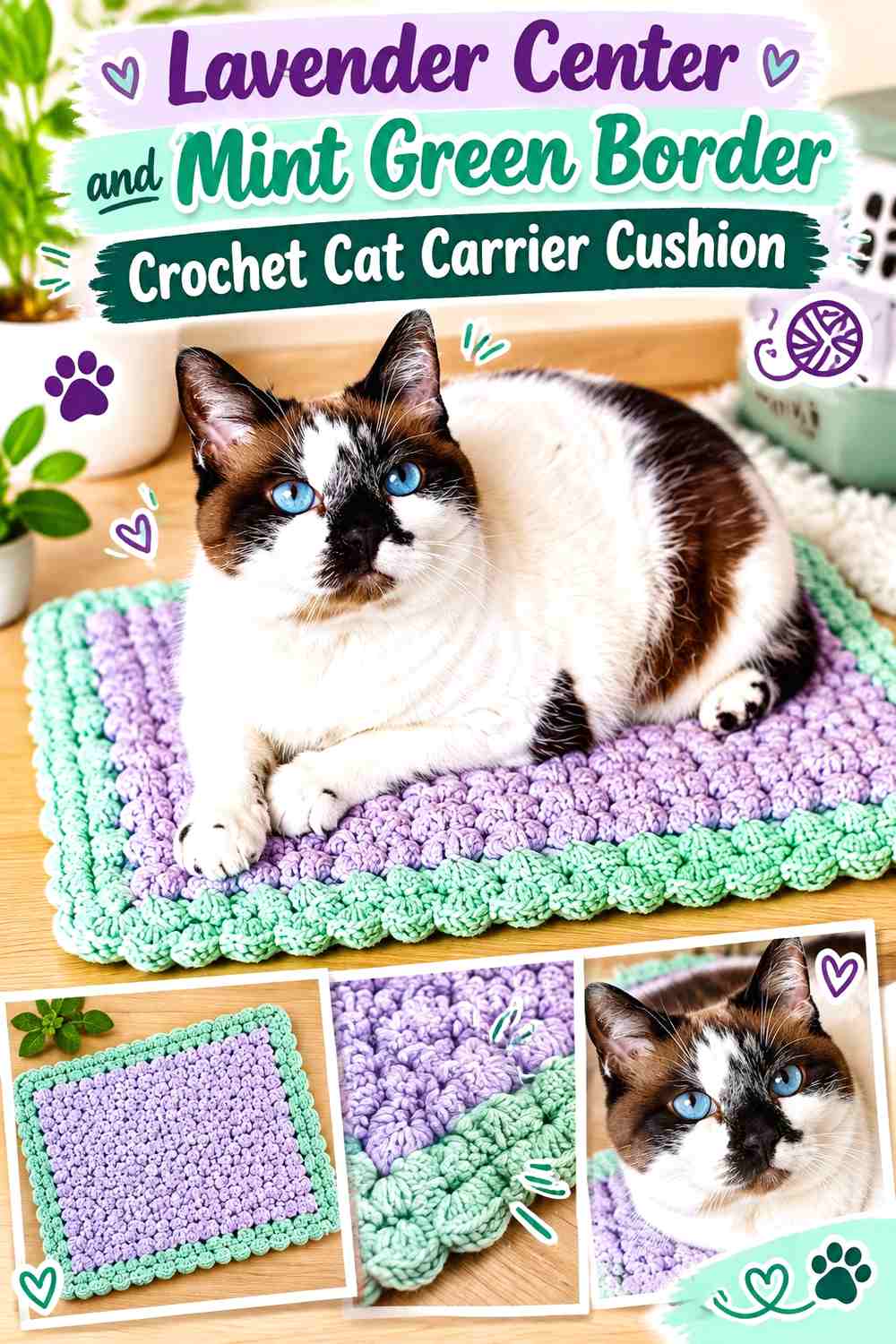
Lavender can cover almost the entire resting surface while mint green creates one controlled perimeter frame. This is one of the simplest ways to make both colors visible without breaking the center into multiple decorative sections. It also lets you resize the main lavender rectangle independently before adding the green edge.
Lavender Should Cover the Main Cat Carrier Resting Area
Keep the broad center lavender when you want the cushion to look purple-led inside the carrier. A continuous field also gives any modest stitch texture enough room to remain readable.
If the insert needs to become longer or wider, expanding the lavender portion first preserves the overall color hierarchy.
Mint Green Can Frame Lavender Without Consuming Too Much Carrier Space
Use mint around the perimeter as a flat border rather than an oversized decorative edge. A narrow green frame gives lavender definition while leaving most of the usable surface uninterrupted.
On a smaller carrier cushion, reducing the mint border may look more balanced than shrinking the lavender center excessively.
Creator Credit: First The Coffee Crochet
2. Mint Green Center and Lavender Border Crochet Cat Carrier Cushion

This version reverses the first palette. Mint green becomes the broad resting field while lavender forms the outside frame. Because lavender may appear slightly stronger or darker depending on the yarns selected, even a relatively narrow edge can have plenty of visual presence.
Mint Green Needs a Broad Center Inside the Lavender Border
Preserve enough mint surface for it to remain the first color noticed. If the lavender border becomes unusually wide, the design can shift from green-led to an almost equal two-color composition.
A simple mint center also works well when you want the carrier interior to remain visually calm.
Lavender Can Give Mint Green a Defined Outer Edge
Use lavender to clarify the cushion’s rectangle without adding extra interior stripes. The border already repeats around four sides, so it provides substantial color even when narrow.
If the lavender and mint yarns are very close in lightness, a slightly broader border can make the separation easier to see.
Creator Credit: Katia Creates
3. Lavender and Mint Green Wide-Stripe Crochet Cat Carrier Cushion
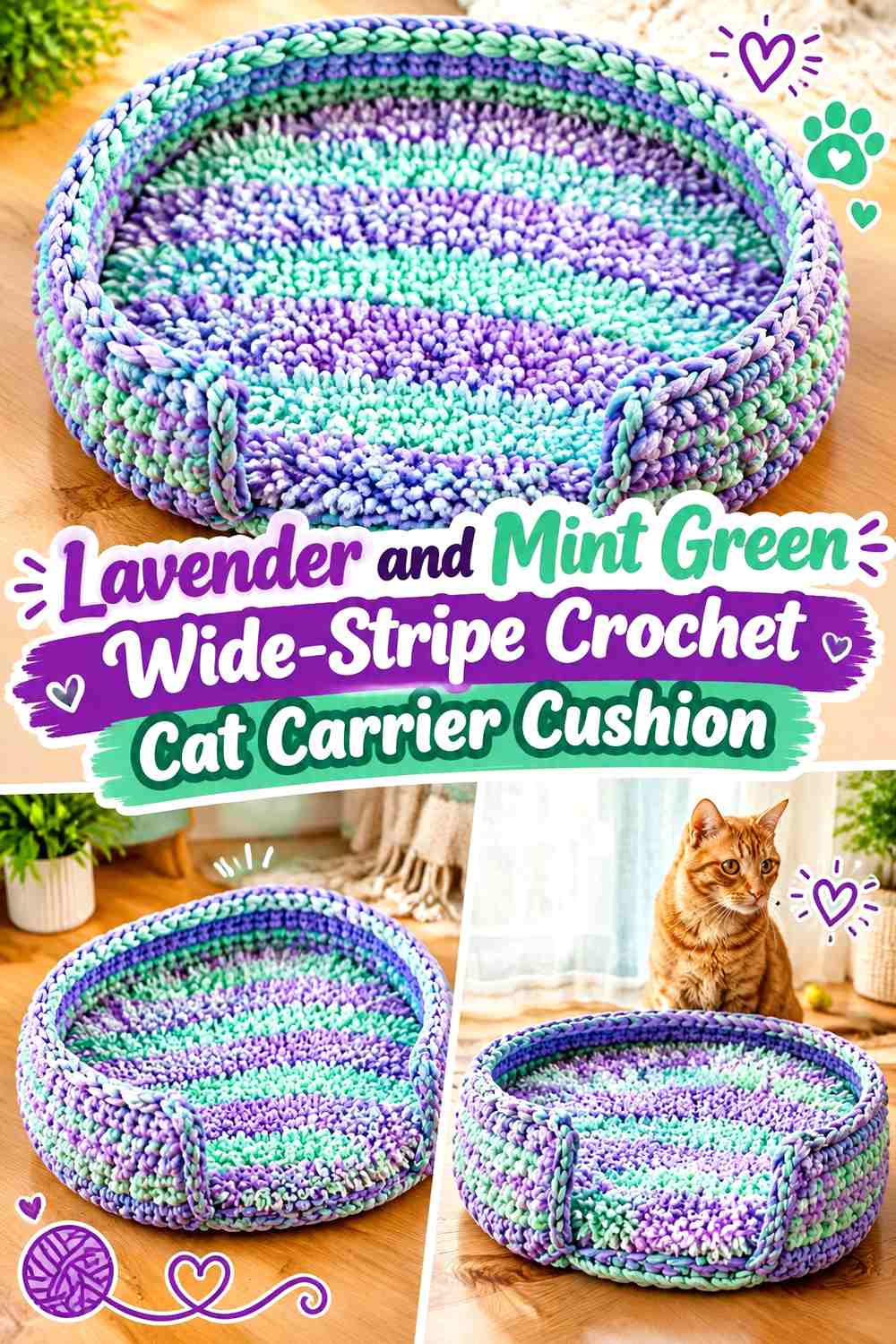
Broad stripes give both colors meaningful surface area while avoiding a busy sequence of many narrow bands. Lavender can take the widest sections and mint can provide one or two clear breaks across the cushion.
Lavender Should Occupy More Stripe Area When It Is the Main Color
Make the lavender bands wider or more frequent if you want the insert to retain a clear dominant shade. Equal bands from one end to the other create a more evenly balanced result.
On a short carrier insert, fewer wide stripes generally preserve the distinction better than squeezing in numerous changes.
Mint Green Stripes Need Lavender Between Them
Leave enough lavender around each mint band for the green sections to remain separate. Mint stripes placed very close together can merge visually into one large central block.
Keep the perimeter simple when the center already contains a strong striped treatment.
Creator Credit: Coco Chamiel
4. Lavender Crochet Cat Carrier Cushion With Mint Green End Panels
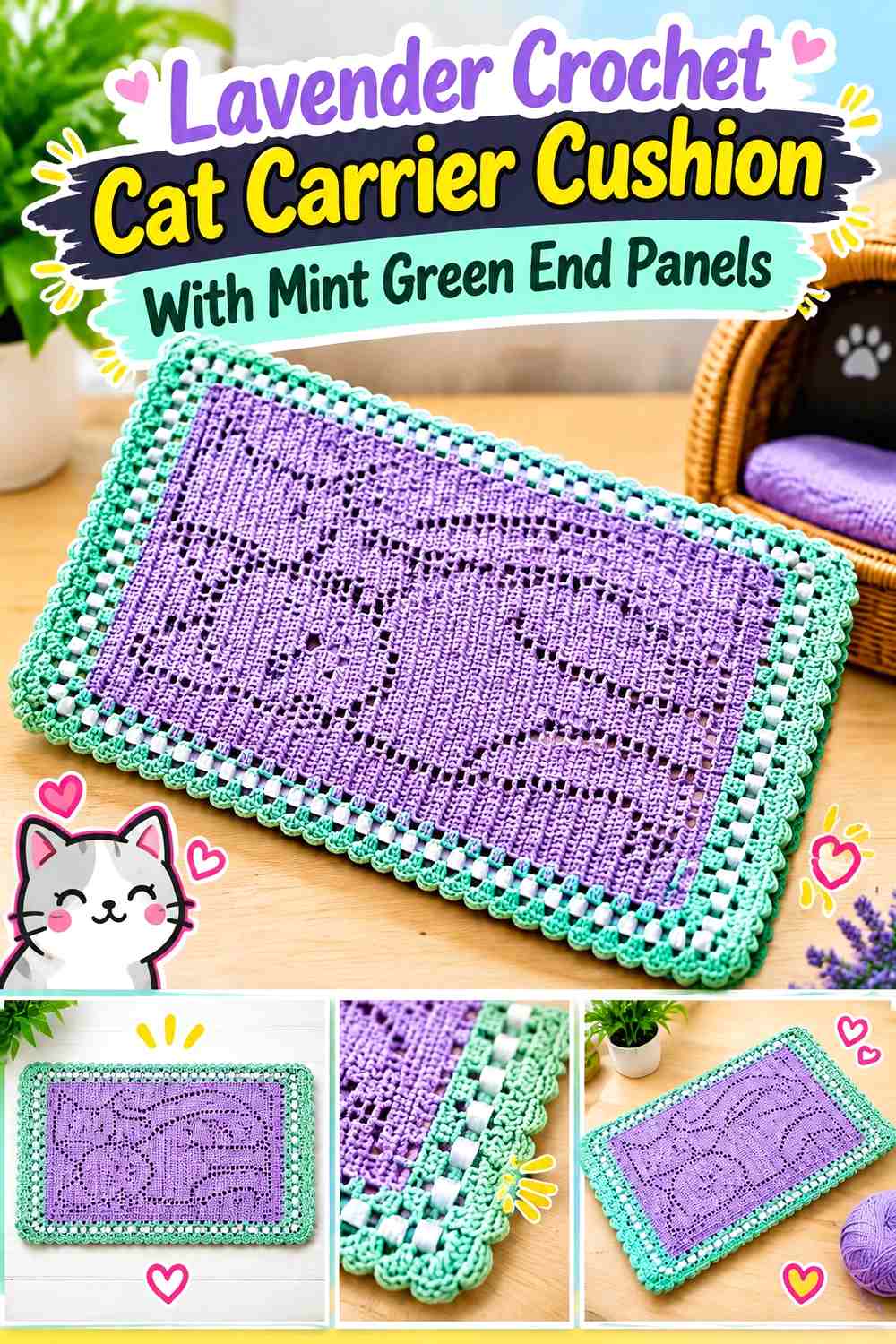
A long lavender center with mint green at the two short ends creates a clear center-and-ends layout. The mint sections can remain visible near the front or back of the carrier even when the cat is settled across the middle.
Mint Green Can Bookend the Lavender Carrier Cushion
Use complete green sections at opposite ends instead of scattering mint through the center. The repeated placement gives the palette a deliberate rhythm while leaving the main resting area comparatively simple.
The green panels do not have to be deep; their position already makes them noticeable.
Lavender Should Stay Continuous Between the Mint Green Ends
Keep one uninterrupted lavender field through the middle so the design does not become striped. This also makes it easier to adjust the cushion length by changing the center rather than rebuilding the entire color sequence.
For a compact carrier, reduce the mint panels before making the lavender center too small.
Creator Credit: Mary Souza crochê
5. Mint Green Crochet Cat Carrier Cushion With Lavender Side Bands

Running lavender along the two long sides emphasizes the cushion’s length while leaving the short edges and center mint green. This differs from a full border because the green field continues from front to back.
Lavender Side Bands Can Frame a Mint Green Center Lengthwise
Keep the two lavender areas similar in visual weight so the mint center remains balanced. They should be wide enough to register as intentional panels without squeezing the main resting field.
This arrangement is especially useful for a long rectangular carrier floor.
Mint Green Should Continue Through the Lavender-Framed Ends
Leave the short ends mint if you want a true side-band effect. Connecting the lavender sides with another broad purple band would turn the layout into a full perimeter frame instead.
The continuous mint center can also carry any subtle texture without interruption.
Creator Credit: Ione Coutinho Croche
6. Lavender and Mint Green Granny-Panel Crochet Cat Carrier Cushion
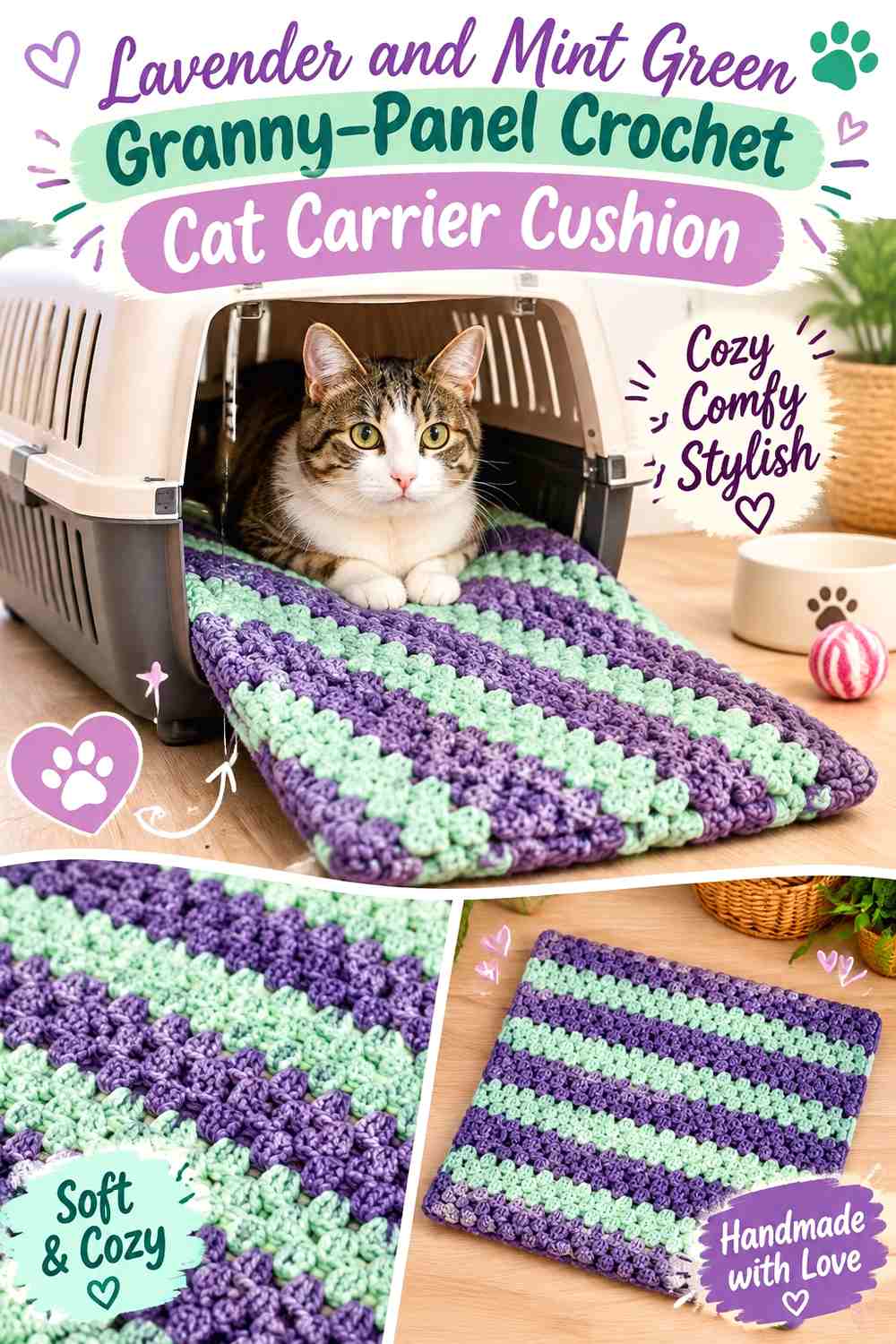
A granny-inspired surface gives the two colors more opportunities to repeat, but consistency becomes important. Lavender can remain the more frequent motif color while mint green appears in selected centers, outer sections, or joining areas rather than changing every unit unpredictably.
Lavender Should Repeat in the Same Role Across the Granny Panels
Use lavender consistently in comparable parts of the motifs so several units read as one cushion. If lavender moves randomly from center to border on every panel, the small carrier insert may look busier than intended.
Lay the pieces out before joining so you can check whether one color clusters too heavily at one end.
Mint Green Can Connect Lavender Panels Without Becoming Random
Mint works well as a repeated joining or framing shade because it creates continuity between individual lavender areas. Keep that use consistent across the cushion.
If the motif surface is already visually active, use a simple flat outer edge rather than introducing another complicated lavender-and-mint sequence.
Creator Credit: Marcelo Nunes Croche
7. Mint Green Textured Crochet Cat Carrier Cushion With Lavender Inner Frame

Here, mint green carries the textured center while lavender forms an inner rectangular frame before mint returns at the outer edge. The result adds more color structure than a basic border without repeatedly crossing the main resting area.
Mint Green Keeps the Main Crochet Texture Visually Connected
Use mint through the central textured section so stitch relief remains continuous. Frequent lavender changes within the same textured field may make the color pattern compete with the surface.
A solid center is also easier to evaluate for how flat or raised the finished texture feels.
Lavender Can Separate Two Mint Green Areas With an Inner Frame
Place lavender between the center and outer mint edge to create a contained line of contrast. The repeated green inside and outside the frame keeps mint unmistakably dominant.
Avoid adding another lavender outer border, which would weaken the specific inner-frame effect.
Creator Credit: Serafima Crochet & Knitting
8. Lavender and Mint Green Split-Field Crochet Cat Carrier Cushion
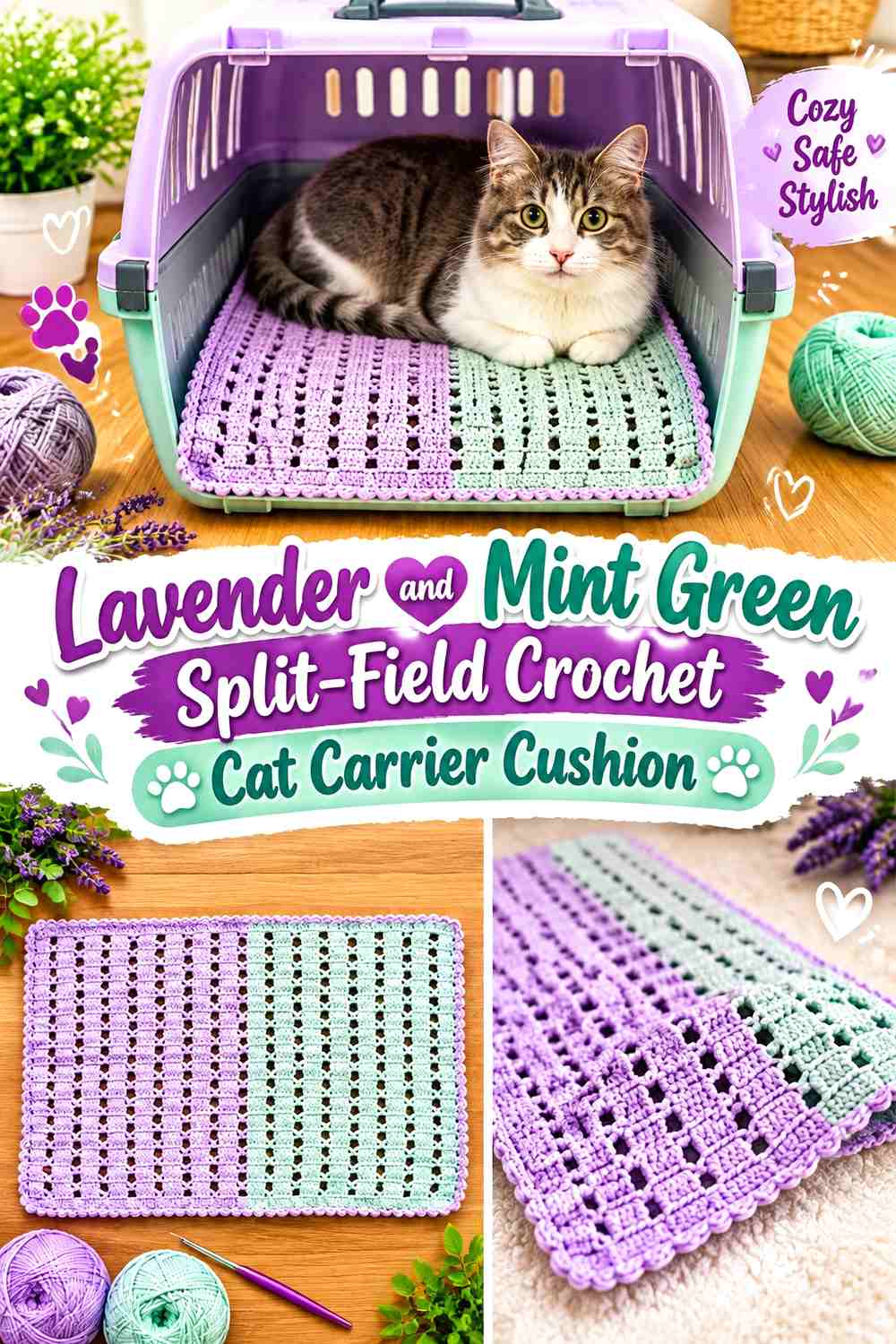
One clean division between lavender and mint creates the simplest large-scale color block in the collection. Each shade receives substantial surface without repeated yarn changes, making this approach useful when the crochet stitch pattern itself is already noticeable.
Lavender Can Take the Larger Half of a Mint Green Split Cushion
The fields do not need to be identical. Give lavender more area when you want the finished insert to read as purple-led while still retaining a substantial mint section.
A single clean boundary usually looks stronger here than several thin separator stripes.
Mint Green Should Meet Lavender at One Deliberate Boundary
Keep the color change aligned across the rectangle rather than breaking it into small staggered sections. That makes the simple two-field concept obvious even when part of the cushion is covered.
The split can run across the width or length depending on the shape of the carrier floor and the construction being adapted.
Creator Credit: Franci Klein Crochê
9. Lavender Center-Panel and Mint Green Side-Panel Crochet Cat Carrier Cushion
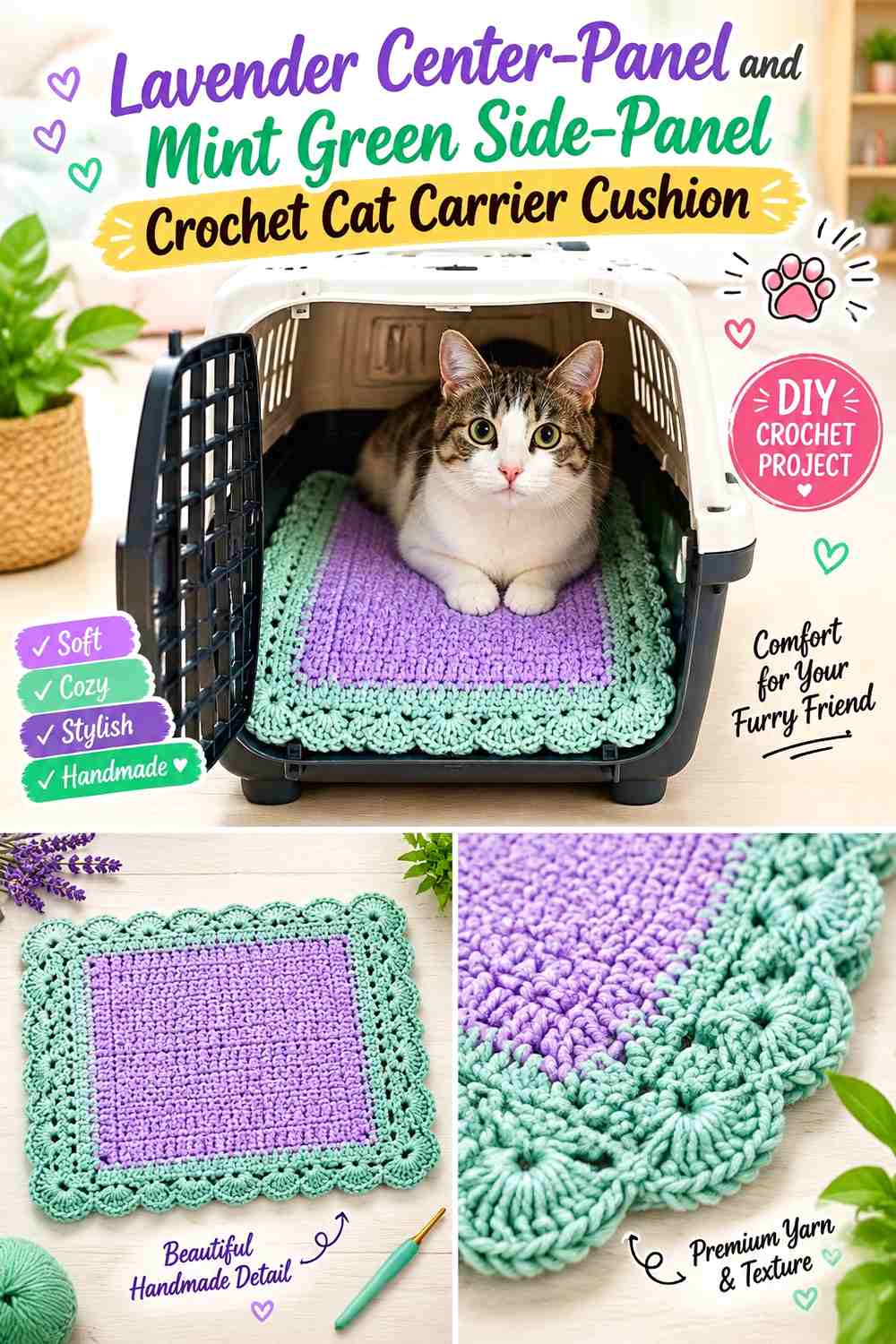
A long lavender center surrounded by mint side panels creates stronger color blocking than narrow edging. The purple field can carry the main resting-area texture while the green sides provide broad, calm contrast.
Lavender Needs Enough Width to Remain the Main Center Panel
Give the center substantial visual space rather than reducing it to a narrow stripe. The broader the lavender field, the easier it is for texture or a simple stitch pattern to remain readable.
If the carrier is narrow, reduce the mint panels proportionally instead of sacrificing the center.
Mint Green Side Panels Can Balance Lavender Without Crossing It
Keep the mint areas outside the main center rather than inserting additional green stripes through lavender. This gives both colors meaningful surface while preserving clear roles.
A simple mint-to-lavender boundary also makes later resizing easier to plan.
Creator Credit: Crochetnaari
10. Mint Green Center and Lavender Double-Border Crochet Cat Carrier Cushion

This design uses a broad mint center, a lavender inner border, and a final mint or restrained outer finishing edge. The layered frame creates more depth than a single border while keeping the resting field predominantly green.
Lavender Can Create the Main Contrast Around a Mint Green Center
Use lavender as the clearly visible inner frame so it separates the central field from the perimeter. Keep its width consistent enough for the rectangle to look intentional.
The lavender section should remain flatter than any center texture when you want the edges to stay visually simple.
Mint Green Should Return Beyond the Lavender Border
Bringing mint back at the outermost edge reconnects the perimeter to the center and prevents lavender from becoming the dominant frame.
If the carrier interior is tight, keep that final mint section narrow so the layered border does not consume too much surface.
Creator Credit: Crochet Art of Loving
11. Lavender and Mint Green Color-Block Crochet Cat Carrier Cushion
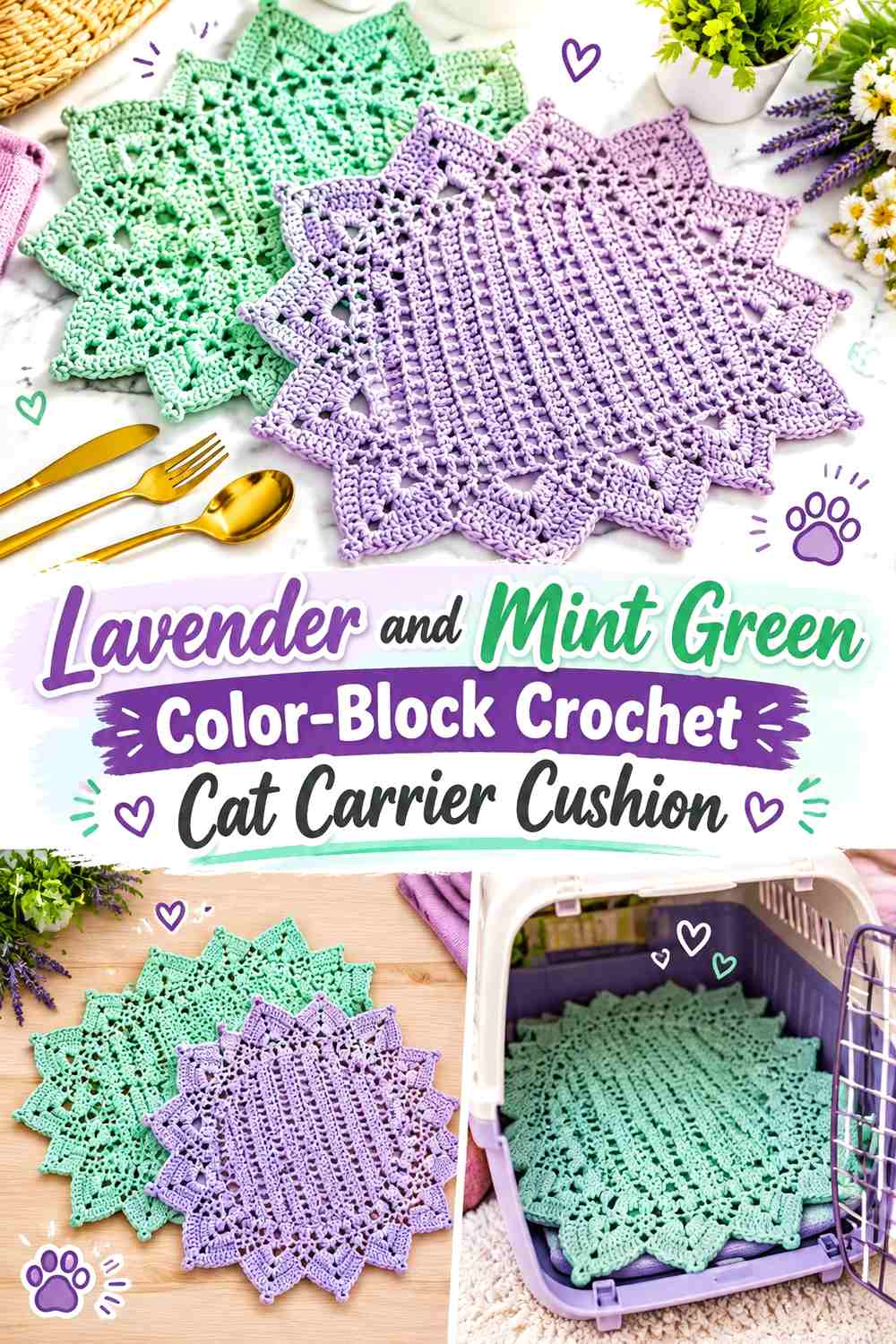
For the most geometric option, divide the cushion into a small number of large lavender and mint blocks. The goal is not a checkerboard of tiny squares but a few substantial sections that remain understandable even when the cushion is partly covered.
Lavender Blocks Need a Predictable Relationship With Mint Green
Repeat the same basic block scale or visual rhythm instead of changing every section randomly. Larger shapes let both pastels remain clear and prevent the small carrier insert from looking fragmented.
One color should still occupy slightly more total area if you want a strong dominant shade.
Mint Green Can Separate Lavender Blocks Without Creating Tiny Sections
Use mint in substantial areas between lavender rather than as numerous narrow lines. This keeps both colors readable and makes the cushion easier to resize without destroying the layout.
If the center is already strongly blocked, keep the outer edge in one existing color rather than introducing another alternating sequence.
Creator Credit: Crochê da Alessandra
Which Lavender and Mint Green Cat Carrier Cushion Layout Should You Choose?
For the calmest design, choose a lavender center with mint border, a mint center with lavender border, or a simple split-field layout. These give each color a large uninterrupted area and are comparatively easy to adapt to different carrier footprints.
If you want more color repetition, wide stripes or granny-style panels bring lavender and mint together across more of the surface. Keep the sections relatively large so the compact insert does not become visually fragmented.
Side bands and end panels are particularly useful when you want one color to remain visible near the carrier edges while leaving the center comparatively simple. A textured center with an inner frame works well when crochet surface detail matters more than repeated color changes.
Conclusion
Lavender and mint green can create many distinct crochet cat carrier cushions without adding extra colors or bulky decoration. The most useful difference comes from deciding which shade owns the main resting area and where the second shade reinforces the rectangular shape.
Choose a lavender or mint center with a contrasting border for a simple framed look. Use side panels or end blocks when you want the color placement to follow the length of the carrier, and reserve stripes or granny-inspired layouts for cushions where more repetition will not make the surface feel crowded.
Measure the actual carrier floor before settling on border widths or panel proportions, and check that the finished insert lies where intended without obstructing doors, zippers, ventilation, or other carrier hardware. Use the pet-specific tutorials where possible; treat the rectangular rug and placemat sources only as construction references whose materials and finishing must be reconsidered for a cat carrier.
Frequently Asked Questions
Should Lavender or Mint Green Be the Main Color in a Crochet Cat Carrier Cushion?
Either can lead. Lavender creates a more purple-forward insert, while a mint center produces a cooler green-led result. Pick the dominant shade first and give it the largest uninterrupted section.
Where Should Mint Green Go on a Lavender Cat Carrier Cushion?
A perimeter border, long side panels, short end sections, joins, or one broad stripe are useful choices. Keep mint outside a detailed lavender texture when you want the stitches in the center to remain visually connected.
How Can I Keep Lavender and Mint Green From Blending Together?
Compare the actual yarns for lightness as well as hue. If both pastels are extremely pale, give them larger separate sections rather than relying on narrow stripes. A slightly deeper lavender or mint can also improve definition without changing the two-color concept.
Should a Crochet Cat Carrier Cushion Have a Thick Border?
Not necessarily. Border depth should suit the available carrier floor and the cushion construction. On a compact insert, a flatter, narrower color frame can preserve more usable center space.
Can I Use a Crochet Rug or Placemat Tutorial for a Cat Carrier Cushion?
A flat rectangular tutorial can help with layout and shaping, but do not automatically transfer its yarn, backing, density, or finishing to pet use. Reassess those choices for the carrier, the cat, and the intended level of cushioning.
Are Lavender and Mint Green Stripes Practical for a Small Carrier Cushion?
Yes, but broad stripes usually provide clearer color separation than many narrow bands on a compact rectangle. Fewer transitions also make it easier to alter the finished dimensions while keeping the palette balanced.
Should I Add Fringe or Tassels to a Lavender and Mint Cat Carrier Cushion?
They are unnecessary for the color scheme and may add loose elements inside the carrier. A flat lavender or mint border, panel, or stripe can provide decorative contrast without dangling trim.