A snowflake gives a crochet dog sweater a natural focal point for Christmas color planning. Instead of spreading several holiday shades over every part of the garment, you can keep the back panel relatively simple and let one contrasting snowflake carry the seasonal detail.
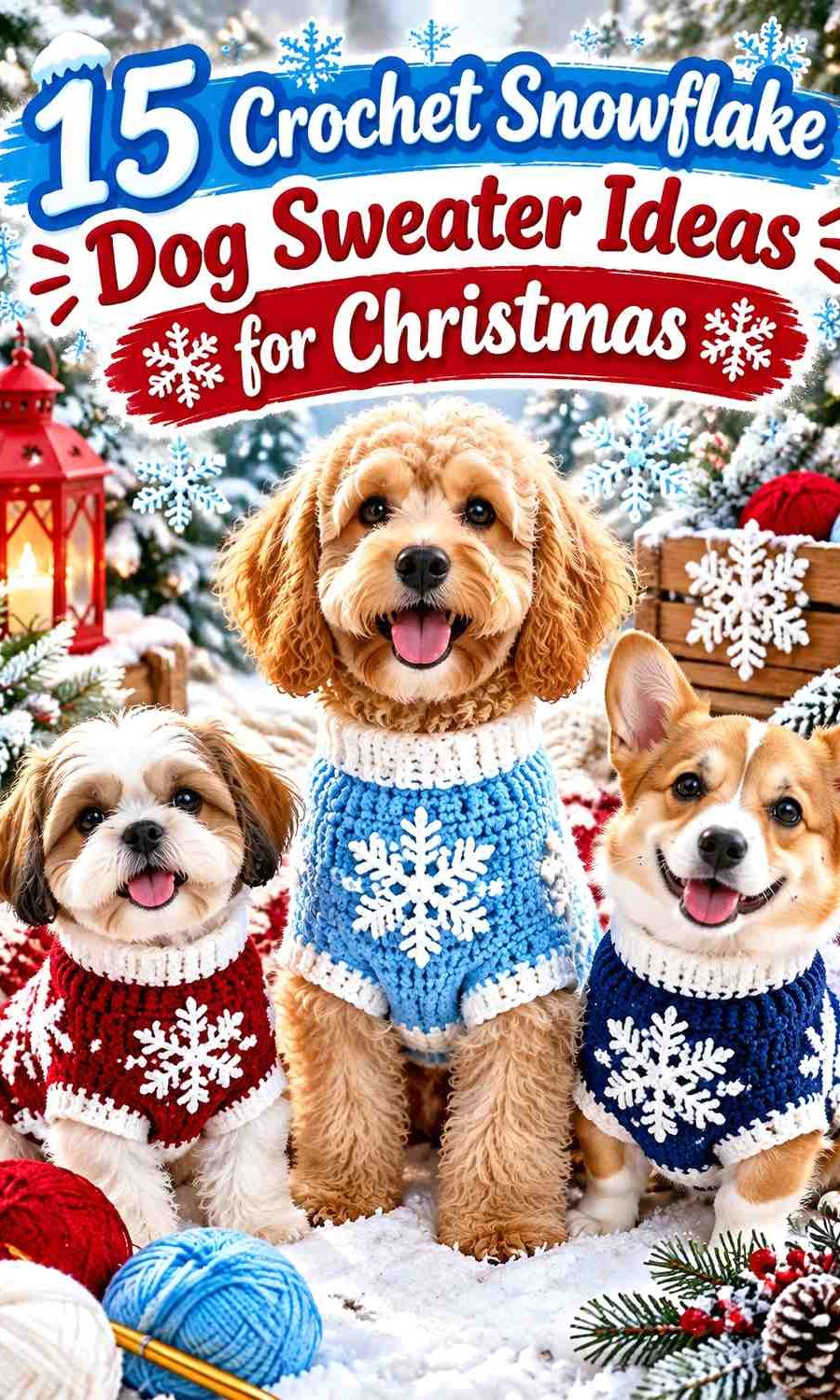
White snowflakes are the obvious choice, but they behave very differently against icy blue, navy, cranberry, forest green, charcoal, or burgundy. A low-contrast cream snowflake on oatmeal creates a quiet winter look, while white against navy or deep red makes the motif much more visible from a distance.
The sweater itself also gives you several useful supporting color zones. Collars and cuffs can repeat the snowflake shade, borders can frame the back motif, and a contrasting yoke can connect the neckline to the design without crowding the main back panel.
The tutorials credited below support crochet dog-sweater or dog-coat construction. The snowflake layouts and color schemes are independent adaptations, so the credited creators should not be assumed to have used these exact palettes.
Quick List:
- Ice Blue and White Crochet Snowflake Dog Sweater
- Navy and Snow White Crochet Snowflake Dog Sweater
- Cranberry Red and Cream Crochet Snowflake Dog Sweater
- Forest Green and White Crochet Snowflake Dog Sweater
- Silver Gray and White Crochet Snowflake Dog Sweater
- Deep Teal and Ivory Crochet Snowflake Dog Sweater
- Burgundy and Soft Gray Crochet Snowflake Dog Sweater
- Powder Blue and Silver Gray Crochet Snowflake Dog Sweater
- Christmas Red, Forest Green, and White Crochet Snowflake Dog Sweater
- Midnight Blue and Pale Blue Crochet Snowflake Dog Sweater
- Plum and Winter White Crochet Snowflake Dog Sweater
- Oatmeal and Dusty Blue Crochet Snowflake Dog Sweater
- Charcoal and Icy Mint Crochet Snowflake Dog Sweater
- Sage Green and Cream Crochet Snowflake Dog Sweater
- Winter White, Ice Blue, and Lavender Crochet Snowflake Dog Sweater
Give the Snowflake Enough Contrast on the Crochet Dog Sweater Back
A snowflake motif depends on clear edges. Two yarn colors can look obviously different in their skeins yet become difficult to separate when their lightness is similar. This matters most with small snowflake arms and other narrow colorwork details.
Compare the yarns side by side before committing to the back motif. A grayscale photo is also useful for checking light-and-dark separation. If the motif nearly disappears, use a lighter snowflake, a darker background, or increase the amount of space around the motif rather than adding more decorative colors.
The back usually gives the snowflake the largest uninterrupted viewing area. Keeping nearby stripes, appliqués, and borders restrained helps that central motif remain the main Christmas detail.
Repeat the Snowflake Color Around the Collar or Edging
Repeating the snowflake shade once elsewhere helps connect the back design to the rest of the sweater. A white snowflake on navy, for example, can be echoed with a white collar edge or narrow hem without turning the whole garment into alternating blue-and-white bands.
Placement matters on a small dog sweater. If the snowflake color appears around the collar, leg openings, hem, chest, and several stripes, it may stop functioning as an accent. Choose one or two secondary placements and leave enough of the dominant sweater color uninterrupted.
This is particularly helpful when the body has visible crochet texture. Solid color around cables, ribs, puffs, or another pronounced surface lets the stitches remain readable while the snowflake provides the colorwork focus.
Keep Christmas Snowflake Details Flat and Practical
A flat colorwork snowflake generally creates less surface clutter than several dangling or raised decorations. If you prefer an appliqué, keep its placement on the visible back panel and secure it appropriately rather than allowing loose points to interfere with movement.
Whatever decorative method you choose, fit still comes first. Keep the neckline, front legs, chest, and underside comfortable according to the sweater construction you are following. Decorative snowflakes should adapt to the available back space rather than forcing changes to a well-fitting garment.
1. Ice Blue and White Crochet Snowflake Dog Sweater
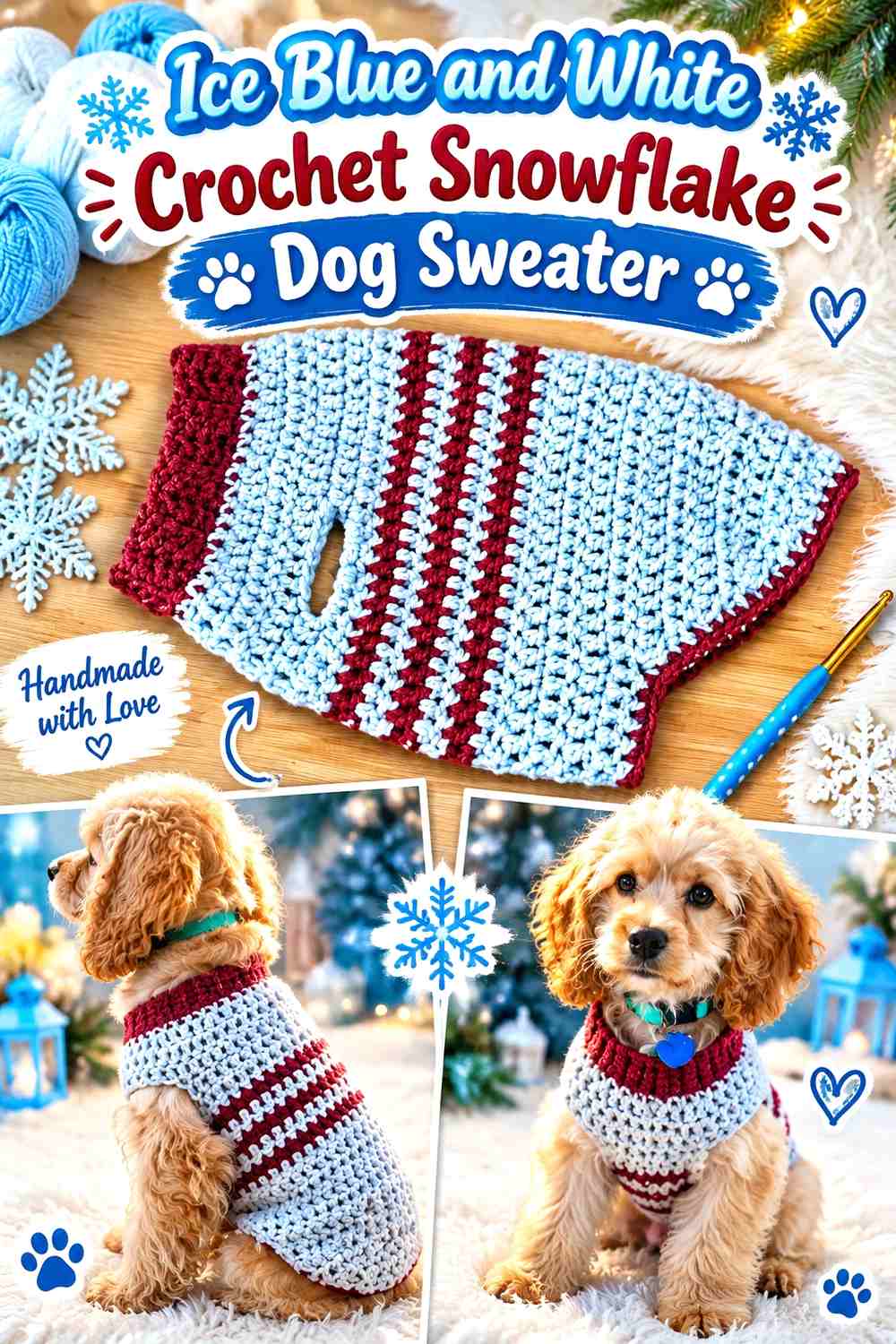
Ice blue provides an immediate winter background without making the sweater especially dark. Use it across most of the back and body, then let a white snowflake occupy the central visible area. Repeating white around a narrow collar or hem gives the motif a second reference point while leaving blue clearly dominant.
White Needs Clear Edges Against the Ice Blue Snowflake Background
Very pale ice blue can sit surprisingly close to white in value. Compare the two yarns before working a detailed snowflake, especially if the motif contains narrow points.
If the white begins to disappear, choose a slightly deeper icy blue rather than adding a darker outline around every part of the design. The cleaner two-color arrangement keeps the sweater soft while improving motif visibility.
Ice Blue Should Stay Continuous Around the White Snowflake
Leave enough uninterrupted ice blue around the motif for the white shape to breathe. Crowding the back with white stripes immediately above and below the snowflake reduces the contrast created by the blue field.
A white collar edge can repeat the motif without disturbing that open background.
Creator Credit: it’s erin b.
2. Navy and Snow White Crochet Snowflake Dog Sweater

Navy creates one of the clearest backgrounds for a snow-white motif. Because the value contrast is already strong, the design does not need additional colors to remain visible. Keep the navy back broad and let white appear primarily in the snowflake and one finishing detail.
Snow White Can Become the Main Focal Point on Navy
A white snowflake needs relatively little surface area to stand out against navy. Place it where the back provides enough surrounding dark color rather than enlarging it until it approaches the sweater edges.
The same white can appear at the collar, but avoid outlining every opening unless you deliberately want a strongly framed garment.
Navy Gives the White Snowflake More Definition Than Extra Borders
A continuous navy field is doing most of the visual work in this palette. Extra white bands around the motif can actually reduce its impact by taking away the dark negative space that defines the snowflake.
Keep the central back quieter when the snowflake is meant to be the unmistakable feature.
Creator Credit: Crochet It
3. Cranberry Red and Cream Crochet Snowflake Dog Sweater
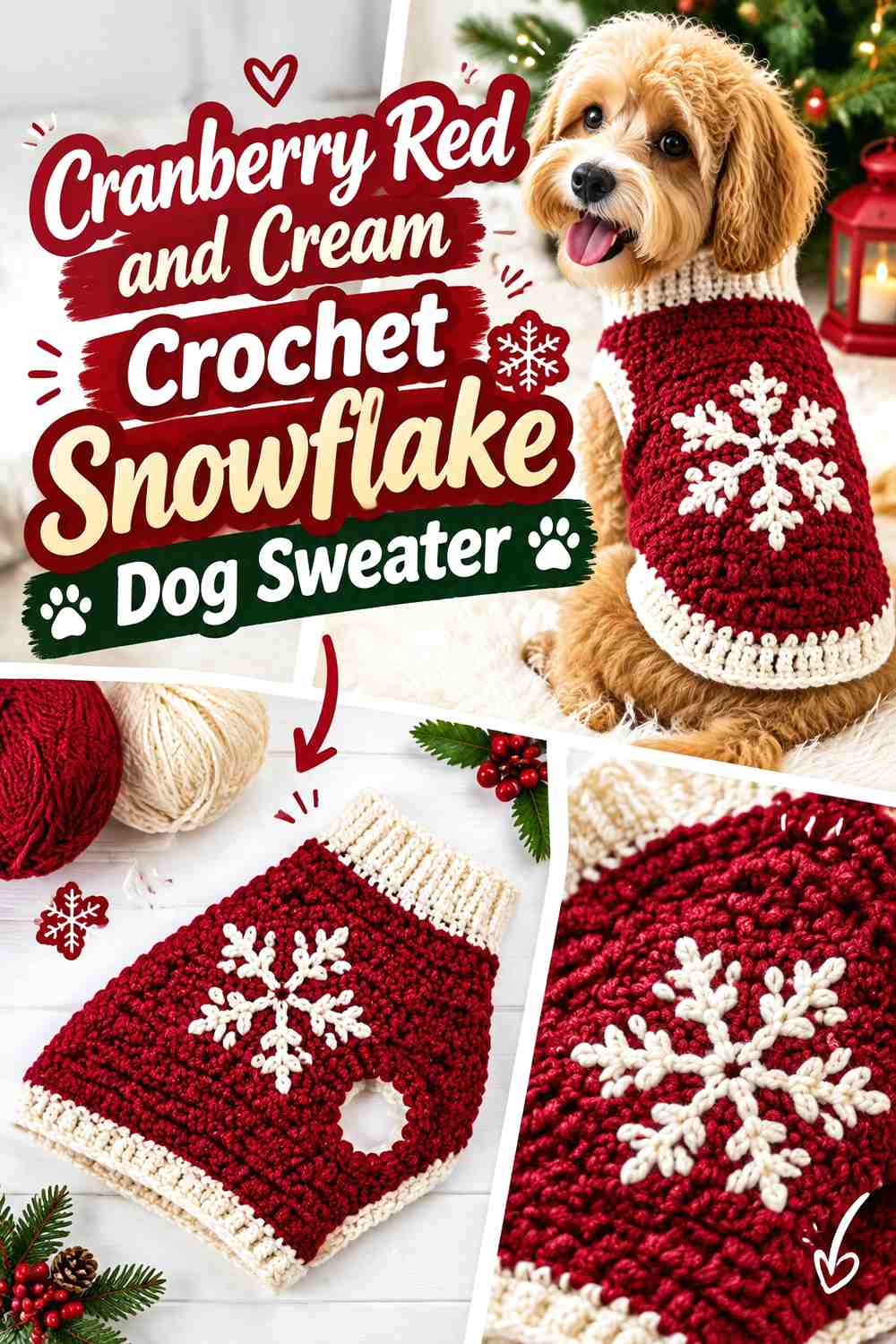
Cranberry gives the sweater a traditional Christmas direction without using bright primary red. Cream softens the snowflake contrast compared with stark white and can also work around the collar or lower edge. Keep cranberry dominant so the finished sweater still reads as red from above.
Cream Softens the Snowflake Against Cranberry Red
A cream motif offers enough separation from cranberry while avoiding the especially sharp red-and-white effect of a brighter neutral. This makes it useful when you want the snowflake to remain clear without feeling graphic.
Repeat cream in one small finishing area rather than giving every sweater edge the same contrasting treatment.
Cranberry Red Should Surround the Cream Snowflake Generously
Leave a broad cranberry field around the back motif. Narrow cranberry bands between large cream sections will not provide the same visual emphasis.
If the sweater includes textured stitches, keeping those sections cranberry also prevents the cream snowflake and surface texture from competing throughout the garment.
Creator Credit: Loops Only Crochet
4. Forest Green and White Crochet Snowflake Dog Sweater
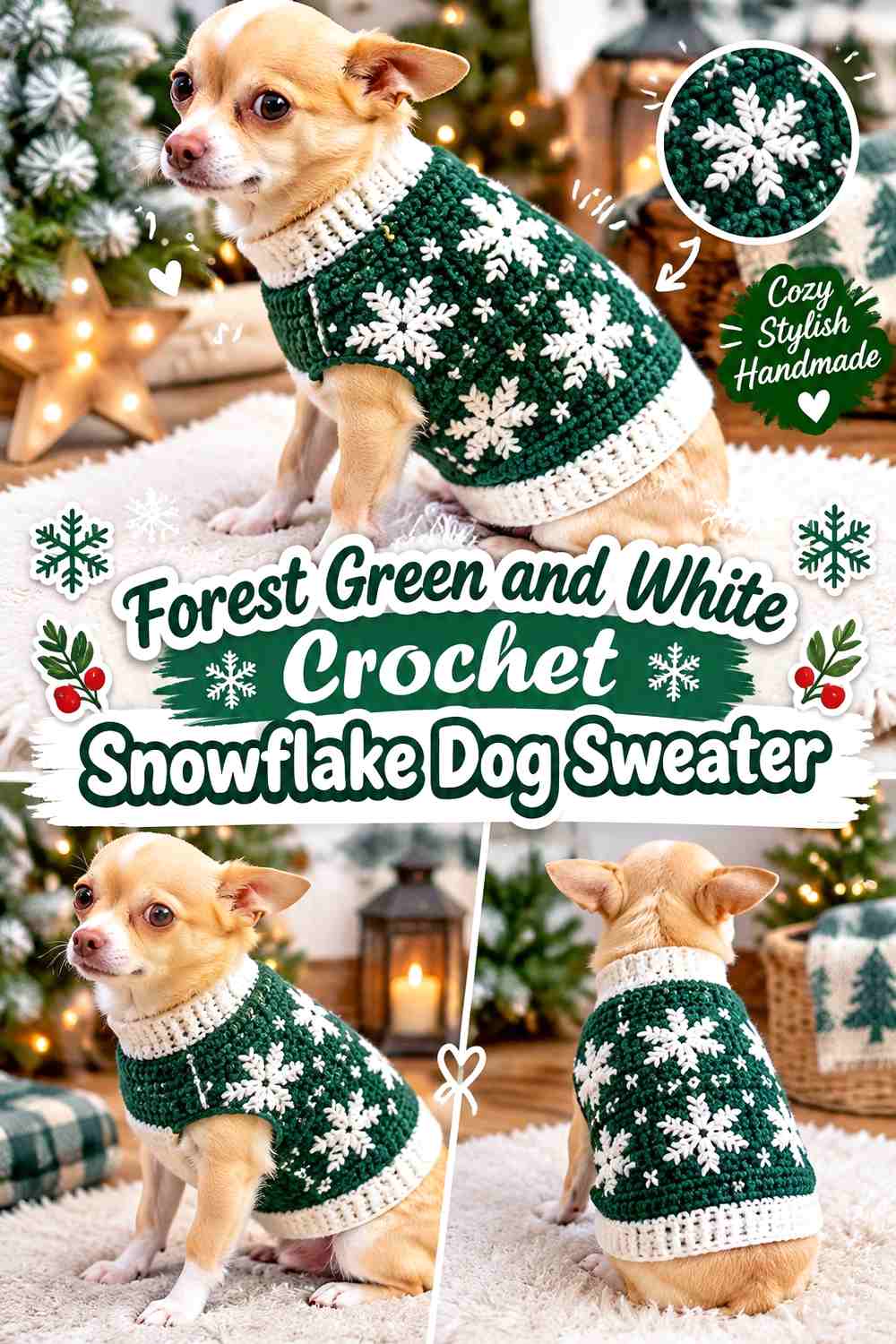
Forest green creates a classic Christmas base while white supplies a clear winter motif. Unlike a red-and-green sweater, this arrangement lets the snowflake remain the only major contrasting element. A small white collar repeat can connect the back design without weakening the green body.
White Makes the Forest Green Snowflake Easy to Read
White generally has enough light-dark separation from forest green for small motif details to remain visible. Use that contrast where it matters most—the snowflake—rather than repeating large white sections throughout the body.
If you add white edging, keep it narrow enough that green still determines the sweater’s overall appearance.
Forest Green Can Carry Texture Around the White Snowflake
A solid green back works particularly well when the crochet fabric has pronounced stitch texture. The texture can occupy the surrounding field while the snowflake supplies a second, separate design feature.
Avoid changing to white through every textured section merely to make the sweater more festive. One strong motif can carry the Christmas reference effectively.
Creator Credit: Last Minute Laura
5. Silver Gray and White Crochet Snowflake Dog Sweater
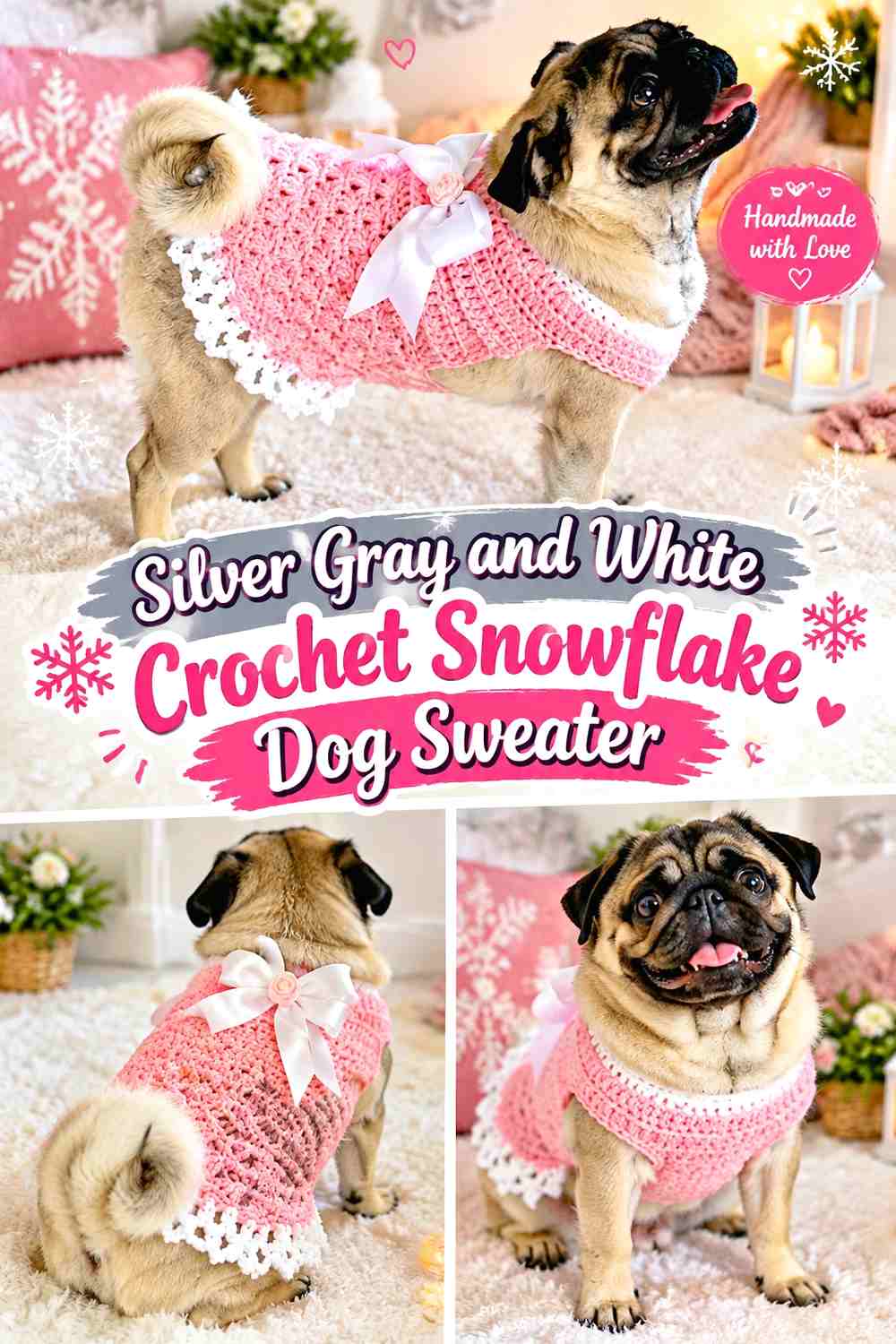
Silver gray and white create a restrained winter palette with less contrast than navy or forest green. The result can be especially effective when the snowflake is fairly substantial and the gray is dark enough to remain separate from the white.
Silver Gray Needs Enough Depth Behind the White Snowflake
A very pale gray may cause the motif to fade. Before starting the back design, check whether white remains clearly lighter than the selected gray.
If stronger separation is needed, deepen the gray while keeping it cool and neutral rather than adding an unrelated dark outline.
White Can Repeat at the Silver Gray Collar Without Taking Over
A white collar edge can link the neckline to the snowflake while leaving the full collar predominantly gray. This is more controlled than turning the entire neckline, leg openings, and hem white.
Keeping those repeats selective helps the quiet gray-and-white palette remain organized.
Creator Credit: Crochet Cuties Creations by Esther
6. Deep Teal and Ivory Crochet Snowflake Dog Sweater
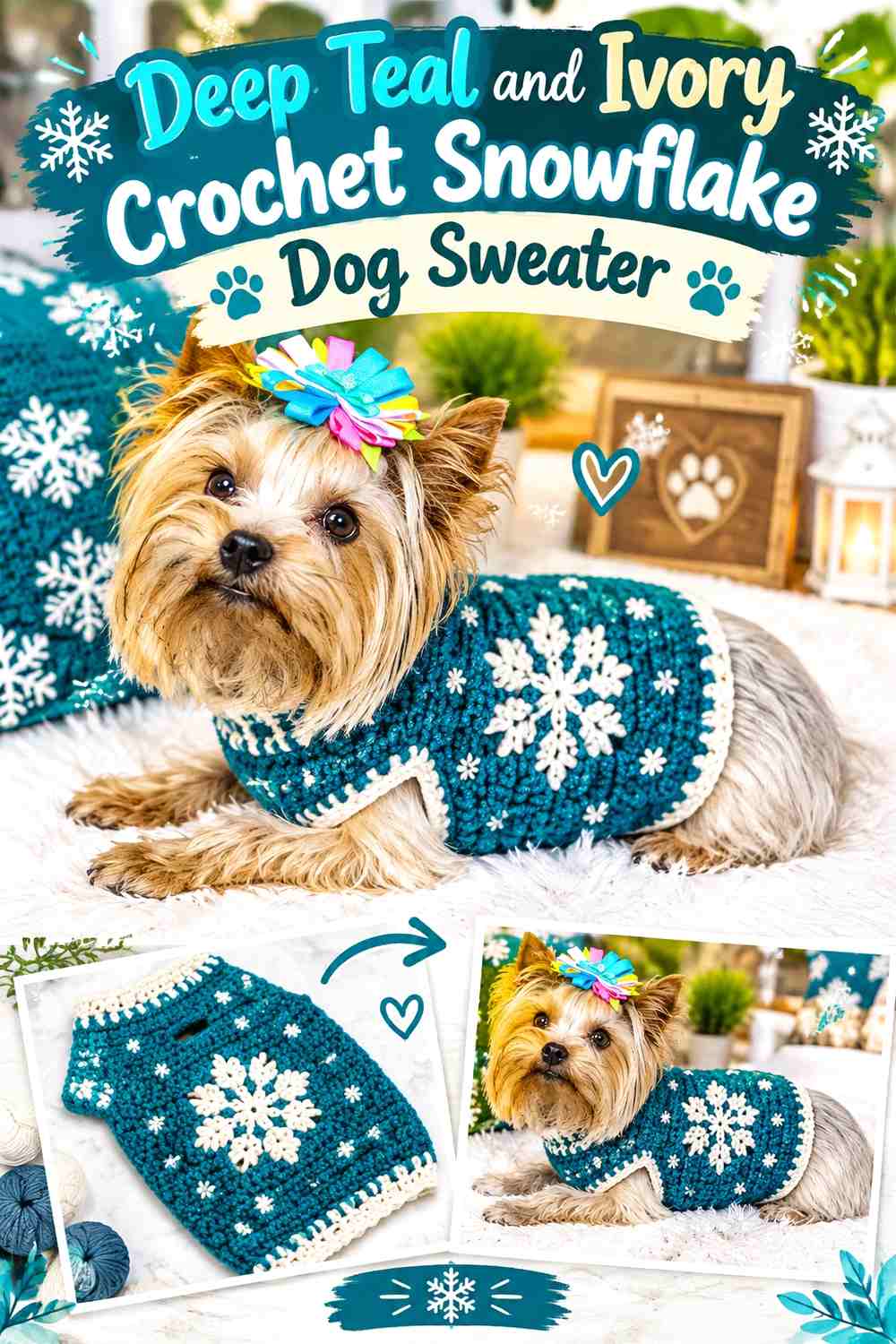
Deep teal offers a cool Christmas alternative to forest green or navy. Ivory makes the snowflake slightly warmer than bright white and can also soften the transition around the collar. The contrast remains strong enough for a central motif while giving the sweater a less conventional holiday palette.
Ivory Keeps the Deep Teal Snowflake Softer Than Bright White
Use ivory when you want the snowflake to remain clearly visible without creating the crispest possible contrast. Against deep teal, it still has enough lightness to function as the focal point.
A small ivory hem or collar edge can repeat the motif, but large ivory blocks are unnecessary.
Deep Teal Should Remain Unbroken Around Detailed Ivory Snowflake Points
The narrower the snowflake details, the more useful a clean teal background becomes. Avoid placing unrelated stripes directly beside the motif.
If additional color is wanted, put it at the collar or lower edge where it will not reduce the contrast around the back design.
Creator Credit: Lanitas y colores
7. Burgundy and Soft Gray Crochet Snowflake Dog Sweater
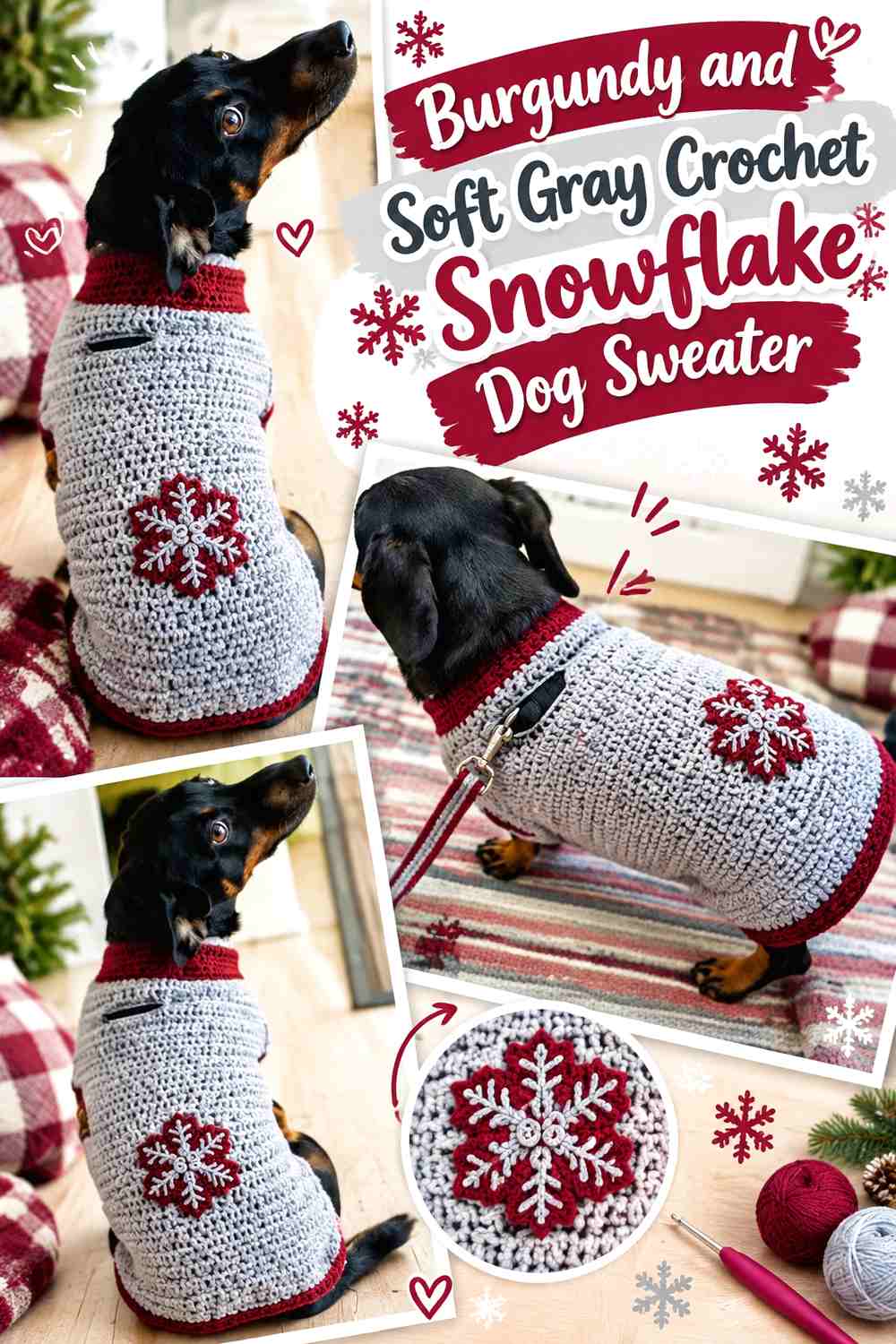
Burgundy gives the sweater a rich Christmas base, while soft gray replaces the usual white snowflake with a quieter neutral. This palette is useful when you want recognizable seasonal color without a bright or highly contrasting finish.
Soft Gray Snowflakes Need a Lightness Difference From Burgundy
Choose a gray that remains visibly lighter than the burgundy body. A dark gray can merge with burgundy even though the hues are different.
The motif should still be recognizable from the normal viewing distance of the sweater, not only when examined closely.
Burgundy Can Repeat Around the Soft Gray Collar Edge
If gray appears at the neckline, keep most of the collar burgundy and use gray as the finishing edge. This preserves a stronger red field while creating enough repetition to connect the snowflake to the garment.
A gray collar plus gray hem plus gray cuffs can become too much secondary color on a compact sweater.
Creator Credit: Elfriede Van Geffen
8. Powder Blue and Silver Gray Crochet Snowflake Dog Sweater
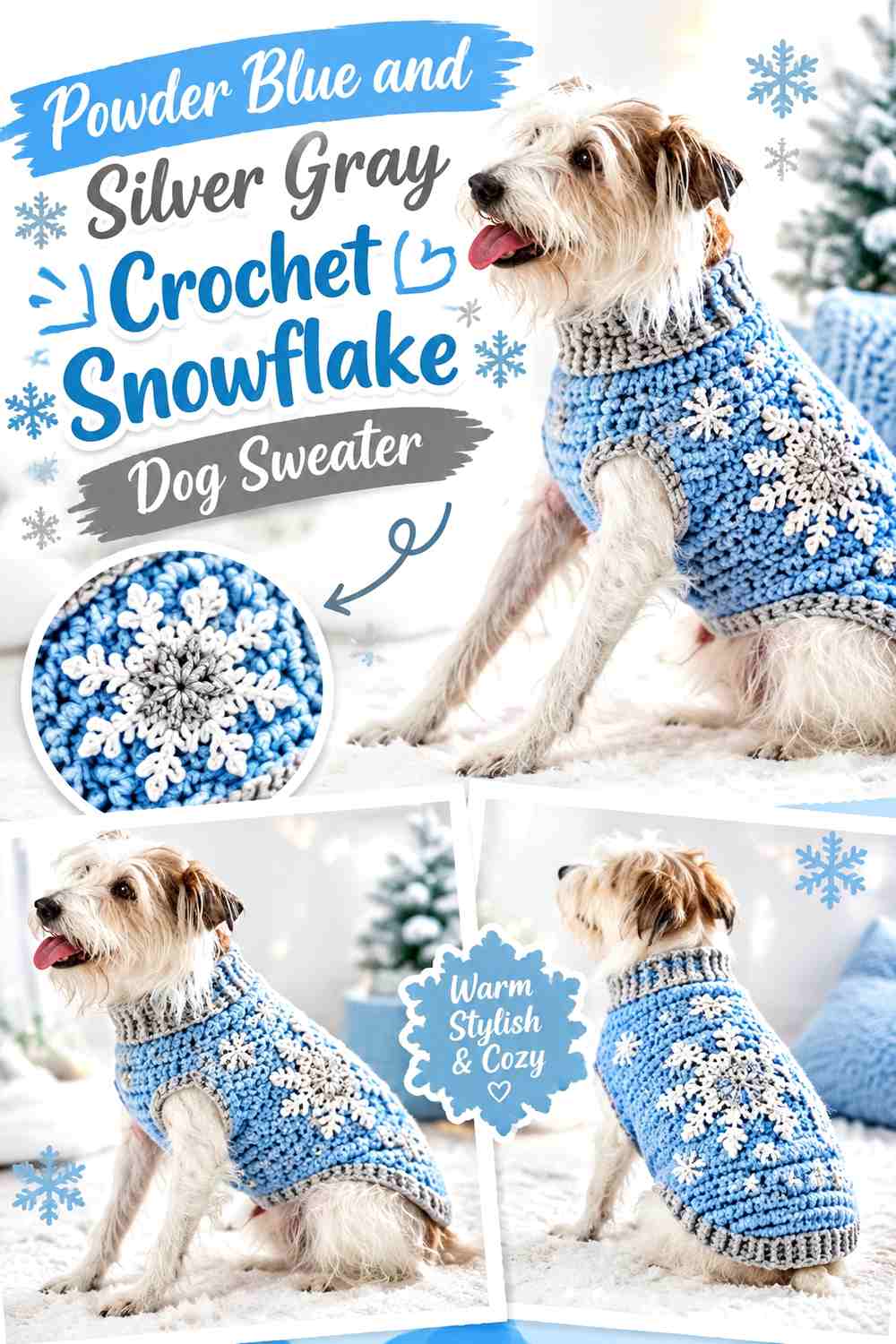
Powder blue and silver gray create a soft, low-saturation snowflake sweater. Because neither color is very dark, this idea depends more on careful shade selection than the navy-and-white option. Let powder blue lead and choose gray that is noticeably deeper for the motif.
Silver Gray Can Make a Powder Blue Snowflake Visible Without White
A medium-light silver gray can produce gentle definition against powder blue. This gives the motif a quieter appearance while still separating it from the main back.
If your gray is actually lighter than the blue, that reversal can also work; what matters is maintaining enough value difference.
Powder Blue Needs Open Space Around the Silver Gray Motif
Do not surround a subtle gray snowflake with several similarly colored stripes. Leave powder blue uninterrupted immediately around the design.
That negative space makes a low-contrast palette easier to understand and prevents the back from becoming visually muddy.
Creator Credit: Yarnspirations
9. Christmas Red, Forest Green, and White Crochet Snowflake Dog Sweater

This three-color palette combines traditional Christmas red and green with a white snowflake. The cleanest arrangement is to give each color a clear role: red for the body, white for the motif, and green for the collar or limited edging.
Christmas Red Should Dominate the White Snowflake Back Panel
Keep most of the back red so the white snowflake has one consistent background. Alternating green and red directly behind the motif makes the snowflake harder to read and gives the back too many competing boundaries.
Red can also continue through most of the chest to maintain the dominant-color hierarchy.
Forest Green Should Support Christmas Red and White From the Collar
The collar is a natural place for forest green because it introduces the third color without interfering with the snowflake. A small green repeat at the hem can connect the palette if necessary.
Avoid adding green outlines inside the white motif unless the design specifically needs them. Three-color snowflake details can become crowded quickly.
Creator Credit: Crochet with Tiffany
10. Midnight Blue and Pale Blue Crochet Snowflake Dog Sweater
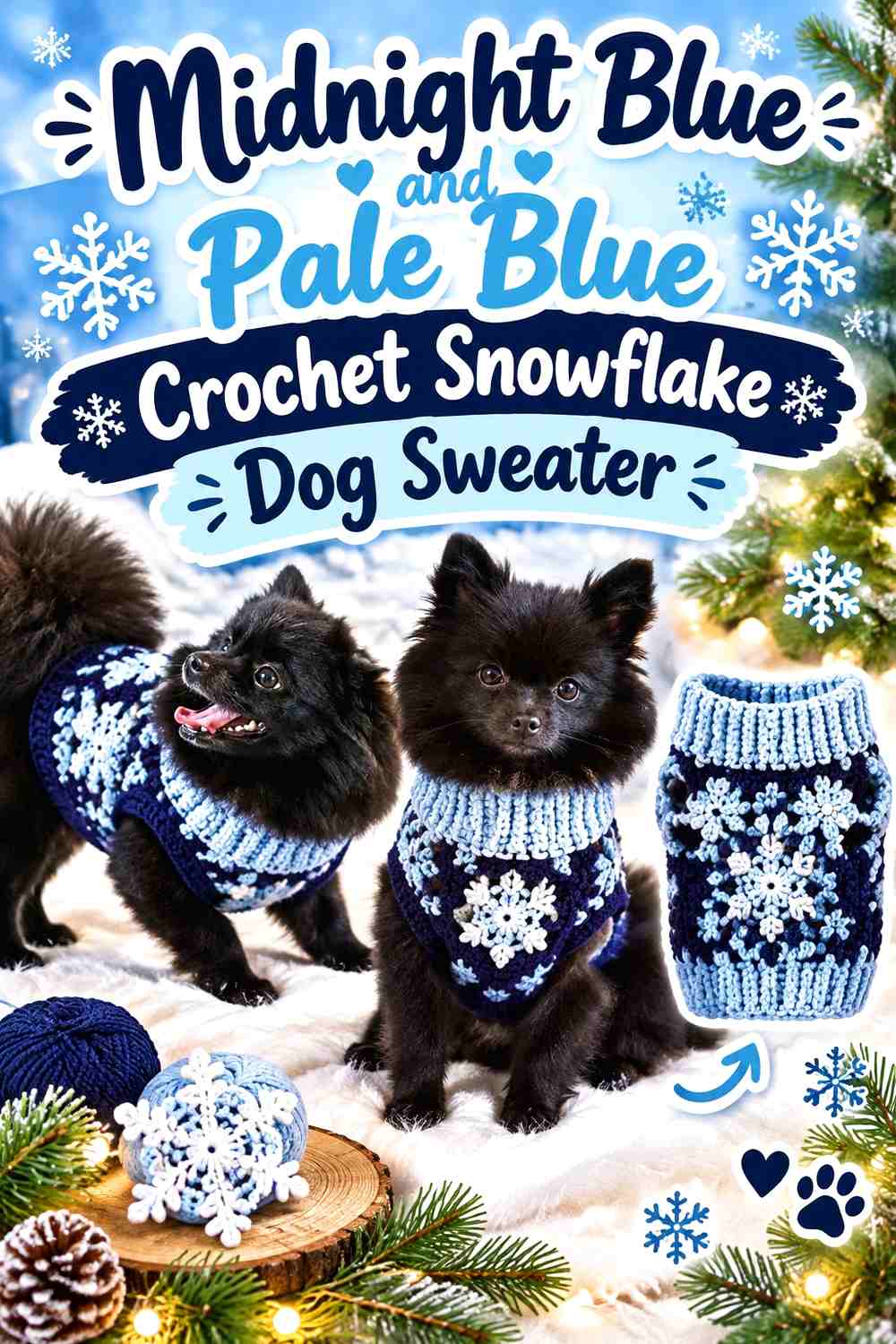
A pale-blue snowflake on midnight blue creates a tonal alternative to classic blue and white. Both colors remain within the same hue family, so the finished sweater feels more blended while still providing useful light-dark separation.
Pale Blue Gives Midnight Blue a Tonal Snowflake Instead of a White One
Choose a pale blue that is visibly lighter than the midnight background. The hue connection keeps the palette cohesive while the value change lets the snowflake remain readable.
This is particularly effective when you want the sweater to look winter-themed without adding a bright neutral.
Midnight Blue Should Frame the Pale Blue Snowflake From Every Side
Leave midnight blue visible above, below, and beside the motif. That dark surrounding field provides the contrast that makes a tonal snowflake work.
A pale-blue collar edge can repeat the motif color, but the full collar can remain midnight blue for a stronger frame.
Creator Credit: SheiLa Teré
11. Plum and Winter White Crochet Snowflake Dog Sweater

Plum gives a Christmas sweater a jewel-toned direction without using conventional red or green. Winter white keeps the snowflake highly visible and can brighten the collar or lower border in small amounts.
Winter White Makes the Plum Snowflake the Brightest Detail
Let white remain concentrated in the motif so it attracts attention immediately against plum. When the snowflake is the only large white feature, it becomes much easier to read as the focal point.
A narrow white edge elsewhere is enough to connect the palette.
Plum Can Keep Long-Sleeve or Cuff Areas Quieter
If the sweater construction includes more coverage around the legs, keep those sections largely plum rather than adding separate white patterns to every cuff. The additional garment area already creates visual complexity.
Repeating only a narrow winter-white cuff edge can be enough to tie longer sections back to the snowflake.
Creator Credit: Vibes with Dani
12. Oatmeal and Dusty Blue Crochet Snowflake Dog Sweater
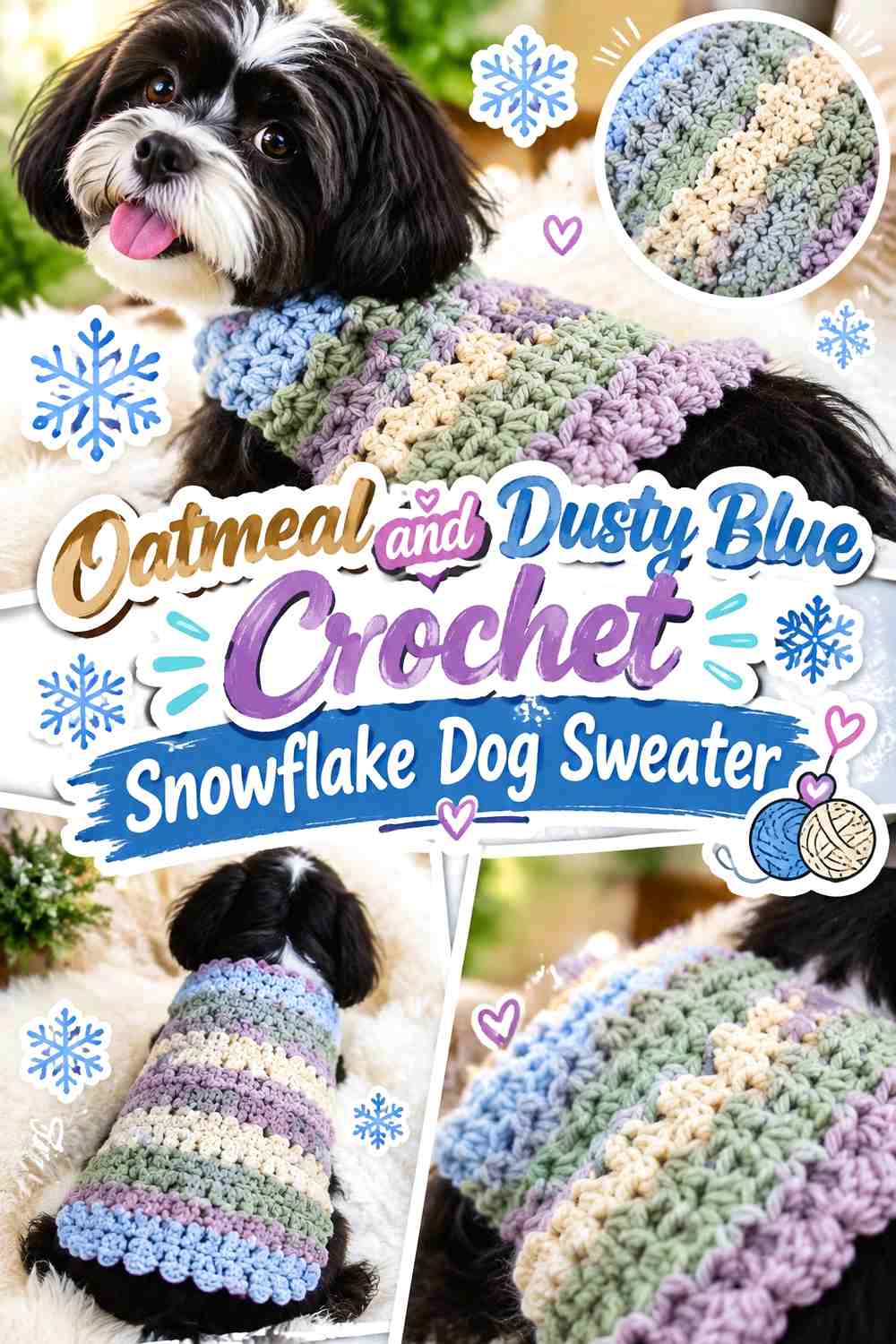
Oatmeal can become the dominant sweater color while dusty blue carries the snowflake. This reverses the more common light-snowflake-on-dark-background formula and produces a neutral-heavy Christmas design.
Dusty Blue Needs Enough Depth on an Oatmeal Snowflake Background
Choose a dusty blue that remains clearly darker than oatmeal. A very pale blue may disappear, especially in narrow snowflake arms.
If you want a softer motif, increase its overall scale instead of choosing two colors that are almost indistinguishable.
Oatmeal Can Keep the Dusty Blue Snowflake From Feeling Too Cool
The warm neutral background changes the overall direction of the blue motif. Keep most of the collar and body oatmeal, then repeat dusty blue only once in a border or small trim.
This protects the neutral-led character while still making blue an intentional part of the sweater.
Creator Credit: Hi! Donkun
13. Charcoal and Icy Mint Crochet Snowflake Dog Sweater
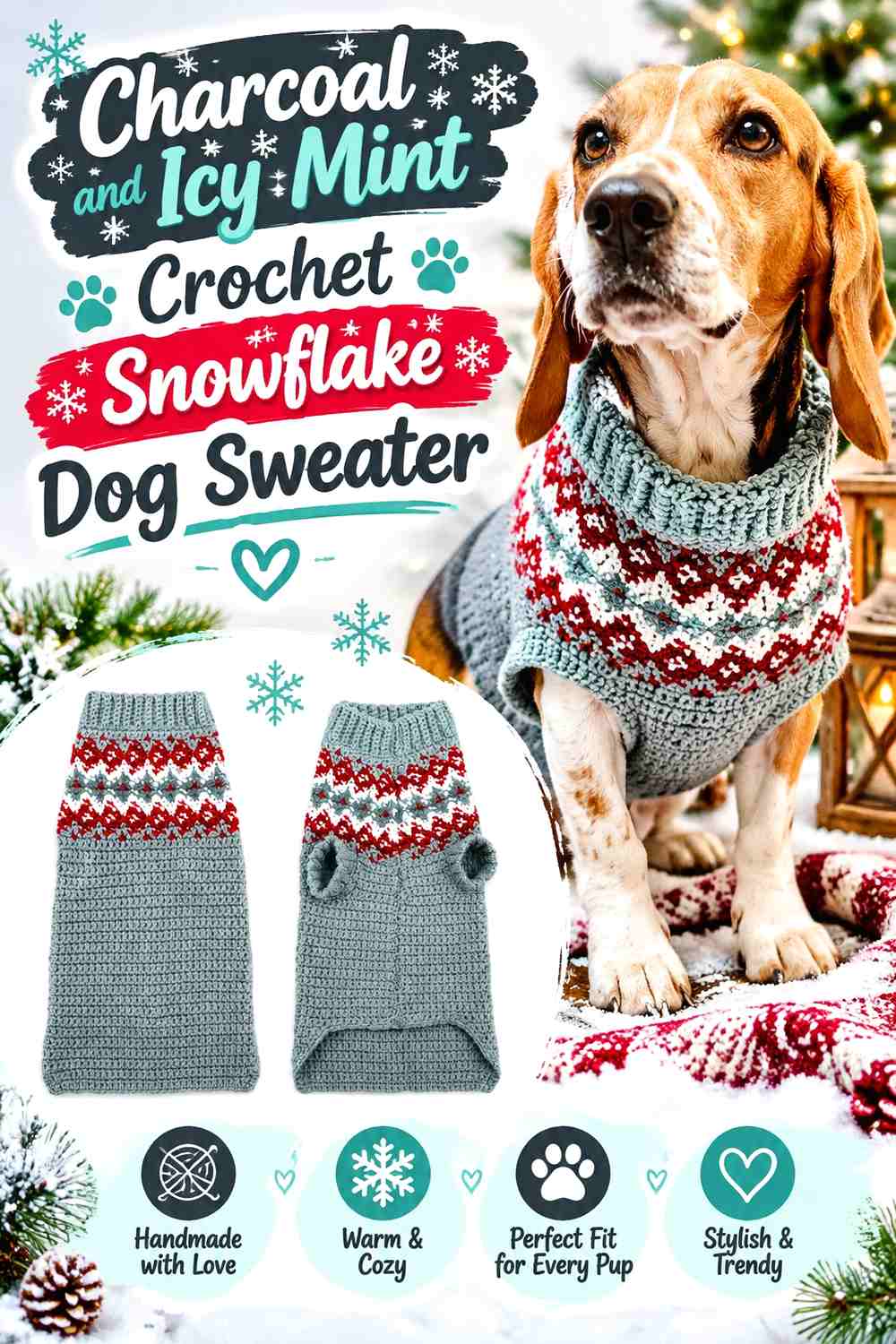
Charcoal provides a deep neutral background while icy mint creates an unexpected pale snowflake. The light green-blue accent still feels wintry but moves away from standard white, red, and forest-green Christmas combinations.
Icy Mint Can Stand Out Clearly Against a Charcoal Snowflake Background
The large value difference is the main strength of this palette. Keep icy mint in the central motif where that contrast has the most impact.
Because the color is distinctive, it does not need to cover a large percentage of the garment.
Charcoal Should Control How Much Icy Mint Appears
Use charcoal across the collar, chest, and most edges if you want the snowflake to remain the standout mint feature. A narrow mint collar detail can provide repetition without competing.
Outlining every opening in mint would shift the sweater toward an evenly two-color design and reduce the snowflake’s special role.
Creator Credit: Marly Bird
14. Sage Green and Cream Crochet Snowflake Dog Sweater
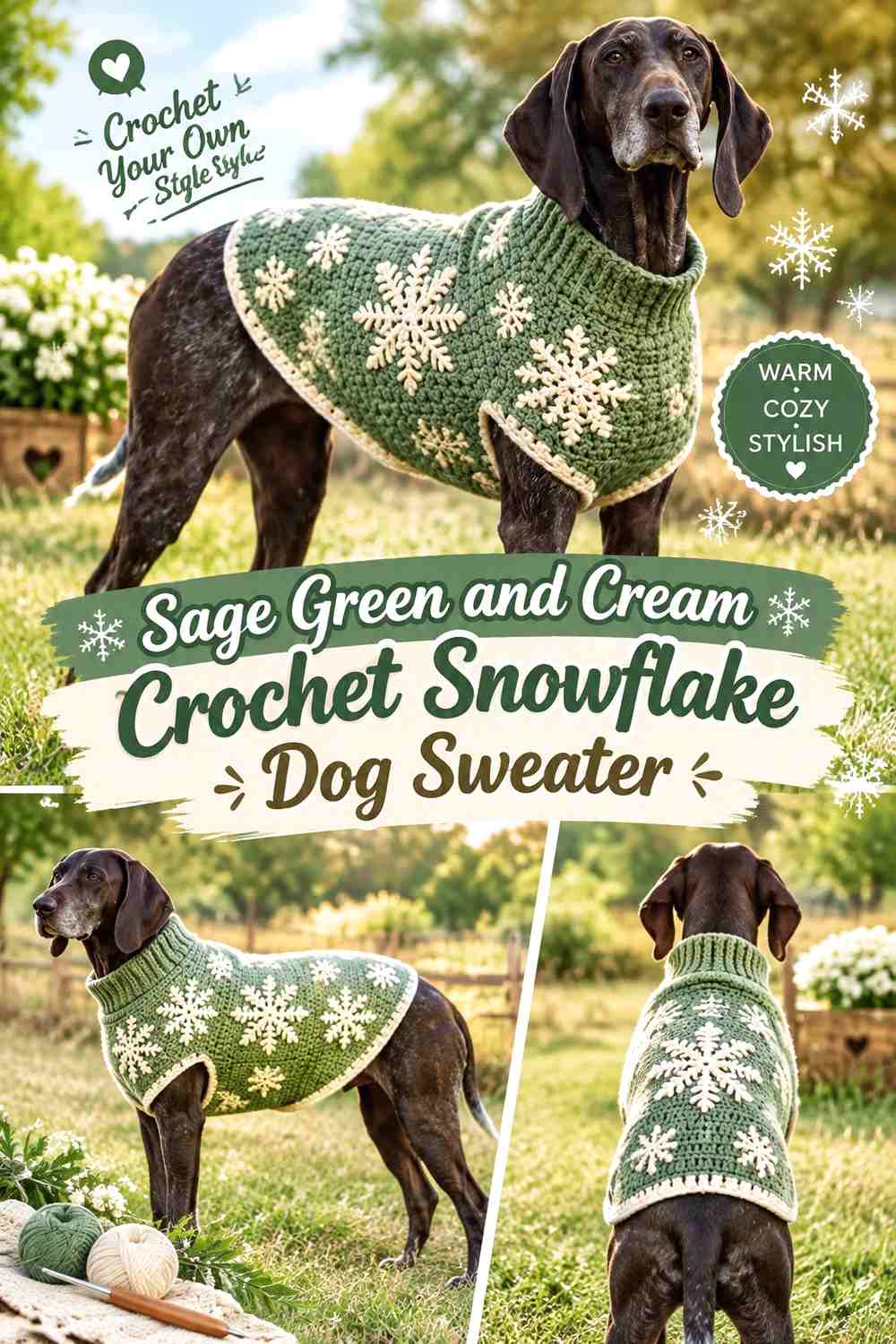
Sage and cream create the most muted green snowflake palette in this collection. Sage can cover the body while cream forms the motif and a small amount of trim. The softer contrast works well when you want a Christmas sweater that does not depend on saturated holiday colors.
Cream Gives Sage Green a Gentle Snowflake Contrast
Choose cream that is clearly lighter than the sage. If both yarns are extremely pale, small motif details may merge despite their different hues.
A slightly deeper sage often improves visibility while preserving the muted character better than switching to a bright white snowflake.
Sage Green Can Stay Dominant Through the Collar and Borders
Keep the collar sage if cream already occupies a noticeable snowflake area. A tiny cream edge can repeat the motif without turning the upper sweater neutral-heavy.
This distribution gives the back motif enough contrast while preserving sage as the first color the viewer notices.
Creator Credit: Heart Hook Home
15. Winter White, Ice Blue, and Lavender Crochet Snowflake Dog Sweater
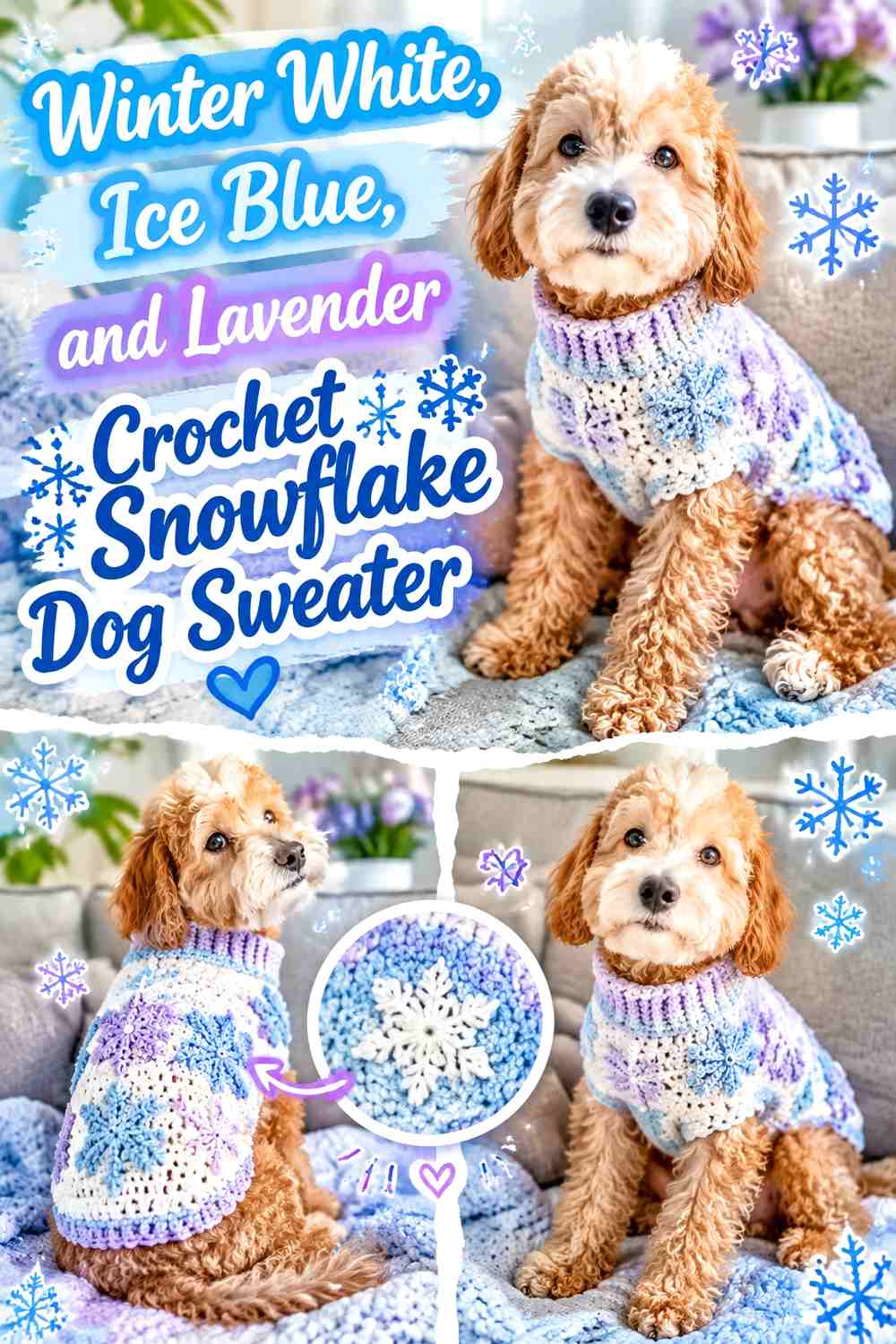
This final scheme uses a winter-white body with ice-blue and lavender snowflake details. Because the background is already very light, the snowflake colors need to be noticeably deeper than the white. Use one color for most of the motif and the other as a controlled supporting accent rather than dividing every snowflake arm between both shades.
Ice Blue Should Define Most of the Winter White Snowflake Motif
Let ice blue carry the major snowflake shape against the white back. This creates a clear two-color relationship first, which gives you room to add lavender without making the motif difficult to understand.
A slightly deeper blue works better than an almost-white blue when the motif contains small details.
Lavender Should Accent the Ice Blue and Winter White Sweater Selectively
Lavender can appear in a small motif center, collar edge, or narrow finishing section. It does not need to occupy as much area as ice blue.
Repeating lavender in only one or two places keeps the palette multicolored without turning the central snowflake into a collection of disconnected pastel sections.
Creator Credit: Maria’s Blue Crayon
Which Christmas Snowflake Dog Sweater Palette Should You Choose?
For the strongest motif visibility, navy with white, forest green with white, charcoal with icy mint, and plum with winter white create substantial light-dark separation. These palettes are useful when the snowflake itself should be immediately recognizable.
For a softer winter look, silver gray with white, powder blue with gray, sage with cream, or oatmeal with dusty blue keeps the contrast more restrained. Check these yarn combinations carefully because subtle palettes depend more heavily on the exact lightness of the shades you choose.
Cranberry and cream or Christmas red, green, and white provide the strongest traditional holiday direction. Midnight and pale blue offer a tonal winter alternative, while winter white with ice blue and lavender creates the lightest multicolor option.
Conclusion
A crochet snowflake dog sweater works best when the motif has a clear visual job. Start by choosing the sweater background, then select a snowflake color that remains visible against it. After that, decide whether the motif color needs to repeat at the collar, cuffs, or hem.
Choose navy and white or forest green and white for crisp contrast. Cranberry and cream or red, green, and white lean more strongly into Christmas coloring. For something quieter, sage and cream, oatmeal and dusty blue, or powder blue and silver gray create softer winter palettes.
Keep the back around the snowflake relatively uncluttered, particularly when the motif contains narrow points. Use the credited tutorials for the actual sweater construction and adapt the snowflake palette to the available back space without changing a comfortable fit simply to accommodate decoration.
Frequently Asked Questions
What color makes a crochet snowflake easiest to see on a dog sweater?
A snowflake is usually easiest to distinguish when its lightness differs clearly from the background. White against navy, forest green, plum, or another dark shade creates strong separation. A darker snowflake can work just as well on a cream or white sweater.
Does a Christmas snowflake dog sweater have to be blue and white?
No. Cranberry and cream, forest green and white, burgundy and gray, sage and cream, and other winter combinations can all support a snowflake design. Blue and white simply create one familiar winter direction.
Where should I place a snowflake on a crochet dog sweater?
The back is generally the most useful visual area because it provides a relatively broad surface for a motif. Keep the design clear of leg openings and practical underside areas, and scale it to the actual available back space.
How can I stop a white snowflake from disappearing on a pale sweater?
Darken the sweater background slightly, use a deeper motif color instead of white, or increase the value difference between the two yarns. A grayscale photo can help reveal whether the colors are actually distinct enough.
Should the snowflake color match the crochet dog sweater collar?
It can, but an exact match is not required. Repeating the snowflake shade in a narrow collar edge can connect the design without making that secondary color dominate the garment.
Can I use three colors in a crochet snowflake dog sweater?
Yes. Give each color a defined role. For example, red can cover the body, white can form the snowflake, and green can remain at the collar. Using all three equally throughout the sweater can make a small garment visually crowded.
Is a flat snowflake better than a raised snowflake appliqué for a dog sweater?
A flat colorwork motif keeps the sweater surface simpler, while a securely attached flat appliqué can also create the theme. Avoid loosely attached or dangling decorative pieces, and make sure any embellishment does not interfere with movement or invite chewing.