A crochet dog snood can give long ears a contained place around the head and neck while also creating a surprisingly useful canvas for color. Unlike a sweater, the snood has only a few major visual zones: the central ear-covering tube, the opening around the face, and the lower edge near the neck. That makes color hierarchy especially important.
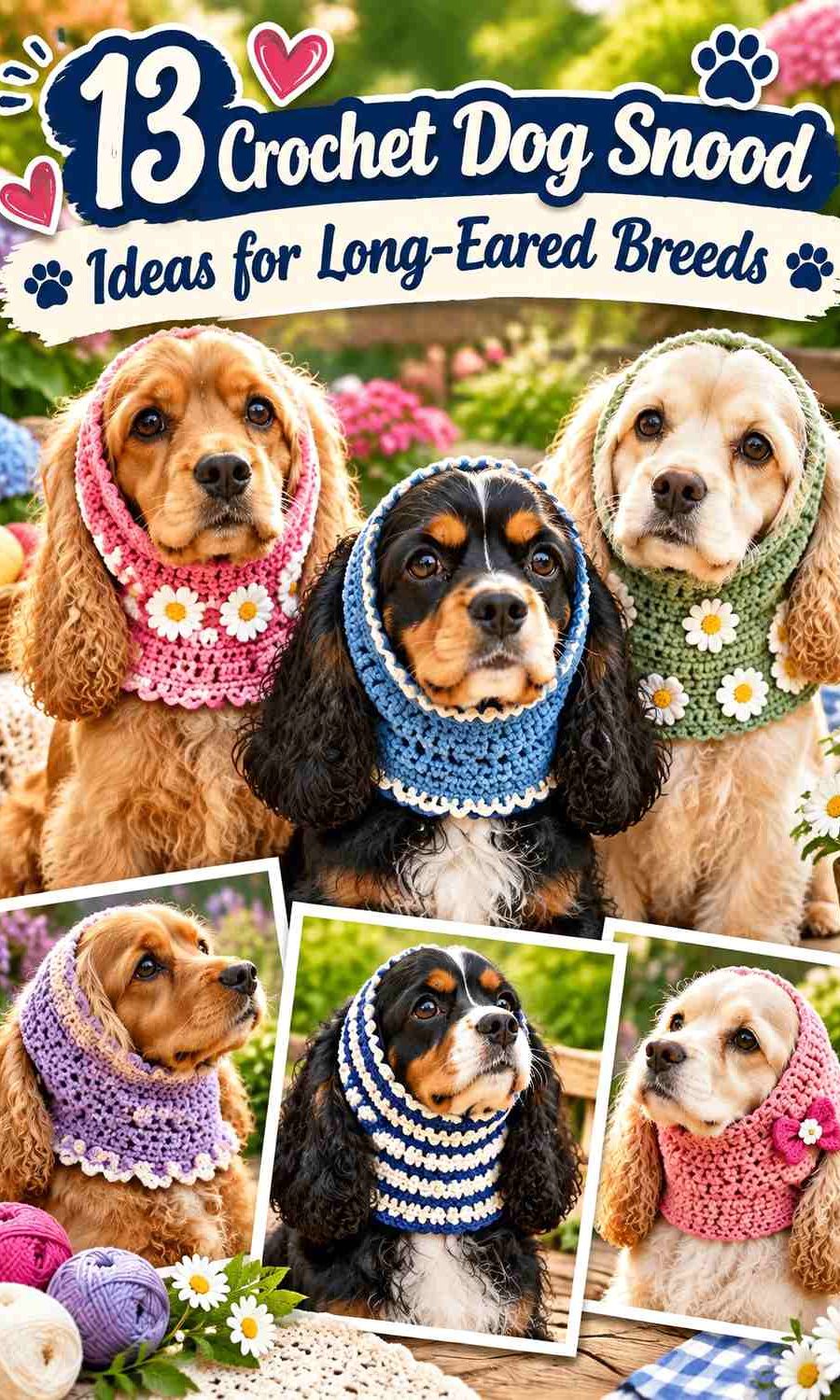
One shade can cover the main tube while a lighter or darker color identifies the face opening. Stripes can run around the middle without making the edges difficult to read, and a contrasting lower band can visually separate the ear-covering portion from the neck area. For long-eared dogs, however, those decorative choices should always come after fit: the snood needs enough room for the ears without slipping forward over the eyes or creating unnecessary pressure.
The tutorial sources below include direct crochet dog snoods and cowls plus several closely related dog headwear tutorials. Where a source demonstrates a bonnet, hat, or balaclava rather than a full long-ear snood, treat it only as a construction reference and use a true snood shape when ear containment is the goal.
Quick List:
- Navy and Cream Crochet Dog Snood for Long-Eared Breeds
- Sage Green and Oatmeal Crochet Dog Snood for Long-Eared Breeds
- Burgundy and Blush Crochet Dog Snood for Long-Eared Breeds
- Deep Teal and Sand Crochet Dog Snood for Long-Eared Breeds
- Lavender and Soft Gray Crochet Dog Snood for Long-Eared Breeds
- Rust and Moss Green Crochet Dog Snood for Long-Eared Breeds
- Powder Blue and Ivory Crochet Dog Snood for Long-Eared Breeds
- Charcoal and Mustard Crochet Dog Snood for Long-Eared Breeds
- Plum and Dusty Rose Crochet Dog Snood for Long-Eared Breeds
- Forest Green and Camel Crochet Dog Snood for Long-Eared Breeds
- Cranberry, Cream, and Rose Crochet Striped Dog Snood for Long-Eared Breeds
- Taupe and Denim Blue Crochet Dog Snood for Long-Eared Breeds
- Soft Peach, Sage, and Cream Crochet Dog Snood for Long-Eared Breeds
Plan a Long-Ear Crochet Snood Around Coverage Before Color
The central tube needs to accommodate the ears without relying on color changes to create its shape. Measure the individual dog rather than assuming two dogs of the same breed need identical snoods. Check the opening around the face, the distance needed to contain the ears, and the lower fit around the neck according to the construction you are following.
Once that shape works, color can reinforce it. Keeping the main ear-containing area in one dominant shade makes the snood easier to understand visually, while contrasting edges show where the face and neck openings begin.
Avoid making an edge visually prominent by also making it tighter simply for decorative effect. Color contrast and fit are separate decisions.
Use Light and Dark Colors to Clarify the Snood Openings
A contrasting face edge can be useful on a long-ear snood because it visually separates the opening from the body of the tube. Cream against navy, oatmeal against sage, or mustard against charcoal all create very different contrast levels.
The lower edge can either repeat that same accent or return to the main color. Repeating the accent at both ends creates a framed look; using it only around the face puts more attention near the dog’s head.
For striped snoods, keep enough solid color near the openings that the edges remain visually separate from the stripe pattern.
Keep Decorative Crochet Details Simple Around Long Ears
Long ears already occupy space inside the snood, so flat color changes are often more practical than adding numerous raised decorations. Texture can still provide interest, but the inside surface and openings should remain appropriate for the individual dog.
If you add buttons, pompoms, ties, flowers, or other separate pieces, consider whether the dog can chew, pull, or catch them. A simpler color-blocked snood can create plenty of visual interest without relying on detachable embellishment.
1. Navy and Cream Crochet Dog Snood for Long-Eared Breeds
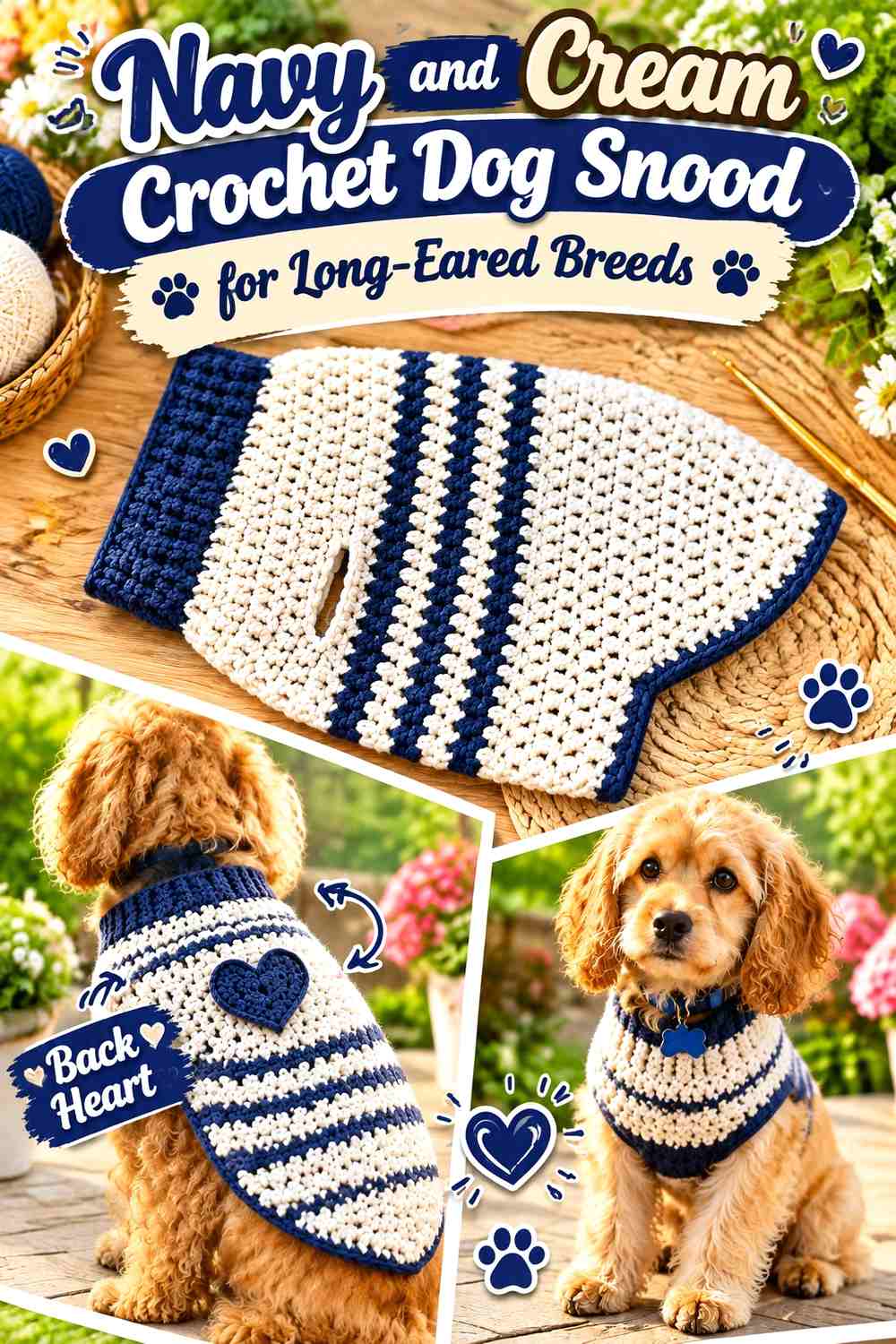
Navy can cover the full ear-containing tube while cream defines the face opening. This gives the snood a strong dark center with a clearly visible lighter edge. Because cream attracts attention immediately against navy, it does not need to appear in large amounts.
Navy Keeps the Long-Ear Crochet Snood Visually Continuous
Use navy across most of the section that contains the ears. A broad uninterrupted field works particularly well when the crochet fabric already has ribbing or another noticeable texture.
Keeping the body navy also means you can adjust the snood’s length for the individual dog without having to reorganize a complicated stripe sequence.
Cream Can Clarify the Navy Face Edge Without Outlining Everything
Place cream around the face opening when you want the front of the snood to be immediately distinguishable. You can repeat a narrower cream section near the neck, but it is not necessary to make both edges equally prominent.
If the cream band becomes too broad, navy can lose its dominant role. Keep the neutral concentrated where it helps define the shape.
Creator Credit: olliehollycrochet
2. Sage Green and Oatmeal Crochet Dog Snood for Long-Eared Breeds
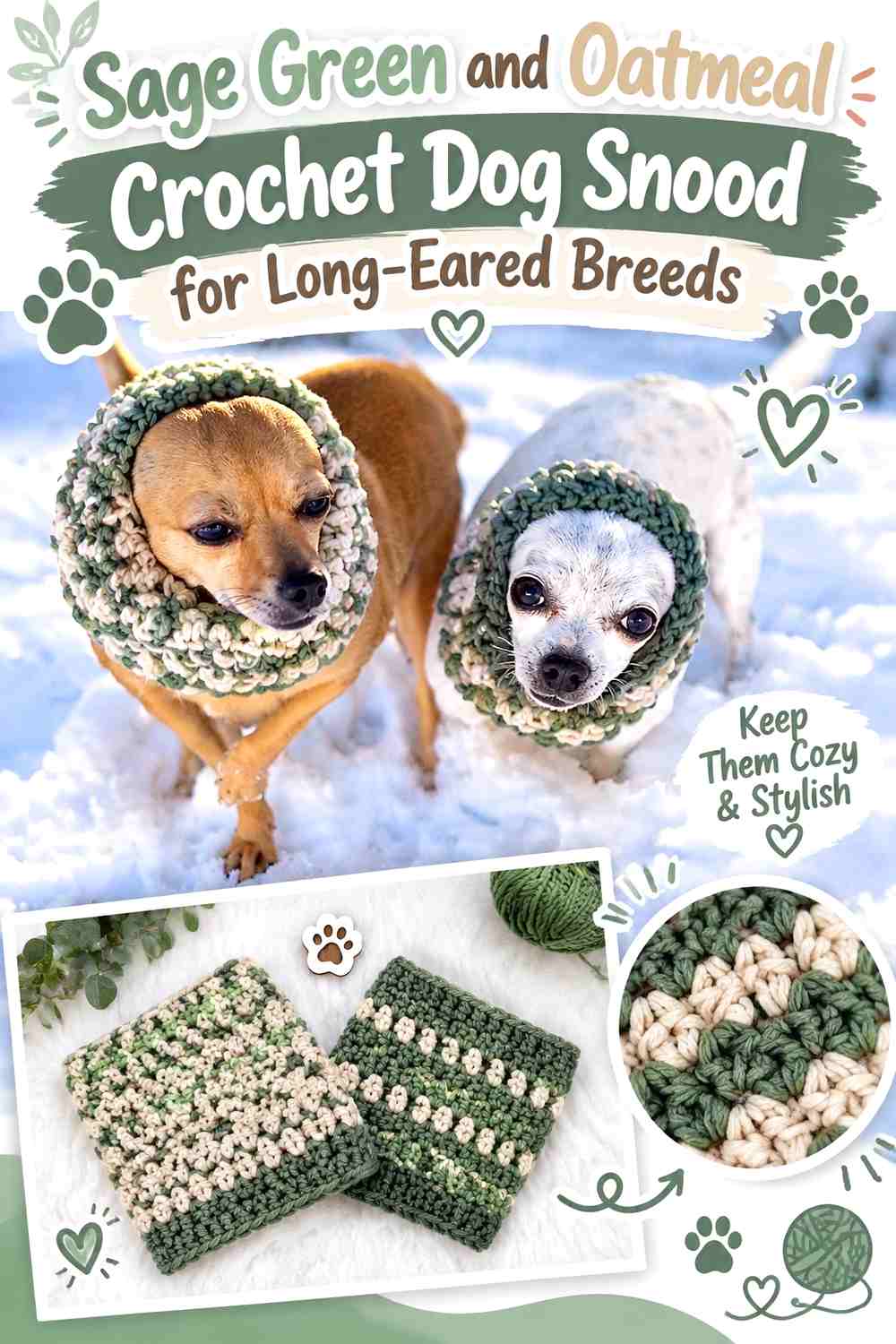
Sage and oatmeal create a quieter palette with less contrast than navy and cream. Sage works well as the main tube color, while oatmeal can identify the face opening and one narrow lower band. Because both colors can be light, check their value difference before relying on a very thin accent.
Sage Green Works Best Across the Main Ear-Covering Snood
Give sage the largest surface so the muted green remains clearly dominant. This also lets stitch texture show without repeated color changes running over the entire ear area.
For a particularly soft look, keep the lower neck edge sage and use oatmeal only around the face.
Oatmeal Needs Enough Separation From Pale Sage Green
Some sage yarns are almost as light as oatmeal. Place the two together before crocheting the final edge and check whether the distinction is strong enough for the effect you want.
If they blend too much, choose a slightly deeper sage rather than introducing an unrelated dark border.
Creator Credit: Sara Sach Crochet Designs
3. Burgundy and Blush Crochet Dog Snood for Long-Eared Breeds
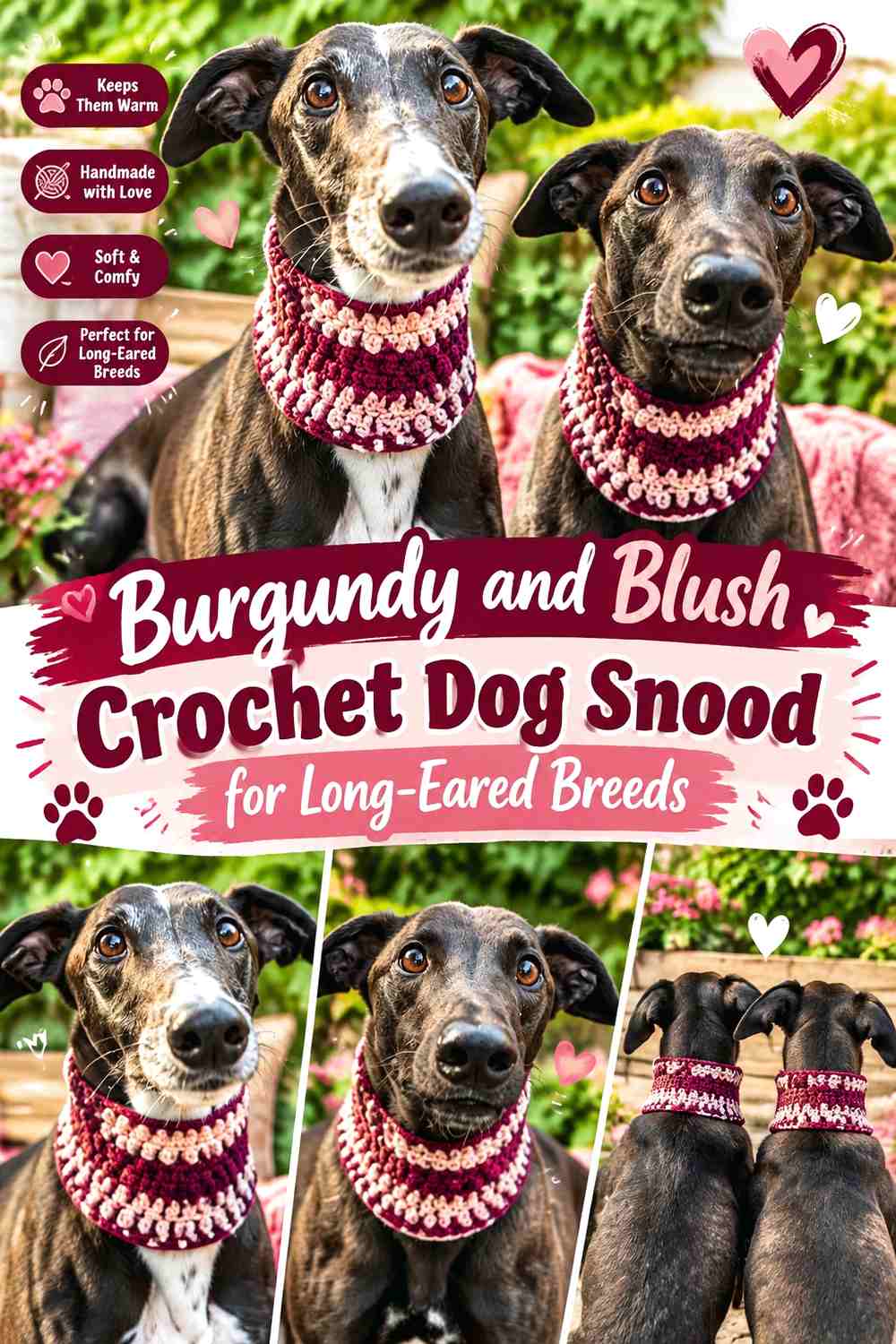
Burgundy provides a deep body color while blush softens the face and neck edges. This is a useful tonal option when you want two related colors rather than a dark shade paired with cream or white.
Burgundy Can Anchor the Long-Ear Crochet Snood Tube
Keep the broad middle section burgundy so the darker color visually contains the full snood. Its depth also creates enough contrast for a relatively narrow blush edge.
If the fabric has pronounced texture, keeping that texture burgundy prevents the lighter trim from competing with it.
Blush Can Soften Both Burgundy Snood Openings
Blush can appear around both ends when you want a clearly framed tube. Make the face edge slightly more prominent if you want the front and back of the snood to be visually easy to distinguish.
For a subtler result, use blush only at the face opening and keep the neck edge burgundy.
Creator Credit: Grey and Crochet
4. Deep Teal and Sand Crochet Dog Snood for Long-Eared Breeds
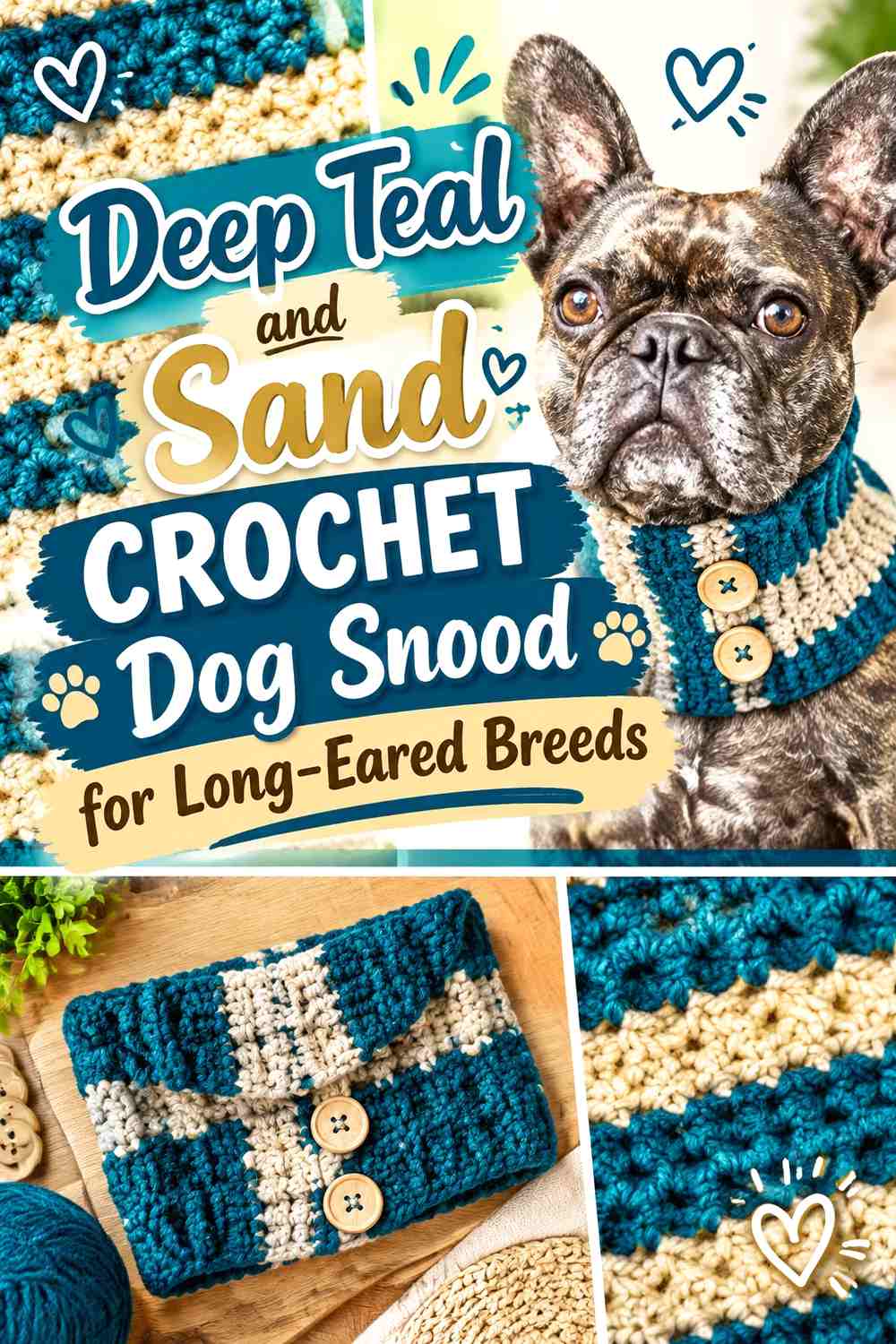
Deep teal gives the snood a dark, saturated body while sand provides a warm neutral contrast. Compared with white or cream, sand keeps the transition softer and less graphic.
Deep Teal Can Carry Texture Across the Ear-Covering Snood
Use teal through the main tube when you want crochet texture to remain visually connected from the face edge to the neck section. A continuous dark field also makes a lighter opening especially easy to see.
Avoid adding frequent sand stripes if the texture itself is already a major feature.
Sand Can Warm the Deep Teal Snood Face Opening
A sand-colored face band provides clear contrast without creating the cold appearance that a bright white accent might produce beside teal.
Repeat a small amount of sand near the lower edge if the face band looks isolated, but keep teal dominant through most of the snood.
Creator Credit: Totally Fierce Crochet Channel
5. Lavender and Soft Gray Crochet Dog Snood for Long-Eared Breeds
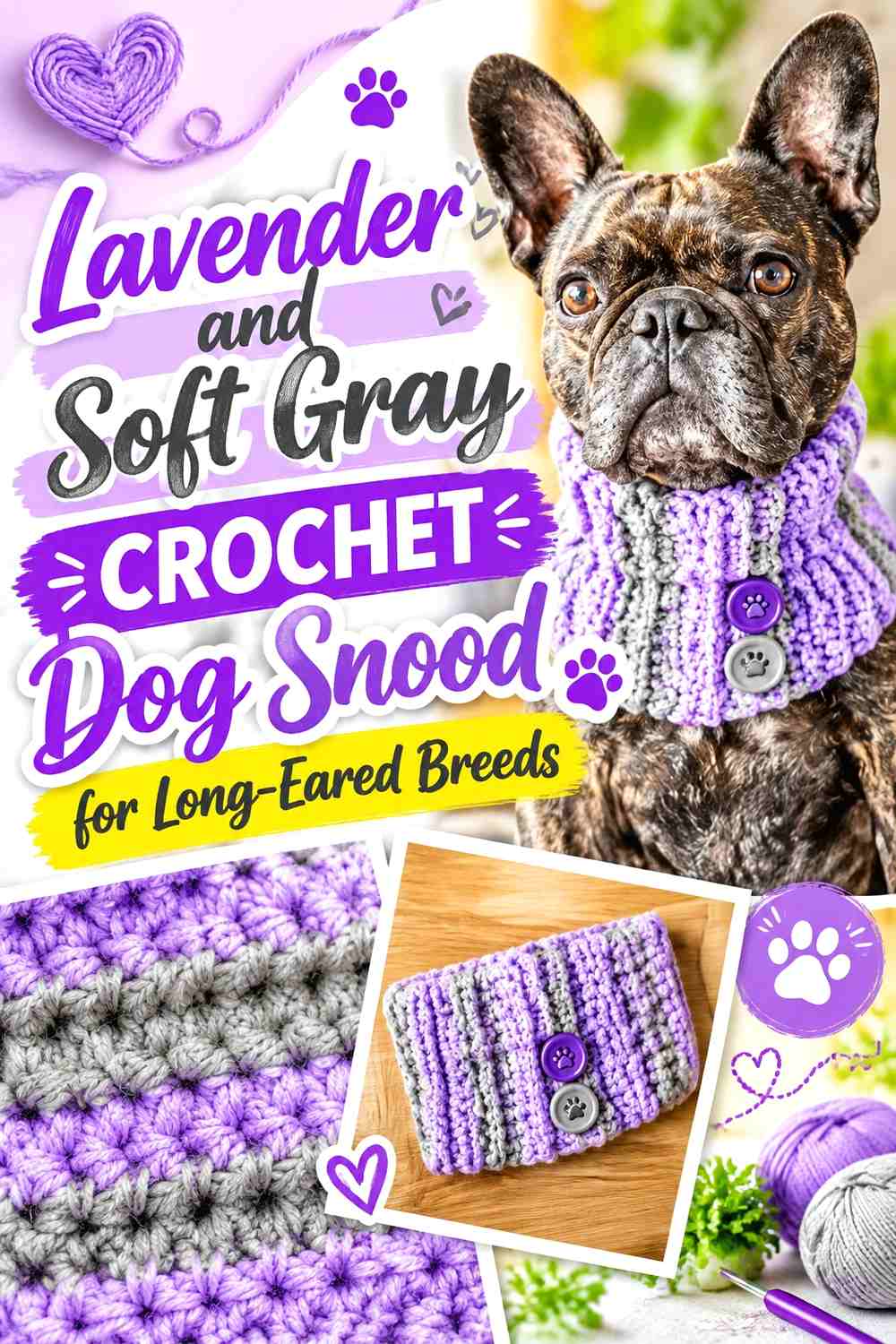
Lavender and gray create a muted two-color snood that can emphasize texture more than dramatic contrast. Make lavender the main body color and use soft gray to separate one or both openings.
Lavender Should Cover Most of the Long-Ear Crochet Snood
A large lavender field keeps the color recognizable instead of allowing gray trim to turn the accessory primarily neutral. This works especially well when the tube has a ribbed or textured surface.
If you want a more tonal effect, choose gray with similar lightness rather than making it much darker.
Soft Gray Can Give Lavender Snood Edges Quiet Definition
Gray can mark the face opening without producing a sharp ring of contrast. A second gray band at the neck can create symmetry, but it does not need to be the same width.
When the gray and lavender are very close in value, a broader edge may show the color difference better than a narrow line.
Creator Credit: Last Minute Laura
6. Rust and Moss Green Crochet Dog Snood for Long-Eared Breeds

Rust and moss create an earthy palette in which neither color needs to look bright. Rust can dominate the ear-containing area, while moss works at the face edge and a narrower lower repeat.
Rust Gives the Long-Ear Crochet Snood a Warm Main Field
Keep rust through most of the tube rather than alternating equal rust and green bands. This gives the snood one obvious lead color and keeps the contained-ear area visually simple.
A solid rust body is also useful if the crochet surface contains substantial texture.
Moss Green Can Ground the Rust Snood Openings
Moss is dark enough to define a lighter rust but muted enough to preserve the earthy color direction. Use it at the face edge where the contrast is most useful.
If your rust and moss yarns appear equally dark, increase the size of the green band or select a slightly lighter moss when clearer separation is wanted.
Creator Credit: OkieGirlBling’n’Things
7. Powder Blue and Ivory Crochet Dog Snood for Long-Eared Breeds
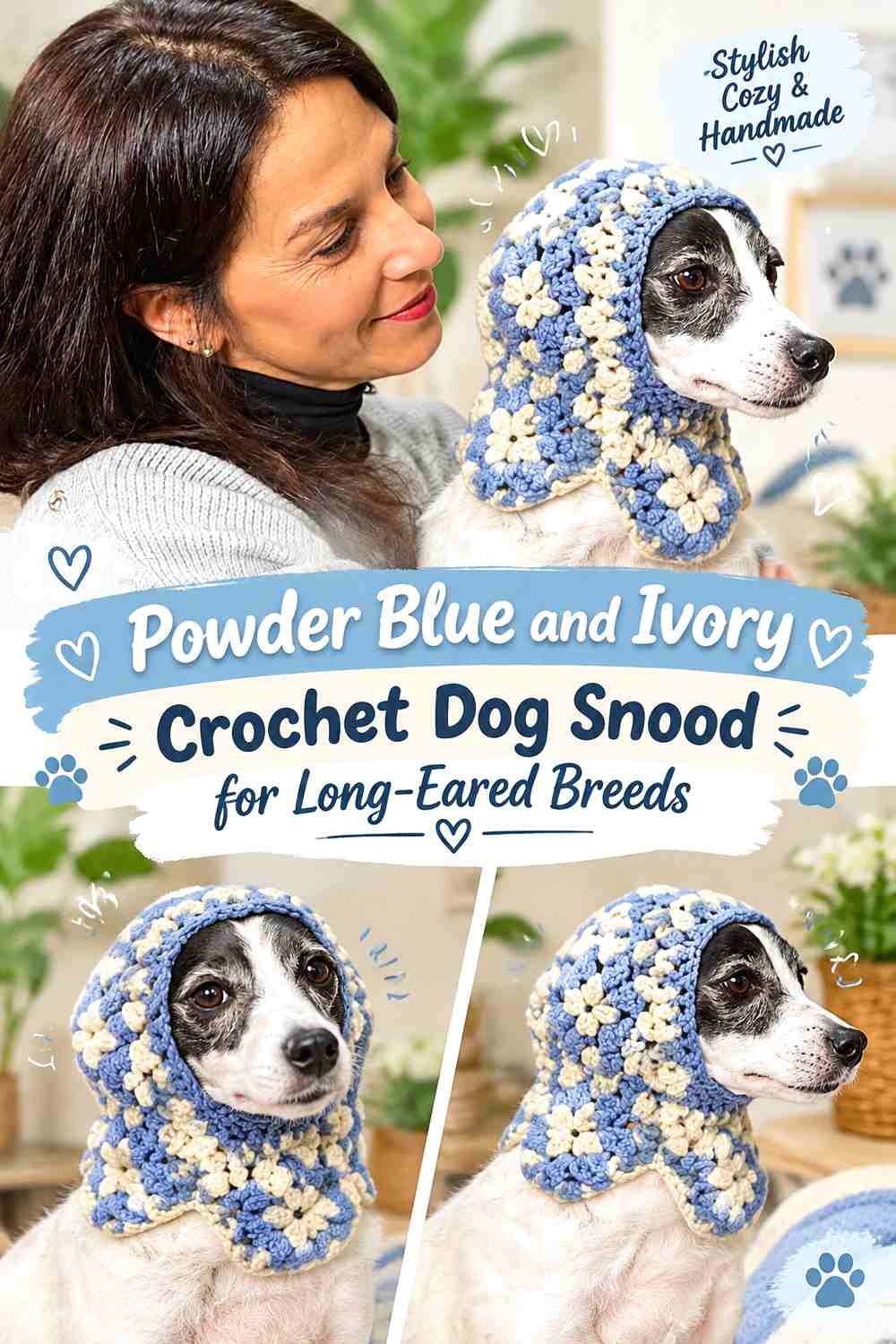
Powder blue and ivory create a very light snood, so color separation depends on choosing a blue that remains clearly distinguishable from the neutral. Powder blue can lead throughout the tube while ivory gives the face opening a clean finish.
Powder Blue Needs Enough Depth Beside an Ivory Snood Edge
An extremely pale blue may merge with ivory. Check the yarns together before making the edge, particularly if the opening band will be narrow.
Choosing a slightly deeper powder blue usually preserves the light palette better than adding a third dark color.
Ivory Can Keep the Powder Blue Long-Ear Snood Light at the Face
Use ivory around the face opening and keep the rest of the head-covering portion predominantly blue. This creates a clean visual frame without breaking the tube into multiple stripes.
If ivory is repeated at the neck, make that band smaller when you want the front opening to remain the stronger focal edge.
Creator Credit: frainodi.crochet
8. Charcoal and Mustard Crochet Dog Snood for Long-Eared Breeds
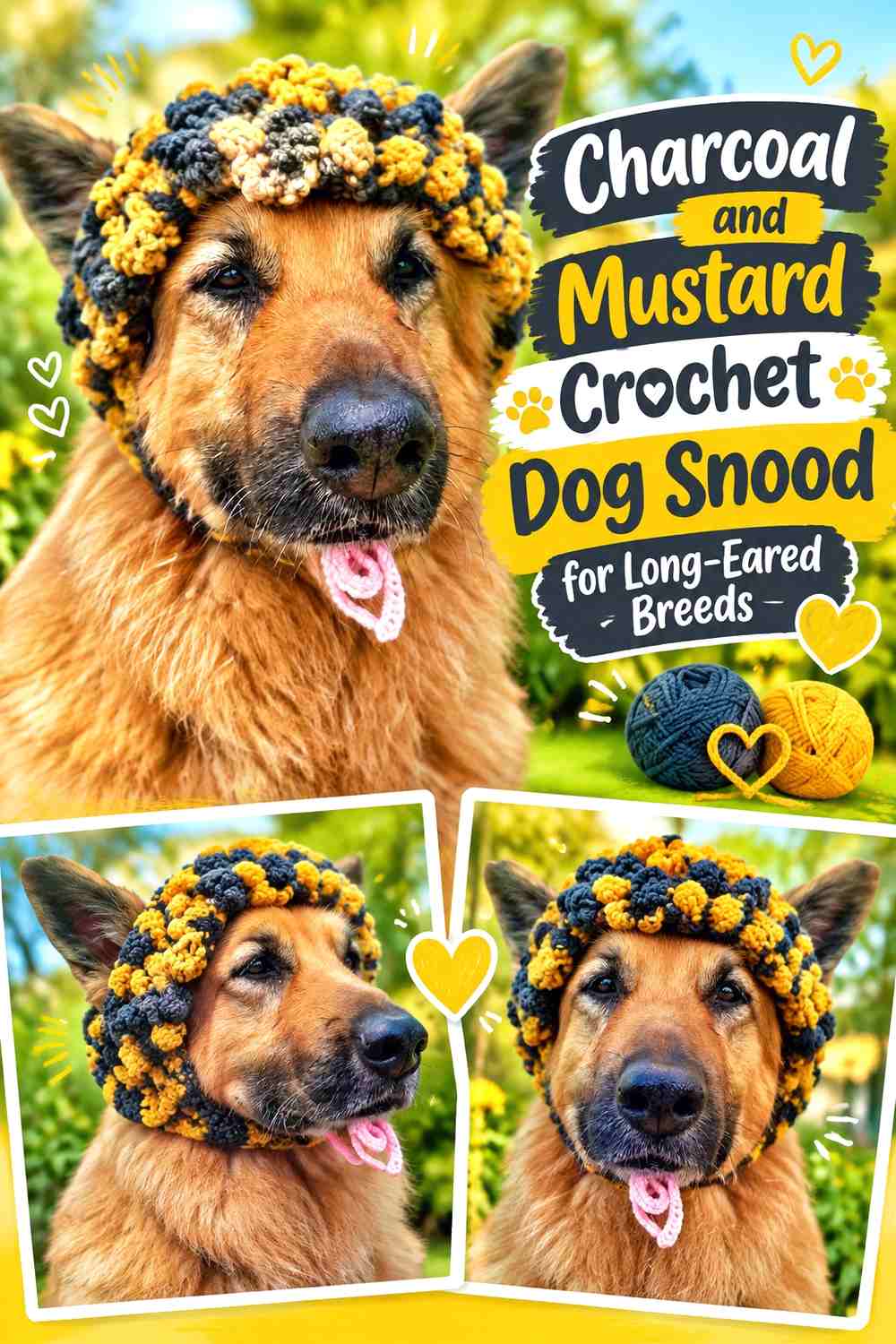
Charcoal and mustard provide the strongest contrast in this collection. Charcoal can cover almost the entire snood while mustard marks the face opening or appears as one controlled stripe.
Charcoal Should Dominate the Mustard Long-Ear Snood
Mustard attracts attention quickly, so it needs relatively little surface. Keep most of the tube charcoal and allow the yellow accent to identify a specific feature instead of appearing everywhere.
This distribution is particularly useful when you want the face edge to be visually unmistakable.
Mustard Works Better as a Charcoal Snood Accent Than an Equal Block
A mustard face edge plus one narrow lower repeat can be enough. Several broad mustard bands may compete with the dark body and turn the design into an evenly striped snood.
If the crochet texture is important, keep the most detailed portion charcoal and place mustard on simpler edges.
Creator Credit: thisfairymade
9. Plum and Dusty Rose Crochet Dog Snood for Long-Eared Breeds

Plum with dusty rose creates a dark-to-light tonal relationship within a similar color family. Plum can contain the ears visually while dusty rose softens the openings.
Plum Gives the Long-Ear Crochet Snood Its Darkest Anchor
Use plum through the broad middle area so it remains the first color noticed. This gives dusty rose enough contrast to work on relatively narrow edges.
Avoid interrupting the plum body with many rose stripes if you want a cleaner tonal snood.
Dusty Rose Can Connect the Plum Face and Neck Edges
Using dusty rose at both ends creates a framed look and makes the full tube easy to read. If the snood is long, this repeated light color can also visually connect the two openings.
For a less symmetrical result, use a deeper plum neck band and reserve rose for the face.
Creator Credit: Dream9Design
10. Forest Green and Camel Crochet Dog Snood for Long-Eared Breeds

Forest green supplies a deep natural base while camel introduces a warmer edge. The colors are strong enough to remain distinct without creating the high contrast of black and yellow.
Forest Green Can Cover the Full Ear-Containing Snood Tube
A broad green body creates a stable field and lets camel remain clearly secondary. This is useful when the snood is longer to accommodate substantial ears because the dominant color keeps the added length visually unified.
If the body contains texture, continuing green through that section also keeps the stitch pattern readable.
Camel Can Define the Forest Green Snood Face Opening
Camel works particularly well at the face because the warmer color contrasts with the darker green without appearing extremely bright.
A smaller camel band at the neck can repeat the accent, but avoid adding camel to every texture change in the middle.
Creator Credit: Victoria Palacio
11. Cranberry, Cream, and Rose Crochet Striped Dog Snood for Long-Eared Breeds
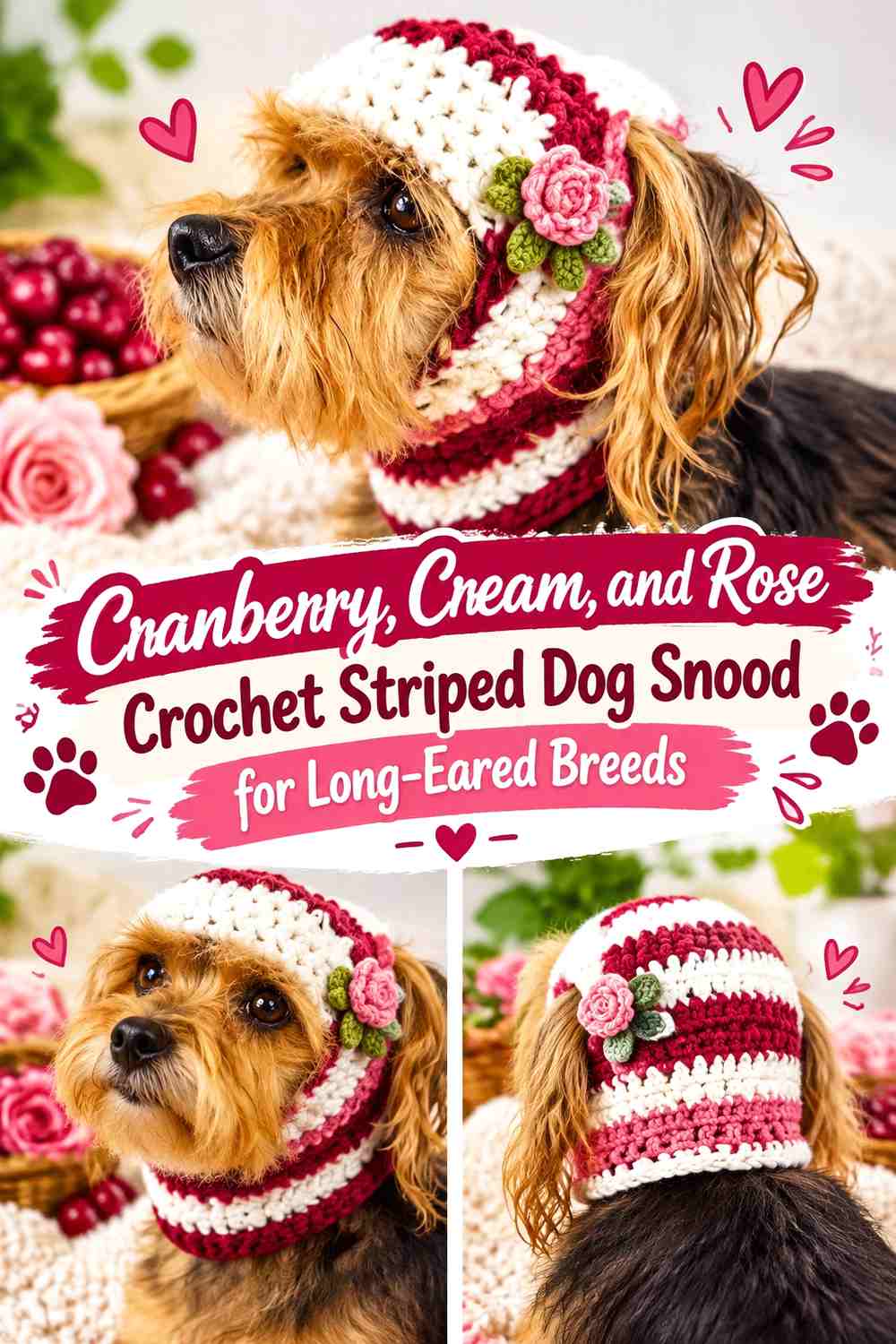
A striped snood introduces more color changes, so the opening edges should remain easy to distinguish from the central pattern. Cranberry can act as the dominant stripe color, cream can create separation, and muted rose can soften the transition.
Cranberry Should Be the Widest Color in the Striped Long-Ear Snood
Make cranberry bands visually larger or more frequent if you want the snood to remain red-led. Equal amounts of cranberry, cream, and rose can make the palette look less organized.
Keeping a solid cranberry section near one opening also gives the eye a break from the stripe sequence.
Cream Can Separate Cranberry and Rose Snood Stripes
Cranberry and rose can sit relatively close in hue, so cream is useful between selected bands when the two reds begin to merge.
Do not place cream between every stripe automatically. Strategic separation produces more variation and prevents the neutral from becoming the dominant color.
Creator Credit: Tejiendo Con Candy
12. Taupe and Denim Blue Crochet Dog Snood for Long-Eared Breeds
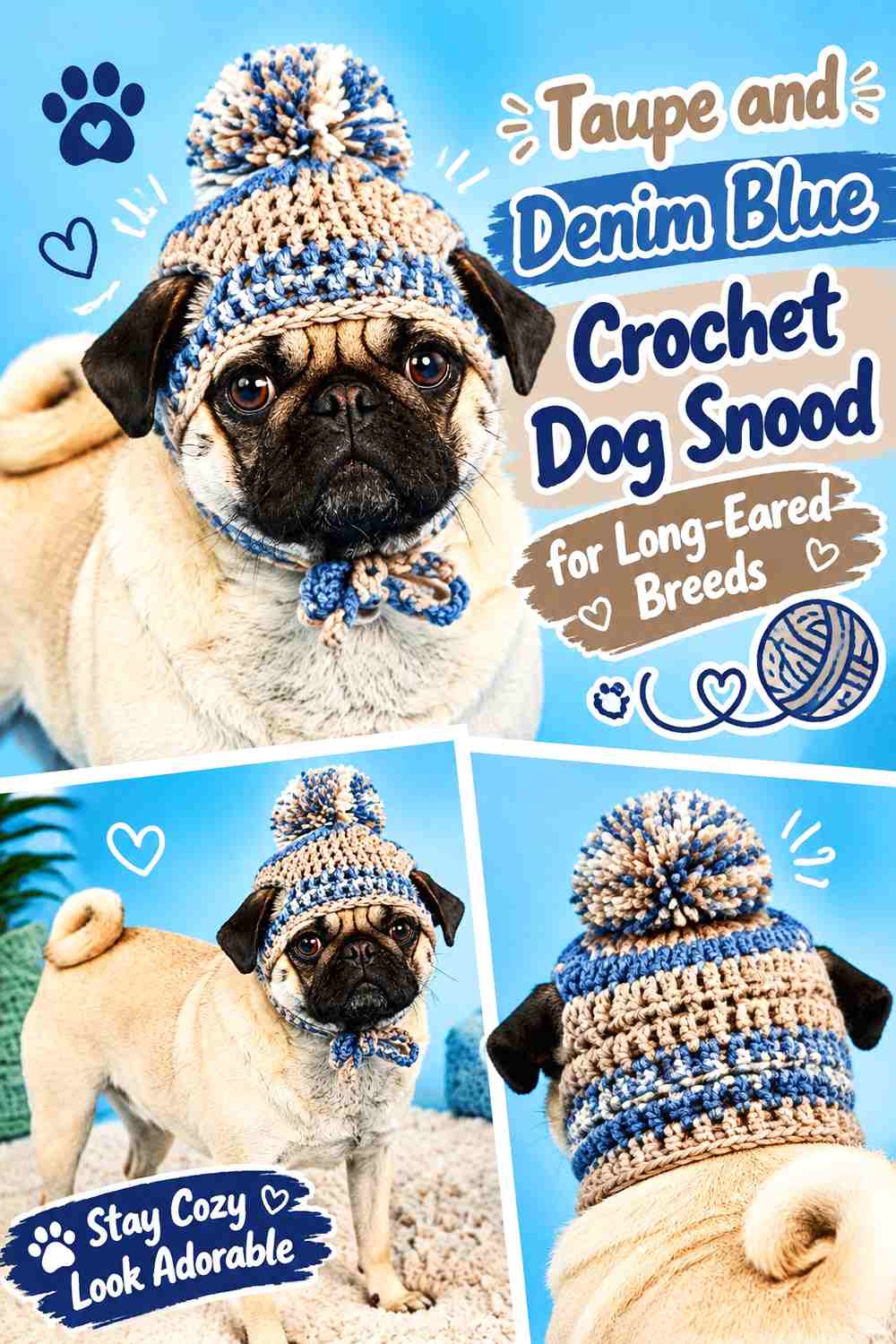
Taupe and denim blue create a subdued neutral-and-color combination. Taupe can cover the main ear area, while denim marks the face opening and one broad central stripe.
Taupe Keeps the Long-Ear Crochet Snood Neutral-Led
Using taupe for most of the tube creates a quiet base that does not compete strongly with the dog’s coat. Denim can then act as the identifying contrast rather than an equal second body color.
If the taupe yarn has noticeable texture, keeping most of that surface one color also improves stitch visibility.
Denim Blue Can Break Up a Long Taupe Snood
For a longer snood, one broad denim section through the middle can create visual structure without turning the accessory into many narrow stripes.
Repeat denim around the face only if enough taupe remains between the two blue areas for them to read as separate accents.
Creator Credit: Andrea Quinteros
13. Soft Peach, Sage, and Cream Crochet Dog Snood for Long-Eared Breeds
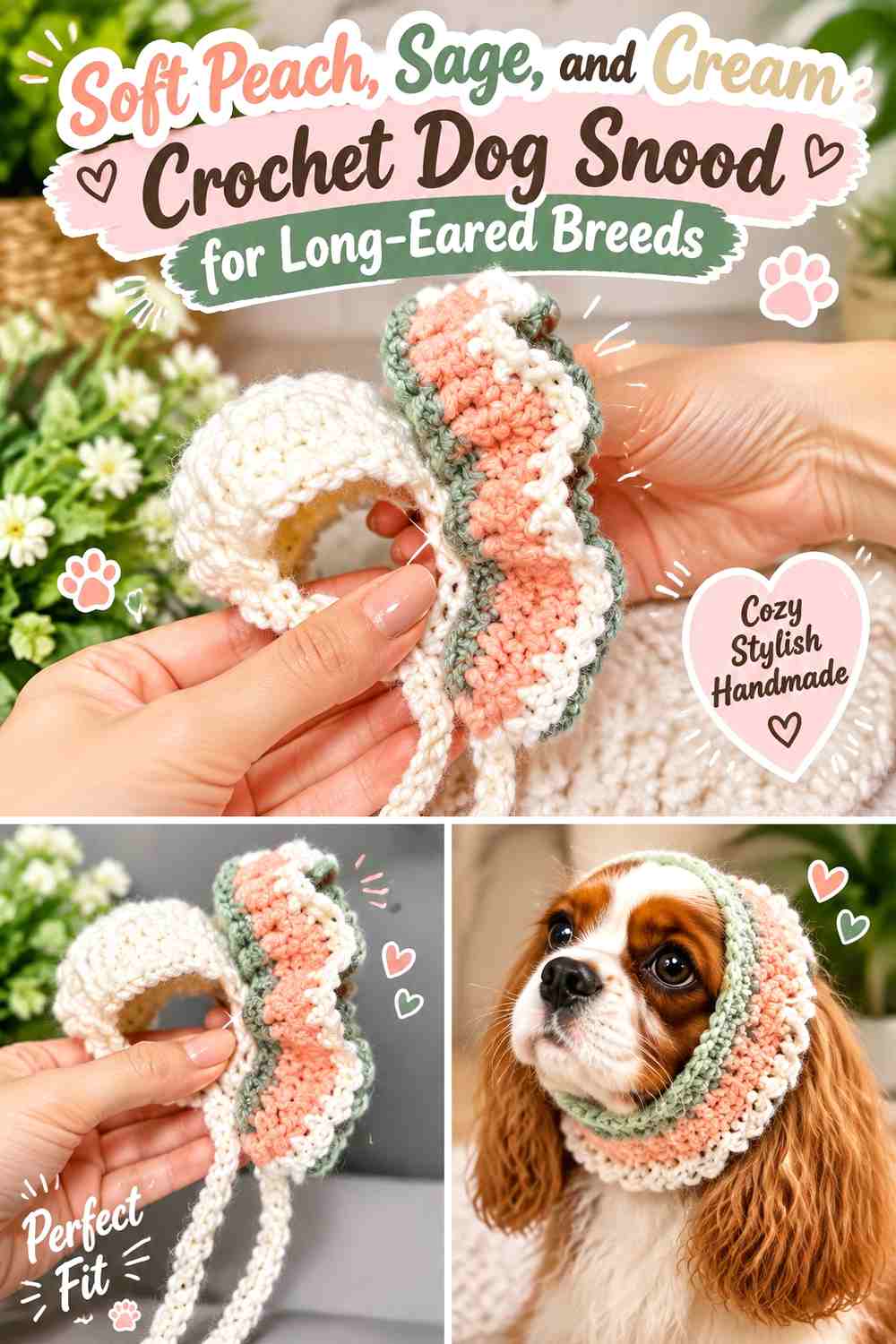
Soft peach, sage, and cream create the lightest multicolor palette in the collection. Peach can remain dominant throughout the ear-containing tube, sage can distinguish the neck edge, and cream can finish the face opening. Giving all three colors different jobs keeps the snood from looking randomly striped.
Soft Peach Should Carry Most of the Long-Ear Crochet Snood
A broad peach middle gives the accessory one clear identity before sage and cream are introduced. This is especially important because all three colors may be relatively pale.
If the snood is longer, continue peach through most of that additional length rather than adding extra bands solely to fill space.
Cream and Sage Should Define Different Soft Peach Snood Edges
Use cream at the face opening for the lightest transition and sage near the neck for a gentle colored finish. Separating the two supporting shades by the peach body prevents them from competing.
If all three shades are extremely similar in value, deepen the sage slightly so the neck edge remains visually distinct.
Creator Credit: Crochet It
Which Crochet Dog Snood Color Scheme Works Best for Long-Eared Breeds?
For clear opening definition, navy and cream, charcoal and mustard, or forest green and camel provide the strongest contrast. These palettes make it easy to keep the face edge visually separate from the ear-containing tube.
Sage and oatmeal, lavender and gray, or powder blue and ivory create gentler transitions. With these lighter combinations, checking value contrast before crocheting the full snood becomes more important.
Burgundy and blush or plum and dusty rose work well when you prefer tonal color families. Cranberry, cream, and rose provides the clearest striped direction, while peach, sage, and cream offers a light three-color alternative without requiring many narrow bands.
Conclusion
The most useful color plan for a long-ear dog snood starts with the tube itself. Give the main ear-containing area one dominant color, then decide whether the face and neck edges should contrast strongly or blend quietly into the body.
Choose navy and cream or charcoal and mustard when you want obvious edge definition. Sage and oatmeal, powder blue and ivory, or lavender and gray create softer transitions. For a warmer look, rust and moss, forest green and camel, or burgundy and blush give you deeper color without requiring complicated patterning.
Color should never compensate for poor fit. Measure the individual dog, make sure the ears have appropriate room inside the snood, keep the face unobstructed, and use the credited tutorial that most closely matches the type of head and neck coverage you need.
Frequently Asked Questions
What should I measure before crocheting a snood for a long-eared dog?
Use the measurements required by the specific snood construction you choose rather than relying only on breed. The important checkpoints typically relate to the opening around the head or face, the space needed to accommodate the ears, and the fit around the neck.
Should a long-ear crochet dog snood be tight?
It should stay in position without being unnecessarily restrictive. A snood that slips forward can interfere with the face, while one that is too tight may put unwanted pressure around the head, ears, or neck. Follow the tutorial’s fitting method and test the finished accessory on the individual dog.
Which colors make the face opening easiest to see?
Strong light-dark combinations such as cream with navy or mustard with charcoal create clear boundaries. If you prefer sage with oatmeal or another low-contrast palette, make the edge broad enough for the color change to remain visible.
Can I crochet stripes on a snood for a long-eared breed?
Yes. Keep the stripe sequence mainly in the central tube and leave the face and neck edges visually distinct. Giving one stripe color more visual weight also helps prevent a compact snood from looking overly busy.
Should the face and neck edges be the same color?
They can be, but they do not have to be. Matching edges frame the snood symmetrically. Using different colors—such as cream at the face and sage at the neck—can make the front and lower openings easier to distinguish visually.
Can I add flowers, pompoms, buttons, or other decorations to a dog snood?
You can use decoration cautiously, but flat colorwork is often simpler for a functional long-ear snood. Any attached element should be secure and positioned where it will not obstruct the dog’s face or encourage chewing or snagging.
Can a dog hat or bonnet tutorial be turned into a long-ear snood?
Only when the underlying construction can provide the required ear and neck coverage without compromising fit. A short hat or bonnet is not automatically a functional long-ear snood, so use the direct snood and cowl tutorials when ear containment is the primary goal.