Pumpkin-themed crochet dog sweaters can go far beyond one bright orange body with a green collar. Pumpkin orange can dominate the back, appear only as a motif, shift toward rust or terracotta, or sit beside cream, sage, chocolate brown, burgundy, or charcoal for very different fall looks.

The shape of a dog sweater provides several natural places to organize those colors. The back can carry the main pumpkin shade, the collar can suggest a green stem, edging can introduce brown or cream, and a centered pumpkin motif can make a neutral sweater feel seasonal without turning the entire garment orange.
The tutorials credited below support the crochet dog-sweater construction concept. The pumpkin palettes and color placements are editorial adaptations, so the credited creators should not be assumed to have used these exact fall color schemes.
Quick List:
- Pumpkin Orange and Forest Green Crochet Dog Sweater
- Burnt Orange and Cream Crochet Pumpkin Dog Sweater
- Terracotta and Sage Crochet Pumpkin Dog Sweater
- Rust and Olive Green Crochet Pumpkin Dog Sweater
- Amber Orange and Chocolate Brown Crochet Pumpkin Dog Sweater
- Muted Pumpkin Orange and Oatmeal Crochet Dog Sweater
- Copper Orange and Deep Teal Crochet Pumpkin Dog Sweater
- Pumpkin Orange, Mustard, and Brown Crochet Dog Sweater
- Cinnamon Orange and Moss Green Crochet Pumpkin Dog Sweater
- Peachy Pumpkin, Cream, and Sage Crochet Dog Sweater
- Deep Pumpkin Orange and Burgundy Crochet Dog Sweater
- Pumpkin Orange and Charcoal Crochet Dog Sweater
- Pumpkin Orange and Navy Crochet Dog Sweater
- Dusty Orange and Taupe Crochet Pumpkin Dog Sweater
- Pumpkin Orange, Gold, and Forest Green Crochet Dog Sweater
- Cream and Pumpkin Orange Motif Crochet Dog Sweater
- Pumpkin Orange, Rust, Sage, and Cream Patchwork Crochet Dog Sweater
Decide How Much Pumpkin Orange the Crochet Dog Sweater Really Needs
A sweater does not need to be completely orange to communicate a pumpkin theme. Covering most of the back in pumpkin orange produces the clearest costume-like direction, especially when green appears at the neckline. Using orange only on a back motif creates a more restrained fall sweater that can keep cream, brown, or another neutral as the main field.
Think about visual hierarchy before changing colors. On a small dog sweater, equal amounts of orange, green, cream, and brown can divide the garment into many competing sections. One dominant shade with one or two supporting colors usually makes the pumpkin idea easier to recognize.
Use Green, Cream, and Brown to Define Pumpkin Orange
Green has the most obvious role when it is concentrated around the neckline, where it can suggest a pumpkin stem without needing a literal three-dimensional stem. Forest green creates a traditional, stronger contrast; sage and olive make the same idea more muted.
Cream can separate pumpkin orange from another dark fall shade or bring attention to edging. Brown works well when you want the palette to feel earthier and can visually frame orange without introducing another vivid color.
The exact shades matter less than their relationships. If two yarns look distinct in the skein but nearly identical in lightness, small motifs or narrow borders may disappear once crocheted.
Keep Pumpkin Details Compatible With the Dog Sweater
Color placement should work with the sweater rather than interfere with fit. Keep decorative pumpkin motifs concentrated on areas such as the back where they can be seen without affecting leg openings, the chest, or the underside.
Texture can create pumpkin character without added pieces. Vertical-looking ribbing or raised surface detail may suggest pumpkin ridges when worked in orange, while a green collar provides the stem reference. If you add leaves, stems, buttons, or other separate embellishments, secure them carefully and avoid loose pieces where a dog may chew or snag them.
1. Pumpkin Orange and Forest Green Crochet Dog Sweater

Pumpkin orange can cover nearly the entire body while forest green is concentrated at the neckline, creating the most direct pumpkin-inspired palette in the collection. Keeping orange continuous across the back also gives crochet texture enough room to suggest natural pumpkin ridges without requiring extra colors. Green should remain secondary so the sweater reads as an orange pumpkin rather than an equal orange-and-green garment.
Pumpkin Orange Should Dominate the Crochet Dog Sweater Back
Use pumpkin orange across the largest uninterrupted area, particularly the back. This gives the seasonal color enough visual weight to remain recognizable even after green edging or collar details are introduced.
If the body already contains strong ribbing or raised texture, keeping that area solid orange also prevents color changes from competing with the stitch definition.
Forest Green Works Best Near the Pumpkin Orange Neckline
A forest-green collar creates an intuitive stem reference because it sits at the top of the orange body. Repeat a small amount of green elsewhere only if the neckline looks disconnected.
Avoid outlining every leg opening and lower edge in green automatically. Concentrating the darkest secondary color near the neck makes the pumpkin idea cleaner.
Creator Credit: TwinStarHooks 💫
2. Burnt Orange and Cream Crochet Pumpkin Dog Sweater
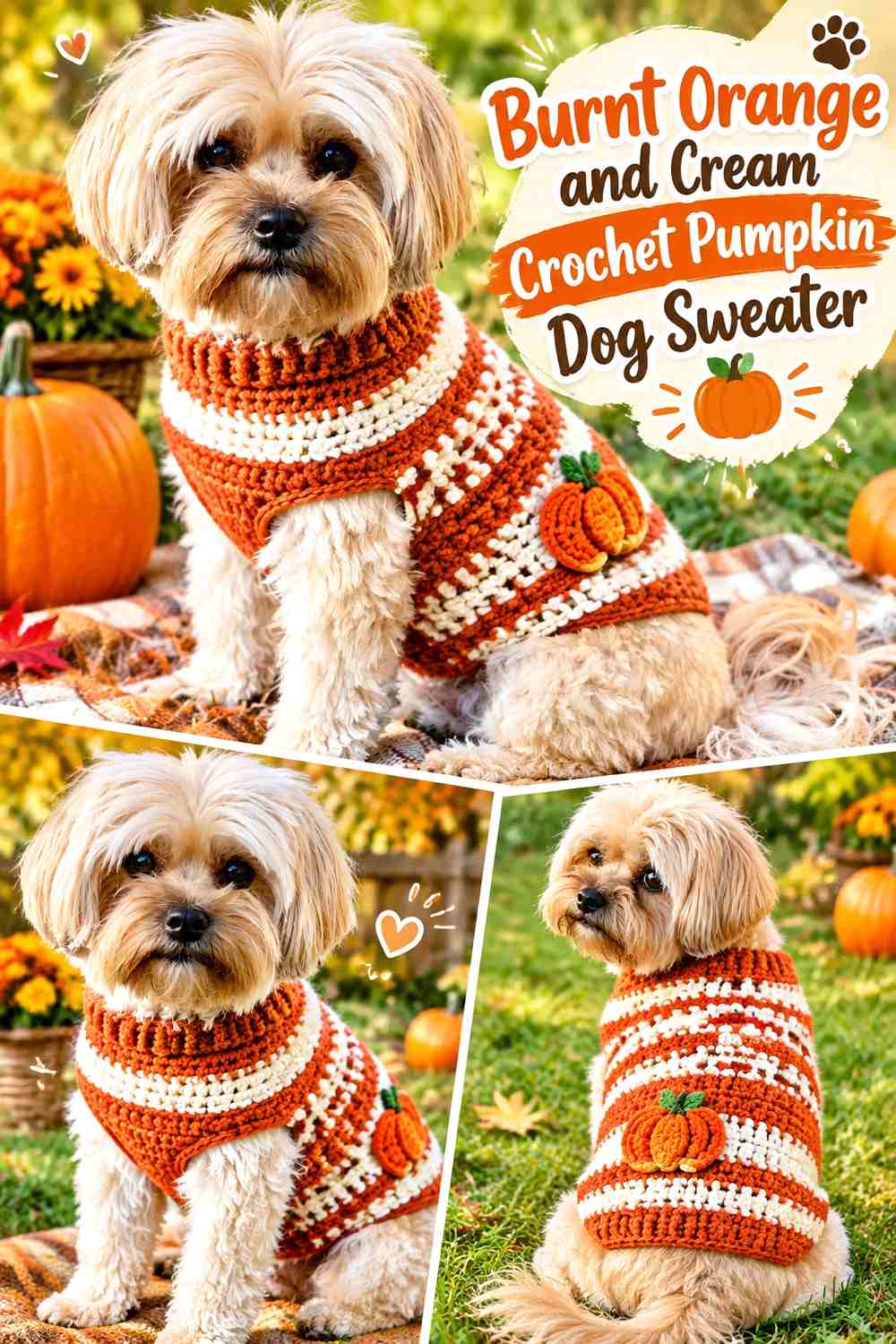
Burnt orange creates a more subdued pumpkin body than vivid orange, while cream introduces enough lightness to separate the collar, edging, or selected back details. This palette works particularly well when you want the sweater to feel autumnal without depending heavily on green.
Burnt Orange Can Carry the Pumpkin Dog Sweater Texture
Keep the main textured surface burnt orange so ribbing, cables, or other raised stitches remain visually connected. A larger orange field also stops cream from making the sweater appear primarily neutral.
If your burnt orange is very dark, the texture may benefit from natural light-and-shadow variation without needing additional stripe colors.
Cream Can Lighten the Burnt Orange Pumpkin Edges
Use cream at the collar edge, lower border, or around a pumpkin motif if the body needs definition. The lighter shade can separate overlapping design areas without adding another strong autumn hue.
Cream works best here as a supporting color. Covering the collar, chest, borders, and several stripes in cream may shift too much visual weight away from burnt orange.
Creator Credit: Crochet It
3. Terracotta and Sage Crochet Pumpkin Dog Sweater
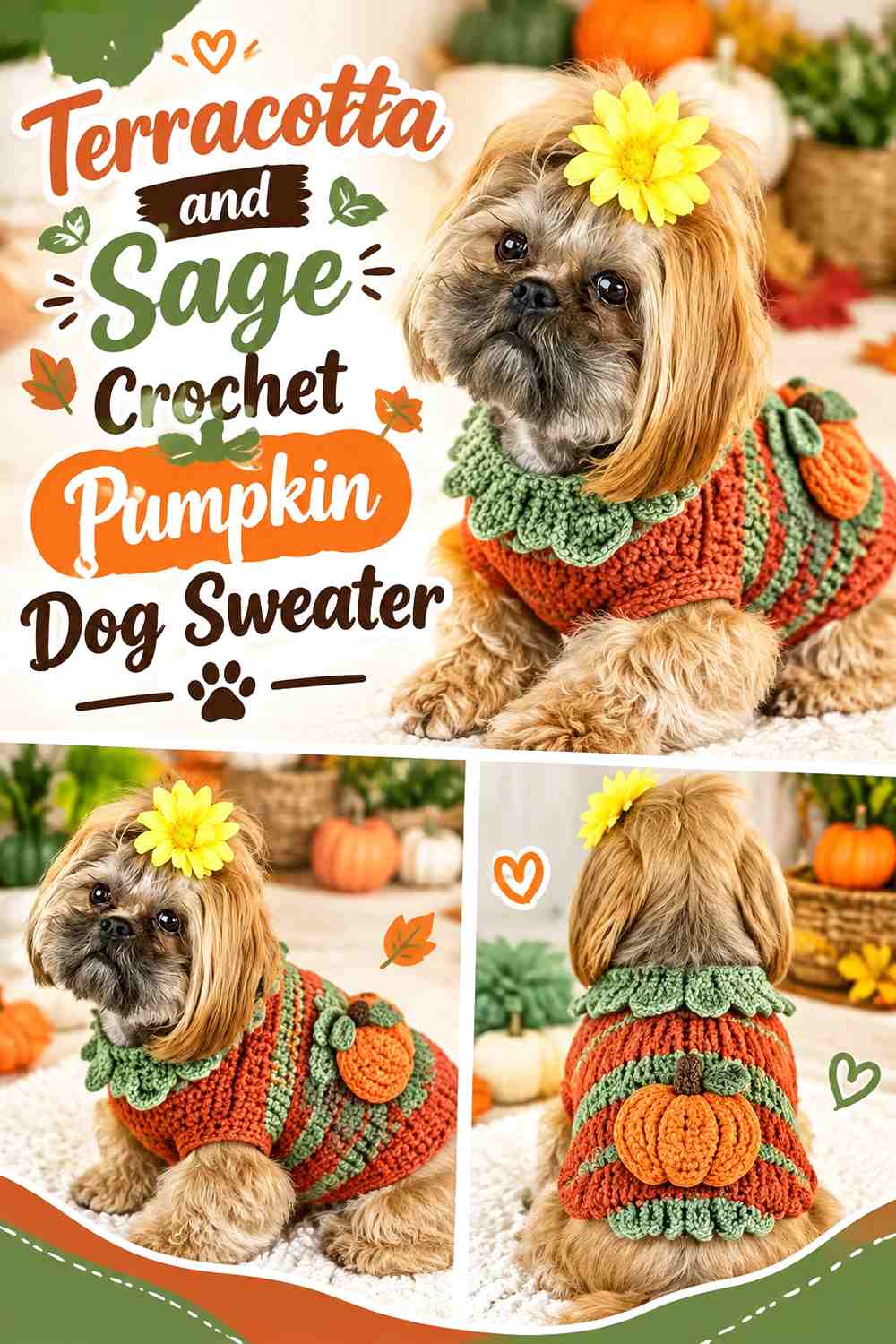
Terracotta and sage soften the traditional pumpkin palette. Terracotta can lead across the body, while muted sage gives the collar or edging a plant-inspired contrast that feels quieter than dark forest green. The combination is useful for a pumpkin theme that leans earthy rather than costume-like.
Terracotta Makes a Softer Pumpkin Orange Dog Sweater
Give terracotta most of the back and chest area so its muted warmth remains the defining color. Because terracotta is less vivid than classic pumpkin orange, using it in small amounts may weaken the pumpkin reference.
A continuous terracotta body also suits subtle crochet texture because the color does not overpower the surface pattern.
Sage Green Keeps Terracotta Pumpkin Details Muted
Place sage around the neckline or one defined border. Its softened character supports terracotta without creating the sharp orange-green split of a traditional Halloween palette.
If terracotta and sage are similar in value, avoid relying on very narrow sage lines. A broader collar will show the difference more successfully.
Creator Credit: Crochet Guru
4. Rust and Olive Green Crochet Pumpkin Dog Sweater
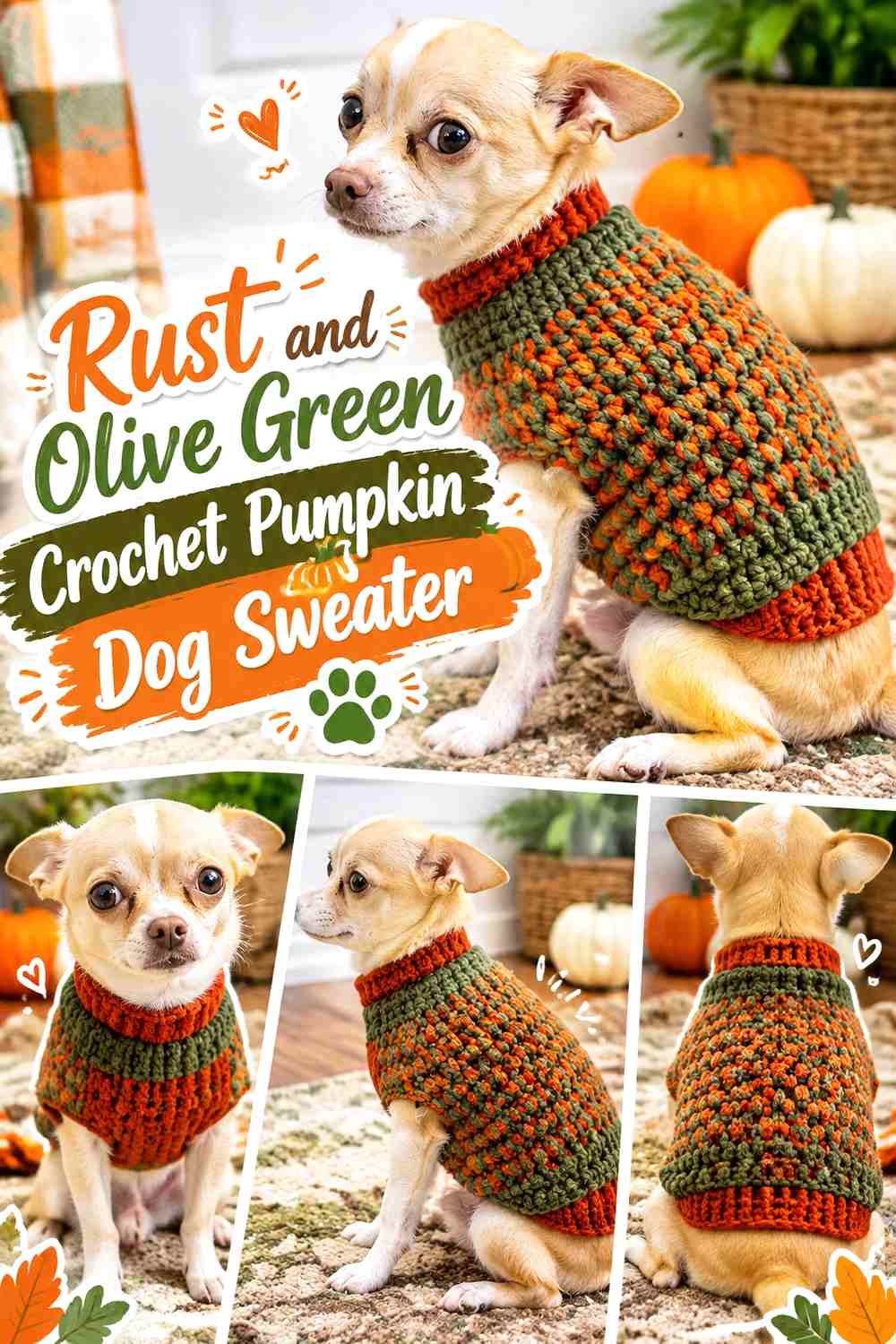
Rust and olive create one of the deepest, most natural-looking fall palettes in the collection. Rust should usually carry the larger surface, with olive concentrated around the collar, chest edge, or another structural section. Both shades can be muted, so their value difference deserves attention.
Rust Gives the Crochet Pumpkin Dog Sweater an Earthy Main Field
Use rust broadly across the back instead of reducing it to scattered pumpkin accents. That larger surface ensures the sweater still reads as warm and pumpkin-inspired even though the orange is subdued.
Rust is also a good choice when the crochet fabric has noticeable texture because small shadows can reinforce the deep autumn appearance.
Olive Green Needs Enough Space Beside Rust
A very thin olive border may disappear against dark rust. Give olive a more meaningful area such as the full collar or one substantial trim section.
If the two yarns look nearly equal in grayscale, select a slightly lighter olive or slightly brighter rust when you want the color division to remain visible.
Creator Credit: Last Minute Laura
5. Amber Orange and Chocolate Brown Crochet Pumpkin Dog Sweater

Amber orange combined with chocolate brown creates a warm pumpkin-and-soil palette without relying on green. Let amber cover the main sweater and use chocolate around a collar, lower edge, or motif outline. The dark brown can provide definition where two orange sections would otherwise merge.
Amber Orange Should Remain the Main Pumpkin Sweater Color
Keep amber across most of the back, particularly if its golden character is part of what distinguishes this palette from rust or burnt orange.
Chocolate brown has considerably more visual weight, so even a smaller amount can compete strongly. Keeping the brown areas narrow protects amber’s dominant role.
Chocolate Brown Can Frame Amber Orange Pumpkin Details
Use chocolate brown around an orange motif or along a defined sweater edge when you need stronger separation. It can work especially well at a collar or lower border because those areas naturally frame the body.
Avoid inserting brown between every orange texture change. Too many dark interruptions can make the sweater look segmented.
Creator Credit: Loops Only Crochet
6. Muted Pumpkin Orange and Oatmeal Crochet Dog Sweater
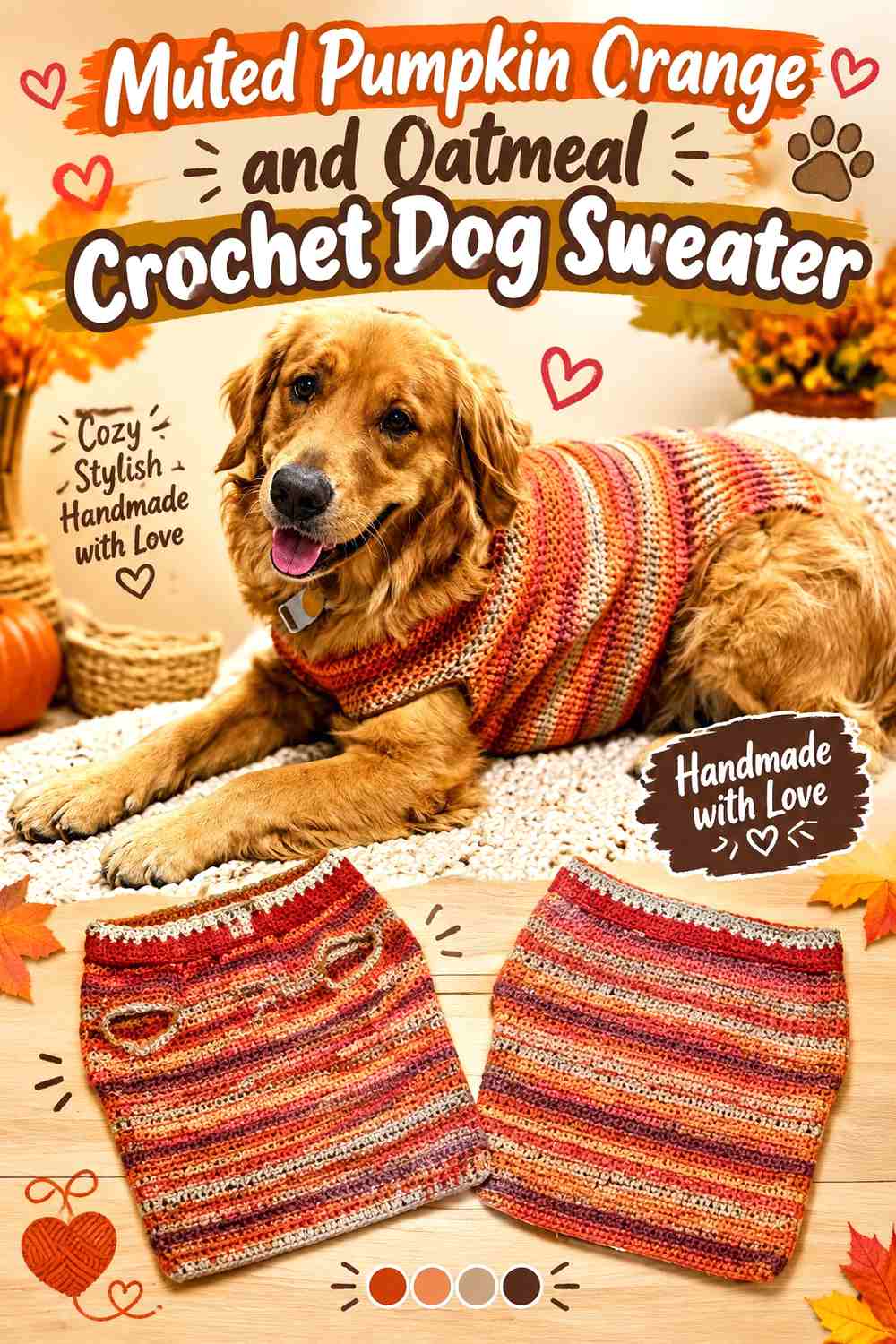
Muted pumpkin orange with oatmeal gives the sweater a lighter, neutral-heavy fall direction. Pumpkin orange can still dominate the body, but oatmeal offers a softer contrast than white and can make the neckline or trim easier to distinguish.
Muted Pumpkin Orange Needs a Large Crochet Dog Sweater Surface
Because this orange is intentionally softened, give it enough area to communicate the pumpkin theme clearly. A mostly orange back with an oatmeal collar is stronger than scattering small orange stripes throughout a neutral sweater.
Keeping the main back solid also lets texture contribute to the pumpkin effect.
Oatmeal Can Separate Muted Pumpkin Orange Without Harsh Contrast
Use oatmeal where you want a gentle boundary: around the collar, lower edge, or outside a pumpkin motif. Its lighter value can clarify the garment shape while keeping the palette earthy.
If oatmeal becomes the body color instead, increase the size of any pumpkin-orange motif so the seasonal theme remains obvious.
Creator Credit: LoopsByLisa
7. Copper Orange and Deep Teal Crochet Pumpkin Dog Sweater
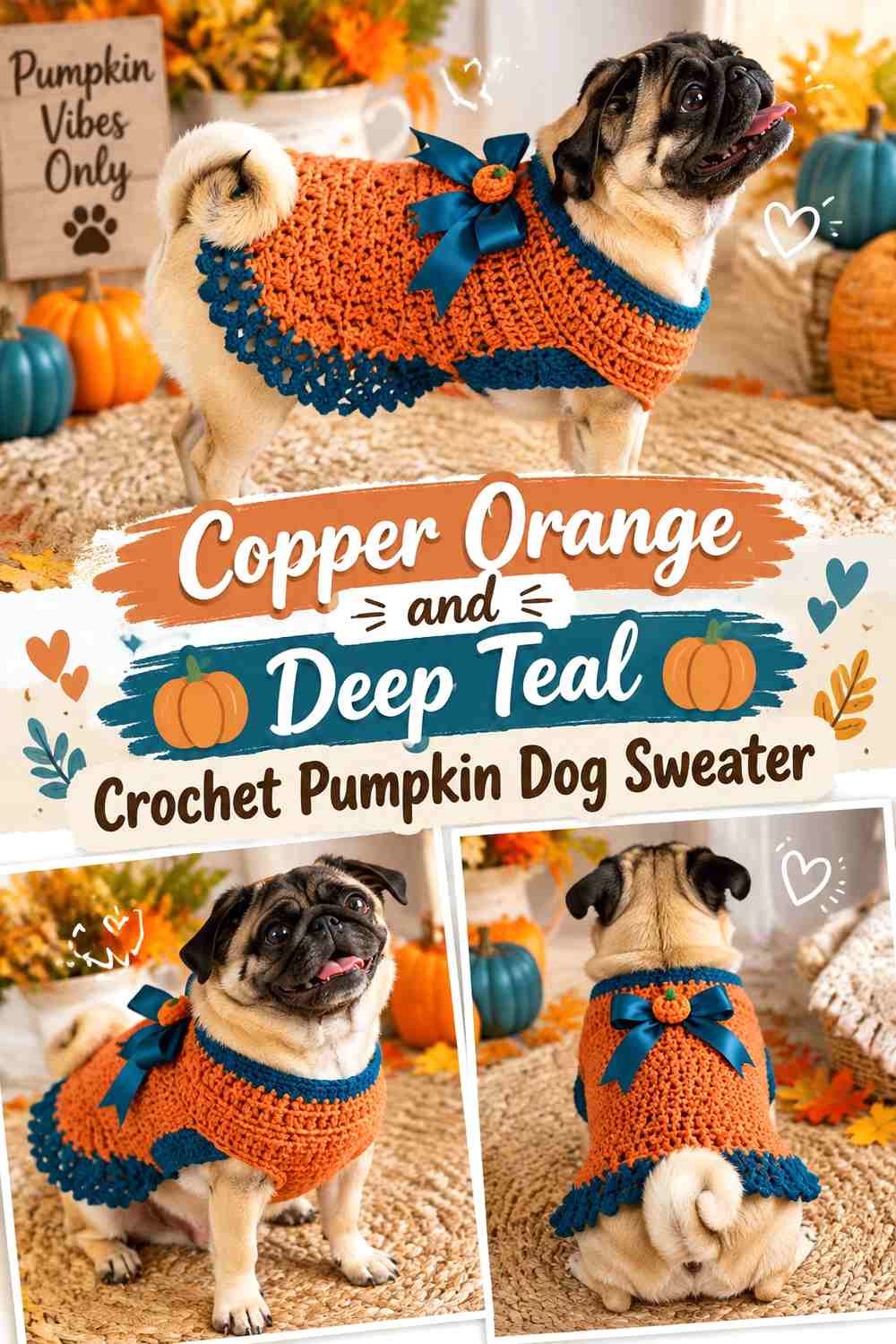
Copper and deep teal create a less expected fall pairing. Copper supplies the pumpkin reference, while teal replaces the predictable green with a cooler, darker accent. Because teal is visually strong, it works best in controlled sections rather than equal blocks.
Copper Orange Should Carry the Pumpkin Dog Sweater Body
Let copper cover the back and most of the visible body so the sweater remains recognizably pumpkin-inspired. A large copper field also gives metallic-looking warmth without requiring actual shiny yarn.
Deep teal should support that color rather than breaking it into many pieces.
Deep Teal Gives Copper Orange a Cooler Fall Border
A teal collar or narrow outer trim creates a pronounced contrast against copper. This works when you want a fall sweater that feels different from traditional orange-and-green combinations.
Repeat teal once if needed, but keep most of the garment copper. Too much teal can shift the visual identity away from the pumpkin color.
Creator Credit: Crochet Cuties Creations by Esther
8. Pumpkin Orange, Mustard, and Brown Crochet Dog Sweater
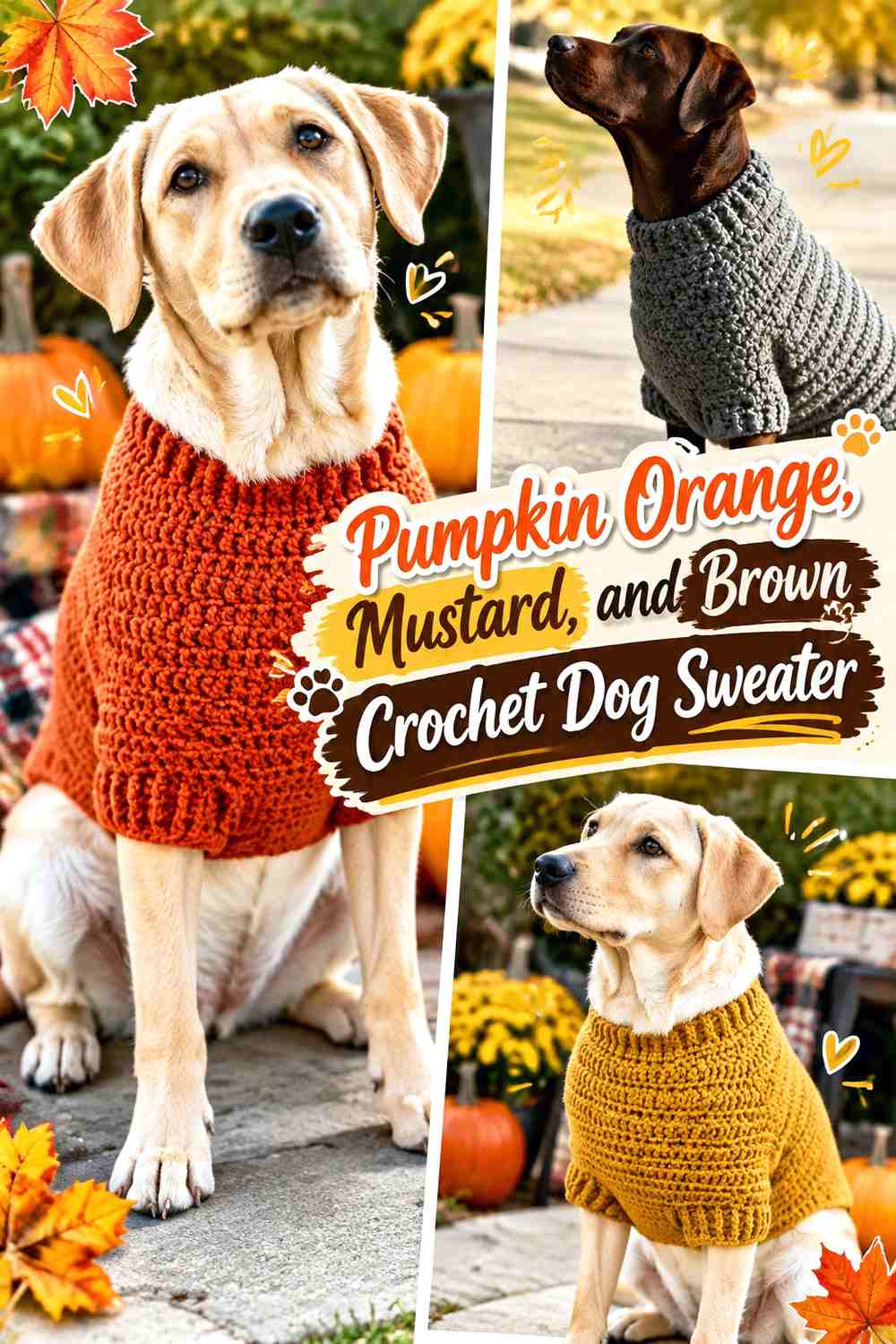
This three-color palette builds around neighboring warm fall hues. Pumpkin orange should remain dominant, mustard can brighten a stripe or motif detail, and brown can provide the darkest definition. Giving each color a separate role prevents the sweater from becoming a collection of similar warm bands.
Pumpkin Orange Should Separate Mustard From Brown
Use pumpkin orange as the largest middle-value field. Mustard is lighter and brighter, while brown can act as the deepest anchor.
That three-level relationship is useful around motifs or borders because each shade has a clearer visual job than three equally dark autumn colors would.
Mustard and Brown Should Stay Secondary to Pumpkin Orange
Reserve mustard for a narrow stripe, pumpkin highlight, or selected edging. Use brown even more strategically for definition.
If mustard and pumpkin orange begin to look too similar, place brown between them only where separation is needed rather than outlining every color change.
Creator Credit: Heart Hook Home
9. Cinnamon Orange and Moss Green Crochet Pumpkin Dog Sweater

Cinnamon orange and moss green create a subdued woodland interpretation of a pumpkin sweater. Both colors can be softened, so this palette works better with larger color sections than intricate tiny colorwork.
Cinnamon Orange Gives the Pumpkin Dog Sweater a Deep Warm Base
Let cinnamon orange cover most of the body and keep any pronounced stitch pattern in that shade. Its depth makes the sweater feel more autumnal while still retaining the orange family.
A large cinnamon section also provides a consistent background if you later add a simple pumpkin motif.
Moss Green Can Form a Quiet Cinnamon Orange Collar
Use moss at the neckline as the stem-related color. Because it is muted, it will usually feel less costume-like than bright green.
If the moss almost disappears beside cinnamon, choose a slightly lighter moss or broaden the green collar instead of introducing an unrelated high-contrast shade.
Creator Credit: Maria’s Blue Crayon
10. Peachy Pumpkin, Cream, and Sage Crochet Dog Sweater

Peachy pumpkin, cream, and sage produce one of the lightest fall palettes here. The peach-orange can cover most of the body, sage can define the collar, and cream can be used selectively where the two pastels need separation.
Peachy Pumpkin Needs Enough Coverage to Read as Fall
A very pale orange can start to look simply peach when used sparingly. Keep it across a substantial back area if you want the pumpkin reference to remain clear.
Texture can reinforce the theme, especially when the orange body contains vertical or raised detail.
Sage and Cream Should Support Peachy Pumpkin Differently
Let sage serve as the plant-related accent at the neckline, while cream acts as a separator or light edge. Giving the two supporting shades different functions prevents all three colors from occupying equal, competing areas.
If cream and peach are extremely close in value, use cream only where the physical edge of the sweater already creates extra definition.
Creator Credit: Tejiendo Con Candy
11. Deep Pumpkin Orange and Burgundy Crochet Dog Sweater
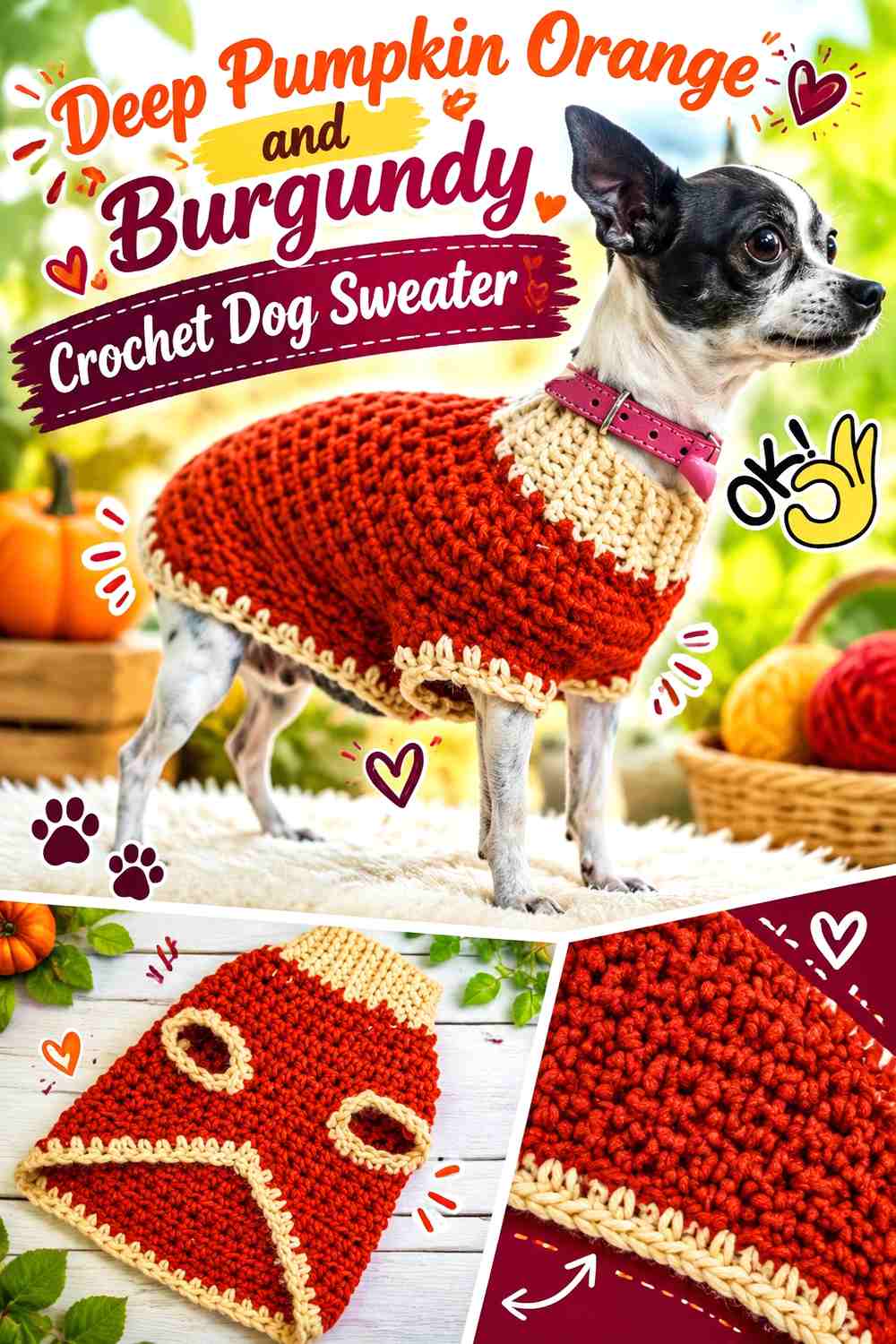
Deep pumpkin orange with burgundy moves the sweater toward a richer late-fall palette. Because both shades are warm, the distinction comes largely from value: orange should be the brighter field and burgundy the darker accent.
Deep Pumpkin Orange Should Stay Brighter Than Burgundy
Use deep orange across the main body and check that burgundy remains visibly darker. If both shades have similar depth, narrow burgundy details can disappear.
A broad orange field also makes the sweater unmistakably pumpkin-themed rather than simply red-brown.
Burgundy Can Ground Deep Pumpkin Orange at the Edges
Burgundy works well at the collar, lower border, or around one back detail. Its darker value can frame orange without introducing green or a neutral.
Keep the burgundy placement controlled. Several broad burgundy sections may pull the sweater toward a red-dominant palette.
Creator Credit: Crocheteando con la comadre
12. Pumpkin Orange and Charcoal Crochet Dog Sweater
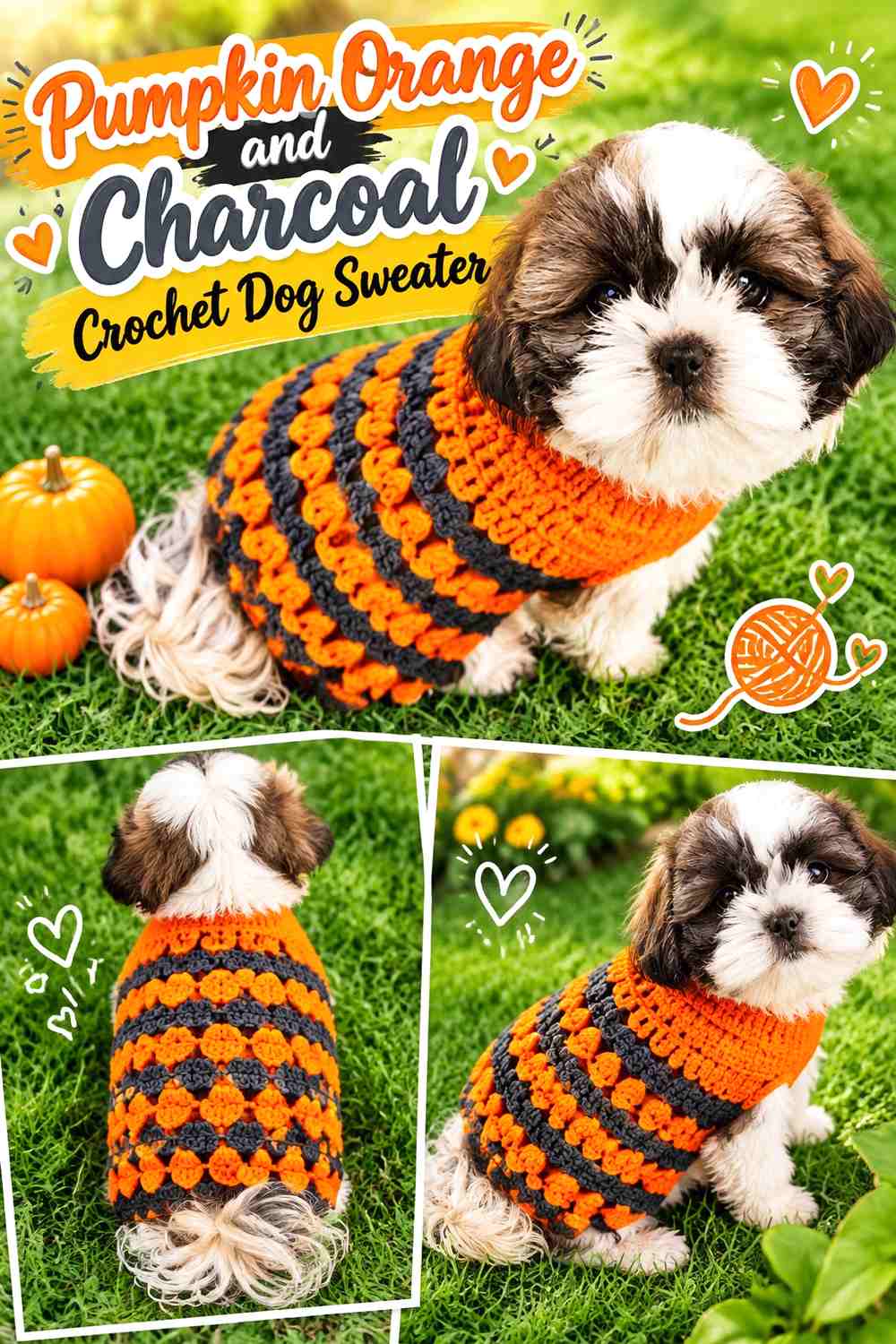
Pumpkin orange and charcoal create the sharpest dark-neutral contrast in the collection. Charcoal is useful when you want a fall sweater that can lean toward Halloween without becoming an orange-and-black novelty piece. Keep orange dominant and charcoal concentrated around framing details.
Pumpkin Orange Needs Broad Space Beside Charcoal
Because charcoal carries strong visual weight, give pumpkin orange most of the back and body. A small amount of charcoal will already be noticeable at the collar or edge.
This distribution keeps the sweater fall-oriented instead of allowing the dark neutral to dominate.
Charcoal Can Define a Pumpkin Orange Motif or Collar
Use charcoal where definition matters most, such as around a back motif or neckline. It can produce a crisp boundary when orange texture would otherwise blend into nearby sections.
Avoid outlining every sweater opening in charcoal. A few deliberate dark areas usually look more balanced.
Creator Credit: Lanitas y colores
13. Pumpkin Orange and Navy Crochet Dog Sweater

Navy creates a cooler alternative to brown, charcoal, or green while still giving pumpkin orange enough dark contrast to stand out. The combination works particularly well when you want orange to be seasonal but the rest of the sweater to feel less literal.
Pumpkin Orange Can Become the Accent on a Navy Dog Sweater
This is one palette where orange does not need to dominate. A mostly navy sweater with one substantial pumpkin-orange back motif can communicate fall clearly while keeping the overall garment dark.
Make the orange area large enough to remain visible from above rather than reducing it to tiny scattered details.
Navy Gives Pumpkin Orange Strong Motif Definition
Navy is useful as a background behind a simple orange pumpkin shape because it provides clear visual separation. If green is added for a small stem, check that the green also remains visible against navy.
Keeping navy continuous around the motif helps the central orange shape read cleanly.
Creator Credit: Hi! Donkun
14. Dusty Orange and Taupe Crochet Pumpkin Dog Sweater

Dusty orange and taupe create a neutral, low-saturation pumpkin palette. The difference between them may be intentionally subtle, making this combination well suited to broad sections and simple trim rather than tiny colorwork.
Dusty Orange Should Lead the Crochet Pumpkin Dog Sweater
Use dusty orange on the back and upper body to preserve the pumpkin identity. Taupe can occupy the neckline, chest, or outer border without competing strongly.
If the orange is extremely muted, increasing its surface area matters more than trying to brighten the palette with multiple new accents.
Taupe Can Quietly Frame Dusty Orange Texture
Taupe works well around a textured orange back because it creates a change in hue without a dramatic dark outline. This allows stitch definition to remain the main visual feature.
Check both colors in grayscale. If they are nearly identical, that is fine for a blended look, but it will not work well for small motifs that need crisp edges.
Creator Credit: it’s erin b.
15. Pumpkin Orange, Gold, and Forest Green Crochet Dog Sweater
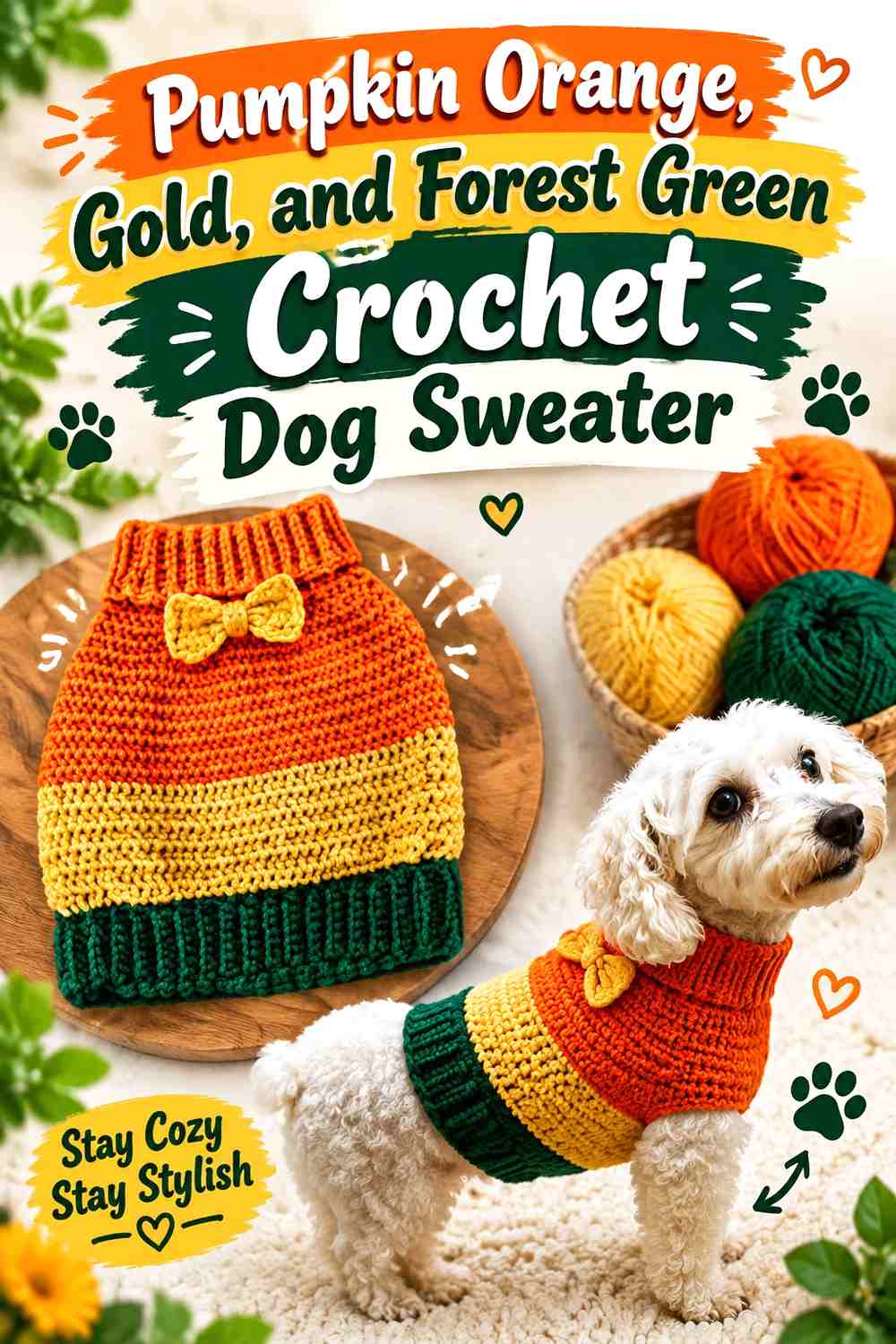
Pumpkin orange, gold, and forest green create a more layered harvest palette. Orange can remain the body color, green can stay near the neckline, and gold can appear in a controlled highlight or border between them.
Pumpkin Orange Should Keep Gold From Taking Over the Dog Sweater
Gold or mustard-like yellow can be highly noticeable even in small amounts. Keep pumpkin orange across the largest surface so the sweater remains orange-led.
Use gold in one repeated detail rather than multiple broad stripes if you want it to function as a highlight.
Forest Green Can Anchor Pumpkin Orange and Gold Near the Collar
Place forest green around the neckline where it naturally supports the pumpkin idea. A narrow gold transition between green and orange can add another fall note without requiring equal areas of all three colors.
If the sweater begins to feel busy, remove gold from secondary edges before reducing the main orange or green sections.
Creator Credit: Procraftination
16. Cream and Pumpkin Orange Motif Crochet Dog Sweater
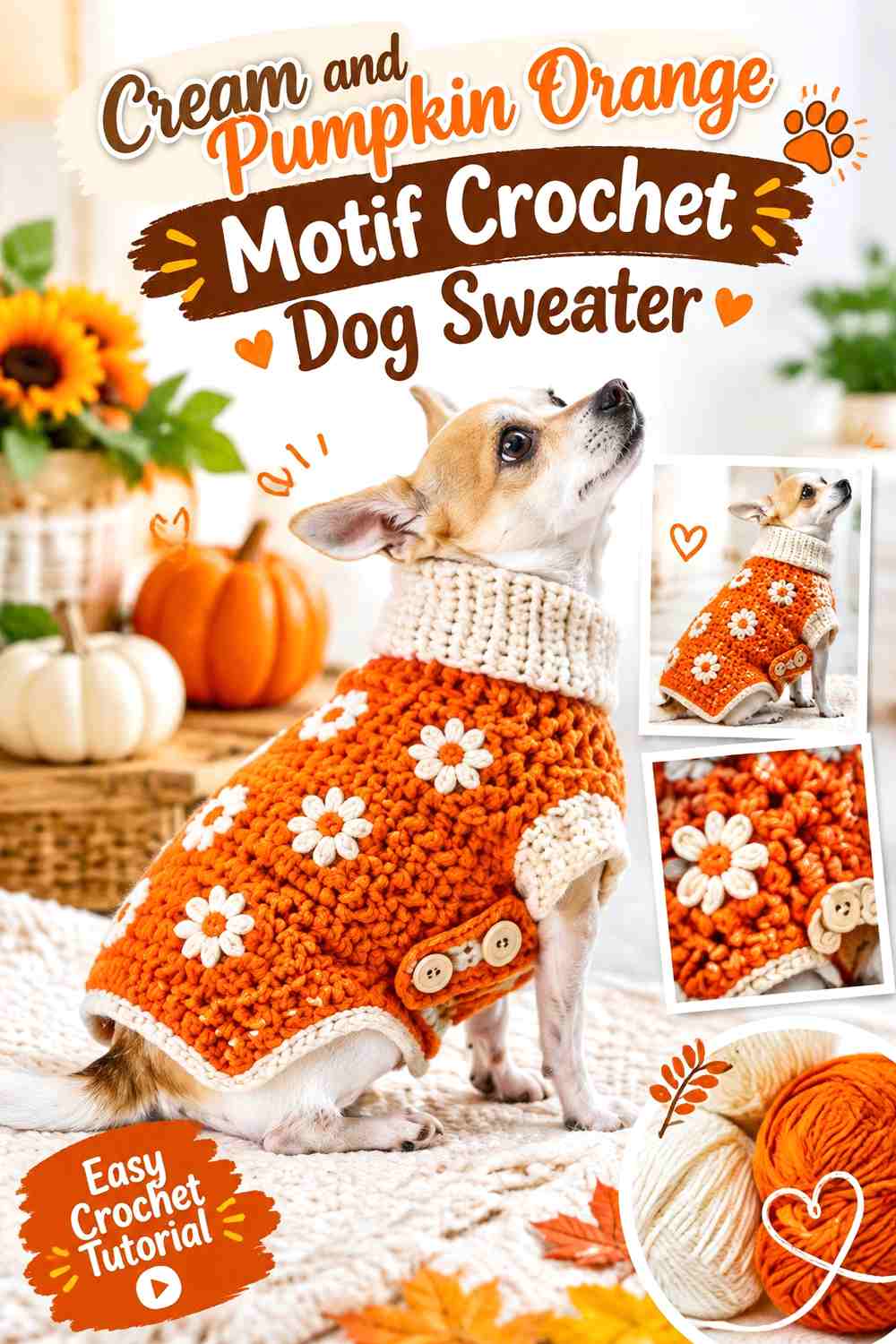
A cream body with a pumpkin-orange back motif is useful when you want fall color concentrated in one statement area. Green can remain a tiny supporting detail within the motif or at the neckline, leaving most of the sweater light and neutral.
Cream Gives a Pumpkin Orange Back Motif Clear Space
Keep the cream surrounding the motif uninterrupted so the orange pumpkin becomes the focal point. Adding many stripes or additional motifs around it can reduce the impact of the central design.
The available back area should guide motif scale. Avoid extending decoration into leg openings or the underside merely to make the motif larger.
Pumpkin Orange Should Be Dark Enough Against Cream
Very pale peach may not provide enough separation from cream for a small pumpkin motif. Choose an orange with clearly greater depth if you want the shape to remain recognizable.
A darker green stem can add a second point of contrast, but the orange portion should remain substantially larger than the green.
Creator Credit: Marly Bird
17. Pumpkin Orange, Rust, Sage, and Cream Patchwork Crochet Dog Sweater
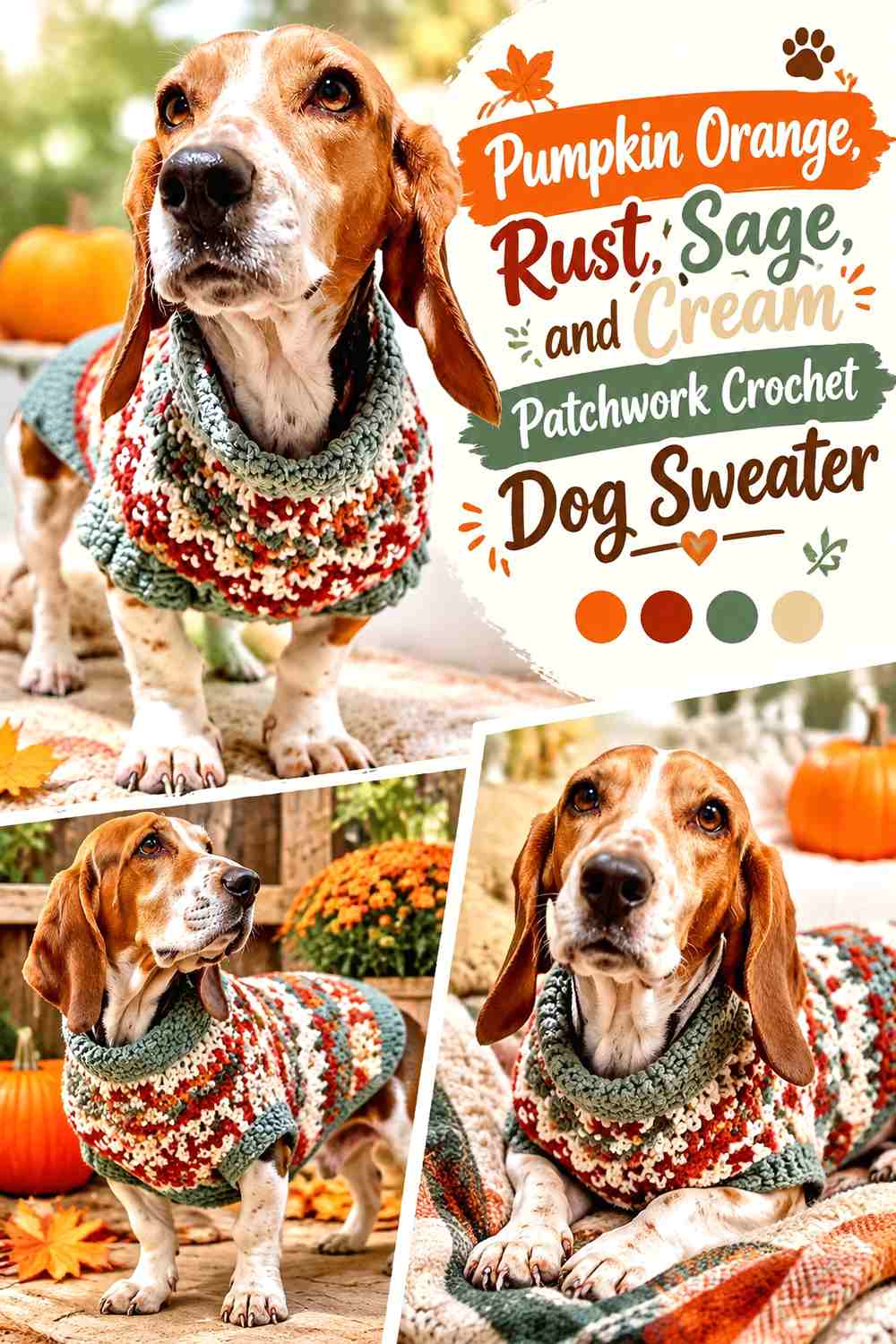
This multicolor scheme combines several fall shades but needs careful hierarchy. Let pumpkin orange appear most often, use rust as its deeper companion, sage as the botanical accent, and cream as the lightest separator. Repetition is more important than making every section different.
Pumpkin Orange and Rust Should Repeat Across the Patchwork Dog Sweater
Alternate or repeat pumpkin orange and rust often enough that they form the visual foundation. If every panel or motif uses a completely different arrangement, the sweater may look more random than intentionally autumnal.
Before joining or completing the layout, view the colors together and move sections if one shade clusters too heavily in one area.
Sage and Cream Should Support Pumpkin Orange Patchwork
Use sage in fewer places than the oranges so it remains an accent rather than turning the sweater green-heavy. Cream can separate neighboring warm colors where they begin to merge.
A consistent cream join or border can also unify several pumpkin-toned sections without requiring every motif to contain all four colors.
Creator Credit: Yarnspirations
Which Crochet Pumpkin Dog Sweater Palette Should You Choose?
For the clearest classic pumpkin look, choose pumpkin orange with forest green. Rust with olive, cinnamon with moss, and terracotta with sage move the same idea toward quieter, earthier fall colors.
For a light palette, muted pumpkin with oatmeal or peachy pumpkin with cream and sage keeps the sweater soft. Amber with chocolate, deep pumpkin with burgundy, and orange with charcoal provide stronger dark framing.
If you want only a hint of the pumpkin theme, the cream sweater with a pumpkin-orange back motif keeps the seasonal color concentrated in one place. For the most multicolored treatment, the orange-rust-sage-cream patchwork idea gives you several autumn shades while still allowing pumpkin orange to remain the anchor.
Conclusion
The most effective pumpkin dog sweaters do not depend on using as many fall colors as possible. A clear dominant shade and a few purposeful supporting colors usually communicate the theme more successfully.
Choose pumpkin orange and forest green for the most literal direction, terracotta and sage or rust and olive for muted fall styling, and cream with an orange motif when you want the pumpkin element to be more restrained. Charcoal, navy, chocolate, and burgundy can add deeper contrast, while oatmeal and cream keep orange palettes lighter.
Before crocheting a detailed motif or narrow colorwork section, compare the yarns for light-and-dark contrast. Then place the pumpkin colors around the actual sweater structure—back, collar, edging, and selected motifs—rather than allowing decoration to interfere with fit or movement. Use the credited tutorials for exact construction guidance while adapting the color scheme independently.
Frequently Asked Questions
What shade of orange works best for a crochet pumpkin dog sweater?
Classic pumpkin orange gives the most immediately recognizable result, but burnt orange, rust, terracotta, cinnamon, copper, and dusty orange can all work. Preserve enough orange surface area for the pumpkin theme to remain clear, particularly when using muted shades.
Does a pumpkin crochet dog sweater need green?
No. Green creates an obvious stem reference, especially around the collar, but chocolate brown, cream, charcoal, burgundy, or navy can support pumpkin orange instead. A sweater can also use a pumpkin-orange motif on a neutral background without green.
Where should green go on a pumpkin dog sweater?
The neckline is particularly useful because green placed above an orange body naturally suggests the top of a pumpkin. Sage, olive, moss, or forest green can also appear in a small border or motif detail, but green does not need to outline every opening.
How can I make pumpkin texture visible on an orange crochet dog sweater?
Keep a substantial textured section in one orange shade rather than breaking every raised stitch or rib with color changes. Light and shadow across the crochet surface can then help the texture remain visible. A contrasting collar or border can be placed outside that main textured area.
How do I make a pumpkin motif stand out on a crochet dog sweater?
Choose a background with a noticeably different lightness from the orange motif. Cream, navy, or charcoal can provide clear separation depending on whether you want a light or dark background. Check the yarns side by side before committing to a small motif.
Can I use several fall colors in one pumpkin dog sweater?
Yes, but give them defined roles. Pumpkin orange can dominate, rust can provide a deeper warm shade, sage can work as the plant accent, and cream can separate similar values. Repeating those roles creates a more organized sweater than distributing every color equally.
Are three-dimensional pumpkin stems or leaves necessary on a dog sweater?
No. Color and crochet texture can establish the theme without separate embellishments. A green collar, orange ribbing, or flat pumpkin motif can communicate the pumpkin idea while keeping the surface simpler. Any added decorative pieces should be securely attached and appropriate for a dog that will not chew or snag them.