Heart patterns give a crochet puppy sweater a clear focal point, but the color relationship between the heart and the sweater matters as much as the motif itself. A cream heart on burgundy creates strong light-dark separation, while dusty pink hearts on blush produce a softer tonal effect. Both can work; they simply emphasize the motif differently.

The puppy sweater back usually provides the clearest area for a heart because it offers more uninterrupted space than the chest or leg openings. Hearts can also be repeated in a narrow border, arranged as small colorwork motifs, incorporated into granny-style panels, or used as one contrasting statement shape.
The tutorials credited below support crochet dog-sweater construction. The heart layouts and palettes are independent color adaptations, so the credited creators should not be assumed to have used these exact heart designs.
Quick List:
- Blush Pink and Cream Crochet Puppy Sweater With a Back Heart
- Cranberry Red and Dusty Pink Crochet Puppy Sweater With Repeated Hearts
- Lavender and Ivory Crochet Puppy Sweater With Tonal Hearts
- Navy and Bright Red Crochet Puppy Sweater With a Statement Heart
- Sage Green and Cream Crochet Puppy Sweater With Small Heart Motifs
- Peach and Dusty Rose Crochet Puppy Sweater With a Heart Border
- Soft Gray and White Crochet Puppy Sweater With Minimal Hearts
- Mint Green and Blush Pink Crochet Puppy Sweater With Scattered Hearts
- Burgundy and Cream Crochet Puppy Sweater With an Outlined Heart
- Baby Blue and White Crochet Puppy Sweater With a Heart Yoke
- Terracotta and Blush Crochet Puppy Sweater With Warm Tonal Hearts
- Plum and Lilac Crochet Puppy Sweater With Layered Heart Color
- Cream, Blush, Mint, and Lavender Crochet Puppy Sweater With Multicolor Hearts
Give the Heart Pattern Enough Contrast on a Crochet Puppy Sweater
Small hearts need clearer contrast than broad stripes because narrow curves and points can disappear when two yarns are similar in lightness. Different hues do not automatically create different values: a medium red and medium green, for example, may still look surprisingly close when converted to grayscale.
Compare the yarns side by side before committing to a heart motif. If the heart disappears from a normal viewing distance, choose a lighter or darker motif color, enlarge the color area, or reduce competing details around it.
For a deliberately tonal sweater, softer contrast can be an advantage. Blush and dusty pink or plum and lilac can produce hearts that become visible through gentle shade changes rather than sharp outlines.
Use the Puppy Sweater Back as the Main Heart Color Zone
The back is usually the most useful place for a statement heart because it allows the motif to sit within a larger field of one color. Keeping enough plain background around the heart makes its silhouette easier to recognize.
Collars, cuffs, and lower edging are better used for repeating the heart color in smaller amounts. If a cream heart sits on a burgundy back, for example, a narrow cream collar edge can connect the motif to the rest of the sweater without surrounding every opening in cream.
With repeated hearts, reverse the strategy: use smaller motifs in a consistent sequence and keep surrounding trim relatively simple so the sweater does not have several competing decorative systems.
Keep Heart Details Practical on a Puppy Sweater
Flat colorwork is useful when you want the surface to remain simple. A securely attached flat heart appliqué can also work, but avoid loosely attached decorations that can be pulled, caught, or chewed.
Fit should not be changed merely to make room for a motif. Keep leg openings, neckline, chest, and underside appropriate to the sweater construction, and scale the heart to the available back area. Since a young dog’s measurements can change, check current measurements before relying on an earlier fit.
1. Blush Pink and Cream Crochet Puppy Sweater With a Back Heart
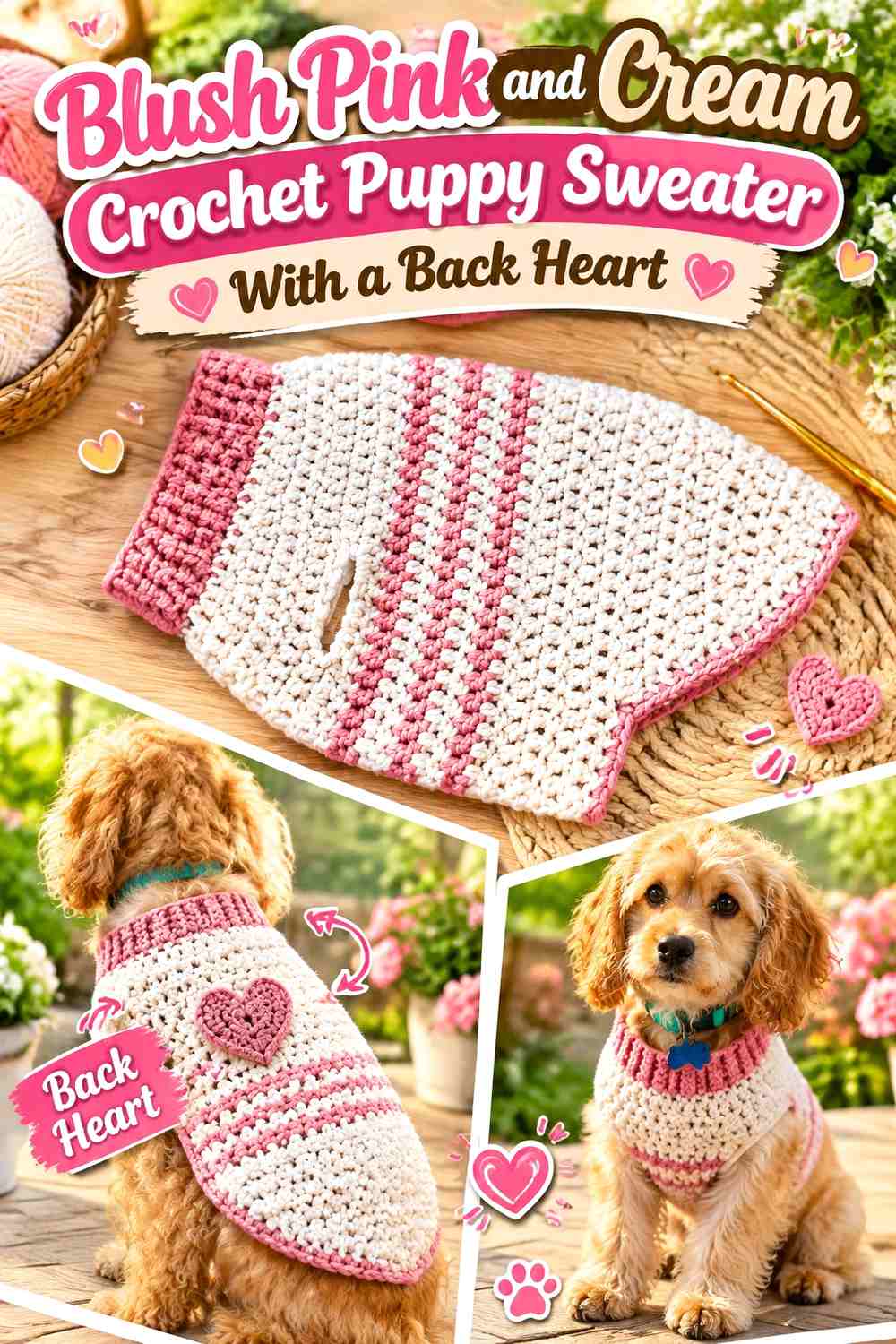
Blush pink can cover the whole sweater body while cream creates one clearly defined heart on the center back. This arrangement keeps the sweater soft and light while giving the motif enough contrast to remain recognizable. A small cream repeat around the neckline can connect the heart to the rest of the garment.
Cream Should Stay Clear Against the Blush Pink Heart Background
Very pale blush can approach cream in value, so compare the colors before making a detailed heart. If they merge, deepen the pink slightly rather than adding a third outline color around the motif.
Leaving a generous blush field around the heart will also improve its definition.
Blush Pink Should Remain Dominant Around Cream Trim
If cream appears in the heart, collar, leg openings, and hem at the same time, the neutral may become almost as prominent as blush. Choose one small trim area to echo the heart and keep the remaining sweater pink.
That gives the heart a deliberate relationship to the garment without over-outlining a small puppy sweater.
Creator Credit: it’s erin b.
2. Cranberry Red and Dusty Pink Crochet Puppy Sweater With Repeated Hearts

Cranberry and dusty pink create a tonal red-family palette with enough difference to support repeated hearts. Cranberry works well across the main body, while dusty pink can appear as a row of smaller hearts or a few evenly spaced motifs rather than one oversized shape.
Dusty Pink Hearts Need Repetition Across Cranberry Red
When each heart is relatively small, repetition helps the lighter shade feel intentional. Keep the spacing visually consistent and avoid inserting unrelated accent colors between individual hearts.
The cranberry background should remain visible around every motif so the heart silhouettes do not merge into one long pink band.
Cranberry Red Can Ground Dusty Pink Collar Details
If dusty pink is repeated at the collar, keep that area restrained. A narrow pink edge can connect the neckline with the heart pattern while the larger collar remains cranberry.
This preserves the deeper red as the sweater’s main color.
Creator Credit: The Crochet Crowd
3. Lavender and Ivory Crochet Puppy Sweater With Tonal Hearts

Lavender provides a soft colored background while ivory creates understated heart motifs. This is a useful option when you want the hearts visible without the very crisp contrast of white on navy or red. Keep lavender across most of the back and use ivory selectively.
Ivory Hearts Need Enough Separation From Pale Lavender
An extremely light lavender may leave little value difference against ivory. If that happens, use a slightly deeper lavender across the body so the heart retains clean edges.
This adjustment preserves the same palette rather than introducing a darker outline that changes its soft character.
Lavender Should Surround Ivory Hearts With Open Space
Avoid positioning ivory stripes immediately beside each heart. The uninterrupted lavender around the motif provides the negative space that makes a subtle heart easier to recognize.
A small ivory hem repeat is enough if the motif color needs to appear elsewhere.
Creator Credit: Last Minute Laura
4. Navy and Bright Red Crochet Puppy Sweater With a Statement Heart
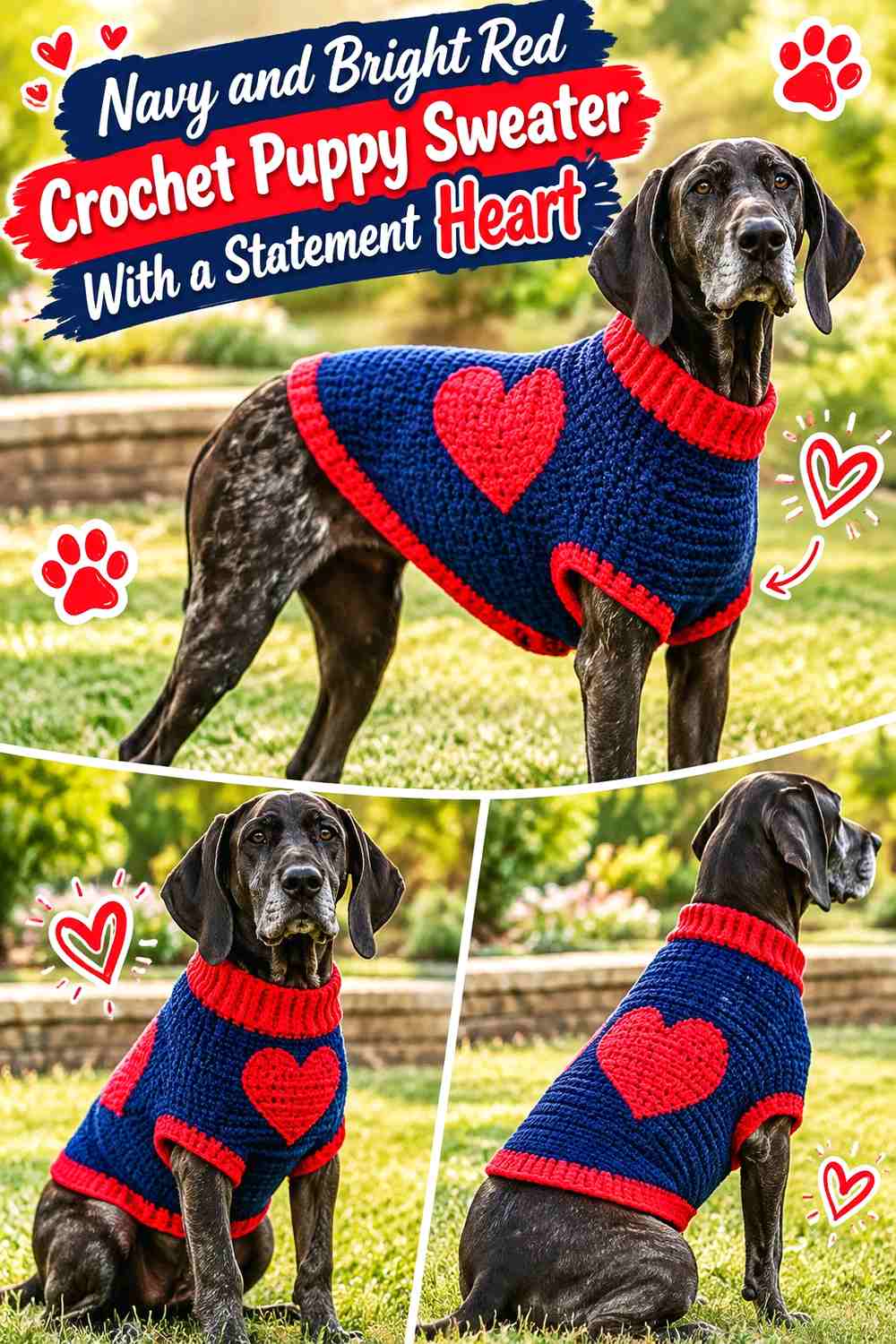
Navy and bright red create one of the strongest color contrasts in this collection. A mostly navy puppy sweater can carry one substantial red heart on the back, allowing the motif to provide nearly all of the warm color.
Bright Red Can Become the Only Large Accent on Navy
Keep the back surrounding the heart solid navy. Red does not need to appear in wide stripes when it already occupies a noticeable central motif.
A small red collar edge can repeat the color, but preserving a large navy field gives the statement heart greater impact.
Navy Helps the Bright Red Heart Stay Visually Simple
Because the contrast is already strong, additional white, pink, or light-blue outlines are unnecessary unless they serve a specific design purpose. A clean red-on-navy relationship keeps the motif legible even on a compact sweater.
This is particularly useful when the crochet body already contains visible texture.
Creator Credit: Heart Hook Home
5. Sage Green and Cream Crochet Puppy Sweater With Small Heart Motifs
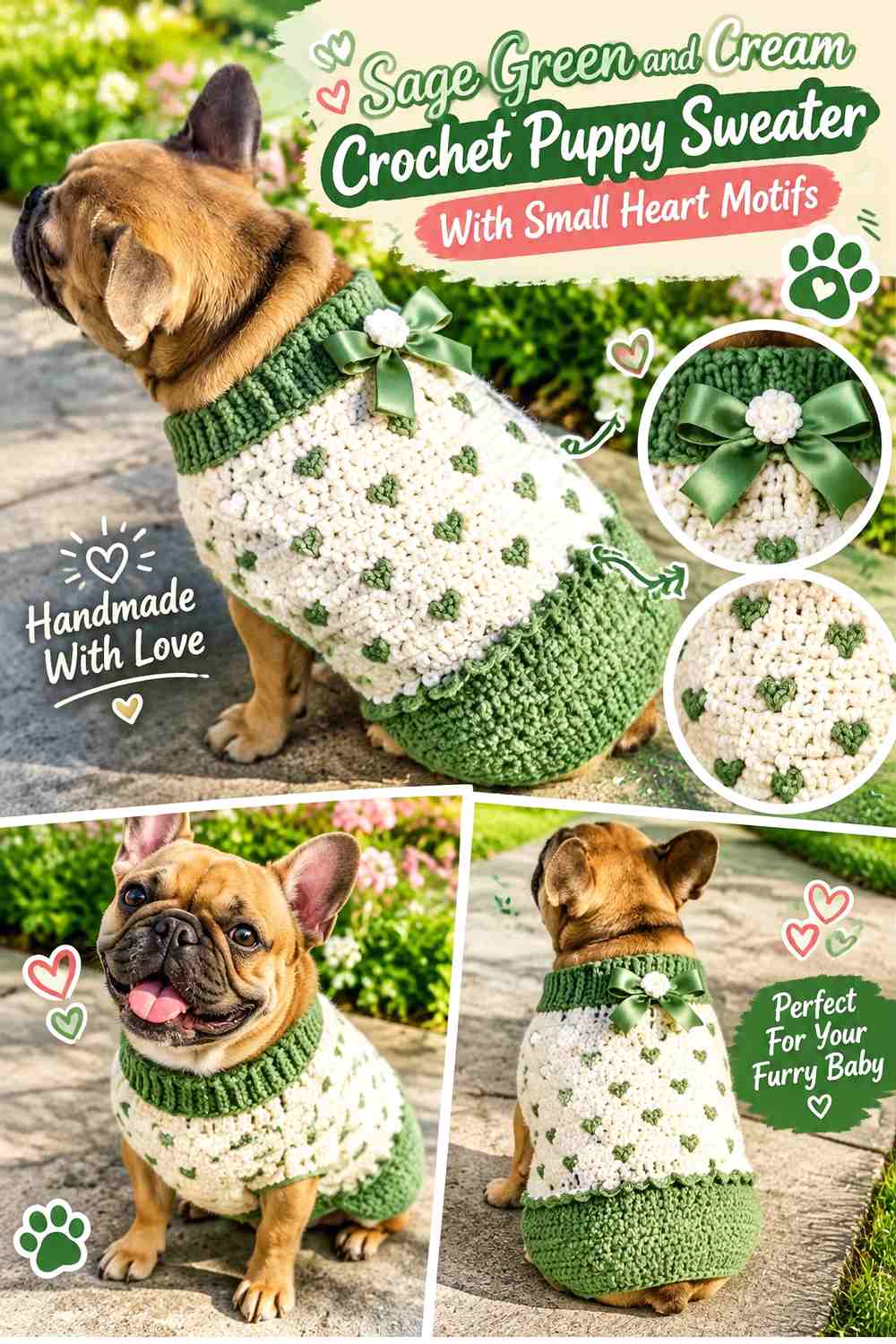
Sage green and cream create a muted palette that suits a series of understated hearts. Sage can cover the sweater body while several cream motifs are positioned across the most visible back area. The lighter hearts should remain spaced apart so the green continues to read as the main field.
Cream Hearts Need Clear Sage Green Between Them
Avoid placing small cream hearts so close together that they become a continuous pale stripe. Visible sage around each shape keeps the individual motifs readable.
If the cream hearts are difficult to distinguish, deepen the sage rather than enlarging every motif.
Sage Green Can Keep the Cream Heart Sweater Quiet at the Edges
Use mostly sage around the collar and hem if several cream hearts are already present. Adding cream to every trim area can make the secondary color disproportionately strong.
One restrained cream repeat is enough to connect the motifs with the garment finish.
Creator Credit: Crochet Cuties Creations by Esther
6. Peach and Dusty Rose Crochet Puppy Sweater With a Heart Border

Peach and dusty rose work well for a heart border because the shades are related but still visually distinct. Keep peach across the broad body and place dusty-rose hearts in a limited band rather than spreading motifs randomly from collar to hem.
Dusty Rose Hearts Can Form One Defined Border on Peach
Choose one section of the back for the repeated heart band. Concentrating the motifs gives the sweater a clear visual structure and leaves enough plain peach fabric for the pattern to stand out.
Multiple heart borders can make a short puppy sweater look more striped than heart-patterned.
Peach Should Stay Uninterrupted Above and Below Dusty Rose Hearts
A solid peach area on either side of the motif band prevents the design from feeling crowded. It also gives stitch texture room to show where colorwork is absent.
If dusty rose is repeated at the collar, keep that repeat much narrower than the main heart border.
Creator Credit: Crochet with Tiffany
7. Soft Gray and White Crochet Puppy Sweater With Minimal Hearts

Soft gray gives white hearts a neutral background without making the sweater strongly seasonal or highly saturated. This palette works particularly well with one or two simple hearts rather than an all-over motif arrangement.
White Hearts Need a Medium Soft Gray Background
If the gray is almost white, narrow heart points can disappear. Choosing a gray with slightly more depth lets the motif remain visible while preserving the light neutral palette.
Keep the white heart shape uncomplicated when the contrast is deliberately gentle.
Soft Gray Can Carry Most of the Puppy Sweater Trim
Since white already appears prominently in the heart, keeping the collar and hem mostly gray prevents the sweater from becoming heavily outlined.
A thin white edge near one finishing area can repeat the motif without competing with it.
Creator Credit: Crochet It
8. Mint Green and Blush Pink Crochet Puppy Sweater With Scattered Hearts

Mint and blush produce a two-pastel palette in which neither shade is naturally very dark. Let mint cover the sweater body and use blush for a small number of scattered hearts across the back. The motif size and spacing become especially important because the value contrast may be subtle.
Blush Pink Hearts Need Space Across the Mint Green Back
Use fewer, slightly larger blush hearts rather than many tiny ones if the colors are close in lightness. This gives each motif enough visual area to register.
Keep the arrangement concentrated on the visible back instead of continuing the hearts into leg openings or practical underside sections.
Mint Green Should Remain the Main Color Around Blush Pink Details
Maintain mint at the collar and most of the edging so the sweater has a clear dominant color. A small blush trim repeat can be added if the hearts otherwise feel isolated.
Avoid turning every border pink; the scattered heart treatment already provides multiple accent points.
Creator Credit: SheiLa Teré
9. Burgundy and Cream Crochet Puppy Sweater With an Outlined Heart
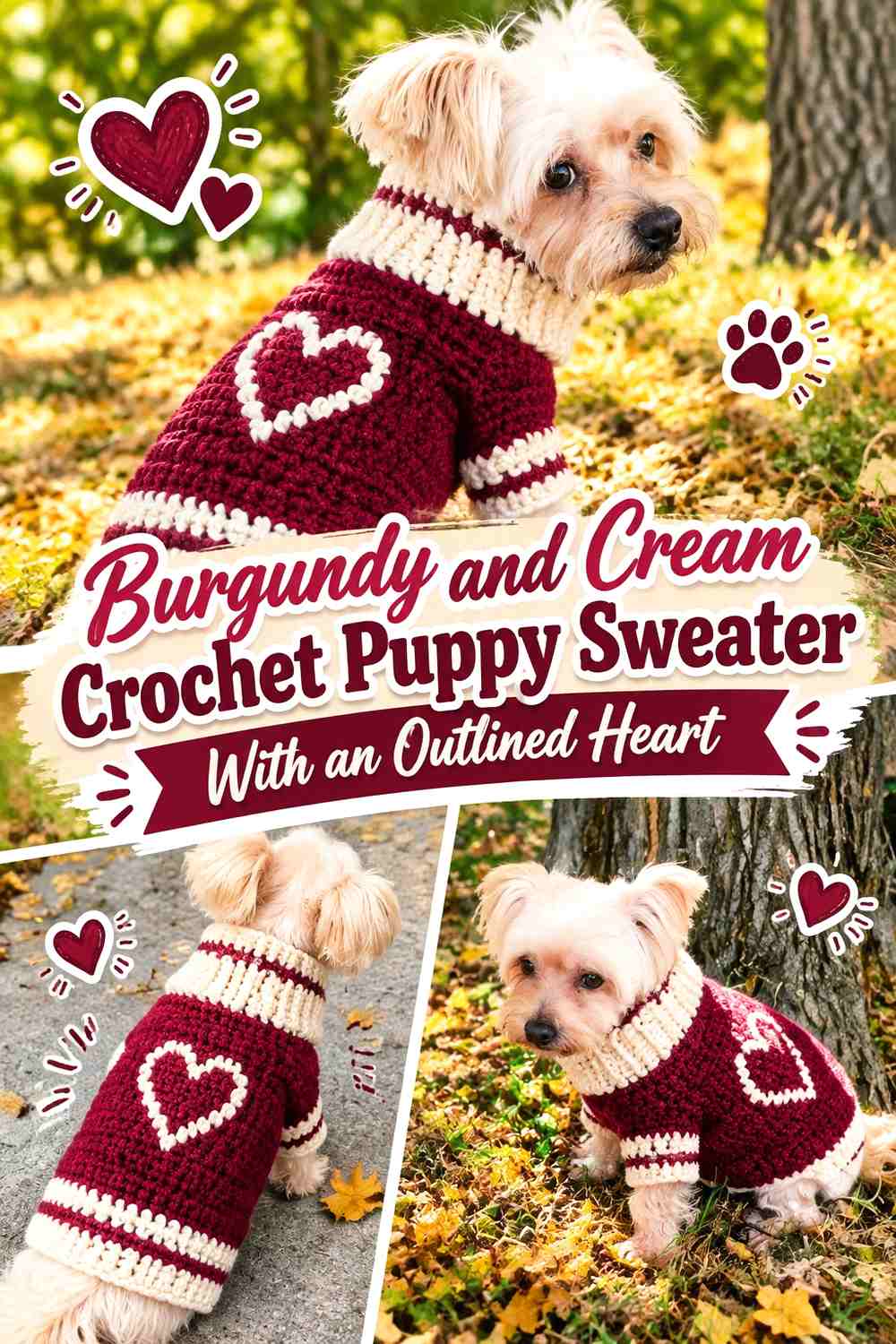
Burgundy and cream create enough contrast for a heart that relies on an outline rather than a completely filled shape. The open center lets the burgundy body remain visible while the cream edge defines the motif.
Cream Can Define a Burgundy Heart Without Filling the Center
An outlined heart uses less cream than a solid motif, which helps burgundy retain more visual area. Keep the outline sufficiently clear and avoid surrounding it with additional cream stripes.
The negative space inside the heart becomes part of the design, so a consistent burgundy field is important.
Burgundy Should Repeat Inside and Around the Cream Heart
Because the center remains burgundy, the motif naturally connects with the body. Keeping the collar largely burgundy strengthens that relationship.
A narrow cream neckline edge can be enough to echo the heart outline elsewhere.
Creator Credit: Vibes with Dani
10. Baby Blue and White Crochet Puppy Sweater With a Heart Yoke

Baby blue and white can move the heart pattern closer to the neckline rather than concentrating it in the middle of the back. Keep the body baby blue and use a controlled row of white hearts around the upper sweater area where there is enough space for them to remain readable.
White Hearts Need a Noticeable Baby Blue Yoke Background
Very pale baby blue may not provide enough contrast for small white motifs. A slightly deeper blue is preferable when the hearts are narrow or repeated.
The yoke should still look predominantly blue once the white hearts are added.
Baby Blue Should Stay Simple Below the White Heart Yoke
Avoid adding another large heart border farther down unless you deliberately want an all-over pattern. A plain blue lower body gives the upper heart row a clear role.
A white lower edge can repeat the motif shade without creating a second decorative band.
Creator Credit: Yarnspirations
11. Terracotta and Blush Crochet Puppy Sweater With Warm Tonal Hearts
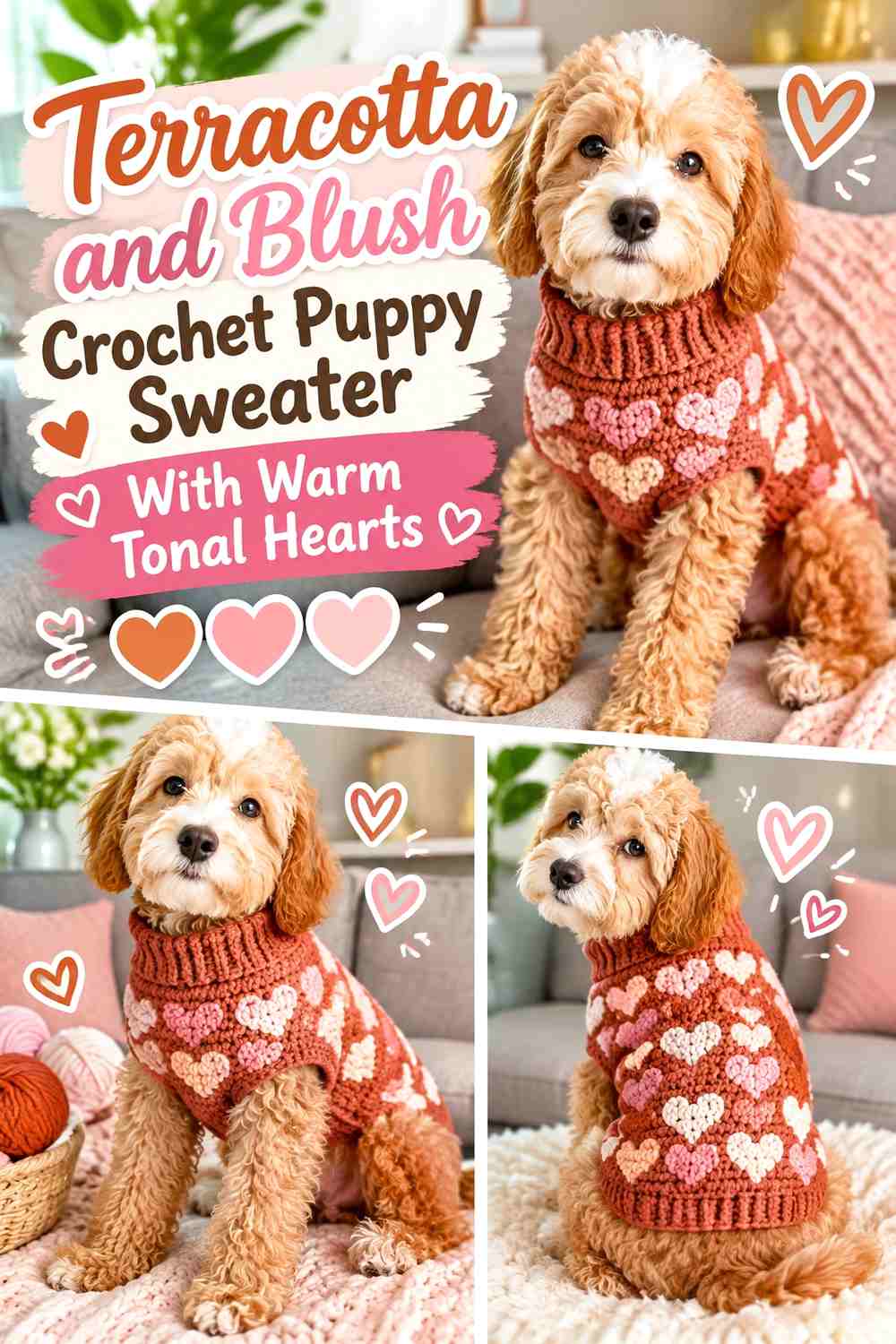
Terracotta with blush creates a warm, earthy heart palette. Terracotta can dominate the sweater while blush provides lighter motifs without the stark effect of cream or white.
Blush Hearts Can Soften a Terracotta Puppy Sweater
Use blush for one central heart or a limited series of motifs. Its lighter, softer appearance creates enough color change to identify the heart while maintaining a warm overall palette.
If the exact shades are close in value, make the blush hearts larger rather than adding a dark outline.
Terracotta Should Frame the Blush Hearts Generously
Leave terracotta visible around all sides of the heart area. A broad warm field is what makes the lighter motif recognizable as a deliberate accent.
Keep most edging terracotta when you want the sweater to stay earthy rather than pink-led.
Creator Credit: Maria’s Blue Crayon
12. Plum and Lilac Crochet Puppy Sweater With Layered Heart Color
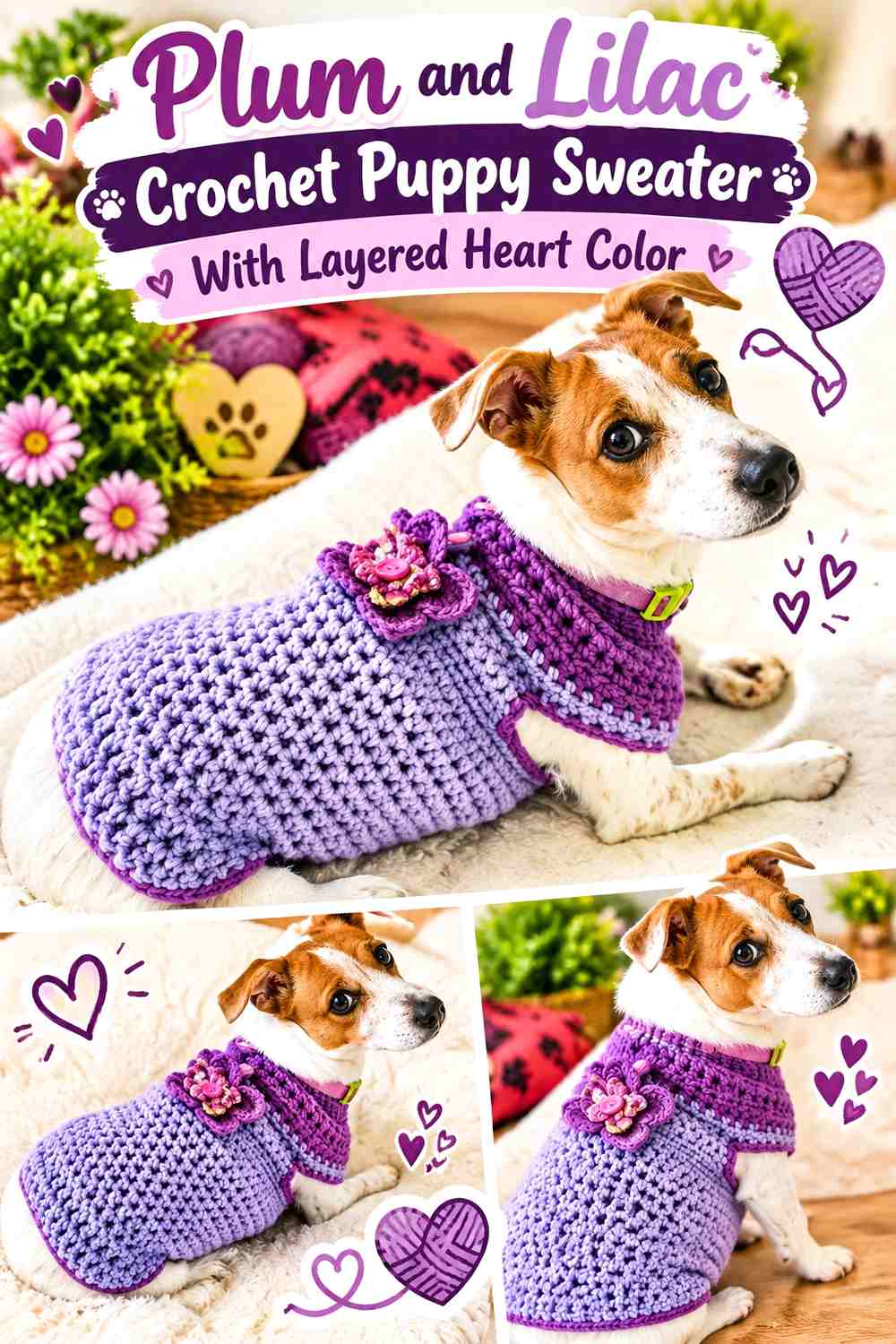
Plum and lilac create a dark-to-light tonal relationship within the purple family. Plum can cover the sweater while lilac defines a heart; a small amount of plum can then reappear inside the motif if you want a layered or nested-heart effect.
Lilac Needs Enough Lightness Against the Plum Heart Background
Choose lilac that remains clearly lighter than the plum body. Two medium-purple shades may look different in yarn balls but blend once worked into a small motif.
Checking them in grayscale can reveal whether the layered heart will remain distinct.
Plum Can Repeat Inside a Lilac Heart Without Adding Another Color
A smaller plum center inside a lilac heart creates depth while staying within the two-color palette. Keep enough lilac visible around that center for the larger heart silhouette to remain clear.
This approach is more controlled than introducing white solely to separate the layers.
Creator Credit: ALEX CROCHET UNCINETTO MODERNO DI ALEX
13. Cream, Blush, Mint, and Lavender Crochet Puppy Sweater With Multicolor Hearts
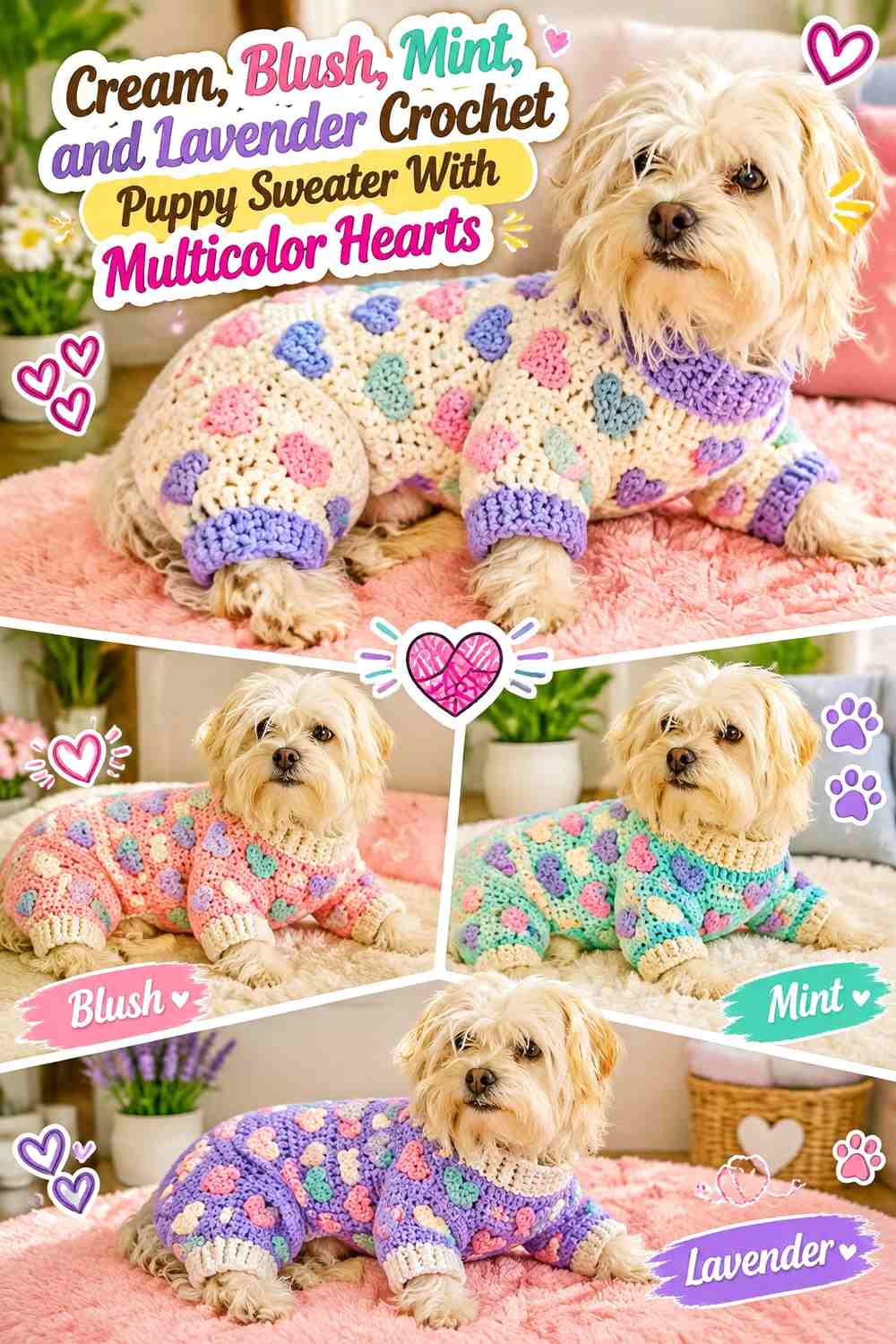
A multicolor heart sweater works best when the background stays simple. Cream can cover the body while blush, mint, and lavender are distributed through individual hearts. That lets several colors appear without dividing the sweater itself into many stripes or blocks.
Cream Gives Blush, Mint, and Lavender Hearts One Shared Background
Keeping every heart on the same cream field helps three different pastel colors feel connected. Avoid changing the background behind each motif; the consistent neutral is what organizes the palette.
Lay the heart colors together before deciding their order so one shade does not accidentally cluster in one section of the back.
Blush, Mint, and Lavender Hearts Need Consistent Repetition
If the sweater has several motifs, repeat the pastel sequence or use another deliberate distribution rather than choosing each heart color randomly.
The collar can remain cream. If you want a trim accent, select just one of the three pastels and repeat it narrowly instead of placing all three colors around the neckline.
Creator Credit: Tejiendo Con Candy
Which Heart-Pattern Puppy Sweater Color Scheme Should You Choose?
For the strongest heart visibility, navy with red, burgundy with cream, or a medium gray with white gives the motif substantial contrast. These are useful when the heart should be the first detail noticed.
For a softer result, lavender with ivory, terracotta with blush, or plum with lilac creates a more tonal relationship. The heart remains part of the design but does not separate as sharply from the sweater body.
Sage with cream and peach with dusty rose sit between those extremes, while cream with several pastel hearts is the most colorful option. If you want multiple motifs, keep the background relatively simple and let repetition organize the colors.
Conclusion
A heart-pattern puppy sweater does not need a complicated palette to feel distinctive. One clear background color and one well-chosen heart shade can be more effective than several competing accents.
Choose navy and red or burgundy and cream when you want obvious heart definition. Blush and cream, lavender and ivory, or plum and lilac create gentler alternatives. For repeated hearts, make sure enough background remains visible between motifs; for one large heart, give it clear open space on the back.
Color should support the sweater rather than dictate its fit. Use the credited tutorials for construction, scale the heart to the available back area, and keep decorative elements away from places where they could interfere with a puppy’s movement.
Frequently Asked Questions
What is the best place for a heart pattern on a crochet puppy sweater?
The back is usually the clearest location because it provides a larger uninterrupted surface. A heart can also be used in an upper yoke or repeated border, but keep motifs away from leg openings and practical underside areas.
How do I make a crochet heart stand out against the puppy sweater?
Choose a heart color with a clear light-and-dark difference from the background. White on navy, cream on burgundy, or red on a dark blue background provides stronger definition than two shades with nearly identical values.
Can I use pastel colors for crochet heart patterns?
Yes. Pastel hearts work particularly well when one shade is noticeably lighter or darker than the other. If mint and blush are too similar in value, enlarge the motifs or adjust one shade rather than adding unnecessary extra colors.
Should heart motifs match the crochet puppy sweater collar?
They can, but they do not have to cover the whole collar. A narrow repeat of the heart color can connect the motif to the sweater while allowing the main body color to remain dominant.
Are repeated hearts or one large heart better for a small puppy sweater?
Both can work. One larger heart gives a compact sweater a simple focal point, while repeated hearts create more pattern. Very small sweaters may benefit from fewer motifs so individual heart shapes remain easy to recognize.
Can I add a heart appliqué to a basic crochet dog sweater tutorial?
A flat heart can be treated as an independent decorative adaptation when there is sufficient back space, but it should not require changing the sweater’s fit. Secure any attached motif carefully and avoid loose decorative elements that a puppy may chew or snag.
How many colors should I use for a multicolor heart puppy sweater?
Three or four can work when the sweater background remains consistent. For example, one neutral body color can support several pastel heart shades. Keeping each color in a defined role generally looks more organized than changing the background, borders, and motifs independently.