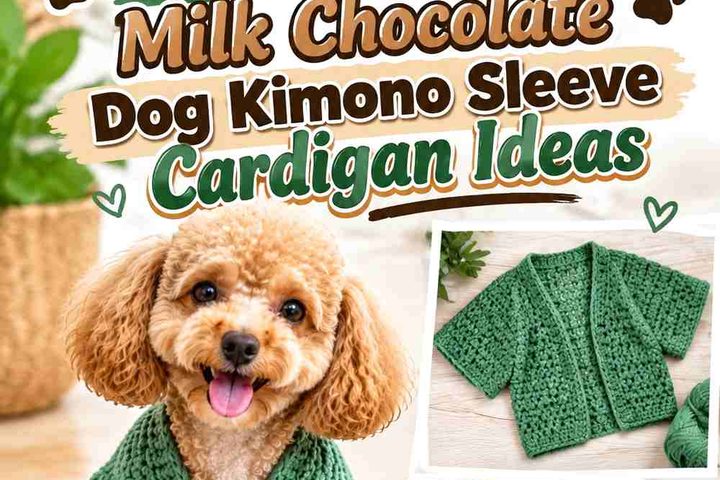
A dog shoulder warmer sits somewhere between a short sweater yoke, capelet, and neck warmer. Instead of covering most of the torso, it concentrates fabric around the neck, upper chest, and shoulders while leaving more of the belly and back open. That makes proportion especially important: a few extra rows can change a neat shoulder piece into a garment that reaches the front legs.
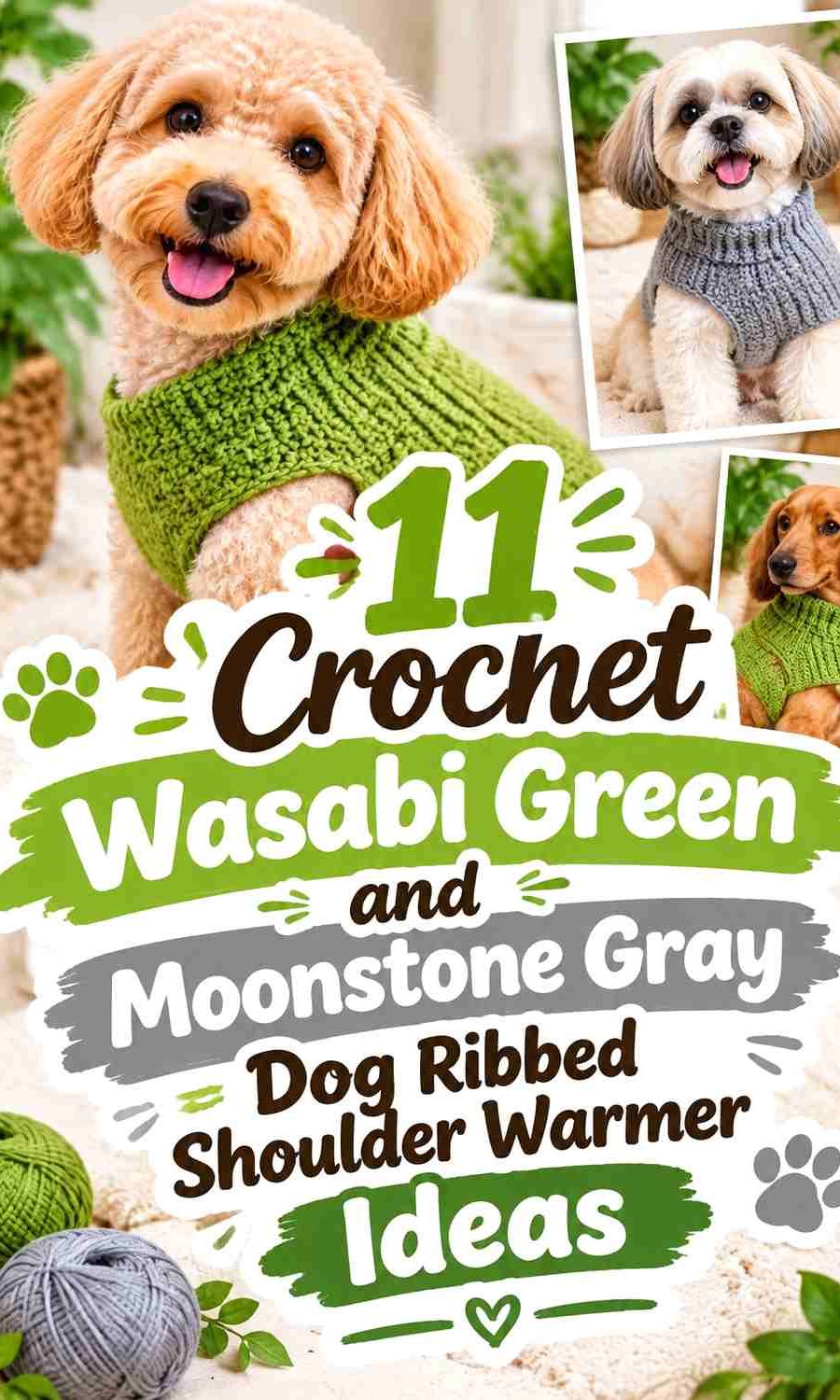
Wasabi green and moonstone gray suit this compact shape because the stronger green can define ribbing, shoulder panels, or borders while gray keeps the small garment visually calm. Reverse the colors and a wasabi collar becomes the focal point against a neutral shoulder section.
The supporting tutorials below teach dog sweaters with ribbed collars, made-to-measure construction, small-dog sizing, texture, sleeves, colorwork, or harness access. They are construction references rather than 11 tutorials for this exact shoulder-warmer style. When adapting one, establish a comfortable neckline and upper-body fit first, then stop or reshape the construction earlier to create the shorter silhouette.
Quick List
- Crochet Made-to-Measure Wasabi Ribbed Dog Shoulder Warmer
- Crochet Moonstone Gray Raglan-Style Dog Shoulder Warmer
- Crochet Two-Tone Ribbed Capelet Dog Shoulder Warmer
- Crochet Button-Tab Wasabi Dog Shoulder Warmer
- Crochet Wide-Rib Moonstone Dog Shoulder Warmer
- Crochet Tiny-Dog Berry Rib Shoulder Warmer
- Crochet Lightweight Wasabi Collar Dog Shoulder Warmer
- Crochet Puff-Accent Ribbed Dog Shoulder Warmer
- Crochet Short-Sleeve Shoulder Hugger Dog Warmer
- Crochet Colorwork-Yoke Ribbed Dog Shoulder Warmer
- Crochet Harness-Opening Moonstone Dog Shoulder Warmer
Fit the Neck Before Expanding Across the Shoulders
A shoulder warmer depends heavily on its neckline. If the opening is too tight, adding more fabric around the shoulders will not make the garment more comfortable. If it is too loose, the whole piece can rotate or slip toward one front leg.
Ribbing is useful because it can provide flexibility, but not every ribbed stitch produces the same amount of stretch. Make a swatch in the actual yarn and stitch you intend to use rather than assuming any ribbed fabric will behave like knitted ribbing.
Check the garment with the dog standing naturally and turning its head in both directions. The neck edge should remain clear of the throat, jaw, and collar hardware.
The lower edge deserves another movement check. A shoulder warmer should finish high enough that the front legs can move forward without repeatedly pushing the fabric upward.
Decide How Much Ribbing the Shoulder Warmer Really Needs
Ribbing can define the whole garment, but using it everywhere may create more thickness than necessary. One practical approach is a ribbed neck with a flatter shoulder section. Another is a plain neckline with broad vertical ribs running over the upper back.
If you want a strongly sculpted look, use ribbing as a central shoulder panel and keep the sides simpler. This allows the wasabi-and-gray contrast to emphasize construction rather than relying on many stripes.
Watch the direction of the ribbing as well. Vertical-looking ribs can visually lengthen the small garment, while horizontal bands make the shoulder area appear broader.
Whenever you replace the stitch used in a tutorial, recheck gauge. Ribbing can contract differently from the original fabric, changing both circumference and shoulder width.
Keep Harnesses and Walking Gear Separate From Decorative Ribbing
A short shoulder garment often occupies the same area as a harness. Put the dog’s actual harness on before deciding where the lower edge, ribs, or color blocks will sit.
Avoid thick raised ribs directly underneath straps if they create pressure or make the harness sit unevenly. A flatter section can be reserved for contact points while stronger texture remains visible between or above them.
If the garment includes an opening for leash hardware, position it from the actual harness rather than from the visual center of the crochet piece. Never use a crochet opening, button, or decorative loop itself as a leash attachment.
1. Crochet Made-to-Measure Wasabi Ribbed Dog Shoulder Warmer
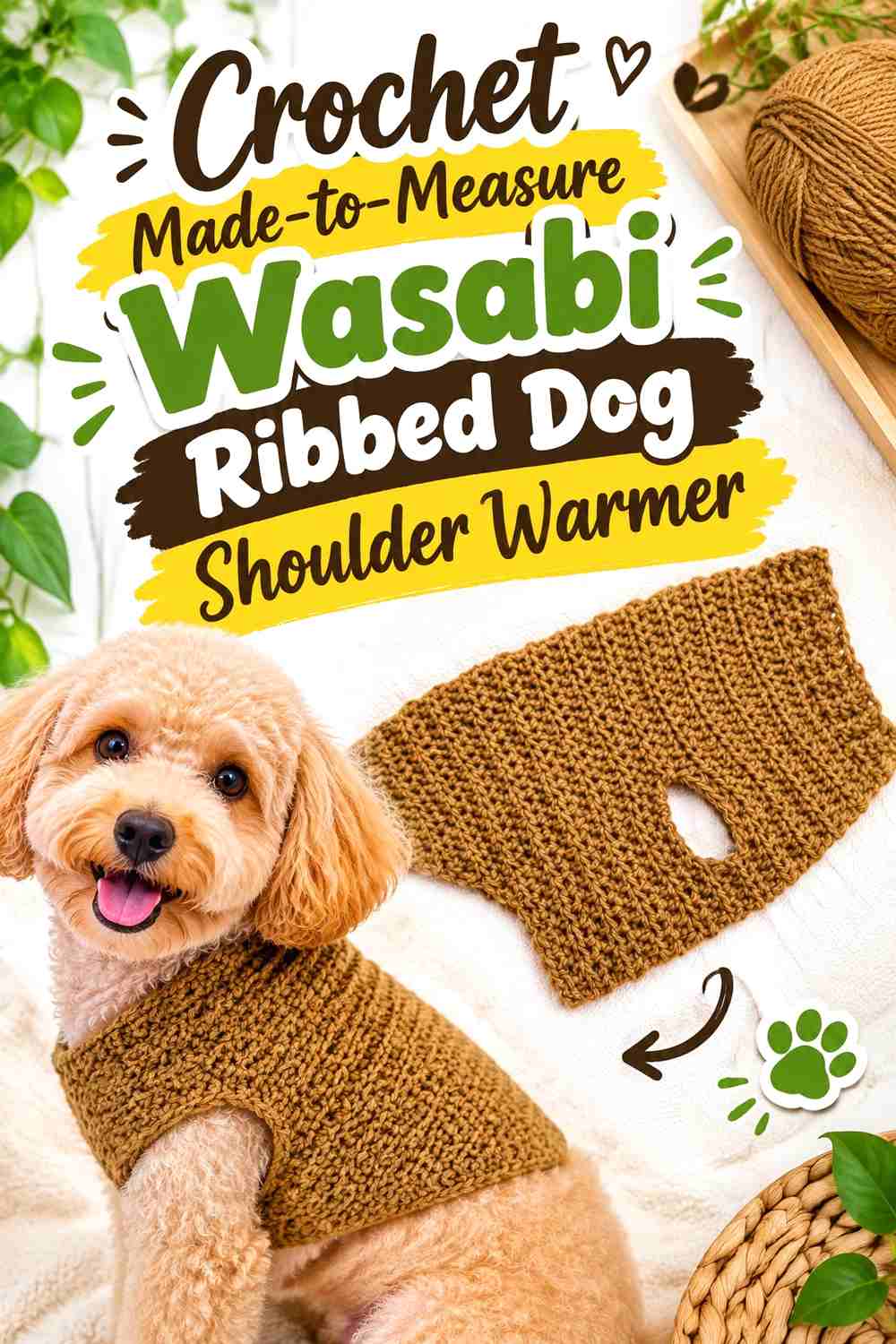
Loops Only Crochet demonstrates a customizable dog sweater that begins with a ribbed neckline before developing into the chest and body. That makes it a useful starting point for a shoulder warmer because the construction can be reconsidered before the garment grows into a full-length sweater.
For this idea, work the neck in wasabi green and transition into a compact moonstone gray shoulder section.
Stop the Construction at the Right Moment
The key adaptation is knowing when the upper-body coverage is already enough. Once the fabric has spread comfortably across the shoulders and clears the front legs, additional torso length may no longer serve the shoulder-warmer concept.
Try the piece on before automatically continuing every body section from the source tutorial.
Let Wasabi Ribbing Frame the Face
Keeping wasabi concentrated at the neck gives the stronger color a clear purpose. Moonstone gray can then spread over the shoulders without competing for attention.
A narrow green lower edge can repeat the collar color if the transition looks unfinished.
Check Rib Recovery After Stretching
Gently stretch the completed neckline as it would be during dressing, then see whether it returns to its intended shape.
If it remains noticeably enlarged, reconsider the yarn, ribbing method, or opening before completing the shoulder section.
Creator Credit: Loops Only Crochet
2. Crochet Moonstone Gray Raglan-Style Dog Shoulder Warmer
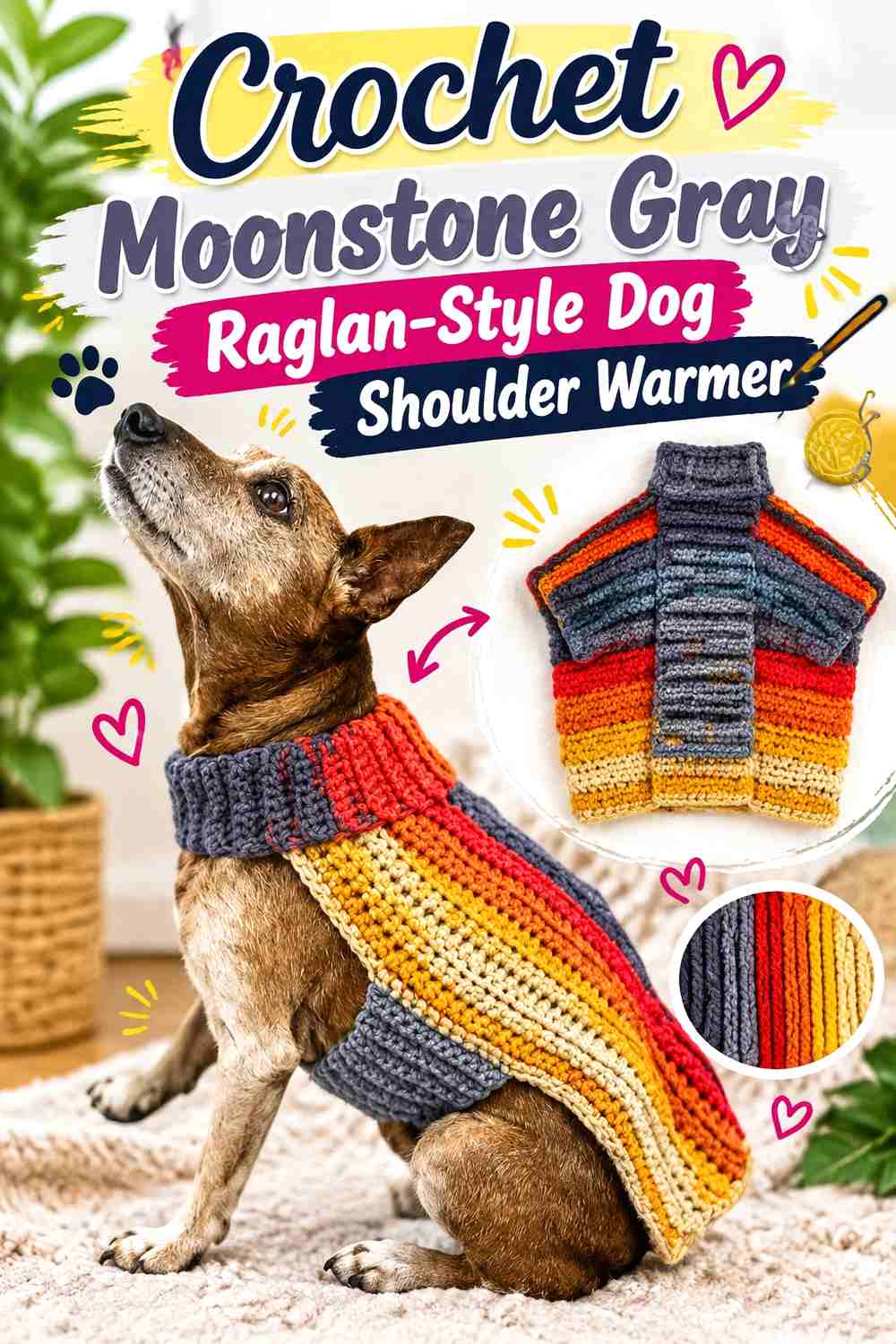
Kami Crochet’s made-to-measure dog-sweater tutorial provides another adaptable construction route. A raglan-like upper-body approach is especially useful for a shoulder warmer because the shaping can follow the dog’s front body before ending in a short lower edge.
Use moonstone gray as the main shoulder color and wasabi green only around the neck and shaping lines.
Let the Shoulder Shaping Become the Design
Instead of hiding the lines where the upper garment expands, emphasize them with wasabi accents.
That produces visual structure without adding pockets, appliqués, or extra decorative pieces to a very small garment.
Do Not Extend the Back Just to Match a Sweater
A standard dog sweater usually continues well beyond the shoulders. This adaptation should stop according to the intended coverage, not because the source garment has more rows remaining.
The lower edge should stay clear of the dog’s stride and any harness straps that sit farther back.
Compare Both Sides During Fitting
A compact garment makes uneven shoulder placement particularly visible. Check whether both front-leg areas have similar clearance before finishing the border.
Small differences are easier to correct before a firm ribbed edge is added.
Creator Credit: Kami Crochet
3. Crochet Two-Tone Ribbed Capelet Dog Shoulder Warmer
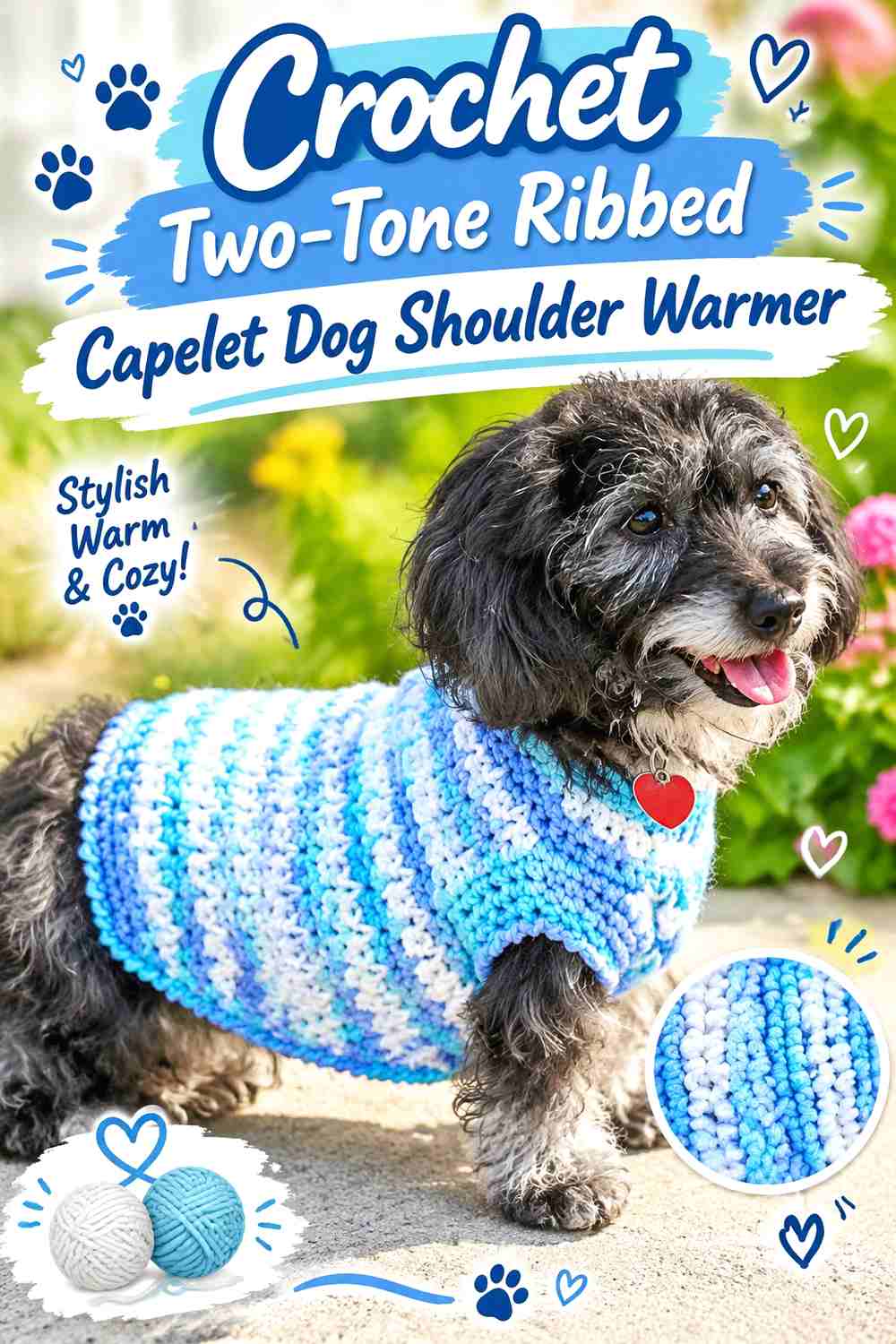
The Crochet Crowd’s dog-sweater tutorial offers a traditional construction and discusses color changes, making it a useful foundation for a shoulder warmer with broad graphic bands.
For this version, work a moonstone gray neckline, a wasabi shoulder band, and return to gray for the lower edge.
Use One Broad Green Band Instead of Many Stripes
Because the garment is short, frequent color changes can make it look chopped into narrow sections.
One substantial wasabi band across the shoulders gives the color enough room to register while preserving a clear capelet shape.
Keep the Final Ribbing Flexible
A lower ribbed edge can help define the shoulder warmer, but it should not cinch tightly around the upper chest.
If the fabric draws inward and restricts front-leg movement, use a less contracting finish.
Judge the Band While the Garment Is Worn
A stripe that seems horizontal when the piece is flat may curve once it wraps over the dog’s shoulders.
Try it on before the color section becomes too deep so you can judge whether the visual balance still works.
Creator Credit: The Crochet Crowd
4. Crochet Button-Tab Wasabi Dog Shoulder Warmer
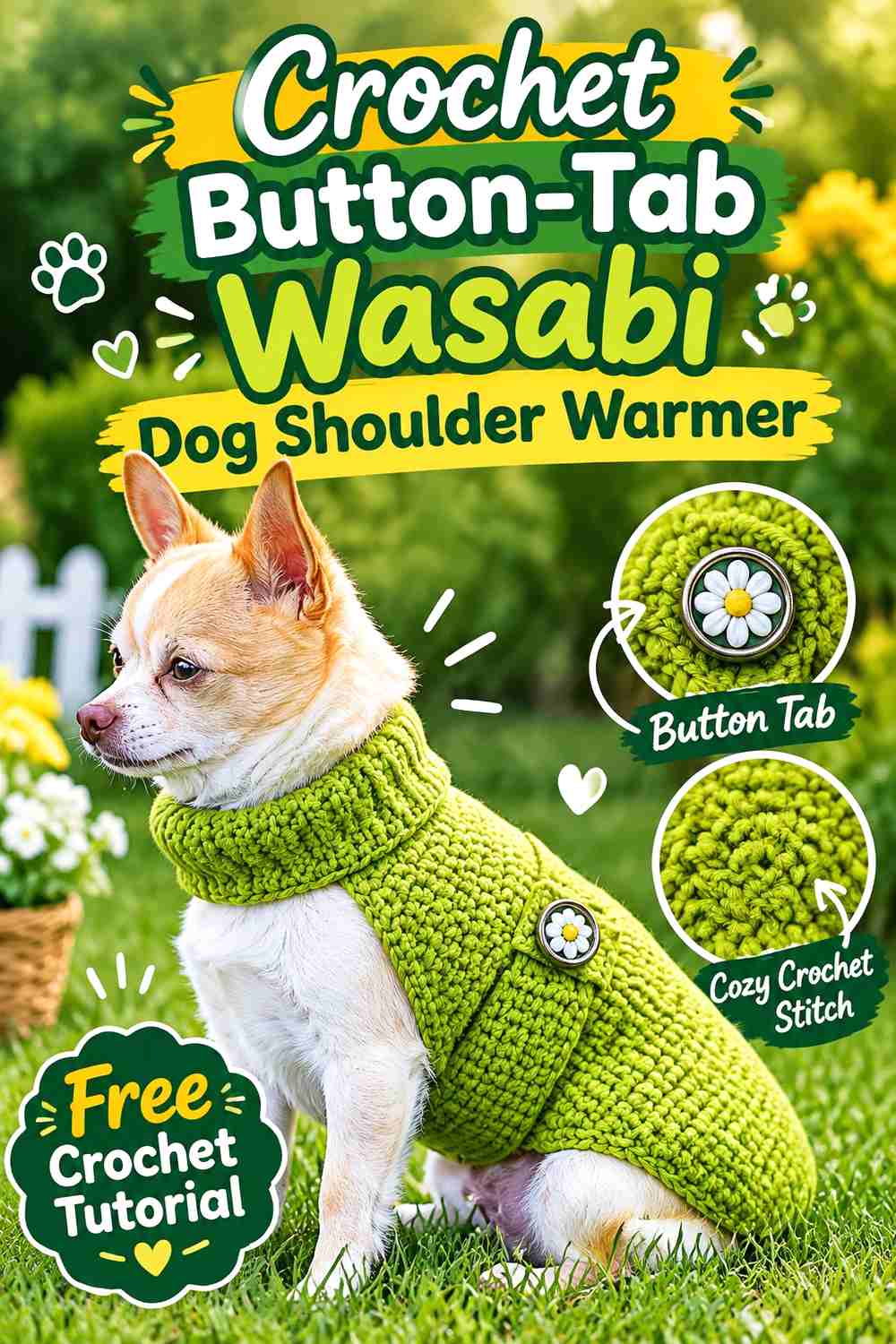
Last Minute Laura’s dog-sweater tutorial provides a useful reference for a one-piece garment with a fastening element. That makes this idea distinct from a shoulder warmer that must stretch completely over the dog’s head.
Use moonstone gray across the main shoulder panel and a short wasabi fastening tab.
Use the Closure to Reduce Dressing Stretch
A controlled opening can be useful for a dog that dislikes having a snug ribbed collar pulled over the head.
The fastening should lie flat and remain away from the throat and front-leg movement zone.
Keep Buttons Secure and Appropriate
If you use a button, attach it securely and inspect it regularly. An exposed closure may not suit a dog that chews or mouths clothing.
The warmer does not need several decorative buttons; one functional fastening can provide enough cardigan-like detail.
Let the Tab Replace Extra Decoration
A wasabi tab against gray fabric already creates a strong focal point near the shoulder.
Skip dangling ties or additional raised embellishments and allow the two-color construction to carry the design.
Creator Credit: Last Minute Laura
5. Crochet Wide-Rib Moonstone Dog Shoulder Warmer
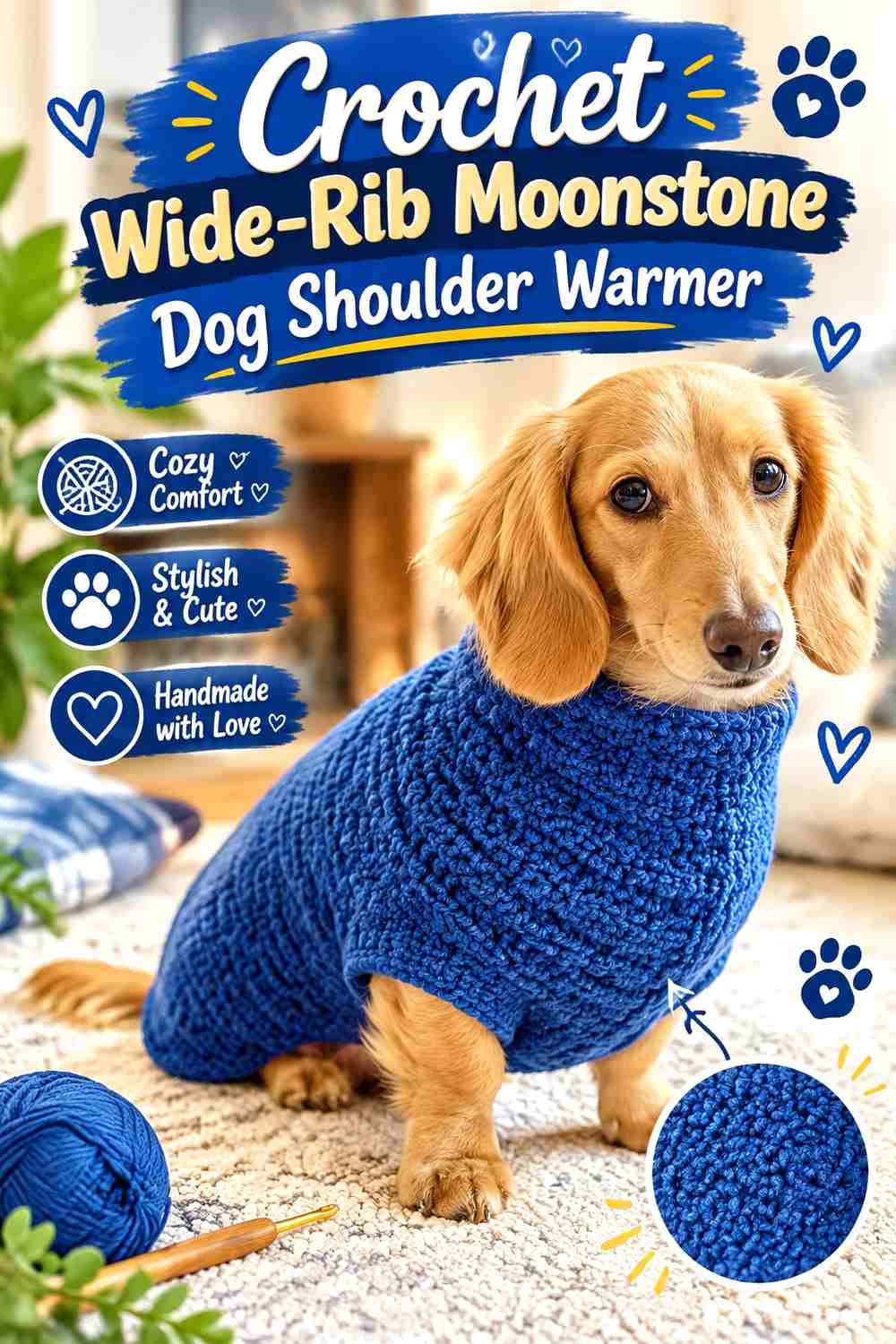
Crochet With Tiffany demonstrates a dog coat with defined neck, chest, arm-opening, and body sections plus sizing adjustments. For a shoulder warmer, the useful idea is to preserve the upper fit while greatly reducing the amount of lower-body coverage.
Make moonstone gray the dominant shade and use wasabi for a wide ribbed neck and shallow lower border.
Treat the Neck and Shoulder as Separate Fit Zones
The neck needs enough flexibility for dressing, while the shoulder panel needs enough width for movement.
Do not make the shoulder fabric tighter simply because the ribbed neck sits close to the body.
Use Wider Ribs Only Where There Is Room
Broad post-style ribbing can look striking around the upper back but may feel bulky near the armpits.
Transition to a flatter treatment before the fabric approaches the moving front legs.
Compare Coverage From the Side
A shoulder warmer should look intentionally short, not like an unfinished sweater.
Viewing it from the side helps you decide whether the lower edge has enough depth to cover the shoulder area without becoming a torso garment.
Creator Credit: Crochet With Tiffany
6. Crochet Tiny-Dog Berry Rib Shoulder Warmer
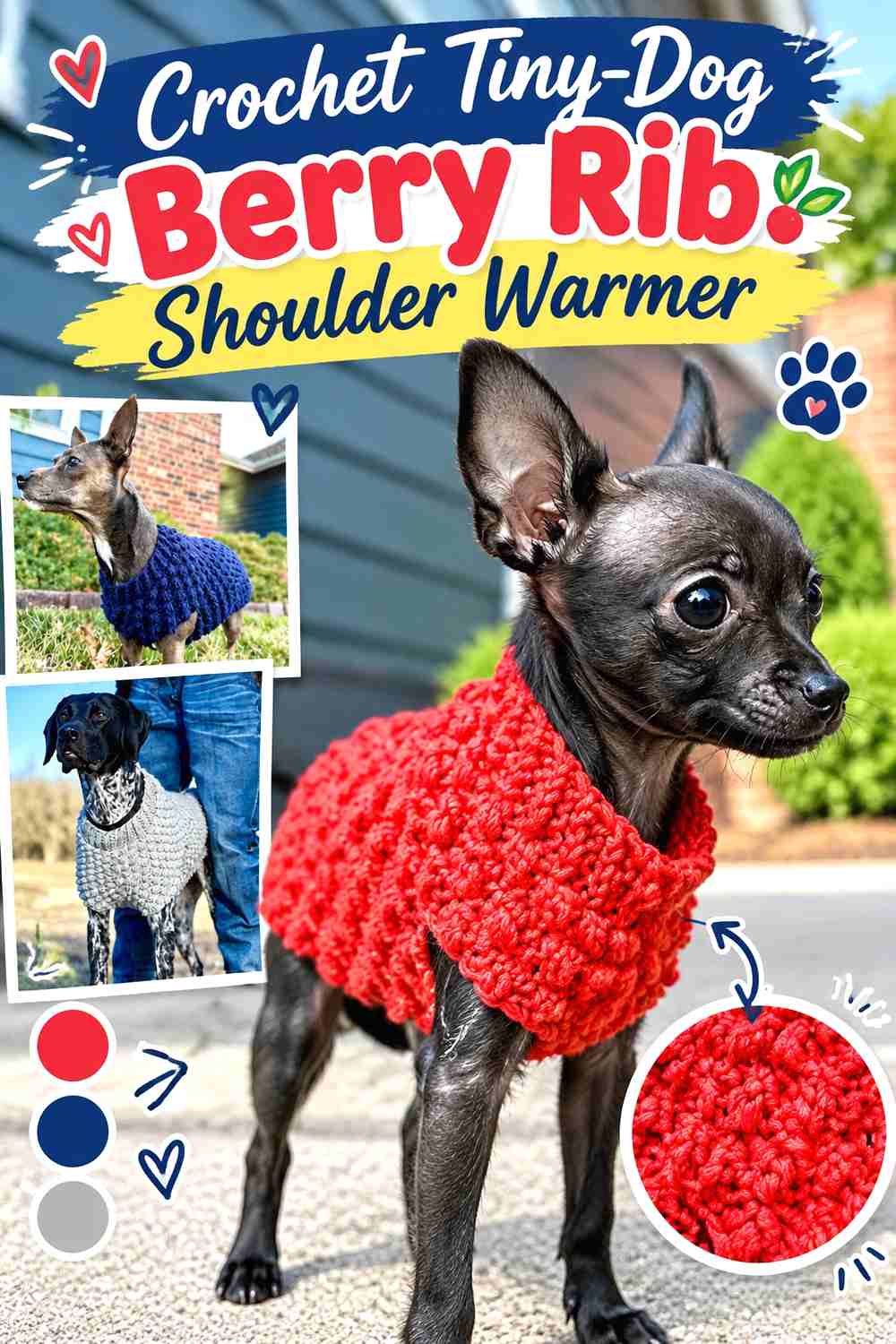
Heart Hook Home’s tiny-dog sweater design provides a particularly useful reference when the shoulder warmer is intended for a very small dog. The source construction is available in very small sizes and uses pronounced texture, so scale becomes an important design consideration.
Use a moonstone gray ribbed neck with a small wasabi textured panel between the shoulders.
Scale the Texture Down With the Garment
A large raised repeat can consume most of a tiny shoulder warmer.
Use the source construction as a sizing reference while choosing a texture that leaves enough visible fabric for the garment’s shape to remain clear.
Keep the Under-Neck Area Simple
On a very small dog, there is little room for multiple layers around the throat and upper chest.
Reserve the stronger texture for the back and use a flatter fabric underneath.
Make the Green Panel a Small Focal Point
Wasabi does not need to cover half the garment to be noticeable. A narrow center-back panel can provide enough contrast against moonstone gray.
That also leaves the sides softer and less bulky.
Creator Credit: Heart Hook Home
7. Crochet Lightweight Wasabi Collar Dog Shoulder Warmer

Crochet It’s small-dog sweater tutorial uses a lighter-looking, compact construction that can inspire a less bulky shoulder warmer.
For this variation, work most of the shoulder section in moonstone gray and keep wasabi concentrated in a slim ribbed collar.
A Finer Fabric Can Keep the Silhouette Flexible
A shoulder warmer does not need the substantial feel of a winter dog coat.
If you choose a lighter yarn than another project in this collection, assess its drape and stretch rather than assuming you should add more layers to compensate visually.
Keep the Collar Proportional
A deep ribbed neck can dominate a short garment. A narrower collar generally leaves more visible room for the shoulder panel itself.
Check where the collar ends when the dog’s head is lowered.
Use Gray to Make the Ribbing More Noticeable
Wasabi against moonstone gray creates enough contrast that even modest ribbing will stand out.
There is no need for additional stripes unless the garment needs another visual boundary.
Creator Credit: Crochet It
8. Crochet Puff-Accent Ribbed Dog Shoulder Warmer
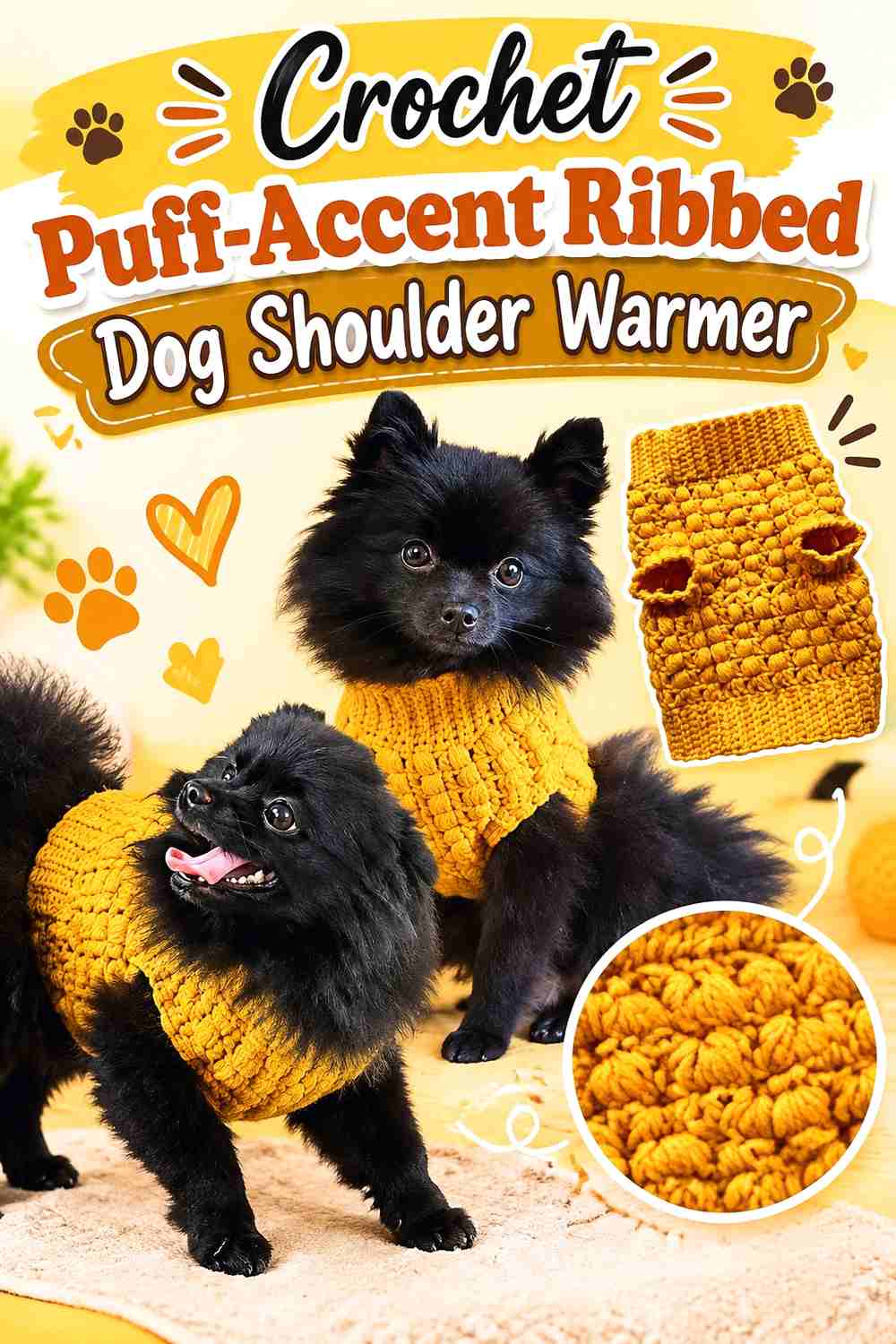
SheiLa Teré’s Chihuahua sweater tutorial incorporates puff and V-stitch texture, providing a useful reference for a shoulder warmer that mixes ribbing with one more dimensional element.
Use moonstone gray for the ribbed neck and wasabi for a limited textured shoulder strip.
Concentrate Puffs Between the Shoulders
Raised stitches can provide a decorative center panel without adding bulk across the entire garment.
Keep the sides and lower edge flatter where they are more likely to interact with leg movement.
Do Not Stack Every Texture Together
Ribbing, puff stitches, and strong color contrast each add visual information.
Let the ribbing control the neck and the puffs control one small shoulder section rather than repeating both everywhere.
Check the Raised Surface for Snagging
Before regular use, handle the finished fabric and check whether pronounced loops easily catch fingers or hardware.
If the texture catches readily, simplify areas that sit near a harness or collar.
Creator Credit: SheiLa Teré
9. Crochet Short-Sleeve Shoulder Hugger Dog Warmer
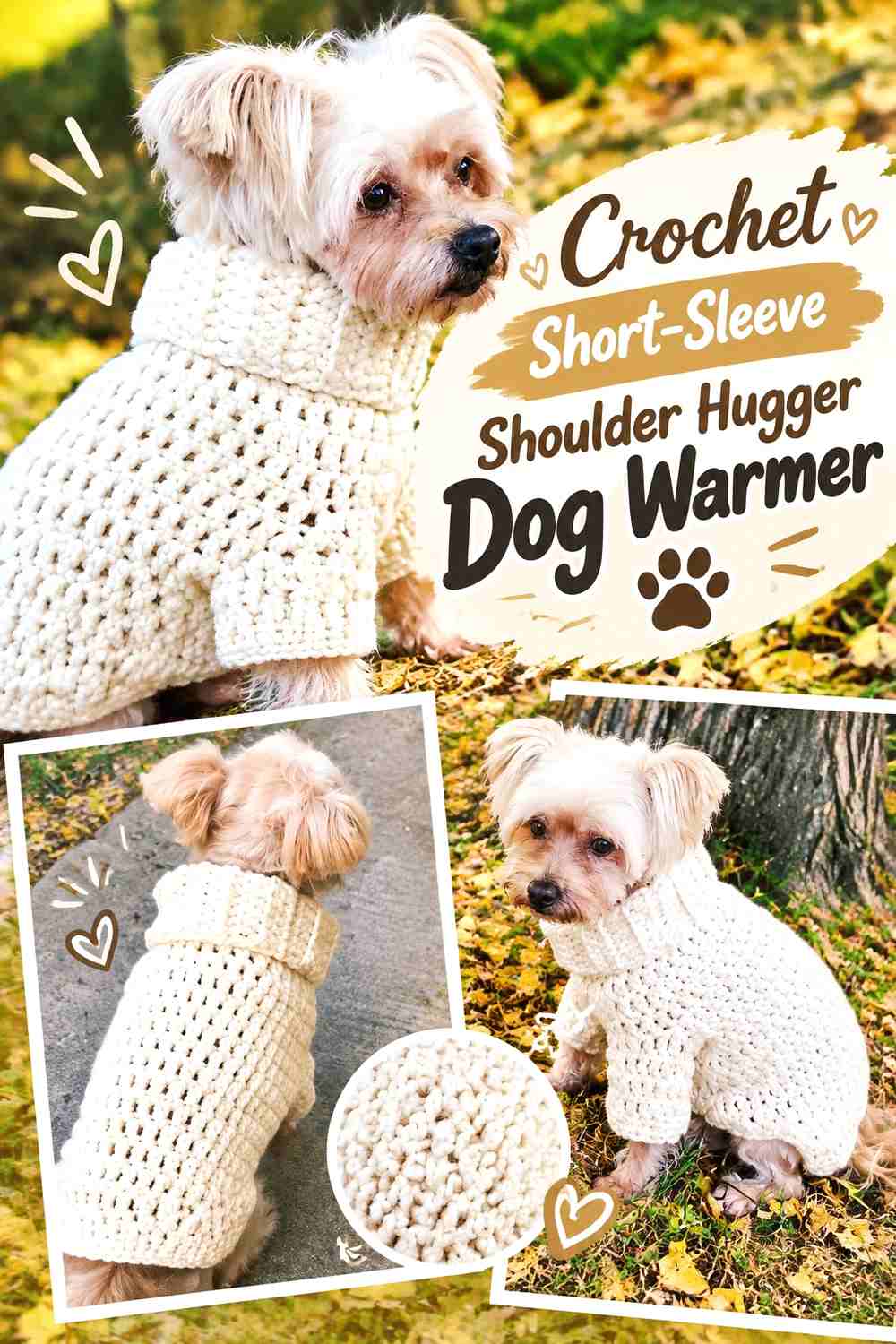
Vibes with Dani demonstrates a dog sweater with front-leg coverage, giving this shoulder warmer a different direction: instead of extending down the back, a small amount of fabric continues around the tops of the front legs.
Use wasabi across the central shoulder area and moonstone gray for short sleeve-like cuffs.
Keep the Leg Coverage Very Shallow
A shoulder warmer should not need long sleeves to feel finished.
A short cuff can visually anchor the garment while leaving the dog’s elbow and lower leg unrestricted.
Let the Shoulder Panel Carry the Stronger Color
Wasabi across the upper back gives the compact garment a clear center.
Moonstone gray cuffs and neckline can visually soften the edges and keep the stronger color away from every opening.
Watch the Cuffs During a Full Stride
A sleeve can appear loose while standing and still bunch when the dog moves.
Observe several steps and remove depth if the cuff is repeatedly pushed upward toward the armpit.
Creator Credit: Vibes with Dani
10. Crochet Colorwork-Yoke Ribbed Dog Shoulder Warmer

Marly Bird’s crochet dog-sweater tutorial uses a decorative colorwork yoke, making it especially relevant to a garment that intentionally ends around the shoulder area.
Instead of carrying multiple colors through a full sweater, simplify the yoke idea to wasabi green and moonstone gray and let the decorated upper section become almost the entire warmer.
Make the Yoke the Finished Garment Feature
A shoulder warmer is one of the few dog garments where the decorative upper section does not need a long body beneath it.
Once the neck and shoulders have enough comfortable coverage, a narrow finishing band can complete the silhouette.
Keep Two-Color Fabric From Becoming Too Firm
Colorwork can behave differently from a single-color fabric. Check stretch before assuming the yoke can substitute directly for flexible ribbing.
Use the ribbed neck as the main expansion point for dressing if the colorwork itself has less give.
Choose One Dominant Shade
Moonstone gray as the background with wasabi motifs produces a quieter warmer. Reversing them creates a much brighter shoulder piece.
Either arrangement is stronger than trying to divide both shades equally in every section.
Creator Credit: Marly Bird
11. Crochet Harness-Opening Moonstone Dog Shoulder Warmer
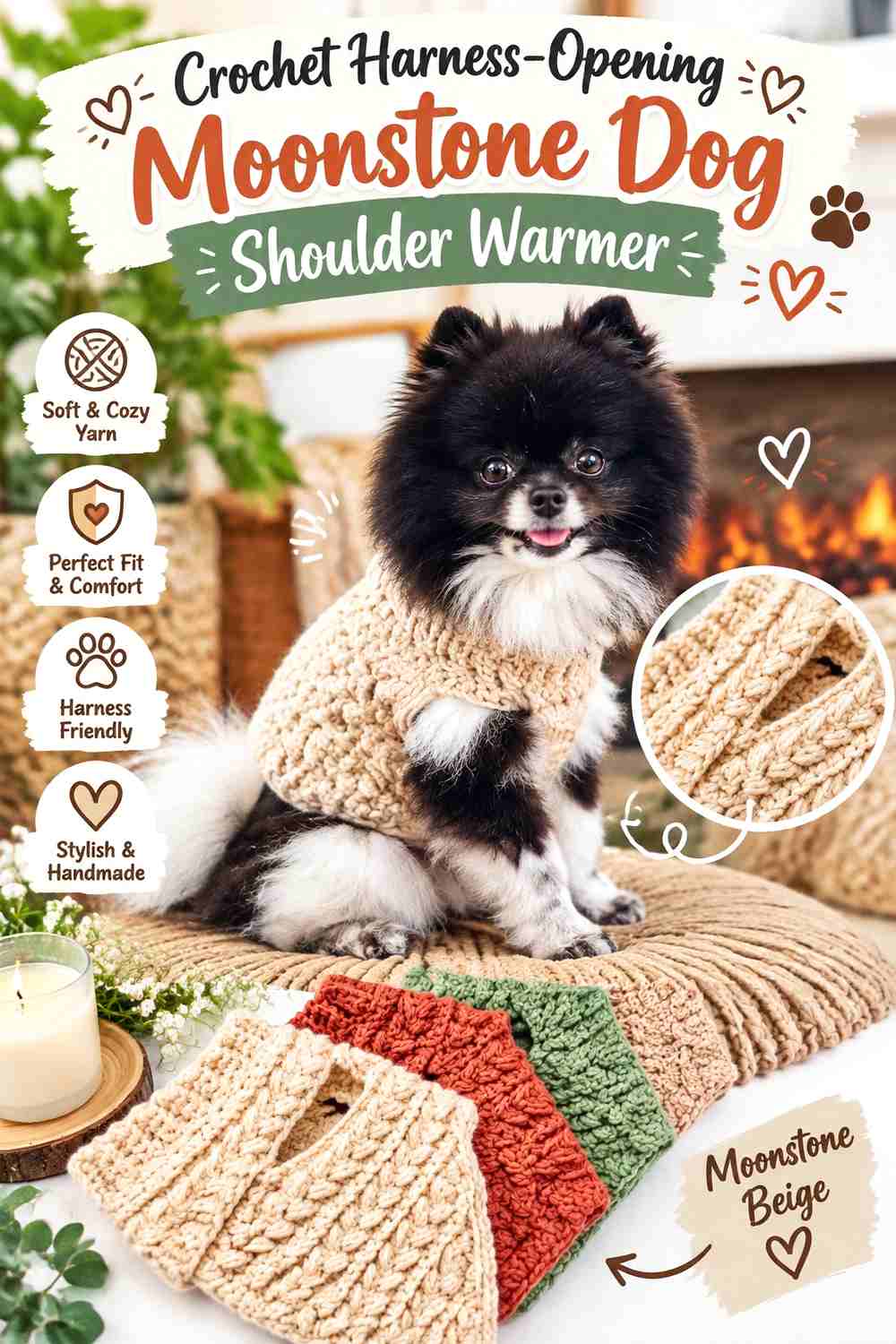
Briana K Designs provides a dog-sweater construction with a harness opening, making this the most function-focused shoulder warmer in the collection.
Use moonstone gray around the harness-contact area and wasabi ribbing at the neck and outer shoulder edge.
Position the Opening From the Real Harness
Do not assume the leash connection belongs at the geometric center of the warmer.
Put the dog’s harness on, locate the actual attachment point, and plan the garment around that position.
Keep Thick Ribbing Away From Straps
The wasabi ribbing can remain highly visible around the neck and outer edge without sitting directly underneath harness webbing.
A flatter gray center panel can reduce unnecessary layering where straps cross the body.
Do Not Let the Opening Become a Structural Weak Point
The leash should attach to the harness, not the crochet garment.
The opening only provides access, so keep its surrounding fabric neat and stable without treating it as something designed to carry pulling force.
Creator Credit: Briana K Designs
Comparing the 11 Ribbed Shoulder Warmer Directions
IdeaMain Construction DifferenceBest Place for RibbingKey CheckMade-to-measureAdjustable upper-body fitNeck and lower edgeRib recoveryRaglan-styleShoulder-focused shapingNeck and shaping linesEven shoulder clearanceTwo-tone capeletBroad color blockingLower boundaryAvoid chest cinchingButton-tabOpening for easier dressingNeck and tab edgeClosure securityWide-ribMore sculpted textureUpper backArmpit bulkTiny-dogVery compact proportionsNeck with small back panelTexture scaleLightweightFiner overall fabricSlim collarCollar depthPuff-accentMixed texturesRibbed neck onlySnaggingShort-sleeveSmall amount of leg coverageNeck and cuffsFull-stride movementColorwork yokeDecorative shoulder zoneFlexible necklineColorwork stretchHarness-openingWalking-gear accessAreas outside strapsHardware alignment
Conclusion
The most useful ribbed dog shoulder warmer is not simply a full sweater made shorter. Its proportions should be planned around the neck, shoulders, front legs, and any harness that occupies the same part of the body.
The Loops Only Crochet and Kami Crochet sources are useful when you want the shoulder dimensions to follow the individual dog rather than a fixed size. Heart Hook Home and Crochet It offer directions for more compact garments, while the Vibes with Dani construction provides inspiration if you want a small amount of front-leg coverage.
For the strongest design statement, the Marly Bird colorwork-yoke idea turns the shoulder area itself into the decorative feature. If the dog walks in a harness, the Briana K Designs option provides a more relevant functional starting point.
Wasabi green works well as concentrated ribbing because a relatively small amount can stand out against moonstone gray. Whichever arrangement you choose, swatch the ribbing, establish the neckline first, keep the lower edge clear of the front legs, and use the original creator tutorial for its exact construction details before adapting the garment into a shorter shoulder-warmer silhouette.
Frequently Asked Questions
What is the difference between a crochet dog shoulder warmer and a dog sweater?
A shoulder warmer concentrates coverage around the neck, upper chest, and shoulders rather than extending along most of the torso. It may resemble a very short sweater yoke or fitted capelet. The exact construction still needs to allow normal front-leg and neck movement.
Should a ribbed dog shoulder warmer fit tightly?
No. Ribbing can sit relatively close to the body, but it should not restrict breathing, neck movement, or the dog’s stride. Check the garment while the dog is standing and moving rather than judging fit only from its unstretched measurement.
Where should the lower edge of a shoulder warmer sit?
It should remain high enough that the dog’s front legs can move without repeatedly pushing against the fabric. The ideal position varies with body proportions and construction, so fit the garment directly to the individual dog.
Can I shorten a regular dog sweater tutorial to make a shoulder warmer?
Often you can use its neckline and upper-body construction as a reference, but simply stopping after a random row may leave an unfinished or restrictive edge. Decide where the shoulder coverage should end, check movement, and choose an appropriate finishing treatment rather than automatically following the full sweater body.
Is wasabi green better for the ribbing or the main shoulder panel?
Both can work. Wasabi ribbing against a moonstone gray body creates a strong outline with relatively little bright color. A wasabi shoulder panel with gray ribbing produces a bolder garment and emphasizes the upper-back shape.
Can a ribbed shoulder warmer be worn over a harness?
That depends on how the harness and garment overlap. Fit the actual harness while planning the warmer and avoid thick ribbing directly beneath straps if it causes pressure or uneven fit. If leash access is required, place an opening according to the real harness attachment point rather than purely for symmetry.