A pine green and cool blue plaid gives a crochet dog shoulder cape a wintry holiday character without relying on the usual red-and-green combination. Pine green can create the deeper background while cool blue forms checks, crossing bands, edging, or a compact shoulder yoke.
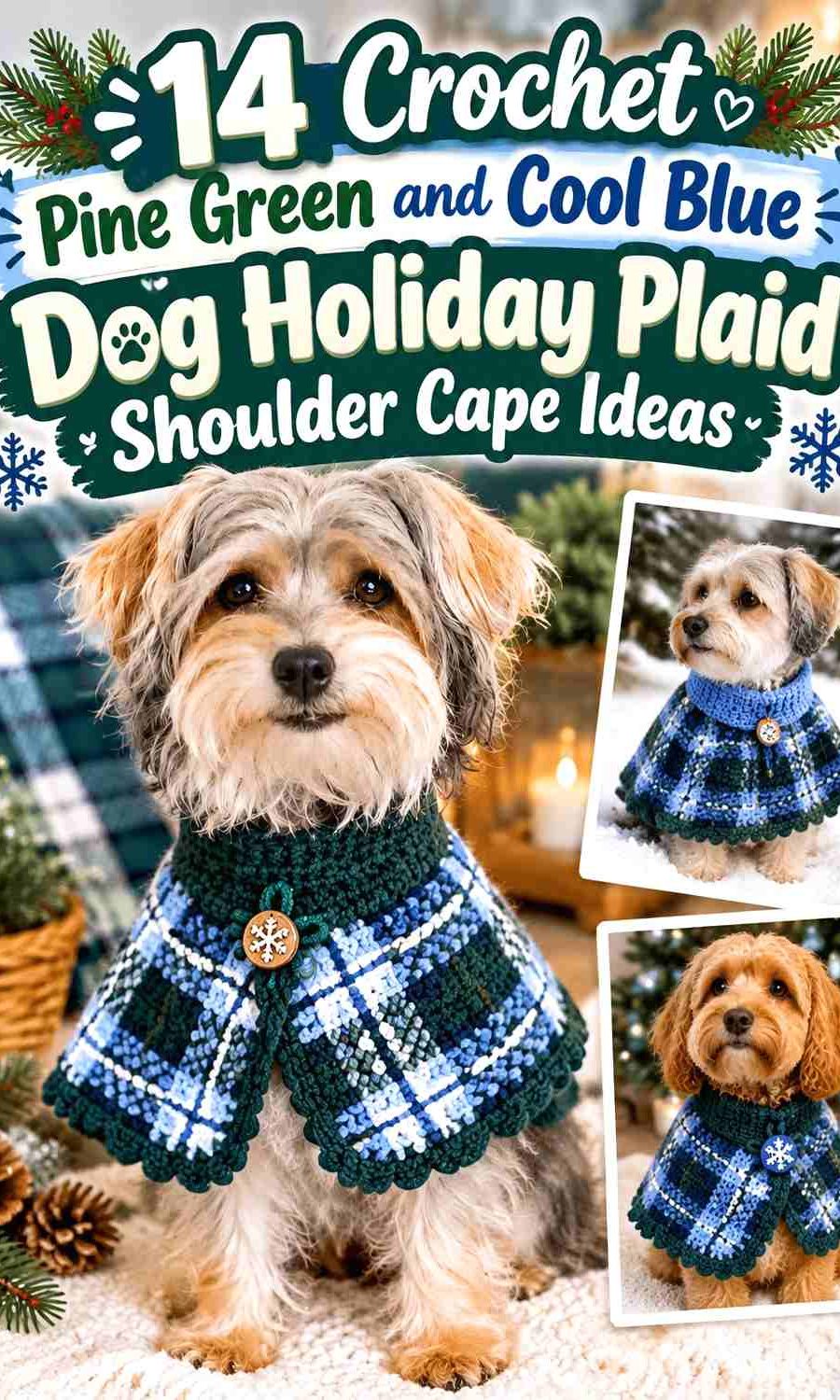
A shoulder cape should also behave differently from a full sweater. Instead of extending far down the torso, it concentrates coverage around the neck, shoulders, and upper back while leaving the belly and most of the legs open. That makes the plaid highly visible, but it also means neckline stability and hem placement matter more than adding extra length.
Two sources below are direct crochet cape or poncho tutorials for pets, including a dog cape from Tejiendo Con Candy and an adaptable pet cape from Creaciones Gabriela. The remaining tutorials provide sweater, collar, colorwork, texture, sleeve, or harness construction references that can be shortened or adapted into shoulder-cape silhouettes after fit is established.
Quick List
- Crochet Classic Pine Green Plaid Dog Shoulder Cape
- Crochet Broad-Check Cool Blue Dog Shoulder Cape
- Crochet Made-to-Measure Tartan Yoke Dog Shoulder Cape
- Crochet Moss-Grid Plaid Dog Shoulder Cape
- Crochet Cowl-Neck Holiday Plaid Dog Shoulder Cape
- Crochet Button-Tab Plaid Dog Shoulder Cape
- Crochet Structured Pine Green Plaid Dog Shoulder Cape
- Crochet Lightweight Mini-Check Dog Shoulder Cape
- Crochet Puff-Line Holiday Plaid Dog Shoulder Cape
- Crochet Side-Tab Plaid Dog Shoulder Cape
- Crochet Uneven-Band Tartan Dog Shoulder Cape
- Crochet Nordic Plaid Yoke Dog Shoulder Cape
- Crochet Ribbed-Edge Plaid Dog Shoulder Cape
- Crochet Harness-Window Plaid Dog Shoulder Cape
Keep a Shoulder Cape Above the Front-Leg Movement Zone
A shoulder cape can flare gently over the upper back, but the side edges should remain clear of the front legs. Test the developing cape with the dog standing, walking, sitting, and turning rather than judging length only while the project lies flat.
The neckline is the anchor. If it is too loose, the cape can rotate toward one side. If it is too tight, extra flare will not make the garment comfortable. Establish the neck fit before adding most of the plaid surface.
A shorter rear edge is often more practical than a dramatic costume cape. You can create plenty of holiday character through plaid scale, contrasting borders, and shoulder shaping without extending the fabric toward the rear legs.
Avoid long ties, loose fringe, or dangling decorations. A flat fastening or fitted neckline can secure the cape without leaving yarn ends within reach of the dog’s mouth or paws.
Choose a Plaid Method That Matches the Cape’s Scale
A two-color plaid does not have to mimic woven tartan exactly. Pine green and cool blue can form a clear checked effect through broad color blocks, crossing bands, surface lines, or a textured grid.
For a small cape, large checks are usually easier to read than a dense miniature pattern. A broad pine-green field crossed by cool-blue horizontal and vertical accents can provide the plaid look without filling the garment with frequent color changes.
Another option is to crochet wider horizontal bands first and add restrained vertical surface lines afterward. That approach can simplify color management, but any added surface crochet should remain flexible enough that it does not draw the cape inward.
Swatch the actual plaid treatment before committing. Colorwork, carried yarn, and surface lines can make the fabric firmer than the single-color stitch used in the supporting tutorial.
Plan the Plaid Around Harnesses, Closures, and Neck Edges
A shoulder cape often occupies exactly the same upper-back area as a harness. Put the dog’s usual walking gear on before deciding where the strongest checks or vertical lines will fall.
Keep thick crossings away from major straps if they create pressure or make the harness sit unevenly. A plain pine-green section can act as a buffer around hardware while plaid remains visible on either side.
If a fastening is required, establish it before centering the plaid. The cape’s visual midpoint can shift slightly once a button, tab, or overlapping neckline is secured.
Use the yarn manufacturer’s care information for washing and drying. Color choice alone does not indicate whether a yarn is washable, durable, or appropriate for a particular cleaning method.
1. Crochet Classic Pine Green Plaid Dog Shoulder Cape
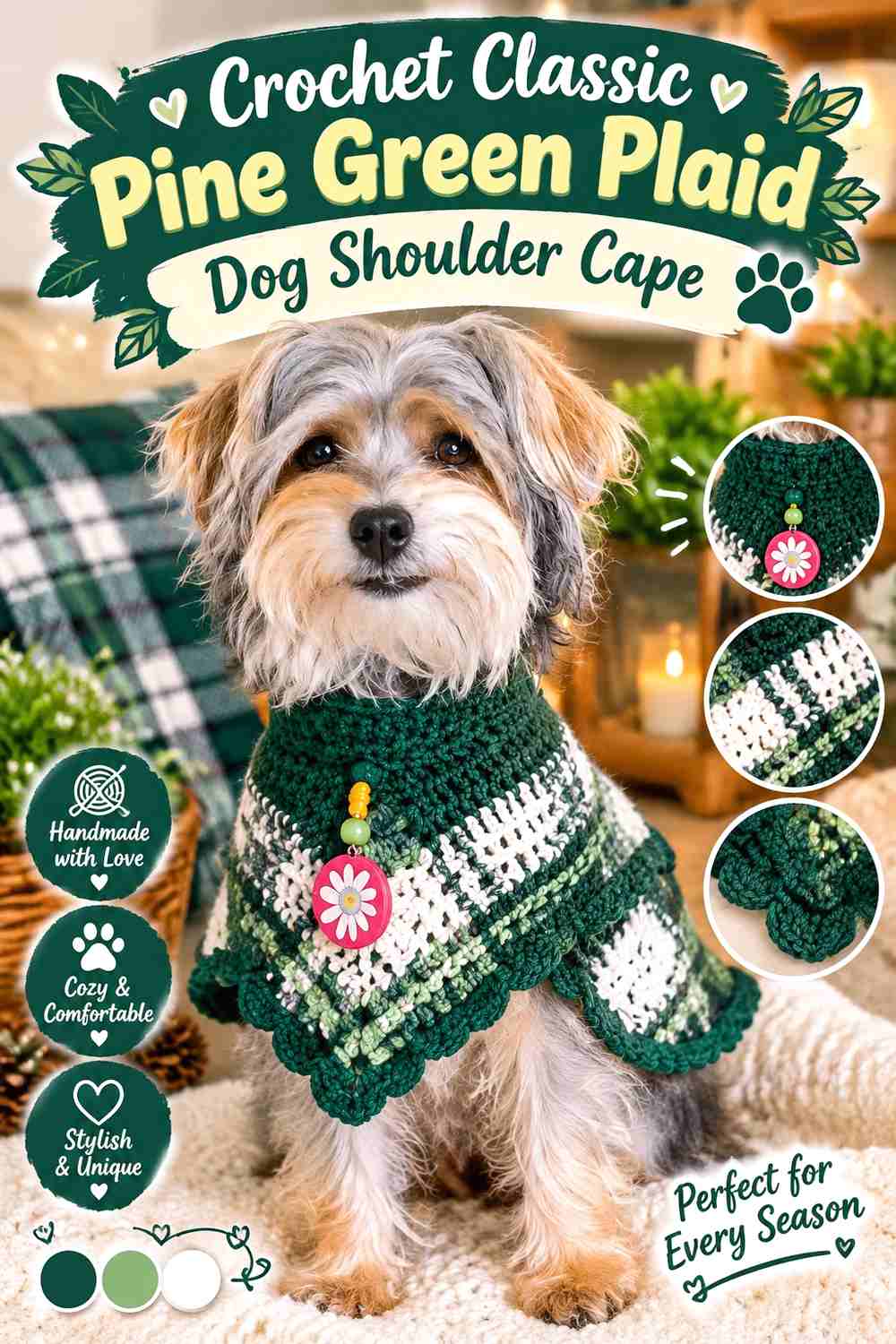
Tejiendo Con Candy provides the closest construction match in this collection: a public crochet dog cape or poncho tutorial with a finished cape silhouette rather than a full torso sweater. That makes it a useful starting point for a compact pine-green-and-blue holiday plaid adaptation.
Use pine green as the primary field and add cool-blue bands across the broad shoulder section.
Keep the Checks Broad Across the Back
The cape already provides a relatively uninterrupted canvas. Use that space for a few clearly proportioned checks instead of many tiny alternating blocks.
Broad plaid sections can also make neckline and hem shaping easier to see.
Let the Plaid Stop Before the Side Edges
A plain pine-green margin along the sides can keep carried yarn or decorative lines away from the moving front legs.
It also gives the cape a cleaner outline when viewed from above.
Add a Cool Blue Edge Only After Checking Drape
A contrasting border can frame the plaid, but a tight edging may make a previously flat cape cup upward.
Finish the main shape first, then decide how much blue edging the fabric can accept without changing its drape.
Creator Credit: Tejiendo Con Candy
2. Crochet Broad-Check Cool Blue Dog Shoulder Cape
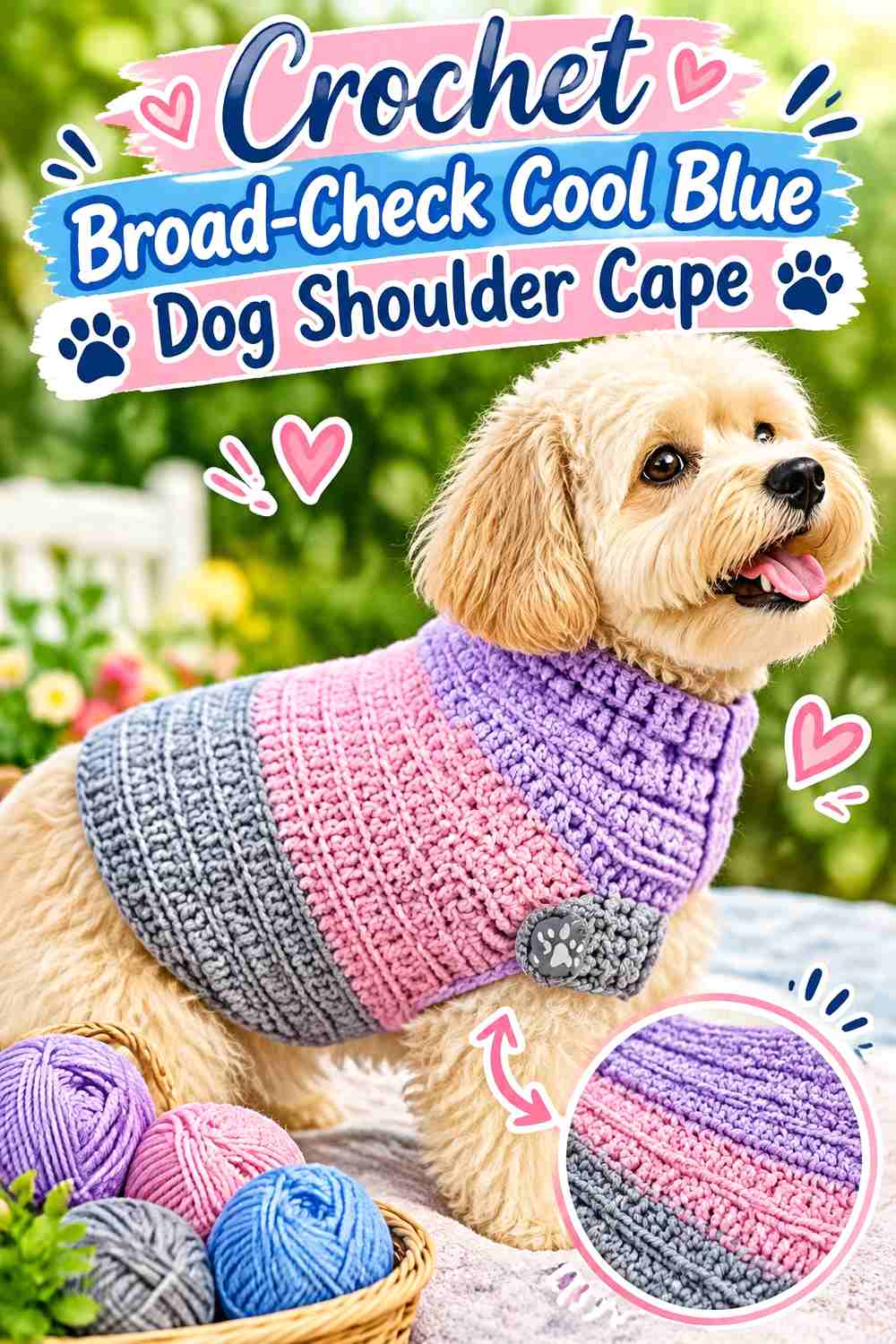
Creaciones Gabriela demonstrates a crochet pet cape designed to be adaptable across pet sizes, giving this idea another direct cape foundation rather than requiring a full sweater to be shortened.
Reverse the color hierarchy here: use cool blue across most of the cape and place large pine-green checks over the shoulders.
Let Cape Width Create the Plaid Canvas
Establish the cape’s comfortable spread before deciding how many checks will fit.
A wider pet may support several green blocks across the back, while a narrow dog may look cleaner with only one central green field and smaller side accents.
Keep Neck Shaping Separate From the Check Repeat
Do not force the neckline increases or decreases to conform to a perfect plaid grid.
Fit the neck first and allow the first complete check to begin only once the fabric reaches a more stable width.
Use the Darker Green to Anchor the Center
One pine-green center check can prevent a predominantly blue cape from looking visually diffuse.
Additional green areas can be smaller so the central back remains the strongest part of the plaid.
Creator Credit: Creaciones Gabriela
3. Crochet Made-to-Measure Tartan Yoke Dog Shoulder Cape
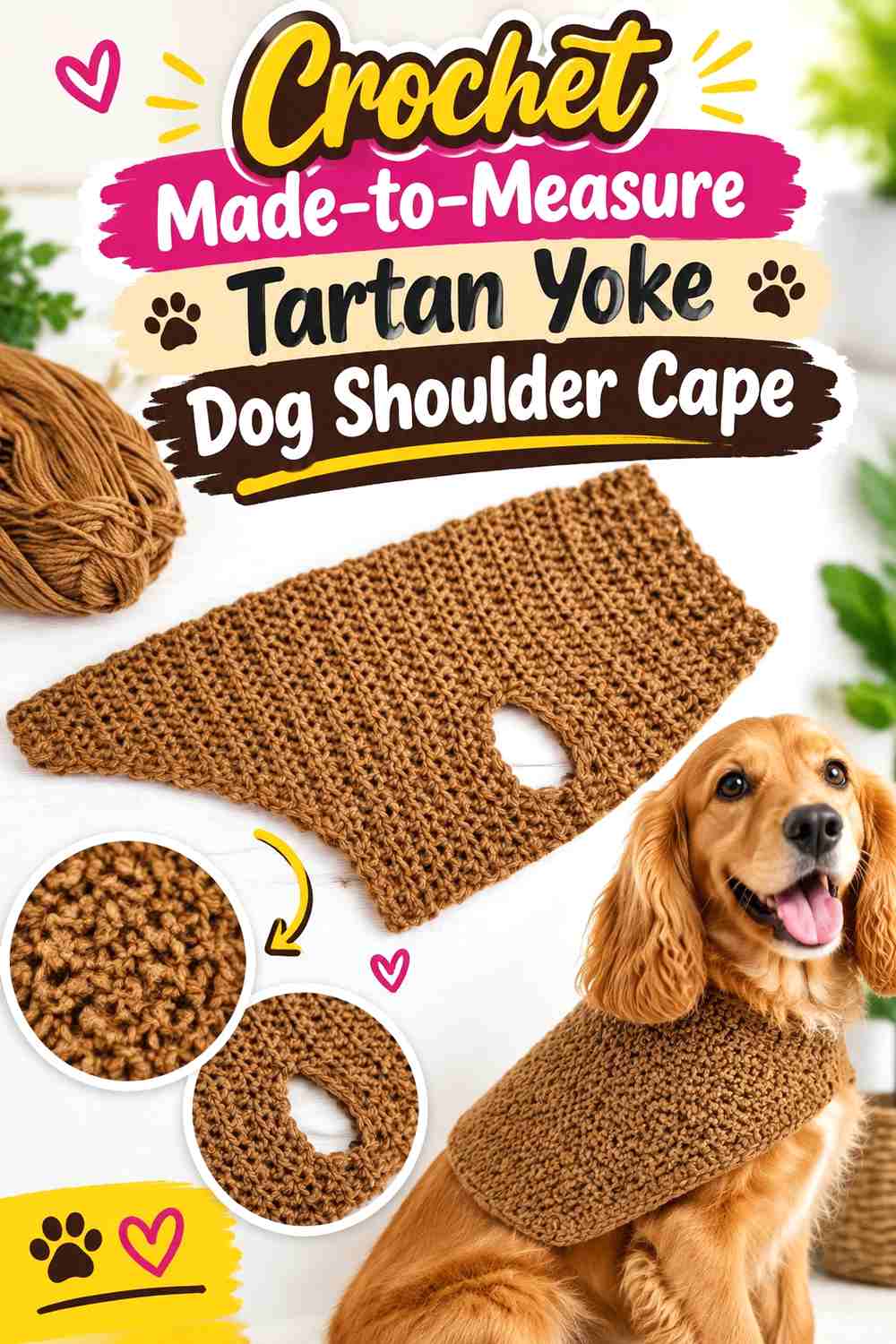
LoopsOnlyCrochet’s customizable sweater construction begins with a ribbed neckline and develops according to the individual dog’s measurements. The associated tutorial is explicitly presented as made to measure with leg openings and a fitted back.
For a shoulder-cape adaptation, use only the neck and upper-body expansion as the structural base, then finish earlier with a plaid yoke.
Stop When the Shoulders Are Covered
A full sweater would continue toward the chest, belly, and back. The shoulder cape does not need those later sections.
Try the garment on once it spreads beyond the shoulder blades and determine whether further depth would interfere with the front legs.
Size the Plaid After the Upper Width Is Known
Made-to-measure construction is useful because the plaid does not need to dictate the garment dimensions.
Establish the dog’s required width, then fit the pine-green and cool-blue grid inside that space.
Keep Ribbing Solid Around the Neck
A solid pine-green ribbed neckline can preserve flexibility while the blue plaid begins below it.
This avoids carrying a firmer two-color treatment into the main dressing opening.
Creator Credit: LoopsOnlyCrochet
4. Crochet Moss-Grid Plaid Dog Shoulder Cape
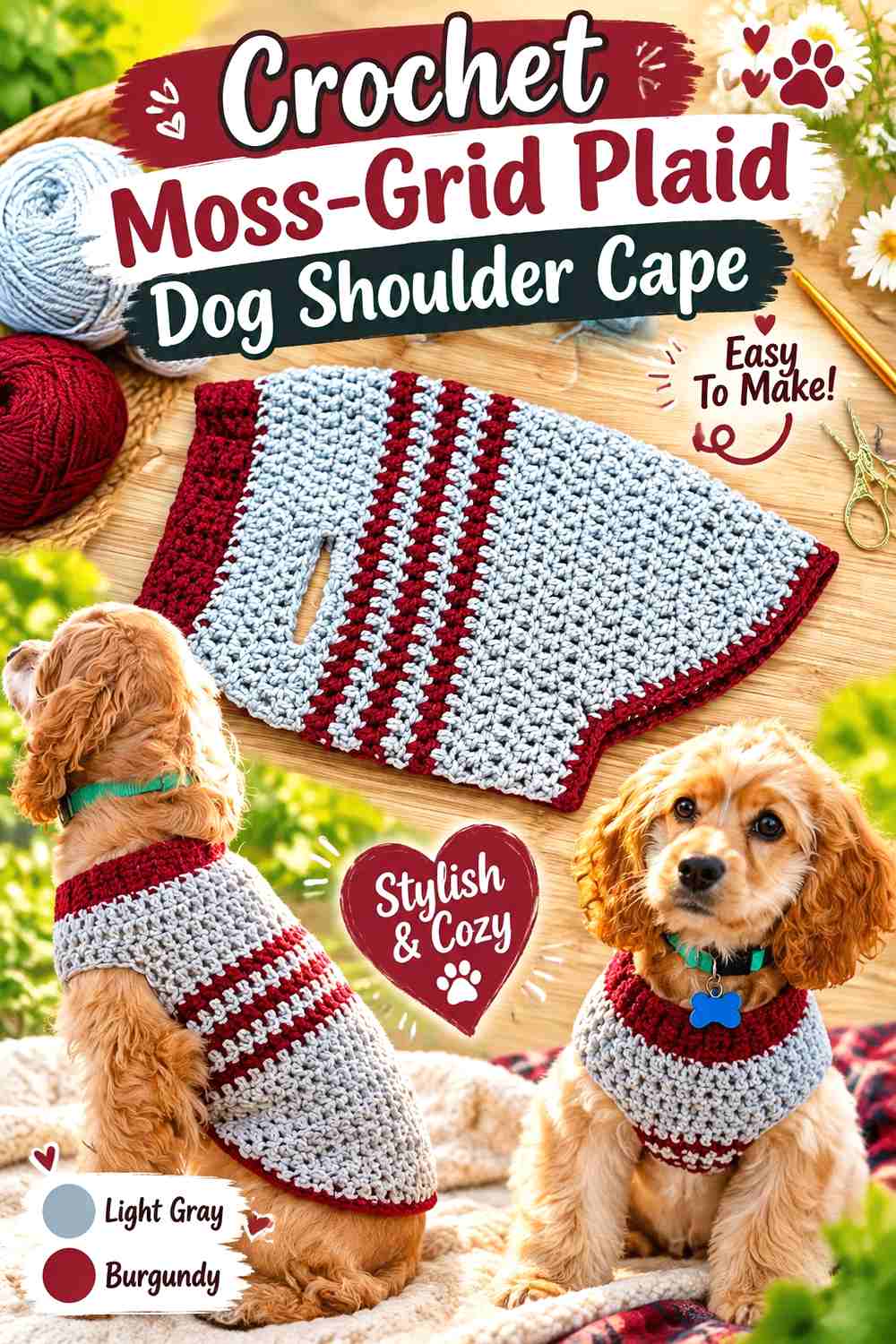
it’s erin b. has a customizable dog-sweater tutorial built around an adaptable body and color changes; the public tutorial is specifically identified as a quick crochet dog sweater project.
For this cape, borrow the flexible upper-body idea and use a moss-like background to soften the plaid.
Let Texture Become Part of the Check
A quieter stitch texture can help pine green and cool blue blend into a softer woodland plaid rather than a sharply geometric checkerboard.
Use color blocks large enough that the texture remains visible inside each area.
Add Vertical Lines Only Where They Stay Flat
If the horizontal color bands already create enough interest, you may need only one or two vertical blue lines to complete the plaid impression.
Check that any surface stitching does not shorten the cape from side to side.
Keep the Lower Edge Simple
A complicated plaid plus textured fabric already supplies plenty of detail.
A solid pine-green finishing edge can make the cape feel complete without adding another patterned band.
Creator Credit: it’s erin b.
5. Crochet Cowl-Neck Holiday Plaid Dog Shoulder Cape
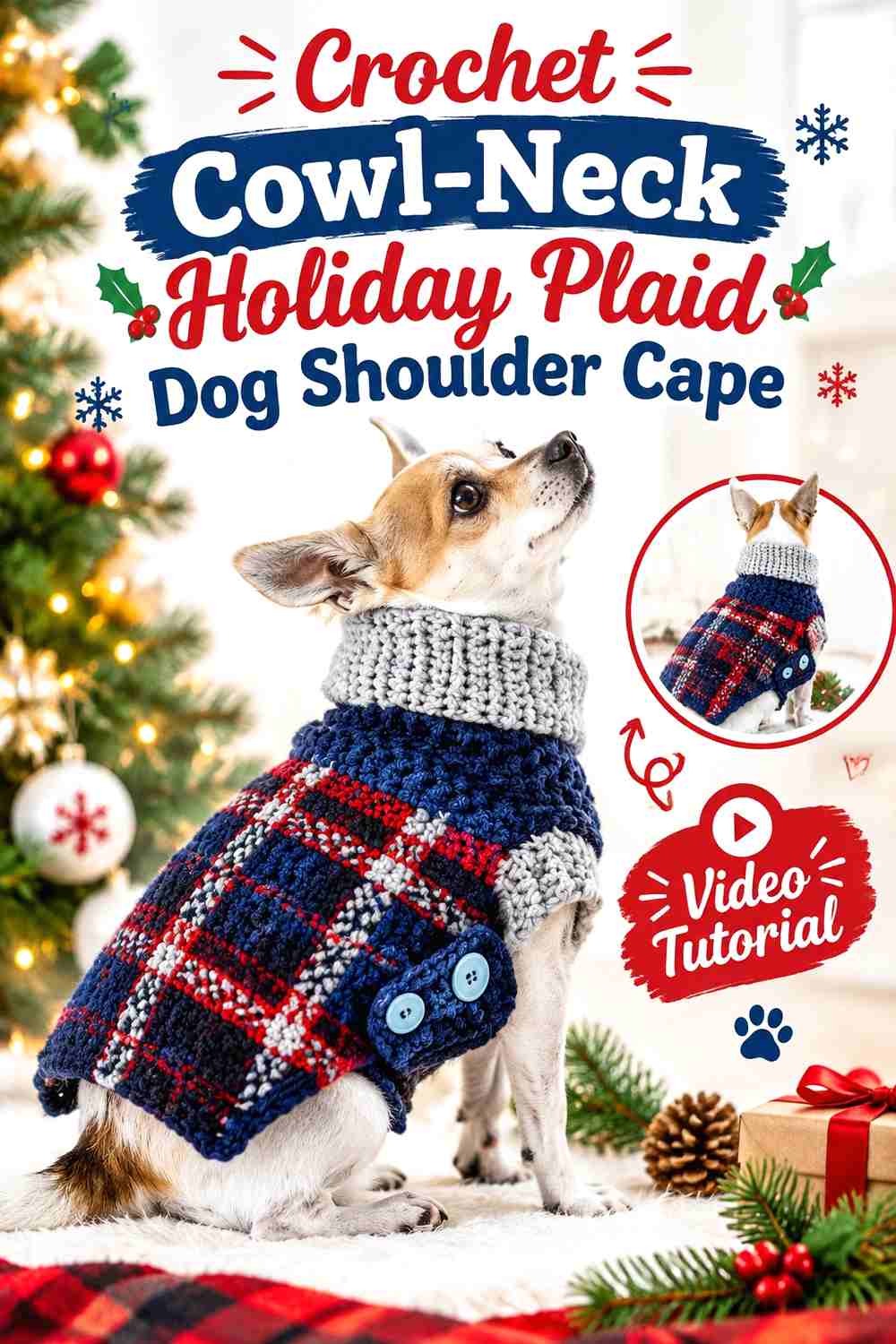
Marly Bird’s cowl-neck crochet dog coat provides a neckline-focused construction with video support. The design is specifically presented as a cowl-neck dog coat, so it offers a useful reference when a shoulder cape needs more visual presence around the neck.
For the adaptation, shorten the cowl and let a pine-and-blue plaid cape begin immediately below it.
Reduce Cowl Depth Before Adding the Cape
A deep cowl and flared shoulder layer can place too much yarn around the neck.
Use only enough collar height to frame the head and support the cape visually.
Make the Collar Solid Cool Blue
A solid collar creates a resting point above the patterned shoulders.
Begin the pine-green plaid lower down so the two features remain distinct rather than merging into one busy upper section.
Check the Collar With the Head Lowered
A cowl-like neck can move upward when the dog looks down.
Make sure the shortened collar remains below the jaw and does not push the plaid cape backward.
Creator Credit: Marly Bird
6. Crochet Button-Tab Plaid Dog Shoulder Cape
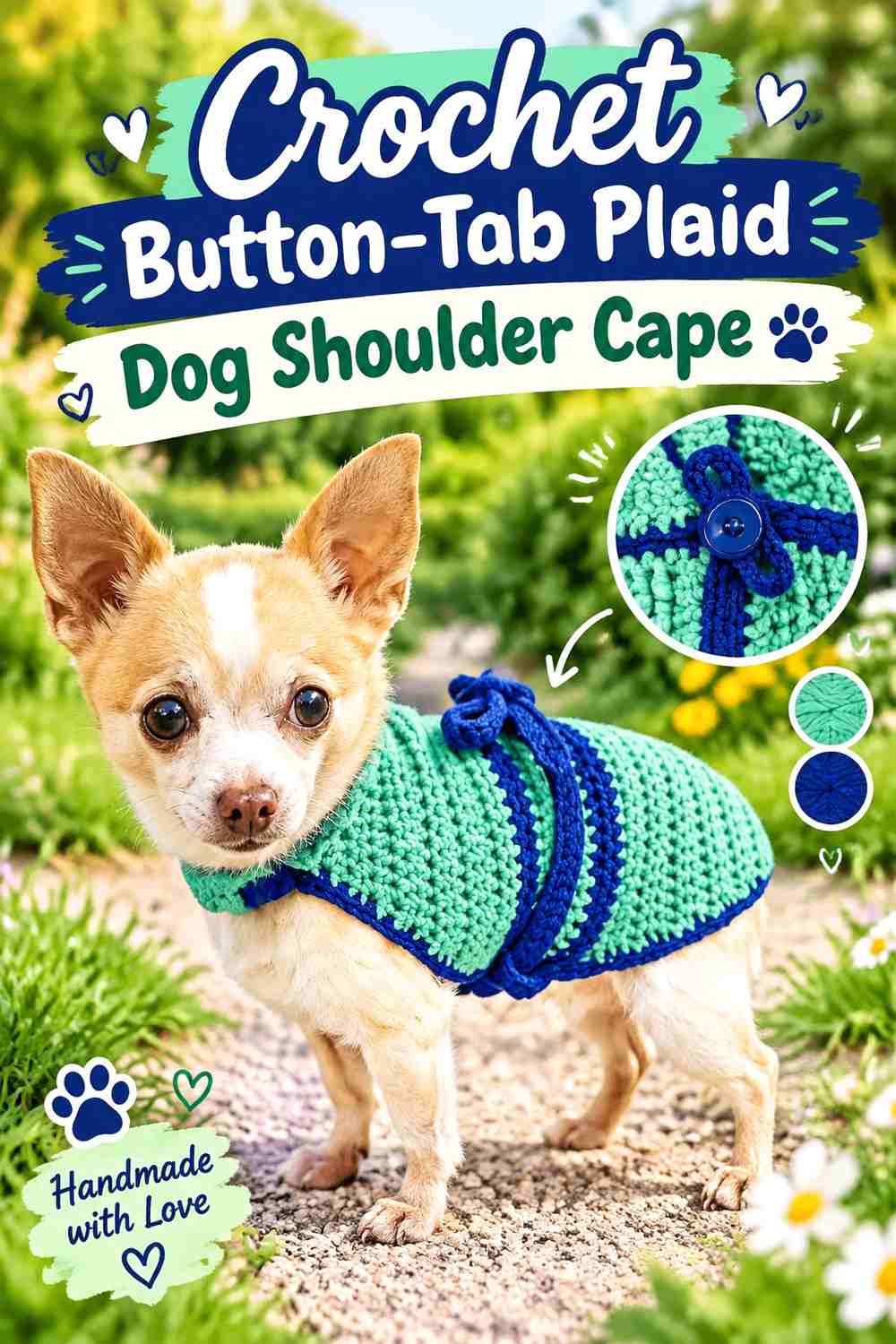
Last Minute Laura’s public dog-sweater tutorials include customizable constructions and fastening-oriented designs; her current all-sizes tutorial also demonstrates adapting a dog sweater to different dogs.
Use a short button tab to secure this shoulder cape and keep the plaid entirely on the upper back.
Fit the Tab Before Centering the Plaid
The fastening determines exactly where the cape sits around the shoulders.
Close it first, check that neither side hangs lower, and only then mark the visual center for the checks.
Keep Hardware Outside the Plaid Crossings
Buttons already create raised points.
Leave the immediate fastening area solid cool blue or pine green instead of placing thick vertical and horizontal plaid lines beneath the closure.
Treat the Tab as the Only Extra Ornament
The cape does not need bows, bells, or dangling holiday ties.
A neat contrast tab plus the two-color plaid provides enough decoration while keeping the front area controlled.
Creator Credit: Last Minute Laura
7. Crochet Structured Pine Green Plaid Dog Shoulder Cape
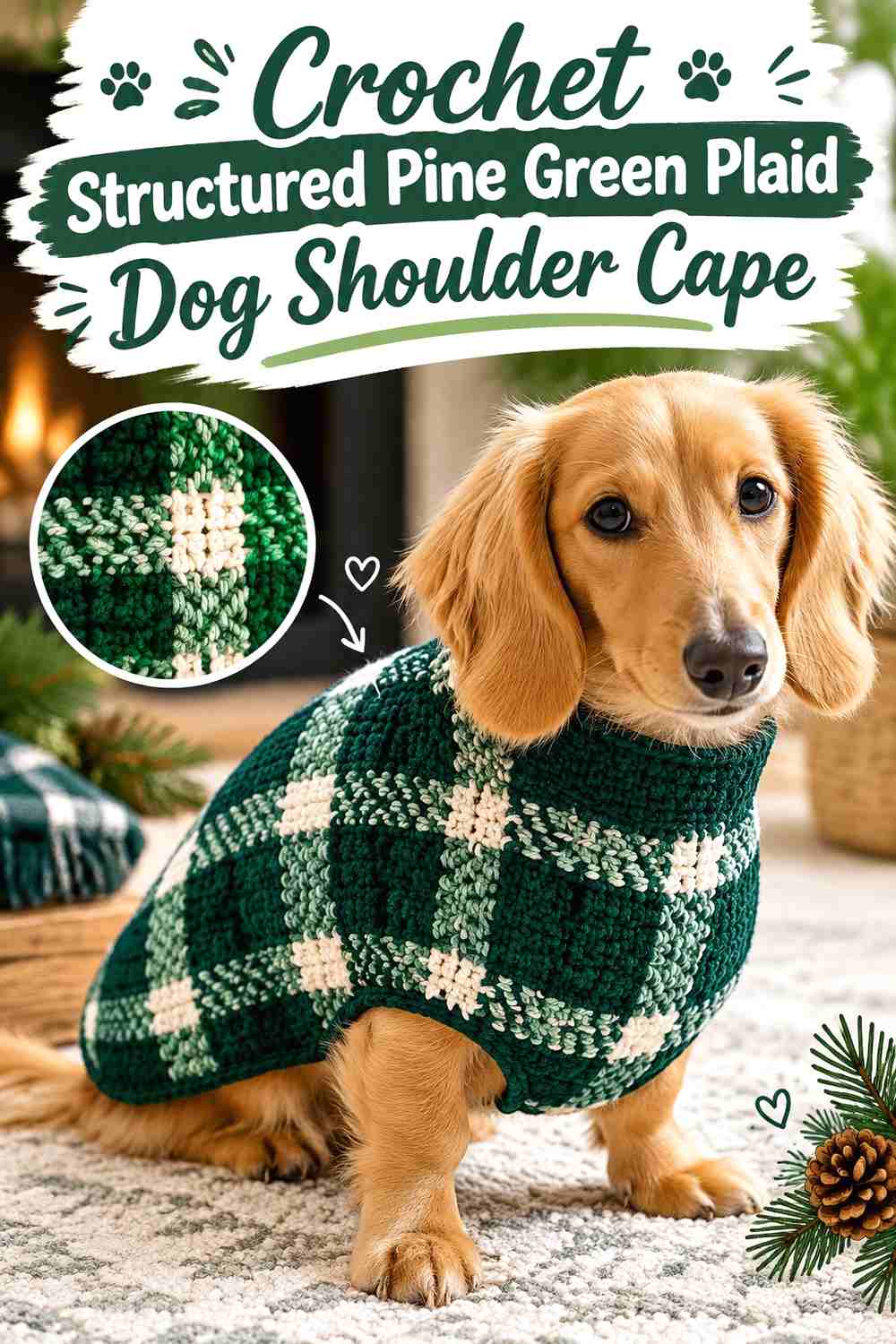
Crochet with Tiffany’s dog-coat tutorial is a public video-supported construction available as a multi-size dog coat reference.
For a shoulder cape, retain only enough upper construction to create a stable shoulder panel, then finish with a firm pine-green border around cool-blue checks.
Use Structure at the Neck, Not Through the Whole Cape
A slightly firmer neckline can help the cape remain centered.
The shoulder section itself should still drape enough to follow the dog’s back instead of standing away from the body.
Put the Largest Check Between the Shoulder Blades
A strong central blue block can become the visual anchor.
Smaller side checks then make the plaid feel intentional without extending dense colorwork into the leg zone.
Check the Border Against the Original Width
A firm finishing round can reduce the outer circumference.
Lay the cape flat before and after edging and make sure the border has not pulled the shoulder fabric inward.
Creator Credit: Crochet with Tiffany
8. Crochet Lightweight Mini-Check Dog Shoulder Cape
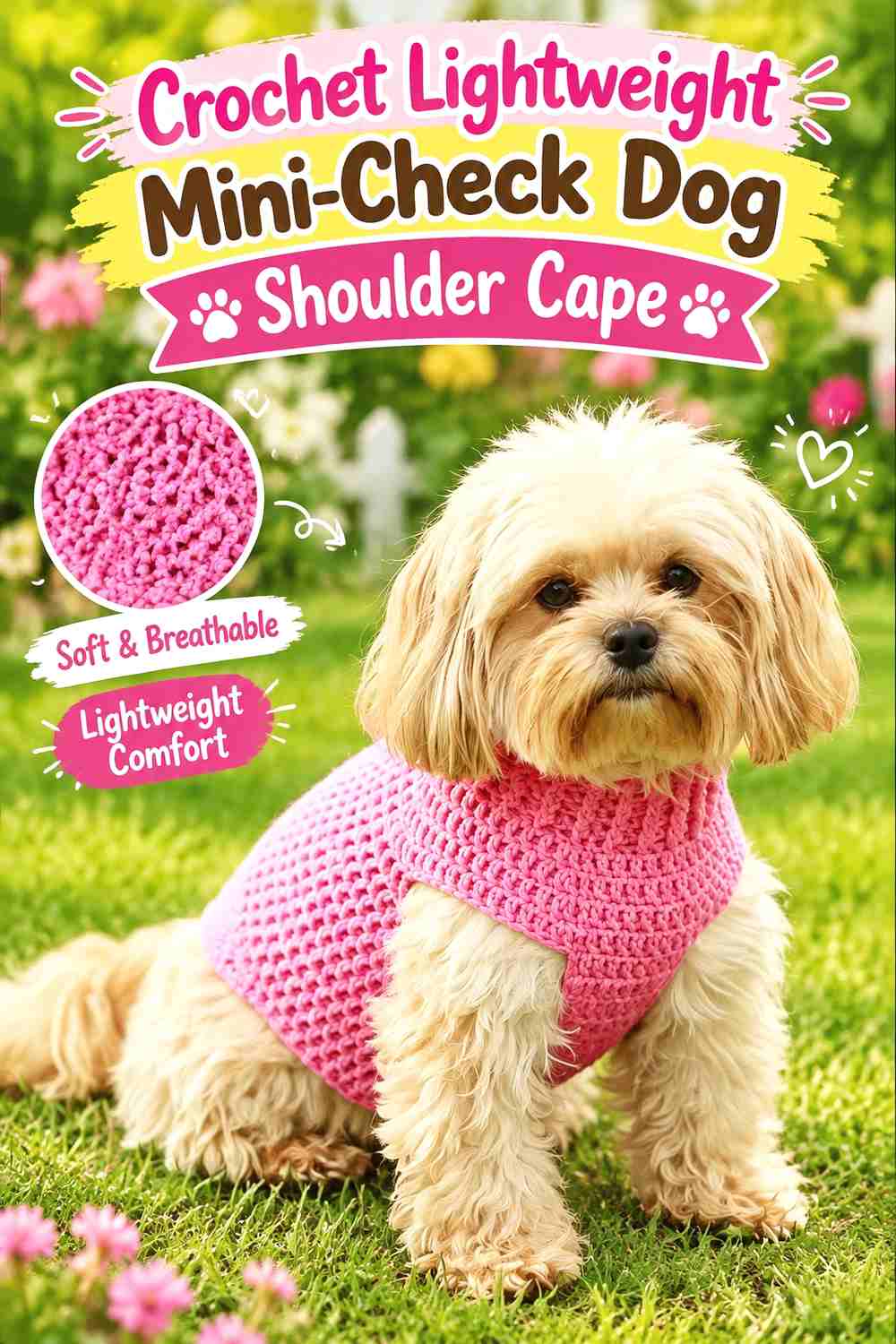
Crochet It’s public small-dog sweater tutorial uses a lighter yarn category and compact garment proportions. Those qualities make it useful inspiration for a more delicate shoulder cape with smaller checks.
Use cool blue as the base and place compact pine-green checks across the upper back.
Scale the Plaid to the Finished Cape
Small checks can work on a lightweight cape because the yarn itself creates less visual bulk.
Still, leave enough stitches inside each color block for the square shape to remain recognizable.
Keep the Neckline Free of Mini Checks
Frequent color changes near a tiny neckline can create many joins in a sensitive area.
A solid pine or blue neck gives the plaid room to begin farther out over the shoulders.
Avoid Upsizing Only Through Hook Choice
If the original small-pet construction does not suit the dog, do not rely only on a larger hook.
Use the finished cape measurements you actually need and preserve a fabric density appropriate to the plaid.
Creator Credit: Crochet It
9. Crochet Puff-Line Holiday Plaid Dog Shoulder Cape
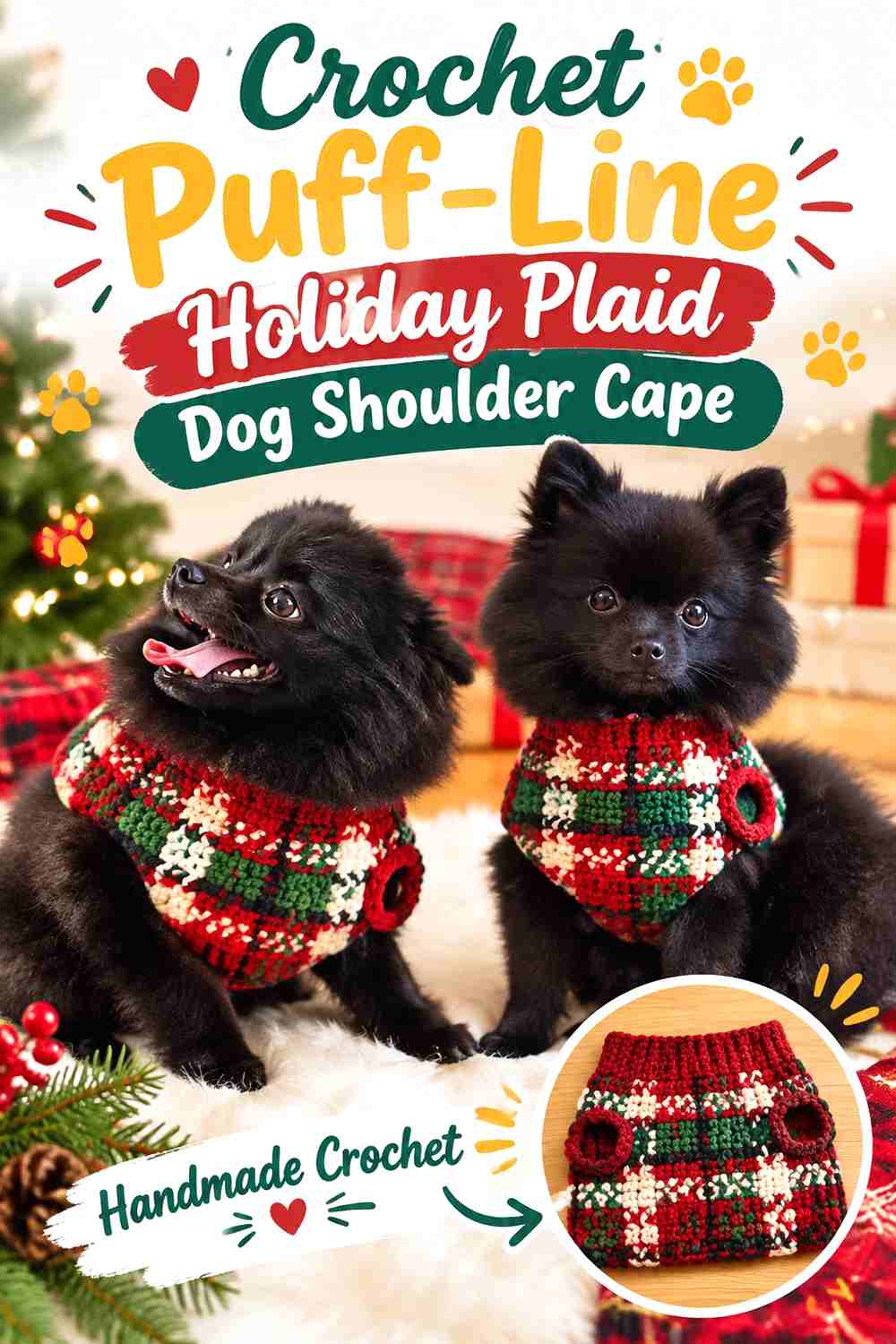
SheiLa Teré’s dog-sweater tutorial uses puff and V-stitch texture, giving this cape a different route to plaid: texture can create some of the crossing lines instead of relying entirely on additional color changes.
Use pine green for the main fabric, cool blue for horizontal bands, and limited raised texture for selected vertical intersections.
Put Texture at Plaid Intersections
A few raised crossing points can make a simple grid look richer without covering the entire cape in dimensional stitches.
Keep most of the surface flatter so the garment does not become unnecessarily heavy.
Avoid Puffs Along the Neck Edge
The neckline already carries the weight of the shoulder cape.
Reserve pronounced texture for the visible back area rather than creating a thick ring directly around the neck.
Check the Surface Against Harness Hardware
Raised stitches can catch or create pressure beneath straps.
If a harness crosses the plaid, move the puff accents away from the contact points while keeping the color grid intact.
Creator Credit: SheiLa Teré
10. Crochet Side-Tab Plaid Dog Shoulder Cape
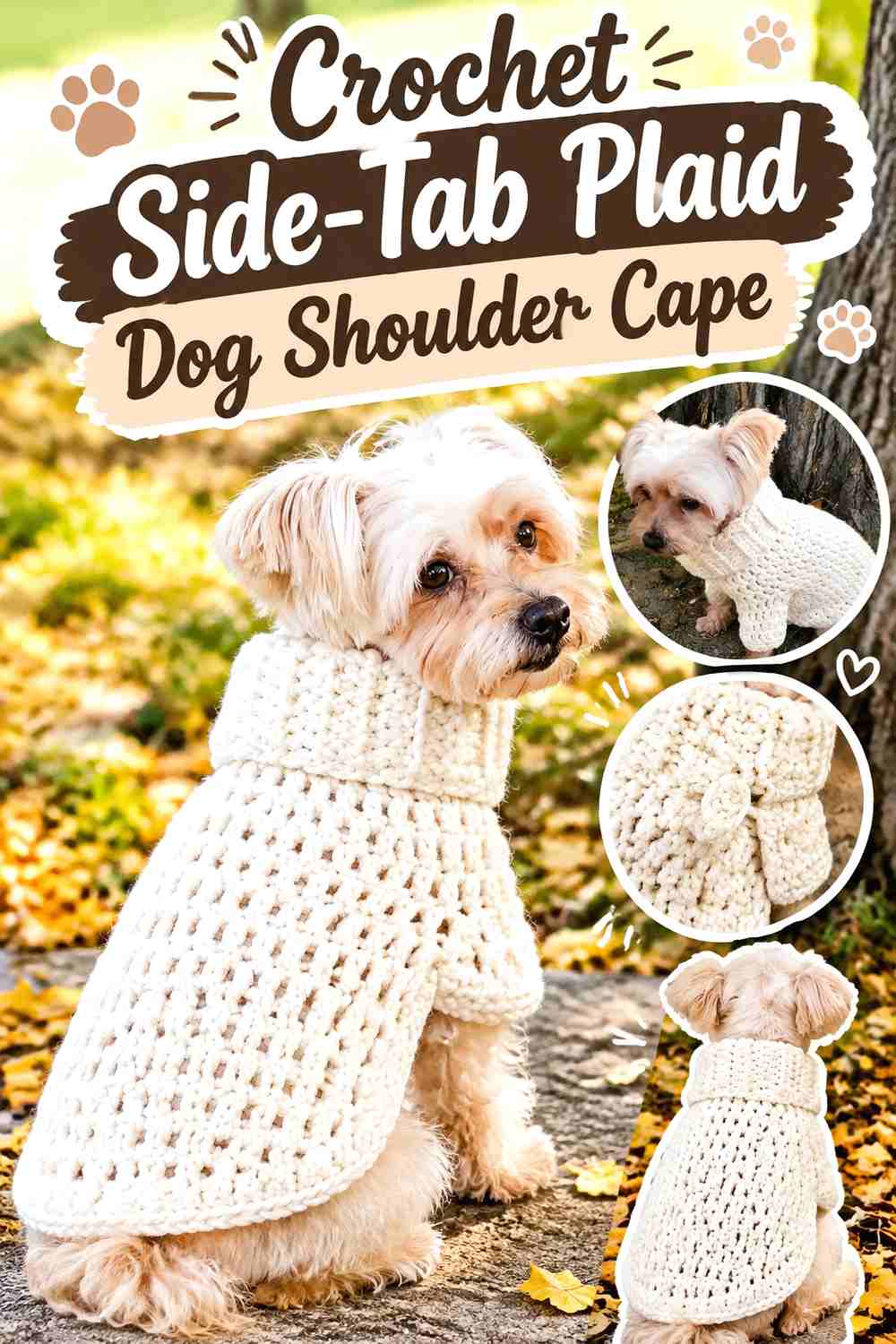
Vibes with Dani’s long-sleeve dog-sweater tutorial provides a useful reference for understanding how fabric can extend from the shoulder toward the front legs. For a cape, that sleeve idea can be reduced to very short side tabs rather than full leg coverage.
Use a pine-green plaid body with cool-blue side tabs at the shoulders.
Make the Tabs Wider, Not Longer
A shallow side extension can visually broaden the cape while staying above the front legs.
If it reaches toward the elbow, it has moved beyond the shoulder-cape concept and may interfere with the stride.
Let Cool Blue Mark the Side Boundaries
Blue tabs can frame the plaid without requiring another border around the entire cape.
This gives the garment a structured look from the front while keeping the back pattern dominant.
Check the Tabs During a Full Step
Observe the dog taking several natural strides.
If the front legs repeatedly push the tabs upward, shorten or reshape them rather than tightening their edges.
Creator Credit: Vibes with Dani
11. Crochet Uneven-Band Tartan Dog Shoulder Cape
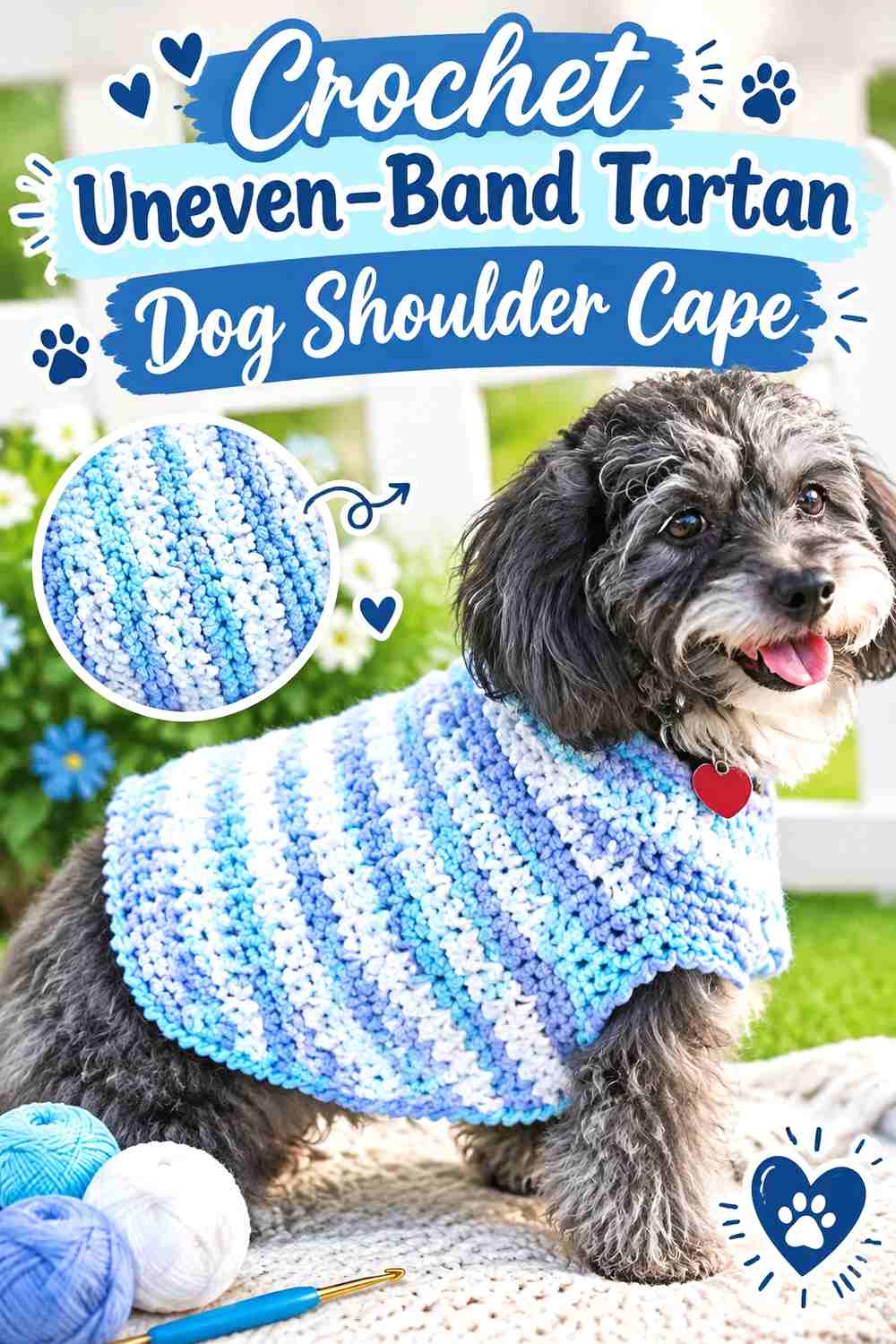
The Crochet Crowd’s dog-sweater tutorial specifically discusses color changes and a traditional dog-coat construction, making it useful when the plaid should use bands of different widths rather than a strict checkerboard.
Create a pine-green base with one broad cool-blue band and several narrower blue accents crossing the shoulder area.
Uneven Bands Feel More Like Tartan
A plaid does not require every stripe to have identical width.
One dominant cool-blue horizontal section with thinner companion lines can create more rhythm than a perfectly uniform grid.
Add Vertical Accents Selectively
One center-back vertical line and perhaps two restrained side lines may be enough to turn horizontal bands into a convincing plaid.
More lines are not automatically better on a compact cape.
Let the Hem Finish in One Solid Color
Ending with pine green gives the patterned upper section a clear stopping point.
It also allows the hem depth to be adjusted without disturbing the main tartan arrangement.
Creator Credit: The Crochet Crowd
12. Crochet Nordic Plaid Yoke Dog Shoulder Cape
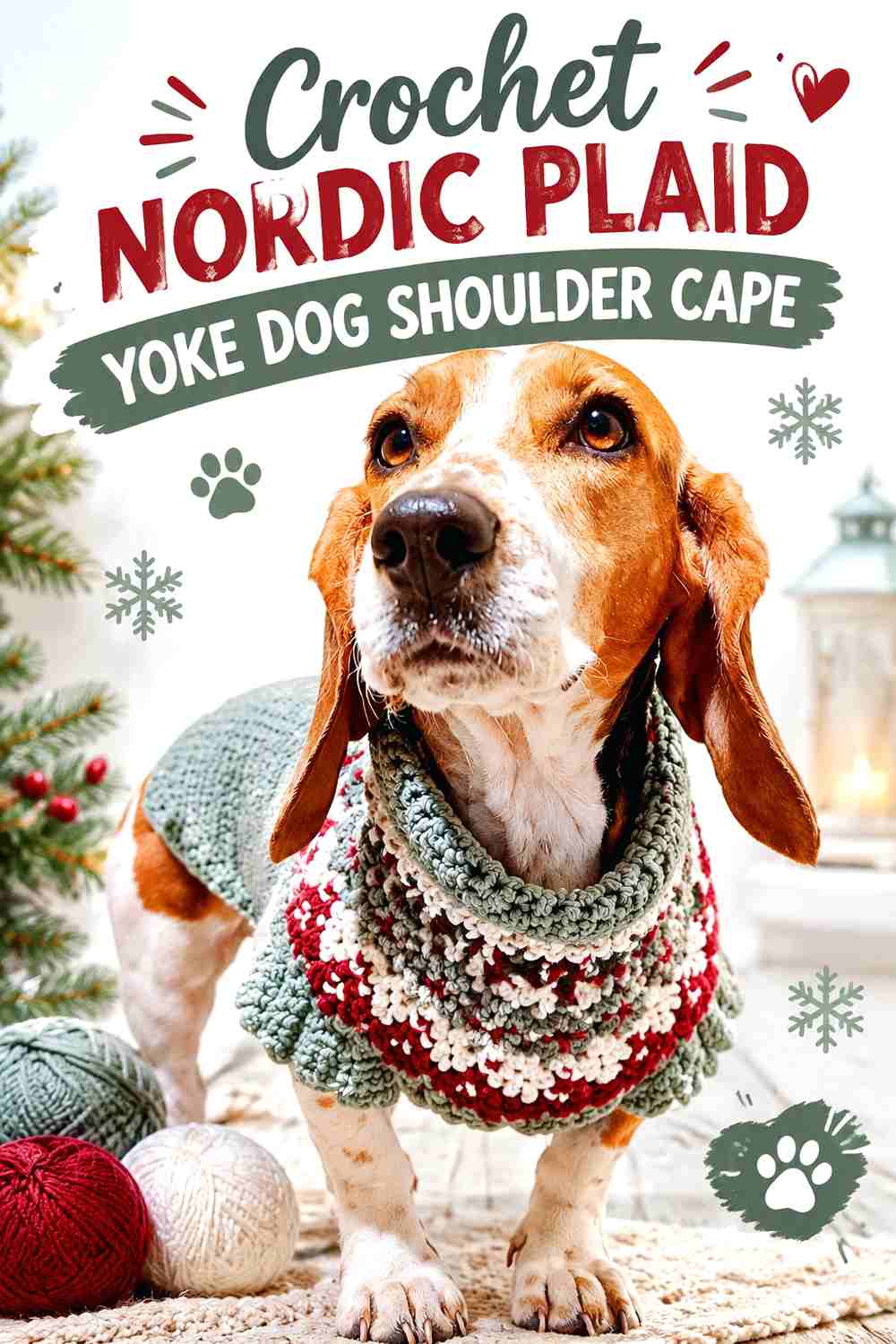
Yarnspirations’ family dog sweater uses a Nordic-style colorwork yoke, providing a strong reference for an upper-body garment where patterning is already concentrated around the shoulders. Crochet Scout describes the source as a colorwork design worked in single crochet and supported by a video tutorial.
For this adaptation, simplify the upper pattern to a two-color pine-green-and-cool-blue plaid and finish the garment shortly below the yoke.
Treat the Yoke as the Whole Cape
A shoulder cape does not need a long torso below a decorative yoke.
Once the patterned upper section provides enough coverage and the lower edge clears the front legs, a narrow finish can complete the garment.
Keep the Neck Solid Before the Plaid Begins
A plain pine-green neckline gives more flexibility for dressing and separates the function of the neck from the denser patterned shoulder area.
Start the cool-blue crossing lines lower down.
Swatch for Colorwork Firmness
A beautiful plaid yoke will not work if carried yarn makes the upper body too rigid.
Compare stretch with a plain swatch before deciding how much of the cape should remain two-color.
Creator Credit: Yarnspirations
13. Crochet Ribbed-Edge Plaid Dog Shoulder Cape

Woolpedia’s dog-sweater design has a documented public right-handed video tutorial, with the pattern listing linking directly to the same YouTube watch page.
For this version, use a simple pine-and-blue plaid across the shoulders and let ribbed-looking texture define the neckline and outer edge.
Let Ribbing Frame the Plaid
A pine-green ribbed neck can act as a solid upper frame, while a cool-blue ribbed hem creates a clean lower boundary.
The plaid remains in the center where it has room to stay flat.
Do Not Let the Outer Ribbing Cinch the Cape
A shoulder cape needs enough circumference to drape over the upper body.
Measure the ribbed edge relaxed and make sure it does not draw the side sections inward.
Keep the Plaid Scale Larger Than the Rib Texture
Tiny checks next to strong ribs can make the whole surface look busy.
Use broader color blocks so texture and color pattern remain visually separate.
Creator Credit: Woolpedia
14. Crochet Harness-Window Plaid Dog Shoulder Cape
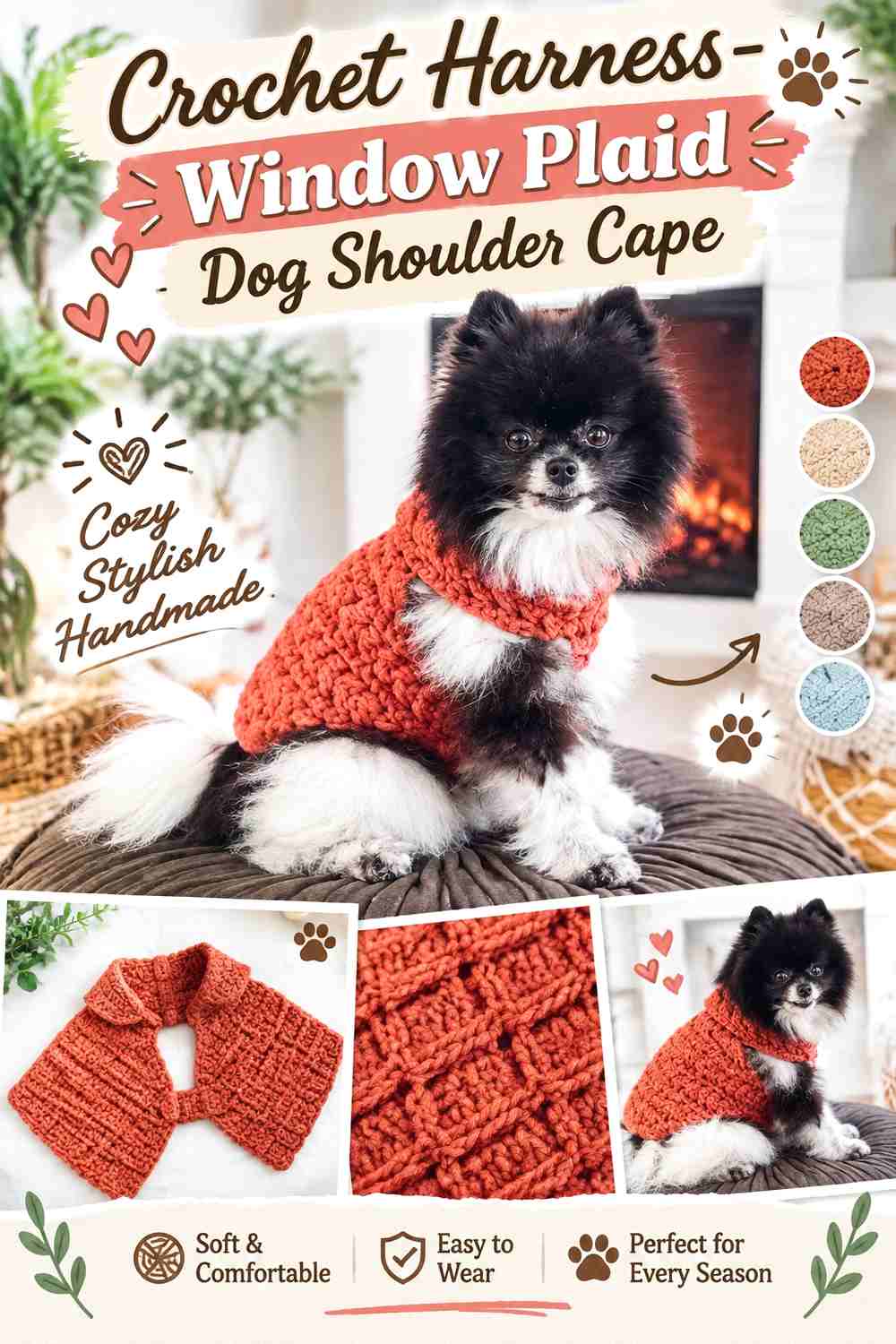
Briana K Designs’ Wheat Stitch Dog Sweater is available with a public video tutorial and was released in multiple sizes, making it the most function-focused source in this roundup when walking equipment must share the upper back with crochet fabric.
Use a pine-green shoulder cape with cool-blue plaid positioned around, rather than directly beneath, the main harness area.
Locate the Harness Before Drawing the Grid
Put the actual harness on the dog and note the leash attachment and main upper straps.
A plaid that looks perfectly centered without equipment may need to shift once the harness occupies the same surface.
Leave a Plain Window Around Hardware
Instead of forcing plaid through the opening, keep a small solid pine-green area around the leash-access point.
The checks can resume outside that buffer, making the functional zone look intentionally integrated.
Keep the Cape Independent From the Restraint System
The crochet opening exists only to give access to the proper harness hardware.
Do not attach the leash to a crochet edge, plaid crossing, button, or decorative loop.
Creator Credit: Briana K Designs
Comparing the 14 Holiday Plaid Shoulder Cape Directions
IdeaPlaid TreatmentConstruction AdvantageMain CheckClassic pine plaidBroad blue checksDirect dog-cape baseHem drapeBroad-check blueLarge green blocksAdaptable pet capeNeck shapingMade-to-measure tartanPlaid yokeIndividual sizingShoulder depthMoss-gridSoft textured plaidFlexible sweater baseSurface-line tensionCowl-neck plaidPlaid below collarDistinct necklineJaw clearanceButton-tab plaidBack-centered gridEasier fasteningCape alignmentStructured plaidCentral large checkMulti-size coat baseBorder contractionLightweight mini-checkSmall-scale checksFiner fabricPlaid scalePuff-line plaidTextured intersectionsDimensional accentHarness snaggingSide-tab plaidPlaid plus short tabsShoulder emphasisFront-leg movementUneven-band tartanMixed stripe widthsEasy color planningVisual balanceNordic plaid yokeIntegrated colorworkPatterned upper bodyStretchRibbed-edge plaidGrid framed by ribbingStrong outer definitionEdge cinchingHarness-window plaidPlaid around plain openingWalking-gear accessHardware clearance
Conclusion
The strongest pine green and cool blue holiday plaid shoulder cape is one that uses the plaid to emphasize the upper-body silhouette rather than extending pattern and fabric farther than the dog needs.
For the most direct cape foundations, the Tejiendo Con Candy and Creaciones Gabriela tutorials are the closest matches because their finished projects already use cape or poncho forms. If individualized sizing is more important, LoopsOnlyCrochet and it’s erin b. provide useful adjustable sweater constructions that can be stopped after the upper body is established.
Texture creates another useful direction. SheiLa Teré can inspire raised plaid intersections, while Woolpedia offers a stronger ribbed frame. The Crochet Crowd and Yarnspirations sources are particularly relevant when color changes or an integrated patterned yoke are the main design feature.
For practical walking wear, plan the cape with the dog’s actual harness rather than adding access afterward. Briana K Designs provides the most relevant reference in this set for that problem.
Keep the lower edge above the front-leg movement zone, avoid long ties and fringe, and use the original creator tutorials for exact construction details. Recheck the cape whenever plaid technique, border tension, yarn, neckline depth, or harness placement changes.
Frequently Asked Questions
How long should a crochet dog shoulder cape be?
There is no universal length. The cape should cover the intended shoulder and upper-back area while remaining clear of the front legs during walking. Test it while the dog stands, walks, sits, and turns rather than selecting length from a fixed measurement alone.
How can I make plaid with only pine green and cool blue?
Use the two colors as crossing bands, alternating blocks, or a main-color background with contrast horizontal and vertical lines. Plaid depends on the grid relationship more than on using three or four colors.
Should I use colorwork or surface crochet for the plaid?
Colorwork integrates the checks directly into the fabric but may change stretch and gauge. Surface crochet or later-added vertical lines can simplify construction, but those lines should remain loose enough that they do not distort the cape. Swatching helps you compare the two approaches.
Can I turn a dog sweater tutorial into a shoulder cape?
Often the neckline and upper-body shaping can provide a useful starting point, but simply stopping at an arbitrary row may leave the edge in the wrong place. Fit the shoulder area first, decide where the cape should end relative to the front legs, and then add an appropriate finishing edge.
Should the plaid continue around the entire neck?
It does not need to. A solid neckline can retain more flexibility and reduce bulky color changes. Beginning the plaid on the shoulders also gives the checked design more room to read clearly.
Can a plaid shoulder cape be worn over a harness?
It can if the two items fit comfortably together. Put the actual harness on while planning the cape, avoid thick plaid crossings under major straps, and keep leash hardware accessible. The crochet cape itself should never be used as the leash attachment.
Is fringe a good finish for a holiday plaid dog cape?
Fringe is unnecessary for the plaid effect and can create loose strands near the dog’s mouth or legs. A flat ribbed, plain, or contrasting crochet edge can finish the cape while keeping the silhouette cleaner.