Soft jade and cream make a calm two-color combination for a crochet Sphynx cat pullover, especially when the neckline itself is the main design feature. Cream can highlight an overlapping envelope neck against a jade body, while jade trim on a cream sweater creates a cleaner, more graphic alternative.

An envelope neckline is different from a standard ribbed collar. Instead of relying entirely on stretch, overlapping shoulder or upper-chest sections create a wider opening during dressing and then settle back into place. On a cat garment, that can be useful design inspiration, but the overlap needs to stay shallow enough that it does not bunch beneath the chin or interfere with the front legs.
Three of the tutorials below are specifically for crochet cat sweaters. The remaining sources are small-pet or dog sweater constructions used for sizing, sleeve, texture, colorwork, fastening, or harness-access inspiration. Those should be treated as adaptation bases rather than exact Sphynx patterns.
Quick List
- Crochet Classic Soft Jade Envelope Neck Sphynx Cat Pullover
- Crochet Cream Shoulder-Overlap Sphynx Cat Pullover
- Crochet Mini-Sleeve Jade Envelope Neck Sphynx Cat Pullover
- Crochet Made-to-Measure Cross-Front Sphynx Cat Pullover
- Crochet Berry-Texture Envelope Neck Sphynx Cat Pullover
- Crochet Lightweight Cream-Trim Sphynx Cat Pullover
- Crochet Puff-Panel Envelope Neck Sphynx Cat Pullover
- Crochet Long-Sleeve Jade Envelope Neck Sphynx Cat Pullover
- Crochet Button-Assisted Envelope Look Sphynx Cat Pullover
- Crochet Colorwork-Yoke Envelope Neck Sphynx Cat Pullover
- Crochet Harness-Aware Envelope Neck Sphynx Cat Pullover
- Crochet Wide-Band Jade and Cream Envelope Neck Sphynx Cat Pullover
Build the Envelope Neck Around Head and Shoulder Movement
The neckline needs to perform two jobs: open far enough for dressing and settle securely enough that the sweater does not rotate around the body. An envelope construction can help because overlapping sections create temporary extra width without requiring a very loose finished collar.
Keep the overlap concentrated near the upper shoulder or chest area. Extending it too far toward the front legs can create multiple layers exactly where the cat needs freedom to reach forward.
Test the neckline before continuing far into the body. Put the unfinished garment on and remove it gently, then check whether the overlap opens naturally rather than requiring force. Once worn, the two panels should lie relatively flat instead of forming a thick ridge under the neck.
Because changing the original neckline alters construction, do not preserve a creator’s stitch counts automatically. Work from the actual dimensions and gauge of the fabric you are making.
Keep Seams, Texture, and Edges Smooth Against the Body
A Sphynx pullover places crochet fabric directly against much of the body, so inspect the inside as carefully as the outside. Yarn joins, bulky seams, stiff edging, or thick overlapping panels may feel more noticeable than they appear from above.
Run your fingers over every finished seam and color change. If an area feels noticeably raised, consider relocating the join, using a flatter finishing method, or reducing the number of layers there.
Sleeve and leg openings need similar attention. Decorative borders can visually finish the pullover, but a deep or rigid edging can reduce usable opening space. Check the garment while the cat walks, stretches forward, sits, and turns.
For yarn care and washing, follow the instructions for the specific yarn you choose rather than assuming all yarns with similar fiber labels behave the same way.
Use Soft Jade and Cream to Explain the Overlap
An envelope neck is easiest to see when its overlapping sections contrast with the body. A soft jade torso with two cream shoulder flaps makes the construction immediately readable.
For a quieter version, keep the entire sweater jade and use only a narrow cream edge along the overlap. Reversing the palette gives a pale cream body with jade framing around the neck and sleeves.
Avoid too many narrow stripes near the neckline. The crossing panels already create visual movement, so large color fields generally keep the design clearer.
If you add sleeves, consider repeating the envelope color at the cuffs. That ties the upper and lower details together without turning the whole sweater into a two-color stripe pattern.
1. Crochet Classic Soft Jade Envelope Neck Sphynx Cat Pullover
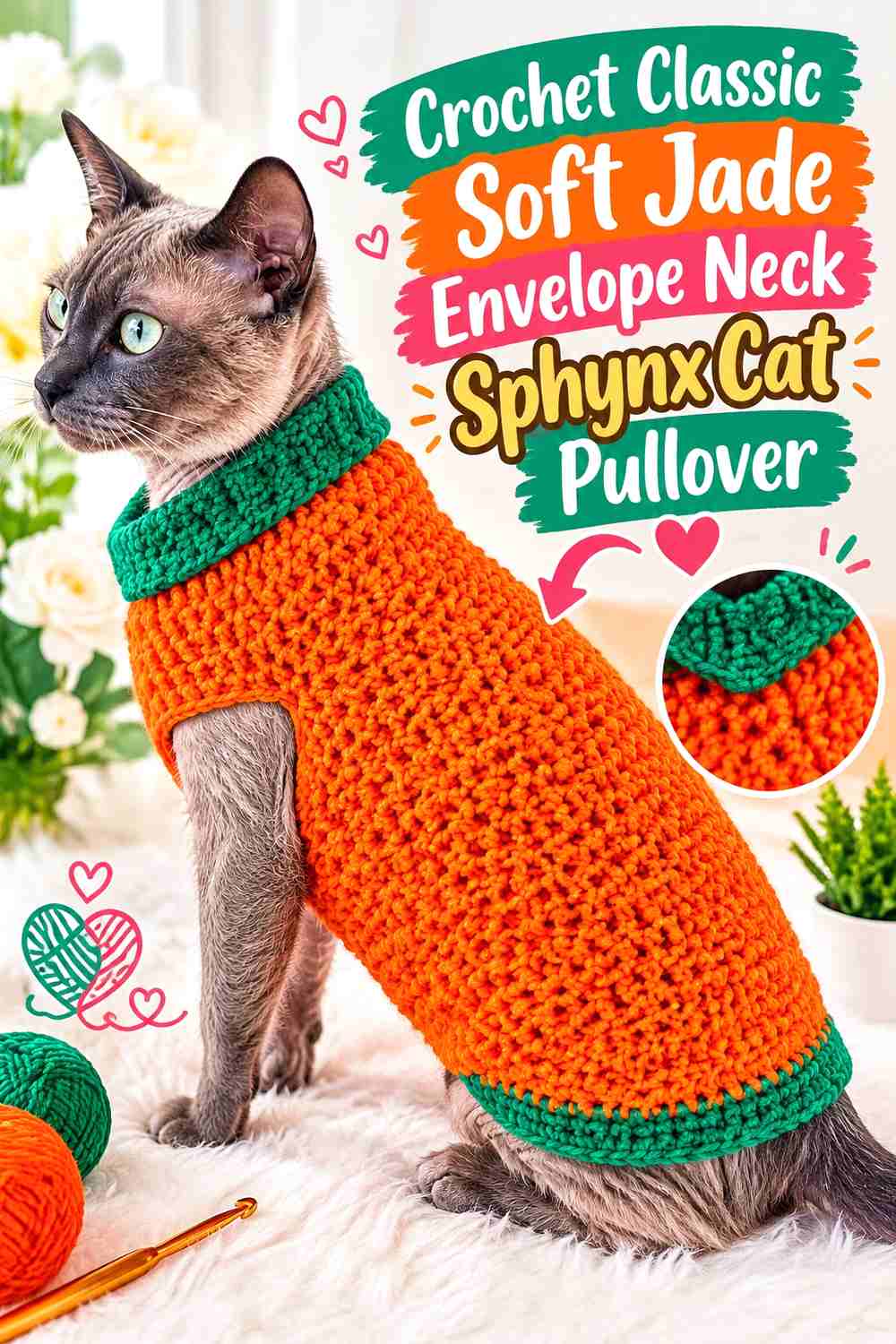
Treasurie’s cat-sweater tutorial uses a neck-down, one-piece construction with a ribbed neckband and leg openings, plus guidance for adjusting the garment to different cat sizes. That makes it a strong cat-specific foundation for replacing a standard neck treatment with a controlled overlapping neckline.
Use soft jade for the main body and cream for two short envelope sections crossing near the upper shoulders.
Let the Overlap Replace Some Neck Stretch
A conventional ribbed neck depends heavily on elasticity. With the envelope version, part of the dressing room comes from the crossing panels instead.
Keep enough structure around the remaining neckline that the sweater still settles into position after it is on the cat.
Keep Cream Confined to the Upper Frame
Cream panels against jade will already stand out strongly. Continue jade through most of the body so the envelope remains the focal point.
A narrow cream lower edge can repeat the accent if the design needs more balance.
Recheck Leg Placement After Changing the Neck
A looser entry can allow the sweater to settle slightly differently on the torso. Before finishing sleeves or leg borders, check that both openings still align naturally with the front legs.
The neck adaptation should make dressing easier without shifting the entire garment backward.
Creator Credit: Treasurie
2. Crochet Cream Shoulder-Overlap Sphynx Cat Pullover
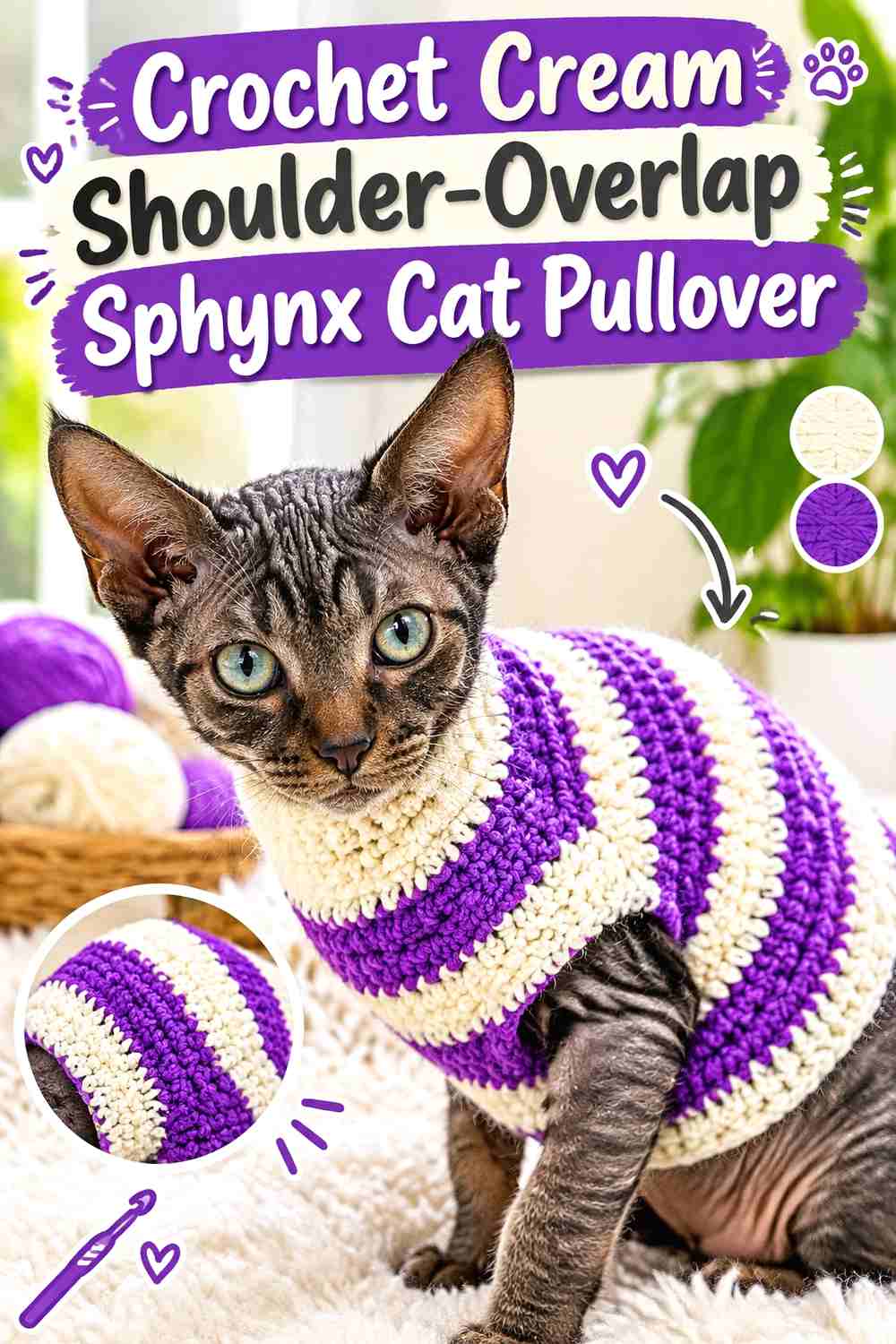
LittleGemsCreations – Fibre Artist has a cat-specific crochet sweater tutorial explicitly presented for cats, including hairless cats, so it provides one of the most directly relevant construction references in this collection.
For this variation, use cream for the body and make the envelope panels soft jade so the neckline resembles two overlapping shoulder tabs.
Keep the Shoulder Tabs Broad but Shallow
A wide overlap makes the envelope shape easy to see, but it does not need to travel far down the body.
Stop the panels before they approach the front-leg openings. The neckline should open at the shoulders rather than creating extra layers across the chest.
Use Jade to Mark the Direction of the Overlap
A darker or stronger contrast helps show which flap crosses over the other.
You can also reverse the overlap direction on another sweater without changing the underlying fit, creating a visually different pullover from the same general concept.
Check the Inside Where the Panels Cross
Two crochet layers can create more thickness than one ribbed neck. Feel the inside intersection and make sure the attachment does not produce a firm knot or ridge.
If necessary, reduce edging thickness where the panels overlap.
Creator Credit: LittleGemsCreations – Fibre Artist
3. Crochet Mini-Sleeve Jade Envelope Neck Sphynx Cat Pullover
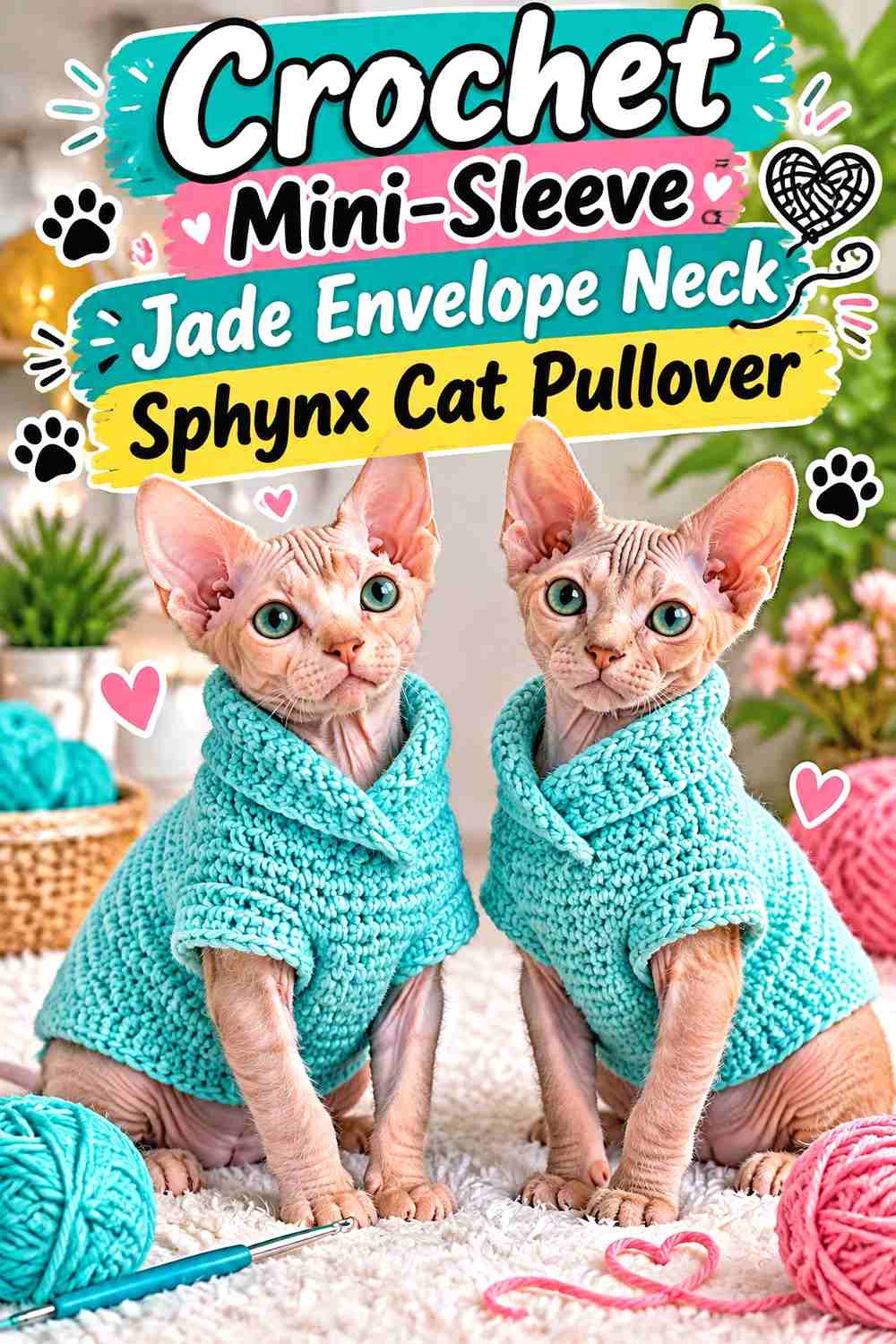
Punto a punto y más demonstrates a complete cat sweater with body shaping, sleeve separation, ribbed finishing, and sleeves, providing a useful cat-specific base when you want the envelope neckline to lead into visible front-leg coverage.
Make the body soft jade, work the overlapping neck in cream, and finish the short sleeves with matching cream edges.
Coordinate the Neck and Sleeve Openings
Repeating cream at the neck and sleeve edges creates a clear visual system without adding stripes through the torso.
Keep both borders proportionally shallow so they do not reduce the flexible opening created by the main fabric.
Short Sleeves Leave the Envelope Room to Stand Out
Deep sleeves and a wide envelope neck can make the front half of a small cat sweater visually crowded.
A shorter sleeve lets the neckline remain the dominant design while still giving the pullover a more finished silhouette than a sleeveless vest.
Check Forward Reach Before Finalizing Cuffs
Watch the front legs as the cat walks and stretches.
If a sleeve edge is pushed backward or gathers near the armpit, reduce sleeve depth rather than tightening the cuff.
Creator Credit: Punto a punto y más
4. Crochet Made-to-Measure Cross-Front Sphynx Cat Pullover
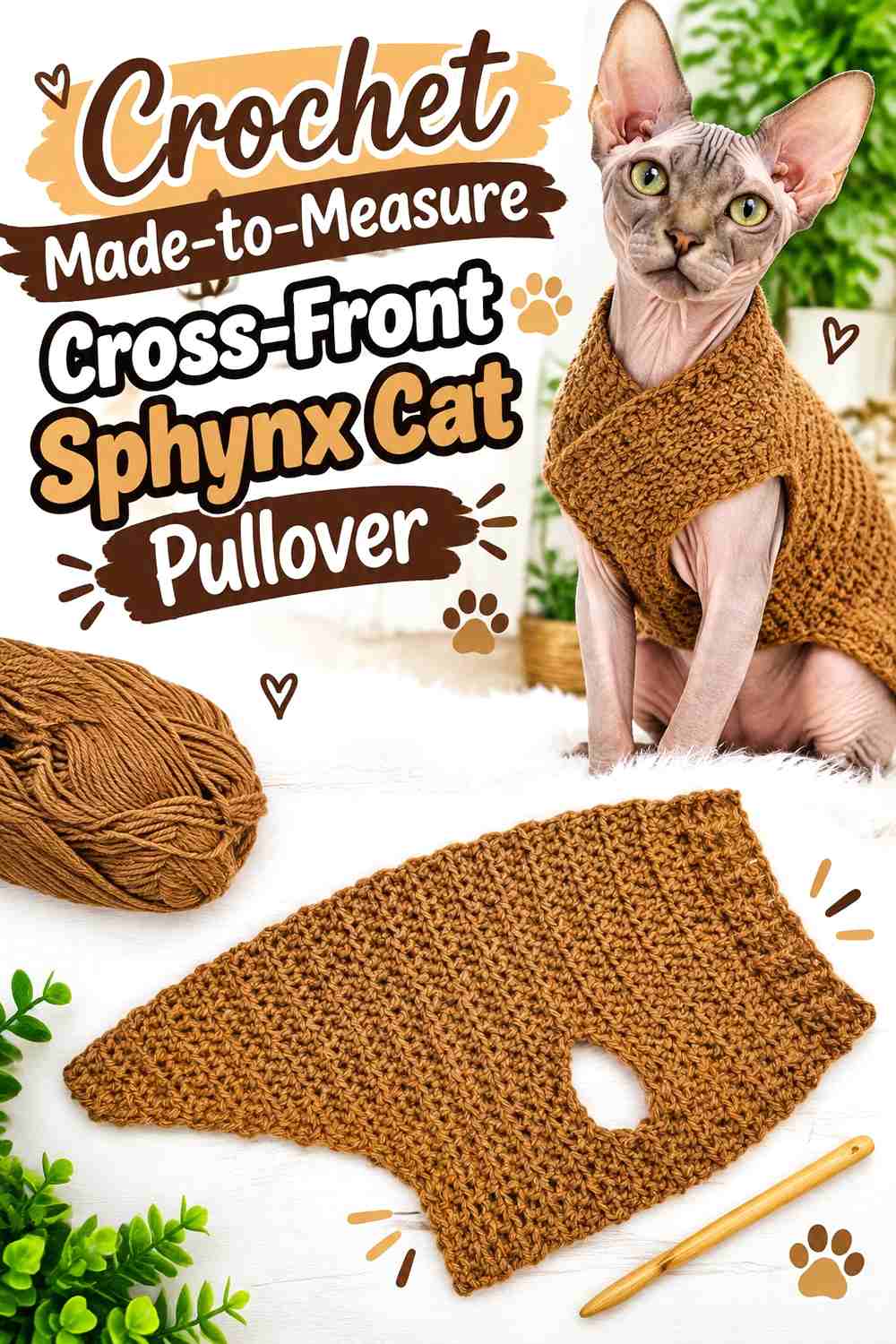
LoopsOnlyCrochet’s made-to-measure dog sweater begins at the neckline and is designed around individual measurements, with leg openings and a fitted back. Although it is a dog garment, that measurement-first structure is useful when adapting the upper body for a cat rather than borrowing the source dimensions directly.
This version uses a cream torso with broader jade envelope panels crossing toward the upper chest.
Measure the Cat Before Designing the Cross
Do not decide the overlap width from a reference photograph. Establish neck circumference, chest width, and the position of the front legs first.
Then make the envelope only as wide as the available upper-body space allows.
Let the Cross End Before the Chest Narrows
A long diagonal panel can begin interfering with leg movement if it continues too far downward.
Keep the crossing point high, then transition into a simpler body fabric.
Use the Made-to-Measure Logic, Not Dog Proportions
The value of this source is its adaptable construction method rather than its finished dog shape.
Re-evaluate every important measurement for the cat, especially neck depth, front-leg spacing, and body length.
Creator Credit: LoopsOnlyCrochet
5. Crochet Berry-Texture Envelope Neck Sphynx Cat Pullover
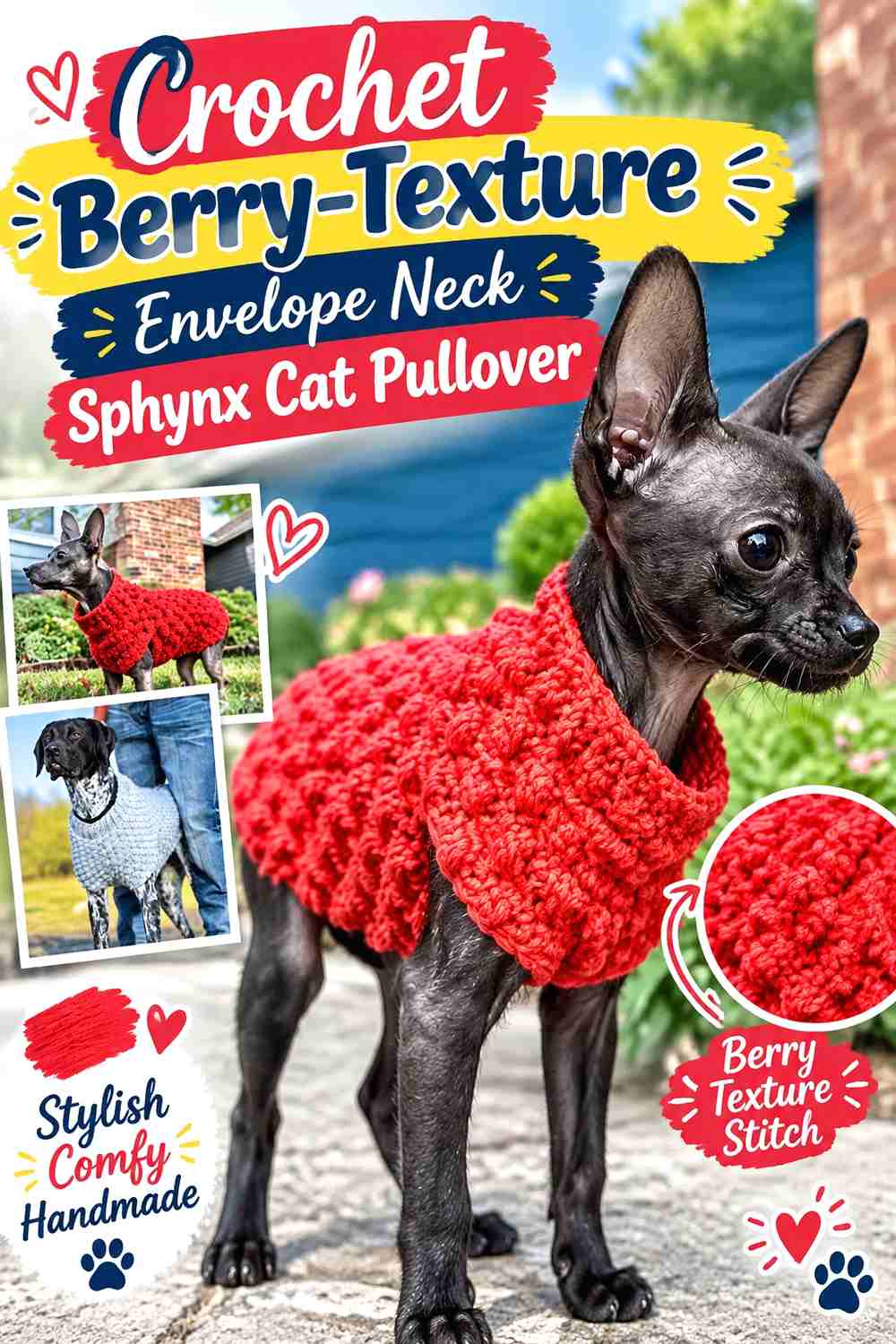
Heart Hook Home’s Tiny Dog Sweater uses a seamless one-piece construction and an uneven berry texture in very small sizes. The finished project is dog-specific, but its compact scale and strong texture make it useful inspiration for a small pet pullover where the envelope neckline stays smoother than the body.
Work the body in soft jade texture and keep the overlapping cream neck panels comparatively flat.
Contrast Smooth Neck Panels With a Textured Body
The envelope neckline already contains two fabric layers. Keeping those layers simple can prevent the upper garment from becoming excessively thick.
Let the body carry the berry-style visual interest instead.
Use Texture to Emphasize the Back, Not the Armpits
A raised surface is most useful where it can be seen clearly.
Transition to a flatter treatment as the fabric approaches the front legs if the texture creates noticeable thickness there.
Do Not Assume Tiny-Dog Sizing Equals Cat Sizing
A small finished circumference does not guarantee the correct body shape.
Use the source to study compact construction, then check the Sphynx’s actual neck, chest, leg spacing, and torso length independently.
Creator Credit: Heart Hook Home
6. Crochet Lightweight Cream-Trim Sphynx Cat Pullover
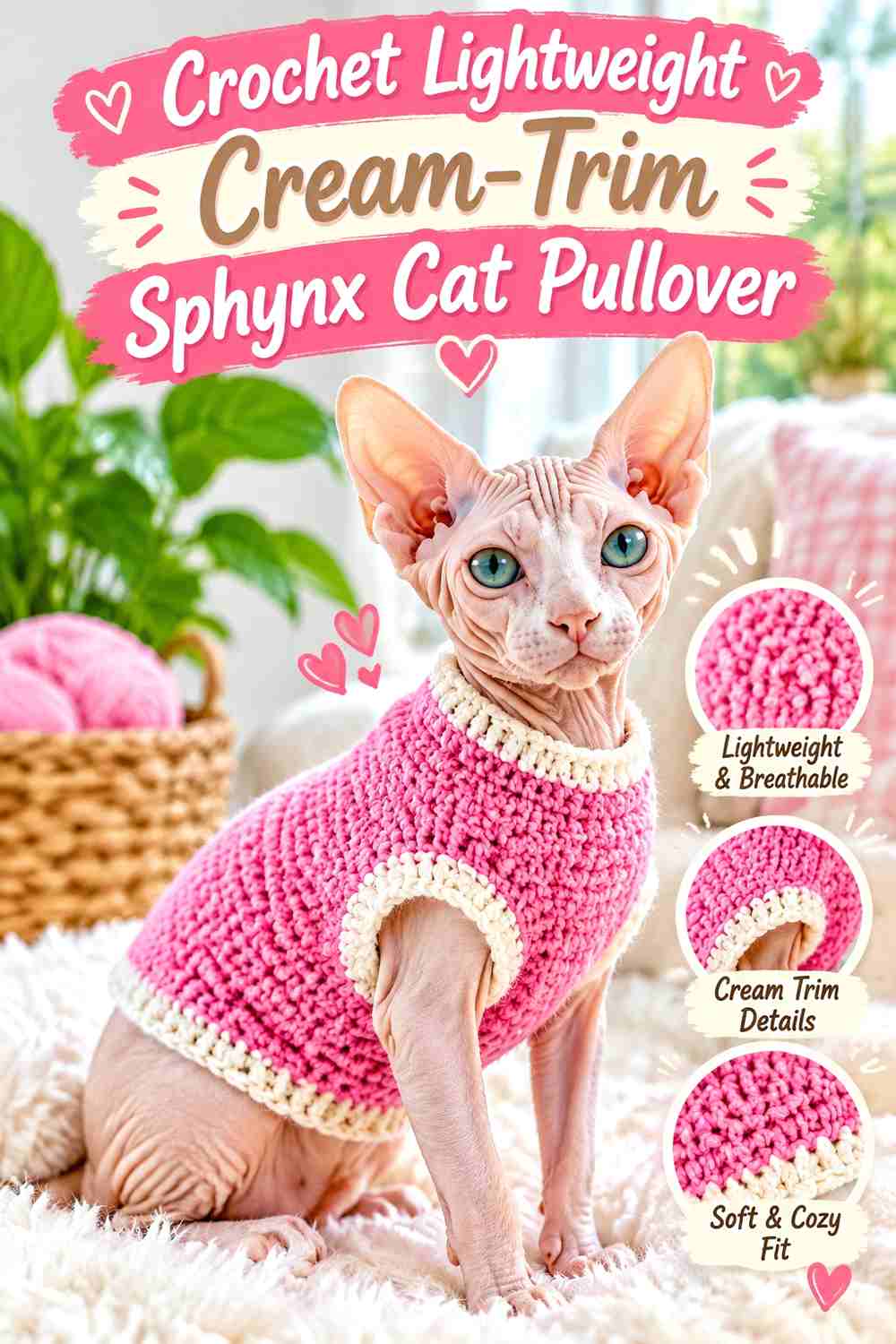
Crochet It’s small dog sweater tutorial uses a relatively lightweight-looking construction compared with bulkier pet sweaters, making it useful as an adaptation reference when you want a slimmer envelope neck rather than a heavy folded collar.
Use soft jade for almost the entire pullover and work only the crossing neck edges in cream.
Make the Envelope Visible Through Edging
The two panels do not need to be different colors from the body.
A narrow cream outline can trace their overlapping shape while leaving most of the fabric jade.
A Slimmer Neckline Reduces Layering
If both envelope flaps are worked in a thick stitch, the crossing area can become much denser than the torso.
A lighter border treatment gives the design definition without creating a bulky stack of fabric.
Recalculate Rather Than Upsizing With the Hook
If the source dimensions do not match the cat, changing only hook size can alter drape and openness as well as circumference.
Work from a swatch and the required measurements instead.
Creator Credit: Crochet It
7. Crochet Puff-Panel Envelope Neck Sphynx Cat Pullover
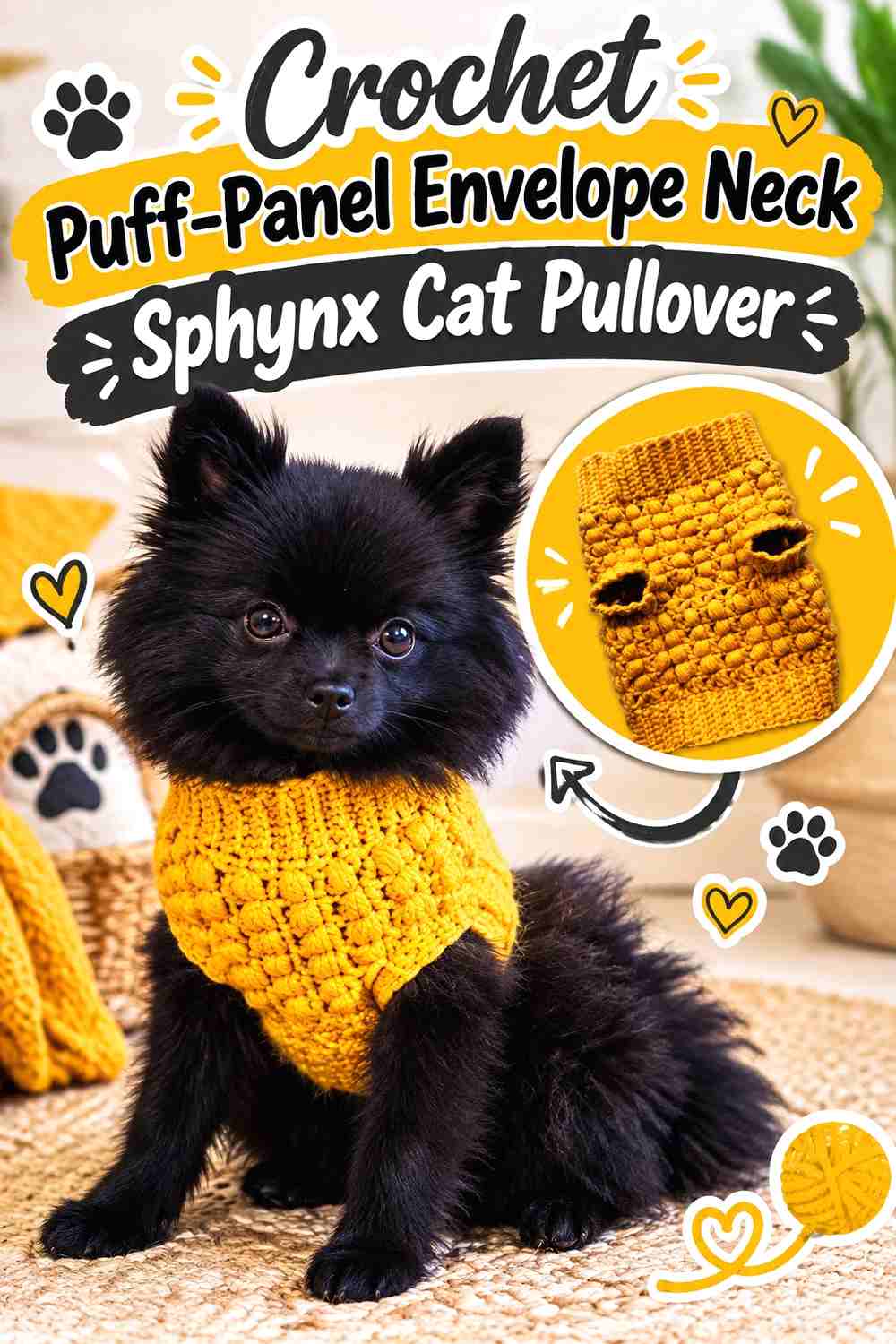
SheiLa Teré’s dog sweater uses puff and V-stitch texture, giving this adaptation a route to combine an envelope neckline with one controlled dimensional feature. The source is demonstrated for a Chihuahua, so the finished dimensions should not be transferred directly to a cat.
For this concept, keep the cream envelope panels smooth and introduce soft jade puff texture only along the center back.
Give Each Texture One Job
The overlapping neck already creates depth through construction. Let the puff stitches create depth on the back rather than repeating them around the neckline.
Separating the textures keeps both ideas readable.
Avoid Raised Texture Under the Front Legs
The chest and armpit areas have less room for bulky surface details.
A flatter fabric there can make movement easier to evaluate and reduces the number of thick transitions against the body.
Check the Finished Surface for Catching
Run your fingers over the textured panel and all envelope edges.
If loops or ridges catch easily, simplify vulnerable sections before regular wear.
Creator Credit: SheiLa Teré
8. Crochet Long-Sleeve Jade Envelope Neck Sphynx Cat Pullover
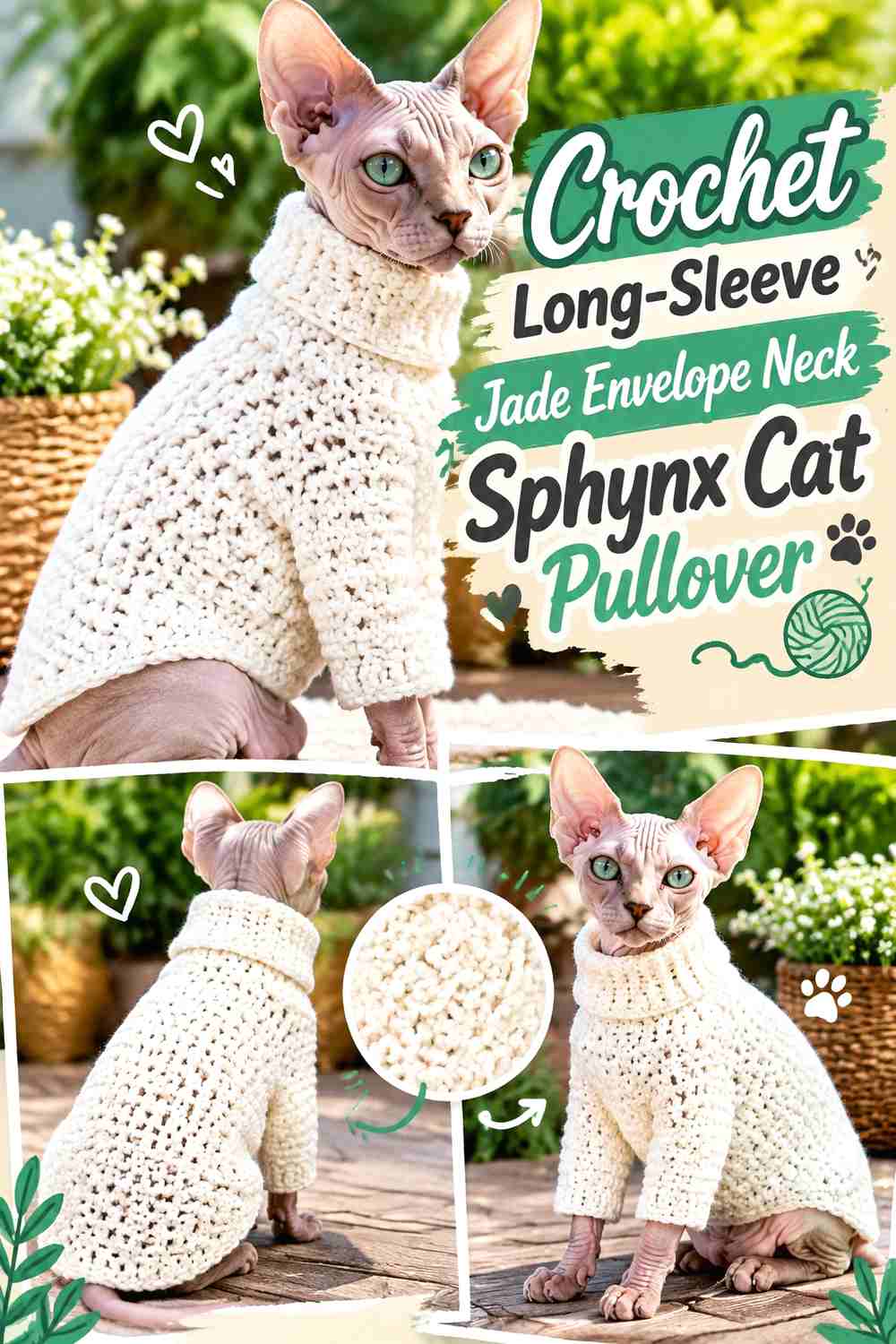
Vibes with Dani’s long-sleeve pet sweater tutorial is particularly useful because the supporting source notes that its construction can be adjusted for a dog or cat. The demonstrated garment uses fuller sleeve coverage than most of the other references here.
For the adaptation, make the torso cream, the envelope neckline jade, and repeat jade on the sleeves.
Let the Envelope Make Dressing Easier Before Adding Sleeves
Longer sleeves already require more handling of the front legs.
A neckline that opens broadly can make the initial dressing step less restrictive, but the sleeve openings still need to accommodate each leg comfortably.
Keep Sleeve Fabric Simpler Than the Neck
A strong jade neck and jade sleeves create enough color balance without additional patterning.
Use a relatively plain stitch on the sleeves so the cat’s leg movement remains easy to observe.
Shorten Sleeves Before Tightening Them
If fabric gathers while the cat walks, reduce sleeve length first.
A tighter cuff may stop the fabric from sliding but can introduce a different fit problem.
Creator Credit: Vibes with Dani
9. Crochet Button-Assisted Envelope Look Sphynx Cat Pullover
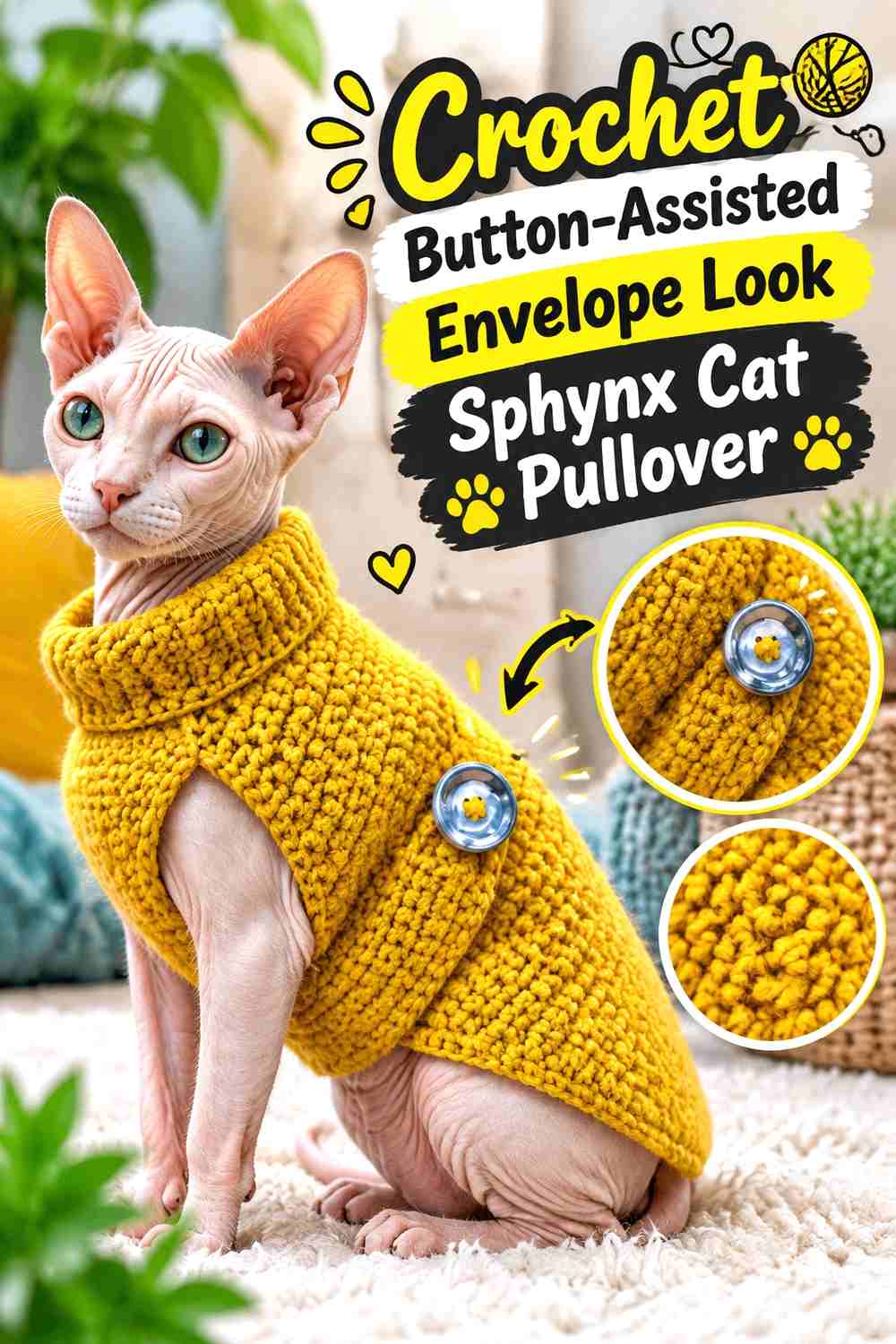
Last Minute Laura’s one-piece dog-sweater tutorial uses custom measurements and a button element, which makes it useful inspiration when the goal is to reduce how much the garment must stretch during dressing.
Instead of creating a deeply overlapping neckline, make a shallow cream envelope shape over a jade upper body and let a short fastening section provide some of the additional opening.
Do Not Make Both Systems Excessive
A large envelope neck plus a large buttoned opening can destabilize the upper garment.
Let one feature provide most of the dressing room while the other supplies the visual effect.
Place the Fastening Away From Active Leg Movement
Any button or tab should lie where it does not repeatedly contact a moving front leg.
Fit the closure before completing the decorative envelope panels so you know how the sweater actually sits when secured.
Keep Small Components Secure
If buttons are used, attach them firmly and inspect them regularly.
For a cat that mouths or pulls at clothing, a less accessible or different fastening approach may be preferable to exposed decorative hardware.
Creator Credit: Last Minute Laura
10. Crochet Colorwork-Yoke Envelope Neck Sphynx Cat Pullover
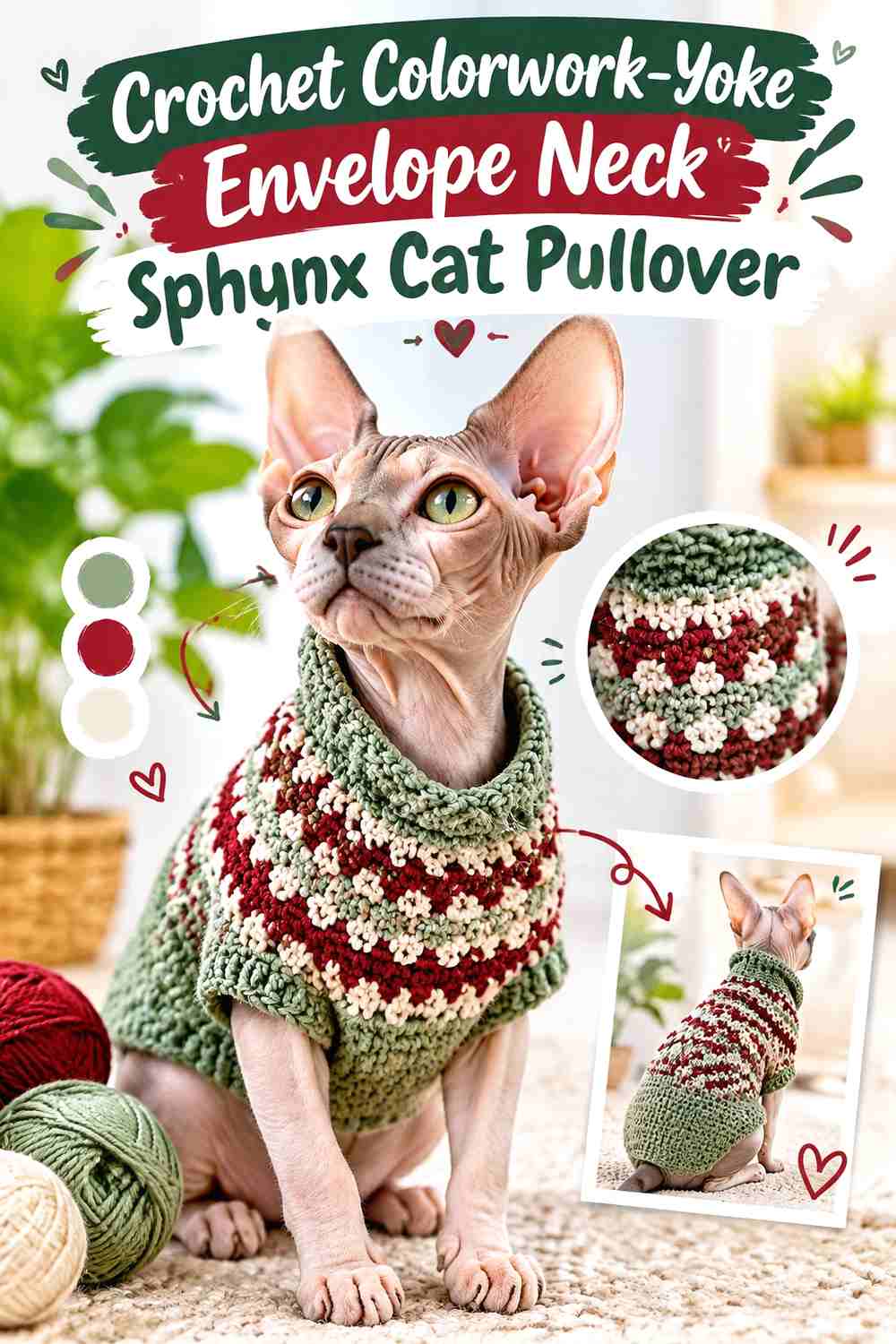
Yarnspirations’ Family Dog Sweater tutorial uses a colorwork yoke and three-size sweater construction, making it a useful source for a pullover where the envelope neckline sits above a deliberate two-color upper-body design.
Simplify the palette to soft jade and cream, with a cream envelope neckline leading into a jade-and-cream yoke and a mostly solid lower body.
Keep the Envelope Plainer Than the Yoke
The upper body already contains strong color changes.
A simple cream overlap gives the eye a clear starting point before the more patterned shoulder area begins.
Check Stretch in Both Neck and Yoke
The envelope neckline may open readily while the colorwork below it remains comparatively firm.
Test the complete upper garment rather than assuming a wide neck opening guarantees comfortable dressing.
Stop Colorwork Before the Narrow Leg Zone
The motif does not need to continue into every shaped area.
Keeping the chest and front-leg region simpler can make fit changes easier and prevents the graphic pattern from becoming distorted.
Creator Credit: Yarnspirations
11. Crochet Harness-Aware Envelope Neck Sphynx Cat Pullover
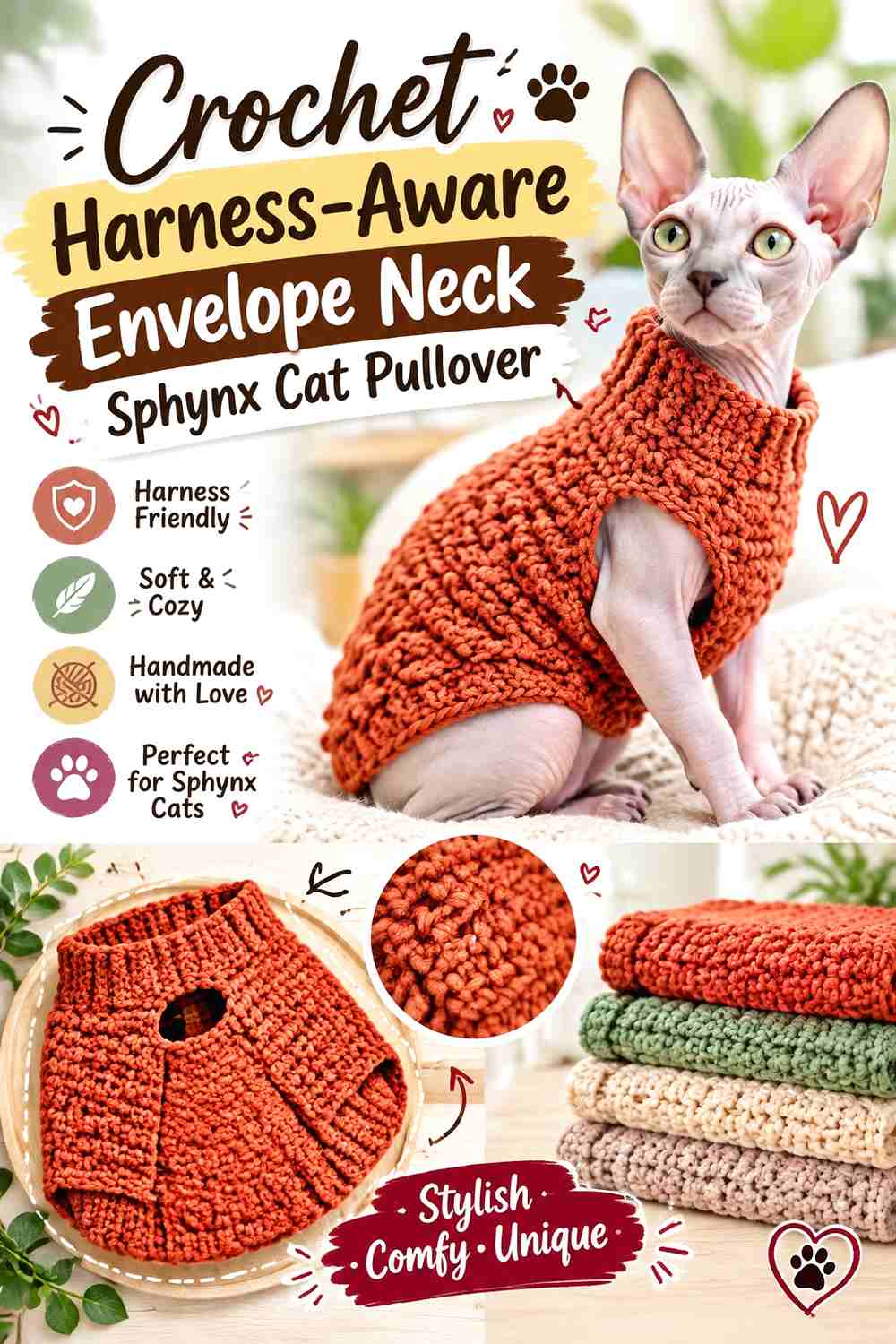
Briana K Designs’ Wheat Stitch Dog Sweater uses a one-piece construction with a ribbed neck, leg openings, and a harness opening. It is a dog-specific source, but it provides useful planning logic when a cat pullover must coexist with other fitted equipment.
For this adaptation, use a cream envelope neck, a soft jade textured body, and a flatter panel wherever harness hardware or straps need clearance.
Fit the Equipment Before Positioning the Overlap
If the cat wears a harness with the pullover, check both together.
A neckline panel that looks balanced by itself may bunch once a chest or shoulder strap is added.
Give Straps a Flatter Contact Zone
Raised texture and doubled envelope layers can add bulk.
Keep the strongest texture away from the places where harness straps sit directly against the garment.
Keep Leash Force Off the Crochet Fabric
Any opening in the pullover should provide access only.
Attach walking hardware to the properly fitted harness rather than to the envelope panel, edging, or crochet opening.
Creator Credit: Briana K Designs
12. Crochet Wide-Band Jade and Cream Envelope Neck Sphynx Cat Pullover
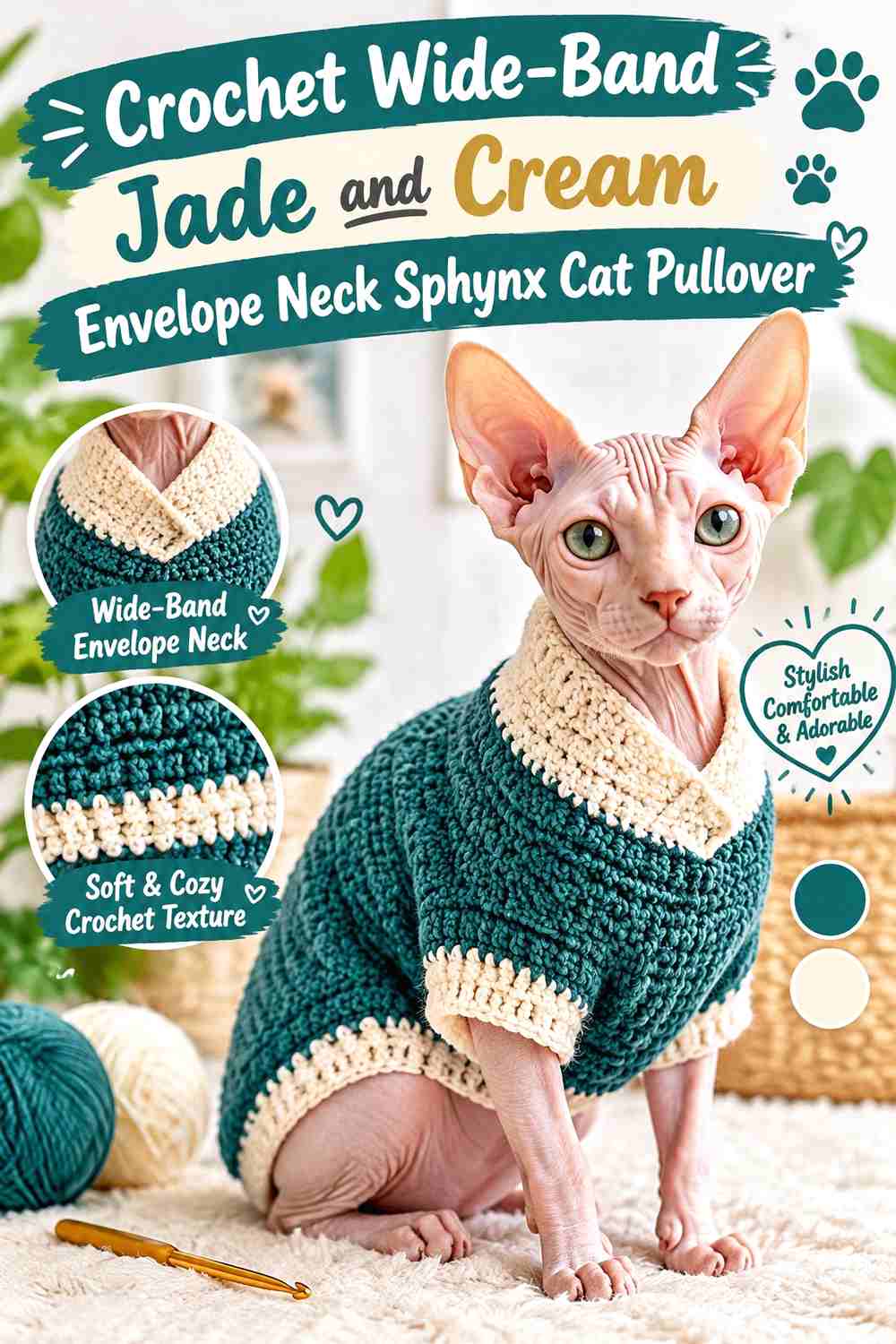
Crochet with Tiffany’s dog-coat tutorial is offered as a multi-size construction with adjustment guidance, making it useful for the final idea: a broader color-blocked envelope neck paired with an otherwise straightforward pet sweater shape.
Use a cream body, a broad soft jade upper-neck band, and cream envelope flaps crossing over the jade background.
Use Color Blocking to Make a Subtle Overlap Clear
Cream-on-jade-on-cream creates enough separation that the envelope shape remains visible even if the two flaps themselves are shallow.
This is useful when you want the appearance of a wider neckline without adding a very deep overlapping section.
Keep the Wide Band Above the Front Legs
A broad jade zone can frame the neck and shoulders, but it should finish before the most active chest area if its stitch structure is noticeably denser.
Check the border while the cat stretches forward.
Leave the Lower Body Mostly Uninterrupted
The upper color block is already the defining feature.
A plain cream torso gives you more freedom to adjust length and fit without having to reposition multiple decorative bands.
Creator Credit: Crochet with Tiffany
Comparing the 12 Envelope Neck Pullover Directions
IdeaMain DifferenceEnvelope TreatmentMost Important CheckClassic jadeCat-specific one-piece baseCream shoulder overlapNeck opening after dressingCream shoulder overlapCat-specific sweater baseWide jade tabsThickness at crossing pointMini-sleeveCat sweater with sleevesCream neck plus cuffsForward leg reachMade-to-measureMeasurement-led constructionCross-front jade panelsCat-specific proportionsBerry textureCompact textured bodySmooth cream overlapUpper-body bulkLightweight trimSlimmer fabric approachCream-edged overlapGauge after resizingPuff panelMixed textureSmooth neck, textured backSnagging and armpit bulkLong sleeveFuller front-leg coverageJade envelope neckSleeve movementButton-assistedEasier-opening conceptShallow decorative overlapClosure placementColorwork yokePatterned upper bodyPlain cream envelopeYoke stretchHarness-awareFunctional equipment accessFlat overlap near strapsHarness compatibilityWide-bandStrong color blockingCream flaps over jade bandChest clearance
Conclusion
For the closest match to the actual wearer, begin with the cat-specific Treasurie, LittleGemsCreations – Fibre Artist, or Punto a punto y más tutorials. They provide more relevant cat garment foundations before the envelope neckline is introduced.
If individualized sizing is the bigger challenge, the LoopsOnlyCrochet made-to-measure concept gives you a useful framework for establishing the body before deciding how far the overlap should extend. Heart Hook Home and Crochet It provide compact constructions that can inspire lighter or smaller pullovers, while Vibes with Dani offers the most relevant source in this set for fuller sleeves and explicitly notes cat adaptability.
For a more decorative sweater, use the envelope neck as the quiet feature and let berry texture, puff stitches, or a colorwork yoke carry the stronger surface detail. If a harness must be worn with the pullover, plan that equipment at the same time as the neckline rather than treating it as an afterthought.
Soft jade and cream work best when they clarify the construction: one color for the overlapping neckline and the other for the main torso. Complete the fundamental neck, chest, and leg fit before adding extra trim, and return to the original creator tutorial whenever you need its exact construction details.
Frequently Asked Questions
What is an envelope neck on a crochet cat pullover?
It is an overlapping neckline inspired by envelope-neck garments, where two upper sections cross instead of forming one completely fixed circular opening. The overlap can create additional room during dressing while still closing visually once the sweater is worn.
Is an envelope neck better than a ribbed collar for a Sphynx cat?
Neither is automatically better. A ribbed neck can be simple and stretchy, while an envelope neck can provide a wider temporary opening. The more useful option is whichever fits the individual cat comfortably without bunching under the chin or shifting around the shoulders.
How far should the envelope panels overlap?
Only far enough to create a stable neckline and useful dressing room. A very deep overlap adds extra fabric over the upper chest and can move toward the front-leg area. Test the panels before permanently finishing their edges.
Should I use soft jade or cream for the main body?
A soft jade body with a cream envelope neck makes the overlap easy to see. A cream body with jade trim creates a lighter-looking sweater and places more emphasis on the neck edge. You do not need equal amounts of both colors.
Can I adapt a crochet dog sweater tutorial for a Sphynx cat?
A dog tutorial can provide useful ideas for construction, texture, sleeves, or closures, but its finished measurements and proportions should not be assumed to fit a cat. Measure the cat directly and reassess the neck, chest, front-leg spacing, and body length before adapting the source.
How can I keep an envelope neckline from becoming bulky?
Use a relatively flat stitch for the overlapping panels, keep decorative edging shallow, and avoid placing thick seams directly where the two panels cross. If the body is heavily textured, making the neckline smoother can also reduce total thickness.
What should I check during the first fitting?
Check that the pullover goes over the head without force, the envelope panels settle flat, the neckline stays clear of the chin, the front legs move freely, and no seam or edge creates a firm pressure point. Also watch how the sweater behaves when the cat walks, sits, turns, and stretches.