Damson sits between deep purple, plum, and muted wine tones, which makes it flexible enough for very different crochet sweater palettes. Pair it with cream and the sweater gains clear light-dark contrast. Add dusty rose or lavender for a softer tonal direction, or bring in mustard, teal, rust, or sage when you want the supporting color to be more noticeable.

For a sweater, placement matters as much as the palette itself. Damson can cover the main front and back panels, appear as stripes, frame a V-neck, repeat through a textured yoke, or concentrate around cuffs and ribbing. Sleeves also occupy a large visual area, so changing their color balance can make the finished sweater look very different even when the body palette stays the same.
The tutorials below support the sweater construction concepts. The damson palettes are independent color adaptations and do not imply that each creator used these exact colors.
Quick List
- Damson And Cream Crochet Mesh Sweater
- Damson And Camel Crochet Oversized Sweater
- Damson And Oatmeal Crochet V Neck Sweater
- Damson And Dusty Rose Crochet Off Shoulder Sweater
- Damson And Sage Crochet Striped Sweater
- Damson And Charcoal Crochet Chunky Sweater
- Damson And Mustard Crochet Textured Crop Sweater
- Damson And Ivory Crochet Wide Collar Sweater
- Damson And Denim Blue Crochet Pullover Sweater
- Damson Blush And Cream Crochet Heart Sweater
- Damson And Rust Crochet Chunky Cropped Sweater
- Damson And Lavender Crochet Waffle Turtleneck Sweater
- Damson And Teal Crochet Textured Sweater
- Damson Black And Soft Gray Crochet Chunky Jumper
Make Damson the Anchor Across Crochet Sweater Panels
Before dividing colors between panels and sleeves, decide whether the finished garment should read primarily as a damson sweater or as a multicolor sweater containing damson. For a damson-led design, keep the purple across the largest uninterrupted areas or repeat it consistently in the body, shoulders, and sleeves.
Supporting colors can then handle smaller jobs such as neckline trim, cuffs, stripes, textured sections, or selected panels. This hierarchy is particularly useful on oversized sweaters because a large sleeve or front panel can make a supporting shade look much more dominant than it did in a small swatch.
Check Damson Contrast Before Adding Crochet Texture
Different hues do not automatically create strong contrast. Damson can sit surprisingly close in value to charcoal, black, deep teal, forest green, or dark denim. If those colors meet inside textured crochet, small stitch details can become less visible.
Compare the yarns side by side before beginning the full sweater. A grayscale photo is another useful check: if the shades turn into nearly identical grays, use their similarity intentionally for a blended effect or introduce a lighter color where you want clearer texture.
Repeat Damson at Sweater Cuffs, Hems, and Necklines
Finishing can change which color appears to dominate a sweater. A damson neckline, hem, and pair of cuffs visually frame a body that contains several other shades. In contrast, cream or oatmeal finishing can lighten a garment whose body is already mostly damson.
Choose finishing colors after viewing the main sweater pieces together. The right trim can reconnect a palette that feels scattered without requiring you to change the larger body panels.
1. Damson And Cream Crochet Mesh Sweater
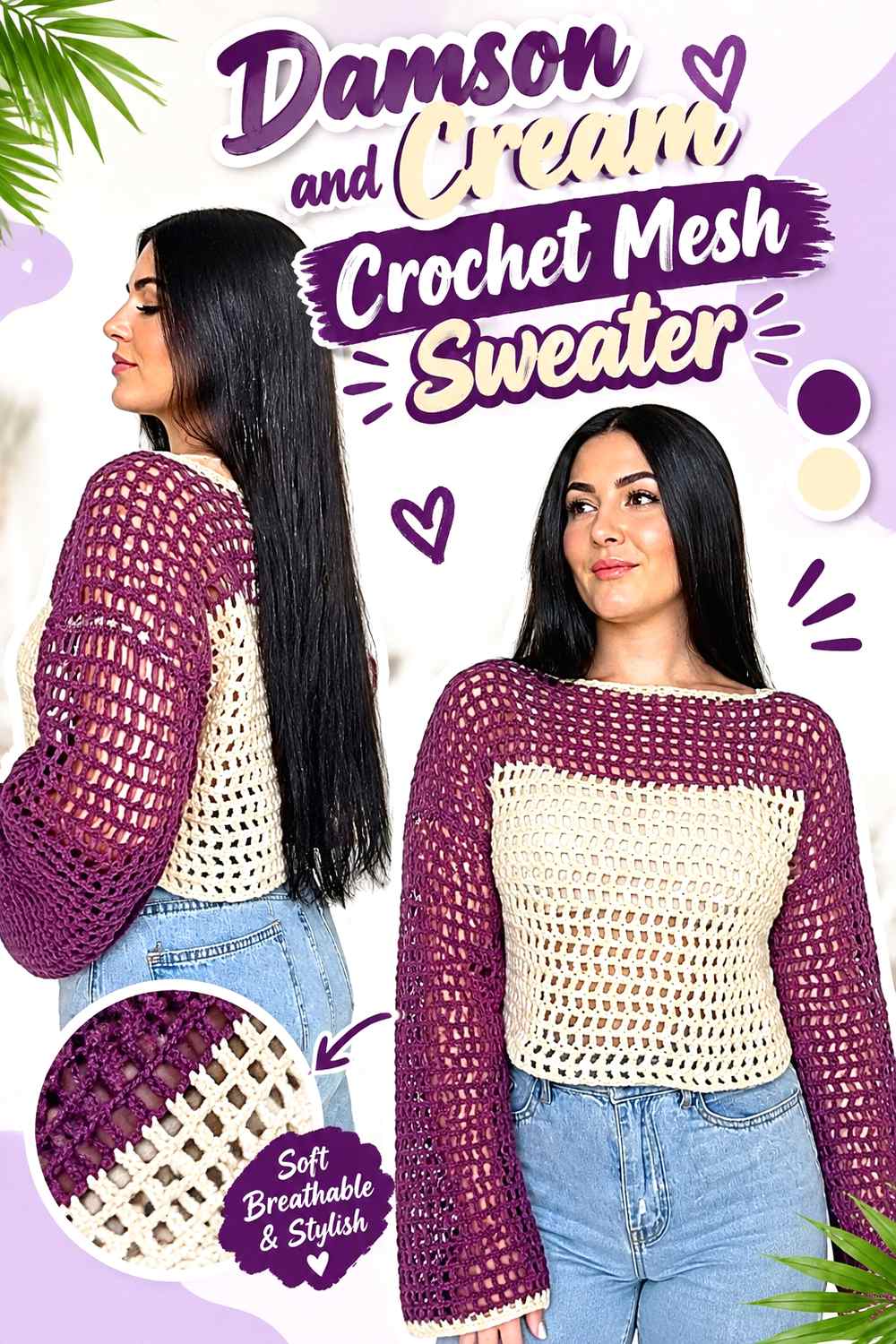
A damson-and-cream mesh sweater gives the dark purple plenty of breathing room. Damson can lead across the main body while cream marks selected stripes, sleeve sections, or neckline edging. Because open crochet naturally reveals the layer underneath, the surrounding clothing also becomes part of the color composition.
For a clearly damson-led result, keep the strongest concentration of purple across both front and back rather than allowing cream to occupy every second section equally.
Let Damson Cover the Largest Mesh Sweater Areas
Long uninterrupted damson sections make the sweater read as purple even when cream is repeated throughout the garment. This can be especially effective through the body and upper sleeves, where there is enough surface area for the deeper color to establish itself.
If you prefer stripes, make damson the wider or more frequently repeated color rather than automatically dividing the sweater fifty-fifty.
Use Cream to Make Damson Mesh Edges Easier to Read
Cream can define cuffs, neckline areas, or a narrow hem against damson. The lighter value creates a visible finishing line without needing a third accent color.
Also consider the layer worn beneath an openwork damson sweater. A very high-contrast underlayer can compete with cream detailing, while a quieter neutral lets the actual crochet color placement remain more noticeable.
Creator Credit: ElyseCrochets 💌
2. Damson And Camel Crochet Oversized Sweater
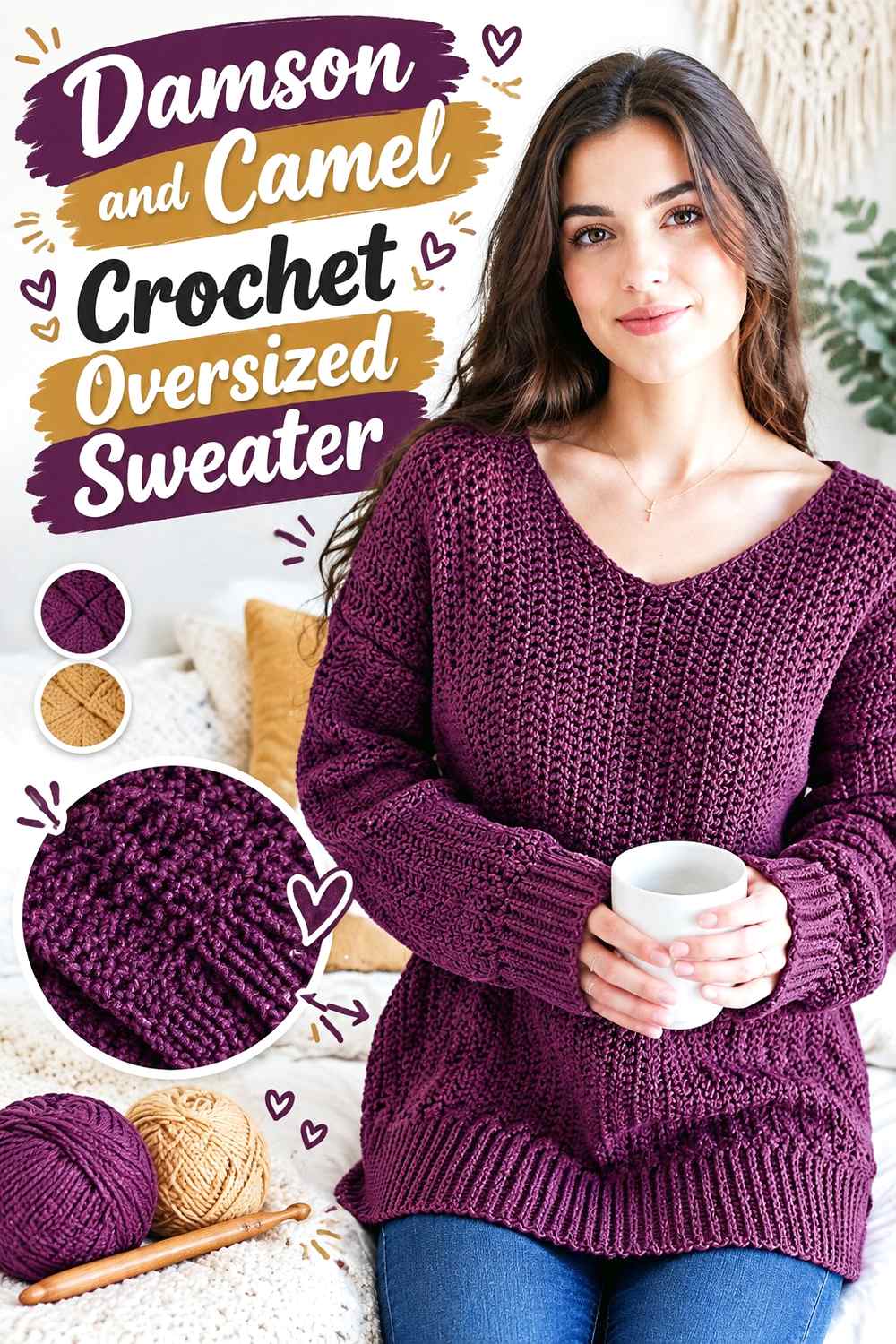
Camel adds warmth to damson without producing the sharp contrast of cream. On an oversized sweater, the two colors work particularly well when one clearly leads, because wide body panels and roomy sleeves give every shade substantial visual space.
Keep damson across most of the torso, then use camel for cuffs, broad sleeve sections, a hem, or a limited number of larger color blocks.
Keep Damson Dominant Across the Oversized Sweater Body
An oversized silhouette magnifies every block of color. A camel panel that seems modest during planning may become one of the largest areas on the finished garment.
If you want a damson sweater first and a two-color sweater second, reserve the torso for mostly damson and introduce camel where it can frame or interrupt the purple rather than replace it.
Use Damson and Camel Repetition to Balance Wide Sleeves
If camel appears on one sleeve, repeat it on the other or echo it somewhere on the body. The repeat does not need to be perfectly symmetrical, but the color should look intentionally connected to the garment.
Damson cuffs can be particularly useful when camel occupies a large portion of the sleeves because the purple then returns at the wrist and reconnects the sleeves with the main body.
Creator Credit: Amanda Love Santos
3. Damson And Oatmeal Crochet V Neck Sweater

Oatmeal gives damson softer contrast than bright white while still being light enough to define a V-neck, hem, or textured body section. The neckline is an important color-placement area in this style because it sits near the center of the garment and naturally draws attention.
A damson body with oatmeal finishing keeps the sweater dark overall, while reversing those roles produces a much lighter garment with damson functioning more as an outline.
Frame the V-Neck With Damson When Oatmeal Covers More of the Sweater
If oatmeal occupies a substantial portion of the body, a damson neckline can restore the main color exactly where it will remain highly visible. Repeat that damson at the cuffs or hem so the neckline does not look like an isolated purple detail.
For a darker interpretation, reverse the balance and use oatmeal only as a narrow V-neck or cuff accent.
Let Damson and Oatmeal Separate Crochet Texture Clearly
Oatmeal is useful near textured damson sections because the light-dark difference helps the surface pattern remain visible. This can matter around ribbing, edging, and any area where several stitch directions meet.
If your chosen oatmeal is fairly deep beige, compare it against damson before committing. A lighter neutral gives stronger definition; a darker oatmeal produces a quieter transition.
Creator Credit: forthefrills
4. Damson And Dusty Rose Crochet Off Shoulder Sweater

Dusty rose stays close enough to damson to create a related palette while still introducing a lighter pink direction. On an off-shoulder sweater, color around the neckline becomes especially noticeable, so this is a useful place to decide which shade should lead.
A damson body with dusty rose near the neckline softens the upper edge, while a damson neckline against a rose-heavy body gives the garment a much stronger dark frame.
Keep Damson Visible Around the Off-Shoulder Sweater Neckline
If damson is the defining shade, avoid removing it entirely from the neckline. Even a narrow damson edge can connect the upper part of the sweater with the purple body or cuffs.
When dusty rose occupies the top section, repeat damson just below it or on the sleeves so the transition looks planned rather than like two unrelated garment sections.
Choose Dusty Rose That Remains Lighter Than Damson
A very dark muted rose can sit close to damson once worked into crochet fabric. If you want visible two-color separation, choose a rose that remains noticeably lighter.
For a more blended tonal sweater, closer values can work intentionally. In that case, use larger color sections rather than narrow stripes so each shade still has enough area to register.
Creator Credit: VivCrochets
5. Damson And Sage Crochet Striped Sweater
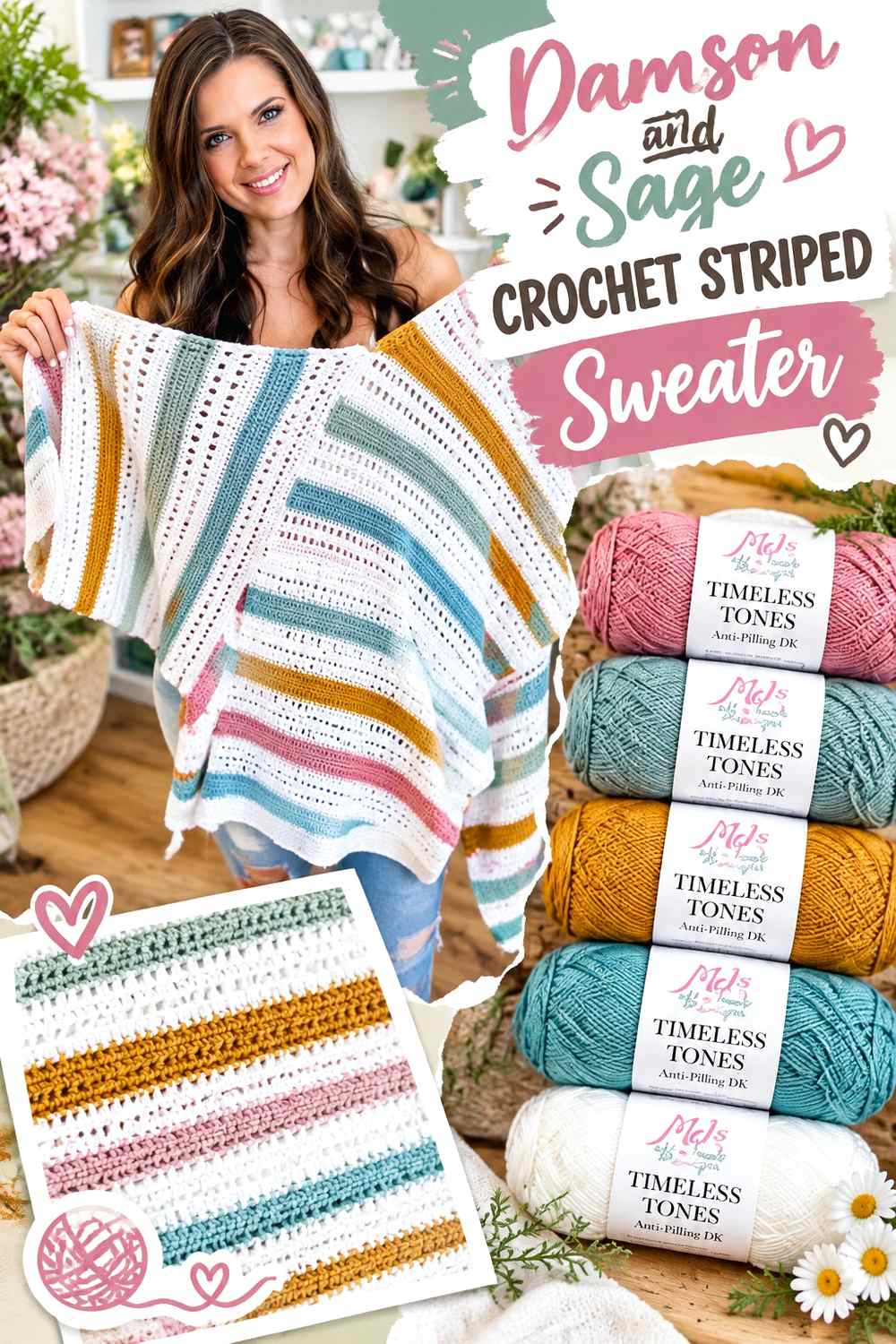
Damson and sage create a muted purple-and-green combination that works especially well in stripes because the repetition naturally distributes both colors across the sweater. The main decision is stripe hierarchy: equal bands create a balanced two-color garment, while wider damson sections make purple clearly dominant.
You can also keep damson at the neckline and cuffs even when the body contains frequent sage stripes.
Use Wider Damson Stripes When Damson Should Lead the Sweater
Stripe width changes the color balance quickly. If sage and damson appear in identical bands, they will compete almost equally across the front and sleeves.
Wider damson bands or more frequent purple repeats give the sweater a damson base while allowing sage to provide regular breaks. Lay several proposed bands together before starting the full body so you can judge the proportion at garment scale.
Repeat Damson at the Cuffs to Finish Sage Stripes Cleanly
Striped sleeves can end abruptly when the final stripe simply stops at the wrist. A damson cuff gives both sleeves the same visual endpoint and reconnects them with a purple-led body.
The same approach can be used at the neckline or lower hem, especially when the last body stripe happens to be sage.
Creator Credit: MJ’s Off The Hook Designs
6. Damson And Charcoal Crochet Chunky Sweater
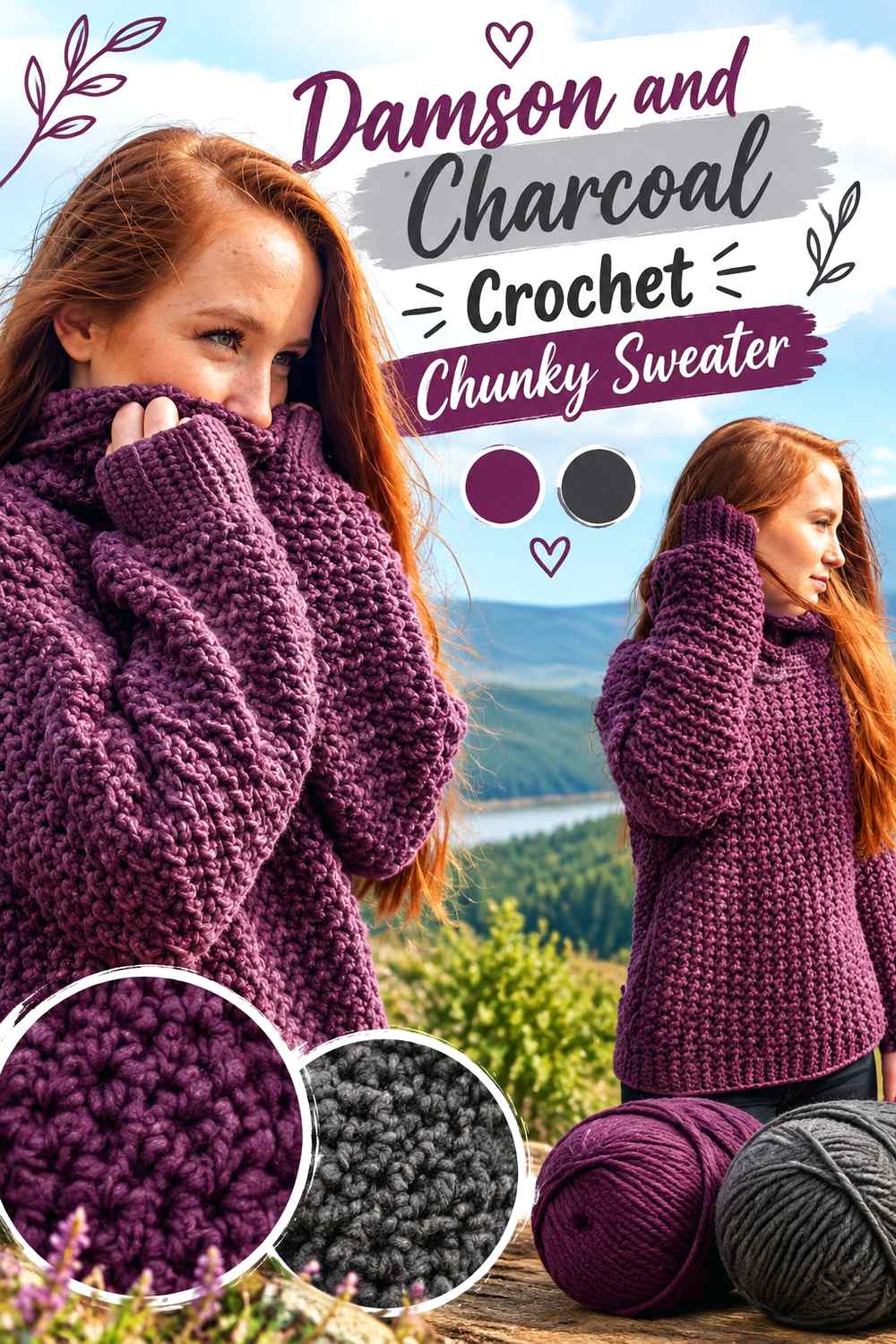
Damson and charcoal create a low-contrast, dark sweater where texture can become more important than obvious color separation. Because both shades can be deep, small alternating sections may visually merge.
Use larger blocks instead: a damson body with charcoal cuffs and neckline, charcoal sleeves with a damson torso, or one broad charcoal section repeated deliberately elsewhere.
Keep Damson in Large Blocks Beside Charcoal
Narrow charcoal stripes may disappear into dark damson, particularly in substantial crochet fabric. Large sections allow the viewer to register the hue change even when the light-dark contrast is limited.
If damson is the priority, keep it across the front and back while charcoal handles smaller structural areas such as cuffs or a collar.
Check Damson and Charcoal Texture in the Actual Crochet Fabric
Do not judge this pairing only from unwound yarn. Crochet creates shadows between stitches, and those shadows can make two already-dark colors appear even closer.
Work enough fabric to see the texture properly. If the distinction is too subtle, move charcoal to larger blocks or introduce a lighter finishing color rather than forcing narrow dark-on-dark details.
Creator Credit: Hey Carrie
7. Damson And Mustard Crochet Textured Crop Sweater

Mustard gives damson a much stronger color contrast and can draw attention to textured crochet quickly. On a cropped sweater, there is less body area available, so even a modest amount of mustard can become a major visual feature.
Use damson for the main textured panels, then introduce mustard through cuffs, a neckline, a hem, or controlled color blocks.
Let Damson Carry the Main Textured Sweater Surface
Damson can give raised or dimensional crochet a deep, unified background. Keeping most of the textured body in one color also prevents the surface pattern from competing with too many abrupt color changes.
If mustard is added inside the main texture, use it in repeated sections rather than isolated spots so it becomes part of the sweater’s structure.
Keep Mustard Smaller Than Damson on a Cropped Sweater
A cropped body gives every accent more influence. Large mustard areas can quickly turn the garment into a mustard-and-damson sweater rather than a damson sweater with a warm accent.
Try mustard on the cuffs and lower edge first. You can always increase its share after viewing the body and sleeves together.
Creator Credit: AC Crochets
8. Damson And Ivory Crochet Wide Collar Sweater
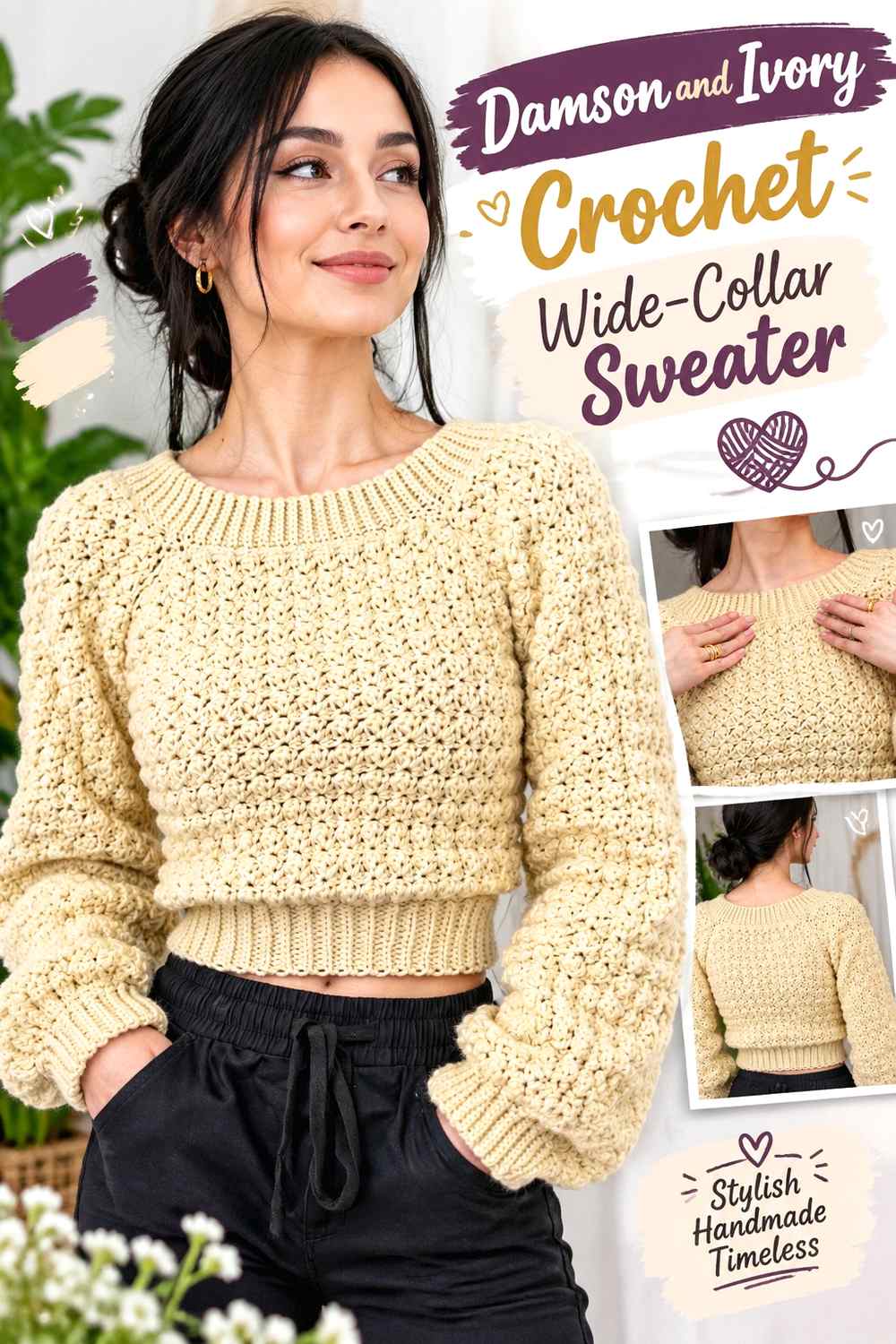
Ivory can emphasize the neckline of a wide-collar sweater without the starkness of bright white. Since the collar occupies a larger area than simple neckline trim, its color has enough visual weight to alter the entire garment.
A damson body with an ivory collar creates a distinct framed neckline. Alternatively, use damson for both body and collar while restricting ivory to narrow finishing details for a deeper overall sweater.
Use Damson on the Wide Collar for a Darker Sweater Frame
When the body already contains ivory sections, a damson collar can restore the darker color at the top of the garment. Repeating damson through the cuffs creates a top-and-bottom frame around lighter sections.
A wide collar contains enough fabric that this decision should be made before treating damson as a casual accent.
Use Ivory to Separate Damson Collar and Body Texture
If both the body and collar are damson but use different textures, a narrow ivory transition can make the construction change more visible.
Keep the ivory line restrained if damson should remain dominant. The lighter color does not need much surface area to provide noticeable separation.
Creator Credit: TCDDIY
9. Damson And Denim Blue Crochet Pullover Sweater
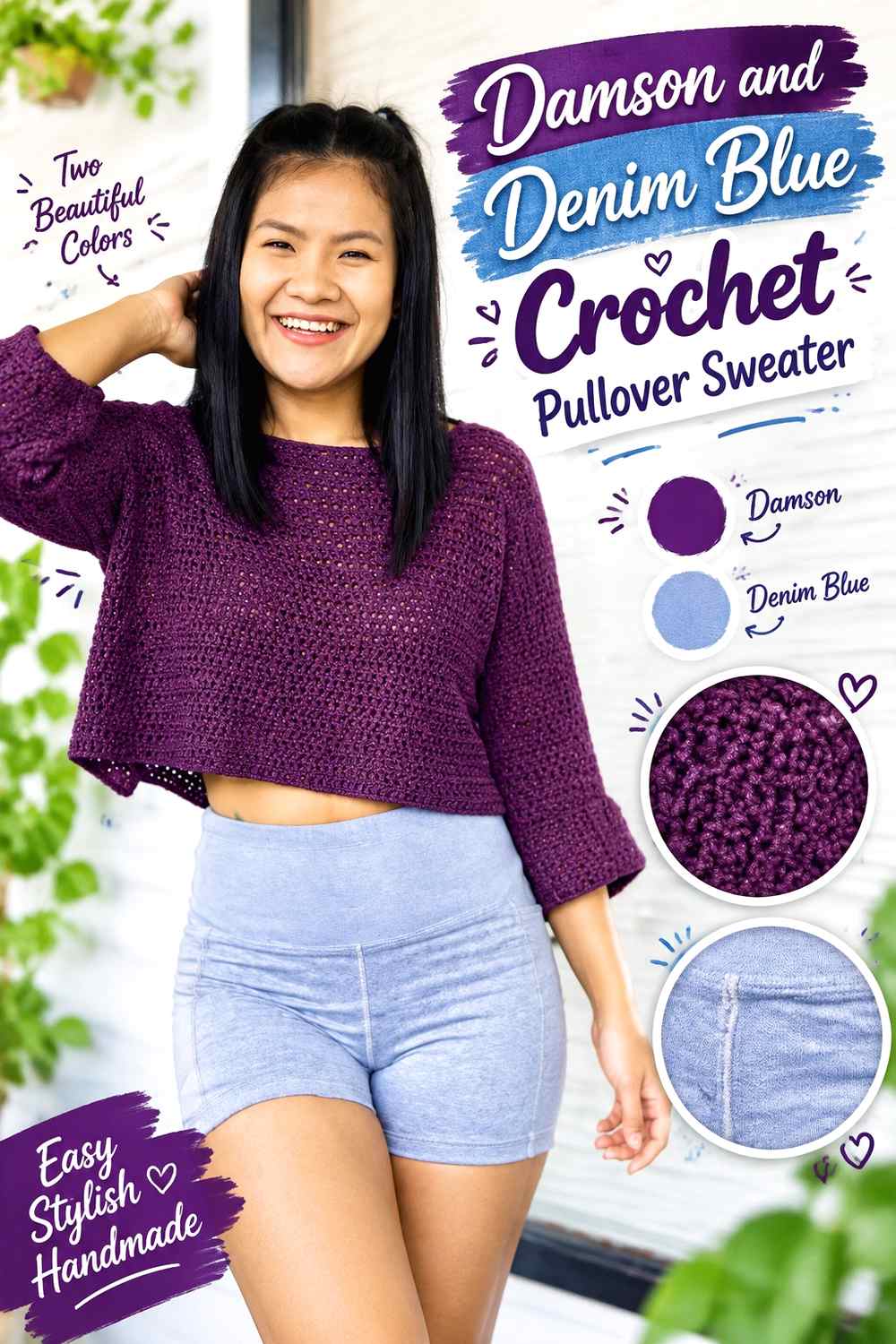
Denim blue gives damson a cooler supporting color without making the pullover as dark as a charcoal pairing. The combination works well in larger panels because each shade remains recognizable while still feeling relatively subdued.
Use damson across the center body or upper torso and repeat denim blue on sleeves, lower panels, or broad stripes.
Repeat Damson From the Pullover Body Into the Sleeves
When denim blue occupies most of a sleeve, include damson somewhere on that sleeve as well. A cuff, upper sleeve block, or repeated stripe is enough to connect it to the purple body.
This prevents the sleeves from looking like separate blue pieces attached to an otherwise damson sweater.
Keep Damson and Denim Blue Distinct With Value Checks
Very dark denim can become close to damson in grayscale. That produces a quiet, blended result, which may be desirable for large panels but less useful for fine stripes.
If you want the color blocking to remain obvious, choose a denim blue that is noticeably lighter than the damson or insert a lighter separator where the two meet.
Creator Credit: KnitcroAddict
10. Damson Blush And Cream Crochet Heart Sweater
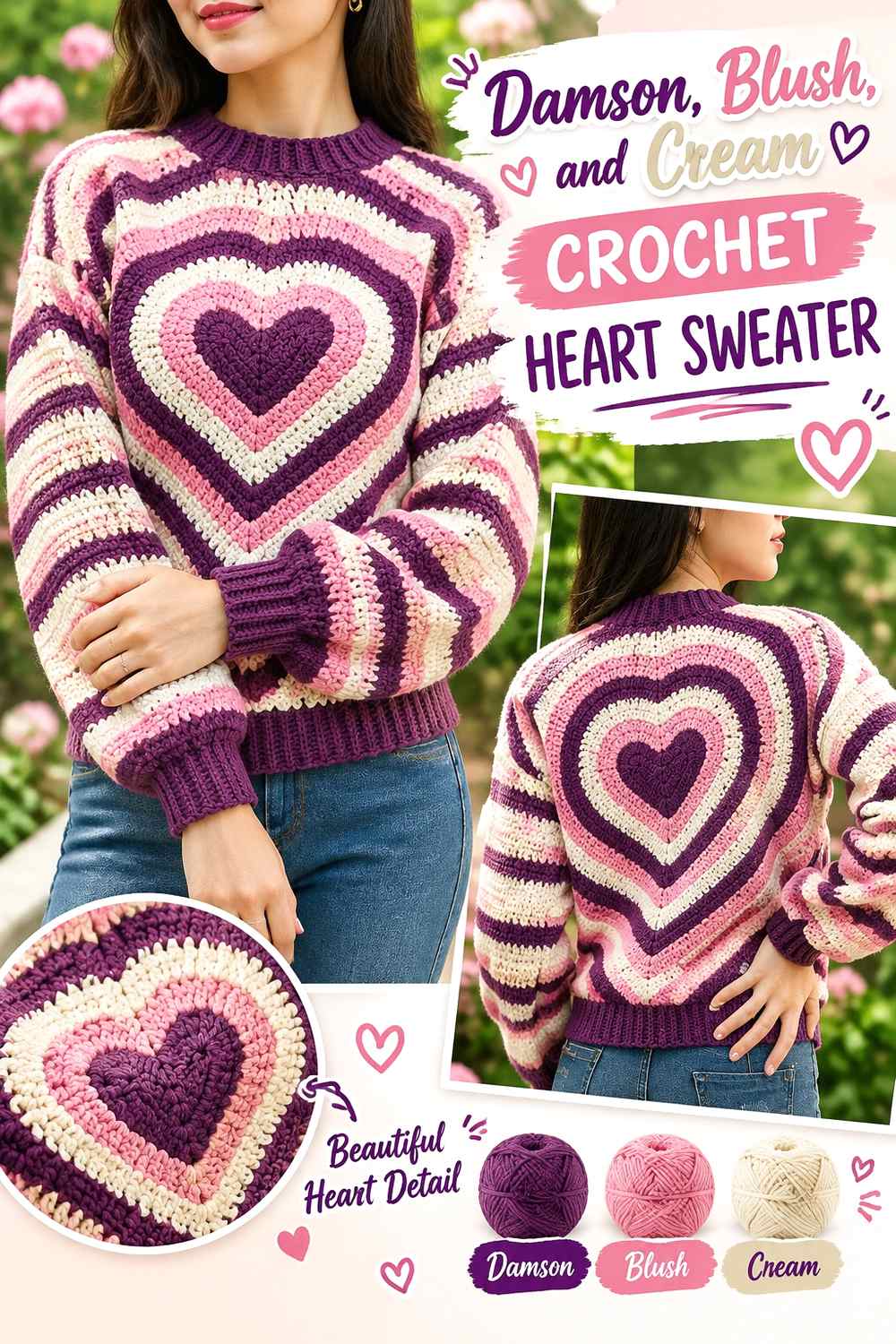
A motif sweater gives color a more specific job than ordinary stripes or blocks. Damson can provide the main body or heart motif, blush can soften the transition, and cream can create the lightest separation around the graphic areas.
The important point is to keep the heart readable. Three colors are useful only when their placement strengthens the motif rather than breaking it into too many competing sections.
Use Damson to Give the Heart Motif Its Strongest Anchor
If the heart itself is damson, keep the surrounding area lighter so the shape remains recognizable. If blush or cream forms the motif instead, repeat damson around the larger body panels to maintain the overall purple direction.
Before extending the same arrangement to the back or sleeves, view the front panel at a distance and check whether the intended shape still reads clearly.
Let Cream Separate Damson and Blush When the Heart Needs More Definition
Blush and damson can create a soft transition, but that softness may reduce the clarity of smaller motif edges. Cream can provide a narrow light break where stronger definition is needed.
Avoid distributing cream equally everywhere unless you want a three-color sweater. Smaller repeated areas will preserve damson as the visual anchor.
Creator Credit: Chenda DIY
11. Damson And Rust Crochet Chunky Cropped Sweater

Rust adds a deep warm orange direction to damson without the brightness of mustard. The two shades can make a cropped sweater feel rich and autumnal, but both carry substantial visual weight.
A useful hierarchy is damson across most of the torso, with rust concentrated through sleeves, bands, or a few broad sections.
Keep Damson Larger Than Rust Across the Cropped Body
Because a cropped sweater has limited torso length, one large rust band may occupy much more of the visible garment than expected. Start with damson as the uninterrupted body color if you want the purple to remain dominant.
Rust can then appear in cuffs or sleeve sections, where it adds warmth without replacing the main color.
Separate Damson and Rust When Both Shades Are Very Deep
A dark brick-like rust can sit closer to damson in value than a lighter burnt orange would. If the transition looks muddy, introduce a small neutral break or choose a somewhat lighter rust.
You can also preserve the dark combination by using larger blocks; broad color sections remain easier to distinguish than narrow alternating bands.
Creator Credit: Dana B
12. Damson And Lavender Crochet Waffle Turtleneck Sweater
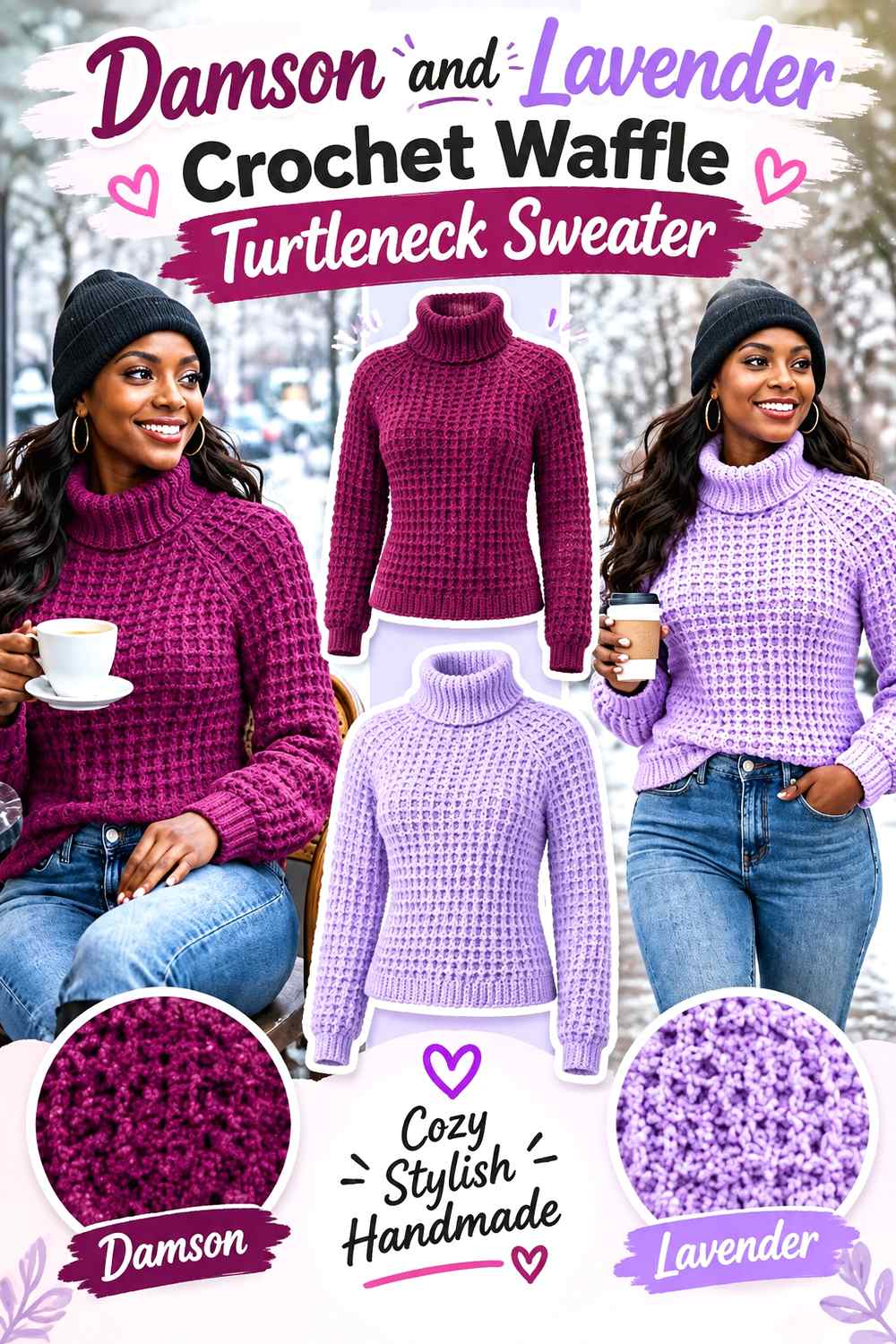
Lavender offers a tonal purple pairing while remaining light enough to reveal deep waffle texture beside damson. A turtleneck also gives you another large finishing area, so the collar can either reinforce damson or introduce a noticeable lavender section near the face.
For a richer sweater, keep the body and turtleneck damson while using lavender selectively. For a lighter version, let lavender occupy more of the torso and preserve damson at the ribbed edges.
Let Damson Emphasize the Waffle Sweater Texture
Deep solid color can work well across raised texture because the shadows already create variation. Keeping a large waffle section damson allows the stitch surface to provide interest without needing constant color changes.
Lavender can then mark simpler areas such as ribbing or controlled bands where the transition will remain easy to read.
Use Lavender to Keep a Damson Turtleneck From Feeling Visually Heavy
A sweater with a dark body, long sleeves, and dark folded neck can contain a large amount of damson. If you want to lighten the upper portion, introduce lavender below the collar or through a repeated yoke section.
Keep damson at the collar edge or cuffs if you still want the darker shade to frame the garment.
Creator Credit: Shyler crochets
13. Damson And Teal Crochet Textured Sweater

Damson and teal create a deeper jewel-toned palette with two colors strong enough to compete for attention. Rather than scattering both shades evenly, give each one a defined role.
Damson can cover the main body while teal fills sleeve sections or repeated bands. Another option is a damson torso with teal texture accents, provided the shades have enough value separation for those details to remain visible.
Repeat Damson Consistently When Teal Covers Large Sweater Sections
Teal can become visually dominant quickly when it fills both sleeves or a wide chest panel. Repeat damson through the cuffs, shoulder area, or neckline so the purple remains connected across the garment.
You do not need identical placement on every piece, but viewers should encounter damson throughout the sweater rather than only in one central block.
Check Damson and Teal Before Using Them in Small Textured Details
Deep teal and damson may differ strongly in hue while remaining similar in lightness. That can reduce the visibility of narrow color changes inside textured crochet.
If the colors blend, use them as larger blocks. If small details are important, choose a somewhat lighter teal or add a neutral separator.
Creator Credit: Katieree
14. Damson Black And Soft Gray Crochet Chunky Jumper
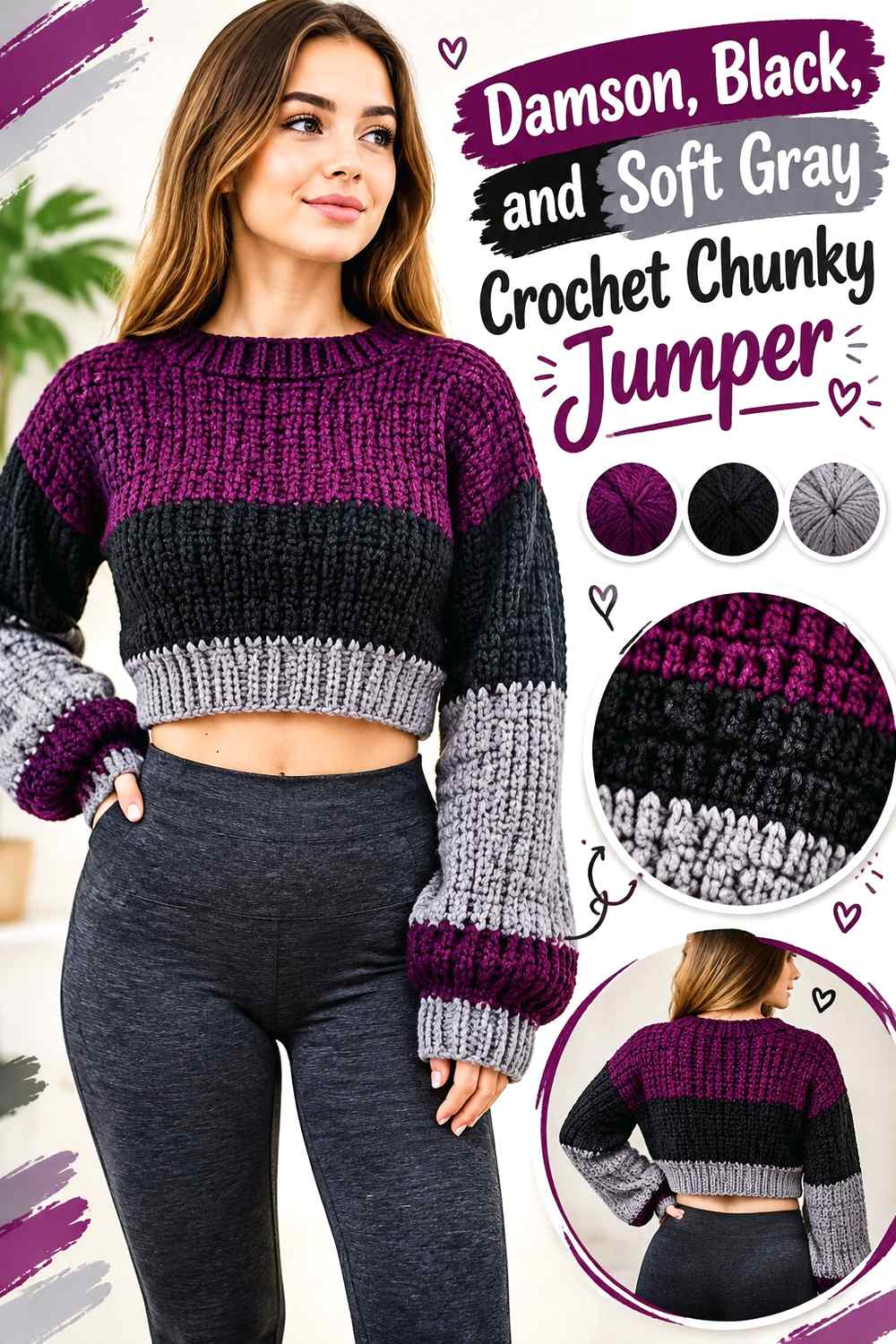
Black and soft gray give damson two very different supporting values. Black can deepen edges and provide graphic definition, while gray offers the lighter breathing room needed to stop the sweater from turning into one dark block.
On a chunky jumper, keep damson across substantial body areas and use black selectively. Let gray separate the two darkest shades when the stitch texture begins to disappear.
Give Damson More Space Than Black on the Chunky Jumper
Black can overpower damson if both are used in equal large areas. Keep purple across most of the front and back, then use black for cuffs, stripes, or selected sleeve sections.
This leaves the garment clearly damson-led while still gaining a darker outline from black.
Place Soft Gray Between Damson and Black When Texture Needs Definition
Soft gray can act as a visual separator between the two dark shades. A gray stripe, ribbed section, or small repeated block prevents damson and black from merging across the entire jumper.
Repeat gray strategically instead of using it everywhere. A small amount distributed through the body and sleeves can be enough to connect the three-color palette.
Creator Credit: Shirleyrosey
Which Damson Crochet Sweater Palette Should You Choose?
For strong light-dark definition, start with damson and cream, damson and oatmeal, or damson and ivory. These combinations make edges, bands, and textured areas easier to separate visually.
Dusty rose and lavender create softer tonal transitions, while camel and sage move damson toward a muted, earthy direction. Mustard and rust provide warmer contrast. Teal and denim blue create cooler combinations without relying on neutrals.
Charcoal or black produces the darkest result. With those palettes, check value contrast carefully and consider adding a lighter shade if you want small crochet details to remain prominent.
Conclusion
Damson can carry an entire crochet sweater without forcing every project into the same dark-purple look. Cream and ivory make the color feel more defined, dusty rose and lavender soften it, sage and camel create quieter combinations, while mustard, rust, and teal introduce stronger contrast.
Think about sweater structure before assigning colors. A wide collar has more visual influence than a narrow neckline, oversized sleeves can make a supporting shade unexpectedly dominant, and textured crochet may need more contrast than broad plain panels.
Make a small color test first, then compare the shades across the amount of surface they will actually occupy. Once the sweater construction is chosen, follow the original creator tutorial for its exact sizing, stitchwork, shaping, and assembly details.
Frequently Asked Questions
What colors pair well with damson for a crochet sweater?
Cream, oatmeal, ivory, camel, dusty rose, sage, mustard, charcoal, denim blue, blush, rust, lavender, teal, black, and soft gray can all take damson in different directions. Choose the second color by the amount of contrast you want rather than by hue alone.
How do I keep damson as the main color in a multicolor crochet sweater?
Give damson either the largest surface area or a repeated structural role. It can cover the front and back, repeat through every stripe sequence, or appear consistently on the neckline, cuffs, and hem. A color does not need to cover every area to function as the visual anchor.
Does cream or oatmeal work better with damson?
Cream generally creates stronger light-dark separation, while oatmeal gives damson a softer neutral contrast. Choose cream when small texture or color boundaries need stronger definition and oatmeal when you prefer a more muted transition.
Can I combine damson with another dark color?
Yes. Charcoal, black, dark teal, and deep denim can all work with damson, but check their values before using them in small details. If the colors appear nearly identical in grayscale, consider larger blocks or introduce a lighter separator.
Where should an accent color go on a damson crochet sweater?
Cuffs, hems, necklines, broad stripes, selected sleeve sections, or repeated motif areas are useful locations. The right placement depends on how much attention you want the accent to receive. Large sleeves require particular care because they can make an accent shade appear more dominant than expected.
How can I make a mostly damson crochet sweater look lighter?
Increase the amount of cream, oatmeal, ivory, blush, soft gray, or lavender in strategically visible areas such as the upper body, sleeve bands, neckline, or hem. You can keep damson dominant while giving the eye more light-colored breaks.