Winter white works especially well on crochet cable cushions because the pale neutral lets raised stitches create their own shadows. Braided cables, crossed panels, bobbles, basketweave sections, and rope-like textures can remain visible even when most of the cushion uses a single color.

The supporting shade should have a clear role. Oatmeal and beige can soften the outer border, charcoal and navy can frame a winter-white center panel, camel and taupe can warm the palette, while sage or blush introduces muted color without competing with the raised cable surface.
The 14 ideas below keep winter white as the recurring anchor while changing the cable placement, edge treatment, cushion back, piping, and contrast. The credited tutorials provide the original cushion constructions; any cable or palette adaptation not shown in the source is an independent editorial direction.
Quick List
- Winter White And Oatmeal Crochet Classic Cable Cushion
- Winter White And Taupe Crochet Double Cable Cushion
- Winter White And Camel Crochet Braided Cable Cushion
- Winter White And Soft Gray Crochet Braided Panel Cushion
- Winter White And Charcoal Crochet Basketweave Cable Cushion
- Winter White And Dusty Blush Crochet Decorative Cable Cushion
- Winter White And Pale Sage Crochet Chunky Cable Cushion
- Winter White And Warm Beige Crochet Bobble Cable Cushion
- Winter White And Pearl Gray Crochet Round Cable Cushion
- Winter White And Cocoa Crochet Minimal Cable Cushion
- Winter White And Deep Navy Crochet Graphic Cable Cushion
- Winter White And Soft Silver Crochet Sculptural Cable Cushion
- Winter White And Cranberry Crochet Holiday Cable Cushion
- Winter White And Forest Green Crochet Festive Cable Cushion
Let Winter White Reveal the Cable Texture
Winter white can cover the entire front of a cable cushion because the raised stitches already create light-and-shadow variation. Keeping a broad cable panel one color makes the crossings easier to follow and prevents the surface from looking striped.
If a second shade is needed, the flatter areas are often better locations. Side panels, borders, piping, button bands, or the cushion back can carry contrast while the main winter-white cable remains uninterrupted.
Use Darker Borders Without Flattening Winter White Cables
Charcoal, navy, cocoa, and other deeper shades can make a winter-white cushion look more defined, but they do not need to enter every cable crossing. A narrow frame often provides enough contrast.
For a softer result, oatmeal, taupe, pale sage, or blush can sit beside winter white without creating a hard edge. Check the colors next to the actual raised texture, because shadows in deep cables can make winter white appear darker than it does in the skein.
1. Winter White And Oatmeal Crochet Classic Cable Cushion

This low-contrast palette lets winter white cover the main cable face while oatmeal defines the outer edge or cushion back. The close neutral relationship keeps the pillow calm while still separating the raised front panel from the flatter finishing areas.
Winter White Should Cover the Main Classic Cable Panel
Keep the central braid or rope-like cable winter white from top to bottom so each crossing connects visually.
Introducing oatmeal inside every cable turn would interrupt the long raised line and make the texture harder to follow.
Oatmeal Can Frame Winter White Without Hiding the Cable Relief
Use oatmeal on a narrow border, side panel, or back where it can warm the pale front without competing with it.
If the two shades are very close, let the textural difference provide some of the separation rather than forcing a stronger third color into the cushion.
Creator Credit: MJ’s Off The Hook Designs
2. Winter White And Taupe Crochet Double Cable Cushion
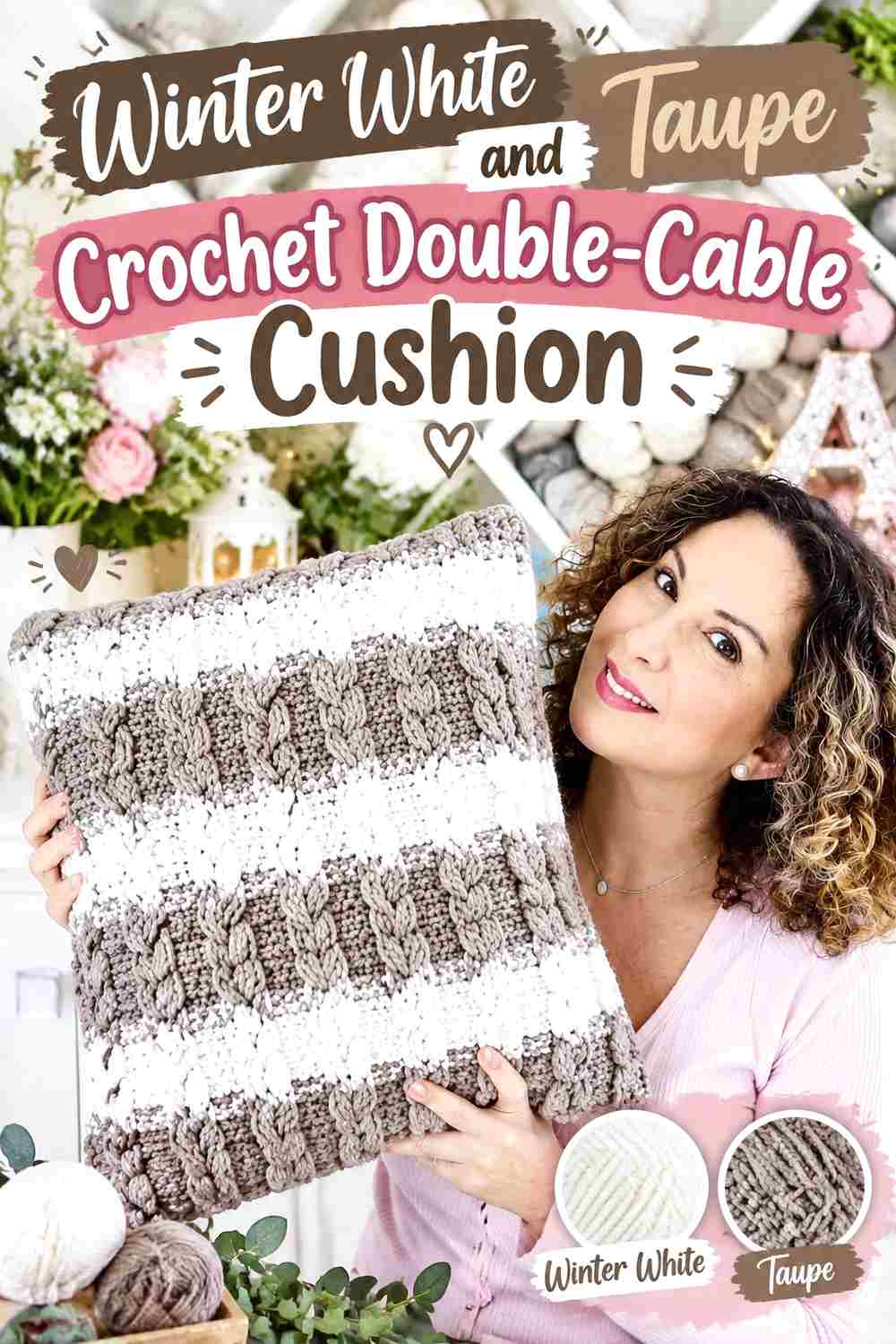
Taupe creates a muted frame around two winter-white cable panels. Use the darker neutral between or beside the raised sections rather than alternating it through the cables themselves.
Winter White Should Repeat Across Both Cable Columns
Matching the two raised panels in winter white gives the cushion visual symmetry and keeps the front from feeling divided into unrelated pieces.
The repeated pale cables also allow their shadows to become the main source of variation.
Taupe Can Separate Two Winter White Cable Panels
A narrow taupe center strip or outer border can give each cable enough breathing room.
Keep the taupe flatter than the cable area when possible so both color and texture explain the difference between the sections.
Creator Credit: Annoo and The Unruly Stitch
3. Winter White And Camel Crochet Braided Cable Cushion

Camel adds warmth while keeping the palette within an earthy neutral family. Let winter white carry the broad braided front and reserve camel for the edge, piping, or cushion back.
Winter White Should Keep the Braided Cable Continuous
Use winter white across the full braid so the overlapping sections remain easy to trace from one end of the cushion to the other.
A single pale color also allows deeper crossings to produce natural gray shadows without additional yarn changes.
Camel Can Warm the Winter White Cable Cushion at the Edges
A camel border or back creates a noticeable but not severe contrast against the pale face.
If camel appears on piping as well as the back, keep the front border narrow so the warmer neutral does not visually overtake the winter-white braid.
Creator Credit: Camila Passadori handmade
4. Winter White And Soft Gray Crochet Braided Panel Cushion

Soft gray gives a winter-white braided cushion a cooler neutral frame. It works particularly well on side panels or a back section where you want definition without the weight of charcoal.
Winter White Should Stay Dominant Across the Braided Front
Keep the raised central area winter white so the pillow remains light and the braid remains the strongest surface feature.
Gray is more useful beside the braid than inside each crossing.
Soft Gray Can Organize Winter White Side Panels
Use soft gray around flatter areas to create a visual boundary between the cable and the cushion edge.
If the gray is very pale, compare the two yarns in the finished stitch texture rather than only side by side in the skein.
Creator Credit: Professor Neddy Ghusmam
5. Winter White And Charcoal Crochet Basketweave Cable Cushion
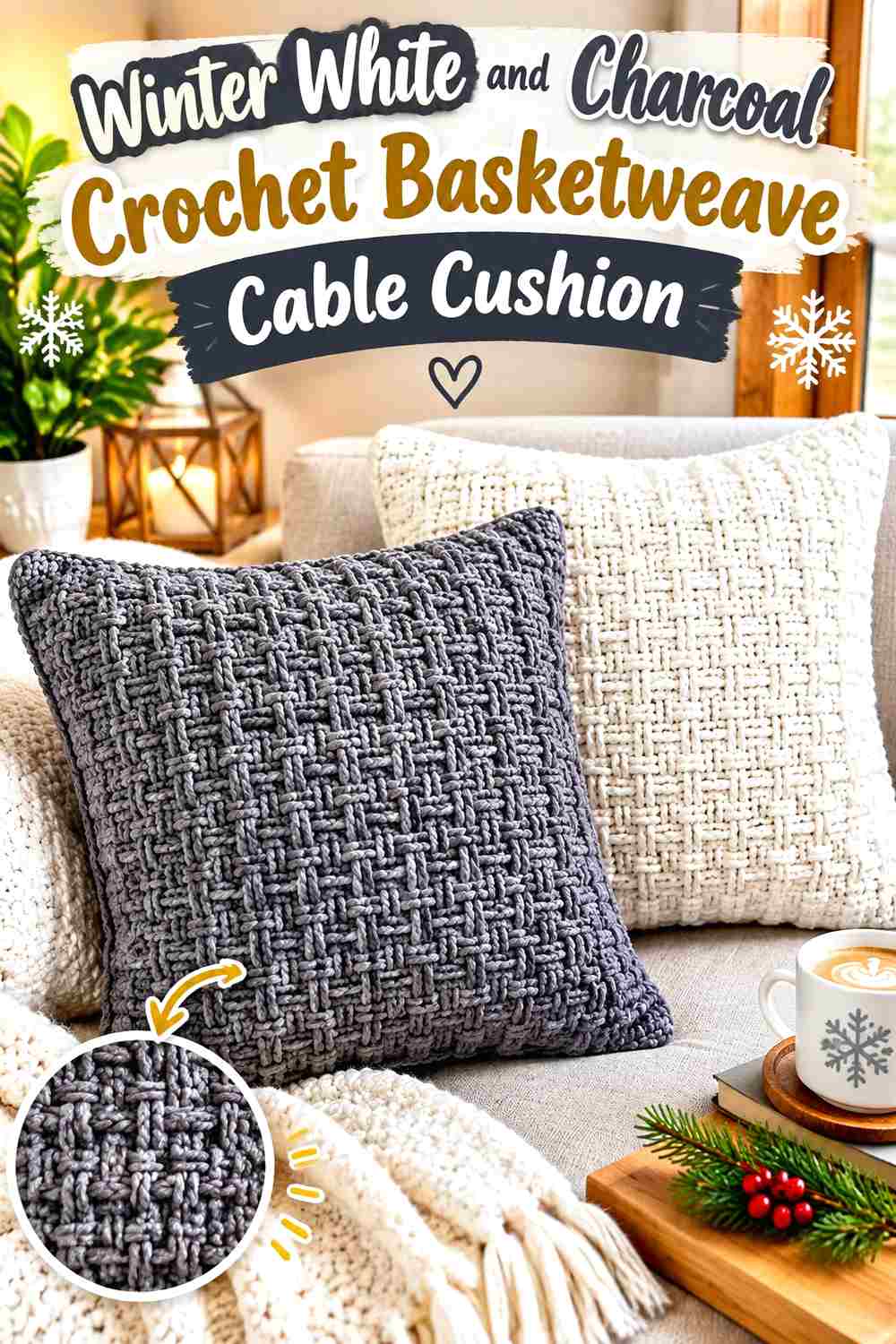
Basketweave texture can serve as a strong geometric companion to cable-style sections. Winter white can cover the textured face while charcoal appears in a narrow border or back panel.
Winter White Keeps Basketweave and Cable Texture Easy to Read
Use winter white across the raised front so changes in stitch direction create their own pattern.
Adding charcoal to every alternating block could make color more noticeable than the woven-looking texture.
Charcoal Can Give the Winter White Cushion a Strong Outer Frame
A slim charcoal border creates the clearest neutral contrast in the collection and can make the pale cushion stand out against a light sofa.
Keep the dark shade concentrated at the perimeter so it does not flatten the visual depth of the winter-white center.
Creator Credit: Cozy Loop Crochet
6. Winter White And Dusty Blush Crochet Decorative Cable Cushion

Dusty blush introduces a soft color accent without moving far from a muted winter palette. Keep the cable field winter white and use blush in the border, corner detail, or cushion back.
Winter White Should Keep the Decorative Cable Surface Calm
A decorative cushion can already contain strong texture, so let winter white cover the most detailed areas.
That gives the cable work enough visual space before the blush accent is introduced.
Dusty Blush Can Soften the Winter White Cushion Border
A narrow blush frame creates a gentler transition than charcoal or navy and works particularly well when the cushion will sit among pale neutral textiles.
Avoid carrying blush through every raised cable if the purpose is to keep the front texture cohesive.
Creator Credit: crochet daniela
7. Winter White And Pale Sage Crochet Chunky Cable Cushion

Pale sage gives winter white a muted botanical partner. On a chunky cushion, keep the broad cable face white and place sage on the back, side seam, or a restrained outer edge.
Winter White Lets Chunky Cable Shadows Do the Work
Large cables already create substantial depth, so one light main color prevents the surface from becoming visually heavy.
The shadows between thick cable sections can provide more than enough tonal variation.
Pale Sage Can Cool the Winter White Chunky Cushion Edge
Use sage where the front meets the back or along one narrow border.
Because the green is muted, it changes the palette without pulling attention away from the oversized winter-white cable.
Creator Credit: Jewels and Jones
8. Winter White And Warm Beige Crochet Bobble Cable Cushion

A bobble-and-cable combination already carries substantial texture. Winter white should stay across the raised front while warm beige appears in fringe, tassels, or a simple backing.
Winter White Should Unite Bobbles and Cable Texture
Use the same white across the different raised stitch areas so bobbles and cables feel like parts of one surface.
Assigning each texture a separate color can make the front look divided into unrelated decorative bands.
Warm Beige Can Finish the Winter White Cushion Without Competing With Bobbles
Use beige on fringe, tassels, or the back where its softer warmth supports the front.
Keep the beige away from too many small raised details so the cable-and-bobble relief remains the main feature.
Creator Credit: Crazy Cool Crochet
9. Winter White And Pearl Gray Crochet Round Cable Cushion

A round cushion changes how cables can be arranged because the design can radiate from the center or follow curved sections. Winter white should remain the main field while pearl gray defines the edge, pom-poms, or a narrow outer ring.
Winter White Should Keep the Round Cable Motif Visually Connected
Use winter white through the main radial or curved texture so the eye follows the design outward from the center.
Too many color breaks can make a circular cable layout look pieced rather than continuous.
Pearl Gray Can Outline the Winter White Round Cushion Edge
A pale gray outer ring or pom-pom detail creates enough definition to show the full circular silhouette.
Keep the gray secondary so the winter-white center still feels broad and open.
Creator Credit: By StellaM
10. Winter White And Cocoa Crochet Minimal Cable Cushion

Cocoa introduces a deeper warm neutral while keeping the main cushion sophisticated and restrained. Use winter white across a narrow or single cable feature and place cocoa on the back or outer edge.
Winter White Should Keep the Minimal Cable Feature Uninterrupted
A simple cushion needs only one strong raised detail to feel intentional.
Keep that cable completely winter white instead of adding multiple accent changes through a limited surface.
Cocoa Can Ground the Winter White Cushion Back
A cocoa back gives the pillow a stronger warm contrast without altering the cable face.
This is useful when you want the cushion to coordinate with darker wood, leather, or brown textiles while preserving a pale front.
Creator Credit: Littlejohn’s Yarn
11. Winter White And Deep Navy Crochet Graphic Cable Cushion

Deep navy gives winter white a dramatic cool contrast. Use the white cable panel as the focal surface and keep navy around the border, side panels, or cushion back.
Winter White Needs a Broad Cable Area Beside Deep Navy
Leave enough pale surface around each cable crossing so the navy does not visually squeeze the center.
A wide winter-white field makes the raised stitchwork easier to distinguish from the dark frame.
Deep Navy Can Give Winter White Cables a Graphic Border
A narrow navy perimeter creates strong definition and makes the cushion feel more structured.
Avoid adding navy inside every cable groove; natural shadow already provides enough dark variation across the white texture.
Creator Credit: Bag-O-Day Crochet
12. Winter White And Soft Silver Crochet Sculptural Cable Cushion
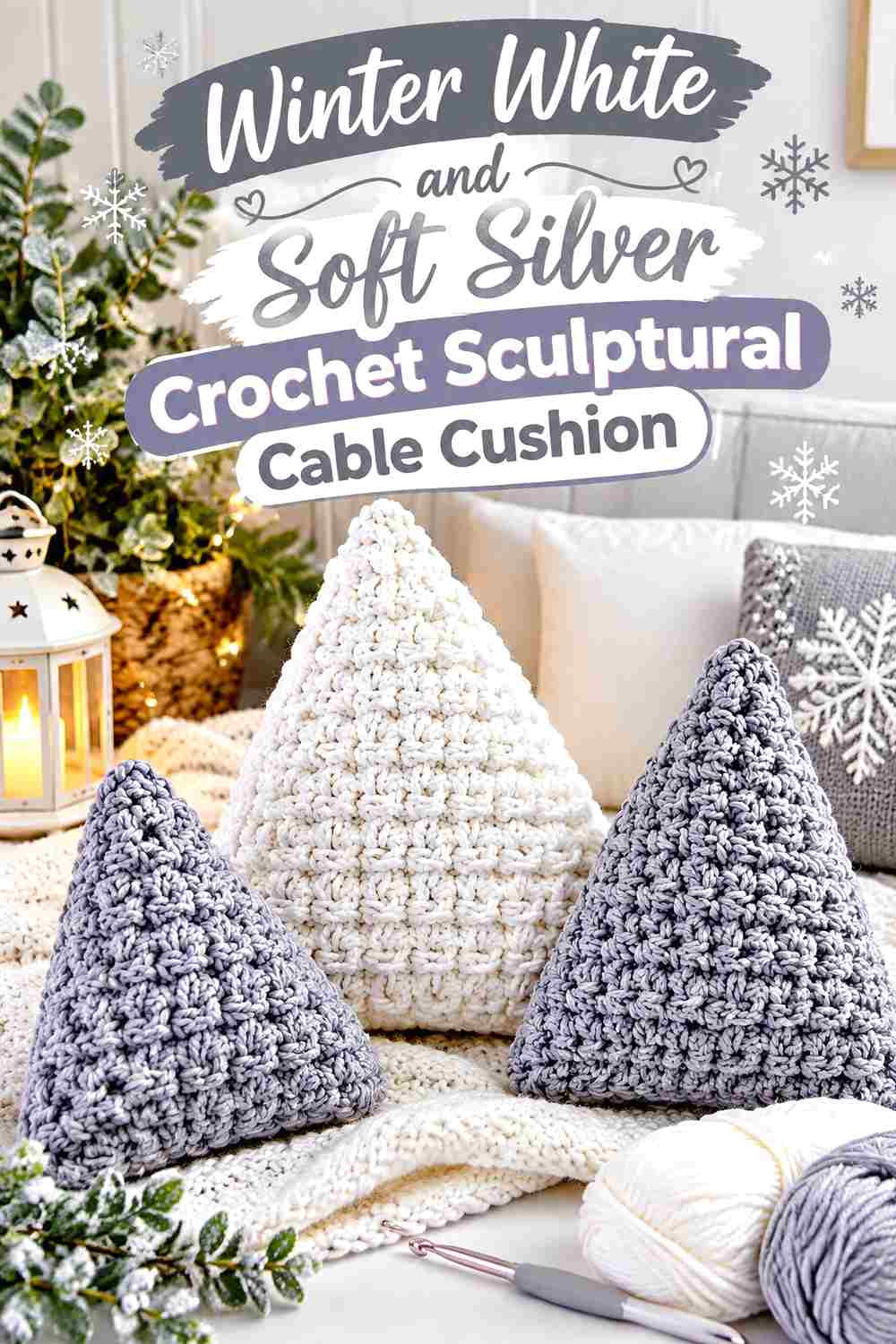
A sculptural cushion shape gives soft silver a useful role around seams or smaller side sections, while winter white carries the principal raised texture.
Winter White Should Stay on the Main Sculptural Cable Surface
Place the cable treatment on the largest visible face so its raised form remains easy to appreciate.
Keeping that face winter white also prevents an unusual cushion shape from becoming visually overloaded.
Soft Silver Can Mark Winter White Cushion Seams Quietly
Use silver where separate panels or shaped sections meet if you want the structure to remain visible.
A narrow seam accent is enough; broad silver blocks could compete with both the cable and the sculptural form.
Creator Credit: Ophelia Talks Crochet
13. Winter White And Cranberry Crochet Holiday Cable Cushion

Cranberry gives winter white a clear seasonal accent without turning the full cushion bright red. Keep the cable face white and use cranberry around a border, corner detail, tassel, or back panel.
Winter White Should Remain the Main Holiday Cable Surface
A pale cable field keeps the cushion useful beyond a heavily patterned Christmas setting and makes the raised texture visible.
Use cranberry after the cable layout is established rather than weaving red through every crossing.
Cranberry Can Add a Focused Holiday Edge to Winter White
A narrow cranberry border or selected corner detail gives the cushion a festive direction with relatively little color.
If cranberry also appears on tassels or piping, keep the cushion back simple so the accent does not become dominant.
Creator Credit: Anna B. Crochet
14. Winter White And Forest Green Crochet Festive Cable Cushion
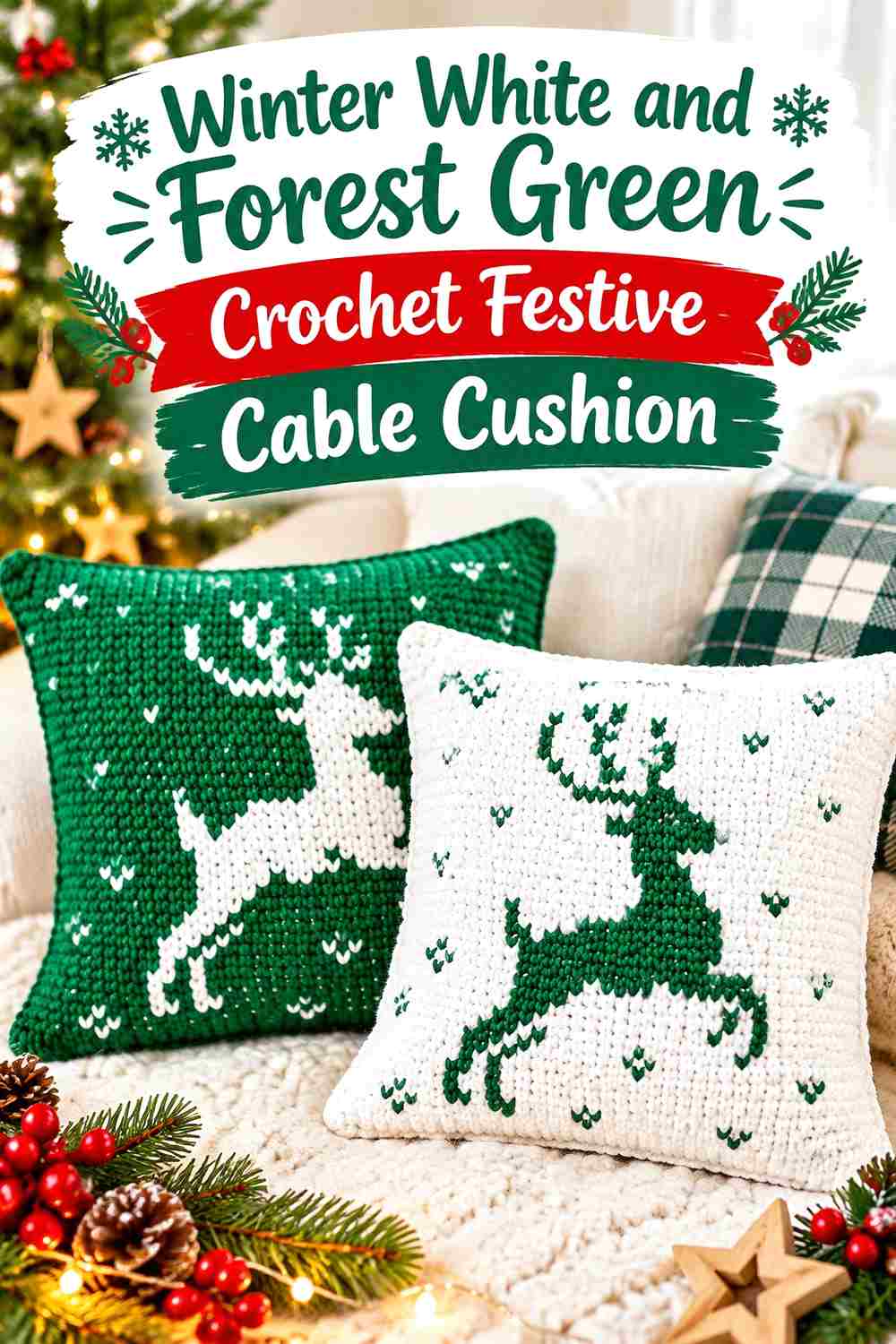
Forest green creates a deeper botanical holiday contrast while winter white stays across the main cable face. The green is most useful around the edge, back, or a small corner detail.
Winter White Should Keep the Festive Cable Cushion Light
Use winter white across most of the visible front so the pillow still feels texture-led rather than color-blocked.
The light field also makes a dark green edge more noticeable without requiring a wide border.
Forest Green Can Frame Winter White Without Covering the Cables
Place green around the perimeter, piping, or back and leave the raised white cable untouched.
This creates a clear festive relationship while preserving the cable as the central design feature.
Creator Credit: Handmade By Raine
Which Winter White Crochet Cable Cushion Palette Should You Choose?
For the softest neutral result, combine winter white with oatmeal, taupe, camel, warm beige, cocoa, or pearl gray. These palettes allow cable texture and shadows to carry most of the visual interest.
For a cooler look, soft gray, soft silver, charcoal, and deep navy create increasingly stronger definition. Charcoal and navy are especially effective when you want the cable panel to look clearly framed against a darker cushion edge or back.
Pale sage and dusty blush introduce muted color without dramatically changing the light winter-white character. Cranberry and forest green create the strongest seasonal direction and work best in controlled borders, piping, backs, or tassel details.
Conclusion
Winter white is particularly effective for crochet cable cushions because it allows raised stitches to create much of the visual variation themselves. A single pale cable field can show braids, rope-like crossings, basketweave sections, bobbles, and sculptural texture without requiring several yarn colors.
Choose the supporting shade according to its job. Oatmeal and beige soften the border, camel and cocoa add warmth, gray and navy provide structure, while sage, blush, cranberry, or green shift the cushion toward a more specific styling direction.
For the clearest cable definition, keep the raised central panel consistent and move most color contrast toward flatter edges, backs, piping, or seams. Follow each credited tutorial for its original cushion construction and treat any additional cable treatment or winter-white palette as an independent adaptation.
Frequently Asked Questions
What Colors Pair Well With Winter White Crochet Cable Cushions?
Oatmeal, taupe, camel, warm beige, cocoa, soft gray, pearl gray, charcoal, navy, pale sage, dusty blush, cranberry, and forest green can all work. Choose the supporting shade according to whether you want a tonal neutral cushion, cooler contrast, or a stronger seasonal accent.
Does Winter White Show Crochet Cables Well?
Yes. Raised cables naturally create shadows across a pale surface, which can make crossings and braided texture visible without additional color. The effect depends on the yarn, lighting, and depth of the stitch texture.
Should the Cable Panel and Cushion Border Both Be Winter White?
They can be if you want a monochromatic cushion. If stronger separation is needed, keep the cable winter white and use a supporting shade on the flatter border, piping, or back.
What Dark Colors Work With a Winter White Cable Cushion?
Charcoal, deep navy, cocoa, and other deep browns or grays can create strong framing contrast. Use them in controlled areas so they do not visually overpower the pale cable panel.
Can Winter White and Oatmeal Be Used Together Without Blending Too Much?
Yes. Their low contrast produces a soft tonal effect. If you want the border to be more visible, choose an oatmeal that is noticeably warmer or deeper than the winter white.
Where Should a Second Color Go on a Winter White Cable Cushion?
Useful locations include the outer border, side panels, piping, button band, seam, tassels, or cushion back. Keeping the raised cable itself winter white usually preserves the clearest texture.
Can a Regular Crochet Pillow Tutorial Be Adapted Into a Winter White Cable Cushion?
Yes. A standard pillow-cover construction can provide the size, opening, and assembly concept, while a cable front panel is planned separately. Follow the original tutorial for its actual construction and treat the cable placement and winter-white color scheme as independent adaptations.