Persimmon and mustard give a crochet headband two different kinds of autumn warmth. Persimmon can provide the deeper orange-red foundation, while mustard can brighten a front twist, textured ridge, border, flower, or center section without requiring a third fall color.
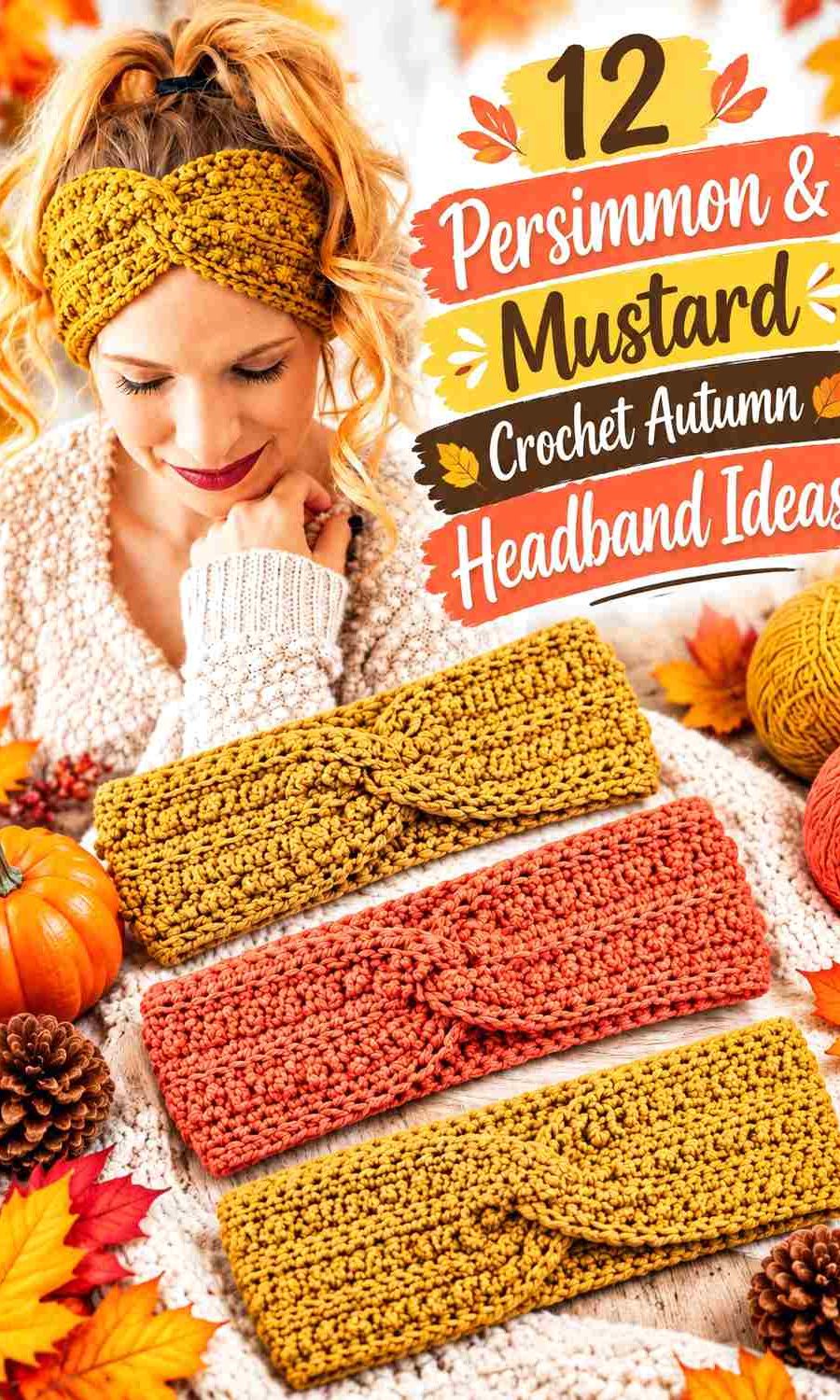
A headband has much less surface area than a scarf or cardigan, so color placement needs to be deliberate. Broad blocks usually remain clearer than numerous tiny changes, particularly when the crochet already contains picots, raised stitches, ribbing, or a pronounced twist.
The tutorials below support the underlying crochet headband and ear-warmer constructions. The persimmon-and-mustard palettes are independent adaptations, so the creators should not be assumed to have used these exact colors.
Quick List
- Persimmon And Mustard Picot Crochet Autumn Headband
- Persimmon And Mustard Spike Stitch Crochet Autumn Headband
- Persimmon And Mustard Padded Crochet Autumn Headband
- Persimmon And Mustard Textured Crochet Autumn Headband
- Mustard And Persimmon Crunch Stitch Crochet Autumn Headband
- Persimmon And Mustard Twisted Crochet Autumn Headband
- Persimmon And Mustard Rose Crochet Autumn Headband
- Persimmon And Mustard Split Twist Crochet Autumn Headband
- Mustard And Persimmon Ridged Twist Crochet Autumn Headband
- Persimmon And Mustard Textured Twist Crochet Autumn Headband
- Persimmon And Mustard Buttoned Crochet Autumn Headband
- Mustard And Persimmon Velvet Twist Crochet Autumn Headband
Decide Whether Persimmon or Mustard Should Lead the Headband
Persimmon can cover most of the band when you want a richer burnt-orange direction, with mustard acting as the brighter accent. This works particularly well around a twist or flower because a relatively small mustard area can still attract attention.
Reverse the hierarchy for a lighter golden result. A mustard-dominant headband with persimmon edging or central texture still feels distinctly autumnal but changes which shade is noticed first.
Check Persimmon and Mustard for Enough Contrast
These hues are different, but both can sit in a similar warm middle-value range. A muted persimmon beside a dark ochre mustard may not have as much light-dark separation as their names suggest.
Place the actual yarns together and check them from a short distance. If they visually merge, use them in broad sections—a mustard center against persimmon sides, for example—instead of depending on tiny two-color stitch details.
Put Mustard and Persimmon Where the Crochet Headband Changes Structure
Twists, knots, flowers, edges, ribs, and raised stitch sections already attract attention. They are useful locations for a color change because the palette reinforces something the headband is already doing.
This approach also prevents the headband from becoming overloaded. If a twist is mustard, for example, the persimmon body may not need mustard stripes as well.
1. Persimmon And Mustard Picot Crochet Autumn Headband

Use persimmon across most of the textured band and bring mustard into the front twist or selected picot areas. The supporting Picot Headband tutorial combines a strongly textured surface with a twisted front, giving the palette two natural focal zones.
Persimmon Can Keep the Mustard Picot Crochet Texture Connected
Let persimmon cover several consecutive textured rows rather than changing colors at every repeat. Picot texture already creates plenty of surface movement, so a continuous main color helps the small raised details read as one fabric.
If mustard is introduced through the texture itself, repeat it in a controlled band instead of scattering isolated stitches throughout the headband.
Mustard Can Emphasize the Persimmon Crochet Twist
The front twist is already the strongest structural focal point. Using mustard there can make the overlap easier to see while leaving the majority of the headband persimmon.
Arrange the twist before judging the mustard proportion. Folding can hide part of the accent color that looked much larger while the strip was flat.
Creator Credit: The Turtle Trunk
2. Persimmon And Mustard Spike Stitch Crochet Autumn Headband

This idea gives both shades a more integrated role. The supporting Winter Frost Headband uses contrasting colors with elongated spike-style stitchwork, so persimmon and mustard can interact inside the surface pattern rather than being separated only at a border.
Persimmon Can Anchor the Mustard Crochet Spike Pattern
Use persimmon as the broader background color and allow mustard spike details to travel into it. The darker orange-red field gives the gold-toned stitches somewhere to stand apart.
Because the stitch design depends on contrast, test the exact yarn colors before completing the whole band.
Mustard Spike Stitches Need Clear Separation From Persimmon
If your mustard is relatively dark, the two colors may blend when seen from a distance. In that case, increase the visual share of the mustard pattern rather than introducing another shade.
Keep edging simple when the center already carries strong two-color stitchwork.
Creator Credit: Rich Textures Crochet
3. Persimmon And Mustard Padded Crochet Autumn Headband
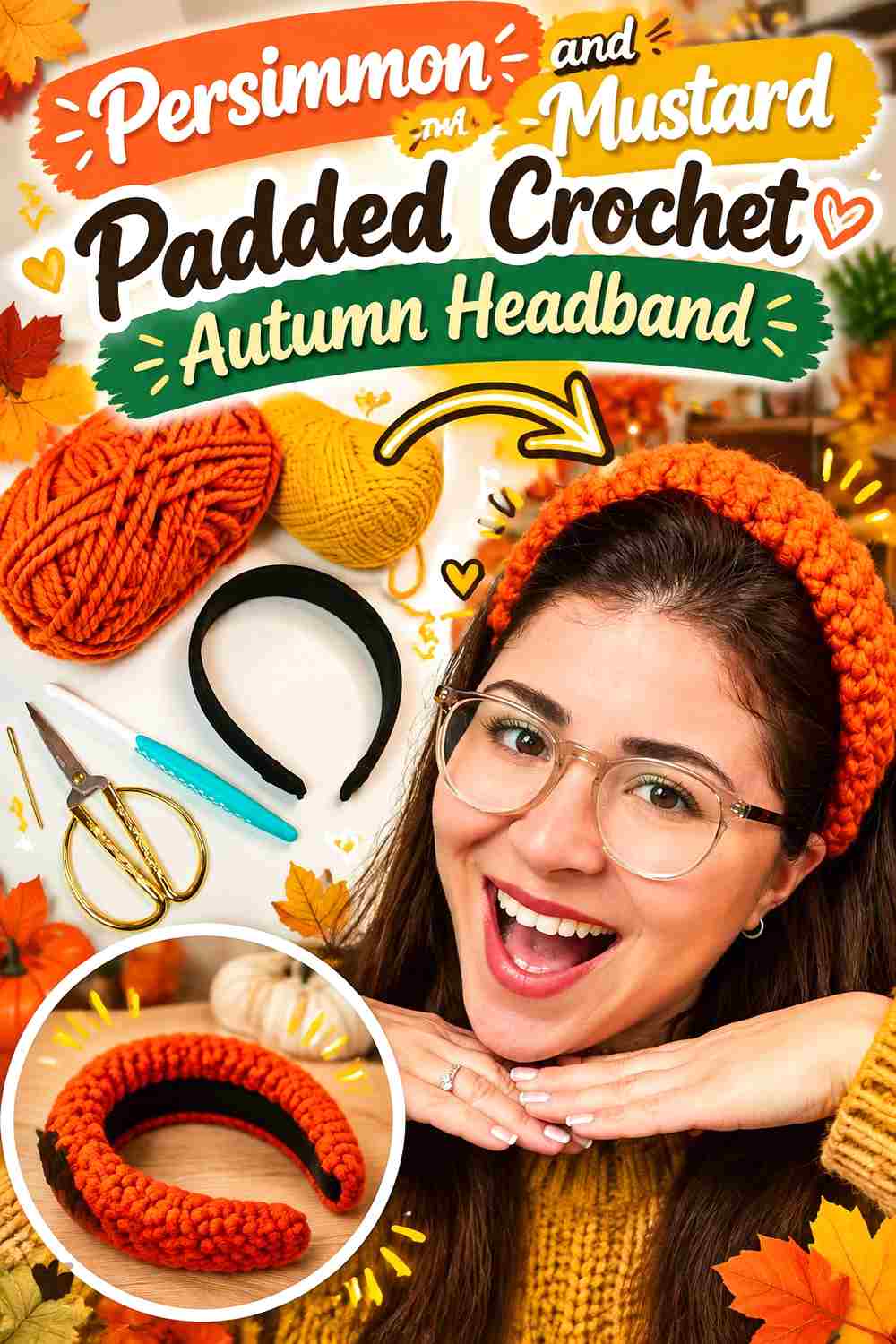
A padded headband has more volume than a flat ear warmer, so broad color areas are especially useful. Let persimmon cover most of the padded body while mustard traces a center section or another established structural line. The supporting tutorial demonstrates a padded crochet headband construction.
Persimmon Should Carry Most of the Padded Crochet Headband
A solid persimmon surface allows the thicker silhouette to remain the main feature. Numerous narrow mustard stripes can compete with the headband’s volume and make the shape look segmented.
Use color sparingly when construction already creates a strong statement.
Mustard Can Frame the Persimmon Crochet Padding
Introduce mustard at a center division, edge, or other visible line rather than randomly across the padded surface. The gold-toned contrast can help describe the headband’s shape.
If mustard begins to dominate, narrow the accent before reducing the large persimmon field.
Creator Credit: Brunaticality
4. Persimmon And Mustard Textured Crochet Autumn Headband
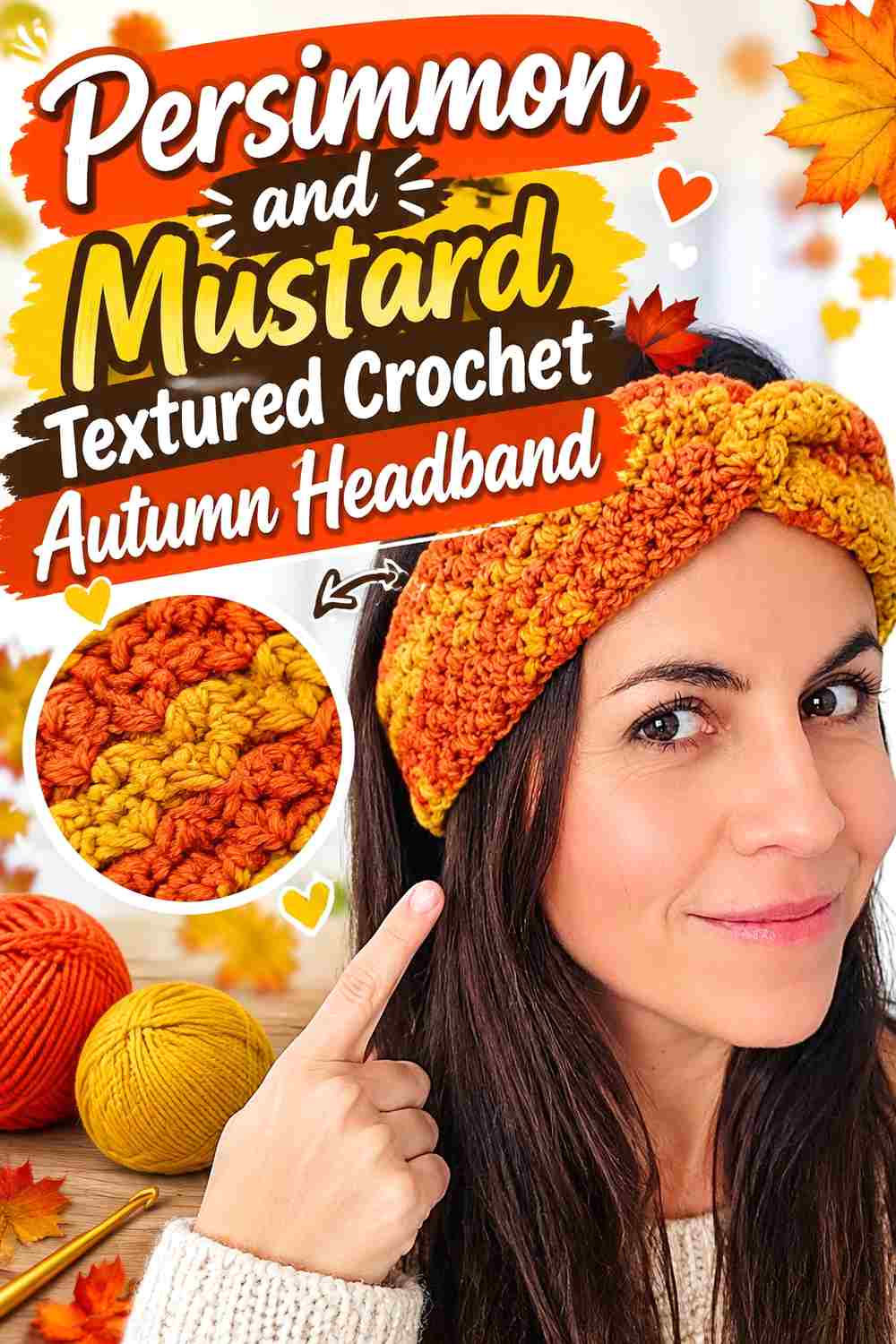
Keep this version persimmon-led but use mustard in one broad textural section rather than a front twist. The supporting tutorial demonstrates a textured everyday crochet headband, giving the palette a relatively simple construction to work across.
Persimmon Can Give the Crochet Headband a Strong Autumn Base
Run persimmon through most of the headband so texture remains continuous. This creates a quieter result than alternating every textured repeat between the two colors.
A solid main field is particularly useful if you want the stitches rather than striping to supply most of the detail.
Mustard Can Break the Persimmon Crochet Surface Into One Deliberate Accent
Add a wider mustard section close to the front or slightly off-center. One controlled block can be more visible than several tiny mustard lines.
Before finishing, wear or arrange the headband in its intended orientation and make sure the accent lands where you expect it to.
Creator Credit: Ahuyama Crochet
5. Mustard And Persimmon Crunch Stitch Crochet Autumn Headband
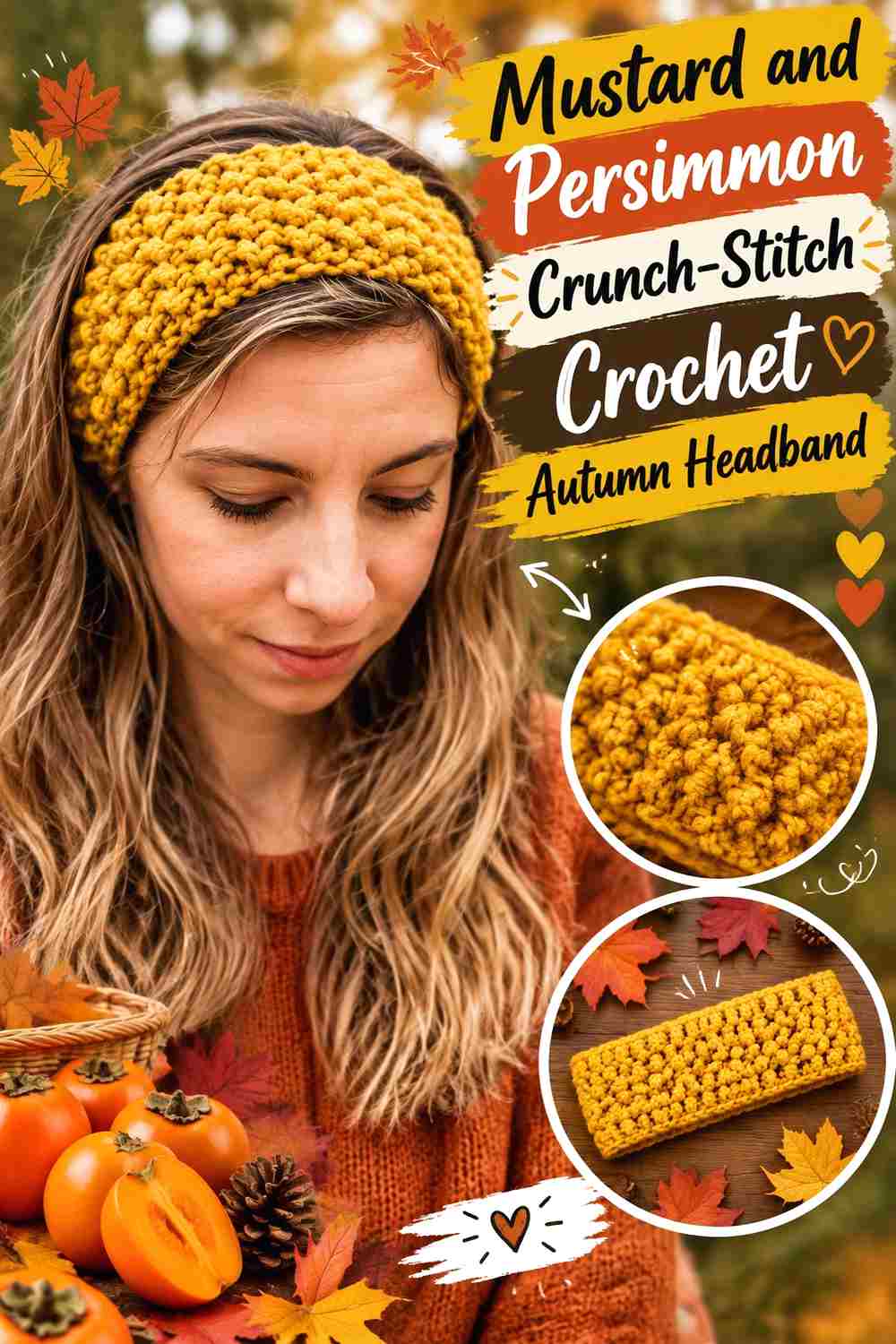
Reverse the dominant color here. Use mustard across most of the textured headband and persimmon as the darker-looking border or center accent. The supporting Sigoni Macaroni headband uses crunch-stitch texture and is designed as an adaptable headband construction.
Mustard Lets the Persimmon Crochet Texture Feel Lighter Overall
A mustard main field creates a golden autumn direction and distinguishes this option from the persimmon-heavy ideas. Keep the majority of the textured surface mustard so the reversal is obvious.
The texture itself creates shadow, which can give a single mustard shade more depth than it has in the skein.
Persimmon Can Give the Mustard Crochet Headband a Deeper Edge
Place persimmon along the border or in one substantial central section. Its richer orange-red character can visually contain the lighter mustard surface.
If the two yarns are close in value, make the persimmon area wide enough that it does not disappear into the texture.
Creator Credit: Sigoni Macaroni
6. Persimmon And Mustard Twisted Crochet Autumn Headband

A pronounced twist gives this palette an obvious focal point. Make the main headband persimmon and concentrate mustard around the twisted front instead of alternating colors around the entire circumference. The supporting Bag-O-Day tutorial demonstrates a twisted crochet headband construction.
Persimmon Can Keep the Mustard Crochet Twist From Competing With the Sides
Use persimmon continuously around the side and back portions. The uninterrupted darker field directs attention toward the mustard front instead of distributing equal contrast everywhere.
This works well when you want the headband to look primarily persimmon from the side.
Mustard Should Follow the Persimmon Crochet Twist
Position mustard so the color change reinforces the overlapping front rather than sitting immediately beside it as an unrelated stripe.
Check the color arrangement after the twist is formed. Overlapping layers can significantly alter how much mustard remains visible.
Creator Credit: Bag-O-Day Crochet
7. Persimmon And Mustard Rose Crochet Autumn Headband

This idea moves mustard away from stripes entirely. Use persimmon for the stretchy headband and mustard for the crochet rose, creating one concentrated autumn focal point. The supporting tutorial specifically combines a crochet headband with a rose feature.
Persimmon Gives the Mustard Crochet Rose a Calm Background
Keep the full band persimmon so the flower remains separate from its base. A heavily striped headband would compete with the dimensional rose for attention.
The solid surface also makes this one of the clearest ways to distinguish the two color roles.
Mustard Can Become the Main Focal Detail on the Persimmon Headband
Use mustard for the rose when you want the brighter golden shade concentrated in one place. Because the flower adds both color and dimension, it does not need several additional mustard features around the band.
A very small mustard edge can connect the flower to the base if needed, but leave it out when the rose already provides sufficient balance.
Creator Credit: Made With Love By Glama
8. Persimmon And Mustard Split Twist Crochet Autumn Headband
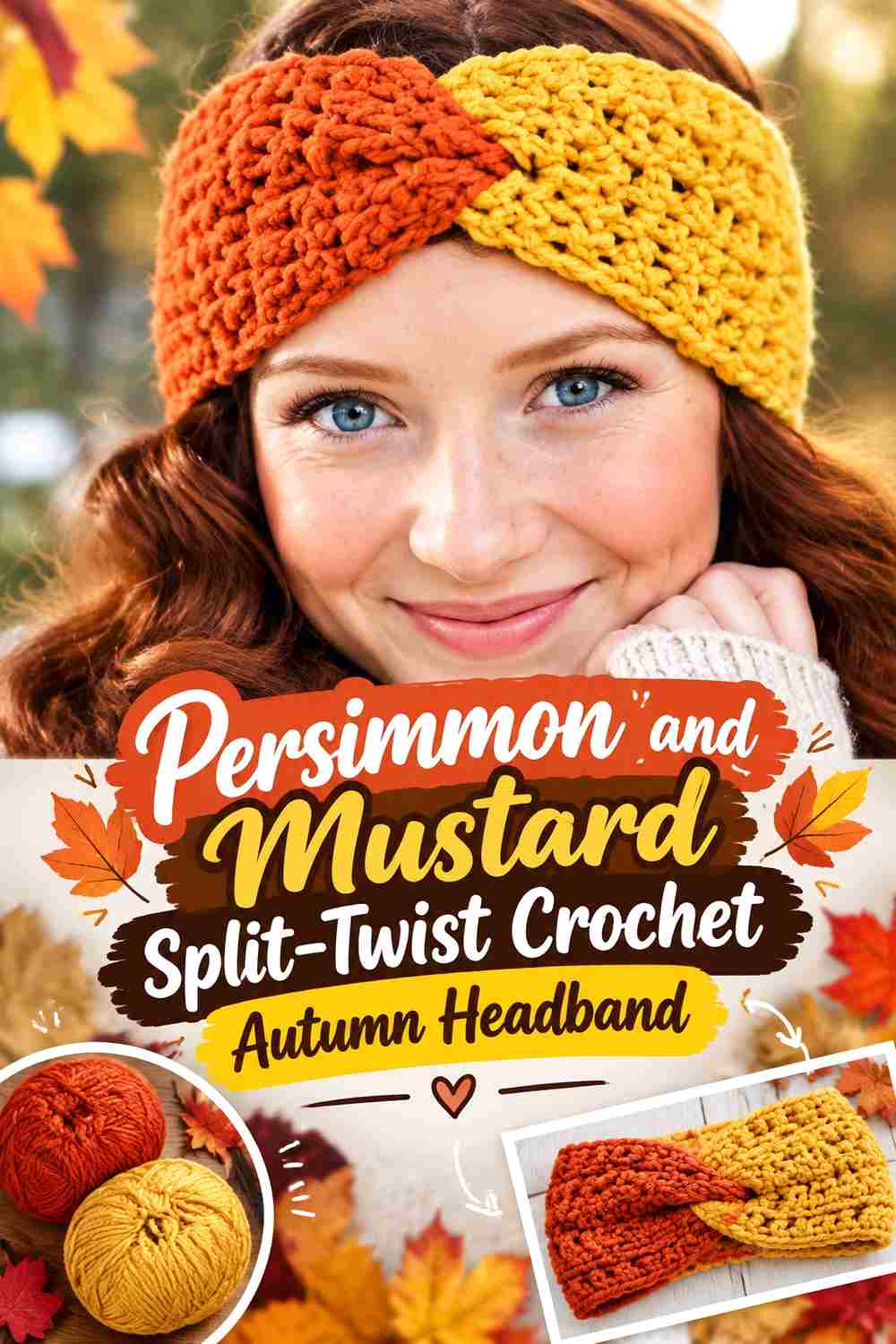
This direction lets the colors meet directly at the twist. Use persimmon through one major section and mustard through the other so the crossed front becomes the point where both autumn shades visibly interact. The supporting Twisted Step-Sister construction forms its twist as part of the headband rather than relying only on a simple decorative fold.
Persimmon and Mustard Need Broad Crochet Sections Here
Give each color enough uninterrupted length to register before the twist. Very short alternating sections would change the effect from split-color to striped.
Plan the transition while considering which parts will actually face forward after the crossover.
Mustard Can Cross Persimmon at the Crochet Headband Center
Use the twist to place one shade visibly over or beside the other. This gives the two-color plan a structural reason rather than an arbitrary midpoint change.
If one color almost disappears after the twist forms, move the transition before finishing instead of adding extra accent stripes elsewhere.
Creator Credit: The Crochet Crowd
9. Mustard And Persimmon Ridged Twist Crochet Autumn Headband
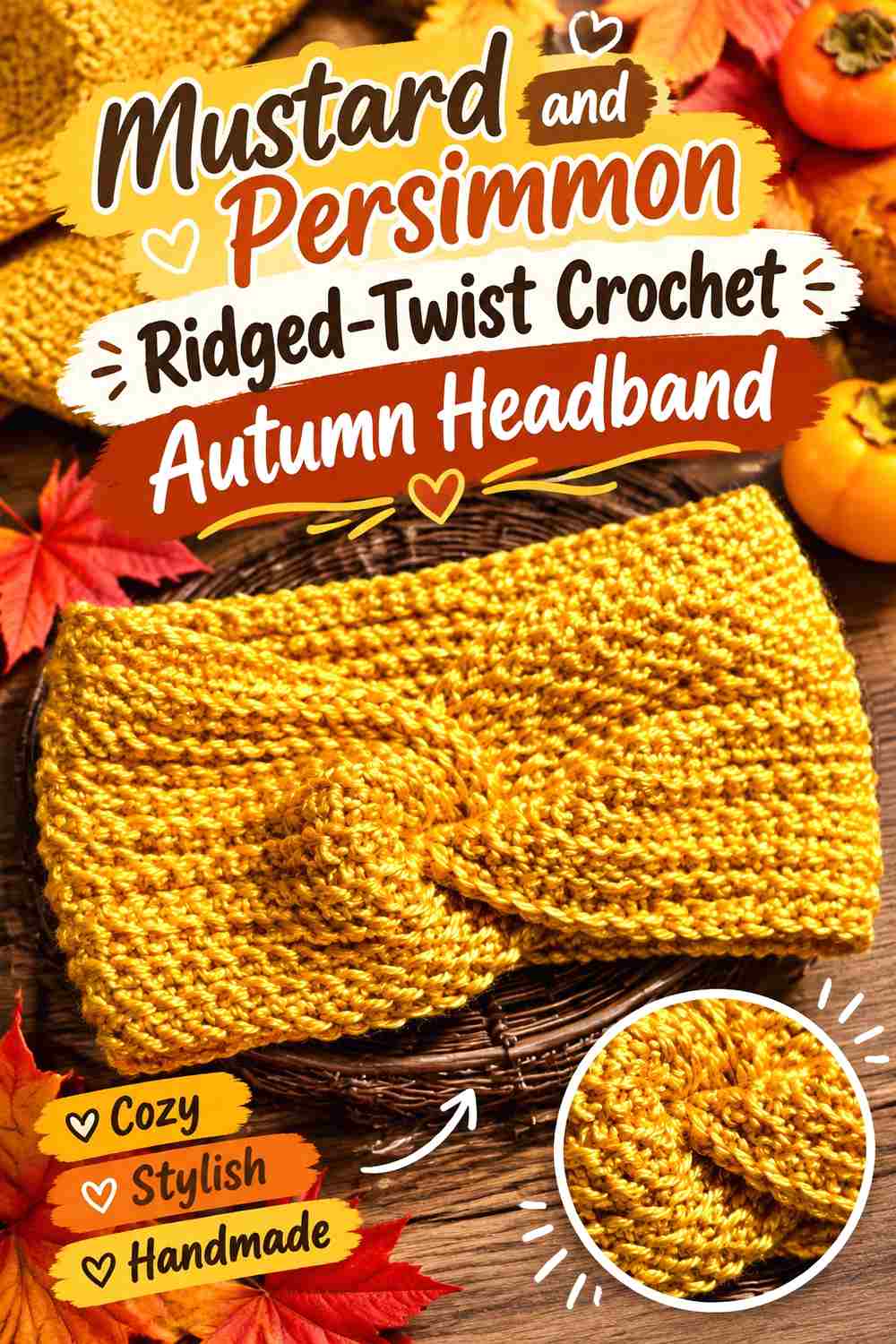
Make mustard the dominant color across the ridged body and introduce persimmon around the twist. The supporting Josephine Twist ear-warmer construction uses back-loop texture in a rectangular band that is folded and joined into a twisted front.
Mustard Can Keep the Crochet Ridges Bright and Continuous
Use mustard across most of the raised linear texture so the eye can follow the ridges without frequent interruption.
This gives the headband a golden fall appearance while letting the stitch structure add darker shadow naturally.
Persimmon Can Deepen the Mustard Crochet Twist
Place persimmon near the joining area so the deeper shade concentrates at the front focal point.
If persimmon is very dark compared with mustard, a relatively narrow section may be enough. Evaluate the balance after folding because the seam arrangement changes the visible proportions.
Creator Credit: Pattern Princess
10. Persimmon And Mustard Textured Twist Crochet Autumn Headband
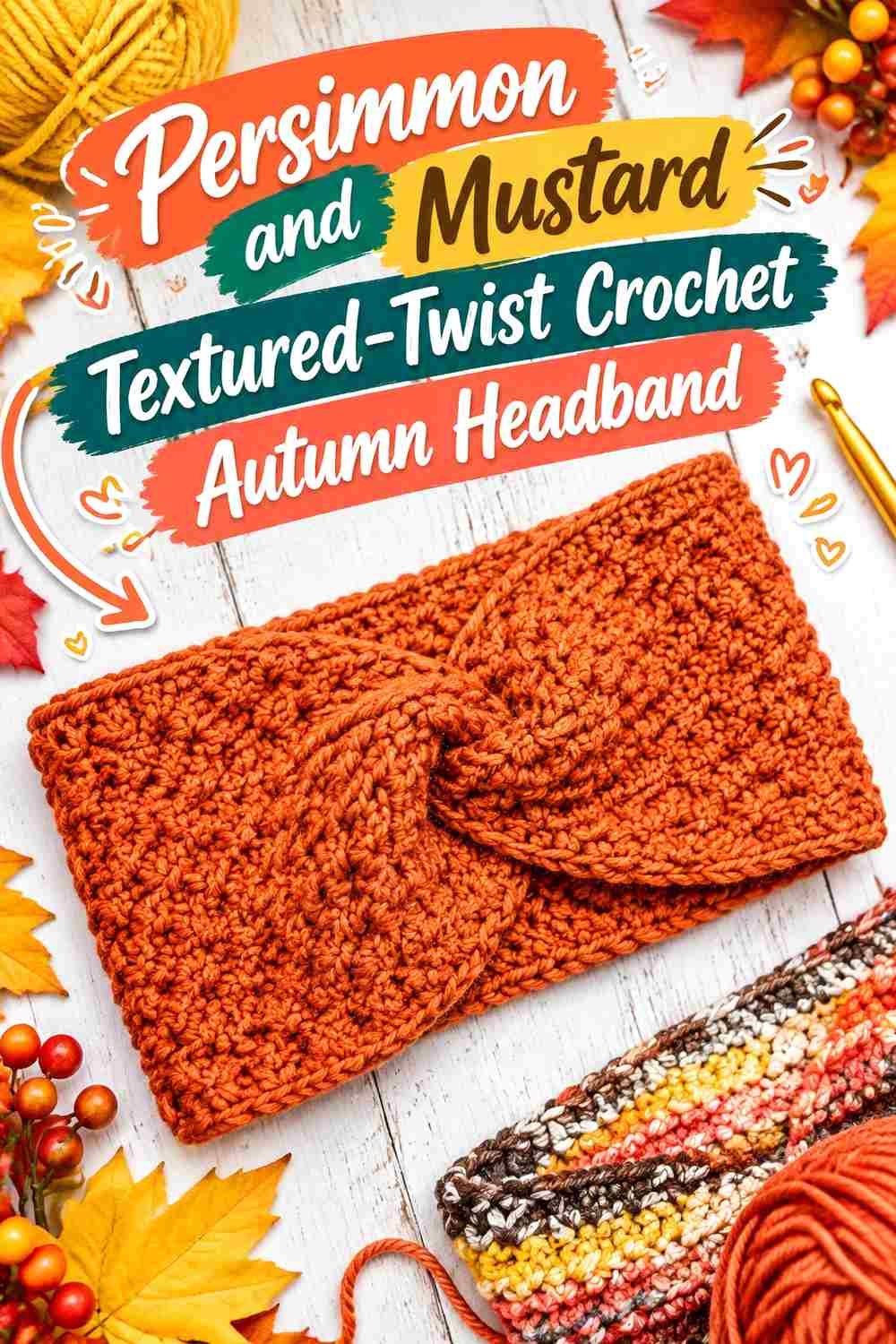
This version uses persimmon as the main field but repeats mustard within selected textured areas before the twist. The supporting tutorial features a textured twist ear warmer using several crochet stitch types, giving the surface enough variation for carefully placed color changes.
Persimmon Can Unite Different Crochet Textures
When the stitch pattern already changes across the headband, keeping most sections persimmon helps them feel like parts of one accessory.
Avoid switching to mustard every time the stitch changes. That can make texture and color compete for the same emphasis.
Mustard Can Mark One Persimmon Crochet Texture Transition
Choose a single area where a texture change and color change can happen together. That makes the mustard section look intentional and gives the reader an obvious visual checkpoint.
Repeat mustard at the twist only if the first accent feels disconnected once the headband is worn.
Creator Credit: Hope Corner Farm Crochet
11. Persimmon And Mustard Buttoned Crochet Autumn Headband
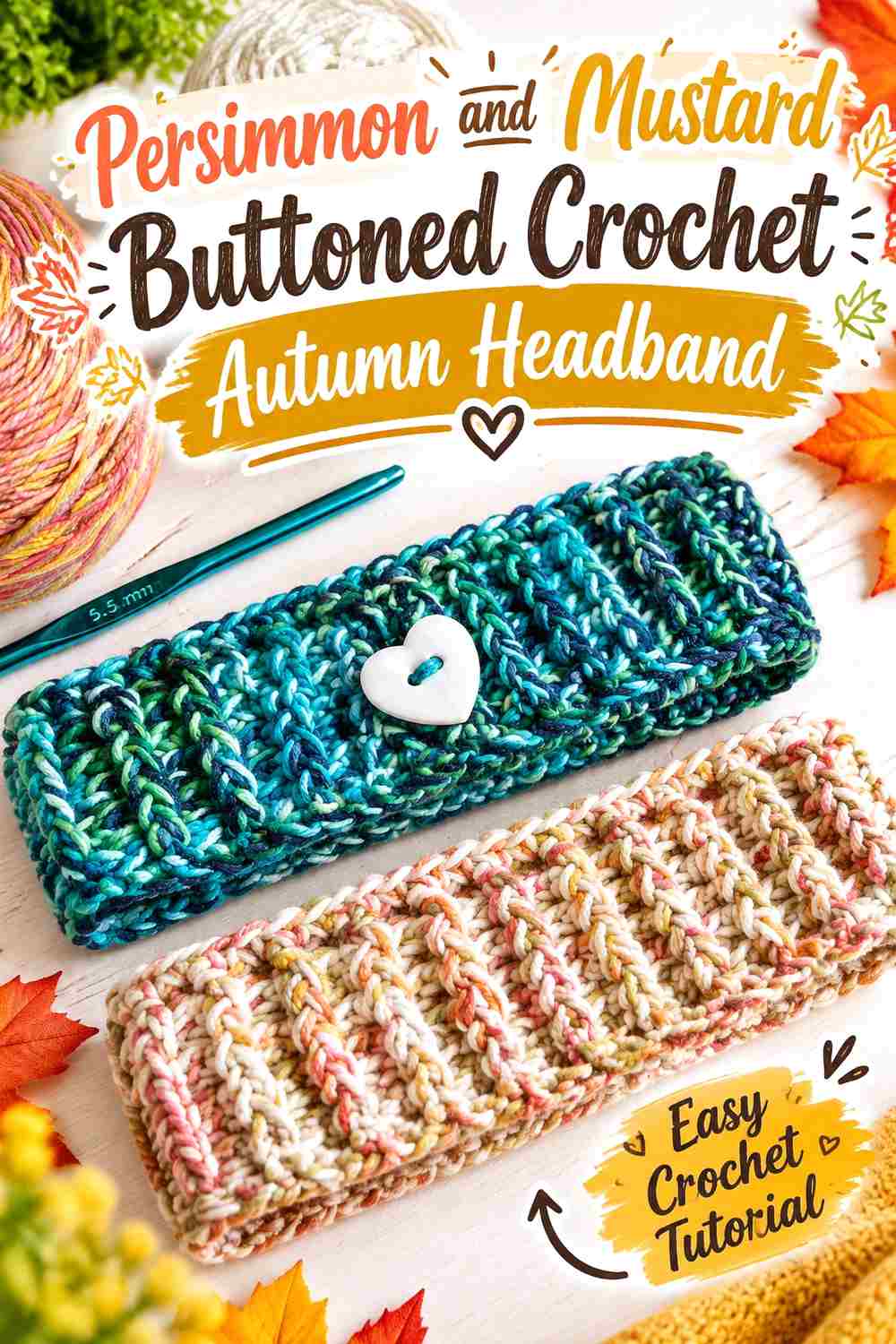
A buttoned headband offers a different focal area from a twist. Use persimmon across the long band and mustard around the button end or contrasting edge. The supporting Erica Arndt tutorial demonstrates a simple crochet headband construction, and the creator’s earlier buttoned headband format shows how a closure can become a visible design feature.
Persimmon Can Keep the Buttoned Crochet Headband Visually Simple
Use persimmon through the main length so the band remains easy to coordinate with autumn layers and the closure area does not have to compete with striping.
A broad solid field also puts more emphasis on the way the headband closes.
Mustard Can Draw Attention to the Persimmon Crochet Closure
Use mustard at the end section, edging, or another visible area around the closure. This makes the functional part of the accessory part of the color design.
If the button itself has a noticeable color, evaluate it as another visual element before increasing the amount of mustard.
Creator Credit: Erica Arndt
12. Mustard And Persimmon Velvet Twist Crochet Autumn Headband

Finish with a mustard-led twist headband where persimmon is concentrated at the front or along one broad section. The supporting Daisy Farm Crafts tutorial specifically demonstrates a velvet twist headband, so the color adaptation should preserve the construction and suitable material behavior rather than assuming every persimmon or mustard yarn is interchangeable with the tutorial yarn.
Mustard Can Cover the Main Velvet Crochet Headband
Use mustard across most of the headband when you want a lighter golden autumn result. A continuous main color also prevents the plush-looking surface from becoming overly divided.
If substituting yarn, follow the source construction requirements instead of choosing a different fiber solely because its color is closer to your preferred mustard.
Persimmon Can Give the Mustard Crochet Twist More Depth
Place persimmon around the front twist or one substantial neighboring section. The deeper warm shade can make the overlapping construction easier to distinguish.
Avoid narrow, frequent color changes on a highly textured or plush surface when the boundaries are difficult to see clearly.
Creator Credit: Daisy Farm Crafts
Comparing Persimmon and Mustard Autumn Headband Directions
For a strongly persimmon-led result, the picot, padded, textured, classic twisted, rose, and textured-twist ideas keep the deeper orange-red shade across most of the accessory. Mustard then acts as a controlled focal color around texture, a flower, or the front.
For a brighter golden result, the crunch-stitch, ridged-twist, and velvet-twist versions let mustard dominate. Persimmon becomes the grounding accent rather than the main field.
The spike-stitch and split-twist ideas give both colors more equal visual importance. Choose these when the persimmon-and-mustard relationship itself should become the main design feature instead of simply decorating a mostly solid headband.
If stitch texture is already complex, keep color placement broad and restrained. Simpler headband constructions can handle stronger blocks, edging, or repeated two-color sections without losing clarity.
Conclusion
Persimmon and mustard can create much more than one standard striped autumn headband. Persimmon can form the warm foundation while mustard highlights a twist, flower, ridge, or border, or the colors can reverse roles for a brighter golden accessory.
Choose the placement according to the headband’s existing construction. Picot texture benefits from controlled color changes, padded bands suit broad fields, flowers create natural focal accents, and front twists give the two colors an obvious meeting point.
Before committing to small two-color details, compare your actual yarns from a few feet away. If persimmon and mustard are close in lightness, larger color areas will usually stay clearer than thin lines. Use the linked tutorials for exact headband construction, then adapt the palette without replacing the creators’ instructions.
Frequently Asked Questions
Should Persimmon or Mustard Dominate an Autumn Crochet Headband?
Either can lead. Persimmon gives the headband a deeper orange-red appearance, while mustard creates a lighter golden direction. Choose the dominant shade first and use the second color where the headband already has a twist, border, flower, or texture change.
Where Should Mustard Go on a Persimmon Crochet Headband?
Mustard works well at a front twist, center knot, flower, border, or selected textured section. These placements give the lighter shade a clear purpose without breaking the persimmon body into too many small sections.
How Can I Keep Persimmon and Mustard From Blending Together?
Compare the actual yarns for light-dark contrast. A grayscale photo can help. If the colors become very similar gray values, use broader blocks rather than tiny mustard details inside persimmon texture.
Can Mustard Be the Main Color Instead of Persimmon?
Yes. A mustard-dominant band with persimmon around the twist, border, or center section creates a brighter autumn result while preserving the same two-color palette.
Do Persimmon and Mustard Work Well With Crochet Texture?
They can, but strong texture often needs fewer color changes. Let one shade cover several repeated ridges, picots, or raised stitches before introducing the second color so the stitch pattern remains easy to see.
Should a Persimmon and Mustard Twisted Headband Use Both Colors in the Twist?
Not necessarily. Making the whole twist mustard against a persimmon band creates a concentrated focal point, while a split-color twist gives both shades more equal importance. Check the colors after folding because the twist changes what remains visible.
Can I Substitute Different Orange and Yellow Shades for Persimmon and Mustard?
Yes. Preserve their relationship rather than matching the names exactly. Choose a warm orange-red and an earthy golden yellow that remain distinct enough for your planned placement, especially when the second shade will appear in small details.