Poetcore gives the ordinary scarf a particularly good reason to become a hood. The current literary-inspired aesthetic leans into soft knitwear, scarves, layered textures, vintage references, and clothes that feel quietly lived-in rather than flashy. A crochet hooded scarf can fit that mood without turning into costume, especially when the silhouette, yarn texture, and colors do most of the work.

The tutorials below are not all labeled “poetcore” by their creators. Instead, they offer genuinely different hood-and-scarf constructions that can be interpreted through a literary palette and restrained finishing. You can compare pointed versus rounded hoods, modular granny squares versus continuous fabric, loose tails versus infinity wraps, and decorative versus practical pocketed versions before deciding which direction suits your wardrobe.
Quick List
- Crochet Triangular Literary Hood Scarf
- Crochet Granny-Square Patchwork Hooded Scarf
- Crochet Rounded Striped Scoodie
- Crochet Heart-Trim Chunky Hooded Scarf
- Crochet Book-Walk Pocket Hooded Scarf
- Crochet Textured One-Piece Hood Scarf
- Crochet Infinity-Wrap Hooded Scarf
- Crochet Oversized Super-Bulky Hooded Scarf
- Crochet Ribbed Face-Framing Scoodie
- Crochet Clean-Line Everyday Hood Scarf
- Crochet Chunky Classic Scoodie
- Crochet Rounded Pocket Scarf Hood
- Crochet Trinity-Stitch Rounded Hood Scarf
- Crochet Ridged Woodland Pocket Hooded Scarf
What Makes a Crochet Hooded Scarf Feel Poetcore?
The strongest poetcore version usually comes from styling decisions rather than adding obvious literary symbols. Muted cream, olive, tobacco brown, burgundy, charcoal, faded navy, or dusty rose can make a simple hood feel more bookish, while tactile yarn and slightly relaxed proportions add the worn-in quality associated with the aesthetic. Contemporary poetcore coverage consistently emphasizes layering, texture, scarves, vintage influence, and understated silhouettes rather than loud statement dressing.
Shape matters too. A triangular hood has more Romantic-era drama, a rounded hood feels softer and easier to wear daily, and granny squares introduce handcrafted irregularity. Fringe, tiny appliqués, contrasting borders, or an antique-style button can reinforce the mood, but they work best when one detail is allowed to lead instead of competing with several others.
Plan Hood Depth and Scarf Length as One Wearable
A hood can fit comfortably on its own and still become awkward once the scarf is wrapped. Before committing to a tutorial, think about the whole accessory: how much room you want around the crown, whether the front edge should sit close to the face, and how many times the scarf needs to cross the neck.
Try to judge fit while wearing the coat, cardigan, or hairstyle you expect to pair with the finished piece. Thick fabric consumes more space at the neckline than open or flexible crochet. Long tails create more styling options but also add hanging weight, while infinity constructions eliminate loose ends at the cost of extra bulk around the neck. For pocketed styles, the scarf must also hang low enough for the pockets to meet your hands naturally rather than forcing your shoulders downward.
Yarn Texture Can Change the Entire Literary Mood
For poetcore, stitch definition and drape often matter more than novelty yarn. Smooth yarn makes cables, ribs, trinity stitch, and granny-square joins easier to read. A softer halo can create an older, romantic surface, but too much fuzz may hide detailed stitch work. Chunky yarn produces a stronger hood silhouette and more obvious winter volume; lighter fabric makes the scarf easier to layer under blazers and cardigans.
Before substituting yarn, compare the tutorial’s intended fabric with your goal. Increasing thickness can make a previously relaxed hood stand away from the head, while a thinner substitution may reduce structure. If measurements are provided by the creator, use those as checkpoints instead of assuming that matching the hook size alone will reproduce the same fit.
Crochet Triangular Literary Hood Scarf
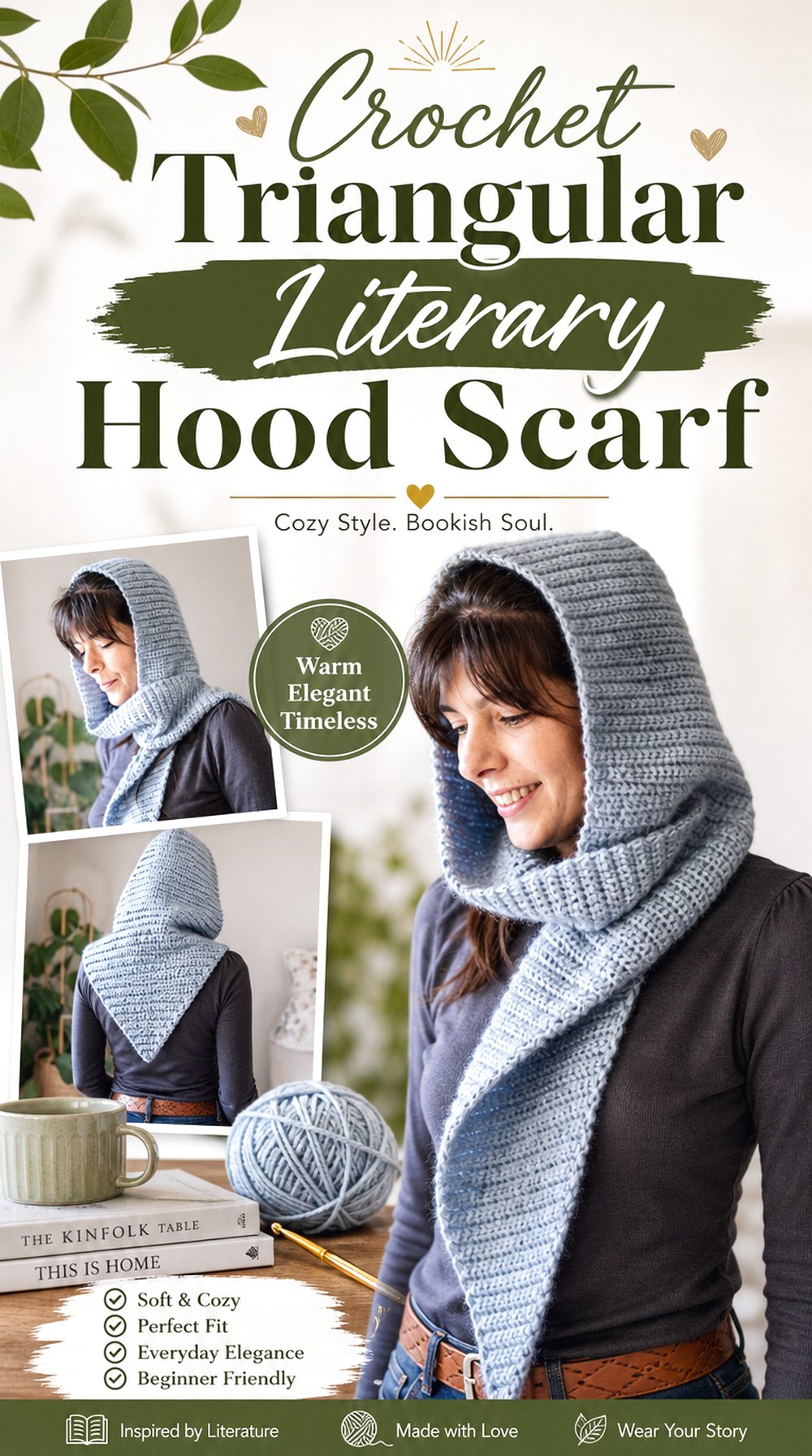
A triangular hood is one of the most natural shapes for a poetcore interpretation because it creates an elongated crown rather than an ordinary sweatshirt-style hood. A. LeLong’s tutorial presents a crocheted triangular hooded scarf adapted from the visual idea of the Sophie Hood, producing a piece that can read as romantic, minimal, or slightly medieval depending on yarn and styling. The creator explicitly identifies the project as a crochet adaptation rather than the original knitted design.
For poetcore, consider quiet shades such as heathered brown, cream, deep wine, or moss instead of making embellishment the focus. The long scarf sections already provide enough movement to make this a strong statement accessory.
The Triangular Crown Creates the Strongest Poet Silhouette
The point at the back changes the personality of the accessory immediately. It feels more narrative and less sporty than a rounded hood, which makes it useful when you want the hood itself to carry the aesthetic. Before choosing it, decide whether you genuinely like a visible point from the side and back. If you prefer a subtle everyday scarf, one of the rounded options later in the list will blend more easily with modern coats.
Keep the Scarf Tails Soft Enough to Drape
Long narrow tails look especially effective when they hang loosely over a cardigan, wool coat, or flowing skirt, but stiff fabric can make them project away from the body. When selecting a substitute yarn, test a swatch for bend and fold rather than judging softness in the skein. The goal is enough structure for the triangular hood to remain recognizable without turning the scarf portions into rigid bands.
Use Vintage Details Sparingly
A small brooch, restrained fringe, or single contrast edging can move this design further toward poetcore, but the pointed silhouette already provides substantial character. Adding several decorative features at once can shift the finished piece toward fantasy costume. If you plan to wear it with ruffled collars, textured cardigans, or jewelry, keeping the crochet itself relatively simple gives the full outfit more breathing room.
Crochet Granny Square Patchwork Hooded Scarf
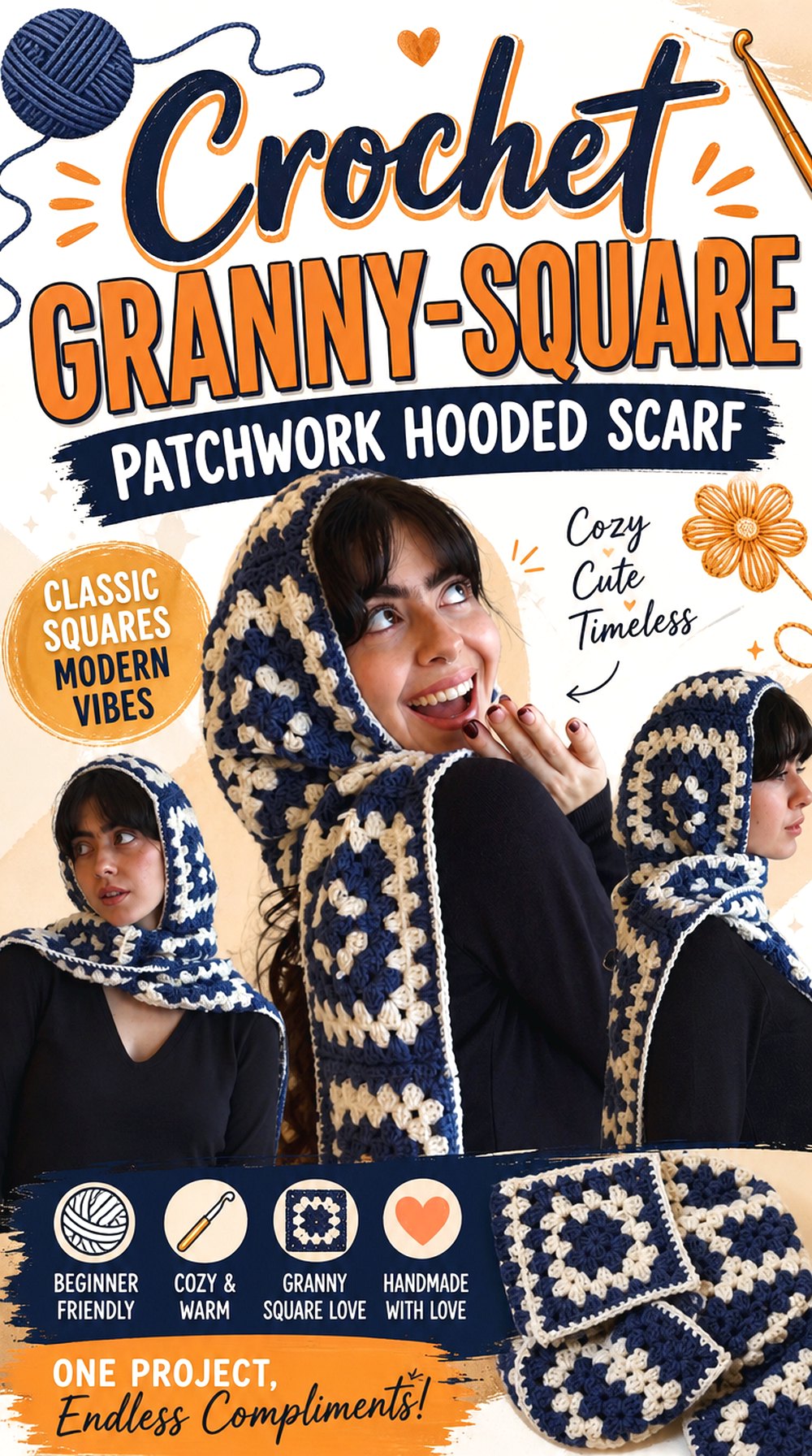
This version replaces continuous scarf fabric with visible granny-square construction, giving the finished accessory a deliberately handmade rhythm. Käthe’s tutorial builds the hooded scarf entirely from granny squares and includes the square construction, sizing discussion, assembly, and finishing in one long-form tutorial.
That modular structure suits poetcore when the colors feel collected rather than overly coordinated. Think old wallpaper, dried flowers, library upholstery, or faded bookcloth: cream beside rust, moss beside brown, or burgundy softened with taupe. Compared with the triangular scarf above, this project has more visual segmentation and less uninterrupted drape, so motif scale and joining consistency deserve attention before you make a large stack of squares.
Block Squares Before You Commit to the Hood
A small size difference that looks harmless in separate motifs can become obvious once several squares meet around the face. Compare the blocked dimensions of your finished motifs before assembling the hood section. If you plan to mix different granny-square designs, the outer dimensions need to cooperate even if the interior motifs differ. Matching square size matters more than making every square visually identical.
Let Color Placement Carry the Literary Mood
Patchwork can become bright and playful very quickly. For a poetcore result, decide which color acts as the visual background and repeat it often enough to calm the composition. A few deeper accents can then appear like worn book spines among neutrals. Lay the motifs out before joining and view the arrangement from several feet away; a balanced scarf should not accidentally place every strongest color around the face.
Watch Bulk Where Several Motifs Meet
Granny squares bring joins, borders, and multiple fabric intersections into a relatively small area around the hood. If your chosen yarn creates thick seams, check how those joins feel near the jaw, neck, and crown before completing the entire assembly. A beautiful motif can still be uncomfortable if the joined edges become too rigid to fold naturally.
Original Tutorial and Creator Credit
Creator: Käthe
Crochet Rounded Striped Scoodie
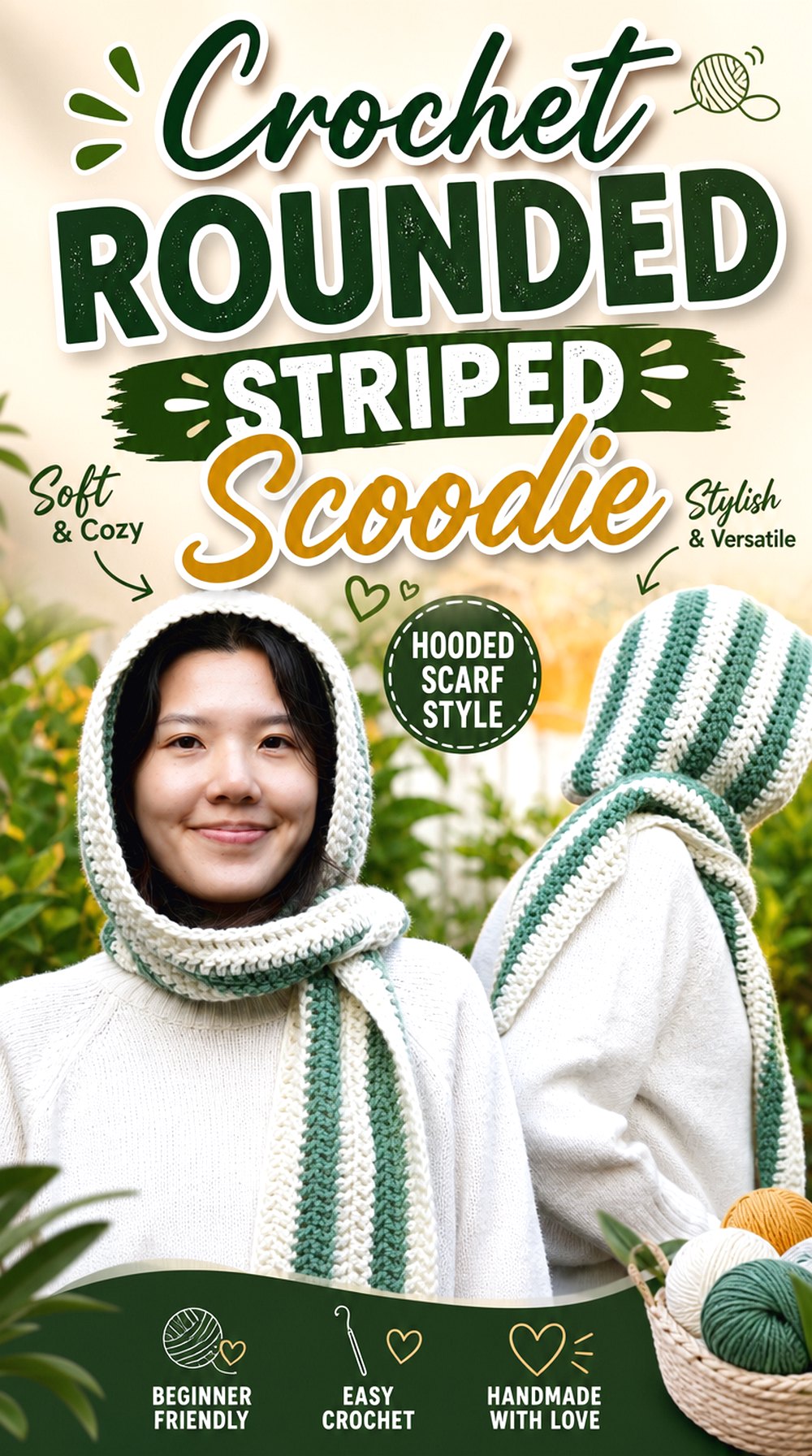
VivCrochets offers a notably different route: a no-sew hooded scarf with a rounded back rather than the familiar point created by simply folding a rectangle. The tutorial also demonstrates stripes that continue through the hood and scarf, making color part of the construction rather than an afterthought.
For poetcore, the striped idea does not need to become bold. Alternating parchment and sage, burgundy and warm beige, or charcoal and faded cream can resemble old woven textiles more than a sporty winter scarf. Because the design is continuous, it feels calmer than granny-square patchwork and can work well when you want the crochet accessory to support a layered outfit instead of dominating it.
Rounded Shaping Softens the Back Profile
A rounded crown is useful if you like the romance of a hood but not a pronounced point. From the side, it reads closer to a relaxed bonnet or modern hood, which makes it easier to combine with ordinary outerwear. When adapting the design, preserve enough depth for the hood to sit comfortably rather than shortening it simply to make the silhouette more fitted.
Stripes Can Look Bookish Instead of Sporty
The same stripe layout changes character dramatically with color. High-contrast bright stripes emphasize the graphic pattern, while nearby earthy values allow texture and drape to remain dominant. For a quieter poetcore effect, choose one neutral and one aged-looking accent rather than several equally strong colors. Lay the two yarns beside the clothing you expect to wear with the scarf before committing.
Original Tutorial and Creator Credit
Creator: VivCrochets
Crochet Heart Trim Chunky Hooded Scarf
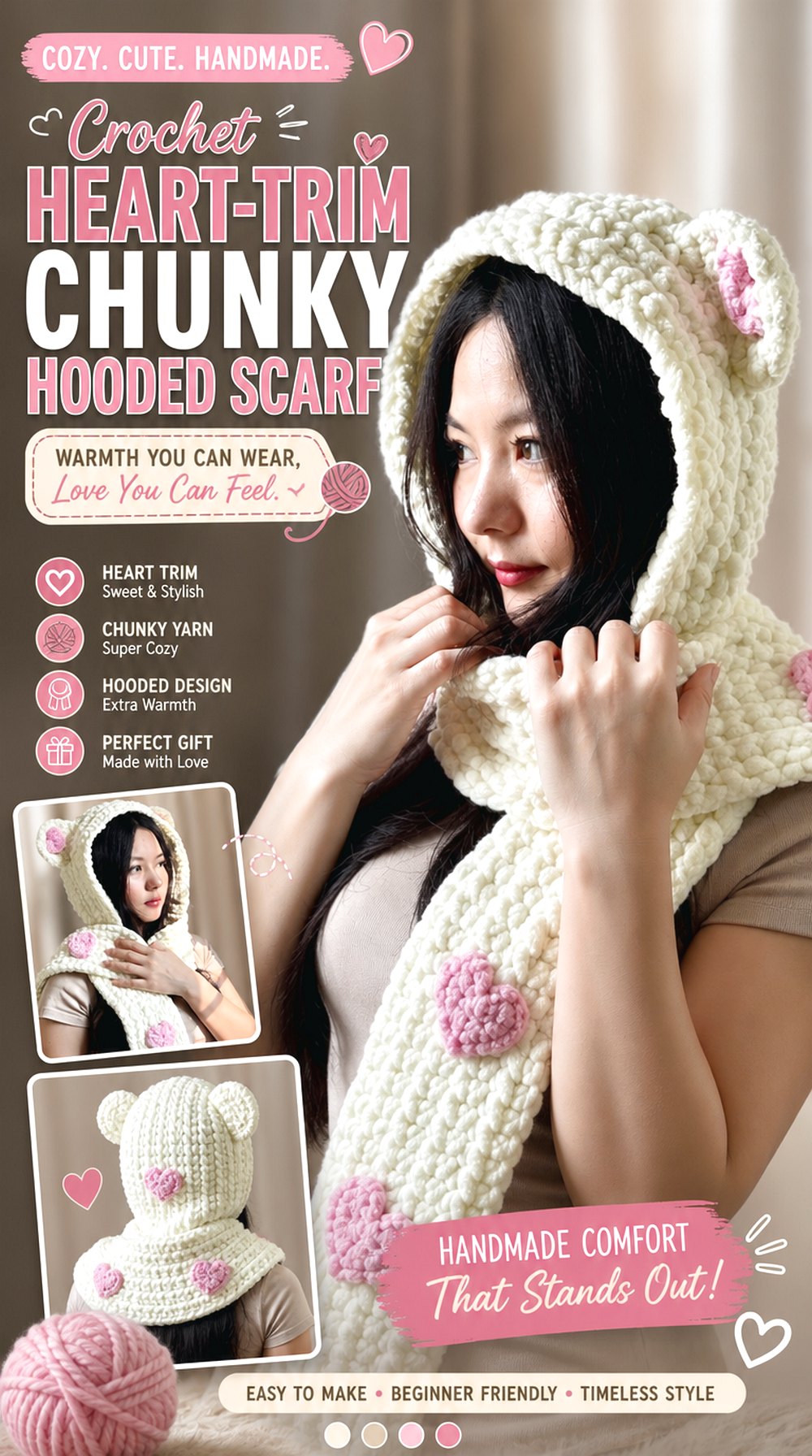
Yaan_Vlogs combines a chunky hooded scarf with small heart appliqués and ear details, creating the most whimsical option in this collection. The tutorial covers the hood, scarf, ears, and hearts as parts of the finished project. That makes it useful for a softer, youthful branch of poetcore rather than the darker library-inspired version.
To keep the piece literary instead of overly cute, you could use the tutorial’s decorative concept selectively. One or two tonal hearts, subtle ears in the main yarn, or a dusty rose accent against cream will read very differently from multiple high-contrast decorations. The chunky scale also means that even a small detail can become visually prominent.
Hearts and Ears Push This Toward Whimsical Poetcore
This is the option to choose when your version of poetcore overlaps with romantic diaries, pressed flowers, handwritten letters, and soft academia. If you prefer severe dark-academia styling, the appliqués may be unnecessary. Decide which decorative element is essential before starting the finishing stage; leaving one feature off can be a deliberate design choice rather than an incomplete version.
Chunky Yarn Changes the Scale of Every Detail
Thicker yarn magnifies the hood edge, seams, scarf width, and appliqués. A heart that looks small beside the skein may feel much larger once it sits near the face. Before permanently attaching decorative pieces, pin or loosely position them and view the scarf while worn. Placement that looks balanced on a table can feel crowded once the hood curves around the head.
Original Tutorial and Creator Credit
Creator: Yaan_Vlogs
Crochet Book Walk Pocket Hooded Scarf
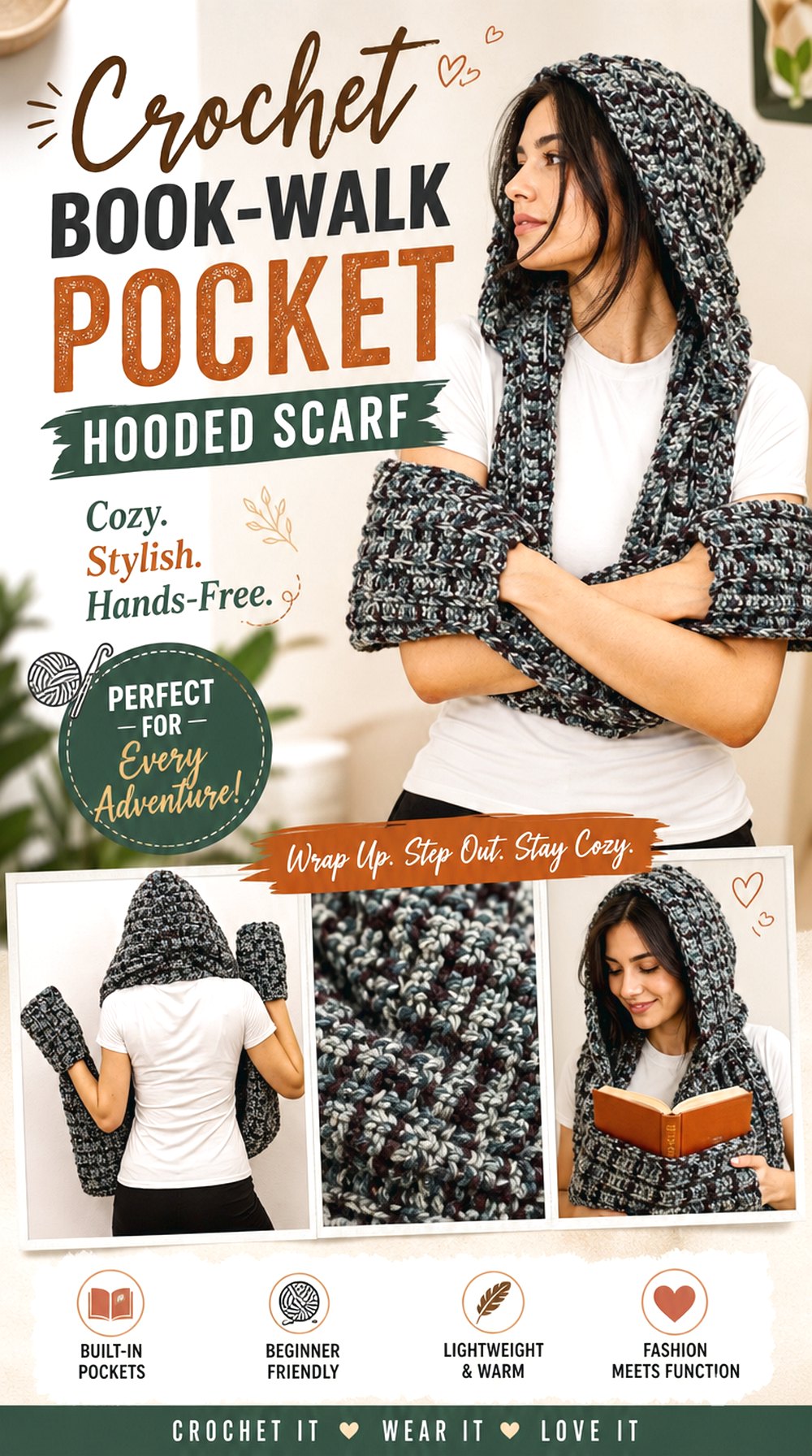
A hooded scarf with pockets moves beyond pure styling and begins to function almost like a very narrow outer layer. TCDDIY’s project integrates hood, scarf, and pocket sections, with the tutorial covering the scarf length, hood height, seaming, and pocket construction.
That practicality fits a grounded poetcore wardrobe particularly well: picture a long coat, messenger bag, boots, and a scarf that gives your hands somewhere to rest during a cold bookshop walk. Because pockets add weight and determine where the ends need to hang, this design requires more proportion planning than a decorative hood with free scarf tails.
Pocket Height Should Match Your Natural Hand Position
Do not judge scarf length only by how far the ends hang. A pocketed scarf needs to place the openings where your arms can rest without lifting your shoulders or bending awkwardly. When adapting length, temporarily hold the developing scarf against your body and locate your hands first. The ideal pocket position may matter more than matching the creator’s overall length exactly.
Long Ends Need a Balance Check
Once pockets are added, both scarf tails should feel reasonably balanced when worn. One side that is heavier, longer, or filled with items can pull the hood away from center. Before final finishing, wear the piece with empty pockets and walk around briefly to see whether the hood stays positioned comfortably. Treat the pockets primarily as hand warmers unless the construction specifically supports carrying more.
Keep Functional Openings Visually Clear
A poetcore version might invite lace edging, buttons, or embroidery, but avoid letting decorative additions interfere with the pocket opening. A narrow contrasting border can highlight the feature without making it cumbersome. If you plan to add buttons decoratively, make sure they do not sit where your hands repeatedly rub against them.
Original Tutorial and Creator Credit
Creator: TCDDIY
Crochet Textured One Piece Hood Scarf
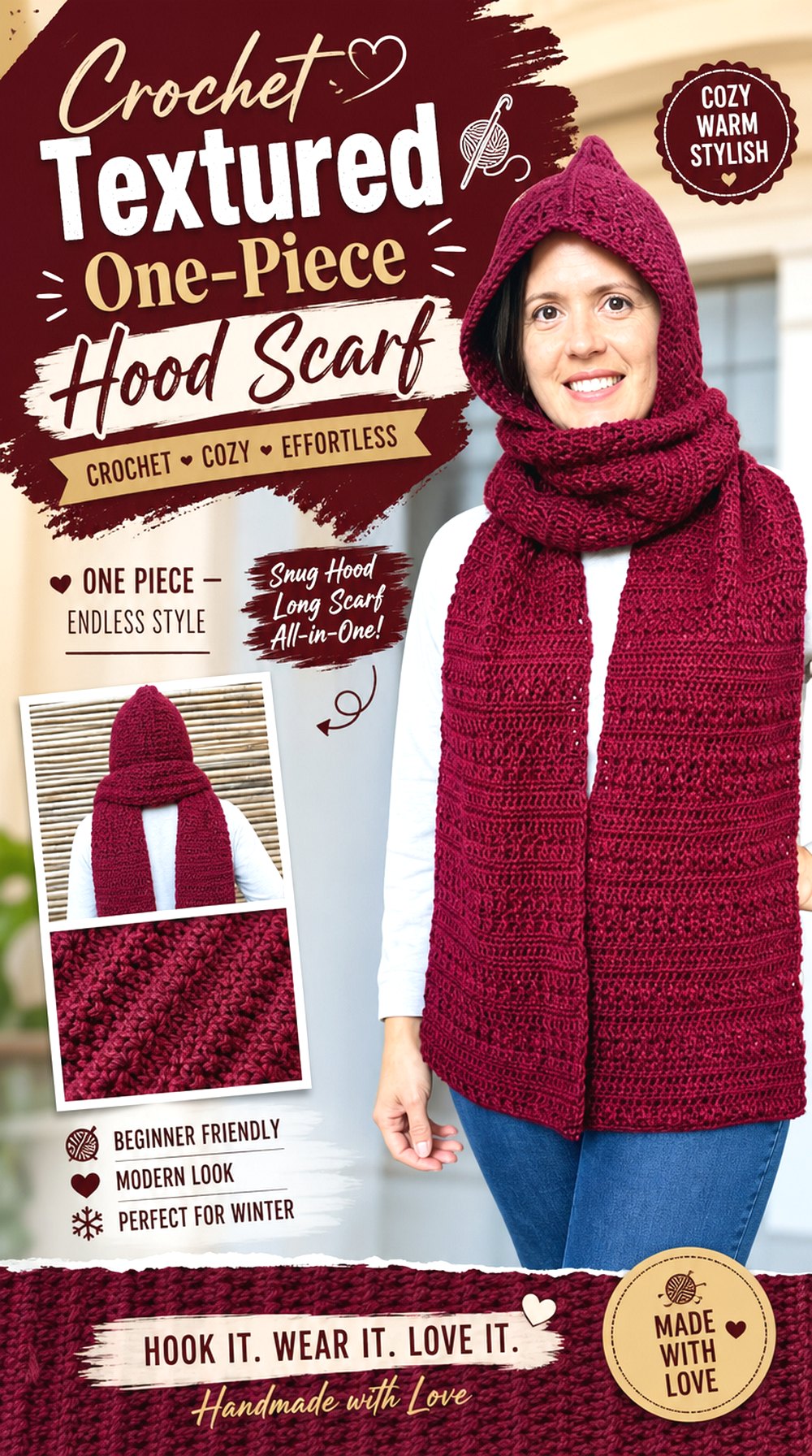
The Arco design from ChristaCoDesign makes texture the main visual feature. The scarf and hood are worked as one connected piece, and the tutorial focuses on a patterned fabric rather than patchwork or separate decorative motifs. That continuous texture suits poetcore particularly well because it resembles the tactile surface of vintage knitwear without requiring added ornament.
A deep burgundy, tobacco brown, loden green, or oatmeal shade would allow the raised stitch pattern to remain visible while keeping the accessory easy to combine with other layers. Compared with the pocketed options, this scarf has a cleaner outline, making it a useful choice when your coat, blouse, or cardigan already includes strong details.
Texture Becomes the Decoration
When the stitch surface already creates shadow and depth, extra fringe, appliqués, and contrasting borders are rarely necessary. A solid or lightly heathered yarn can let those raised areas do the visual work. Before choosing a highly variegated yarn, crochet enough of the repeat to see whether color changes compete with the stitch definition rather than revealing it.
One-Piece Construction Keeps the Look Continuous
A continuous scarf-to-hood transition avoids the visual interruption of granny-square joins or separate panels. That gives this project a quieter, more garment-like appearance. The trade-off is that changes to hood width or scarf length interact with the larger piece, so use the creator’s measurements and fit information as checkpoints rather than improvising late in construction.
Original Tutorial and Creator Credit
Creator: ChristaCoDesign
Crochet Infinity Wrap Hooded Scarf
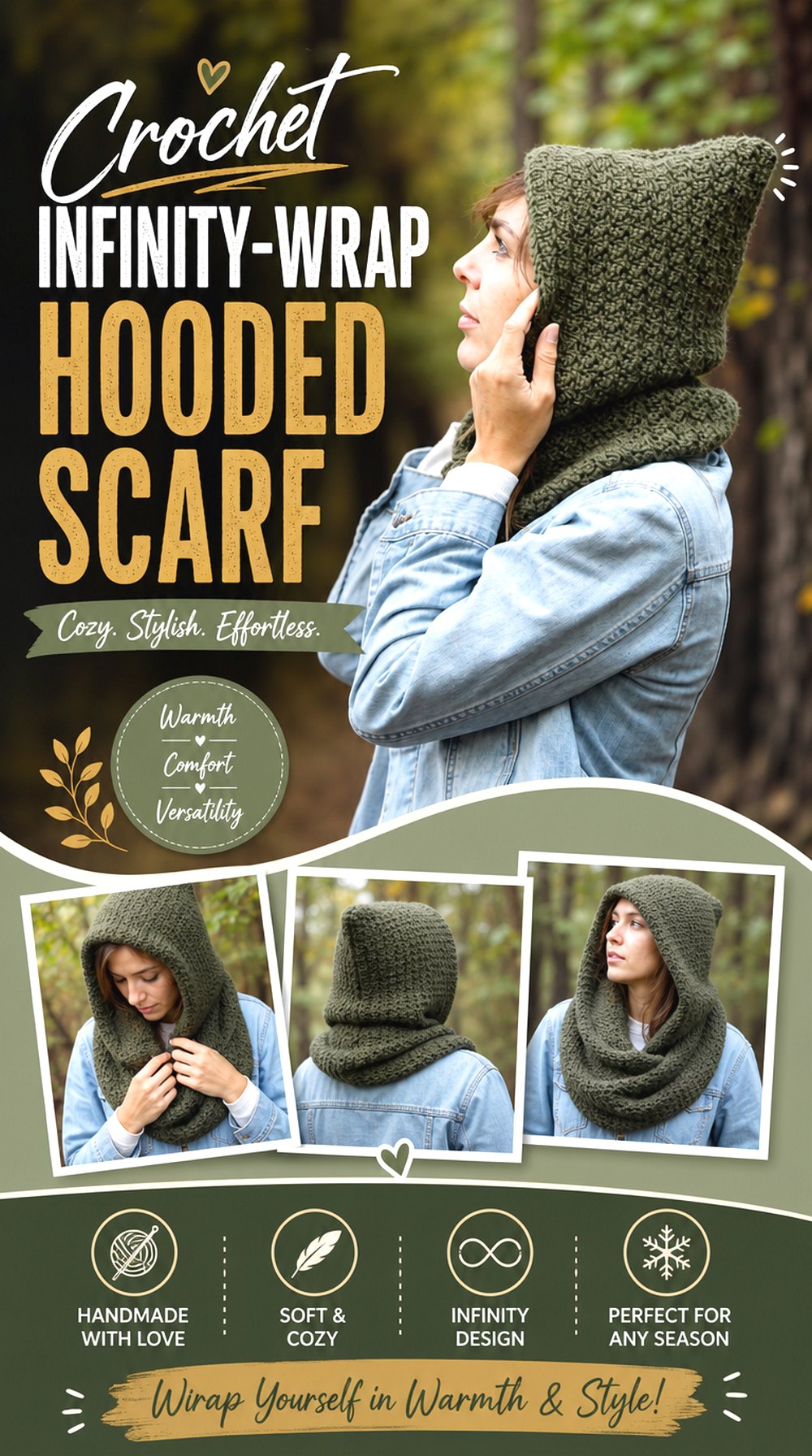
Kay Krochets’ Trailhead Hooded Scarf changes the wearing experience by pairing an attached hood with a double-wrapped infinity scarf. Instead of two long ends hanging down the body, the scarf forms a loop around the neck. The creator describes the project as an infinity-style hybrid worked with bulky yarn.
This construction works for poetcore when you want texture around the face but prefer a contained silhouette beneath a coat. It looks less flowing than a triangular hood with long ties, yet more practical for windy walks or commuting because there are no free scarf ends to manage. Muted tweed or heathery solids could make the circular layers feel especially old-world.
An Infinity Loop Removes Loose-Tail Fuss
If you dislike continually rearranging scarf ends, this is a practical alternative. The loop keeps the scarf portion close to the body and lets the hood remain the main vertical element. The trade-off is reduced styling flexibility: you cannot simply let the scarf ends hang at different lengths, so make sure you enjoy the wrapped look before choosing this construction.
Double-Wrap Volume Needs Neck-Room Planning
Bulky yarn wrapped more than once can create substantial depth between the chin and coat collar. Consider what you normally wear underneath. A high turtleneck plus a bulky double loop may feel very different from the same scarf over a light blouse. Check the circumference and intended wrap before substituting a dramatically thicker yarn.
Keep the Palette Quiet When the Shape Is Full
Because the infinity section already creates concentrated volume, a limited color scheme prevents the finished piece from becoming visually heavy. A marled brown, cream, charcoal, or subdued green can emphasize softness and texture. If you want contrast, one narrow accent is usually enough to separate the hood edge from the wrapped scarf.
Original Tutorial and Creator Credit
Creator: Kay Krochets
Crochet Oversized Super Bulky Hooded Scarf
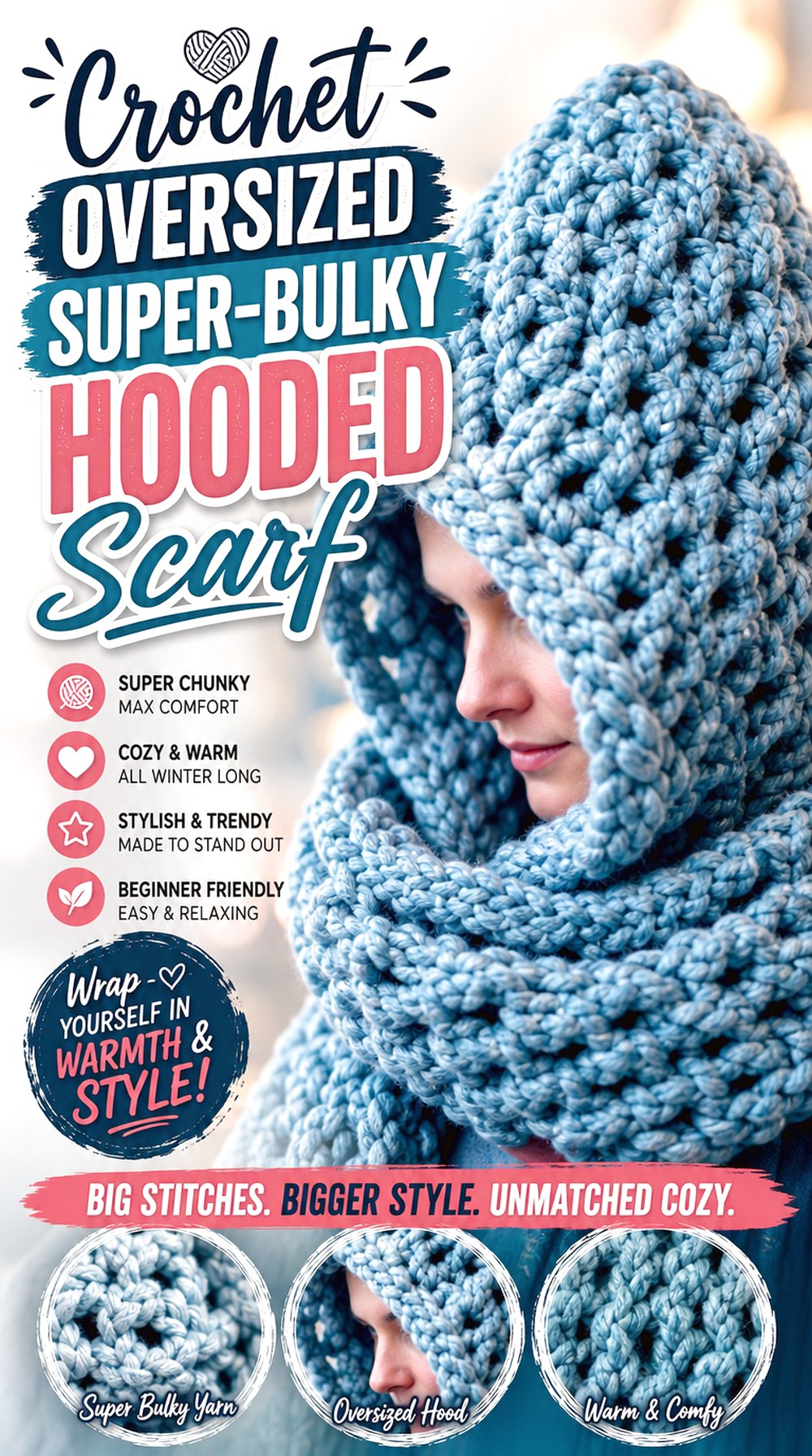
AllFreeCrochet’s hooded scarf tutorial uses super-bulky yarn, making fabric scale the defining feature rather than motifs or elaborate finishing. The result belongs on the more dramatic winter end of poetcore: generous crochet, visible stitches, and enough volume to hold its own against heavy outerwear.
This style is useful if you want an accessory that looks substantial from across the room. It is less suitable when you need something that disappears under a fitted coat collar. The poetcore interpretation comes from choosing a restrained, natural-looking shade and letting the exaggerated textile surface resemble an old handworked winter piece rather than adding multiple embellishments.
Super-Bulky Fabric Makes the Hood the Statement
Large stitches produce a hood edge and scarf body with considerable visual weight. That can frame the face beautifully, but it also means small proportion changes become noticeable. Before making the scarf longer or the hood deeper, consider whether the additional fabric will remain comfortable once the piece is wrapped and doubled around the neck.
A Simple Edge Keeps the Silhouette Grounded
Chunky crochet already supplies texture, shadow, and scale. Heavy fringe or oversized decorative elements can make the scarf visually crowded. For a literary look, consider a plain finished edge or a very modest trim. The quieter finish allows the fabric itself to resemble a substantial winter textile rather than a novelty accessory.
Original Tutorial and Creator Credit
Creator: AllFreeCrochet
Crochet Ribbed Face Framing Scoodie
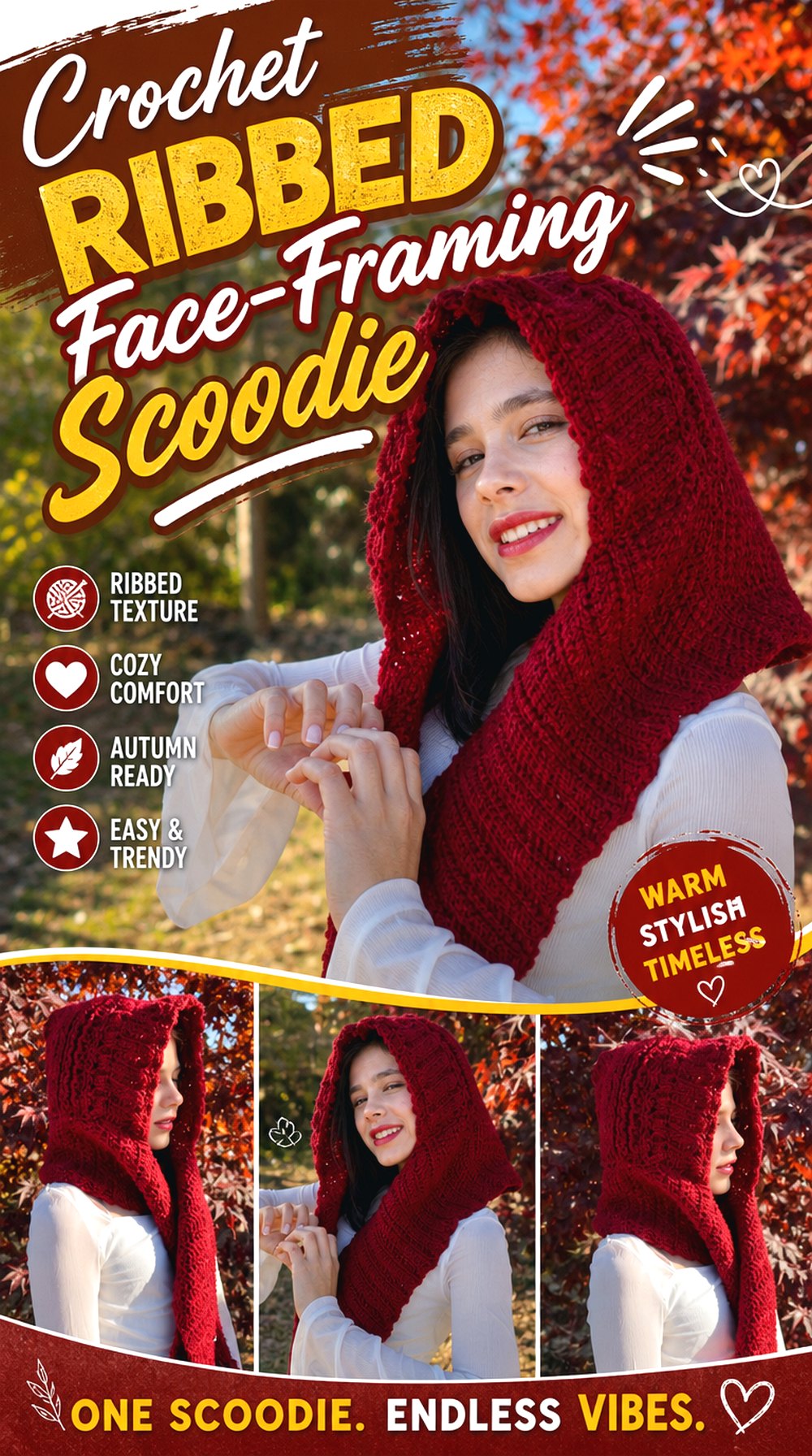
Faith.Wisest’s scoodie uses front- and back-post crochet to create a thick, ribbed panel around the hood and scarf. The creator specifically describes that fabric as substantial and warm, making texture and density central to the design.
Ribbing is a strong poetcore detail because it resembles classic sweater construction without needing decorative motifs. In a muted brown, charcoal, forest green, or cream, the ridges can give the accessory the feeling of an oversized inherited knit. This option sits between the very chunky project above and the more delicate triangular scarf: it has strong surface structure but still reads as a conventional wearable rather than an exaggerated statement piece.
Post-Stitch Ribs Give the Face Edge More Structure
Raised ribs visually strengthen the area around the hood opening. That can be useful if you want the hood to frame the face rather than collapse completely backward. When substituting yarn, make sure it has enough stitch definition for the ribs to remain visible. A very fuzzy yarn may soften the lines so much that the main design feature disappears.
Dense Fabric Needs Space to Fold at the Neck
A thick ribbed panel may feel comfortable when hanging straight yet become bulky once it is crossed under the chin or tucked into a coat. Check the scarf in the way you actually intend to wear it. If you prefer several wraps, a less bulky yarn may provide more flexibility; if you wear it mostly loose, greater density can reinforce the dramatic winter look.
Original Tutorial and Creator Credit
Creator: Faith.Wisest
Crochet Clean Line Everyday Hood Scarf
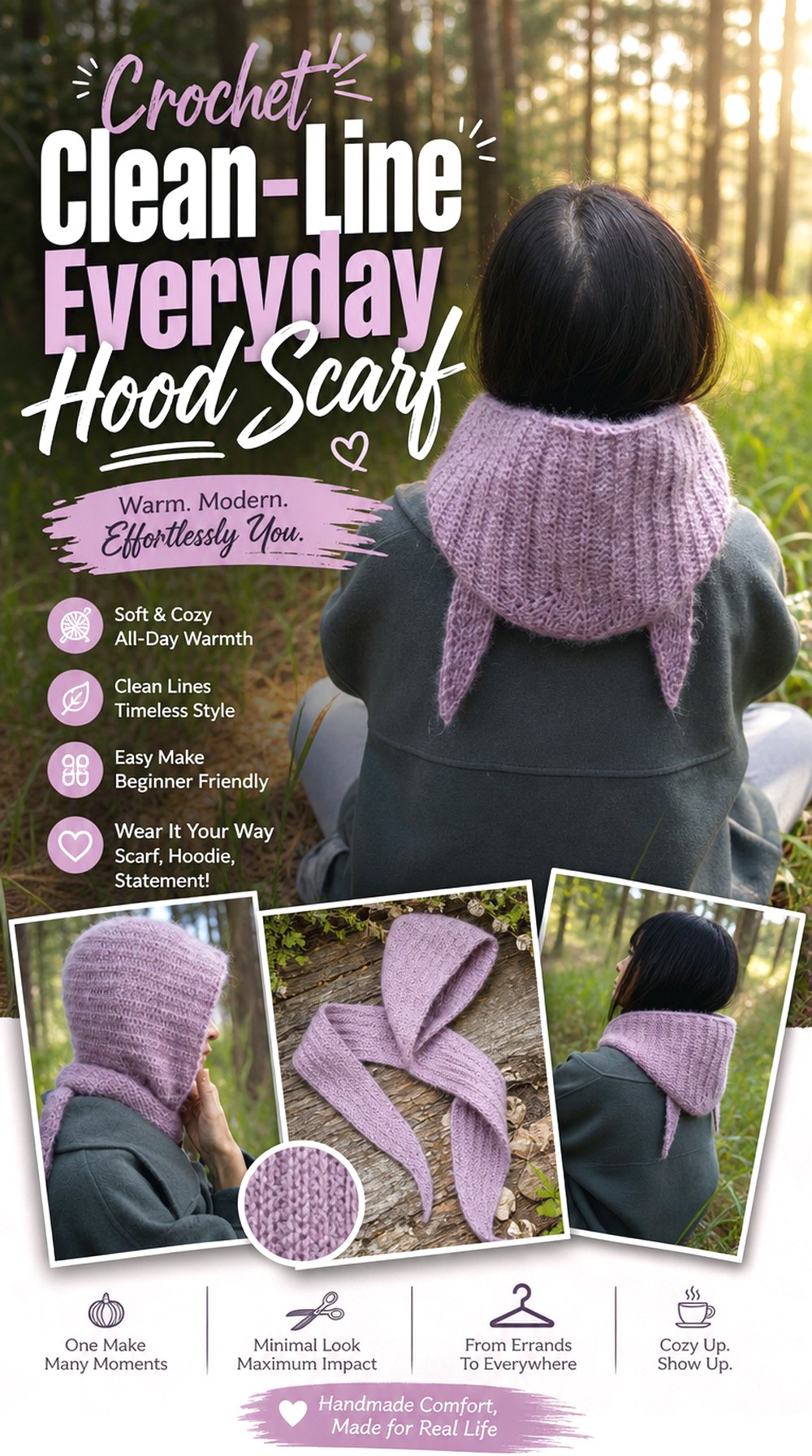
ABoC Studio’s hood scarf offers the straightforward end of the collection: a recognizable scarf-and-hood accessory without pockets, granny squares, ears, or other dominant extras. The tutorial is presented as a full hood-scarf project intended for winter wear.
That simplicity can be an advantage for poetcore because it leaves room for styling. A plain cream hood over a striped blouse and corduroy jacket can feel more convincing than a heavily decorated accessory worn with equally detailed clothes. This is a strong starting point if you want your yarn color, texture, or later finishing choices to establish the mood instead of committing to a highly specialized silhouette.
A Plain Silhouette Gives Styling More Control
When the construction is visually quiet, the hooded scarf can move between several outfits without becoming the central costume piece. Choose this direction if you already wear patterned skirts, blazers, cardigans, or vintage jewelry. The accessory can provide softness and layering while allowing those elements to remain visible.
Measure Over the Hair and Layers You Actually Wear
A hood that fits closely over flat hair may feel too small over curls, a bun, a headband, or another winter layer. When checking the developing hood, recreate your normal cold-weather setup rather than fitting it in isolation. The goal is enough room for comfortable movement without creating so much excess depth that the front edge continually falls over the eyes.
Original Tutorial and Creator Credit
Creator: ABoC Studio
Crochet Chunky Classic Scoodie
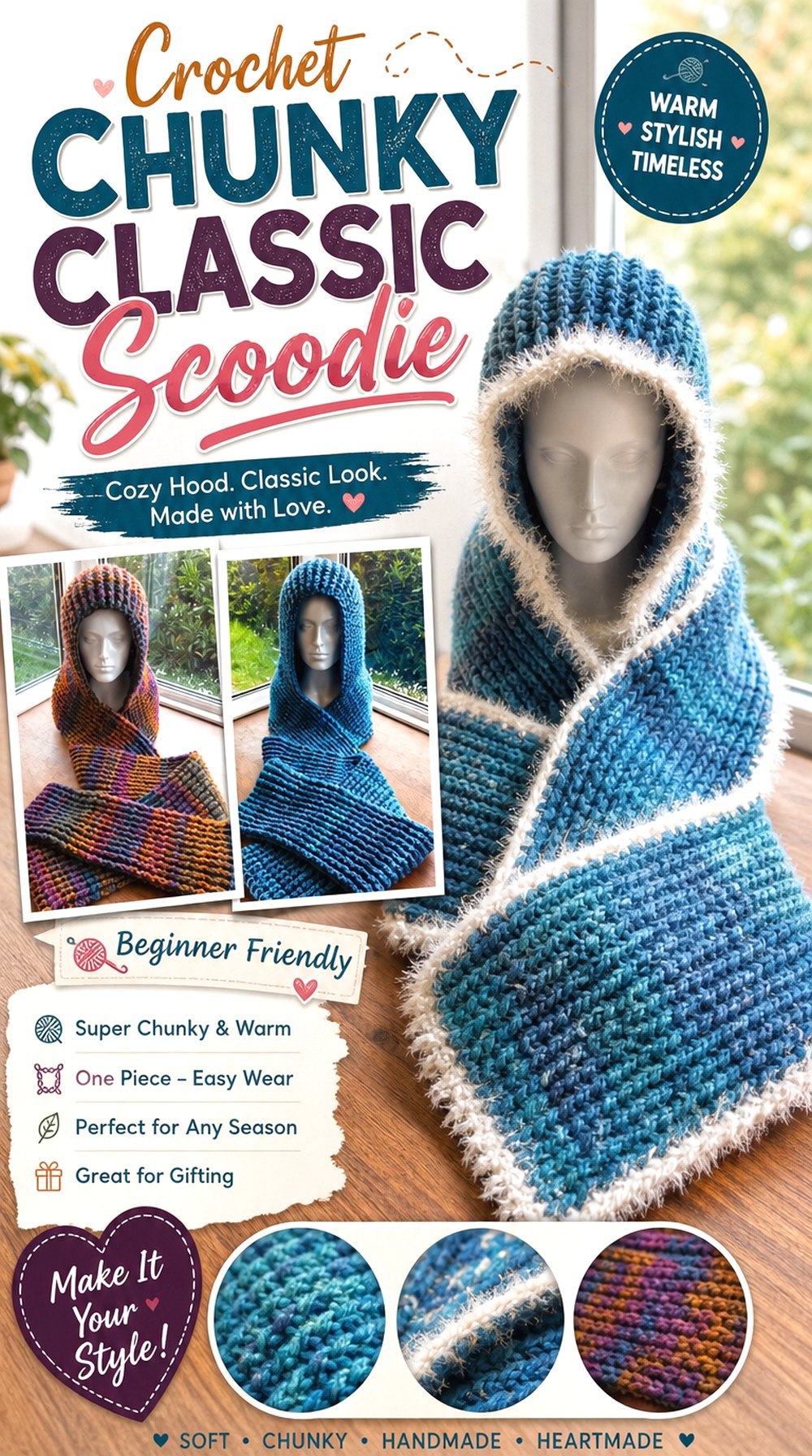
The chunky scoodie from 24 Carat Crochet is a useful reference for the older, classic version of the scarf-plus-hood concept. The creator also distinguishes this version from a separate no-sew construction and describes this one as being made in two pieces before assembly.
That separate-piece approach makes the joining stage more important than in continuous designs. For poetcore, it offers a simple canvas for thick heathered yarn, contrasting edging, or a slightly softened vintage palette. The resulting style is less graphic than granny squares and less fitted than a triangular hood, making it a good middle ground for an intentionally handmade winter accessory.
The Two-Piece Route Makes Seaming a Fit Decision
Treat assembly as more than a finishing chore. Before completing the join, align the scarf and hood and check whether the hood sits centrally and whether the scarf ends fall evenly. A small placement change can alter how the scarf frames the neck. If your yarn is very thick, choose a join that does not create an uncomfortable ridge against the back of the head.
Contrast Edging Can Define the Whole Shape
A narrow border in a related color can visually connect two separately made sections and give the scarf a finished, slightly vintage look. For poetcore, consider neighboring shades such as oatmeal with brown or moss with charcoal rather than a high-impact contrast. The border should clarify the outline without becoming the loudest element in the outfit.
Original Tutorial and Creator Credit
Creator: 24 Carat Crochet
Crochet Rounded Pocket Scarf Hood
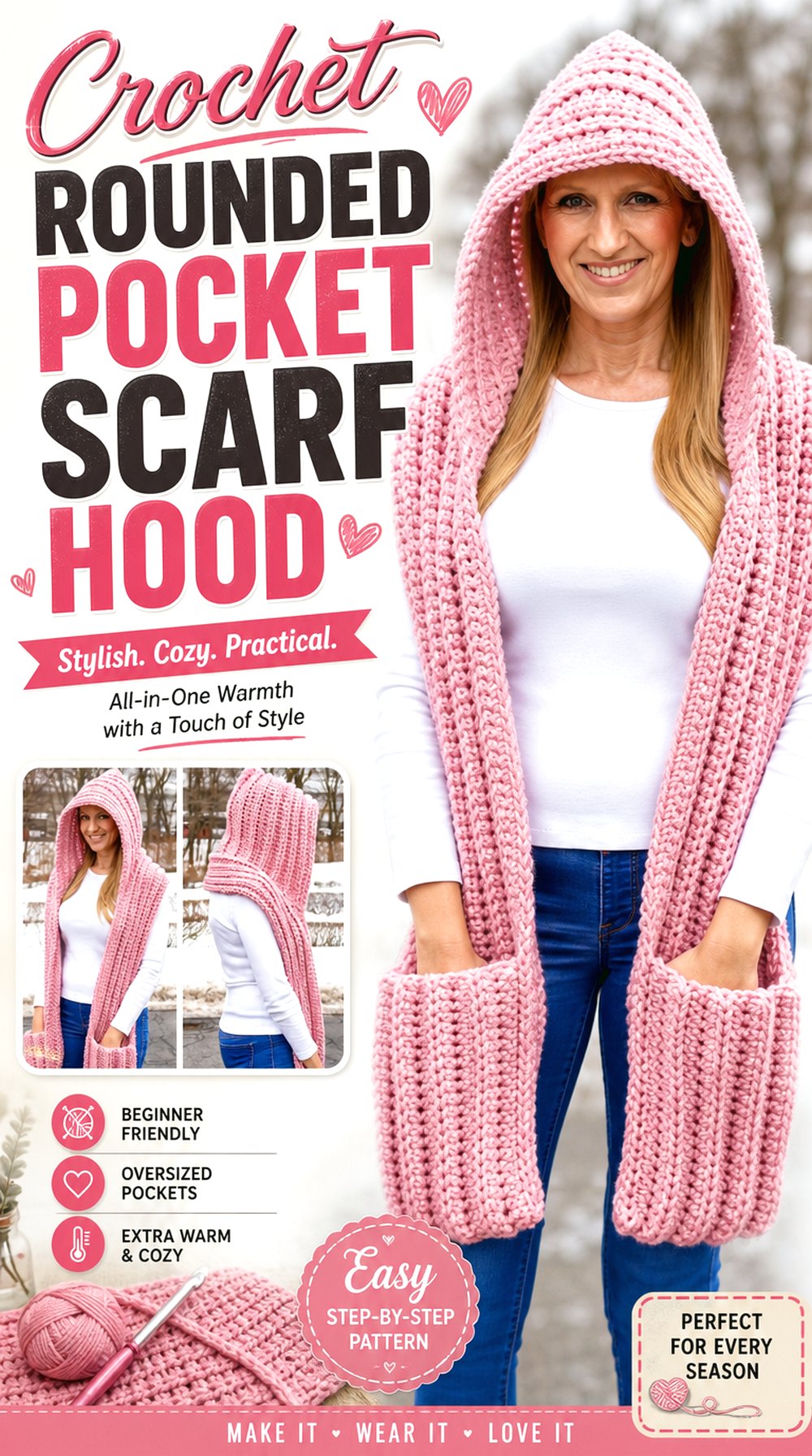
Naztazia combines three practical features: a hood, long scarf, and pockets. The tutorial uses a rounded hood shape rather than leaving a sharp point at the crown, and the creator describes half double crochet and super-bulky yarn as key parts of the project.
This produces a cozy, substantial accessory that can be styled toward rustic poetcore with earthy yarn or softened toward romantic poetcore in gray rose, faded plum, or cream. Compared with the TCDDIY pocket scarf earlier, this version is particularly useful if you are drawn to a fuller, rounded hood and thick winter fabric rather than a cleaner, more linear look.
Rounded Hood Plus Pockets Creates a Heavier Visual Base
The combination of a substantial crown and pocketed ends distributes visual weight across the entire accessory. That works well over a plain coat or sweater but can compete with very detailed clothing. If the scarf is the major handmade feature of the outfit, let its shape and texture lead rather than adding several unrelated embellishments.
Pocket Weight Can Pull the Scarf Ends Downward
Even empty pockets add fabric to the scarf tips. Check how the finished ends hang before deciding to add fringe, tassels, or large buttons in the same area. Extra decoration can make the lower scarf look disproportionately heavy and may encourage the scarf to shift as you walk.
Keep the Hood Opening Soft Around the Face
A rounded crown does not automatically guarantee a soft front edge. The yarn, border tension, and fabric thickness determine how the opening behaves. If your edge feels rigid, compare your fabric with the creator’s shown result before continuing decorative finishing. A poetcore hood generally benefits from a relaxed frame rather than a stiff helmet-like opening.
Original Tutorial and Creator Credit
Creator: naztazia
Crochet Trinity Stitch Rounded Hood Scarf
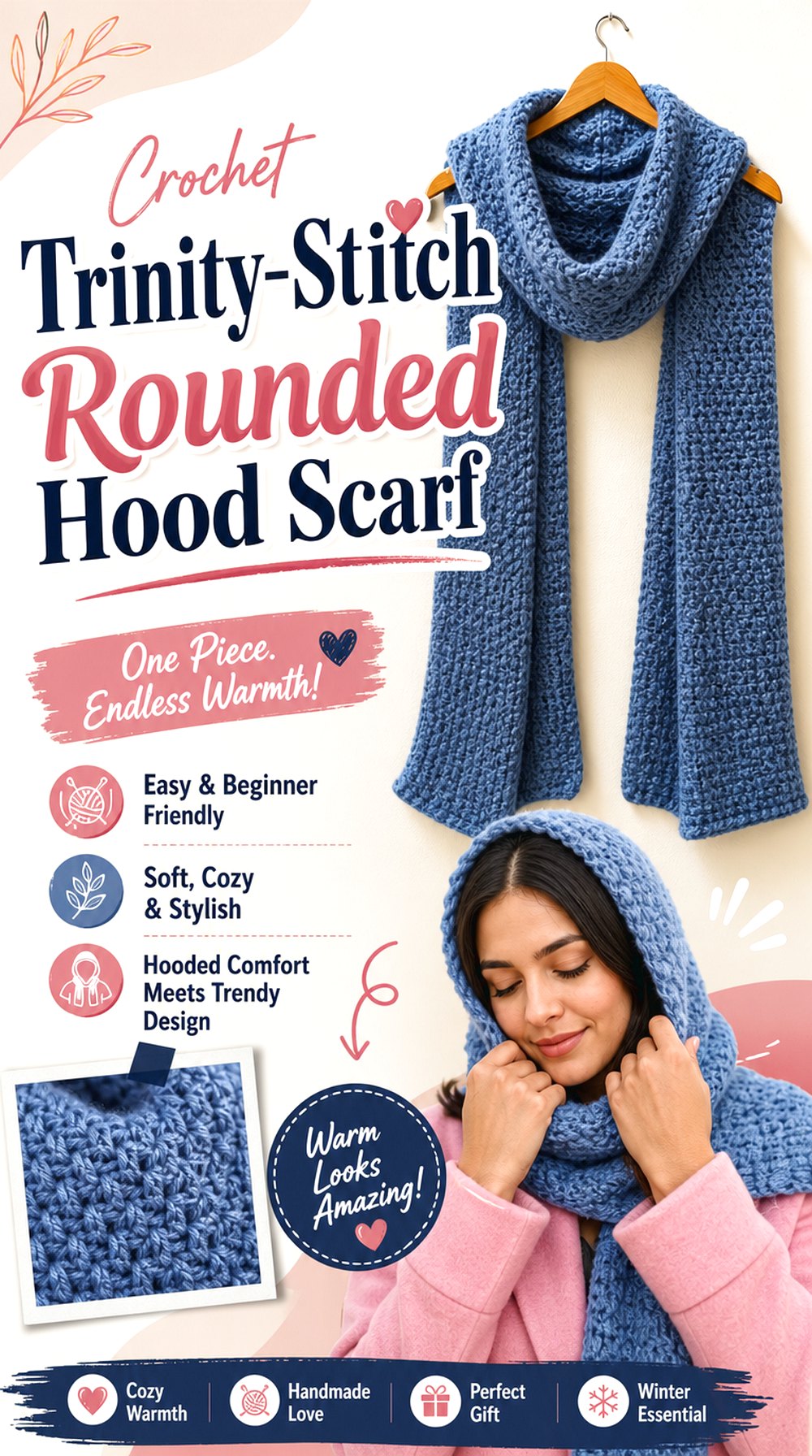
JKD Handmade’s tutorial combines a rounded hood with trinity stitch and explains that the project is worked according to body measurements rather than relying only on a fixed generic size. The creator also specifies soft yarn as preferable for the intended scarf-and-hood fabric.
That makes this option especially relevant if you like surface detail but want something subtler than granny-square patchwork. Trinity stitch creates an all-over texture that can resemble small clustered marks across the fabric. In cream, muted gray, faded burgundy, or book-brown, the stitch pattern can provide enough visual interest for a poetcore piece without additional motifs.
Trinity Stitch Rewards Clear Yarn Definition
A strongly textured stitch needs yarn that allows individual clusters to remain visible. Before choosing a very fuzzy or highly variegated fiber, make a sample large enough to judge the overall surface. If the texture disappears from a few feet away, you may be giving up the main reason to choose this tutorial over a plainer hooded scarf.
Body-Based Measuring Makes Substitution More Practical
Because the tutorial works with body measurements, it offers a useful mindset for anyone whose yarn or tension differs from the sample. Still, changing yarn changes more than dimensions: it affects drape, thickness, and how deeply the hood folds. Use measurement checkpoints together with a fabric check rather than assuming that reaching the right width automatically creates the right feel.
Rounded Shaping Keeps the Texture From Looking Too Severe
Dense all-over texture can appear heavy when paired with a sharply pointed crown. The rounded hood softens that effect and keeps the accessory closer to an everyday winter silhouette. This balance suits poetcore particularly well when you want visible craft detail without the fairytale emphasis of a long triangular point.
Original Tutorial and Creator Credit
Creator: JKD Handmade
Crochet Ridged Woodland Pocket Hooded Scarf
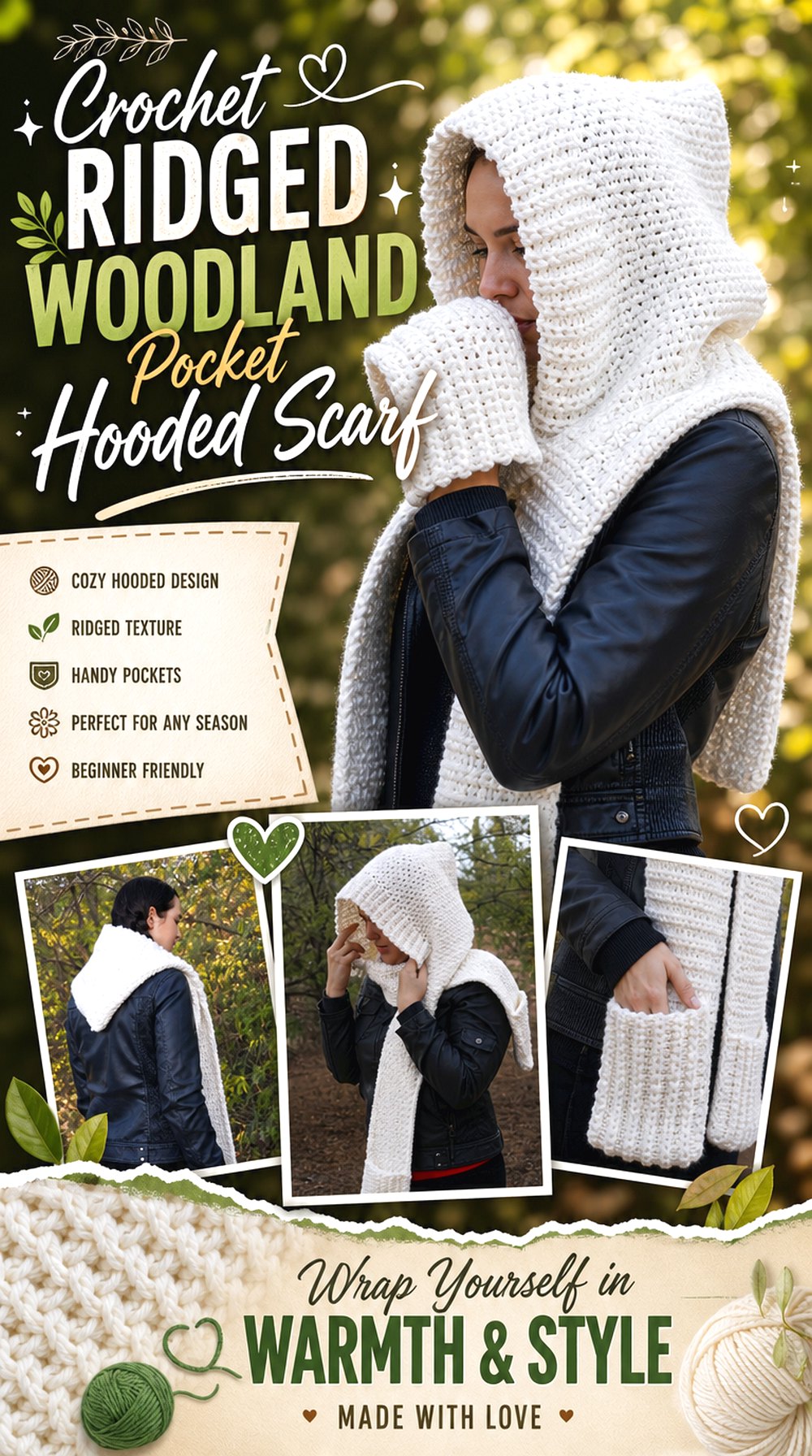
Winding Road Crochet’s pocketed hooded scarf uses simple stitches and back-loop work to create a strongly ridged fabric. The tutorial includes a hood, scarf, and pockets, giving the finished project a practical woodland character without needing applied motifs.
This is an especially natural match for earthy poetcore. Olive, bark brown, cream, charcoal, or muted rust can make the ridged fabric resemble an old handmade walking accessory—the kind of piece that works with boots, a long coat, corduroy, and a worn satchel. Its texture is more linear than the clustered Arco or trinity-stitch scarves, so it provides another way to create visual interest while keeping the overall silhouette familiar.
Back-Loop Ridges Create a Worn-In Textile Feel
Repeated ridges give even a solid color enough movement to avoid looking flat. That means you can use a very restrained palette without losing surface interest. If your poetcore wardrobe already includes patterns, choose a quieter yarn here and allow the raised lines to provide contrast through shadow rather than color.
Pocketed Ends Need Even Weight
Lay both scarf ends together before final finishing and compare their length, pocket placement, and overall feel. Uneven ends become more noticeable once hands are placed inside. If you add decorative details, repeat their approximate weight on both sides or keep them light enough that they do not affect how the hood centers on the head.
A Neutral Palette Lets the Construction Speak First
This design does not need obvious woodland appliqués to feel outdoorsy or literary. Moss, oatmeal, weathered brown, or charcoal can create the mood through association and texture. A vintage-style button or tiny stitched accent could be added later, but the ridges and pockets already give the piece a recognizable identity.
Which Poetcore Hooded Scarf Shape Fits Your Wardrobe?
| If You Prefer… | Look First At… | Main Trade-Off |
|---|---|---|
| A romantic, storybook silhouette | Triangular Literary Hood Scarf | The pointed crown is more noticeable |
| Visible handmade patchwork | Granny-Square Patchwork Hooded Scarf | More joins and motif planning |
| A softer modern hood | Rounded Striped or Trinity-Stitch Hood Scarf | Less dramatic from the back |
| No loose scarf ends | Infinity-Wrap Hooded Scarf | More concentrated neck volume |
| Practical hand pockets | Book-Walk, Rounded Pocket, or Ridged Woodland styles | Pocket weight affects scarf balance |
| Strong winter texture | Ribbed, Arco, or Super-Bulky styles | Dense fabric can become bulky when wrapped |
| A flexible base for styling | Clean-Line Everyday Hood Scarf | The yarn and outfit need to supply more character |
Conclusion
The strongest crochet poetcore hooded scarf depends on which part of the aesthetic you want to emphasize. Choose the triangular hood for a more Romantic, storybook outline; granny squares for visible handmade character; textured one-piece or trinity-stitch designs for quieter vintage depth; and pocketed versions when function matters as much as atmosphere. Rounded hoods and simple scarf constructions are easier to integrate into an everyday wardrobe, while infinity and super-bulky versions make a stronger winter statement.
Whichever direction you choose, let shape, texture, and a restrained palette establish the literary mood before adding decoration. Use the original tutorials near each idea for the creators’ exact construction details and project-specific instructions.
Frequently Asked Questions
What colors work best for a crochet poetcore hooded scarf?
Poetcore is flexible, but muted and slightly aged-looking colors make the aesthetic easier to recognize without turning the scarf into costume. Cream, oatmeal, warm brown, charcoal, moss, burgundy, dusty rose, faded navy, and muted mustard can all work. Consider the texture too: a highly detailed stitch may read better in one solid or gently heathered shade than in a busy multicolor yarn.
Is a pointed or rounded crochet hood better for poetcore?
Neither is universally better. A pointed hood creates the stronger Romantic or storybook silhouette, so it suits outfits where the hood is meant to be a focal point. Rounded hoods are easier to combine with contemporary coats and cardigans because they resemble familiar winter hoods. If you are unsure, think about whether you want the scarf to feel theatrical and expressive or quietly literary.
How can I make a hooded scarf look poetcore without copying a vintage garment?
Focus on broad styling elements rather than reproducing a historical piece. Choose tactile yarn, muted color, relaxed drape, and one restrained finishing detail such as a narrow contrast border or subtle fringe. Pairing the scarf with modern clothing—corduroy trousers, a cardigan, long skirt, or ordinary coat—also keeps the result wearable instead of making it look like period costume.
Should I use chunky yarn for a crochet poetcore hooded scarf?
Chunky yarn works well when you want a bold winter hood and obvious handmade texture, but it is not required. Thick yarn creates more neck bulk and a more structured scarf, while lighter fabric can drape better and layer more easily under jackets. Compare the tutorial’s original fabric with how you intend to wear the piece before changing yarn weight significantly.
How do I know if a crochet hood will be deep enough?
Check the developing hood on the actual wearer whenever the tutorial permits a fit check. Account for hair, hats, and the clothing that will sit underneath the scarf. The hood should cover the crown without constantly pulling backward, but excessive depth can let the front edge fall over the eyes. When a creator supplies measurements, compare those with your intended fit rather than assuming one universal hood size.
Can I add granny squares or appliqués to any hooded scarf?
You can adapt many designs, but added crochet changes weight, thickness, and flexibility. A granny-square panel needs compatible dimensions and joins, while appliqués can make one area heavier or stiffer. Pin decorative elements in place before attaching them permanently, especially near the face, hood crown, scarf ends, or pockets. The underlying scarf should still hang and fold comfortably after the decoration is added.