Cream gives a crochet polo sweater a light base that makes the collar, placket, cuffs, stitch texture, and shoulder shape easier to emphasize with color. It can cover most of the garment for a soft neutral look, or it can act as the separating shade between darker stripes, panels, and granny-stitch sections.

The main decision is how much contrast you want around the polo neckline. Navy, black, forest green, charcoal, and cranberry create obvious definition against cream, while camel, taupe, blush, and dusty blue produce gentler transitions. The tutorials credited below support the garment and collar constructions; the cream-led palettes are independent color adaptations rather than claims about the colors used by the creators.
Quick List
- Cream And Navy Classic Crochet Polo Sweater
- Cream And Camel Relaxed Crochet Polo Sweater
- Cream And Sage Everyday Crochet Polo Sweater
- Cream And Chocolate Fold Over Collar Crochet Polo Sweater
- Cream And Dusty Blue Windowpane Crochet Polo Sweater
- Cream And Burgundy All Season Crochet Polo Sweater
- Cream And Blush Cropped Crochet Polo Sweater
- Cream And Terracotta Granny Stitch Crochet Polo Sweater
- Cream And Taupe Soft Collar Crochet Polo Sweater
- Cream And Forest Green Unisex Crochet Polo Sweater
- Cream And Charcoal Longline Crochet Polo Sweater
- Cream And Denim Blue Classic Crochet Polo Sweater
- Cream And Mustard Minimal Crochet Polo Sweater
- Cream And Cocoa Mesh Crochet Polo Sweater
- Cream And Cranberry Ribbed Collar Crochet Polo Sweater
- Cream And Olive Drop Shoulder Crochet Polo Sweater
Decide Whether Cream Should Lead the Polo Body or the Collar
A cream polo sweater does not require every section to be cream. For the clearest cream-led result, give the neutral the largest uninterrupted area—usually the front and back body panels—then place a secondary color around the collar, placket, cuffs, sleeve edges, or hem.
The polo collar deserves extra attention because it occupies a relatively small area while strongly defining the garment. A dark collar against a cream body can become the first feature the eye notices. If you want a quieter sweater, keep the collar cream and introduce the secondary color lower on the garment through stripes or edging instead.
Use Cream Contrast to Protect Crochet Texture
Cream usually provides good visibility for ribbing, granny clusters, mesh openings, and raised texture because shadows are easier to notice across a light surface. Adding very frequent high-contrast stripes can interrupt that texture, however.
Before spreading a dark accent across the whole sweater, decide what should carry the design: stitch texture, polo shaping, or colorwork. If the collar and crochet surface already have plenty of detail, using the second color in just two or three repeated locations can give the sweater definition without making the fabric visually crowded.
1. Cream And Navy Classic Crochet Polo Sweater

Cream can cover most of a classic short-sleeve polo while navy defines the areas that make the garment recognizable: the collar, front opening, sleeve edges, or hem. The strong light-dark contrast gives small navy details considerable visual weight, so a relatively limited amount is enough.
Keep Cream Dominant Across the Classic Polo Body
Use cream continuously across the front and back when you want the sweater to remain clearly neutral. Large uninterrupted cream panels also allow the crochet texture to stay visible instead of being broken into many contrasting bands.
If navy is added at both the collar and sleeves, check the garment before adding another navy hem treatment. Those three framed areas may already provide enough repetition.
Use Cream and Navy to Clarify the Polo Collar
A navy collar against cream creates a clear neckline outline. This works particularly well when the rest of the sweater has simple color placement because the collar becomes an intentional focal point rather than one competing detail among many.
If a full navy collar feels too dark, keep the main collar cream and use navy only along an outer edge or placket.
Repeat Cream Between Navy Polo Details
Avoid allowing separate navy elements to merge into one dark block around the upper body. Cream between the collar, shoulder, and sleeve accents keeps those features visually distinct.
That separation is particularly useful on a short-sleeve polo, where the neckline and sleeve edges sit fairly close together.
Creator Credit: WOWder
2. Cream And Camel Relaxed Crochet Polo Sweater

Cream and camel create a lower-contrast polo than cream and navy. Let cream occupy most of a relaxed body, then use camel around the collar, cuffs, lower edge, or a few broad color sections. The combination gives the garment variation without making every finishing detail sharply outlined.
Let Cream Control the Relaxed Polo Silhouette
A roomy polo already contains extra visual volume, so cream works well across its broadest sections. Keeping the main panels light prevents the secondary shade from dividing an oversized shape into too many competing areas.
Camel can then mark the garment edges rather than becoming another equally large body color.
Place Camel Beside Cream at the Collar and Cuffs
Camel provides enough distinction to make a cream collar edge or cuff visible while remaining softer than very dark brown. Repeat it in related finishing areas so the color does not look isolated.
If the collar already uses a substantial amount of camel, a narrow cuff treatment may be enough to balance it.
Preserve Cream When Substituting the Camel Accent
If camel is unavailable, look for another warm medium neutral that remains clearly darker than cream. Avoid replacing it with a beige so pale that the collar and body merge unless a nearly monochromatic finish is intentional.
Creator Credit: FTK Crochet
3. Cream And Sage Everyday Crochet Polo Sweater
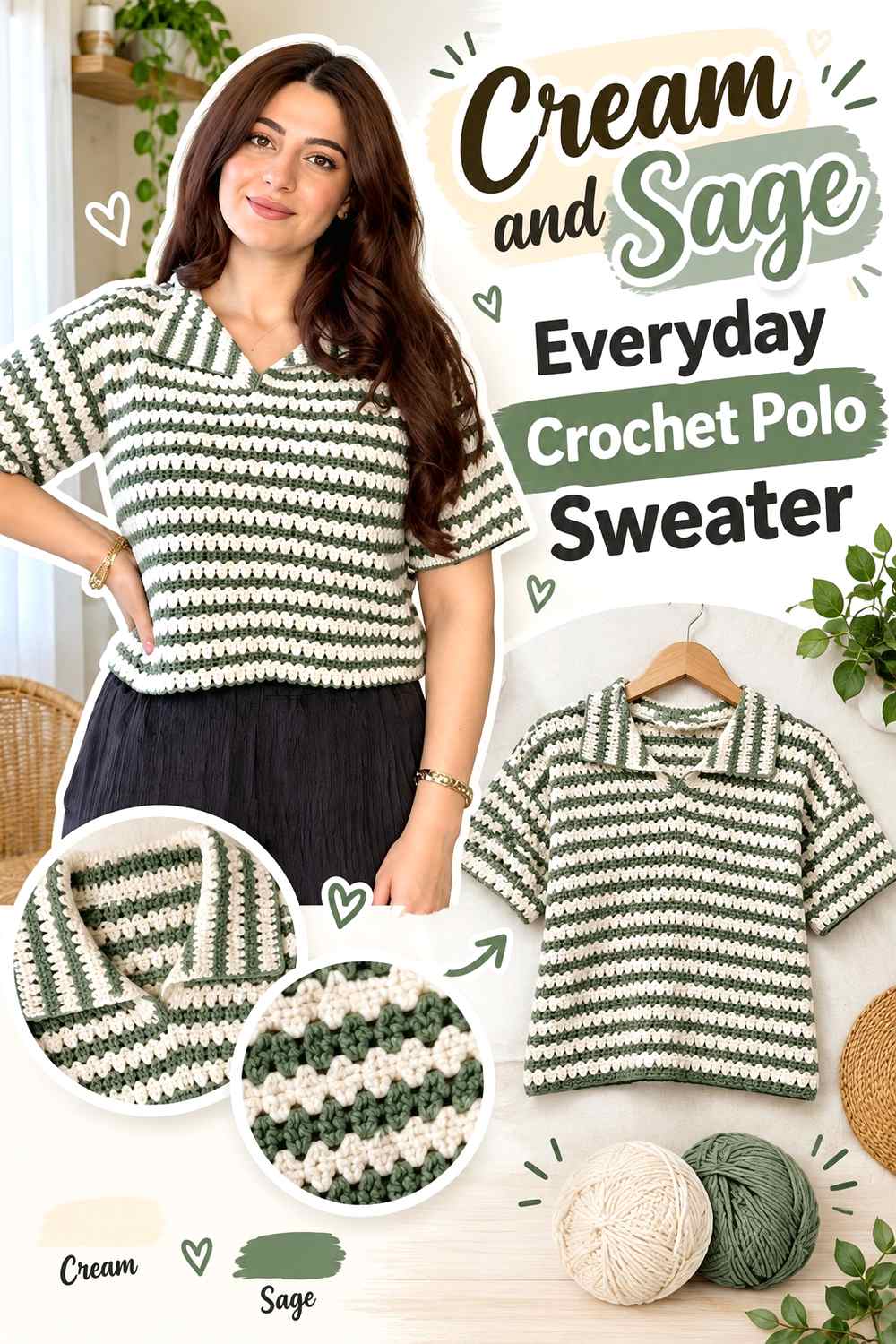
Sage introduces color without creating the visual heaviness of a dark green. On an everyday polo, cream can lead the torso while sage appears around the collar, sleeve bands, or a controlled horizontal section.
Keep Cream Across the Largest Everyday Polo Panels
Cream works as a calm background for a straightforward polo silhouette. If the stitch pattern is fairly simple, the light surface also allows small changes in crochet texture to remain visible.
Use sage strategically rather than scattering it through many unrelated sections.
Let Sage Frame Cream Around the Polo Neckline
A sage collar or placket gives the cream body a noticeable but restrained boundary. Because sage is usually softer than forest green, it can work well when you want the collar to be visible without becoming the darkest part of the outfit.
Repeat a small amount of sage lower on the garment if the upper accent feels visually disconnected.
Check Cream and Sage Before Making Narrow Stripes
Some pale sage yarns can sit surprisingly close to cream in value. If the difference is subtle, very narrow stripes may disappear from a distance.
Use broader sage areas when you want the second color to be clearly visible, or deliberately keep the values close for a softer tonal result.
Creator Credit: İlmekle Nimet
4. Cream And Chocolate Fold Over Collar Crochet Polo Sweater

A substantial fold-over collar occupies more visual area than a typical narrow polo collar. Cream can keep the long-sleeve sweater body light while chocolate gives that larger neckline a strong frame.
Balance a Chocolate Collar With Enough Cream Body
Because the collar is broad, chocolate can become visually dominant even when it uses far less yarn than cream. Keep the torso and most of the sleeves cream if you want the finished garment to remain a cream sweater.
Evaluate the sweater while the collar is folded into its worn position, not only while it lies flat.
Repeat Cream Around Chocolate Without Creating a Dark Upper Block
If chocolate is used for the entire collar, consider keeping the shoulders and upper sleeves cream. That light space prevents the collar from blending into additional dark sections and makes its shape easier to read.
A small chocolate cuff repeat can connect the sleeves to the neckline without extending brown across the whole upper body.
Use Cream to Show Long-Sleeve Crochet Texture
Long sleeves provide additional surface area where stitch texture can be visible. Leaving them mostly cream lets shadows and directional stitches supply detail without requiring extra color changes.
If you add chocolate cuffs, keep the transition deliberate so the dark edge looks related to the substantial collar.
Creator Credit: TCDDIY
5. Cream And Dusty Blue Windowpane Crochet Polo Sweater
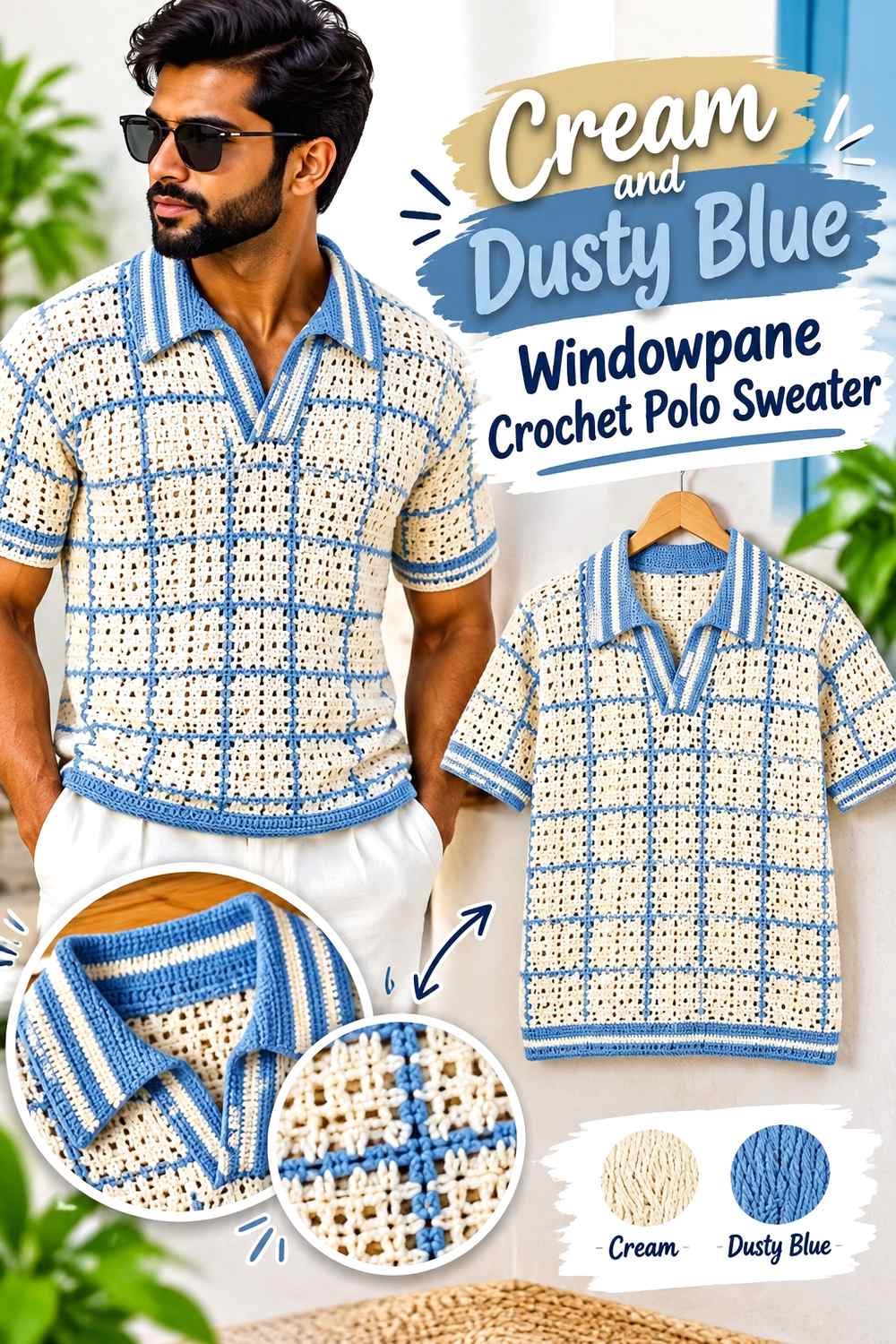
Windowpane crochet already creates a visible grid through open spaces. Cream keeps that geometry clear, while dusty blue can highlight selected borders or structural areas without overwhelming the openwork.
Keep Cream Across the Windowpane Crochet Body
A cream windowpane body lets the repeated openings become the main surface pattern. Filling the garment with frequent color changes could compete with the existing grid.
Use dusty blue where it helps organize the sweater rather than inside every repeat.
Add Dusty Blue Around a Cream Windowpane Collar
A dusty blue collar can visually separate the more solid neckline from the open cream body. This distinction helps the collar look intentional instead of disappearing into the repeated windowpane texture.
Repeating blue at the sleeve edge can connect the collar to the rest of the shirt.
Test the Underlayer Behind Cream Windowpane Crochet
The clothing worn underneath becomes part of an open cream fabric. A dark underlayer makes every opening more obvious, while another pale layer produces a quieter surface.
Consider this before increasing the amount of dusty blue; the underlayer may already provide substantial contrast.
Creator Credit: Ascarcrochets
6. Cream And Burgundy All Season Crochet Polo Sweater

Burgundy gives cream a deep, warm-leaning contrast that can work on a more substantial polo sweater. Let cream cover most of the body and use burgundy in deliberate areas such as the collar, cuffs, hem, or a limited stripe.
Keep Cream Dominant When Burgundy Has Strong Visual Weight
A relatively small burgundy section can command attention beside cream. Start with fewer accent areas and evaluate the whole sweater before repeating burgundy around every edge.
This helps the garment stay light overall while still gaining clear definition.
Use Burgundy to Outline a Cream Polo Collar
Burgundy works especially well where a strong neckline frame is wanted. A burgundy collar over a cream chest creates an obvious break without requiring complicated colorwork.
If the collar feels too heavy, return the collar body to cream and reserve burgundy for its outer edge.
Repeat Cream Between Burgundy Cuffs and Hem
If burgundy appears at both cuffs and the lower edge, preserve enough cream sleeve and torso space between those accents. The light areas keep each dark section separate and protect the cream-led identity of the sweater.
Creator Credit: HookedByJessica
7. Cream And Blush Cropped Crochet Polo Sweater

A cropped polo gives the collar a larger visual role because the body is shorter. Cream can remain the main color while blush softens selected edges or introduces a gentle stripe without making the upper section look crowded.
Give Cream Enough Space on the Shorter Polo Body
Because there is less torso length available, too many color bands can quickly fragment the sweater. Use broad cream sections and fewer blush interruptions to maintain a clear visual hierarchy.
Check the placement of the lowest blush section only after deciding where the finished hem should sit.
Use Blush Around Cream Without Overpowering the Cropped Collar
Blush can work at the collar, sleeve edges, or hem, but using it equally in all three locations may make the accent stronger than intended on a small garment.
Select one primary blush area and one smaller repeat instead.
Keep Cream and Blush Distinct Enough to Read
For a clearly two-tone polo, choose a blush that remains visibly darker or more saturated than the cream. Very pale pink and warm cream may merge into a nearly monochromatic surface.
That can be attractive, but it produces a different result from an intentionally defined blush trim.
Creator Credit: CJ Crochet
8. Cream And Terracotta Granny Stitch Crochet Polo Sweater
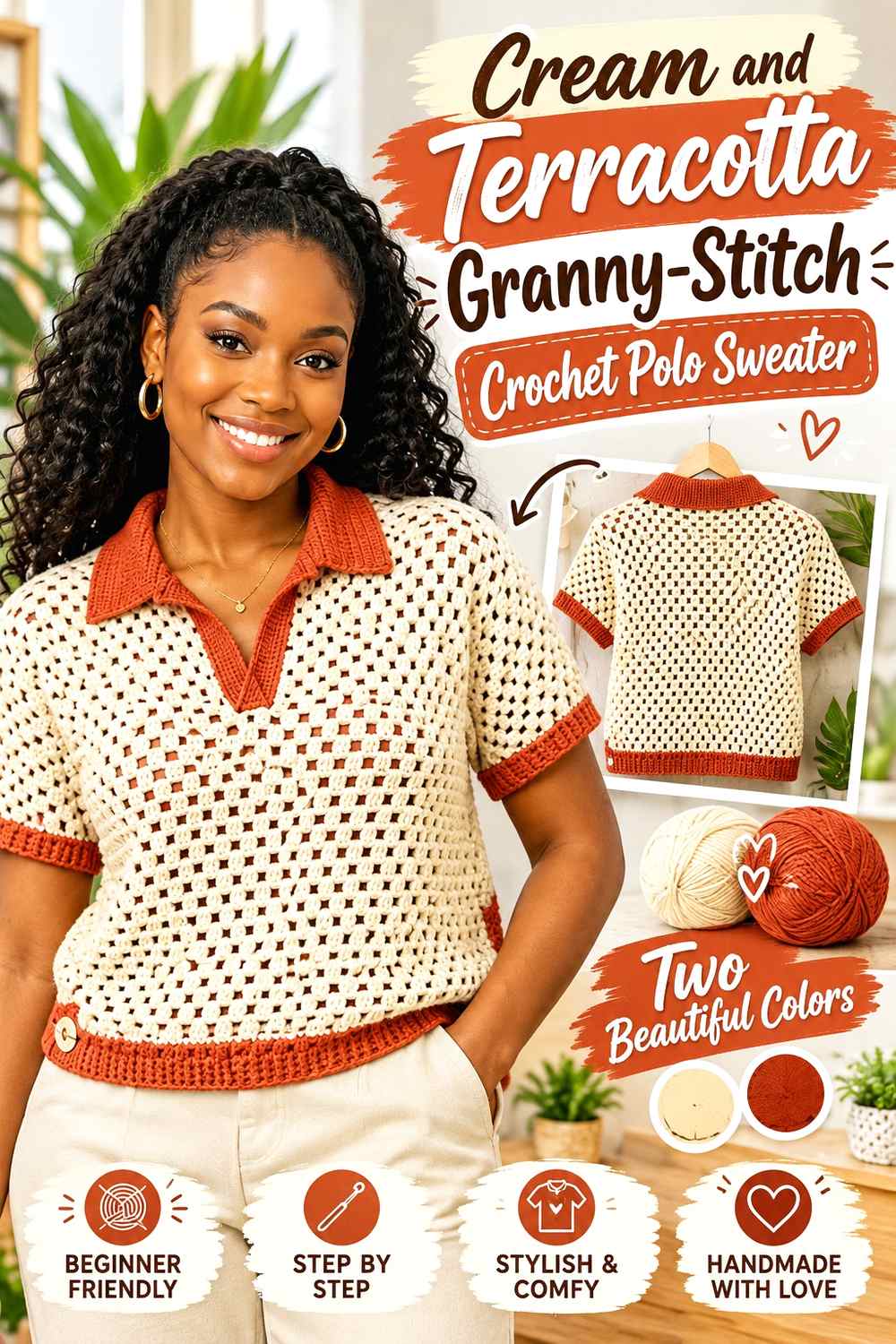
Granny stitch supplies its own repeating rhythm, making this polo a good place for controlled cream-and-terracotta color changes. Cream can separate the warmer bands and keep the clustered fabric from becoming visually dense.
Use Cream to Break Up Terracotta Granny-Stitch Sections
Instead of alternating equal stripes throughout the whole body, consider larger cream areas interrupted by a few terracotta bands. The variation allows the granny texture to remain readable while giving terracotta enough space to register.
Plan the uppermost stripe in relation to the collar rather than ending the sequence randomly at the neckline.
Keep the Cream Polo Collar Quieter Than the Granny Body
When the body already contains striped granny clusters, a cream collar can provide a visual resting point. This lets the shirt retain its polo shape without adding another strong terracotta feature directly around the face.
A small terracotta outer edge can tie the collar back into the body if needed.
Repeat Cream Consistently Around Terracotta Openwork
Cream can also be used at sleeve edges and the lower hem to frame terracotta sections. Keep those repeats consistent enough that they look planned, especially where granny clusters meet more solid finishing stitches.
Creator Credit: Creative Hands by SHAY
9. Cream And Taupe Soft Collar Crochet Polo Sweater

Cream and taupe create a restrained neutral palette that suits a softer polo collar. The low contrast shifts attention toward drape, neckline shape, and stitch texture rather than bold color blocking.
Let Cream Lead the Soft Polo Body
Use cream across the majority of the torso when you want the garment to remain light and versatile. Taupe can appear around the collar or lower finishing without creating a hard visual boundary.
This works particularly well when the crochet itself has enough texture to keep the neutral surface interesting.
Keep Taupe Visible Against the Cream Collar Area
Not every taupe produces enough separation from cream to function as clear trim. Compare the colors side by side before assigning taupe to a narrow placket or collar edge.
If the values are very close, make the taupe area broader or embrace the palette as intentionally tonal.
Repeat Cream Around Taupe Without Adding a Third Neutral
Cream and taupe already create multiple levels of neutral contrast. Adding beige, oatmeal, or gray may make the palette harder to read without adding much useful distinction.
If more detail is needed, change the placement or width of taupe rather than automatically introducing another color.
Creator Credit: Ler Crochet
10. Cream And Forest Green Unisex Crochet Polo Sweater
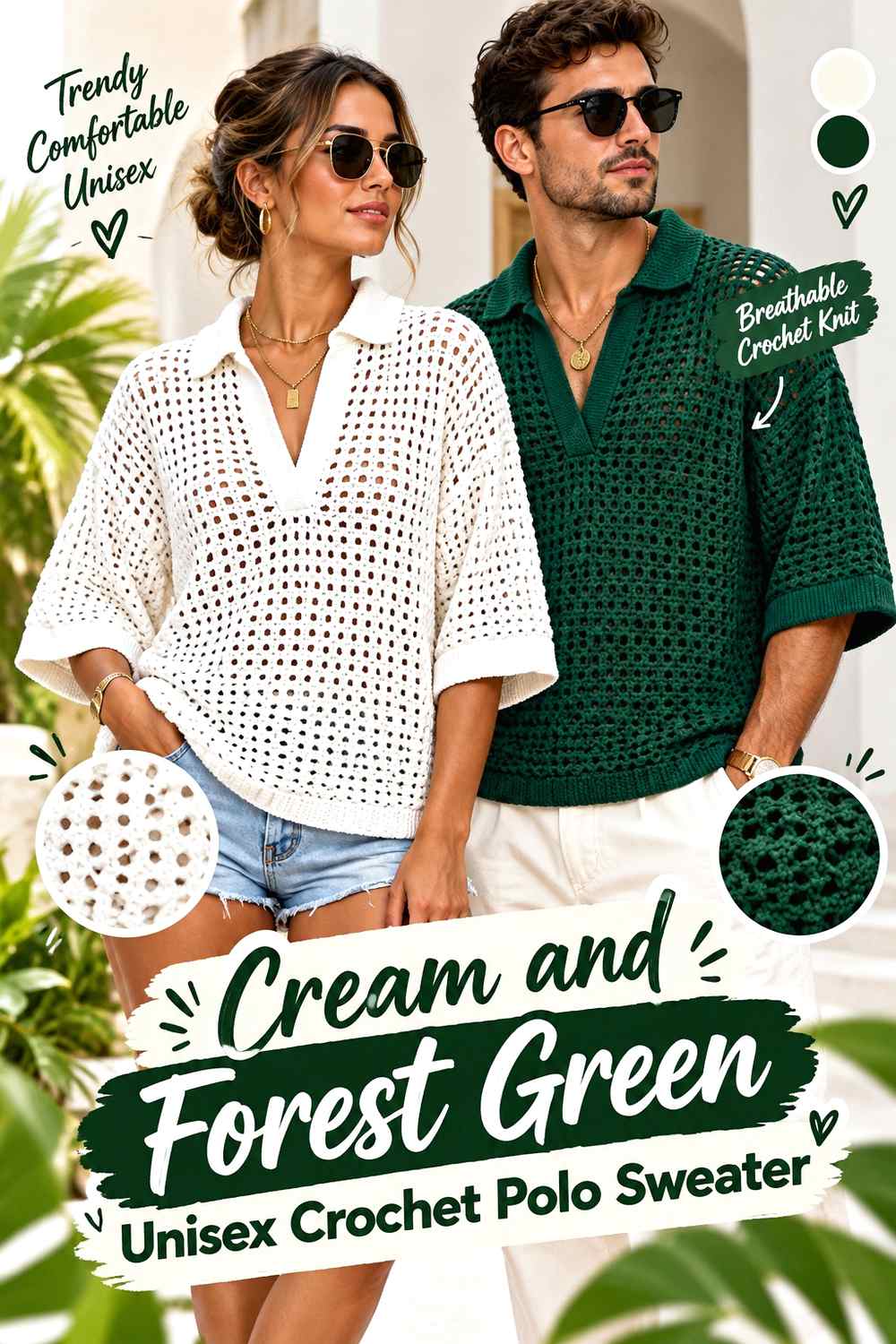
Forest green gives a straightforward cream polo a strong, traditional-looking contrast. On a clean unisex shape, use green around selected structural areas so the color supports the silhouette rather than becoming complicated colorwork.
Preserve Large Cream Panels on the Unisex Polo
A straight sweater body provides plenty of space for cream. Keeping that area uninterrupted allows the garment proportions and crochet texture to remain the main focus.
Forest green can then define the neckline or sleeve boundaries without splitting the torso into multiple blocks.
Frame the Cream Polo Neckline With Forest Green
A dark green collar creates a clear upper-body anchor. Because the contrast is strong, it does not require a wide border to remain visible against cream.
If a full green collar feels too dominant, use cream for the collar itself and forest green along the placket.
Balance Cream and Forest Green Across Both Sleeves
If forest green is repeated at the sleeves, make the placement deliberately consistent. Sleeve accents are viewed side by side and small differences can become more noticeable than color variations elsewhere on a relaxed garment.
Creator Credit: Honey Loop Stitches
11. Cream And Charcoal Longline Crochet Polo Sweater
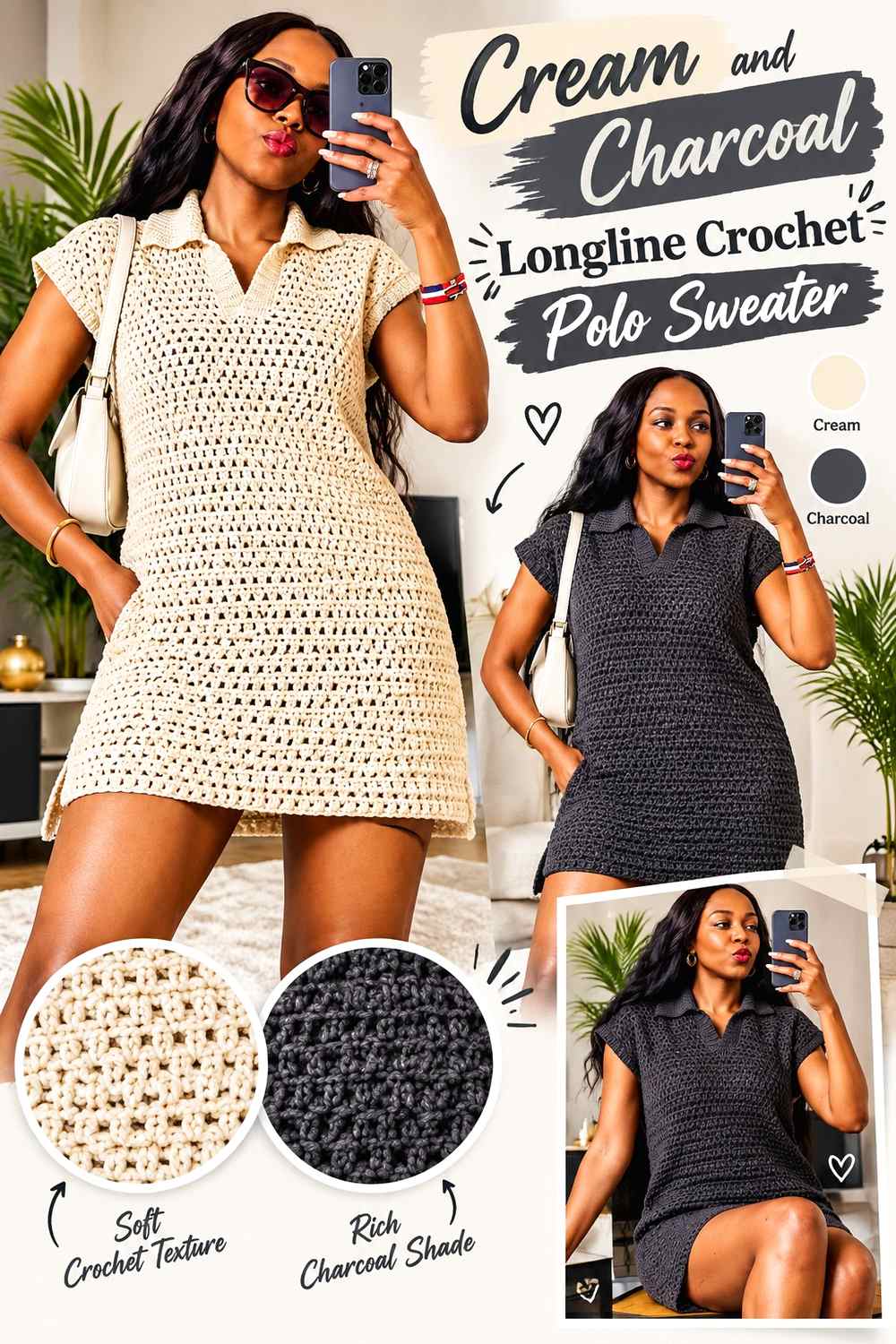
A longer polo gives cream more surface area and makes dark trim feel proportionally smaller. Charcoal can therefore be used around the neckline, cuffs, or hem without dominating as quickly as it might on a cropped shirt.
Use Cream to Keep a Longline Polo Visually Light
An extended torso in a dark color can appear visually heavy. Cream keeps the larger garment surface lighter and allows the long silhouette to remain easy to read.
Charcoal is then useful for definition rather than mass.
Anchor the Long Cream Polo With a Charcoal Hem
A charcoal lower edge can visually finish an extended cream body. Before making it very wide, however, view the garment vertically; a large dark band at the bottom may pull attention away from the polo neckline.
Repeat a smaller amount of charcoal near the collar to connect the two ends.
Keep Cream Between Charcoal Collar and Cuffs
Long sleeves and a long body provide plenty of cream separation between dark finishing areas. Take advantage of that space rather than adding extra charcoal stripes simply to repeat the accent.
The restrained approach can make the contrast look more deliberate.
Creator Credit: AC Crochets
12. Cream And Denim Blue Classic Crochet Polo Sweater

Denim blue gives cream a familiar medium contrast without becoming as dark as navy. It suits a straightforward polo where the goal is defined color placement without turning the garment into a strongly graphic two-tone design.
Keep Cream Across the Classic Polo Torso
Cream should remain the largest area when you want the sweater to coordinate easily with denim or other casual layers. A cream torso also prevents the handmade texture from competing with too many blue sections.
Reserve denim blue for features that already need definition.
Use Denim Blue to Separate the Cream Collar and Placket
A blue placket can create a strong vertical line down the cream front. If the collar is also blue, inspect the combined shape before adding additional blue around the shoulders.
The neckline may already contain enough color to anchor the whole garment.
Compare Denim Blue With Cream Before Adding Sleeve Bands
Medium blues can vary greatly in lightness. A faded denim shade may create a softer cream transition, while a deeper blue makes sleeve bands much more obvious.
Choose based on whether the sleeve treatment should quietly repeat the collar or become a visible feature of its own.
Creator Credit: Laura Cepeda English
13. Cream And Mustard Minimal Crochet Polo Sweater

A minimal crochet surface gives mustard plenty of room to stand out against cream. Rather than introducing elaborate motifs, use the secondary color to emphasize one or two structural features of the polo.
Let Cream Keep the Minimal Polo Surface Uninterrupted
Cream works particularly well across a simple repeated stitch because the surface can show texture through natural shadow. Large mustard blocks are unnecessary unless color blocking itself is the intended design.
Start with the collar or hem before deciding whether the body needs more color.
Use Mustard to Warm the Cream Polo Collar
Mustard creates an obvious hue change without being as dark as black, navy, or burgundy. It can give the collar strong definition while keeping the overall sweater relatively light.
Repeat mustard at the cuff or lower edge if the collar otherwise feels detached from the body.
Limit Mustard So Cream Remains the Main Polo Color
Mustard can attract attention even in modest amounts. Giving it equal coverage with cream can quickly change the garment from a cream polo with accents into a balanced two-color sweater.
Use that stronger distribution only when it is deliberate.
Creator Credit: BELINA BELLWOOD
14. Cream And Cocoa Mesh Crochet Polo Sweater

Cream mesh creates a very different color effect from solid cream crochet because the underlayer remains visible through the openings. Cocoa can add warmth and definition around the more solid collar, sleeve edges, or hem.
Treat the Underlayer as Part of the Cream Mesh Palette
A cream mesh polo over a dark top will appear far more graphic than it does over beige, ivory, or another light neutral. Test the crochet sample over likely underlayers before deciding how much cocoa contrast is necessary.
You may find that the open fabric already provides enough tonal variation.
Use Cocoa to Define the Cream Mesh Polo Collar
A cocoa collar can give the open cream body a stronger structural top edge. Because the mesh itself looks visually light, even a moderate brown collar may feel substantial.
Balance it with a small repeated cocoa detail elsewhere rather than immediately creating another large dark section.
Keep Cream Around Cocoa Mesh Edges
Cream finishing between open body sections and cocoa accents can prevent the brown from visually closing in the mesh. This is especially helpful around sleeve openings where a heavy dark border could make the lightweight body look disconnected from its edge.
Creator Credit: ZoeCrochetR
15. Cream And Cranberry Ribbed Collar Crochet Polo Sweater

Cranberry creates a rich accent against cream and works particularly well when the ribbed collar is meant to be a distinct design feature. A cropped body keeps the palette compact, so cranberry placement should be limited and repeated deliberately.
Make Cream the Main Color Below the Cranberry Ribbed Collar
A cranberry ribbed collar can occupy a surprising amount of visual space on a cropped polo. Keeping the torso cream gives the neckline a strong frame without allowing the darker red to overtake the garment.
View the finished collar folded naturally before deciding whether more cranberry is needed.
Repeat Cranberry Against Cream at One Lower Edge
A cranberry hem or small sleeve detail can connect the lower garment to the collar. Avoid adding both wide cuffs and a wide hem automatically; on a short cream body, those accents can quickly become equal competitors with the main color.
Choose the repeat that gives the best overall balance.
Protect Cream Texture From Too Many Cranberry Stripes
The contrast between cream and cranberry is strong enough that frequent stripes will dominate subtle crochet texture. If ribbing or another stitch feature matters, preserve larger uninterrupted cream areas around it.
Creator Credit: Chenda DIY
16. Cream And Olive Drop Shoulder Crochet Polo Sweater
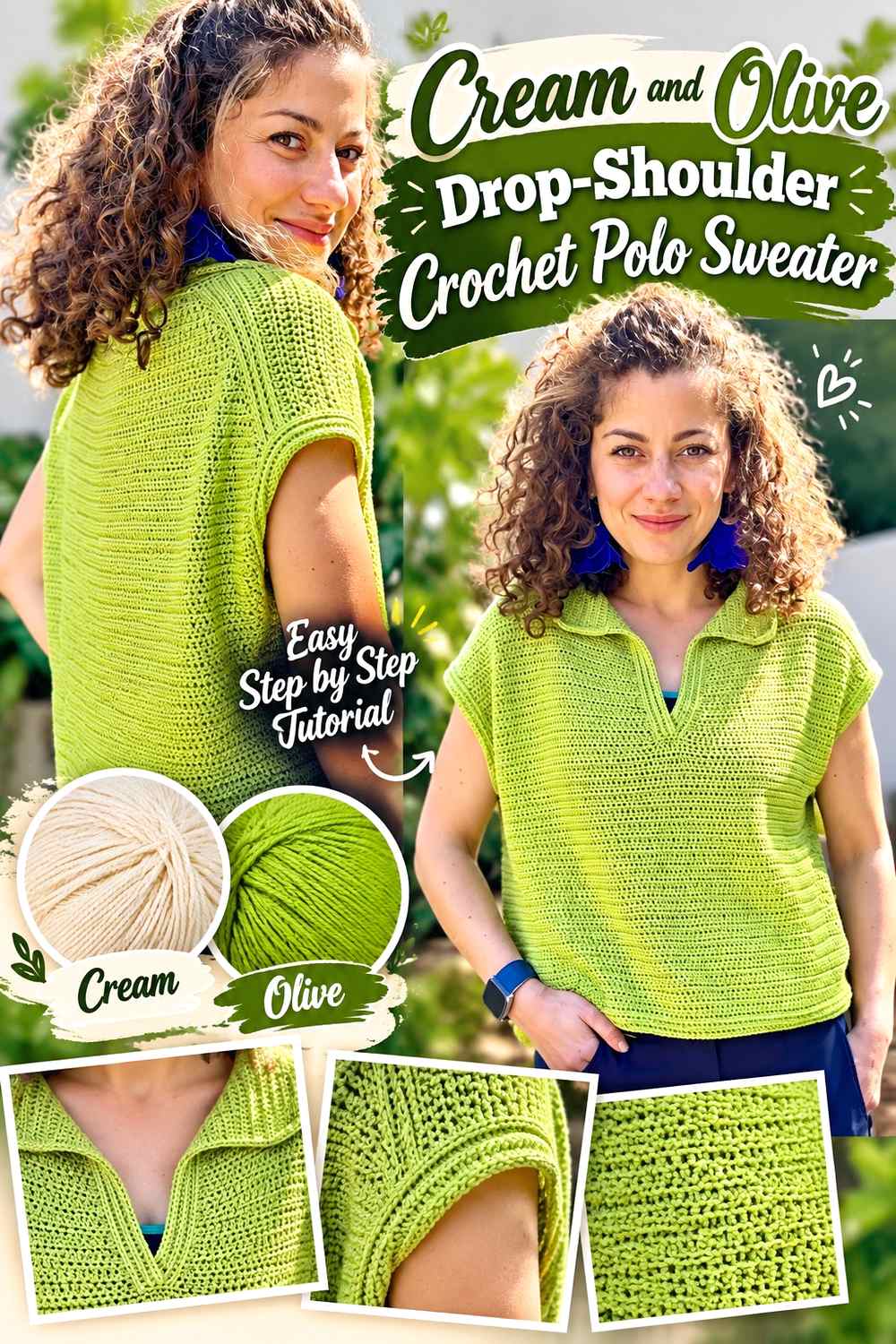
A drop-shoulder polo provides broad upper-body sections that can support larger color areas, but cream should still lead if the garment is meant to read as a cream sweater. Olive works well as a grounded secondary shade for the collar, sleeve edges, or side details.
Use Cream to Keep the Drop-Shoulder Polo From Looking Too Heavy
The wider shoulder line already makes the sweater appear substantial. Cream across the main body keeps that volume visually lighter and allows the relaxed silhouette to remain clear.
A large olive upper panel could add even more weight around the shoulders, so use it intentionally rather than by default.
Place Olive Beside Cream at the Polo Collar and Sleeves
An olive collar can define the neckline while smaller olive sleeve accents repeat the color across the wider shoulder line. This creates a relationship between the upper features without requiring a full olive yoke.
Keep enough cream between them so each accent remains distinct.
Check Cream and Olive Balance Across the Wider Shoulders
Because drop shoulders extend farther toward the arm, sleeve color can appear from the front more than it does on a closely fitted polo. Lay the developing garment in its worn orientation when judging how much olive is visible.
An accent that looks small on a flat sleeve may become more prominent once the sweater is assembled.
Creator Credit: ByKaterina Designs
How the 17 Cream Polo Sweater Palettes Compare
For the strongest contrast, cream with black, navy, forest green, charcoal, burgundy, or cranberry makes collars and trim easy to distinguish from the body. These combinations are useful when you want the polo neckline itself to become a major visual feature.
Cream with camel, taupe, blush, sage, dusty blue, or denim blue creates a quieter transition. These palettes allow stitch texture and garment shape to carry more of the design. Cream with mustard or terracotta sits between those directions: the hue difference is obvious, but the accent does not necessarily create the same dark frame as navy or black.
Openwork changes the decision again. On mesh and windowpane polos, account for the color worn underneath before deciding that the sweater needs more contrast yarn. The visible layer beneath the cream crochet can already change the appearance substantially.
Conclusion
Start by deciding what you want the cream to do. For a clean neutral polo, keep cream across most of the front, back, and sleeves and reserve the secondary color for the collar and one repeated finishing detail. Navy, black, burgundy, forest green, charcoal, and cranberry give the neckline the clearest definition.
For a softer sweater, camel, taupe, blush, sage, dusty blue, and denim blue keep the transitions gentler. Terracotta and mustard are useful when you want cream to remain dominant but prefer a more obvious warm-color accent.
Most importantly, judge color placement on the assembled shape whenever possible. A polo collar, placket, cuff, or dropped shoulder can occupy a different amount of visual space when worn than it seems to occupy on a flat crochet panel. Use the credited tutorials for their exact construction details and adapt the cream palette separately.
Frequently Asked Questions
What colors work well with a cream crochet polo sweater?
Cream can be combined with both light and dark supporting colors. Navy, black, forest green, burgundy, charcoal, chocolate, and cranberry create stronger contrast, while camel, blush, sage, taupe, dusty blue, and denim blue produce softer transitions. The right choice depends on how visible you want the collar and trim to be.
Should the collar on a cream crochet polo sweater be contrasting?
It does not have to be. A contrasting collar makes the polo shape more obvious, while a cream collar keeps the sweater quieter and lets stitch texture carry more of the design. You can also keep the collar cream and add contrast only along its edge or placket.
How much of a cream crochet polo sweater should stay cream?
If you want the garment to read immediately as cream, give cream the largest visual share. The main torso panels are usually the clearest place to do that. Accent colors can then be repeated through the collar, cuffs, sleeve edges, placket, hem, or selected stripes.
How can I check whether two colors have enough contrast with cream?
Place the yarns side by side and view them from a short distance. A grayscale photo can also help reveal whether the light-dark values are genuinely different. This is especially useful for pale sage, blush, taupe, camel, and dusty blue, which may be closer to cream than expected.
Does cream work well for crochet polo texture?
Cream can show crochet texture clearly because shadows around ribbing, clusters, and raised stitches are often visible across the light surface. If texture is important, avoid breaking every section with frequent high-contrast color changes that may become more noticeable than the stitches themselves.
How should I use cream in a mesh crochet polo?
Consider both the yarn and the clothing underneath. Cream mesh over a dark layer produces strong visible contrast through every opening, while a cream or beige underlayer creates a softer effect. Test the intended layering combination before deciding whether contrasting collar or trim colors are necessary.
Can I use three colors in a cream crochet polo sweater?
Yes, but give each color a clear role. Cream can dominate the body, a second shade can support the collar or larger accent sections, and a third color can appear in smaller edging or stripe details. Avoid giving all three colors equal coverage unless a deliberately multicolor sweater is the goal.