Cranberry and Forest Green give a crochet holiday garland a recognizable seasonal palette without requiring several competing colors. Cranberry can create the brighter focal motifs, berries, bows, stockings, or ornaments, while Forest Green can establish the connecting cord, leaves, trees, wreaths, and darker framing details.

The most important choice is deciding whether the garland should look predominantly green, predominantly Cranberry, or deliberately alternating. A Forest Green cord with Cranberry motifs creates a very different effect from alternating whole Cranberry and Forest Green motifs. You can also assign the colors by function: Forest Green for botanical shapes and Cranberry for decorative accents.
Garland spacing matters as much as motif color. Closely packed motifs create a fuller band of color across a mantel or shelf, while wider spaces allow stars, trees, stockings, or poinsettias to read as separate objects. Test a short section while it is hanging rather than judging every motif flat on a table.
The tutorials linked throughout this collection support the crochet garland or individual holiday-motif concepts. The Cranberry and Forest Green palettes are independent color adaptations rather than claims about the creators’ original color choices.
Quick List
- Cranberry Snowflake And Forest Green Cord Crochet Holiday Garland
- Forest Green Snowflake Crochet Garland With Cranberry Joining Points
- Cranberry Mini Stocking And Forest Green Cuff Crochet Holiday Garland
- Cranberry And Forest Green Bauble Crochet Holiday Garland
- Cranberry Star Crochet Holiday Garland On A Forest Green Cord
- Forest Green Star Crochet Garland With Cranberry Centers
- Forest Green Christmas Tree Crochet Garland With Cranberry Edges
- Forest Green Holly Crochet Garland With Cranberry Berries
- Cranberry Gingerbread Style Crochet Holiday Garland With Forest Green Details
- Cranberry Candy Cane Crochet Garland With Forest Green Connectors
- Forest Green Candy Cane Crochet Garland With Cranberry Spirals
- Cranberry Poinsettia Crochet Garland With Forest Green Leaves
- Forest Green Poinsettia Crochet Garland With Cranberry Petal Layers
- Cranberry Poinsettia Crochet Holiday Garland On A Forest Green Vine
- Forest Green Holiday Motif Crochet Garland With Cranberry Candy Cane Accents
- Cranberry Textured Candy Cane Crochet Garland With Forest Green Spacing
- Cranberry Present Crochet Garland With Forest Green Ribbons
- Forest Green Present Crochet Garland With Cranberry Bows
- Cranberry Gift Motif Crochet Garland On A Forest Green Holiday Cord
Decide Whether Cranberry or Forest Green Should Dominate the Garland
Whole-motif color usually has more visual impact than small trim. If ten large motifs are Forest Green and only their edges are Cranberry, the finished garland will still read mostly green. Reverse that relationship and Cranberry quickly becomes the main color.
For a balanced two-color arrangement, alternate whole motifs or repeat a simple sequence. For a more natural botanical direction, let Forest Green dominate leaves, stems, trees, wreath-like shapes, and the hanging cord while Cranberry concentrates in berries, flowers, stockings, stars, or bows.
Use Cranberry and Forest Green to Separate Motifs From the Garland Cord
The connecting strand is easy to overlook during color planning. A Forest Green cord can visually recede behind Cranberry motifs and connect naturally to leaf or tree shapes. A Cranberry cord creates a stronger line and can make Forest Green motifs feel more decorative.
Also consider where the cord passes through each motif. If the connection point is highly visible, matching it to the motif can hide the attachment. Using the contrasting shade can intentionally turn each attachment into a repeated color detail.
Check Cranberry and Forest Green Spacing While the Garland Is Hanging
Motifs can rotate, overlap, or lean once gravity affects the strand. That changes how much of each color is visible. A Cranberry star that looks balanced beside a Forest Green tree on a table may partially cover it when both hang from the same cord.
Make a short test section before completing all 19 motifs or repetitions. Check the spacing from normal viewing distance and adjust the gaps before securing the entire garland.
1. Cranberry Snowflake And Forest Green Cord Crochet Holiday Garland

Use Cranberry for the repeated snowflake motifs and Forest Green for the connecting strand. The unusual dark-green cord keeps the garland seasonal while allowing the Cranberry shapes to remain the clear focal points rather than relying on traditional white snowflakes.
Cranberry Should Cover the Full Crochet Snowflake Motif
Keep each snowflake predominantly Cranberry so its points remain visually connected. Introducing Forest Green inside every small branch can make an already detailed motif harder to read from across the room.
Forest Green Can Recede Behind Cranberry Snowflakes
A continuous Forest Green cord creates a darker line between the red motifs. Attach the Cranberry snowflakes at consistent points so the strand looks like part of the palette rather than simply a practical hanger.
Space Cranberry Snowflakes Along Forest Green Before Final Joining
Hang several motifs temporarily and judge the empty green space between them. Wider gaps create a lighter garland, while closely spaced Cranberry motifs produce a denser band of holiday color.
Creator Credit: Wool Reef
2. Forest Green Snowflake Crochet Garland With Cranberry Joining Points
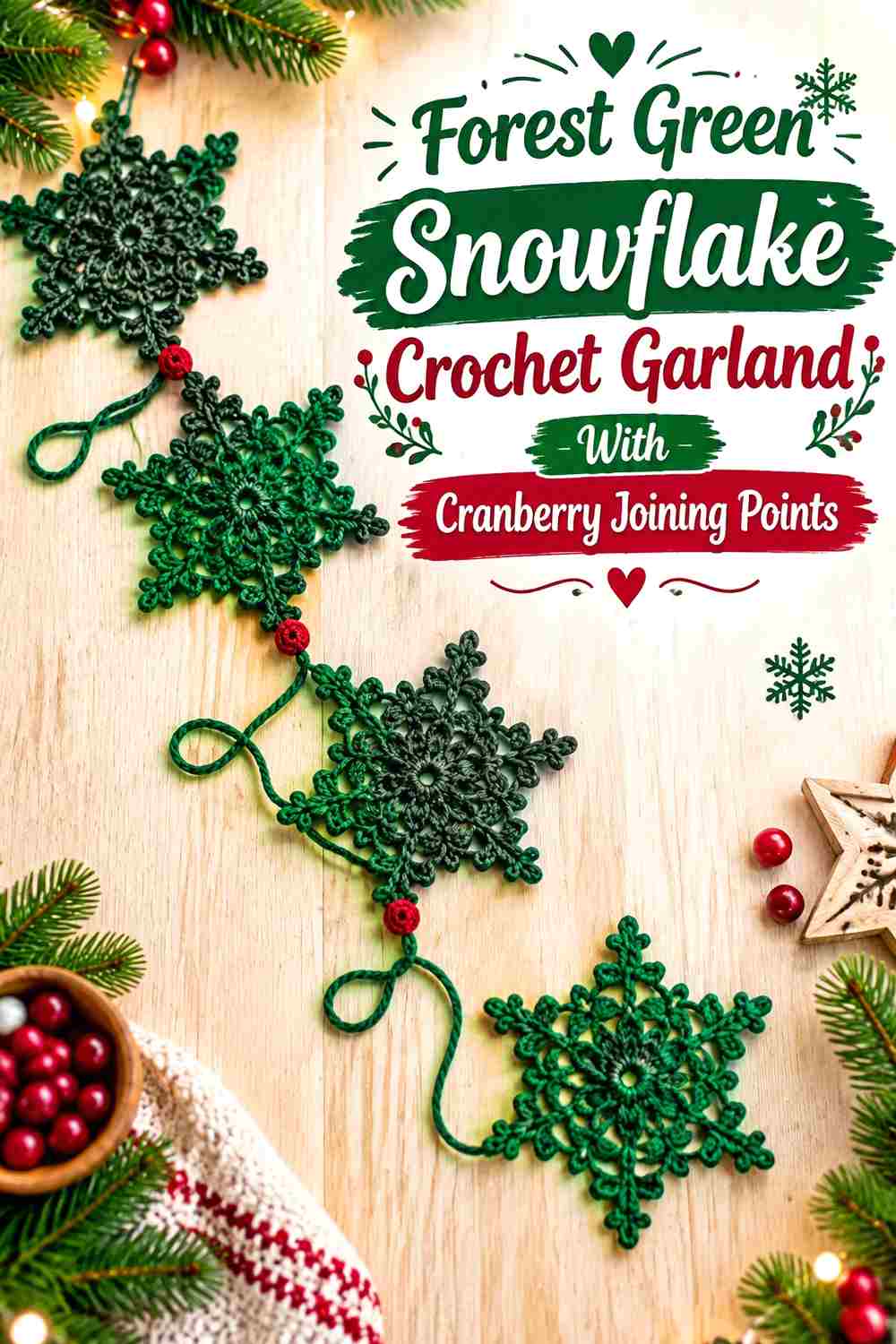
Reverse the previous idea by making the snowflakes Forest Green. Cranberry can appear at the centers or connecting points, giving each motif a small warm anchor without dividing the delicate branches into multiple colors.
Forest Green Can Give Crochet Snowflakes a Botanical Holiday Direction
A solid Forest Green snowflake feels less wintry and more evergreen-inspired. Keeping the branches one shade also protects the open structure from becoming visually fragmented.
Cranberry Centers Can Anchor the Forest Green Snowflakes
Use Cranberry where the motif begins or where it attaches to the cord when the construction allows. A small repeated center gives the warmer shade a clear role without overwhelming the Forest Green points.
Keep Cranberry Repetition Consistent Across Forest Green Motifs
If one snowflake has a Cranberry center, repeat that choice across the garland. Randomly changing which details are red can weaken the deliberate two-color rhythm.
Creator Credit: Anita Louise Crochet
3. Cranberry Mini Stocking And Forest Green Cuff Crochet Holiday Garland
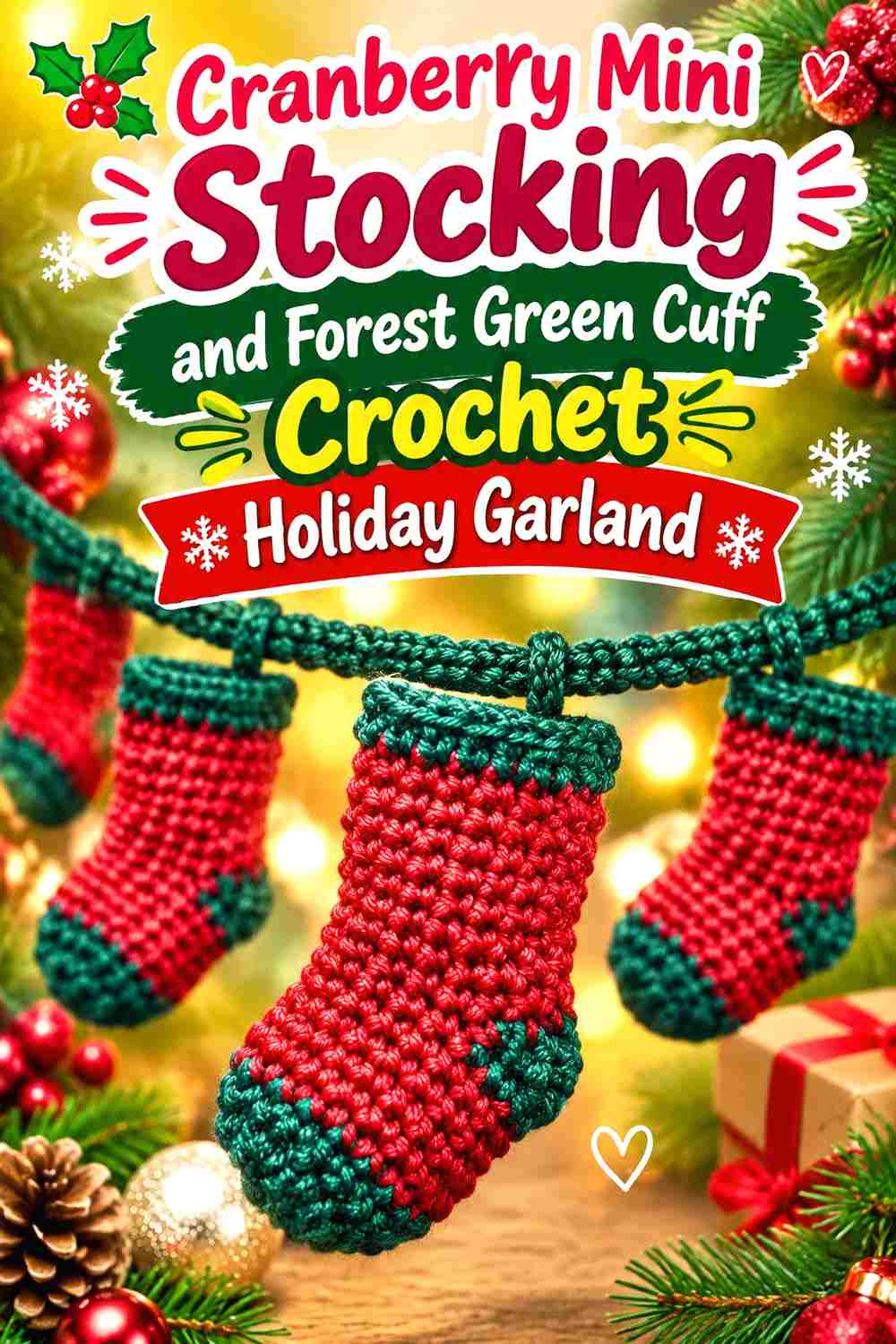
Mini stockings give you an obvious two-color boundary. Work the stocking body in Cranberry and reserve Forest Green for the cuff and hanging area so every motif repeats the same seasonal hierarchy.
Cranberry Can Carry the Full Crochet Stocking Body
A solid Cranberry foot and leg keep the tiny stocking readable even from farther away. Avoid adding several narrow Forest Green stripes through such a small motif unless a busier pattern is intentional.
Forest Green Cuffs Can Define Cranberry Stocking Tops
The cuff is an ideal place for the darker shade because it sits directly beside the hanging cord. Repeating Forest Green there creates a visual bridge between motif and strand.
Alternate Cranberry Stockings Carefully on a Forest Green Cord
Check that each stocking hangs in the same direction or intentionally alternates. Color may be consistent, but irregular orientation can make the garland appear less organized than the palette suggests.
Creator Credit: Whistle and Ivy Modern Crochet
4. Cranberry And Forest Green Bauble Crochet Holiday Garland
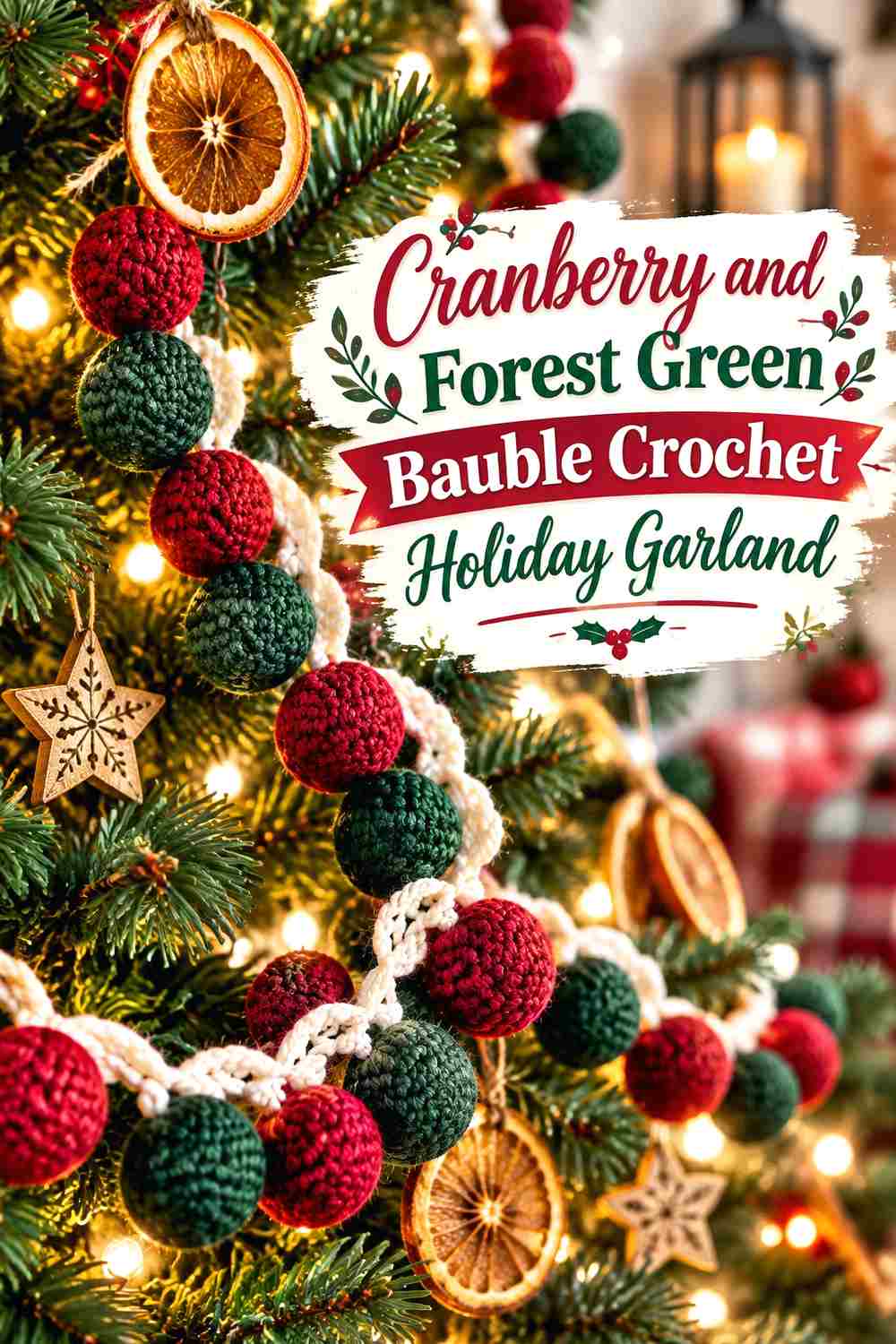
Use round or bobble-like motifs to create a garland that relies more on repetition than recognizable figurative shapes. Alternate Cranberry and Forest Green baubles or arrange them in small color clusters for two very different effects.
Cranberry Baubles Can Create Bright Focal Points Between Forest Green
If Forest Green is the dominant cord color, Cranberry baubles immediately become the most visible repeated elements. Keep their spacing regular when you want a traditional ordered garland.
Forest Green Baubles Can Break Up Long Cranberry Runs
Insert Forest Green after every one or two Cranberry motifs rather than allowing a large red cluster at one end. A predictable pattern helps both colors travel across the entire strand.
Test Cranberry and Forest Green Bauble Density Before Finishing
Thick or dimensional baubles occupy more visual space than flat stars or leaves. Hang a short section to make sure neighboring motifs do not compress into one heavy band.
Creator Credit: Miss Mustard Seed
5. Cranberry Star Crochet Holiday Garland On A Forest Green Cord
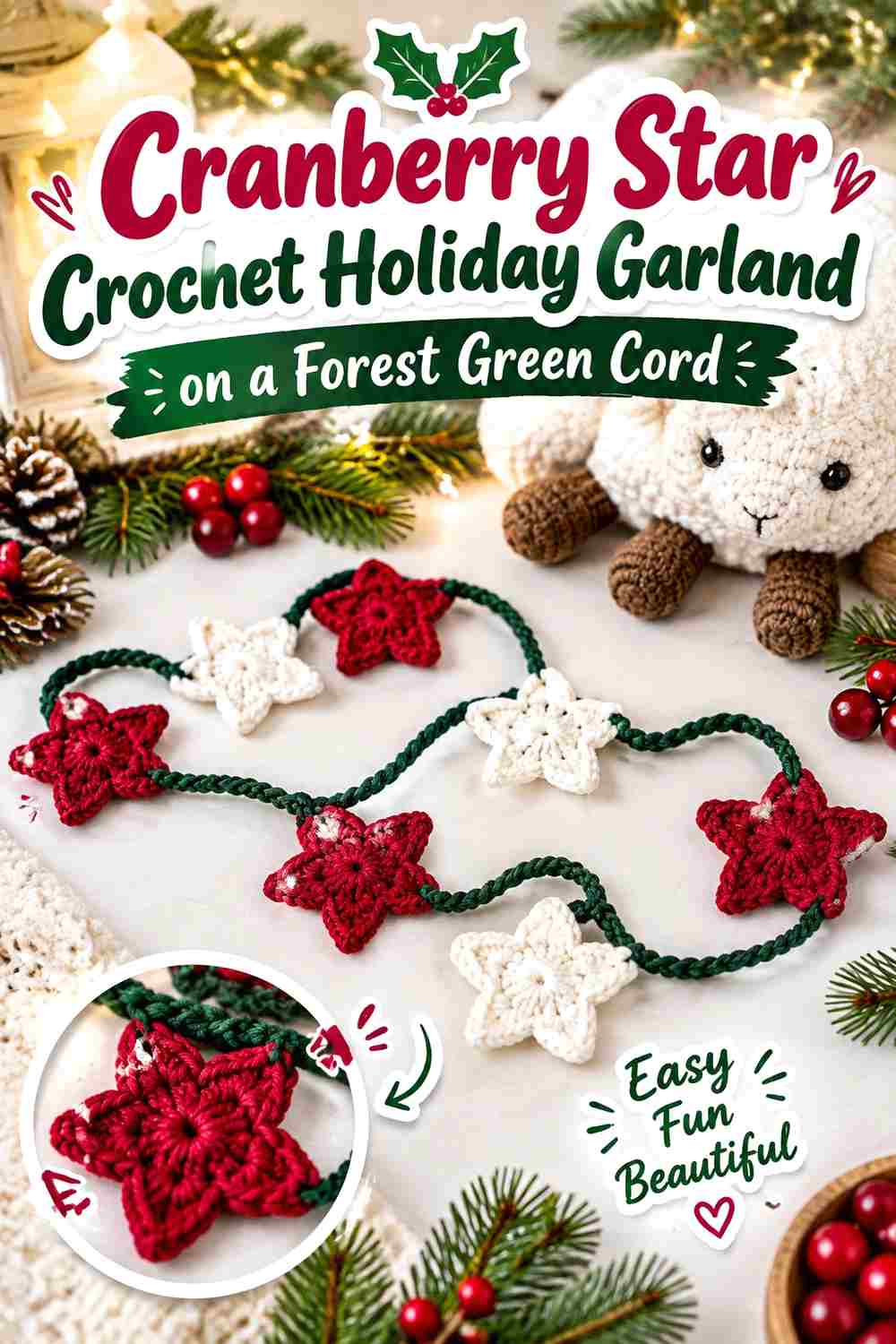
Make Cranberry the unmistakable focal color by repeating solid stars along a Forest Green strand. The simple two-part system works well when you want the motif shape, rather than frequent internal color changes, to supply the visual interest.
Cranberry Stars Need Enough Space Against Forest Green
Leave enough cord visible around each point for the star silhouette to remain distinct. When stars sit too close together, their outer points can overlap and create an irregular Cranberry mass.
Forest Green Can Connect Cranberry Stars Without Competing
Keep the cord relatively simple so it functions as a visual line behind the motifs. Adding heavy Forest Green tassels or knots between every star can distract from the repeated Cranberry shape.
Repeat Forest Green Only Sparingly Inside Cranberry Stars
If you want a second green detail, use it consistently at the center or attachment point. Avoid outlining every Cranberry point unless you want the garland to feel more graphic.
Creator Credit: cosy kates 🪴
6. Forest Green Star Crochet Garland With Cranberry Centers
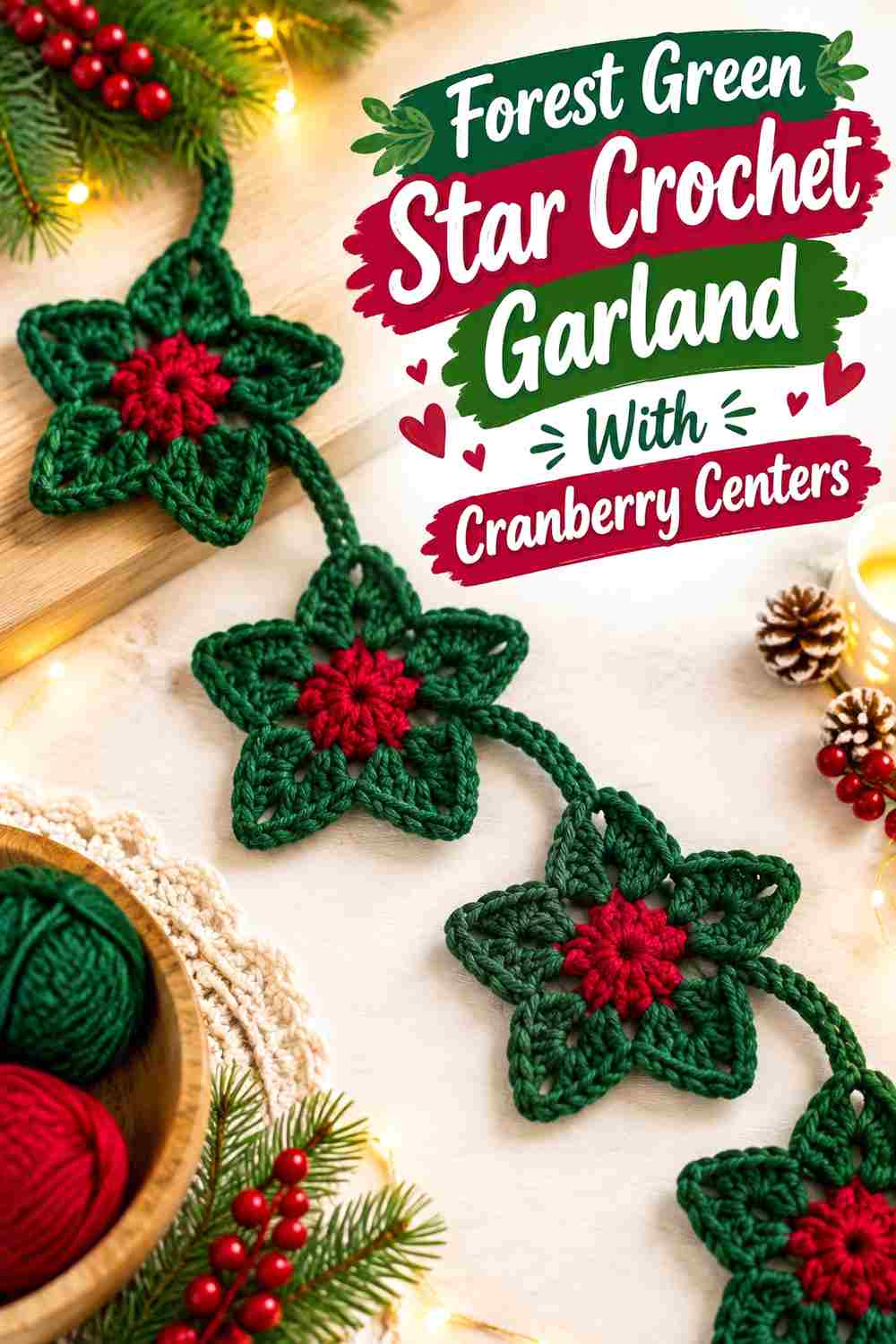
Forest Green stars produce a darker garland and give Cranberry an opportunity to function as a concentrated central accent. The color relationship is especially useful when the garland will hang against a pale wall, mantel, or shelf.
Forest Green Should Dominate the Crochet Star Points
Keep the outer star shape Forest Green so the silhouette remains continuous. Cranberry is more effective as a center or small inner round than as several scattered marks on individual points.
Cranberry Centers Can Give Forest Green Stars More Rhythm
Repeating the same warm center in every motif creates a sequence of small Cranberry focal points along the garland. This keeps the red visible even though green occupies much more yarn.
Choose the Cord Color Based on the Forest Green Star Balance
A Forest Green cord makes the strand nearly disappear into the motifs, while a Cranberry cord adds a more visible line. Use green for a quieter botanical effect and Cranberry when you want stronger two-color separation.
Creator Credit: Bella Coco
7. Forest Green Christmas Tree Crochet Garland With Cranberry Edges
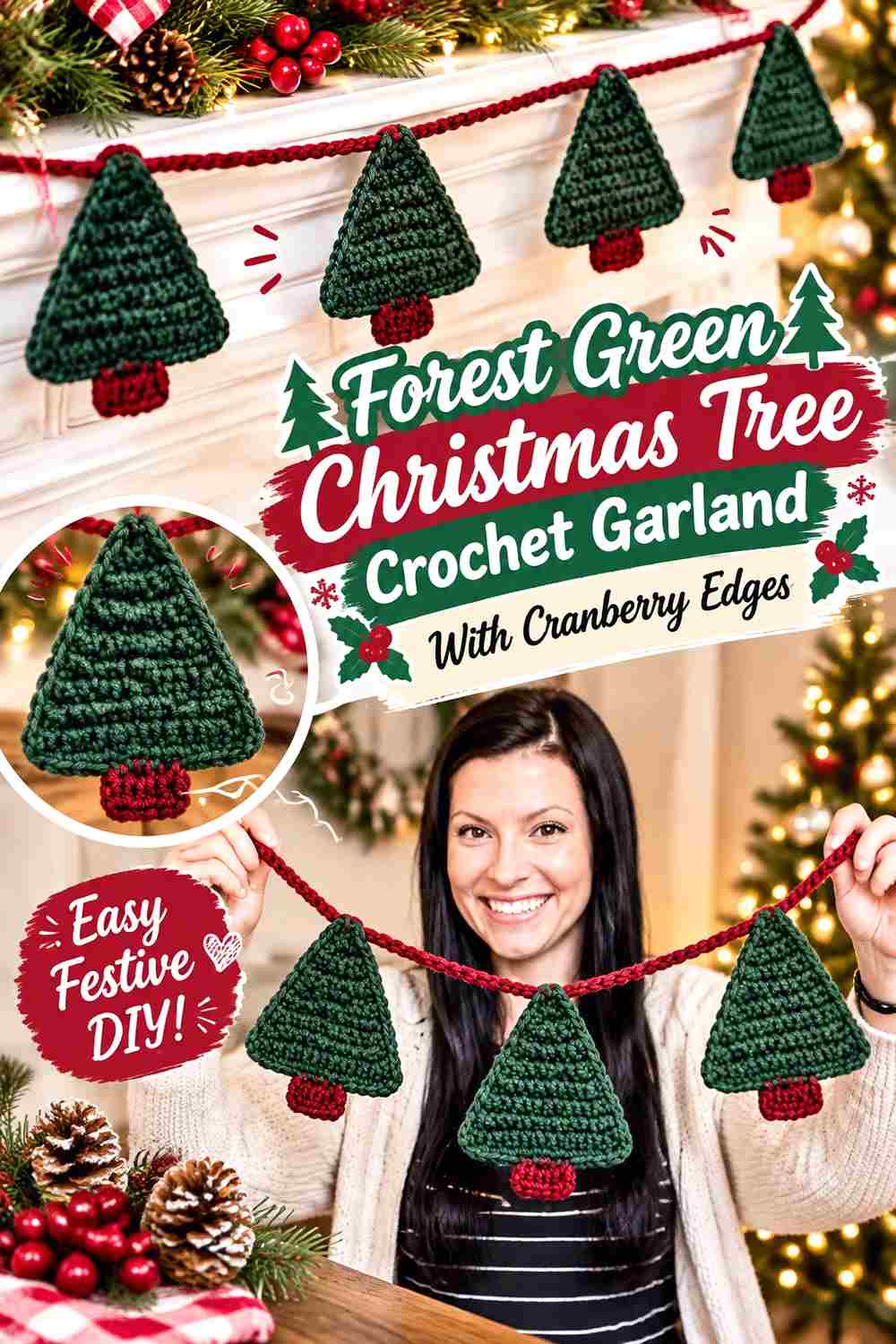
Christmas tree motifs naturally favor Forest Green, allowing Cranberry to act as decorative trim rather than the main motif color. Use the red-wine shade around selected edges, trunks, or small surface accents instead of filling half of each tree.
Forest Green Should Remain the Main Crochet Christmas Tree Color
Give the triangular tree shape enough uninterrupted green to remain recognizable. Too many Cranberry stripes can make small trees look more like generic triangular bunting.
Cranberry Can Trace Forest Green Tree Edges
A narrow Cranberry border can emphasize the stepped or triangular silhouette. If the motif already has pronounced textured edges, use the accent selectively so the trim does not overpower the shape.
Repeat Cranberry Between Forest Green Trees
Small Cranberry joining details or spaced bobbles on the cord can carry red through the empty areas. This connects the trimmed trees without requiring every branch to contain Cranberry.
Creator Credit: Heather Corinne
8. Forest Green Holly Crochet Garland With Cranberry Berries
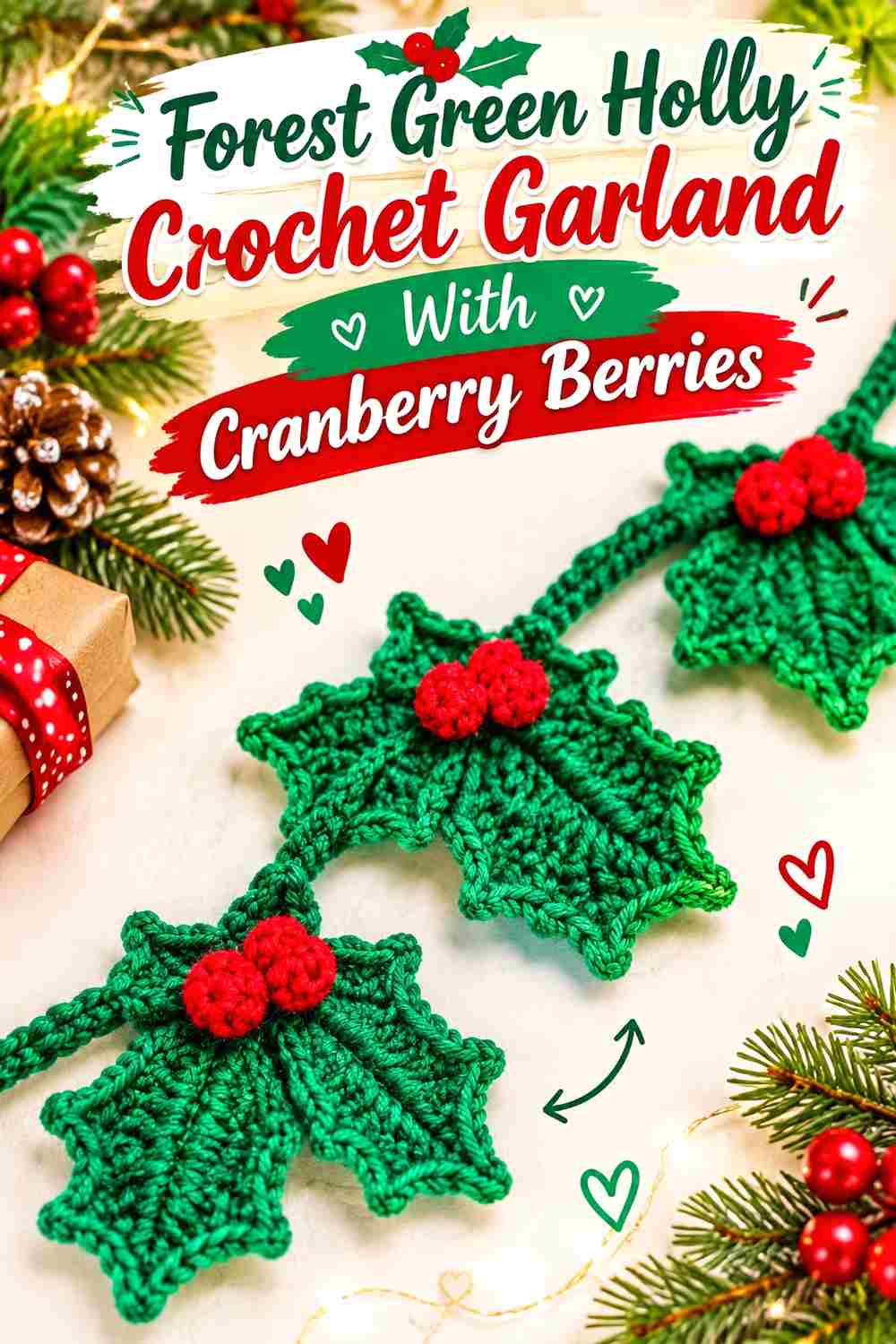
This is the most literal use of the palette. Forest Green naturally belongs on the holly leaves while Cranberry becomes the berry color, giving each shade a role that repeats consistently across the garland.
Forest Green Leaves Need Enough Separation to Show Their Shape
Do not pack every leaf cluster so tightly that the points overlap. Small spaces around the edges help each Forest Green motif remain readable when the garland curves.
Cranberry Berries Should Stay Visible Against Forest Green
Cluster Cranberry where the leaves meet rather than distributing tiny red stitches along every leaf edge. Concentrated round accents create a clearer contrast against the green foliage.
Use Forest Green for the Cord Behind Cranberry Berry Clusters
A green connecting strand can visually extend the foliage between motifs. This creates a more continuous vine effect while Cranberry remains reserved for repeated focal points.
Creator Credit: HappyBerry Crochet
9. Cranberry Gingerbread Style Crochet Holiday Garland With Forest Green Details
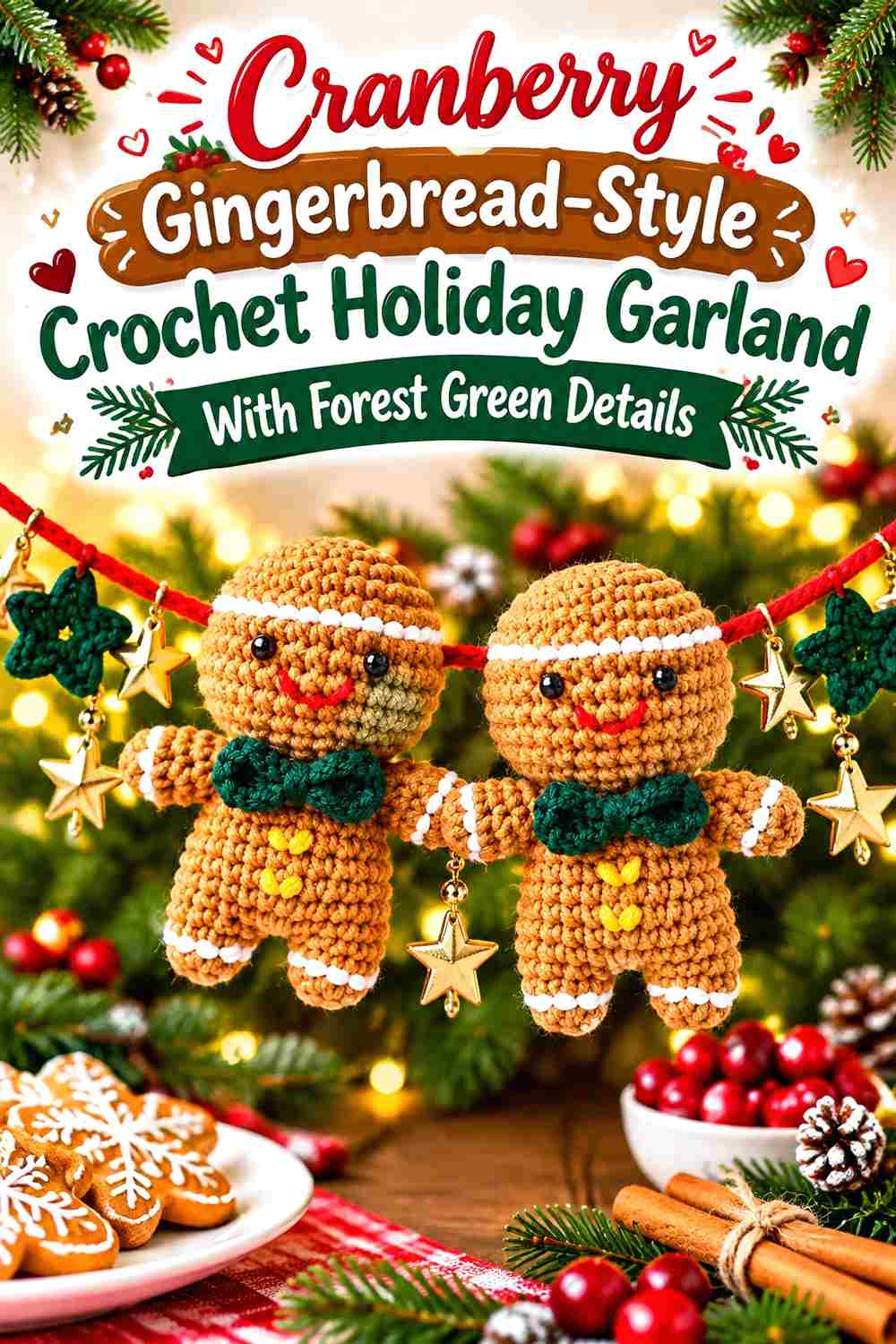
Gingerbread motifs do not have to remain brown. For a more graphic two-color garland, work the figures in Cranberry and use Forest Green for scarves, buttons, bows, or joining details.
Cranberry Gives the Crochet Figures a Strong Garland Silhouette
Keep the head, body, arms, and legs one Cranberry field so the human-like shape remains recognizable. Small motifs benefit from continuity more than intricate internal color blocking.
Forest Green Can Mark Cranberry Gingerbread Details
Use green on one or two features such as a neck detail or button line. That amount is enough to connect the figures to the holiday palette without breaking the Cranberry body into disconnected pieces.
Keep Forest Green Details Similar Across Cranberry Motifs
A repeated placement rule helps a garland of figures look coordinated. If the first motif has Forest Green at the neck and center, continue that relationship rather than improvising a new green location on every figure.
Creator Credit: sherrscrochet
10. Cranberry Candy Cane Crochet Garland With Forest Green Connectors
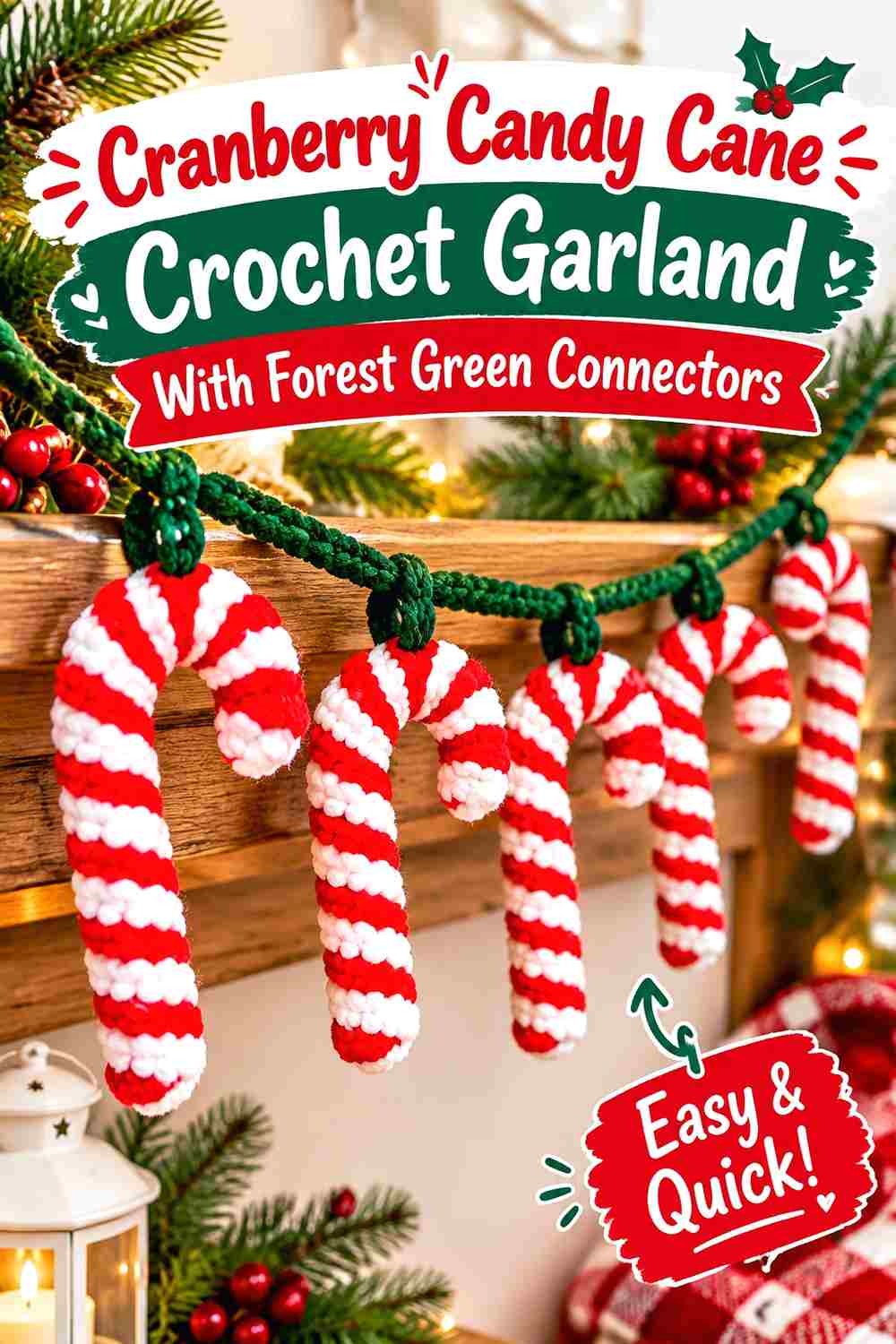
Instead of traditional red and white candy canes, use Cranberry as the main cane color and Forest Green for the second spiral or for the joining strand. This immediately keeps the motif holiday-specific while making the palette more unusual.
Cranberry Should Stay Visually Continuous Through the Candy Cane Curve
Make sure the Cranberry section remains identifiable from top hook to lower stem. Fragmented short red areas can weaken the recognizable cane silhouette.
Forest Green Can Spiral Through Cranberry Candy Cane Motifs
A green spiral creates clear hue contrast even when both shades are relatively dark. Check the finished motif from a distance to make sure neither color visually swallows the other.
Forest Green Joining Can Link Cranberry Candy Canes Cleanly
A matching green strand connects naturally to the secondary color inside each motif. This keeps Cranberry concentrated on the hanging shapes and avoids creating an overly red horizontal line.
Creator Credit: Made by Phia
11. Forest Green Candy Cane Crochet Garland With Cranberry Spirals
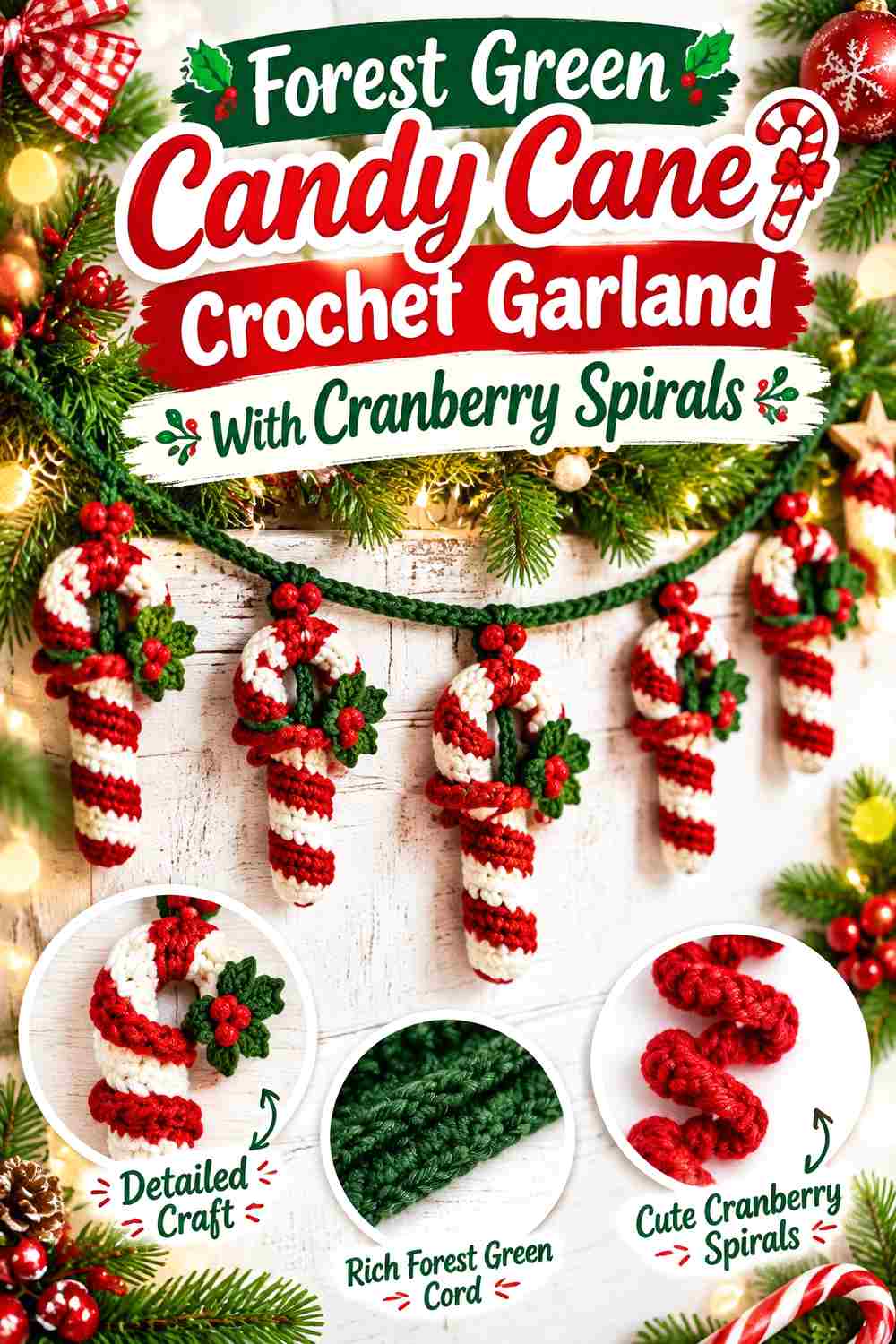
Reverse the candy cane arrangement so Forest Green becomes the larger or base element and Cranberry provides the twisting accent. This produces a greener overall garland while preserving the familiar curved shape.
Forest Green Can Make the Candy Cane Garland More Botanical
A green-led cane motif visually connects better to evergreen branches, wreaths, and other foliage in holiday decor. Keep the overall curve simple so the unusual color choice remains immediately understandable.
Cranberry Spirals Need Consistent Width Against Forest Green
Uneven Cranberry sections can make one part of the cane appear heavier than another. Keep the warm accent visually regular along the motif where the construction permits.
Repeat Cranberry Along the Forest Green Garland Cord
A few Cranberry connecting details can pull the secondary color beyond the individual candy canes. Keep them smaller than the motifs so the cord does not become the strongest red element.
Creator Credit: The Crochet Crowd
12. Cranberry Poinsettia Crochet Garland With Forest Green Leaves
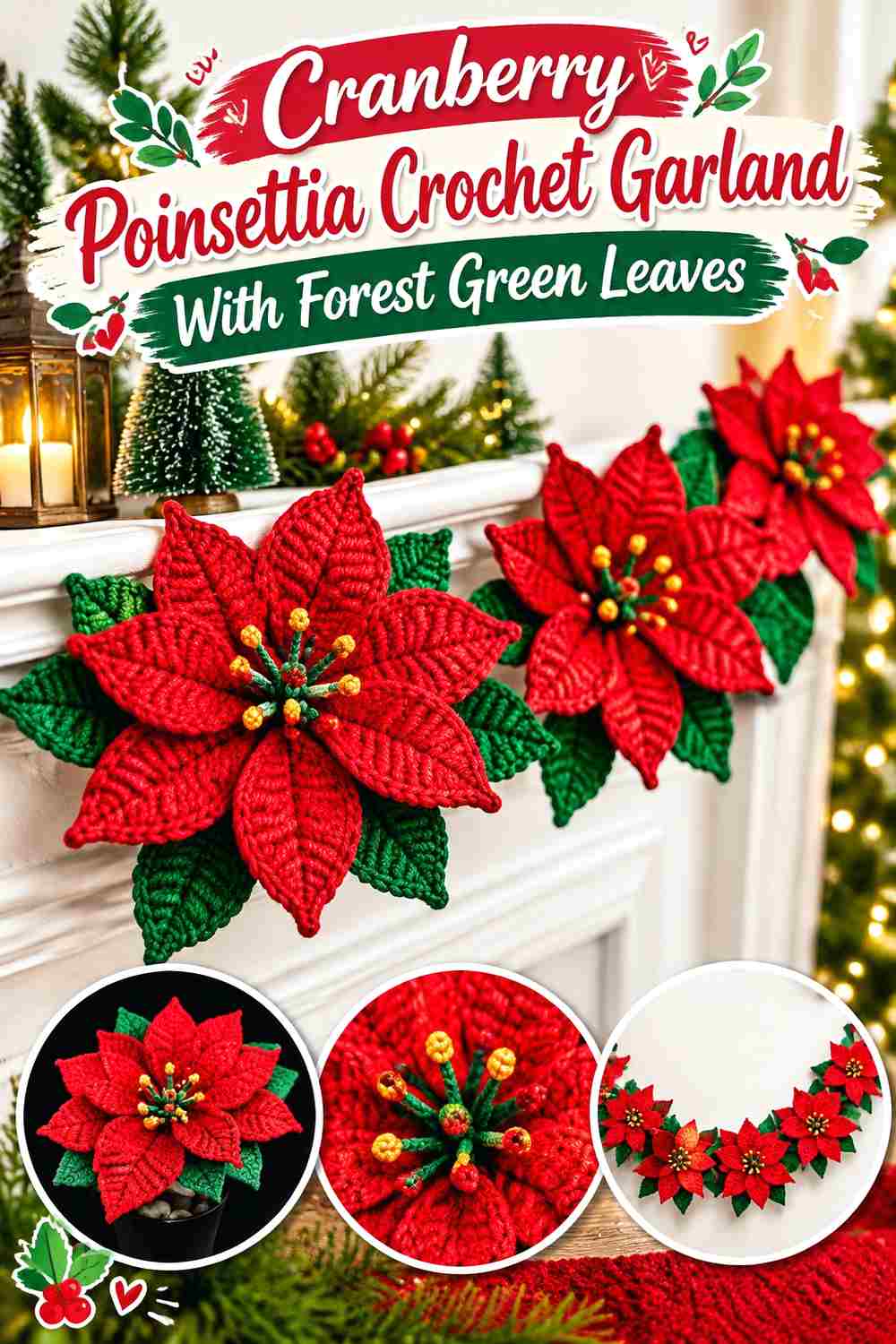
Poinsettia motifs allow the palette to follow a familiar floral hierarchy. Cranberry can cover the layered flower while Forest Green sits behind it as leaves or connecting foliage.
Cranberry Should Dominate the Crochet Poinsettia Petals
Keep the petal layers primarily one Cranberry shade so the flower remains coherent. When several layers are already present, excessive color switching can make the motif look busier than necessary.
Forest Green Leaves Can Frame Cranberry Flowers
Place the green where it shows beyond the petal edges instead of hiding every leaf directly behind the flower. Visible Forest Green points help separate neighboring Cranberry motifs along the garland.
Space Cranberry Flowers With Forest Green Between Them
A little green cord or foliage between flowers prevents the entire strand from becoming one solid red band. Increase the spacing when the poinsettia motifs are especially dimensional.
Creator Credit: Be Creative & Healthy
13. Forest Green Poinsettia Crochet Garland With Cranberry Petal Layers

For a less traditional variation, use Forest Green across some of the broader flower or leaf layers and concentrate Cranberry in the upper petal sections. The result blends botanical and floral color roles rather than separating them completely.
Forest Green Can Give the Poinsettia Motif a Darker Outer Layer
Use green around the broadest lower portion so it behaves like a built-in frame. This makes the Cranberry center look more concentrated and easier to identify.
Cranberry Petals Need Enough Area Against Forest Green
Do not reduce Cranberry to only a tiny center if you still want the garland to read as two-color. Give the warm shade a visible petal layer so it remains noticeable at normal display distance.
Keep Forest Green and Cranberry Layering Consistent Across the Garland
Repeated dimensional motifs look more cohesive when the same layer receives the same color each time. Save variation for spacing or orientation rather than changing the entire color order on every flower.
Creator Credit: Patoys
14. Cranberry Poinsettia Crochet Holiday Garland On A Forest Green Vine

Use fuller Cranberry poinsettias as spaced statement motifs and connect them with a Forest Green crocheted vine or chain. This creates more open space than a tightly packed flower garland and lets both colors perform separate jobs.
Cranberry Flowers Can Become the Main Garland Focal Points
Make the flowers substantial enough that they remain recognizable even with generous spacing. A smaller number of clearly visible Cranberry motifs can create more impact than many tiny flowers crowded together.
Forest Green Should Remain Visible Between Cranberry Poinsettias
Do not cover the entire vine with leaves and flowers. Visible green sections give the eye a pause and help each Cranberry bloom read individually.
Test Cranberry Poinsettia Direction on the Forest Green Vine
Dimensional flowers can rotate forward, sideways, or downward once suspended. Attach a few temporarily and hang the strand before fixing the full arrangement.
Creator Credit: brunaticality
15. Forest Green Holiday Motif Crochet Garland With Cranberry Candy Cane Accents

Use Forest Green as the repeated base motif or decorative sleeve and introduce Cranberry through candy-cane-inspired details. This creates a green-led strand where red functions as a pattern accent rather than the motif body.
Forest Green Can Carry the Repeated Crochet Garland Forms
Keeping the larger shape green creates a consistent visual foundation. This works well when several motifs are repeated and you want the garland to coordinate with wreaths or evergreen decor.
Cranberry Candy Cane Details Can Interrupt Forest Green Rhythm
Use Cranberry at regular intervals rather than on every available stitch. The warm accent becomes easier to notice when it appears in purposeful concentrated sections.
Keep Cranberry Smaller Than the Forest Green Main Motifs
If Cranberry begins to occupy equal or greater visual area, the project changes from green-led to balanced. That can work, but decide on the hierarchy intentionally before producing the complete set.
Creator Credit: naztazia
16. Cranberry Textured Candy Cane Crochet Garland With Forest Green Spacing
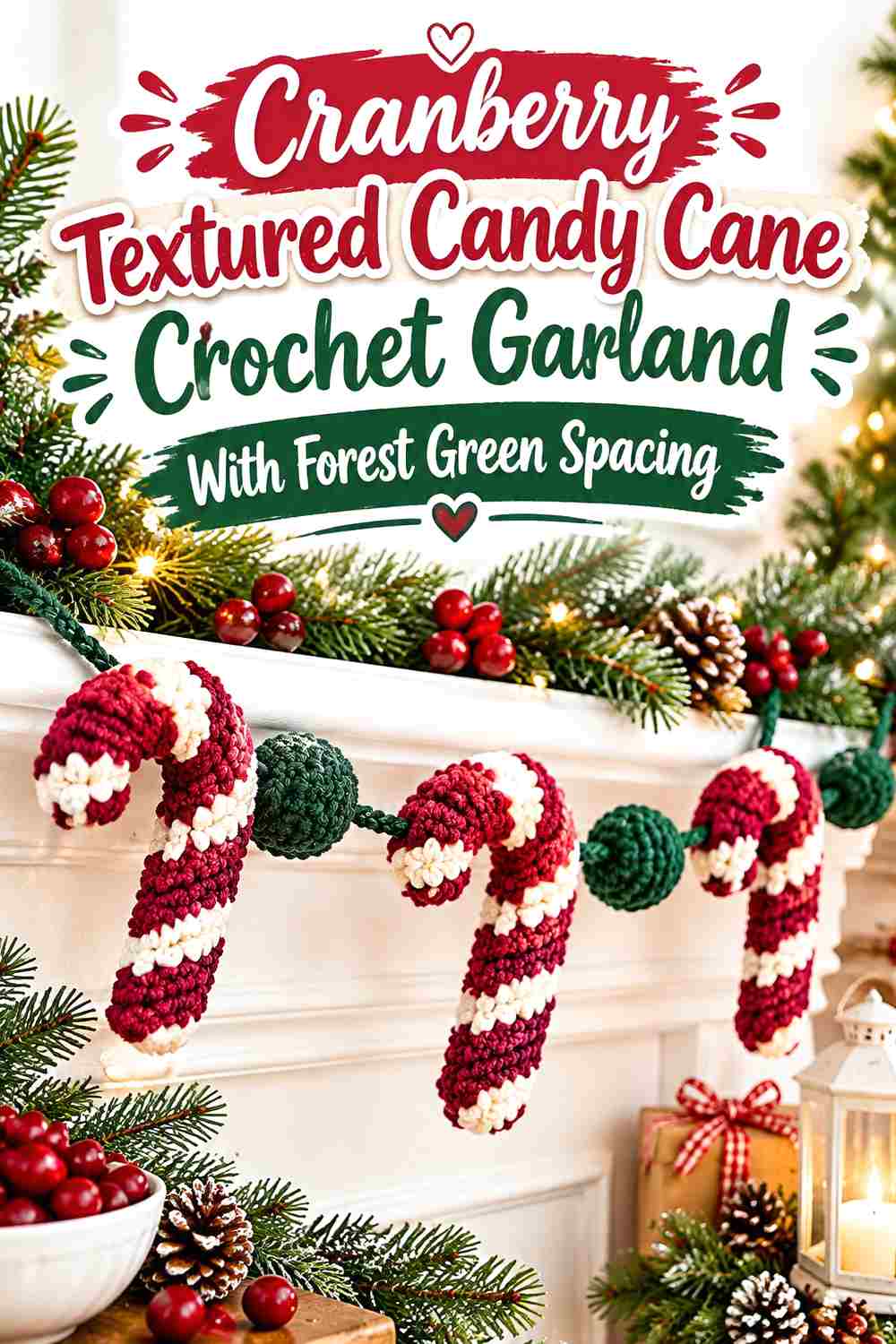
A more textured candy cane motif can carry Cranberry over most of its surface, while Forest Green appears between motifs rather than inside them. This keeps texture and color from competing within the same small shape.
Cranberry Lets the Crochet Candy Cane Texture Stay Continuous
Work the raised or decorative stitch surface in one main shade when the texture is already pronounced. Frequent green changes inside raised details could make the motif harder to read.
Forest Green Spacing Can Separate Cranberry Candy Cane Shapes
Use green chain sections between the hanging motifs so every cane has enough surrounding space to show its hook and stem.
Repeat Forest Green Once on Each Cranberry Candy Cane if Needed
A tiny top loop or attachment can visually connect the motif to the cord. Keep that repeat small so the textured Cranberry surface remains the main feature.
Creator Credit: Crochet With Julie
17. Cranberry Present Crochet Garland With Forest Green Ribbons
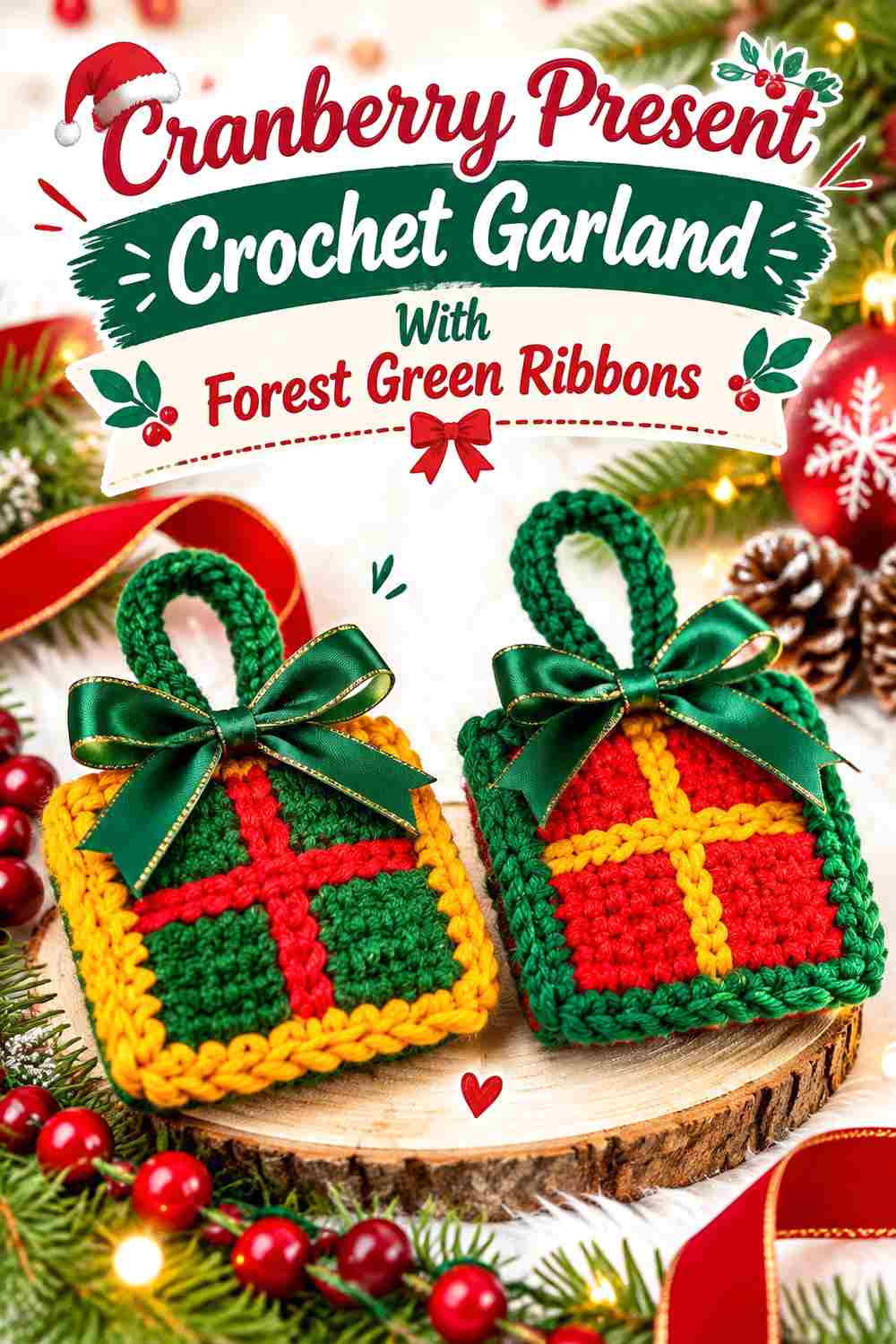
Gift-box motifs offer one of the clearest ways to color block the palette. Use Cranberry for each present and Forest Green across the vertical ribbon, horizontal ribbon, or bow.
Cranberry Can Form a Clean Crochet Present Background
Keep the gift-box shape solid so its square or rectangular silhouette remains obvious. Cranberry provides enough visual presence that the smaller Forest Green ribbon can sit clearly on top.
Forest Green Ribbons Need Enough Width Against Cranberry
A single tiny green stitch may disappear at garland-viewing distance. Give the ribbon sufficient visual width to divide the Cranberry box into recognizable wrapped sections.
Alternate Cranberry Present Shapes Without Changing the Forest Green Ribbon Rule
You can vary square and rectangular proportions while keeping the color hierarchy identical. That introduces shape variety without making the two-color scheme inconsistent.
Creator Credit: Galeri Chacabella
18. Forest Green Present Crochet Garland With Cranberry Bows
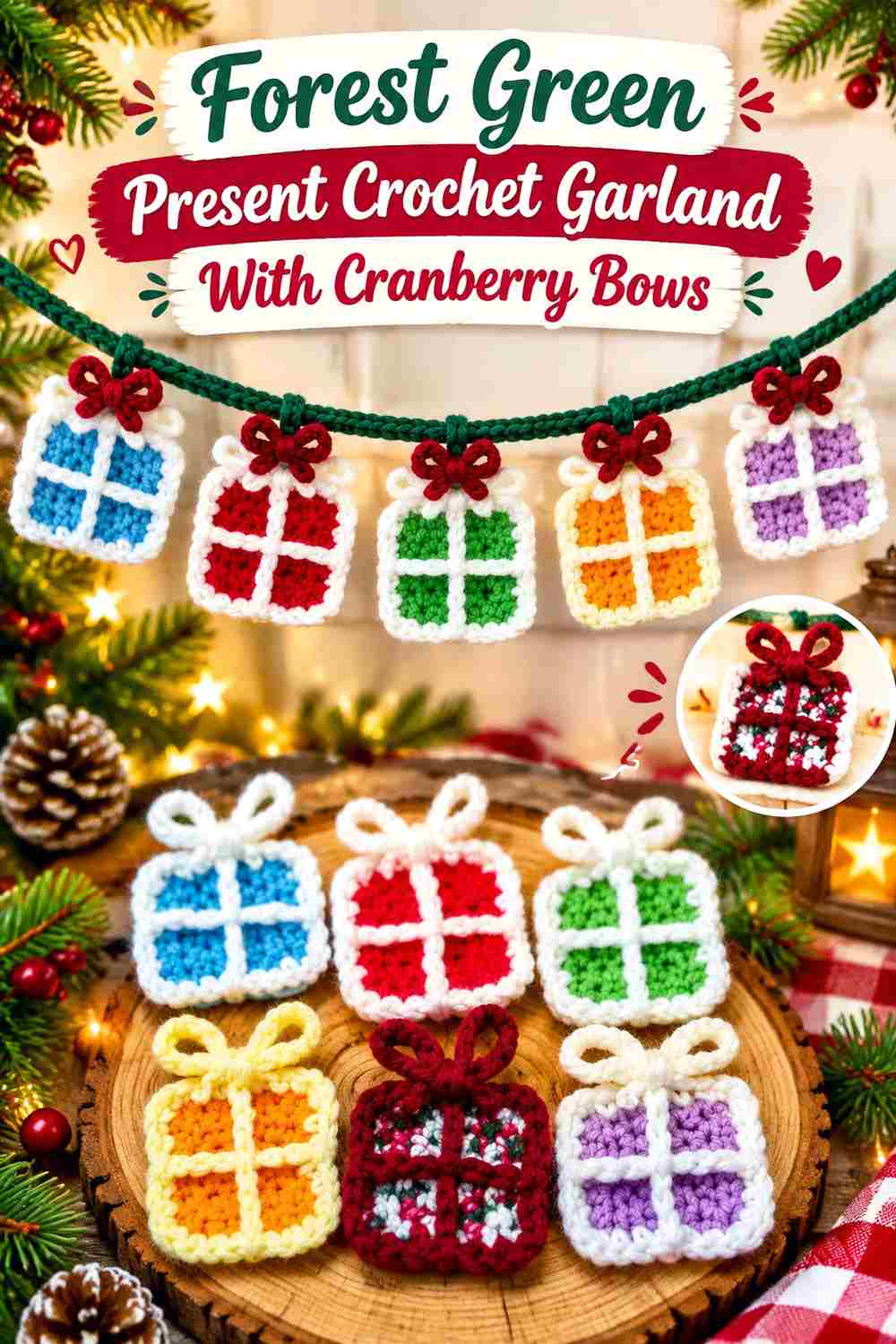
Reverse the gift-box palette by using Forest Green for the packages and Cranberry for the wrapping details. This creates a darker strand where the red bows become repeated focal points.
Forest Green Can Keep Crochet Presents Connected to Evergreen Decor
A solid green box works well beside tree branches or wreaths because the motif color echoes surrounding foliage. Make sure the package silhouette remains visible against the intended display background.
Cranberry Bows Can Become the Focus on Forest Green Presents
Concentrate Cranberry around the center crossing and bow. Keeping the red localized makes each gift look intentionally wrapped instead of generally striped.
Use Cranberry Between Forest Green Presents Sparingly
Small red connecting knots can echo the bows, but too many may turn the cord into a competing focal element. Let the bows provide most of the Cranberry repetition.
Creator Credit: CrochetItForward
19. Cranberry Gift Motif Crochet Garland On A Forest Green Holiday Cord
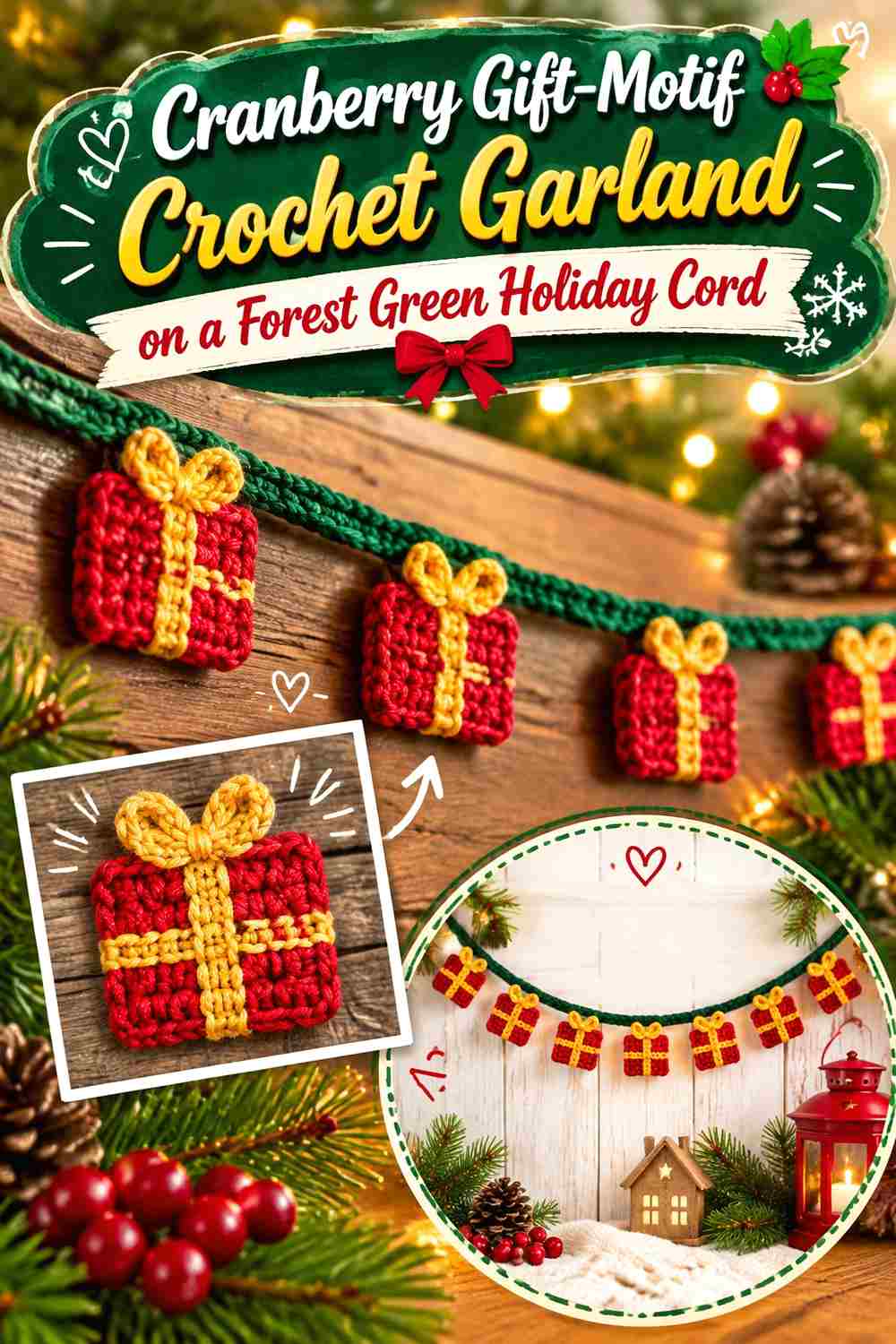
Finish with a mixed gift-motif direction that keeps Cranberry consistent across the main hanging decorations and Forest Green consistent through the cord and secondary details. The motifs can vary slightly in proportion while the color system ties them together.
Cranberry Can Unify Different Crochet Gift Shapes
Use Cranberry as the common box color across square and rectangular motifs. Consistent color makes modest differences in shape look intentional rather than like unrelated decorations.
Forest Green Can Connect Every Cranberry Gift Motif
Repeat green in the ribbon or bow and then continue it through the garland cord. This creates one visual line that travels through the complete display.
Check Cranberry and Forest Green Gift Spacing Before Securing the Cord
Rectangular and square motifs may hang differently and occupy different widths. Arrange them on the floor first, then hang a short section to confirm that larger Cranberry gifts do not crowd smaller ones.
Creator Credit: Concrete Gems Crochet
Comparing Cranberry and Forest Green Holiday Garland Directions
For a traditional botanical direction, the holly, poinsettia, and Christmas-tree ideas give Forest Green a natural structural role while Cranberry supplies berries, petals, edging, or other warm focal details.
For a more graphic garland, choose stars, snowflakes, stockings, presents, baubles, or candy canes. These shapes let you reverse the two colors freely because the motif silhouette remains recognizable even when the palette is less literal.
Cranberry-led garlands generally create a stronger warm band across a mantel or shelf. Forest Green-led designs can feel visually quieter and may connect more naturally to wreaths, trees, and evergreen decorations already in the room.
If the garland includes several different motif types, keep one color rule consistent. For example, use Cranberry for every main motif and Forest Green for every connector, or make all botanical elements Forest Green and all decorative accents Cranberry.
Conclusion
Cranberry and Forest Green can support far more than a simple alternating red-and-green crochet chain. The strongest garlands give each color a recognizable role: Forest Green can form foliage, trees, cords, frames, and darker motif layers, while Cranberry can define berries, flowers, stockings, stars, gifts, and bows.
Motif scale and spacing determine how the palette looks once the garland is hanging. Small closely spaced shapes create a continuous band of holiday color, while larger motifs with visible Forest Green cord between them produce a lighter, more individually defined display.
Choose the motif family first, decide which shade should dominate second, and test a short hanging section before making the complete strand. Use the linked tutorials for their exact construction guidance, then apply the Cranberry and Forest Green placement that suits your holiday display.
Frequently Asked Questions
Should Cranberry or Forest Green dominate a crochet holiday garland?
Either can lead. Cranberry produces a warmer, more immediately noticeable strand, while Forest Green creates a darker botanical base. Decide which shade should cover the largest motifs or the connecting cord before planning smaller accents.
What is the easiest way to balance Cranberry and Forest Green across a garland?
Give each color a specific job. For example, use Forest Green for the cord and leaves and Cranberry for flowers or berries. Another option is to alternate complete Cranberry and Forest Green motifs in a predictable sequence.
Should a Cranberry and Forest Green crochet garland use a green or red cord?
A Forest Green cord tends to recede and works especially well with trees, leaves, holly, and Cranberry focal motifs. A Cranberry cord is more visible and can help green motifs stand out. Choose the cord color according to which shade needs additional repetition.
How far apart should Cranberry and Forest Green crochet motifs be?
There is no single spacing that suits every motif or display. Larger, dimensional motifs generally need more room than small flat stars or leaves. Hang several temporarily in the intended location and judge the visual spacing before permanently joining the full strand.
How can I stop Cranberry and Forest Green motifs from looking too busy?
Use fewer internal color changes. Make each motif mostly one shade and put the second color at the center, edge, cuff, berry, ribbon, or joining point. The garland already creates repetition, so every motif does not need complex colorwork.
Can I add cream or gold to a Cranberry and Forest Green holiday garland?
Yes, but keep the third shade limited if you want Cranberry and Forest Green to remain the defining palette. A small light center, star detail, bell accent, or connecting bead can add separation without turning the project into an evenly distributed three-color garland.
How do I keep crochet holiday garland motifs facing forward?
Check the attachment point and motif weight while the garland is hanging. A motif that lies flat on a table can rotate once suspended. Test a few motifs first and adjust where they connect to the cord before assembling the entire garland.