Cocoa brown and dusty rose give a crochet dog granny stripe sweater a warm, softened two-color palette without needing extra neutrals. Cocoa brown can provide the darker visual anchor, while dusty rose breaks up the body with lighter granny-stripe bands and can highlight collars, leg openings, or lower edging.
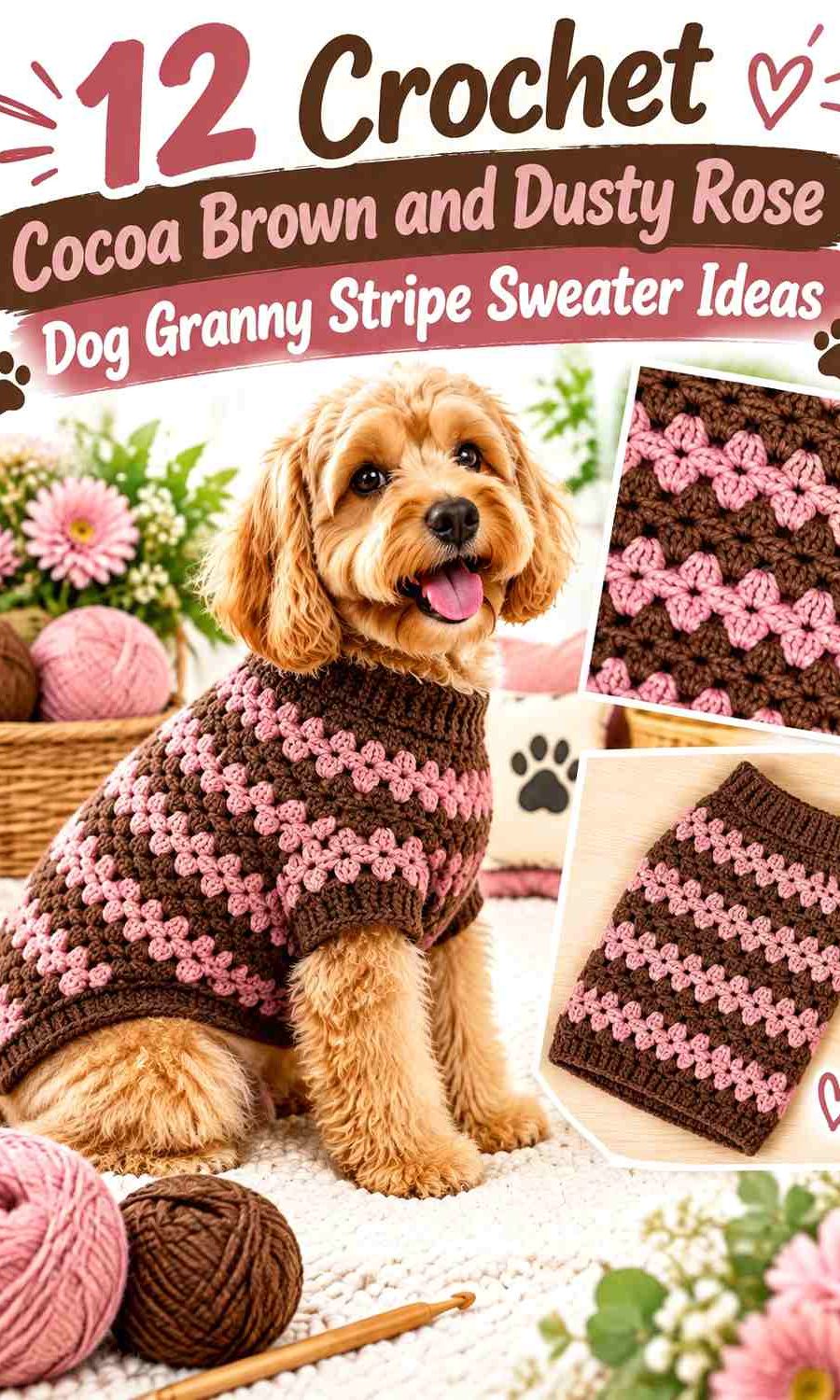
The most important choice is not simply which color appears first. Stripe width changes how much of each shade the finished sweater appears to contain. Broad cocoa brown bands with narrow dusty rose rows create a brown-led garment, while wide dusty rose sections and small cocoa repeats make the same two-color palette feel much lighter.
The tutorials credited throughout this article are public dog-sweater, dog-coat, and pet-vest construction references. The cocoa brown and dusty rose granny-stripe layouts are independent color adaptations; they should not be assumed to match the colors or stripe arrangements used by the individual creators.
Quick List
- Cocoa Brown-Dominant Wide Granny Stripe Crochet Dog Sweater
- Dusty Rose-Dominant Wide Granny Stripe Crochet Dog Sweater
- Equal Cocoa Brown and Dusty Rose Granny Stripe Crochet Dog Sweater
- Cocoa Brown With Double Dusty Rose Granny Stripe Crochet Dog Sweater
- Dusty Rose With Double Cocoa Brown Granny Stripe Crochet Dog Sweater
- Narrow Cocoa Brown and Dusty Rose Granny Stripe Crochet Dog Sweater
- Graduated Cocoa Brown and Dusty Rose Granny Stripe Crochet Dog Sweater
- Cocoa Brown Collar and Dusty Rose Granny Stripe Crochet Dog Sweater
- Dusty Rose Collar and Cocoa Brown Granny Stripe Crochet Dog Sweater
- Cocoa Brown Back and Dusty Rose Chest Granny Stripe Crochet Dog Sweater
- Cocoa Brown-Framed Dusty Rose Granny Stripe Crochet Dog Sweater
- Dusty Rose Center-Band and Cocoa Brown Granny Stripe Crochet Dog Sweater
Decide Whether Cocoa Brown or Dusty Rose Should Lead the Granny Stripes
Cocoa brown naturally creates more visual weight when it occupies broad sections, so it works well when you want a grounded sweater with dusty rose functioning as the softer accent. Dusty rose can lead instead when you want the back to appear lighter, with cocoa brown used to define stripe transitions and garment edges.
Look at the whole sweater rather than counting stripe rows alone. A cocoa collar, cocoa armhole edging, and cocoa lower border can make a sweater feel brown-dominant even when the body contains nearly equal amounts of dusty rose.
Use Cocoa Brown and Dusty Rose Value Contrast to Keep Granny Stripes Visible
The two colors differ clearly in hue, but individual yarn choices can still sit fairly close in light-dark value. When that happens, granny-cluster texture may become more noticeable than the stripe boundaries.
Place the yarns together and check them from a distance. A grayscale photo can also show whether the stripe changes are likely to remain clear. If the values are close, broader bands can make the two-color pattern easier to read than many narrow alternations.
Plan Cocoa Brown and Dusty Rose Trim Before Repeating the Body Stripes
The neckline, front-leg openings, belly edge, and lower back can all change the apparent balance of a granny-stripe sweater. Decide on those finishing colors before filling the body with equal stripes.
For example, a dusty rose body can still feel cocoa-led if every structural edge is dark brown. Conversely, an ivory-free two-color design can stay light by using dusty rose around the neck and armholes while reserving cocoa for selected granny bands.
1. Cocoa Brown-Dominant Wide Granny Stripe Crochet Dog Sweater

This version gives cocoa brown the largest visual share. Use broad cocoa sections across the back and interrupt them with narrower dusty rose granny stripes. The darker field keeps the garment grounded, while the pink bands provide enough repetition to soften the long back surface without dividing it into equal blocks.
Cocoa Brown Should Carry the Widest Granny Stripe Bands
Give cocoa brown noticeably more width than dusty rose through the central back. This creates a clear hierarchy and leaves enough uninterrupted dark surface for the granny texture to remain visible.
If every stripe becomes equal, the sweater will shift toward a balanced two-color design rather than a cocoa-led one.
Dusty Rose Can Repeat Around Cocoa Brown Dog Sweater Openings
Use dusty rose at the neckline or front-leg edging to connect the lighter body stripes with the sweater structure. You do not need pink on every edge; one or two repeated trim locations are enough.
Keep those dusty rose borders relatively narrow so they support rather than overturn the cocoa brown dominance.
Creator Credit: Loops Only Crochet
2. Dusty Rose-Dominant Wide Granny Stripe Crochet Dog Sweater

Reverse the balance and let dusty rose cover most of the visible back. Cocoa brown becomes the dark separator between wider pink granny-stripe sections, giving the sweater definition without making the overall garment look heavy.
Dusty Rose Can Create the Broadest Crochet Dog Sweater Sections
Use dusty rose through larger body bands so the lighter shade remains obvious from above. Broad sections also prevent cocoa brown from visually taking over simply because it is the darker color.
This arrangement works particularly well when you want the stripe pattern to stay soft rather than strongly graphic.
Cocoa Brown Can Define Dusty Rose Granny Stripe Transitions
A narrow cocoa band between broad dusty rose sections creates a clear boundary. Repeat cocoa at the lower edge or collar so those separators connect to another structural part of the sweater.
Avoid widening every cocoa transition if dusty rose is meant to remain the leading shade.
Creator Credit: Last Minute Laura
3. Equal Cocoa Brown and Dusty Rose Granny Stripe Crochet Dog Sweater
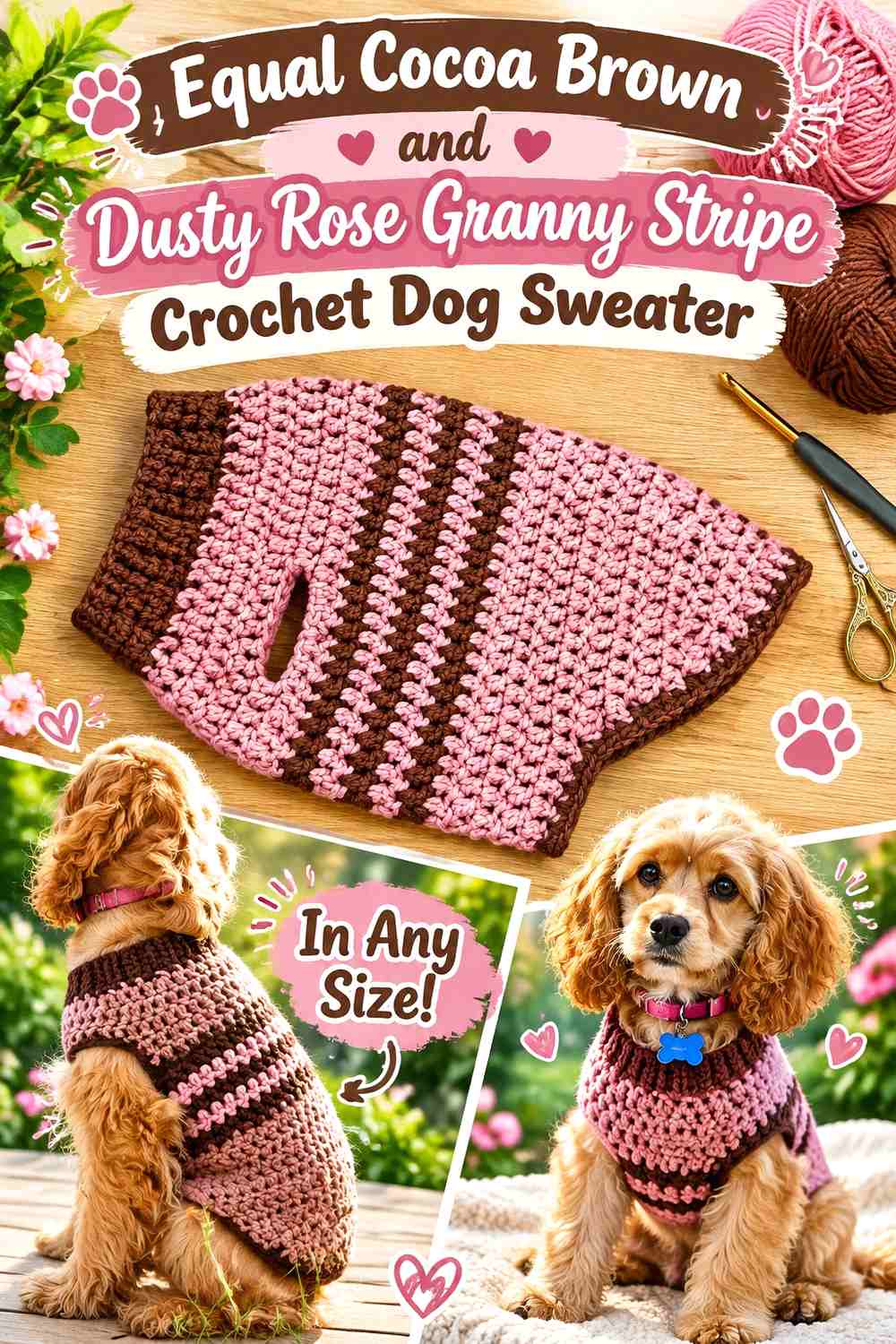
Equal-width stripes give cocoa brown and dusty rose nearly the same visual importance. This is the most balanced version and works best when the collar and edging do not accidentally give one shade substantially more additional area.
Cocoa Brown and Dusty Rose Need a Predictable Granny Stripe Rhythm
Repeat the two colors consistently across the back so the sweater looks deliberately striped rather than assembled from leftover color changes. A predictable sequence also makes the granny texture easier to follow from the shoulders toward the lower back.
Dusty Rose or Cocoa Brown Trim Should Not Break the Equal Balance
If the body is evenly divided, choose the collar color carefully. A very wide cocoa collar can make the entire sweater suddenly read as brown-dominant.
Use narrower trim or split finishing roles between cocoa brown and dusty rose when preserving an even visual balance matters.
Creator Credit: it’s erin b.
4. Cocoa Brown With Double Dusty Rose Granny Stripe Crochet Dog Sweater
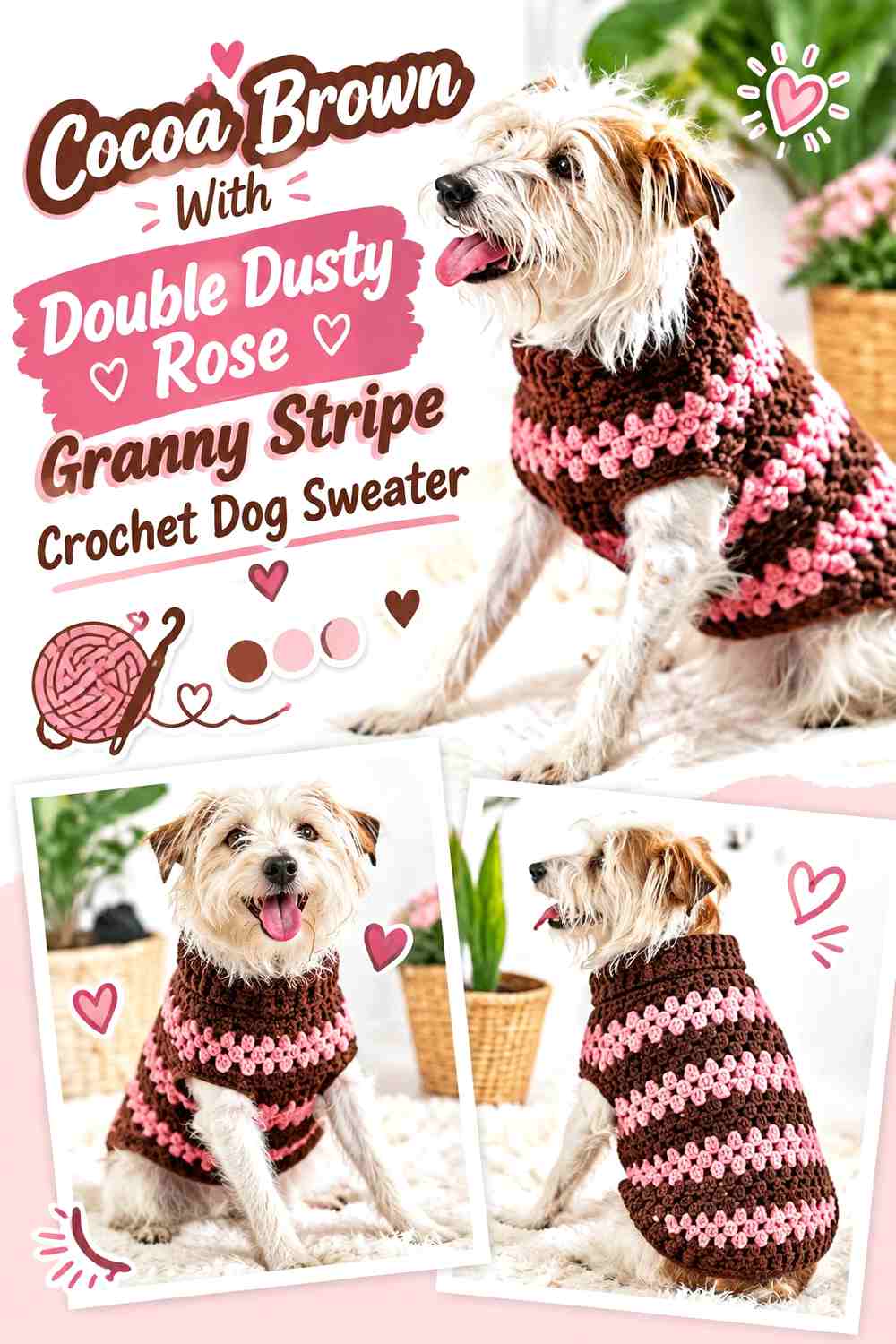
Instead of alternating one-for-one, repeat dusty rose twice between larger cocoa brown sections. This creates small clusters of pink stripes without making dusty rose the dominant field.
Cocoa Brown Can Separate Groups of Dusty Rose Granny Stripes
Use cocoa brown as the visual pause between dusty rose stripe groups. The darker area gives each pair of pink bands a defined beginning and end.
This placement can make a long dog back look more organized than a continuous sequence of narrow alternating colors.
Dusty Rose Double Bands Need Enough Cocoa Brown Space Between Them
Keep some substantial cocoa brown surface between pink groups. If the double dusty rose sections sit too close together, they can merge visually into one broad pink field and change the intended rhythm.
Creator Credit: Yarnspirations
5. Dusty Rose With Double Cocoa Brown Granny Stripe Crochet Dog Sweater
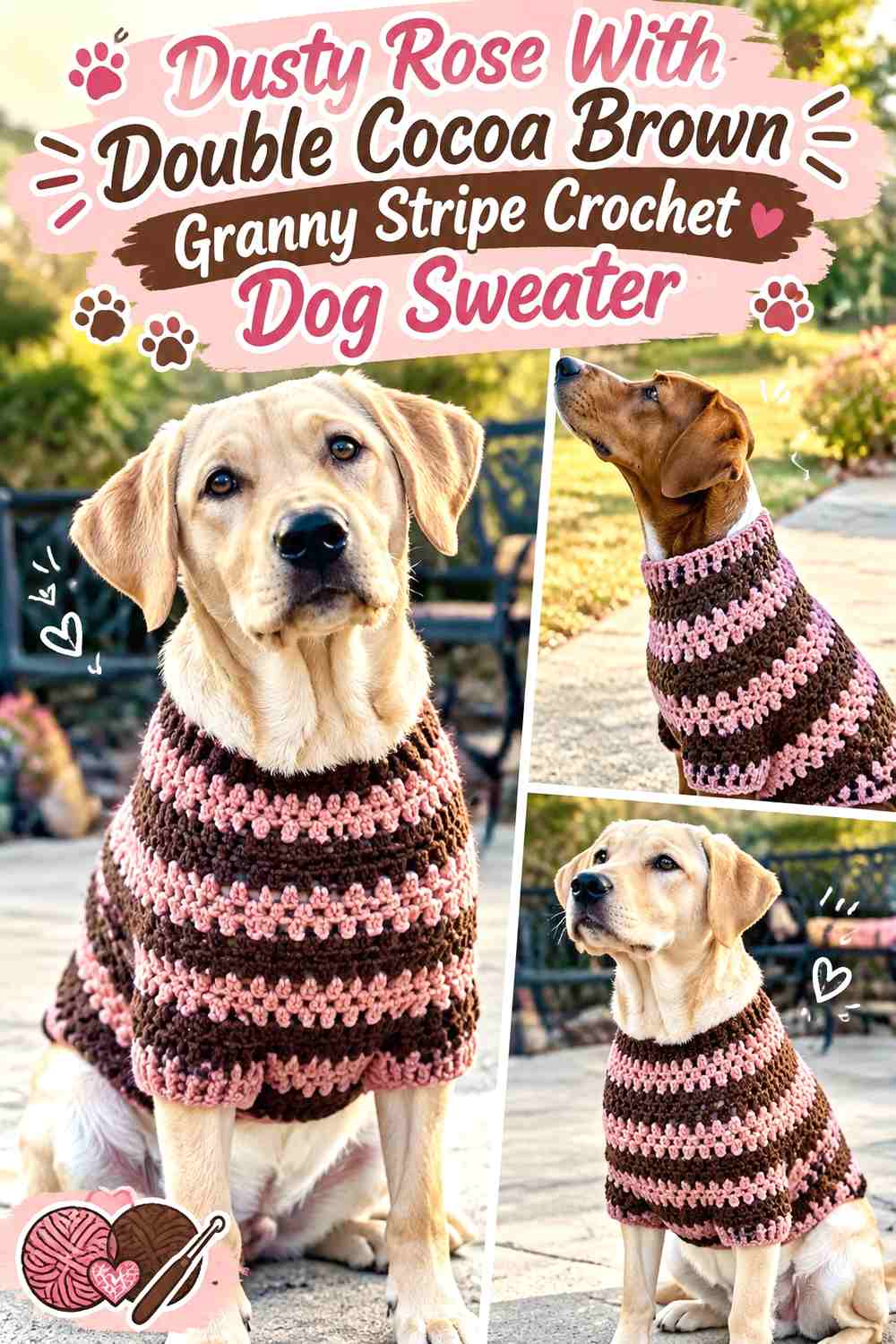
This layout starts with a dusty rose-led body but uses paired cocoa brown stripes as the recurring darker detail. The repeated double bands create more definition than single brown lines without requiring cocoa to cover most of the sweater.
Dusty Rose Should Remain Wide Around Double Cocoa Brown Stripes
Leave enough dusty rose before and after each brown pair that the eye still reads pink as the main field. This is especially important on a shorter dog sweater where a few dark bands can represent a large share of the total back length.
Cocoa Brown Double Stripes Can Echo the Dusty Rose Sweater Collar
If the collar is cocoa brown, the paired body stripes naturally connect to it. Keep the leg-opening trim dusty rose or very restrained in cocoa so the darker color does not gain too much additional weight.
Creator Credit: Heart Hook Home
6. Narrow Cocoa Brown and Dusty Rose Granny Stripe Crochet Dog Sweater
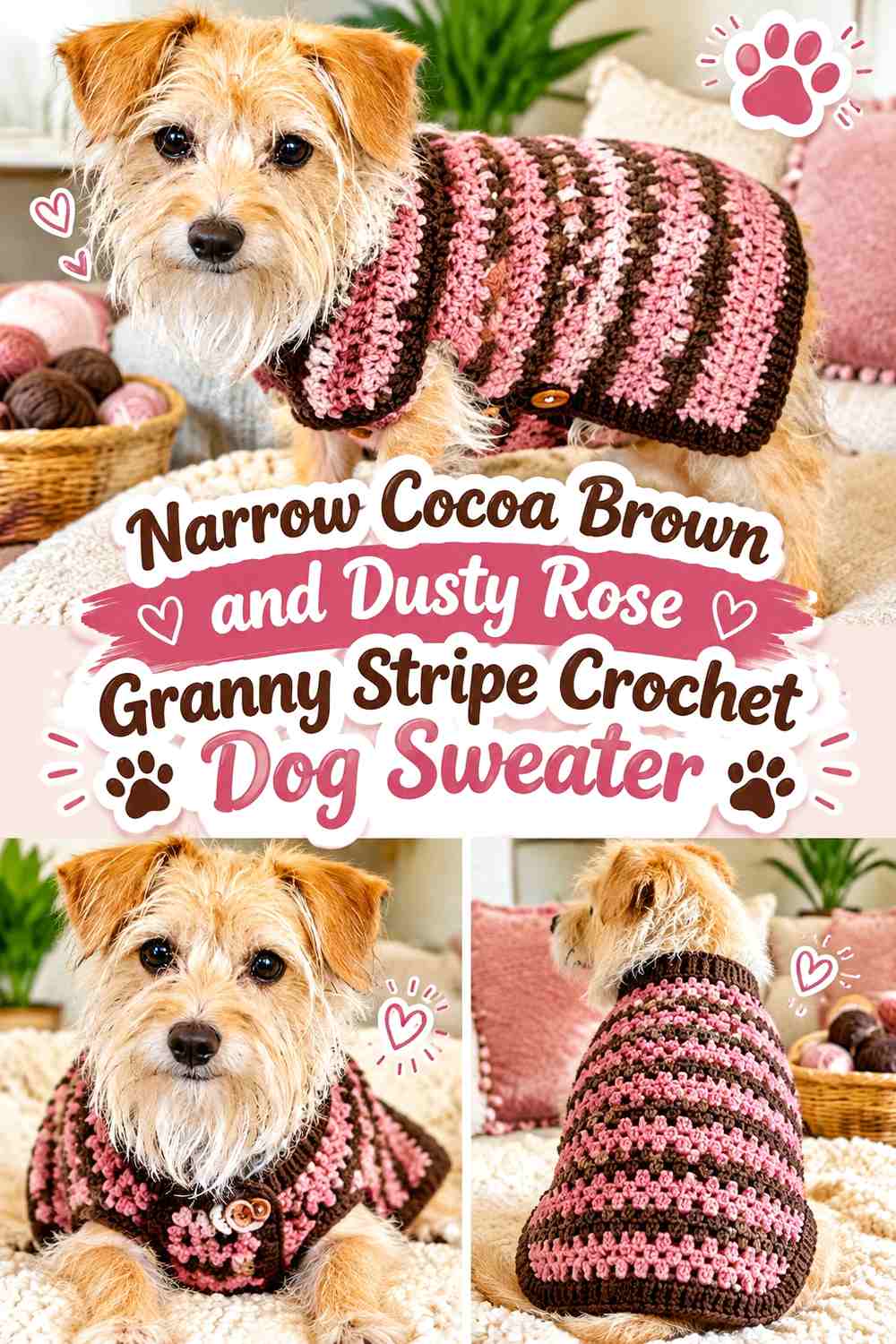
Narrow alternating bands create the busiest color treatment in the collection. Because both shades change frequently, keep the collar, armholes, and lower border comparatively simple.
Cocoa Brown and Dusty Rose Narrow Stripes Need Consistent Repetition
Maintain a straightforward alternating rhythm instead of changing stripe width repeatedly. The frequent color changes already create enough movement across the dog’s back.
A simple sequence also makes it easier to see whether cocoa or dusty rose has unintentionally become more prominent.
Cocoa Brown Trim Can Contain Busy Dusty Rose Granny Stripes
A solid cocoa brown collar or outer edge can act as a visual frame around the narrow stripes. Avoid introducing additional decorative color blocks at the leg openings if the body already contains many stripe changes.
Creator Credit: TwinStarHooks 💫
7. Graduated Cocoa Brown and Dusty Rose Granny Stripe Crochet Dog Sweater
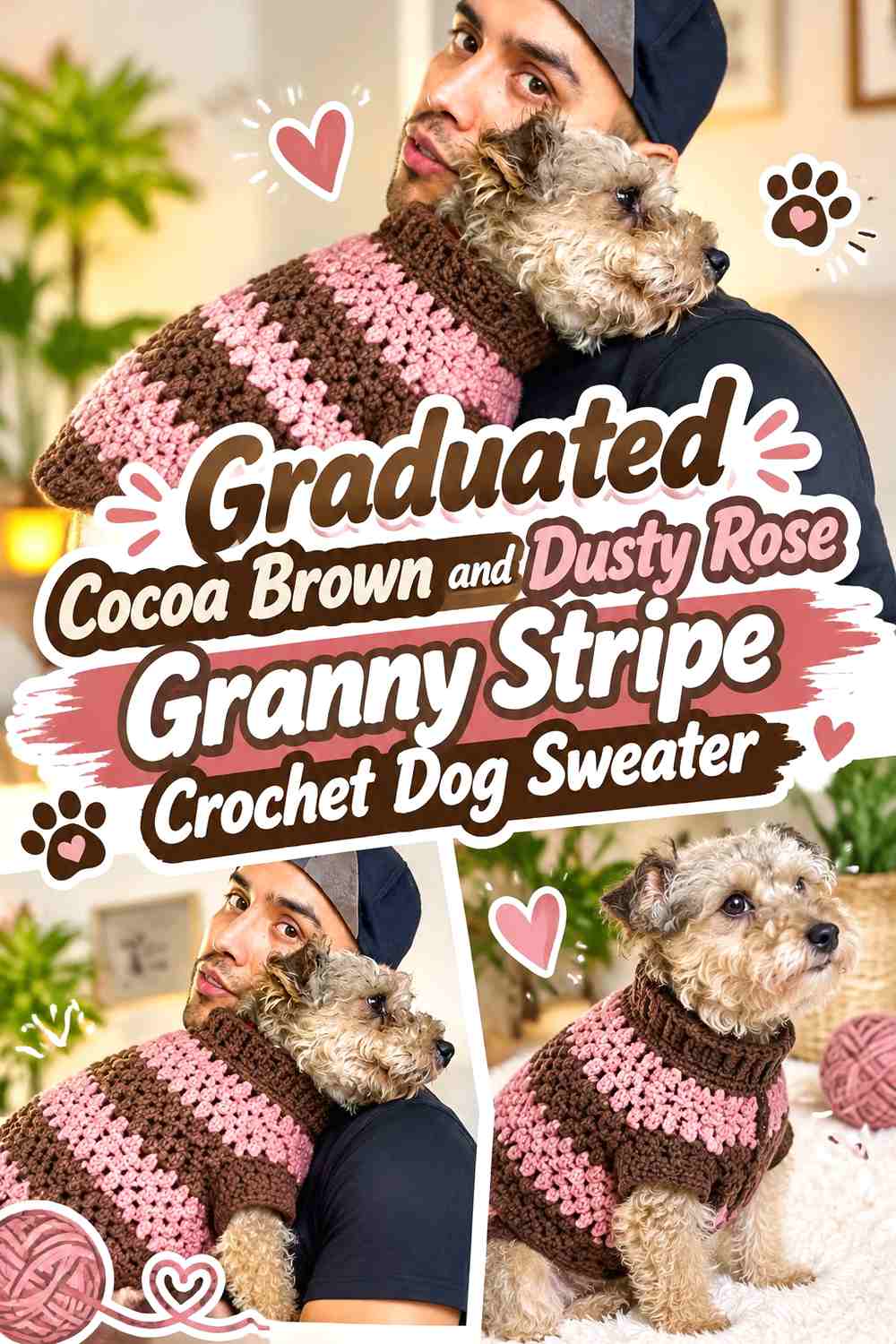
A graduated color ratio changes the visual balance from front to back without introducing a third shade. Begin with more cocoa brown near the shoulders, then allow dusty rose to occupy progressively more visual space toward the lower back.
Cocoa Brown Can Ground the Upper Granny Stripes Near the Collar
Concentrating cocoa brown closer to the neck gives the front of the sweater a stronger dark anchor. A cocoa collar can extend that effect without needing dark edging around every opening.
Dusty Rose Can Expand Through the Lower Cocoa Brown Granny Stripes
Increase the visual share of dusty rose toward the rear so the sweater gradually becomes lighter. Keep the transitions deliberate; random stripe-width changes can look accidental rather than graduated.
Check the sweater on the dog because body curvature can change how much of the lower dusty rose section remains visible.
Creator Credit: CARLOS PERALTA
8. Cocoa Brown Collar and Dusty Rose Granny Stripe Crochet Dog Sweater
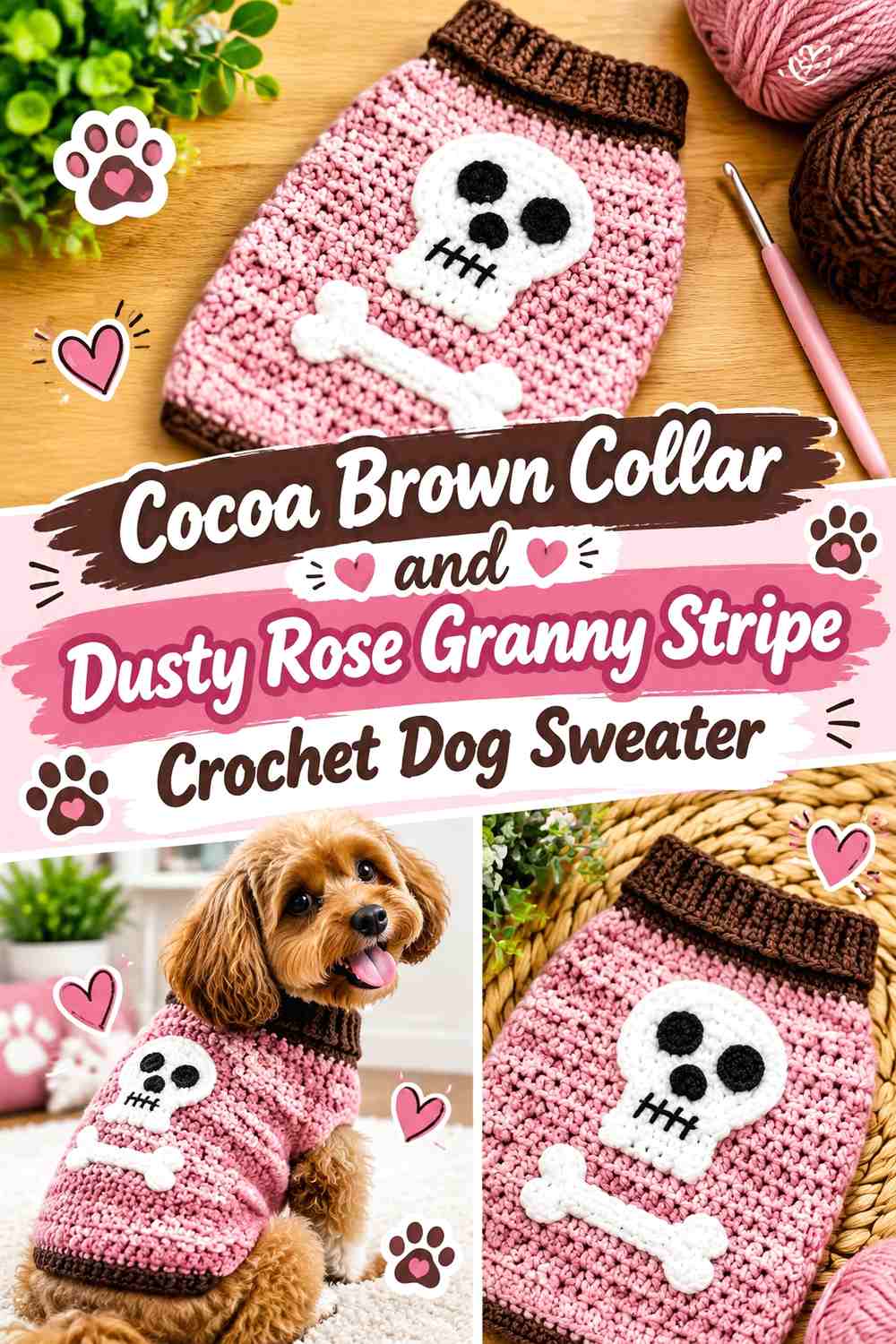
Here, the collar becomes the strongest cocoa brown feature while dusty rose takes more space through the body stripes. Smaller cocoa repeats within the back prevent the dark collar from looking unrelated.
Cocoa Brown Can Make the Dog Sweater Collar the Darkest Anchor
Use cocoa brown through the neckline and repeat it in controlled granny bands farther down the back. The dark collar naturally draws attention to the front of the garment.
Avoid using broad cocoa edging everywhere else if you want the collar to remain the distinctive dark feature.
Dusty Rose Should Carry More Surface Below the Cocoa Brown Collar
Allow dusty rose to dominate the mid-back area so the color balance visibly changes after the neckline. That lighter field prevents the brown collar from making the entire sweater appear dark.
Creator Credit: LittleGemsCreations – Fibre Artist
9. Dusty Rose Collar and Cocoa Brown Granny Stripe Crochet Dog Sweater
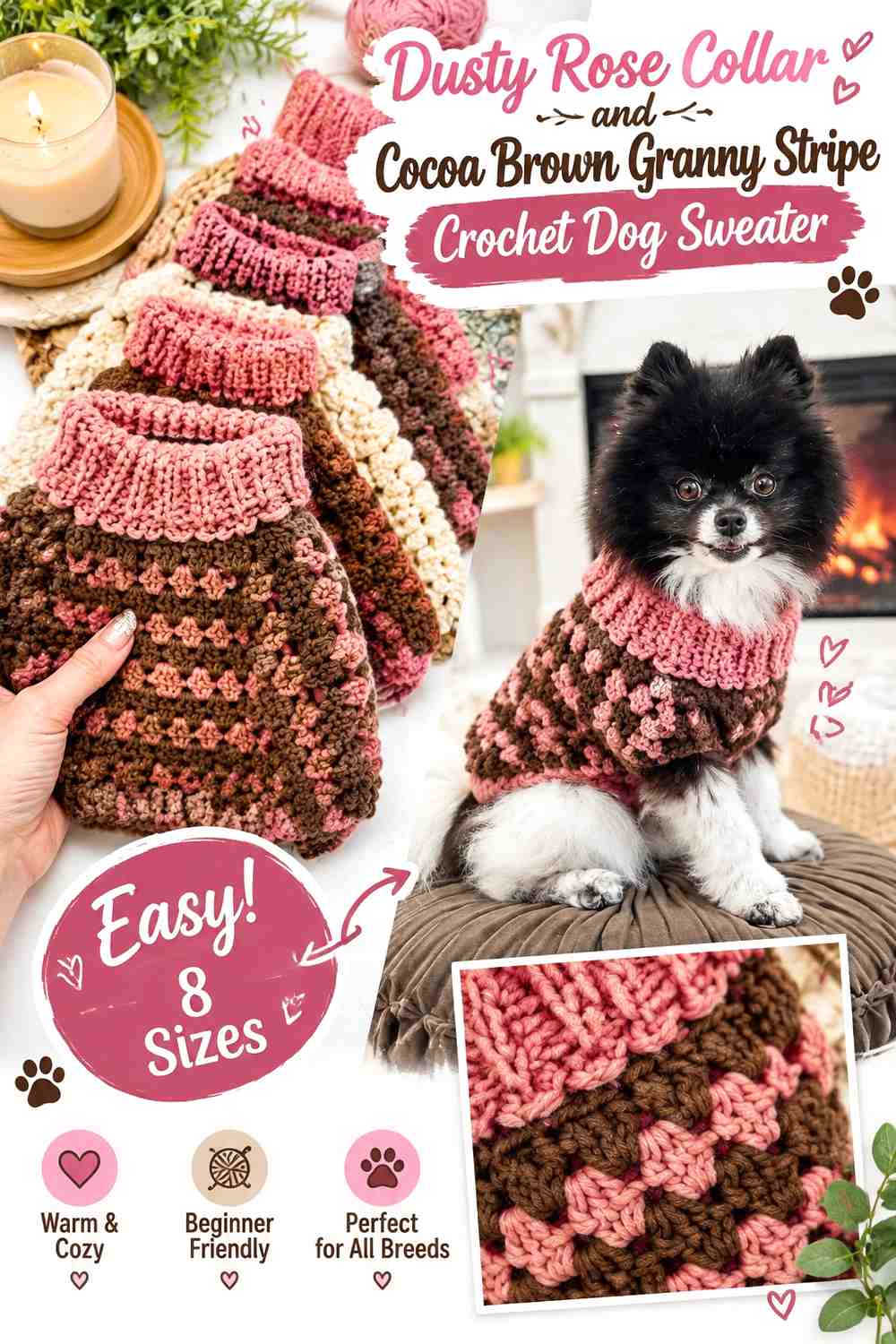
This idea reverses the previous arrangement. Cocoa brown leads across the body, while a dusty rose collar creates a softer transition near the dog’s face and connects to selected pink granny stripes.
Dusty Rose Can Lighten a Cocoa Brown Crochet Dog Sweater Neckline
A dusty rose collar provides a noticeable break before the darker body begins. Repeat the same pink at one or two points across the back so it feels like part of the stripe system rather than a separate neck piece.
Cocoa Brown Should Remain Broad Between Dusty Rose Granny Stripes
Keep the cocoa sections wider than the pink repeats if you want the body to stay dark-led. This gives the sweater depth while allowing the dusty rose collar to remain the main lighter feature.
Creator Credit: Briana K
10. Cocoa Brown Back and Dusty Rose Chest Granny Stripe Crochet Dog Sweater

Most granny stripes are viewed from above, but color can also change the sweater from the front. Keep the visible back predominantly cocoa brown and shift more dusty rose toward the chest or underside.
Cocoa Brown Can Keep the Granny Stripe Back Visually Grounded
Use cocoa brown as the repeated anchor through the upper and center back. Dusty rose stripes can interrupt it without becoming the largest visible color from above.
This gives the sweater a traditional dark-led appearance when the dog is walking away from the viewer.
Dusty Rose Can Give the Cocoa Brown Dog Sweater a Lighter Chest
A larger dusty rose chest area changes the front view without requiring more pink stripes across the back. Repeat dusty rose at the neckline or armhole edge to connect the chest to the visible body accents.
Creator Credit: Crochet with Tiffany
11. Cocoa Brown-Framed Dusty Rose Granny Stripe Crochet Dog Sweater
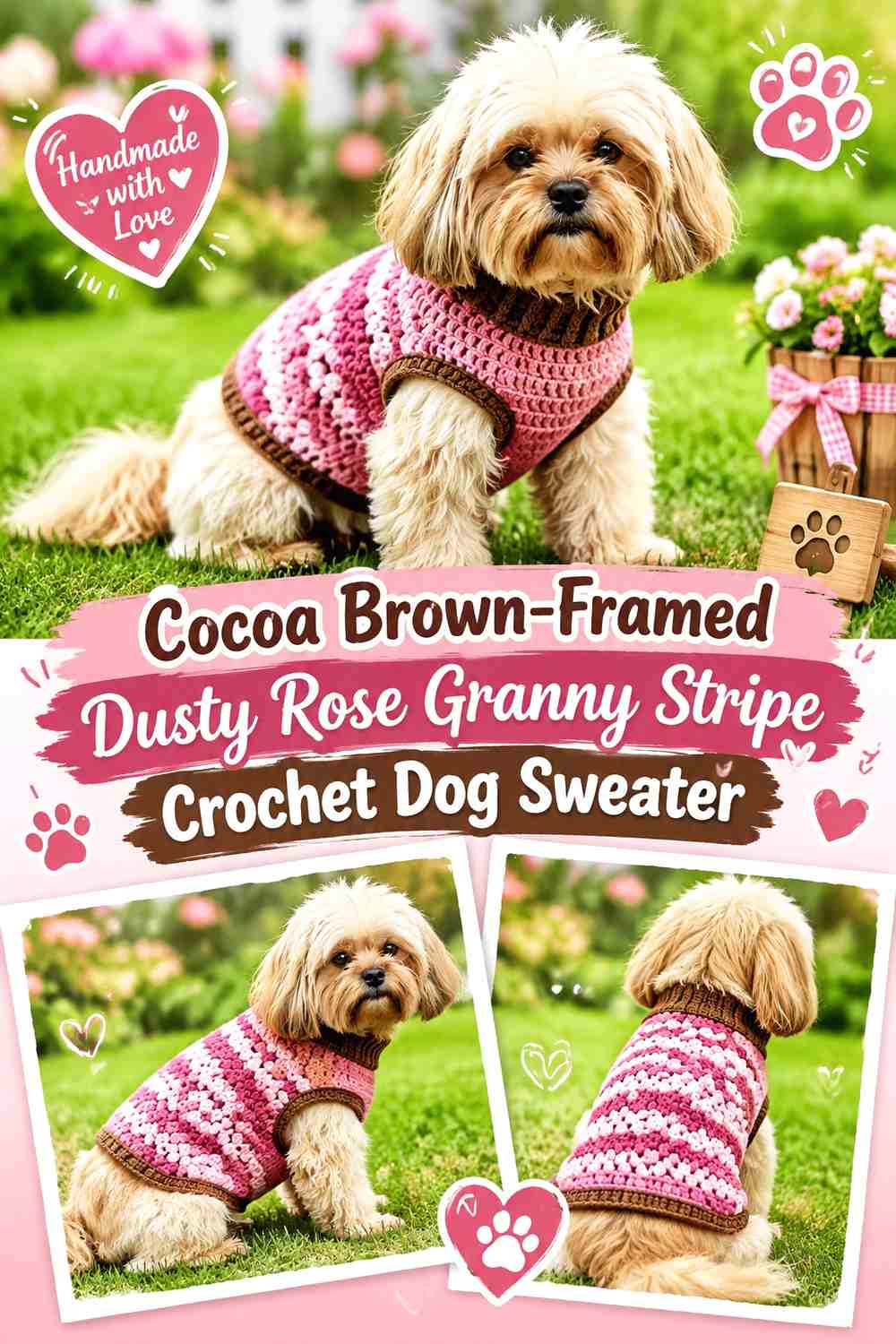
A cocoa brown frame can organize a dusty rose-heavy striped body. Use brown around the collar, selected openings, and lower border while the center back contains more pink.
Cocoa Brown Can Frame the Dusty Rose Granny Stripe Body
Keeping cocoa along major edges creates a continuous dark outline around the lighter center. This makes the body stripes feel contained instead of extending visually into every garment boundary.
The frame does not need to be equally wide everywhere; keep it proportional to the sweater size and fit.
Dusty Rose Should Stay Visible Inside the Cocoa Brown Crochet Frame
Give dusty rose enough central surface that it remains the obvious body color. If cocoa edging becomes too broad around the neck, legs, and lower back simultaneously, the dark frame can visually overtake the pink center.
Creator Credit: Crochet It
12. Dusty Rose Center-Band and Cocoa Brown Granny Stripe Crochet Dog Sweater

For the final idea, use cocoa brown above and below one substantial dusty rose band. Smaller rose repeats can appear elsewhere, but the center section remains the main focal stripe across the dog’s back.
Dusty Rose Can Create One Strong Center Band Across Cocoa Brown
Make the central dusty rose area wider than the other pink repeats so it becomes immediately recognizable as the focal feature. This gives the stripe layout a clear hierarchy instead of treating every color change equally.
Cocoa Brown Can Balance the Dusty Rose Center From Front to Back
Keep cocoa brown visible on both sides of the central band so the pink does not visually split the garment into unrelated front and rear sections. A cocoa collar and lower edge can reinforce that continuity.
Creator Credit: SheiLa Teré
Which Cocoa Brown and Dusty Rose Granny Stripe Layout Should You Choose?
For the darkest overall sweater, choose cocoa-dominant wide stripes, a cocoa-framed body, or a dusty rose collar over a cocoa-led stripe arrangement. These options preserve large dark areas while allowing pink to soften the garment.
For a lighter look, the dusty rose-dominant, cocoa-collar, and double-cocoa-stripe versions give pink considerably more surface area. Equal alternating stripes sit in the middle, while narrow stripes create the most active two-color surface.
If the dog’s back is short, simpler wide bands usually give the two colors more room to read clearly. Longer backs provide more visual space for grouped stripes, graduated ratios, or a larger center band without crowding the neckline and lower edge.
Conclusion
Cocoa brown and dusty rose can produce many different granny-stripe dog sweaters without adding a third color. The key variables are stripe width, repetition, dominant-color ratio, and the way the collar, chest, armholes, and lower edging change the final balance.
Use broad cocoa brown sections when you want a deeper, grounded sweater. Give dusty rose more width when you want a softer overall result, or use paired and grouped stripes when both colors need a stronger repeating rhythm.
Before committing to the complete stripe plan, look at the collar and garment edges along with the body. Those smaller sections can change which color appears dominant. Follow the credited tutorials for their actual dog-garment construction, then adapt the cocoa brown and dusty rose granny-stripe placement around a comfortable fit for the individual dog.
Frequently Asked Questions
Should Cocoa Brown or Dusty Rose Be the Main Color in a Crochet Dog Granny Stripe Sweater?
Either can lead. Cocoa brown gives the sweater a darker visual base, while dusty rose creates a lighter, softer body. Choose the dominant shade before planning the collar and edging because those areas can noticeably change the final balance.
How Wide Should Cocoa Brown and Dusty Rose Granny Stripes Be?
There is no universal stripe width. Wider bands create clearer blocks of color, while narrow alternating stripes produce a busier surface. On a short dog sweater, broad stripes often give each shade more room to remain recognizable.
Do Cocoa Brown and Dusty Rose Have Enough Contrast for Granny Stripes?
They usually differ clearly in hue, but particular shades can have similar light-dark values. Compare the yarns together or use a grayscale photo if you want the boundaries between granny stripes to be strongly visible.
Should the Cocoa Brown Collar Match the Dog Sweater Edging?
It can, but matching every edge to the collar increases the visual share of cocoa brown. If dusty rose is intended to dominate the body, consider keeping some armholes or lower edging dusty rose instead.
Can Dusty Rose Be Used Only as an Accent in a Cocoa Brown Granny Stripe Sweater?
Yes. Narrow dusty rose bands, a collar edge, or limited repeats can soften a cocoa-led sweater without approaching equal coverage. Repetition matters more than using a large amount of pink.
Can I Adapt a Regular Crochet Dog Sweater Tutorial Into a Granny Stripe Design?
A dog-sweater tutorial can provide the fit and garment-construction foundation while the two-color granny-stripe treatment is planned independently. Preserve the source’s structural logic around the neckline, chest, leg openings, and belly rather than changing construction merely to create more stripes.
What Should I Check Before My Dog Wears a Cocoa Brown and Dusty Rose Crochet Sweater?
Check that the neckline goes on comfortably, the chest is not restrictive, the front-leg openings allow normal movement, and the belly and lower edge stay clear where necessary. Color changes should never require bulky finishing or tight sections that interfere with the dog’s movement.