A crochet 3D floral mirror frame can turn a functional bedroom mirror into a softer cottagecore focal point. The most convincing versions usually do more than attach flowers around an edge: they control flower color, foliage, petal depth, empty space, and repetition so the mirror still feels usable rather than buried beneath decoration.

Cottagecore color does not have to mean using every pastel at once. Dusty rose beside sage can create a faded-garden direction, while mustard and olive feel earthier. Cream and oatmeal can calm stronger flowers, and a darker burgundy, chocolate, or brick-red center can give pale petals enough definition to remain visible.
The ideas below treat the proposed palettes as editorial adaptations. One source directly demonstrates a crochet flower frame that can also work with a small mirror; the remaining tutorials teach useful flower, wreath, motif, or layered-floral concepts that can be adapted around a separately prepared mirror frame.
Quick List
- Butter Yellow, Cream, and Sage Sunflower Crochet 3D Floral Mirror Frame
- Dusty Rose, Lavender, and Sage Meadow Crochet 3D Floral Mirror Frame
- Cream, Rust, and Olive Daisy Crochet 3D Floral Mirror Frame
- Blush Pink, Ivory, and Moss Layered Daisy Crochet 3D Floral Mirror Frame
- Dusty Mauve, Antique Pink, and Sage Rose Crochet 3D Floral Mirror Frame
- Peach, Terracotta, and Soft Green Tulip Crochet 3D Floral Mirror Frame
- Burgundy, Dusty Pink, and Oatmeal Carnation Crochet 3D Floral Mirror Frame
- Mustard, Chocolate Brown, and Olive Sunflower Crochet 3D Floral Mirror Frame
- Powder Blue, Cream, and Moss Flower-Square Crochet 3D Floral Mirror Frame
- Lilac, Blush, and Cream Puff-Flower Crochet 3D Floral Mirror Frame
- Butter Yellow, Pale Blue, and Sage Tiny-Flower Crochet 3D Floral Mirror Frame
- Rust, Rose Pink, and Cream Carnation Crochet 3D Floral Mirror Frame
- Brick Red, Oatmeal, and Moss Poppy Crochet 3D Floral Mirror Frame
- Golden Yellow, Taupe, and Moss Sunflower Crochet 3D Floral Mirror Frame
- Soft Peach, Wine, and Sage Rose-Garden Crochet 3D Floral Mirror Frame
- Dusty Blue, Lavender, and Leaf Green Hydrangea Crochet 3D Floral Mirror Frame
- Deep Red, Ivory, and Charcoal Poppy Crochet 3D Floral Mirror Frame
- Avocado Green, Mustard, and Cream Layered-Flower Crochet 3D Floral Mirror Frame
Choose Cottagecore Colors by Role, Not Just by Flower
A floral mirror frame becomes much easier to control when each color has a job. A flower shade can lead, green can connect separate blooms, and cream or oatmeal can create breathing room between stronger colors. That hierarchy matters particularly around a mirror because the glass already adds visual activity through reflections.
Try not to make every flower equally saturated. If dusty rose is the dominant floral shade, for example, keep burgundy to flower centers or occasional blooms and let sage spread more quietly through leaves. The frame will still look abundant without turning into one uninterrupted ring of competing colors.
Keep 3D Flowers From Closing In on the Mirror
Dimensional petals naturally extend toward the glass opening, so decide how much of the inner edge should remain visible before arranging the flowers. Larger roses, carnations, and layered daisies usually need more visual breathing room than small flat blossoms.
Color can help here too. Dark flowers clustered directly against the mirror can make the opening look smaller, while cream, blush, pale blue, or soft yellow near the inner edge can keep the border visually lighter. Reserve deeper colors for outer corners or selected focal flowers when you want the frame to feel fuller without visually reducing the glass.
Repeat Green Around the Crochet Mirror Frame
Sage, olive, moss, and softer leaf greens do more than suggest foliage. They can connect flower colors that would otherwise feel separate.
Instead of placing one patch of green in a single corner, repeat it around the frame in small amounts. This is especially useful when the flowers combine warm and cool shades, such as terracotta with dusty blue or burgundy with blush. Repeated foliage gives the eye something consistent to follow around the mirror.
1. Butter Yellow, Cream, and Sage Sunflower Crochet 3D Floral Mirror Frame

Butter yellow gives this frame a sunny cottage-garden focus without the sharper effect of a highly saturated yellow. Let yellow flowers occupy the focal positions, use sage for leaves and smaller gaps, and keep cream visible around parts of the actual frame. This prevents the flowers from forming one solid ring and gives the mirror opening clearer definition.
The supporting tutorial directly demonstrates a crochet flower frame and describes adapting the framed flower concept with a small mirror, making it the closest construction match in this collection. YouTube
Let Butter Yellow Flowers Lead the Crochet Mirror Corners
Place the largest butter-yellow blooms at two or three visual anchor points rather than spacing every flower identically. Corners work particularly well on a square or rectangular mirror because the flower volume softens the harder outline of the frame.
Cream flowers can fill smaller transitions without competing with the yellow focal blooms.
Use Sage Green to Separate Butter Yellow From the Mirror Glass
Sage leaves are useful along the inner border where several butter-yellow petals would otherwise merge together. The cooler green gives the warm petals more definition while maintaining a soft cottagecore palette.
Avoid filling every exposed piece of frame with sage. Leaving controlled gaps helps the 3D flowers remain individually readable.
Creator Credit: Annie Ahmed 🧸
2. Dusty Rose, Lavender, and Sage Meadow Crochet 3D Floral Mirror Frame

This palette suits a loose meadow-style border rather than a perfectly symmetrical flower ring. Dusty rose can carry the larger blooms, lavender can appear in smaller repeated flowers, and sage can connect everything through foliage. The different flower colors should feel scattered but not random.
The supporting tutorial demonstrates a crochet flower wreath, so it is useful for thinking about distributing multiple flowers around a circular form rather than as an exact mirror-frame construction tutorial. YouTube
Keep Dusty Rose as the Largest Floral Color Around the Mirror
Use dusty rose on blooms with the most petal volume. This gives the mirror a clear dominant floral color even when several smaller lavender details appear nearby.
On a circular mirror, uneven clusters can look more natural than placing one rose at every equal interval.
Repeat Lavender Between Sage Green Sections
Lavender should appear several times rather than in one isolated cluster. Small lavender flowers between sage leaves can guide the eye around the full frame and keep one side from becoming visually heavier.
If dusty rose and lavender are similar in value, let sage sit between some of them to preserve petal separation.
Creator Credit: My Creative Obsession
3. Cream, Rust, and Olive Daisy Crochet 3D Floral Mirror Frame
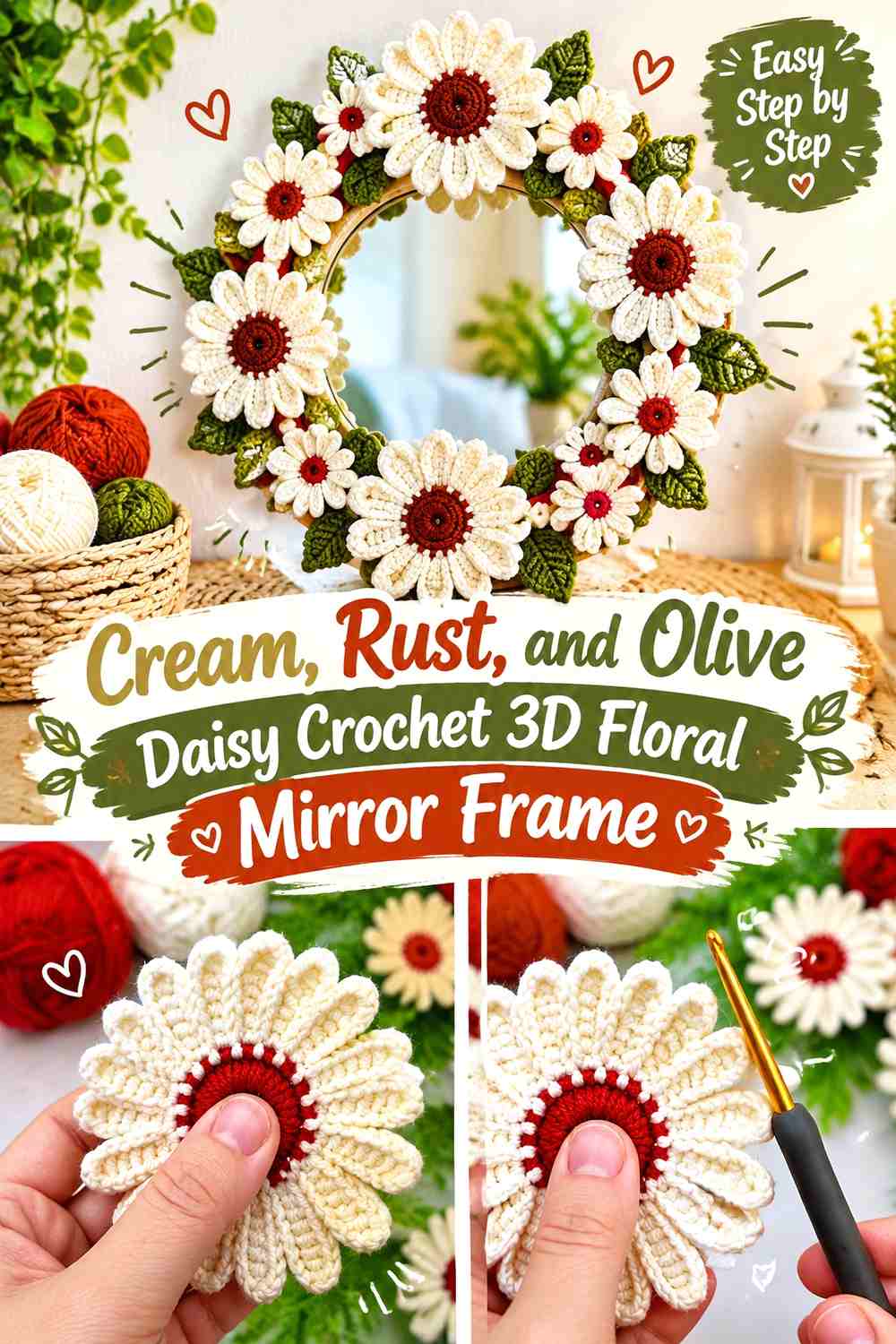
Cream daisies give this frame a light surface, while rust centers move the palette away from a crisp spring look and toward something earthier. Olive leaves reinforce that muted direction and are particularly useful around a wooden, beige, or warm-neutral bedroom setting.
The supporting tutorial demonstrates a textured 3D daisy motif that can be treated as an individual floral component for a separate mirror frame. YouTube
Use Cream Daisy Petals to Keep the Mirror Border Light
Cream can cover most of the visible petals without making the frame look colorless because rust and olive provide enough definition. It is also useful around the inner mirror edge, where lighter petals are less likely to make the opening feel visually enclosed.
Keep Rust in the Cream Daisy Centers and Small Accents
Rust becomes more effective when concentrated. Flower centers, occasional miniature blooms, or a few outer-edge details provide enough warm contrast without overpowering the cream petals.
Olive should repeat around these rust details so the accent does not look disconnected.
Creator Credit: Knitting my hobby
4. Blush Pink, Ivory, and Moss Layered Daisy Crochet 3D Floral Mirror Frame
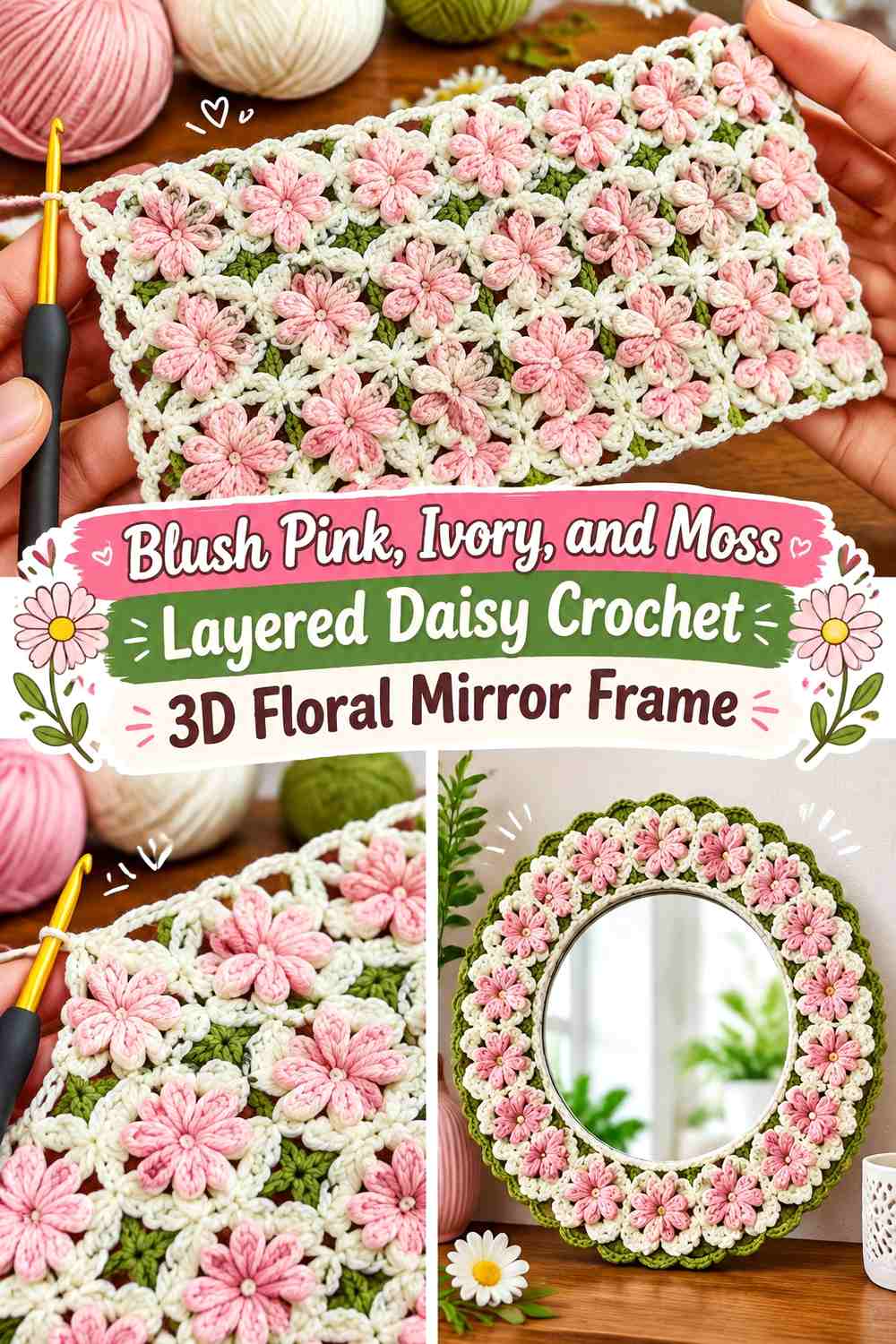
Blush petals make layered daisies softer than a classic white-and-yellow treatment. Ivory can highlight selected inner petals or smaller companion flowers, while moss gives the frame the deeper natural contrast needed to keep several pale layers from blending into one shape.
The supporting tutorial specifically demonstrates a layered 3D daisy, making it useful for the dimensional floral component rather than the mirror structure itself. YouTube
Give Blush Pink Enough Space Between Layered Daisy Petals
When multiple petal layers are already adding texture, too many rapid color changes can make the flower harder to read. Keeping most layers blush gives the 3D structure more continuity.
Use ivory selectively rather than alternating every layer.
Put Moss Green Beside Ivory and Blush Near the Outer Mirror Edge
Moss is the strongest visual anchor in this palette. Positioning it behind or beside pale blooms can outline the flower shapes without requiring a dark frame color.
Keep the moss more concentrated toward the outer border so the inner mirror opening remains airy.
Creator Credit: Knitting Love 💗
5. Dusty Mauve, Antique Pink, and Sage Rose Crochet 3D Floral Mirror Frame
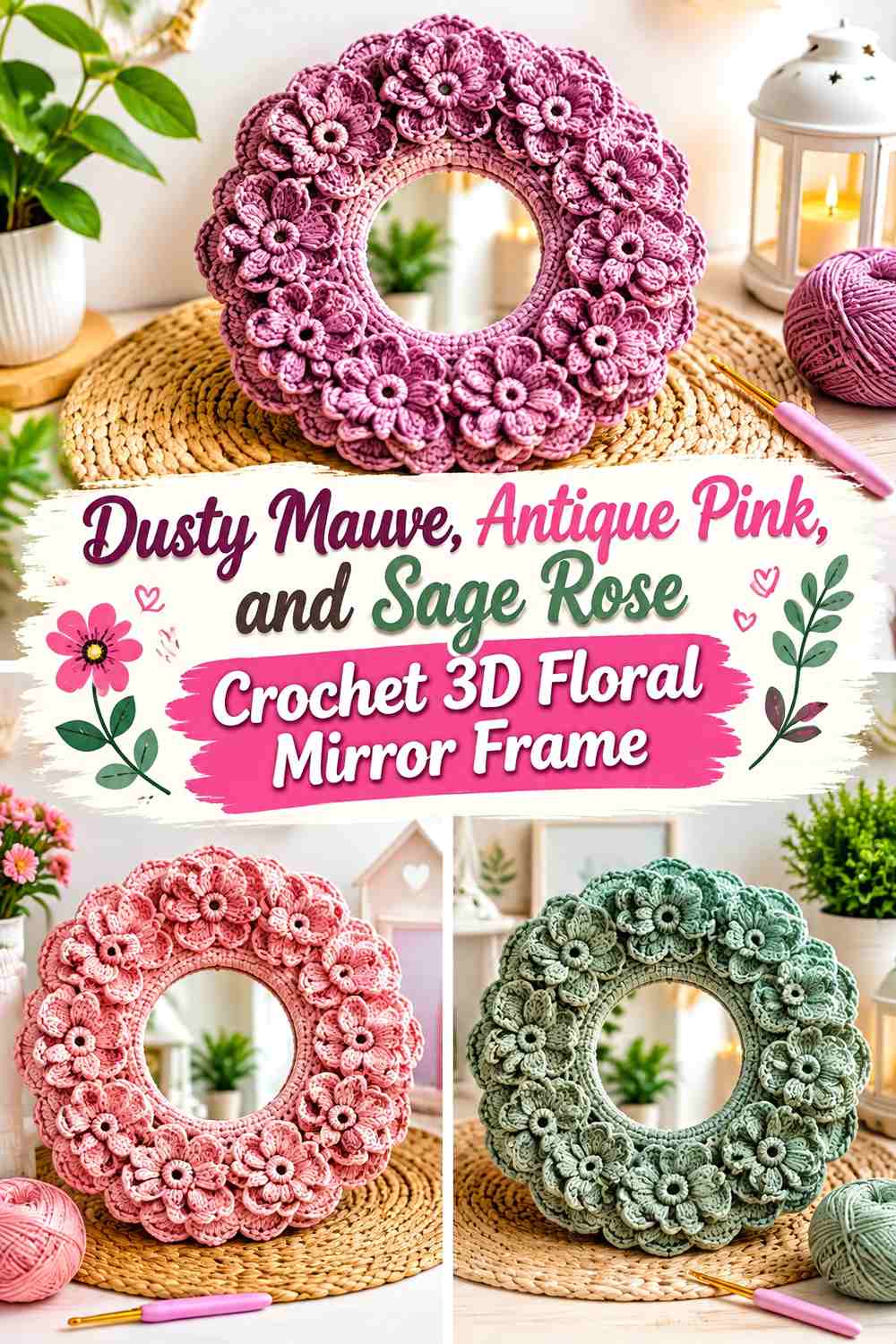
Roses naturally create more petal depth than simpler daisies, so this palette benefits from close tonal relationships. Dusty mauve can provide the deepest blooms, antique pink can soften the transition, and sage gives the floral mass enough separation from the frame.
The linked source teaches a crochet rose, so use it for building the floral element that can be arranged on a separately prepared mirror surround. YouTube
Use Dusty Mauve Roses as Focal Points Rather Than a Full Ring
A complete border of deep mauve roses could make the mirror look heavy. Concentrate them at the bottom corners, top center, or another limited grouping, then transition outward with antique pink.
This creates depth without requiring every rose to compete equally.
Let Sage Green Break Up Antique Pink and Dusty Mauve Roses
Insert leaves between neighboring roses, particularly where mauve and antique pink are close in value. Sage makes each flower boundary easier to see and keeps the border from becoming one continuous pink mass.
Creator Credit: la fata tuttofare
6. Peach, Terracotta, and Soft Green Tulip Crochet 3D Floral Mirror Frame
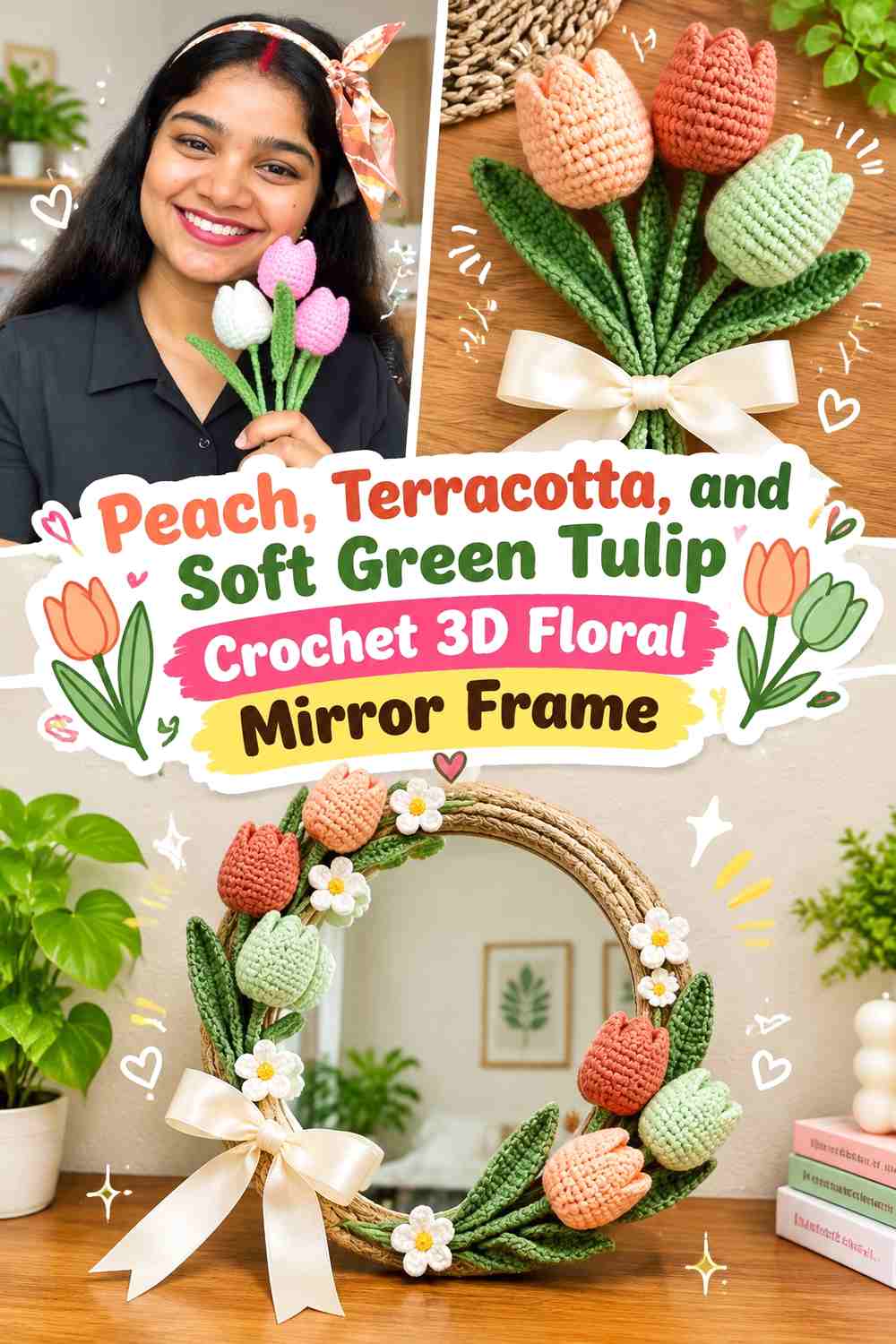
Peach and terracotta bring warmth to a cottagecore bedroom without relying on traditional pink roses. Let peach form most of the tulip heads, use terracotta for selected deeper blooms, and bring soft green through leaves and small spaces between flowers.
The supporting tutorial teaches a crochet tulip; the flower can be adapted as a dimensional decoration around a separate mirror frame. YouTube
Keep Peach Tulips Closer to the Mirror Opening
Peach has less visual weight than terracotta, so it works well nearer the glass. This helps maintain a lighter inner border even when the overall frame is densely decorated.
Terracotta flowers can sit farther toward the outside edge.
Repeat Terracotta Among Soft Green Leaves
One terracotta tulip alone may look accidental against a mostly peach frame. Repeat the color at two or three distant points and use soft green between them to distribute the warm accent around the composition.
Creator Credit: Crochet by Amrita
7. Burgundy, Dusty Pink, and Oatmeal Carnation Crochet 3D Floral Mirror Frame
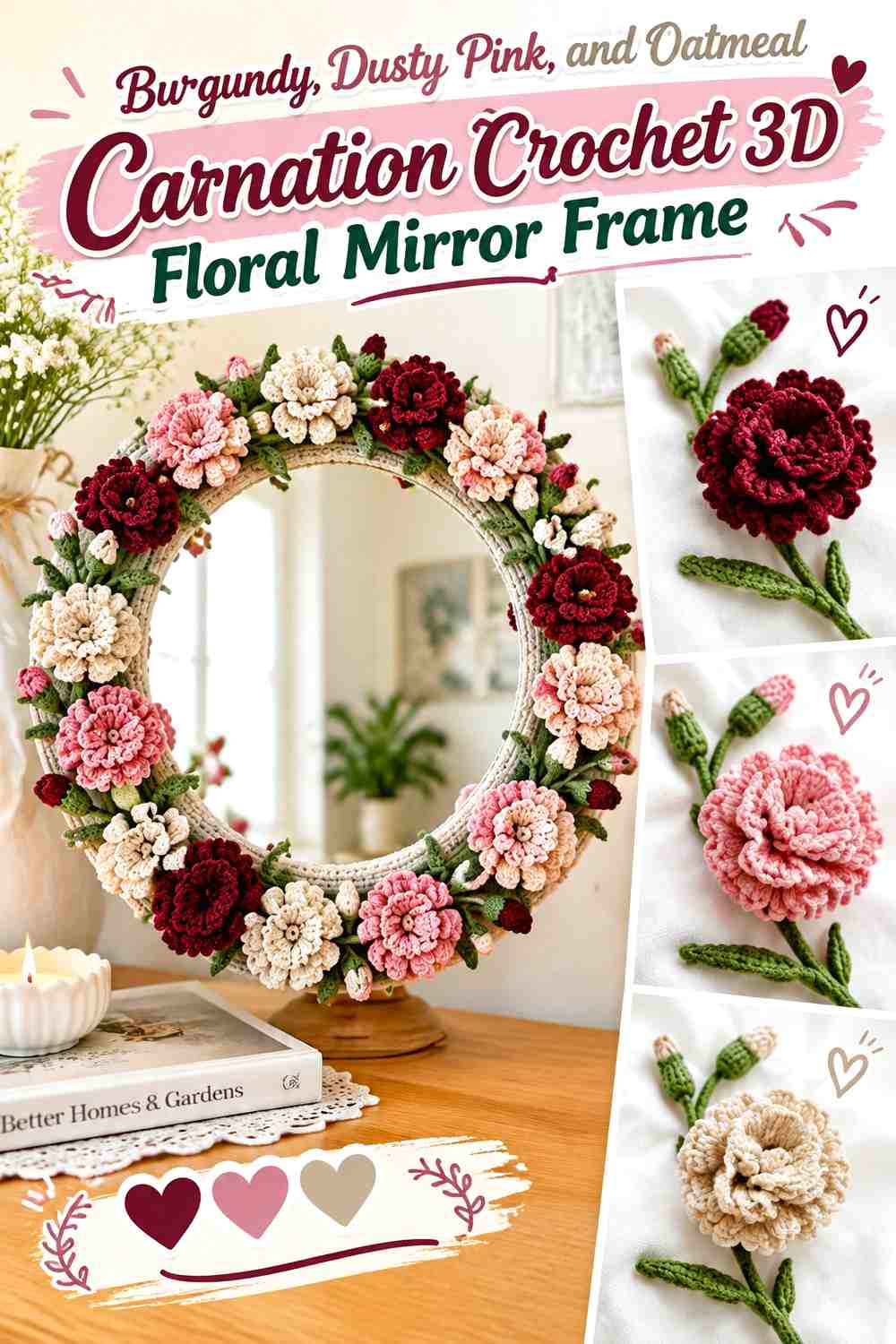
Carnations bring strong ruffled texture, so the color plan needs to keep their edges visible. Burgundy can provide the deepest flowers, dusty pink can make up most of the border, and oatmeal can appear in smaller blossoms or exposed frame sections.
The linked tutorial demonstrates a dimensional carnation flower, giving this idea a useful ruffled-flower reference for mirror embellishment. YouTube
Keep Burgundy Carnations Away From Every Inner Mirror Edge
Burgundy can visually close in the mirror opening if it forms a continuous dark ring. Use it for outer corners or occasional focal carnations instead.
Dusty pink is better suited to the areas immediately beside the glass.
Use Oatmeal to Separate Burgundy and Dusty Pink Ruffles
Carnations already create many overlapping edges. Oatmeal flowers or small neutral spaces between the two pink-red shades help individual blossoms remain visible instead of merging into a single textured mass.
Creator Credit: Crochet Everyday
8. Mustard, Chocolate Brown, and Olive Sunflower Crochet 3D Floral Mirror Frame

This is one of the earthiest palettes in the collection. Mustard petals can lead, chocolate brown can define the flower centers, and olive can extend around the frame as leaves. Keeping these shades muted gives the sunflower theme a more autumnal cottagecore look than a bright yellow-and-green treatment.
The supporting tutorial teaches a dimensional crochet sunflower suitable as the main floral reference for this adaptation. YouTube
Let Mustard Sunflowers Occupy the Largest Mirror Areas
Use mustard flowers where you want the eye to land first—such as opposite corners or across the lower third of a larger mirror. Their wider petal area gives the palette warmth without requiring extra accent colors.
Keep Chocolate Brown Centers Smaller Than Olive Foliage
Chocolate has the greatest visual weight here. Restricting it mostly to sunflower centers helps define each bloom while leaving olive enough room to connect the entire frame.
Too much chocolate around the outer border can make the flowers appear boxed in.
Creator Credit: Brunaticality
9. Powder Blue, Cream, and Moss Flower-Square Crochet 3D Floral Mirror Frame

Powder blue gives this cottagecore frame a cooler direction. Use cream for dimensional flower centers or petal highlights and moss for leaves or deeper connecting sections. Instead of surrounding the whole mirror with individual stems, you can treat dimensional floral motifs as concentrated corner panels.
The linked tutorial teaches a 3D textured flower granny square, which makes it useful for exploring dimensional floral modules rather than direct mirror-frame construction. YouTube
Concentrate Powder Blue Floral Squares at Mirror Corners
Corner placement lets the dimensional motifs soften a rectangular mirror without covering every inch of frame. Leave sections between the modules quieter so the flower texture remains noticeable.
Use Moss Green to Define Cream Against Powder Blue
Cream and pale blue can become very soft together. Moss around parts of the flower or surrounding foliage adds the darker reference needed to preserve petal definition.
Keep moss secondary so the frame still reads as powder-blue-led.
Creator Credit: Hooked by Robin
10. Lilac, Blush, and Cream Puff-Flower Crochet 3D Floral Mirror Frame
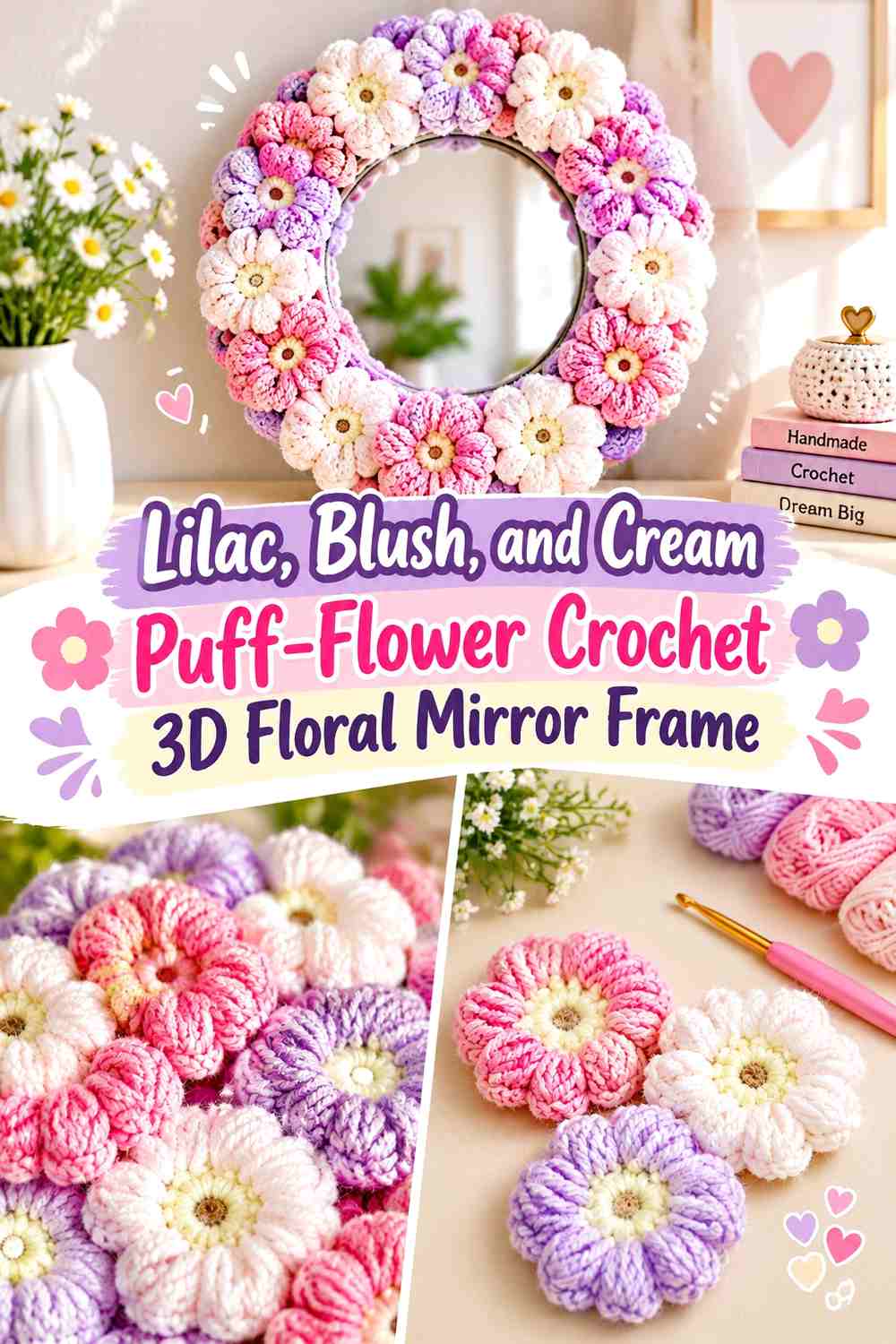
Puff flowers already have a rounded, tactile surface, making them suitable for a fuller mirror frame even without large leaves. Lilac can dominate, blush can provide warm variation, and cream can interrupt clusters so the border does not become overly dense.
The linked tutorial demonstrates crochet puff flowers and joining them, which is useful for building grouped floral sections around a separate frame. YouTube
Let Lilac Puff Flowers Form the Main Crochet Mirror Border
Repeat lilac often enough that the frame has a recognizable base color. Blush can then appear as small clusters rather than alternating mechanically flower by flower.
A dominant lilac field also makes it easier to introduce cream without losing the cottagecore softness.
Put Cream Between Dense Lilac and Blush Clusters
Cream provides a visual pause where several rounded flowers meet. Use it at transitions, corners, or immediately beside the glass if the colored puffs make the opening appear crowded.
Creator Credit: Bella Coco
11. Butter Yellow, Pale Blue, and Sage Tiny-Flower Crochet 3D Floral Mirror Frame

Small flowers create a different cottagecore effect from oversized roses. Butter yellow and pale blue can alternate loosely, while sage appears as the repeated connecting color. The smaller scale is especially useful if you want the frame itself to remain partly visible.
The supporting HappyBerry Crochet tutorial teaches a simple flower and is best treated as a small-flower component reference for the mirror border. Daily Crochet
Scatter Butter Yellow Flowers Through Pale Blue Instead of Alternating Them
A strict yellow-blue-yellow-blue sequence can make a meadow-inspired frame look overly patterned. Use irregular groups while keeping the total amount of butter yellow consistent around the mirror.
Repeat Sage Green Between Tiny Pale Blue Flowers
Because the flowers are smaller, sage can occupy more of the connecting space without overpowering them. It also helps pale blue blossoms remain visible against a cream, white, or light-wood mirror surround.
Creator Credit: HappyBerry Crochet
12. Rust, Rose Pink, and Cream Carnation Crochet 3D Floral Mirror Frame
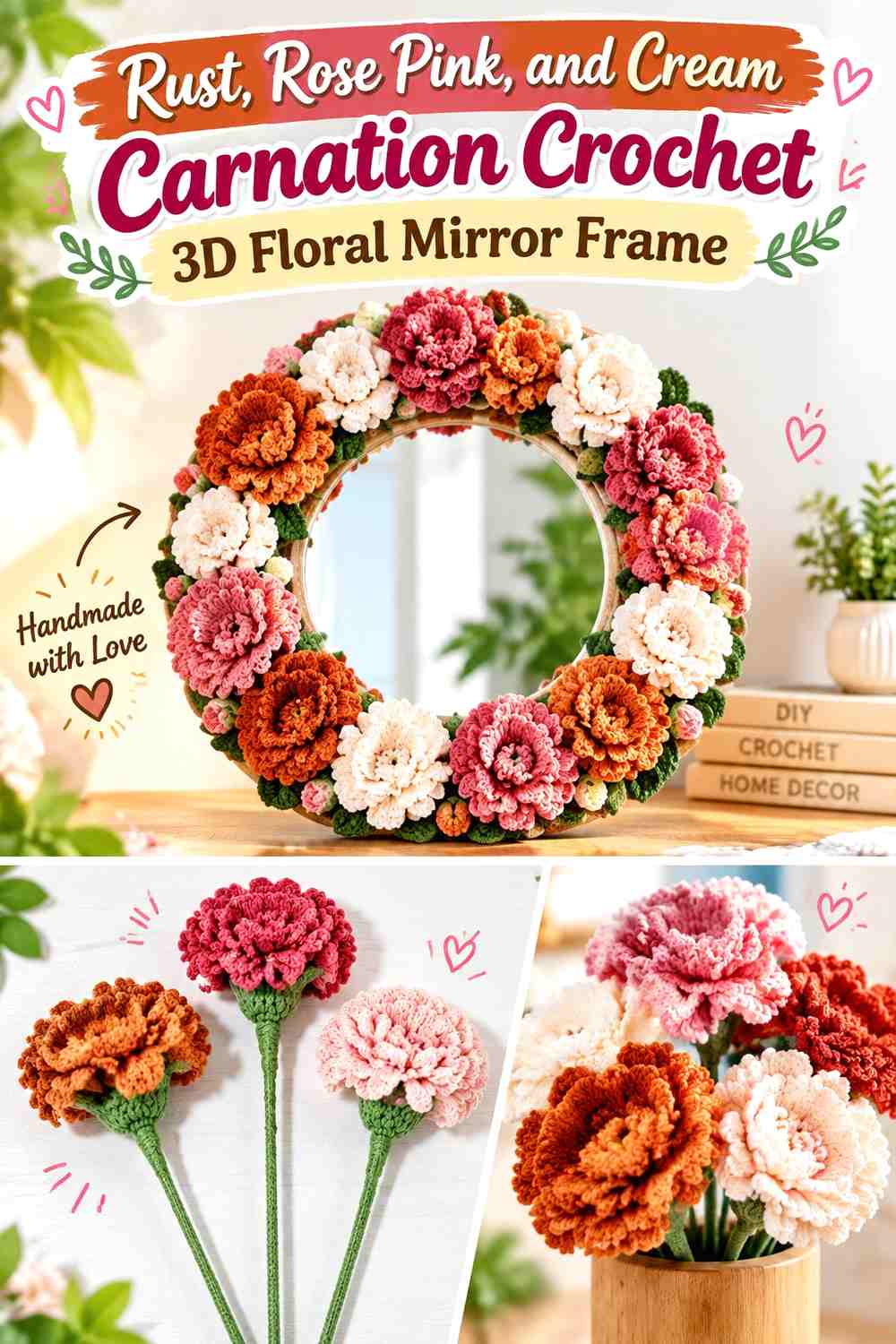
This carnation palette is warmer than the burgundy version. Rust should act as the deepest flower shade, rose pink can dominate the ruffled border, and cream can control the visual density near the mirror glass.
The supporting Crochet Musings tutorial teaches a carnation flower, making it useful for the floral element rather than a complete mirror-frame project. Ravelry
Use Rose Pink for Most Crochet Carnations
Rose pink gives the ruffled flowers enough color without making the entire frame dark. It can safely cover more of the surface than rust because its visual weight is softer.
Place Rust Carnations Where Cream Can Separate Them
Use cream flowers or visible neutral frame sections beside at least some rust blooms. The contrast helps the deepest flowers stay distinct and prevents adjacent rose-pink ruffles from visually collapsing into them.
Creator Credit: Crochet Musings
13. Brick Red, Oatmeal, and Moss Poppy Crochet 3D Floral Mirror Frame
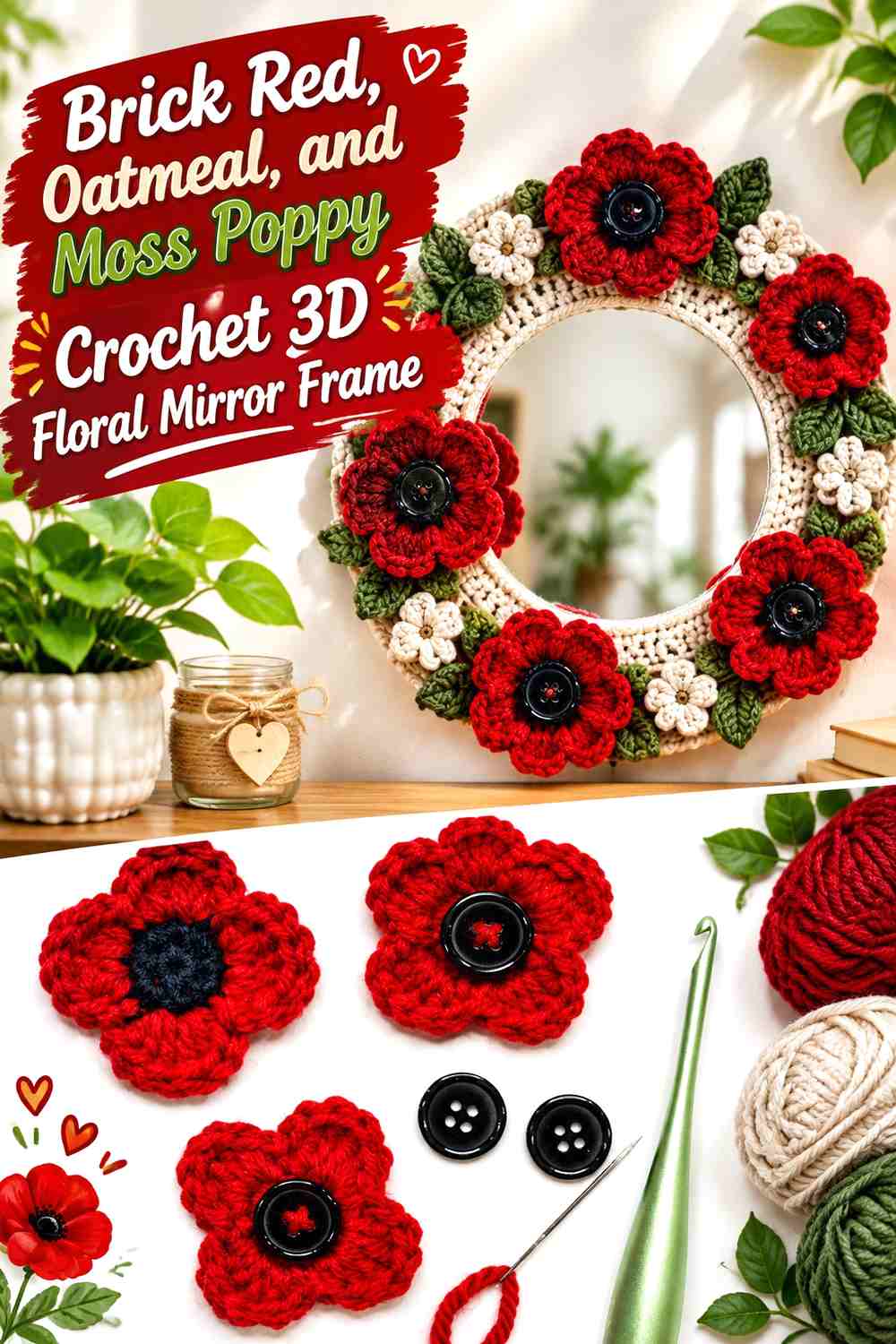
Brick red gives poppies a softened vintage direction compared with a bright scarlet. Oatmeal can act as the neutral background or small companion flower color, while moss leaves prevent the red blooms from appearing disconnected from the rest of the frame.
The linked source supports the poppy-flower component rather than mirror construction. freecrochettutorials.com
Keep Brick Red Poppies in Deliberate Mirror Clusters
Poppies have a strong silhouette even without many colors. Group a few brick-red flowers rather than building a continuous red border, especially on a smaller bedroom mirror.
This leaves enough neutral area for the floral shapes to stay recognizable.
Use Oatmeal Beside Brick Red and Moss Green
Oatmeal can appear as visible frame wrapping, smaller neutral flowers, or open space between clusters. Its lighter value keeps moss and brick red from producing an overly dark border.
Creator Credit: The Loopy Lamb
14. Golden Yellow, Taupe, and Moss Sunflower Crochet 3D Floral Mirror Frame
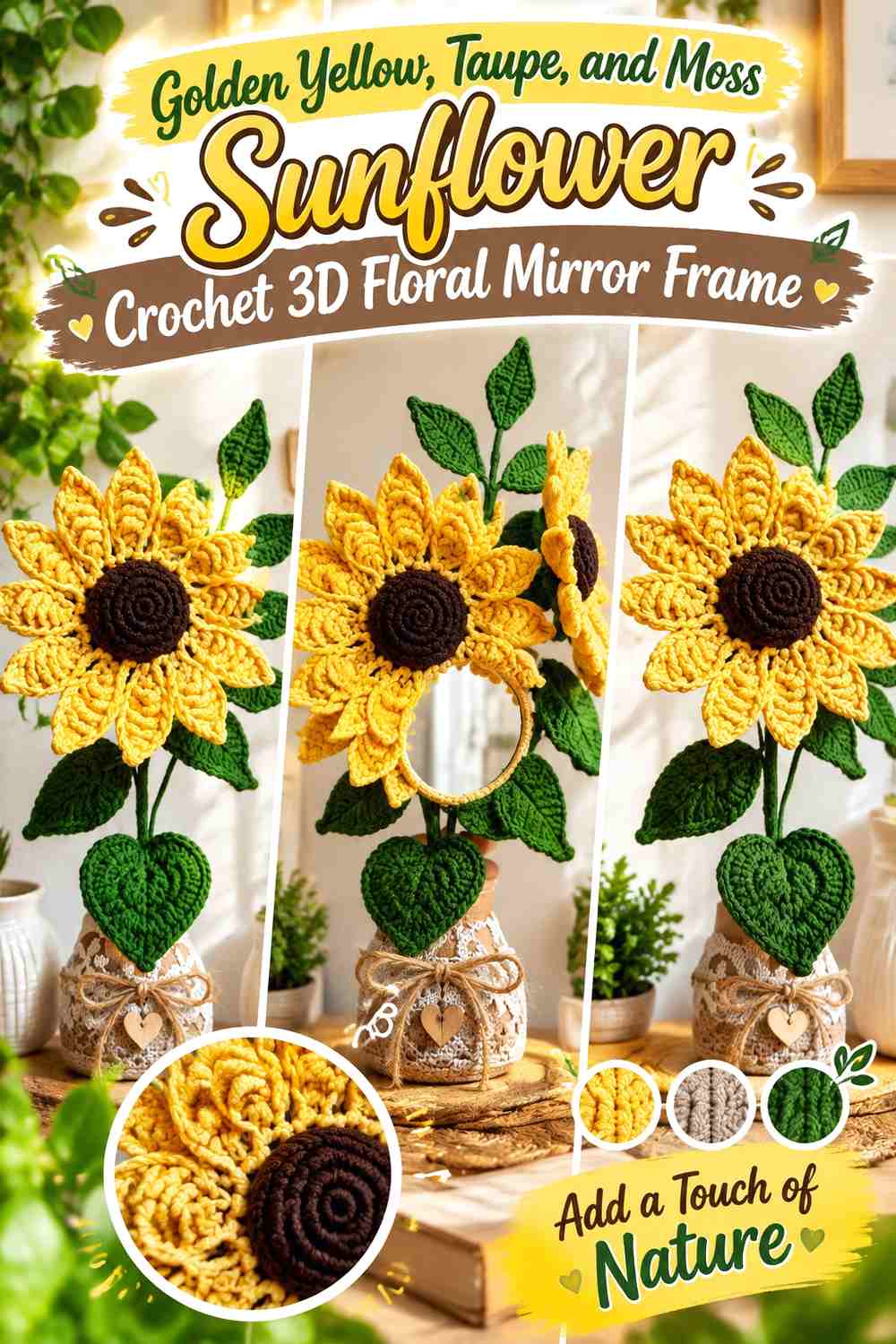
Golden yellow with taupe creates a softer sunflower than dark brown centers would. Moss keeps the palette grounded and can be repeated through leaves or frame details. This is a useful direction when mustard-and-brown feels too autumnal for the bedroom.
The supporting source documents a full sunflower video tutorial by Sahar Elkady that can provide the flower component for this adaptation. Ravelry
Use Golden Yellow Around the Outer Mirror Border
Golden yellow petals can radiate outward without visually reducing the reflective opening. Let the flowers extend more toward the wall than over the glass wherever possible.
Choose Taupe Centers to Soften Golden Yellow Sunflowers
Taupe gives the flower center enough contrast without creating the dark punctuation of chocolate brown. Moss can then become the deepest shade, making the foliage a stronger structural element in the overall frame.
Creator Credit: Sahar Elkady
15. Soft Peach, Wine, and Sage Rose-Garden Crochet 3D Floral Mirror Frame
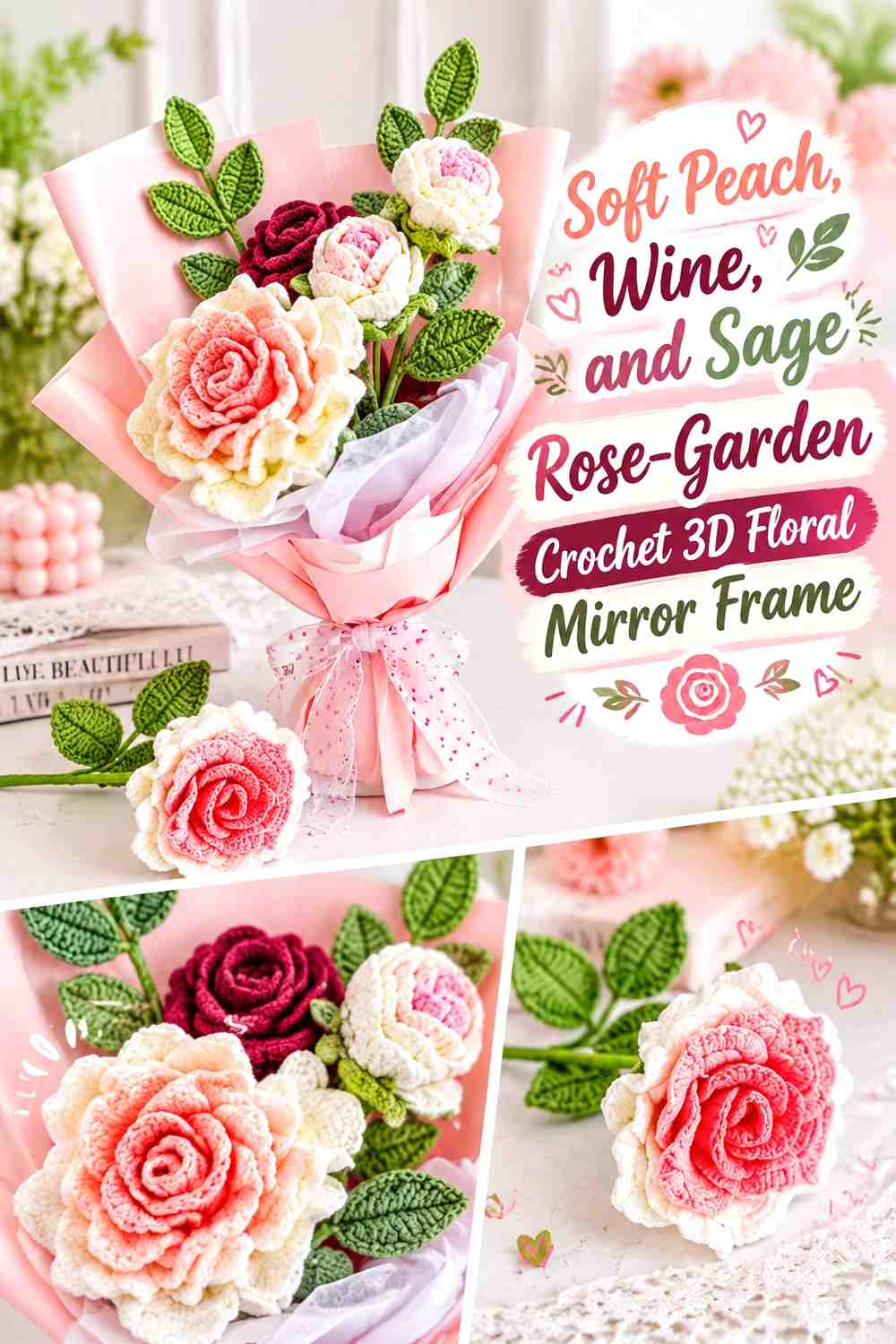
Soft peach can carry most of this rose frame, while wine adds occasional deeper blooms and sage fills the transitions. Because the palette contains a large value jump between peach and wine, control the darker roses carefully instead of distributing both shades equally.
The supporting tutorial teaches a dimensional crochet rose suitable for adapting into a floral frame composition. YouTube
Let Soft Peach Roses Cover More Mirror Frame Space Than Wine
Make peach the clear floral base. Wine roses can work at a top corner, lower cluster, or as occasional smaller blooms, giving the frame depth without making the darker shade dominant.
Use Sage Green Around Wine Roses to Protect Their Shape
Wine placed directly against another dark or saturated color can lose petal definition. Sage leaves provide a muted contrast around the flower edge and connect those focal roses back to the softer peach sections.
Creator Credit: Lingzhi Handmade
16. Dusty Blue, Lavender, and Leaf Green Hydrangea Crochet 3D Floral Mirror Frame

Hydrangea-inspired clusters let you build volume from many smaller flowers. Dusty blue can dominate, lavender can provide tonal variation, and leaf green can separate larger clusters. This palette works especially well when you want abundant cottagecore florals without using roses.
The linked tutorial demonstrates crochet hydrangea flowers, providing a direct floral reference for the clustered embellishment. YouTube
Mix Dusty Blue and Lavender Within Hydrangea Clusters
Rather than creating one fully blue cluster and another fully lavender one, mix the two shades unevenly within larger floral areas. That produces a softer transition around the frame while preserving a clear cool-color theme.
Use Leaf Green to Separate Dusty Blue Hydrangea Groups
Place green between larger clusters so individual sections remain readable. Without foliage breaks, numerous small blue and lavender flowers can merge into a continuous textured strip.
Creator Credit: Moara Crochet
17. Deep Red, Ivory, and Charcoal Poppy Crochet 3D Floral Mirror Frame
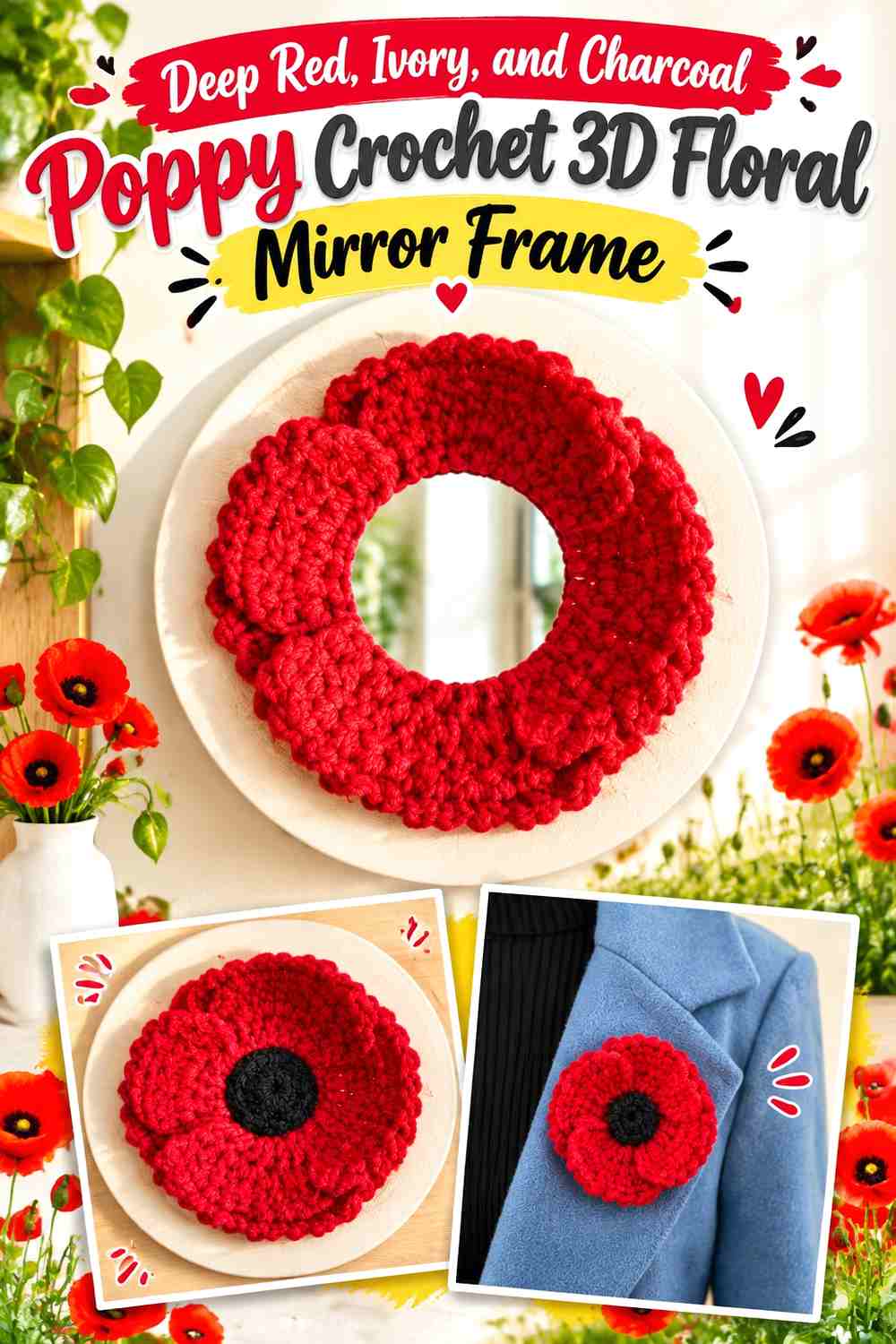
Deep red poppies create a more dramatic cottagecore bedroom accent, particularly when the rest of the room uses pale linens or warm neutral walls. Ivory should provide a substantial share of the frame, while charcoal is best restricted to small centers or narrow details.
The supporting tutorial teaches a four-petal crochet poppy, so it can guide the flower component for this separate mirror-frame adaptation. YouTube
Give Deep Red Poppies Plenty of Ivory Space
Do not place every red flower edge-to-edge. Ivory sections between poppies make their silhouettes clearer and prevent the mirror from becoming a continuous dark-red ring.
Keep Charcoal Smaller Than Deep Red on the Crochet Mirror
Charcoal has enough contrast to define flower centers with very little surface area. Extending it through large border sections would shift attention away from the poppies and make the frame considerably heavier.
Creator Credit: Wendy Poole Handmade
18. Avocado Green, Mustard, and Cream Layered-Flower Crochet 3D Floral Mirror Frame

Avocado, mustard, and cream give the final idea a distinct 1970s cottagecore crossover. Instead of arranging many tiny flowers, use fewer oversized layered floral shapes, letting avocado form the grounding color, mustard highlight flower centers or petals, and cream create the lightest contrast.
The linked tutorial teaches a colorful layered flower pad rather than a mirror decoration, so use its layered floral form as design inspiration rather than treating it as mirror-frame construction. YouTube
Let Avocado Green Ground the Oversized Crochet Flowers
Avocado can appear around the outer petal layers or surrounding frame sections. Its muted character keeps the larger motifs from looking too bright and connects naturally with a cottage-inspired bedroom palette.
Use Mustard and Cream to Separate Avocado Flower Layers
Mustard gives the flower a warm focal point, while cream can separate one dimensional layer from another. If mustard begins to dominate, increase cream rather than adding another accent color.
That keeps the oversized flowers readable without making the frame busier.
Creator Credit: naztazia
Which Crochet 3D Floral Mirror Palette Fits a Cottagecore Bedroom?
For the lightest direction, look at butter yellow with cream and sage, blush with ivory and moss, or butter yellow with pale blue and sage. These palettes preserve more light color close to the reflective opening.
For an aged-garden look, dusty mauve with antique pink, burgundy with dusty pink, rust with rose, or brick red with oatmeal gives the flowers more depth. Use the darkest shade selectively so the border does not visually shrink the mirror.
For an earthy vintage room, mustard with chocolate and olive or avocado with mustard and cream provides the strongest retro influence. Dusty blue with lavender and green is the clearest option when you want cottagecore florals without making pink, peach, or yellow the main bedroom accent.
Conclusion
A strong crochet 3D floral mirror frame should still look intentional when viewed from across the bedroom. Start by choosing one dominant flower color, then decide which shade will create separation and which color will connect the flowers through leaves, centers, or smaller accents.
Choose daisies, tiny meadow flowers, or pale puff flowers when you want a lighter border. Roses, carnations, hydrangeas, and oversized layered flowers create more visual depth and usually benefit from extra neutral space. Sunflowers, poppies, terracotta tulips, and deeper roses can provide stronger focal points without covering the entire frame in saturated color.
For the actual flower construction, follow the relevant creator tutorial. Treat the palette, placement, repetition, and mirror-border arrangement as separate adaptation decisions.
Frequently Asked Questions
What colors work well for a cottagecore crochet floral mirror frame?
Muted botanical colors are particularly adaptable: sage, olive, moss, dusty rose, cream, oatmeal, lavender, muted yellow, peach, terracotta, and dusty blue. You do not need to use all of them. A three-color hierarchy is often easier to control around a mirror than a large collection of equally strong shades.
Should cream or white be used around a cottagecore mirror?
Either can work, but cream generally creates a softer contrast beside earthy shades such as rust, sage, mustard, terracotta, and dusty rose. If you use a very light neutral, check it beside the actual wall and mirror frame so it remains visible instead of disappearing into the background.
How can I stop 3D crochet flowers from making the mirror look too crowded?
Leave some visible frame between floral clusters and avoid letting every large bloom extend toward the glass. Use larger flowers at selected focal points, then bridge those areas with smaller flowers, foliage, or intentional open space.
How do I know whether two crochet flower colors have enough contrast?
Place the yarns side by side and compare both hue and light/dark value. Looking at the combination in grayscale can reveal whether two different colors are actually very similar in value. If they merge, add a lighter neutral or darker foliage shade between them.
Should sage or olive be the main green for a cottagecore floral mirror?
Sage produces a softer, lighter foliage effect and works particularly well with blush, lavender, cream, dusty blue, and peach. Olive creates more earthy contrast beside rust, mustard, brick red, golden yellow, and brown. Choose according to the flower palette rather than assuming one green works for every frame.
Can different crochet flower tutorials be combined on one mirror frame?
Yes, provided the finished flower sizes and visual weight work together. Make sample flowers first and compare them before committing to the final arrangement. A large dimensional rose beside a tiny flat flower may need foliage or a medium-size bloom between them to make the scale change feel deliberate.
Do all the 3D flowers need to use the same color combination?
No. Keeping one repeated foliage color or neutral can connect flowers that use slightly different shades. For example, dusty rose, mauve, and blush flowers can all share sage leaves, allowing the frame to vary without losing its overall palette.