Dog and cat portraits need a different color strategy from ordinary crochet wall art. The viewer has to recognize a face from simplified shapes, so a few carefully separated colors often work better than trying to reproduce every variation found in real fur.
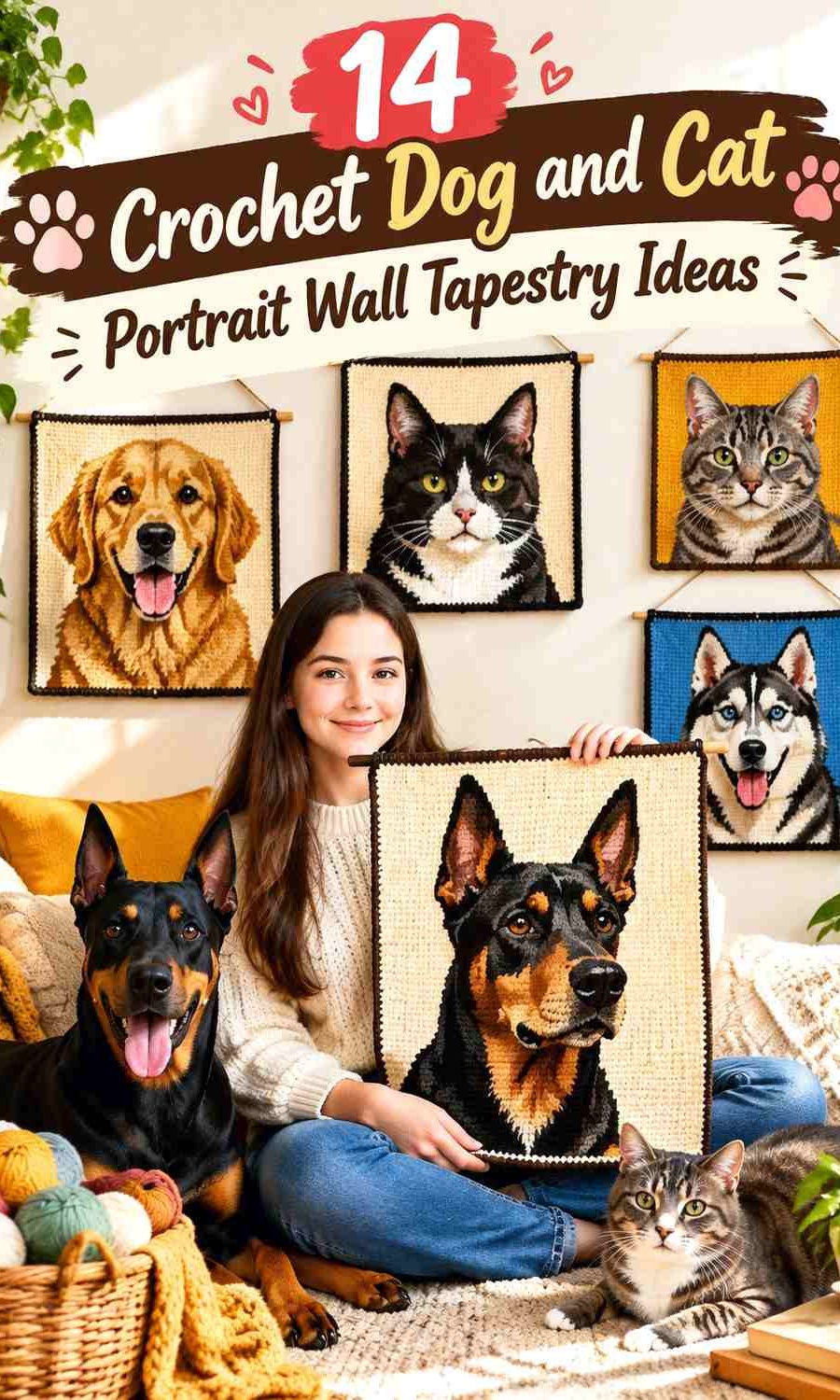
Think of the portrait in layers. One shade establishes the background, one or two colors describe the largest fur areas, and the deepest color defines important landmarks such as ears, eyes, nose, facial patches, or the outside silhouette. A lighter cream, pearl gray, oatmeal, or ecru can then protect the muzzle and other small details from disappearing.
The tutorials below include direct pet portraits and cat wall hangings as well as dog and cat appliqués, tapestry crochet, intarsia, freeform crochet, and C2C techniques that can serve as construction foundations for portrait wall panels. The proposed palettes and specific pet interpretations are independent adaptations rather than claims about the colors used by each creator.
Quick List
- Warm Honey, Cream, and Espresso Crochet Dog Portrait Wall Tapestry
- Rust, Oatmeal, and Cocoa Crochet Floppy-Eared Dog Portrait Wall Tapestry
- Taupe, Cream, and Soft Black Crochet French Bulldog Portrait Wall Tapestry
- Camel, Ivory, and Espresso Crochet Dog Face Portrait Wall Tapestry
- Mushroom, Charcoal, and Blush Beige Crochet Cat Face Portrait Wall Tapestry
- Terracotta, Ecru, and Cocoa Crochet Cat Granny Portrait Wall Tapestry
- Deep Teal, Amber, and Cream Crochet Freeform Cat Portrait Wall Tapestry
- Slate, Pearl Gray, and Charcoal Crochet Pointed-Ear Dog Portrait Wall Tapestry
- Black, Cream, and Ochre Crochet Graphic Cat Portrait Wall Tapestry
- Black, Warm White, and Moss Crochet C2C Dog Portrait Wall Tapestry
- Mocha, Cream, and Walnut Crochet Long-Haired Cat Portrait Wall Tapestry
- Dusty Blue, Greige, and Charcoal Crochet Pixel Dog Portrait Wall Tapestry
- Ivory, Seal Brown, and Dusty Blue Crochet Cat Portrait Wall Tapestry
Simplify Crochet Pet Fur Into Clear Color Areas
A portrait does not need a separate yarn color for every highlight in a photograph. Start by identifying the largest fur field, the main light area, and the deepest shadow or marking.
For a golden dog, that might mean warm honey, cream, and espresso. A tabby-inspired cat could use mushroom, charcoal, and a lighter beige. Keeping those roles clear makes the ears, cheeks, and muzzle easier to interpret from normal wall-viewing distance.
Add another shade only when it solves a real problem, such as separating an ear from the background or keeping one side of a long-haired face from becoming flat.
Protect the Eyes, Muzzle, and Ears With Crochet Color Contrast
Pet portraits often fail visually in the smallest areas rather than the largest ones. Two beautifully coordinated browns can still hide the eye line if they are almost identical in value.
Check the yarns in grayscale or view them from several feet away. Small eyes and narrow ear edges generally need stronger value separation than a large cheek or forehead patch.
The muzzle deserves similar attention. Cream, oatmeal, ivory, greige, or pearl gray can create a quieter landing area around a dark nose without forcing the whole portrait into extreme black-and-white contrast.
Treat the Crochet Tapestry Background as Part of the Portrait
The background determines whether the ears and outer face remain visible. A charcoal cat silhouette needs a lighter field, while a cream-colored pet can benefit from slate, dusty blue, olive, terracotta, or another medium-to-deep background.
The wall behind the finished tapestry matters too. If the crochet background nearly matches the wall paint, a contrasting border can preserve the rectangular panel. A dowel, fringe, or simple edge can repeat one portrait color so it feels connected rather than added afterward.
1. Warm Honey, Cream, and Espresso Crochet Dog Portrait Wall Tapestry

Warm honey works as the main fur field for a golden or tan dog portrait, while cream lightens the muzzle and chest. Espresso should be reserved for the eyes, nose, ear shadows, and any narrow outline needed to keep the face recognizable.
The linked tutorial directly demonstrates a tapestry-crochet pet portrait using a dog image, making it a strong construction reference for translating a pet face into a flat crochet panel. YouTube
Let Warm Honey Cover the Largest Crochet Dog Fur Areas
Keep warm honey broad across the forehead, cheeks, and upper head instead of dividing those areas into several similar golds. Large continuous fields make the overall head shape easier to read.
Cream can then concentrate around the muzzle or blaze where a lighter value actually improves recognition.
Use Espresso to Define the Warm Honey Crochet Dog’s Features
Espresso is useful around the eyes, nose, and deepest ear areas because those small landmarks guide the viewer through the portrait. Avoid outlining every honey section in dark brown; excessive outlining can make natural fur blocks look cartoonishly separated.
Creator Credit: Earth, Hand & Fiber
3. Rust, Oatmeal, and Cocoa Crochet Floppy-Eared Dog Portrait Wall Tapestry
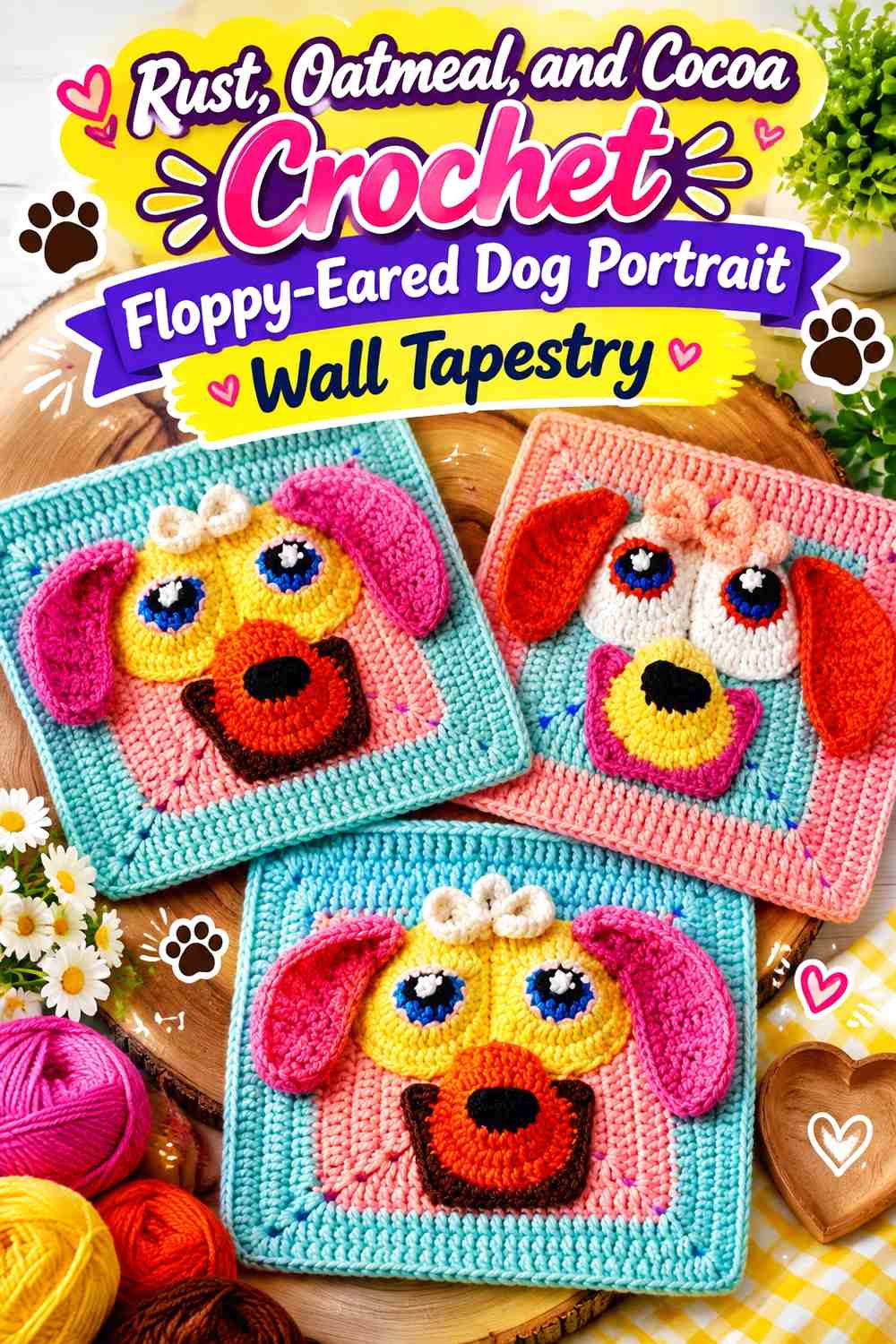
Rust suits a warm-coated dog, oatmeal can form the muzzle or central face, and cocoa can deepen the ears and nose. For a floppy-eared portrait, the ear color is particularly important because those broad side shapes help establish the dog’s head width.
The linked tutorial demonstrates a crocheted dog-face appliqué on a square, which can serve as a layered portrait element when mounted on or incorporated into a larger wall panel. YouTube
Use Cocoa to Separate Rust Crochet Dog Ears From the Background
A slightly deeper ear color can stop wide floppy ears from merging into a rust face. Keep cocoa strongest toward the outer ear or shadowed area rather than turning both ears into flat dark blocks.
On a dark wall panel, reverse the approach and allow oatmeal or rust to reach the ear perimeter.
Put Oatmeal Around the Rust Crochet Dog Muzzle
Oatmeal gives the nose a lighter field and breaks up the central rust area. Keep enough rust on the cheeks so the pale muzzle looks integrated into the dog rather than like a separate appliqué.
Creator Credit: Yarn Creation Ideas
4. Taupe, Cream, and Soft Black Crochet French Bulldog Portrait Wall Tapestry
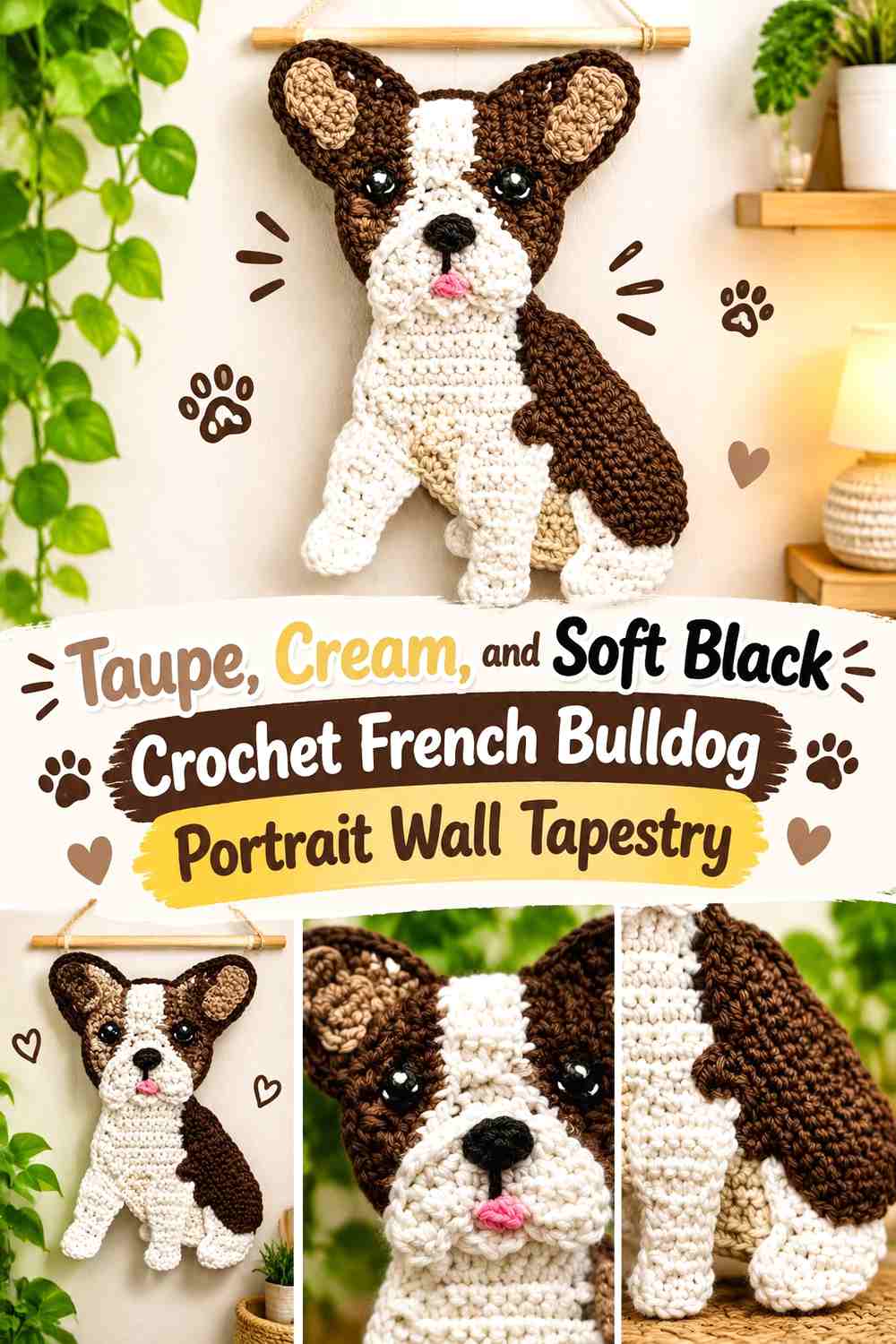
A French bulldog-inspired portrait benefits from strong ear geometry and a compact muzzle. Taupe can control the main face, cream can form a blaze or muzzle patch, and soft black provides definition around the ears, nose, and selected facial markings.
The supporting tutorial teaches a French bulldog crochet appliqué, making it useful for building the breed-specific face before adapting that motif to a wall panel. YouTube
Keep Taupe Visible Inside the Soft Black Crochet French Bulldog Ears
Soft black can define the ears without filling every part of them. Leaving taupe or cream inside selected sections prevents two large dark triangles from overwhelming the compact face.
This also keeps the ear structure connected to the rest of the portrait.
Let Cream Break Up the Taupe Crochet French Bulldog Muzzle
Use cream where the central blaze or muzzle needs additional separation. A small soft-black nose then has enough contrast without requiring a heavy outline around the entire cream area.
Creator Credit: Kerri’s Crochet
5. Camel, Ivory, and Espresso Crochet Dog Face Portrait Wall Tapestry

Camel creates a flexible medium-value fur color, ivory keeps the center of the face open, and espresso handles the most important dark features. This palette works especially well for a simplified dog-face portrait where a few shapes need to communicate the whole expression.
The tutorial demonstrates a crocheted dog-face appliqué, so the finished motif can become the focal layer on a separately planned flat wall panel. YouTube
Let Camel Form the Largest Crochet Dog Face Shapes
Use camel continuously across the forehead and outer cheeks. The portrait will usually read more clearly when the medium body color connects those areas rather than being interrupted by several small neutrals.
Ivory should have a specific facial purpose instead of being scattered randomly.
Concentrate Espresso Around the Ivory Crochet Dog Muzzle
Espresso works well for the nose, eye line, and limited shadow areas. Keeping those dark elements separated by camel and ivory prevents them from merging into one central dark patch.
Creator Credit: Hooked In Loops
6. Mushroom, Charcoal, and Blush Beige Crochet Cat Face Portrait Wall Tapestry

Mushroom can cover most of a soft tabby-inspired face, charcoal can define ear edges and facial markings, and blush beige can warm the muzzle or inner ears. The restrained palette keeps the portrait neutral while giving the cat enough value changes to remain expressive.
The supporting tutorial specifically demonstrates a crochet cat-face appliqué and identifies wall hangings among the motif’s possible uses. YouTube
Use Charcoal to Clarify the Mushroom Crochet Cat’s Ear Shape
Keep charcoal along selected ear edges or darker fur markings rather than outlining the entire face. Pointed ears need the extra contrast more than broad cheek areas do.
If the panel background is already charcoal, use blush beige or mushroom at the outermost ear edge instead.
Keep Blush Beige Subtle Around the Mushroom Crochet Cat Muzzle
Blush beige can soften the nose area and inner ears without becoming a strong pink accent. The color should stay noticeably lighter than mushroom if it is expected to separate small facial sections.
Creator Credit: Stitches & Stories By Ste
7. Terracotta, Ecru, and Cocoa Crochet Cat Granny Portrait Wall Tapestry
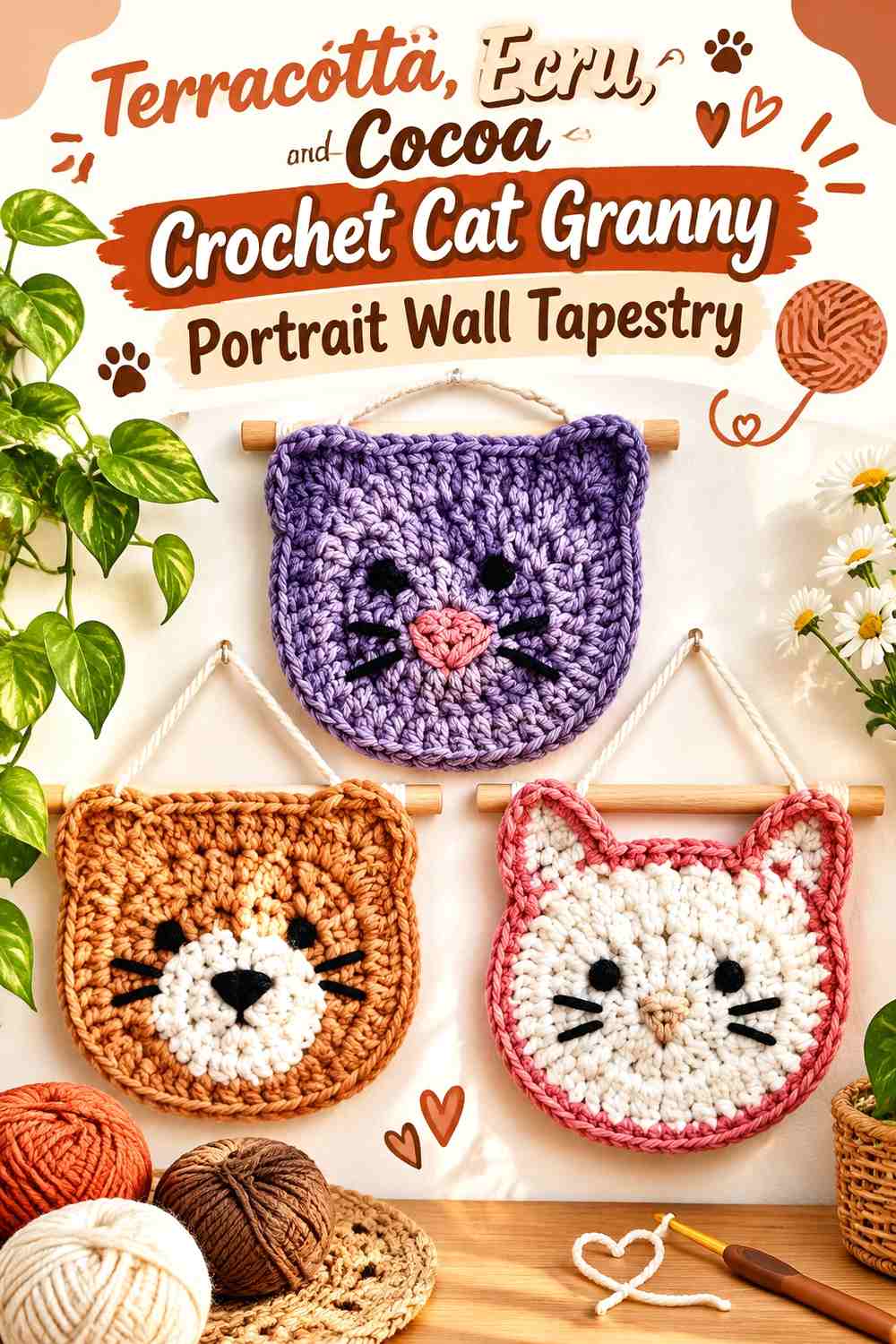
Terracotta creates a warm ginger-cat direction, ecru can define the muzzle and chest, and cocoa adds eye, nose, and stripe depth. Working the face inside a square creates a ready-made frame that can be displayed individually or combined with other pet portraits.
The linked cat granny-square tutorial provides a useful square-format foundation for this style of wall portrait. Be Ewenique Boutique
Keep Terracotta Broad Inside the Ecru Crochet Cat Square
Use terracotta for the large forehead and cheek sections so the cat remains distinctly ginger-toned. Ecru works better around the muzzle or as part of the surrounding square than as repeated stripes through every fur area.
Use Cocoa to Define Terracotta Crochet Cat Markings
Cocoa can create restrained forehead or ear markings and provide the darkest facial features. Leave visible terracotta between those areas so the darker yarn does not turn the upper face into one large brown patch.
Creator Credit: Be Ewenique Boutique
8. Deep Teal, Amber, and Cream Crochet Freeform Cat Portrait Wall Tapestry
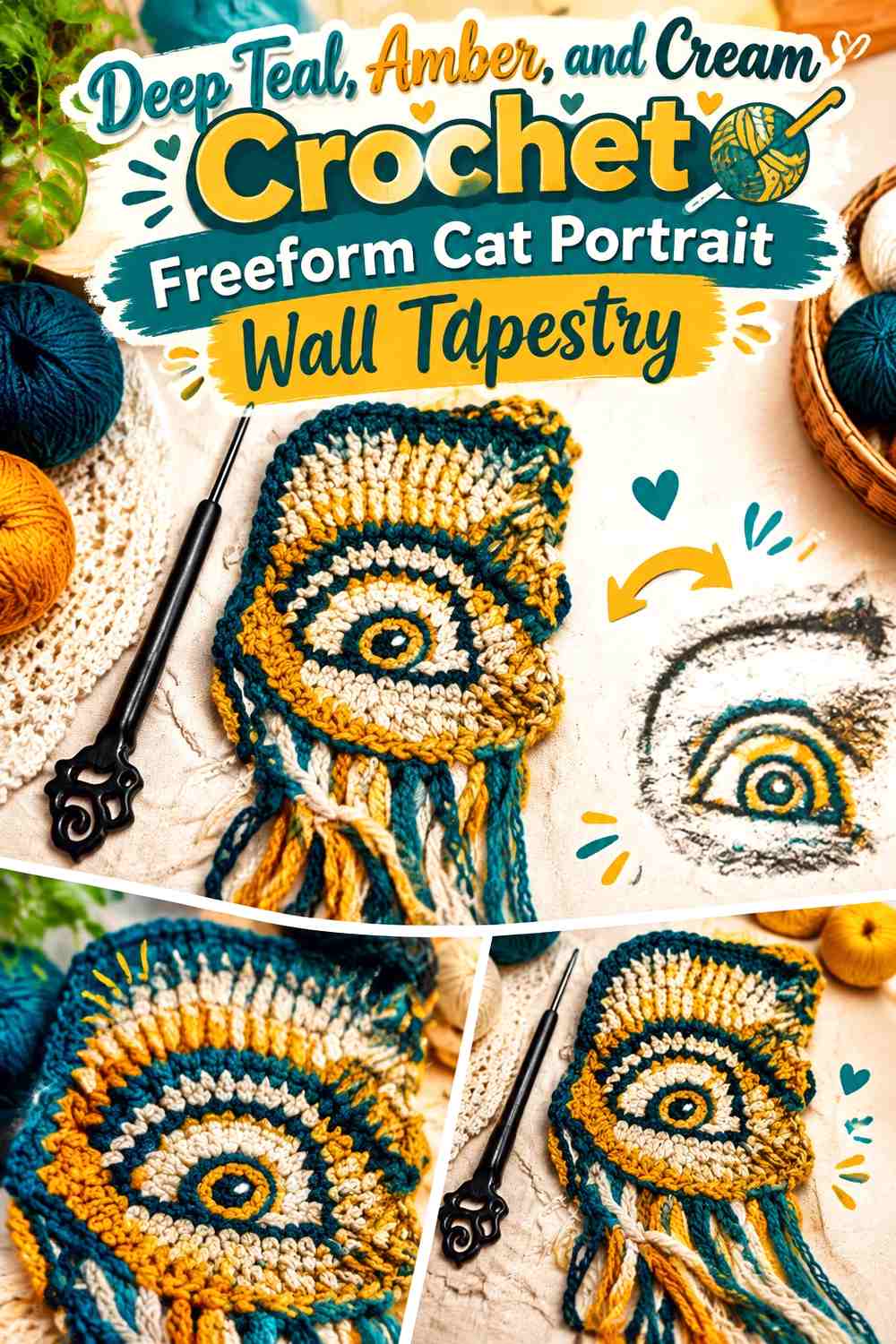
A freeform portrait allows color to follow facial contours rather than a strict pixel grid. Deep teal can become an unconventional shadow color, amber can define the eye area, and cream can preserve the muzzle and strongest highlights.
Rhiartsy’s tutorial focuses on creating crochet eyes through freeform techniques, which can be useful when a portrait needs more individually shaped facial detail than a block-based chart provides. YouTube
Keep Amber Focused Around the Deep Teal Crochet Cat Eyes
Amber will attract attention quickly, so use it where that focal effect is useful rather than repeating it through the whole face. Deep teal surrounding the eyes can give them enough depth without relying entirely on black.
Cream can provide the brightest highlights and muzzle separation.
Let Cream Interrupt Deep Teal Crochet Cat Shadows
A freeform portrait can accumulate many dark shapes around the nose and cheeks. Cream breaks those areas apart and gives the face a clearer center.
Keep the light areas purposeful instead of outlining every dark section.
Creator Credit: Rhiartsy
9. Slate, Pearl Gray, and Charcoal Crochet Pointed-Ear Dog Portrait Wall Tapestry

Slate provides a cool medium background for the dog’s fur, pearl gray can shape the muzzle and inner ears, and charcoal can define the nose and outer silhouette. This palette is especially useful for a pointy-eared dog portrait where clean diagonal edges matter.
The supporting tutorial covers advanced tapestry-crochet techniques aimed at smoother outlines, which makes it relevant when adapting angular ears and facial contours into a flat portrait. YouTube
Use Charcoal to Sharpen the Slate Crochet Dog’s Ear Tips
The narrow ear tips need clearer value separation than the broad forehead. Concentrate charcoal at the outside edges or deepest sections rather than surrounding the whole head.
Pearl gray can sit inside the ears so their shape has more than one visible plane.
Keep Pearl Gray Distinct From Slate Around the Crochet Dog Muzzle
If pearl gray and slate are too similar, the muzzle may disappear even though the two yarns look different up close. Compare them from several feet away before committing to the full panel.
Creator Credit: Catherine Crochets
10. Black, Cream, and Ochre Crochet Graphic Cat Portrait Wall Tapestry
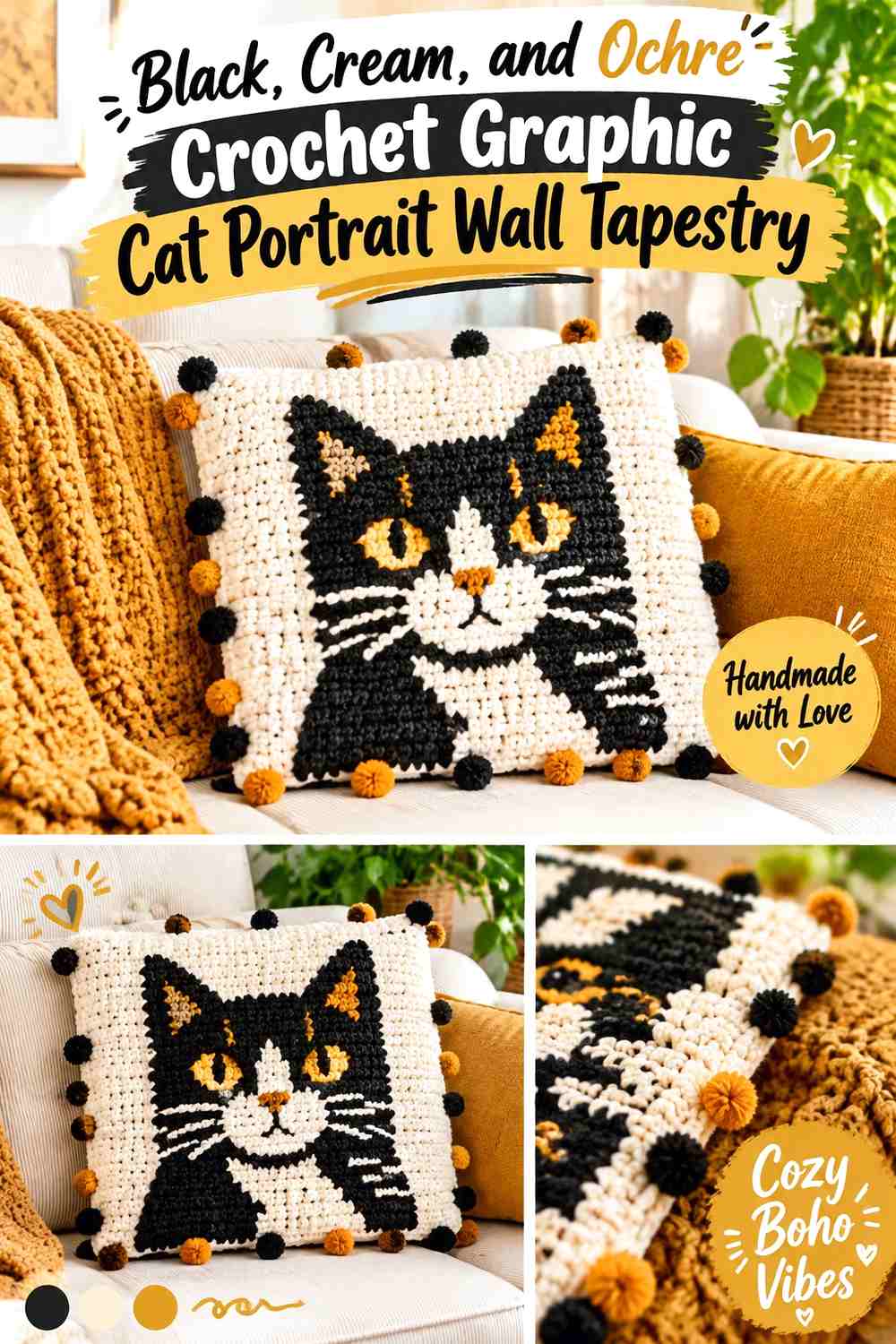
Black and cream create the strongest graphic portrait in this collection, while ochre adds a controlled warm accent. Use cream as the background or largest facial light area, black for the ears, eye shapes, and silhouette, and ochre only where it adds hierarchy rather than clutter.
The supporting tutorial covers tapestry color changes, carrying unused yarn, and reducing unwanted color show-through—useful concerns when working a high-contrast portrait panel. YouTube
Give Black Crochet Cat Features Enough Cream Separation
Do not let both eyes, nose, and ear bases merge into one black field. Cream should remain between important dark shapes so the face can still be interpreted at wall distance.
This is particularly important around a black nose and dark cheek markings.
Keep Ochre Secondary to Black on the Cream Crochet Cat Panel
Ochre can define one collar, eye-area accent, or small border detail. It should not occupy the same visual area as black unless a three-color graphic portrait is deliberately intended.
Creator Credit: Annie’s Attic Videos
11. Black, Warm White, and Moss Crochet C2C Dog Portrait Wall Tapestry
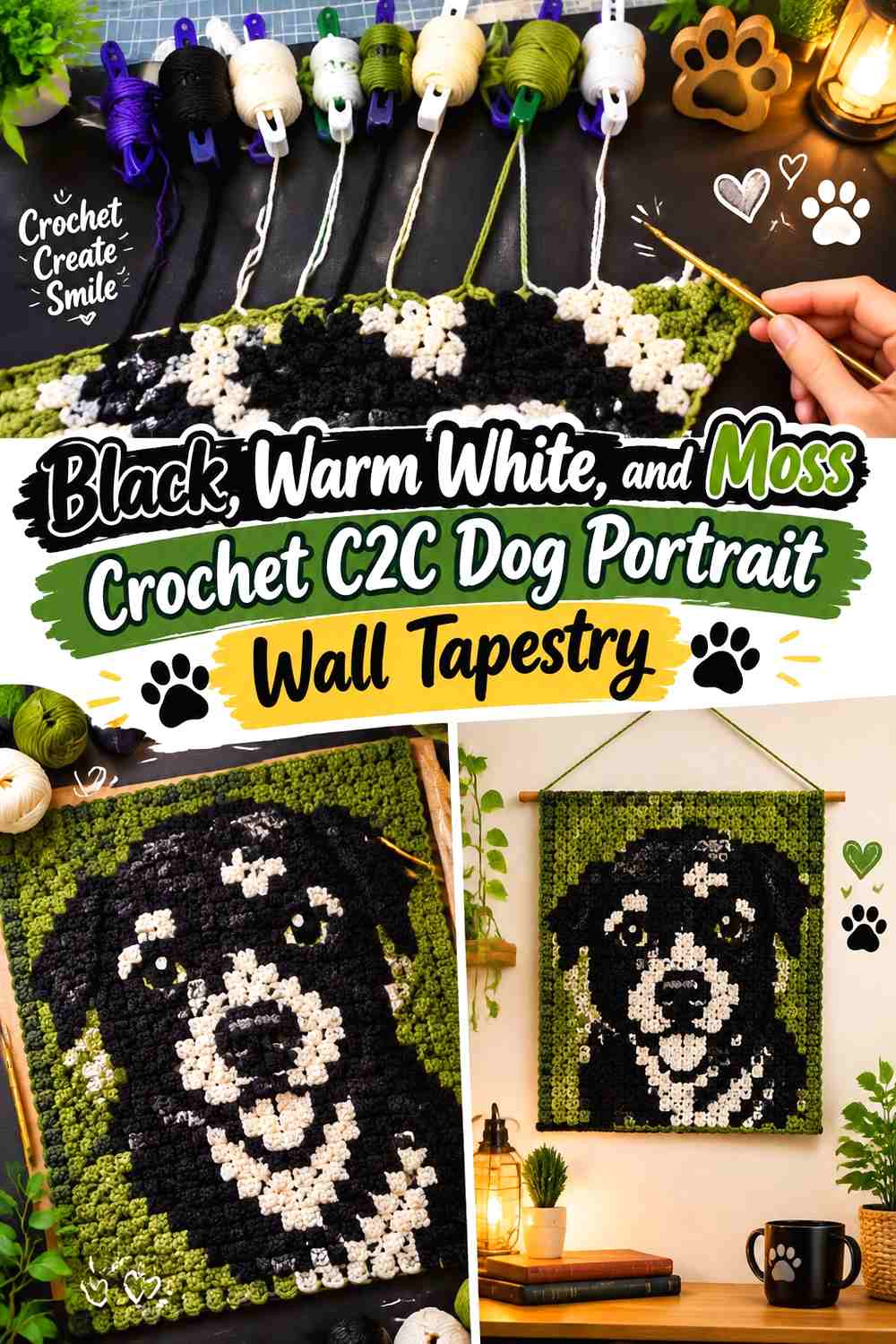
A C2C portrait treats the dog as a grid of color blocks. Black can establish the strongest patches and silhouette, warm white can define the muzzle and chest, and moss can provide a quieter background instead of defaulting to another neutral.
The linked tutorial focuses specifically on managing color changes in C2C graphghans, a useful foundation for a pixel-style dog portrait. YouTube
Keep Warm White Between Major Black Crochet Dog Patches
Large black and white areas are easier to read in C2C than many tiny alternating blocks. Preserve the warm-white muzzle, blaze, or chest as recognizable shapes rather than peppering isolated light squares throughout the face.
Let Moss Frame the Black and Warm White Crochet Dog Portrait
Moss works best as a continuous background field. Keeping it outside the main face lets the black-and-white dog remain the focal image while giving the wall tapestry an earthy finish.
Creator Credit: Yarnjoy Podcast
12. Mocha, Cream, and Walnut Crochet Long-Haired Cat Portrait Wall Tapestry
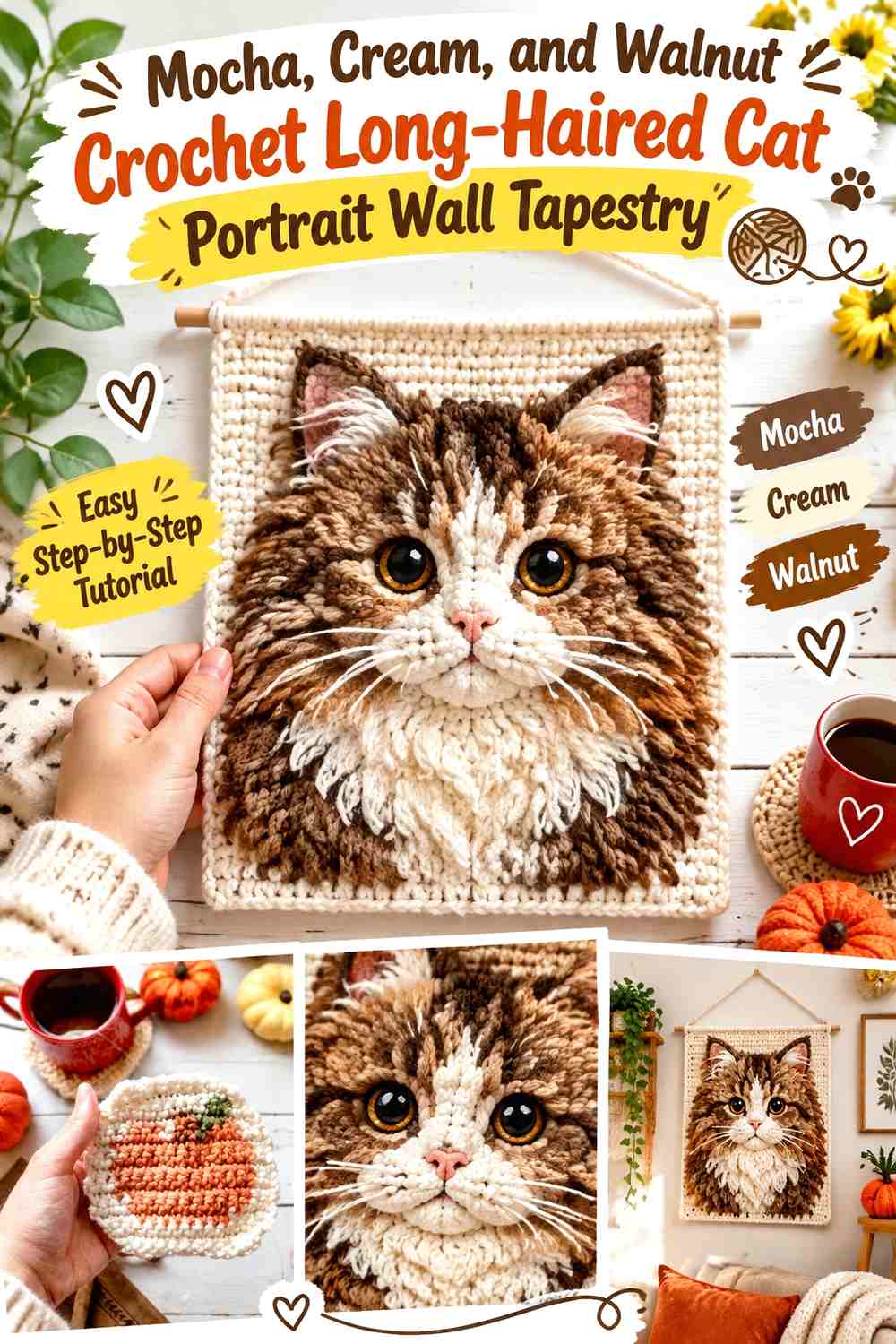
Long-haired pets need larger color masses because trying to represent every strand with separate yarn changes can make a flat portrait visually noisy. Mocha can carry the main coat, cream can shape the ruff and muzzle, and walnut can describe deeper fur sections.
The linked intarsia tutorial demonstrates a technique useful for working separate color areas without treating the whole piece as one continuous carried-color tapestry. E’Claire Makery |
Use Mocha for Broad Crochet Cat Fur Instead of Tiny Walnut Stripes
Let mocha connect the forehead, cheek, and outer face sections. Walnut should represent selected deep fur areas rather than attempting to draw every strand.
This keeps the portrait readable from the wall instead of only at close range.
Let Cream Define the Mocha Crochet Cat Ruff and Muzzle
Cream can establish the lightest fur mass around the lower face and neck. Keep enough mocha between cream and walnut sections so the three values remain distinct.
Creator Credit: E’Claire Makery
13. Dusty Blue, Greige, and Charcoal Crochet Pixel Dog Portrait Wall Tapestry

Dusty blue creates a quieter alternative to a white background, greige can form the main dog’s fur, and charcoal defines the strongest facial and ear landmarks. This palette works particularly well when the portrait needs to coordinate with a modern neutral room.
Marching North’s C2C tutorial explains the block-based construction, color changes, and how C2C charts function as pixel maps, making it a useful technique reference for an independently planned pet portrait. Marching North
Keep Greige Crochet Dog Blocks Clearly Separate From Dusty Blue
Background and fur colors need enough value difference to preserve the head outline. If greige disappears into dusty blue in grayscale, move the background darker or the fur lighter before starting the complete panel.
Use Charcoal Only Where the Greige Crochet Dog Needs Strong Landmarks
Charcoal should focus on features such as the eyes, nose, ear edge, or deepest patch. Scattering dark pixels through every fur area can make the portrait look noisy instead of shaded.
Creator Credit: Marching North
14. Ivory, Seal Brown, and Dusty Blue Crochet Cat Portrait Wall Tapestry
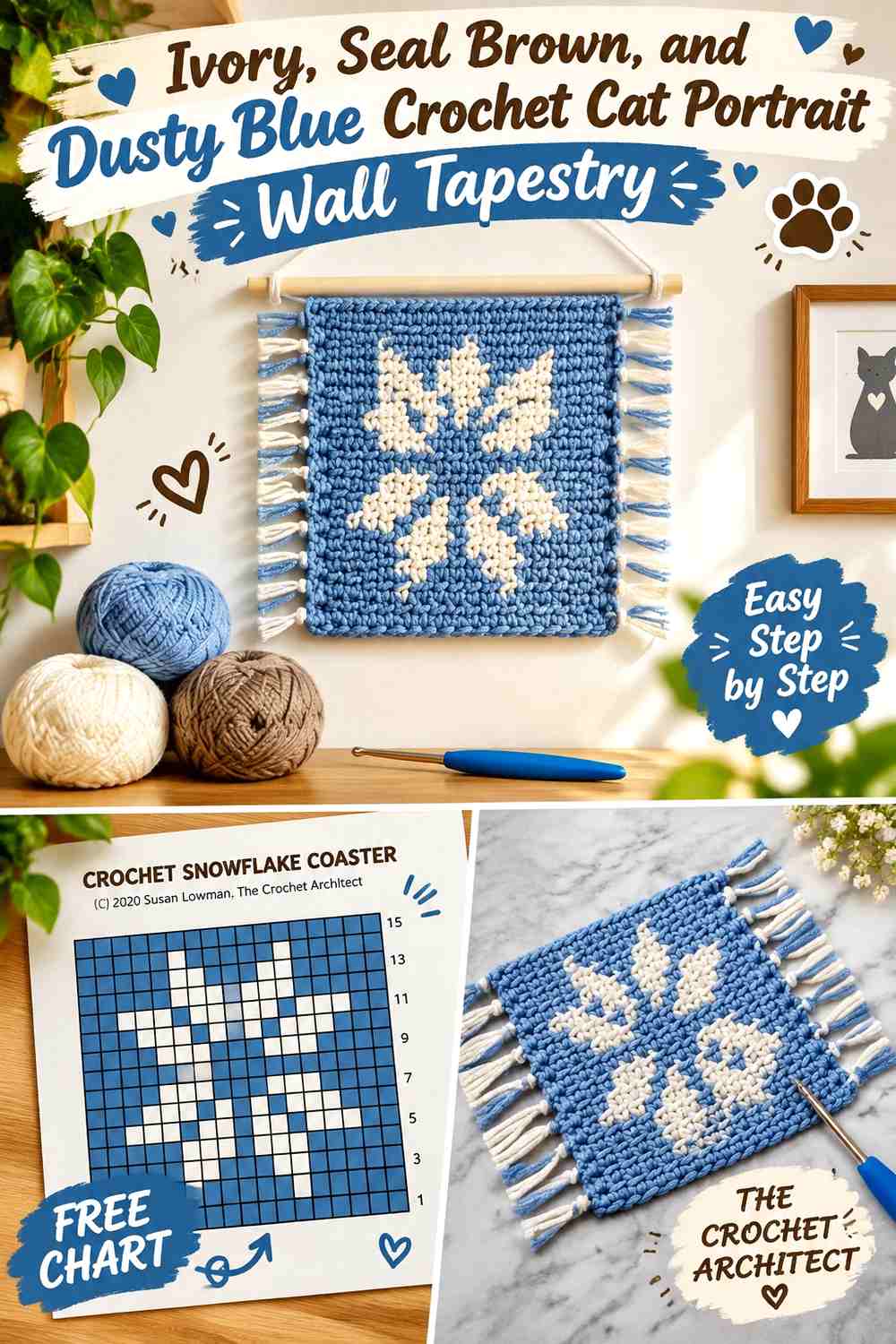
Ivory can establish the main light coat, seal brown can define ears, face mask, and paws, and dusty blue can provide a quiet wall-panel background. This distribution suits a color-point-inspired cat portrait because the darkest shade appears at recognizable extremities rather than randomly across the fur.
The Crochet Architect’s tapestry tutorial teaches working multiple colors from a chart, carrying yarn, changing colors, and finishing the flat piece—techniques that can support an independently charted pet portrait. The Crochet Architect
Keep Seal Brown Concentrated on the Ivory Crochet Cat’s Face and Ears
Use the deepest brown around the central mask and ear tips while leaving enough ivory across the forehead or cheeks to preserve the head shape.
If seal brown expands too far, the small dark features can join into one heavy block.
Let Dusty Blue Separate the Ivory and Seal Brown Crochet Cat Silhouette
A dusty-blue background gives both the light body and dark points enough separation. It is especially useful around ivory outer edges that might disappear on a cream or white panel.
Keep dusty blue outside the face rather than turning it into another fur color.
Creator Credit: The Crochet Architect
Which Crochet Dog or Cat Portrait Palette Should You Choose?
For a warm pet portrait, honey, cream, and espresso, rust, oatmeal, and cocoa, terracotta, ecru, and cocoa, or mocha, cream, and walnut gives brown and ginger fur enough depth without requiring many nearly identical yarn shades.
For cooler portraits, slate and pearl gray, dusty blue and greige, or deep teal and cream can shift the mood while keeping the important facial values separated.
If recognition from across the room is the priority, start with the higher-contrast schemes: black and cream, charcoal and warm white, or a medium fur color combined with a noticeably darker nose and ears. Softer tonal palettes work better when the portrait is larger and the face gives you more space to separate neighboring shapes.
Conclusion
A crochet dog or cat portrait wall tapestry becomes more convincing when color describes the face instead of trying to imitate every strand of fur. Start with the largest fur area, protect the muzzle and eyes with enough value contrast, and make sure the ears remain distinct from the background.
Choose the construction style according to the image you want. Tapestry crochet supports crisp flat color areas, C2C produces a visible pixel structure, intarsia can manage larger independent blocks, and appliqué or freeform crochet can add dimensional facial shapes.
Use the credited tutorials for the techniques and projects they actually demonstrate, then develop the pet palette around the specific ears, patches, muzzle, fur values, and background that your portrait needs.
Frequently Asked Questions
How many colors should I use in a crochet pet portrait wall tapestry?
Three to five well-separated colors can often communicate a pet more clearly than many similar shades. Start with the dominant fur, background, light facial area, and deepest feature color. Add another shade only when it improves a recognizable marking or shadow.
How can I tell whether two crochet portrait colors have enough contrast?
Place the yarns side by side and view them from several feet away. A grayscale photo is also useful because it shows whether two different hues have nearly identical light-dark values.
Which crochet pet portrait areas need the strongest contrast?
Eyes, nose, narrow ear edges, distinctive face patches, and small muzzle divisions usually benefit most. Large cheek or forehead sections can tolerate softer tonal transitions because their shapes occupy more visual space.
Should the crochet tapestry background match the pet’s lightest fur?
Usually not if that causes the outer silhouette to disappear. A cream dog or cat generally benefits from a medium or dark background, while a black or charcoal pet often needs a lighter field around the ears and face.
How should I simplify long or multicolored fur for a crochet wall portrait?
Group similar fur into larger light, medium, and dark areas. Preserve the patches that make the pet recognizable and leave out tiny color variations that would create excessive yarn changes without improving the portrait.
Should the crochet wall-tapestry border match the background?
It can, but a contrasting border is useful when the panel background closely matches the wall. Repeating the darkest portrait shade or one supporting color around the edge can define the rectangle without introducing another unrelated yarn color.