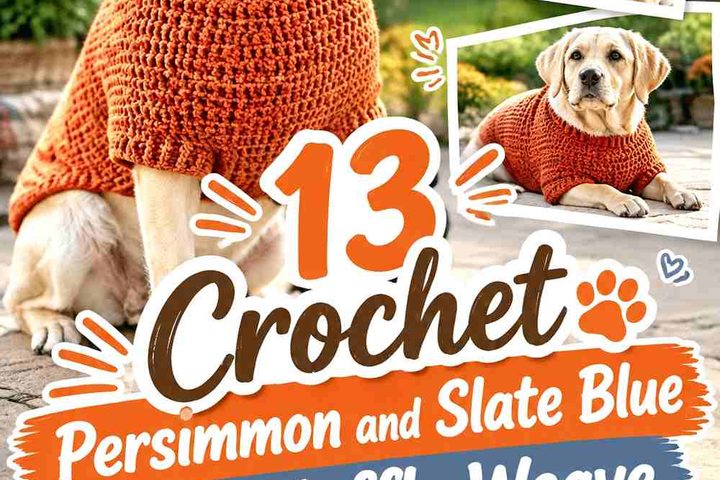
A crochet flower pet collar cover can add enough color and texture to make a simple pet portrait feel more styled without requiring a full costume. The most effective versions usually have a clear color hierarchy: one shade for the collar base or greenery, one main petal color, and a smaller contrasting center or secondary flower.
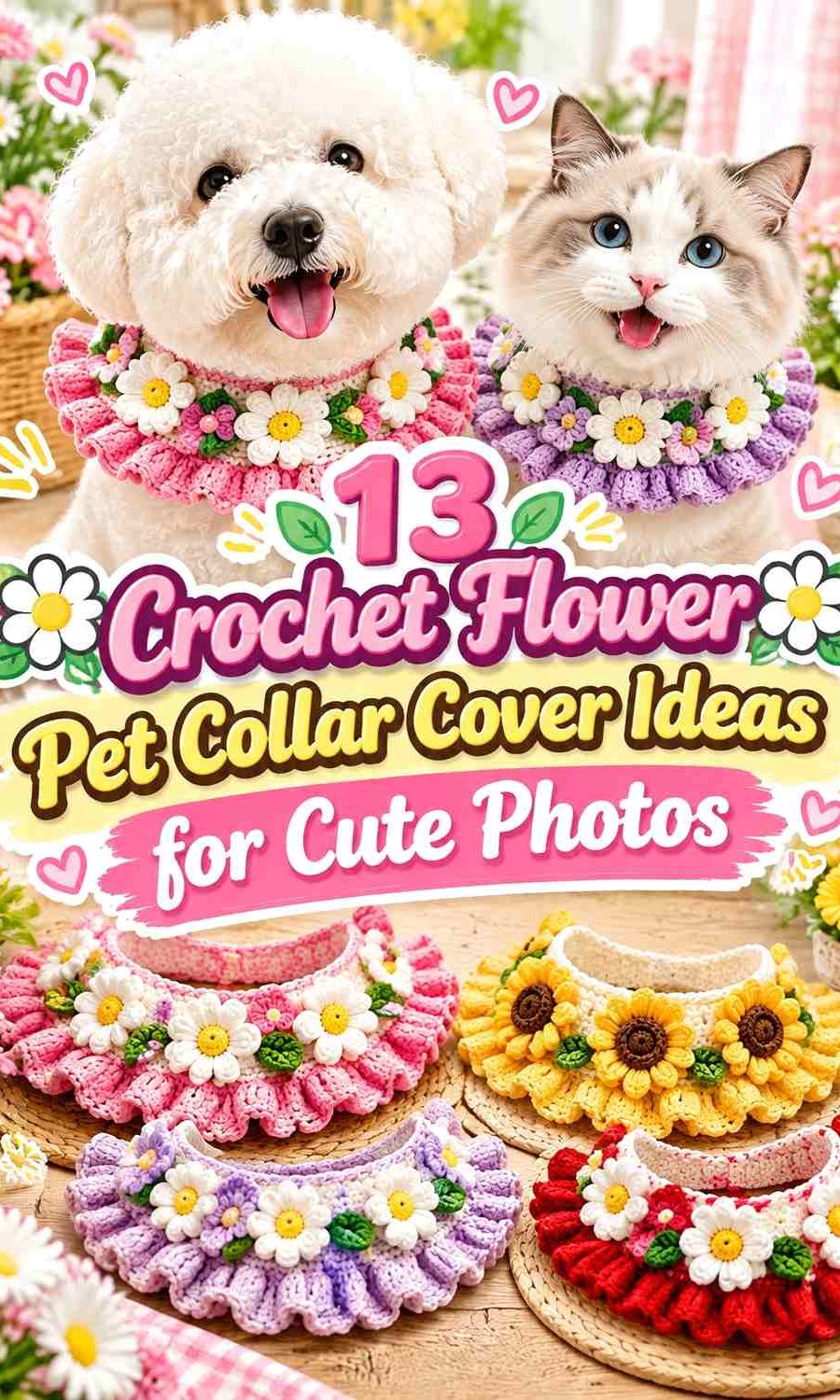
Color placement matters because the accessory sits directly under the pet’s face. Pale petals can disappear against cream or white fur, while very dark flowers may merge into black or deep brown coats. You do not need to match the pet’s coloring exactly; instead, look for enough light-dark separation to keep the flower shapes recognizable in a photo.
Treat these as decorative photo accessories rather than replacements for a functional collar or harness. Keep flowers and ties smooth, avoid wire, beads, long loops, or loose pieces, supervise the pet while the cover is being worn, and remove it if the pet scratches, chews, or appears uncomfortable.
The palettes below are editorial adaptations. Some credited tutorials demonstrate complete flower pet collars, while others teach a useful flower motif that can inspire the decorative portion of a simple collar cover. Do not add stems, floral wire, or rigid bouquet components from flower-only tutorials to a pet accessory.
Quick List
- Blush Pink and Cream Daisy Crochet Flower Pet Collar Cover
- Lavender, Sage, and Cream Tulip Crochet Flower Pet Collar Cover
- Coral, Mint, and Ivory Puff-Flower Crochet Pet Collar Cover
- Burgundy and Dusty Rose Crochet Rose Pet Collar Cover
- Peach and Cream Petal-Flower Crochet Pet Collar Cover
- Pink, Sage, and Ivory Garden Crochet Flower Pet Collar Cover
- Cream and Forest Green Flower-Wreath Crochet Pet Collar Cover
- Soft Pink and Sage Crochet Rose Pet Collar Cover
- Lilac, Lemon, and Cream Mixed-Flower Crochet Pet Collar Cover
- Mustard, Chocolate, and Olive Sunflower Crochet Pet Collar Cover
- Coral, Cream, and Sage Hibiscus Crochet Pet Collar Cover
- Plum, Gold, and Cream Pansy Crochet Pet Collar Cover
- White, Yellow, and Sage Daisy Crochet Pet Collar Cover
Choose Flower Colors That Stay Visible Against Your Pet
Think about value contrast before choosing the exact hue. A cream flower on a white pet can lose its outline even if the flower has attractive texture, while a burgundy rose may disappear against very dark fur.
A contrasting center can solve part of the problem without changing the whole palette. For example, cream petals with a mustard center create more definition than an all-cream flower. On a dark-coated pet, pale pink, ivory, lavender, and light blue can provide useful separation; on a pale-coated pet, deeper rose, mustard, plum, forest green, and terracotta can create stronger boundaries.
Keep the Crochet Flower Collar Cover Focused Around the Face
The accessory does not need flowers around the entire neck to photograph well. A cluster across the front or upper sides can create a clear focal area while leaving the back simpler.
This is particularly useful with larger crochet flowers. One or three well-spaced blooms can be easier to read than a dense ring of overlapping petals. If you prefer many small flowers, repeat colors in a controlled sequence so the collar looks like one planned palette instead of assorted scraps.
Use the Collar Base to Connect Multiple Flower Colors
Green is an obvious floral base, but it is not the only choice. Cream, oatmeal, taupe, pale blue, or even charcoal can support flowers when those neutrals create better contrast with the pet.
When three or more petal colors are involved, keeping the collar base consistent gives the eye somewhere to rest. The base should support the flowers rather than becoming another equally strong color competing for attention.
1. Blush Pink and Cream Daisy Crochet Flower Pet Collar Cover

Blush pink can carry most of the petals, while cream provides lighter flowers or contrasting petal tips. A small mustard or warm beige center can define each bloom without adding another large color block. This palette is especially useful when you want a soft photo accessory but still need individual daisies to remain recognizable.
Cream Helps Blush Pink Daisy Petals Stay Separate
If all the petals are similar shades of pale pink, the flower shapes may blend together when several blooms overlap. Alternate blush and cream flowers, or keep cream near the center of a flower cluster so the individual motifs remain easier to distinguish.
Blush Pink Should Lead the Cream Crochet Collar Cover
Keep the collar base cream or another quiet neutral and let blush cover more of the visible floral area. This prevents the accessory from becoming predominantly cream, which can disappear against a pale-coated pet or a light photo background.
Creator Credit: Yvonne loves crochet!!
2. Lavender, Sage, and Cream Tulip Crochet Flower Pet Collar Cover
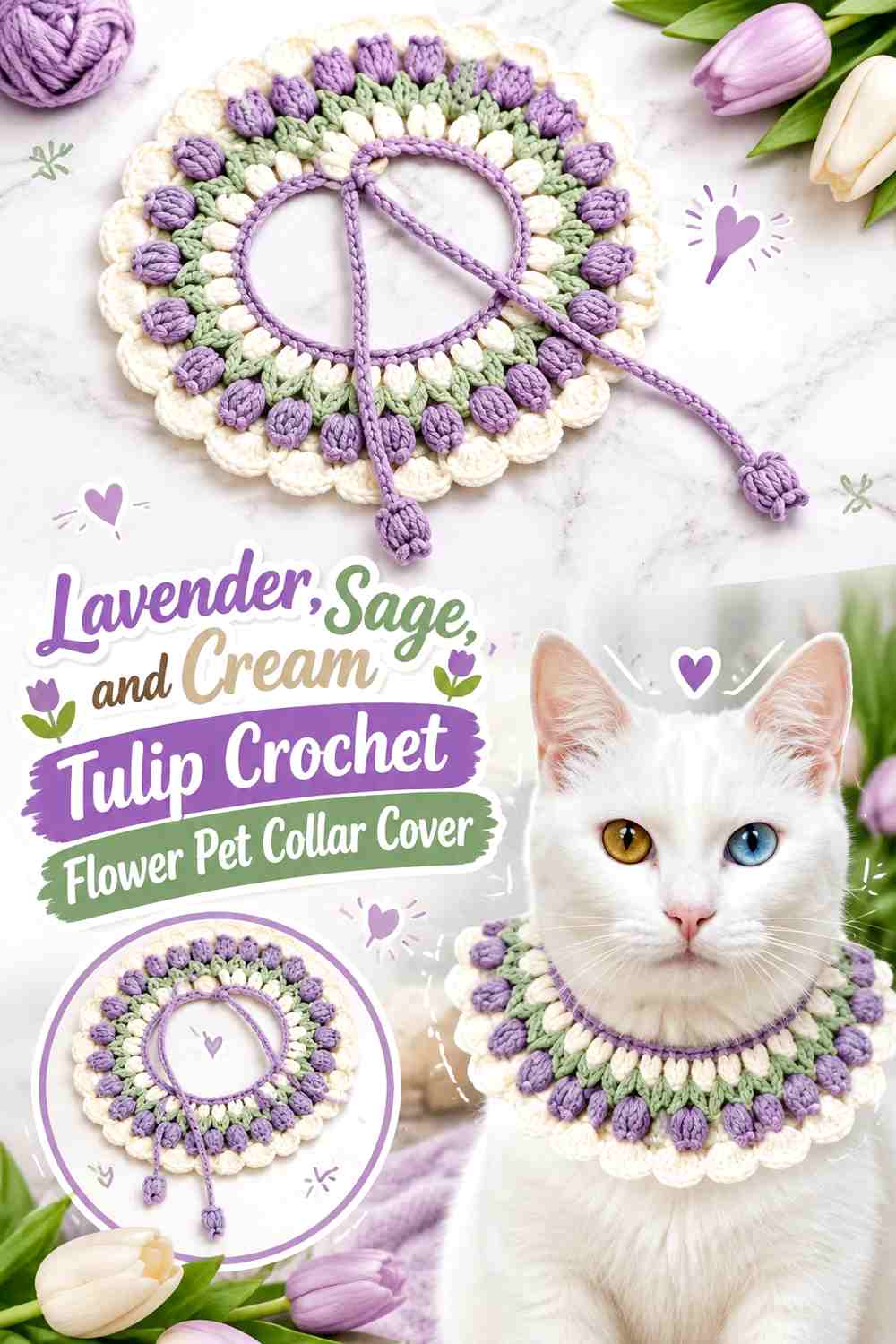
Lavender tulips paired with sage leaves create a clear flower-and-foliage relationship, while cream can be reserved for the collar base. The three colors have distinct jobs, which helps a small accessory remain organized even when several tulip shapes repeat around the front.
Lavender Should Stay Distinct From Sage Tulip Details
Choose sage that is muted enough to support the flowers rather than compete with them. If both lavender and sage are similarly pale, a cream base can visually separate the two, but the tulips will photograph more clearly when their petals remain noticeably different from the greenery.
Cream Gives Lavender and Sage a Quiet Collar Base
Keeping the foundation cream gives both colored elements room to show. Avoid adding broad cream petals as well as a cream base unless you specifically want a very pale collar; the lighter neutral works better here as the connecting background.
Creator Credit: Crochet Resort
3. Coral, Mint, and Ivory Puff-Flower Crochet Pet Collar Cover

Coral provides the strongest flower color in this palette, mint cools the overall combination, and ivory keeps the collar itself from looking too colorful. Small puff flowers suit this distribution because coral can repeat frequently without needing to cover large sections.
Coral Puff Flowers Need Mint in Smaller Amounts
Let coral appear on more blooms and use mint as a secondary flower or leaf-like accent. Equal amounts of both saturated colors can make a small collar look busy, particularly when puff texture already adds substantial dimension.
Ivory Keeps Coral and Mint Photo Details From Competing
An ivory foundation can separate neighboring coral and mint flowers. It also gives you a neutral section around the neck where fit and placement are easier to see before arranging the decorative cluster.
Creator Credit: Made by Phia
4. Burgundy and Dusty Rose Crochet Rose Pet Collar Cover

Burgundy and dusty rose create a tonal rose palette with enough value variation to show layered petals. Use burgundy for one or two focal roses and dusty rose for smaller surrounding flowers so the darkest blooms do not dominate the entire neckline.
Burgundy Works Better as the Focal Crochet Rose
A deep burgundy rose attracts attention quickly in a close-up portrait. Place it near the center front or slightly to one side, then let dusty rose repeat around it rather than using several equally large dark flowers.
Dusty Rose Softens Burgundy Around the Pet Collar Cover
Dusty rose acts as a transition between burgundy and a pale base such as cream, oatmeal, or taupe. That middle value prevents the main rose from looking visually detached from the rest of the collar.
Creator Credit: fengLing Crochet
5. Peach and Cream Petal-Flower Crochet Pet Collar Cover

Peach creates a warm, light floral direction while cream gives the accessory a quieter background. Instead of using equal peach and cream flowers, keep peach concentrated in the visible front section and let cream connect the motifs around the neckline.
Peach Needs Enough Contrast From Cream Petals
Very pale peach and cream can merge in a photograph, especially in bright outdoor light. If the distinction is too subtle, choose a deeper peach rather than adding several new colors.
Cream Can Keep the Peach Pet Collar Cover Looking Simple
Use cream for the collar band or ties instead of repeating it heavily throughout every flower. That leaves the peach petals as the obvious decorative feature and reduces visual clutter near the pet’s face.
Creator Credit: Crochet with Love
6. Pink, Sage, and Ivory Garden Crochet Flower Pet Collar Cover
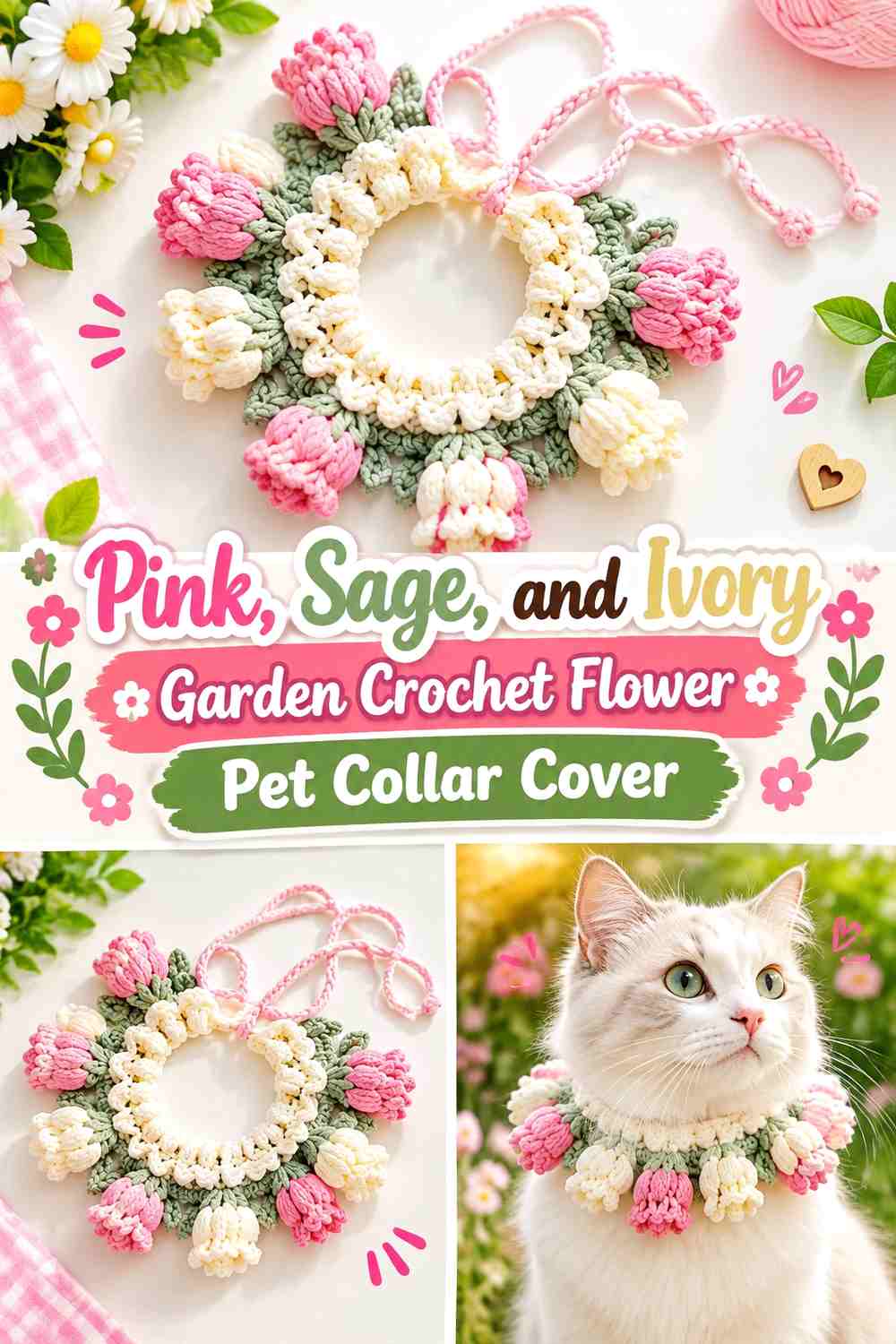
Pink can lead the flowers, sage can create small connecting details, and ivory can carry the foundation. This arrangement gives the collar a garden-inspired look without asking every visible section to be green or multicolored.
Pink Should Dominate the Sage Flower Arrangement
Give pink the largest share of visible flower petals and use sage in shorter runs between motifs. The greenery then reads as support instead of dividing the collar into equal pink and green blocks.
Ivory Separates Pink and Sage Around the Crochet Collar Base
An ivory foundation can be particularly useful when several flowers touch each other. Small glimpses of the lighter base prevent the colored motifs from becoming one continuous band with no clear edges.
Creator Credit: Lingzhi Handmade
7. Cream and Forest Green Flower-Wreath Crochet Pet Collar Cover

Cream flowers against a forest green wreath-style base create strong botanical contrast without needing several petal colors. The darker green defines the overall collar shape, while the cream blooms become the main points visible in portraits.
Cream Flowers Need Space Against Forest Green
Avoid packing cream motifs so tightly that the green foundation disappears completely. Small green spaces between flowers make each pale bloom easier to identify and keep the wreath effect intact.
Forest Green Can Frame Cream Without Covering the Pet’s Face
Keep the darkest green mainly around the base and lower edges of the collar. Large green decorative pieces extending upward can compete with the face, while a controlled wreath shape provides enough contrast at the neckline.
Creator Credit: Catventurous Crochet
8. Soft Pink and Sage Crochet Rose Pet Collar Cover

Soft pink roses with a sage base give you a lower-contrast floral option than burgundy and dusty rose. Because both shades are muted, flower placement and texture become more important for making the blooms visible.
Soft Pink Roses Need Clear Edges Against Sage
Before attaching several roses, place the pink motif on the sage base and photograph it from the distance you expect to use. If the colors merge, lighten the pink or deepen the sage rather than relying on additional decorations.
Sage Should Stay Behind the Soft Pink Rose Cluster
Keep most of the green underneath or between the roses. A large amount of sage at the same visual level as the petals can flatten the flower cluster instead of giving it depth.
For a pet adaptation, use the rose motif itself as inspiration; do not include rigid stems or bouquet structures.
Creator Credit: Bella Coco
9. Lilac, Lemon, and Cream Mixed-Flower Crochet Pet Collar Cover
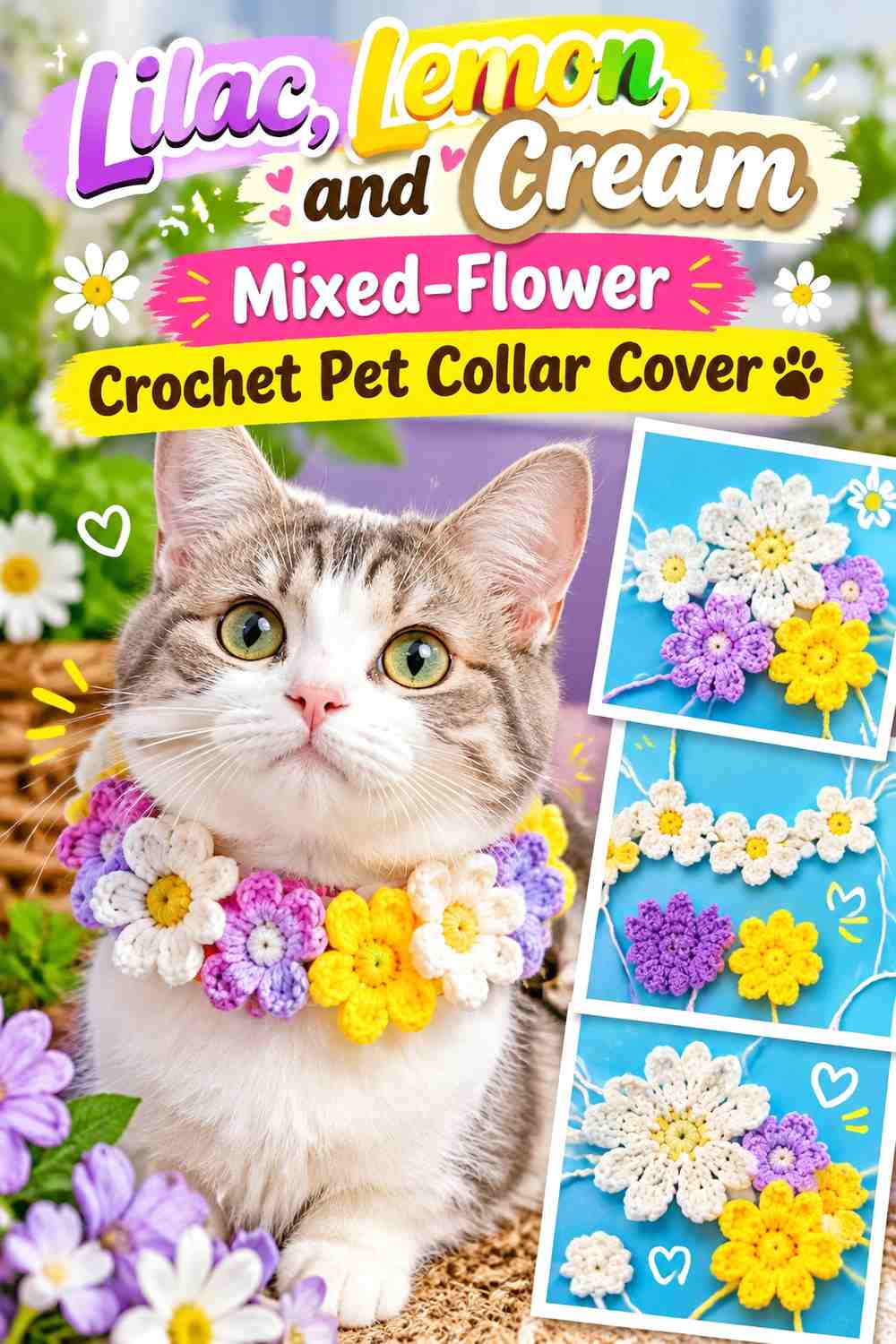
Lilac can provide most of the petals, lemon can act as the small high-contrast center or occasional secondary flower, and cream can keep the collar base quiet. This palette works best when yellow occupies much less area than lilac.
Lemon Should Accent Lilac Crochet Flowers Rather Than Match Them in Area
A small amount of lemon attracts attention quickly. Use it in flower centers or a few tiny blooms instead of making every second flower yellow, unless you intentionally want a very bright collar.
Cream Keeps Lilac and Lemon Flower Variety Connected
Mixed flower shapes already create visual variety, so the base does not need another strong color. Cream can connect daisies, five-petal blooms, or other motifs without competing with their shapes.
Creator Credit: Jayda InStitches
10. Mustard, Chocolate, and Olive Sunflower Crochet Pet Collar Cover

Mustard petals, chocolate centers, and olive supporting details create a recognizable sunflower palette with clear dark-light structure. Because sunflower motifs can be visually substantial, fewer blooms may photograph better than a complete ring of large flowers.
Chocolate Centers Define Mustard Sunflower Petals
The darker center gives the mustard petals an immediate visual anchor. Keep the center noticeably darker than the petals so the flower does not become one flat yellow-brown circle in the photo.
Olive Should Support Mustard Without Enlarging the Sunflower Collar
Use olive mainly along the base or as small leaf-like sections between flowers. Large green pieces beside large sunflower motifs can make the collar wider and busier than necessary around the face.
For pet use, adapt only the flexible sunflower motif concept; omit the wire, stems, and rigid bouquet assembly demonstrated for freestanding flowers.
Creator Credit: KAQNIN KASIKAY
11. Coral, Cream, and Sage Hibiscus Crochet Pet Collar Cover
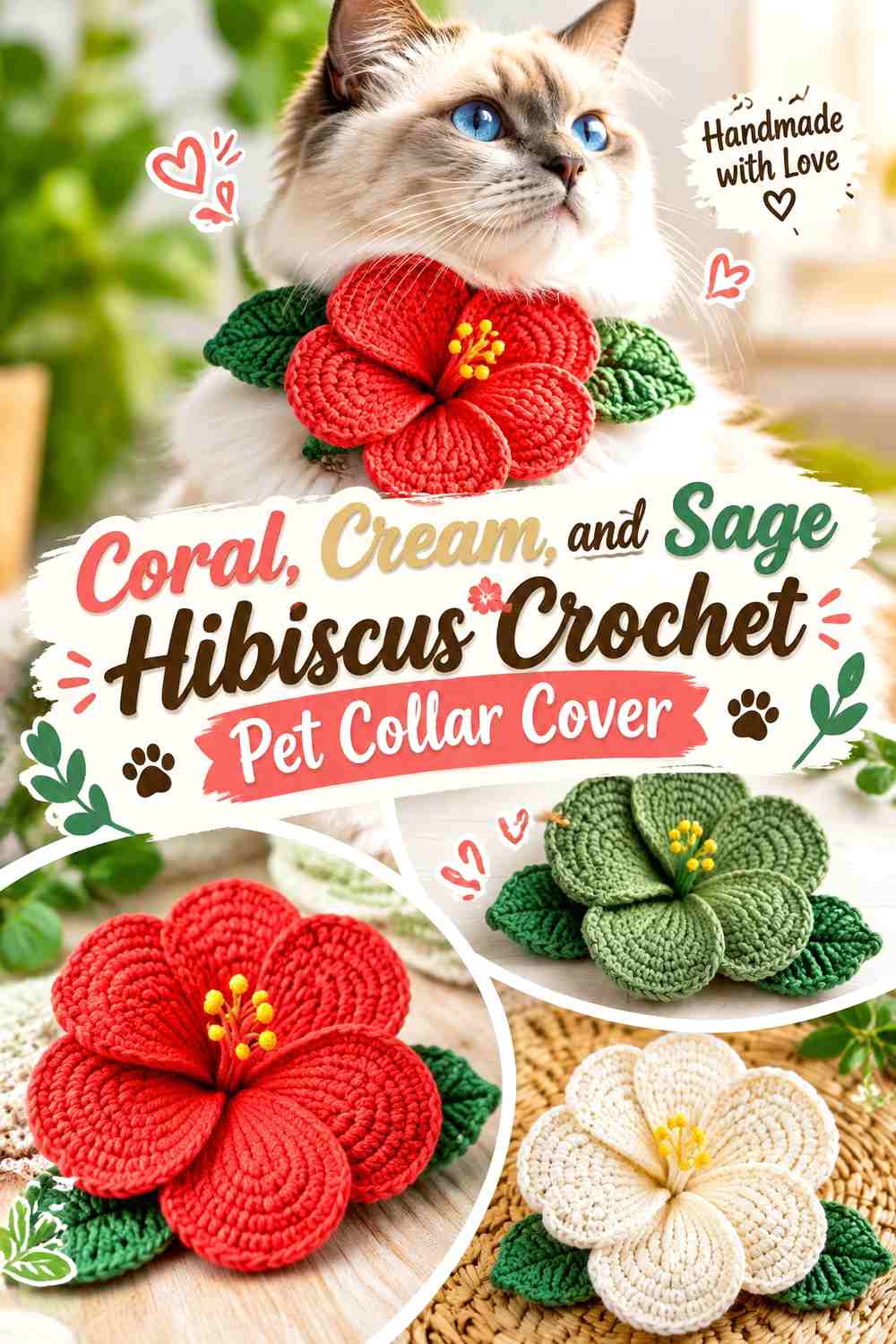
Coral gives hibiscus-style petals enough saturation to stand out in a portrait, cream can soften the center or collar base, and sage provides restrained greenery. Because a hibiscus is visually larger than a tiny daisy, one main bloom can be enough.
Coral Works Best as One Main Hibiscus Focal Color
Place a coral flower near the front or slightly off-center instead of repeating several large coral blooms all the way around the neck. One statement flower leaves more of the pet’s face and collar line visible.
Cream and Sage Should Stay Secondary to Coral Hibiscus Petals
Cream can lighten the base and sage can supply small botanical accents, but both should occupy less visual space than the coral flower. This preserves a clear focal point for the photo.
Use only a flexible crochet interpretation of the flower for a collar cover. Do not transfer wire, stiff stamens, stems, or other bouquet-support components to a pet accessory.
Creator Credit: golgoonak crochet
12. Plum, Gold, and Cream Pansy Crochet Pet Collar Cover
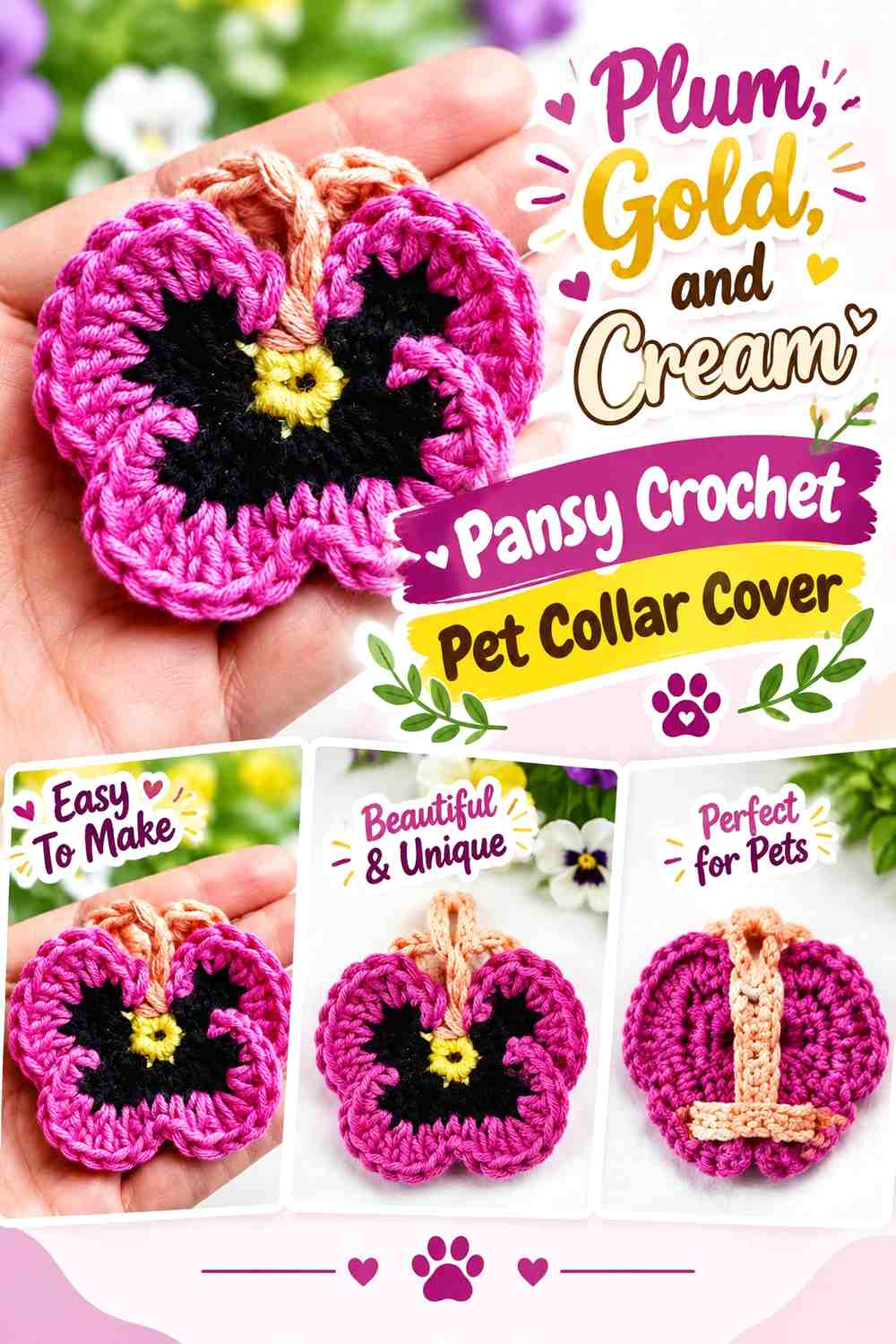
Plum provides a dark petal color, gold can emphasize selected petal sections or centers, and cream offers a neutral base. The stronger contrast makes the pansy shapes useful when a pastel collar would disappear against the pet’s coat.
Gold Adds Definition Inside Plum Pansy Petals
Use gold in smaller internal sections instead of giving it the same area as plum. The lighter warm accent can help the multi-part petal shape remain visible while allowing plum to stay dominant.
Cream Prevents Plum and Gold From Making the Collar Too Heavy
Keep the foundation cream when both flower colors are rich. A dark base underneath dark plum petals can make individual motifs difficult to separate, whereas cream provides a cleaner boundary.
Creator Credit: Ahuyama Crochet
13. White, Yellow, and Sage Daisy Crochet Pet Collar Cover

White petals with yellow centers create an instantly readable flower shape, while sage provides a softer botanical base than dark green. This palette is especially effective when the pet’s coat is darker than the flowers, but a deeper sage edge can also help define white petals against pale fur.
Yellow Centers Give White Daisy Petals a Clear Focal Point
Keep yellow mainly in the centers. Repeating it through the collar base as well can reduce the visual simplicity that makes the classic white-and-yellow daisy easy to recognize.
Sage Can Outline White Daisies on a Pale-Coated Pet
If white petals disappear against light fur, place enough sage behind each flower to create an outline. You do not need a large green collar; a visible green foundation around the petals can provide sufficient separation.
If adapting a freestanding daisy tutorial, use the flower head as motif inspiration only and omit wire, stems, stuffing, or rigid components.
Creator Credit: Kane Crochet
Which Crochet Flower Pet Collar Cover Palette Photographs Best?
For pale-coated pets, deeper palettes such as burgundy and dusty rose, plum and gold, mustard and chocolate, or cream flowers on forest green create stronger boundaries around the motifs.
For dark-coated pets, blush and cream, lavender and cream, peach and cream, or white and yellow daisies can stand away from the coat more clearly.
If you want a softer portrait, use soft pink and sage or peach and cream. For a stronger statement accessory, coral hibiscus, mustard sunflower, or plum pansy motifs put one saturated color close to the face.
Background matters too. A pale flower collar can lose contrast against a cream blanket even when it stands out against the pet. Check the pet, accessory, and intended photo background together before finalizing the colors.
Conclusion
A crochet flower pet collar cover works best when the flowers have clear roles instead of many unrelated colors. Choose one dominant petal shade, decide whether you need a contrasting center, and give the collar base a quieter supporting color.
Blush and cream or peach and cream suit soft photo styling. Burgundy roses, plum pansies, and coral hibiscus create stronger focal points, while mustard sunflowers and white daisies produce very recognizable flower shapes.
Keep the actual pet accessory simple regardless of the flower style. Use flexible crochet motifs, secure yarn ends carefully, avoid wire and loose decorative pieces, and treat the finished collar cover as a supervised photo accessory rather than leash equipment.
Frequently Asked Questions
Which flower colors show up best on a dark-coated pet?
Lighter palettes such as blush and cream, lavender and ivory, peach and cream, or white and yellow usually create stronger light-dark separation against black or deep brown coats.
Which crochet flower colors work better on a white or cream pet?
Try deeper colors such as burgundy, plum, mustard, coral, forest green, or chocolate. If you still want white flowers, place a darker green or colored base behind the petals so their edges remain visible.
How many crochet flowers should I put on a pet collar cover?
There is no universal number. Small flowers can form a repeated row, while a large rose, sunflower, pansy, or hibiscus may work better as one focal motif or a small cluster. Check how much of the pet’s neck and face remains visible before adding more.
Should every crochet flower on the pet collar be a different color?
Not usually. Repeating one dominant petal color creates a more cohesive photo accessory. A second flower color or contrasting center can add variety without making every motif compete.
Can I use a crochet bouquet flower tutorial for a pet collar cover?
You can use the flexible flower motif as inspiration, but do not transfer stems, floral wire, rigid supports, beads, or similar bouquet components to the pet accessory. Keep the adapted flower soft and securely attached.
Is a crochet flower collar cover suitable for attaching a leash?
Treat a decorative crochet flower cover as a photo accessory rather than leash-bearing equipment. Keep the pet’s functional collar or harness separate and use equipment designed for restraint when needed.
How can I make crochet flowers easier to see in photos?
Check contrast between the flowers, the pet’s coat, and the background. A quick test photo is often more useful than judging yarn colors on a table. If petals disappear, change the value of the flower or base rather than automatically adding more colors.