A turtleneck gives a crochet dog sweater an extra area where color can shape the finished look. The collar can match the body for a quiet monochromatic design, contrast with it to frame the face, or repeat a secondary neutral used at the hem and leg openings.

Neutral does not have to mean one flat beige sweater. Cream, oatmeal, taupe, camel, mushroom, brown, charcoal, black, and gray can produce very different levels of warmth and contrast. The important decision is how those shades are distributed across the tall neckline, chest, back, belly, and finishing edges.
The palettes below are editorial adaptations. The credited videos provide dog-sweater construction references; the creators are not being credited with these exact neutral color schemes unless their tutorial happens to use them. Follow the selected tutorial for construction and sizing, and check that any high neckline sits comfortably without restricting normal movement.
Quick List
- Cream and Taupe Crochet Turtleneck Dog Sweater
- Oatmeal and Charcoal Crochet Turtleneck Dog Sweater
- Camel and Ivory Crochet Turtleneck Dog Sweater
- Mushroom and Espresso Crochet Turtleneck Dog Sweater
- Stone Gray and Cream Crochet Turtleneck Dog Sweater
- Greige and Black Crochet Turtleneck Dog Sweater
- Sand and Mocha Crochet Turtleneck Dog Sweater
- Pewter and Oatmeal Crochet Turtleneck Dog Sweater
- Ecru and Slate Gray Crochet Turtleneck Dog Sweater
- Chestnut and Beige Crochet Turtleneck Dog Sweater
- Warm Gray and Off-White Crochet Turtleneck Dog Sweater
- Cocoa and Taupe Crochet Turtleneck Dog Sweater
- Ivory and Graphite Crochet Turtleneck Dog Sweater
- Putty and Camel Crochet Turtleneck Dog Sweater
- Charcoal and Heather Gray Crochet Turtleneck Dog Sweater
- Almond and Espresso Crochet Turtleneck Dog Sweater
- Linen and Soft Brown Crochet Turtleneck Dog Sweater
Use the Turtleneck to Establish the Neutral Color Hierarchy
The collar occupies less total area than the body, but its position makes it visually important. A dark charcoal turtleneck above a pale oatmeal body creates a distinct frame, while an oatmeal collar on an oatmeal sweater lets the neckline blend smoothly into the garment.
Decide whether the collar should be the focal point before choosing its color. When the body already contains noticeable texture, a matching or closely related collar can keep the sweater calm. When the body is visually simple, a darker or lighter neutral collar can provide enough contrast without introducing a bright color.
Keep Neutral Crochet Sweaters From Looking Visually Flat
Different neutral hues can still have almost identical lightness. Taupe and gray, for example, may look clearly different as yarn but merge once worked into the same crochet texture.
Compare the shades side by side before assigning them to neighboring sweater sections. If you want the neckline, cuffs, or hem to remain clearly visible, preserve some light-dark separation. If you prefer a quieter tonal sweater, closer values can work well as long as the texture supplies enough definition.
Coordinate the Turtleneck With the Dog Sweater Edges
Repeating the collar color at the leg openings or back hem is an easy way to connect a contrasting turtleneck to the rest of the sweater. The repeat does not need to be large. Narrow edging can be enough to show that the collar color belongs to the complete palette.
Avoid automatically contrasting every edge. On a small sweater, a dark collar, dark leg openings, dark belly edge, and dark hem can divide the garment into too many outlined sections. Give either the collar or the body the stronger visual role.
1. Cream and Taupe Crochet Turtleneck Dog Sweater
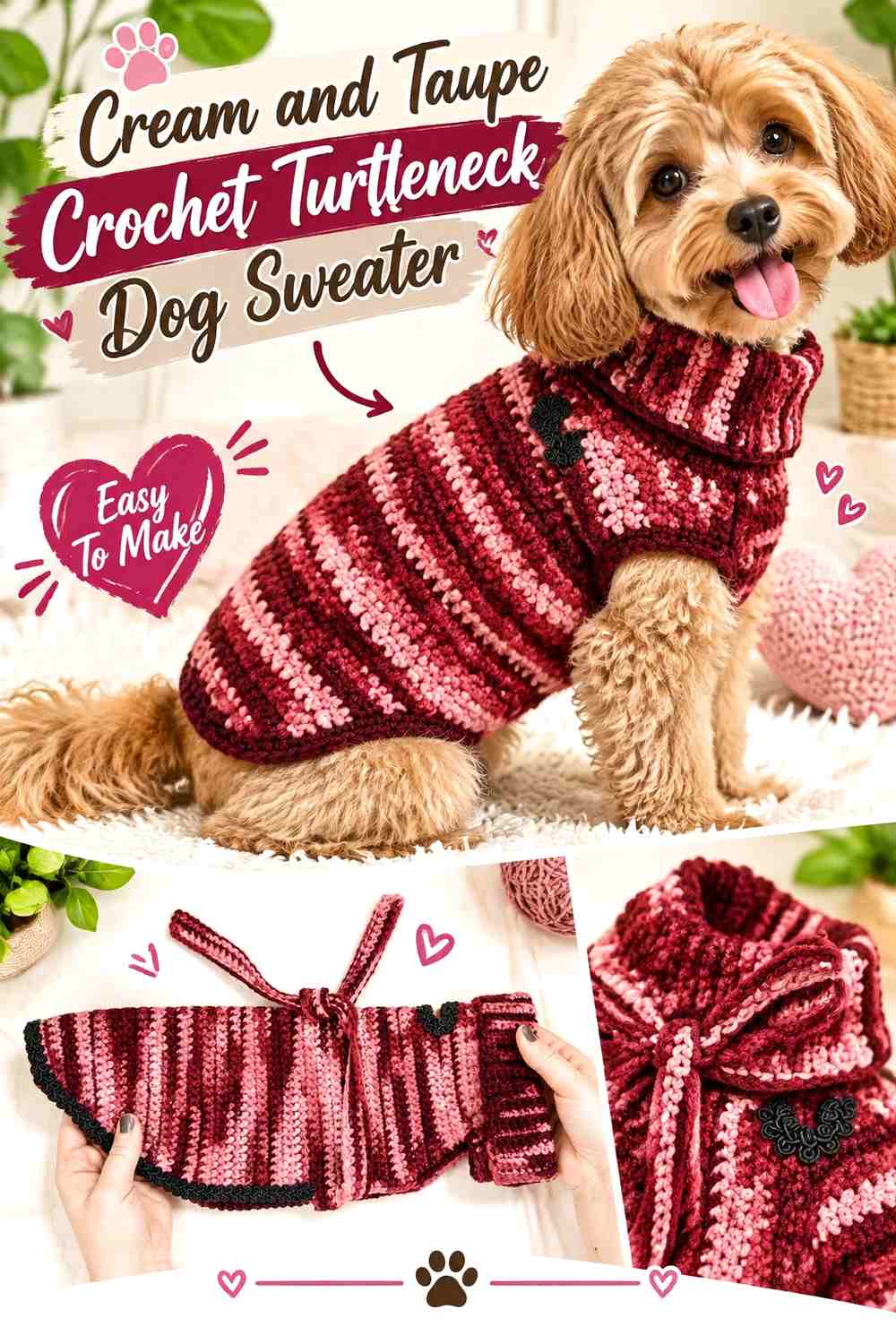
Cream can cover most of this sweater while taupe defines the turtleneck and selected finishing areas. The palette stays light overall, but the slightly deeper collar gives the neckline enough separation to look intentional. Keeping the back predominantly cream also leaves plenty of uninterrupted surface for crochet texture to show.
Taupe Gives the Cream Turtleneck Dog Sweater a Defined Neckline
Use taupe across the full turtleneck when you want the collar to read as a separate garment feature rather than an extension of the body. A darker neutral around the neck can balance a long cream back without requiring stripes or motifs.
Repeat taupe once at the lower edge if the collar otherwise feels isolated.
Cream Should Remain Dominant Beside Taupe Dog Sweater Trim
Once taupe appears at the collar, resist adding broad taupe sections around every opening. Cream across the chest, back, and belly keeps the sweater visually light and lets the darker collar remain the primary contrast point.
Creator Credit: Last Minute Laura
2. Oatmeal and Charcoal Crochet Turtleneck Dog Sweater
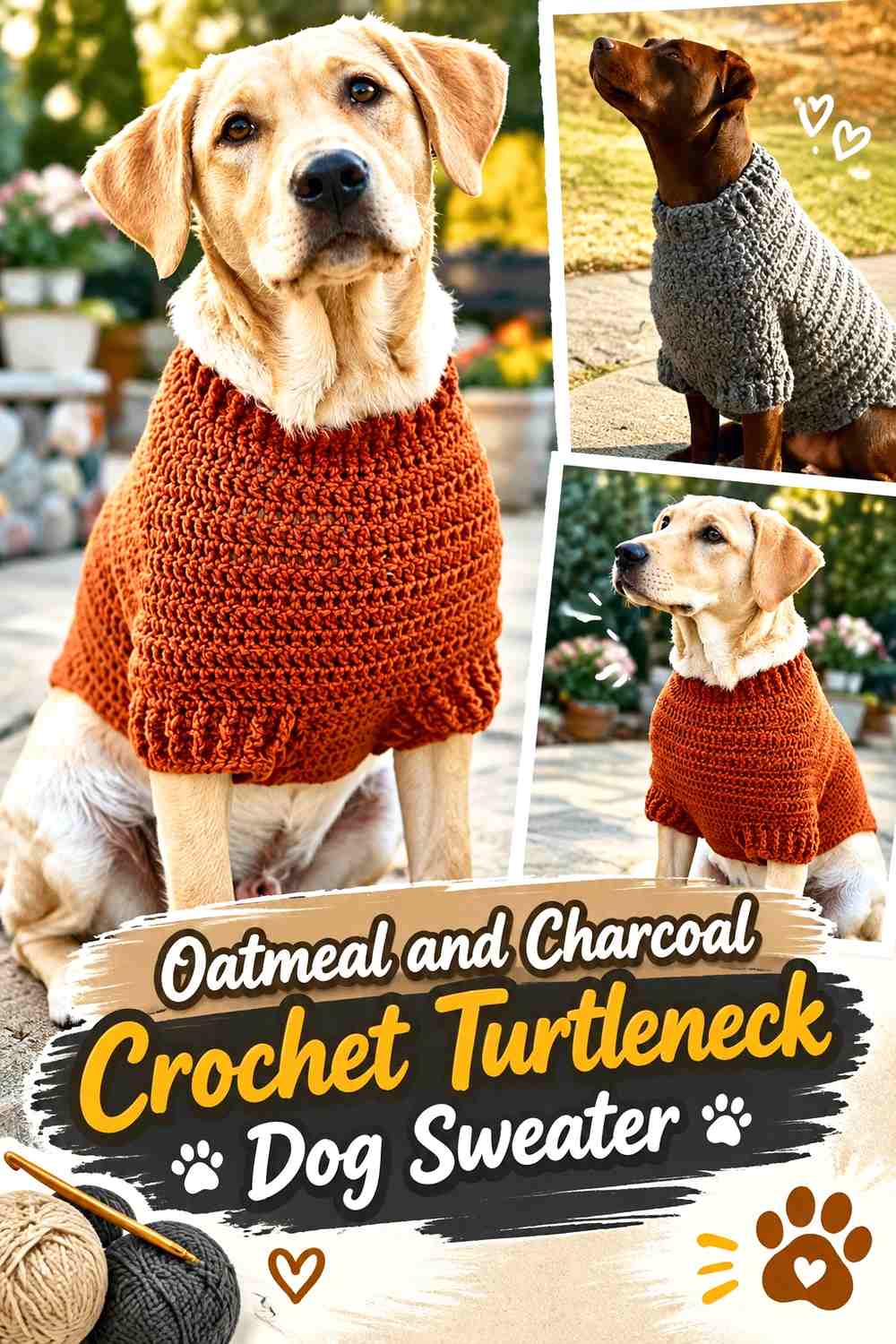
Oatmeal and charcoal create considerably more contrast than cream and taupe. Let oatmeal dominate the torso and use charcoal for the tall collar, with an optional small repeat near the hem. This gives the sweater a strong neutral outline without turning the body into alternating dark and light blocks.
Charcoal Makes the Oatmeal Turtleneck the Main Contrast Point
A charcoal collar immediately establishes the darkest area of the sweater. That can work especially well when the oatmeal body uses visible ribbing or another textured crochet surface because the body still has interest without needing additional color changes.
Oatmeal Keeps Charcoal From Making the Dog Sweater Too Dark
Continue oatmeal through the chest and most of the back rather than carrying charcoal into large side panels. The lighter field keeps the collar visually distinct and prevents multiple dark sections from competing around the dog’s torso.
Creator Credit: Heart Hook Home
3. Camel and Ivory Crochet Turtleneck Dog Sweater

Camel provides a warm neutral body while ivory can brighten the turtleneck, creating a lighter frame around the neck rather than the darker collars used in the first two ideas. Keep camel across the main torso and repeat ivory sparingly so the high collar remains the clearest light feature.
Ivory Can Lighten a Camel Crochet Turtleneck
An ivory neckline creates noticeable separation without the severity of bright white. If the turtleneck is folded, the light shade can become an even more visible part of the sweater, so there is little need for additional broad ivory sections.
Camel Can Ground Ivory at the Dog Sweater Hem
Finishing the lower back in camel preserves the warm main color from neckline to tail. If you want a second ivory detail, use a narrow edge rather than an entire lower-body block so the sweater does not become evenly divided.
Creator Credit: Woolpedia
4. Mushroom and Espresso Crochet Turtleneck Dog Sweater
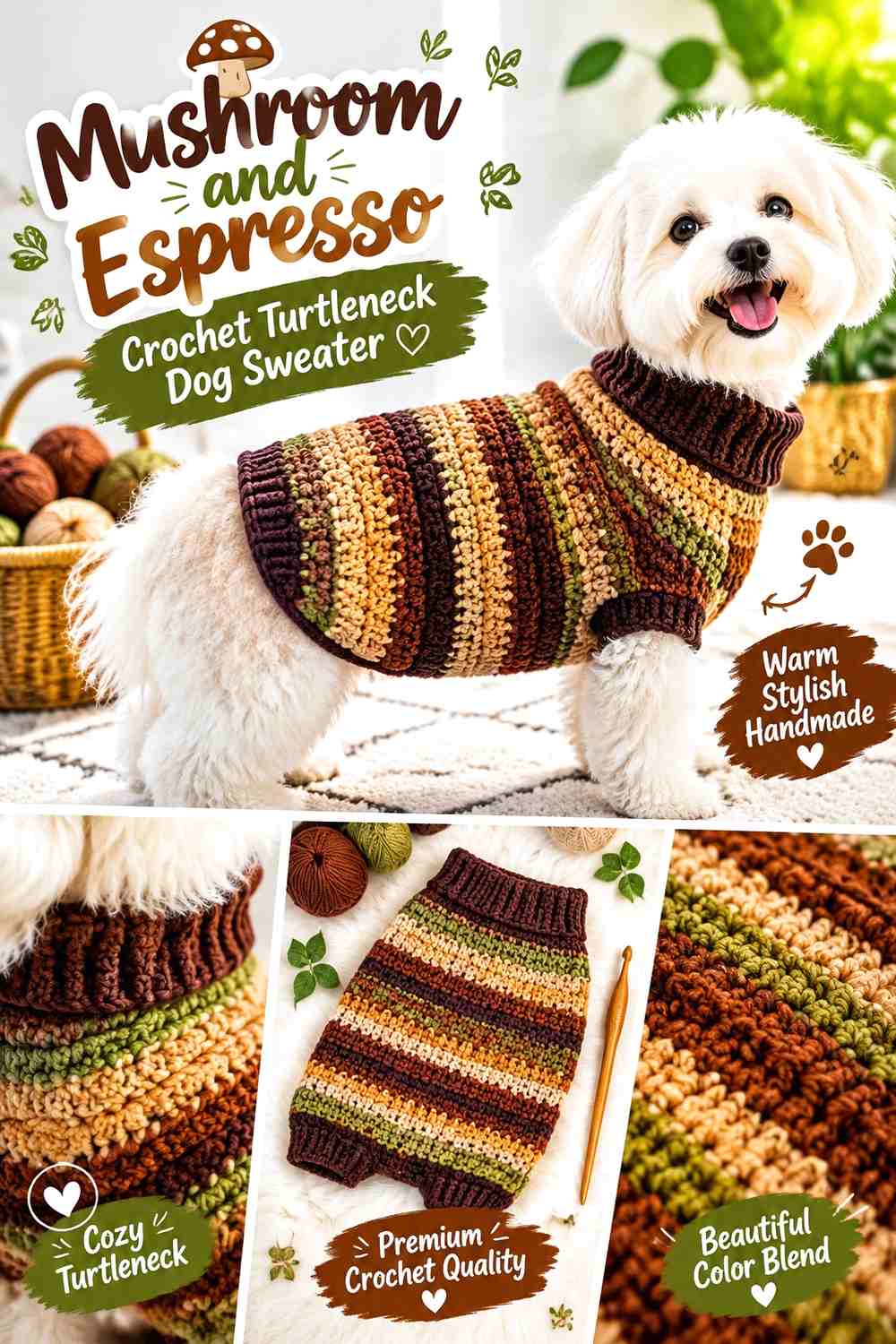
Mushroom and espresso offer an earthy light-and-dark pairing. Mushroom can lead across the torso while espresso defines the turtleneck and perhaps the leg openings. Because espresso has much more visual weight, relatively small amounts can control the outline of the sweater.
Espresso Gives Mushroom a Strong Crochet Turtleneck Frame
Use espresso around the neckline when you want the tall collar to be immediately visible against the softer brown-gray body. This is particularly useful when the mushroom yarn itself has a subtle appearance and needs a darker reference point.
Mushroom Should Separate Espresso Dog Sweater Edges
If you repeat espresso at the leg openings, leave mushroom between those areas and the collar. Continuous dark sections around the front of the sweater can visually merge, while mushroom breaks keep each finishing feature clear.
Creator Credit: Lanas y ovillos
5. Stone Gray and Cream Crochet Turtleneck Dog Sweater

Stone gray gives this sweater a cool neutral base, while cream softens the neckline. Let gray cover the chest, belly, and back and use cream on the turtleneck plus one restrained finishing repeat.
Cream Keeps a Stone Gray Crochet Turtleneck From Feeling Heavy
A light collar interrupts the larger gray field directly beside the dog’s face. Because the cream sits high on the garment, it does not need to cover much additional surface to influence the overall palette.
Stone Gray Can Carry the Cream Dog Sweater Without Extra Accents
Keep the main body solid stone gray if the collar already supplies sufficient contrast. Introducing black or another neutral is unnecessary unless the two-color sweater genuinely needs more definition.
Creator Credit: Mela Makes
6. Greige and Black Crochet Turtleneck Dog Sweater
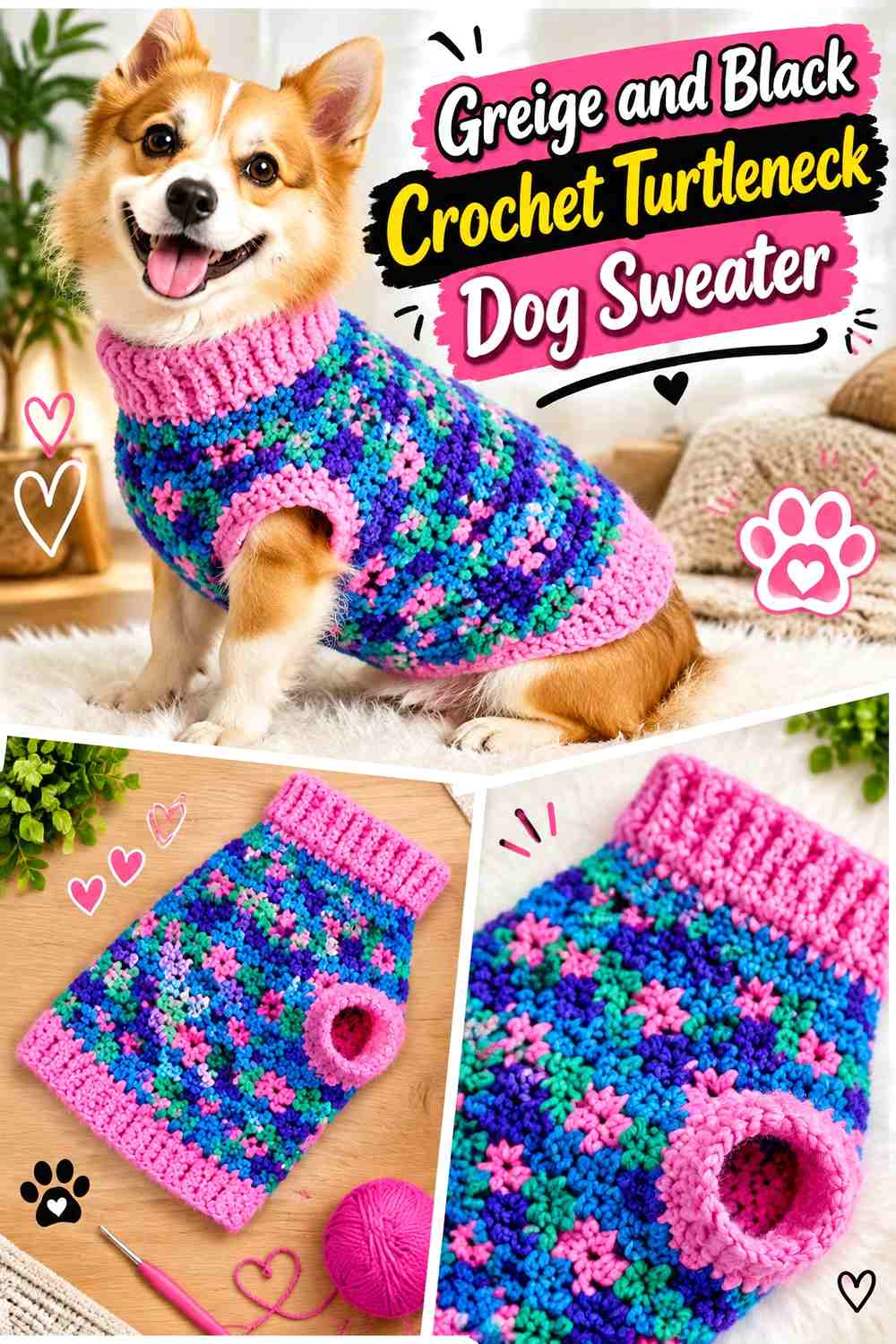
Greige combines beige warmth with gray restraint, while black provides the strongest possible neutral accent in this collection. Let greige cover most of the sweater and limit black to areas that need definition, particularly the turtleneck.
Black Should Stay Concentrated on the Greige Turtleneck
A black collar already creates substantial contrast. Carrying black through wide cuffs, a broad hem, and large belly sections can overpower greige and turn the sweater into a dark color-block design.
Use the black where it adds structure rather than simply repeating it everywhere.
Greige Gives Black Dog Sweater Trim More Breathing Room
When black appears again at the hem, leave a generous greige section between the neckline and lower edge. The uninterrupted neutral body keeps the two dark areas from visually closing in on the center of the sweater.
Creator Credit: TwinStarHooks 💫
7. Sand and Mocha Crochet Turtleneck Dog Sweater
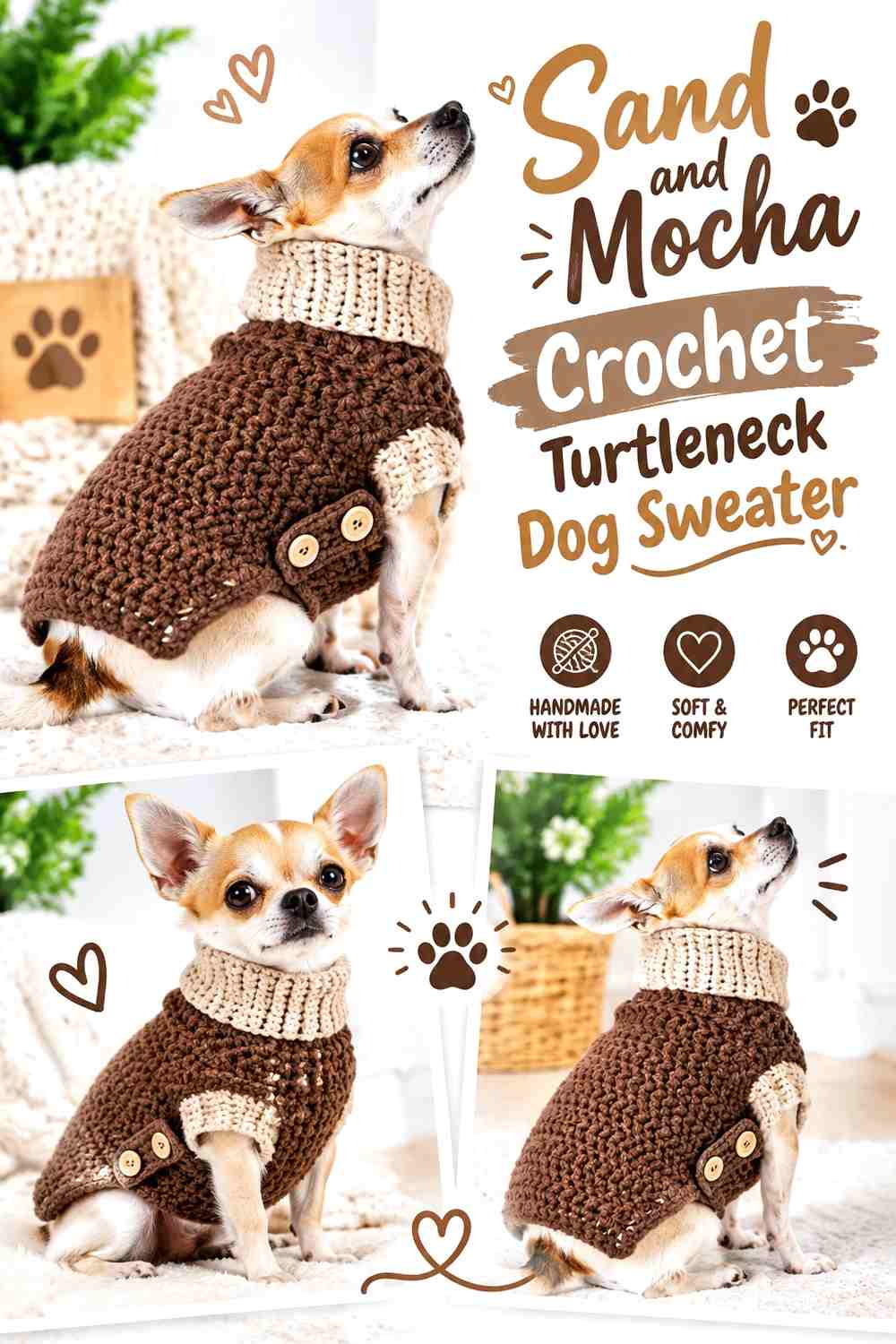
Sand and mocha create a warmer tonal relationship than cream and charcoal. Sand can form the body while mocha covers the collar and narrow edging. The result still has visible contrast, but the difference feels softer because both colors belong to a similar warm neutral family.
Mocha Adds Depth to a Sand Crochet Turtleneck
Choose mocha that is clearly darker than the sand body if you want the neckline to remain distinct. If the shades are too close, the sweater will read almost monochromatically, which may be appropriate but changes the intended collar emphasis.
Sand Can Soften Mocha Around the Dog Sweater Legs
Keep the leg openings sand when the collar is already mocha. That prevents the darker color from clustering around every front-facing edge and leaves the torso looking more continuous.
Creator Credit: Marly Bird
8. Pewter and Oatmeal Crochet Turtleneck Dog Sweater
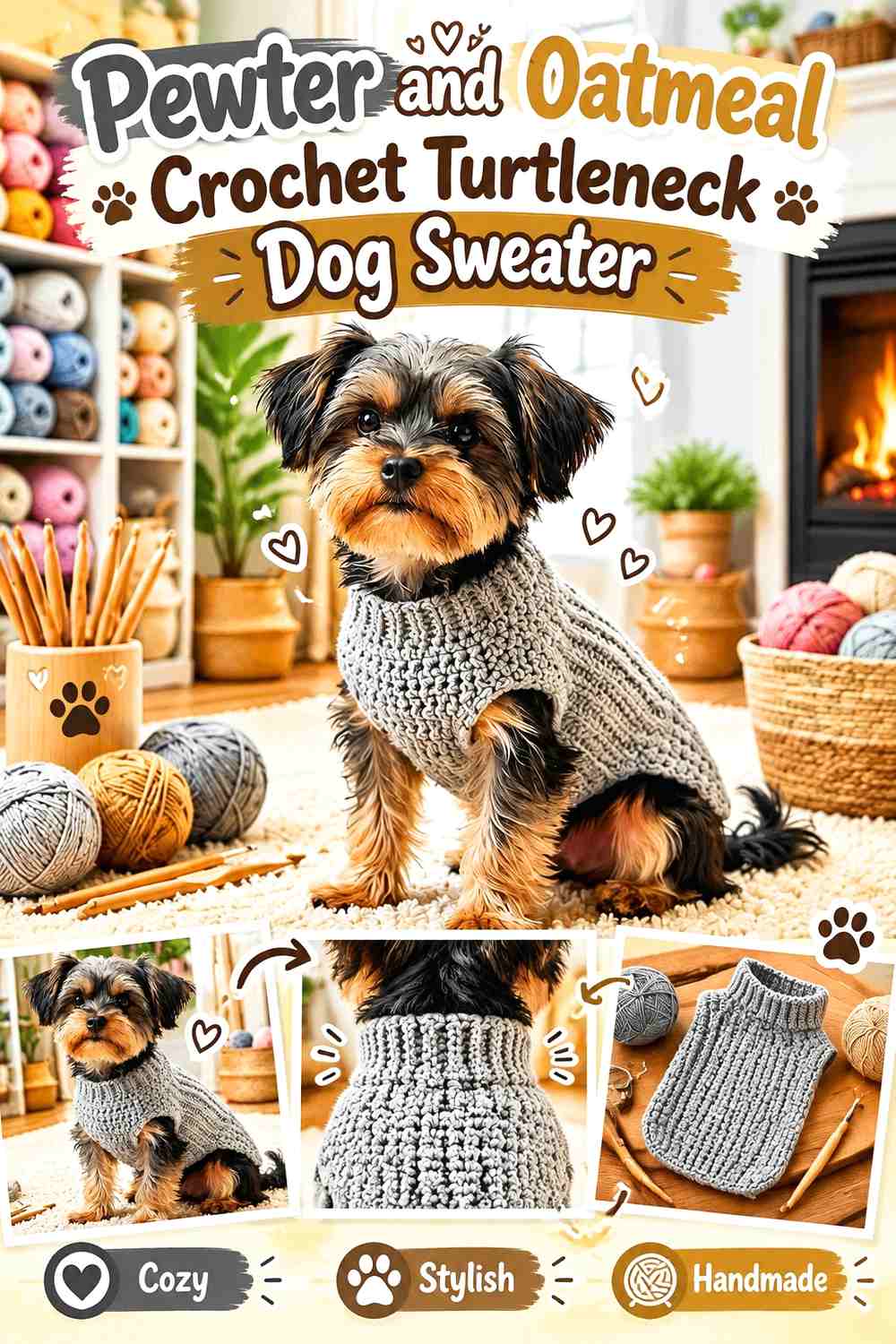
Pewter gives this sweater a medium-to-dark gray body while oatmeal warms the neckline. Unlike white, oatmeal keeps the contrast muted enough to stay within a soft neutral palette.
Oatmeal Warms a Pewter Crochet Turtleneck
Use oatmeal across the entire collar when pewter dominates the rest of the sweater. The warmer neutral prevents the palette from reading as entirely cool gray while still maintaining enough value difference to distinguish the neckline.
Pewter Can Keep Oatmeal Dog Sweater Edging Under Control
If oatmeal repeats at the hem, make it narrow. Large oatmeal sections at both the neck and lower body can leave the pewter middle looking like a separate stripe rather than the primary sweater color.
Creator Credit: Alextitia Tuto Crochet
9. Ecru and Slate Gray Crochet Turtleneck Dog Sweater
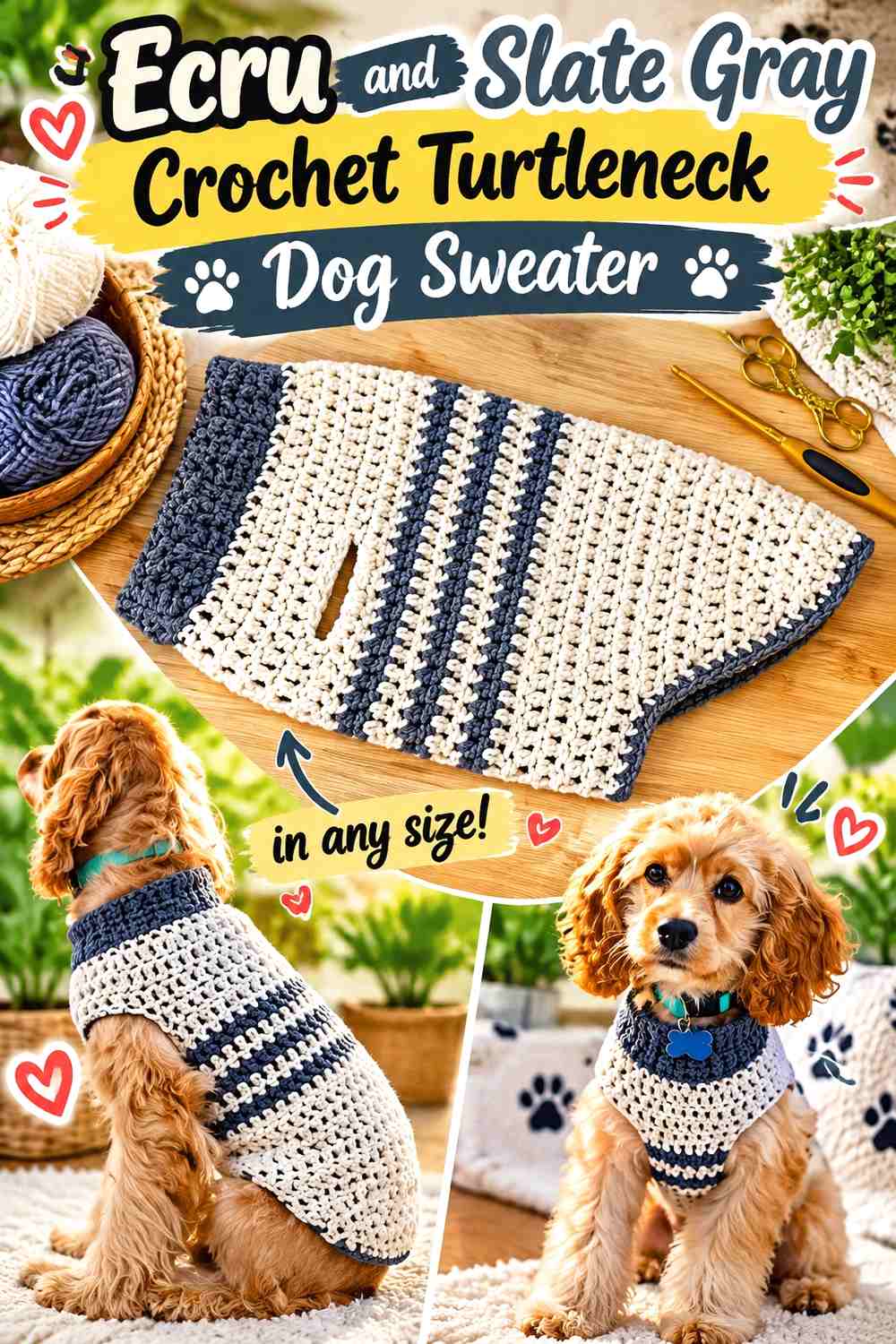
Ecru can lead this light neutral sweater while slate gray provides a more defined collar and trim. The combination offers stronger separation than ecru with taupe but remains less severe than cream with black.
Slate Gray Gives Ecru a Clean Turtleneck Boundary
Place slate gray around the full collar if you want the transition from neck to body to be obvious. Because ecru is very light, even a medium gray can provide enough definition without moving to the darkest neutral available.
Ecru Should Keep Slate Gray Away From Every Dog Sweater Edge
Use ecru around at least some of the leg and belly edges. When every opening receives slate trim, the dark outlines can compete with the turtleneck and make the sweater feel visually segmented.
Creator Credit: it’s erin b.
10. Chestnut and Beige Crochet Turtleneck Dog Sweater
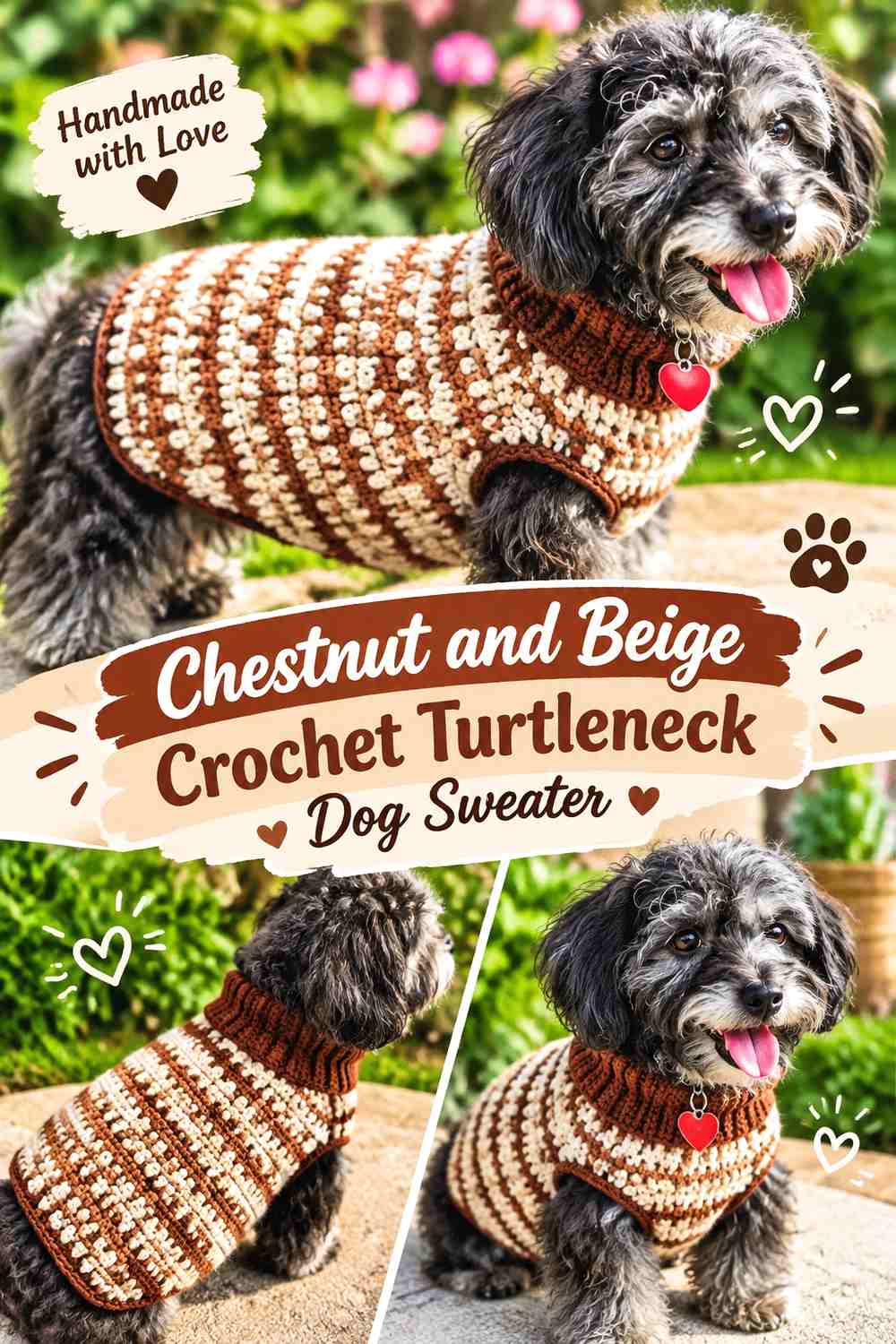
Chestnut can cover most of the body while beige lightens the turtleneck. This reverses the common light-body, dark-collar arrangement and gives the sweater a richer brown direction without leaving the neck visually heavy.
Beige Can Lift a Chestnut Crochet Turtleneck
A beige collar creates a clear break above the deeper body. If the collar folds over itself, maintaining one consistent beige shade keeps that extra thickness visually simple rather than introducing multiple colors near the face.
Chestnut Should Carry Most of the Beige Dog Sweater Surface
Keep chestnut across the back, chest, and lower body so it remains the dominant color. A beige collar plus a narrow beige hem repeat is usually enough to connect the lighter neutral throughout the garment.
Creator Credit: The Crochet Crowd
11. Warm Gray and Off-White Crochet Turtleneck Dog Sweater
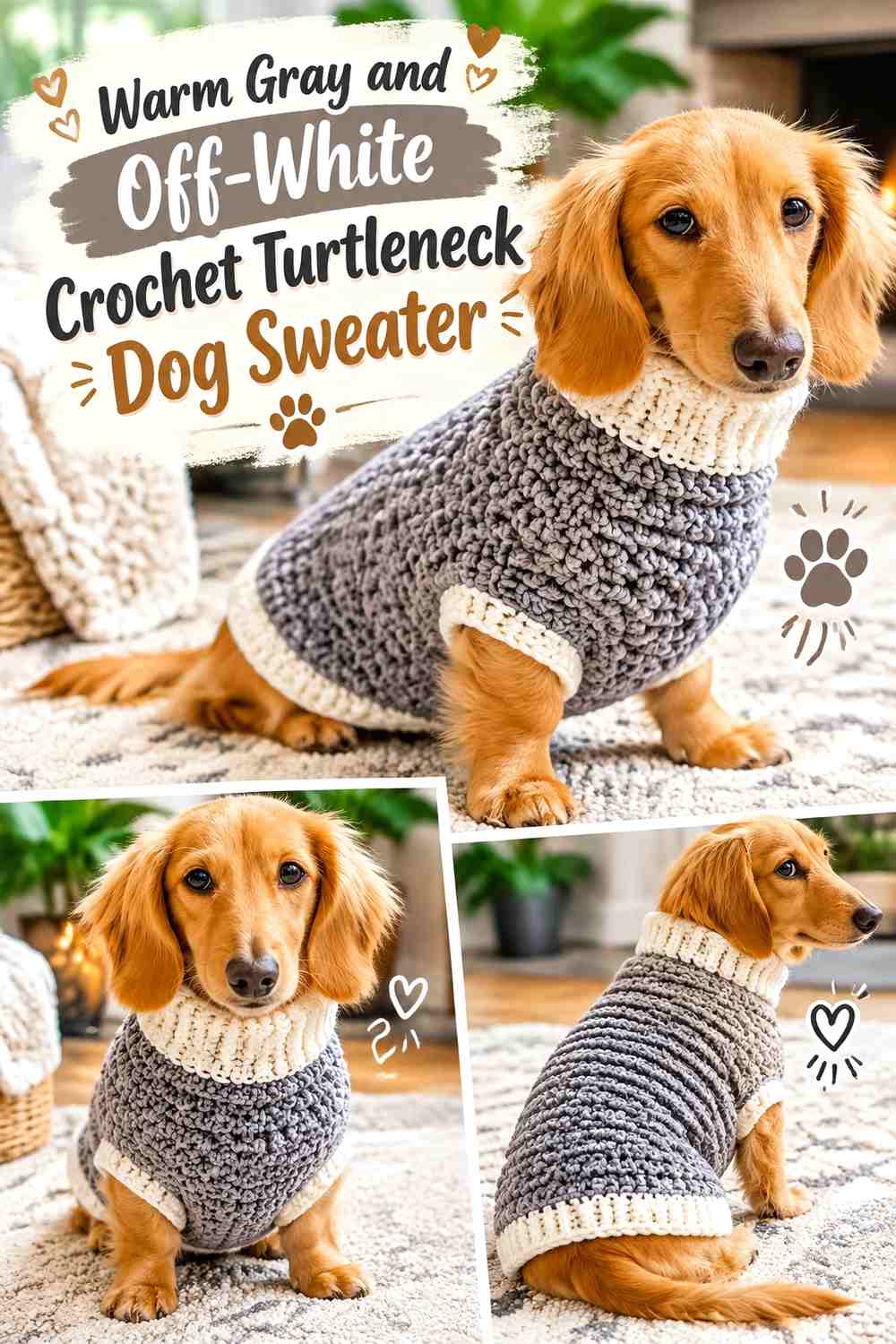
Warm gray sits between a cool gray and beige, making it a useful body color when pure gray feels too stark. Off-white can brighten the turtleneck while keeping the combination softer than black-and-white.
Off-White Keeps a Warm Gray Crochet Turtleneck Light
Use off-white when you want the collar to stand apart but still coordinate with the muted body. The lighter neckline can also provide a useful contrast reference for seeing the gray’s warmer undertone.
Warm Gray Should Repeat Around Off-White Dog Sweater Details
If the hem uses off-white, retain warm gray around the leg openings or belly edge. Repeating the body color at those structural points keeps the lighter accent concentrated rather than outlining the whole garment.
Creator Credit: Crochet With Tiffany
12. Cocoa and Taupe Crochet Turtleneck Dog Sweater
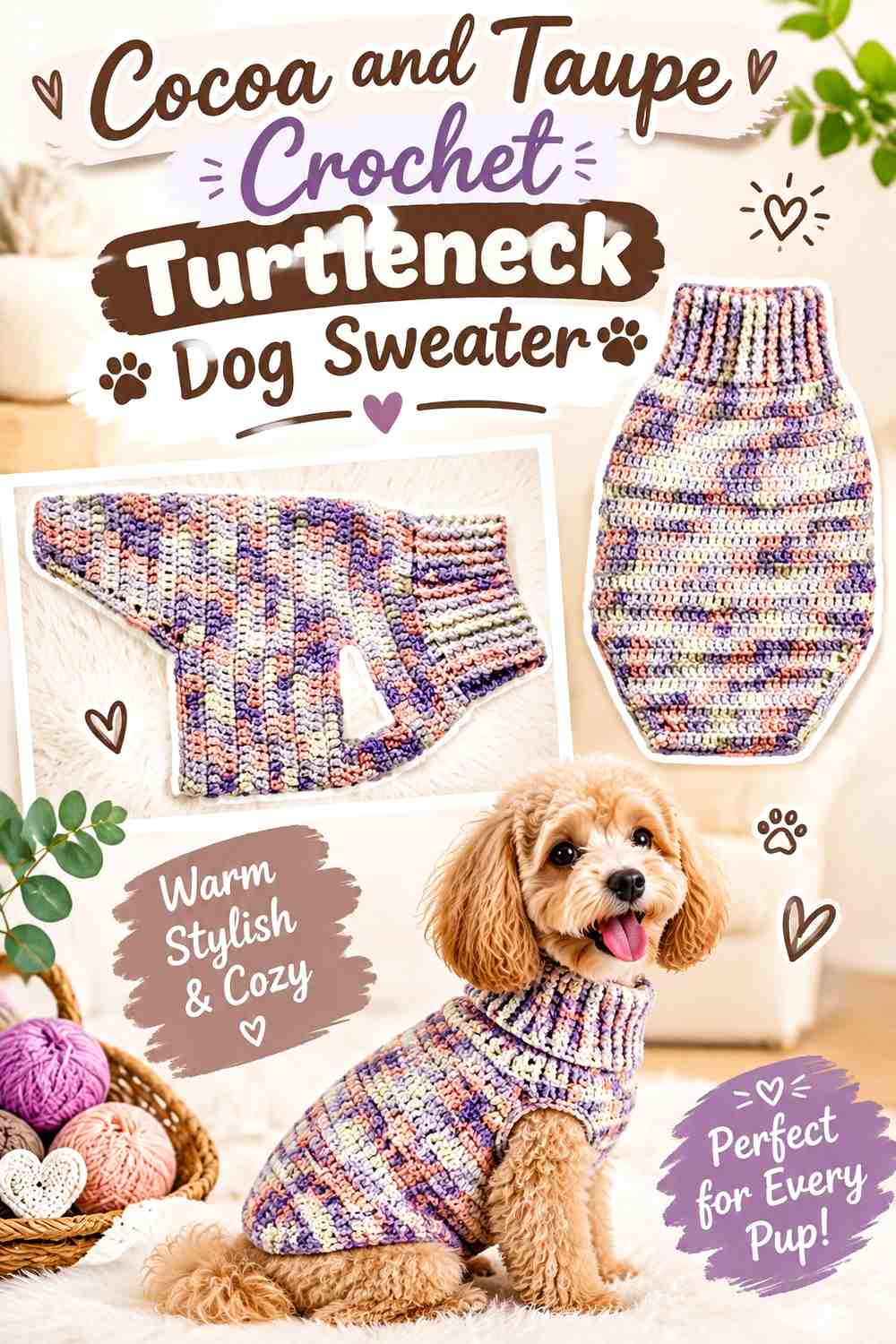
Cocoa and taupe create a low-contrast brown palette where the shape and crochet texture matter almost as much as the color change. Cocoa can lead the body while taupe forms the collar and finishing details.
Taupe Creates a Gentle Transition on a Cocoa Turtleneck
Because taupe is less dramatically different from cocoa than cream would be, the neckline stays visible without becoming a graphic focal point. This works well when you want the tall collar to feel integrated with the torso.
Cocoa Needs Enough Contrast From Taupe Dog Sweater Trim
Compare your exact yarns before committing. Some cocoa and taupe shades can be almost identical in value. If you want the edging to register clearly, preserve a noticeable light-dark difference even while keeping both colors muted.
Creator Credit: Crochet It
13. Ivory and Graphite Crochet Turtleneck Dog Sweater

Ivory and graphite create a crisp neutral contrast while avoiding pure white and black. Ivory can dominate the body, with graphite concentrated at the turtleneck and one additional finishing point.
Graphite Gives an Ivory Crochet Turtleneck Strong Definition
Use graphite when you want the collar to look deliberately structured against the very light body. The dark neckline already provides substantial visual weight, so additional graphite should be controlled.
Ivory Can Prevent Graphite Dog Sweater Trim From Becoming Too Graphic
Leave the leg openings ivory when graphite appears at the collar and hem. This avoids outlining every part of the sweater and lets the dark-neutral contrast remain focused at the top and back edge.
Creator Credit: Maria’s Blue Crayon
14. Putty and Camel Crochet Turtleneck Dog Sweater
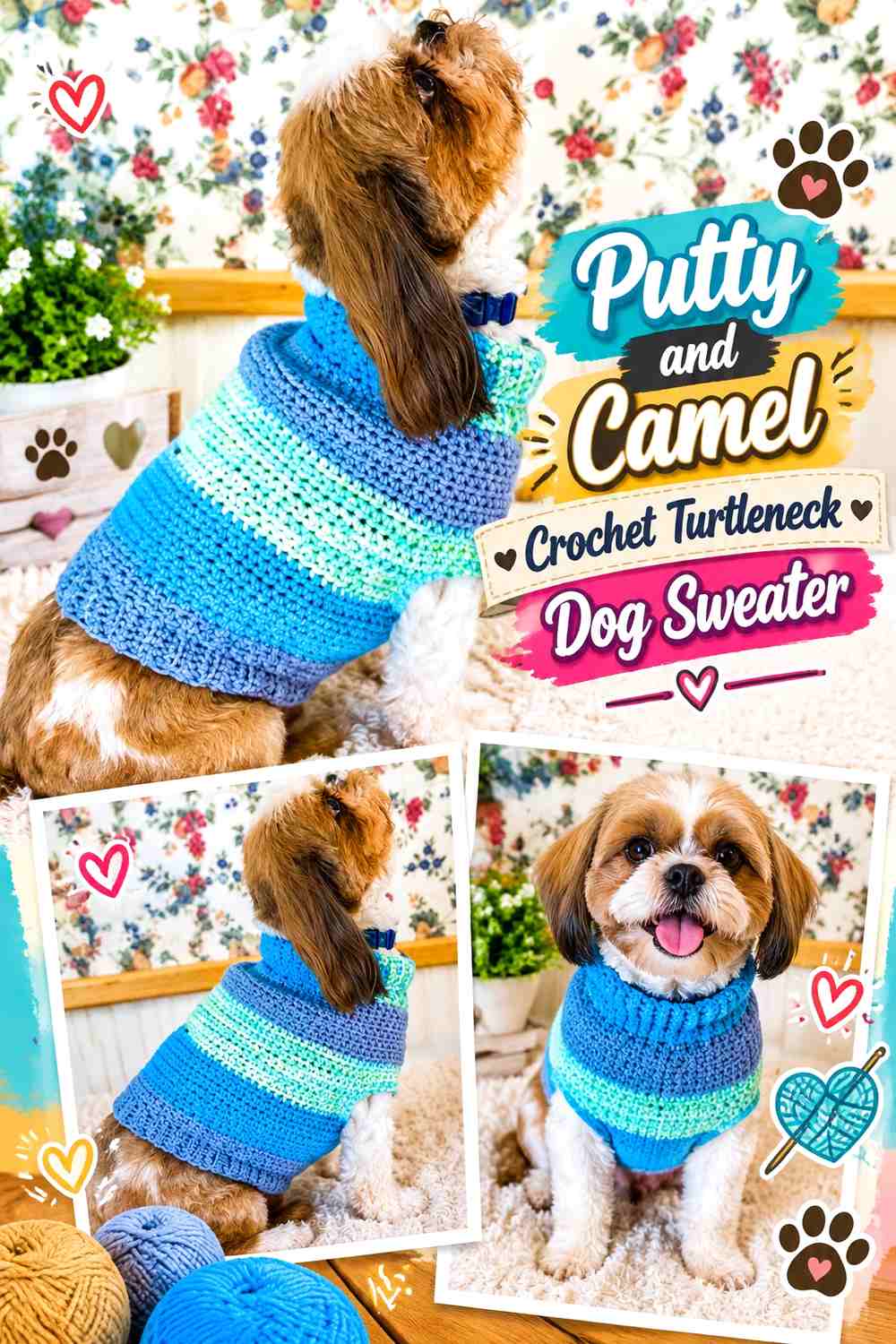
Putty is a muted gray-beige neutral that can give the main sweater a quiet base. Camel adds a warmer collar without producing extreme contrast, making this palette useful when you want the neckline to be noticeable mainly through color temperature rather than darkness.
Camel Warms a Putty Crochet Turtleneck
Concentrate camel at the neck so its warmer character is easy to compare with the cooler putty body. When the two colors have similar values, the distinction will remain subtle, which is part of this palette’s appeal.
Putty Can Keep Camel Dog Sweater Finishing Minimal
Use putty around the legs and lower belly instead of repeating camel everywhere. The sweater will feel more unified if the warm accent remains primarily associated with the tall collar.
Creator Credit: Ninja Bunny Crochet
15. Charcoal and Heather Gray Crochet Turtleneck Dog Sweater
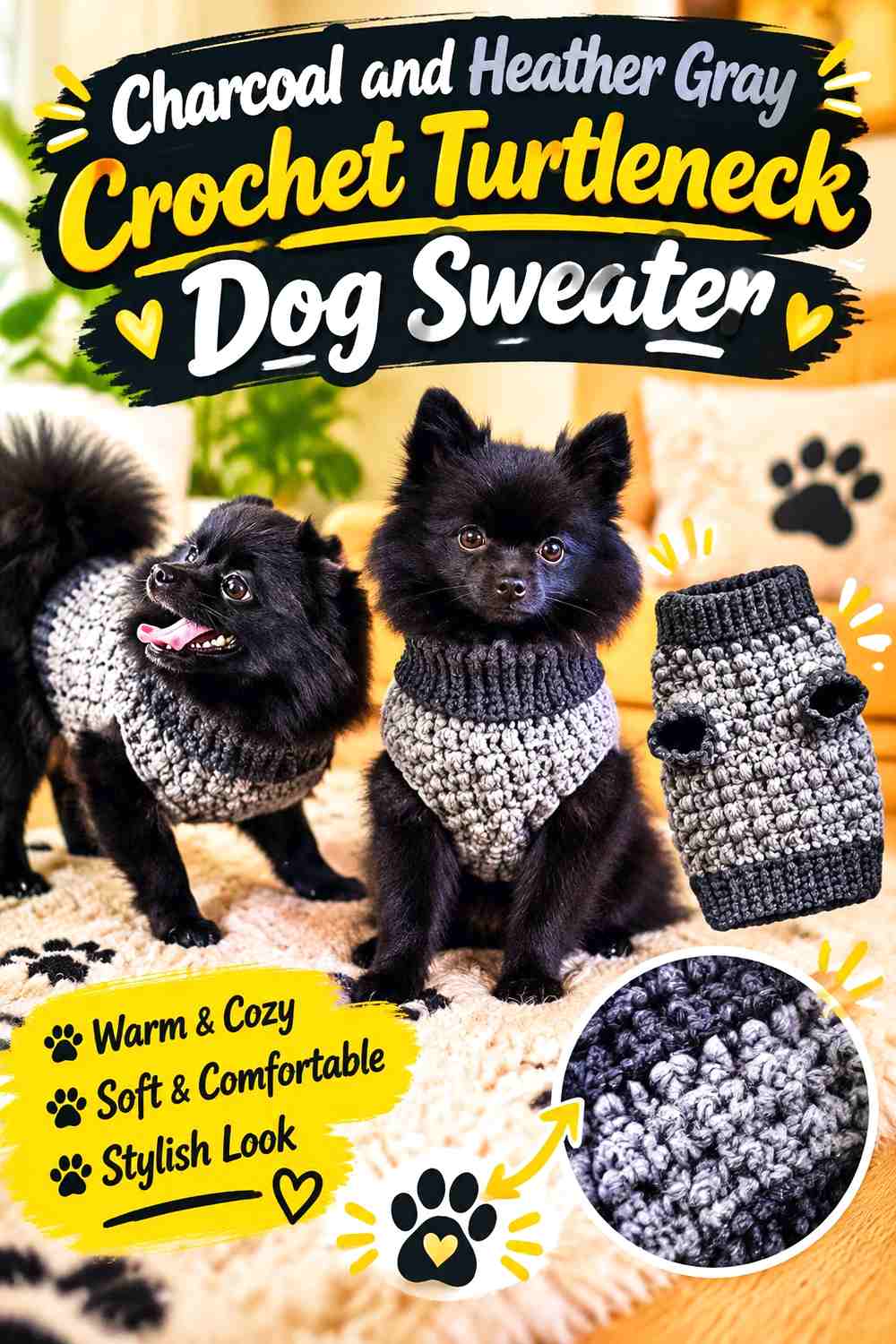
Charcoal and heather gray create a dark monochromatic direction. Heather gray can cover most of the torso while charcoal deepens the turtleneck and selected borders. Because both shades are gray, the difference in value becomes more important than hue.
Charcoal Needs Clear Separation From Heather Gray at the Turtleneck
Choose a charcoal that is visibly darker than the body. If the two grays are too similar, the collar color change may disappear and the sweater will rely entirely on texture to distinguish the neckline.
Heather Gray Can Keep Charcoal Dog Sweater Details Readable
Use heather gray between all charcoal finishing areas. A medium-gray body gives the eye enough separation to identify a dark collar and dark hem as two related accents rather than one continuous mass.
Creator Credit: SheiLa Teré
16. Almond and Espresso Crochet Turtleneck Dog Sweater
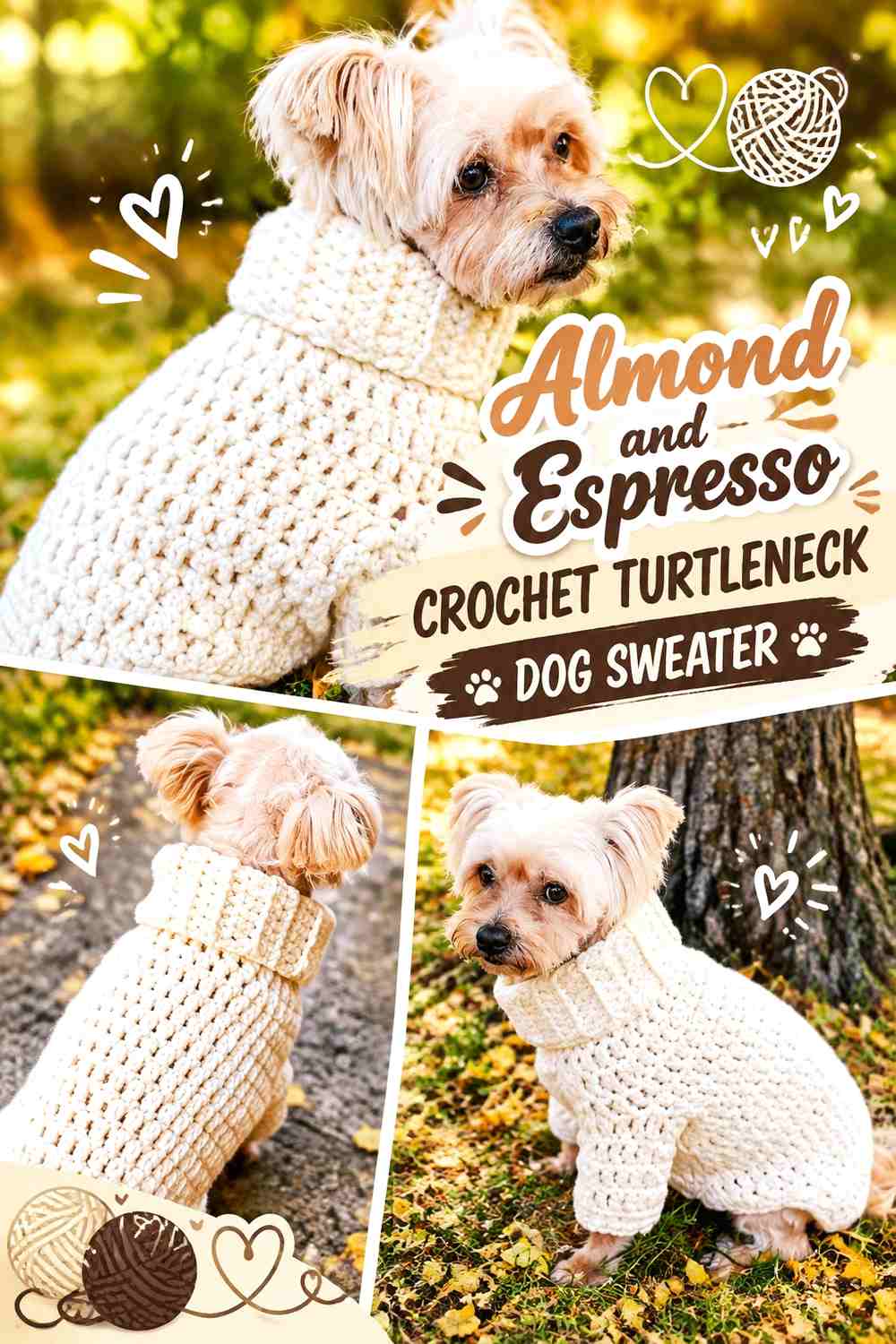
Almond provides a soft creamy-beige body, while espresso gives the turtleneck a very dark brown anchor. The result has nearly as much contrast as cream and charcoal but retains a warmer brown direction.
Espresso Turns an Almond Crochet Turtleneck Into the Focal Point
Keep espresso concentrated around the neck when you want the high collar to define the sweater immediately. The color is dark enough that a relatively small area can influence the entire design.
Almond Should Separate Espresso Dog Sweater Accents
If espresso repeats at the hem, avoid adding another broad dark band around the chest. Almond between the two dark areas prevents the sweater from feeling enclosed by its accent color.
Creator Credit: Vibes with Dani
17. Linen and Soft Brown Crochet Turtleneck Dog Sweater

Linen and soft brown provide one of the gentlest palettes in the collection. Linen can lead the body while soft brown defines the turtleneck without the depth of espresso or charcoal. This is useful when you want visible color placement but very little dramatic contrast.
Soft Brown Keeps a Linen Crochet Turtleneck Subtle
Choose soft brown when the goal is to distinguish the collar without making it the first feature noticed. A medium brown sits naturally beside linen and lets the overall sweater remain light and understated.
Linen Can Carry Soft Brown Through the Dog Sweater Without Extra Colors
There is little need for a third neutral here. Repeat soft brown once at the back hem if desired, then keep the chest, belly, and leg edges linen so the two-color hierarchy remains clear.
Creator Credit: Left Hand Crochet & Knit Tutorials
Comparing the Neutral Turtleneck Dog Sweater Palettes
For the strongest light-dark contrast, oatmeal and charcoal, greige and black, ivory and graphite, or almond and espresso give the turtleneck a clear outline against the body. These combinations suit a design where the collar should be noticed immediately.
For a softer tonal result, cocoa and taupe, sand and mocha, putty and camel, or linen and soft brown keep the transition between collar and body more restrained. Their success depends more on choosing two neutrals that remain visibly different once crocheted.
If you prefer a predominantly light sweater, cream and taupe, camel and ivory, ecru and slate gray, or stone gray and cream keep darker colors from covering too much of the garment. Charcoal and heather gray goes in the opposite direction for a deeper monochromatic look.
Conclusion
Neutral crochet turtleneck dog sweaters become much more varied once the collar is treated as part of the color plan rather than simply an extension of the body. A charcoal or espresso neckline can frame a light sweater, while cream, ivory, or oatmeal can lighten a darker torso. Tonal pairings such as cocoa and taupe place more emphasis on crochet texture and garment shape.
Choose the palette according to how much contrast you want between the turtleneck and body, then decide whether the collar color needs one small repeat at the hem or leg openings. Avoid repeating a strong accent automatically around every edge.
Use the credited tutorial for the construction you choose and check the finished neckline, chest, leg openings, and body length on your own dog. A tall collar should contribute to the design without compromising comfortable movement.
Frequently Asked Questions
Should the turtleneck be darker than the dog sweater body?
It does not have to be. A dark charcoal, espresso, or graphite collar gives a light body strong definition, while an ivory or cream turtleneck can brighten a darker sweater. Choose based on whether you want the neck or the torso to carry more visual weight.
Which neutral colors create the strongest contrast on a crochet dog sweater?
Pairings such as oatmeal with charcoal, greige with black, and ivory with graphite provide stronger light-dark separation. Tonal combinations such as cocoa with taupe or linen with soft brown create a more blended result.
How can I tell whether two neutral yarn colors are different enough?
Place them side by side and compare their lightness as well as their undertones. Viewing a quick photo in grayscale can help reveal whether two apparently different neutrals are actually close in value.
Should the dog sweater hem match the turtleneck?
It can, especially when you want a contrasting collar to look connected to the rest of the garment. A narrow repeat at the hem is often sufficient. Matching the collar, hem, leg openings, and every other edge can create more visual outlining than the sweater needs.
Can I make a crochet turtleneck dog sweater in one neutral color?
Yes. A monochromatic cream, camel, gray, brown, or black sweater places more emphasis on the crochet texture and the difference between the collar and body construction. Color contrast is not necessary for the turtleneck shape to remain visible.
How do I substitute one neutral shade for another?
Preserve the role and value relationship. If the original idea uses a pale body with a much darker collar, replace both shades with colors that maintain that light-dark separation. For a tonal design, choose replacements that remain closer in value.
What should I check before using a high-neck crochet sweater on my dog?
Check the neckline while the dog is standing and moving, along with the chest, belly, and front-leg openings. The collar should not feel restrictive, bunch excessively, or interfere with the dog’s normal movement or other walking equipment. Follow the selected tutorial’s fitting guidance rather than relying on a color concept alone.