A jade green and sandstone palette works especially well for a dachshund sweater because the two colors can define the dog’s long back without requiring complicated all-over colorwork. Jade gives the garment a richer focal color, while sandstone can soften the collar, belly, borders, or broad saddle stripe.
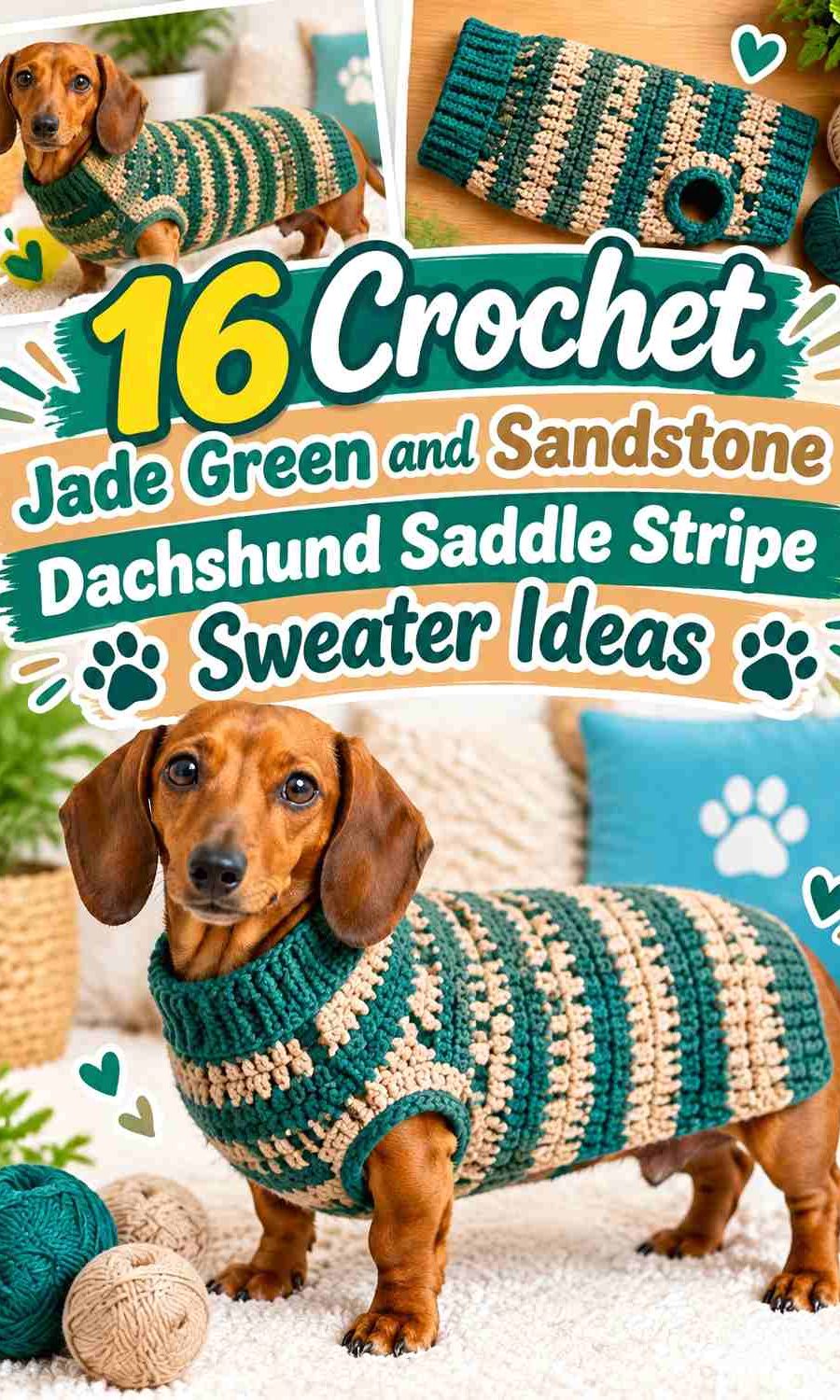
For these ideas, a saddle stripe means a contrasting section positioned across or along the upper back, much like a visual saddle panel. It can be one broad band, two narrower bands, a framed rectangle, a tapered back panel, or a stripe that connects visually with the collar.
Not every supporting tutorial below was designed specifically for dachshunds or uses these exact colors. They provide different dog-sweater constructions that can be adapted after checking the individual dog’s measurements. That distinction matters because a dachshund’s longer torso, short front legs, and chest proportions may require more than simply extending a standard small-dog sweater.
Quick List
- Crochet Classic Jade Saddle Stripe Dachshund Sweater
- Crochet Long-Back Sandstone Saddle Panel Dachshund Sweater
- Crochet Rib-Neck Jade Saddle Stripe Dachshund Sweater
- Crochet Tapered Saddle Stripe Custom Dachshund Sweater
- Crochet Bottom-Up Double Saddle Stripe Dachshund Sweater
- Crochet Yoke-to-Saddle Stripe Dachshund Sweater
- Crochet Cowl-Neck Sandstone Saddle Stripe Dachshund Sweater
- Crochet Compact Mini Dachshund Saddle Stripe Sweater
- Crochet Narrow-Stripe Small Dachshund Saddle Sweater
- Crochet Multi-Size Jade Saddle Stripe Dachshund Sweater
- Crochet Button-Belly Saddle Stripe Dachshund Sweater
- Crochet Lightweight Jade-and-Sandstone Saddle Sweater
- Crochet Puff-Texture Saddle Stripe Dachshund Sweater
- Crochet Cuff-Accent Saddle Stripe Dachshund Sweater
- Crochet Textured Dandy Saddle Stripe Dachshund Sweater
- Crochet Harness-Opening Saddle Stripe Dachshund Sweater
Fit the Dachshund Before Planning the Stripe
The long back is the obvious feature to accommodate, but back length should not be extended independently of everything else. The sweater still has to fit the neck, chest, front-leg spacing, belly, and waist.
Measure the dog standing naturally rather than curled up or sitting. Useful checkpoints include neck circumference, the widest part of the chest, back length from the neck area toward the tail, space between the front legs, and the desired belly length.
Try-on checks are particularly valuable before extending a long back panel. If the chest and front-leg openings are already pulling, adding more rows to the back will not correct the underlying fit.
A dachshund sweater also needs enough belly clearance for normal movement and toileting. Longer back coverage does not mean the underside should be equally long.
Plan the Saddle Stripe Around the Long Back
A saddle stripe can make a dachshund sweater more visually balanced because it breaks up one long stretch of crochet. Placement matters more than the number of color changes.
For a classic look, use jade green as the main body and place a broad sandstone band across the upper or middle back. For a softer version, reverse the colors and let jade become the accent.
Another option is a longitudinal saddle: a jade center-back panel bordered by sandstone on both sides. That approach visually emphasizes the dog’s length, while a horizontal stripe visually breaks it up.
Before changing colors, decide where the stripe should sit when the sweater is actually worn. A band that appears centered while the garment is flat can shift toward the shoulders once the chest portion stretches around the dog.
Keep Harnesses, Leg Openings, and Belly Edges Functional
Decorative color placement should not make functional areas harder to use. If the dog wears a harness underneath the sweater, establish the harness position before placing the saddle panel or any leash opening.
Keep bulky decorative texture away from the armpit area. Short dachshund legs leave relatively little space between the sweater edge and the top of the leg, so a thick border can become more noticeable there than on a taller dog.
Check all openings by gently moving the dog’s front legs forward and backward. The sweater should stay in position without an edge digging into the armpit or forcing the body fabric forward.
Secure yarn ends carefully and avoid loose decorative pieces that could be chewed or pulled off. Care instructions should follow the actual yarn you choose rather than assumptions based on fiber type.
1. Crochet Classic Jade Saddle Stripe Dachshund Sweater
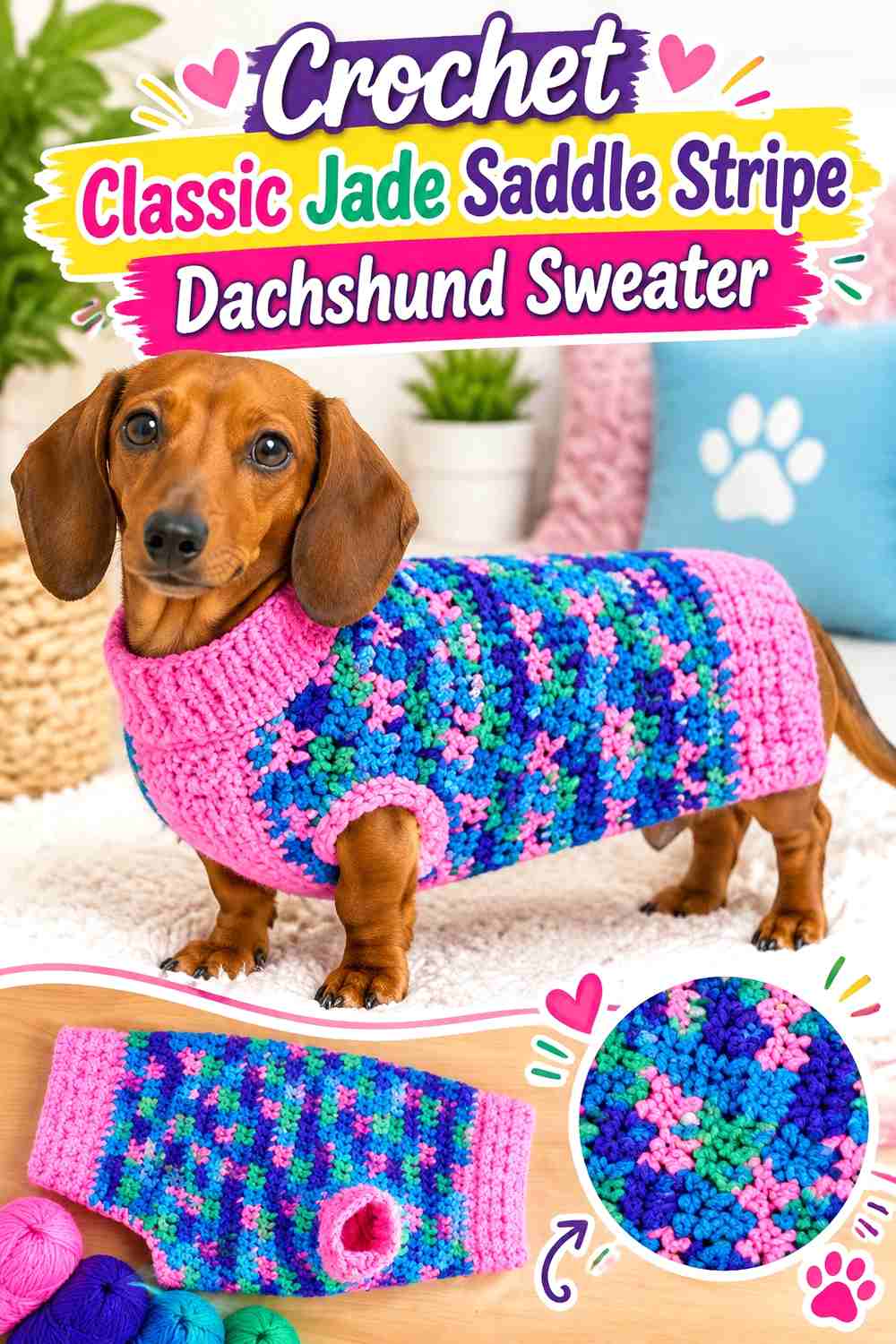
This version uses jade green for most of the body and introduces one broad sandstone stripe across the back. TwinStarHooks 💫 demonstrates a small-dog sweater with a two-color setup, giving this idea a straightforward foundation for planning a strong color break.
Let One Wide Stripe Do the Work
A dachshund already provides plenty of back length for color placement, so there is no need to fill the entire sweater with narrow stripes. One broad sandstone section can create the saddle effect while allowing jade to remain dominant.
Position the stripe after confirming where the shoulders end on the worn sweater. That keeps the accent on the back rather than allowing it to disappear into the chest shaping.
Keep the Collar Connected to the Main Color
Using jade for both the collar and the first body section creates a continuous upper silhouette. Sandstone then reads as an intentional back feature rather than a second main color competing for attention.
Alternatively, a sandstone collar can echo the saddle stripe if you want the lighter shade repeated at both ends of the design.
Extend Length Without Moving the Saddle
If the original sweater construction needs extra length for a dachshund, add that length in an appropriate body section rather than automatically making the saddle stripe deeper.
The stripe should stay where it looks balanced on the dog’s back even when the overall garment becomes longer.
Creator Credit: TwinStarHooks 💫
2. Crochet Long-Back Sandstone Saddle Panel Dachshund Sweater
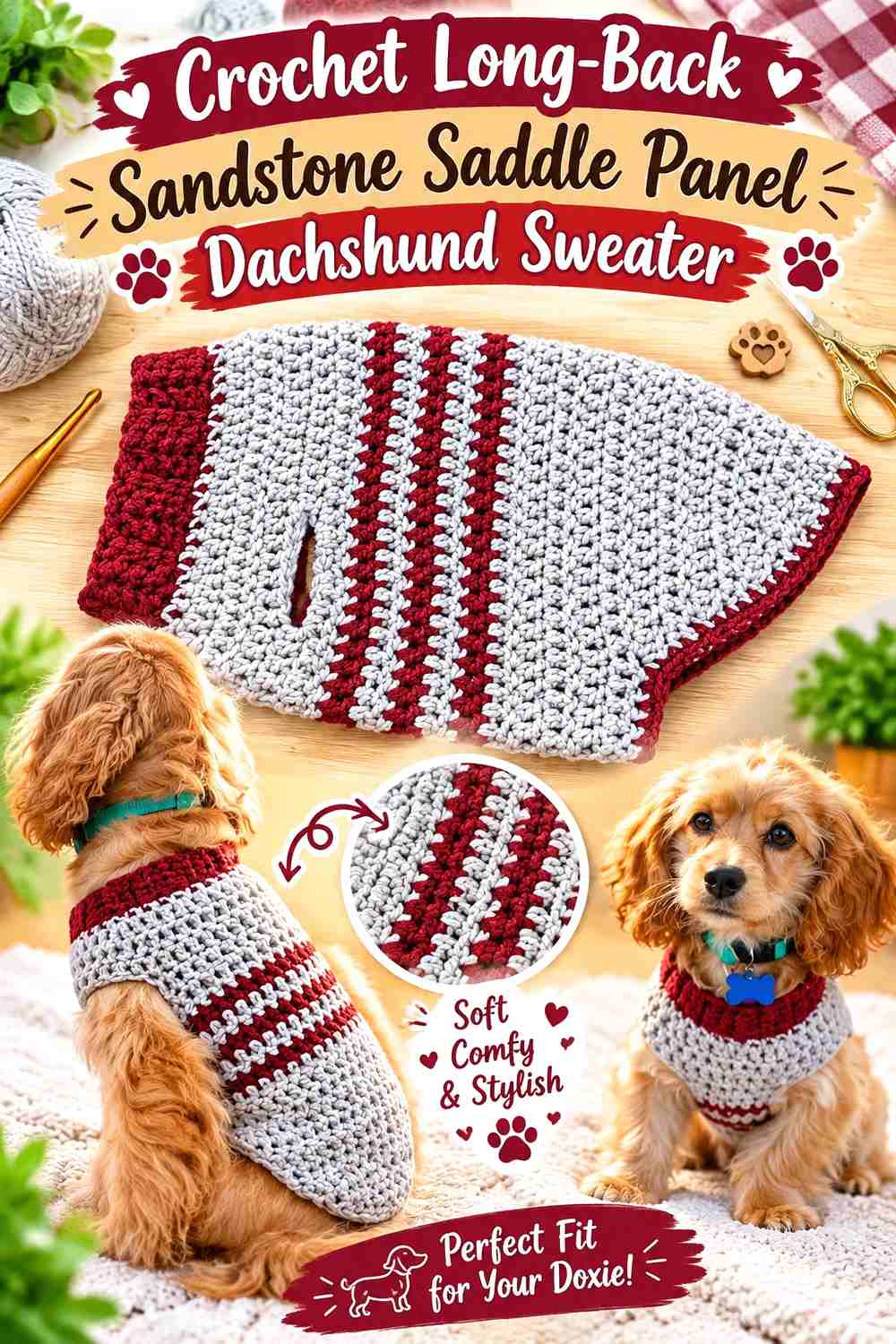
A made-to-measure construction is useful when the chest and back length do not align with conventional small-dog sizing. The supporting tutorial from it’s erin b. demonstrates an adjustable dog sweater and includes body shaping, armholes, color changes, and belly shaping.
For this variation, sandstone covers most of the sweater and a long jade panel becomes the saddle.
Stretch the Panel Lengthwise, Not Sideways
A long central stripe works naturally with a dachshund’s silhouette. Begin the jade section behind the shoulder area and carry it along the back while leaving sandstone visible at the sides.
The result feels different from a traditional horizontal stripe because it emphasizes length rather than dividing it.
Measure the Panel After the Chest Fits
Do not decide the saddle width before establishing the sweater’s actual torso width. A panel that looks balanced on a swatch may become disproportionately wide once wrapped around a narrow back.
Aim for visible sandstone on both sides when the sweater is worn.
Use the Belly Shaping as a Separate Design Zone
The underside does not need to mirror the back color arrangement. Keeping the belly sandstone can simplify both shaping and color management while allowing the jade panel to remain a clear upper-body feature.
That separation also helps prevent color changes from becoming tangled around the narrower belly section.
Creator Credit: it’s erin b.
3. Crochet Rib-Neck Jade Saddle Stripe Dachshund Sweater
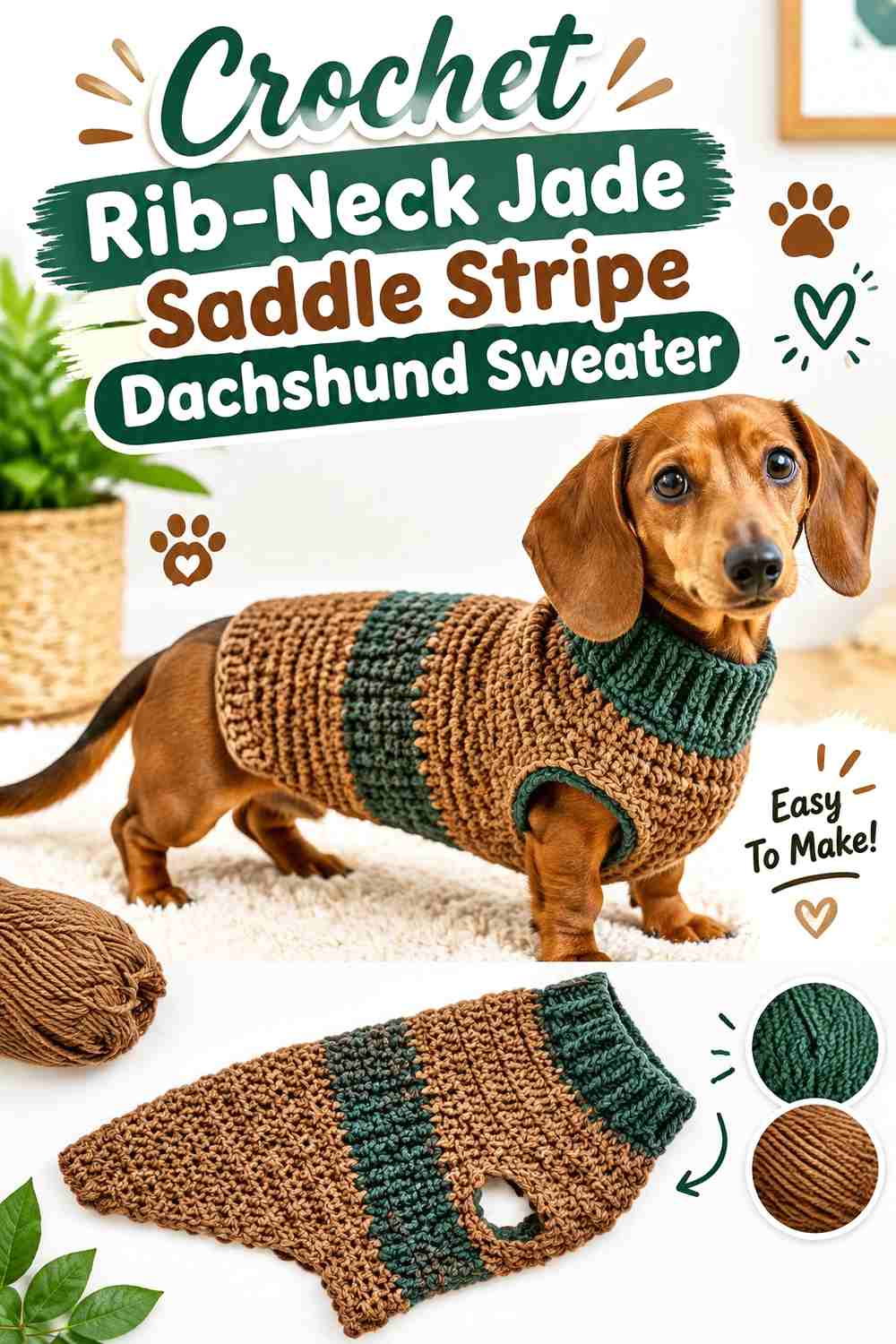
Loops Only Crochet demonstrates a customizable sweater beginning with ribbed neckline texture before moving into the body, leg openings, chest area, and shaped back.
That framework suits a design with a distinct jade ribbed collar and a sandstone body interrupted by a matching jade saddle stripe.
Repeat Jade Without Making the Sweater Stripy
Using jade at the collar and once again at the saddle creates color repetition without turning the entire garment into horizontal bands.
Keep enough sandstone between the collar and the saddle that the two green areas remain visually separate.
Give the Ribbed Neck Its Own Fit Job
The collar has to function as an opening, so do not change its depth simply to match the saddle stripe.
A proportionally small collar and a wider back stripe can still look coordinated because color, rather than identical dimensions, links them.
Shape the Back Before Finalizing the Stripe Ending
If the sweater narrows toward the rear, watch what happens to the saddle stripe as shaping begins. A broad color band ending immediately before tapering can create a cleaner transition than continuing it into every decrease.
Test the visual position on the dog instead of judging only from the flat garment.
Creator Credit: Loops Only Crochet
4. Crochet Tapered Saddle Stripe Custom Dachshund Sweater
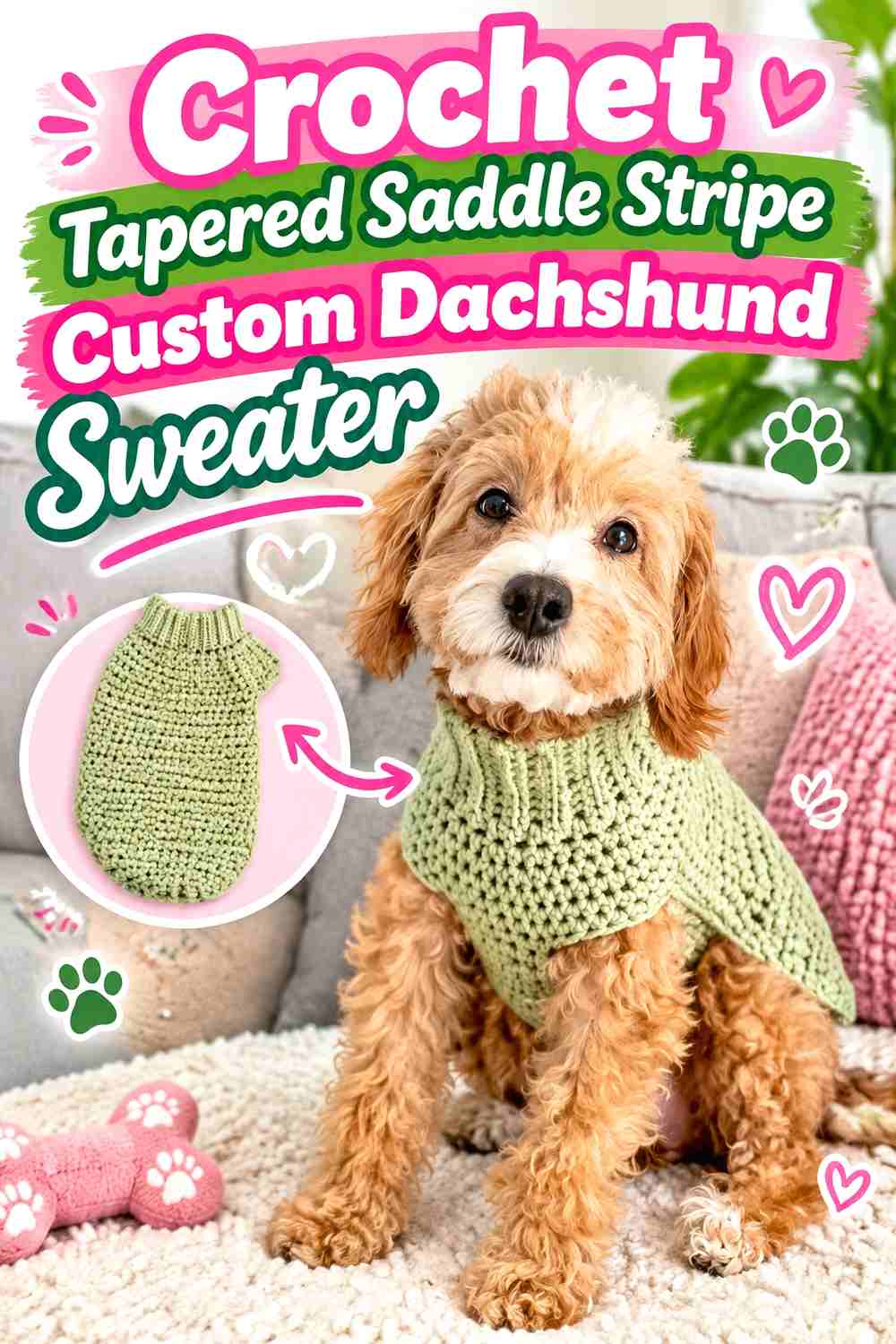
Maria’s Blue Crayon provides a custom-fit dog sweater approach intended to accommodate animals that do not fall neatly into standard sizes, which makes it particularly useful for adapting to an elongated dachshund body.
Here the saddle starts wider through the upper back and visually narrows toward the rear.
Fit the Chest Before Adding Decorative Taper
The first priority is the transition from neck to chest. Only after that area sits comfortably should the jade saddle begin to narrow.
Trying to use decorative decreases to correct a poor chest fit risks distorting both the color panel and the garment.
Make the Saddle Echo the Body Shape
A tapered green panel surrounded by sandstone can make a long sweater appear more tailored. The stripe can remain broad over the rib cage and become visually narrower as it approaches the rear.
This does not require copying the sweater’s shaping exactly. It only needs to maintain a balanced position down the back.
Compare Both Sides Before Finishing
A central tapered panel makes asymmetry easier to notice. Lay the sweater flat periodically and compare the sandstone margins on either side of the jade section.
If one side gradually grows wider, correct the placement before completing the entire long back.
Creator Credit: Maria’s Blue Crayon
5. Crochet Bottom-Up Double Saddle Stripe Dachshund Sweater

The Crochet Crowd’s supporting tutorial walks through a dog-sweater construction while also discussing color changes, giving this concept a useful base for a two-band saddle treatment.
Instead of one large stripe, this version uses two sandstone bands separated by a narrow jade section.
Use Unequal Bands for Better Balance
Two stripes do not have to be identical. A broader forward saddle band and a narrower rear accent can create more movement along the long torso.
That feels less repetitive than evenly spaced bands running the full length of the sweater.
Keep the Rear Section Visually Quiet
Once the second sandstone stripe ends, return to jade for the final back section. Leaving the tail end of the sweater mostly solid prevents the pattern from becoming overly busy.
This also makes back-length adjustments easier because extra jade rows can be added without redesigning the entire stripe sequence.
Check Stripe Position From the Side
Horizontal bands can look perfectly centered from above yet sit too low along the sides after the sweater wraps around the chest.
View the sweater from both side and top angles during a fitting so the saddle remains primarily a back feature.
Creator Credit: The Crochet Crowd
6. Crochet Yoke-to-Saddle Stripe Dachshund Sweater

Yarnspirations demonstrates a dog sweater with a distinct colorwork yoke, offering a useful reference when you want the upper body and long back to function as separate visual zones.
For the saddle adaptation, simplify the palette to jade and sandstone and let the shoulder treatment transition into a cleaner body stripe.
Do Not Crowd the Yoke and Saddle Together
If the shoulder area already contains noticeable color changes, leave a short stretch of calmer fabric before introducing the main saddle stripe.
Without that separation, the upper half can read as one large block of pattern rather than two purposeful features.
Use Sandstone to Separate Two Jade Features
A jade-accented yoke and jade saddle can work together if sandstone remains between them.
The neutral middle area gives each design element its own boundary and makes the long body easier to read.
Recheck Gauge When Colorwork Changes
Any change in stitch behavior or yarn handling can affect fabric width. If the yoke is worked differently from the main body, compare the developing chest measurement before continuing into an extended dachshund back.
Do not assume the same number of stitches will behave identically in two fabrics.
Creator Credit: Yarnspirations
7. Crochet Cowl-Neck Sandstone Saddle Stripe Dachshund Sweater
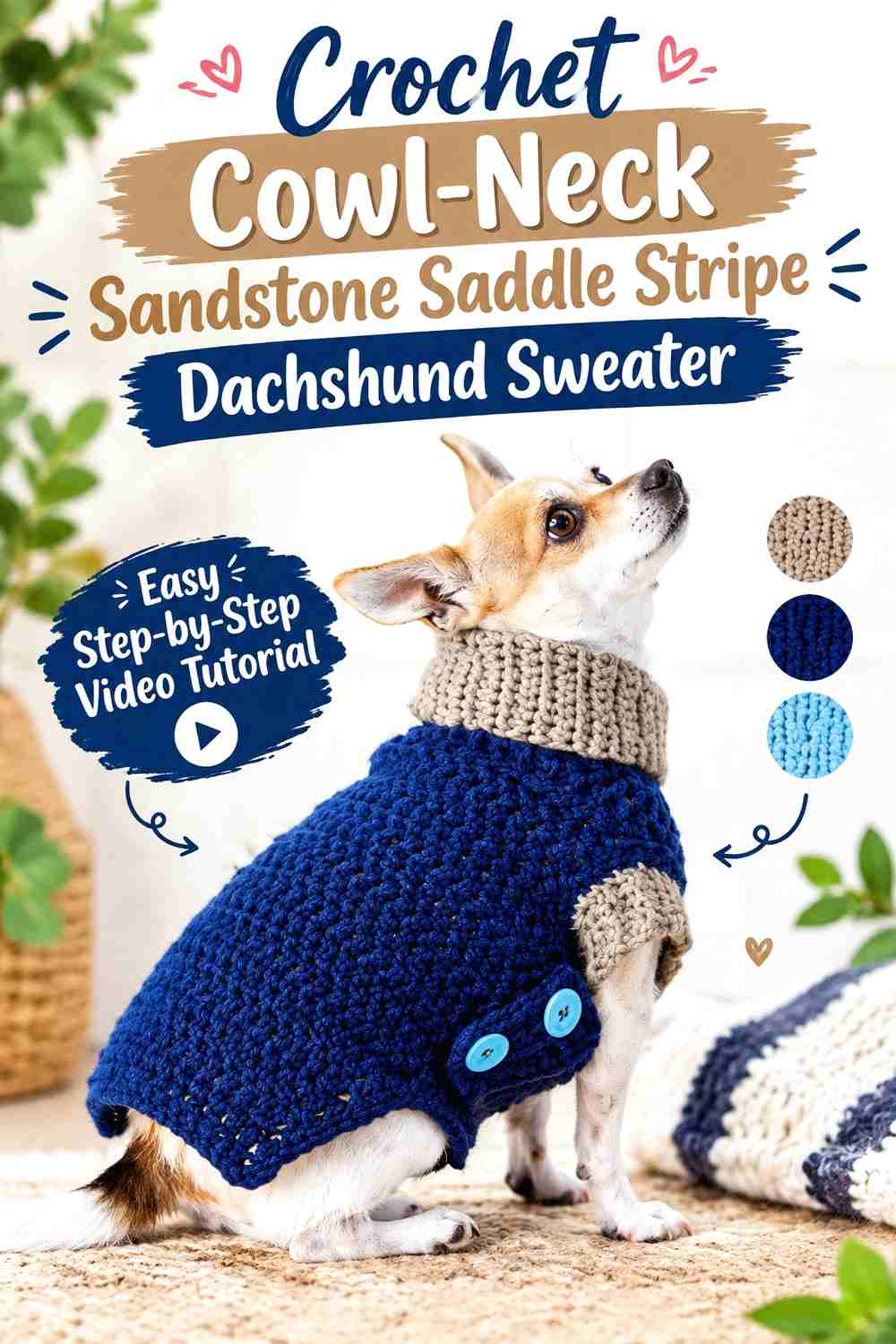
Marly Bird’s supporting dog-coat tutorial uses a pronounced cowl-neck construction, making this option useful for readers who want the neckline to become part of the color composition.
Sandstone can soften the cowl while jade takes over the body and returns as the main background around a sandstone saddle.
Treat the Cowl as a Separate Proportion
A large collar already adds visual weight near the head. Keep the saddle farther back so the sweater does not look crowded from neck to mid-body.
A stretch of solid jade between the cowl and saddle can create that breathing room.
Confirm the Neck Before Extending the Body
A longer dachshund back can make it tempting to focus immediately on length. The cowl opening still needs to fit first.
Check that it passes comfortably over the dog’s head and sits without folding into the front legs before committing to the long torso.
Match the Saddle to the Collar Without Copying It
The sandstone saddle does not need to equal the cowl in width. Using the same color is enough to connect them.
A narrower saddle often works better because it keeps jade visible across most of the long body.
Creator Credit: Marly Bird
8. Crochet Compact Mini Dachshund Saddle Stripe Sweater
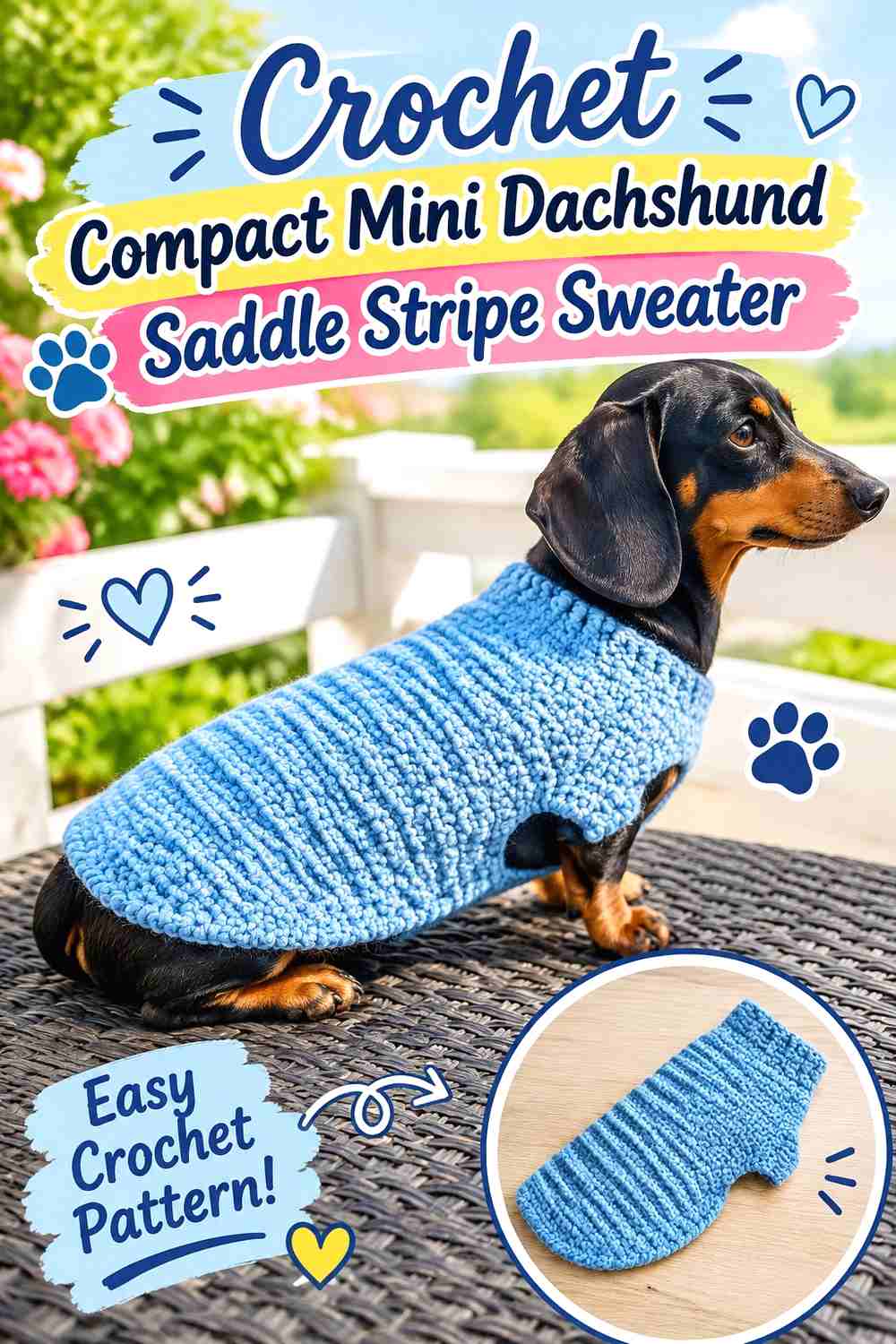
Fifty Shades of Yarn demonstrates a small crocheted dog sweater, providing a compact foundation for a miniature dachshund adaptation.
On a small dog, the strongest design may be one short sandstone saddle band rather than a complicated sequence.
Scale the Saddle to the Dog
A stripe that occupies several inches on a larger sweater can dominate a miniature garment. Think in proportions rather than copying stripe depth from a reference image.
The jade body should remain visible before and after the sandstone section.
Keep the Short Legs in Mind
Miniature dachshunds leave little room for deep armhole edging. Avoid allowing a decorative color border to become thicker than the functional opening requires.
If the sweater bunches behind the front legs, revise the fit before adding more decoration.
Use Back Length as the Main Adaptation
A small dog’s chest may fit a compact sweater construction while the dachshund back still needs additional coverage.
Extend only where the construction permits and keep checking that added length does not pull the neckline backward.
Creator Credit: Fifty Shades of Yarn
9. Crochet Narrow-Stripe Small Dachshund Saddle Sweater
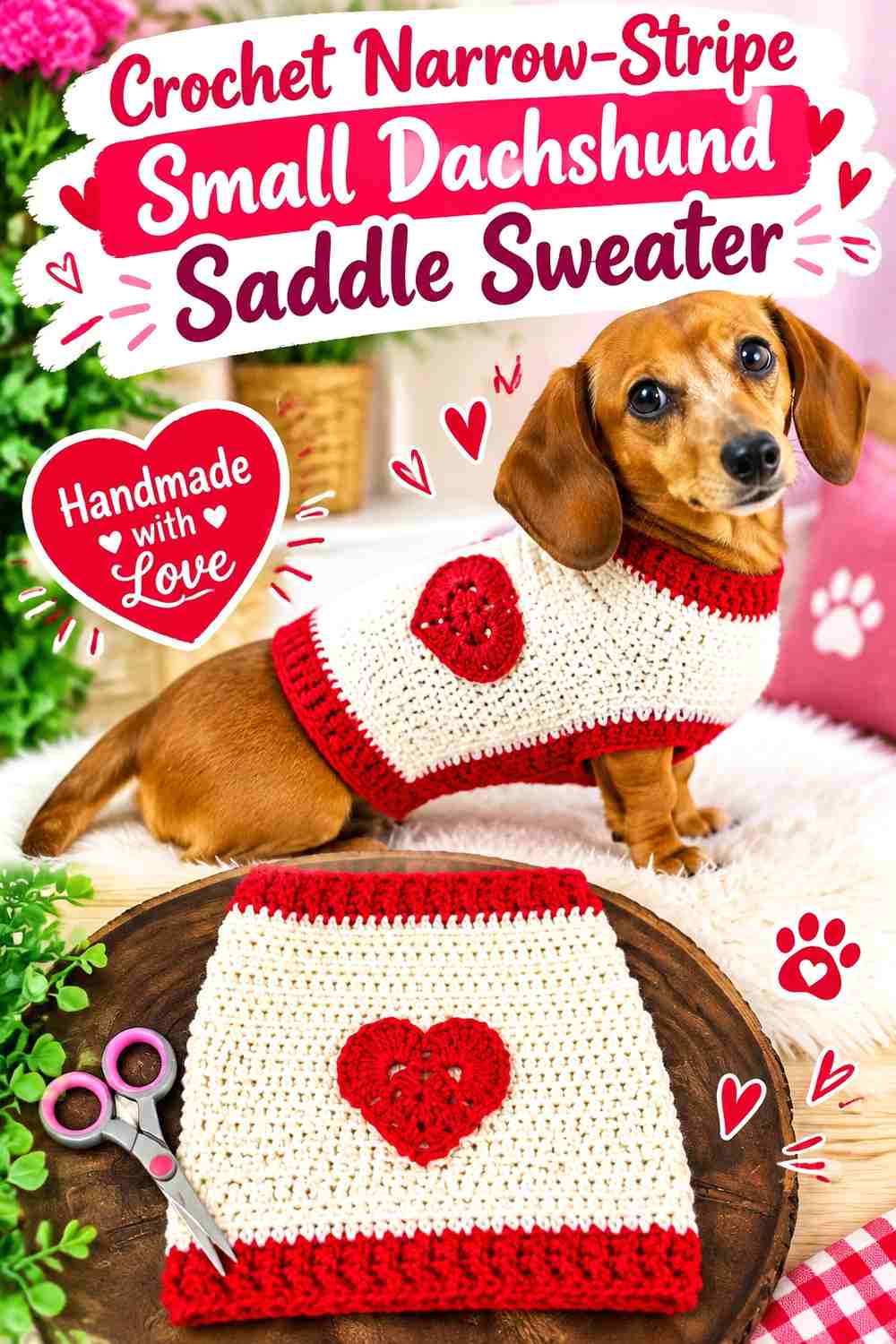
LittleGemsCreations – Fibre Artist provides another small-pet sweater tutorial, which creates a useful starting point for a version with a slimmer saddle stripe and stronger edge contrast.
Here sandstone forms most of the body while a narrow jade band sits just behind the shoulders.
Position the Accent Where It Stays Visible
A narrow stripe can disappear under a harness or become hidden by the natural curve of the shoulder.
Before choosing its final location, place the dog’s usual walking gear over the developing sweater and see which part of the back remains visible.
Echo Jade at the Lower Edge
A narrow jade saddle may feel isolated if it appears nowhere else. A restrained jade lower border can balance the design without adding another full stripe.
Keep that edging shallow enough that it does not shorten the useful sandstone body area.
Avoid Tiny Repeating Stripes
Small garments can become visually fragmented when the colors alternate too often. One strong jade accent is easier to read and creates a clearer saddle effect.
It also leaves more room for fit adjustments without forcing you to recalculate numerous color changes.
Creator Credit: LittleGemsCreations – Fibre Artist
10. Crochet Multi-Size Jade Saddle Stripe Dachshund Sweater

Crochet with Tiffany’s supporting dog-coat tutorial covers several size options and includes guidance for adjusting the project, making it useful when selecting a starting construction before refining dachshund length.
This version uses a conventional jade body with a sandstone saddle placed only after the sweater reaches the main torso.
Choose Size by the Body, Then Adjust Length
Do not select a larger general size merely because a dachshund needs a longer sweater. That can create unnecessary width around the neck and chest.
Start with the size that most closely matches the relevant body measurements, then determine whether the construction allows safe length adjustment.
Keep the Sandstone Stripe Out of the Leg Zone
Beginning the saddle after the front-leg area simplifies the visual transition and avoids squeezing a color change into a highly shaped section.
It also makes the stripe easier to position consistently across the back.
Use the Main Color for Rear Adjustments
If additional length is necessary, return to jade after the saddle and use that section for most of the extension.
This keeps the stripe proportion stable even when one dachshund needs considerably more back coverage than another.
Creator Credit: Crochet with Tiffany
11. Crochet Button-Belly Saddle Stripe Dachshund Sweater
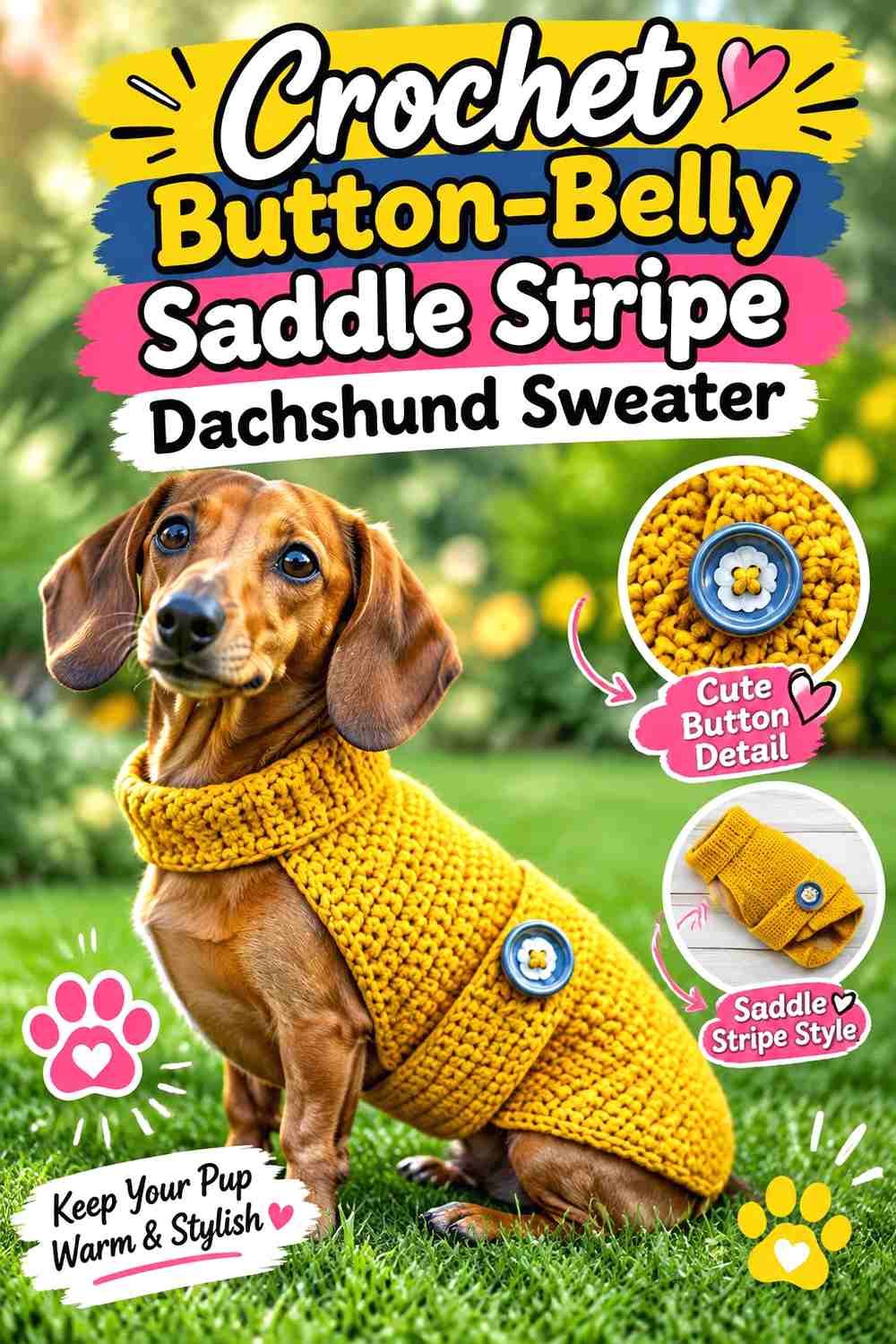
Last Minute Laura demonstrates a one-piece dog sweater with a button element and custom-fit approach, giving this idea a different dressing method from a fully enclosed pullover.
The jade-and-sandstone saddle stays on the back while the fastening area remains visually simple.
Separate the Saddle From the Closure
Buttons already create a focal point, so avoid carrying a complicated stripe directly through the fastening area.
Use jade or sandstone as a solid belly color and reserve the contrasting saddle treatment for the upper surface.
Check the Fastening Under Natural Movement
A closure that sits comfortably while the dog stands may pull differently when the dog walks or lies down.
Confirm that the belly section stays secure without forcing the saddle area sideways.
Make the Back the Decorative Side
This construction can be particularly useful if you want the upper body to look like a polished pullover while maintaining easier access underneath.
A sandstone body with a wide jade back band keeps the visual emphasis exactly where the stripe can be appreciated.
Creator Credit: Last Minute Laura
12. Crochet Lightweight Jade-and-Sandstone Saddle Sweater

Crochet It’s supporting tutorial uses a small-dog sweater construction associated with a lighter yarn category than several of the bulkier examples in this roundup.
That makes this direction worth considering when you want a finer-looking stripe and less visually heavy back panel.
Use a Finer Stripe Boundary
With a lighter fabric, the jade-to-sandstone transition can look crisp without needing broad color blocks.
Try a medium-width sandstone saddle surrounded by jade rather than multiple bands.
Recheck the Extended Back for Stretch
A lighter sweater can gain noticeable length when worn, especially if the stitch pattern or fiber has vertical stretch.
Check the garment on the dog before adding the final border so you do not accidentally extend it too close to the tail.
Keep the Leg Openings Clean
Finer fabric offers less reason to add bulky decorative cuffs. A simple, neat edge can preserve freedom of movement and keep attention on the back stripe.
If you add jade edging to a sandstone leg area, keep it proportional to the small opening.
Creator Credit: Crochet It
13. Crochet Puff-Texture Saddle Stripe Dachshund Sweater
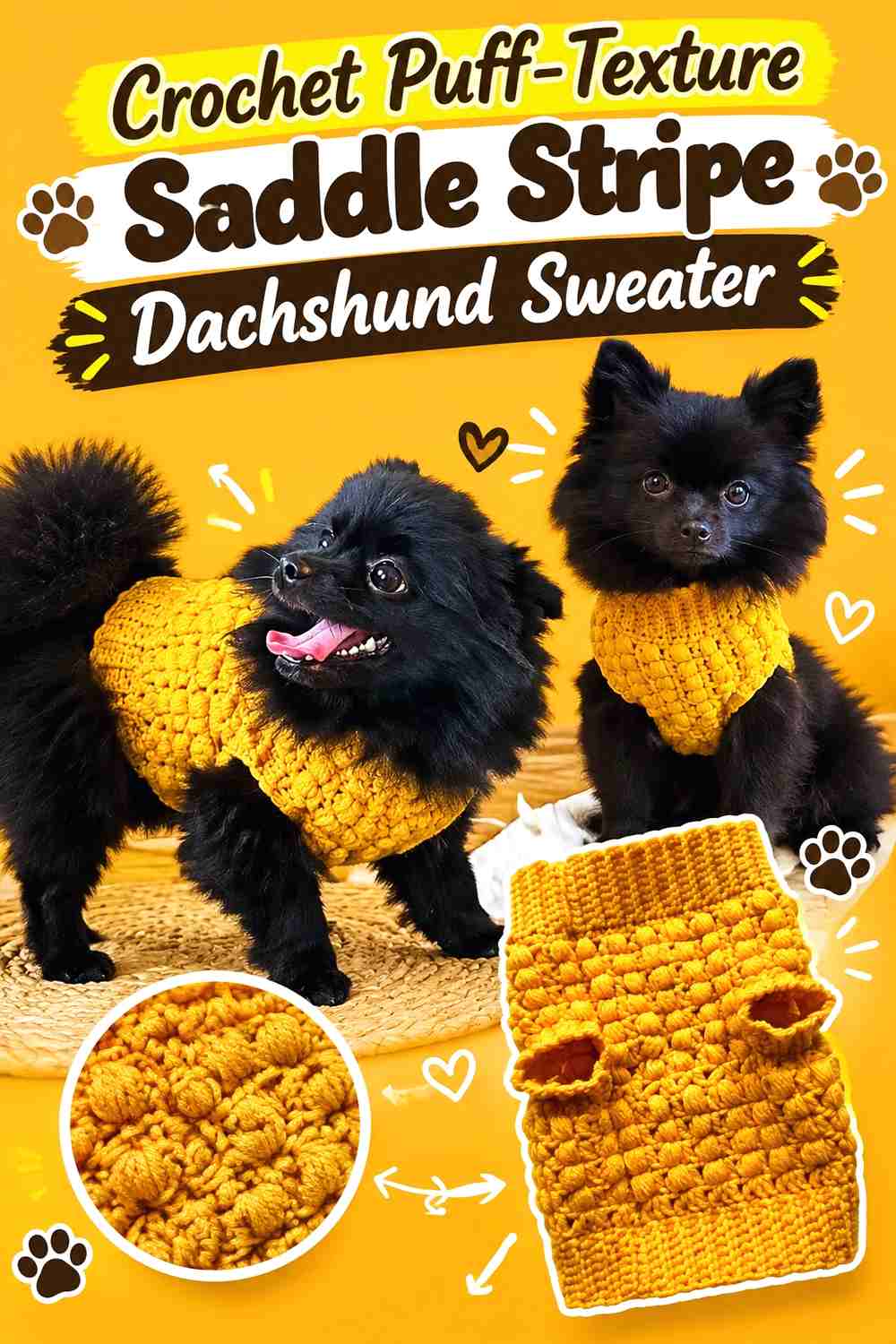
SheiLa Teré demonstrates a Chihuahua sweater featuring puff and V-stitch texture, giving this project a useful foundation for exploring a more dimensional saddle section.
Instead of making the entire dachshund sweater heavily textured, concentrate the raised detail within the saddle.
Put Texture Inside the Color Block
A sandstone body with a jade textured saddle gives both color and surface depth a defined boundary.
That is usually clearer than combining frequent color changes with raised stitches everywhere.
Leave High-Movement Areas Flatter
The back can carry texture more comfortably than the narrow spaces close to the front legs. Keep the chest, armpits, and belly relatively smooth if the raised fabric feels bulky.
Check the finished surface for snagging before regular use.
Compare the Textured and Plain Gauge
Puffs and other dimensional stitches can alter both width and row height. Swatch the saddle texture separately before placing it inside a fitted sweater.
If the panel pulls the neighboring fabric inward, modify the concept rather than forcing the original stitch counts.
Creator Credit: SheiLa Teré
14. Crochet Cuff-Accent Saddle Stripe Dachshund Sweater
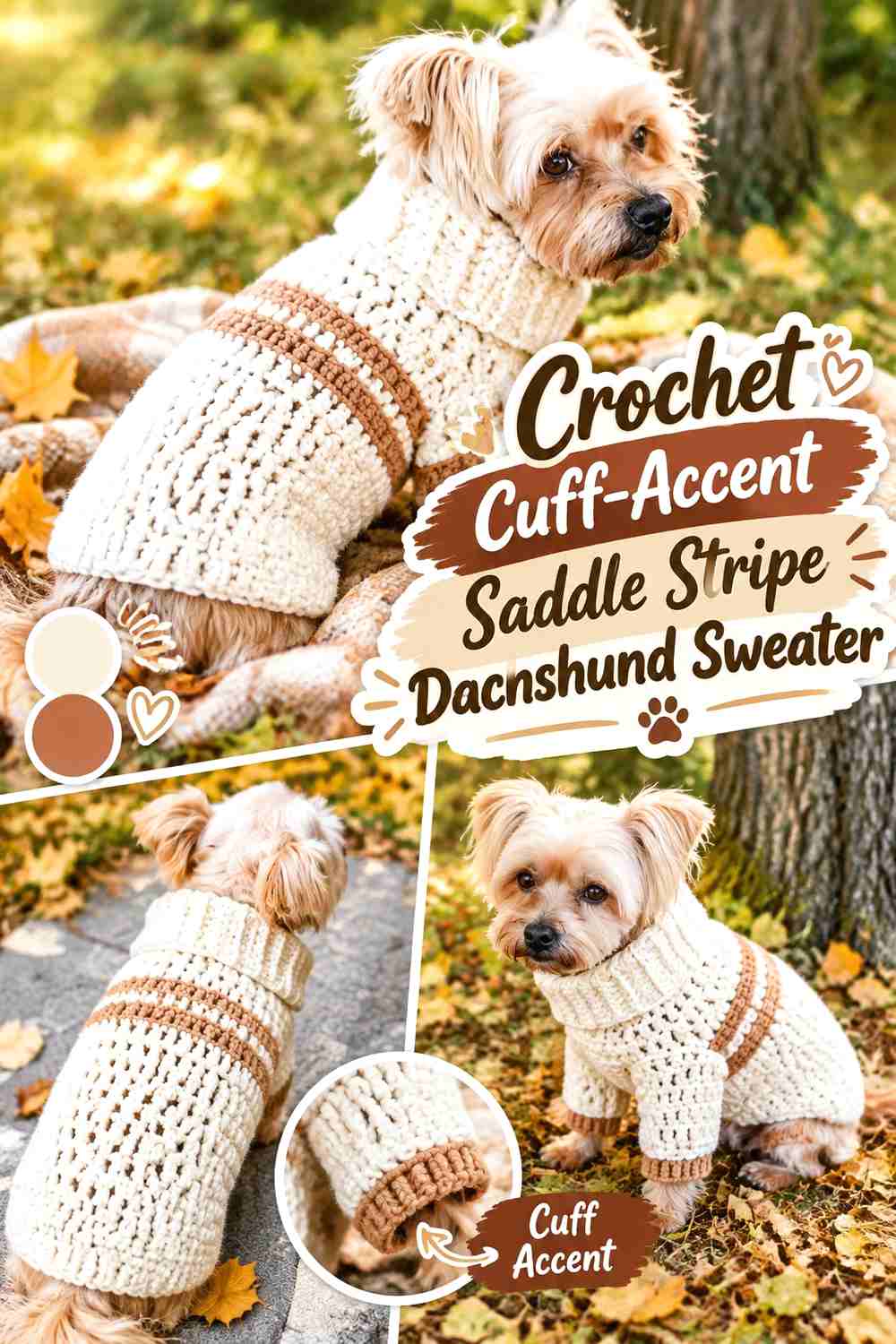
Vibes with Dani demonstrates a dog sweater with sleeve coverage, giving this idea a useful contrast to mostly sleeveless pet pullovers. The source notes that the construction can be adjusted for different pets.
For a dachshund, the sleeve concept should be evaluated carefully because short legs can make long cuffs impractical.
Shorten or Omit Sleeves When Needed
Do not keep sleeve length simply because the supporting tutorial includes it. Try the sweater on and watch the dog’s normal stride.
A shallow jade cuff or neatly edged opening may suit a dachshund better than a long sleeve.
Link the Cuffs to the Saddle
If short cuffs work for the individual dog, jade cuffs can repeat a jade saddle stripe against a sandstone body.
This creates a coordinated three-point color arrangement without adding more back stripes.
Keep Super-Bulky Adaptations Proportional
The supporting tutorial uses a substantial yarn approach, so any change in yarn or texture can strongly affect a small, low-to-the-ground dog garment.
If the fabric feels excessively thick around the front legs, a lighter yarn and an appropriately recalculated fit may be more suitable than duplicating the original material exactly.
Creator Credit: Vibes with Dani
15. Crochet Textured Dandy Saddle Stripe Dachshund Sweater
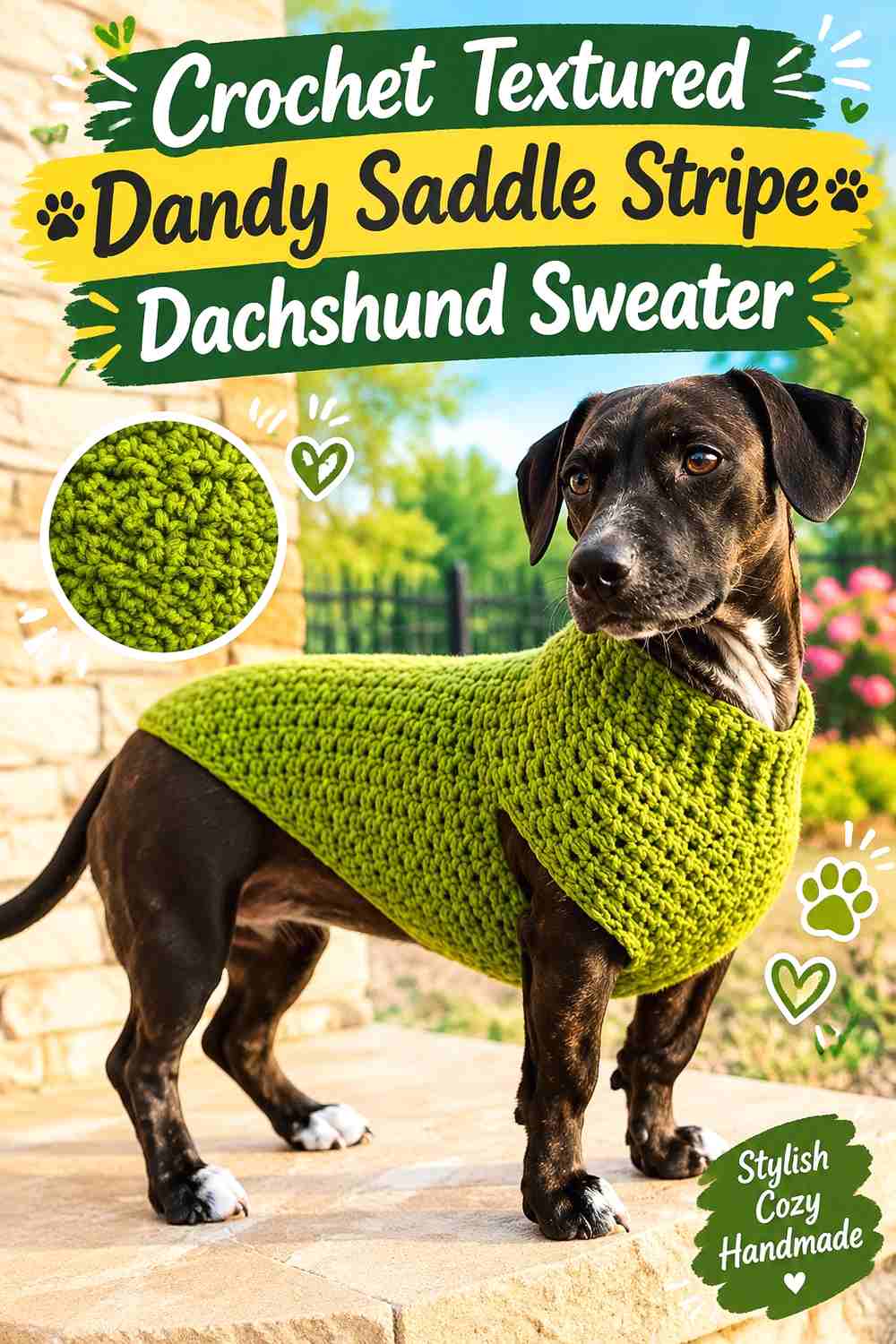
Heart Hook Home’s supporting dog-sweater tutorial uses a ribbed collar and a textured body construction in several small-to-medium sizes.
That gives the saddle idea texture even before color is introduced.
Use Color to Simplify an Already Textured Body
When the stitch pattern provides plenty of surface interest, keep the color plan restrained. A jade body with one sandstone saddle stripe is enough.
Multiple small bands can compete with the existing texture.
Place the Stripe Where the Stitch Pattern Is Established
Avoid introducing the main color change in the middle of complicated shaping unless you have already confirmed how the texture behaves there.
A broader, straighter body section usually creates a cleaner saddle boundary.
Adjust Long-Back Coverage Separately
A standard size that works around the chest may still finish too short for a dachshund.
Evaluate how and where the construction can be lengthened while preserving the collar, front-leg spacing, and sweater balance rather than simply scaling every dimension upward.
Creator Credit: Heart Hook Home
16. Crochet Harness-Opening Saddle Stripe Dachshund Sweater

Briana K’s textured dog-sweater design includes multiple sizes and a built-in harness opening, making it especially relevant for a saddle stripe that must share the back with leash access.
This variation places sandstone around the upper harness zone and starts a broad jade saddle farther back.
Build the Stripe Around the Actual Harness
Harness attachment points do not sit in exactly the same location on every dog. Put the dog’s own harness on before deciding where the saddle changes color.
The leash opening should remain easy to locate and use rather than disappearing into a busy stripe boundary.
Give Hardware a Flat Buffer Zone
Leave some relatively simple fabric immediately around the harness opening. Raised stitches, thick borders, or frequent color joins can create unnecessary bulk beneath clips and straps.
Start the stronger saddle treatment after that functional zone.
Use the Opening as a Design Divider
Instead of treating the harness opening as an interruption, let it separate the sandstone shoulder section from the jade saddle.
That turns a practical requirement into a deliberate part of the two-color composition.
Creator Credit: Briana K
Which Saddle-Stripe Direction Should You Choose?
If You Want…ConsiderMain Detail to VerifyOne bold classic stripeIdea 1Stripe position after fittingA strong long-back effectIdea 2Center-panel widthCoordinated collar and stripeIdea 3Neck stretchA more tailored backIdea 4Taper symmetryTwo distinct back bandsIdea 5Side-view placementUpper-body colorworkIdea 6Gauge between sectionsA larger collarIdea 7Head and neck clearanceA miniature-dachshund directionIdea 8Small leg openingsMinimal accent colorIdea 9Harness visibilityFlexible starting sizesIdea 10Length vs chest sizingEasier fasteningIdea 11Belly closure tensionA lighter-looking garmentIdea 12Vertical stretchDimensional saddle textureIdea 13Texture gauge and snaggingAccent cuffsIdea 14Short-leg clearanceAll-over stitch textureIdea 15Avoiding visual overloadHarness accessIdea 16Actual harness position
Conclusion
The most convincing jade green and sandstone dachshund saddle sweater does not need complicated striping. The dog’s long silhouette already gives a single color block enough room to make an impact.
Choose a made-to-measure option if unusual chest-to-back proportions are your biggest concern. The long center panel, tapered saddle, and custom-fit approaches give you the most freedom to respond to an individual dachshund rather than forcing the dog into a standard small-sweater shape.
For a cleaner graphic look, use the classic broad saddle, narrow shoulder stripe, or double-band version. If function matters most, the button-belly and harness-opening ideas make dressing or leash access part of the design. Texture lovers can concentrate raised stitches inside the saddle instead of making the entire garment thicker.
Whichever construction you choose, establish the neck, chest, leg openings, belly clearance, and harness position first. Then place the jade and sandstone saddle where it looks balanced on the worn sweater. Follow the original creator tutorial for its exact construction details and recheck fit whenever you change yarn, stitch texture, stripe depth, or body length.
Frequently Asked Questions
How much longer should I make a crochet sweater for a dachshund?
There is no universal extra length that works for every dachshund. Measure the individual dog’s back and compare that measurement with the construction you are following. Lengthen only in the part of the sweater where the tutorial’s shaping allows it without changing the neck, chest, or leg-hole fit.
Where should a saddle stripe sit on a dachshund sweater?
A useful starting point is the broad back area behind the shoulders, but the exact position depends on the sweater construction and the dog’s proportions. Fit the developing garment first, then mark where the stripe remains visible and balanced when worn.
Is jade green better as the main color or the saddle color?
Both arrangements work. Jade as the main color creates a richer overall sweater with a softer sandstone accent. Sandstone as the body color makes a jade saddle stand out more strongly. Choose based on whether you want the stripe or the entire sweater to provide the strongest color statement.
Can I simply add rows to a regular small-dog sweater for a dachshund?
Sometimes a construction allows additional back rows, but extra length alone does not guarantee a good dachshund fit. Check chest depth, front-leg spacing, waist shaping, belly length, and whether additional rows pull the sweater backward at the neck.
Should the belly section be as long as the back?
Usually the two areas have different functional needs. The back can provide longer coverage, while the underside needs clearance for movement and toileting. Follow the source construction and fit the belly section to the individual dog rather than matching the back length.
Can the saddle stripe include a harness opening?
Yes, but plan around the dog’s actual harness rather than placing an opening only for symmetry. Keeping a flatter fabric zone around the leash attachment can reduce bulk and make the opening easier to use.
What should I check before changing yarn in a dachshund sweater tutorial?
Make a gauge swatch and compare fabric width, row height, stretch, thickness, and drape with what the construction requires. Then check the yarn manufacturer’s care instructions. Even yarns carrying the same general weight label can produce noticeably different pet-garment fabric.