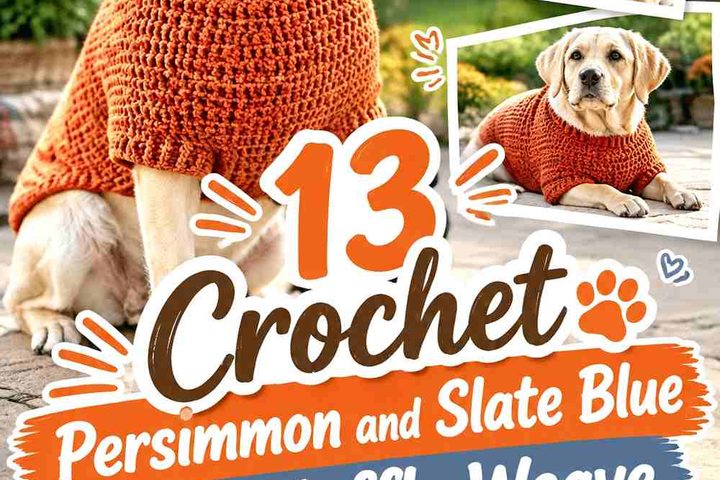
Powder lilac and cherry wine make a natural fairytale pairing for a crochet puppy cloak. The lilac brings a soft, storybook quality, while cherry wine adds enough depth to define a collar, border, shoulder panel, or dramatic back section without relying on complicated embellishments.

A puppy cloak also needs different planning from a decorative costume made only for display. The neckline has to stay comfortable when the puppy turns its head, the hem needs to remain clear of the paws, and any fastening should avoid long dangling cords. Growing puppies also need their fit checked frequently rather than wearing a garment based on measurements taken weeks earlier.
The first few tutorials below provide direct cape or poncho inspiration. Others are dog coat and sweater tutorials used as construction references for neckline fit, custom sizing, closures, texture, color placement, or harness access. The fairytale silhouette and powder-lilac-and-cherry-wine styling are adaptations rather than features claimed to appear in every source.
Quick List
- Crochet Powder Lilac Storybook Shoulder Puppy Cloak
- Crochet Cherry Wine Flared Fairytale Puppy Cloak
- Crochet Ribbon-Look Woodland Puppy Poncho Cloak
- Crochet Cowl-Neck Enchanted Puppy Cloak
- Crochet Made-to-Measure Moonlight Puppy Cloak
- Crochet Button-Tab Royal Puppy Cloak
- Crochet Classic Court Cape Puppy Cloak
- Crochet Petite Lilac Sprite Puppy Cloak
- Crochet Puff-Trim Berry Fairy Puppy Cloak
- Crochet Harness-Aware Woodland Puppy Cloak
- Crochet Custom-Fit Storybook Mantle Puppy Cloak
- Crochet Two-Tone Pageant Puppy Cloak
- Crochet Long-Back Cherry Wine Puppy Cloak
Plan the Cloak Around Puppy Movement and Growth
A fairytale cloak can look full and flowing without reaching anywhere near the paws. Check length with the puppy standing and walking naturally, not only while sitting. The lower edge should remain clear of the front and rear legs when the puppy changes direction.
Neck fit deserves equal attention. A cape-like garment hangs from the shoulder and neck area, so an opening that is too firm can become uncomfortable quickly. At the same time, an excessively loose neckline can allow the cloak to rotate around the body.
Because puppies grow, recheck neck, chest, and back measurements regularly. Do not rely on a fixed age-based size or assume a garment that fitted earlier in the season still has adequate room.
Create a Fairytale Look Without Dangling Details
The easiest way to create a storybook effect is through silhouette, color, edging, and texture rather than loose accessories. A pointed back, rounded capelet, contrasting collar, scalloped-looking border, or deep cherry-wine shoulder band can provide plenty of character.
Avoid long neck ties, loose tassels, bells, beads, or easily detached decorations on a puppy garment. If a source tutorial uses strings or ribbon-style fastening, adapt the concept to a short, secure closure appropriate for the individual dog rather than leaving long ends hanging.
A hood can also become impractical if it falls over the eyes or ears. A soft cowl or decorative collar can give a similar fantasy effect while leaving the puppy’s face and hearing unobstructed.
Let Powder Lilac and Cherry Wine Define the Silhouette
For the lightest fairytale look, use powder lilac across most of the cloak and reserve cherry wine for the neck, outer border, or one broad shoulder panel. The darker shade naturally creates an outline.
Reversing the colors gives a more dramatic result: a cherry-wine cloak with a powder-lilac collar feels richer and less delicate. You can also divide the garment vertically, use one shade only at the upper mantle, or make the border the sole contrast feature.
When substituting yarn, swatch before relying on the source dimensions. A thicker, firmer fabric can make a cape flare differently and add more weight at the neck.
1. Crochet Powder Lilac Storybook Shoulder Puppy Cloak
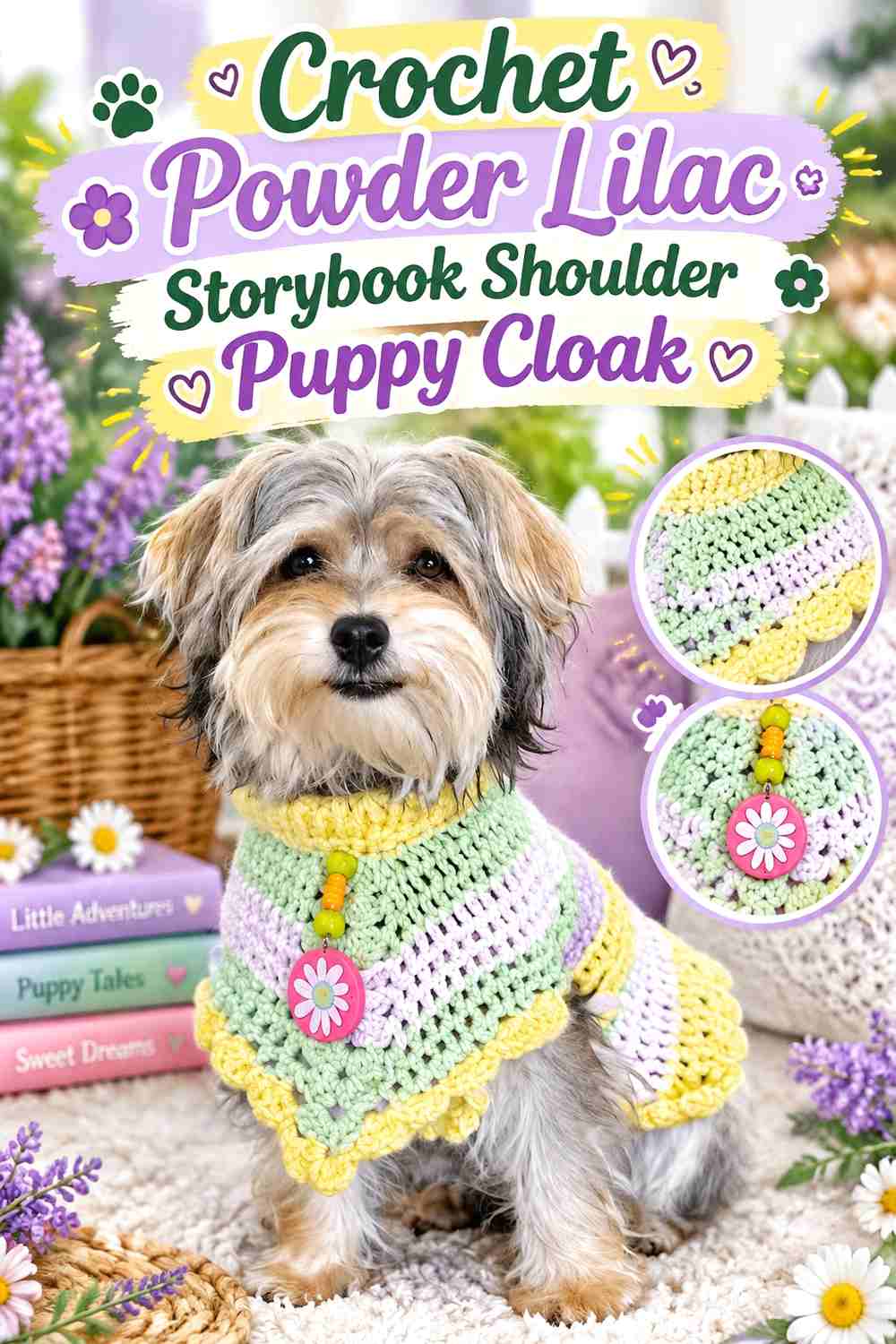
Tejiendo Con Candy provides one of the closest source matches in this collection because the tutorial demonstrates a crochet dog cape or poncho rather than a conventional fitted sweater. That makes it a useful starting point when the cape silhouette itself is the priority.
For this version, keep most of the cape powder lilac and use cherry wine to frame the neckline and outer edge.
Keep the Shoulder Cape Short and Free
A shorter capelet can provide a clear fairytale silhouette without placing fabric close to the puppy’s rear legs. Check the back edge while the puppy walks and turns.
If the cape starts rotating toward one side, revisit the neckline or fastening rather than adding weight to the opposite edge.
Let Cherry Wine Outline the Shape
A dark border can make even a simple rounded cape look more deliberate. Keep the contrast narrow enough that powder lilac remains the dominant visual field.
The neckline and hem can share the same cherry-wine accent without introducing extra decorations.
Creator Credit: Tejiendo Con Candy
2. Crochet Cherry Wine Flared Fairytale Puppy Cloak
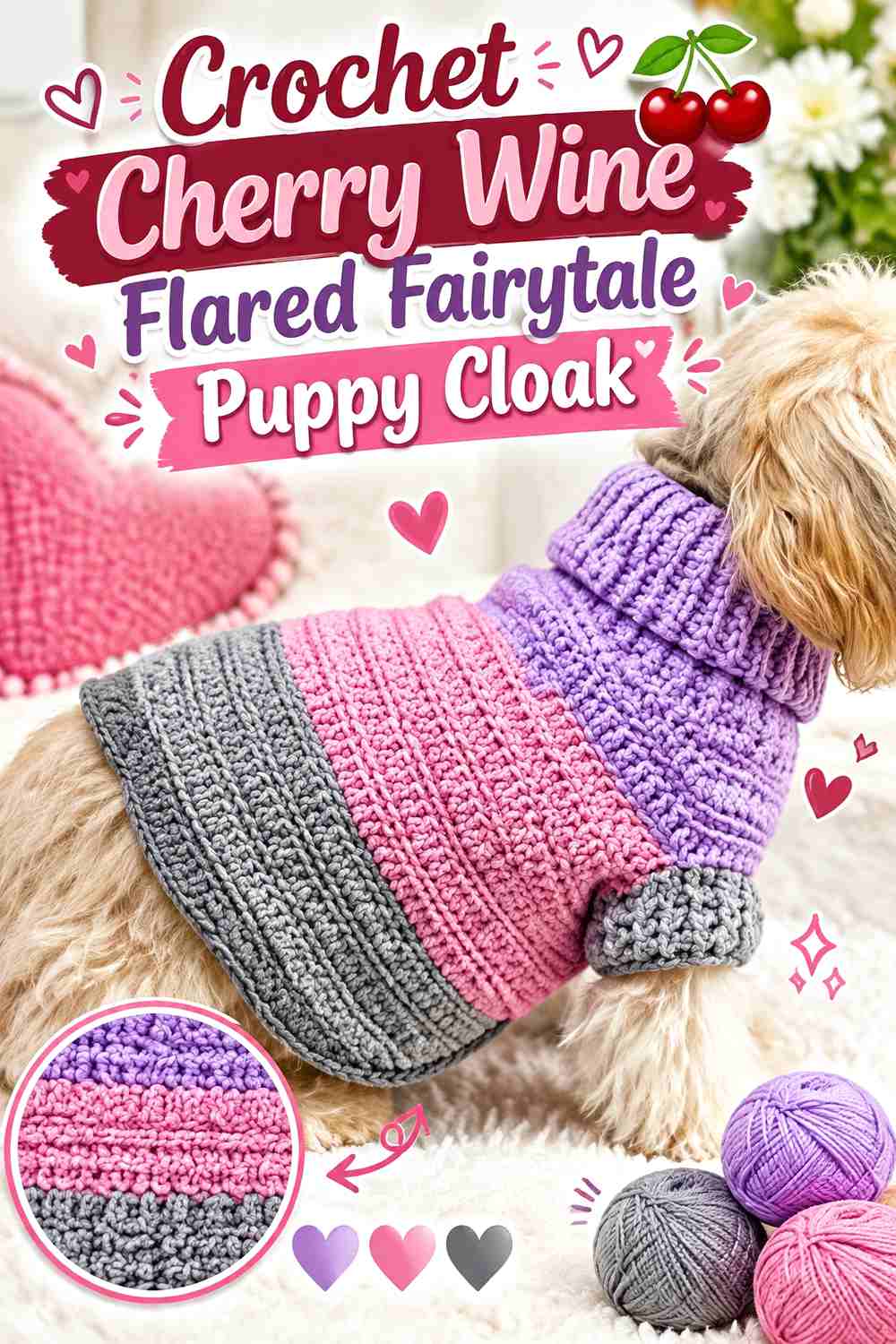
Creaciones Gabriela demonstrates a pet cape designed around adaptable sizing, making this a useful source when the cloak needs to respond to the individual animal instead of a single fixed dimension.
This interpretation uses cherry wine for the main cape and powder lilac around the upper edge.
Control the Flare Before Adding Length
A cloak can gain drama through width rather than reaching farther down the back. Check how the fabric spreads over the ribs and shoulders before extending the hem.
Too much flare can twist underneath the body when the puppy sits or rolls.
Use Lilac to Soften the Neckline
A powder-lilac collar or narrow upper band gives a visual break between the darker cloak and the puppy’s head.
Keep that section flexible enough that the neckline remains comfortable when the puppy looks down or turns sharply.
Recheck an Adaptable Size as the Puppy Grows
A customizable construction is helpful, but it does not remove the need for repeated fittings. Growth can change both neck circumference and torso length.
Retire or resize the cloak when the fit changes rather than depending on stretch alone.
Creator Credit: Creaciones Gabriela
3. Crochet Ribbon-Look Woodland Puppy Poncho Cloak

숩니공방 soobni’s knitting demonstrates a crochet dog poncho and includes a tied or ribbon-like finishing concept. For a puppy adaptation, the poncho shape is useful, but long fastening ends are better replaced with a shorter, controlled closure.
Use powder lilac for the poncho body and cherry wine around the neck to suggest a storybook ribbon without leaving loose tails.
Borrow the Ribbon Look, Not the Long Ends
A contrasting neck band can create the appearance of a tied fairytale cape even when the fastening itself is short and secure.
Avoid leaving cords long enough to reach the puppy’s mouth or front legs.
Keep the Poncho Edge Away From the Paws
A wide poncho can spread farther sideways than a fitted dog coat. Watch the hem from the front as well as the side.
If an edge approaches the front paws during walking, shorten or reshape that area rather than tightening the neck.
Creator Credit: 숩니공방 soobni’s knitting
4. Crochet Cowl-Neck Enchanted Puppy Cloak

Marly Bird’s supporting dog-coat tutorial uses a pronounced cowl-style neckline, giving this idea a useful alternative to a literal hood. The source includes several sizes, but the puppy’s current measurements should still control the adaptation.
For the fairytale version, use a soft powder-lilac cowl above a cherry-wine cape body.
A Cowl Can Give a Hooded Look Without Covering the Face
A loose decorative neck section can suggest a fantasy hood while remaining behind the puppy’s ears.
Check that it does not slide forward when the puppy lowers its head.
Keep the Cape Lighter Than the Neck
A substantial cowl already adds fabric near the shoulders. Pairing it with an equally dense, full-length cloak can create unnecessary weight.
Consider a shorter cherry-wine body or a lighter stitch texture below the cowl.
Check Harness Placement Before Deepening the Collar
If a harness sits underneath the cloak, the cowl and upper cape may overlap the straps.
Fit the actual walking equipment before making the neckline deeper or more layered.
Creator Credit: Marly Bird
5. Crochet Made-to-Measure Moonlight Puppy Cloak
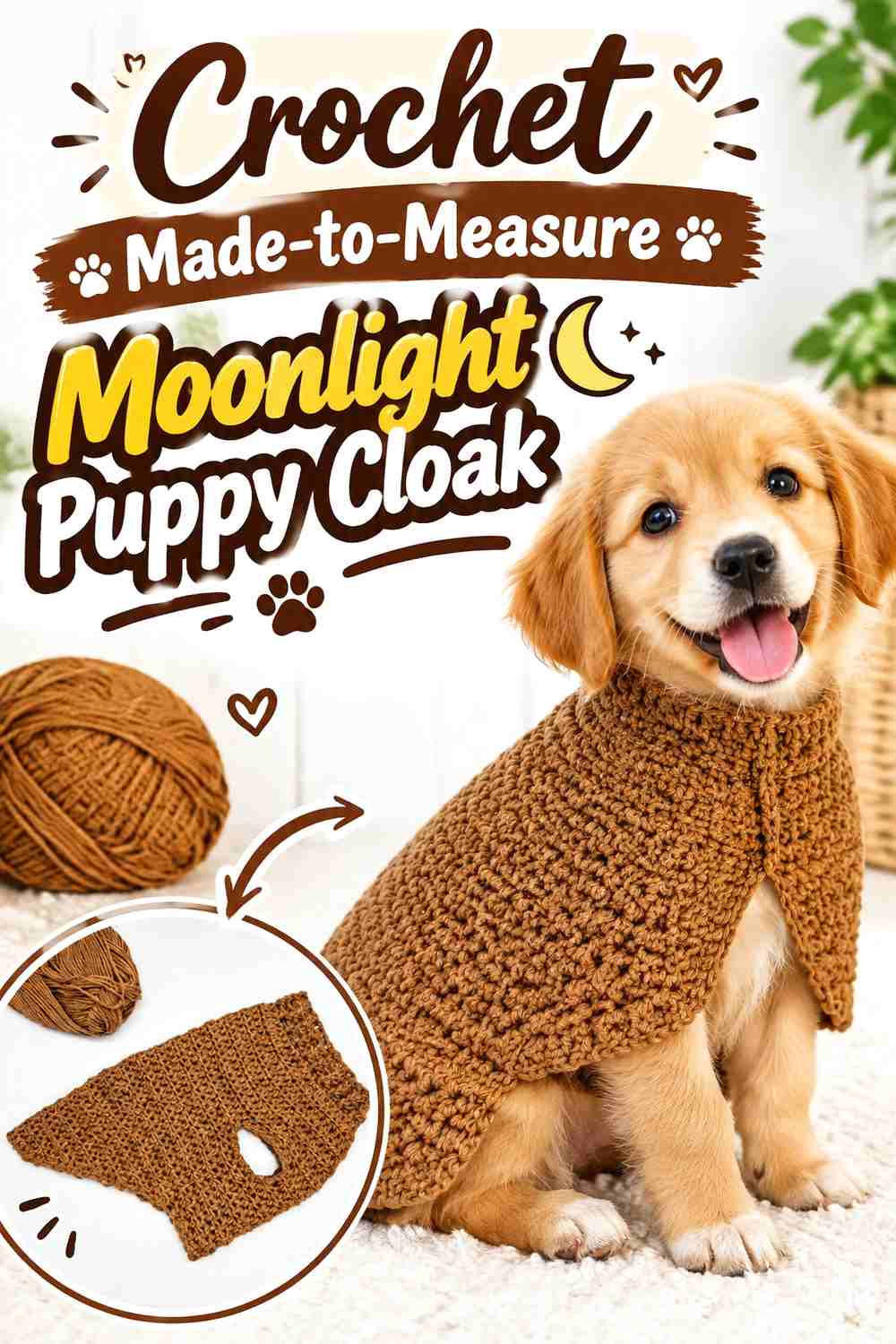
Loops Only Crochet demonstrates a made-to-measure dog-sweater construction with neckline, body, leg-opening, and back shaping. It is not an exact cloak source, but it provides useful measurement logic when creating a cape that still needs to sit securely around a puppy’s upper body.
Use powder lilac across the upper mantle and let cherry wine begin farther down the back.
Fit the Upper Body Before Allowing the Cloak to Float Free
The stable section around the neck and shoulders determines whether the cloak stays centered.
Establish that fit before adding a looser back panel. Do not rely on the cape’s weight to hold the neckline in place.
Use the Color Change as the Start of the Mantle
The transition from fitted upper body to freer cape fabric can also be the point where powder lilac changes to cherry wine.
That creates a visible distinction between the supportive part of the garment and the decorative drape.
Creator Credit: Loops Only Crochet
6. Crochet Button-Tab Royal Puppy Cloak
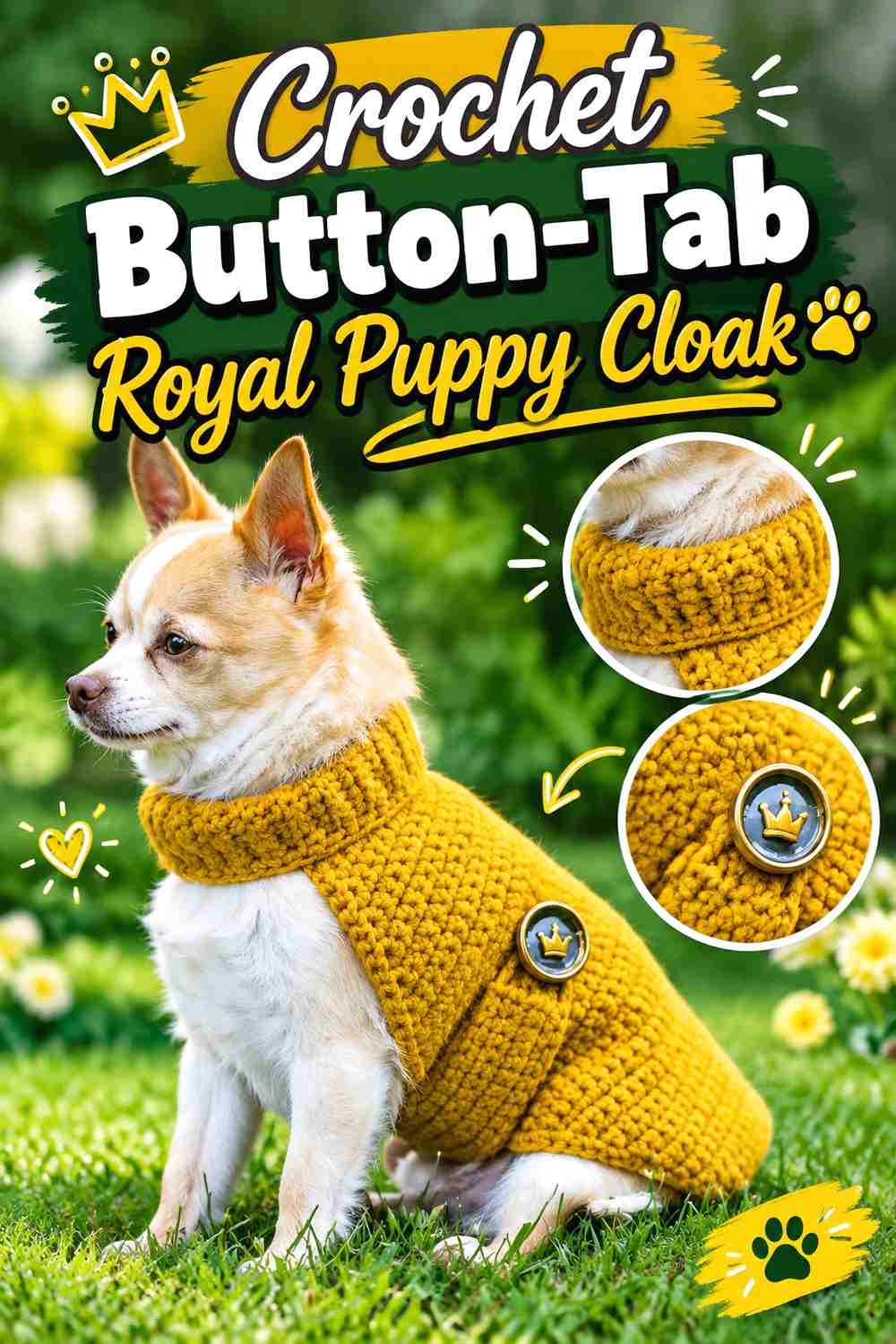
Last Minute Laura demonstrates a small-dog sweater approach with a fastening element, making this source useful for thinking about a cloak that does not have to be pulled entirely over the puppy’s head.
This design uses cherry wine for the cloak and a powder-lilac front tab or neck band.
Make the Fastening Part of the Royal Look
A short contrast tab can resemble the clasp area of a storybook cloak without needing dangling ties.
Any button or similar component needs secure attachment and regular inspection, especially on a puppy that mouths clothing.
Position the Closure Before Shaping the Cape
Fasten the upper section and confirm that the garment stays centered before extending the back.
If the closure pulls the neckline to one side, correct that first. A symmetrical cape will not hang evenly from an off-center base.
Keep Decorative Hardware Minimal
A single fastening detail is enough. Additional bells, beads, or loose appliqués can add chewable or snag-prone pieces without improving the basic silhouette.
Let the cherry-wine-and-lilac contrast provide most of the decoration.
Creator Credit: Last Minute Laura
7. Crochet Classic Court Cape Puppy Cloak
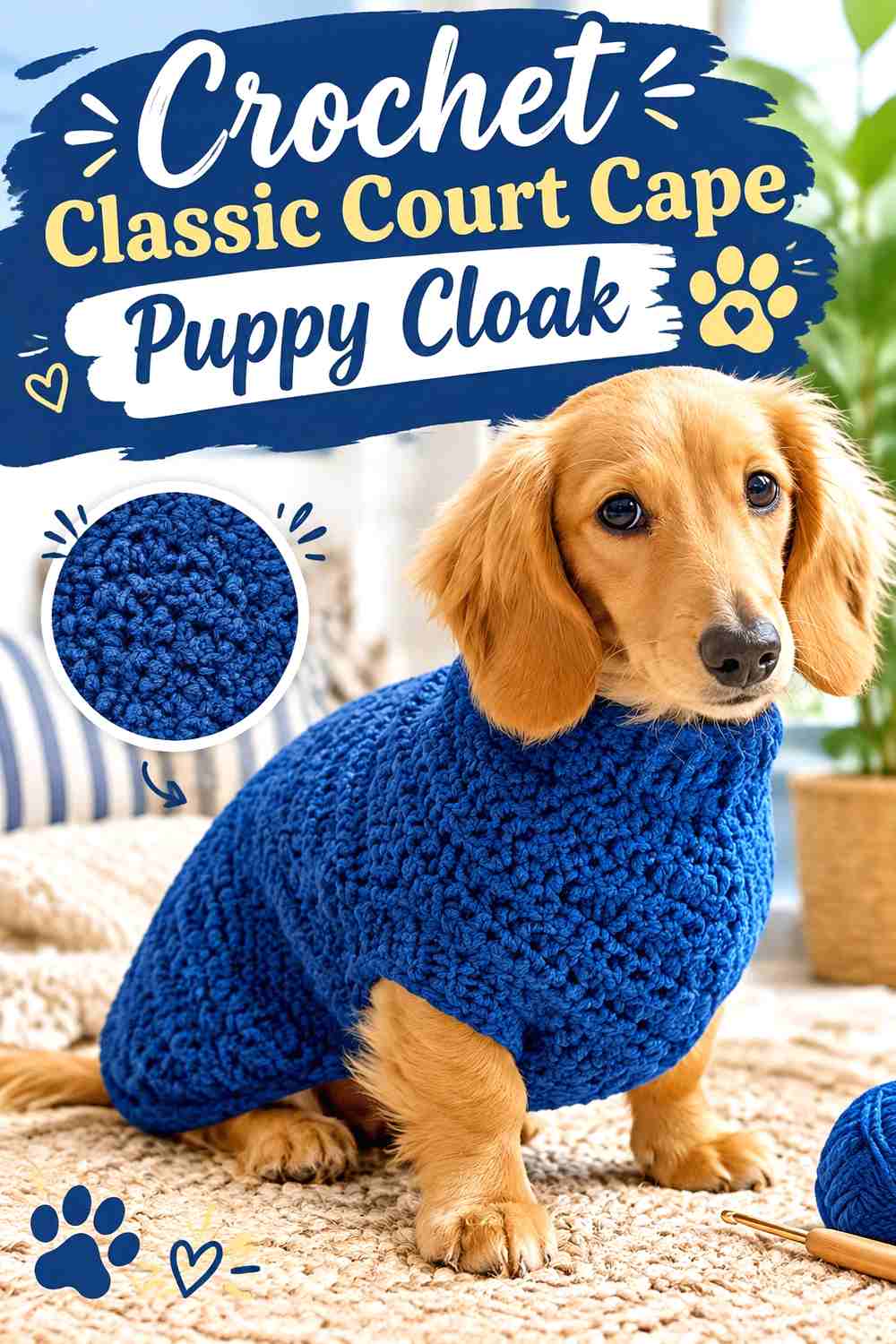
Crochet with Tiffany’s dog-coat tutorial provides multiple sizing directions and adjustment guidance, making it a useful general coat foundation for a more structured fairytale cape.
For this version, keep a powder-lilac upper body and add a broader cherry-wine court-cape panel over the back.
Use Structure at the Shoulders, Drape at the Rear
A fitted shoulder section can stop the cape from spinning around the puppy while allowing the back to look fuller.
The transition should occur behind the front-leg movement zone rather than directly above it.
A Square Hem Gives a Different Fairytale Silhouette
Not every cloak needs a rounded bottom. A gently squared rear edge can make the garment resemble a miniature court mantle.
Round the corners or soften the border if sharp points tend to curl or catch.
Creator Credit: Crochet with Tiffany
8. Crochet Petite Lilac Sprite Puppy Cloak

Crochet It provides a compact small-dog sweater reference that suits a lighter, shorter cloak concept. The source is better treated as a fit foundation than as an exact cloak pattern.
Use powder lilac almost everywhere, with only a narrow cherry-wine neckline and hem.
Keep the Sprite Cape Deliberately Small
A puppy does not need a long garment for the design to read as a cloak. A capelet ending well before the rear legs can be both visually clear and easier to manage.
This is particularly useful when the puppy is still growing quickly.
Use Contrast Only at the Edges
A narrow cherry-wine outline keeps the design delicate and prevents the small cloak from becoming visually divided into many color blocks.
If you want one extra accent, repeat cherry wine at the fastening rather than adding another body stripe.
Avoid Oversizing by Using a Bigger Hook Alone
Changing hook size affects fabric openness and drape as well as dimensions.
If the source construction is too small, recalculate from actual measurements or choose a more adjustable framework instead of treating hook size as the only sizing tool.
Creator Credit: Crochet It
9. Crochet Puff-Trim Berry Fairy Puppy Cloak

SheiLa Teré’s supporting small-dog sweater uses pronounced puff and V-stitch texture, providing useful inspiration for a cloak where dimensional crochet is concentrated at the border.
Make the main body powder lilac and reserve cherry wine for a raised outer trim.
Keep Raised Texture at the Perimeter
A textured edge can make a simple cape look more ornate without placing thick stitches underneath the harness or across the shoulders.
Keep the central back flatter so the garment remains lighter.
Check Puff Texture for Catching
Pronounced stitches can interact with scratching paws, harness hardware, furniture, or outdoor branches.
Run your hands over the finished edge and simplify any sections that catch easily.
Do Not Add Extra Hanging Fairy Details
The textured border already provides enough visual interest. Skip loose tassels, dangling stars, or tied cords on a puppy garment.
A color change and dimensional edge can create the fairytale effect without detachable embellishments.
Creator Credit: SheiLa Teré
10. Crochet Harness-Aware Woodland Puppy Cloak
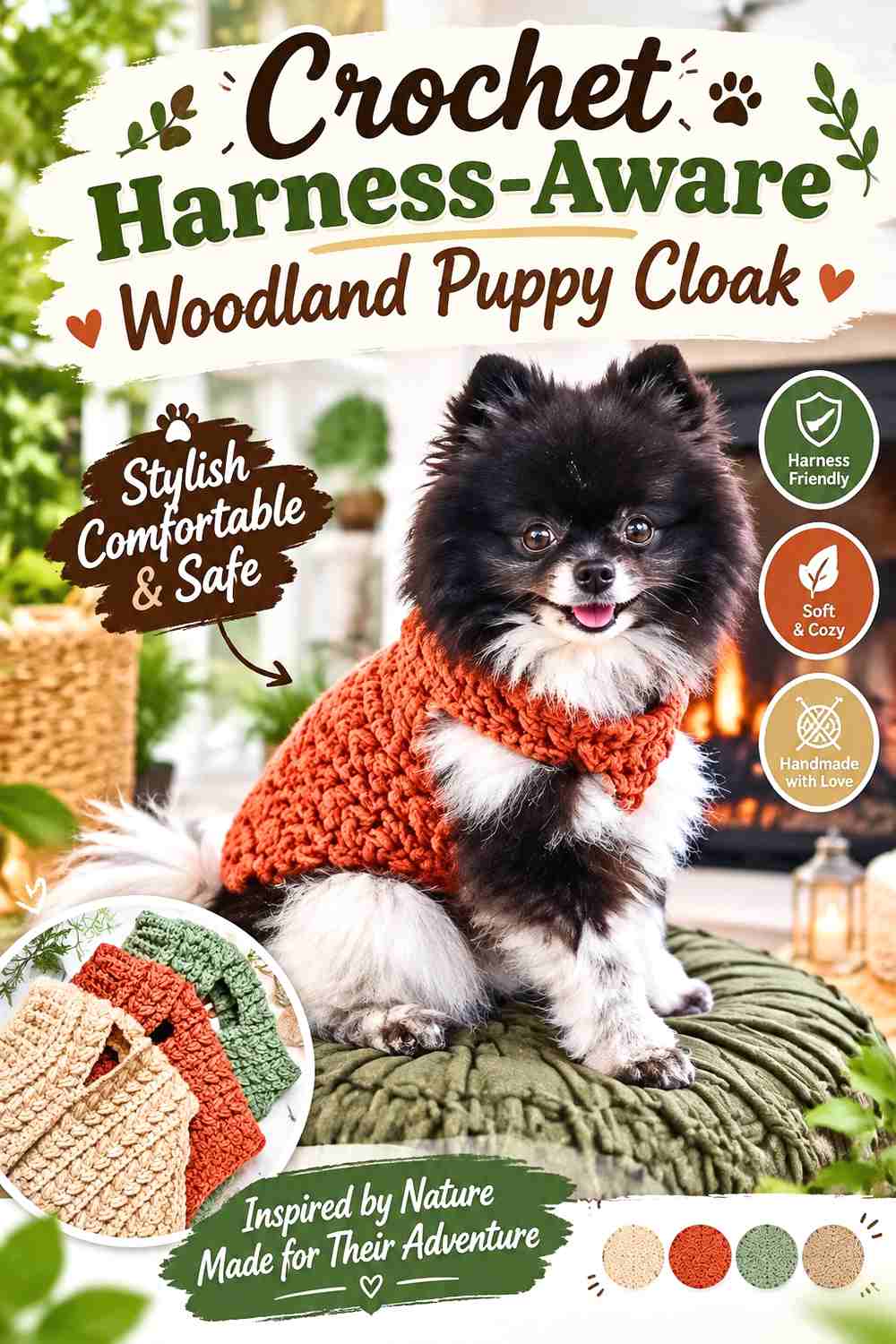
Briana K Designs provides a textured dog-sweater framework with harness-oriented construction available in the broader design, making this a useful direction when the puppy’s walking equipment must remain accessible.
For this version, use a cherry-wine upper mantle, a powder-lilac lower cape, and a plain zone around the leash connection.
Locate the Harness Before Decorating the Back
Put the puppy’s actual harness on and identify where the leash attachment sits.
Do not place the deepest texture, thickest border, or a decorative point directly over that location.
Give Hardware a Flat Buffer Area
The fairytale styling can begin again below the harness zone. A short section of simpler fabric makes clips easier to reach and reduces unnecessary layers beneath straps.
This is a useful place to let cherry wine transition into powder lilac.
Never Use the Cloak Closure as a Leash Attachment
The decorative garment and walking restraint have different jobs.
Keep leash force on the properly fitted harness or collar system intended for walking, not on a crochet button, tie, or cape neckline.
Creator Credit: Briana K Designs
11. Crochet Custom-Fit Storybook Mantle Puppy Cloak
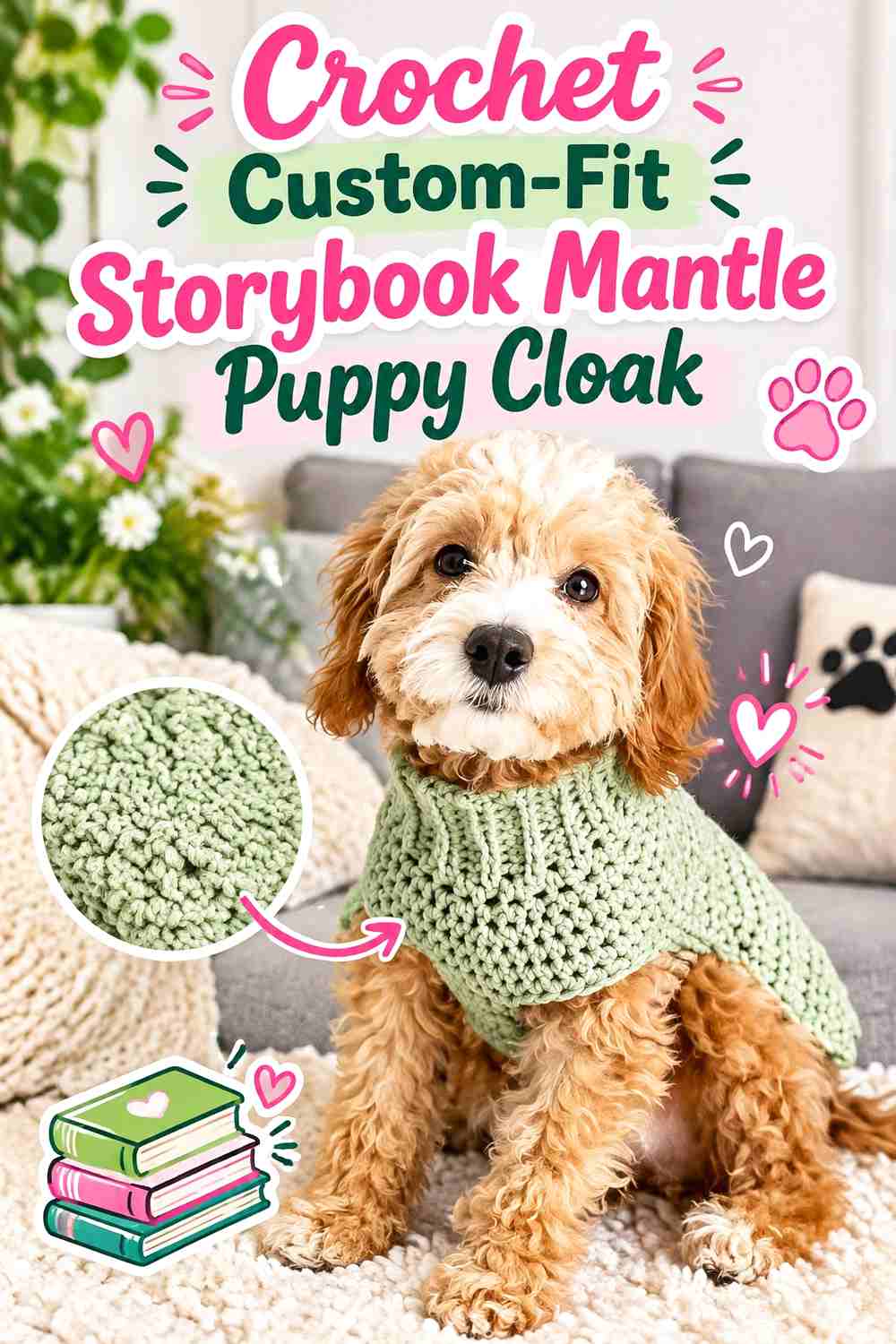
Maria’s Blue Crayon provides a custom-fit dog-sweater approach designed around individual measurements. Although the source garment is a sweater rather than a cape, the measurement-led construction is useful for establishing a stable upper section before adding a decorative mantle.
For this design, use a powder-lilac fitted shoulder area that opens into a wider cherry-wine back mantle.
Let the Puppy Determine the Mantle Width
A very small puppy may need only a slight increase in width to create a visible cape effect.
Lay the developing garment over the puppy’s back and check where the side edges fall before making the mantle fuller.
Separate Fit Decisions From Fantasy Styling
Neck circumference, shoulder position, and movement come first. The pointed or rounded storybook hem can be adjusted afterward without changing those essential dimensions.
If the fantasy silhouette compromises walking, shorten the decorative section rather than altering the puppy’s fit.
Creator Credit: Maria’s Blue Crayon
12. Crochet Two-Tone Pageant Puppy Cloak

The Crochet Crowd’s supporting dog-sweater tutorial includes color-change discussion and a traditional dog-garment structure, making it useful for a cloak where powder lilac and cherry wine form broad graphic sections.
This idea uses cherry wine across the shoulders, powder lilac through the main cape, and a final cherry-wine border.
Use Broad Color Areas Instead of Many Stripes
A fairytale cloak usually benefits from larger uninterrupted color fields.
One dark shoulder band and one dark hem can frame the lighter center without making the garment look like a striped sweater.
Make the Shoulder Color Follow the Garment, Not a Fixed Row Count
The best place for the cherry-wine upper section depends on where the puppy’s shoulder movement ends.
Try on the garment before choosing the final color transition so the darker panel stays above the freer cape area.
Keep the Final Border Flexible
A firm outer edge can cause the cape to cup or curl instead of draping.
If the cherry-wine edging noticeably changes the shape, use a less restrictive finish rather than adding more rounds simply for color impact.
Creator Credit: The Crochet Crowd
13. Crochet Long-Back Cherry Wine Puppy Cloak
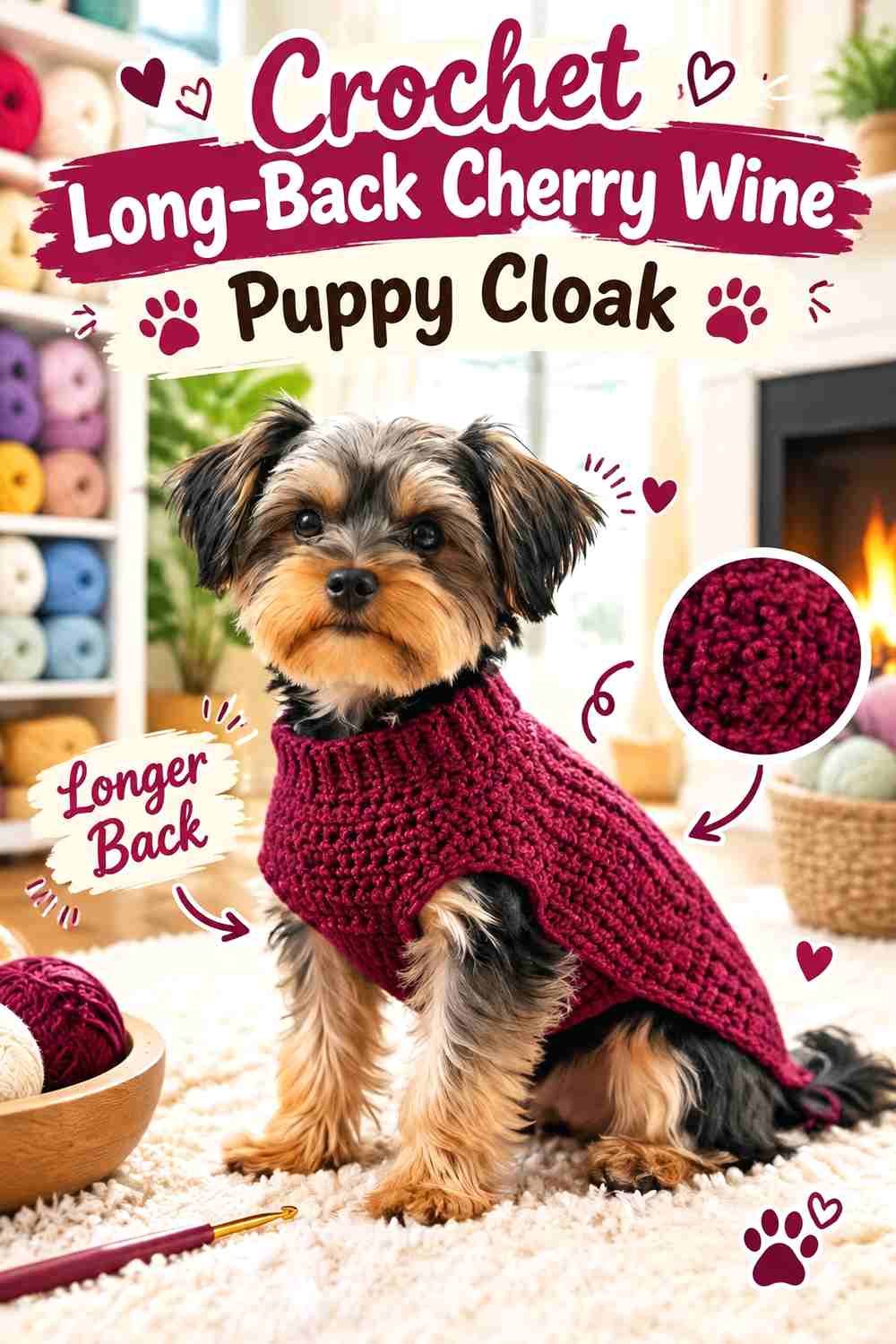
Alextitia Tuto Crochet demonstrates a dog-coat construction that includes measuring the neck, working the body, creating leg openings, and extending the garment along the back. That makes it useful for the longest cloak silhouette in this collection.
Use cherry wine for most of the long back and powder lilac at the neck and final edge.
Lengthen Only While the Hem Stays Clear
A longer cloak can look more theatrical, but the puppy still needs to walk, sit, turn, and toilet normally.
Stop adding length before the fabric reaches the rear legs or begins folding under the body during sitting.
Use Lilac to Lighten the Ends of a Dark Cloak
A powder-lilac neckline and lower border can keep a cherry-wine garment from appearing visually heavy.
The lighter edge also makes the long silhouette easier to see without requiring appliqués or extra surface decoration.
Watch for Backward Pull at the Neck
As a cape becomes longer, its weight can affect how the neckline sits.
Try the garment on before finishing the final border. If the front neck starts pulling backward, reduce length or fabric weight rather than tightening the opening.
Creator Credit: Alextitia Tuto Crochet
Comparing the 13 Fairytale Cloak Directions
IdeaMain SilhouetteFairytale FeatureMost Important CheckStorybook shoulder cloakShort rounded capeCherry-wine outlineCloak rotationFlared cloakWider back drapeDramatic dark bodyFlare during sittingWoodland ponchoLoose shoulder ponchoRibbon-look necklineNo dangling tiesCowl-neck cloakSoft raised necklineHood-like cowlFace and ear clearanceMoonlight cloakFitted upper body, loose backTwo-zone color changeShoulder stabilityRoyal cloakFastened upper sectionContrast clasp areaSecure closureCourt capeStructured shouldersSquared mantleFront-leg movementSprite cloakVery short capeletMinimal dark edgingGrowth and sizingBerry fairy cloakLight cape with texturePuff-style borderSnaggingHarness-aware cloakFunctional upper backTwo-color harness zoneLeash accessStorybook mantleCustom upper fitWider rear mantleMantle widthPageant cloakGraphic two-tone capeBroad color blockingBorder flexibilityLong-back cloakExtended rear coverageDramatic cherry wineNeck pull and hem length
Conclusion
For the most direct cloak construction, the Tejiendo Con Candy, Creaciones Gabriela, and 숩니공방 soobni’s knitting tutorials are the closest starting points because their finished garments already use cape or poncho silhouettes. The other sources become most useful when a particular problem matters more than an exact cloak shape.
Choose the Loops Only Crochet or Maria’s Blue Crayon direction when individualized fit is the priority. The Last Minute Laura idea offers useful fastening inspiration, while the Briana K Designs option makes the most sense when a harness needs to remain accessible. For decorative texture, the SheiLa Teré-inspired border adds storybook detail without requiring loose ornaments.
Powder lilac works especially well when you want an airy, sprite-like cloak, while cherry wine creates a more dramatic royal or woodland effect. Whichever palette arrangement you choose, keep the neckline light, the hem out of the puppy’s stride, and decorative pieces minimal. Use the original creator tutorial for its exact construction details, then recheck fit whenever you alter yarn, length, neckline depth, closure, or cape fullness.
Frequently Asked Questions
Can I turn a crochet dog sweater tutorial into a puppy cloak?
It can provide a useful fit reference, but the conversion is not automatic. A fitted sweater may rely on leg openings, continuous rounds, or torso shaping that a cape does not need. Preserve the useful neck and shoulder measurements, then plan the loose cloak section separately rather than simply omitting random parts of the original construction.
How long should a crochet fairytale cloak be on a puppy?
There is no universal length. Check the cloak while the puppy walks, turns, sits, and lies down. The hem should remain clear of the paws and should not fold under the body or interfere with toileting.
Is a hood appropriate for a puppy cloak?
A hood should never block the puppy’s eyes or interfere with normal ear movement and awareness. For many designs, a soft cowl or decorative collar provides the same fairytale impression with less fabric around the face.
Are ties suitable for closing a puppy cape?
Long dangling ties are better avoided. A short, controlled fastening can provide the visual effect of a tied cloak without leaving cords within reach of the puppy’s mouth or legs. Never use a crochet cloak fastening as a leash attachment.
Can I add bells, beads, pompoms, or charms?
For a puppy garment, detachable or chewable decorations add unnecessary risk. Color blocking, textured edging, pointed hems, or flat stitched details can create a fantasy look without relying on loose objects.
Which color should dominate: powder lilac or cherry wine?
Use powder lilac as the main color for a lighter, whimsical cloak and cherry wine for a deeper, more theatrical look. You can also keep the body lilac and use cherry wine only around the collar and hem, which gives strong definition without making the garment visually heavy.
How often should I recheck a puppy cloak’s fit?
Recheck it regularly while the puppy is growing and any time the garment begins sitting differently around the neck, shoulders, or back. Do not assume a cloak remains suitable simply because the yarn can stretch.