Harvest-season ponchos can bring together color, coverage, texture, and relaxed shape without making every project feel the same. This collection includes ponchos with open edges, collars, sleeves, hoods, granny motifs, cable detail, and rectangle-based shaping, so readers can compare more than just color before choosing a tutorial.
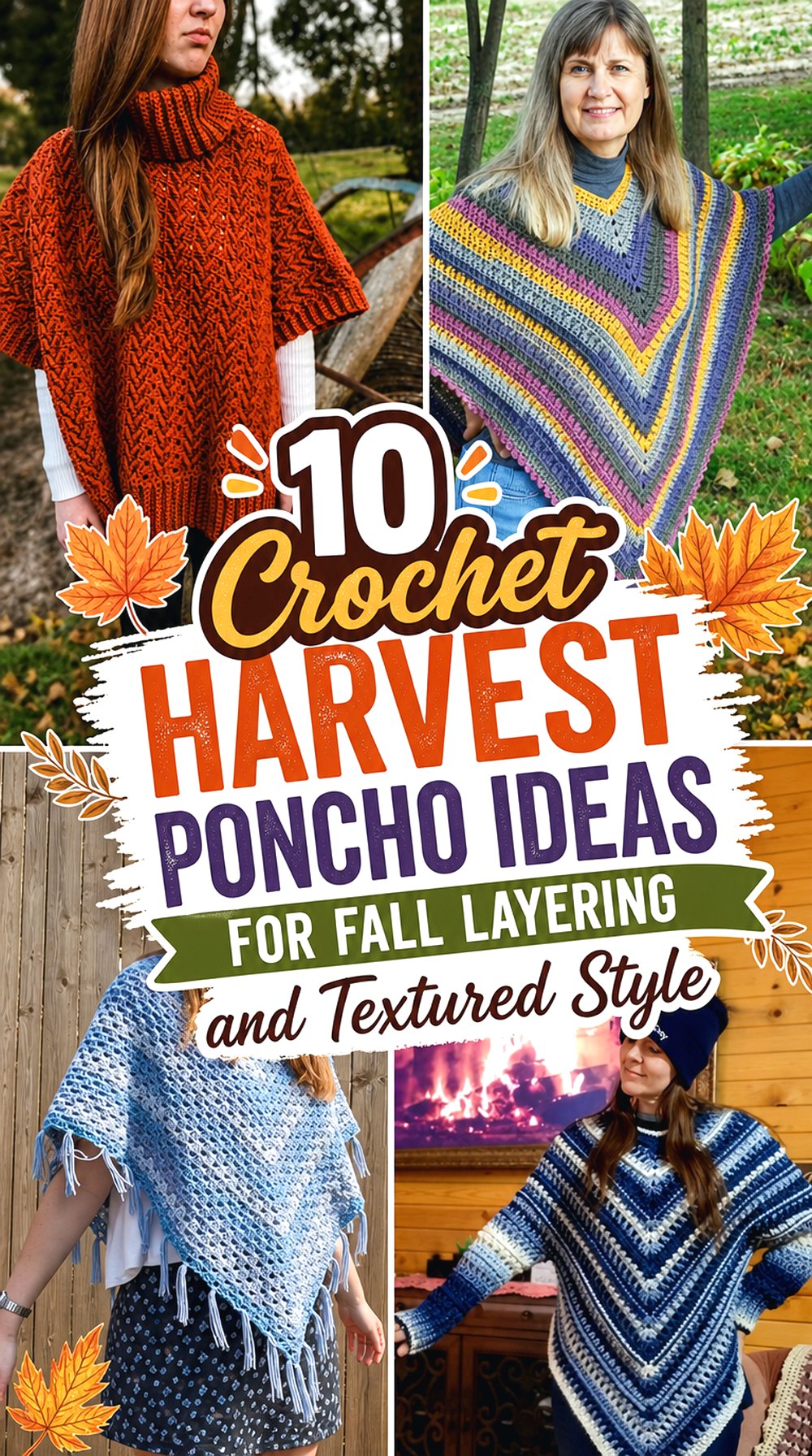
Some designs lean toward casual outdoor layering, while others feel more polished over a plain top or long-sleeve base. The mix also helps readers think about neckline shape, shoulder drape, hem length, collar height, and how much structure they want in a handmade poncho for autumn outfits.
Quick List
- Crochet Textured Fall Harvest Poncho
- Crochet Simple Repeating Fall Poncho
- Crochet Granny Square Harvest Poncho
- Crochet Hooded Harvest Poncho
- Crochet Poncho With Sleeve Coverage
- Crochet Granny Stitch Layering Poncho
- Crochet Cape-Style Harvest Poncho
- Crochet Turtleneck Button Poncho
- Crochet Asymmetrical Rectangle Poncho
- Crochet Cable Collar Harvest Poncho
Why These Crochet Harvest Poncho Ideas Are Worth Making
Crochet harvest ponchos are useful because they let makers choose the kind of fall layer they actually need. A hooded version feels different from a cowl-neck shape, and a sleeved poncho gives a different outline than a loose cape. Motif-based ponchos can show off color placement, while textured and cabled versions put more attention on surface detail.
This category also gives readers room to compare coverage without committing to a fitted sweater. Before choosing, it helps to look at neckline height, shoulder width, hem shape, and whether the tutorial gives enough size or measurement information for the way the poncho will be worn.
Crochet Textured Fall Harvest Poncho
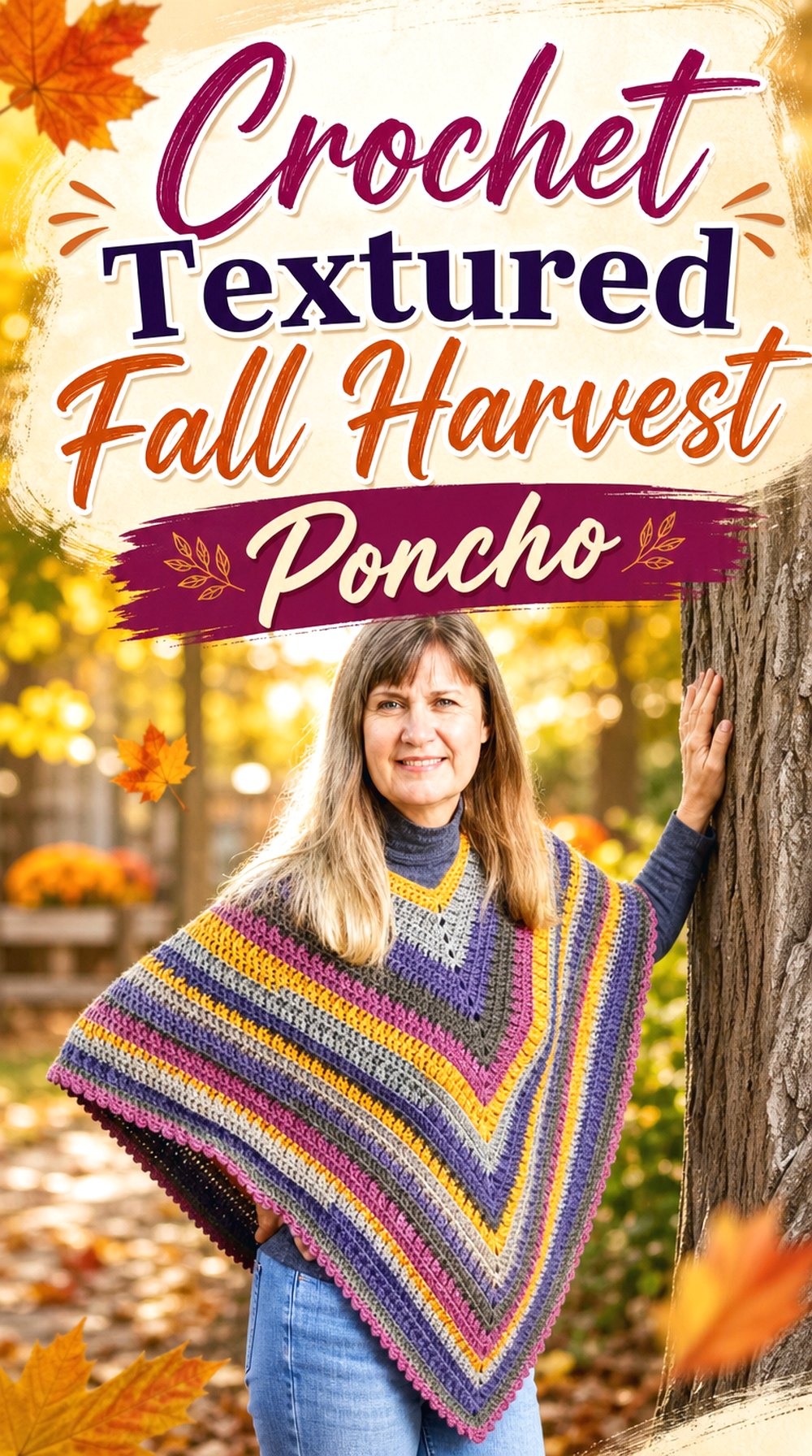
A textured fall poncho works well as the anchor project in a harvest-themed collection because it is clearly made for seasonal layering. The finished shape has an adult poncho outline with a defined neckline and a textured surface that can carry autumn yarn colors without relying only on stripes. It feels more like an everyday cool-weather layer than a decorative cape, which makes it different from the more open, hooded, or collar-focused options later in the list.
Think About the Fall Layering Use
This poncho is especially useful to consider for days when a full sweater may feel too fitted but a shawl may shift around too much. Look at how the neckline, shoulder spread, and lower edge sit on the body. Those three details will help readers decide whether the finished shape suits outdoor events, casual errands, or a relaxed layer over a long-sleeve top.
Confirm the Finished Size Notes
The source information identifies the project as an average adult poncho, so readers planning a different fit should review the creator’s pattern details carefully before choosing yarn. A poncho can look roomy on one person and shorter on another. Compare the available measurement notes with shoulder width, preferred length, and the kind of clothing that will be worn underneath.
Review the Diagram and Edging Sections
This project includes pattern overview and diagram-related guidance, so the shaping and edging sections are worth reviewing before starting. The lower edge affects how finished and balanced the poncho looks. Readers who like to understand the whole garment first may want to watch the overview, note the repeat areas, and then use the original tutorial for exact construction.
Crochet Simple Repeating Fall Poncho
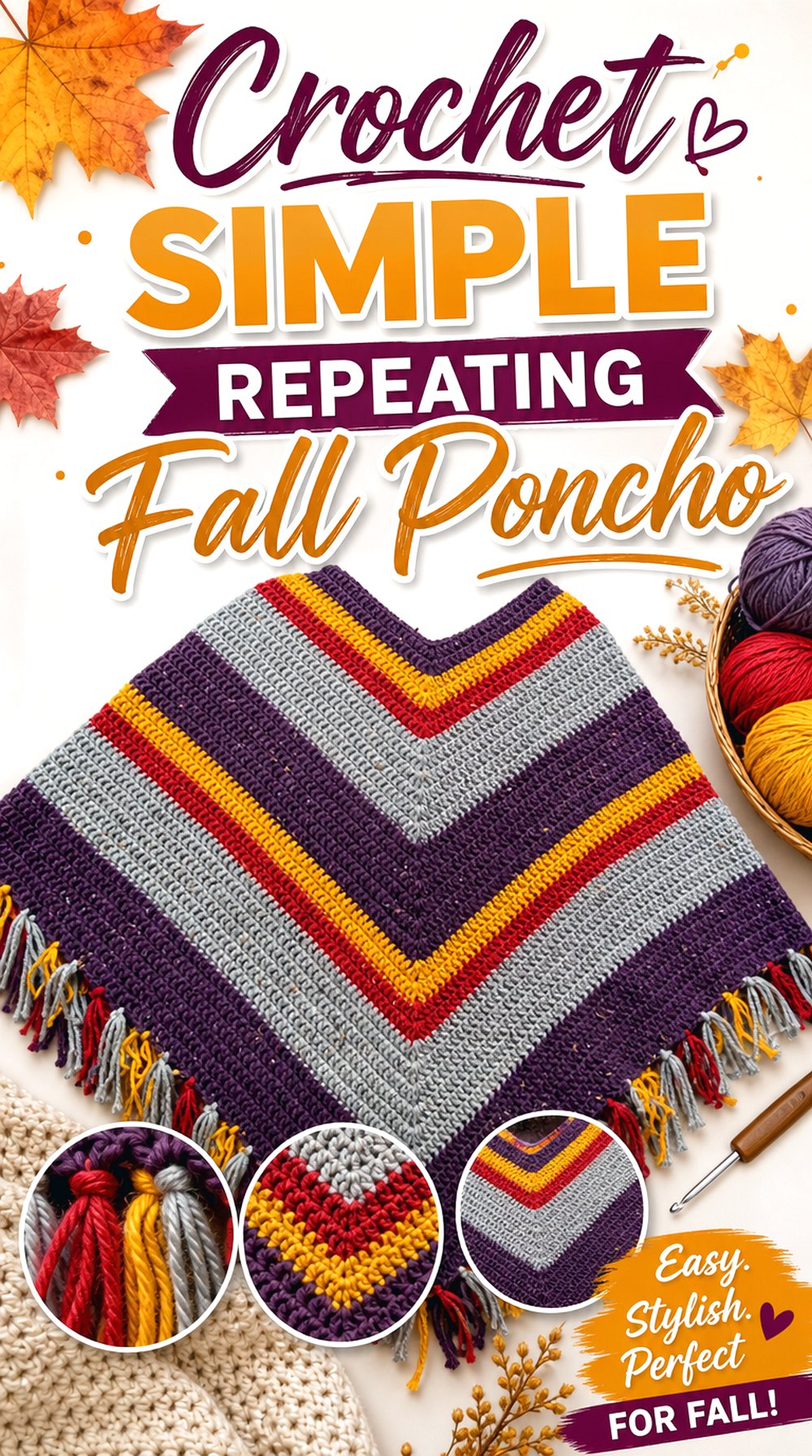
This fall poncho has a straightforward seasonal look, with a relaxed drape and an unfussy shape that can suit harvest colors like rust, brown, cream, or gold. It stands apart from the textured fall poncho above because the appeal is more about a simple repeated look than a heavily defined surface. The design works well for readers who want a wearable autumn layer but still need to check the fit, length, and neck opening before choosing it.
Look at the Poncho Drape
The drape is an important part of this project’s appeal. A softer poncho may sit closer to the body, while a firmer one may hold more shape at the sides. Readers should look at the finished garment from the front and side, then decide whether they want a loose harvest layer or a cleaner outline over everyday clothes.
Check the Neck Opening
The neckline determines how comfortable and practical the poncho may feel during wear. A wider opening can be easier to layer, while a closer one may give a neater upper shape. Before beginning, readers should check how the top edge sits and whether the creator gives any information that helps them understand the final neck fit.
Use the Repeating Areas Carefully
Because this poncho is described as having a repeating pattern, it may be helpful to keep a simple progress note while following the source. Repeated sections can look calm and even when the spacing stays consistent. Rather than guessing ahead, viewers should follow the creator’s exact counts and pause at any major shape change.
Original Tutorial and Creator Credit
Creator: Simply Angel Tiah
Crochet Granny Square Harvest Poncho
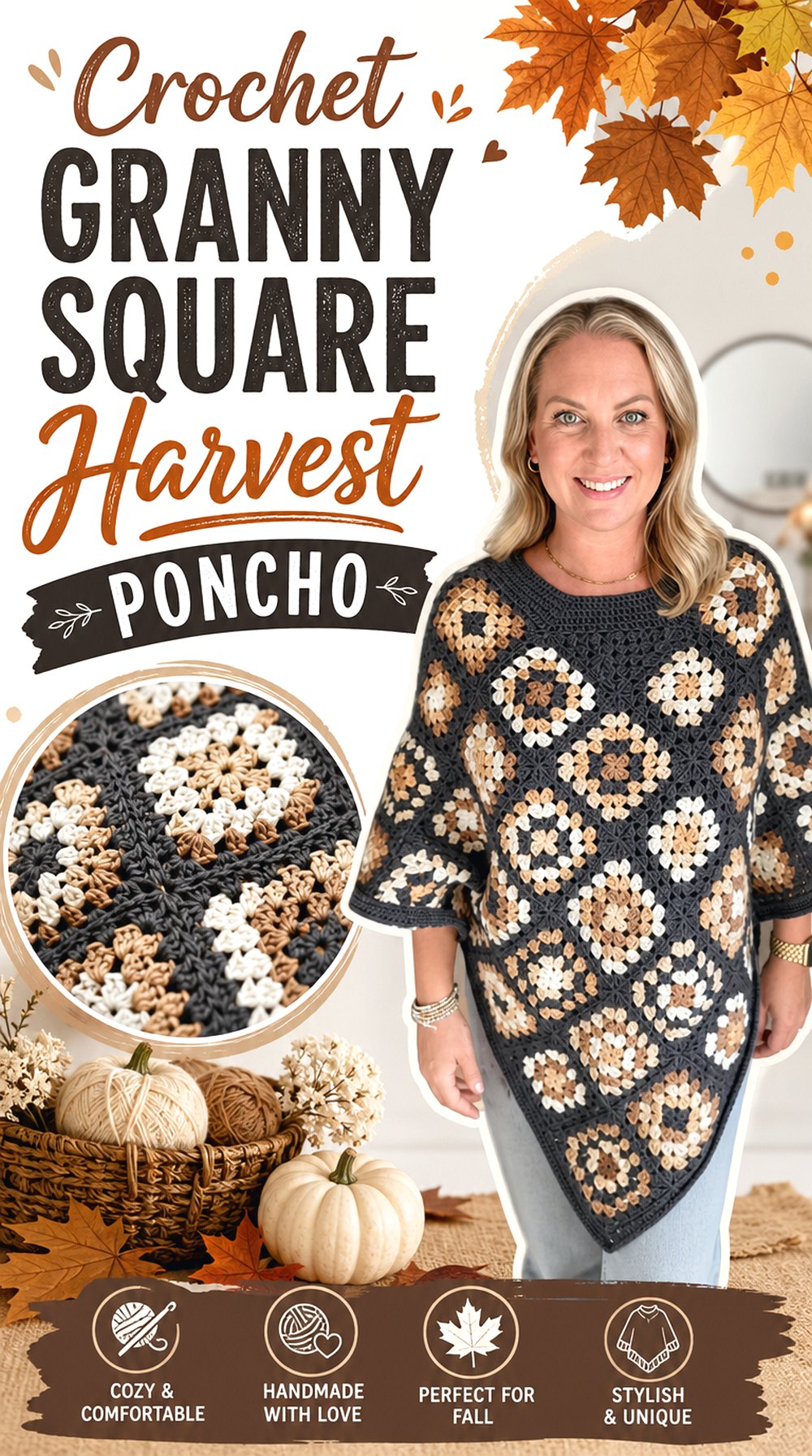
A granny square poncho brings a more graphic harvest style to the collection. The visible motif layout gives the garment a patchwork feeling, and the optional roll-neck direction noted by the creator can make the upper edge feel more finished. This option differs from the simple repeating poncho because the viewer will be thinking about square placement, color balance, neckline finish, and how the motifs come together into a wearable shape.
Plan the Motif Color Balance
Granny square ponchos can carry several harvest colors at once, but the layout still needs to feel intentional. Readers may want to decide whether the strongest color should sit near the neckline, at the lower edge, or evenly across the body. A calm background shade can help mustard, rust, olive, or cream motifs remain visible without becoming visually crowded.
Look at the Neckline Finish
The creator’s information mentions an improved neckline and an optional roll-neck, so this is a key detail to review. A roll-neck can change both the look and the feel of the finished poncho. Readers should check how the neckline is shown, how high it appears, and whether that finish suits their preferred fall layering style.
Watch the Joining Stage Closely
A granny square poncho depends on clean joining. Even when the individual motifs look neat, the finished garment needs the squares to align well so the shape hangs correctly. Viewers should pay close attention when the source moves from separate motifs into the full poncho layout, because that stage affects the shoulder line and overall balance.
Original Tutorial and Creator Credit
Creator: Bella Coco
Crochet Hooded Harvest Poncho
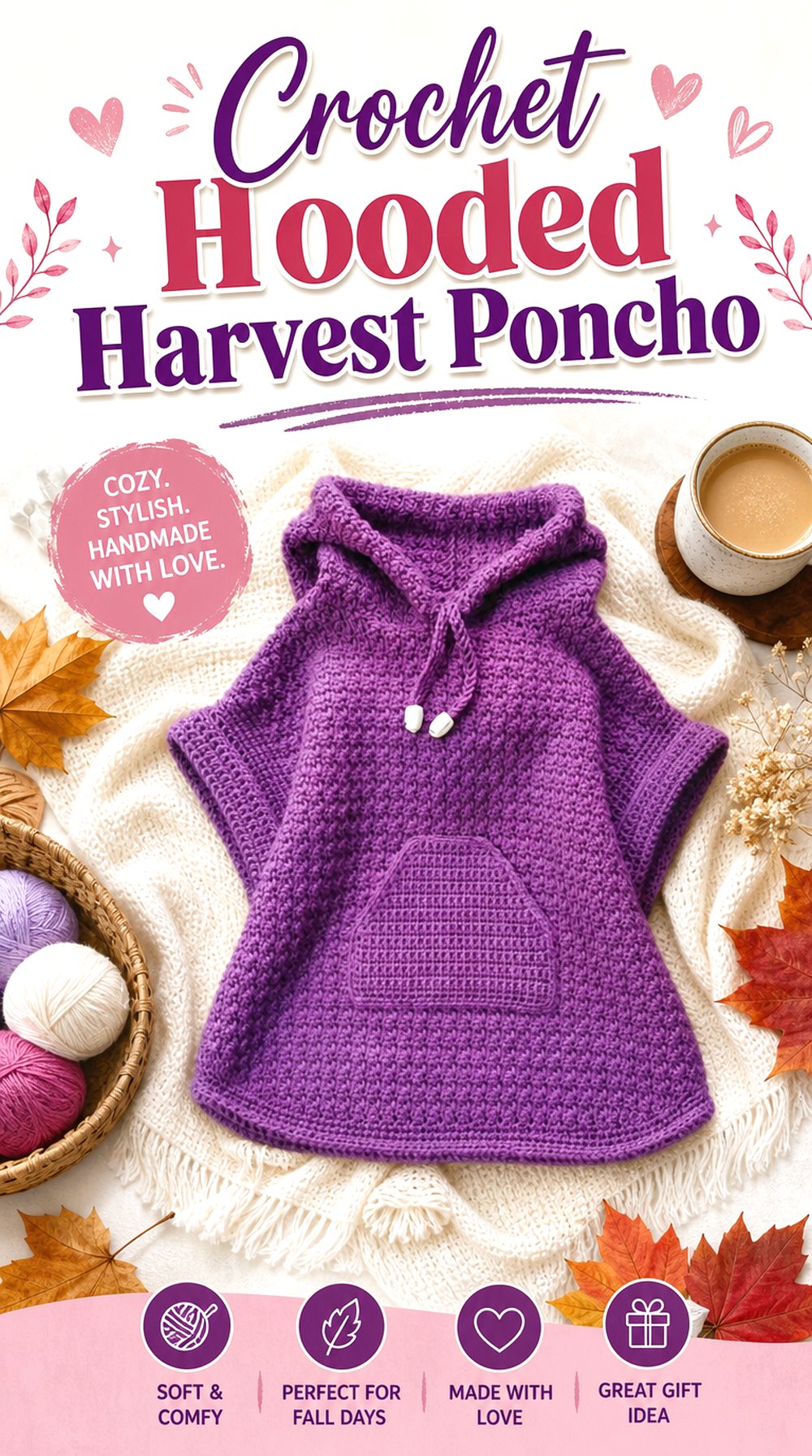
A hooded poncho gives this harvest list a more casual outdoor shape. The hood changes the whole feeling of the garment, making the upper section more substantial than a simple open neckline. It may suit readers who like ponchos that look closer to outerwear, especially when styled over a plain long-sleeve top. This design is also different from the collar and turtleneck projects because the hood becomes the main feature rather than a close neck finish.
Consider the Hood Shape
The hood is the feature that makes this poncho stand out, so readers should look at its depth, height, and how it joins the body of the garment. A hood that looks generous may create a relaxed silhouette, while a smaller hood may sit closer to the head and shoulders. The finished hood view is worth checking before choosing this project.
Compare Fit for Different Ages
The creator describes the hooded poncho as suitable for any age, so the fit information matters. Readers should not assume one set of measurements will work for everyone. Instead, they should review the guide or tutorial notes carefully, compare the intended wearer’s size, and confirm how the finished length and shoulder coverage are handled.
Check the Guide Availability
The source mentions an additional guide with step-by-step instructions, photos, diagrams, and size information. Readers who prefer more than video instruction may find that useful, but they should confirm what is included before relying on it. For a hooded wearable, diagrams and measurement charts can be especially helpful when checking proportions.
Original Tutorial and Creator Credit
Creator: Calor de Hogar Tejidos
Crochet Poncho With Sleeve Coverage
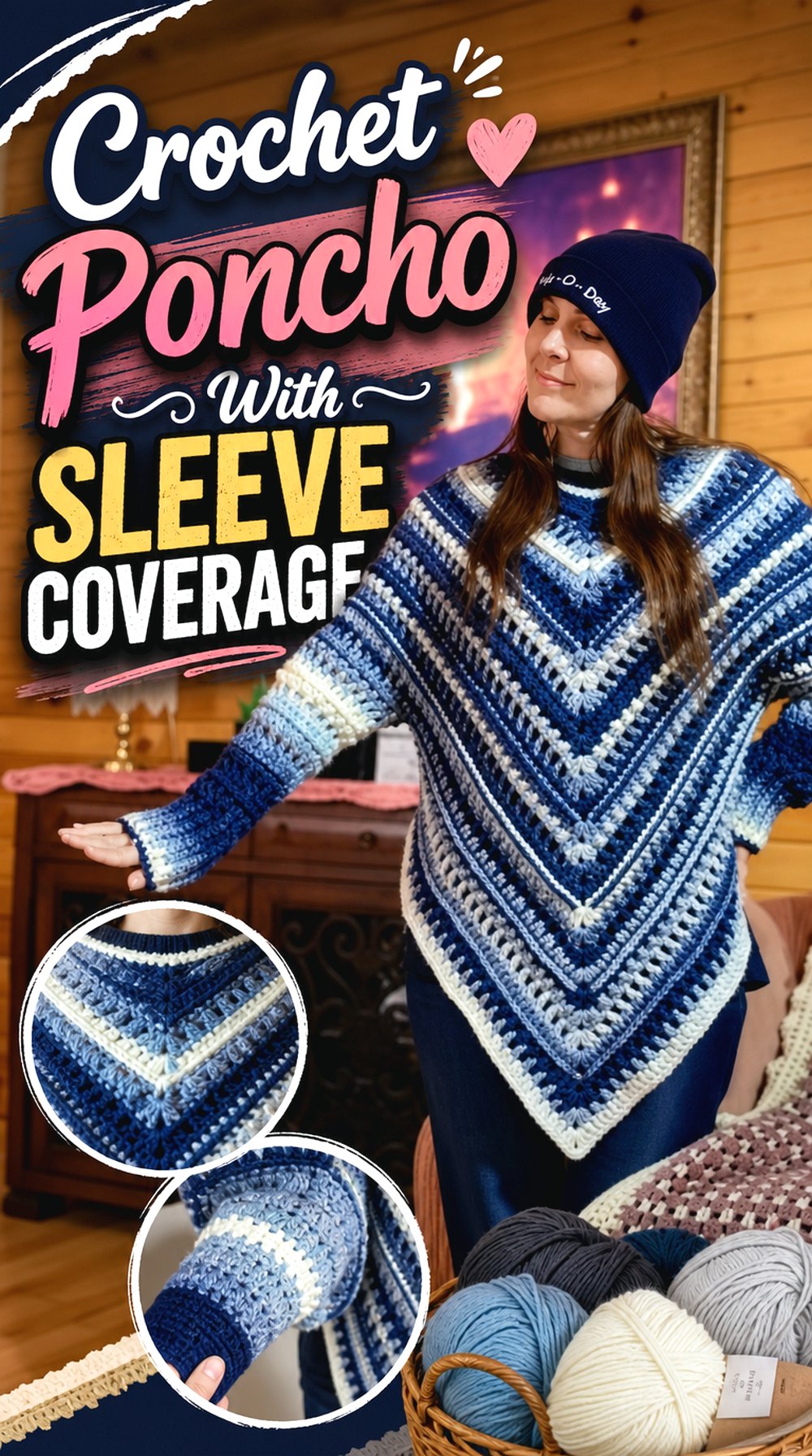
A poncho with sleeves gives the harvest theme a more garment-like option. Instead of only hanging from the shoulders, the design includes sleeve coverage, which can make it feel closer to a relaxed sweater shape. That difference matters for readers who want arm coverage but still like the loose body of a poncho. It also adds variety beside the open cape, granny motif, and collar-based projects in this collection.
Think About Arm Movement
Sleeve coverage can change how a poncho feels when worn. Readers should look at how the sleeves sit and whether the body still has enough looseness for comfortable movement. The best decision point is not just whether the sleeves look nice, but whether the garment shape matches the way the reader expects to move, reach, and layer.
Review the Sleeve Finish
The sleeve ending affects the overall polish of this project. A visible cuff, edge, or clean stopping point can make the poncho feel more intentional. Before beginning, readers should look for how the sleeve finish is handled and whether the creator gives enough guidance to keep both sides even without guessing.
Confirm Materials Before Buying
The source listing for this project does not need to be turned into a shopping list inside the article, but readers should still confirm the creator’s current material information before buying supplies. Ponchos with sleeves can use yarn differently than open shapes. Checking the material list first helps avoid choosing yarn only from the finished appearance.
Original Tutorial and Creator Credit
Creator: Bag-O-Day Crochet
Crochet Granny Stitch Layering Poncho
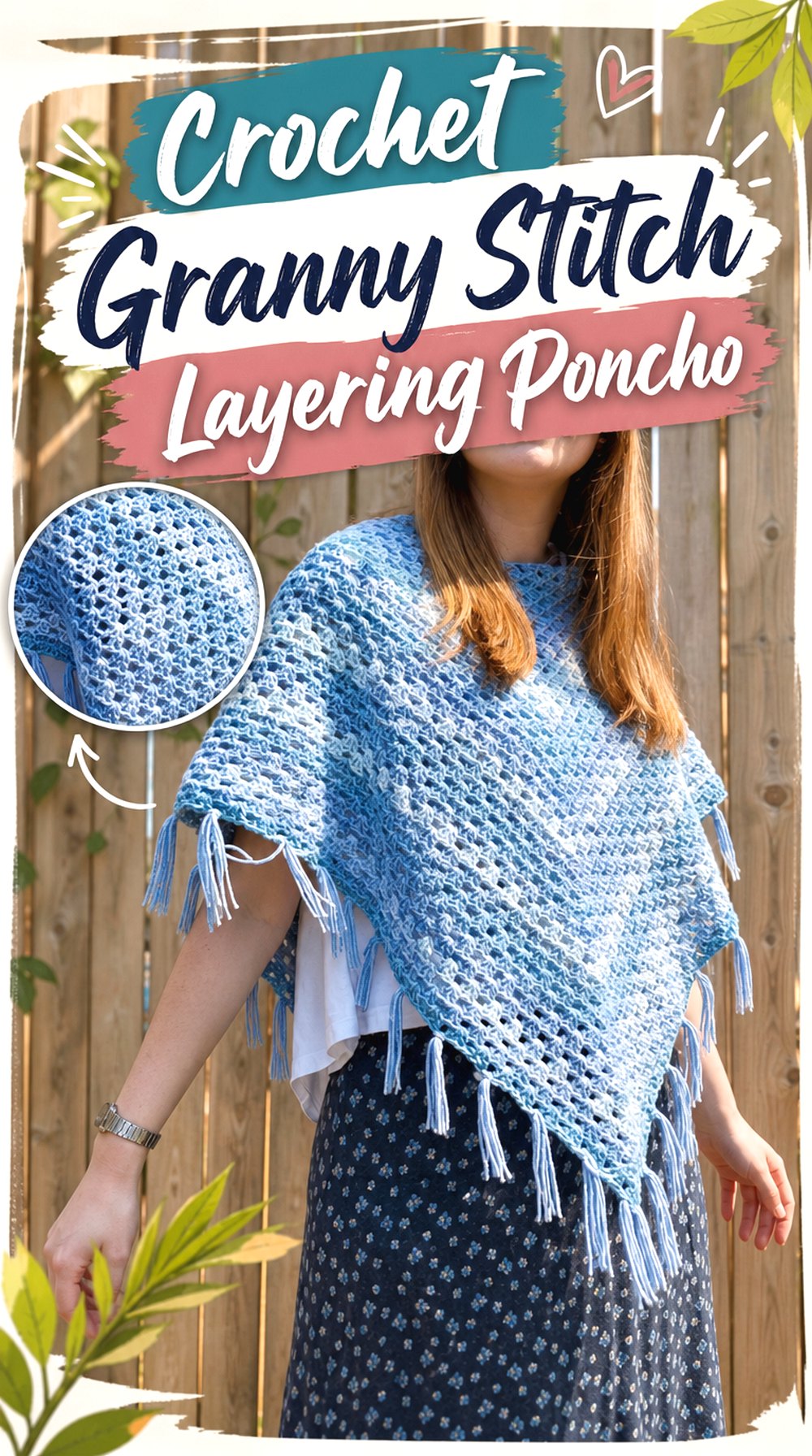
This granny stitch poncho offers a softer, more repetitive alternative to the granny square version. Instead of building the look from separate square motifs, the surface reads as a continuous granny-style fabric. That makes it useful for readers who like the open, familiar look of granny stitches but prefer a less patchwork finish. The source also connects the poncho to spring and fall layering, which fits the harvest theme without making it feel too heavy.
Think About Open Stitch Coverage
A granny stitch fabric can create visible openings, so coverage is worth considering. Readers should decide what they plan to wear underneath before choosing colors or yarn. A plain fitted top can make the stitch pattern easier to see, while a high-contrast underlayer may change the look of the whole poncho.
Confirm the Supply Details
The creator lists general supply information, including yarn weight, hook size, and a stitch marker. Readers should still check the source directly before buying anything, especially if they plan to change yarn. Substituting yarn can affect drape, size, and the openness of the fabric, so the tutorial’s exact guidance should stay central.
Keep the Repetition Even
A continuous granny-style poncho depends on steady spacing and a balanced edge. Readers may want to pause at regular points and compare the shape as it grows. Since this design is based on repeated stitch groups, small consistency issues may become more visible across a larger wearable piece.
Original Tutorial and Creator Credit
Creator: Kayla
Crochet Cape Style Harvest Poncho
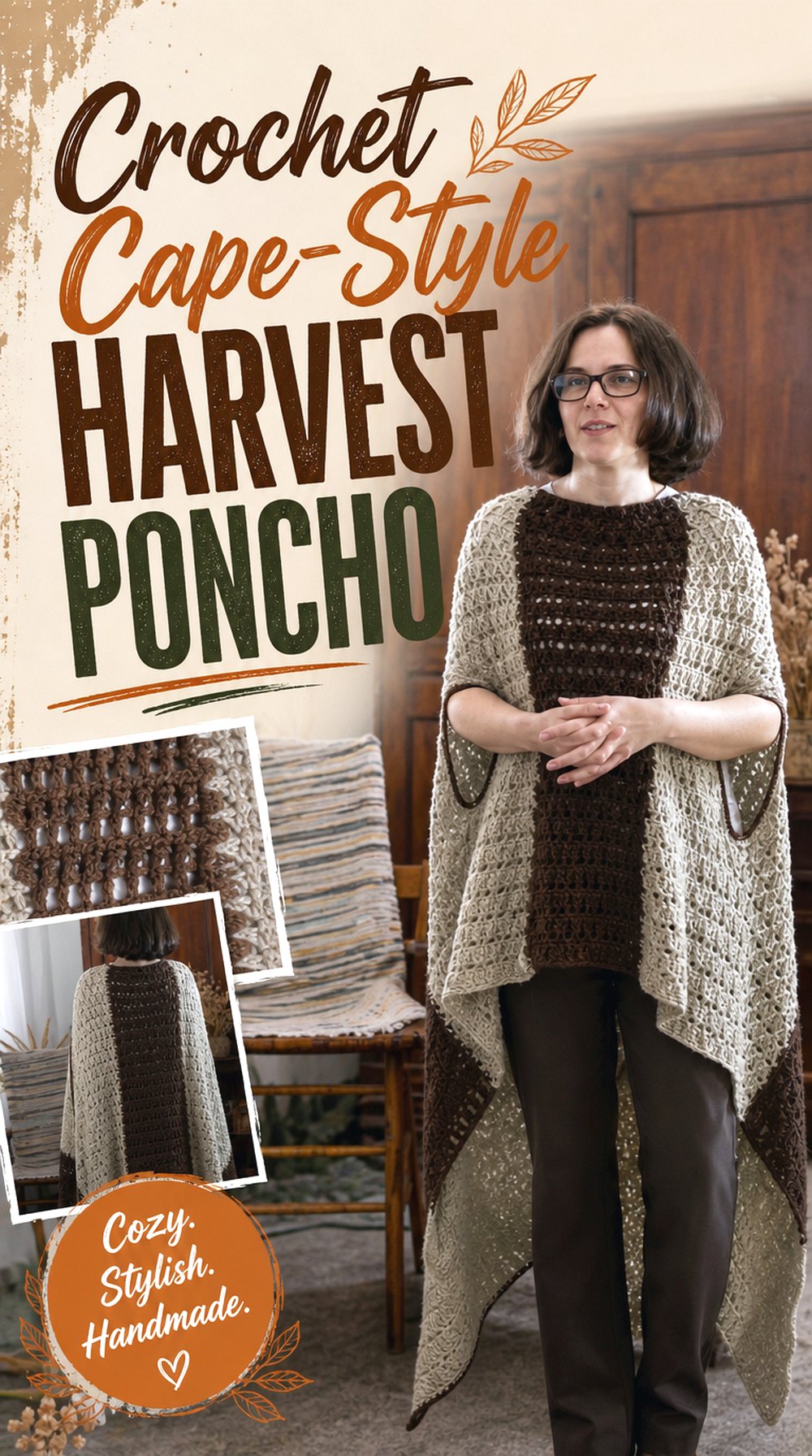
A cape-style poncho brings a dressier outline into the harvest mix. The shape reads more like a crochet cape than a casual pullover poncho, which makes it a useful choice for readers who want shoulder coverage with a softer, slightly more polished look. It differs from the hooded and sleeved options because the drama comes from the cape shape itself rather than extra garment features.
Consider the Cape Silhouette
The main decision with this project is whether the cape-style outline suits the intended outfit. A cape poncho can frame the shoulders and upper body differently from a longer rectangular poncho. Readers should look at the width, the lower edge, and the way the garment opens or falls before deciding how they would wear it.
Check the Finished Edge
The lower edge is especially visible on a cape-shaped poncho. A neat finish helps the whole garment look intentional, while an uneven edge can distract from the shape. Readers should pay attention to the final border or edge treatment in the original source and avoid rushing the finishing stage.
Review the Full Tutorial First
The creator presents the project as a step-by-step cape poncho tutorial, so it is worth reviewing the whole guide before starting. This helps readers see where the shape changes and how the finished garment is presented. For a wearable with a clear silhouette, understanding the end result first can prevent surprises later.
Original Tutorial and Creator Credit
Creator: oana boutique crochet &knitting
Crochet Turtleneck Button Poncho
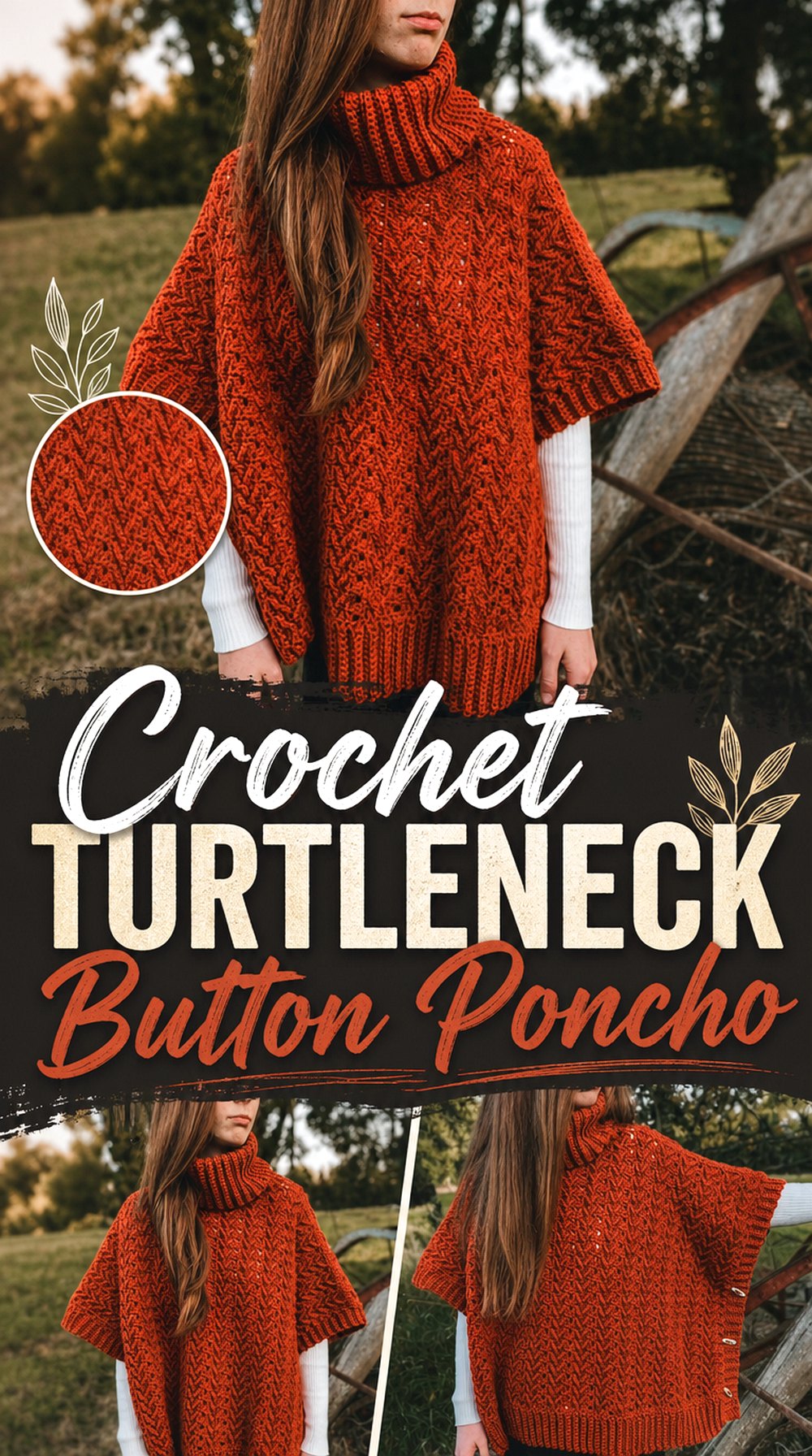
A turtleneck button poncho gives the collection a close-neck option with extra front detail. The source information lists buttons, which makes the closure area an important part of the finished look. This project feels more structured at the neckline than an open cape or granny stitch poncho. It may appeal to readers who want a harvest poncho that frames the neck and upper chest instead of sitting wide and open.
Look at the Turtleneck Height
The turtleneck changes the styling of this poncho right away. Readers should look carefully at how high the neck sits and how it relates to the shoulders. A higher neck can feel more enclosed than other poncho shapes, so it is important to decide whether that look suits the wearer and the intended fall outfits.
Check the Button Placement
Buttons are a visible feature in this project, so placement matters for both appearance and function. Readers should look at how many buttons are used, where they sit, and whether they are decorative, functional, or both. The creator’s material notes should be checked directly so button size and placement are not guessed.
Compare the Front View
The front view carries much of this poncho’s character because of the turtleneck and button detail. Before committing, readers should compare the front view with the side and back if available. This helps them decide whether they like the balance between the close neckline and the looser poncho body.
Original Tutorial and Creator Credit
Creator: Hey Carrie
Crochet Asymmetrical Rectangle Poncho
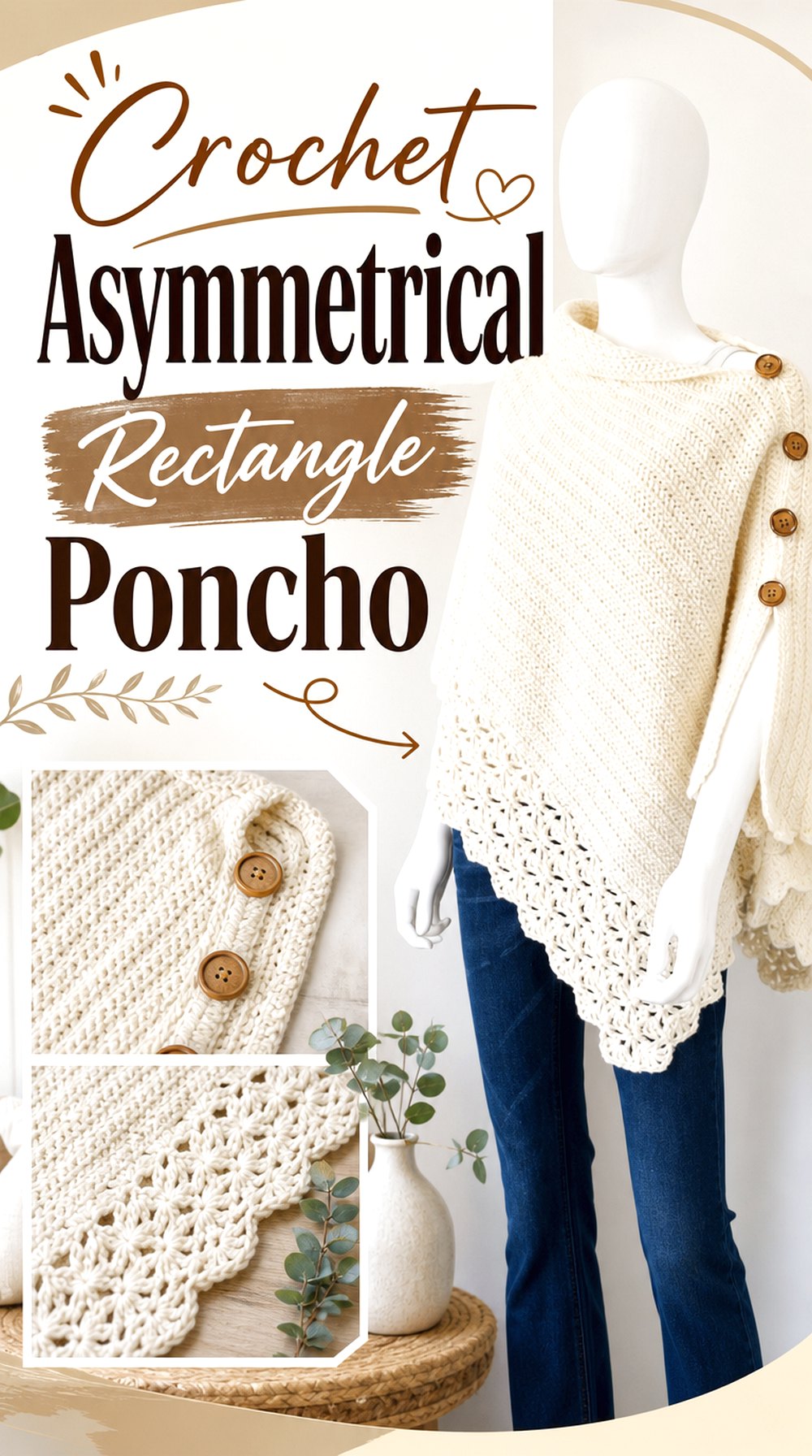
An asymmetrical rectangle poncho is a smart harvest option for readers who like simple shaping with a more modern finished line. The source describes the poncho as being designed from a rectangle shape, with a solid body and lacy hem. That contrast gives the finished piece a different identity from the rounder cape shapes and the motif-based ponchos. It can work well when the reader wants movement at the lower edge without a complicated-looking outline.
Notice the Asymmetrical Hem
The hem is the detail that gives this poncho its personality. An asymmetrical lower edge can create visual movement, especially when worn over plain layers. Readers should look at where the longer point falls and decide whether they prefer that angled shape or a more even harvest poncho outline.
Think About Solid Body Coverage
The source description mentions a solid body, which makes this option different from open granny stitch or lace-like ponchos. That can help readers who want more coverage through the main garment area. They should still check the final photos or video view to understand how much openness appears at the hem.
Confirm Rectangle-Based Measurements
A rectangle-based poncho can sound simple, but the rectangle size still controls the final fit. Readers should confirm the creator’s measurement information and size guidance before beginning. A small change in width or length can alter shoulder placement, lower edge position, and the overall drape of the finished poncho.
Original Tutorial and Creator Credit
Creator: crochetdreamz
Crochet Cable Collar Harvest Poncho
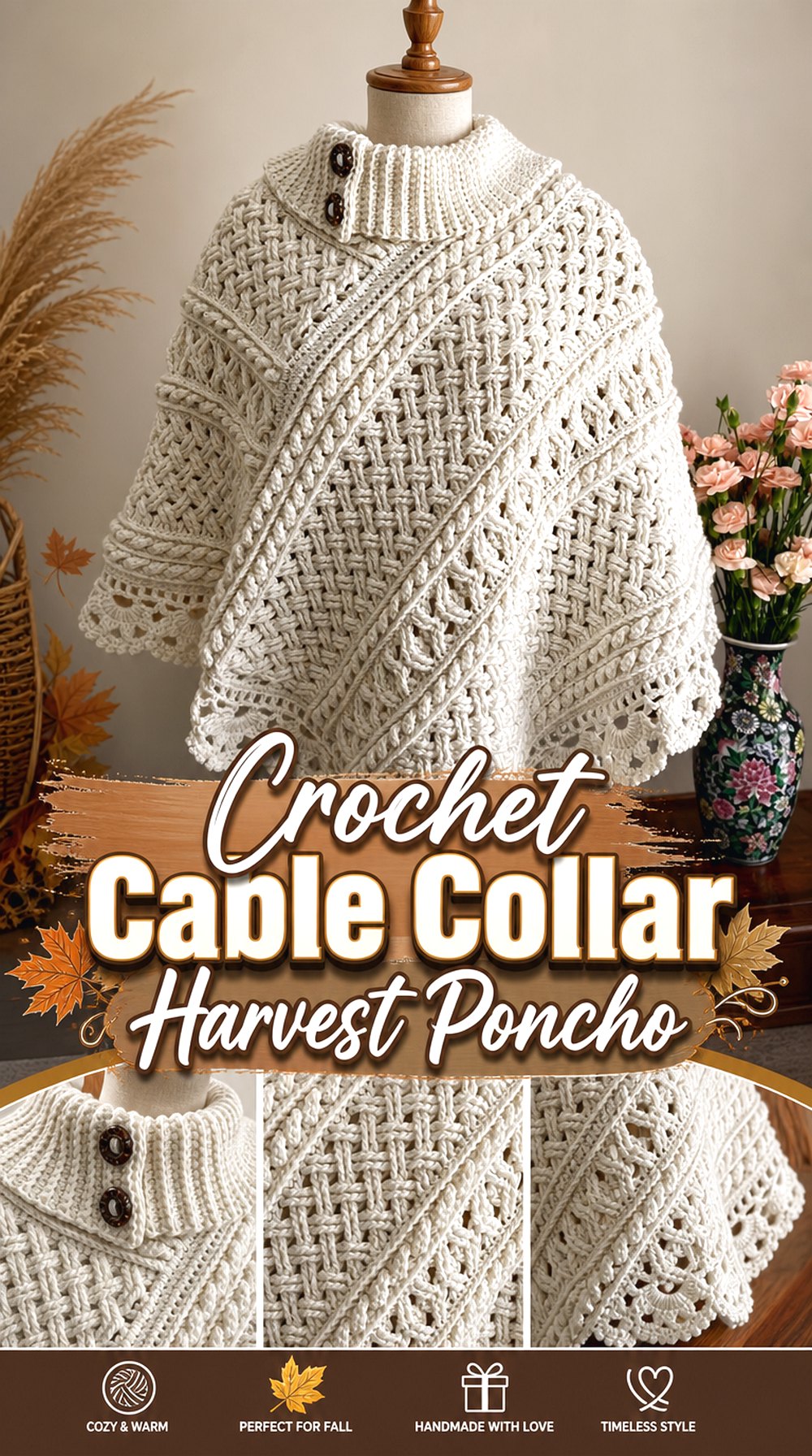
A cable collar poncho gives the harvest list its most textured, heritage-inspired option. The project features crocheted cables, lace trim, and a buttoned collar that the creator says can be worn two ways. That combination makes it different from the simpler rectangle, granny, and hooded ponchos. It is a strong choice for readers who want surface detail to be the focus and are willing to pay close attention to the collar, trim, and cable sections.
Let the Cable Texture Lead
The cable texture is the main visual feature, so color choice should support stitch definition. Strongly variegated yarn may compete with raised cables, while a calmer shade can help the surface pattern show. Readers should look at the finished view and decide whether they want the harvest feeling to come from color, texture, or both.
Check the Buttoned Collar Options
The creator notes that the buttoned collar can be worn in two ways, which makes the neckline more flexible than a fixed turtleneck. Readers should study the collar view before choosing buttons or styling the finished piece. The collar changes the mood of the poncho, so this detail deserves attention early.
Slow Down the Detailed Sections
Cables, lace trim, and collar shaping give this poncho more going on than a plain repeating layer. Viewers should slow down at the detailed sections and avoid jumping ahead from the finished look alone. The original source also includes a correction note, so readers should review the video description carefully before working that part.
Conclusion
These crochet harvest poncho ideas cover several different ways to build an autumn layer. The textured fall poncho and cable collar version focus on surface detail, while the hooded and sleeved ponchos add more garment-like coverage. The granny square, granny stitch, cape-style, turtleneck, and rectangle options each handle shape and neckline differently. Readers who want a simple outline may prefer the rectangle or repeating styles, while those drawn to stronger features may choose the hood, buttons, or cables. Use the original tutorials for exact construction details before starting.
FAQs
How do I choose the right crochet harvest poncho style?
Start with the neckline and overall shape. A hooded poncho feels different from a turtleneck, and a cape shape falls differently than a rectangle poncho. Then compare length, shoulder coverage, and whether the design has sleeves, buttons, motifs, or heavy texture. Those details matter more than color alone.
Are crochet harvest ponchos only for fall colors?
No. Harvest colors can support the seasonal look, but the project shape matters too. Rust, mustard, olive, cream, brown, and muted gold are common autumn choices, yet a textured poncho in a neutral shade can still feel seasonal. Choose colors that let the stitch pattern and garment outline remain clear.
What should I check before starting a crochet poncho tutorial?
Check the material list, hook information, size notes, finished measurements, and any linked written pattern or correction note. For wearables, it is also helpful to look for front, side, and back views. A poncho may look simple, but small sizing changes can affect length, neckline, and drape.
Can I change the yarn for a crochet poncho?
Only change yarn after reviewing the creator’s guidance. Different yarn weights and fibers can change the size, openness, and drape of a poncho. If the tutorial includes gauge or measurement notes, use them to compare your plan. Keep the yarn label for care details unless the creator gives specific care instructions.
Can I sell a poncho made from a YouTube tutorial?
Do not assume selling is allowed just because the tutorial is public. Check the creator’s description, linked pattern terms, shop policies, or licensing notes. Some designers allow finished-item sales, while others place limits on pattern use, photos, or commercial production. When terms are unclear, contact the creator directly.