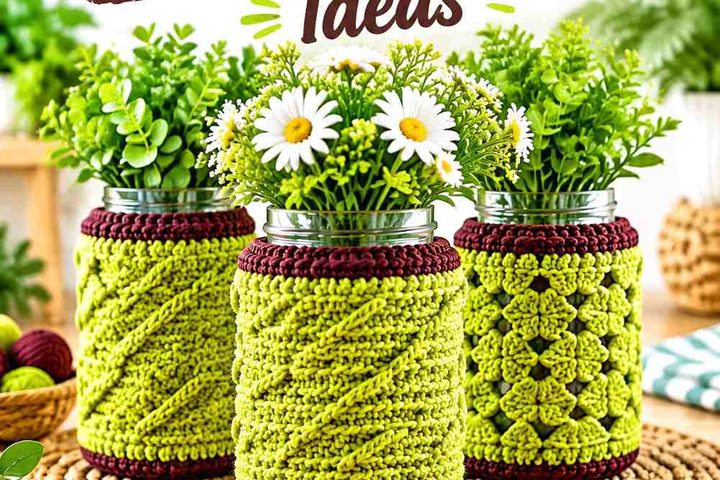
Crochet lace decor can be tiny enough for a coaster or large enough to change an entire wall, window, or dining table. That range is what makes a lace collection useful: a round doily emphasizes radial patterning, a curtain depends on repetition and light passing through the fabric, while baskets, cushions, jars, and rugs give openwork a more structural role.

These 18 ideas include traditional thread-style lace, motif-based projects, and larger home accents with open crochet construction. Most tutorials teach the finished décor object directly. A few teach a lace component or require another linked part of the creator’s own tutorial series; those limitations are explained within the relevant entry rather than treating a motif as a complete project.
Before choosing, think about viewing distance, the surface behind the lace, and whether you want the fabric to lie flat, hang vertically, wrap around an object, or hold a three-dimensional form.
Quick List
- Crochet Round Lace Doily
- Crochet Floral Lace Table Runner
- Crochet Motif Lace Tablecloth
- Crochet Scalloped Lace Placemat
- Crochet Joined-Doily Lace Curtain
- Crochet Filet-Lace Jar Cover
- Crochet Mandala Lace Wall Hanging
- Crochet Double-Ring Lace Wall Hanging
- Crochet Multi-Doily Lace Wall Art
- Crochet Lace Dreamcatcher Wall Decor
- Crochet Openwork Snowflake Ornament
- Crochet Doily-Style Lace Rug
- Crochet Floral Lace Basket
- Crochet Lace Garland
- Crochet Lace Cushion Cover
- Crochet Lace Ball Ornament
- Crochet Scalloped Lace Shelf Trim
- Crochet Lace-Style Coaster
Choose Lace by Placement, Not Just Pattern
Openwork changes character depending on what sits behind it. A doily or runner spreads across a solid surface, so the tabletop becomes part of the design through the empty spaces. Curtains and wall hangings need enough contrast behind them for the pattern to remain visible from a distance. A jar cover curves around another object, while a cushion cover gains dimension because the backing shows through the lace.
Scale matters for the same reason. Fine repeating detail can be rewarding on a coaster that is viewed from inches away, but a large wall piece usually needs stronger shapes that remain recognizable across the room. Before committing to a larger project, make or inspect one repeat and view it against the actual background where the finished crochet will live.
Plan Finishing Around the Type of Lace
Lace often looks different immediately off the hook than it does after careful finishing. Open chain spaces, points, scallops, and radial motifs become easier to evaluate when the piece is allowed to settle into its intended shape. The appropriate method depends on the yarn and the creator’s instructions, so one finishing routine should not automatically be applied to every project.
Also consider whether the piece will remain flat. A table runner benefits from straight edges and an even outline, whereas a garland needs repeated motifs to hang consistently. A basket requires the three-dimensional form to support the lace pattern, and a cushion must align with whatever sits beneath the openwork. Make those decisions before adding decorative extras; lace already has substantial visual detail, and additional fringe, beads, flowers, or tassels can easily overpower the underlying pattern.
1. Crochet Round Lace Doily
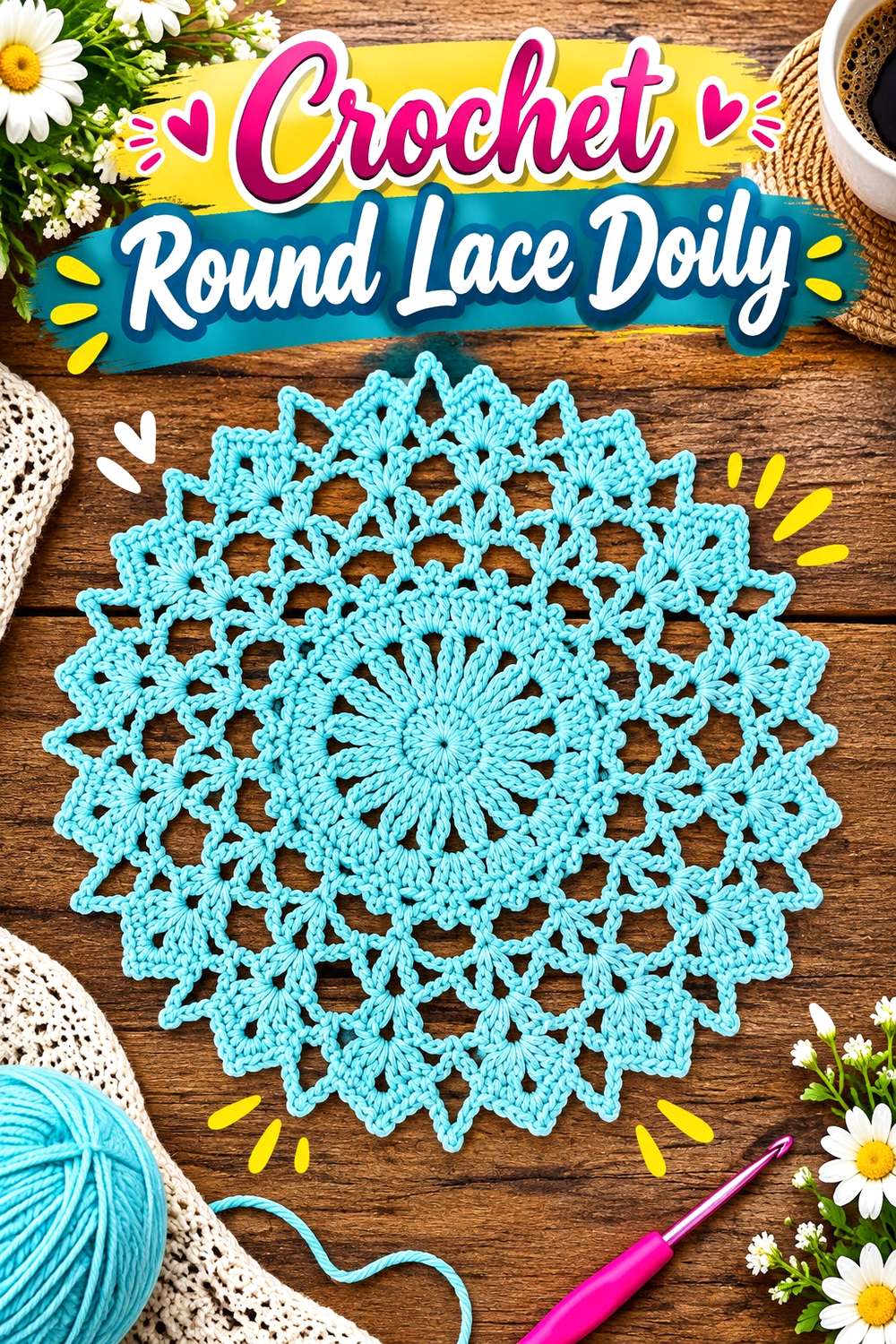
A round doily is one of the clearest ways to make the lace itself the decoration. Kristines Crochets teaches a complete circular lace doily worked outward into an increasingly open radial design, giving the finished piece a defined center, repeating sections, and decorative outer edge.
This format is especially useful on a side table, dresser, tray, or larger tabletop where the surrounding surface remains visible through the openwork. Because every section radiates from the middle, the eye notices uneven expansion more readily than it would in a rectangular piece. A single neutral shade emphasizes the geometry, while a colored doily can act as a smaller focal accent without needing additional embellishment.
Watch the Outer Circle as It Develops
A circular lace design is easier to judge as a whole than stitch by stitch. Periodically place the work on a flat surface and look at the circumference. You are checking whether the round shape remains balanced and whether repeating spaces appear consistently distributed.
Do not try to correct a suspected counting problem by aggressively stretching one section. Return to the tutorial and compare the repeat structure first; a local mistake can affect several later sections.
Let the Table Supply the Contrast
A pale lace doily can disappear on a similarly pale surface, while a very dark design may lose detail on dark wood. Contrast does not need to be dramatic, but the empty spaces need a background that lets them read.
If the intended surface already has a strong print or grain, a simpler color choice can prevent the doily and furniture from competing visually.
Creator: Kristines Crochets
2. Crochet Floral Lace Table Runner
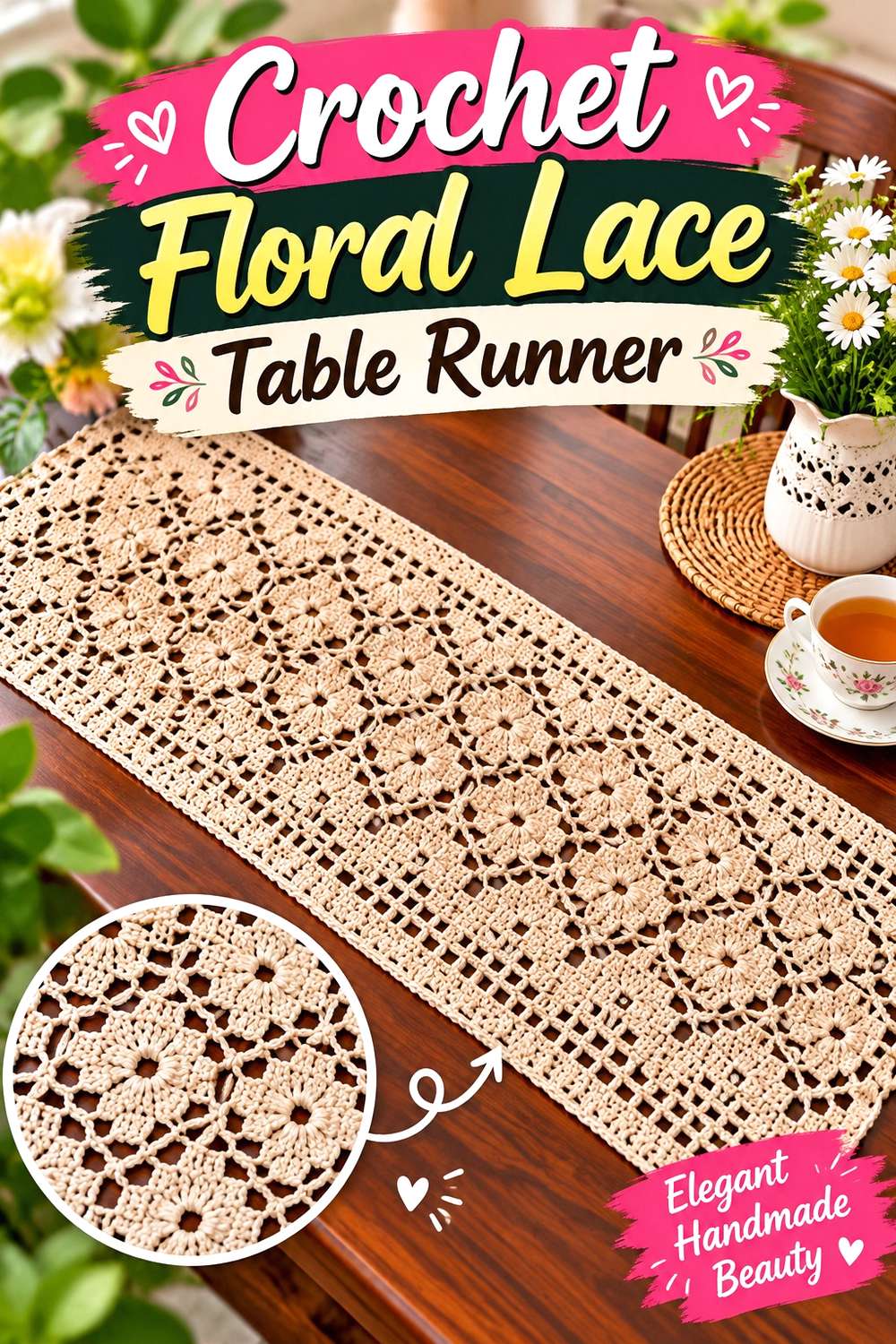
This table runner uses an elongated field of lace rather than isolated round motifs. Crochet Pattern Academy’s tutorial demonstrates the runner from its starting chain through a floral motif section, lace mesh, border, and finishing, making the rectangular table piece the actual tutorial project.
Its length makes it useful when you want lace to lead the eye down a dining table, console, or sideboard instead of concentrating decoration in one central circle. The repeated open sections create rhythm, while the narrower proportions leave much of the supporting furniture visible. That relationship is worth considering before making a runner very wide: the effect comes partly from seeing the table around it rather than covering the whole surface.
Decide How Much Table Should Remain Visible
Before settling on placement, use a strip of paper or fabric to approximate the runner’s visual footprint. A narrow runner emphasizes length; a wider piece behaves more like a partial table covering.
The best proportion depends on the furniture rather than a universal runner width. Keep enough exposed surface around the crochet for the lace edge to remain distinct.
Make the Border Part of the Composition
The border is not merely where the project stops. On a long runner, it frames every internal repeat and becomes especially noticeable at the short ends.
When choosing color or deciding whether to add anything beyond the tutorial, look at those ends from the normal approach to the table. Extra fringe is optional, not automatically an improvement; the crocheted border may already provide sufficient finish.
Creator: Crochet Pattern Academy
3. Crochet Motif Lace Tablecloth
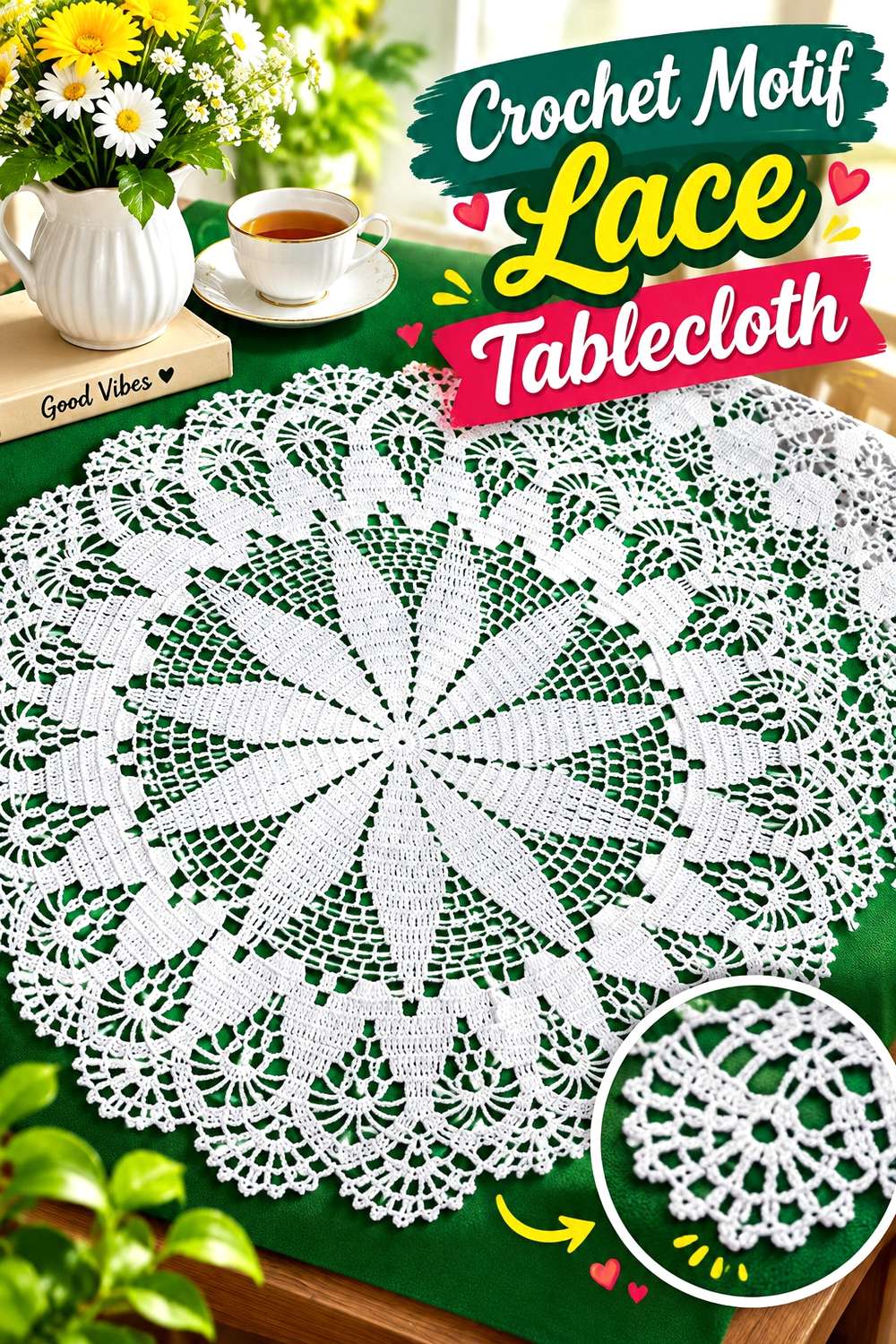
A lace tablecloth changes the role of openwork because the pattern spreads over a much broader surface than a doily or runner. Crochet Swan’s tutorial presents a motif-based table covering that can also function at smaller table-mat or doily scales, with the repeated units creating the overall fabric.
Motif construction is useful for décor because you can evaluate one unit before committing to the full field. It also places extra importance on alignment: individually attractive motifs must form an orderly larger pattern once connected. For a tablecloth, the empty areas between motifs are as visually important as the solid crochet, especially when the underlying table is a contrasting color.
Test a Small Motif Group First
One motif cannot show exactly how the finished field will look. Arrange several completed units together before producing the full quantity.
Look at the gaps created where motifs meet, the direction of any floral details, and the visual density of the joined section. This small trial helps distinguish an attractive individual motif from an arrangement that works well across a large table.
Plan the Drop Separately From the Tabletop
A tablecloth is viewed both horizontally across the top and vertically where it extends beyond an edge. Open motifs that look orderly on the tabletop may change character as they hang.
Before expanding the project, decide whether you primarily want a centered decorative panel or a covering that extends down the sides. Use the creator’s construction guidance rather than assuming additional motifs can be added without affecting the overall layout.
Creator: Crochet Swan
4. Crochet Scalloped Lace Placemat
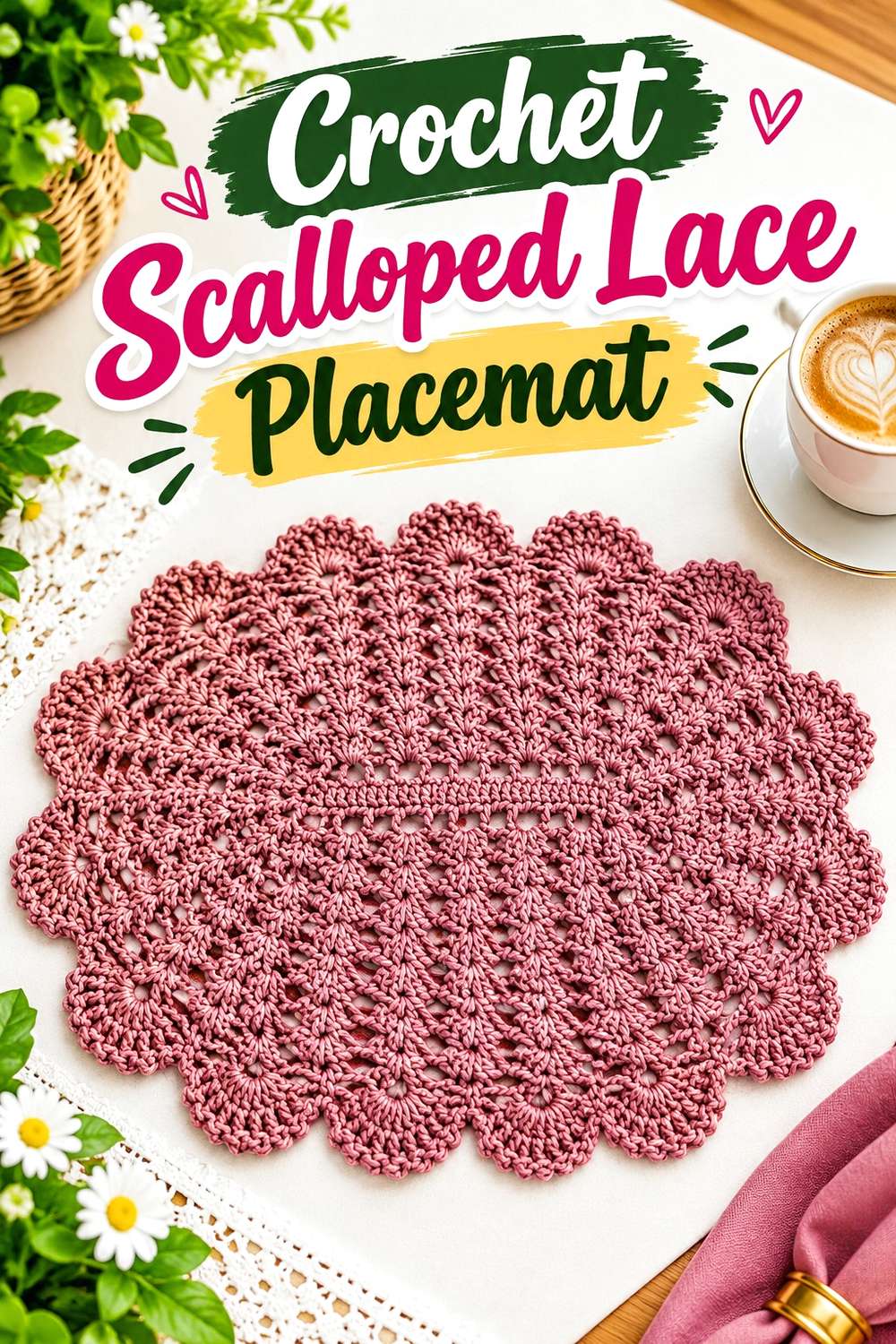
Crochetnaari’s tutorial teaches a complete lace placemat with an open decorative field and defined edging, giving you a single-person table setting rather than a large shared runner. The source walks through the table mat step by step and includes the finished rectangular form.
A placemat is a good choice when you want lace repeated around the table while keeping each piece independent. It also changes the design priority: much of the middle may sit beneath a plate, so an attractive outer border and visible corners can have more impact during actual use than elaborate detail hidden at the center. A coordinated set can stay monochrome, or several shades can share the same structure while marking different places.
Design Around What Remains Visible
Set a plate on one completed placemat before making the full set. Notice which sections of the lace remain exposed.
If the border is the most visible part, that is where consistent shaping matters most. There is little reason to add an elaborate central appliqué if it disappears beneath ordinary tableware.
Compare Every Finished Mat Together
Small differences are harder to notice when placemats are used separately, but obvious when a whole set is laid around one table.
After finishing each piece, compare its overall outline with the others rather than measuring only one internal section. If your yarn or tension has changed, catching the difference early is easier than discovering it after the complete set is finished.
Creator: Crochetnaari
5. Crochet Joined-Doily Lace Curtain

This curtain turns individual circular lace motifs into a larger translucent surface. Giani Art’s project is specifically a small-window curtain made by joining crochet doilies, but it depends on earlier videos from the same creator for the doily and joining techniques. The curtain video points viewers toward those related parts rather than pretending the entire construction begins and ends in one isolated lesson.
That multipart approach is useful for planning because a curtain can be treated as a layout of repeated circles rather than one enormous piece of crochet. The negative spaces between motifs help light pass through and distinguish this design from a solid curtain panel. Before making many doilies, consider the actual window proportions and how many complete motifs fit without awkwardly clipping the pattern at the edges.
Mock Up the Window Grid
Paper circles can help resolve layout before you crochet a large number of motifs. Arrange them within the approximate width and height of the window and look at the spaces created between neighboring rounds.
This does not establish crochet measurements, but it helps you decide whether a symmetrical grid suits the window or whether the proposed number of motifs creates an awkward edge.
Treat Joining as Part of the Pattern
In motif lace, the connection areas are visible design elements. If the joins become too dense, they can interrupt the airy curtain effect; if the layout changes substantially, the spaces between motifs change too.
Follow the creator’s related joining guidance for construction rather than substituting an unrelated method simply because the individual circles appear similar.
Creator: Giani Art
6. Crochet Filet-Lace Jar Cover
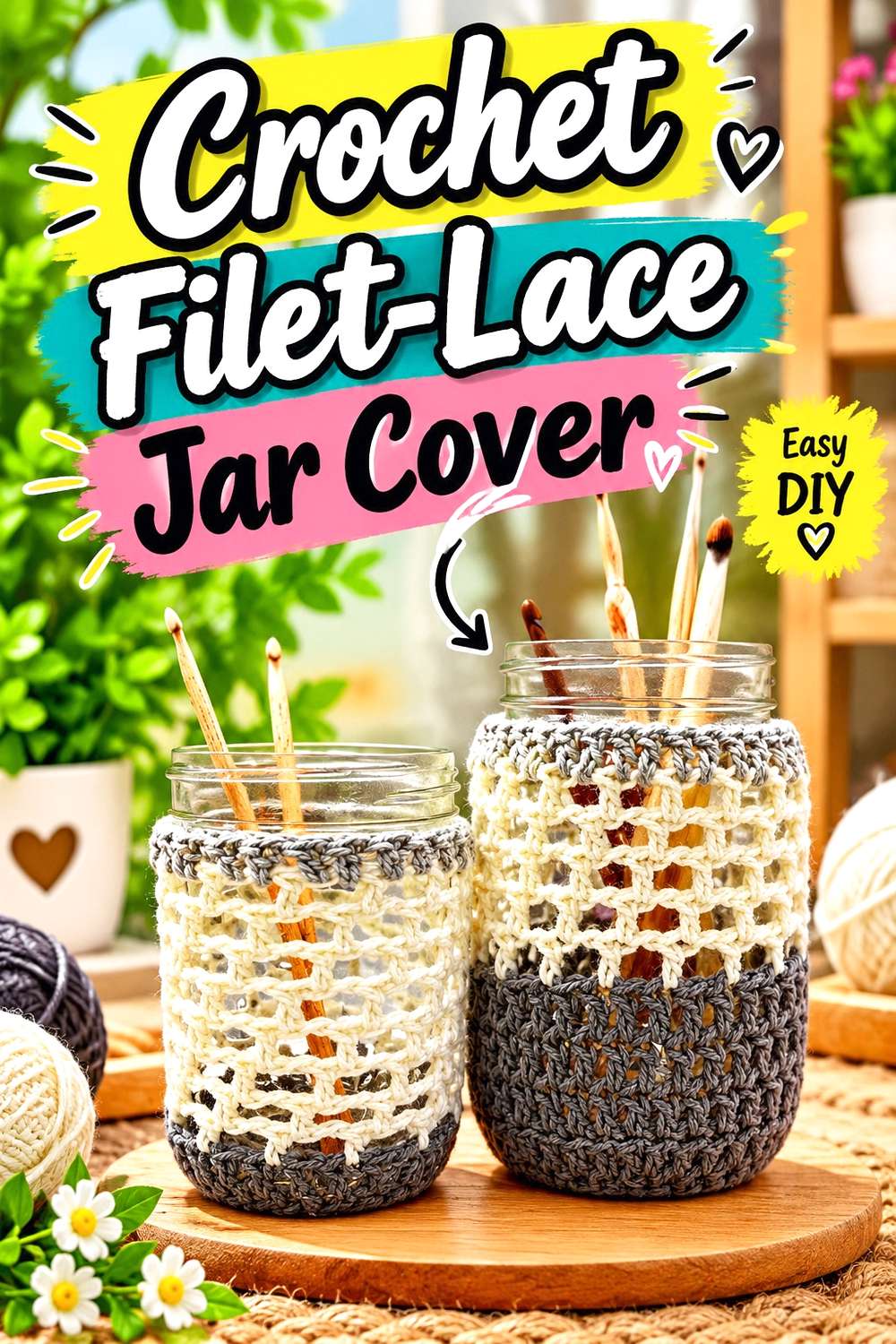
This project wraps lace around an existing container, giving openwork a cylindrical rather than flat presentation. Amanda Saladin’s full tutorial teaches customizable crochet jar covers and includes a filet-style lace section designed to fit glass jars of different sizes.
For décor, the covered jar could hold dry decorative stems, craft tools, pencils, or simply stand as a textile-wrapped accent. The important visual choice is what shows behind the open grid. Clear glass creates a light effect, while a colored or opaque insert makes the filet pattern more graphic. Since the tutorial is built around customizing the fit, the container should be selected before you plan the final appearance rather than choosing a lace sleeve in isolation.
Let the Contents Support the Lace
Openwork reveals whatever is behind it. A jar full of many colorful small objects can visually compete with a delicate mesh pattern, while a simpler interior lets the crochet remain noticeable.
If the jar is primarily decorative, experiment by placing paper of different colors inside before deciding what permanent contents or backing you prefer.
Check the Top Edge Against the Opening
A jar cover can look attractive and still become inconvenient if the crochet interferes with the mouth of the container. Decide whether the opening needs to remain fully accessible.
If it does, keep proposed extra ribbons, flowers, or trims below that working edge instead of adding bulk simply because the upper area looks visually empty.
Creator: love.life.yarn. by Amanda Saladin
7. Crochet Mandala Lace Wall Hanging
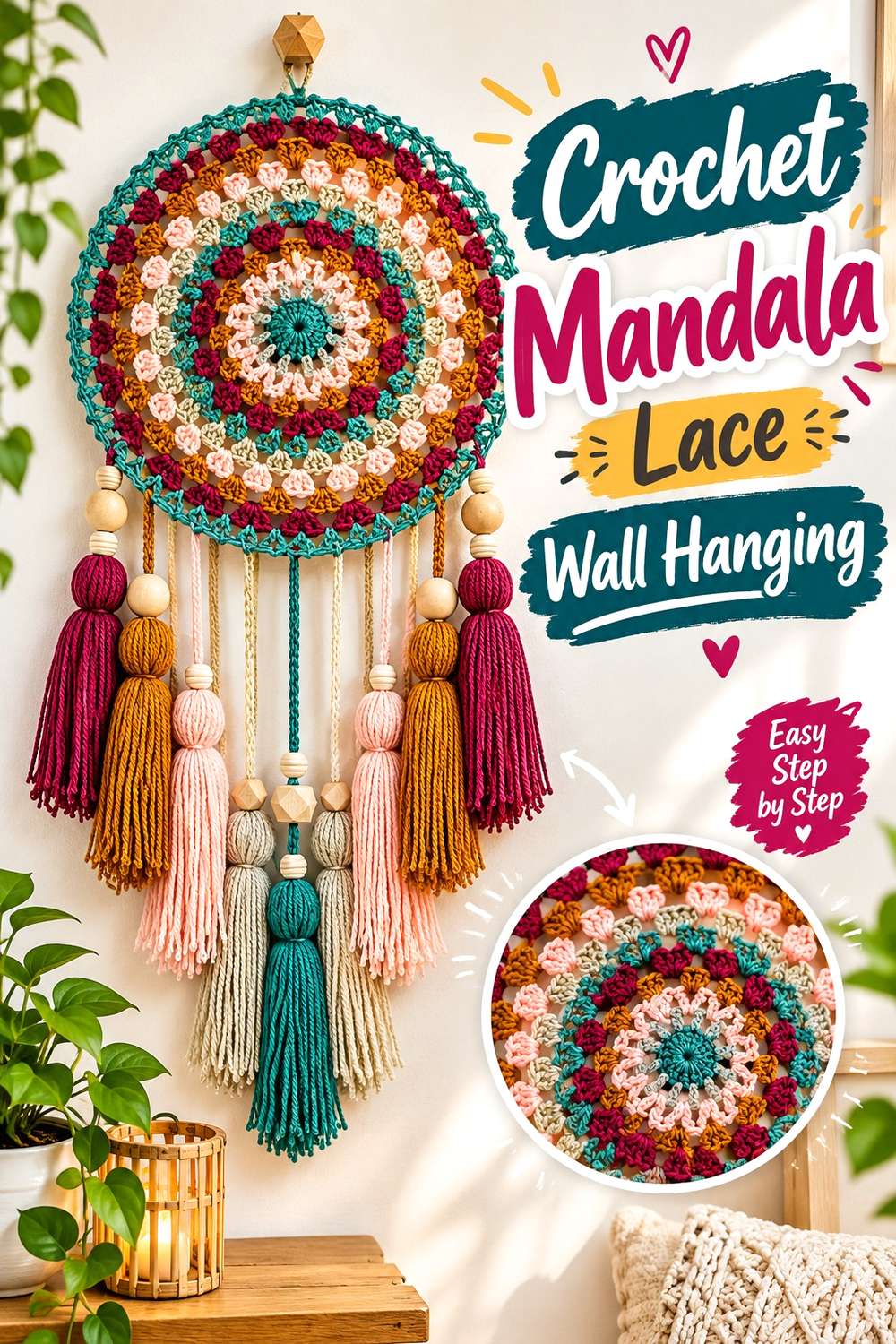
Ophelia Talks Crochet demonstrates how to turn a previously crocheted mandala into a finished wall hanging using a ring and additional hanging details. The wall-hanging tutorial therefore begins with an existing crochet mandala and points to the creator’s earlier tutorial for that component.
As wall décor, the circular frame gives lace a firm visual boundary and keeps the open center visible against the wall. Tassels and other lower details add vertical movement, distinguishing it from a framed doily that remains entirely circular. This is a useful option when you already enjoy making mandalas and want a way to display one instead of placing it flat on furniture.
Choose the Mandala Before the Ring
The crochet and its support need to work as a pair. An overly small ring can compress the outer pattern, while a very large one may leave more empty space than you intended.
Complete the mandala according to its source tutorial first, then evaluate how its edge relates to the chosen support rather than sizing the crochet by guesswork.
Balance the Circular Top and Hanging Bottom
Tassels or other dangling elements change the visual center of the entire piece. Once they are added, the wall hanging no longer behaves like a simple circle.
Temporarily position the lower decorations before securing them and view the piece hanging vertically. You may find that fewer, better-spaced details keep the mandala more prominent.
Creator: Ophelia Talks Crochet
8. Crochet Double-Ring Lace Wall Hanging
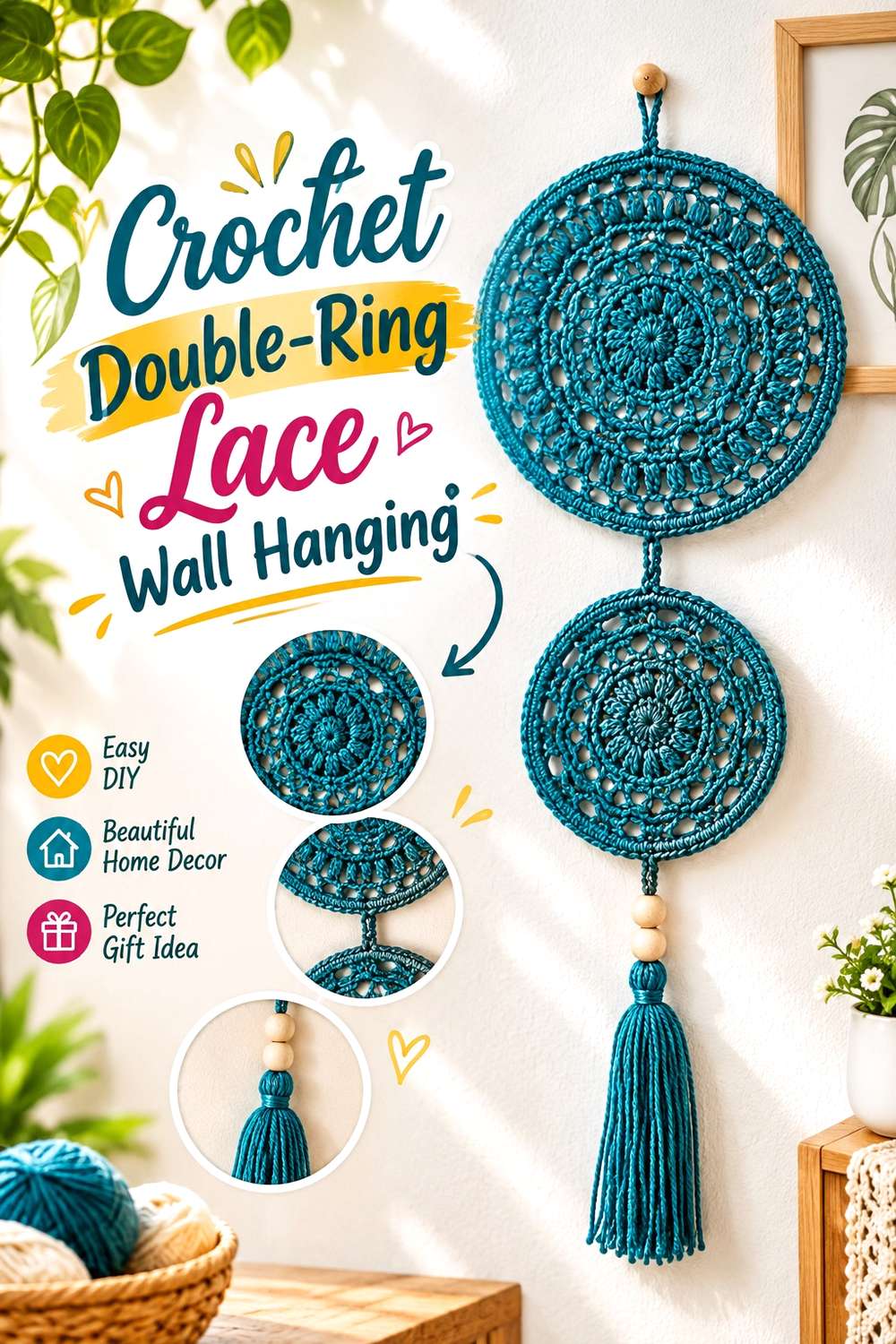
The mum2makes tutorial uses two circular supports to create a nested crochet wall hanging, giving this design a stronger architectural outline than a single-ring mandala. The source specifically presents the project as crochet mandala and boho wall décor and demonstrates the two-ring construction.
The smaller inner section and larger outer circle create several levels of open space, so the wall color becomes an active part of the finished design. This format works especially well where one large round piece would feel visually heavy. Instead of filling every available gap with crochet, the ring structure intentionally preserves open areas. That makes color choice for the supports, yarn, and wall particularly important.
Keep the Two Circles Visually Separate
The nested construction is what distinguishes this project. If added tassels, flowers, or other embellishments cover the space between rings, the layered effect becomes less clear.
Before adding anything beyond the tutorial, hang the piece and check whether the two circles already create enough interest. Negative space is part of the composition rather than unfinished area waiting to be filled.
Consider the Wall Behind the Openwork
Because much of the piece is intentionally open, wall color can either emphasize or soften the crochet. Hold a sample of your yarn against the intended wall before committing to the complete project.
A subtle contrast may suit a quiet bedroom display, while a stronger light-dark relationship will make the ring pattern visible from farther away.
Creator: mum2makes
9. Crochet Multi-Doily Lace Wall Art
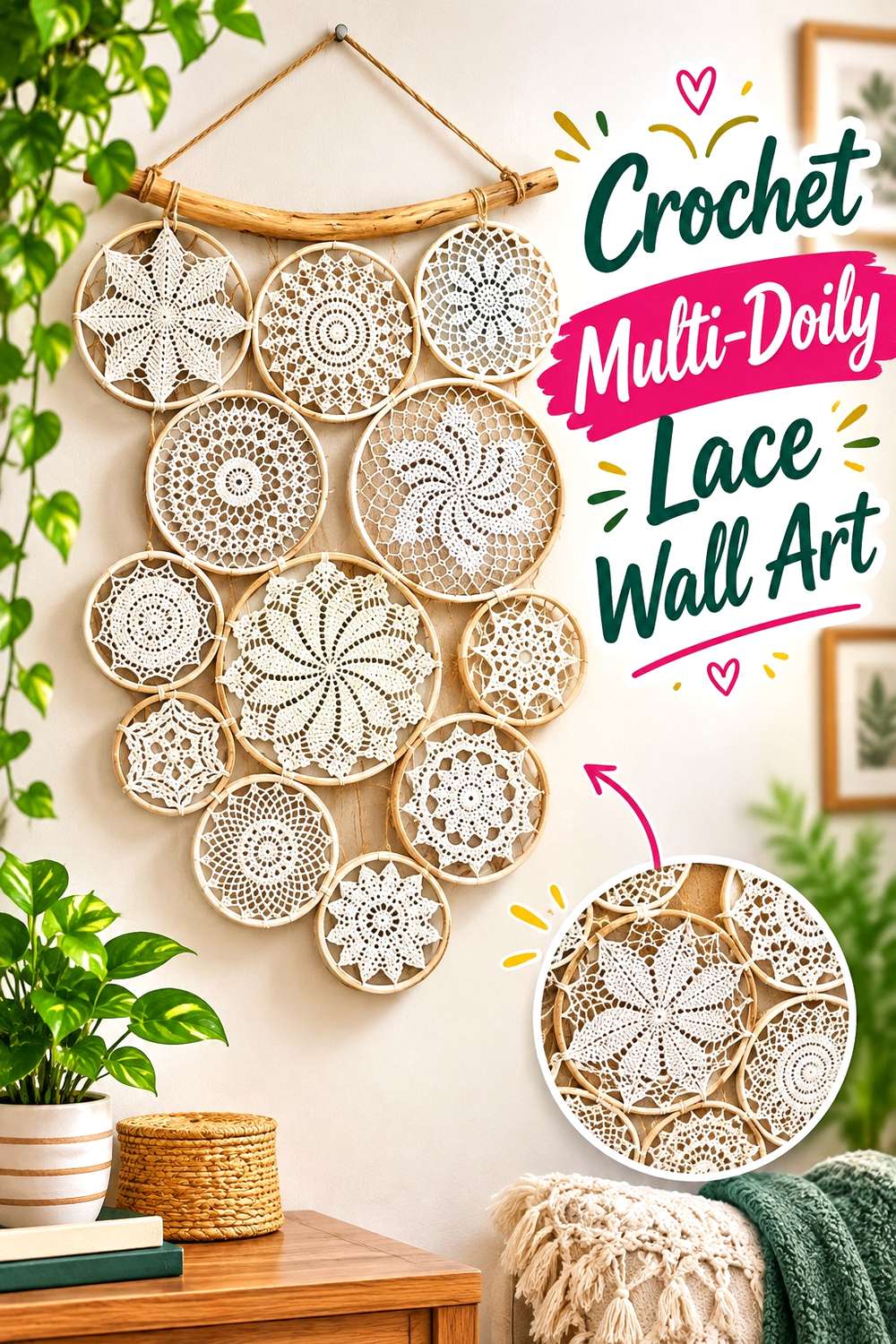
UmmeHoor Crafts approaches wall décor by arranging several crochet doilies into one larger display. The tutorial focuses on composing multiple sizes and patterns as wall art rather than treating each doily as an isolated tabletop piece. It forms part of the creator’s broader doily-wall-art material and is presented in Urdu/Hindi, so viewers relying on English narration should expect a language limitation.
The advantage of a multi-doily display is asymmetry. You can create movement by placing larger circles off center and using smaller ones to bridge the surrounding space. Unlike a perfectly aligned motif curtain, this arrangement does not have to form a strict grid. The challenge is knowing when the wall has enough detail.
Arrange Everything Before Mounting
Lay the finished pieces on a floor or large table and reproduce the approximate proportions of the wall. Start with the largest doily, then add smaller ones around it.
Photograph two or three arrangements before choosing. This lets you compare spacing more objectively and prevents permanent placement from determining the composition too early.
Repeat Something Besides Shape
Every piece is already circular, so complete uniformity is unnecessary. You can create cohesion by repeating a narrow color family, similar edge treatment, or alternating scale.
If every doily has a different color, density, and diameter, the display may read as a miscellaneous collection rather than one intentional wall piece. Choose at least one element that ties the group together.
Creator: UmmeHoor Crafts
10. Crochet Lace Dreamcatcher Wall Decor

Hooked In Loops teaches a circular crochet dreamcatcher-style wall hanging built around an eye motif, giving the lace a clear symbolic center rather than a purely decorative radial pattern. The source presents the piece as both a dreamcatcher and wall-hanging tutorial.
This form differs from a standard mandala because the center carries a specific graphic image and the lower portion can include hanging elements. That makes it suited to a narrow wall, reading corner, or grouped gallery where one strong circular accent is more useful than a wide textile panel. Since the source also references separate material for some finishing components, follow those creator links when you want to reproduce the complete shown treatment rather than inferring unseen steps.
Preserve the Center as the Focal Point
A dreamcatcher with a distinctive central motif already has a strong visual hierarchy. Adding several appliqués around the ring can dilute that focus.
Before embellishing, stand back from the piece and see whether the center remains recognizable. If not, simplify the surrounding additions rather than increasing their contrast.
Judge Hanging Length on the Wall
Lower tassels or feather-like components can make the finished object substantially taller than its circular frame suggests.
Temporarily hang the ring first and mark the available vertical space beneath it. This prevents lower details from colliding visually with furniture, picture rails, or another wall piece after they have already been completed.
Creator: Hooked In Loops
11. Crochet Openwork Snowflake Ornament

The Crochet Crowd’s tutorial teaches a complete four-round crochet snowflake with pronounced points and open spaces, making it a small-scale way to explore lace structure without committing to a large table or wall piece.
Although snowflakes are often associated with holiday trees, the same type of ornament can appear in window displays, winter garlands, gift decoration, or a group suspended from branches. Its success depends less on surface area than on keeping the points and gaps clearly defined. A single snowflake can look delicate; a large cluster becomes a patterned installation, so decide which role you want before producing many copies.
Pay Attention to the Points
The outer tips create the recognizable snowflake outline. Compare them around the full circle rather than focusing only on the current section.
If one point looks substantially different, check the corresponding repeat before trying to disguise it during finishing. Symmetry is especially noticeable on a small motif whose entire shape can be seen at once.
Choose Between a Single Ornament and a Group
One snowflake can serve as a quiet accent, while many identical motifs create rhythm across a window or branch display.
If making a group, compare finished pieces as you go. Small differences in scale or tension become more obvious when several snowflakes hang side by side, particularly when they share the same color.
Creator: The Crochet Crowd
12. Crochet Doily-Style Lace Rug
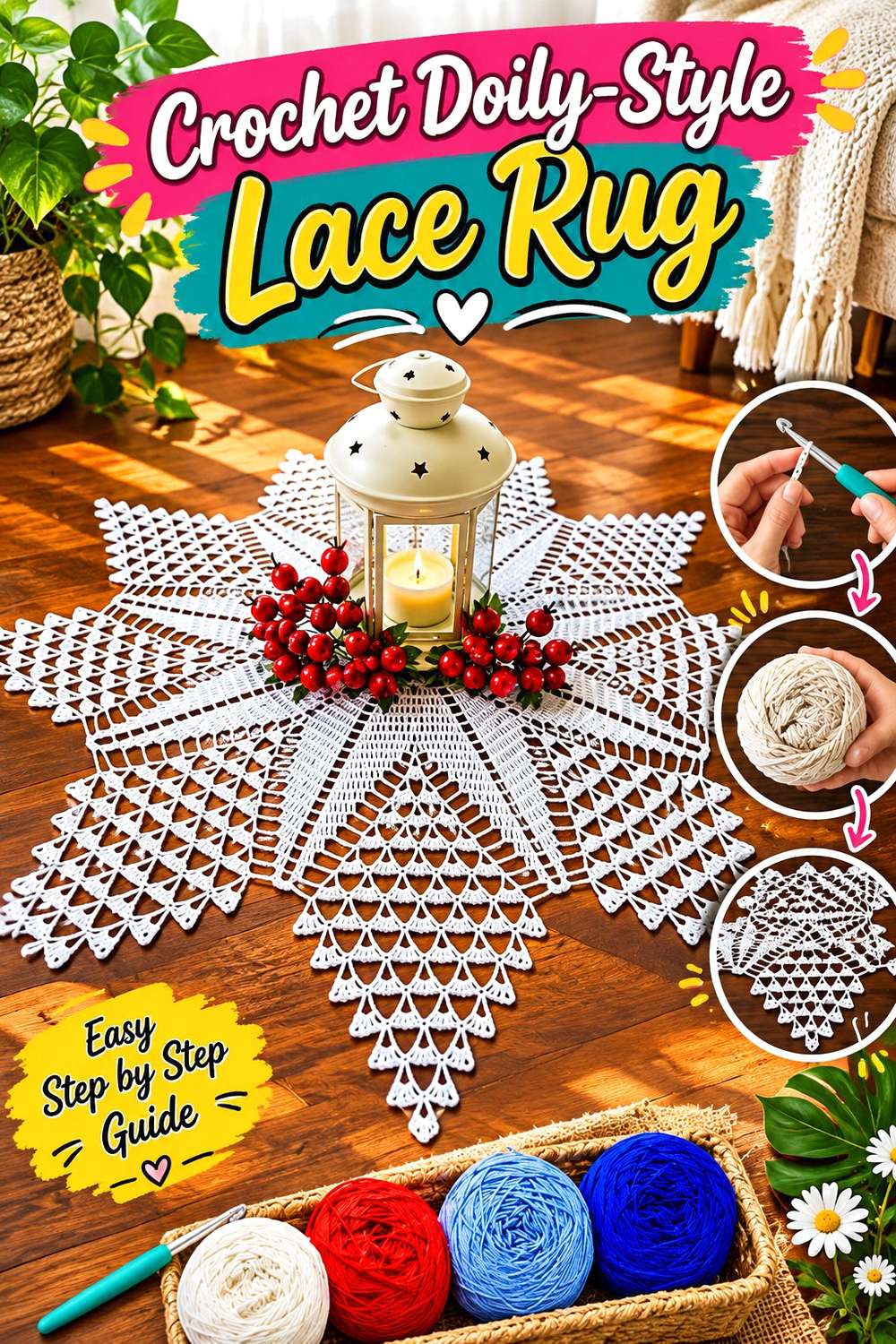
The Art Zone takes the visual language of a doily and expands it into a decorative crochet rug, giving radial openwork a much larger floor-scale presence. The source is specifically presented as a doily rug tutorial rather than an ordinary doily enlarged editorially.
This is a different planning problem from tabletop lace. Furniture placement, door clearance, and the amount of surrounding floor all affect whether the radiating pattern remains visible. A rug partly hidden under a table will emphasize its edge, while one placed in a clearer floor area can show the full center-out design. The tutorial itself is the source for construction; placement decisions should be made around your actual room.
Measure the Available Floor Area First
A circular rug occupies space differently from a rectangle. Use painter’s tape, paper, or another temporary marker to approximate the intended footprint before beginning.
This is not a substitute for the tutorial’s finished measurements. It simply tells you whether the chosen location has enough visible floor around the piece for the decorative outline to remain meaningful.
Do Not Assume Openwork Provides Traction
A crochet pattern’s appearance does not establish slip resistance. Floor material, yarn, backing, construction, and movement all affect how a rug behaves.
If the piece will be walked on rather than used primarily as decorative floor textile, evaluate it in its actual location and use an appropriate rug-stabilizing solution for that flooring rather than assuming crochet alone makes it stationary.
Creator: The Art Zone
13. Crochet Floral Lace Basket
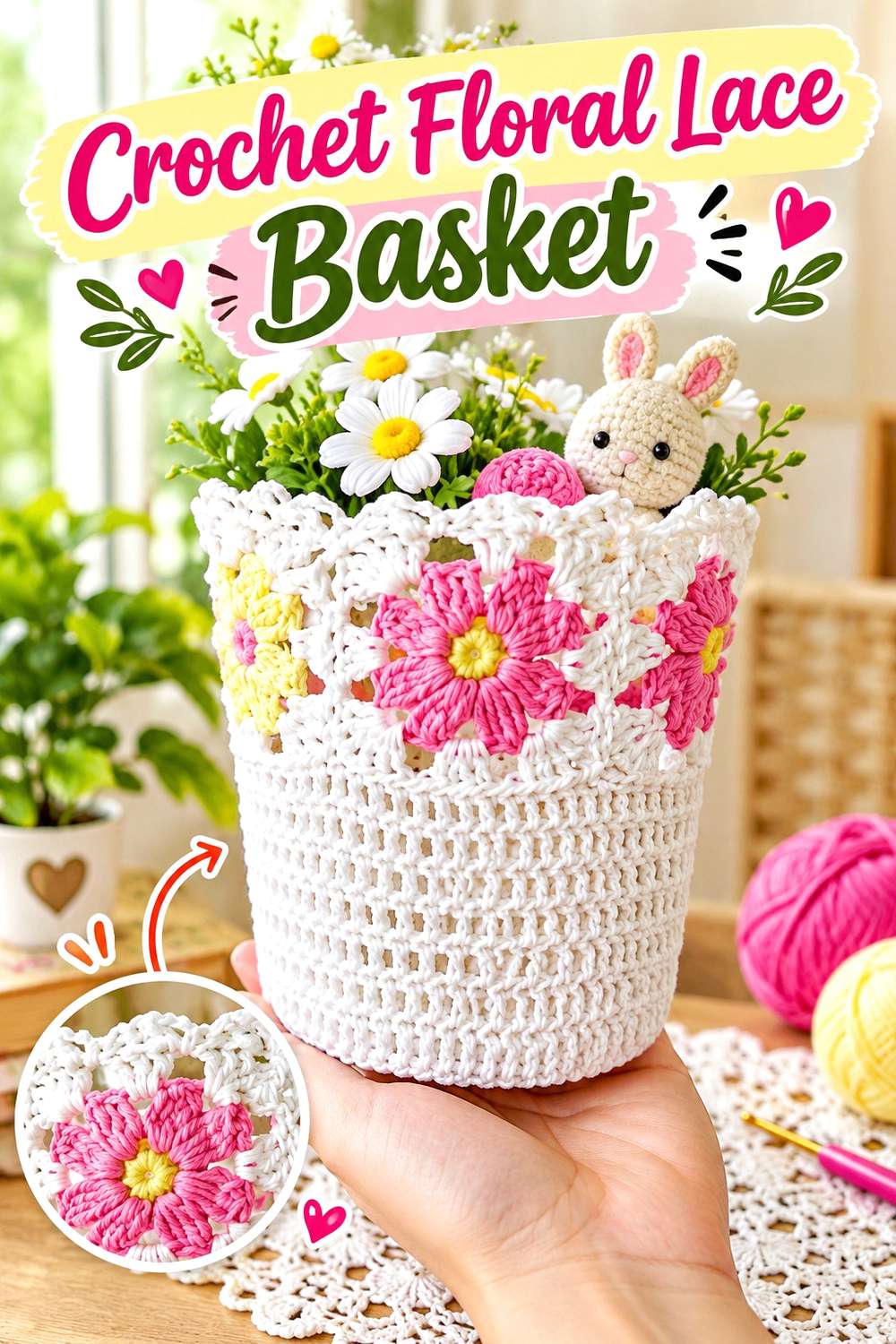
This tutorial from craft_n_grow presents a three-dimensional crochet lace basket incorporating a floral unit, moving the collection away from pieces that depend on a flat supporting surface. The source title identifies the project specifically as a crochet lace basket. The presentation is primarily Arabic, so viewers who rely on spoken English should account for that language difference.
The most interesting design feature is the contrast between an open decorative surface and a vessel-like silhouette. A basket placed empty on a shelf lets the lace pattern remain visible, while densely filling it can hide much of the internal openwork. Treat it as soft decorative storage unless the tutorial itself establishes a specific load or structural use; lace appearance alone does not tell you how much weight it can support.
Decide Whether the Basket Is the Display
Before filling the finished piece, look at it empty. If the floral lace is the feature you most want to see, use contents that stop below the upper pattern or occupy only part of the interior.
A basket completely packed with colorful objects can turn intricate lace into background texture rather than the central decorative element.
Watch the Upper Silhouette
The rim establishes whether the finished piece looks intentionally basket-like. Place the project on its intended shelf and view it from normal standing height.
If you plan to add ribbon, flowers, or another trim, keep the upper edge readable. Too many additions around the rim can obscure both the opening and the floral structure already provided by the tutorial.
Creator: craft_n_grow
14. Crochet Lace Garland

Carla Cristina & Crochet teaches a complete crochet lace garland, giving you a long decorative strip rather than individual motifs that must later be converted into bunting.
A garland can follow architecture in a way round doilies cannot. It can run along a mantel, shelf, headboard, mirror area, or another horizontal display surface, and its repeated openings become more obvious as the length increases. Before making an especially long version, decide whether you want the strip pulled relatively straight or draped into shallow curves. Those two presentations use the same crochet but create very different visual rhythms.
Test the Amount of Drape
Use yarn or string to mock up the planned span and compare a straight arrangement with gentle swags. This resolves length visually without modifying the crochet pattern itself.
Deep curves require more total length between the same two endpoints, so planning only from the width of the wall can leave a decorative garland shorter than expected.
Avoid Competing With the Lace Repeat
Garlands often invite extra bows, beads, flowers, or lights, but the repeated crochet is already decorative.
Add one type of secondary accent at most when you want the lace pattern to remain visible. If every repeat receives a different object, the crochet can become little more than a support cord for other decorations.
Creator: Carla Cristina & Crochet
15. Crochet Lace Cushion Cover

Crochet World Creations presents a lace cushion-cover project and directs viewers to two linked tutorial parts for the underlying classic lace pattern. This means the decorative cushion is supported by a multipart construction path rather than a single self-contained video.
A cushion is useful for lace because the backing becomes an intentional background color. A cream openwork cover over a darker insert produces a graphic result, while neighboring tones create a quieter texture. Unlike a doily, the surface is curved and handled, so details will be viewed from several directions rather than perfectly flat. That makes broad pattern continuity more important than tiny embellishments added after assembly.
Choose the Backing as Part of the Design
Place a lace sample over several fabrics before committing to the cushion underneath. The exact same crochet can appear much denser or more open depending on what shows through the gaps.
A contrasting insert emphasizes every opening; a related shade puts more attention on raised stitches and shadows. Neither is automatically better—the decision depends on how visible you want the lace geometry to be.
Keep the Corners From Becoming Visual Dead Zones
A rectangular lace cover should feel intentional all the way to its edges. When reviewing the multipart tutorial, pay attention to how the repeat reaches the cushion boundaries rather than focusing only on the attractive central section.
If you alter the size independently, recheck how the motif sequence terminates at the corners. A repeat that fits the middle does not automatically resolve neatly at a new edge.
Creator: Crochet World Creations
16. Crochet Lace Ball Ornament

Szydełkowo. pl teaches a hollow crochet lace ball ornament formed into a three-dimensional sphere, including the shaping and stiffening process used by the creator. The source specifically presents the project as a Christmas crochet lace ball rather than a flat motif converted afterward.
The spherical form shows openwork from every direction, making this a strong choice for a tree, decorative branch, window arrangement, or suspended winter display. It also has a different finishing requirement from a soft amigurumi ball: the visual effect depends on an open shell maintaining its rounded form. Follow the creator’s process for that structure rather than assuming the finishing used for a flat doily will produce the same result.
Check the Pattern From Every Angle
A hanging sphere rotates. Sections that would remain hidden on a wall piece can become the front without warning.
Before final display, turn the ornament slowly and look for areas where the open pattern appears compressed or uneven. The goal is not to create one attractive viewing side but a balanced shape around the complete ball.
Give Multiple Ornaments Enough Space
Several lace balls hung too close together can visually merge into one busy mass. Their open patterns become easier to appreciate when each has some surrounding air.
If you are making a cluster, vary hanging height rather than packing all ornaments along one horizontal line. The spherical shapes will remain more distinct.
Creator: Szydełkowo. pl
17. Crochet Scalloped Lace Shelf Trim
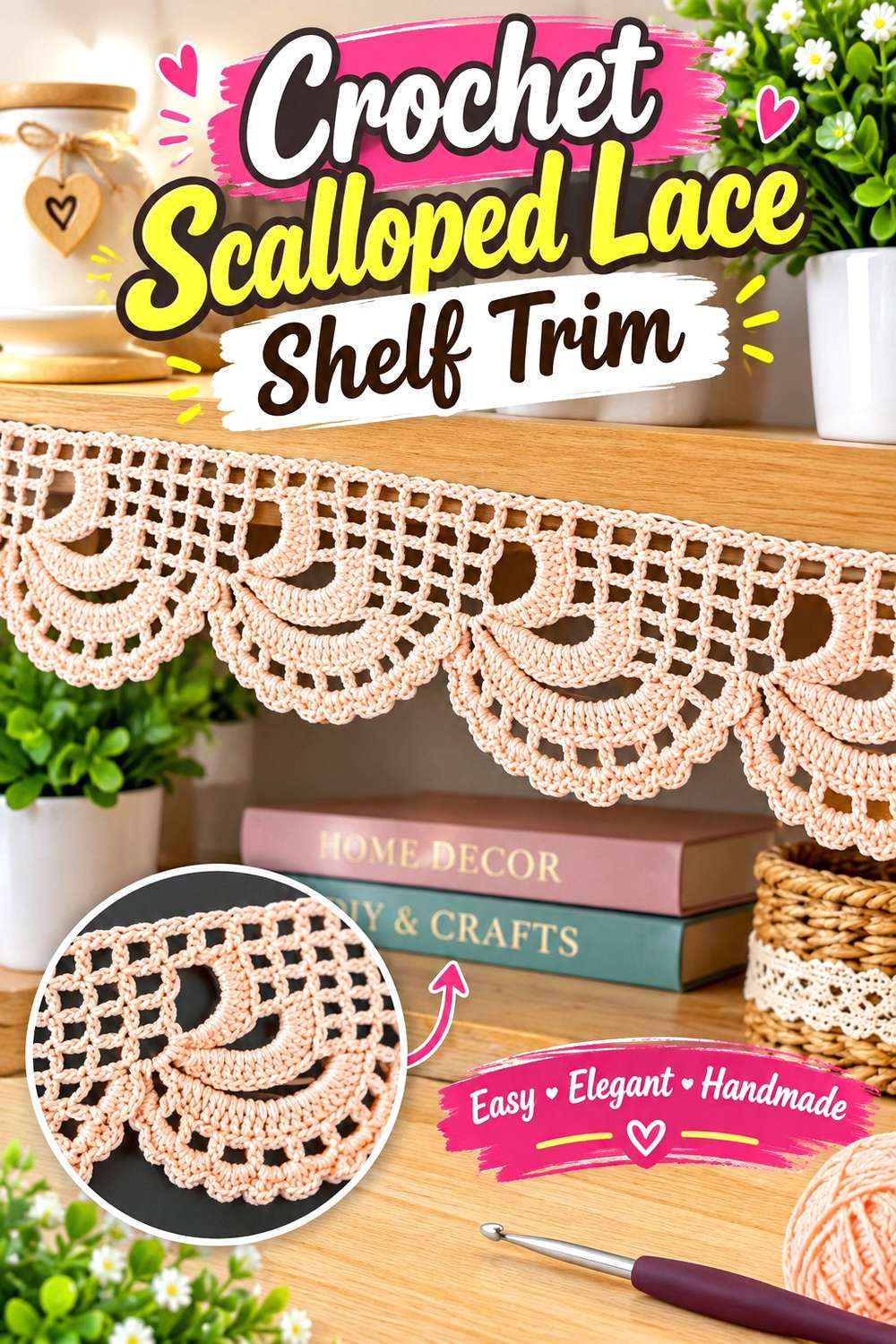
Crochet Magic Studio’s tutorial teaches a repeating lace edging rather than a finished shelf decoration. The source explicitly presents the border for uses including table runners, curtains, pillow covers, and home décor; applying a completed length along the front edge of a shelf or textile shelf liner is the adaptation proposed here.
This is useful when you want a narrow touch of lace instead of another large textile. The pattern can create a visible scalloped line beneath an open shelf, along a cabinet textile, or on another removable fabric décor piece. Because the tutorial teaches the edging itself, the method used to attach it to a particular household surface is not supplied by the source and should be chosen separately.
Establish the Final Length Before Finishing
Repeating lace can be deceptive because one small section looks compact while dozens of repeats create a long decorative band.
Measure the surface or removable textile where you plan to use the trim, then compare that requirement with the repeat taught in the video. Avoid cutting or modifying the household surface around the crochet; it is easier to plan the lace to suit the intended display.
Let the Scallops Hang Freely
The lower edge is the reason to choose this trim. If the shelf contents, hooks, or neighboring decorations cover most of the scallops, the lace loses its strongest visible feature.
Position a short sample temporarily before making the complete length. This shows whether the selected location actually exposes enough of the trim to justify the project.
Creator: Crochet Magic Studio
18. Crochet Lace-Style Coaster
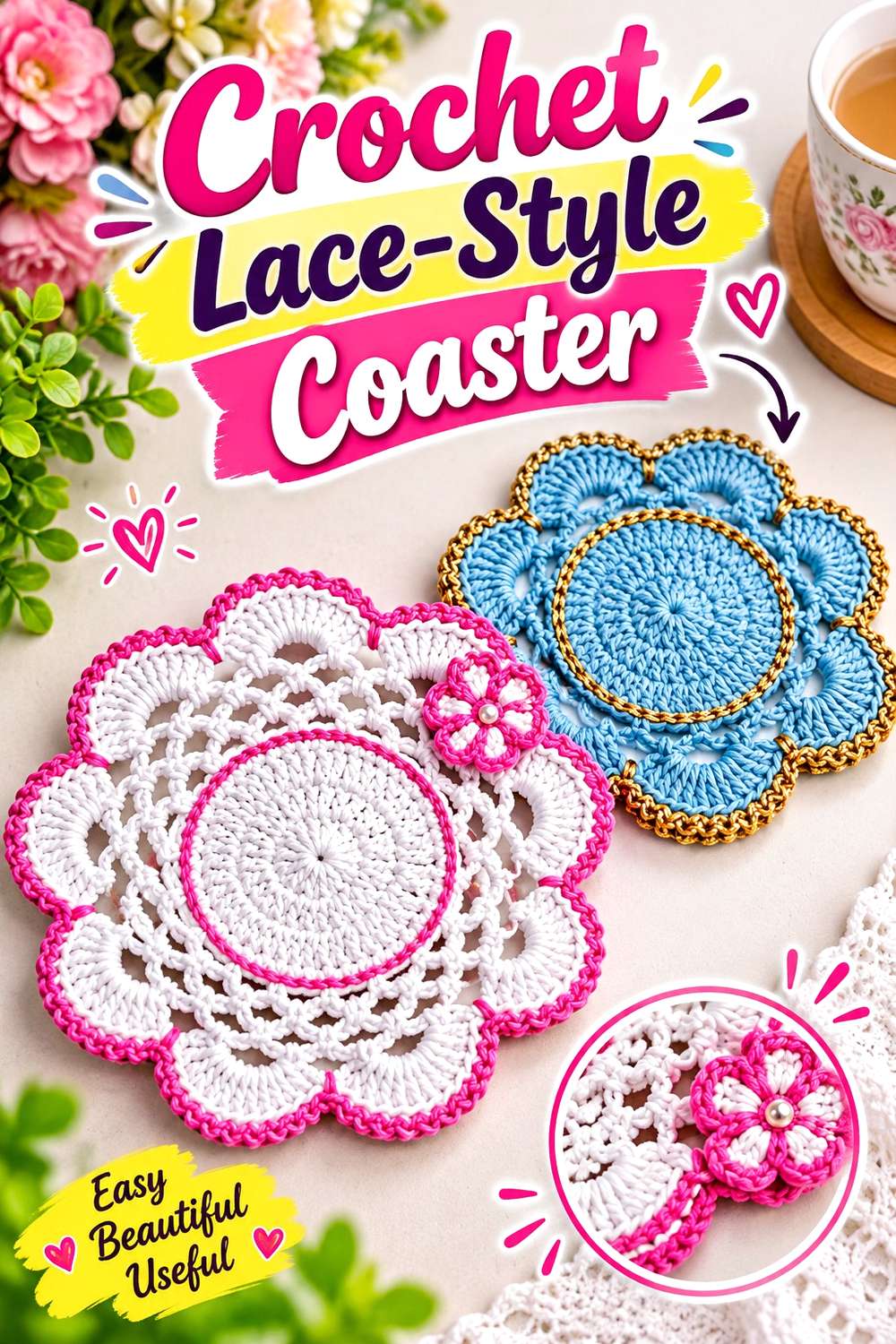
Angelica Pereira Crochê teaches a dedicated lace-style crochet coaster in two yarn-weight versions, giving this collection a practical small project with a clearly defined tabletop purpose.
A coaster lets you experiment with openwork without committing to the footprint of a placemat or doily. Because a cup covers much of its center, however, the most decorative outer sections may matter more during use than a highly detailed middle. A coordinated set can repeat one color for a formal look or use related shades while keeping the same lace construction. The source provides the actual coaster versions; any decision to enlarge the idea into another type of table mat should be treated as a separate adaptation.
Compare the Coaster With Your Drinkware
Before producing a complete set, place the intended cup or glass on one finished coaster. Check how much of the lace remains visible and whether the base sits comfortably within the central area.
This practical comparison is more useful than choosing the project only from its uncovered appearance, since most of the time the coaster will be seen with something placed on it.
Use Repetition to Create the Decor
One coaster is primarily a small table accessory. Four or six matching pieces laid out together create a much stronger decorative effect.
If using multiple colors, repeat them in a controlled order rather than making every coaster unrelated. Consistent construction can then connect the set even when the palette varies.
Creator: Angelica Pereira Crochê 🧶
Conclusion
For traditional lace character, start with the Crochet Round Lace Doily, Floral Lace Table Runner, Motif Lace Tablecloth, or Joined-Doily Lace Curtain. They put openwork and repeated pattern at the center of the finished piece. If you prefer lace with more dimension, the Floral Lace Basket, Filet-Lace Jar Cover, Lace Cushion Cover, and Lace Ball Ornament move the technique onto curved or three-dimensional forms.
Wall space is best served by the Mandala, Double-Ring, Multi-Doily, or Dreamcatcher options, while the Placemat and Lace-Style Coaster keep the project compact and practical. The Garland and Shelf Trim work especially well when you want lace to follow an existing architectural line. Use the original tutorials for exact construction details and treat the clearly identified display adaptations as separate decorating decisions.
Frequently Asked Questions
What is the best crochet lace decor project to try before making a large tablecloth?
A coaster, small doily, snowflake, or narrow lace edging gives you a compact way to see how you feel about working repeated open spaces and maintaining an even pattern. A placemat is another useful intermediate step because it provides more surface area without requiring dozens of motifs. Choose a complete tutorial rather than simply reducing a large tablecloth pattern unless the designer specifically explains how its repeat can be resized.
Do I need crochet thread to make lace decor?
Not every lace-style project in this collection uses traditional fine thread, and the correct material depends on the individual tutorial. Openwork can be created at several yarn scales. Changing yarn significantly can also change dimensions, drape, stiffness, and how clearly the holes and scallops appear, so use the creator’s material information as your starting point. If you substitute, make a small sample before committing to a curtain, tablecloth, or other large piece.
Why does crochet lace sometimes look crowded before finishing?
Openwork is created by the relationship among solid stitches, chain spaces, and the finished shape. While the project is being handled, those spaces can contract or overlap, particularly around points and scallops. First verify that the stitch and repeat counts match the tutorial. Then use the finishing method appropriate to the specified fiber and project. Do not assume that aggressive stretching can correct a construction error; it may only distort neighboring sections.
Can I combine different crochet lace motifs in one room?
Yes, but they do not need to match exactly. Repeating one characteristic—such as color family, circular geometry, floral motifs, or a similar level of visual openness—can connect a doily, wall hanging, coaster set, and curtain without making them identical. Scale also helps. One large statement piece generally pairs more easily with several smaller accents than with several unrelated large lace patterns competing in the same sightline.
How should I choose colors for crochet lace home decor?
Consider the background first. Much of lace’s design comes from empty space, so the wall, table, cushion insert, window, glass jar, or floor visible behind it becomes part of the composition. Strong contrast emphasizes pattern, while neighboring shades make the effect quieter and more textural. Before starting a large project, hold the proposed yarn against the actual surface or make a small sample. That simple comparison is more informative than judging the yarn color by itself.
Which crochet lace ideas work best when I do not have much space?
Small surfaces can use the Lace-Style Coaster, Filet-Lace Jar Cover, Openwork Snowflake, or a single Round Lace Doily. For vertical space, a narrow Mandala Wall Hanging or Dreamcatcher can add texture without occupying furniture. The Scalloped Lace Shelf Trim is another option because it follows an existing edge rather than requiring a new display area. Choose one strong lace feature rather than filling every small surface with separate motifs.