Poetcore gives the necktie a softer, more expressive role. Instead of reading only as formalwear, a crocheted tie can sit beside billowy shirts, tweed jackets, waistcoats, cardigans, plaid, lace collars, and worn-in vintage layers. That fits the literary direction of the 2026 poetcore trend, where necktie accessories, vintage blazers, romantic shirts, and tactile layers are recurring elements.

The ideas below are intentionally varied. Some ties are modular, some tubular, some slim and knit-like, and others emphasize dense texture, borders, unusual scale, or simple shaping. The tutorials provide the actual construction guidance; the poetcore suggestions here focus on choosing proportions, materials, color placement, and styling without reproducing the creators’ patterns.
Quick List
- Crochet Diamond-Granny Poetcore Necktie
- Crochet Lamé Granny-Knit Poetcore Necktie
- Crochet Moss-Stitch Tweed Poetcore Necktie
- Crochet Tubular Minimalist Poetcore Necktie
- Crochet Color-Block Tapered Poetcore Necktie
- Crochet Fine-Thread Bordered Poetcore Necktie
- Crochet Traditional Half-Double-Crochet Poetcore Necktie
- Crochet Wide Single-Crochet Poetcore Necktie
- Crochet Soft DK Poetcore Necktie
- Crochet Two-Stitch Poetcore Necktie
- Crochet Pointed Shaped Poetcore Necktie
- Crochet Fine-Yarn Textured Poetcore Necktie
- Crochet Classic Gift Poetcore Necktie
- Crochet Double-Crochet Poetcore Necktie
- Crochet Triangle-Start Poetcore Necktie
- Crochet All-Ages Poetcore Necktie
- Crochet High-Stitch Poetcore Necktie
- Crochet Mini Poetcore Necktie Accent
- Crochet Structured Cord Poetcore Necktie
- Crochet Oversized Poetcore Tie-Collar
What Makes a Crochet Necktie Feel Poetcore?
Poetcore is less about one mandatory stitch and more about the relationship between texture, tailoring, and romantic layering. Current fashion coverage associates the look with literary references, vintage blazers, soft shirts, knitwear, satchels, and necktie details rather than a single prescribed uniform.
For crochet, that makes subdued texture particularly useful. Tweedy yarn, moss stitch, granny-inspired surfaces, narrow proportions, aged-looking neutrals, oxblood, moss, ink blue, brown, charcoal, faded cream, or muted plum can support the mood. A highly textured tie often needs a plainer shirt, while a restrained tie can sit comfortably against lace, pleats, or a patterned waistcoat. Decide which garment should be the visual focus before adding extra crochet detail.
Yarn, Drape, and Knot Bulk Matter More Than Color
A necktie has to bend around the neck and, for traditionally tied versions, form a knot without turning into a bulky lump. That is why two yarns in the same color can produce very different results. A finer, smoother yarn can create a flatter surface and smaller knot, while thicker or springier yarn can make the finished piece feel more like knitwear.
Construction matters too. Tubular and doubled ties naturally contain more fabric than a single flat layer. Open stitches may feel lighter but expose more of the shirt beneath them. Before committing to an adaptation, make a useful-sized swatch, handle it the way the tie will bend, and check whether its thickness still suits the intended knot and collar.
Plan Length and Width Around the Actual Outfit
There is no single crochet necktie measurement that suits every wearer, construction, collar, or knot. A practical planning method is to compare the work with a woven tie that already fits the intended wearer. Look at the wide blade, the neck section, and where the finished point normally lands.
Crochet can also change after blocking or wear, especially when the fabric is long and narrow. Instead of relying only on an unblocked measurement, check the creator’s sizing information and consider how the chosen fiber behaves. For a poetcore outfit, proportion is part of the styling: a slim tie can disappear beneath a large ruffled collar, while a broad handmade tie may compete with an already substantial waistcoat or jacket lapel.
Crochet Diamond Granny Poetcore Necktie
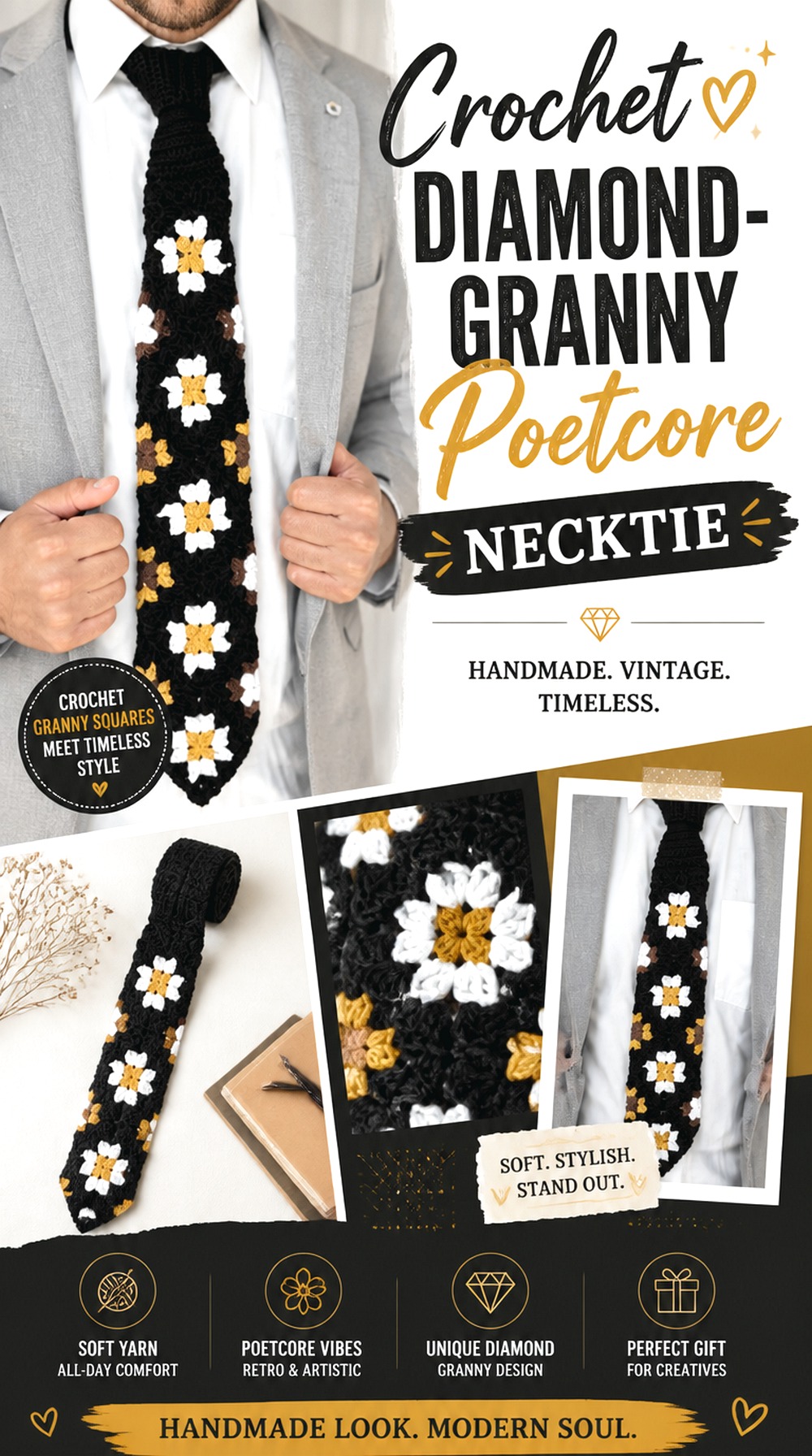
This modular necktie turns small crochet motifs into the main design feature. LoopsByLisa’s tutorial uses diamond granny squares, triangular components, joining, and a separate tie strap to build the finished shape, making it substantially different from a tie worked as one continuous strip.
For poetcore styling, the motif geometry can work especially well with a plain cream shirt or dark waistcoat. A restrained palette keeps the diamonds literary and vintage-looking rather than overly busy. Because the construction depends on several joined pieces, this is also a good choice for crocheters who enjoy layout planning as much as making the individual motifs.
Let the Motif Grid Stay Legible
The joins are part of the finished design, so compare the completed motif sizes before final assembly. Small differences that seem harmless when the pieces are separate can make a narrow accessory bend or zigzag once joined. Blocking the motifs to compatible dimensions first gives you a clearer preview of how straight the blade can become.
If you change yarn or hook size, judge the entire motif set rather than assuming the original arrangement will keep the same proportions.
Keep the Knot Area Quieter Than the Blade
A patterned blade already carries considerable visual detail. Putting the same level of motif density directly beneath the collar can make the upper portion feel crowded, especially beside a ruffled poet blouse or patterned waistcoat.
Use the tutorial’s finished construction as your baseline and examine how the narrower section behaves before adding decorative adaptations. If you want extra embroidery or surface detail, the visible lower blade is generally the easier area to evaluate without interfering with the neck section.
Crochet Lamé Granny Knit Poetcore Necktie
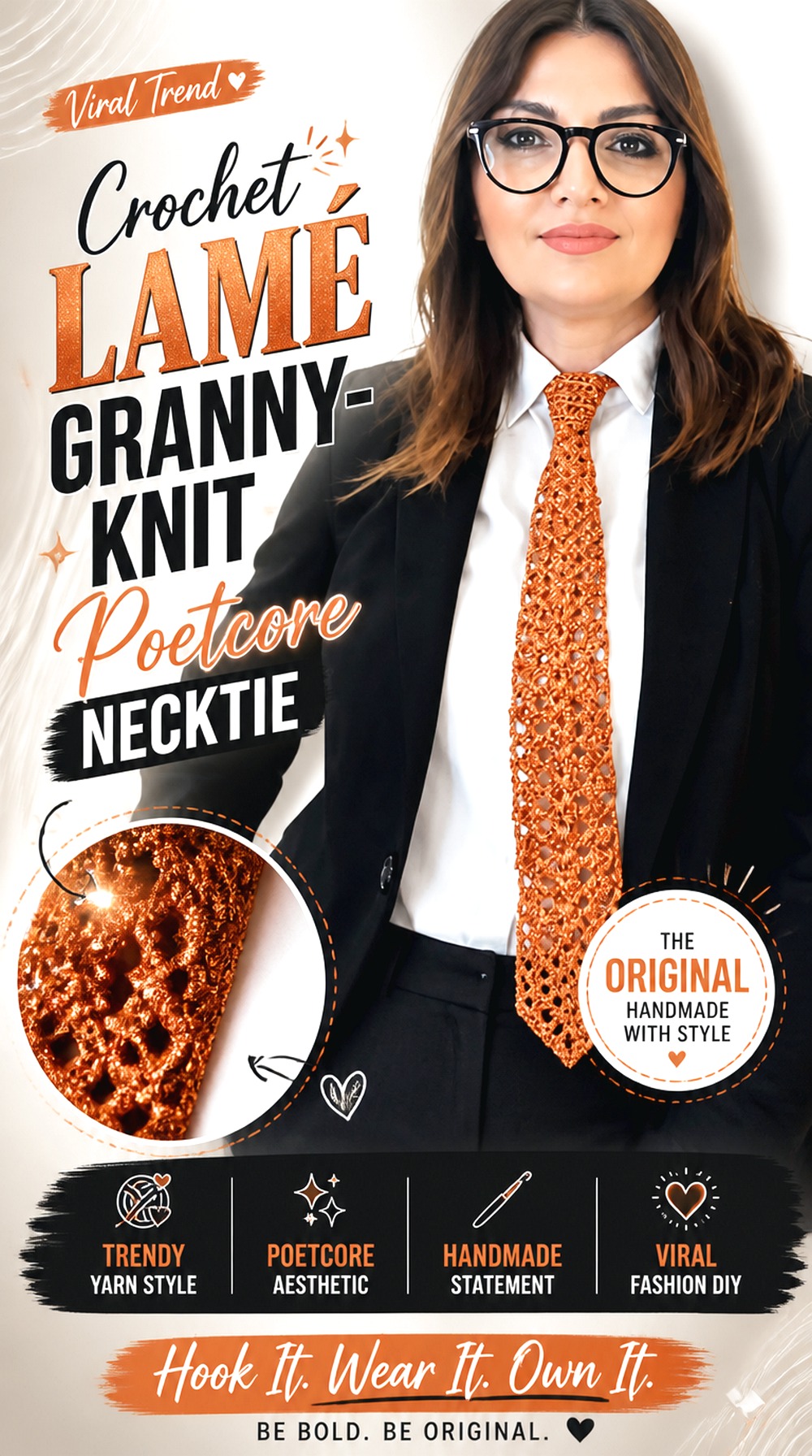
This version takes granny-inspired texture in a different direction. Rather than joining individual square motifs, la fata tuttofare demonstrates a tie built with a granny-knit-style surface and lamé yarn. The tutorial also lists a button clip among the materials, giving the neck finish a different approach from a conventional self-tied necktie.
That makes it useful for an evening version of poetcore: think black, pewter, tarnished gold, muted plum, or deep bottle green beside a high-collar blouse. The surface itself supplies the drama, so the surrounding clothing can remain simple and tailored.
Metallic Yarn Changes the Mood Quickly
A reflective thread can push a handmade tie toward eveningwear even when the basic silhouette remains familiar. For poetcore, the easiest way to control that effect is to let the shine appear as texture rather than combining it with several other statement details.
Before substituting another metallic yarn, compare its flexibility with the tutorial material. Some decorative yarns feel noticeably stiffer, and a neck accessory still needs enough movement to lie comfortably.
A Clip-Style Finish Changes How You Style the Neck
A preformed or clip-supported neck treatment does not behave exactly like a long tie that must pass repeatedly through a traditional knot. That can be useful when the crochet fabric has noticeable texture.
Pay attention to where the upper piece meets the shirt collar. With a high poet blouse, the tie may look better sitting visibly over the collar; with a standard button-down, a cleaner placement beneath the collar points can make the unusual crochet surface the main feature.
Original Tutorial and Creator Credit
Creator: la fata tuttofare
Crochet Moss Stitch Tweed Poetcore Necktie
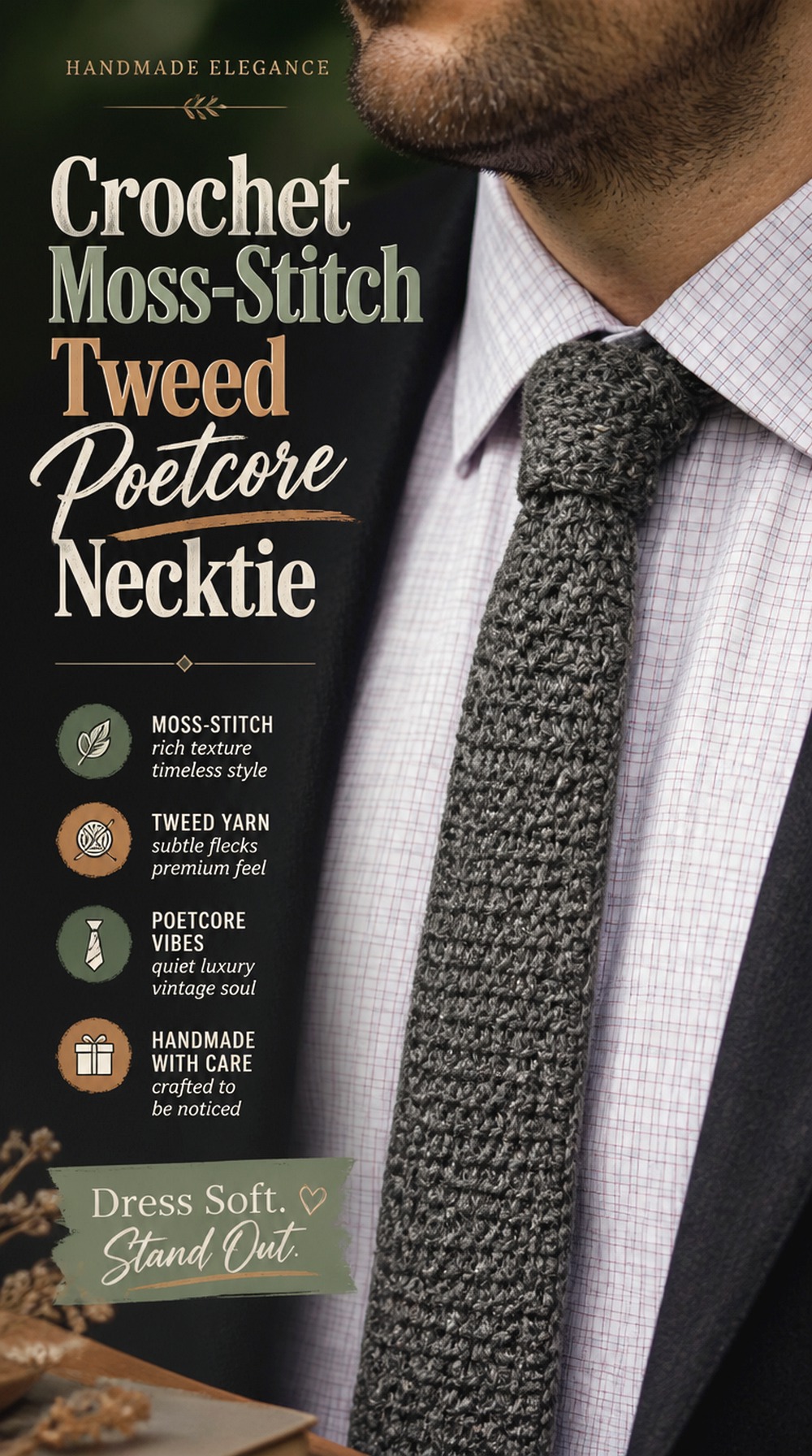
Moss stitch gives this necktie a restrained surface that suits the quieter side of poetcore. Rich Textures Crochet’s design uses fingering-weight tweed yarn and constructs two tie pieces that are joined, creating more body than a single flat panel.
The tiny flecks found in tweedy yarn can provide enough visual variation that elaborate colorwork is unnecessary. Paired with a white or parchment shirt, wool trousers, and a vintage blazer, the finished tie can look intentional without becoming costume-like. Choose this direction when you want texture to be noticed only at closer range.
Two Layers Add Hang—and Extra Fabric
The doubled construction helps distinguish this design from lightweight single-panel ties. More fabric can give a necktie a substantial hang, but it also means the knot area deserves attention.
Before changing to a thicker yarn, fold a swatch into approximately the amount of fabric that would gather near the neck. If it already feels bulky in your hand, increasing yarn thickness could move the tie farther away from the tailored effect you wanted.
Tweed Rewards a Simpler Outfit
Flecked yarn creates tiny points of color across the surface, so it works especially well when the other layers are controlled. A cream shirt with a brown, charcoal, olive, or navy jacket lets those flecks register without fighting another small-scale pattern.
If you want plaid trousers or a patterned vest as well, compare the scales. A large plaid usually competes less with small tweed flecks than another dense miniature pattern.
Original Tutorial and Creator Credit
Creator: Rich Textures Crochet
Crochet Tubular Minimalist Poetcore Necktie
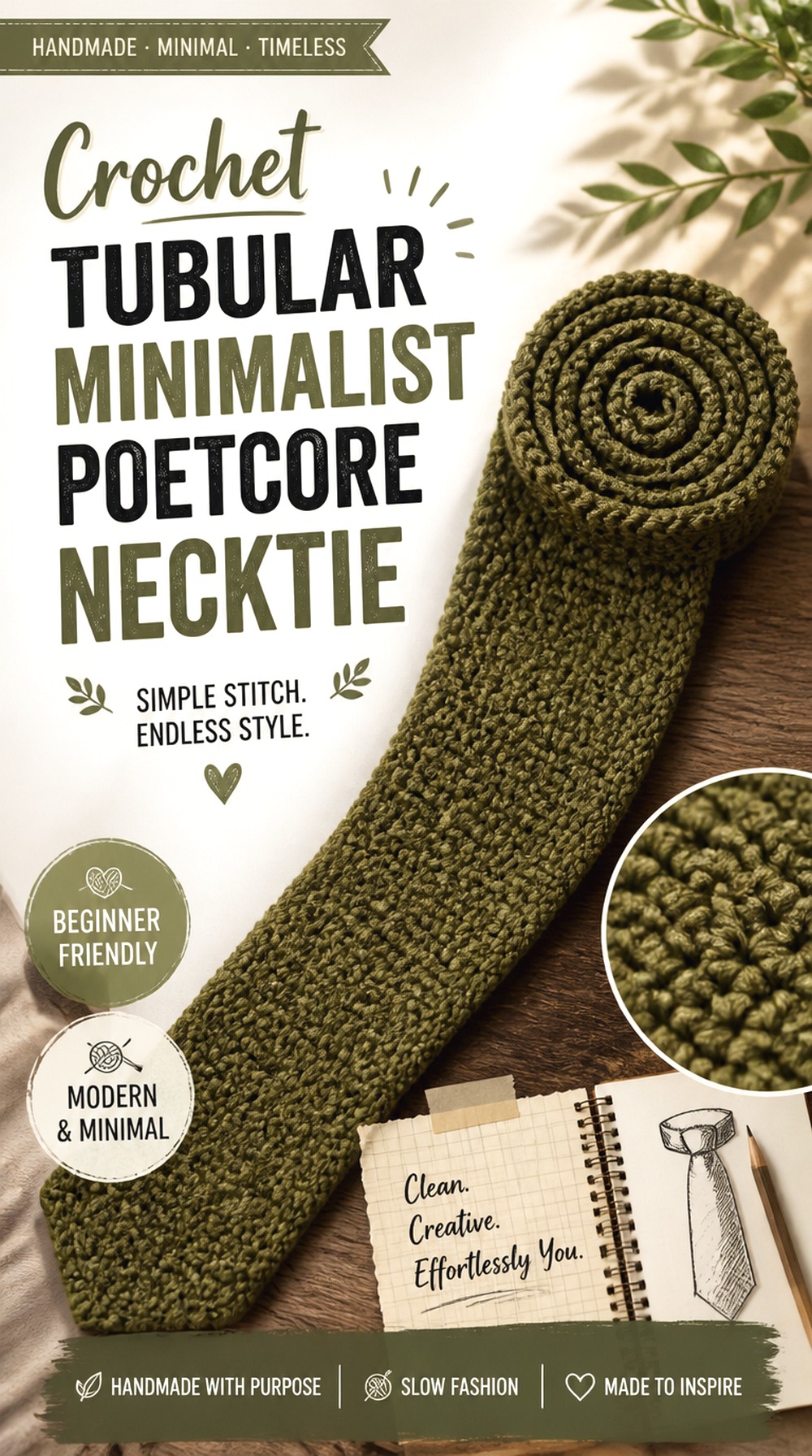
A tube changes the appearance of crochet because there is no broad exposed wrong side running down the back. The trperrymakes tutorial works the necktie in the round and shapes it gradually, producing a compact, continuous form rather than a flat panel with visible side edges.
That cleaner construction suits minimalist poetcore particularly well. Try the concept with ink navy, charcoal, faded black, cocoa, or forest tones and let the silhouette provide most of the interest. It can sit beside a soft oversized shirt without needing additional motifs, embroidery, or decorative edging.
Tubular Fabric Hides the Wrong Side
A long tube can look neat from several angles because the reverse surface remains inside. That is useful on an accessory that twists slightly during wear.
The trade-off is thickness. Before deciding that a dense tubular design also needs heavier yarn, handle the finished lower section and imagine that same fabric compressed into a knot. A tie that hangs beautifully while flat can still feel oversized where several layers overlap.
The Creator’s Thickness Warning Is Worth Taking Seriously
The tutorial creator specifically notes that the tie may feel too thick and suggests considering thinner yarn if necessary. That is an important adaptation clue rather than a flaw.
If your poetcore goal is a relaxed knit-tie effect, some substance may be welcome. If you want the tie to fit beneath a close shirt collar or structured waistcoat, prioritize a manageable knot before increasing texture.
Original Tutorial and Creator Credit
Creator: trperrymakes
Crochet Color Block Tapered Poetcore Necktie

Water Lon’s necktie develops from a broad point into a gradually narrower body and includes a visible color change in the demonstrated construction. That makes it a useful base for a restrained two-tone poetcore accessory rather than an all-over striped tie.
A combination such as charcoal and parchment, oxblood and brown, moss and faded cream, or ink blue and gray can keep the effect literary. The strongest part of this idea is the relationship between a recognizable necktie silhouette and a deliberately placed shift in color rather than repeated decoration from top to bottom.
Put the Color Transition Where It Can Be Seen
When a tie disappears beneath a jacket or waistcoat, not every section receives equal attention. Before choosing your color placement, hold a similarly sized tie against the outfit and see which area of the blade remains exposed.
A dramatic yarn change hidden beneath a closed jacket does little work. A transition placed in the visible lower portion can become the main visual feature while the neck and knot remain comparatively calm.
A Gradual Taper Gives Color More Direction
Color blocking looks more deliberate when it follows a shape that already guides the eye. A pointed blade naturally draws attention downward, while the narrowing body moves toward the collar.
If you alter the palette, preserve that relationship rather than adding many short stripes. Too many small interruptions can make it harder to notice the taper and may shift the design from moody poetcore toward a much busier graphic accessory.
Original Tutorial and Creator Credit
Creator: Water Lon
Crochet Fine Thread Bordered Poetcore Necktie

Handmade by Appy demonstrates this necktie with cotton thread and a small hook, then includes a distinct border, keeper loop, and wet-blocking stage. Those details make finishing unusually important to the final appearance.
For poetcore styling, fine thread is a strong choice when you want crochet to read as textile detail rather than chunky knitwear. A deep brown, black, burgundy, muted olive, or antique-looking cream could sit comfortably beneath a fitted vest. Because the border outlines the whole blade, it can provide enough definition without requiring extra embellishment.
Fine Thread Makes Edge Quality More Visible
Finer crochet produces a smaller-scale surface, which means a wandering edge or uneven taper may be more noticeable than it would be in a deliberately chunky accessory.
Check the outline periodically from a distance instead of examining only individual stitches. Laying the work beside a straight ruler or an existing tie can reveal subtle drift. Correcting the overall line early is more useful than trying to disguise it later with an oversized border.
Let the Border Clarify the Silhouette
An edging can visually sharpen a tie, but it also adds material around the entire perimeter. That matters on a narrow accessory.
If you change the border color, decide whether you want contrast or merely definition. A near-tone border can frame the shape quietly; a light-versus-dark contrast will emphasize every curve and point. Either approach can suit poetcore, but the latter becomes a much stronger graphic element.
Original Tutorial and Creator Credit
Creator: Handmade by Appy
Crochet Traditional Half Double Crochet Poetcore Necktie
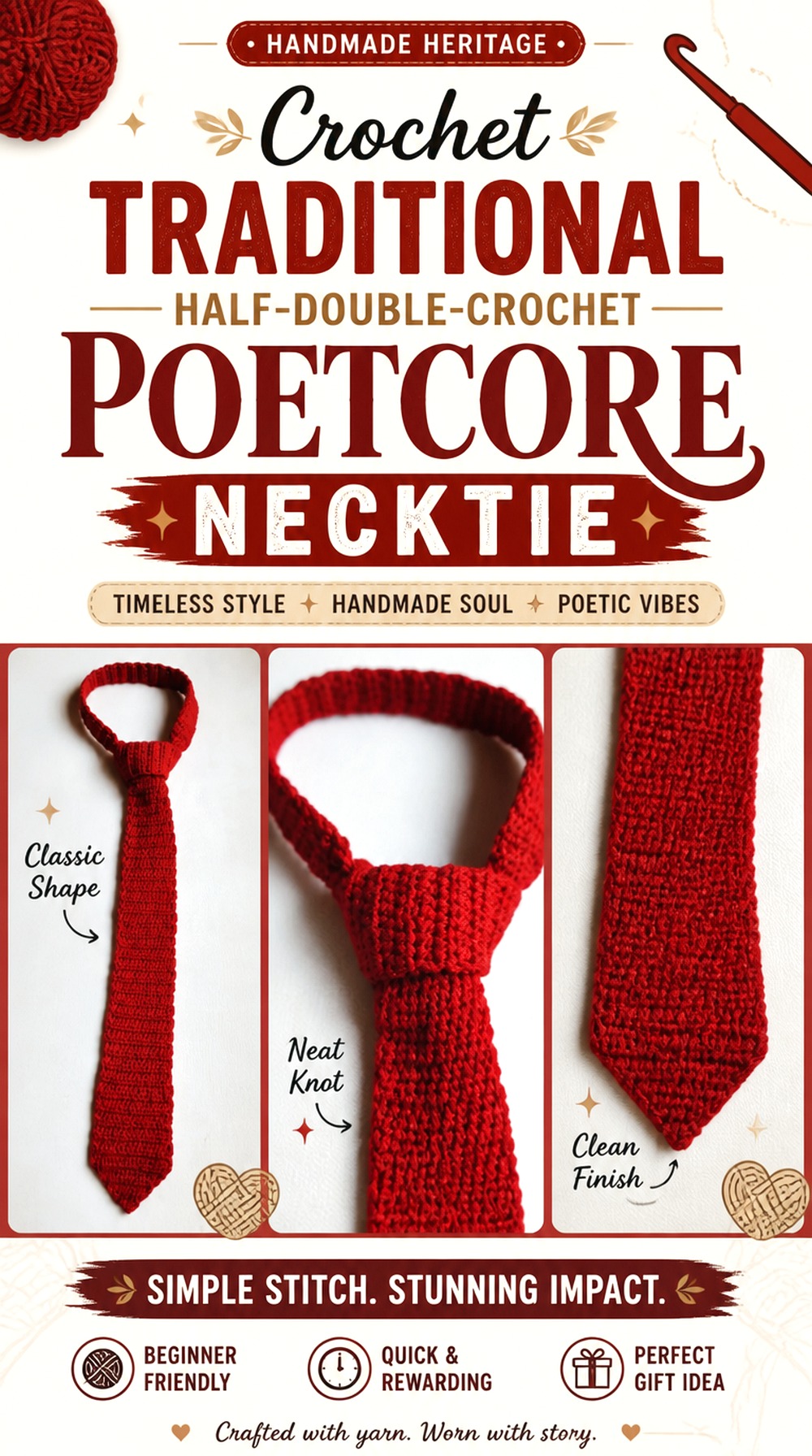
Lu’s Handicrafts presents a traditionally shaped crochet necktie built with a long, controlled taper and half-double-crochet fabric. The corresponding project information also includes a separate keeper loop at the back.
This is a useful choice when you want the poetcore character to come primarily from yarn, color, and styling rather than an unusual construction. A burgundy or moss-colored version beneath a cream shirt and brown vest would keep the recognizable tie silhouette while adding unmistakable handmade texture.
Half Double Crochet Creates a Solid Visual Field
A relatively continuous stitch surface gives you room to use a subtly heathered or tonal yarn without introducing another competing pattern. It also means inconsistent tension can create visible changes in width along the blade.
If you substitute yarn, make enough fabric to judge its drape before committing to the full length. A neat stitch pattern cannot compensate for a material that feels too rigid for the intended neck treatment.
Use the Keeper Loop as a Finishing Checkpoint
The small loop on the reverse may not attract much attention, but it affects how neatly the narrow tail can sit behind the visible blade.
Before attaching it permanently, check where the back tail actually falls when the tie is worn in the intended knot. Placement based only on a flat table view may not match the way the two sections overlap on a real person.
Original Tutorial and Creator Credit
Creator: Lu’s Handicrafts
Crochet Wide Single Crochet Poetcore Necktie
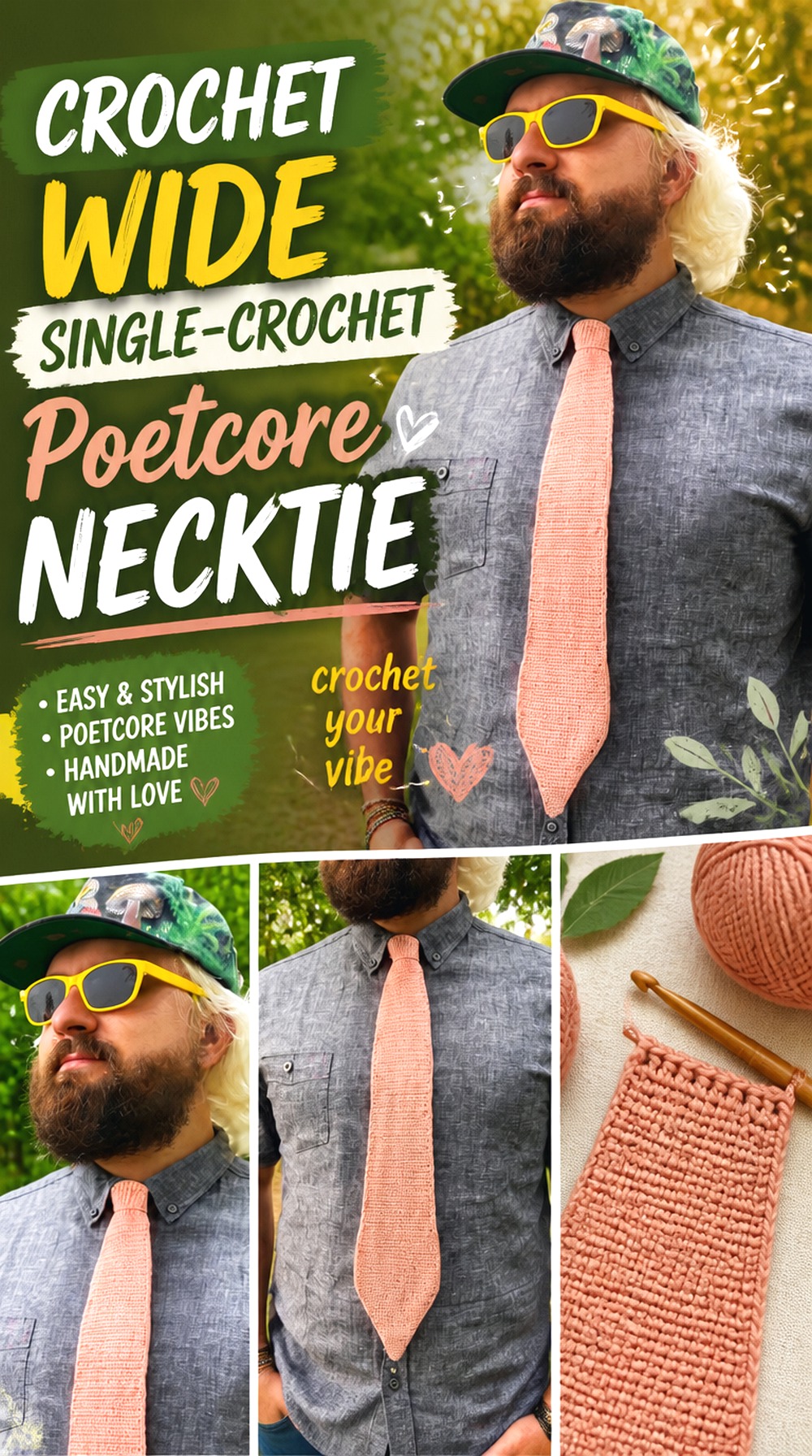
Last Minute Laura’s necktie uses a solid single-crochet approach and a broad, flat construction that is shaped into a recognizable tie and finished with a back tuck area.
The wider handmade surface gives this idea a slightly more relaxed, visibly crocheted character. That can work well with oversized poet shirts, roomy cardigans, or soft jackets where a very narrow tie would look undersized. Because the stitch texture is consistent, the color choice has room to be atmospheric without fighting a complex motif.
Wider Crochet Needs More Thought at the Knot
The blade may be the most visible part, but the neck section determines whether the tie sits comfortably under a collar. If you alter the width, test how easily the fabric bends and overlaps before extending the entire project.
A thick, broad tie paired with a tight collar can feel crowded. A softer oversized blouse gives the same handmade accessory more breathing room and often creates a better proportion for poetcore styling.
Use an Existing Tie as a Proportion Reference
A tie that already looks good on the intended wearer provides more useful information than a generic number. Compare how far the blade extends, where the taper starts, and how much fabric disappears into the knot.
You do not have to copy its exact dimensions. The comparison simply gives you a reality check before a long crochet piece becomes difficult to resize without unraveling substantial work.
Original Tutorial and Creator Credit
Creator: Last Minute Laura
Crochet Soft DK Poetcore Necktie
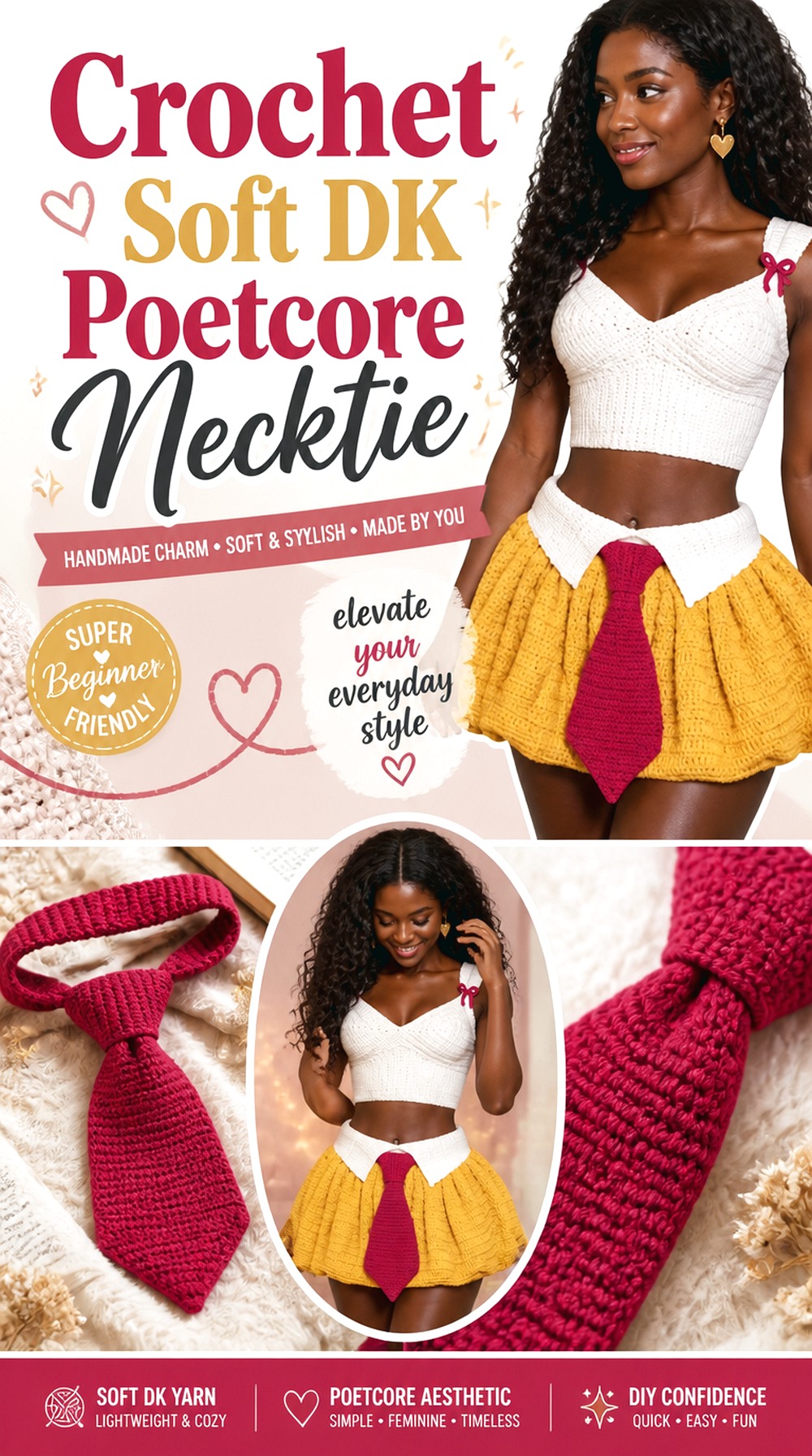
Nitah Crochets demonstrates a necktie using DK yarn and discusses lightly steaming the finished piece to relax and smooth the stitches. The result provides a middle ground between very fine thread crochet and a deliberately substantial chunky tie.
For poetcore, that balance can be useful when the tie will be worn with knitwear. A soft brown or deep muted green can complement a cardigan without disappearing into it, while gray or black keeps the accessory closer to dark-academic tailoring. Keep any extra embellishment restrained so the long silhouette stays clean.
DK Yarn Can Balance Texture and Drape
Medium-fine crochet still shows individual stitches clearly, yet it need not create as much volume as a heavier yarn. The actual result depends on fiber, hook choice, and tension, so treat the tutorial yarn as the reference point when making substitutions.
If your swatch springs back strongly instead of folding easily, think about how that behavior will translate to the knot. A tie should not need force to lie against the shirt.
Flattening Should Respect the Fiber
The tutorial mentions light steaming, but heat tolerance varies by fiber. Before applying heat to a substituted yarn, check its care information and test the method on a swatch.
Blocking is meant to improve shape and consistency, not permanently flatten the character out of the stitches. For a poetcore accessory, retaining a little tactile texture is often part of the appeal.
Original Tutorial and Creator Credit
Creator: Nitah Crochets
Crochet Two Stitch Poetcore Necktie
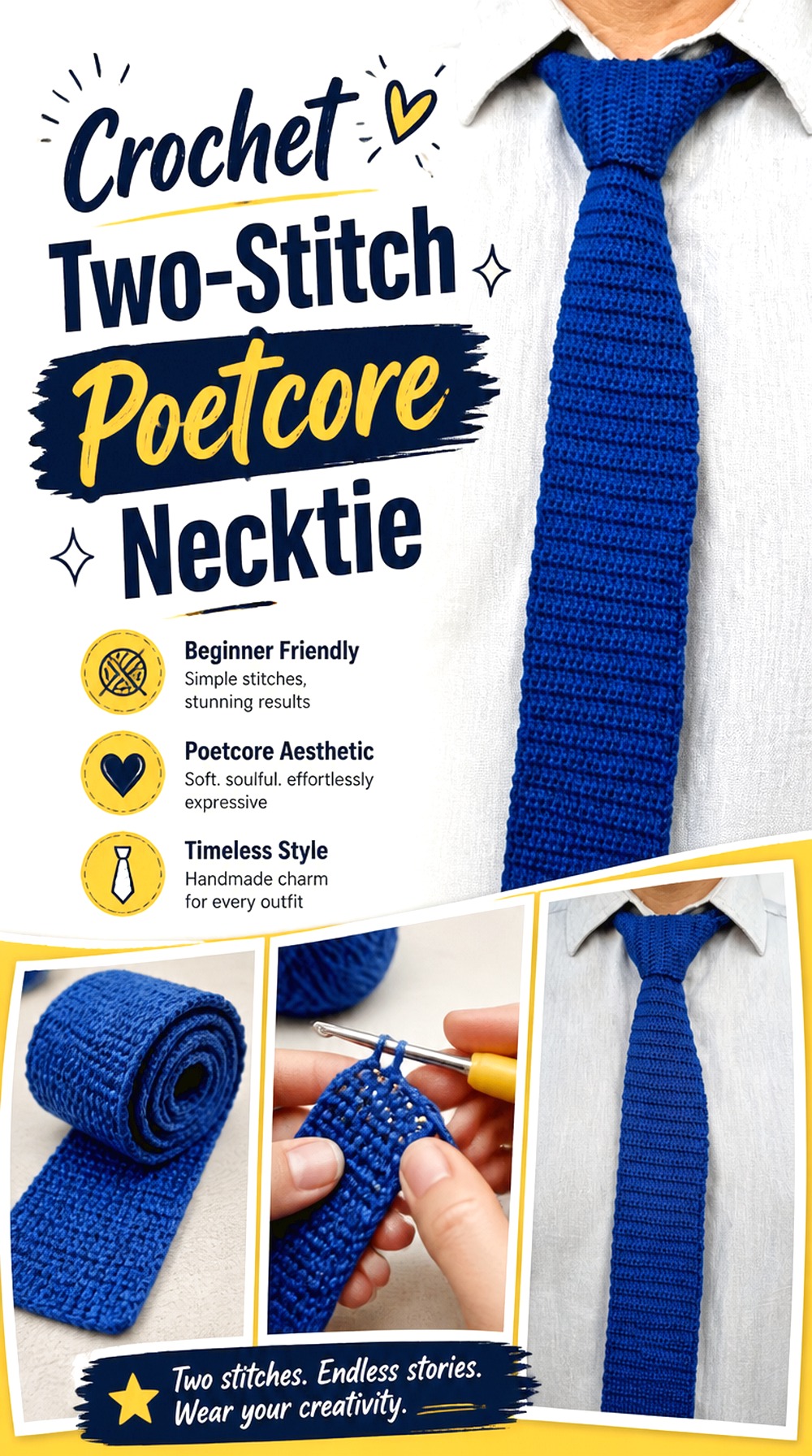
Planet Pelo’s tutorial centers on a necktie made with single and double crochet, keeping the stitch vocabulary deliberately limited. That simplicity makes this idea a useful base when the desired poetcore effect comes from the outfit rather than elaborate crochet.
Think of a charcoal tie over an ivory shirt, a faded burgundy version beneath brown tweed, or an olive tie paired with a cream cardigan. With fewer surface distractions, clean edges and consistent width become more noticeable, so the workmanship itself supplies much of the finished character.
Simple Stitches Put Edge Control on Display
When there is no motif or dramatic colorwork to distract the eye, the outline becomes one of the first things people notice. Count and check the edges according to the creator’s instructions rather than relying only on visual memory.
It also helps to set the work down periodically and view the entire blade. A gradual width change can be difficult to notice while your attention is focused on one small section.
Poetcore Detail Can Come From Styling
You do not need lace, flowers, embroidery, and multiple colors on the same tie for it to belong in a literary outfit. A plain crochet tie can be the quiet structural piece between a romantic shirt and a textured jacket.
If your blouse already has a high collar, pleating, or ruffles, a simple tie may actually make those features easier to appreciate. Decide where the outfit’s detail should concentrate before decorating the crochet.
Original Tutorial and Creator Credit
Creator: Planet Pelo
Crochet Pointed Shaped Poetcore Necktie

Atreyu Crochet’s tutorial emphasizes increase and decrease shaping while creating the necktie, making the changing silhouette one of the project’s central learning features.
That makes this version useful for a poetcore wardrobe where you want a clear traditional blade without a separate motif system. The point can look particularly strong below an open waistcoat or cardigan because the long vertical line remains visible. A quiet solid or subtly tonal yarn allows those shape changes to stay readable without turning the tie into a novelty piece.
The Shaping Rhythm Defines the Silhouette
With a long tapered accessory, a misplaced increase or decrease can affect more than one row. It can change the visual angle of an edge and become increasingly noticeable as the work continues.
After each major shaping section shown by the creator, lay the tie flat and compare both sides. Catching an asymmetry early protects the clean pointed form that makes this idea different from flat-ended knit-style ties.
Give the Point Enough Visual Space
A strongly defined blade loses some impact if it is hidden behind a buttoned cardigan or very low-hanging accessory. Consider the finished outfit before deciding how decorative the lower tie should become.
If the point will remain exposed, it can carry the deepest color or most visible yarn texture. If a jacket covers most of it, a quieter overall treatment may make more sense.
Original Tutorial and Creator Credit
Creator: Atreyu Crochet
Crochet Fine Yarn Textured Poetcore Necktie
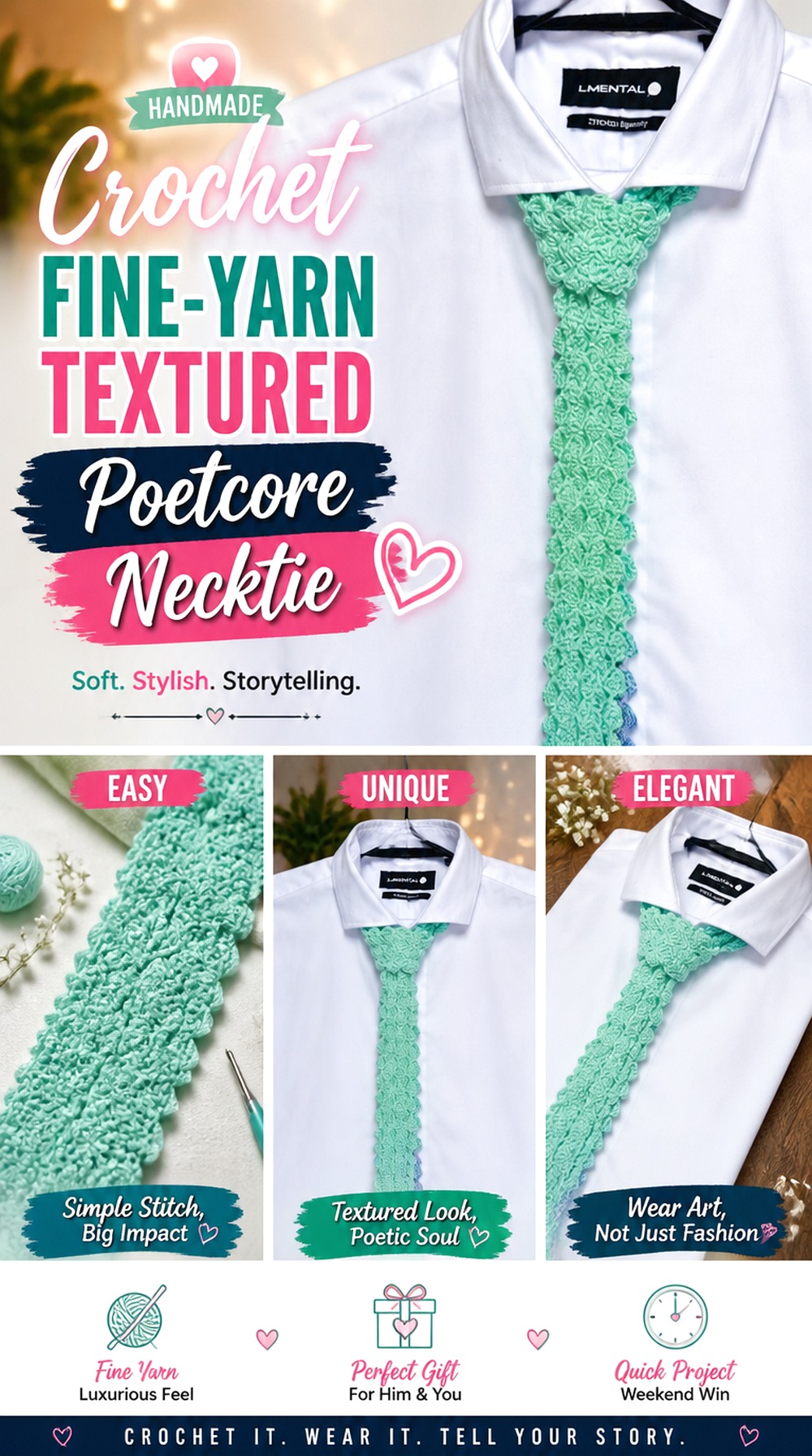
Laura Cepeda English demonstrates a men’s necktie with fine yarn and a small hook, describing the finished piece as using a decorative stitch rather than relying only on basic flat texture.
Fine-scale texture suits a more tailored poetcore outfit because it can add handmade detail without making the tie visually massive. Consider it for fitted vests, crisp shirts, or vintage jackets where a chunky accessory would overwhelm the neckline. Dark plum, brown, ink blue, or black can make the stitch texture appear gradually as the light catches it.
Finer Yarn Helps Control Visual Bulk
A small-scale yarn gives a textured stitch more room to be interesting without automatically becoming thick. That matters because decorative stitch patterns often contain more dimension than plain single crochet.
When substituting yarn, compare both thickness and surface character. A fluffy yarn may hide the very stitch definition that makes this project attractive, while a smooth yarn can keep the pattern clearer and the edges easier to evaluate.
Let Texture Replace Loud Patterning
A detailed crochet surface already creates highlights and shadows along the tie. Adding rapid stripes or several contrasting colors on top can reduce that effect rather than strengthen it.
For a literary, vintage-inspired look, try allowing one quiet color to carry the entire piece. The stitchwork then becomes visible at close range, which fits poetcore’s preference for tactile layers and details that feel collected rather than overtly flashy.
Original Tutorial and Creator Credit
Creator: Laura Cepeda English
Crochet Classic Gift Poetcore Necktie
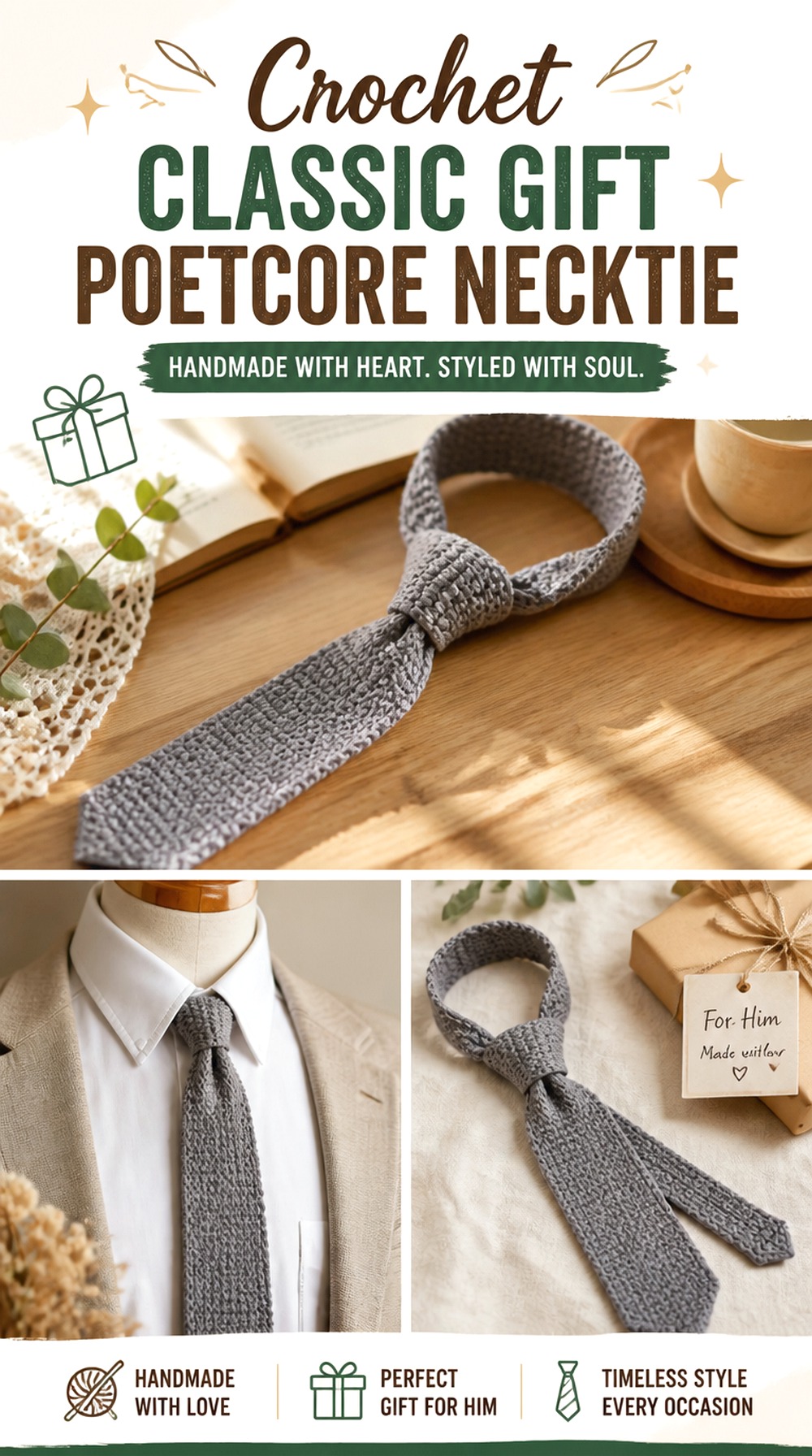
CrochicaNBF’s tutorial focuses directly on making a men’s crochet necktie with a familiar finished form. This is the kind of project that can move easily between conventional gift styling and a more romantic literary wardrobe without changing the basic identity of the accessory.
For poetcore, the safest adaptation is restraint: choose one atmospheric shade, keep the tie itself uncomplicated, then let a vintage shirt, vest, blazer, or satchel establish the broader aesthetic. This also makes the project useful when the recipient’s everyday style is more traditional than yours.
A Familiar Tie Shape Is a Flexible Styling Base
A conventional-looking necktie can be worn far beyond an explicitly poetcore outfit. That makes it practical when you are crocheting for someone who may pair it with ordinary dress shirts as well as vintage layers.
If you are tempted to change the proportions dramatically, compare the project with the intended wearer’s existing ties first. Preserving a familiar scale can make the handmade texture easier to incorporate into more outfits.
Use the Shirt Collar as a Fit Check
The collar affects how much of the knot is visible and how much room the crochet fabric has around the neck. A substantial knot under a narrow collar can look crowded even when the tie itself is well made.
Before finalizing an adaptation, try the work with the type of shirt it is most likely to accompany. That simple check can reveal proportion issues that are invisible when the tie is evaluated flat.
Original Tutorial and Creator Credit
Creator: CrochicaNBF
Crochet Double Crochet Poetcore Necktie
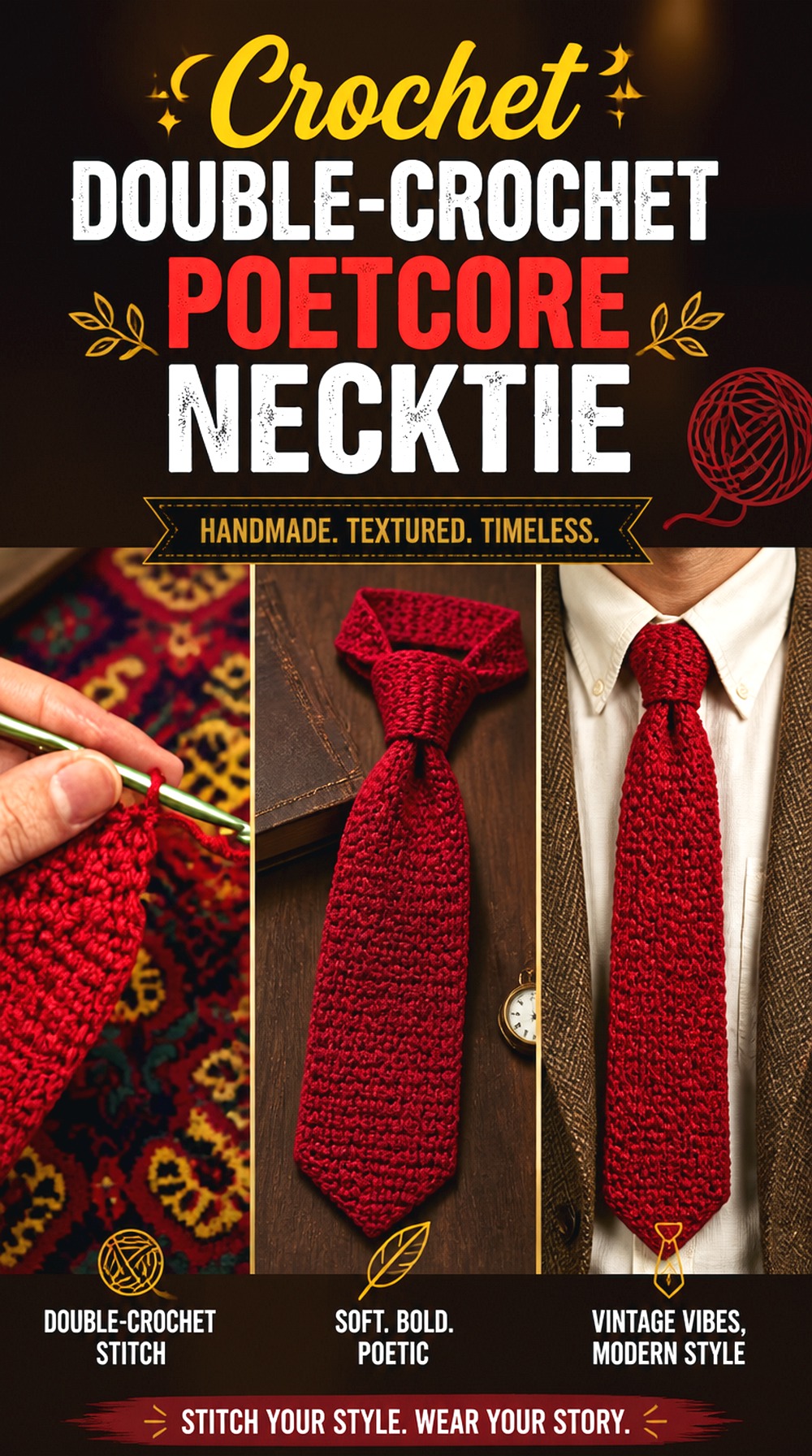
Aly Velez’s tutorial uses double crochet and decrease shaping to build a simple tie. Because double crochet is taller than single crochet, the visible stitch rhythm becomes a larger part of the finished surface.
That can suit a relaxed poetcore interpretation where you want the accessory to look unquestionably handmade. Rather than hiding the stitch structure, pair it with a plain cotton shirt, soft trousers, and a cardigan or waistcoat. A muted solid yarn keeps the longer stitch columns from becoming visually chaotic.
Taller Stitches Need Careful Edge Watching
Longer stitches can make changes in tension more visible across a narrow strip. If one row is worked noticeably tighter than another, the width can shift even when the stitch count is correct.
Pause occasionally and compare the two sides rather than waiting until the full tie is complete. The lower point and long edges should look intentionally shaped, not as though the fabric is pulling from one side.
Open Texture Can Look Deliberately Handmade
A taller crochet stitch may allow more light through the fabric than a densely packed stitch. That is not automatically a problem. Against a contrasting shirt, the small openings can emphasize the handmade structure.
Decide whether you want that contrast before choosing the yarn color. A dark tie on a pale shirt will reveal the stitch architecture more clearly than two similar tones layered together.
Original Tutorial and Creator Credit
Creator: Aly Velez
Crochet Triangle Start Poetcore Necktie

The eHowArtsAndCrafts tutorial begins the necktie by developing a triangle through increases, placing immediate emphasis on the wide pointed blade. That construction idea is useful when the lower tip is the feature you most want to get right.
For poetcore styling, a strong point works well beneath an open cardigan or buttoned vest because the visible lower section creates a clear vertical line. Choose a yarn with enough stitch definition to preserve the triangle rather than obscuring it with a heavy halo or extremely irregular texture.
The Blade Tip Sets the Visual Line
The starting triangle establishes the symmetry that the rest of the tie continues. If that section leans, the error can remain noticeable even after a long straight body has been added.
Examine the triangle flat before progressing too far. Look at the angle of both sides and the position of the point. A small correction at this stage is far easier than trying to compensate later.
Check Symmetry Before the Long Body Grows
Long narrow projects can create a false sense that slight differences will disappear with length. In practice, a misaligned beginning can become more obvious because the eye follows the straight edges toward it.
Use the creator’s demonstration for the actual shaping, then stop at natural checkpoints and view the whole piece. For a tailored literary look, clean geometry matters more than adding extra surface decoration.
Original Tutorial and Creator Credit
Creator: eHowArtsAndCrafts
Crochet All Ages Poetcore Necktie
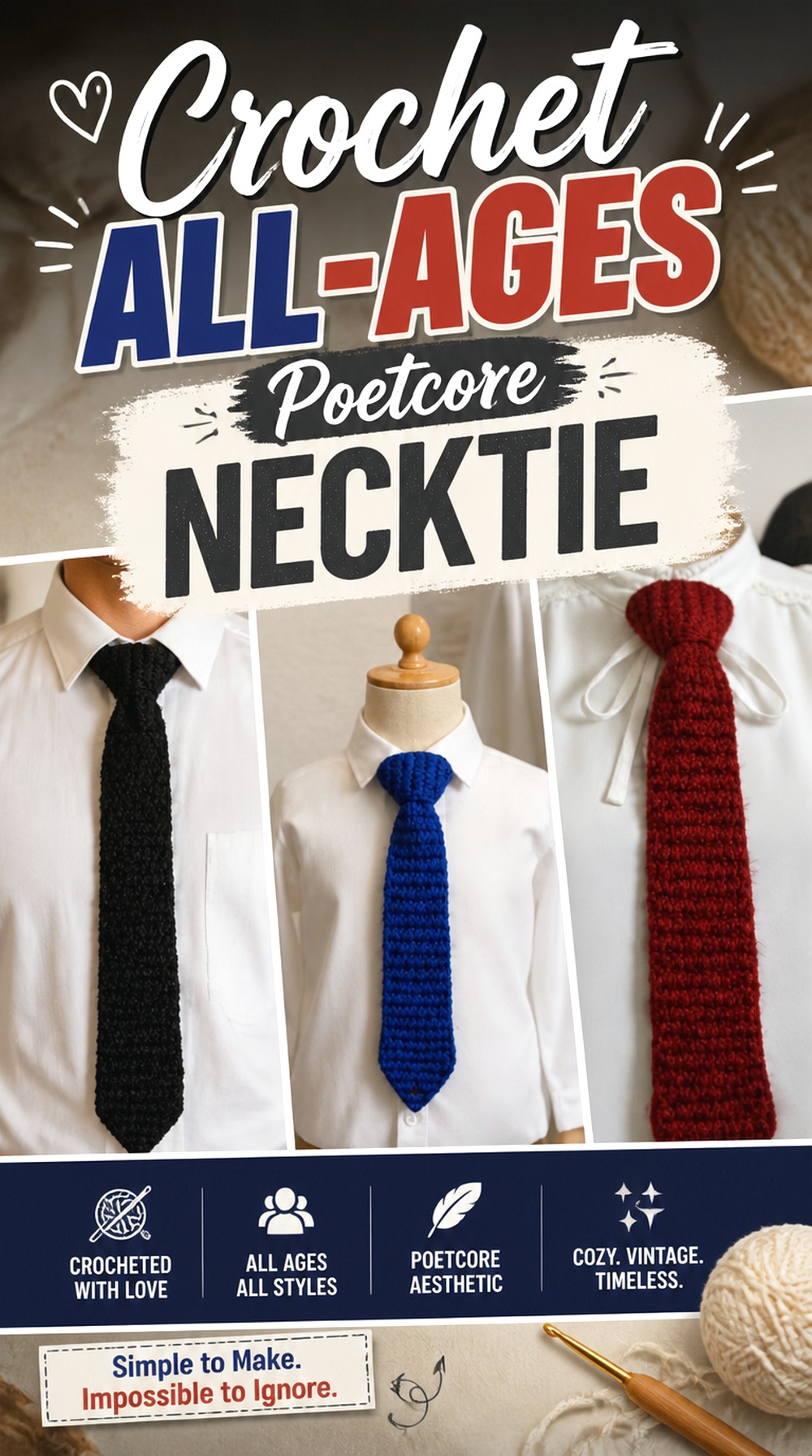
Sevginin Günlüğü presents a single-crochet tie concept intended to be adaptable for men, women, or children. That gives this idea a different purpose from tutorials designed around one conventional adult menswear look.
For adults, the understated surface can work with oversized poet shirts or tailored blazers. For a smaller version, proportion should be reconsidered as a whole rather than treating the project as an adult tie with only a few rows removed. The blade, neck section, and overall scale need to look balanced together.
Scaling Down Is More Than Shortening the End
A tie can be the correct length and still look oversized if the blade remains disproportionately broad. When adapting the concept, compare both width and length with clothing that already fits the intended wearer.
Avoid inventing a universal reduction formula. Crochet density and the wearer’s proportions vary too much. The useful checkpoint is how the entire tie looks against the actual shirt rather than whether one measurement has been reduced by a fixed percentage.
Treat a Child’s Neck Area as a Safety Detail
For children, neck accessories should not be overly tight or difficult to remove, and they should be used with appropriate supervision. Do not assume an adult knot or fastening method is automatically suitable simply because the crochet portion has been made smaller.
Check the creator’s intended construction, the child’s clothing, and the final fit carefully. Comfort and easy removal matter more than reproducing an adult silhouette exactly.
Original Tutorial and Creator Credit
Creator: Sevginin Günlüğü
Crochet High Stitch Poetcore Necktie
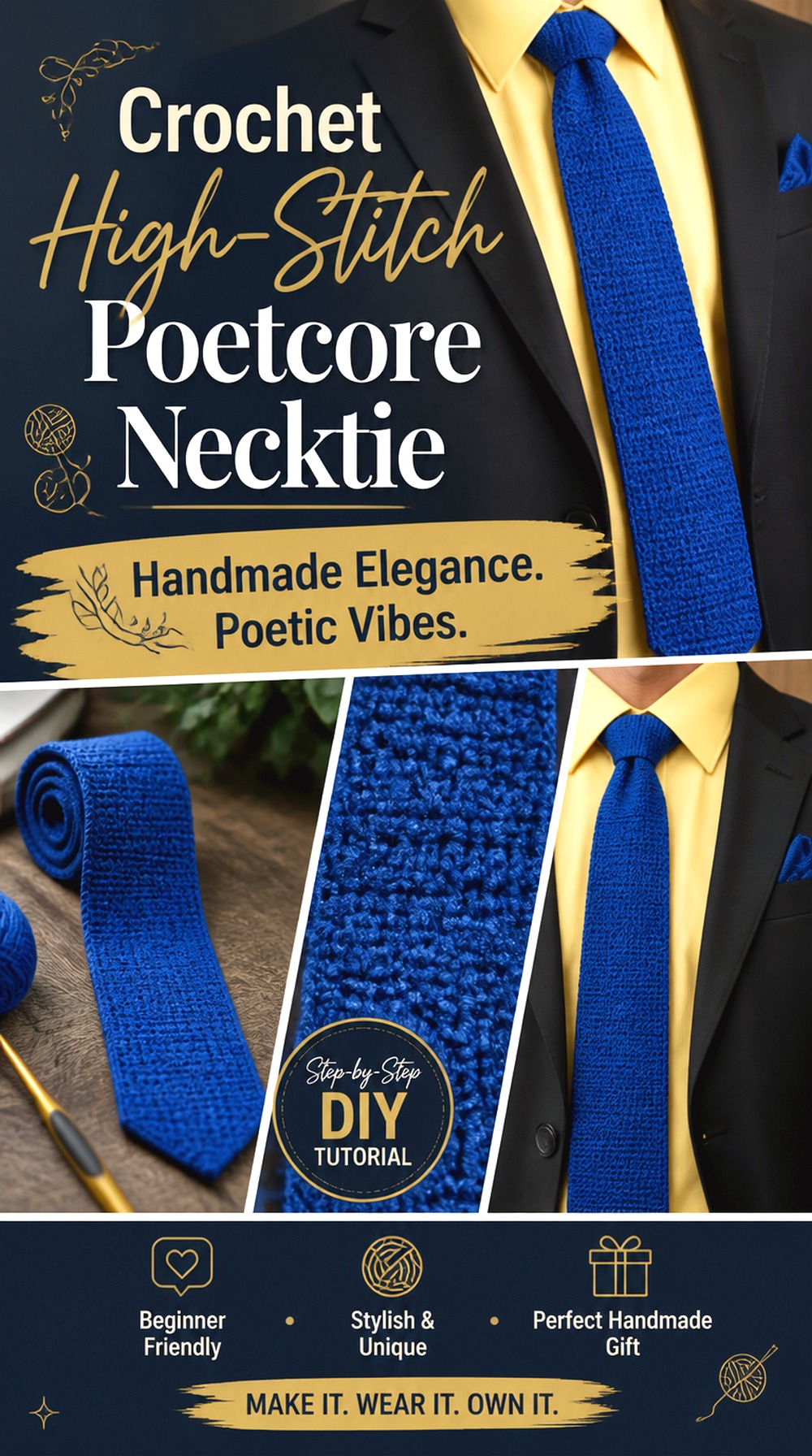
RNENOC demonstrates a crochet tie using the tall stitch referred to in Spanish as punto alto or vareta. The tutorial’s showcased yarn is bright, but the same general project direction can be visually reinterpreted for poetcore through a more subdued palette.
This is a good example of why aesthetic adaptation does not require pretending the original source was designed around the trend. The construction remains the creator’s crochet tie; your editorial choice is whether its pronounced stitch rhythm appears in charcoal, rust, olive, brown, or another color that works with literary-inspired layers.
Taller Stitches Create a Stronger Surface Rhythm
When stitches form visible vertical or horizontal lines, the tie gains texture even in one solid color. That can be useful if you want visual interest without motifs.
The trade-off is that uneven tension may also become easier to see. Check the sides and overall width as you work, especially around shaping areas. A consistent outline will make the repeating stitch structure feel deliberate rather than irregular.
A Bright Source Project Can Become a Muted Wardrobe Piece
You are not required to duplicate the tutorial color to benefit from its construction guidance. If your wardrobe is built around tweed, cream shirts, worn denim, brown leather, or dark knitwear, a quieter yarn may integrate more easily.
Make the first adaptation through color before altering the stitch structure. Changing several variables at once makes it harder to know whether a different drape or shape came from the yarn, tension, or construction change.
Original Tutorial and Creator Credit
Creator: RNENOC
Crochet Mini Poetcore Necktie Accent
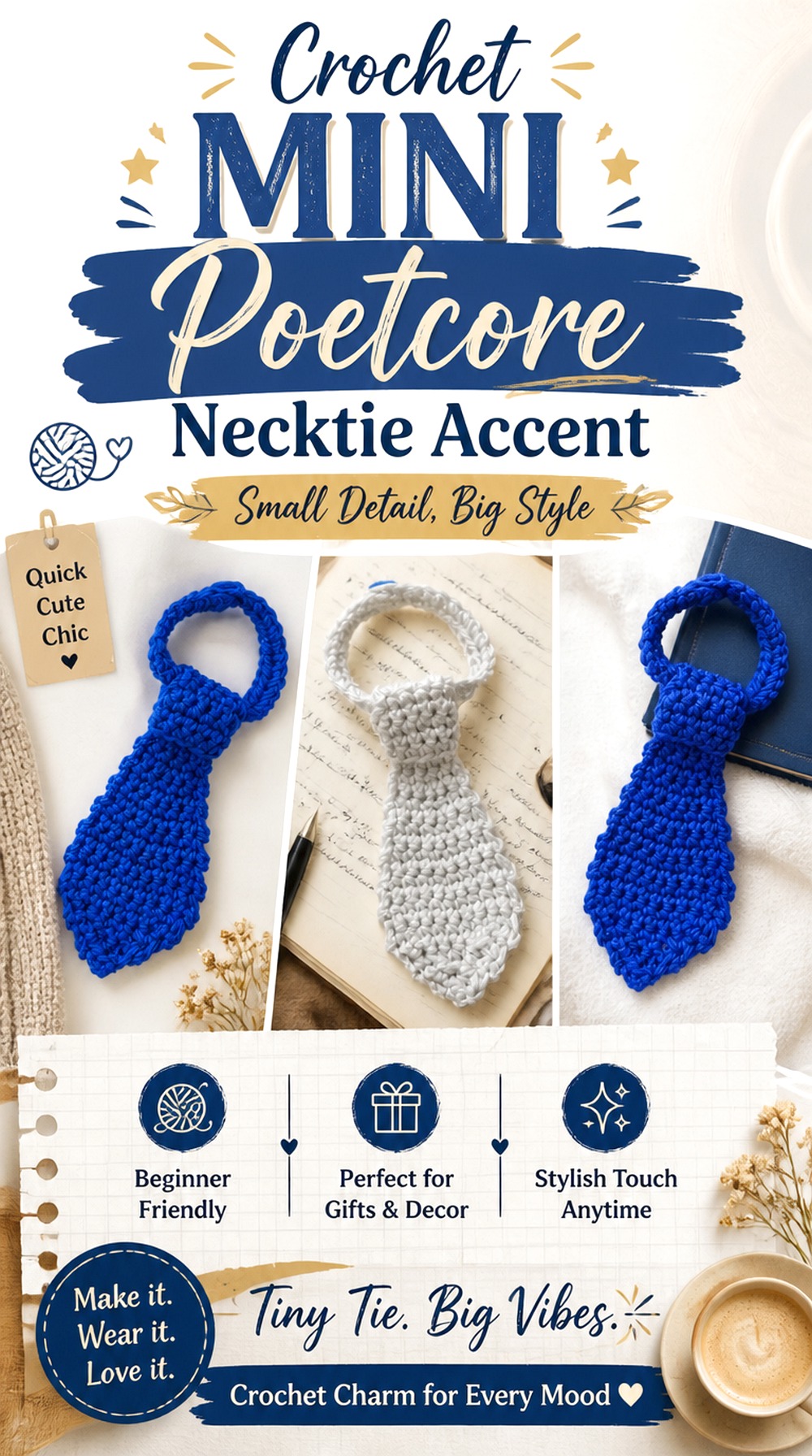
Not every necktie idea needs to be full-size clothing. Passione Uncinetto demonstrates miniature crochet ties designed as decorative accents for bottles, packages, or greeting cards. That smaller scale creates a useful break from the wearable projects in this collection.
For a poetcore version, imagine the mini tie attached to a book-themed gift, handwritten card, journal package, or wrapped poetry collection in deep burgundy, brown, moss, or ink blue. The point is not to turn the miniature into a substitute for a wearable necktie, but to carry the same literary wardrobe motif into gifting.
Small Scale Makes Finishing More Important
On a miniature project, a bulky yarn end or uneven point occupies a much larger percentage of the finished object than it would on a full-size tie.
Choose materials that allow the shape to remain recognizable at the intended scale and weave ends according to the creator’s method. Before attaching the piece to anything, place it on the final card or package and check whether the proportions still read clearly as a tie.
Match the Accent to the Object, Not a Person
A bottle neck, gift box, journal, and greeting card all have different usable spaces. Rather than enlarging or shrinking the mini tie blindly, compare it directly with the object it will decorate.
For a poetcore gift, leave enough surrounding negative space for the miniature to look intentional. Old-book styling quickly becomes cluttered when every available area receives ribbon, charms, paper, and crochet at once.
Original Tutorial and Creator Credit
Creator: Passione Uncinetto
Crochet Structured Cord Poetcore Necktie

Keyla Arte em Crochê demonstrates a necktie using a cord-style crochet yarn and a 3 mm hook. That material direction sets this idea apart from finer thread and fingering-weight ties because the finished fabric can have a more pronounced, substantial presence.
For poetcore, a structured tie works best when the rest of the neckline is not equally bulky. Pair the concept with a soft cotton blouse or straightforward shirt rather than piling it under a thick turtleneck and heavy scarf. The tactile contrast can make the crochet feel intentional.
Cord-Style Yarn Can Change the Tie’s Behavior
Material names and thicknesses vary by market, so do not assume every cord yarn will produce the same result as the one shown in the tutorial. Some hold shape firmly; others remain surprisingly flexible.
If substituting, make a swatch long enough to fold over itself. That gives you a better idea of knot bulk and drape than simply squeezing the skein in your hand. For neckwear, flexibility matters alongside stitch definition.
Structure Benefits From a Softer Surrounding Outfit
A substantial crochet tie can become the architectural element in a poetcore outfit. Let a soft shirt, relaxed cardigan, or lightly tailored jacket provide contrast.
Putting a firm tie against several other rigid pieces can make the neckline visually heavy. If you already plan to wear a fitted waistcoat and structured blazer, compare the tie beneath both layers before deciding whether its yarn needs to be equally substantial.
Original Tutorial and Creator Credit
Creator: Keyla Arte em Crochê
Crochet Oversized Poetcore Tie Collar
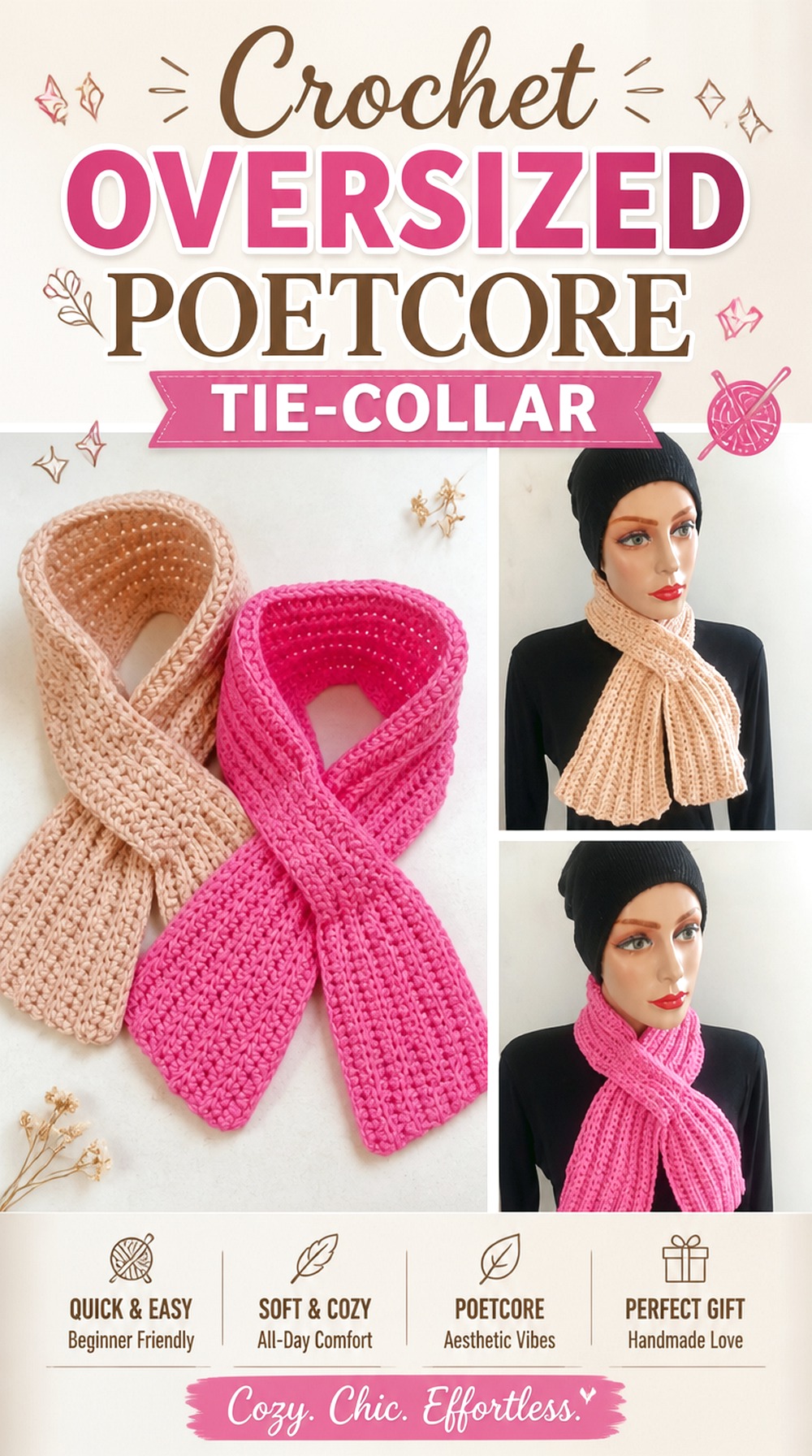
Ateliê Cris Souza takes the tie idea toward a much larger collar accessory. The demonstrated pieces are substantially wider and shorter than a conventional full-length necktie, and the tutorial uses a 5.5 mm hook, making this the most scarf-like option in the collection.
That scale can work well for theatrical poetcore layering: a large tie shape over a loose white blouse, long dress, or simple dark sweater. It should be treated as a statement collar rather than forced into the expectations of business neckwear. That distinction is what gives the idea a legitimate place beside the slimmer ties.
Treat This as a Collar Piece, Not a Formal Tie
An oversized tie-shaped accessory has different proportions and styling requirements from a necktie designed to form a compact Windsor-style knot. Trying to judge the two by the same standards will only make the larger piece seem “wrong.”
Instead, check how the accessory frames the neckline and upper torso. It needs enough surrounding space for its exaggerated width to look deliberate rather than squeezed between lapels.
Oversized Scale Needs Restraint Elsewhere
Because the crochet itself occupies significant visual space, an oversized tie-collar already functions as the statement layer. A plain blouse, long skirt, or simple trousers give it room to work.
If you add lace, brooches, patterned tweed, and several necklaces simultaneously, the neckline can lose focus. For a poetcore interpretation, one dramatic handmade object often tells the literary story more clearly than five smaller competing details.
Which Crochet Poetcore Necktie Direction Should You Choose?
For the strongest motif statement, start with the Diamond-Granny Necktie. The Moss-Stitch Tweed Necktie is quieter and works well when the surrounding outfit already contains lace or pattern. Choose the Tubular Minimalist Necktie if you value a clean double-sided form, but pay extra attention to thickness around the knot.
The Fine-Thread Bordered Necktie and Fine-Yarn Textured Necktie fit more tailored outfits because their stitch scale is smaller. For deliberately visible handmade texture, the Double-Crochet or Structured Cord options make that character harder to miss. The Oversized Tie-Collar belongs in a different category altogether: choose it when you want the neck accessory to dominate the outfit rather than behave like conventional menswear.
Conclusion
The most convincing crochet poetcore necktie is not necessarily the one with the most decoration. Start by choosing the silhouette that suits the outfit: modular granny motifs for a graphic statement, moss stitch or fine yarn for quieter tailoring, tubular crochet for a substantial knit-like finish, or an oversized tie-collar when the accessory should become the focal point.
Then make the palette, yarn texture, and surrounding layers support that choice. Cream shirts, waistcoats, tweed, cardigans, dark trousers, and vintage-inspired jackets can do as much poetcore work as the tie itself. Use the original tutorials near each project for the creators’ exact construction details before altering size, yarn, or finishing.
Frequently Asked Questions
Can any crochet necktie be styled as poetcore?
Many can, because poetcore is primarily a styling language rather than one specific crochet technique. A plain tie can sit naturally with a romantic shirt, tweed jacket, waistcoat, cardigan, or vintage-inspired trousers. Concentrate on proportion, tactile yarn, and a cohesive palette before adding motifs. An elaborate tie is not automatically more poetcore than a simple charcoal or brown one.
Which crochet tie construction is least likely to create a bulky knot?
There is no universal answer because yarn thickness, stitch density, construction, and the chosen knot all affect bulk. A single flat layer made with relatively fine yarn generally contains less fabric than a doubled or tubular construction, but you should judge an actual swatch. Fold it several times where a knot would form and compare the result with the collar you plan to wear.
Should I use wool, cotton, or acrylic for a poetcore necktie?
Choose by the behavior you need rather than the aesthetic label. Smooth cotton can emphasize stitch definition, wool can bring a traditional textile character, and acrylic varies widely in softness, stretch, and finish. Check the tutorial’s material first, then swatch any substitute. The important questions are whether the fabric hangs cleanly, bends comfortably, holds its edges, and can be cared for appropriately.
How can I make a crochet necktie look vintage without copying an old pattern?
Use contemporary construction and create the vintage mood through material and styling. Tweedy texture, muted brown, moss, oxblood, charcoal, cream, plum, or ink-like blue can work alongside waistcoats, soft blouses, cardigans, and secondhand-style tailoring. You can also choose a narrower or more textural tie. None of those changes requires recreating someone else’s historic stitch sequence.
How do I know whether my crochet tie is the right length?
Compare it with a tie that already fits the intended wearer and evaluate it with the knot and shirt you actually plan to use. Different knots consume different amounts of length, and crochet may change after blocking or wear. Check the creator’s sizing guidance where available rather than relying on one supposed universal measurement.
Should a crochet necktie be blocked?
Blocking can help straighten edges, settle stitches, or control curl, and several of the featured tutorials include or discuss finishing in this way. The appropriate method depends on the yarn fiber. Always check the material’s care guidance and test an unfamiliar technique on a swatch before applying moisture, steam, or heat to the completed tie.