Flower details give crochet wired headphone covers a clear focal point, but the small surface means color balance matters. A dark ear-cup base can make pale petals much easier to see, while a light cover may need deeper flower centers or leaves so the motif does not disappear. The headphone shell also becomes part of the palette wherever the crochet leaves hardware exposed.

For wired headphones, decoration has another job: it needs to stay clear of the cable jack, fixed cord, hinges, sliders, controls, microphone hardware, and ear cushions. Some of the tutorials below demonstrate other headphone styles, so use them as construction references rather than assuming an unchanged cover will fit every wired model. Connect the cable during test fitting and keep flowers on stable exterior surfaces.
The linked tutorials support the crochet construction or floral concept. The palettes below are color-planning adaptations, not claims that each creator used these exact colors.
Quick List
- Golden Yellow, Cream, and Brown Sunflower Crochet Wired Headphone Covers
- Moss Green, Blush Pink, and Cream Meadow Flower Crochet Wired Headphone Covers
- Dusty Rose, Sage, and Ivory Flower Crochet Wired Headphone Covers
- Lavender, Plum, and Soft Green African Flower Crochet Wired Headphone Covers
- Cherry Blossom Pink, White, and Leaf Green Crochet Wired Headphone Band Cover
- Mustard, Denim Blue, and Cream Daisy Crochet Round Wired Headphone Covers
- Coral, Peach, and Leaf Green Tiny-Flower Crochet Wired Headphone Covers
- Black, Hot Pink, and White Mini-Daisy Crochet Wired Headset Covers
- Sky Blue, Butter Yellow, and White Flower Crochet Wired Headphone Covers
- Burgundy, Blush, and Cream Rosebud Crochet Wired Headphone Covers
- Lilac, Mint, and Ivory Flowered Cat-Ear Crochet Wired Headphone Band Cover
- Teal, Cream, and Coral Floral Crochet Wired Office Headset Covers
- Rust, Sage, and Oatmeal Flower-Accent Crochet Wired Headphone Cord Cover
Give the Flower Palette a Clear Color Hierarchy
Headphone covers do not provide much room for several equally strong colors. Choose one shade for most of the cover, a second for the flower, and a smaller accent for centers, leaves, edging, or stems. This makes the floral detail readable without turning every small section into a competing focal point.
Value matters as much as hue. Pink petals and a green background may technically be different colors but can still merge if both appear equally dark. Place the yarns beside each other before committing, or view them in grayscale to see whether small petals will remain distinct.
Keep Flower Color Away From Wired Headphone Hardware
The most decorative part of the palette belongs on stable outer surfaces. A flower appliqué can sit comfortably on a broad ear cup yet become troublesome if a petal extends into a hinge or cable socket. Test the headphones with the wire connected and move any adjustable cups or sliders before deciding where the largest flower belongs.
On compact headsets, let color create interest where dimensional crochet would add too much bulk. A contrasting flower center, narrow border, or small embroidered-looking accent can provide the floral effect while leaving microphones and controls unobstructed.
1. Golden Yellow, Cream, and Brown Sunflower Crochet Wired Headphone Covers

This palette makes the sunflower the main feature rather than treating it as a small appliqué on an unrelated background. Let golden yellow occupy the petals, use brown in the center, and keep cream across much of the surrounding cover. That arrangement gives the flower a clear circular structure while keeping the outer surface lighter than the center.
If the headphone shell is black or another dark shade, cream also creates separation between the hardware and the sunflower. On pale headphones, a narrow brown or golden-yellow outer detail can keep the cream cover from visually disappearing into the device.
Golden Yellow Should Carry the Sunflower Petals
Give golden yellow enough repeated area to establish the flower shape from normal viewing distance. Tiny yellow accents scattered around a cream cover will not communicate a sunflower as clearly as one organized petal ring.
Keep the strongest yellow away from the retaining edge if you want the flower to remain the focal point. Repeating it around every border can make the edge compete with the center motif.
Brown Keeps Golden Yellow Sunflower Centers Defined
A deeper brown center gives golden-yellow petals a distinct starting point. This is especially useful on small ear cups, where the transition between center and petals needs to remain readable without relying on many additional colors.
If your brown and yellow are close in lightness, choose a noticeably deeper brown or a lighter yellow rather than adding another accent shade just to force separation.
Cream Gives Golden Yellow More Space on the Earcup
Use cream across the surrounding crochet when you want the flower to look open rather than crowded. It provides visual breathing room between golden-yellow petals and the headphone’s outer edge.
On a very light headphone shell, check the cover in place before committing to a cream border. A stronger golden-yellow or brown edge may define the crochet more clearly.
Creator Credit: Bithimanjuri
2. Moss Green, Blush Pink, and Cream Meadow Flower Crochet Wired Headphone Covers
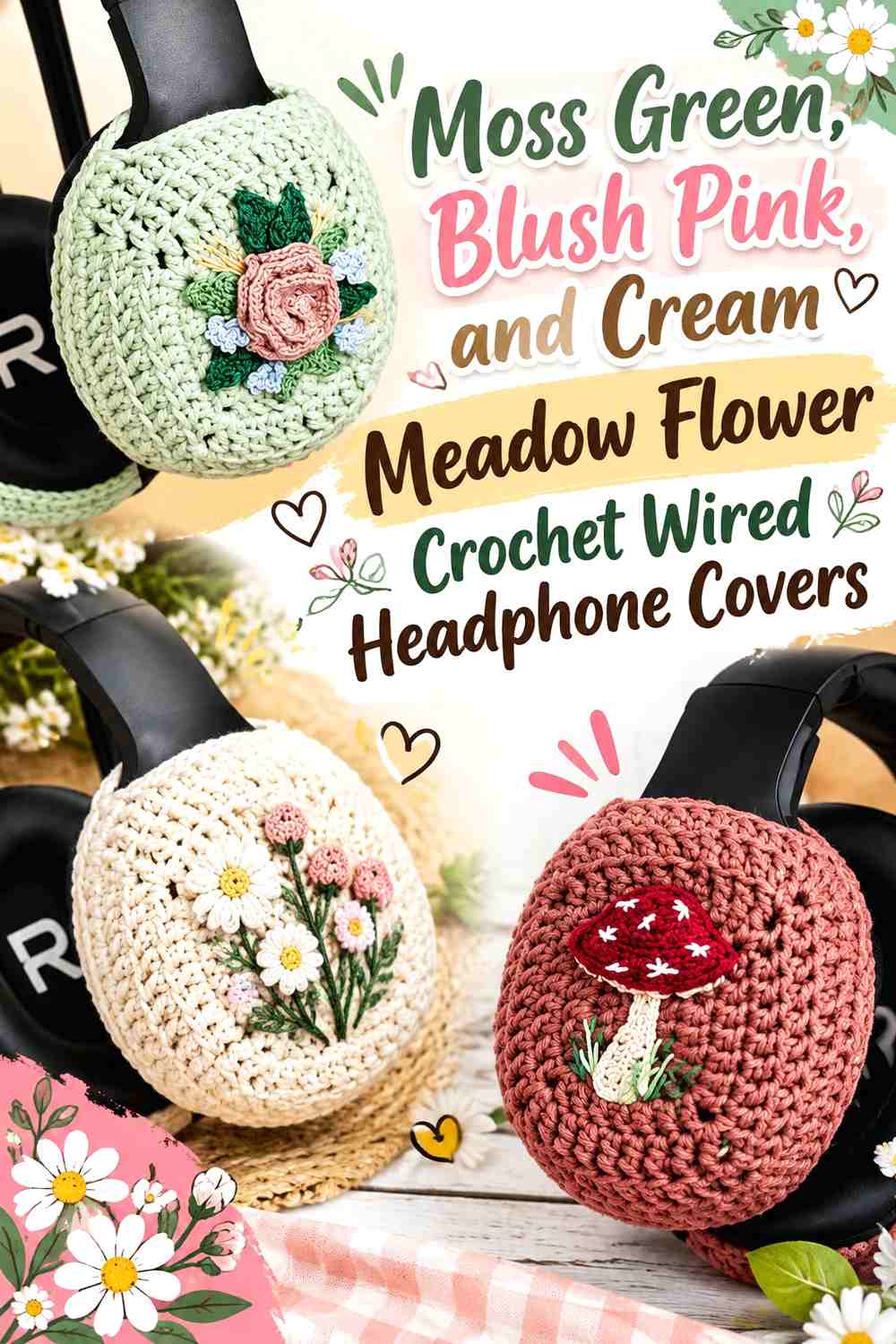
Moss green gives this flowered headphone cover a continuous botanical background, while blush pink and cream can divide the flowers into separate layers. The green should usually occupy the largest visual area so the small floral motifs have somewhere calm to sit.
This direction works particularly well when you want several little flowers rather than one oversized motif. Keep the largest blossom away from hinges and the wired connection, then use smaller pink or cream details to balance the opposite side of each ear cup.
Moss Green Should Stay Visible Between the Flowers
Do not cover every part of a moss-green ear cup with appliqués. Visible green between blossoms helps individual petals remain identifiable and prevents the surface from becoming one dense patch of texture.
The empty green areas are also useful near hardware. Instead of forcing a flower beside a cable jack or hinge, let the moss background continue there.
Blush Pink and Cream Need Separate Flower Roles
Use blush for one petal group and cream for another, or let cream form small centers inside blush flowers. Giving the two light shades distinct jobs is clearer than alternating them unpredictably throughout every blossom.
If blush and cream appear too similar from a distance, deepen the blush slightly or surround one of the shades with moss green so their edges remain visible.
Creator Credit: Woodland Stitchcraft
3. Dusty Rose, Sage, and Ivory Flower Crochet Wired Headphone Covers

Dusty rose can turn the ear cups into a soft background field, with ivory flowers providing the lightest details and sage reserved for leaves, stems, or a restrained outer accent. The combination works best when sage remains supportive rather than dividing the small headphone surface into three equal blocks.
For wired headphones, the rose background can continue around most hardware more cleanly than dimensional leaves can. Keep the sage details on the broad exterior face and leave the area around the cable connection relatively simple.
Dusty Rose Works Better as the Main Earcup Color
Using dusty rose across most of the cover gives tiny ivory flowers a consistent background. If dusty rose appears only in scattered patches, the flower arrangement can lose its visual anchor.
A rose-dominant cup also lets you change the number of flowers without redesigning the entire palette. One large ivory motif or several small ones can both sit against the same field.
Sage and Ivory Should Separate the Dusty Rose Flowers
Ivory works well where you need the clearest petal contrast, while sage can define leaves or stems without becoming another floral focal point. Keeping those jobs separate helps the small decorative shapes read quickly.
If your chosen sage is nearly as light as the ivory, place the sage directly against dusty rose rather than relying on sage-versus-ivory contrast in tiny details.
Creator Credit: Alexandria Masse
4. Lavender, Plum, and Soft Green African Flower Crochet Wired Headphone Covers

An African-flower-inspired cover benefits from a stronger internal color sequence because the motif itself contains several visual zones. Lavender can occupy the larger petal area, plum can anchor the center or outer definition, and soft green can introduce a botanical accent without overwhelming the radial structure.
Keep the same color order on both ear cups if you want them to read as an intentional pair. Alternatively, reverse lavender and plum on the second side while keeping soft green in the same small accent role.
Lavender Should Remain the Main African Flower Color
Let lavender occupy enough of the motif to remain visible after the cover curves over the ear cup. If it appears only in narrow details, the deeper plum can visually take over once the headphones are viewed from the side.
Check the completed motif against the actual headphone shell before adding more lavender around the outside. The exposed shell may already provide enough contrast.
Plum Gives Lavender Petals a Darker Anchor
Use plum where several lavender sections meet or where the flower needs a distinct inner center. The darker value can keep petal boundaries visible even when the motif is relatively compact.
Avoid spreading plum evenly through every ring unless you want a much darker cover. Concentrating it gives lavender more visual room.
Creator Credit: Melanie Locke
5. Cherry Blossom Pink, White, and Leaf Green Crochet Wired Headphone Band Cover

Cherry-blossom pink works especially well as repeated small flowers along a headphone band because the blossoms can remain decorative without occupying the ear-cup hardware. White can lighten selected petals or flower centers, while leaf green supplies the smallest supporting accent.
Place the floral section on a stable part of the band rather than across an adjustment slider. On a wired headset, that keeps the blossoms visually prominent while leaving the cable and ear-cup connection untouched.
Cherry Blossom Pink Needs White Space Along the Headband
Separate groups of cherry-blossom pink with visible band color or white details instead of placing identical flowers edge to edge. The gaps make each blossom easier to recognize and reduce the amount of raised crochet sitting against hair.
If the original headphone band is already pale, use white inside the blossoms rather than as a large background area so the flowers do not disappear into the hardware.
Leaf Green Should Stay Away From the Wired Headphone Joints
Use leaf green for small stems, attachment details, or leaves on the stable upper band. Extending a decorative vine down toward cup hinges or cable hardware adds complexity exactly where the headphones need freedom to move.
A short green accent repeated on both sides can connect the blossoms without requiring a continuous vine.
Creator Credit: NhuHugsU Crochets
6. Mustard, Denim Blue, and Cream Daisy Crochet Round Wired Headphone Covers
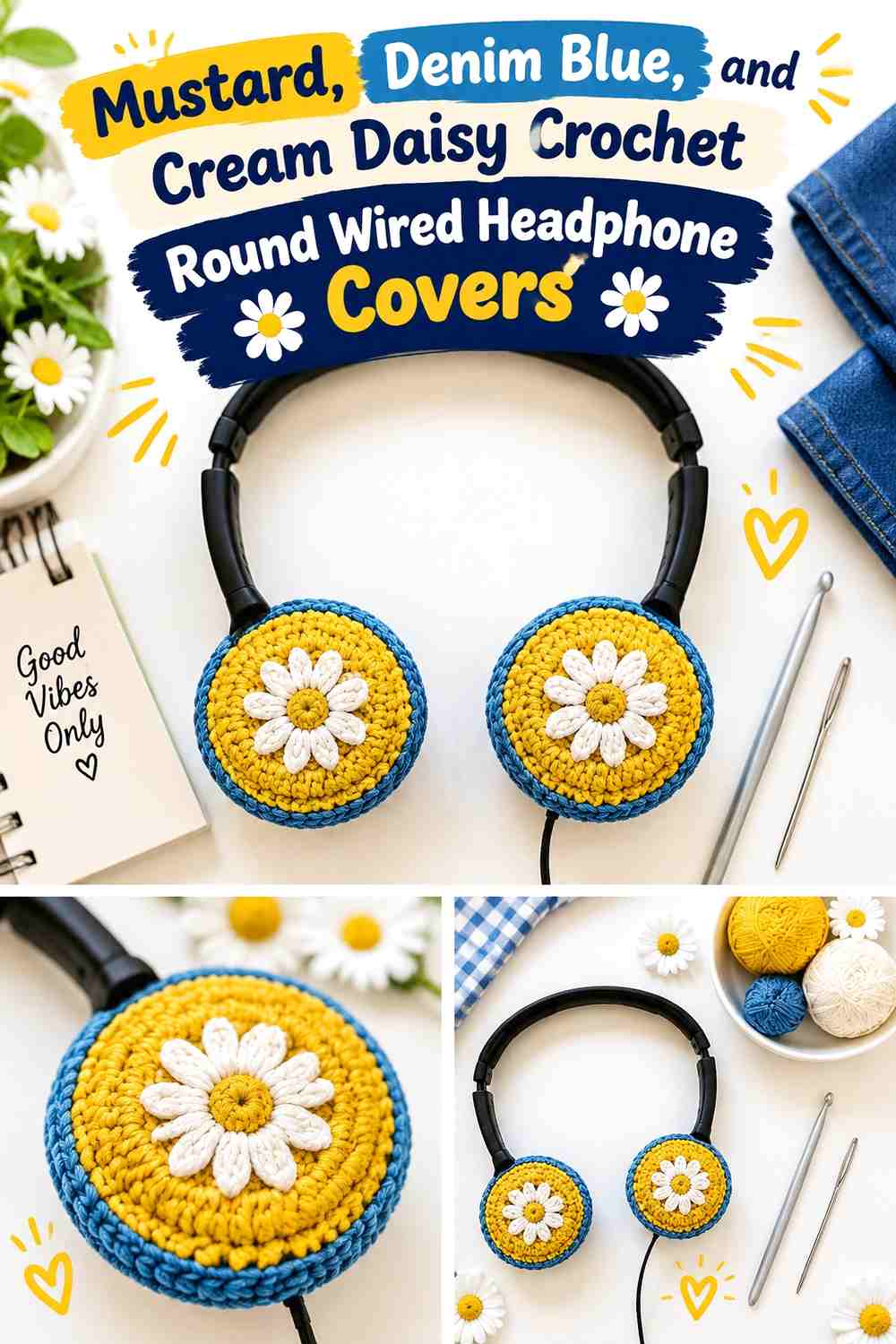
Mustard makes an earthy ear-cup background, while cream daisies bring a much lighter focal shape. Denim blue can sit in the flower centers or outer edging, giving the palette a cool counterweight without taking over the circular cover.
This combination suits round covers particularly well because the daisies can echo the shape of the ear cups. Keep the flowers centered enough that petals do not disappear around the side wall.
Mustard Can Lead Without Hiding the Cream Daisy
Let mustard cover most of the round surface and preserve a clean area for each cream flower. If mustard also appears inside the petals and along every outline, the daisy can lose the light/dark separation that makes it readable.
For a subtler result, make the cream petals smaller rather than reducing their contrast.
Denim Blue Can Define the Cream Daisy Center
A denim-blue center gives cream petals a distinct inner edge without introducing a very dark brown or black. It can also reappear as a narrow border if the mustard cover needs more definition against the headphone shell.
Do not make the blue border so wide that the palette begins to read as blue-led. Its job here is to organize the mustard-and-cream surface.
Creator Credit: byGoldenberry
7. Coral, Peach, and Leaf Green Tiny-Flower Crochet Wired Headphone Covers
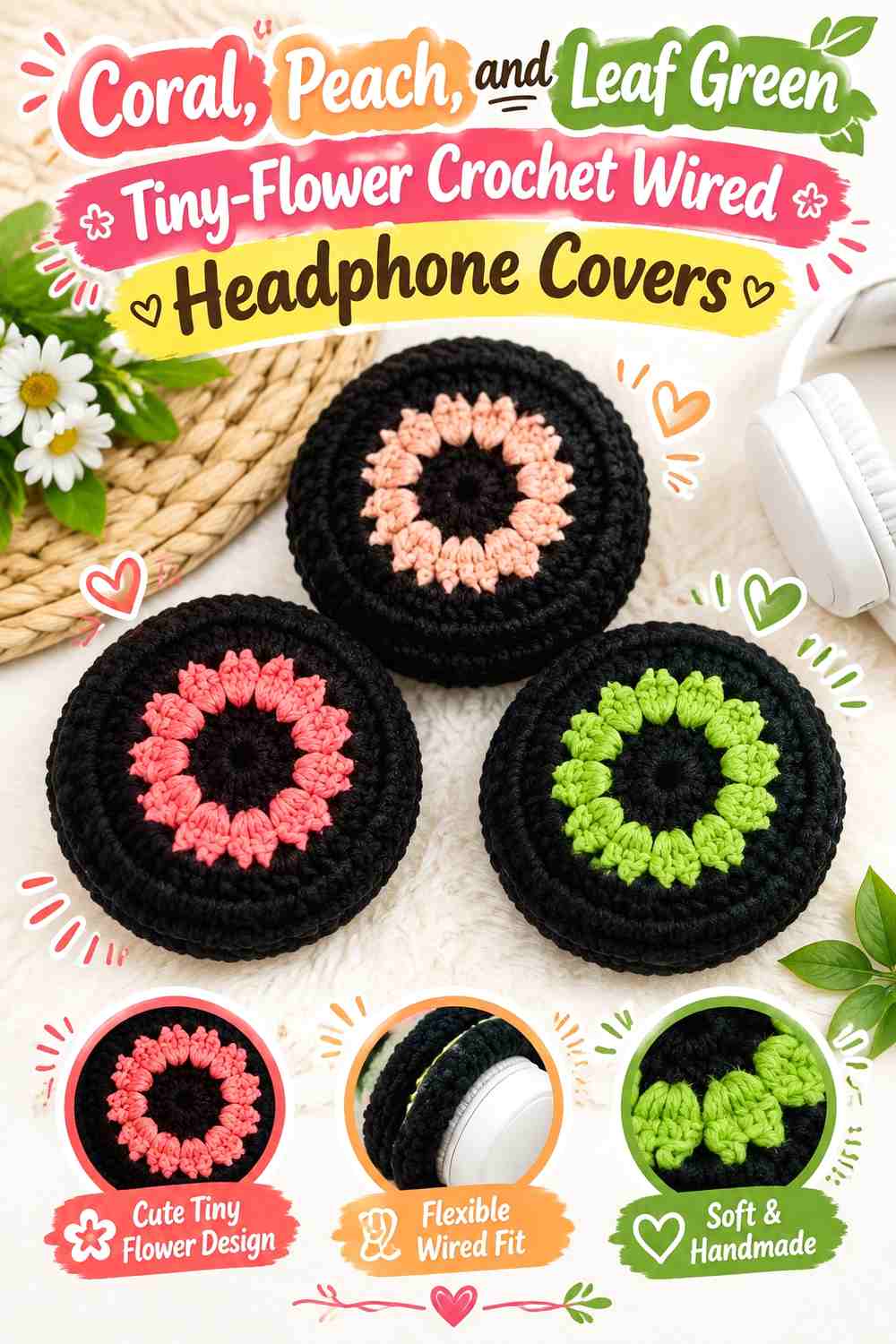
Coral and peach create a close warm relationship, so this palette needs deliberate value separation. Use coral for the cover or the darkest petals, peach for lighter flowers, and leaf green only where a stem or small leaf helps identify the botanical theme.
Because fine-cover constructions can already contain a lot of visible stitch detail, keep the flower arrangement relatively simple. Small motifs spaced across the exterior cup will usually read more clearly than covering every stitch with another layer.
Coral and Peach Need Enough Contrast on the Earcup
Place coral and peach yarn side by side before deciding which one should form the background. If the two shades nearly merge, make one visibly lighter or use cream-adjacent peach rather than relying on hue difference alone.
That checkpoint matters most for tiny flowers because there is not enough space for a broad outline to rescue a low-contrast petal.
Leaf Green Works Better as a Small Coral Accent
A little green can identify stems and leaves immediately, but a wide green border changes the whole balance of the cover. Keep it in short repeated details if coral is meant to remain dominant.
Place those details toward the flat exterior surface rather than around the retaining edge, where extra raised pieces may affect fit.
Creator Credit: Cassiekoy Crochet
8. Black, Hot Pink, and White Mini-Daisy Crochet Wired Headset Covers
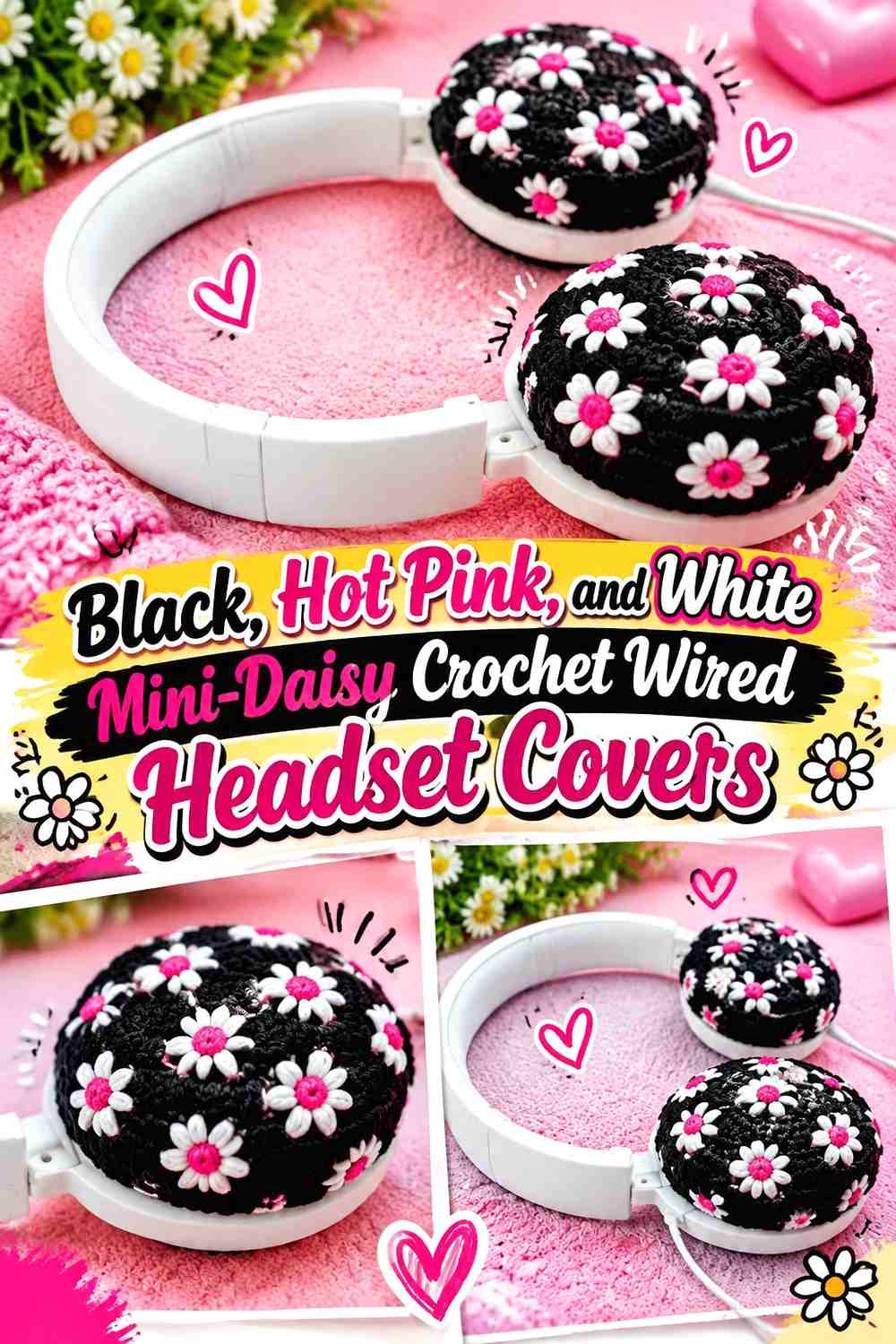
Black provides the strongest background in this collection, so small hot-pink and white flowers can stay visible even on compact headset earpieces. Use black for most of the cover, hot pink as the flower color, and white in selected centers or petal highlights.
This is a useful palette for a smaller wired headset because you can create a strong floral identity without adding many bulky motifs near the microphone or call controls.
Black Gives Hot Pink Mini Daisies Clear Separation
Keep a visible ring of black around each hot-pink flower. The dark space prevents several small daisies from merging into one larger pink patch.
If the headphones themselves are black, consider a white or pink outer detail so the crocheted edge remains distinguishable from the plastic housing.
White Keeps Hot Pink From Becoming Too Heavy
Use white selectively in flower centers, alternating daisies, or a narrow detail rather than dividing the entire cover evenly into black, pink, and white.
On a small headset, that restraint keeps white useful as a contrast tool. Too much of it can pull attention away from the pink flowers and toward the edge of the earpiece.
Creator Credit: Ruthie and Stitch
9. Sky Blue, Butter Yellow, and White Flower Crochet Wired Headphone Covers

Sky blue makes a light background that can carry tiny flowers without looking visually dense. Butter yellow is strongest in small centers or selected petals, while white can form the main flower body and keep the yellow from covering too much of the compact ear cup.
This scheme is especially effective when you want the headphones to remain mostly blue from a distance, with the flower detail appearing only as you look closer.
Sky Blue Should Cover Most of the Headphone Cup
Keep sky blue continuous across the major part of each cover so the scattered white flowers feel intentional rather than fragmented. Large interruptions of yellow and white can make the small surface look divided into unrelated patches.
The blue field is also the safest place to simplify the design near the cable socket or hinge.
Butter Yellow Works Best in Small White Flower Centers
Using butter yellow in the centers gives the flowers a recognizable focal point while preserving white as the lighter petal color. It also prevents two pale colors from spreading equally across the entire cover.
If yellow and white are too close in value, place a little sky blue between their larger sections instead of adding a fourth color.
Creator Credit: Zie Banares
10. Burgundy, Blush, and Cream Rosebud Crochet Wired Headphone Covers

Burgundy makes the ear cups noticeably darker than most floral palettes, which gives blush and cream rosebuds plenty of room to stand out. Use burgundy across the main cover, blush in the petals, and cream for the smallest highlights or selected flower centers.
Keep the rosebuds relatively compact. Large blush flowers can quickly reduce burgundy to a narrow background strip, changing the palette from rich and dark to mostly pastel.
Burgundy Creates a Strong Rosebud Background
Allow burgundy to remain visible around and between the flowers. The dark negative space is part of the design because it keeps separate blush rosebuds from blending together.
If your headphones already have a burgundy or similarly dark shell, consider cream edging so the crochet perimeter can still be seen.
Blush and Cream Keep Burgundy From Flattening the Flowers
Use blush for most petals and cream only where an inner petal, center, or tiny highlight needs stronger separation. That gives the rosebud multiple visible levels without requiring several pink shades.
Avoid making both blush and cream equally dominant. The flowers become clearer when one remains the main petal shade.
Creator Credit: caroleena’s closet
11. Lilac, Mint, and Ivory Flowered Cat-Ear Crochet Wired Headphone Band Cover
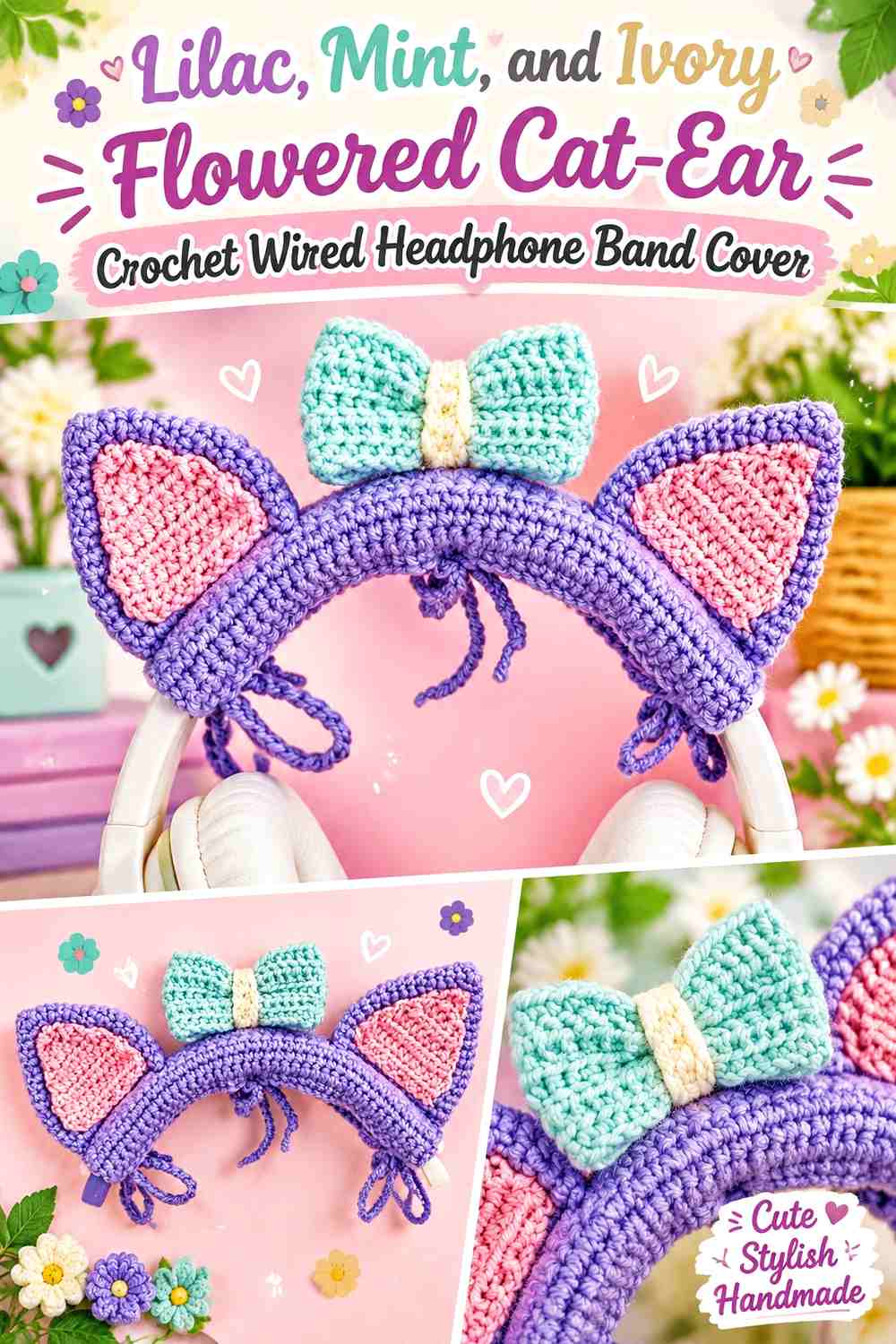
Lilac can unify the band cover and cat-ear shapes, while mint and ivory flowers soften the character styling with a botanical layer. Because the ears already change the headphone silhouette, keep the flowers smaller than the ears rather than making both features equally dominant.
For wired headphones, this is a useful way to put most of the decoration on the upper band. It leaves the cable connection and much of the ear-cup surface available for normal movement.
Lilac Should Unite the Headband and Cat Ears
Use lilac continuously enough that the ears look like part of the same cover rather than separate attachments. A stable base color also gives you freedom to vary the mint and ivory flower placement without making the two sides look unrelated.
Keep lilac away from any telescoping section if the band must slide for sizing.
Mint and Ivory Flowers Need Clear Space Around Lilac Ears
Position small mint and ivory flowers beside or below the ears rather than directly covering their outlines. The lilac ear shape should remain readable from a distance.
If both flower colors compete, make ivory the petal shade and mint the leaf or center accent. That produces a clearer hierarchy with less dimensional clutter.
Creator Credit: My Rainbow Crochet
12. Teal, Cream, and Coral Floral Crochet Wired Office Headset Covers

Teal gives a compact office headset a strong base without requiring large dimensional embellishments. Cream flowers can provide the lightest details, while coral works as a smaller center or secondary petal color.
The limited surface around a microphone headset makes placement more important than flower quantity. Concentrate the color on the outward-facing portion and leave the microphone pivot, buttons, cable entry, and retaining edge comparatively plain.
Teal Works Best as the Practical Headset Base
Let teal handle most of the coverage around the small earpiece. A single background color makes it easier to see whether the cover is shifting toward a control or microphone attachment.
It also gives the cream flowers enough contrast that they do not need to be oversized.
Cream and Coral Flowers Should Avoid the Microphone Side
Place the fullest floral detail on the side with the most uninterrupted exterior space. A coral center or projecting cream petal beside a microphone pivot may look harmless while stationary but interfere when the boom moves.
If the microphone side has little room, repeat only a tiny coral accent there and keep the larger flower on the opposite cup.
Creator Credit: AbbysCROCHET
13. Rust, Sage, and Oatmeal Flower-Accent Crochet Wired Headphone Cord Cover

This idea puts the crochet directly on the wired earphone cord instead of concentrating decoration on large ear cups. Rust can lead across the cord covering, while tiny sage-and-oatmeal flower accents add the botanical theme at selected points.
The palette needs restraint because every dimensional addition changes how the cable handles. Keep most of the cord rust and reserve flowers for sections away from the plug, Y-splitter, inline controls, and flexible connections beside the earbuds.
Rust Can Carry the Cord Without Hiding the Flower Accents
A continuous rust background gives tiny sage and oatmeal details a recognizable base. Switching colors every short distance would create more visual interruption and make the cord appear busier.
If you want additional repetition, add isolated oatmeal details rather than turning the whole lower cord into stripes.
Sage and Oatmeal Flowers Need Space Near the Splitter
Stop dimensional flower accents before the Y-splitter so the two upper branches can move independently. The splitter itself can act as a natural visual break between the decorated lower cord and simpler upper sections.
Use oatmeal for the lighter petals and sage for a tiny leaf or center when you need clearer separation against rust. Keep both accents relatively flat where the cord will be coiled or stored.
Creator Credit: Crochet Kalakar
Conclusion
For the clearest flower contrast, the black-and-hot-pink, burgundy-and-blush, and mustard-and-cream ideas give the petals a strong background. Dusty rose with sage and ivory or moss green with blush and cream create a softer botanical direction, while lavender and plum make the floral motif itself more prominent.
If hardware clearance is your main concern, concentrate the flowers on broad outer ear cups or the stable upper headband. The cherry-blossom band and rust cord-cover ideas show two different ways to keep the floral theme away from crowded earpiece hardware. Whichever palette you choose, check the cover on the actual wired headphones with the cable connected before finalizing borders and flower placement, and use the original tutorial for the creator’s exact construction.
Frequently Asked Questions
Can I adapt a crochet cover tutorial for wireless headphones to wired headphones?
Sometimes. Compare the ear-cup shape and depth first, then locate the audio jack or fixed cable, controls, hinges, sliders, and vents. Fit the cover with the wire connected so you can see whether an edge or flower occupies space needed by the plug.
Where should flowers go on a crochet wired headphone cover?
Broad, stable exterior areas are the most practical locations. Keep dimensional flowers away from ear cushions, cable sockets, hinges, sliders, microphone pivots, controls, and areas that fold during storage.
How can I make pale crochet flowers visible on dark headphones?
Use a lighter flower against a darker cover, or place a medium-value border between the flower and the headphone shell. If you are unsure, compare the colors in grayscale; flowers that remain distinct there are less likely to disappear because of similar light/dark values.
Do the flowers on both crochet headphone covers need to match?
No. You can mirror the same arrangement for a coordinated pair or vary the flowers while repeating the same palette. Keeping one or two colors in consistent roles usually provides enough visual connection between the two ear cups.
How can I make a multicolor floral headphone cover look less busy?
Give one color most of the surface and reserve the strongest contrasting shades for flowers, centers, leaves, or edging. Visible background space between motifs is useful on a small ear cup because it keeps individual flowers from merging into one textured mass.
Can crochet be used to cover a damaged wired headphone cable?
Decorative crochet should not be treated as an electrical repair. If the insulation is split, conductors are exposed, the plug is unreliable, or the cable is otherwise damaged, address the underlying hardware problem rather than hiding it beneath yarn.