Granny squares work especially well for thrift flips because they can be used selectively. A secondhand denim jacket may need only one crochet back panel, while an oversized cardigan can take two statement pockets and a plain T-shirt can gain a colorful granny-square yoke. The original garment still does most of the structural work, so the crochet becomes a deliberate detail rather than forcing you to rebuild the whole piece.
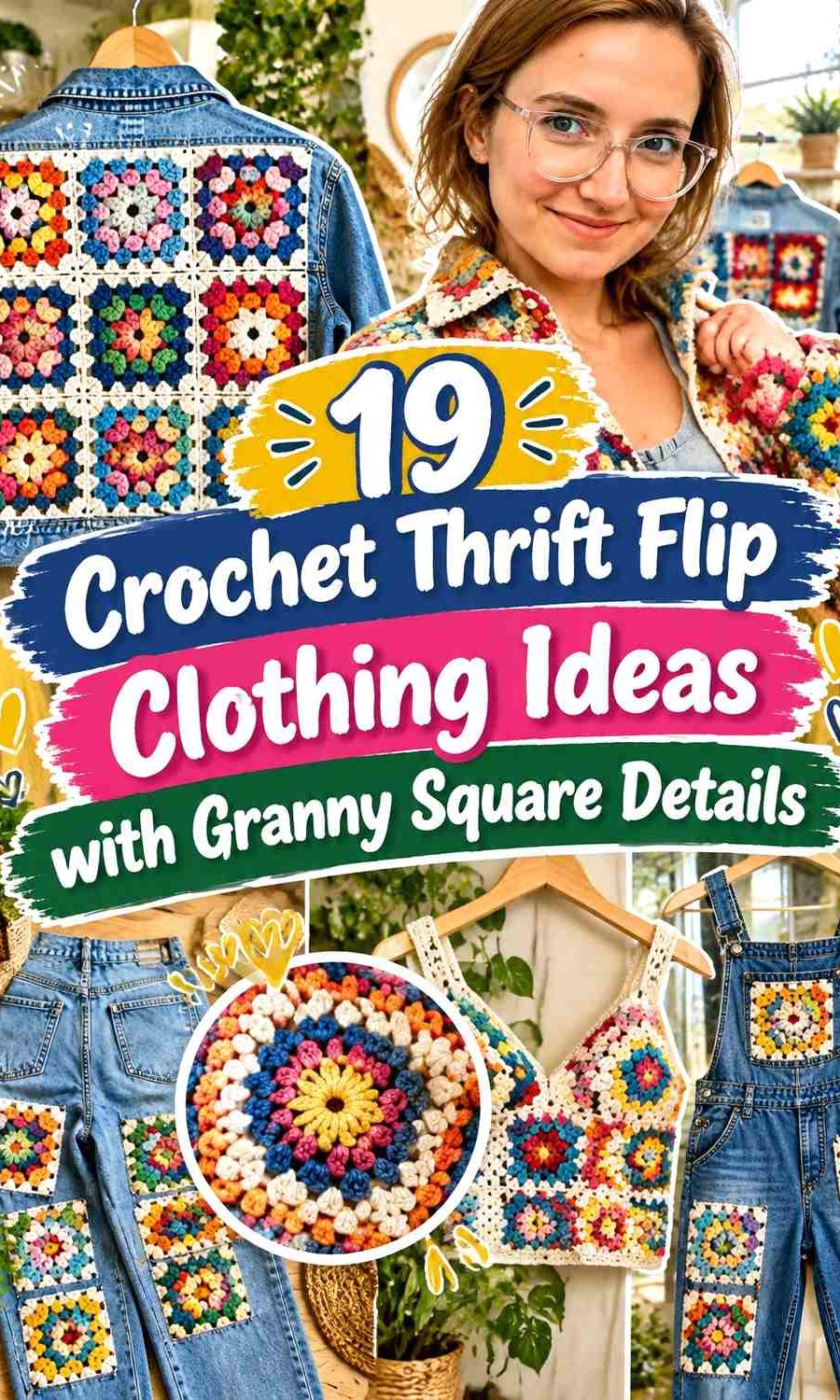
Color planning matters just as much as placement. Vintage denim can support saturated rust, mustard, or red squares, while dark sweaters give pale motifs more contrast. If the garment already has a strong color, repeat that color somewhere inside the granny square so the crochet looks connected rather than attached as an unrelated patch.
Not every tutorial linked below begins with a thrifted garment. Some demonstrate the granny-square garment construction, pocket, sleeve, panel, or joining concept that can inform the flip. Use the creator’s tutorial for its original construction and treat the thrifted base garment and palettes here as independent adaptation ideas.
Quick List
- Indigo Denim, Rust, Mustard, and Cream Granny Square Crochet Jacket Flip
- Oatmeal, Olive, and Terracotta Granny Square Crochet Sweater Flip
- Charcoal, Blush, and Cream Granny Square Crochet Pocket Cardigan
- Forest Green, Camel, and Ivory Granny Square Crochet Hem Cardigan
- White, Cobalt, and Coral Granny Square Crochet T-Shirt Crop Flip
- Faded Blue, Sunflower Yellow, and Cream Granny Square Crochet Denim Shorts
- Black Denim, Burgundy, and Dusty Rose Granny Square Crochet Jeans
- Chocolate Brown, Sage, and Cream Granny Square Crochet Dress Flip
- Pale Blue, Cherry Red, and White Granny Square Crochet Button-Down Shirt
- Heather Gray, Plum, and Lavender Granny Square Crochet Sweatshirt
- Navy, Teal, and Mint Granny Square Crochet Sleeve Sweater
- Camel, Teal, and Burnt Orange Granny Square Crochet Back-Panel Cardigan
- Black, Emerald, and Mustard Granny Square Crochet Blazer Flip
- Cream, Moss Green, and Rust Granny Square Crochet Sweater Vest
- White, Red, and Pink Granny Square Crochet T-Shirt Vest Flip
- Dusty Blue, Oatmeal, and Maroon Granny Square Crochet Midi Dress
- Black, Hot Pink, and Purple Granny Square Crochet Sleeve Top
- Soft Gray, Sage, and Blush Granny Square Crochet Bolero Flip
- Dark Brown, Cream, and Olive Granny Square Crochet Waistcoat Flip
Match Granny Square Color to the Thrifted Garment
Start with the existing garment rather than choosing crochet colors in isolation. If a denim jacket has a faded blue wash, repeating a similar blue in one round of the square can connect rust, mustard, and cream accents back to the original fabric. On a black sweater, the base is already a strong neutral, so the crochet can carry more saturated color without every motif needing a dark outer round.
Also check light/dark value. A burgundy square on black jeans may disappear unless dusty rose or cream separates the two. Conversely, an ivory square on a white shirt may need cobalt, red, or another stronger outline to stop the crochet edge from blending into the fabric.
Plan Granny Square Placement Before Cutting a Thrifted Garment
Pockets and surface appliqués are relatively forgiving because they do not require removing much of the original garment. Back inserts, side panels, yokes, and sleeve replacements require more planning because the crochet begins to affect fit, stretch, and drape.
Lay completed and blocked motifs over the garment first. Check whether seams, buttons, belt loops, zippers, cuffs, pockets, and armholes leave enough space for the intended panel. When replacing fabric rather than covering it, preserve enough stable material around the opening to attach the crochet securely.
1. Indigo Denim, Rust, Mustard, and Cream Granny Square Crochet Jacket Flip
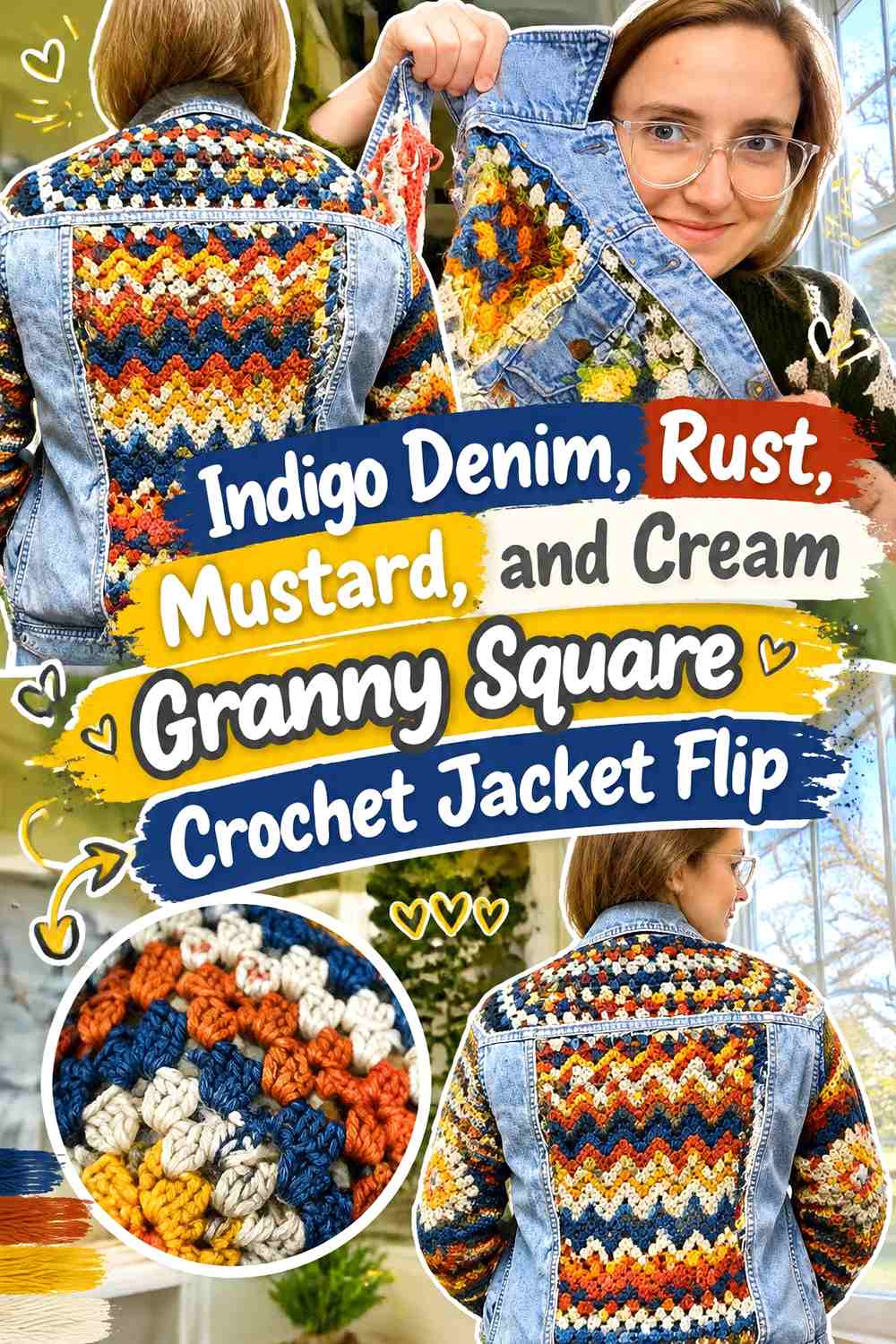
A thrifted denim jacket gives granny squares a structured background, making the back panel a natural place for a statement crochet insert. Keep indigo or denim blue somewhere in the squares, let rust provide the dominant warm color, and use mustard and cream in smaller areas. Repeating blue prevents the crochet from looking completely separate from the jacket.
A large back panel can carry more color than a pocket because it has enough surface area for the palette to repeat. Keep the collar, front plackets, and cuffs mostly denim so the flip still reads as a denim jacket first.
Rust Should Lead the Indigo Denim Granny Square Back Panel
Give rust the largest share of the crochet panel if you want a warm vintage direction. The indigo jacket already supplies plenty of cool blue, so another blue-dominant crochet panel can make the whole piece feel visually flat.
Repeat a small amount of denim-like blue inside the rust squares instead. That small connection is usually enough to integrate the new panel with the original garment.
Mustard and Cream Can Separate Rust From Indigo Denim
Place cream beside the darkest denim areas when small square details need stronger visibility. Mustard can then sit between rust and cream as a warmer transition rather than competing as another dominant shade.
Before attaching a large panel, view the jacket from several feet away. If the mustard and rust collapse into one block, increase the visible cream between them.
Creator Credit: Coulee Craft YouTube tutorial
2. Oatmeal, Olive, and Terracotta Granny Square Crochet Sweater Flip
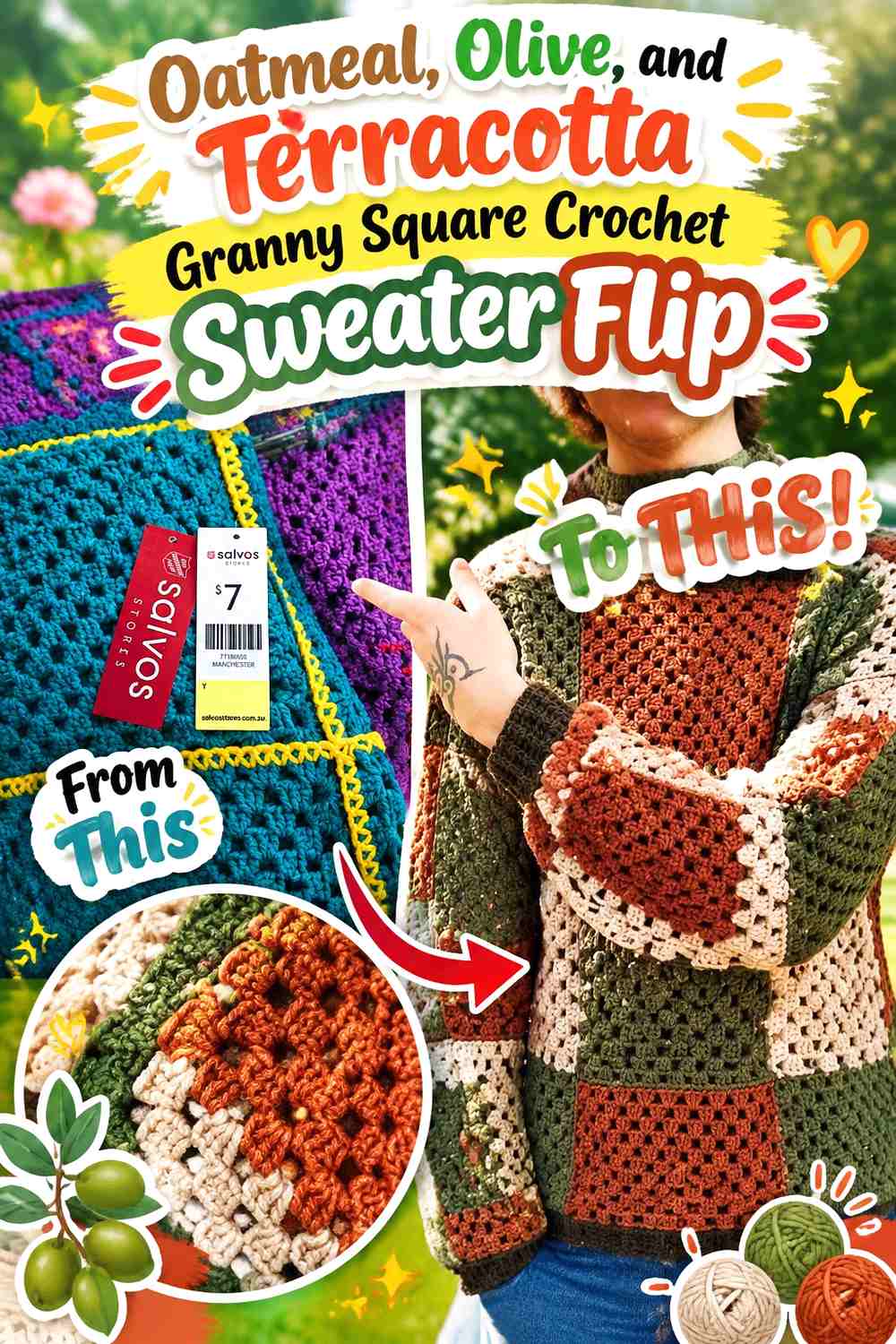
An oversized thrifted sweater can be combined with granny-square sections without turning every inch into patchwork. Oatmeal works well as the connecting neutral, olive brings an earthy supporting color, and terracotta can mark the centers or selected outer rounds.
This palette is particularly useful when the original sweater is beige, tan, cream, or brown. Instead of hiding the existing color, use it as part of the final scheme and let the crochet introduce the stronger shades.
Oatmeal Should Connect the Granny Squares to the Thrifted Sweater
If the sweater is already neutral, use oatmeal around the outer edge of the motifs or at the joins. Matching the visual lightness of the base garment can make the new sections feel integrated.
Avoid outlining every square in dark olive if you want a softer transition. A dark join will emphasize the grid more strongly.
Terracotta Should Stay More Concentrated Than Olive
Terracotta can become the focal color in motif centers or selected squares, while olive works well as a repeating supporting shade. Using both in equal amounts can make the sweater visually busier than necessary.
If the finished layout looks heavy, increase the oatmeal area rather than introducing another light color.
Creator Credit: Mel’s Yarniverse YouTube tutorial
3. Charcoal, Blush, and Cream Granny Square Crochet Pocket Cardigan
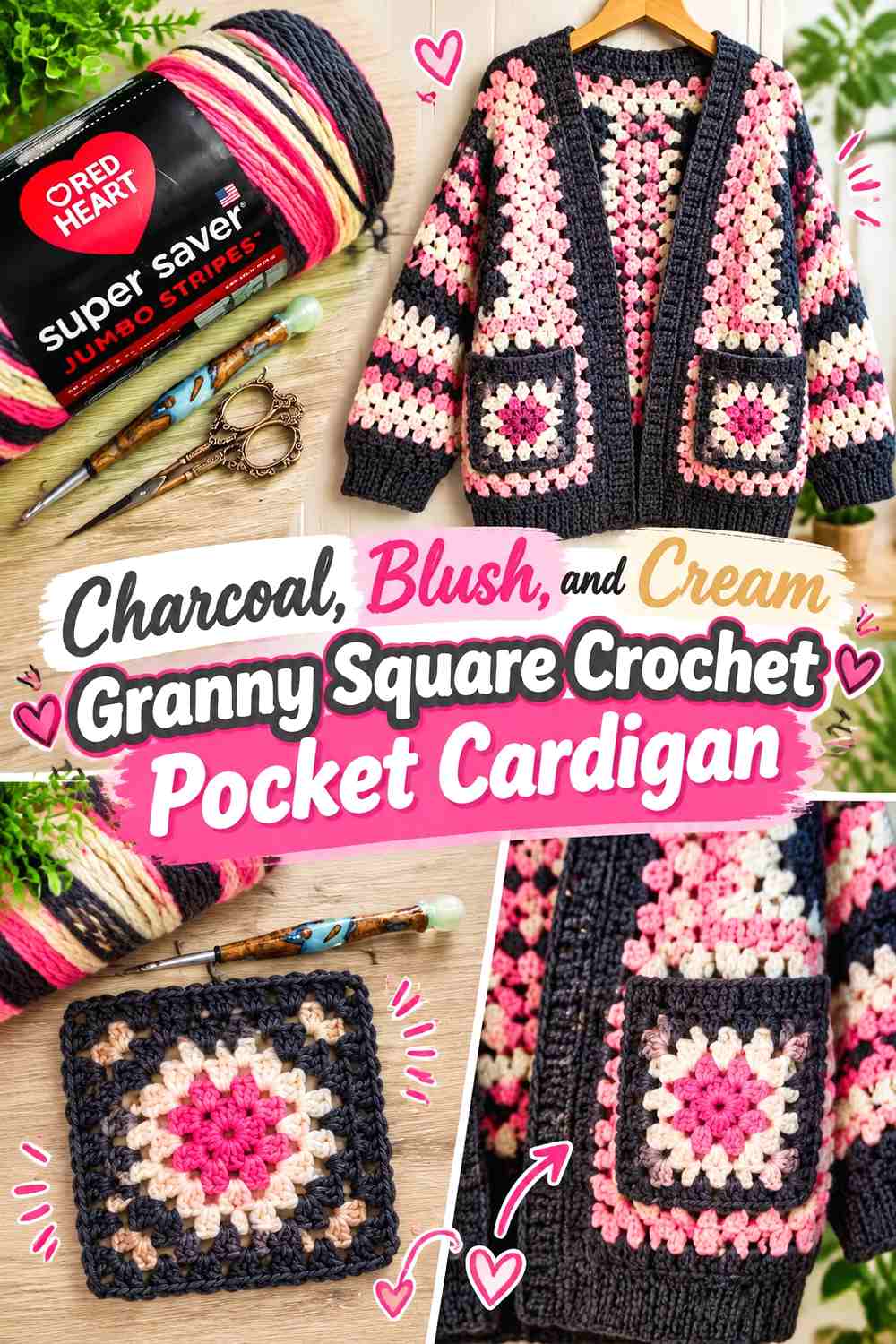
Replacing plain patch pockets with crochet granny squares is one of the least disruptive ways to alter a thrifted cardigan. Let charcoal connect the squares to a dark cardigan, use blush for the main decorative color, and add cream where the motif needs lighter separation.
Because pockets sit side by side on the front, matching their color order usually creates a calmer result than making two completely different squares.
Blush Should Remain Visible Against Charcoal Pockets
If the cardigan is charcoal or black, blush can occupy the wider motif rounds while charcoal appears only in an outer border or small center. Too much charcoal inside the square reduces the contrast that makes the pocket noticeable.
Cream can be used where a blush center needs extra definition.
Cream Can Keep Charcoal Pocket Edges From Disappearing
A charcoal outer round on a charcoal garment may visually vanish. Put a narrow cream or blush round immediately inside the dark border so the square shape remains clear.
Check the pockets while the cardigan is hanging naturally. Color balance can look different once the pockets sit vertically rather than flat on a table.
Creator Credit: WickedlyHandmade YouTube tutorial
4. Forest Green, Camel, and Ivory Granny Square Crochet Hem Cardigan
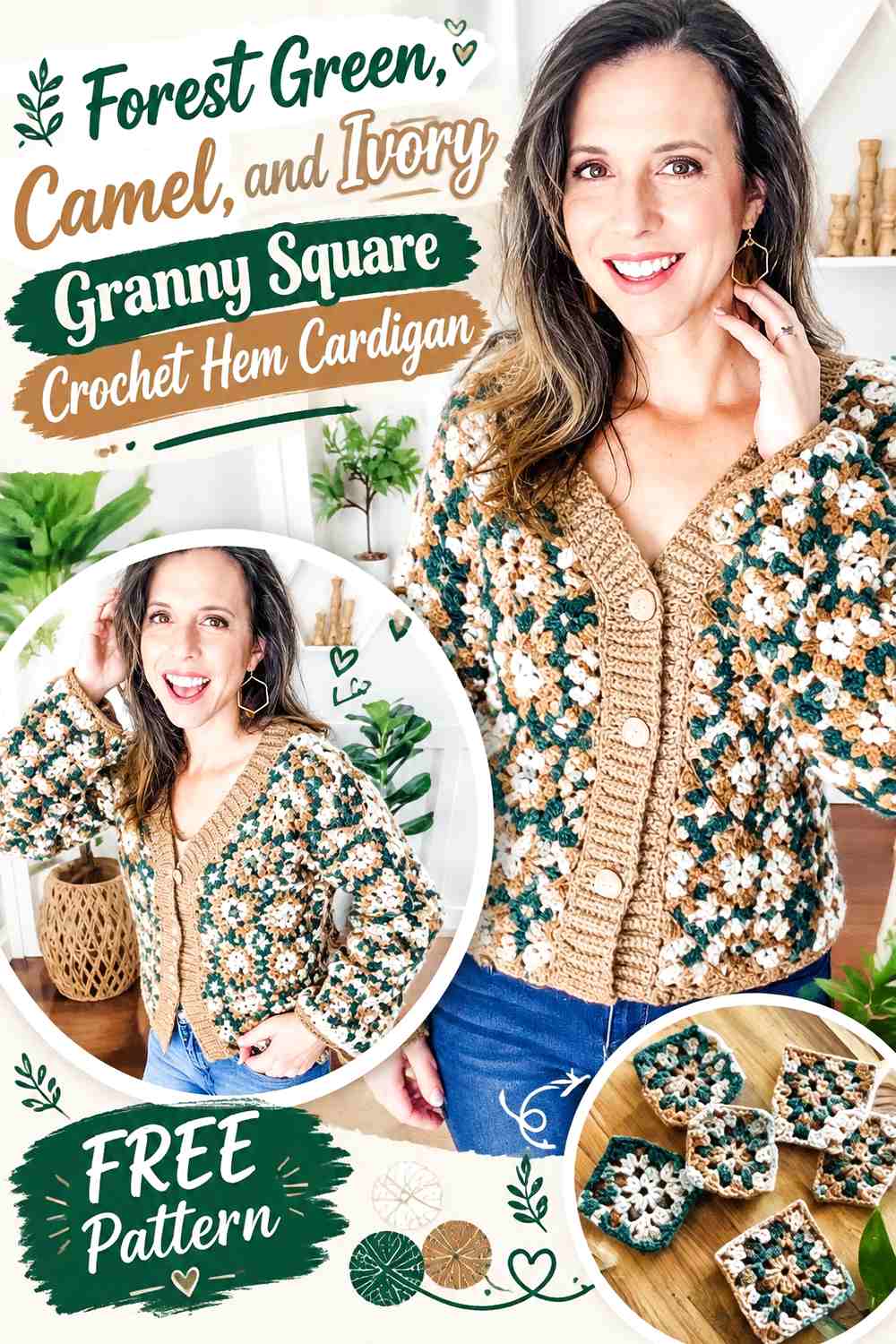
A long thrifted cardigan can take a row of granny squares around the lower body without replacing its entire construction. Forest green creates a strong grounding shade, camel softens the transition to the original garment, and ivory can highlight motif centers or selected edges.
Keep the crochet concentrated at the hem if you want the cardigan to retain a mostly solid upper half. This also gives the granny squares enough horizontal repetition to look intentional.
Forest Green Can Anchor the Granny Square Cardigan Hem
Use forest green around several outer motif rounds or along the joining line where the crochet meets the cardigan. The darker band gives the lower section visual weight.
If the cardigan itself is dark, reverse that logic and let ivory or camel sit nearest the fabric so the join remains visible.
Camel Helps Ivory Blend Into a Forest Green Cardigan
Ivory beside forest green creates strong contrast. Camel can sit between them where you want a less abrupt transition, especially in larger granny squares.
Keep camel repeated across the whole hem rather than using it in just one or two motifs. Repetition makes the new section look planned.
Creator Credit: Briana K YouTube tutorial
5. White, Cobalt, and Coral Granny Square Crochet T-Shirt Crop Flip

A plain thrifted white T-shirt gives strong colors plenty of visual space. Cobalt can form the main square outlines, coral can fill centers or petal-like sections, and white can repeat inside the crochet to connect the motifs directly to the shirt.
This works well as a cropped-panel idea: retain enough original fabric around the shoulders and upper body, then use granny-square detail where a more decorative lower panel or front section makes sense.
Cobalt Should Define the Granny Square Structure on White
Cobalt gives a white garment a visible crochet grid without requiring black. Use it around square edges or joins when you want the motif layout itself to be part of the design.
If the cobalt becomes too dominant, repeat more white inside each motif instead of reducing the size of the squares.
Coral Should Stay Inside the Cobalt Granny Square Framework
Use coral as a center or intermediate round rather than letting it cover every edge. Keeping cobalt around the perimeter prevents the warm coral from visually floating on the white shirt.
A consistent coral placement also helps mismatched thrifted fabric and crochet read as one deliberate piece.
Creator Credit: Chenda DIY YouTube tutorial
6. Faded Blue, Sunflower Yellow, and Cream Granny Square Crochet Denim Shorts

Denim shorts provide small but useful spaces for crochet: side panels, patch pockets, or sections near the leg opening. Faded blue can repeat the denim color, sunflower yellow supplies the strongest accent, and cream keeps the yellow motifs clear.
Avoid covering every part of the shorts. A single crochet side panel or pair of coordinated pockets can create enough contrast while preserving the original waistband and closure.
Sunflower Yellow Needs Faded Blue Around the Denim Panels
Place faded blue around or between yellow motif sections so the crochet connects to the existing denim. Yellow placed directly across a large area of blue can become the only feature the eye sees.
Cream centers can break up the yellow without adding another saturated shade.
Cream Keeps Sunflower Yellow Granny Squares Clear on Faded Denim
Use cream in centers or inner rounds where yellow and pale denim are similar in lightness. The neutral separation keeps smaller motifs readable.
If the denim is very light, slightly deeper yellow will usually provide more definition than adding more cream.
Creator Credit: Creative Hands by SHAY YouTube tutorial
7. Black Denim, Burgundy, and Dusty Rose Granny Square Crochet Jeans
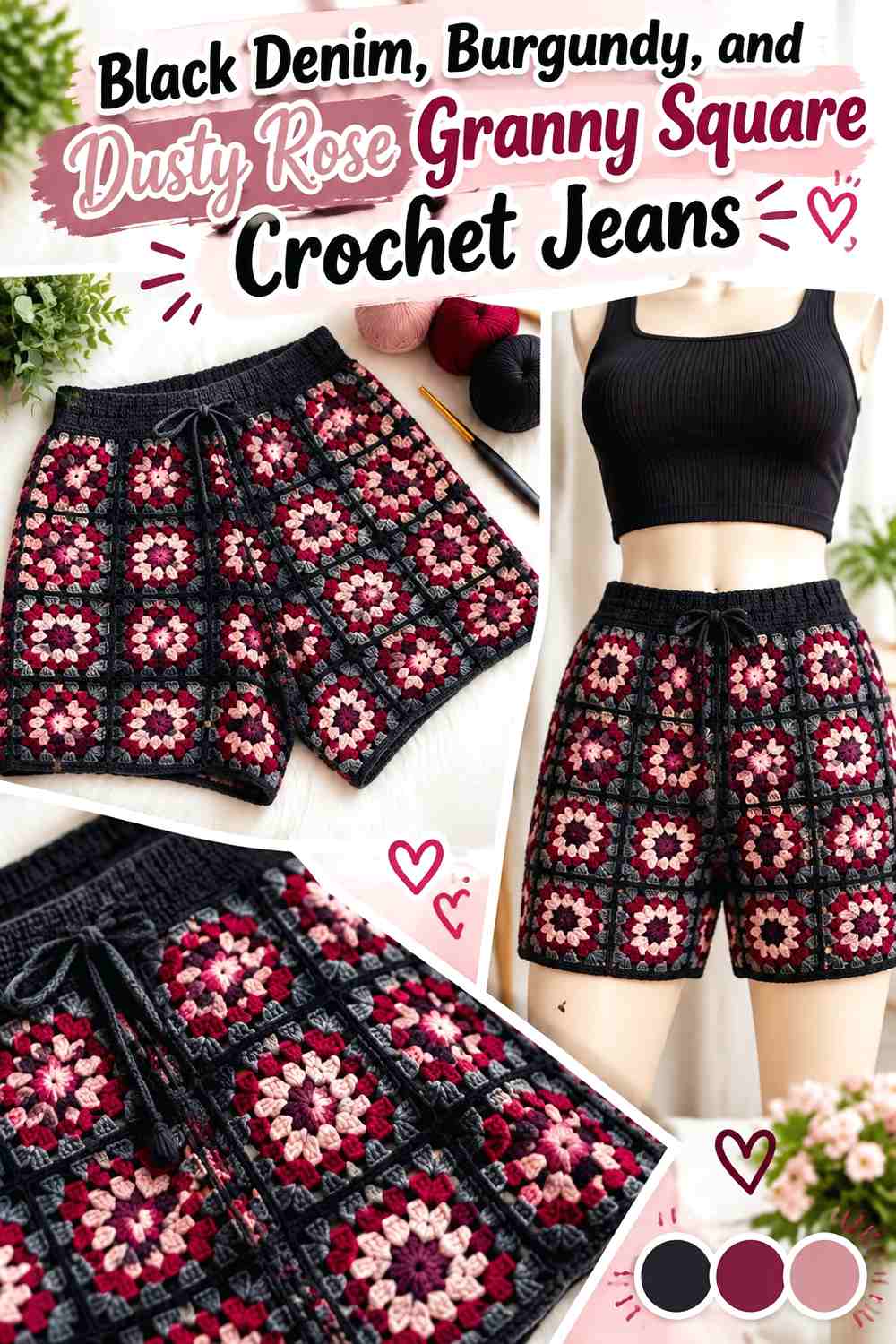
Granny-square patches can turn worn knees or deliberately opened sections of thrifted jeans into part of the design. Black denim provides a dark frame, burgundy creates the main crochet block, and dusty rose highlights the inner square structure.
Keep the crochet panels proportional to the damaged or altered area rather than covering the entire leg unless full patchwork is the goal.
Burgundy Needs Dusty Rose Contrast Against Black Denim
Burgundy and black are both visually dark, so dusty rose is useful between them. Place the lighter pink around centers, corners, or an intermediate round so the square remains recognizable.
Without that lighter break, burgundy crochet can look like one dark patch from a distance.
Black Denim Should Frame Rather Than Fill the Burgundy Squares
The jeans already provide the black component. There is usually no need to repeat large amounts of black yarn inside every square.
Use black yarn sparingly at attachment edges if needed, allowing burgundy and dusty rose to provide the actual crochet detail.
Creator Credit: Auder Crochet YouTube tutorial
8. Chocolate Brown, Sage, and Cream Granny Square Crochet Dress Flip

A plain thrifted dress can support granny-square detail at the hem, waist, pockets, or bodice depending on its original construction. Chocolate brown gives the crochet a deeper anchor, sage adds muted color, and cream prevents the overall palette from becoming too dark.
For a dress, repeat the motifs around more than one visible area only when the placement feels balanced. A granny-square hem may need no additional chest detail.
Chocolate Brown Can Ground a Sage Granny Square Dress Hem
Use brown around motif edges where the squares meet the existing dress. A dark border makes the hem look deliberate and can help several sage-and-cream centers read as one band.
If the dress itself is dark brown, move cream or sage to the outer round instead.
Cream Should Separate Sage From Chocolate Brown Details
Cream is especially useful in smaller motifs where muted sage could otherwise merge into brown. Put it around the flower center, corner clusters, or another area that needs definition.
Keep cream repeated at regular intervals so the lower hem does not look randomly spotted.
Creator Credit: 🧶Mihankushea🧶 YouTube tutorial
9. Pale Blue, Cherry Red, and White Granny Square Crochet Button-Down Shirt
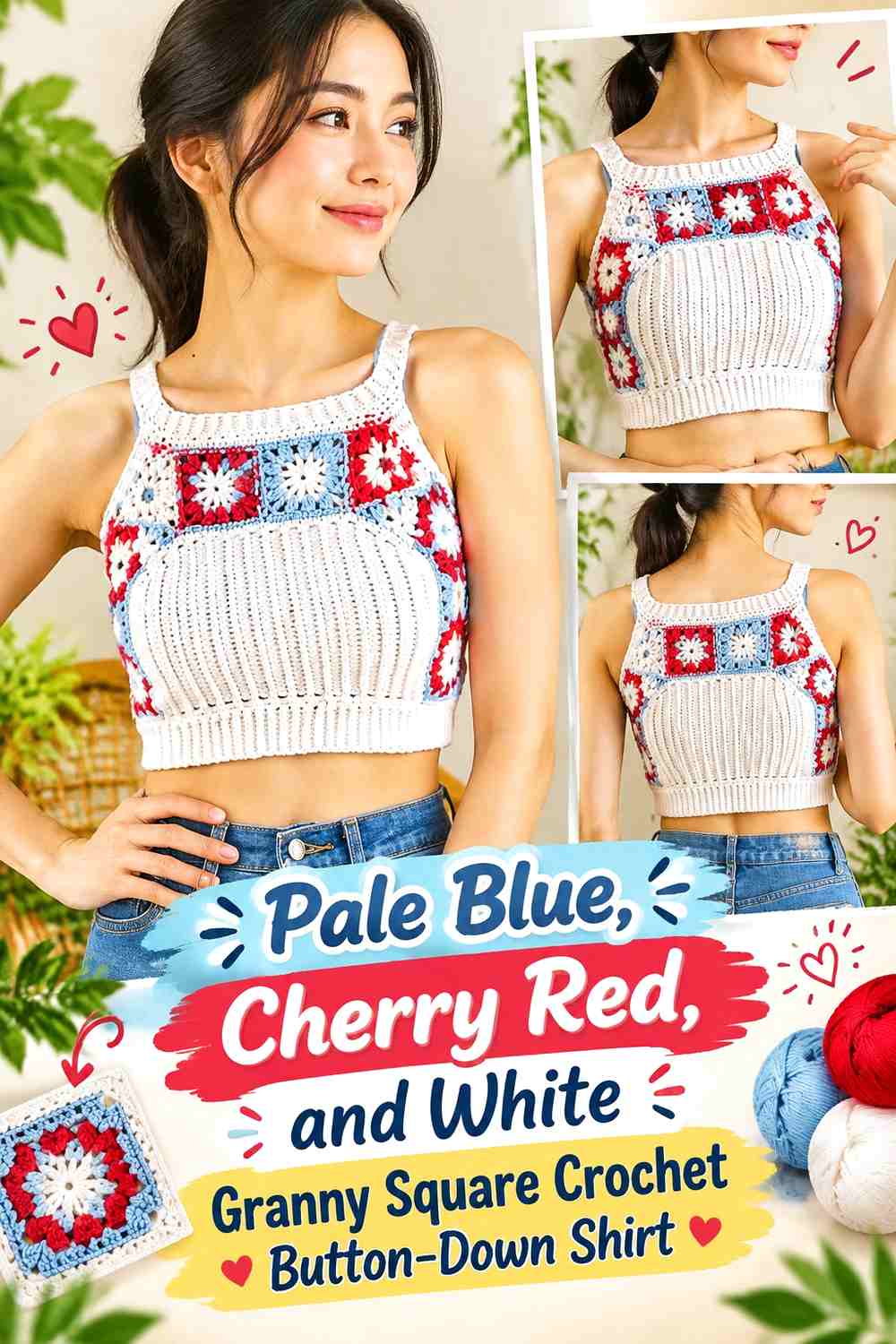
A thrifted button-down can take a granny-square yoke, chest band, or lower side panels while keeping its collar and button placket intact. Pale blue works as the garment-connected base, cherry red provides a crisp focal color, and white keeps the square pattern lighter.
Concentrate the crochet away from the buttonholes if you want the original front closure to remain functional.
Cherry Red Should Be Controlled on a Pale Blue Shirt
Use red in centers or selected rounds instead of making every outer edge red. The strong contrast against pale blue can dominate quickly on a shirt with relatively little surface area.
White can take a larger supporting role and keep the finished garment from becoming red-heavy.
White Can Connect Cherry Red Granny Squares to Pale Blue Fabric
White works well along the square edges or joining area because it sits visually between the pale blue garment and stronger red motifs.
If the shirt has white buttons, repeating white in the crochet can also help those existing details feel intentional within the new palette.
Creator Credit: TCDDIY YouTube tutorial
10. Heather Gray, Plum, and Lavender Granny Square Crochet Sweatshirt

A plain thrifted sweatshirt offers broad uninterrupted areas for one oversized granny square or a small group of motifs. Heather gray should remain the dominant garment color, plum can provide the deepest crochet accent, and lavender can create lighter transitions.
One large square at the center front or back creates a different effect from scattered patches: the sweatshirt keeps its simple silhouette while the crochet becomes one strong focal point.
Plum Gives Heather Gray a Strong Granny Square Center
Use plum near the center of the motif or in one substantial round so the square has enough visual weight against gray sweatshirt fabric.
Avoid using plum on every outer edge if you want lavender to remain visible as a second crochet color.
Lavender Can Soften the Jump From Plum to Heather Gray
Lavender provides an intermediate value between dark plum and medium gray. Place it near the outer part of the square where the crochet meets the sweatshirt.
If your gray is very pale, reverse the balance and let plum define the edge instead.
Creator Credit: Fiber Flux YouTube tutorial
11. Navy, Teal, and Mint Granny Square Crochet Sleeve Sweater

Replacing plain or damaged sweater sleeves with granny-square sections creates one of the strongest thrift-flip transformations in this list. Navy can connect the crochet to a dark sweater body, teal gives the sleeves most of their color, and mint keeps the square centers visible.
Sleeves need more consistency than decorative pockets because every joined motif affects circumference and length. Plan the finished panel against the existing sleeve before removing fabric.
Teal Should Carry Most of the Navy Granny Square Sleeves
Let teal appear through several motif rounds so the new sleeves look intentionally colorful. If navy occupies most of the crochet as well as the sweater body, the granny-square construction may become difficult to see.
Repeat navy mainly at joins, cuffs, or selected outer rounds.
Mint Keeps Teal and Navy Sleeve Motifs Separate
Mint can provide the lightest point inside each square. Repeating it in the same position across the sleeves helps the motifs form a consistent rhythm from shoulder to cuff.
If the mint looks too bright beside the sweater, reduce its surface area rather than eliminating the contrast completely.
Creator Credit: Neon Fuzz Studio YouTube tutorial
12. Camel, Teal, and Burnt Orange Granny Square Crochet Back-Panel Cardigan
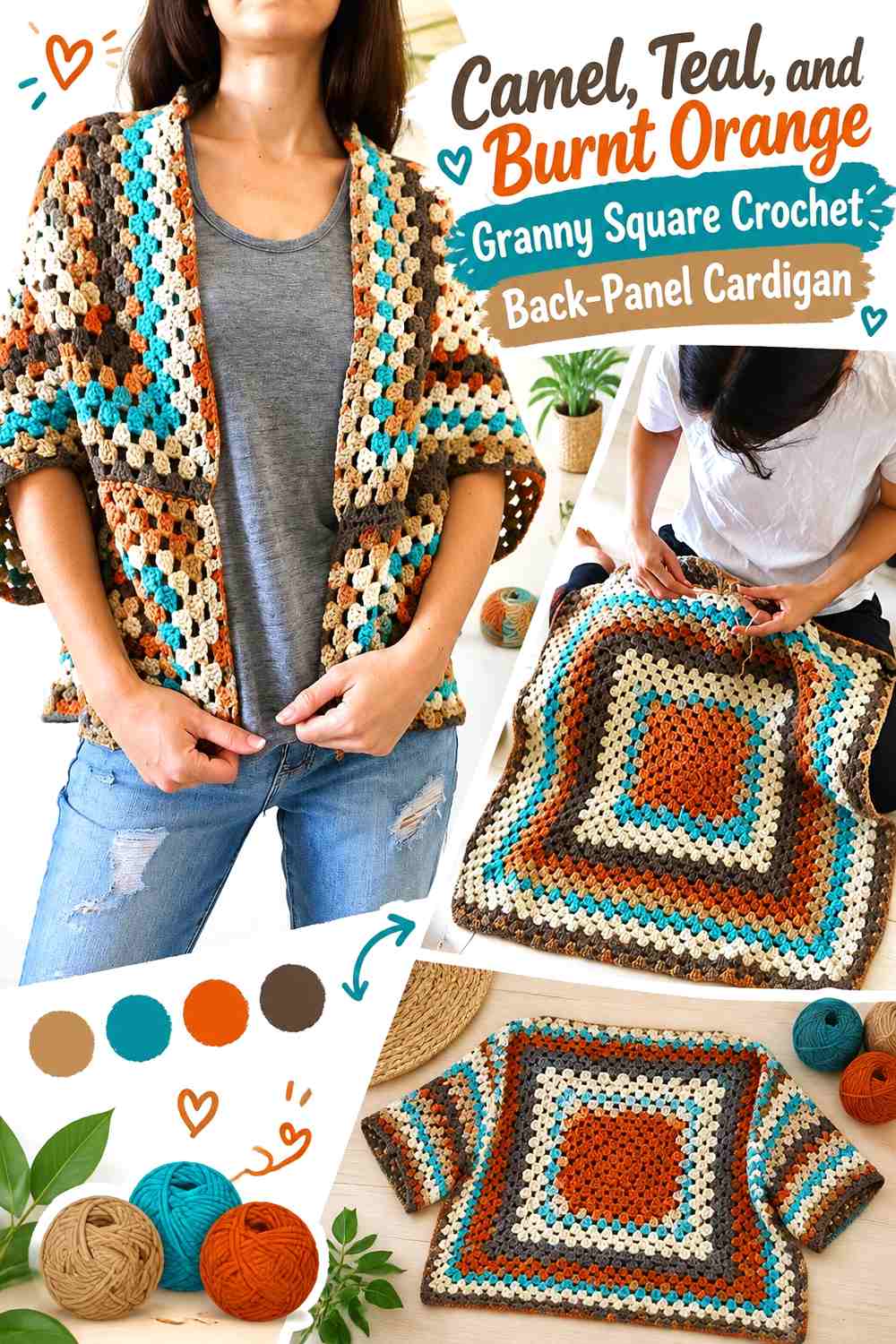
A thrifted camel cardigan can be flipped with one broad granny-square section across the back. Keep camel inside the motifs to connect the crochet to the original knit, use teal as the cooler contrasting shade, and let burnt orange provide the warm accent.
Because the back offers a larger visual field than pockets or cuffs, you can repeat both accent colors without making the front overly busy.
Camel Should Repeat Inside the Teal Granny Square Back
Do not let the original cardigan be the only place camel appears. A camel outer round or joining row helps the crochet look integrated with the garment.
This is particularly useful when teal and burnt orange are both fairly saturated.
Burnt Orange Should Accent Teal Rather Than Divide the Cardigan Evenly
Use burnt orange in centers, alternate motifs, or selected rounds. Making teal and orange occupy identical areas can create a very active grid across the entire back.
Let one color lead and the other punctuate it.
Creator Credit: The Snugglery YouTube tutorial
13. Black, Emerald, and Mustard Granny Square Crochet Blazer Flip
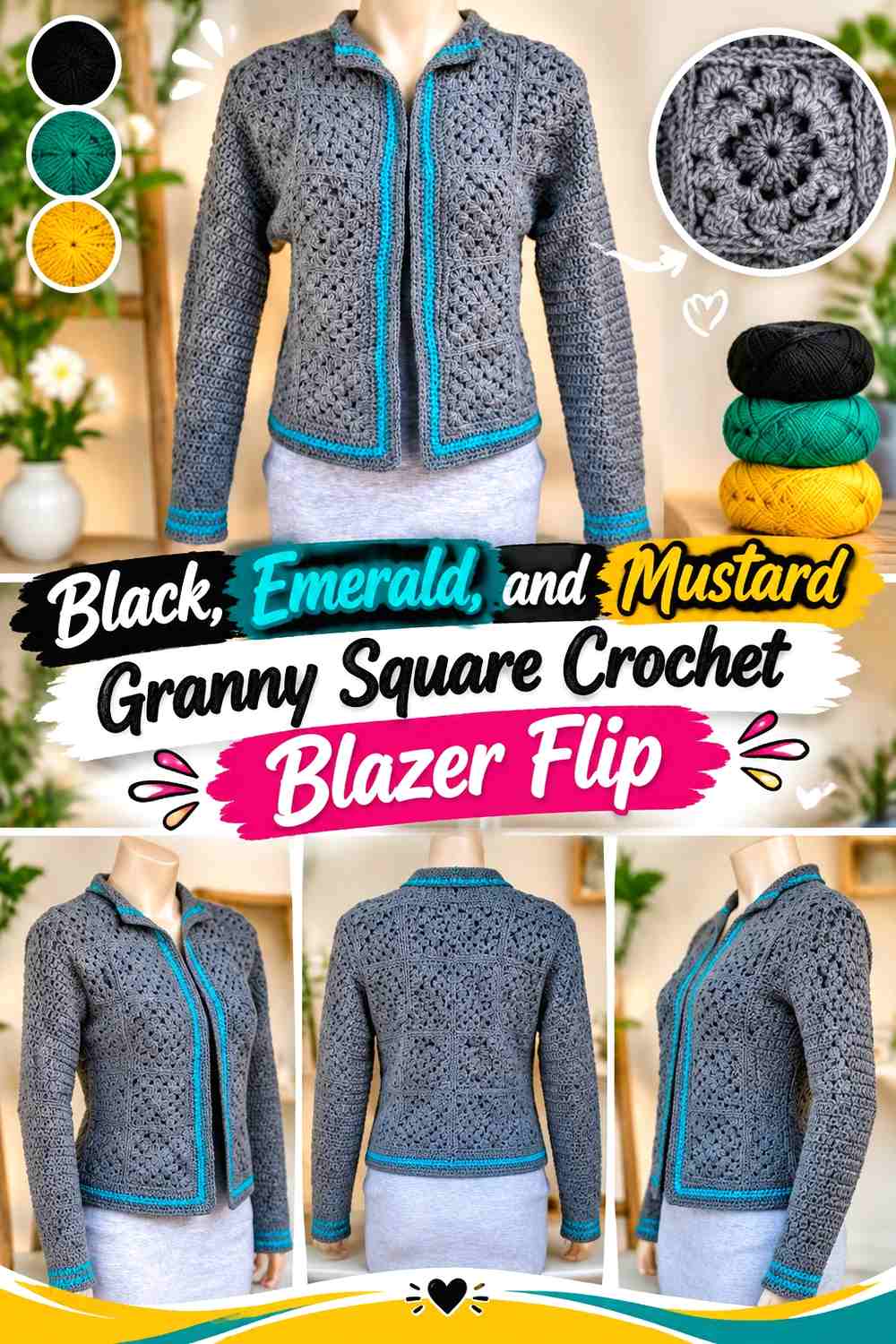
A thrifted black blazer can handle stronger granny-square colors because the base is visually simple. Emerald can dominate the crochet sections, while mustard provides a warmer center or accent. Keep black at the borders so the motifs connect to the lapels, sleeves, and untouched areas.
Back panels and lower front sections are usually better visual candidates than covering the lapels with several competing motifs.
Emerald Can Lead the Granny Square Blazer Panels
Use emerald across the larger motif rounds where you want the crochet to remain visible from a distance. Black outer rounds can then integrate the squares with the blazer.
A black-heavy motif will be much subtler, which may be useful for a smaller pocket flip but less effective for a statement back.
Mustard Needs Repetition Across Emerald and Black
A single mustard center may look accidental on a large blazer panel. Repeat it at planned intervals so the warm shade has a clear purpose.
If mustard begins competing with emerald, shrink its role to centers rather than removing it completely.
Creator Credit: Crochet with Clare YouTube tutorial
14. Cream, Moss Green, and Rust Granny Square Crochet Sweater Vest
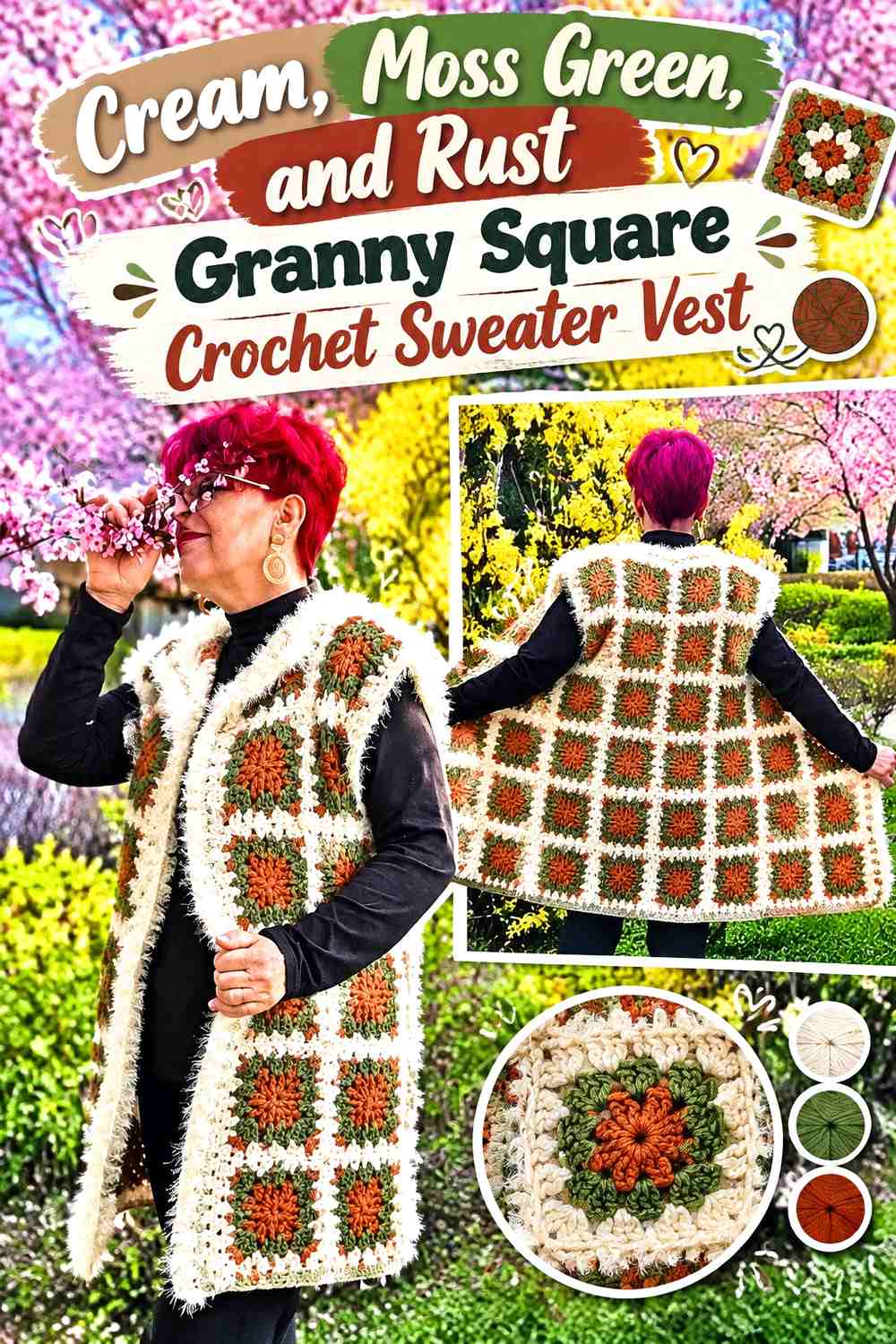
A thrifted cream sweater can become a vest with granny-square front, side, or lower panels. Cream should remain the largest visual area, moss green can organize the crochet grid, and rust can provide smaller warm accents.
This is a good direction when you want the flip to look integrated rather than heavily patchworked. Large neutral areas allow the granny-square details to stand out without taking over the entire garment.
Moss Green Can Define the Granny Squares on Cream
Use green around motif outlines or joins so the square structure remains visible against the cream garment.
If every motif has a dark green border, repeat cream inside the centers to keep the panel from becoming too heavy.
Rust Should Stay Smaller Than Moss Green on a Cream Vest
Rust works well in centers and occasional rounds because it brings warmth without requiring a large area. Give moss green the stronger structural job and rust the accent job.
This hierarchy also makes substitutions easier: another earthy orange can replace rust as long as it remains visually distinct from green and cream.
Creator Credit: Crochet your life YouTube tutorial
15. White, Red, and Pink Granny Square Crochet T-Shirt Vest Flip
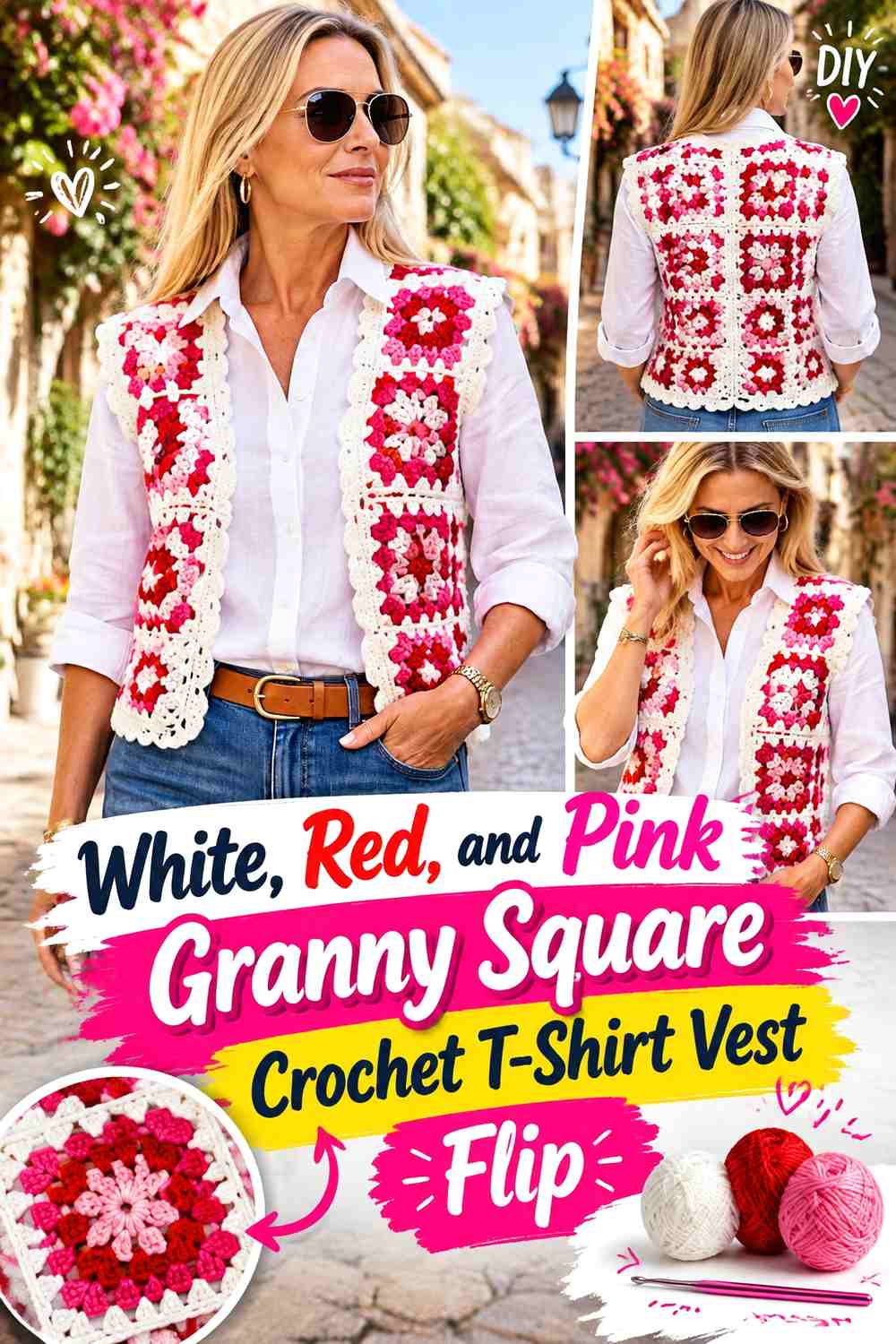
A plain white thrifted tee can become a sleeveless layer with large granny-square sections. White repeated in the crochet connects the squares to the base, red creates the strongest contrast, and pink provides a lighter supporting color.
This color direction works particularly well when the motif itself is meant to become the main front feature rather than a small patch.
Red Should Be the Strongest Granny Square Accent on White
Use red where you want the motif to hold its shape visually: a central design, selected outer rounds, or a strong border.
Avoid scattering tiny red details across every possible area. Larger controlled red sections look more intentional against white.
Pink Can Bridge Red and White Granny Square Sections
Pink reduces the visual jump between bright white and saturated red. Place it in intermediate rounds or secondary motifs.
If the pink is extremely pale, make sure it still differs enough from white to remain visible once crocheted.
Creator Credit: Handwork diy YouTube tutorial
16. Dusty Blue, Oatmeal, and Maroon Granny Square Crochet Midi Dress

A solid thrifted midi dress can take granny-square detail around the hem, across a side panel, or in a carefully planned bodice section. Dusty blue makes a muted dominant color, oatmeal provides the light neutral, and maroon adds a deeper accent.
For a longer dress, concentrate the crochet in one major zone. A full granny-square hem already makes a strong statement, so another dense panel at the neckline may be unnecessary.
Dusty Blue Should Control the Granny Square Dress Hem
Keep dusty blue repeated around every motif if you want the new hem to feel continuous. The consistent color creates a horizontal connection even when the centers vary.
Oatmeal can then lighten the individual squares without interrupting the band.
Maroon Works Better as an Accent Against Dusty Blue and Oatmeal
Use maroon in centers or occasional motifs rather than letting it occupy most of the lower dress. A very dark hem can make the garment appear visually bottom-heavy.
If you want a stronger maroon presence, repeat small amounts more often instead of making a few motifs almost entirely maroon.
Creator Credit: VivCrochets YouTube tutorial
17. Black, Hot Pink, and Purple Granny Square Crochet Sleeve Top

A thrifted black long-sleeve top can be transformed by replacing or overlaying sections of the sleeves with bright granny squares. Black should remain visible at joins and cuffs, hot pink can lead the motifs, and purple can provide a darker secondary color.
Since both accent colors are saturated, the black background is useful as intentional negative space rather than another equal motif color.
Hot Pink Should Lead the Granny Square Sleeves on Black
Give pink enough surface area to remain visible along the full sleeve. A tiny center in each square may disappear once the arm bends and the motifs turn away from the viewer.
Black borders can keep the repeated pink sections separated.
Purple Needs Clear Separation From Black Sleeve Edges
Deep purple and black can become similar in value. Place hot pink beside purple where you need the purple round to remain obvious.
If the purple still disappears, choose a lighter or more vivid purple rather than adding another color.
Creator Credit: Crazy Cool Crochet YouTube tutorial
18. Soft Gray, Sage, and Blush Granny Square Crochet Bolero Flip
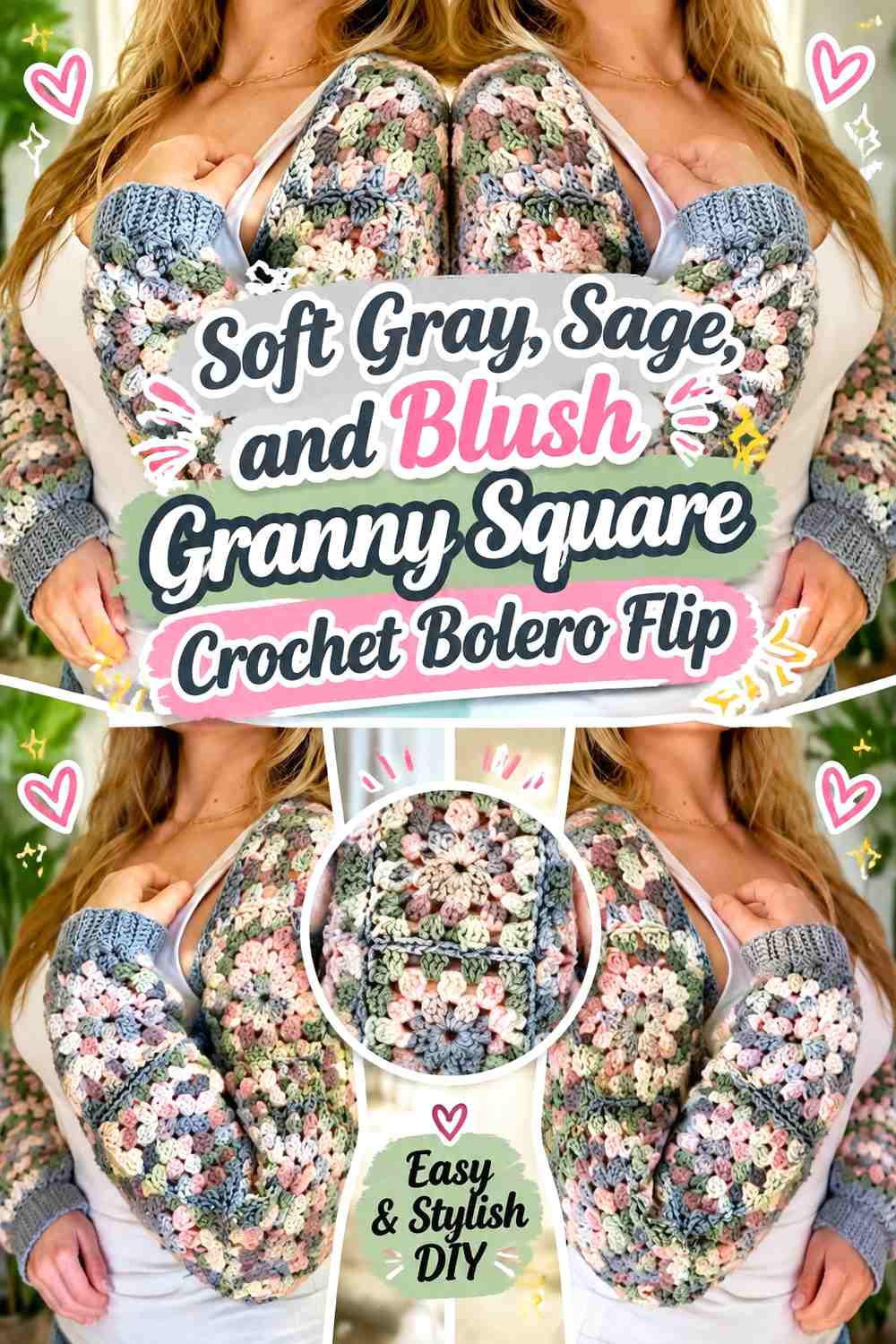
A thrifted lightweight cardigan or long-sleeve knit can inspire a cropped bolero-style flip with granny-square sleeves and back detail. Soft gray gives the palette a neutral base, sage supplies the main muted color, and blush can highlight centers or selected motifs.
This direction works best when the garment is intentionally reduced to a smaller layer rather than simply having random crochet patches added after cropping.
Sage Can Carry the Granny Square Bolero Surface
Use sage across enough motifs that it becomes the main crochet color. Gray can remain around edges, joins, or sections retained from the original garment.
That distribution keeps the bolero subdued while still showing the square construction.
Blush Should Punctuate Soft Gray and Sage Motifs
Place blush in repeated centers or alternate rows rather than using it in every round. Small warm accents provide enough contrast against the cooler gray-and-sage background.
If the blush nearly matches the gray in value, deepen it slightly so the motifs do not lose their centers.
Creator Credit: Wooly Mama Crochet YouTube tutorial
19. Dark Brown, Cream, and Olive Granny Square Crochet Waistcoat Flip

A thrifted button-front vest or cropped cardigan can become a granny-square waistcoat with motifs across the front panels or lower back. Dark brown gives the design a strong frame, cream creates the clearest contrast, and olive provides the muted middle color.
Keep buttons and buttonholes visible rather than allowing the crochet panel to crowd the closure. Granny squares can surround the opening while the original placket continues to do its job.
Dark Brown Should Frame the Cream Granny Square Waistcoat
Use brown along motif edges or around the front opening so the crochet feels connected to a dark thrifted base.
Cream can occupy more of the interior square, helping the motif remain visible even when several squares sit close together.
Olive Can Connect Dark Brown and Cream Without Competing
Olive works well between the darkest and lightest colors. Use it in intermediate rounds, centers, or alternating motifs.
If the finished front looks too dark, increase cream rather than adding another color. The three-color hierarchy is already enough for a small waistcoat panel.
Creator Credit: Sirin’s Crochet YouTube tutorial
Which Granny Square Thrift Flip Color Direction Should You Choose?
For denim flips, rust, mustard, sunflower yellow, burgundy, and dusty rose provide enough contrast to stand apart from blue or black fabric. Neutral sweaters and cardigans give you more flexibility: forest green, teal, terracotta, and burnt orange can carry larger crochet sections without fighting an existing strong garment color.
If you want the granny squares to feel like part of the original garment, repeat the base fabric color inside the motifs. If you want an intentionally patched look, increase the contrast at the square edges instead. Large back panels can handle more color variation, while small pockets, cuffs, and knee patches usually look clearer with a tighter three-color hierarchy.
Conclusion
Granny-square thrift flips do not need to replace an entire garment to make a visible difference. For a smaller alteration, start with charcoal-and-blush pockets, burgundy knee patches, or a cream-and-moss vest panel. For a stronger transformation, granny-square sleeves, jacket backs, cardigan hems, or dress panels provide enough space for the palette to become a major design feature.
The most useful first step is to work with what the thrifted garment already offers. Treat denim, buttons, cuffs, existing ribbing, and the original fabric color as parts of the palette rather than obstacles to hide. Block and position the granny squares before making irreversible changes, then use the original creator tutorials for their exact crochet construction.
Frequently Asked Questions
What thrifted clothes work well for adding crochet granny squares?
Garments with relatively stable areas for attaching panels are useful starting points. Denim jackets, cardigans, sweaters, jeans, shorts, vests, and simple dresses can all provide potential placement areas. Inspect the condition and structure first; damaged seams or fragile fabric may need attention before decorative crochet is added.
Should granny square colors match the thrifted garment?
They do not have to match exactly, but repeating the garment color somewhere inside the crochet can make the flip feel more connected. A faded denim jacket, for example, can include one blue round among rust and cream squares. For a deliberately patched look, use a stronger contrasting border instead.
How can I tell whether my granny square colors have enough contrast?
Place the finished yarn colors beside the thrifted garment and look at them from a distance. You can also view a photo in grayscale. If the motif center, border, and garment all appear nearly the same lightness, important square details may merge even when the yarn hues are different.
Where should I put granny squares if I do not want to cut the garment?
Pockets, elbow patches, surface back motifs, lower-hem appliqués, and decorative chest panels can often be planned without removing a large section of fabric. This also makes it easier to test the placement before committing to a more structural alteration.
What should I check before replacing thrifted sleeves with granny squares?
Compare the completed crochet panel with the existing sleeve’s length, upper-arm area, cuff area, and armhole before removing anything. Crochet and fabric may stretch differently, so treat the original sleeve as useful sizing information rather than cutting it away at the beginning.
How can I stop a granny square thrift flip from looking too busy?
Give one color a clear dominant role, keep a second shade supportive, and use the strongest accent in smaller amounts. Also leave some of the original garment untouched. A solid denim front with a colorful granny-square back often has more visual clarity than covering the collar, pockets, sleeves, and hem with unrelated motifs.
Do all of the linked tutorials start with thrifted clothing?
No. Some demonstrate complete granny-square garments, sleeves, pockets, panels, or joining approaches that can inform an upcycled clothing concept. The thrift-flip placements and color schemes in this article are independent adaptations; follow each creator’s original tutorial for the construction they actually demonstrate.