Scrap yarn can give an existing garment a second direction without requiring every section to be rebuilt. A faded denim jacket can gain crochet pockets, a plain sweater can take on patchwork sleeves, worn jeans can carry square panels over damaged areas, and a cardigan can be refreshed with mismatched pockets, cuffs, or a new crochet border.

Color planning matters more when the yarn comes from leftovers. A scrap box may contain ten appealing shades that do not automatically belong on the same garment. Instead of trying to use every color equally, choose one dominant family, one connecting neutral, and a few smaller accents. Repeating the same border or joining color can make unrelated scraps look deliberate.
The tutorials below support patchwork garments, modular construction, pockets, sleeves, vests, skirts, tops, or other techniques useful for these upcycle concepts. The specific garment makeovers and palettes are independent adaptations. Check the condition, fit, stretch, and strength of the original clothing before attaching substantial crochet sections.
Quick List
- Rust, Oatmeal, and Moss Crochet Patch-Pocket Denim Jacket Upcycle
- Burgundy, Camel, and Cream Crochet Patchwork Cardigan Upcycle
- Denim Blue, Mustard, and Brick Crochet Granny-Back Jacket Upcycle
- Sage, Dusty Rose, and Cocoa Crochet Patch-Sleeve Cardigan Upcycle
- Plum, Olive, and Oatmeal Crochet Patchwork Jeans Upcycle
- Teal, Terracotta, and Cream Crochet Scrap-Panel Tank Top Upcycle
- Mustard, Chocolate, and Rust Crochet Sweater Vest Upcycle
- Charcoal, Berry, and Heather Gray Crochet Pocket Cardigan Upcycle
- Lavender, Moss, and Cream Crochet Granny-Sleeve Sweater Upcycle
- Raspberry, Blush, and Burgundy Crochet Patchwork Pullover Upcycle
- Navy, Camel, and Ivory Crochet Diamond-Patch Cardigan Upcycle
- Forest Green, Rust, and Oatmeal Crochet Back-Panel Cardigan Upcycle
- Wine, Mustard, and Moss Crochet Granny-Patch Vest Upcycle
- Cocoa, Sage, and Cream Crochet Shirt-to-Vest Upcycle
- Black, Jewel Tone, and Oatmeal Crochet Patchwork Dress Upcycle
- Dusty Blue, Plum, and Cream Crochet Shrug-Sleeve Top Upcycle
- Terracotta, Olive, and Sand Crochet Patchwork Skirt Upcycle
Choose One Color to Connect Unrelated Scrap Yarn
A scrap-yarn makeover does not need every patch to contain the same colors, but it usually benefits from one repeating shade. Cream borders can unite multicolor granny squares, charcoal joins can organize bright scraps, and brown or navy can connect several earthy or jewel-toned leftovers.
Use the connecting color where the garment naturally needs definition: around patch edges, across joins, at cuffs, along pockets, or around a neckline. This gives even very different scraps a repeated visual structure.
Match Crochet Patch Weight to the Existing Clothing
Color is only useful if the makeover still hangs well. A thick multicolor square can pull on a lightweight shirt, while a dense sleeve may feel noticeably heavier than an existing sweater body. Before committing to a large patchwork area, pin or temporarily position several finished motifs on the garment and see how the fabric responds.
Large crochet sections are usually easier to balance on sturdy jackets, sweaters, cardigans, and skirts than on thin stretch fabrics. For lighter garments, a few smaller patches, an edging treatment, or a limited pocket makeover can preserve the original drape more successfully.
Plan Scrap-Yarn Contrast Around Seams, Pockets, and Worn Areas
Visible mending works best when the crochet looks deliberately placed. A patch over one knee may need a smaller color repeat on the opposite pocket. Replacement sleeves can connect to an old sweater more naturally when one sleeve color appears again at the hem or neckline.
Also check the contrast between the crochet and the base garment. A navy patch can disappear on dark denim, while cream may look disconnected if it appears nowhere else. Small repeated accents can solve both problems without requiring another large crochet panel.
1. Rust, Oatmeal, and Moss Crochet Patch-Pocket Denim Jacket Upcycle
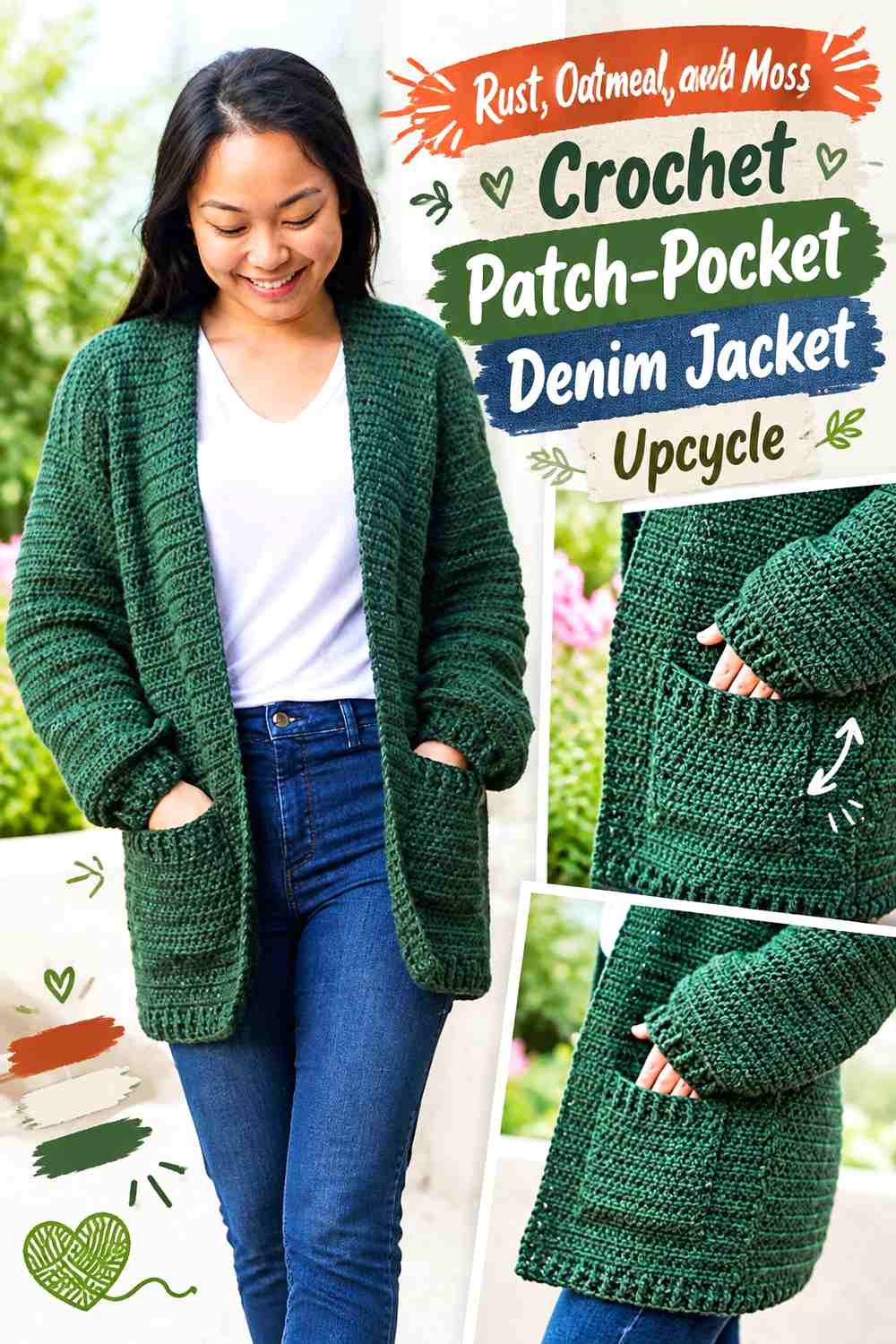
A denim jacket is sturdy enough to support a pair of decorative crochet pockets, and pockets are a useful place to introduce patchwork without rebuilding the whole garment. Rust can lead the squares, oatmeal can separate the warmer scraps, and moss can add a smaller earthy accent that works well against blue denim.
Rust Should Lead the Crochet Pockets Against Blue Denim
Give rust the largest visual share of each pocket so the two sides look related even when individual scrap colors vary. The warm-cool contrast between rust and blue denim makes the pockets noticeable without requiring every square to be brightly colored.
Oatmeal Can Unite Rust and Moss Around the Pocket Edges
Use oatmeal as a repeated outer round or narrow border if the rust and moss scraps differ in saturation. The lighter neutral also creates a cleaner edge where crochet meets denim, helping the pocket shape remain visible.
Creator Credit: forthefrills
2. Burgundy, Camel, and Cream Crochet Patchwork Cardigan Upcycle

A plain cardigan can be transformed by replacing or covering selected front sections with scrap-yarn blocks. Burgundy provides the deepest anchor, camel introduces warmth, and cream can repeat around several patches so mismatched leftovers feel like a planned set.
Burgundy Can Anchor the Lower Crochet Cardigan Patches
Place some of the darkest burgundy near the lower body or selected sleeve areas rather than scattering it evenly everywhere. Concentrating the deep shade helps prevent the cardigan from looking spotted.
Cream Should Repeat Between Burgundy and Camel Patches
Use cream in several different blocks rather than one isolated patch. Its repetition can visually link burgundy and camel even when the exact scrap shades change from square to square.
Creator Credit: ikoxun
3. Denim Blue, Mustard, and Brick Crochet Granny-Back Jacket Upcycle
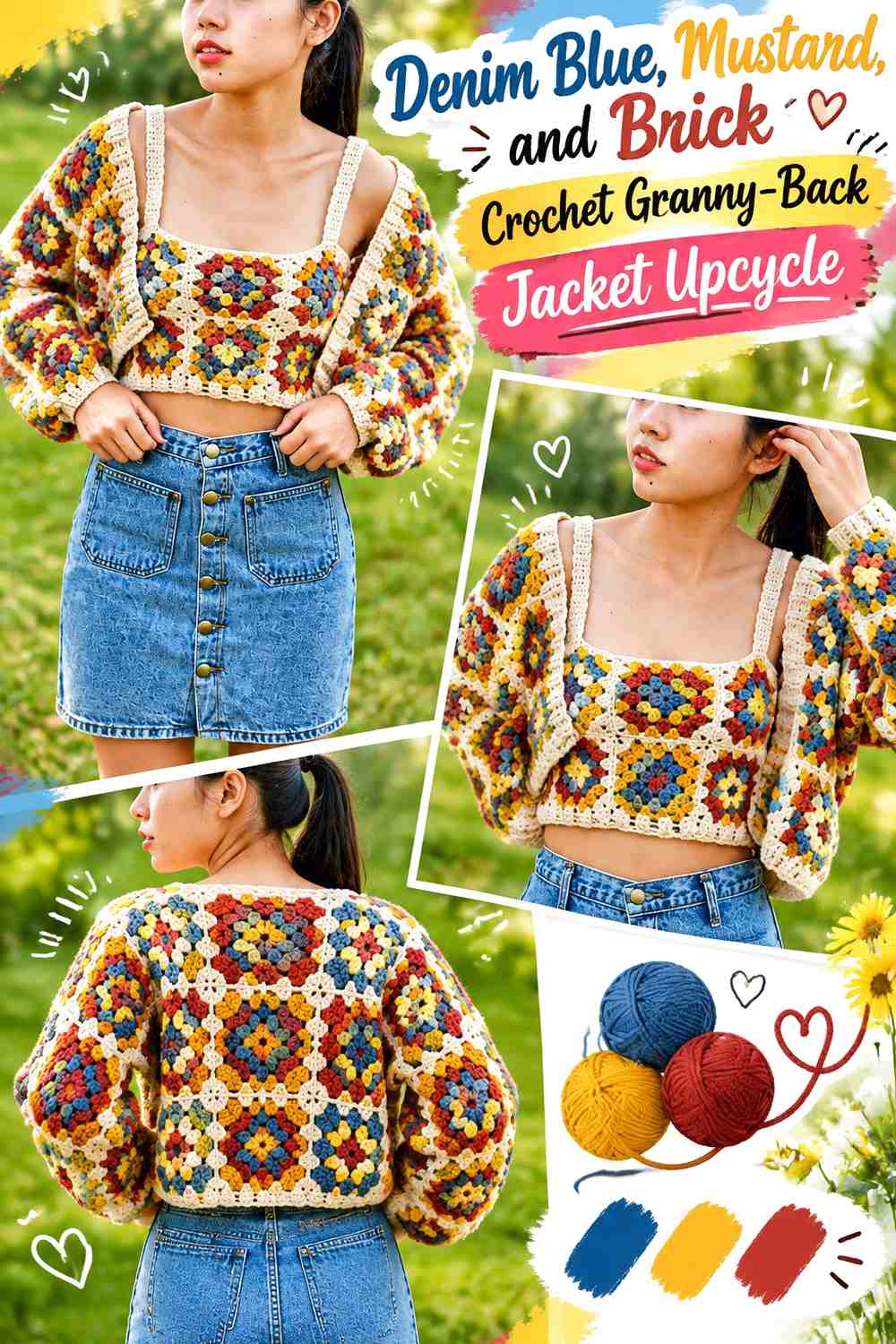
A large crochet panel across the back of an older jacket creates a clear focal area while leaving the original sleeves and front mostly intact. Denim blue can connect the crochet back to the garment, mustard provides the lighter accent, and brick introduces a warm middle shade.
Denim Blue Can Connect the Crochet Back Panel to the Jacket
Repeat a blue related to the jacket around several motif edges or joins. It does not need to match the denim exactly; its purpose is to create a transition between the textile and the new crochet area.
Mustard and Brick Need Unequal Roles Against Denim Blue
Let one warm shade appear more often than the other. Mustard can highlight selected centers while brick covers larger supporting sections, preventing two strong warm colors from competing equally across the back.
Creator Credit: Chenda DIY
4. Sage, Dusty Rose, and Cocoa Crochet Patch-Sleeve Cardigan Upcycle

Replacement or overlay sleeves can turn a simple cardigan into a scrap-yarn statement piece. Sage can dominate the larger squares, dusty rose softens the palette, and cocoa provides darker joins or cuffs that connect multiple pastel scraps.
Sage Should Cover More of the Crochet Sleeves Than Dusty Rose
Giving sage the larger share helps the sleeve read as one color direction instead of an alternating pink-and-green checkerboard. Dusty rose can then appear in selected squares or centers.
Cocoa Can Ground Sage and Dusty Rose at the Crochet Cuffs
Use cocoa around the wrist or in a repeated joining line if the pastel scraps feel too light against the original cardigan. The dark neutral visually finishes the sleeve and gives the hand end of the garment a clear boundary.
Creator Credit: crochet-crosia
5. Plum, Olive, and Oatmeal Crochet Patchwork Jeans Upcycle

Patchwork crochet can cover a worn knee, add a side-leg panel, or introduce several decorative squares to jeans. Plum creates the strongest accent, olive gives the patches an earthy counterpoint, and oatmeal helps both colors remain visible against denim.
Plum Should Be Repeated Across More Than One Crochet Jeans Patch
If plum appears over only one knee, the repair may look accidental. Repeat a smaller amount at a pocket, lower leg, or second patch to make the color placement feel intentional.
Oatmeal Can Separate Olive and Plum From Dark Denim
A light outer round is especially useful on indigo jeans where olive may otherwise disappear. Oatmeal does not need to dominate the motifs; a narrow repeated edge can provide enough separation.
Creator Credit: Auder Crochet
6. Teal, Terracotta, and Cream Crochet Scrap-Panel Tank Top Upcycle
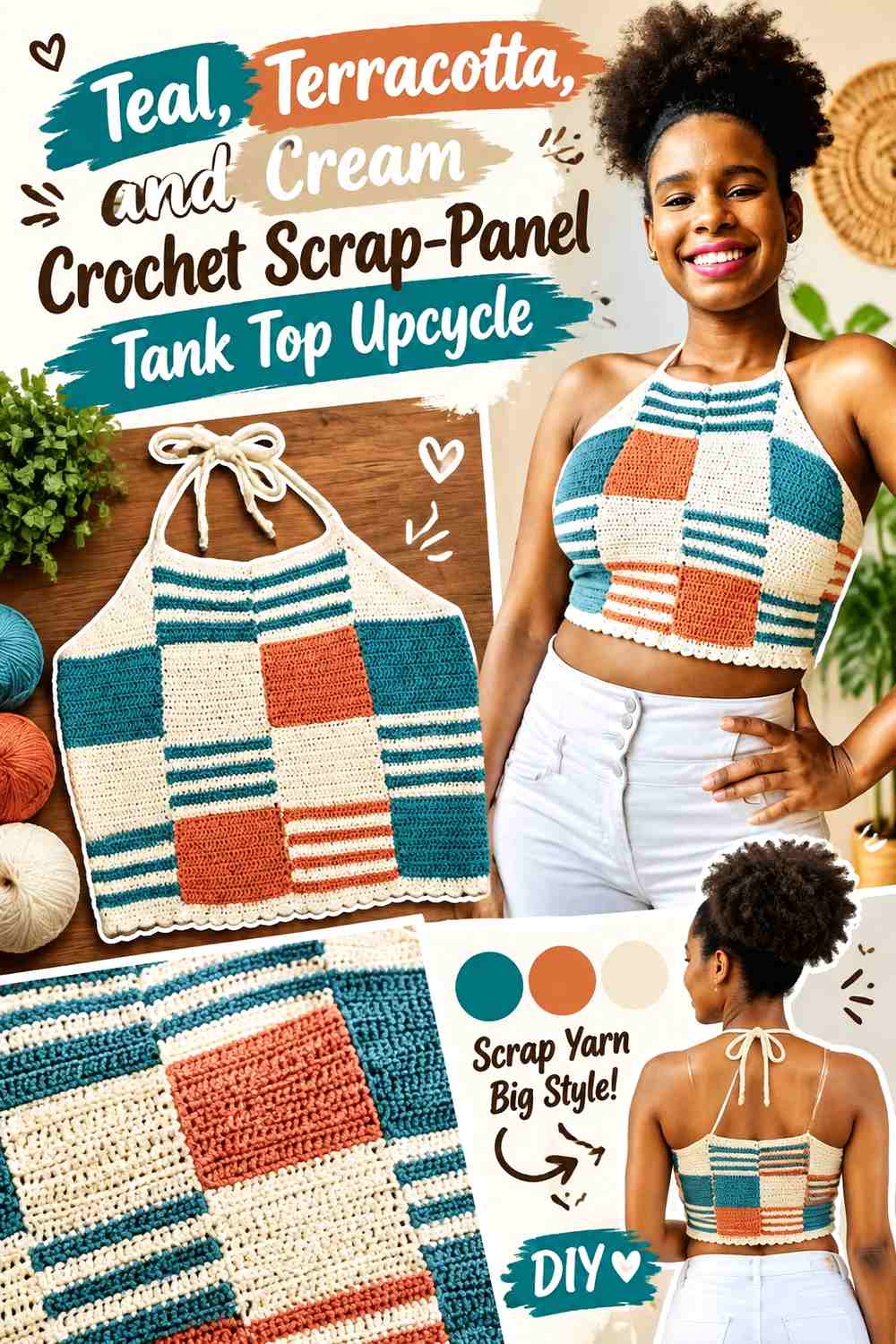
A plain tank or sleeveless top can gain a crochet side panel, lower band, or motif section without becoming a fully crocheted garment. Teal can lead the cooler side of the palette, terracotta introduces warm contrast, and cream can define the joins.
Teal Can Give the Crochet Tank Panel a Clear Main Color
Use teal through several neighboring squares so the inserted panel reads as one designed section rather than a random strip of leftovers. This is especially helpful if the original top is neutral.
Cream Should Separate Teal and Terracotta Around the Tank Edges
A consistent cream border can make a multicolor insert look cleaner where it meets fabric. It also prevents similarly dark teal and terracotta scraps from visually merging.
Creator Credit: Crea Tejiendo
7. Mustard, Chocolate, and Rust Crochet Sweater Vest Upcycle
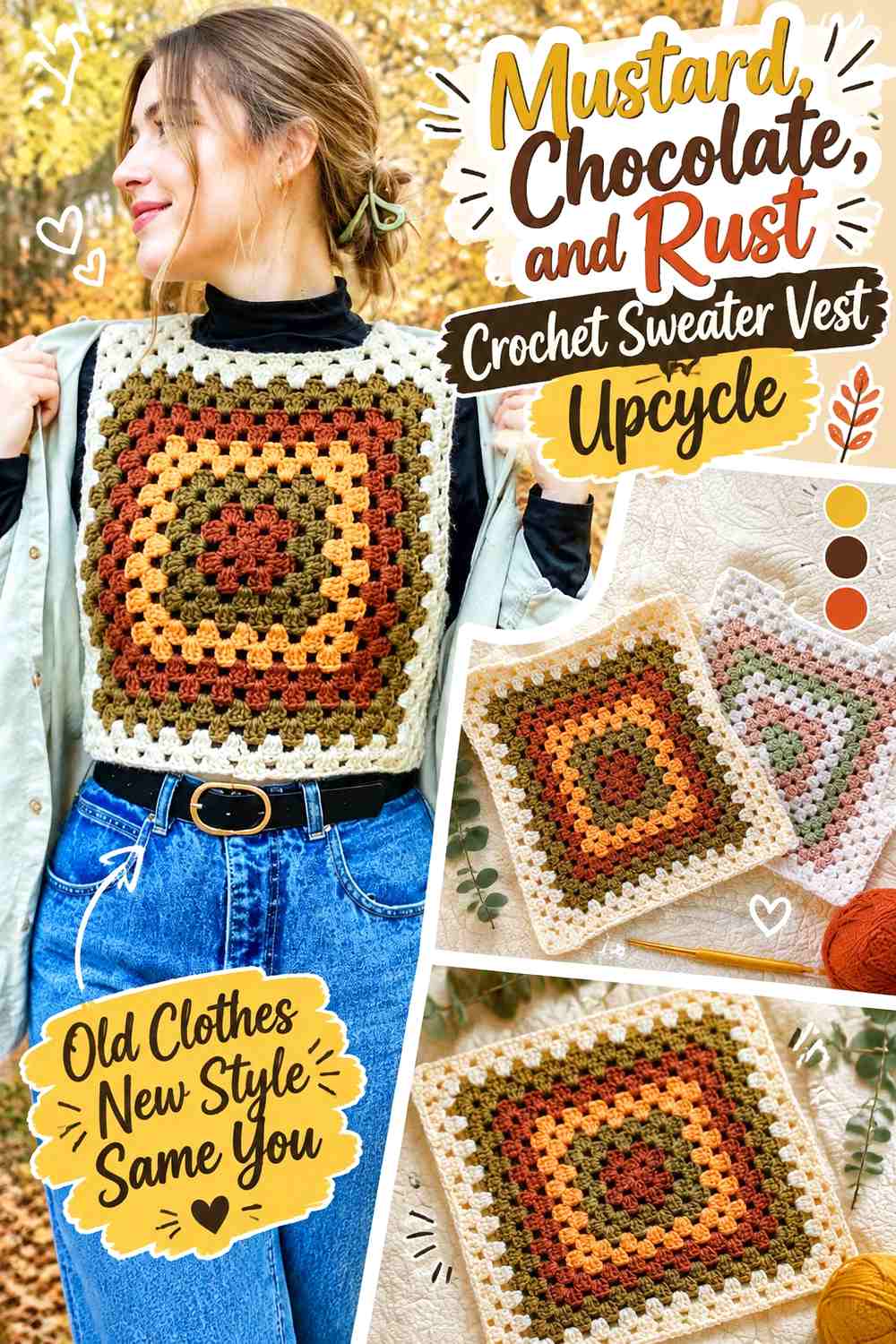
Removing damaged sleeves from a sweater can leave a base that lends itself to a crochet-vest makeover, or an existing plain vest can gain large granny panels. Mustard provides the brightest color, chocolate anchors the edges, and rust creates a warm transition between them.
Chocolate Can Frame Mustard Crochet Panels on the Vest
Use chocolate near armholes, neckline, or outer motif rounds when you want the colorful patches to feel contained. A dark repeated frame can be particularly useful when individual mustard scraps vary slightly.
Rust Should Bridge Mustard and Chocolate Across the Vest
Rust can occupy middle-value sections between the darkest and lightest shades. Repeating it in both front and back prevents the vest from looking heavily decorated on only one side.
Creator Credit: HayHay Crochet
8. Charcoal, Berry, and Heather Gray Crochet Pocket Cardigan Upcycle
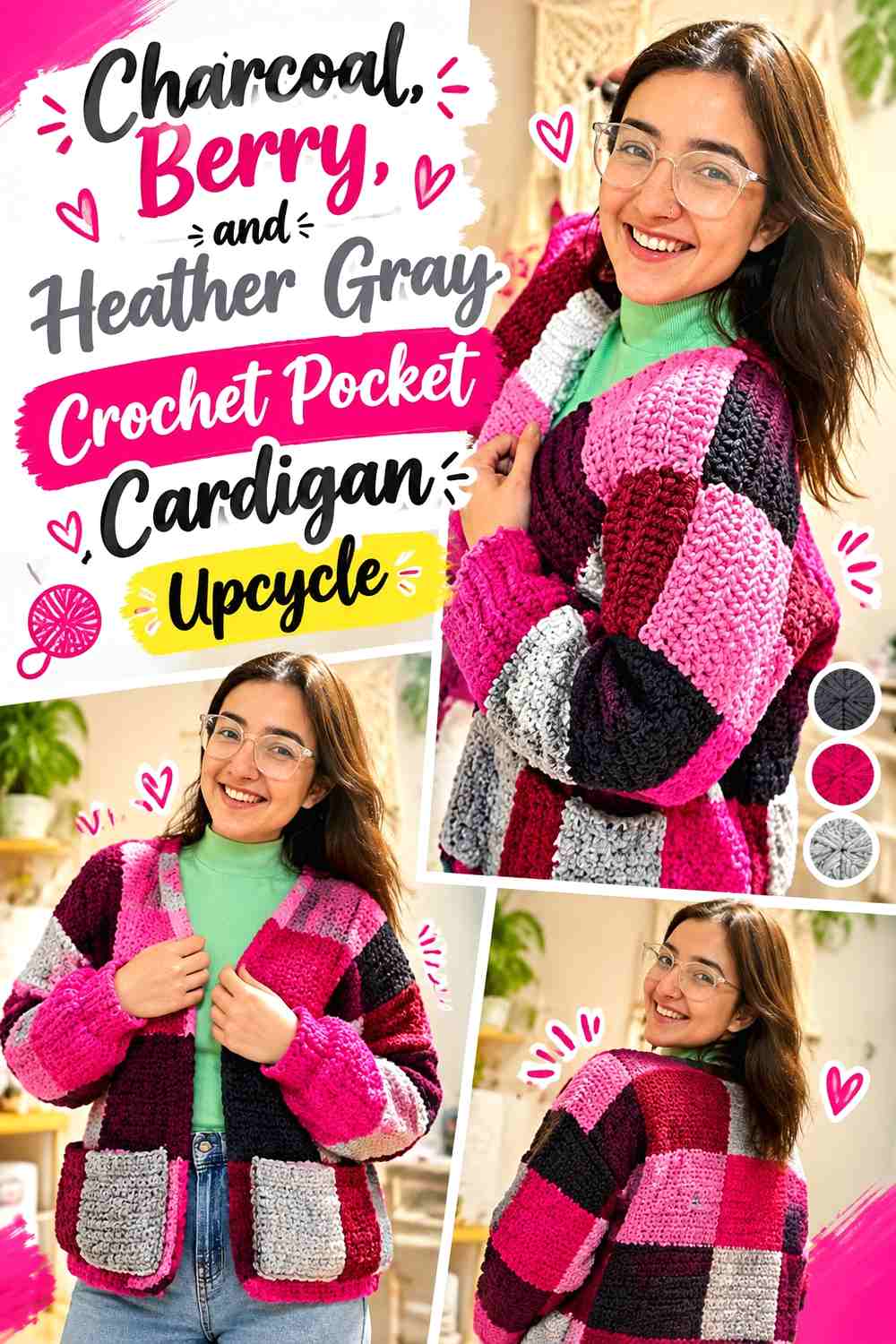
Adding oversized scrap-yarn pockets is one of the least visually disruptive ways to refresh an old cardigan. Charcoal can connect the pockets to a darker garment, berry gives them a concentrated accent, and heather gray softens the transition.
Berry Should Stay Concentrated Inside the Charcoal Crochet Pockets
Use berry in centers or selected bands rather than covering the full pocket. This gives each pocket a focal color without making two large red-purple blocks dominate the cardigan front.
Heather Gray Can Keep Charcoal Pocket Edges Visible
If the cardigan itself is dark, a heather-gray outer round can distinguish the crochet pocket boundary. On a pale cardigan, reverse the balance and let charcoal create the final edge.
Creator Credit: Crochet with Karu
9. Lavender, Moss, and Cream Crochet Granny-Sleeve Sweater Upcycle
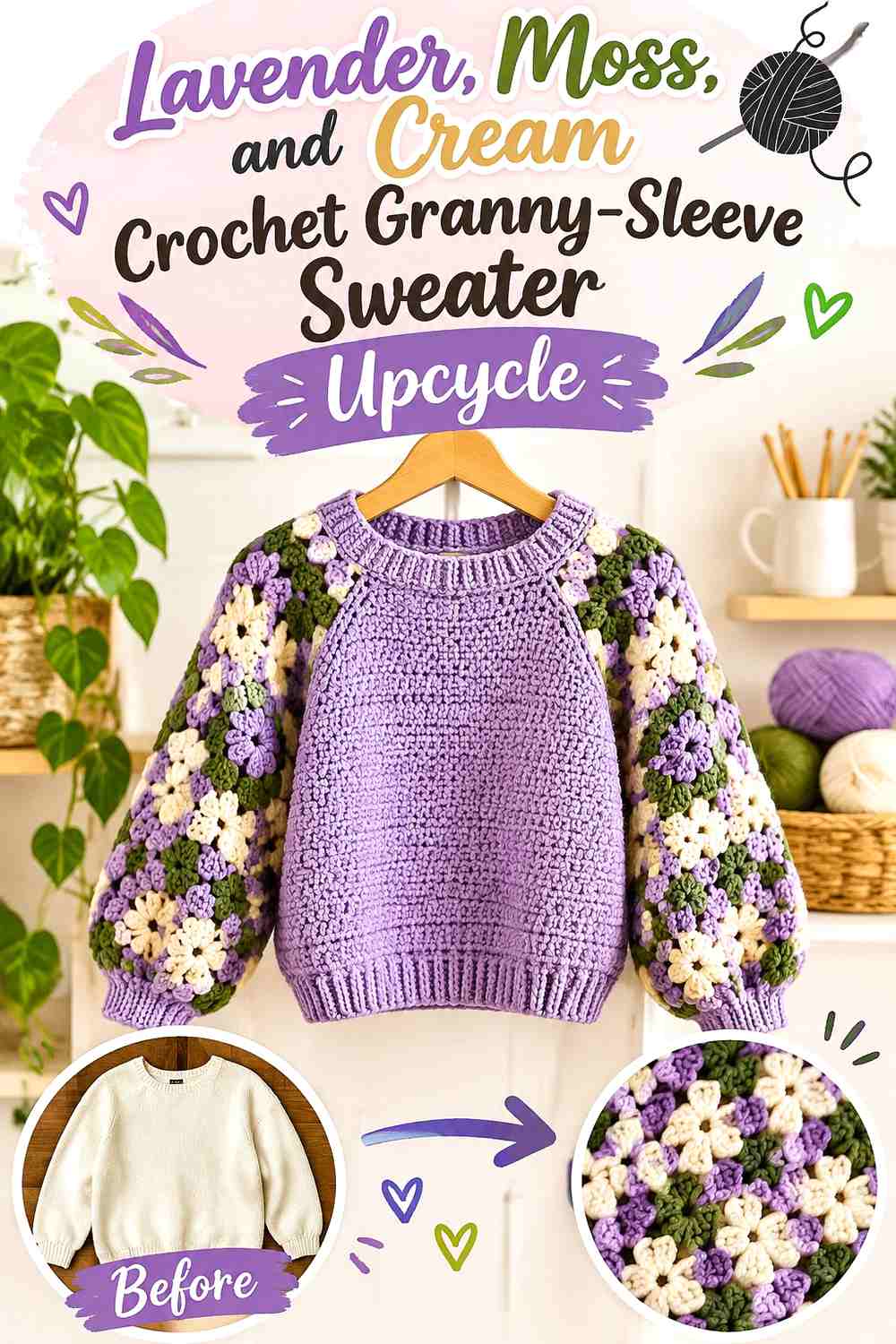
A sweater with damaged or unwanted sleeves can be reimagined with modular granny-style sleeves. Lavender provides the softer color, moss adds a grounded botanical accent, and cream can repeat around the squares to connect scraps from different yarn balls.
Lavender Should Repeat Down Both Crochet Sweater Sleeves
Even when every square is different, repeating lavender on both sides keeps the garment balanced. Avoid putting nearly all lavender on one sleeve and nearly all moss on the other unless deliberate asymmetry is the goal.
Cream Can Connect Lavender and Moss at the Shoulder Join
Use cream near the top of the sleeve if the transition from fabric body to colorful crochet feels abrupt. A repeated light edge can visually bridge the old garment and new patchwork.
Creator Credit: DIY From Home
10. Raspberry, Blush, and Burgundy Crochet Patchwork Pullover Upcycle
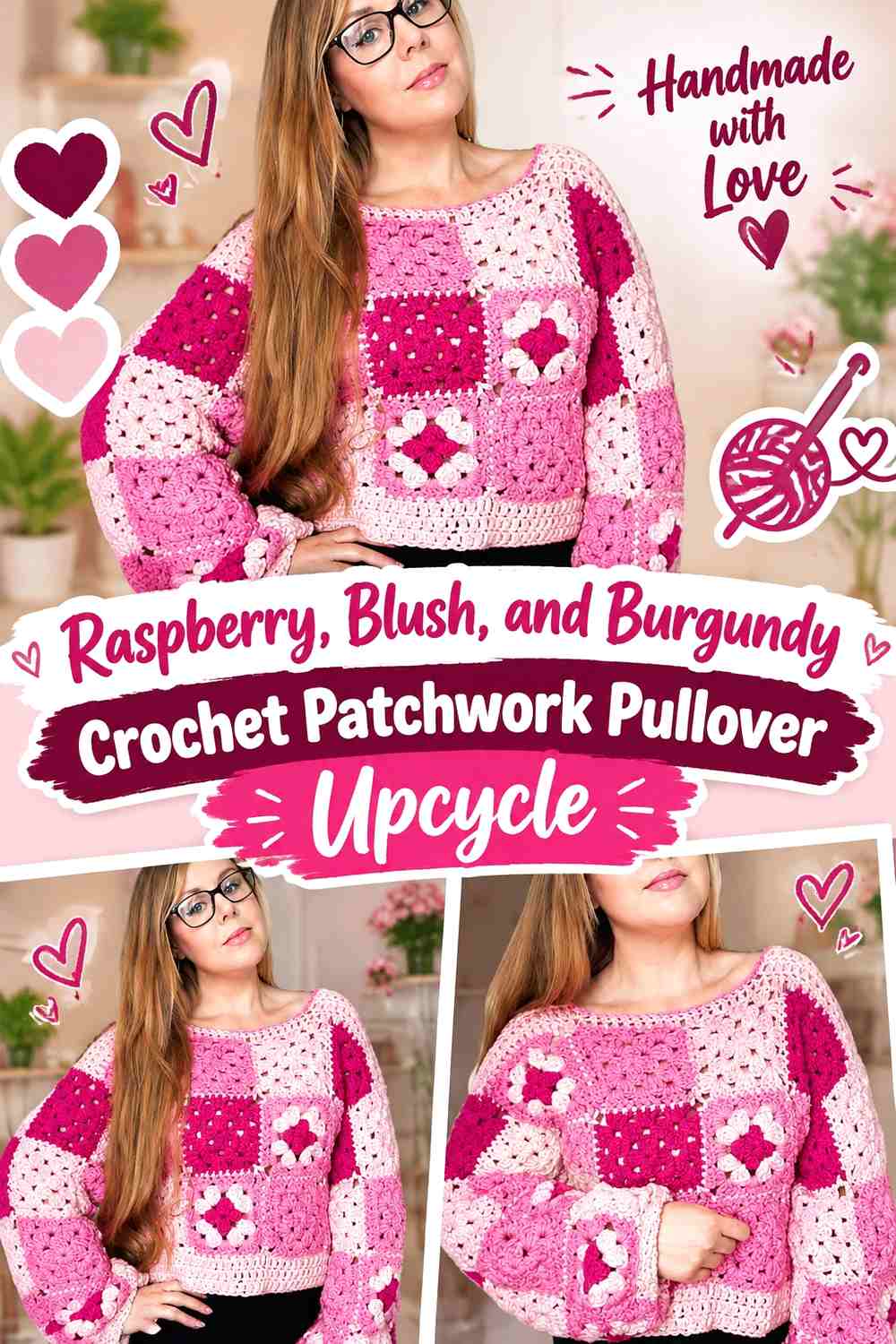
A sweater body can gain a patchwork front, back, or lower section without being replaced entirely. Raspberry gives the makeover a clear main accent, blush adds lighter relief, and burgundy can define cuffs, joins, or selected squares.
Raspberry Should Lead the Crochet Pullover Patchwork
Repeat raspberry often enough that the garment has a recognizable dominant color even if every scrap is slightly different. This keeps a pink-red scrap collection from looking like unrelated remnants.
Burgundy Can Ground Raspberry and Blush Near the Pullover Hem
Darker patches near the lower section can visually anchor the garment, while blush works better where you want the patchwork to feel lighter. Keep some raspberry in both areas to connect them.
Creator Credit: Selina Veronique
11. Navy, Camel, and Ivory Crochet Diamond-Patch Cardigan Upcycle

Diamond-oriented motifs create a different patchwork rhythm from a straightforward square grid. Navy can serve as the repeating anchor, camel adds warmth, and ivory keeps intersections and edges visible on an older neutral cardigan.
Navy Can Organize the Crochet Diamond Patches
Repeat navy at similar positions within several motifs rather than letting each diamond use a completely unrelated color arrangement. This strengthens the diagonal geometry of the makeover.
Ivory Should Keep Navy and Camel Diamonds Distinct
Use ivory where adjacent dark and medium values need separation, particularly around front panels or neckline areas where several motif edges meet.
Creator Credit: Briana K Designs
12. Forest Green, Rust, and Oatmeal Crochet Back-Panel Cardigan Upcycle
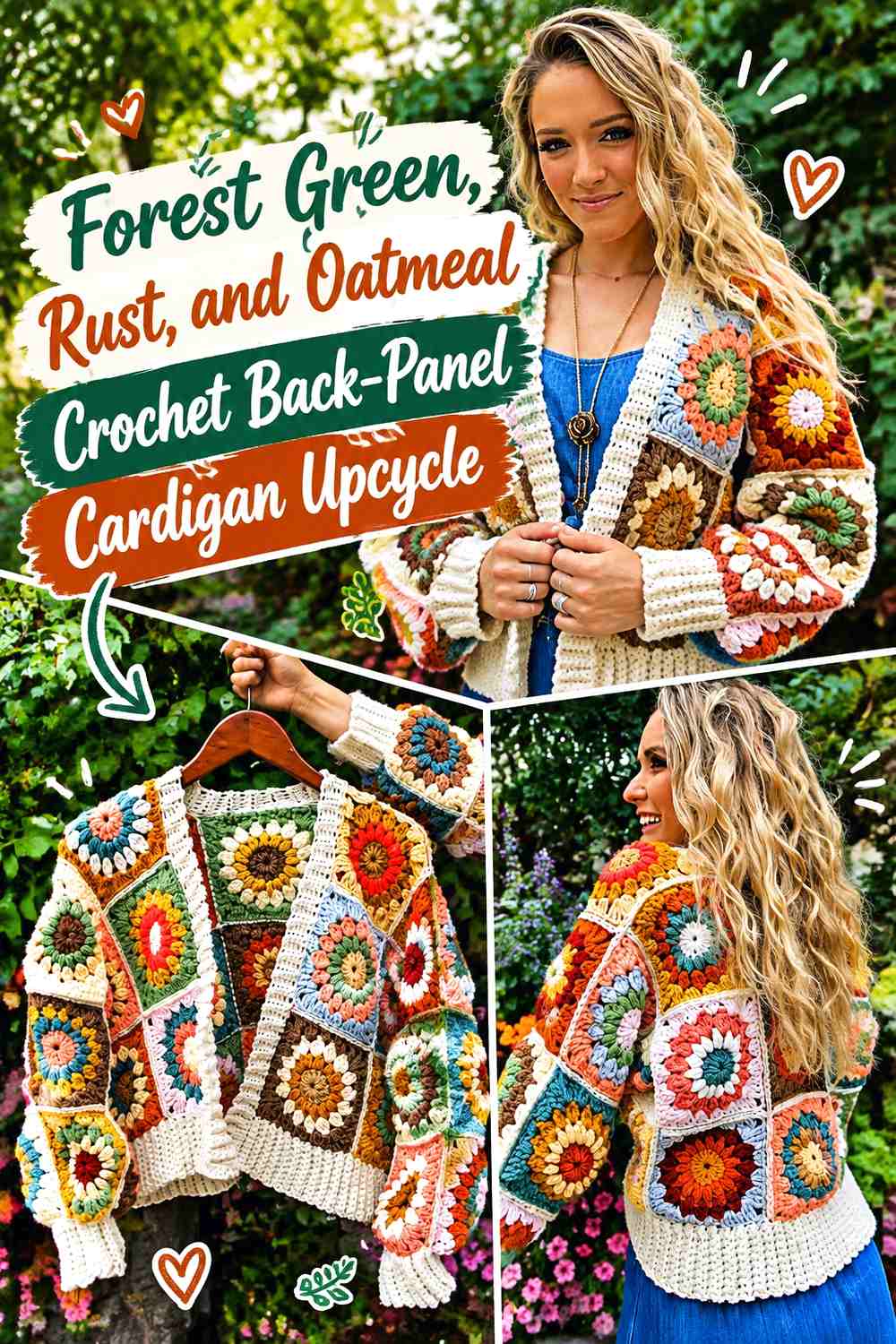
A large granny-square-style back panel can give a tired cardigan one dramatic focal area while preserving much of the original garment. Forest green can dominate the outer area, rust can warm the center, and oatmeal provides the lightest interval.
Forest Green Should Frame the Crochet Back Panel
Keeping green around the outer rounds can help the new panel feel contained within the original cardigan. This works particularly well when the base garment is brown, beige, black, or another neutral.
Rust and Oatmeal Can Draw Attention Toward the Forest Green Panel Center
Use the warmer rust closer to the focal area and let oatmeal provide visual breaks. If oatmeal becomes the widest outer color, it may draw more attention to the panel boundary than the design itself.
Creator Credit: Emily Ann Roberts
13. Wine, Mustard, and Moss Crochet Granny-Patch Vest Upcycle

A thrifted vest or sleeveless knit can carry individual granny patches across the front or back instead of being completely covered. Wine gives the deepest color, mustard provides a brighter retro accent, and moss connects the palette to earthier scraps.
Wine Should Anchor the Crochet Vest Patches
Place wine in several motifs across both sides of the vest rather than concentrating it in one corner. Repetition makes the darker shade feel structural instead of accidental.
Mustard Needs Moss or Wine Space Around the Crochet Vest Motifs
Mustard attracts attention quickly, so avoid placing every bright center directly beside another yellow area. Moss or wine between the highlights lets individual motifs remain distinct.
Creator Credit: Jayda InStitches
14. Cocoa, Sage, and Cream Crochet Shirt-to-Vest Upcycle

A button-down or simple sleeveless base can be combined with crochet vest-style panels for a mixed-textile makeover. Cocoa provides a stable dark outline, sage gives the piece a muted color direction, and cream can connect the crochet to a pale shirt fabric.
Sage Can Lead the Crochet Panels on a Cream Shirt Base
If the original shirt is white, cream, or beige, sage gives the added sections enough color to remain visible without creating severe contrast. Repeat it on both sides of the garment for balance.
Cocoa Should Define Sage and Cream Around the Vest Edges
Use cocoa at selected armholes, lower edges, or motif borders if the light shirt and cream crochet begin to merge. The darker outline can make the mixed construction look more intentional.
Creator Credit: Handwork diy
15. Black, Jewel Tone, and Oatmeal Crochet Patchwork Dress Upcycle

A plain dress can support scrap-yarn panels at the hem, bodice, sides, or skirt without needing to become a fully crocheted dress. Black can organize the patches, jewel tones can vary from square to square, and oatmeal gives selected lighter breaks.
Black Should Repeat Around Jewel-Tone Crochet Dress Patches
Use black as a border or joining color if emerald, plum, blue, and berry scraps all appear in the same section. The repeated dark frame lets varied colors coexist without requiring identical motifs.
Oatmeal Can Stop Black and Jewel Tones From Making the Dress Too Heavy
Add oatmeal to selected squares or transitions rather than every patch. The lighter color gives the eye places to rest and can prevent the lower skirt area from looking like one dense dark band.
Creator Credit: 🧶Mihankushea🧶
16. Dusty Blue, Plum, and Cream Crochet Shrug-Sleeve Top Upcycle

A sleeveless top or dress can gain a detachable-looking shrug effect through crochet sleeves and an upper-back panel. Dusty blue can dominate the sleeve surface, plum adds deeper patches, and cream connects the upper section.
Dusty Blue Should Repeat Across Both Crochet Shrug Sleeves
Keep blue present from shoulder to cuff on both sides even when the patch order changes. This repetition makes mismatched scrap sleeves look like a pair.
Plum and Cream Can Control the Dusty Blue Shoulder Transition
Use cream near the neckline or upper-back join when the original garment is pale, or plum when a darker boundary is needed. Avoid giving both colors equal weight at every shoulder square.
Creator Credit: Kiki Crochet Designs
17. Terracotta, Olive, and Sand Crochet Patchwork Skirt Upcycle
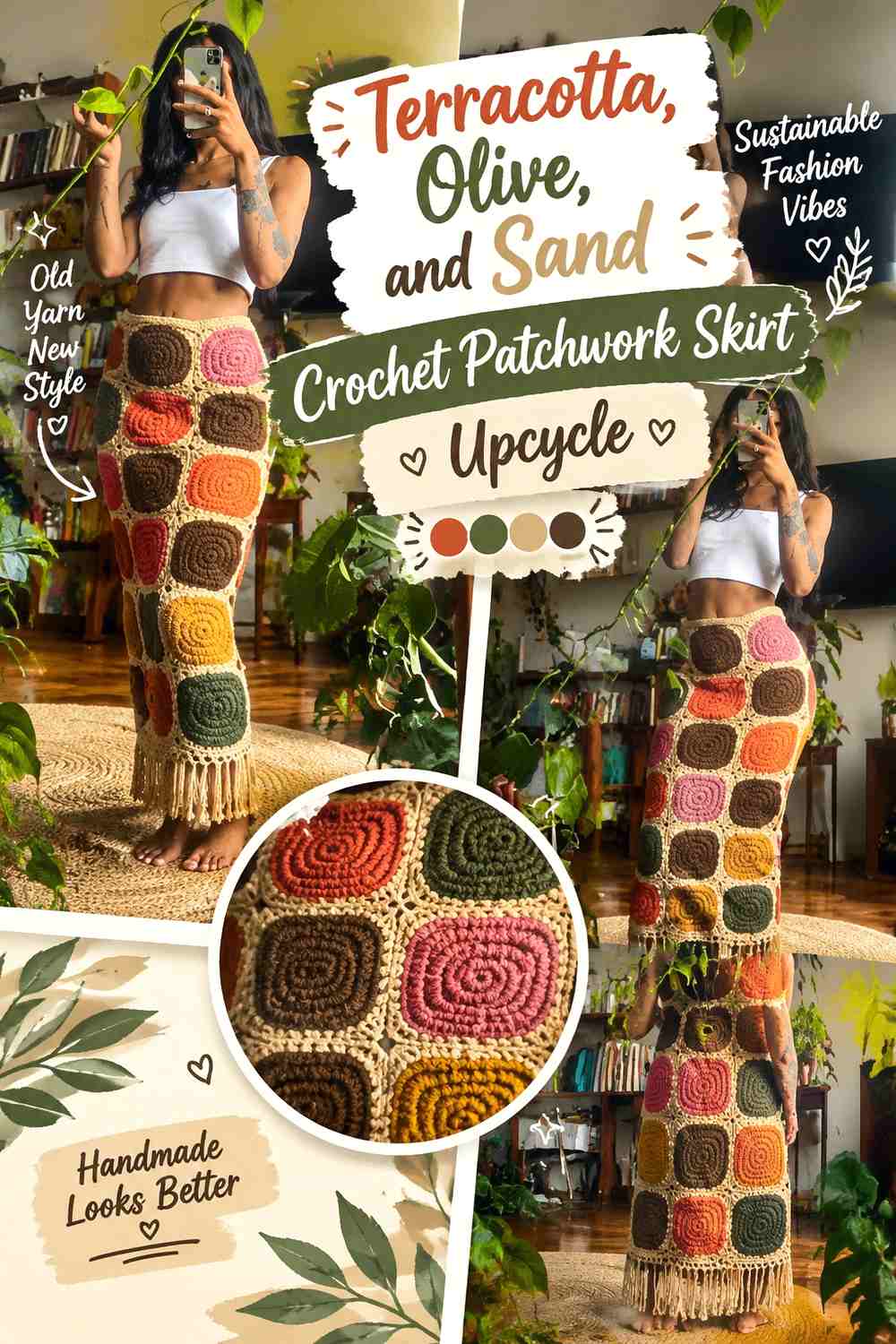
A plain or damaged skirt can gain a crochet lower band, side insert, or series of patchwork sections. Terracotta gives the largest warm accent, olive provides an earthy contrast, and sand can repeat around motifs to keep the hem from becoming visually too dark.
Terracotta Should Lead the Crochet Skirt Patchwork
Repeat terracotta around the skirt rather than grouping every warm square at the front. Distributed color helps the patchwork remain balanced as the garment moves.
Sand Can Separate Terracotta and Olive Along the Skirt Hem
Use sand as a repeated border or selected lighter square where the two earthy colors become too similar in value. Keeping the light shade near several parts of the hem also stops one side from appearing visually heavier.
Creator Credit: DaNai Johnson
How to Choose a Scrap-Yarn Upcycle by Garment Condition
If the clothing is structurally sound and you mainly want a visual change, pockets, granny patches, back panels, and appliqué-style sections preserve most of the original piece. The denim jacket pockets, cardigan pockets, vest patches, and jeans panels are useful directions when you do not want to dismantle a garment.
For damaged or unwanted sections, larger crochet replacements may make more sense. Patchwork sleeves can replace problem sleeves, a crochet lower skirt section can cover or replace an unsuitable hem, and a modular panel can rebuild part of a sweater or cardigan. Before cutting away fabric, confirm that the remaining seams and surrounding textile are strong enough for the alteration.
If your scraps vary widely in color, start with the garment whose base color can act as a neutral. Denim, charcoal, cream, black, brown, and oatmeal give multicolor patches an existing background that can help hold the palette together.
Conclusion
Scrap-yarn clothing upcycles work best when leftovers are treated as a palette rather than simply a pile to use up. Choose a few yarns that can take the lead, decide which neutral or darker shade will repeat through the joins, and place your strongest accents where the garment already has visual structure.
For smaller makeovers, start with pockets, knee patches, vest motifs, or one back panel. For a stronger transformation, replacement sleeves, large cardigan sections, skirt panels, or mixed crochet-and-fabric dress areas create more patchwork coverage.
Color planning should happen alongside a fit and weight check. Pin several finished motifs to the actual garment, compare how the textile hangs, and confirm that the new crochet does not distort a weak seam or lightweight fabric. Then follow the linked creator tutorial for the relevant crochet construction while adapting the patch placement to the clothing you are actually trying to save.
Frequently Asked Questions
How do I make random scrap yarn look coordinated in crochet clothing?
Choose one repeating connector color and use it around several motifs, joins, cuffs, or borders. Cream, black, charcoal, brown, navy, and oatmeal are useful options, but the best choice is whichever shade already relates to the garment and several scraps.
Can I mix different yarn colors in every crochet patch?
Yes, but repeating some colors across the garment helps the patches feel related. If every square has a completely unique palette, use a consistent outer round or joining shade to create visual continuity.
Should crochet patches match the color of the clothing underneath?
They do not need to match. Contrast can make an upcycle intentional. However, repeating the garment color inside a few patches can create a useful transition between the original textile and added crochet.
How can I balance different scrap colors on crochet sleeves?
Lay both sleeves out before joining or attaching them and compare the overall distribution rather than trying to make every square identical. Repeat the dominant color on both arms and avoid putting all the darkest or brightest scraps on only one side.
Are crochet patches suitable for repairing damaged jeans?
They can be used as part of a visible-mending approach, but inspect the surrounding denim first. A patch attached to weak, tearing fabric may place additional stress on the damaged area. The repair method needs to support the fabric, not just cover the hole.
What should I check before adding a large crochet panel to clothing?
Check the condition of the original fabric, the weight of the crochet panel, the placement of existing seams, and whether the added section changes the garment’s fit or drape. Temporarily positioning the finished motifs before permanent attachment can reveal problems early.
Do scrap yarns need to be exactly the same fiber or thickness?
A patchwork look can use visual variation, but significant differences in thickness, stretch, texture, or care requirements can affect how the garment hangs and how the patches behave after cleaning. For large connected sections, scraps with reasonably compatible fabric characteristics are easier to manage.