Strawberries and cherries work especially well on crochet hair accessories because their shapes stay recognizable at a small scale. A strawberry can become the focal point on a barrette, scrunchie, or headband, while paired cherries naturally suit clips and hair ties where the stems can become part of the decoration.
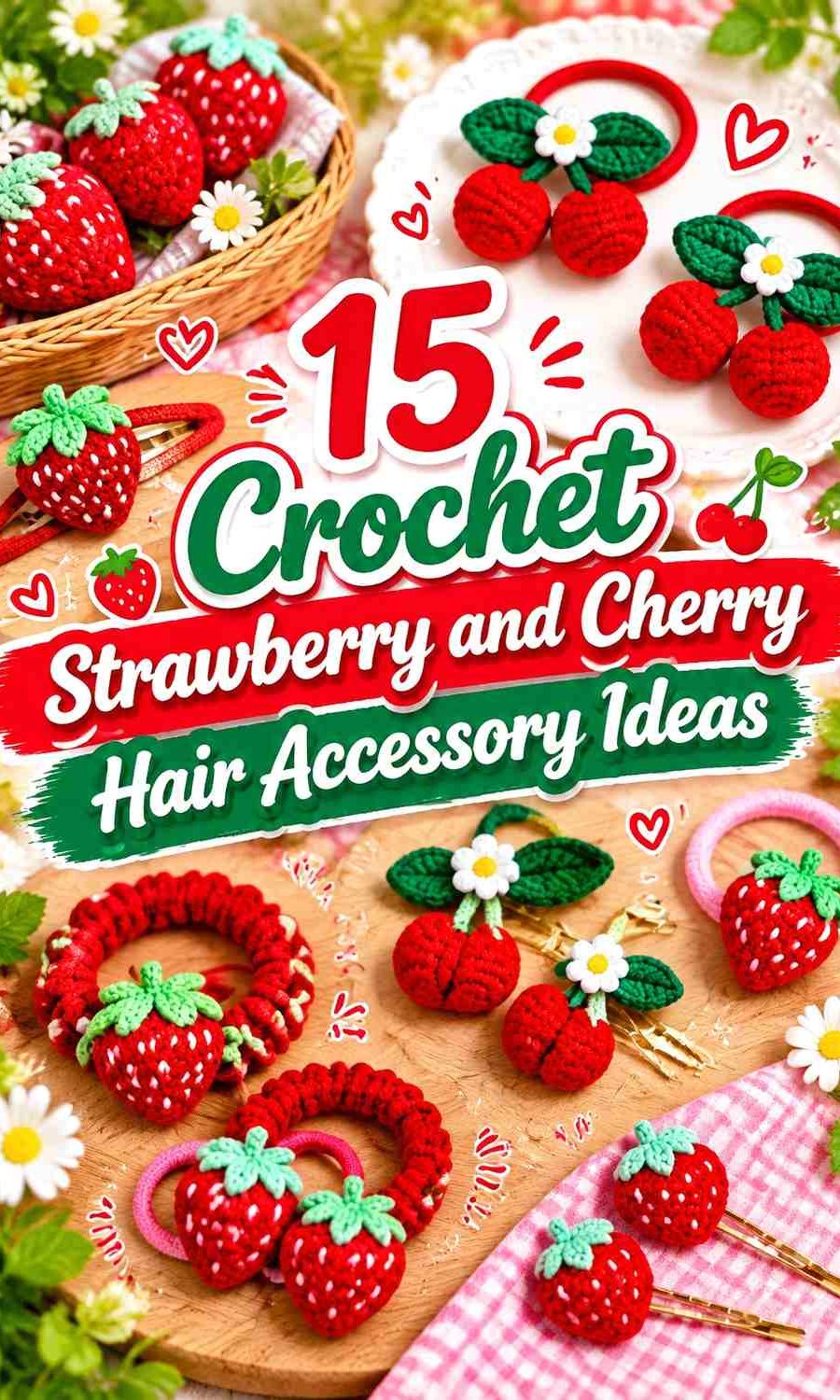
Color placement matters more than simply choosing red and green yarn. Bright strawberry red creates a playful result, dusty rose makes the fruit softer, burgundy pushes cherries in a vintage direction, and coral creates a warmer alternative. The green matters too: mint makes the accessory lighter, sage softens the contrast, and forest green gives pale fruit stronger definition.
The tutorials below support the fruit motif or hair-accessory construction used for each idea. The proposed palettes are independent adaptations, so follow each creator for the actual crochet construction while using the color guidance here to develop your own strawberry or cherry version.
Quick List
- Strawberry Red, Leaf Green, and Cream Crochet Strawberry Barrette
- Cherry Red, Forest Green, and Blush Crochet Cherry Hair Clip
- Dusty Rose, Sage, and Cream Crochet Strawberry Scrunchie
- Burgundy, Olive, and Soft Pink Crochet Cherry Hair Tie
- Coral, Pistachio, and Ivory Crochet Strawberry Snap Clips
- Wine Red, Moss, and Ecru Crochet Cherry Bobby Pin Set
- Blush Pink, Sage, and Oatmeal Crochet Strawberry Headband
- Cream, Cherry Red, and Soft Green Crochet Cherry Scrunchie
- Strawberry Red, Cherry Pink, and Leaf Green Crochet Fruit Barrette
- Soft Pink, Mint, and Cream Crochet Strawberry Hair Tie
- Oxblood, Antique White, and Forest Green Crochet Cherry Bow Clip
- Strawberry Pink, Cream, and Moss Crochet Fruit Bandana
- Cherry Red, Sage, and Cream Crochet Side Hair Clip
- Peach Pink, Sage, and Ivory Crochet Strawberry Flower Clip
- Deep Cherry, Dusty Rose, and Muted Green Crochet Fruit Cluster Barrette
Separate Strawberry and Cherry Reds From Their Green Details
Small crochet fruit motifs need stronger color organization than larger projects. The strawberry or cherry body should usually carry the largest share of the accent color, while green is better reserved for leaves, stems, or a narrow surrounding detail.
Red and dark green can be similar in value even though their hues are very different. If a cherry stem disappears against burgundy fruit, introduce a lighter sage leaf or cream highlight rather than adding more dark colors. The goal is to keep the fruit silhouette obvious when the accessory is seen from normal wearing distance.
Match the Fruit Palette to the Hair Accessory Size
A single clip can support one concentrated fruit motif because the hardware already gives the piece a defined shape. A headband, scrunchie, or bandana has more visible crochet area, so repeating bright red everywhere can easily overpower the fruit theme.
On larger hair accessories, let cream, oatmeal, blush, sage, or another quieter shade cover most of the base. Then repeat strawberry or cherry colors in smaller motifs. This makes the fruit look intentionally placed rather than turning the whole accessory into one solid red surface.
Keep Leaves and Stems Visible Around Crochet Fruit
Green is not just a decorative extra on strawberry and cherry motifs. Leaves help distinguish a strawberry from another heart-shaped or triangular motif, while stems make paired cherries immediately easier to recognize.
Choose the green according to the fruit color. Pale blush strawberries may need medium sage for definition, while dark burgundy cherries can benefit from lighter olive or moss. When both fruit and leaf colors are dark, cream or ecru can provide a useful separating detail.
1. Strawberry Red, Leaf Green, and Cream Crochet Strawberry Barrette
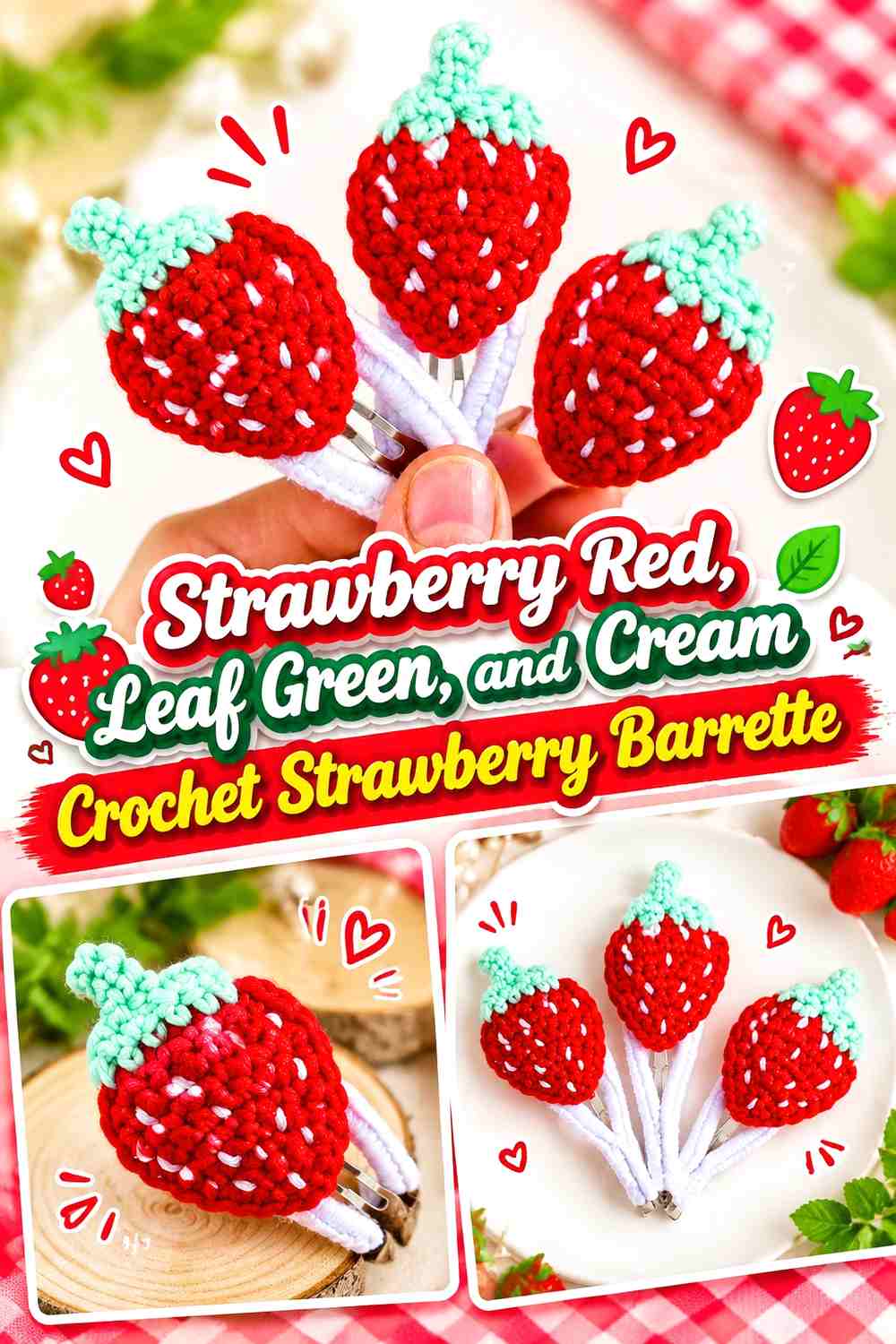
Classic strawberry red gives this crochet barrette the clearest fruit identity, while leaf green defines the top of the berry. Cream works best as a tiny highlight or seed color. Because a barrette has limited space, let one strawberry remain the main visual feature rather than surrounding it with several equally strong red details.
Strawberry Red Should Lead the Crochet Barrette
Use strawberry red over most of the fruit and keep the background or covered portion of the barrette quieter. Concentrating red in the berry keeps the accessory readable from a distance and prevents the clip itself from competing with the motif.
Leaf Green and Cream Should Stay Secondary to Strawberry Red
Leaf green is most useful at the strawberry crown, where it explains the fruit shape. Small cream details can add separation, but avoid covering too much of the berry with pale marks because the red body should still appear continuous.
Creator Credit: Crochet Square & Tutorials
2. Cherry Red, Forest Green, and Blush Crochet Cherry Hair Clip
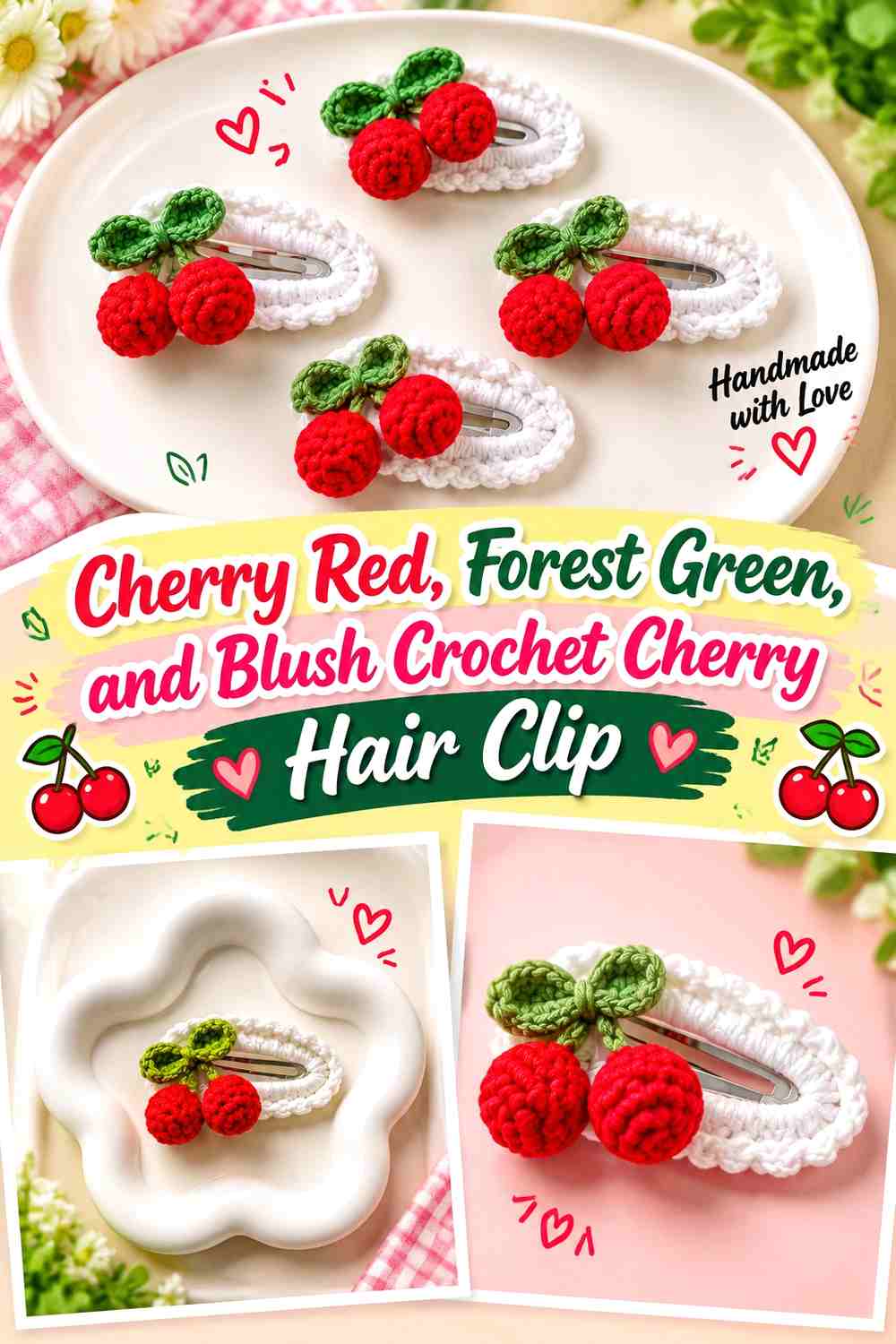
Paired cherry red fruits create a natural focal point on a small hair clip. Forest green gives the stems and leaf enough depth to remain visible, while blush can soften a tiny background detail or covered clip section without challenging the cherries.
Cherry Red Should Stay Concentrated in the Paired Fruit
Give both cherries the same red family so they read as a connected pair. If one fruit is much darker than the other, the pair can look visually unbalanced on such a small clip unless the variation is deliberate.
Forest Green Needs Clear Separation From Cherry Red
Forest green provides strong botanical definition, but very dark green can merge with deep red. If the two yarns look close in grayscale, use a slightly lighter green leaf or introduce a small blush or cream space where the stem meets the fruit.
Creator Credit: Happi Crochet
3. Dusty Rose, Sage, and Cream Crochet Strawberry Scrunchie
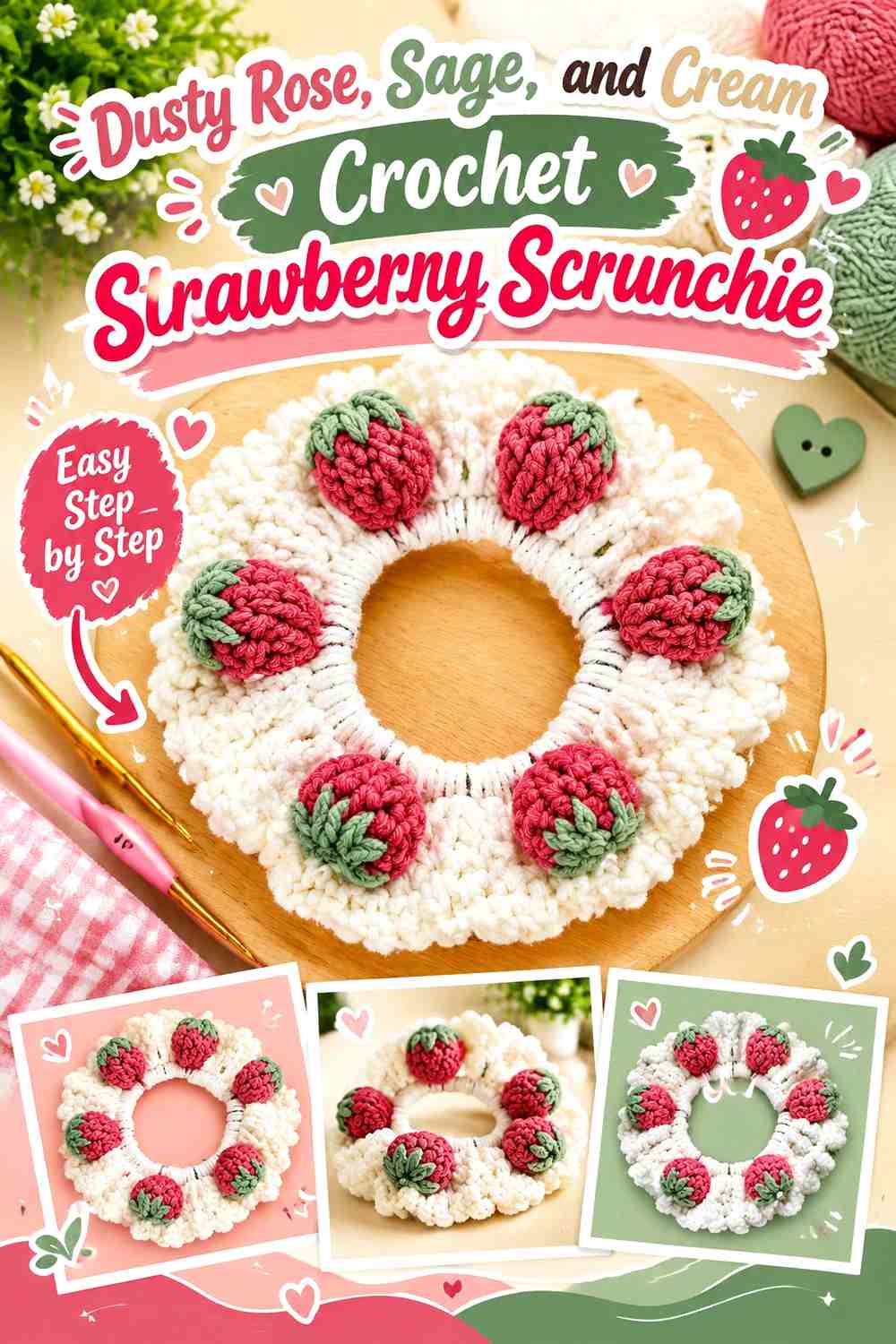
Dusty rose makes the strawberry motif softer than classic red, while sage keeps the leaves muted and cream gives the scrunchie body a light neutral base. This palette is especially useful when you want the fruit theme to be noticeable without covering the entire hair accessory in saturated color.
Cream Can Carry the Dusty Rose Strawberry Scrunchie Base
Let cream occupy most of the gathered scrunchie surface and repeat dusty rose only in the fruit motifs. The pale background gives each strawberry visible space around its edges and keeps multiple berries from turning into one continuous pink band.
Sage Keeps Dusty Rose Strawberries Botanical Without Harsh Contrast
Use sage consistently for strawberry leaves rather than introducing several greens. If dusty rose and sage are both highly muted, compare them from a distance and choose a slightly deeper sage when the leaf shape needs more definition.
Creator Credit: Crafting Wheel
4. Burgundy, Olive, and Soft Pink Crochet Cherry Hair Tie
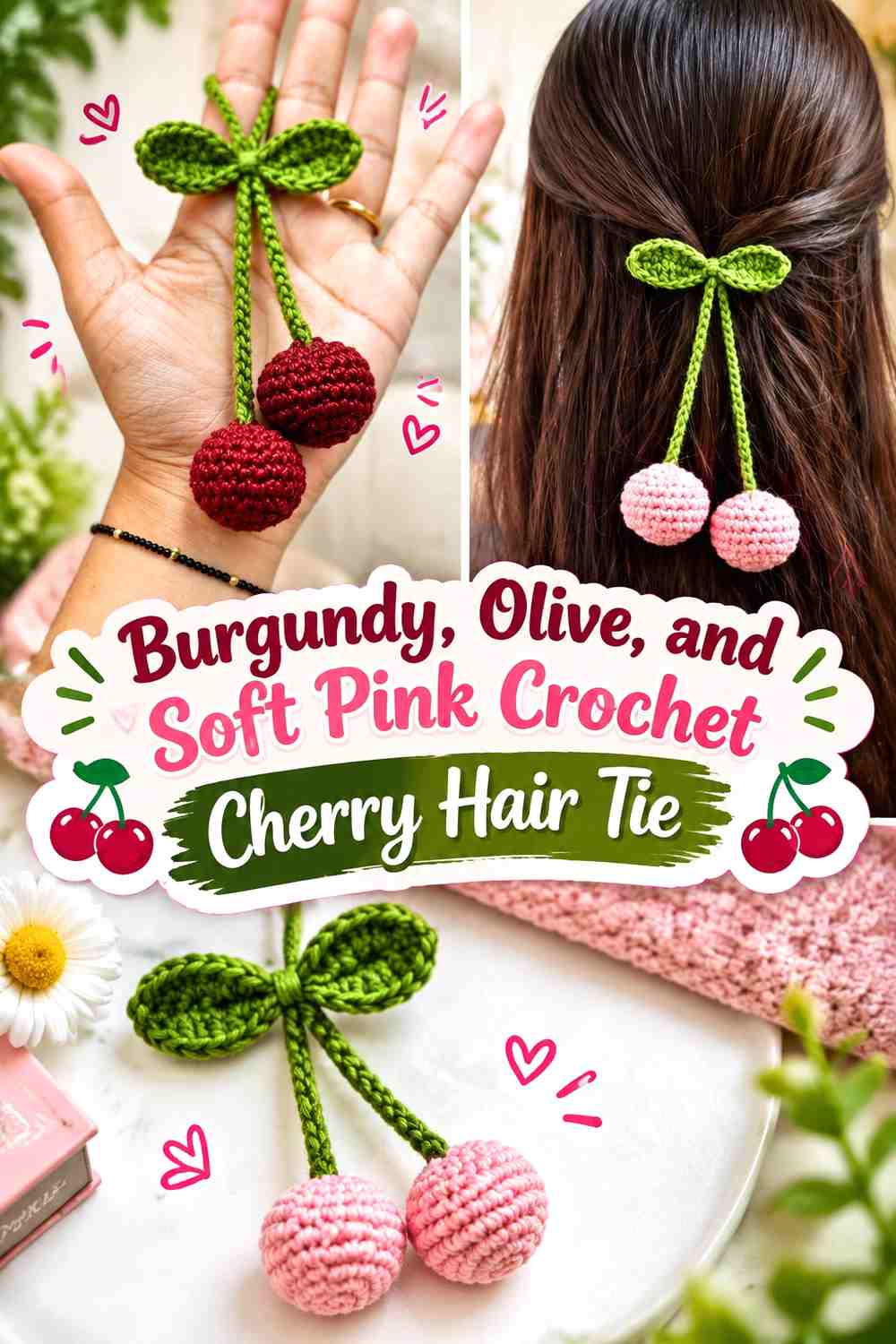
Burgundy gives the cherries a deeper vintage direction, olive softens the stems, and soft pink can lighten the tie or a small supporting detail. Since burgundy has considerable visual weight, the fruit does not need to be large to stand out.
Burgundy Gives the Crochet Cherry Hair Tie a Dark Focal Point
Keep burgundy concentrated in the two cherry forms and allow the surrounding hair tie to remain quieter. This helps the fruit stay recognizable instead of making the entire accessory appear like one dark red knot.
Olive and Soft Pink Can Separate Burgundy Cherry Details
Olive works naturally for the stem, but if it is almost as dark as burgundy, soft pink can provide a lighter visual break nearby. Keep pink secondary so the cherries remain burgundy-led rather than becoming a pink-and-red pair.
Creator Credit: Knit Bucket By Pinki Mehta
5. Coral, Pistachio, and Ivory Crochet Strawberry Snap Clips
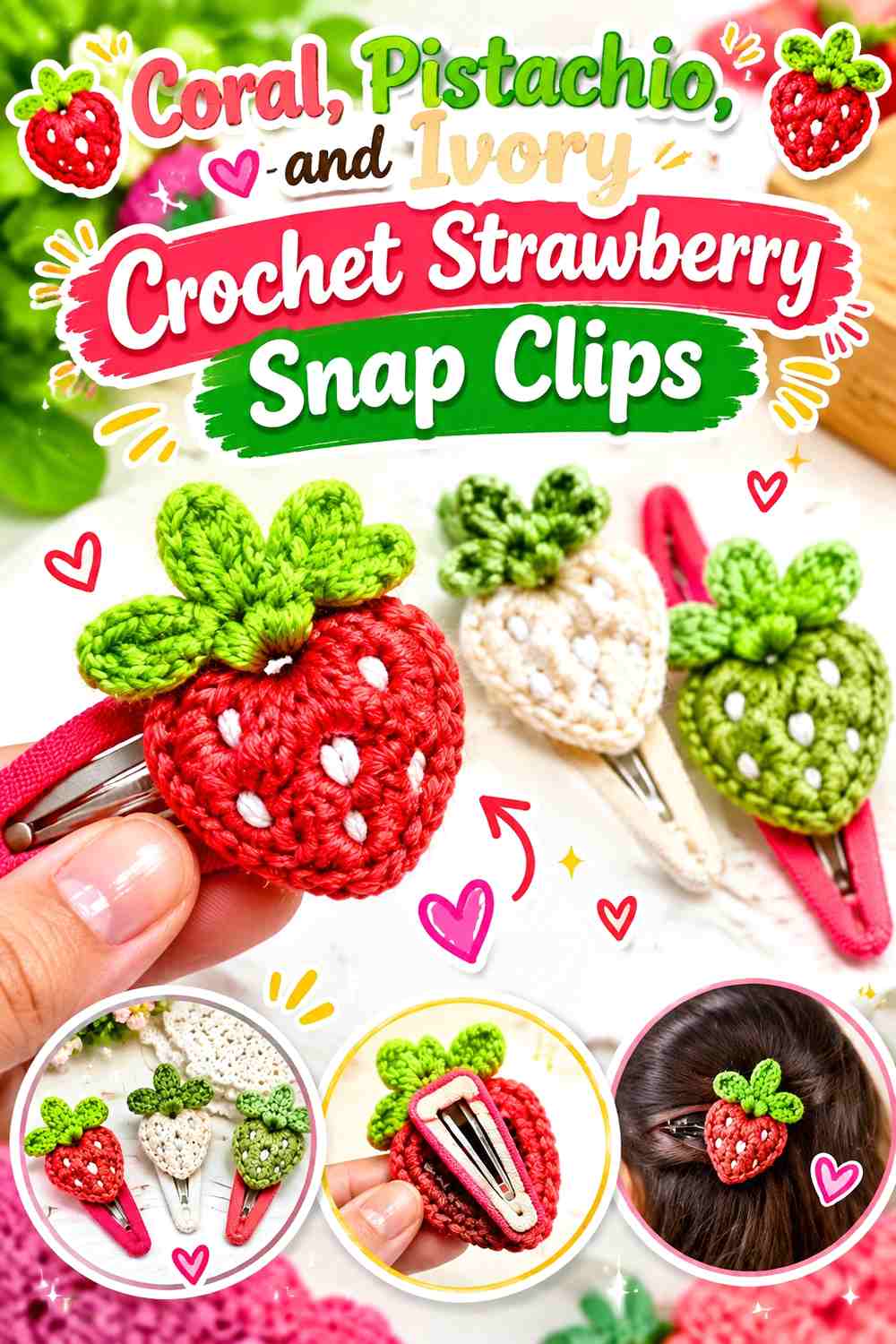
Coral gives strawberry appliqués a warmer, less traditional fruit color, while pistachio creates a fresh green top. Ivory can cover part of the snap clip or appear in small strawberry details so the two stronger colors have a quiet background.
Coral Strawberries Need Visible Space on Ivory Snap Clips
If you make a pair of clips, keep the coral placement similar enough that they look coordinated when worn together. Ivory around each motif prevents the berry and hardware area from becoming one dense patch of color.
Pistachio Should Stay Distinct From Coral Strawberry Tops
Pistachio is lighter than many traditional leaf greens, so confirm that it still shows clearly against coral. If the colors are too similar in value, choose a slightly deeper pistachio rather than adding an unrelated dark outline.
Creator Credit: Crochet Jewel
6. Wine Red, Moss, and Ecru Crochet Cherry Bobby Pin Set
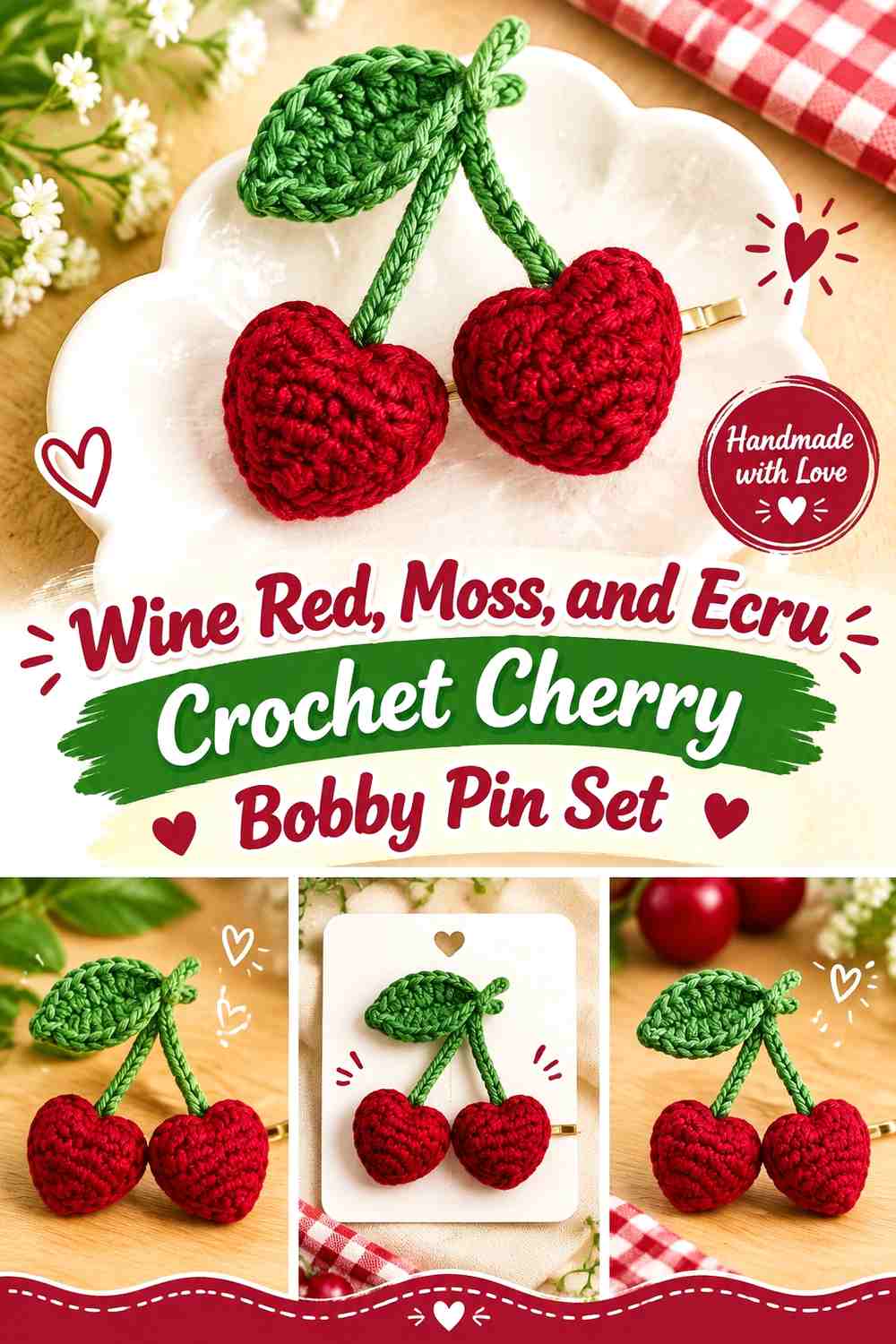
Wine red creates a richer cherry color suited to small bobby-pin accents, while moss gives the stems a muted botanical look. Ecru can provide a small base or separating detail when the two darker colors begin to merge.
Wine Red Works Best as the Main Crochet Cherry Color
Keep the fruit shapes simple and wine-led because bobby pins offer little visual space. Several extra color changes can make the cherries harder to identify once they are worn in the hair.
Ecru Can Clarify Wine Red and Moss Cherry Details
If moss stems become difficult to see beside wine red, use ecru in a tiny joining detail or supporting motif. The lighter neutral gives the dark colors separation without changing the vintage character of the set.
Creator Credit: Kerri’s Crochet
7. Blush Pink, Sage, and Oatmeal Crochet Strawberry Headband
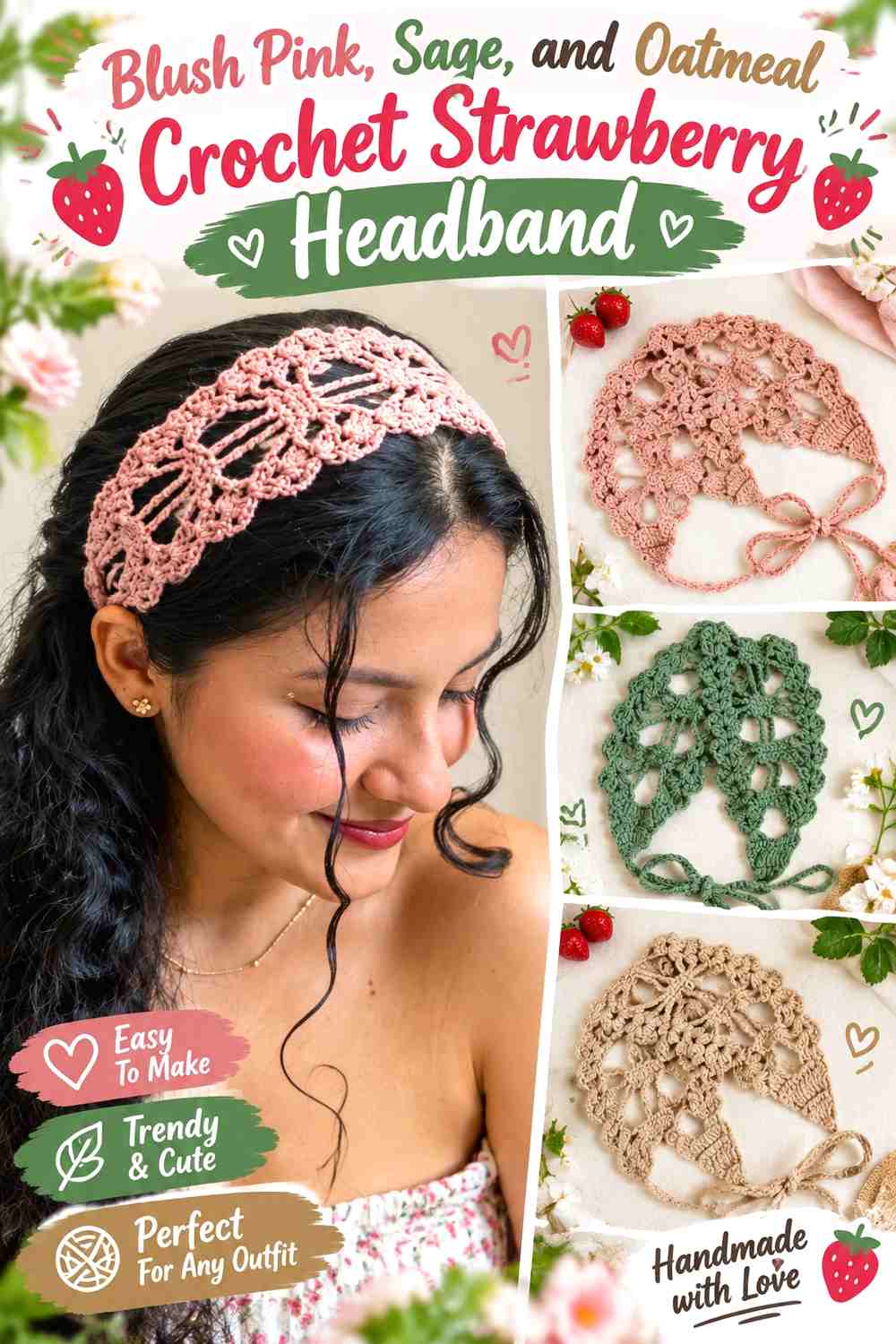
A headband provides much more visible base area than a small clip, so oatmeal can carry most of the band while blush strawberries repeat at intervals. Sage should remain concentrated around the fruit rather than becoming a second continuous headband color.
Oatmeal Gives Blush Pink Strawberries More Headband Space
Using oatmeal through the band creates a stable background and prevents several strawberries from blending into a continuous pink pattern. Leave visible neutral space between motifs so each berry keeps its individual outline.
Sage Should Repeat Consistently With Blush Pink Strawberries
Use similar sage placement on each strawberry to connect the repeated motifs. Randomly switching between dark and light greens can make a simple headband look busier than necessary.
Creator Credit: Casttañaz Crochets
8. Cream, Cherry Red, and Soft Green Crochet Cherry Scrunchie

Cream makes a useful dominant scrunchie color when cherry red needs to appear as a series of small accents. Soft green can define leaves or stems without adding the visual weight of forest green.
Cream Should Dominate Around Cherry Red Scrunchie Motifs
Let the gathered cream fabric remain visible between the cherries. A neutral base makes red fruit look intentional and helps prevent repeated motifs from disappearing inside the folds of the scrunchie.
Soft Green Can Keep Cherry Red Details Light
Use soft green for compact stems or leaves instead of broad bands around the scrunchie. The accessory should still read cream-and-cherry first, with green acting as a botanical explanation rather than a third equal color.
Creator Credit: Hopeful Turns
9. Strawberry Red, Cherry Pink, and Leaf Green Crochet Fruit Barrette

Combining strawberries and cherries on one barrette requires clearer color organization than using a single fruit. Strawberry red can mark the berry, cherry pink can distinguish the paired cherries, and leaf green can connect both motifs botanically.
Strawberry Red and Cherry Pink Need Separate Fruit Roles
Avoid mixing both reds randomly through every motif. Assign the deeper or warmer red to the strawberry and the softer pink-red to the cherries so each fruit remains visually distinct even when the motifs sit close together.
Leaf Green Can Unite Strawberry Red and Cherry Pink
Using one consistent green for leaves and stems links the two fruit types without requiring another shared accent. Keep the green narrower than the combined fruit area so the barrette still reads primarily as a red-and-pink accessory.
Creator Credit: Meladora’s Creations for Crochet
10. Soft Pink, Mint, and Cream Crochet Strawberry Hair Tie
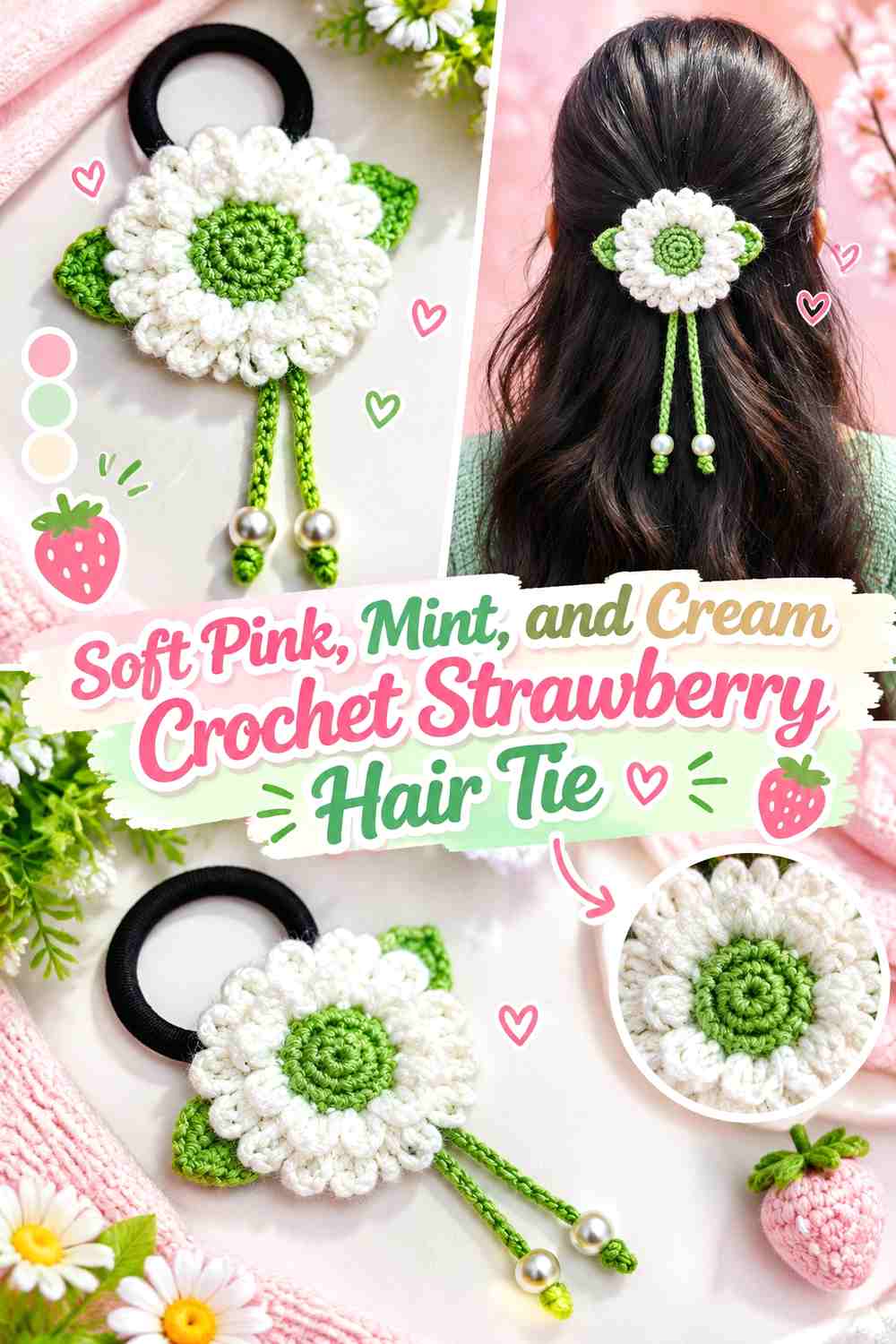
Soft pink creates a pastel strawberry direction, mint gives the leaves a lighter springlike color, and cream can appear in the tie or small finishing details. Because all three shades are pale, the most important step is maintaining enough value difference for the strawberry to stay identifiable.
Soft Pink Needs Enough Contrast on a Cream Hair Tie
Place the pink fruit directly against the cream base before making several motifs. If the strawberry almost disappears, deepen the pink slightly rather than relying on tiny accents to define the full berry.
Mint Should Outline Soft Pink Strawberry Leaves Clearly
Mint can work well when it remains darker or cooler enough to distinguish the leaf crown. If the mint is nearly white, the top of the strawberry may visually disappear into a cream hair tie.
Creator Credit: Manju Art
11. Oxblood, Antique White, and Forest Green Crochet Cherry Bow Clip
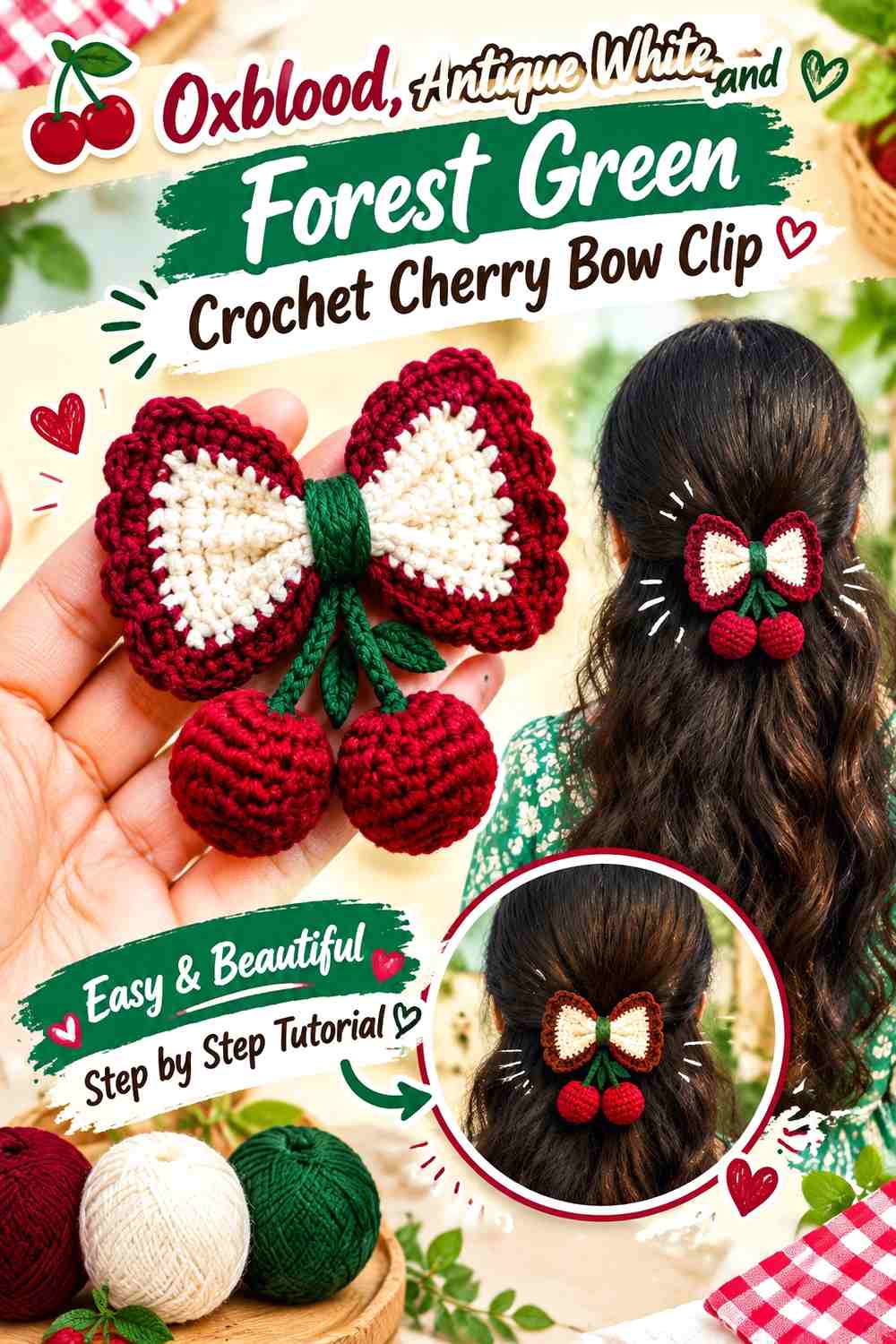
A bow clip gives the cherry theme two visual layers: the bow itself and the fruit decoration. Antique white can carry most of the bow, oxblood can define the cherries, and forest green can stay confined to their stems and leaves.
Antique White Lets Oxblood Cherries Lead the Crochet Bow
Keeping the bow pale prevents its loops from competing with the cherry motifs attached to it. Oxblood then becomes the obvious focal color even when the fruit occupies only a small section near the center or side.
Forest Green Should Stay Smaller Than the Oxblood Cherry Pair
Dark green is useful for definition, but a broad forest-green bow edge can compete with the oxblood fruit. Reserve green for stems, leaves, or one small repeat if the accessory needs extra color balance.
Creator Credit: Pakhi Kar
12. Strawberry Pink, Cream, and Moss Crochet Fruit Bandana

A crochet bandana has enough surface area for fruit motifs to become a repeated pattern rather than one isolated embellishment. Cream can dominate the mesh or main fabric, strawberry pink can appear in scattered berries, and moss can connect them through small leaves.
Cream Should Separate Strawberry Pink Across the Crochet Bandana
Avoid placing strawberries so closely that the top or side edge becomes a continuous pink strip. Leaving cream mesh between the fruit preserves the airy bandana structure and gives each motif enough surrounding space.
Moss Can Keep Strawberry Pink Motifs Connected Without Overcrowding
Use moss consistently for every leafy top and perhaps a narrow edge if more green is needed. A broad moss background would change the hierarchy, so keep cream dominant when the desired effect is a light fruit-patterned bandana.
Creator Credit: Pembe Düğme
13. Cherry Red, Sage, and Cream Crochet Side Hair Clip
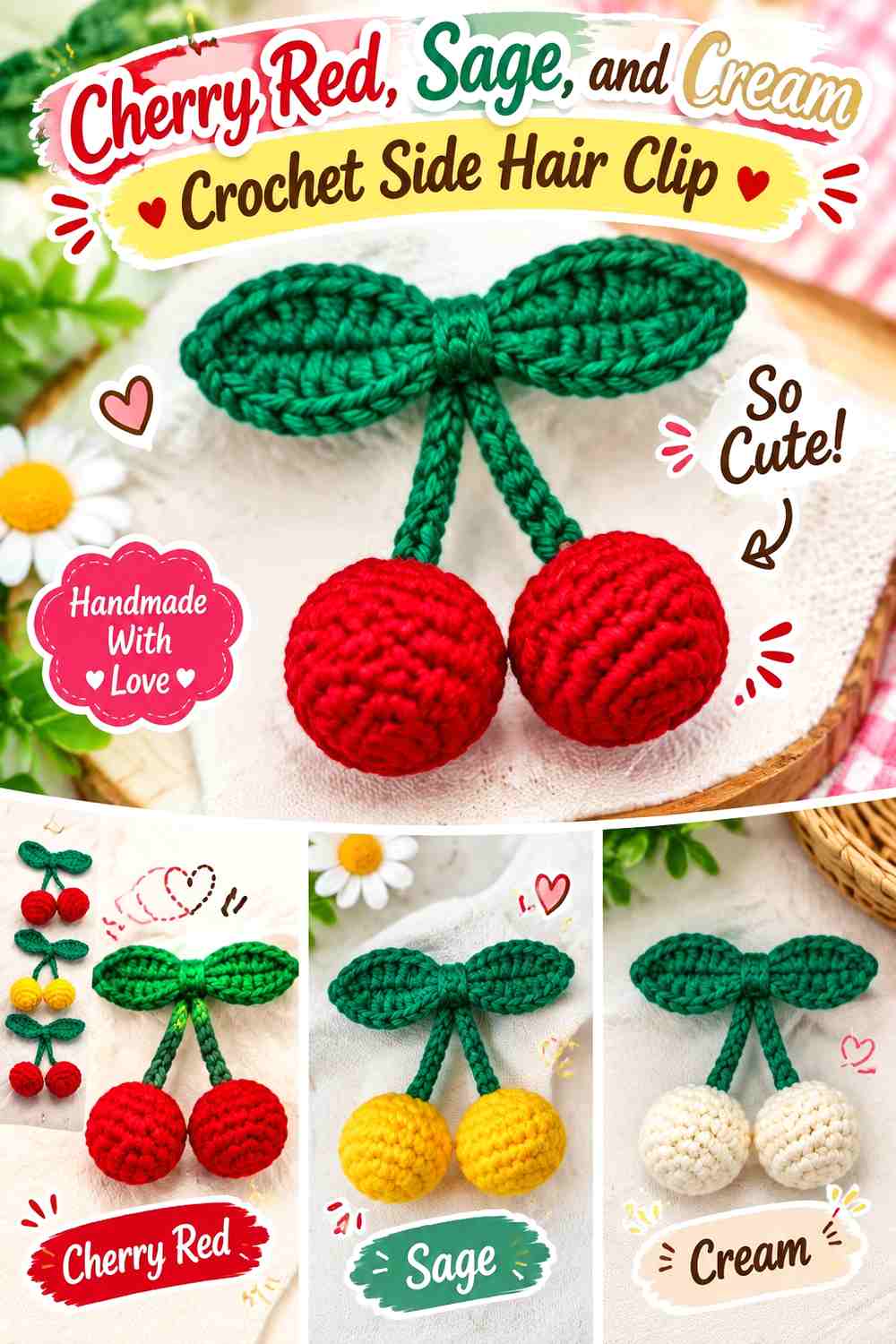
A side clip with paired cherries can use classic red while softening the rest of the palette through sage and cream. Keep the cherries slightly offset rather than surrounding them with many extra motifs so the recognizable paired shape remains the focus.
Cherry Red Should Remain the Strongest Side-Clip Color
Use red for both fruits and avoid repeating it broadly across the clip base. A concentrated pair attracts attention to the fruit without turning the entire accessory into a solid red bar.
Sage Can Soften Cherry Red Against a Cream Clip
Sage stems and leaves create a quieter transition than bright green. Cream underneath provides extra separation, which is useful when the clip is worn against dark hair and the surrounding colors need to remain distinct.
Creator Credit: Anubha’s Crochet
14. Peach Pink, Sage, and Ivory Crochet Strawberry Flower Clip
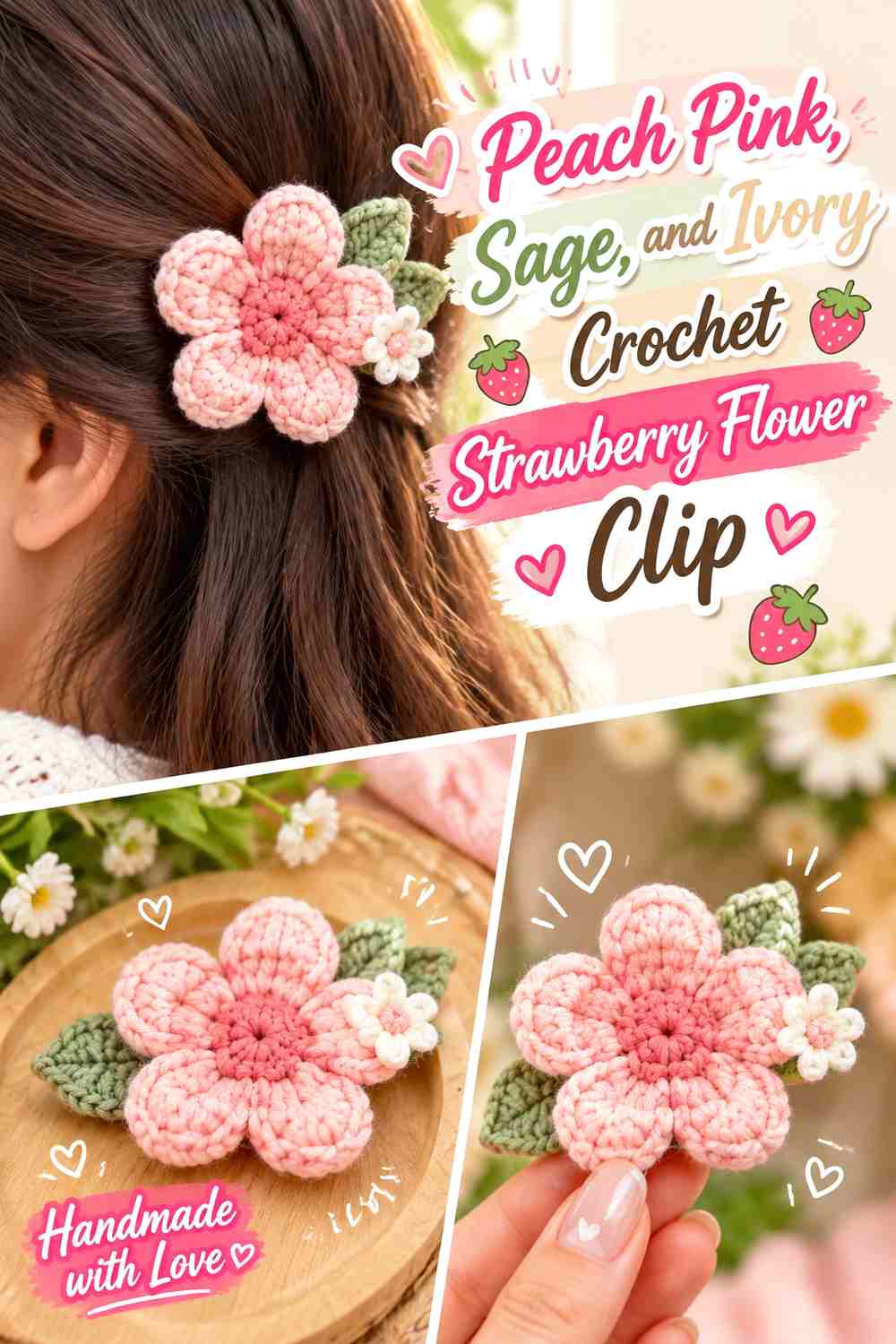
Peach pink gives the strawberry a warm pastel appearance, while sage and ivory make the accessory softer than the classic red-and-green version. This palette suits a flower-style clip where strawberry shapes can sit beside petal-like crochet without every element needing a strong color.
Peach Pink Should Identify the Strawberry Before the Flower Details
Keep the fruit area more concentrated than any surrounding petals. If both the flower and strawberry use equal amounts of peach, their shapes can merge into one decorative cluster rather than remaining separate motifs.
Ivory Can Separate Peach Pink From Sage on the Crochet Clip
Ivory works as a background, flower center, or narrow transition between the warm fruit and muted green. Use it where the motif outlines need clarity rather than distributing equal ivory sections throughout the clip.
Creator Credit: Crochet with ice
15. Deep Cherry, Dusty Rose, and Muted Green Crochet Fruit Cluster Barrette
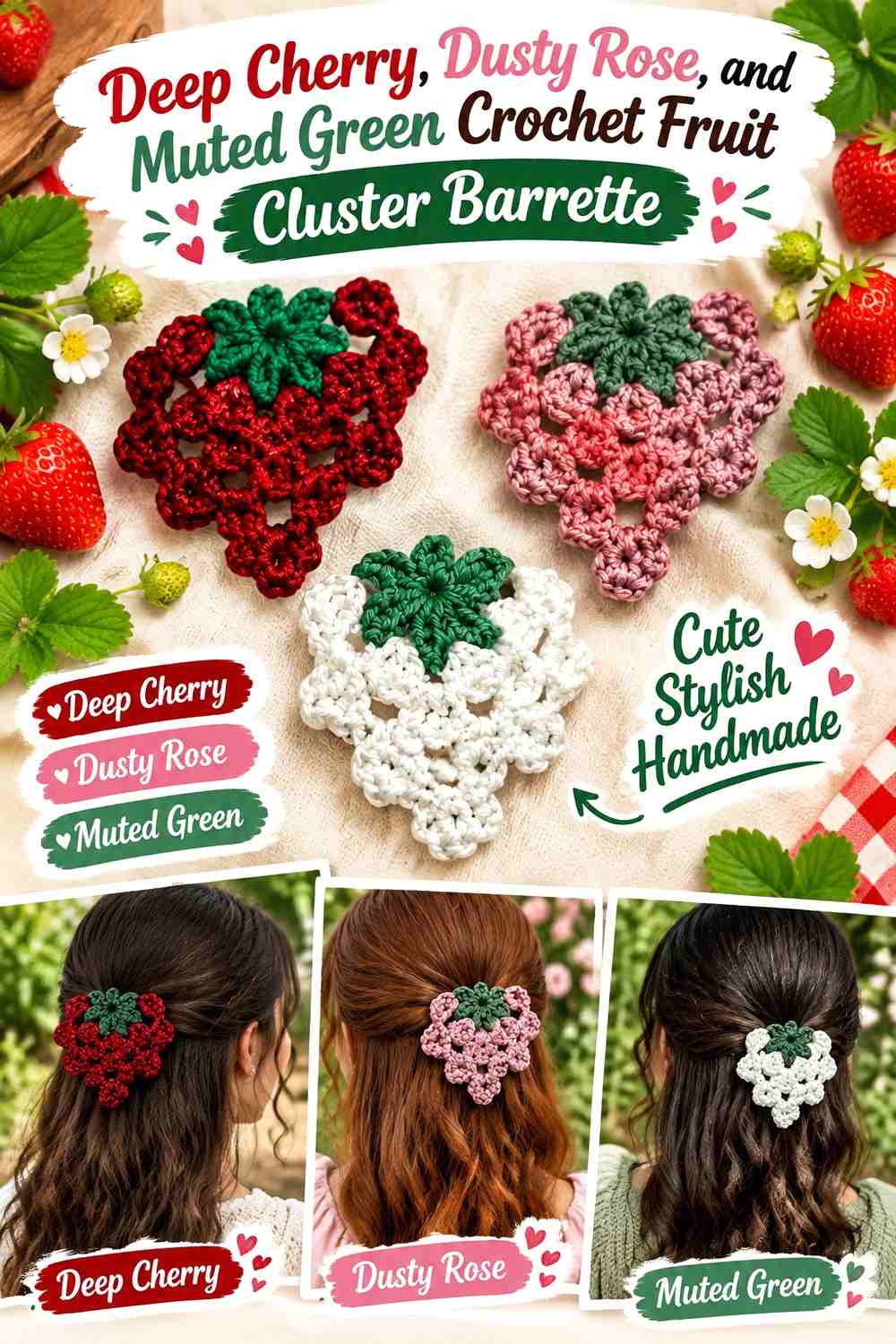
A mixed fruit cluster gives the final idea a more tonal red palette. Deep cherry can identify the cherries, dusty rose can create the strawberries, and muted green can connect both through leaves and stems. The different red values keep the fruits distinct without moving into a multicolor rainbow.
Deep Cherry Should Anchor the Dusty Rose Crochet Fruit Cluster
Place the darker cherries where the cluster needs the most visual weight, such as one end or close to the center. Dusty rose strawberries can occupy the lighter surrounding areas so the cluster does not become uniformly dark.
Muted Green Can Connect Deep Cherry and Dusty Rose Fruit
Use one green family throughout the cluster rather than changing the leaves for each fruit. Consistent muted green visually ties the deep cherries and pale strawberries together while preserving their different red roles.
Creator Credit: Alextitia Tuto Crochet
Which Strawberry and Cherry Hair Accessory Palette Should You Choose?
For the clearest classic fruit look, strawberry red with leaf green or cherry red with forest green gives the strongest recognizable contrast. These palettes suit small barrettes and clips where the motif needs to communicate quickly.
For a softer look, dusty rose with sage, blush with oatmeal, soft pink with mint, or peach pink with ivory reduces the saturation while preserving the fruit structure. These schemes work particularly well on headbands, scrunchies, and larger accessories where a strong red could otherwise cover too much visual area.
For a vintage direction, burgundy with olive, wine red with moss, or oxblood with antique white gives the fruit more depth. Use a lighter supporting shade around these dark reds so stems, leaves, and small crochet details remain visible.
Conclusion
Crochet strawberry and cherry hair accessories become more distinctive when the fruit color, green details, and accessory base each have a clear role. On tiny clips, the fruit can carry most of the color. On scrunchies, headbands, and bandanas, a neutral or muted base gives repeated strawberries and cherries more room to stand out.
Choose classic red and green when fruit recognition is the priority. Dusty rose, blush, coral, and peach create softer strawberries, while burgundy, wine, and oxblood give cherries a deeper vintage direction. Sage, mint, olive, moss, and forest green can then adjust how strong or subtle the botanical contrast feels.
Before repeating a motif across a larger accessory, place the chosen fruit and leaf colors together and check them from normal viewing distance. Follow the linked creator for the original construction, then adapt the palette and fruit placement to suit the clip, tie, barrette, scrunchie, or headband you want to make.
Frequently Asked Questions
Which colors work best for crochet strawberry hair accessories?
Classic strawberry red with leaf green gives the most recognizable result, but dusty rose, blush, coral, peach, and soft pink can all work. Keep the leafy top clearly different from the fruit so the strawberry silhouette remains easy to identify.
Can crochet cherries be burgundy instead of bright red?
Yes. Burgundy, wine, or oxblood can create a darker vintage interpretation. Pair the cherries with olive, moss, sage, or another green that remains visibly separate from the dark fruit.
How can I make pastel crochet strawberries easier to see?
Increase the contrast between the fruit and its background. A soft pink strawberry may need a cream base and a slightly deeper sage leaf. If all three shades are equally pale, the motif can lose definition.
Should a strawberry scrunchie have fruit motifs all the way around?
It can, but the motifs do not need to touch. Leaving visible base color between strawberries helps each berry remain distinct after the scrunchie gathers and folds around the hair.
Can strawberries and cherries be used on the same crochet hair accessory?
Yes. Give the fruits separate color roles so they remain easy to distinguish. For example, dusty rose can identify strawberries while deep cherry red identifies cherries, with one shared muted green connecting the leaves and stems.
What neutral colors work with crochet strawberry and cherry accessories?
Cream, ivory, ecru, oatmeal, and antique white can all provide quieter backgrounds for red, pink, burgundy, and green fruit palettes. Choose a neutral that remains different enough from any pale fruit color used in the motif.
How do I keep green stems visible beside dark crochet cherries?
Choose a green with a noticeably different value, or introduce a small lighter shade nearby. Sage or olive may separate more clearly from burgundy than very dark forest green, depending on the yarns you choose.