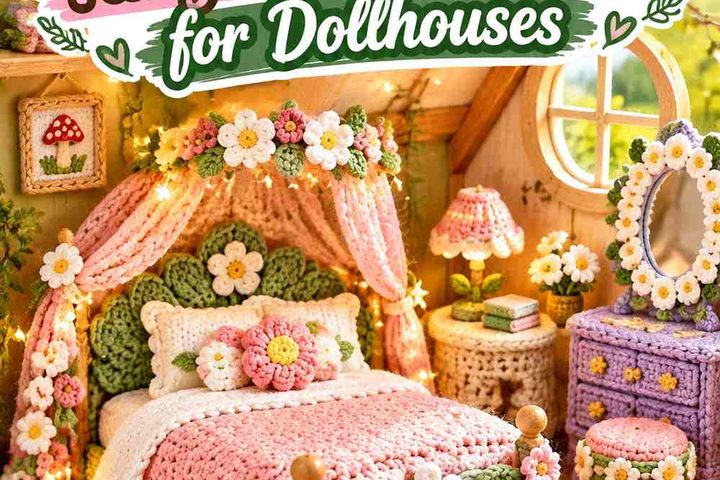
A crochet gingerbread house gives you more color-planning opportunities than the usual brown, white, red, and green combination suggests. The house body can stay cookie-colored while the roof becomes the main decorative area, or you can move the strongest color to the door, wreath, windows, candy dots, snowy edging, and hanging loop.

The most successful palettes still preserve the visual logic of a gingerbread house. A medium or dark brown usually gives the structure weight, a lighter shade can imitate icing or snow, and one or two festive accents can identify candy and architectural details. When every window, roof tile, door, wreath, and trim uses a different strong color, a small crochet house can become difficult to read.
The tutorials below support gingerbread-house, Christmas-house, ornament, appliqué, or dimensional-house construction. The palettes and decoration placements are independent adaptations, so use each creator’s tutorial for the actual crochet method while planning the colors separately.
Quick List
- Gingerbread Brown, Icing White, and Peppermint Red Crochet House Ornament
- Caramel, Blush Pink, and Cream Crochet Heart Gingerbread House
- Cocoa, Sage, and Cranberry Crochet Wreath Gingerbread House
- Taupe, Icy Blue, and Snow White Crochet Winter Gingerbread Cottage
- Cinnamon, Buttercream, and Holly Green Crochet Gingerbread House Appliqué
- Mocha, Dusty Rose, and Mint Crochet Pastel Gingerbread House Ornament
- Dark Chocolate, Antique Cream, and Old Gold Crochet Gingerbread House Decoration
- Biscuit Beige, Cherry Red, and Forest Green Crochet Christmas House Ornament
- Toasted Almond, Lavender, and White Crochet Scalloped-Roof Gingerbread House
- Espresso, Snow White, and Candy Pink Crochet Dimensional Gingerbread House
- Ginger Brown, Dusty Teal, and Coral Crochet Tabletop Gingerbread Cottage
- Oat Brown, Burgundy, and Cream Crochet Mini Gingerbread Village House
- Chestnut, Powder Blue, and Soft Gray Crochet Windowed Gingerbread House
- Warm Tan, Pistachio, and Raspberry Crochet Pastel Candy Gingerbread House
- Cocoa Brown, Cream, Cranberry, and Mustard Crochet Classic Candy House
Let Brown Establish the Gingerbread House Before Adding Candy Colors
The brown section usually needs enough uninterrupted space to make the piece read as gingerbread rather than a generic Christmas cottage. Medium gingerbread brown, caramel, cocoa, cinnamon, and toasted almond give different levels of warmth while still leaving room for pale icing to show.
If the body and roof are both heavily covered with colorful decoration, preserve some brown around the windows, corners, or lower wall. That negative space gives tiny candy accents clearer boundaries and keeps a small ornament from becoming visually crowded.
Use White and Cream Where Crochet Icing Needs Definition
White does more than make the house look snowy. On crochet, a pale border can clarify the roofline, separate a door from the wall, outline a window, or make scallops and bobbles easier to see.
Bright white gives the strongest separation from dark brown. Cream, buttercream, and antique white create a softer transition. Neither approach is automatically better; choose according to how much contrast the specific roof, trim, or motif needs.
Keep Christmas Accent Colors Concentrated on Small House Details
Red, cranberry, raspberry, teal, mint, green, lavender, and mustard can all work on gingerbread houses, but they do not need equal coverage. On a tree ornament, even a small red door or green wreath can carry considerable visual weight.
Assign colors before decorating. One shade can belong to the door, another to candy dots, and a pale neutral can handle the roof icing. Repeating these roles across several houses also helps a gingerbread garland or village feel coordinated.
1. Gingerbread Brown, Icing White, and Peppermint Red Crochet House Ornament

Gingerbread brown gives this flat crochet ornament a recognizable cookie base, while icing white defines the roof and outer edges. Peppermint red should remain concentrated around the door, heart, or a few candy details so the ornament reads as a brown gingerbread house before it reads as a red Christmas decoration.
Gingerbread Brown Should Remain Visible Around the White Icing
Leave a clear section of brown wall around windows, doors, and small appliqués. When white covers both the entire roof and most of the façade, the gingerbread color can become secondary. A brown center framed by pale icing gives the tiny architecture more definition.
Peppermint Red Works Best as a Small Accent Against Icing White
Use red where the viewer should look first: a central door, a heart, or repeated candy dots. White between the brown wall and red details prevents the warm colors from visually blending and makes small decorations easier to distinguish on the tree.
Creator Credit: olliehollycrochet
2. Caramel, Blush Pink, and Cream Crochet Heart Gingerbread House
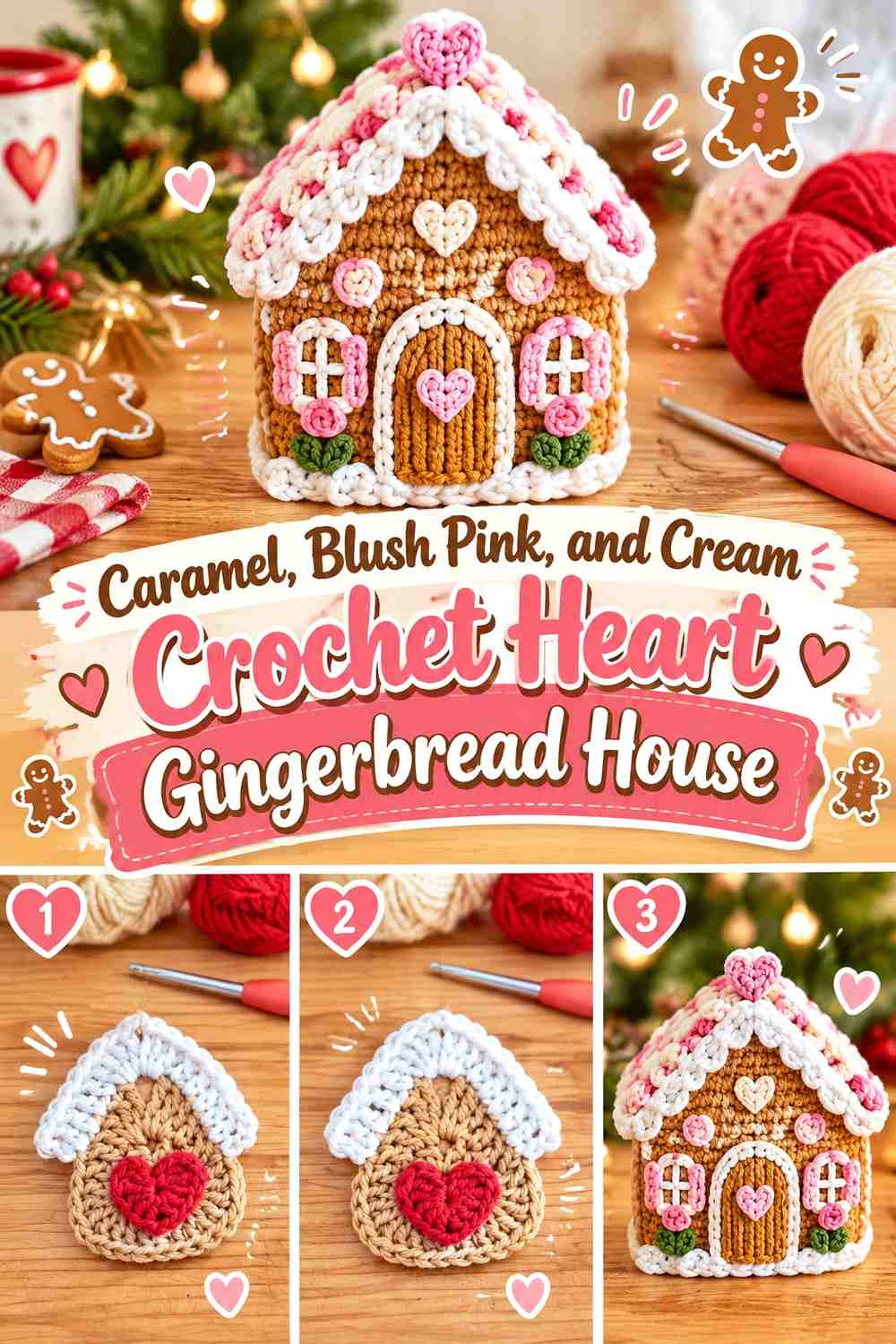
Caramel creates a lighter cookie base than traditional dark brown, while blush pink gives the house a softer candy-shop direction. Cream can frame the roof and door so the pale pink details do not disappear against the warm wall color.
Caramel Gives Blush Pink Enough Warm Contrast on the House Front
Keep caramel across most of the main façade and position blush around one intentional focal point, such as a heart or door. If blush spreads across the roof, windows, and border equally, the gingerbread body can lose its visual role.
Cream Can Separate Blush Pink From the Caramel Roofline
Use cream around the roof edge or immediately beside the pink embellishment. The light neutral gives two warm colors a cleaner break and lets scalloped or piped-looking trim stay visible without introducing another saturated shade.
Creator Credit: hibouchoucaillou
3. Cocoa, Sage, and Cranberry Crochet Wreath Gingerbread House
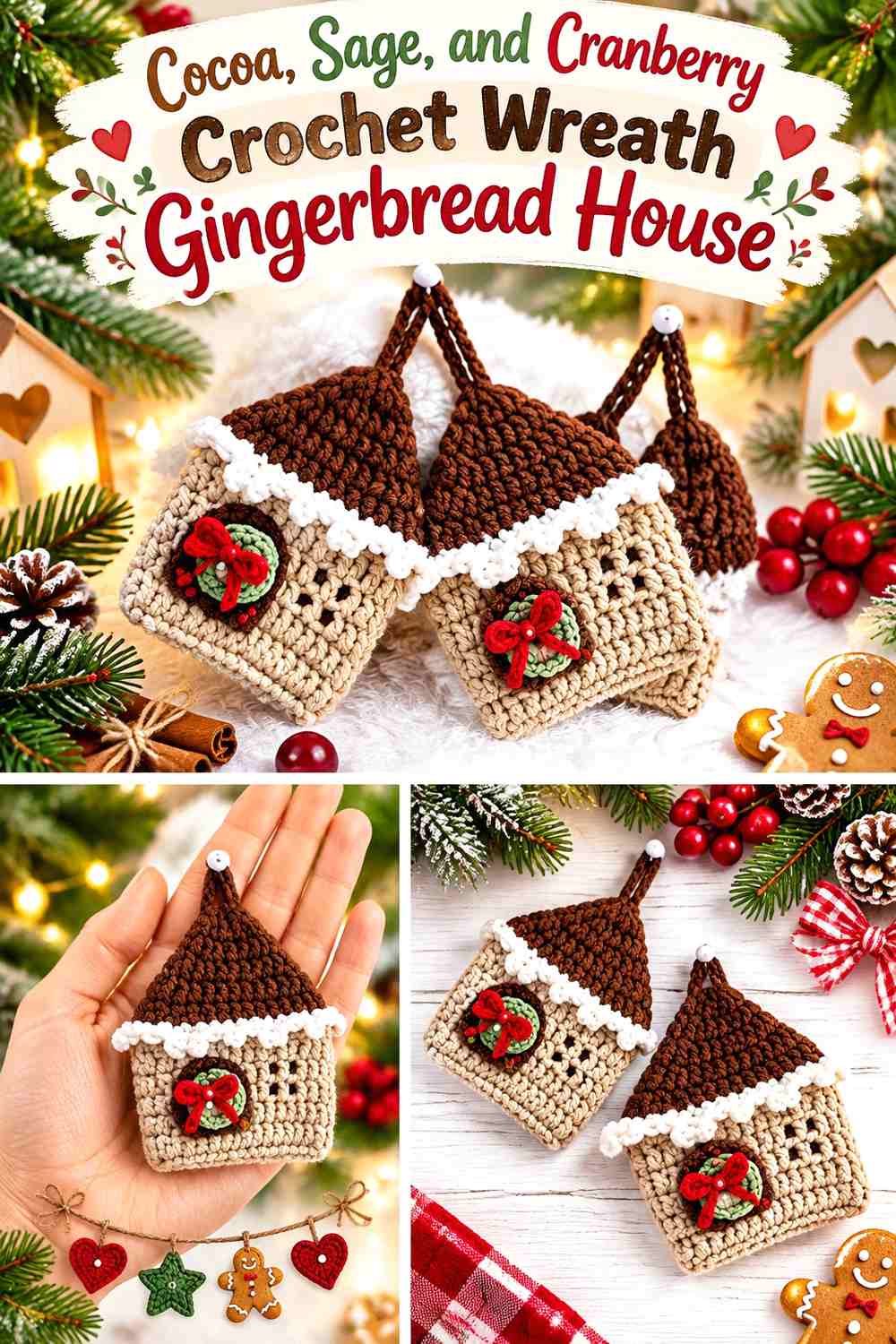
Cocoa gives this gingerbread ornament a deeper base, sage naturally suits a small wreath, and cranberry supplies the berry or bow accent. Keep the wreath compact enough that the cocoa wall still frames it, especially if it sits directly above or on the door.
Cocoa Creates a Dark Background for a Sage Crochet Wreath
A medium-dark cocoa body makes muted sage easier to see than it would be on a green or tan house. Leave a visible ring of brown around the wreath so its circular shape stays clear rather than visually merging into nearby roof trim.
Cranberry Should Punctuate the Sage Wreath Instead of Covering It
Use cranberry for a bow, berries, door detail, or one additional small repeat. The stronger red needs less surface area than sage to attract attention, so keeping it limited preserves the wreath’s green identity.
Creator Credit: Kane Crochet
4. Taupe, Icy Blue, and Snow White Crochet Winter Gingerbread Cottage

Taupe gives the gingerbread body a cooler neutral appearance, icy blue introduces a winter-candy accent, and snow white provides the clearest contrast. This palette works especially well when you want the house to feel snowy rather than traditionally red-and-green.
Taupe Keeps Icy Blue From Turning the Gingerbread Cottage Into a Blue House
Let taupe cover the main walls while blue stays in the door, window trim, or selected roof decoration. Enough visible brown-gray neutral is needed to preserve the gingerbread theme.
Snow White Should Define the Icy Blue Roof and Taupe Walls
White can form the strongest architectural lines in this palette. Place it where the roof meets the wall, around a window, or along an outer edge. That separation prevents pale blue and taupe from collapsing into one low-contrast winter block.
Creator Credit: The Crochet Circle
5. Cinnamon, Buttercream, and Holly Green Crochet Gingerbread House Appliqué
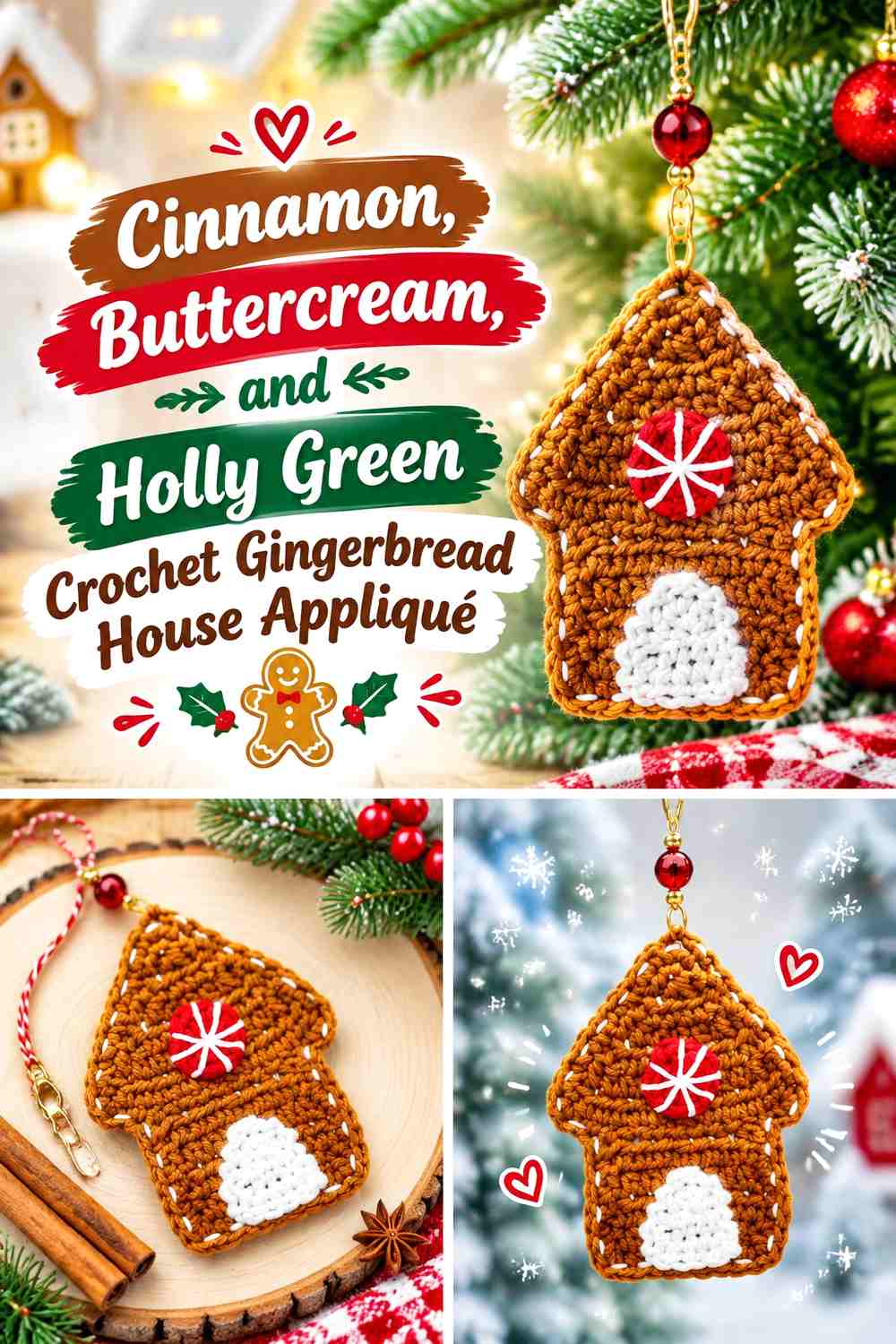
Cinnamon gives a flat appliqué a warm cookie appearance, buttercream creates softer icing than stark white, and holly green supplies a traditional Christmas accent. Since appliqués have little depth, value contrast is especially important around the roof and door.
Cinnamon Should Fill the Main Crochet Appliqué Shape
Keep cinnamon uninterrupted through much of the wall so the silhouette stays strong when the appliqué is used on a garland, stocking, gift bag, or other surface. Too many small color blocks can make the tiny architecture harder to identify.
Holly Green Needs Buttercream Around Small Cinnamon Details
Use green for one compact wreath, tree-like embellishment, or door accent. Buttercream can separate it from cinnamon and keep the dark green from appearing visually heavy against the warm house body.
Creator Credit: Coucou Crocheter
6. Mocha, Dusty Rose, and Mint Crochet Pastel Gingerbread House Ornament
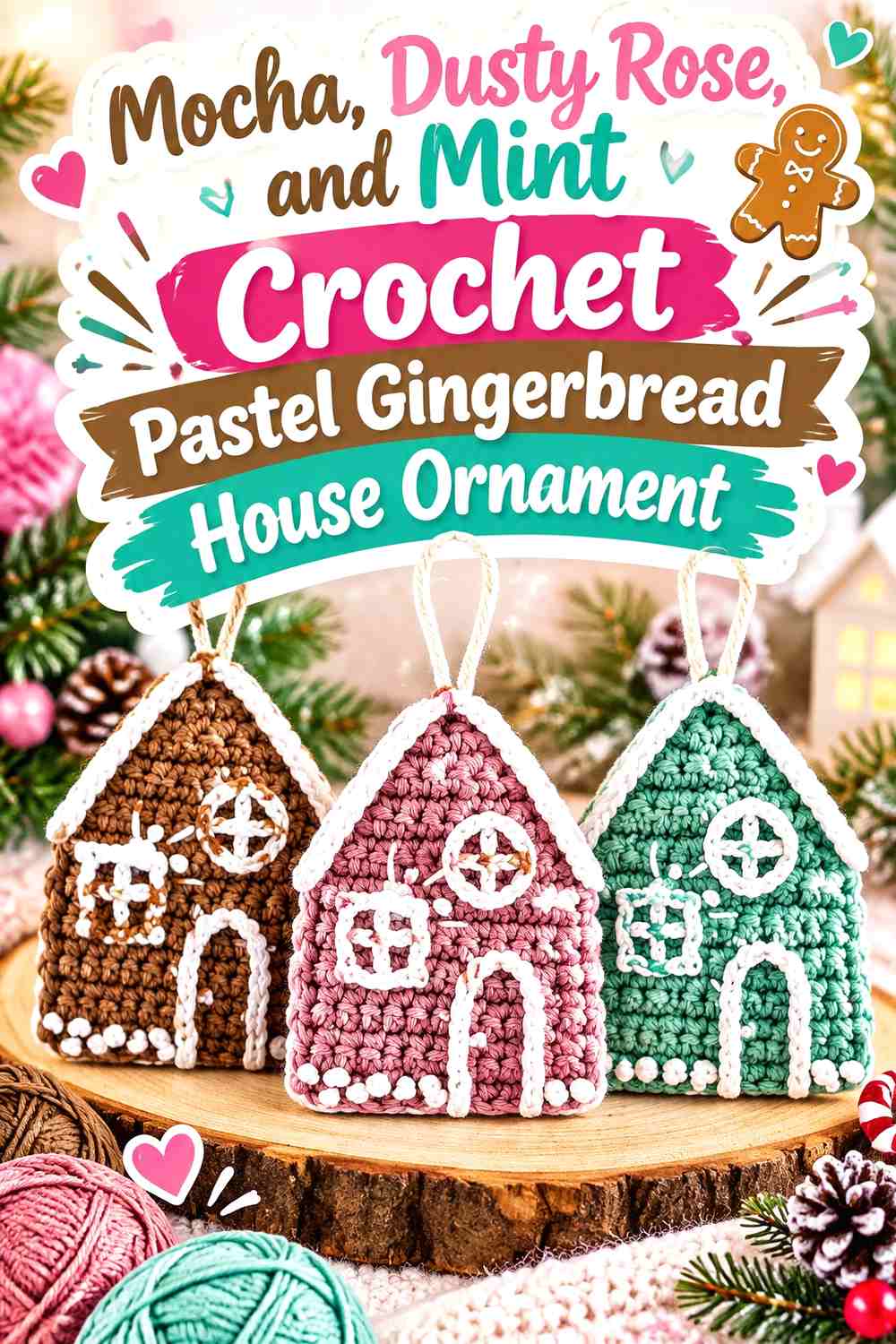
Mocha provides enough depth to support a pastel candy palette without abandoning the gingerbread look. Dusty rose can lead the candy details, while mint works well for a wreath, door trim, or a few small roof accents.
Mocha Gives Dusty Rose Candy Details a Stable Background
Use mocha over most of the house and allow dusty rose to repeat in small separated areas. The darker neutral makes muted pink visible without needing bright red.
Mint Should Stay Secondary to Dusty Rose on the Mocha House
Choose one job for mint—perhaps a wreath or selected candy dots—rather than alternating pink and green everywhere. A clear hierarchy keeps the pastel treatment playful without making the front look scattered.
Creator Credit: Crochet by Colleen
7. Dark Chocolate, Antique Cream, and Old Gold Crochet Gingerbread House Decoration
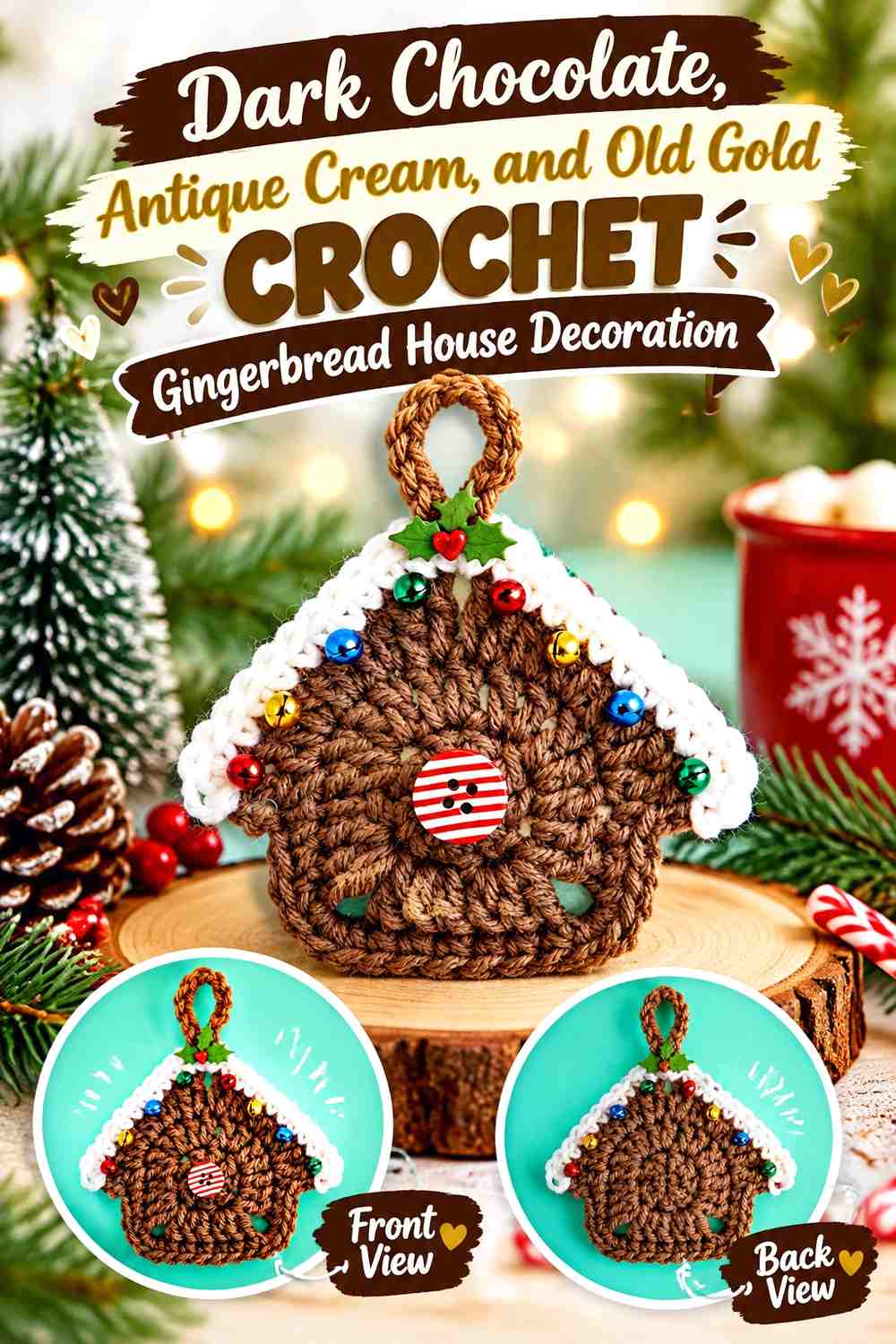
Dark chocolate gives this house the strongest brown base in the list. Antique cream becomes highly visible against it, while old gold can warm windows, stars, or small candy-style accents without competing with the pale icing.
Dark Chocolate Makes Antique Cream Roof Icing More Graphic
Use cream along the roof edge, snow line, or doorway where the crochet architecture needs the clearest definition. The high contrast means you can use relatively little pale yarn and still make the shape easy to read.
Old Gold Should Highlight Dark Chocolate Rather Than Replace Antique Cream
Keep the gold-toned shade in compact details such as a star, window center, or tiny repeated decorations. Antique cream should still do most of the separating work because it gives the darkest house the strongest visual structure.
Creator Credit: RepeatCrafterMe
8. Biscuit Beige, Cherry Red, and Forest Green Crochet Christmas House Ornament

Biscuit beige gives this house a lighter baked-cookie appearance, while cherry red and forest green provide a traditional Christmas pairing. Because both accents are strong, use them in different architectural zones rather than in equal scattered dots.
Biscuit Beige Should Separate Cherry Red From Forest Green
Keep visible beige around a red door and green wreath or roof detail. Without that neutral space, the two strong Christmas colors can compete and make the small façade look crowded.
Cherry Red Can Lead While Forest Green Supports the Biscuit Beige House
Choose red for the main focal point and green for supporting details, or reverse the roles. What matters is avoiding equal amounts of both on the roof, door, windows, and border at the same time.
Creator Credit: Kerri’s Crochet
9. Toasted Almond, Lavender, and White Crochet Scalloped-Roof Gingerbread House

Toasted almond provides the warm cookie base, lavender introduces an unexpected candy color, and white keeps the scalloped roof treatment clear. This is a good palette when you want a softer Christmas tree without moving entirely into pink.
White Should Keep the Toasted Almond Scalloped Roof Easy to See
Use white where the roof texture changes or where scallops need to be visually separated from the wall. The pale line can make a relatively simple house shape feel more decorated without needing many additional motifs.
Lavender Works Best in Small Toasted Almond House Details
Reserve lavender for the door, one window, or several repeated candy dots. The color will feel more deliberate when it appears in a few matching places rather than being distributed randomly around the entire ornament.
Creator Credit: Kristines Crochets
10. Espresso, Snow White, and Candy Pink Crochet Dimensional Gingerbread House
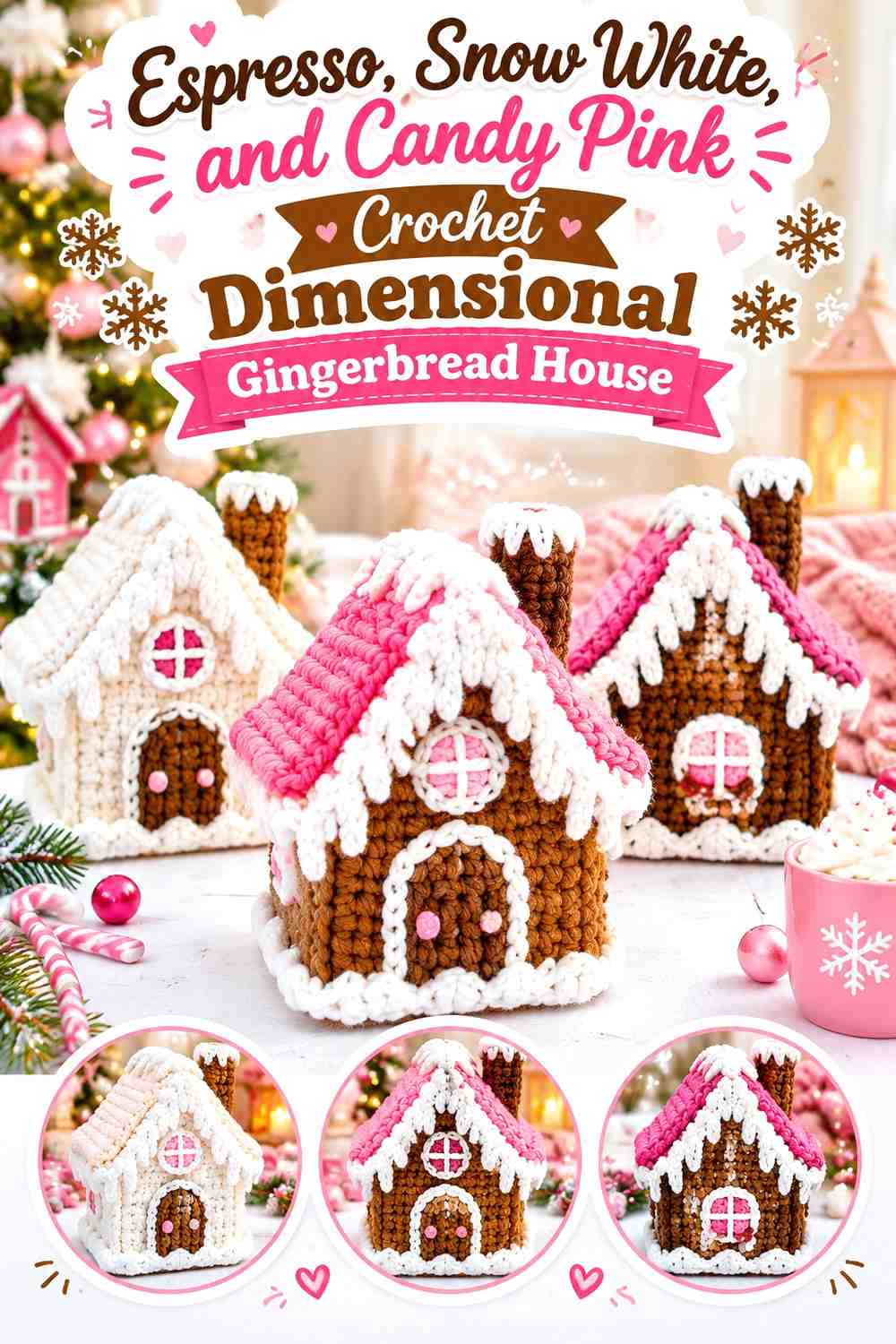
Espresso creates a substantial base for a three-dimensional decoration, snow white defines roof edges and snowy details, and candy pink brings a playful accent to doors, windows, or roof decorations. On a dimensional house, color needs to work from more than one viewing angle.
Espresso Should Continue Across the Main Dimensional House Walls
Keeping the major wall panels in one dark brown helps the separate surfaces read as one building. Strong color changes at every corner can make the structure look segmented rather than cohesive.
Snow White Should Repeat Around Candy Pink on the Espresso House
Use white consistently along important edges so pink remains decorative instead of becoming structural. Repeating white on the front and side also helps the house look coordinated when viewed from an angle rather than only straight on.
Creator Credit: Игорь Кононенко
11. Ginger Brown, Dusty Teal, and Coral Crochet Tabletop Gingerbread Cottage

Ginger brown keeps this larger cottage connected to the baked-cookie theme, dusty teal provides a cooler decorative color, and coral gives the façade a smaller warm accent. This palette is useful when a tabletop house has enough surface area for two candy colors but still needs a clear dominant brown.
Ginger Brown Should Anchor the Dusty Teal Tabletop Cottage
Use brown across the broad walls and major structural areas. Dusty teal can then appear on a door, decorative roof section, or selected trim without changing the house into a teal cottage.
Coral Should Be Smaller Than Dusty Teal on the Ginger Brown House
Coral is warm and noticeable against brown, so it needs relatively little space. Use it in bows, candies, or one repeated decoration and allow teal to act as the larger secondary color.
Creator Credit: Лена Нави – школа вязания крючком
12. Oat Brown, Burgundy, and Cream Crochet Mini Gingerbread Village House

Oat brown gives a miniature village house a quiet base, burgundy adds traditional holiday depth, and cream can create snow and icing. Repeating this palette across several houses with different proportions can make a village feel coordinated without making every building identical.
Oat Brown Can Keep Burgundy Village Details From Feeling Too Heavy
Let the neutral body remain clearly visible around the door and windows. Burgundy has strong visual weight, so a small amount is enough to distinguish one house within a larger display.
Cream Can Connect Oat Brown and Burgundy Across a Gingerbread Village
Repeat cream on roof edges or snow details across neighboring houses. A consistent pale trim can visually connect houses even when the door, wreath, or candy accent colors change.
Creator Credit: Ichigocrochet
13. Chestnut, Powder Blue, and Soft Gray Crochet Windowed Gingerbread House

Chestnut supplies a classic medium-dark base, powder blue adds a soft winter accent, and soft gray can define windows or roof details without creating the sharpness of black. Keep the blue concentrated around places that suggest candy or painted decoration.
Chestnut Should Surround Powder Blue Windows With Visible Brown
Leaving a clear chestnut border around each window maintains the gingerbread façade and prevents several blue openings from turning the front into a cool-toned grid.
Soft Gray Can Define Powder Blue Without Challenging Chestnut
Use gray sparingly around tiny window or roof details when white would be too strong. It gives enough value difference to organize the decorative areas while keeping chestnut dominant.
Creator Credit: Crochet with Yarnhild
14. Warm Tan, Pistachio, and Raspberry Crochet Pastel Candy Gingerbread House
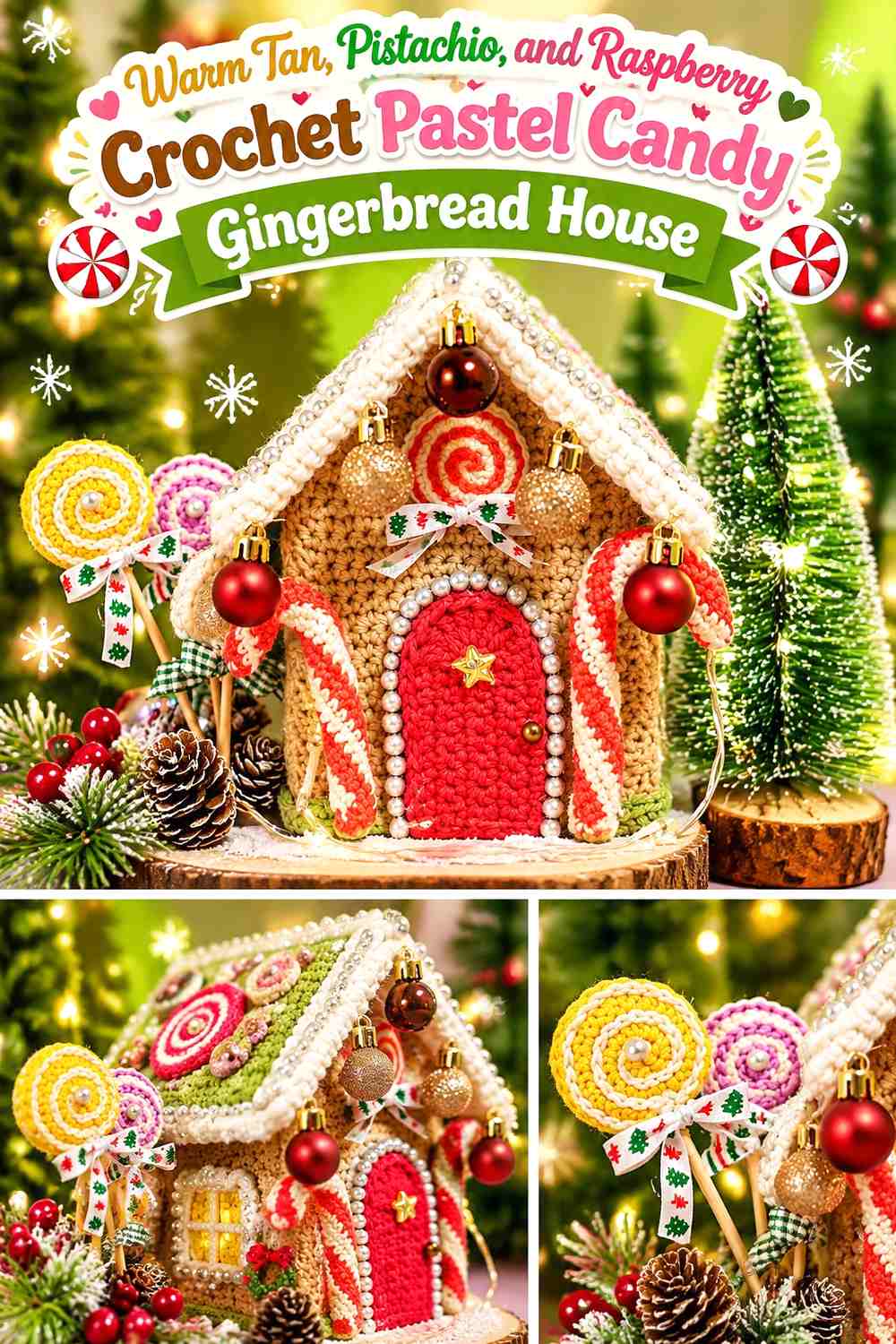
Warm tan provides a soft baked base, pistachio offers the green component, and raspberry gives the palette a stronger candy accent than blush. This combination can support a playful roof without losing the underlying gingerbread color.
Warm Tan Should Stay Visible Between Pistachio Roof Decorations
Leave tan spaces between green candies, scallops, or trims so the roof remains part of the cookie house rather than becoming a solid green cap.
Raspberry Should Lead the Candy Details Beside Pistachio
Use raspberry for the door, central candy, or repeated small accents and keep pistachio more botanical or secondary. The stronger pink-red creates a clear focal point against warm tan.
Creator Credit: uncinettofra
15. Cocoa Brown, Cream, Cranberry, and Mustard Crochet Classic Candy House
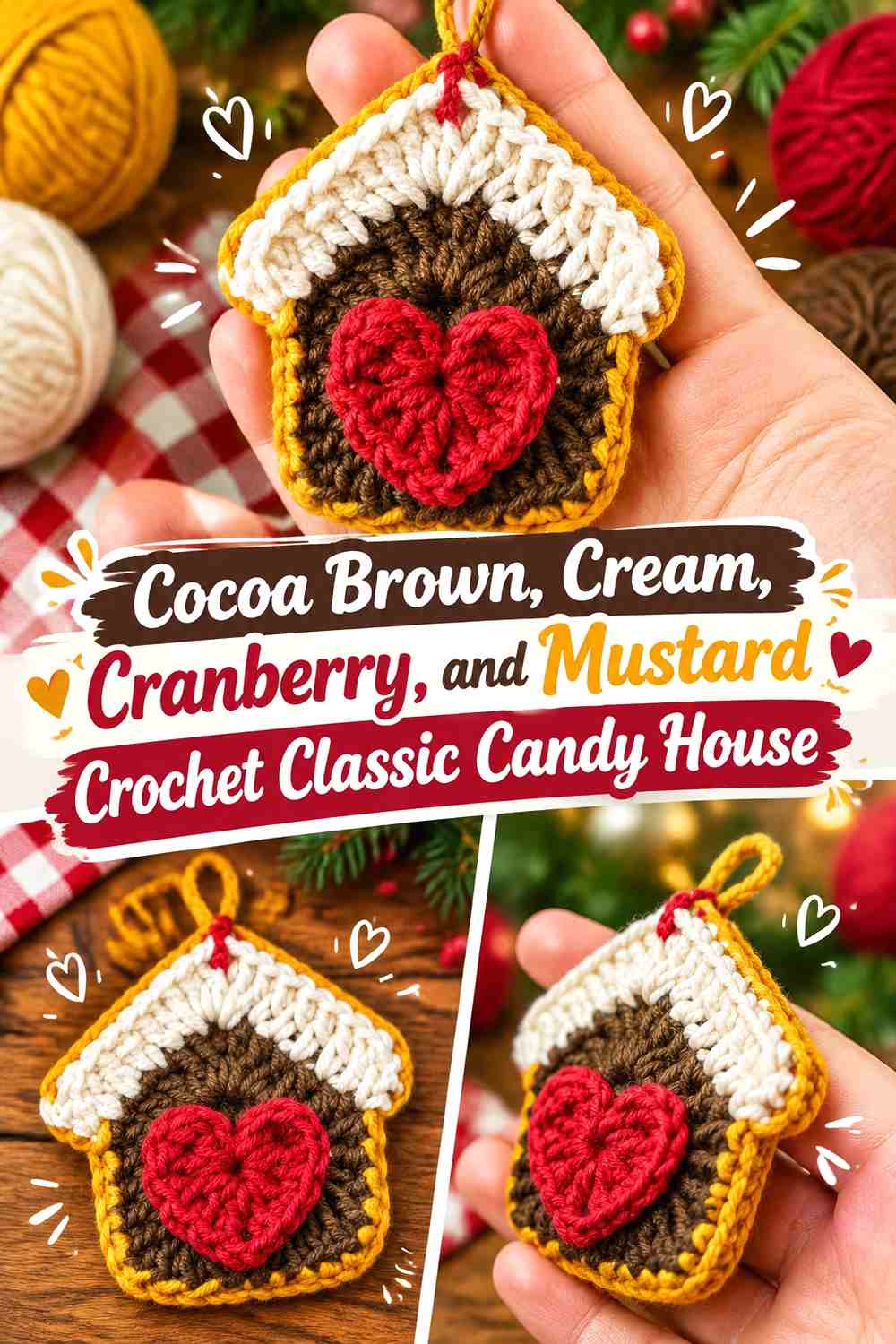
Cocoa brown forms the main house, cream supplies the icing, cranberry creates the strongest Christmas accent, and mustard can imitate a softer golden candy color. Four colors work here because each one has a specific job rather than covering equal portions of the ornament.
Cocoa Brown and Cream Should Establish the House Before Cranberry Appears
Build the main visual relationship around brown walls and pale icing. Once those two colors clearly define the roof and façade, cranberry can be added to the door, heart, or candy details without confusing the architecture.
Mustard Should Stay Smaller Than Cranberry on the Cream Icing
Use mustard as a secondary candy color around the roof or windows. Repeating it only a few times gives the decoration variety while allowing cranberry to remain the main festive accent.
Creator Credit: crochet with emma
Which Gingerbread House Color Scheme Fits Your Christmas Decor?
For a traditional tree, gingerbread brown with white and peppermint red, biscuit beige with red and green, or cocoa with cranberry gives the clearest classic Christmas direction. These palettes make doors, wreaths, candy details, and snowy roofs easy to recognize.
For softer holiday decor, caramel and blush, mocha and dusty rose, toasted almond and lavender, or warm tan and pistachio reduces the intensity while keeping the house recognizably gingerbread. Pale palettes benefit from a brown base or cream separator so the decorative shapes do not merge.
For a winter-focused display, taupe with icy blue, chestnut with powder blue, or dark chocolate with antique cream shifts attention toward snow, windows, and roof trim. These can sit comfortably in a mixed Christmas village where every house does not need to use the same red-and-green accents.
Conclusion
Crochet gingerbread houses become more interesting when the brown body, icing, and candy accents each have a deliberate role. Start by choosing the cookie color, then decide whether white or cream will define the roofline and architectural details. Only after those two layers are clear should you add the stronger Christmas colors.
Traditional red and green works well for wreaths and doors, while dusty rose, mint, lavender, powder blue, teal, raspberry, and coral create less conventional candy-house directions. Dark chocolate and espresso make pale icing especially visible, while caramel, oat brown, and toasted almond produce a softer contrast.
For exact house construction, shaping, assembly, and finishing, follow the linked creator tutorial. Then adapt the decoration by testing the roof, door, window, wreath, and candy colors together before attaching every small detail.
Frequently Asked Questions
What brown works well for a crochet gingerbread house?
Medium gingerbread brown, caramel, cinnamon, cocoa, chestnut, and darker chocolate tones can all work. Choose according to the contrast you want with the icing. Darker brown makes white especially prominent, while lighter caramel creates a softer overall house.
Should crochet gingerbread house icing be bright white or cream?
Both can work. Bright white creates stronger definition around dark brown roofs, doors, and edges. Cream or buttercream produces gentler contrast and can suit vintage or pastel candy palettes.
How many colors should I use on a small crochet gingerbread house ornament?
Three colors are often enough for the body, icing, and main accent. A fourth color can work for extra candy details if every shade has a clear role. Too many equally strong colors can make windows, doors, and roof trim difficult to distinguish.
How can I make candy details visible on a brown crochet gingerbread house?
Place lighter icing or visible brown space around them. Red, pink, yellow, blue, and green candies are easier to read when they are not touching several other strong colors at once.
Can crochet gingerbread houses use pastel Christmas colors?
Yes. Blush, mint, lavender, powder blue, pistachio, and coral can replace brighter candy shades. Keep enough brown or tan in the main house so the piece still reads as gingerbread.
What color should the roof of a crochet gingerbread house be?
The roof can stay brown with white icing, become mostly white for a snowy look, or carry a controlled accent color. If the roof is highly decorated, keep the wall simpler so both areas do not compete.
How can I make several crochet gingerbread houses look like one Christmas village?
Repeat one or two colors across every house while changing the accents. For example, use the same cream roof trim and brown family throughout the village, then vary doors and candy details between cranberry, sage, lavender, blue, or mustard.