Snowy woodland crochet ornaments work best when the animal remains recognizable beneath the winter decoration. A fox still needs a clear face and ears, a reindeer benefits from visible antlers, an owl needs separation around the eyes, and a squirrel’s tail should not disappear into a similarly colored body. Snow white, cream, icy blue, cranberry, pine green, and other seasonal colors can support those features rather than covering them.
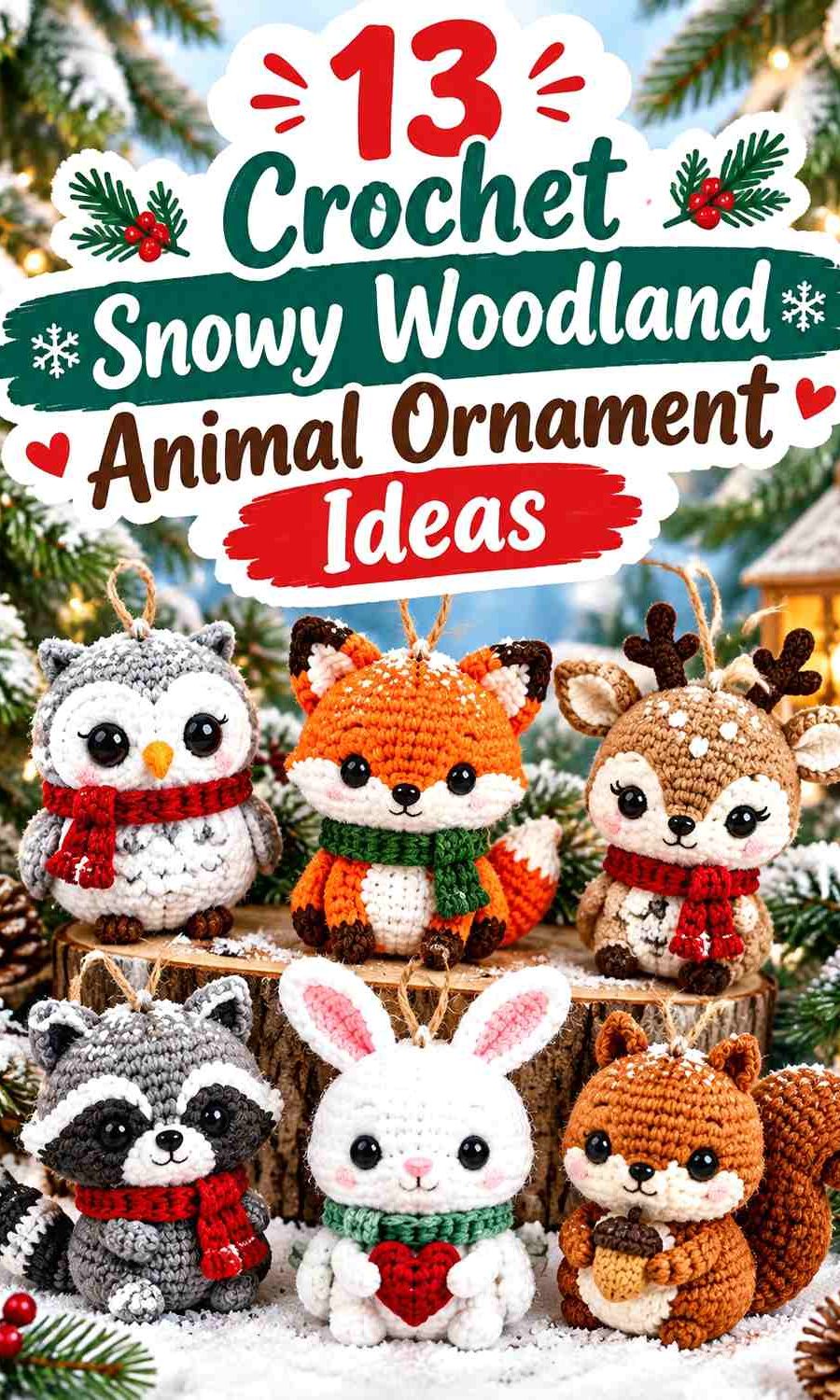
A coordinated set does not require every ornament to use the same three colors. Repeating one snow shade across several animals while changing the fur, scarf, wreath, ear, or wing colors can make the collection feel connected without making a fox, owl, mouse, and moose look interchangeable.
Some linked tutorials are ornament-specific, while others teach the woodland animal as an amigurumi or flat appliqué that can serve as the construction reference for an ornament adaptation. Use each creator’s tutorial for the actual crochet construction and scale decisions, then treat the snowy palette and decorative placement below as independent color guidance.
Quick List
- Rust Orange, Snow White, and Pine Green Crochet Fox Ornament
- Oatmeal, Cranberry, and Cocoa Crochet Reindeer Ornament
- Frost Gray, Ivory, and Icy Blue Crochet Snowy Owl Ornament
- Soft Taupe, Snow Cream, and Dusty Rose Crochet Woodland Hare Ornament
- Cocoa Brown, Cream, and Evergreen Crochet Bear Ornament
- Chestnut, Ivory, and Sage Crochet Snowy Squirrel Ornament
- Mushroom Brown, Oatmeal, and Frost White Crochet Hedgehog Ornament
- Silver Gray, Charcoal, and Cranberry Crochet Raccoon Ornament
- Walnut, Antique White, and Forest Green Crochet Moose Ornament
- Dove Gray, Blush, and Cream Crochet Woodland Mouse Ornament
- Charcoal, Silver, and Snow White Crochet Winter Wolf Ornament
- Warm Brown, Robin Red, and Cream Crochet Christmas Robin Ornament
- Fawn Tan, Ivory, and Dusty Blue Crochet Spotted Deer Ornament
Use Snow White Where Woodland Features Need Separation
White and cream do more than create a snowy Christmas look. On animal ornaments, they can clarify a muzzle, chest patch, owl face, tail tip, ear edge, or antler background. A little pale contrast is often more useful than covering the whole ornament with snow-colored decoration.
Choose the pale shade according to the fur color. Bright snow white creates strong definition beside charcoal, chestnut, or dark cocoa. Ivory, oatmeal, and cream create a gentler transition beside taupe, fawn, mushroom brown, and other softer woodland shades.
Keep Faces Clear in Dark Winter Crochet Palettes
Dark gray wolves, cocoa bears, deep brown moose, and charcoal raccoons can lose facial detail when several nearby features have similar values. Before finishing a whole ornament set, compare the face colors from normal tree-viewing distance rather than only while holding the crochet close.
A lighter muzzle or face patch can help, but it does not need to become the largest part of the ornament. The goal is simply enough separation for ears, eyes, nose area, mask markings, and other defining features to remain readable.
Repeat Winter Accent Colors in Small Ornament Details
Pine, cranberry, dusty blue, icy blue, and sage work well as collection colors because they can move between scarves, wreaths, ear accents, hanging details, and tiny winter trims without changing the animal’s main fur color.
Repeating cranberry on a reindeer scarf, raccoon accent, and robin detail can connect three very different animals. The same approach works with pine green or icy blue. Keep those accents smaller than the fur and snow colors so the woodland animals remain the main subject.
1. Rust Orange, Snow White, and Pine Green Crochet Fox Ornament

Rust orange gives the fox its strongest woodland identity, while snow white can define the muzzle, chest, and tail tip. Pine green works best as a small winter accent around a scarf, hanging detail, or tiny wreath rather than competing with the orange fur.
Rust Orange Should Dominate the Crochet Fox Face and Ears
Keep rust orange continuous through the main head and ear areas so the fox silhouette remains easy to recognize. If too much snow white moves into the forehead and ears, the ornament can lose the warm triangular face that separates a fox from other woodland animals.
Snow White and Pine Green Should Stay Secondary to Rust Orange
Use white where the fox naturally benefits from a lighter muzzle or tail detail, then introduce pine only in one compact winter feature. The green becomes more effective when it is surrounded by rust or white rather than repeated across every edge.
Creator Credit: Kitcroet Arts, Crafts & Sewing
2. Oatmeal, Cranberry, and Cocoa Crochet Reindeer Ornament

Oatmeal gives the reindeer a soft winter coat, cocoa can define the antlers and facial details, and cranberry provides a focused Christmas accent. This palette is lighter than a traditional dark-brown reindeer, so preserving the cocoa antler shape becomes especially important.
Oatmeal Keeps Cocoa Antlers Distinct on the Crochet Reindeer
Let oatmeal cover most of the head so the darker antlers remain visible above it. If the antlers and head use similar browns, their outline can merge when the ornament hangs against a dark tree.
Cranberry Should Accent Oatmeal Without Competing With Cocoa Antlers
Use cranberry on a scarf, small collar, nose detail, or another limited feature. Because it is stronger than oatmeal, even a small amount can give the reindeer a Christmas direction without distracting from the antlers.
Creator Credit: mum2makes
3. Frost Gray, Ivory, and Icy Blue Crochet Snowy Owl Ornament

Frost gray gives the owl a cool woodland body, ivory can lighten the facial area, and icy blue adds a restrained winter accent. The owl’s eyes and face should remain the most readable part, so use the palest shade strategically rather than distributing it evenly across the wings.
Ivory Should Frame the Frost Gray Crochet Owl Face
Concentrate ivory around the facial area where it can separate the eyes from the gray body. This creates a clearer owl expression without requiring the whole ornament to become pale.
Icy Blue Works Better as a Small Frost Gray Wing or Winter Accent
Use icy blue on a tiny wing detail, scarf, or decorative edge. Keeping the blue smaller than the frost-gray body preserves the woodland character while still adding a snowy, cool-toned direction.
Creator Credit: TamanimalsKrafts YT
4. Soft Taupe, Snow Cream, and Dusty Rose Crochet Woodland Hare Ornament
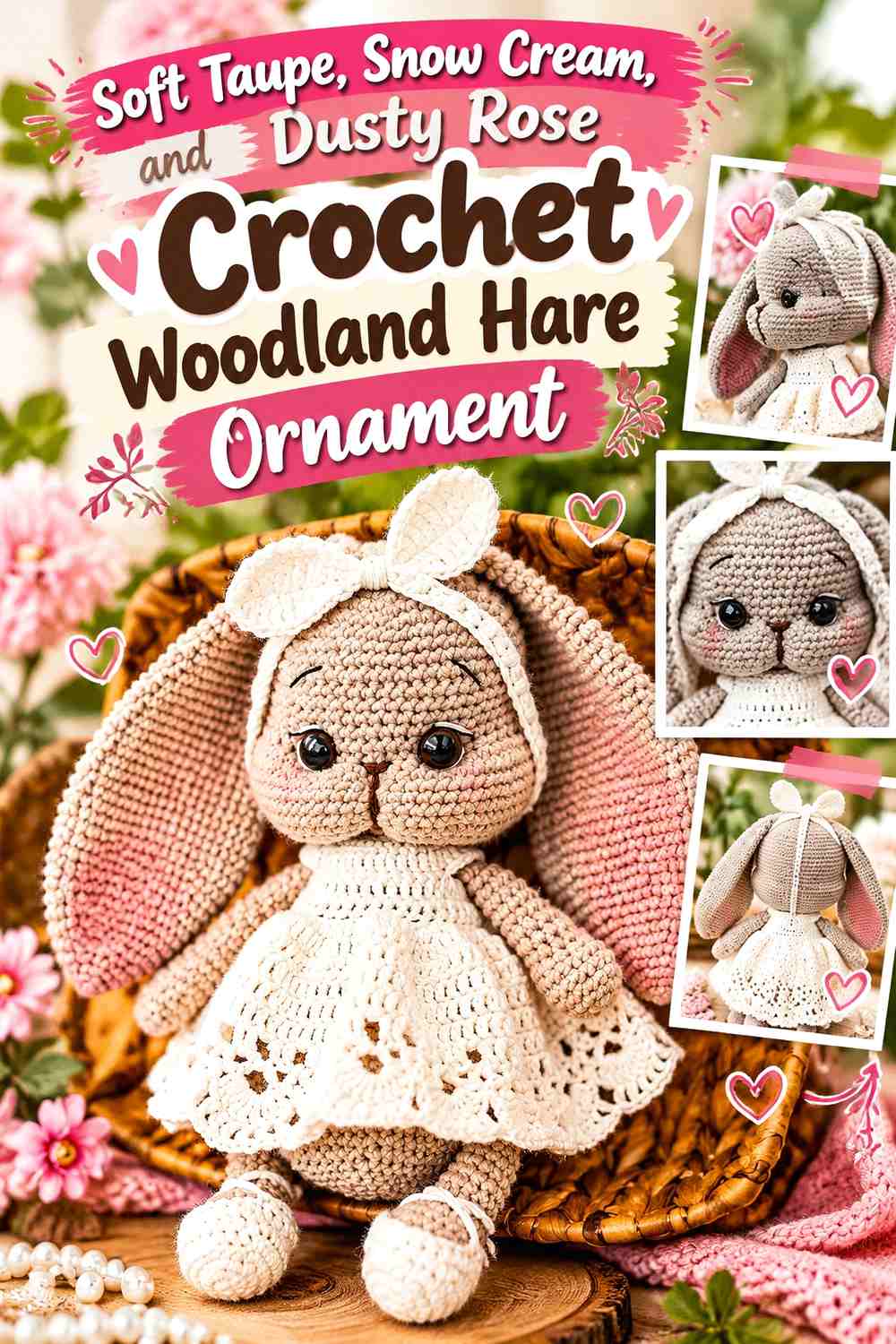
Soft taupe gives a hare or rabbit ornament a quiet winter coat, snow cream can define the muzzle and chest, and dusty rose works naturally inside the ears. The pale palette needs enough value difference for the long ears to remain separate from the face.
Soft Taupe Should Carry the Crochet Hare Ears and Head
Use taupe across the outer ears and main head so the elongated silhouette stays connected. A consistent outer color helps the hare remain recognizable even when the inner ear uses a contrasting shade.
Dusty Rose and Snow Cream Should Clarify Soft Taupe Features
Dusty rose works best in a narrow inner-ear area, while snow cream can define the muzzle or chest. Keep both lighter colors controlled so they explain the rabbit’s features rather than dividing the ornament into several equal pastel sections.
Creator Credit: Hi DIY
5. Cocoa Brown, Cream, and Evergreen Crochet Bear Ornament
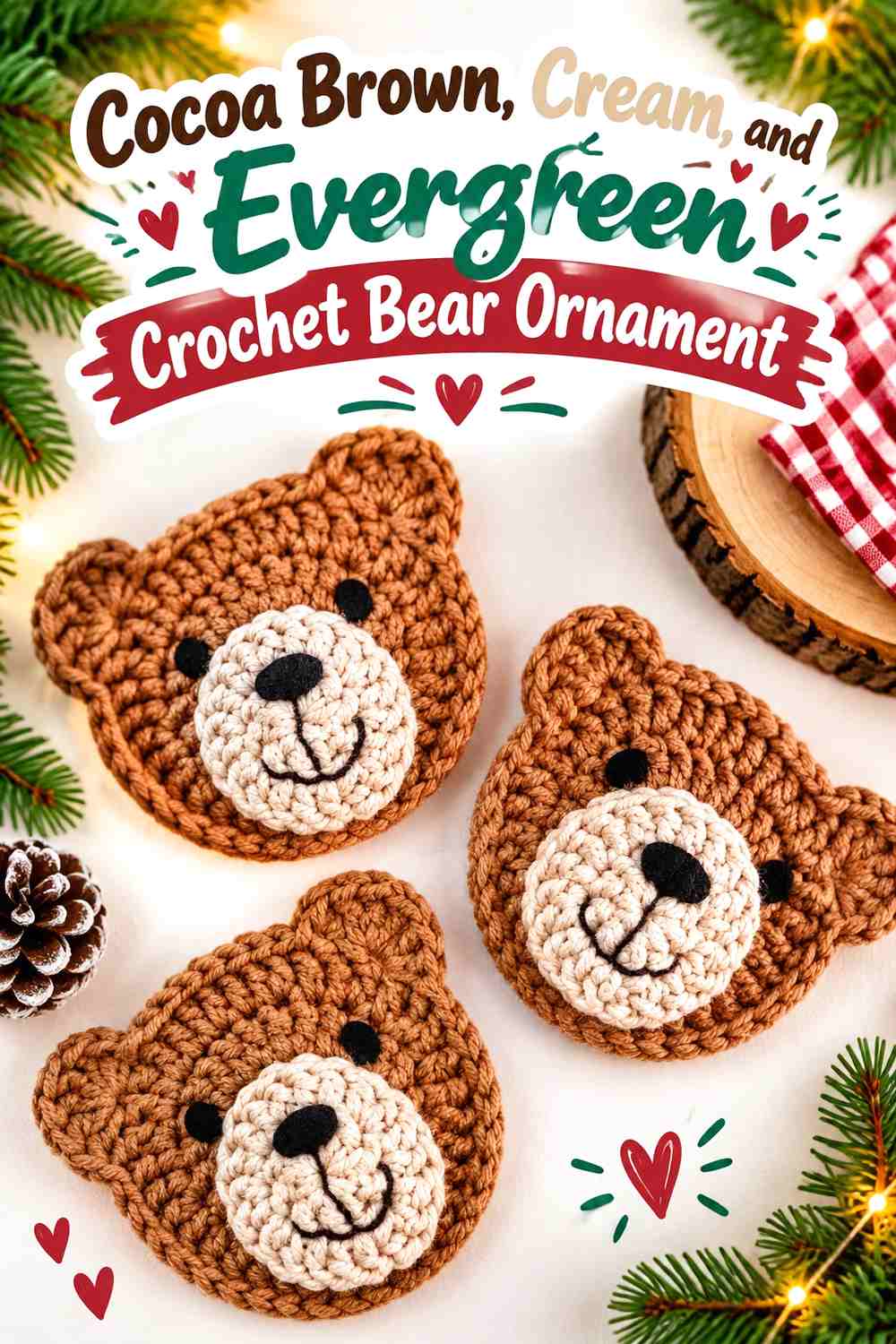
Cocoa brown gives the bear a strong woodland base, cream can lighten the muzzle and inner ears, and evergreen introduces a compact Christmas accent. The rounded face benefits from clear contrast around the muzzle so it does not become one uninterrupted dark circle.
Cocoa Brown Should Remain the Main Crochet Bear Color
Keep cocoa across the head, ears, and largest visible areas. The dark neutral gives the ornament weight and leaves plenty of room for a pale muzzle to stand out.
Cream and Evergreen Should Have Different Jobs on the Cocoa Bear
Use cream for facial separation and evergreen for a scarf, wreath, or other seasonal accent. Assigning those colors to different zones prevents green from competing with the features that actually define the bear.
Creator Credit: GratiaProject
6. Chestnut, Ivory, and Sage Crochet Snowy Squirrel Ornament
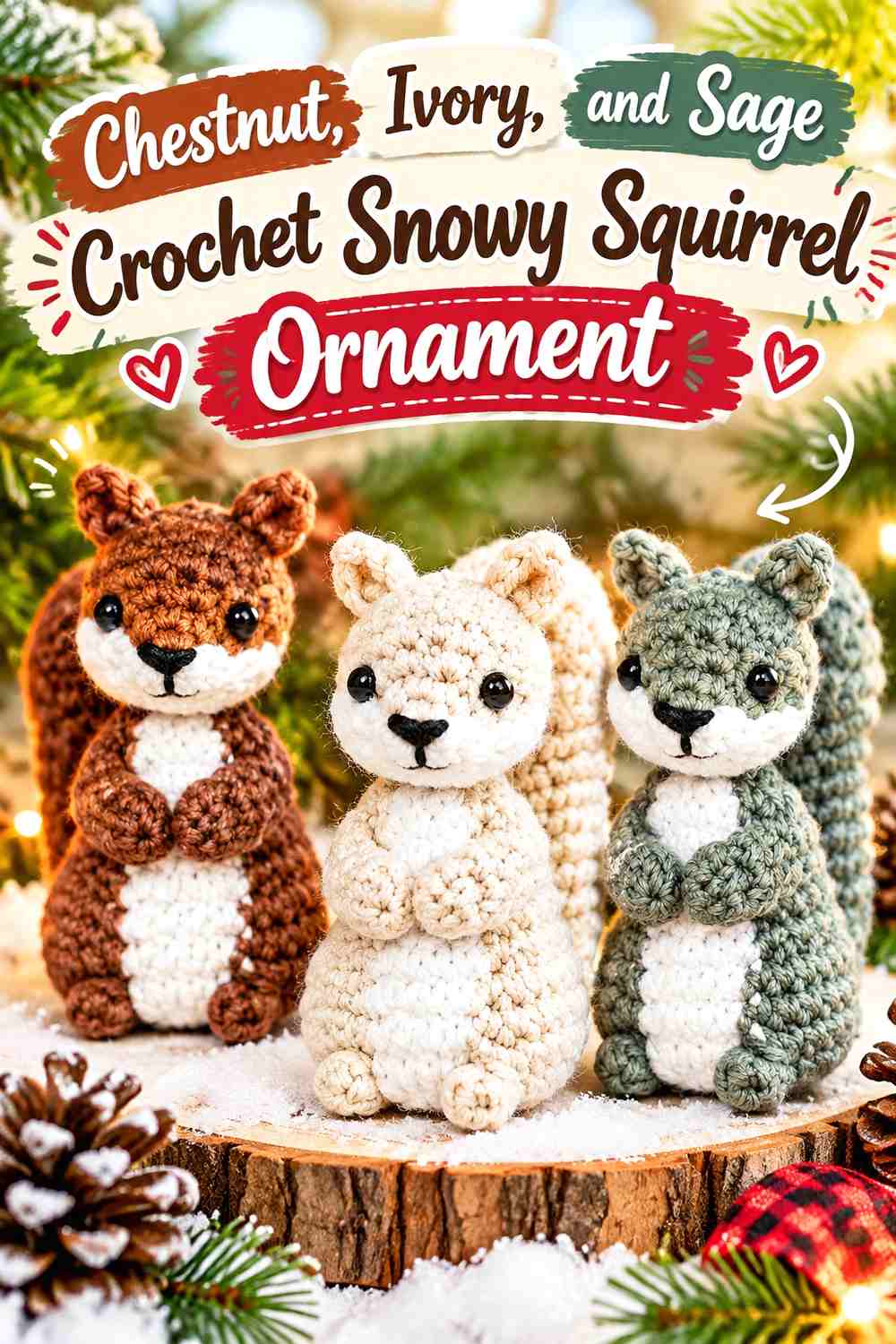
Chestnut gives the squirrel its warm woodland identity, ivory can define the belly or snowy tail tip, and sage adds a quiet winter-botanical accent. The tail is one of the most distinctive parts of a squirrel ornament, so its outline should not disappear into the body.
Chestnut Should Keep the Crochet Squirrel Tail Connected but Visible
Use chestnut through both body and tail if you want a natural tonal look, but allow the tail shape to remain clearly outlined. An ivory tip or small pale area can help when the body and tail overlap visually.
Sage Should Stay Smaller Than Ivory on the Chestnut Squirrel
Sage works well around a tiny acorn-inspired detail, scarf, or hanging accent, but the pale ivory should do most of the contrast work. This keeps the ornament woodland-led rather than turning it into a green-and-brown decoration.
Creator Credit: Stella’s Yarn Universe
7. Mushroom Brown, Oatmeal, and Frost White Crochet Hedgehog Ornament

Mushroom brown gives the hedgehog’s spiny outer area a muted woodland color, oatmeal can form the face and belly, and frost white adds a touch of snow. Because a hedgehog relies on the distinction between its outer texture and lighter face, keep those two color zones easy to separate.
Mushroom Brown Should Frame the Oatmeal Crochet Hedgehog Face
Let the darker mushroom tone surround the face rather than breaking it into scattered patches. A continuous outer color makes the hedgehog’s rounded spiny silhouette clearer.
Frost White Should Highlight Oatmeal Without Covering Mushroom Brown
Use frost white in a tiny snowy edge, scarf, or hanging detail. Oatmeal already provides the main light contrast, so white only needs a supporting role.
Creator Credit: Concrete Gems Crochet
8. Silver Gray, Charcoal, and Cranberry Crochet Raccoon Ornament

Silver gray gives the raccoon a cool winter body, charcoal defines the familiar facial mask and darker details, and cranberry brings one controlled Christmas accent. The mask needs enough contrast from the gray face to remain visible at ornament scale.
Charcoal Should Clearly Define the Silver Gray Crochet Raccoon Mask
Keep charcoal concentrated around the darker face markings rather than spreading it across the entire ornament. The stronger contrast helps preserve the raccoon’s identity without making the body look almost black.
Cranberry Works Best as a Small Accent Beside Silver Gray
Use cranberry on a scarf, bow, or tiny hanging detail and leave the facial area to gray and charcoal. This keeps the festive color from interrupting the mask that makes the animal recognizable.
Creator Credit: Kerri’s Crochet
9. Walnut, Antique White, and Forest Green Crochet Moose Ornament

Walnut gives a moose ornament a substantial brown base, antique white can provide snowy contrast, and forest green adds a classic woodland Christmas detail. The antlers are visually important, so their color needs to separate from both the head and the tree behind the ornament.
Walnut Should Give the Crochet Moose a Clear Head Shape
Keep walnut across the face and ears so the main animal form remains cohesive. If the antlers also use a similar brown, antique white behind or beside them can improve their separation.
Antique White and Forest Green Should Support the Walnut Antlers
Use white as the lighter structural contrast and green as a small decorative accent. A forest-green scarf or wreath works better than covering the antlers in green, which would weaken the moose’s recognizable silhouette.
Creator Credit: My Fingers Fly
10. Dove Gray, Blush, and Cream Crochet Woodland Mouse Ornament

Dove gray gives the mouse a soft snowy coat, blush naturally fits the inner ears or nose area, and cream provides a lighter belly or muzzle. Because all three shades are gentle, their placement needs to be disciplined so the tiny face does not wash out.
Dove Gray Should Define the Main Crochet Mouse Head and Ears
Keep the outer ears and face gray so the rounded mouse shape remains continuous. The cream and blush can then work inside that clear silhouette instead of competing with it.
Blush Needs Cream Separation on a Dove Gray Mouse
Use blush sparingly inside the ears or around one small facial detail, and let cream provide the larger pale area. If blush and gray are very similar in value, the cream helps preserve the feature boundaries.
Creator Credit: Pocket Yarnlings
11. Charcoal, Silver, and Snow White Crochet Winter Wolf Ornament
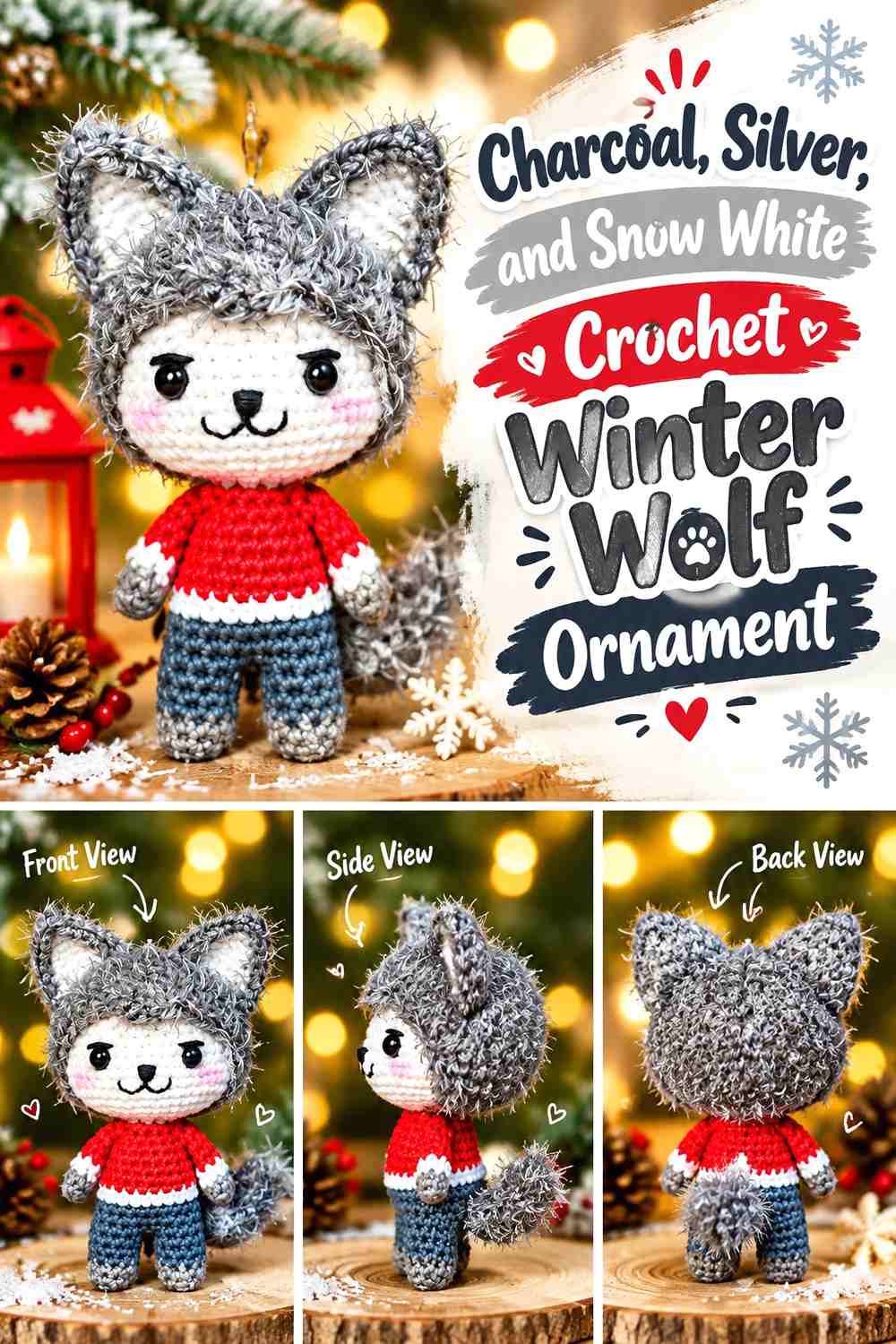
Charcoal creates the deepest winter coat in the collection, silver softens the transition across the face or ears, and snow white can mark the muzzle, chest, or small snowy accents. The palette should stay primarily gray so the ornament reads as a winter wolf rather than a white animal with dark patches.
Charcoal Should Anchor the Crochet Wolf Ears and Face
Use charcoal through the main head and outer-ear areas to create a strong silhouette. Silver can then provide a middle value where the face needs more definition without jumping immediately to white.
Snow White Should Highlight Silver Without Overtaking Charcoal
Keep white around the muzzle, chest, or one snowy detail. Too much white across the forehead and ears can weaken the dark wolf identity that distinguishes this ornament from the paler animals in the set.
Creator Credit: ToyGurumi
12. Warm Brown, Robin Red, and Cream Crochet Christmas Robin Ornament
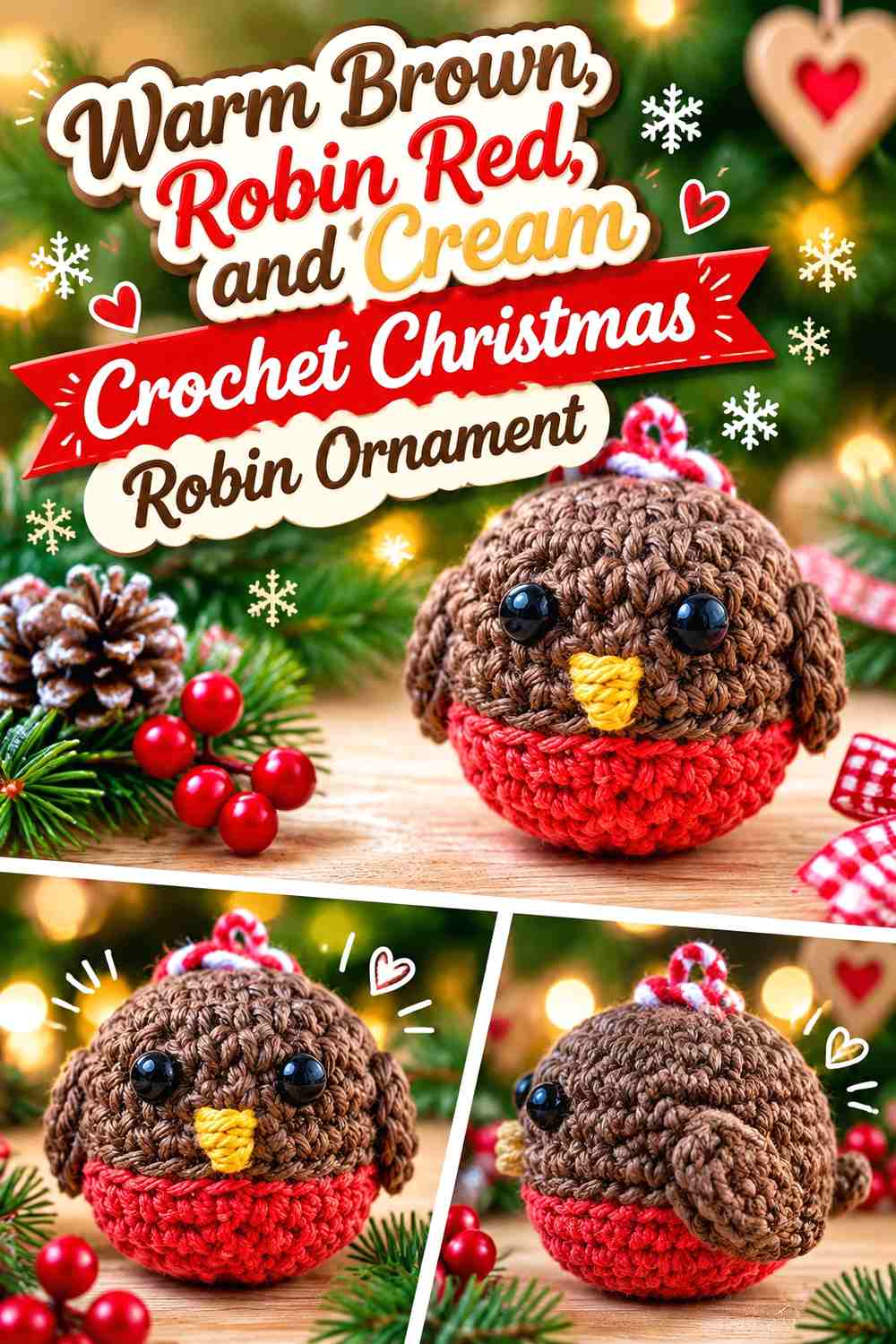
Warm brown gives the winter bird a quiet woodland body, robin red creates the recognizable chest focal point, and cream can lighten the face or snowy trim. The red should remain concentrated instead of spreading into the wings and head.
Robin Red Should Stay Focused on the Warm Brown Crochet Bird Chest
Give the red chest one uninterrupted area so it remains the defining feature. Repeating the same red heavily in the wings or hanging loop can make the ornament feel generally red rather than specifically robin-inspired.
Cream Can Separate Robin Red From Warm Brown
A small cream transition around the face or underside can keep the red chest and brown body from visually merging. Because the red already attracts attention, the cream should remain a supporting light rather than a second focal color.
Creator Credit: But First We Crochet
13. Fawn Tan, Ivory, and Dusty Blue Crochet Spotted Deer Ornament

Fawn tan gives the deer a light woodland coat, ivory can create spots, muzzle details, or snowy edging, and dusty blue adds a cooler winter accent. This is softer than the cranberry reindeer palette, making the two deer-family ornaments easy to distinguish within one set.
Fawn Tan Should Carry the Crochet Deer Face and Ears
Use tan across most of the head so the pale spots remain small decorative features rather than breaking the coat into a cream-and-tan pattern. The animal should read as fawn-colored first.
Ivory and Dusty Blue Should Stay Delicate Against Fawn Tan
Use ivory in spots, the muzzle, or a tiny chest section and reserve dusty blue for a scarf or other winter accent. Keeping blue away from the main face allows the fawn’s natural tan-and-ivory contrast to remain clear.
Creator Credit: Briana K Designs
Which Snowy Woodland Ornament Palette Fits Your Christmas Tree?
For a traditional woodland tree, rust foxes, oatmeal reindeer, cocoa bears, chestnut squirrels, walnut moose, and warm-brown robins keep the animal colors earthy while allowing snow white, cream, cranberry, and green to supply the Christmas accents.
For a frostier tree, the gray owl, silver raccoon, dove-gray mouse, and charcoal wolf introduce cooler neutrals. Icy blue, dusty blue, silver, and snow white can repeat across these ornaments without making every animal identical.
For a softer woodland collection, the taupe hare, mushroom hedgehog, and fawn deer use gentler browns with cream, blush, oatmeal, and muted blue. These palettes create less contrast than the darker animals, so check small facial and ear details before finishing the full set.
Conclusion
A coordinated snowy woodland ornament collection starts by protecting each animal’s most recognizable feature. Keep the fox’s warm face, the owl’s pale eye area, the reindeer’s antlers, the hare’s long ears, the squirrel’s tail, the raccoon’s mask, and the robin’s red chest easy to see before adding winter decoration.
Snow white and cream can repeat throughout the set as shared snow colors, while cranberry, pine, sage, icy blue, and dusty blue can move between scarves, wreaths, ear details, and hanging accents. That repetition creates a collection without forcing every woodland animal into the same palette.
Use the linked creator tutorials for the actual animal construction, shaping, and finishing. Where a tutorial teaches an amigurumi or appliqué rather than an ornament, treat it as the animal construction reference and plan the hanging adaptation separately rather than assuming the original project was designed for tree display.
Frequently Asked Questions
What colors work well for snowy woodland crochet ornaments?
Rust, chestnut, cocoa, fawn, taupe, mushroom brown, gray, and charcoal make useful animal colors. Snow white, ivory, cream, pine, cranberry, dusty blue, icy blue, and sage can then provide winter and Christmas accents.
Should every snowy woodland animal ornament include white?
No. White can connect a collection, but it only needs to appear where it adds useful contrast. One animal might use a white muzzle, another a snowy tail tip, and another only a small hanging detail.
How can I keep dark crochet animal faces visible on a Christmas tree?
Use a lighter muzzle, face patch, inner ear, or nearby detail where the defining features need separation. Charcoal and dark brown can disappear against deep green branches, so test the finished color combination against a tree-like background if possible.
Can I use the same accent color on every woodland ornament?
Yes, but vary where it appears. Cranberry could become a reindeer scarf, raccoon bow, and robin detail, while pine green could appear on a fox accent and bear wreath. Repeating a color in different roles creates cohesion without making the designs repetitive.
How do I make a crochet fox, wolf, and raccoon look different in the same gray-and-white collection?
Preserve the animal-specific markings. A fox benefits from a lighter muzzle and strong triangular ears, a raccoon needs a distinct dark mask, and a wolf can use a broader charcoal-and-silver face treatment. Color placement should reinforce those differences instead of smoothing them away.
Can a crochet animal appliqué be adapted into an ornament?
A flat animal motif can serve as the visual basis for an ornament, but the original tutorial may not include hanging, backing, or structural finishing. Use the creator’s instructions for the motif itself and plan the ornament-specific finishing separately.
How can I coordinate 13 woodland ornaments without making them identical?
Repeat two or three collection colors while changing the dominant animal shade. For example, cream can appear across several animals, cranberry can recur in a few accents, and dusty blue can show up on the cooler designs. The shared colors connect the set while each animal retains its own fur palette.