A crochet miniature mushroom garden becomes more convincing when the colors have clear jobs. The mushroom caps can provide the strongest color, cream or oatmeal can keep stems visible, and greens or browns can create the quieter ground that makes the mushrooms stand out.
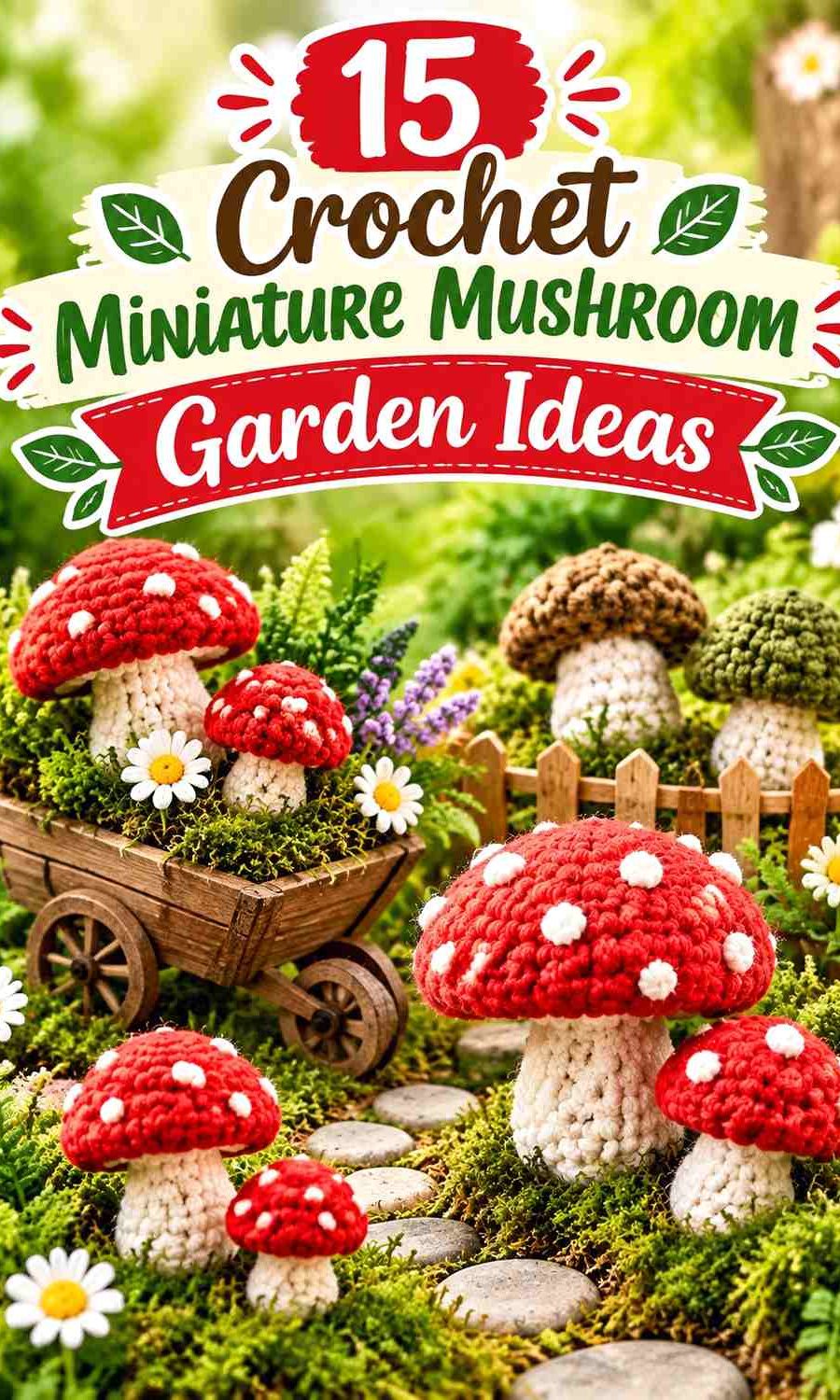
The display base matters just as much as the mushrooms. A moss-green circle can suggest a forest floor, a terracotta pot can introduce another warm color, and a dark brown log can frame pale stems without requiring a complicated landscape. For very small gardens, limiting the palette often gives individual mushrooms more definition than using every available color.
The tutorials linked below teach mushroom, toadstool, appliqué, or related crochet construction concepts. The garden arrangements and palettes are editorial adaptations, so use the original creator tutorial for its construction while planning the surrounding miniature scene independently.
Quick List
- Red, Cream, and Moss Green Crochet Miniature Toadstool Garden
- Terracotta, Mustard, and Sage Crochet Miniature Potted Mushroom Garden
- Dusty Rose, Ivory, and Olive Crochet Miniature Fairy-Ring Mushroom Garden
- Teal, Mint, and Cream Crochet Miniature Woodland Mushroom Garden
- Plum, Lavender, and Moss Crochet Miniature Moonlit Mushroom Garden
- Rust, Oatmeal, and Forest Green Crochet Miniature Log Mushroom Garden
- Coral, Peach, and Sage Crochet Miniature Flower-and-Mushroom Garden
- Chocolate Brown, Beige, and Cream Crochet Miniature Forest-Floor Mushroom Garden
- Burgundy, Blush, and Cream Crochet Miniature Toadstool Garden
- Golden Yellow, Chocolate, and Moss Crochet Miniature Autumn Mushroom Garden
- Sky Blue, White, and Sage Crochet Miniature Pastel Mushroom Garden
- Black, Charcoal, and Ivory Crochet Miniature Gothic Mushroom Garden
- Copper, Rust, and Teal Crochet Miniature Woodland Tray Garden
- Cherry Red, White, and Leaf Green Crochet Miniature Fairy Garden
- Taupe, Mushroom Brown, and Dusty Green Crochet Miniature Farmhouse Mushroom Garden
Give the Crochet Mushroom Caps the Strongest Color Role
In a miniature garden, the caps are usually the easiest place to establish the palette. Red, plum, teal, yellow, or another stronger shade can lead while stems remain cream, beige, or another quieter neutral.
Avoid making the ground, stems, caps, flowers, and stones equally saturated. On such a small display, one dominant cap family with a restrained supporting base makes individual mushrooms easier to identify.
Use the Garden Base to Control Contrast
The ground should support the mushrooms rather than compete with them. Pale stems need enough separation from oatmeal or cream bases, while dark brown mushrooms may require sage, moss, or another medium-value background.
Before joining the pieces permanently, place the mushrooms on the intended crochet base and view the arrangement from a normal display distance. If stems disappear, changing the ground color can be more effective than redesigning the mushrooms.
Mix Mushroom Heights Without Losing the Color Pattern
A miniature garden can feel more natural when the mushrooms are not all visually identical, but color repetition should still connect them. Repeat the same cream stem color, use two related cap colors, or give every mushroom the same small accent.
Keep the largest or darkest mushroom slightly away from the edge of the garden. It can act as the visual anchor while smaller mushrooms, leaves, or flowers fill the surrounding space.
1. Red, Cream, and Moss Green Crochet Miniature Toadstool Garden
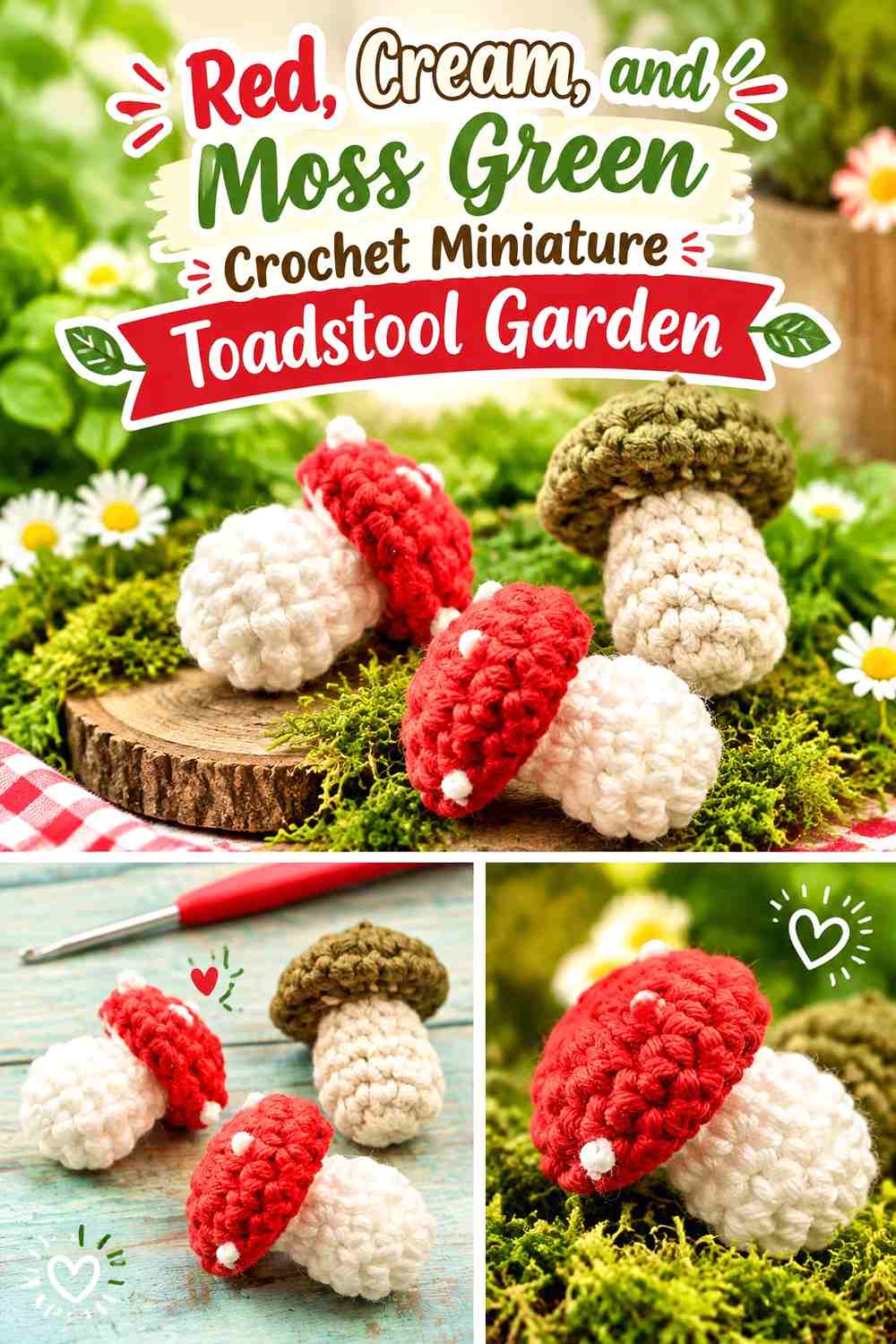
Classic red caps make a clear focal point in a small crochet garden, while cream stems and spots provide the lightest details. Moss green works well across the ground because it separates the pale stems from the base and reinforces the woodland setting without competing with the red.
Arrange one larger red mushroom with several smaller ones rather than distributing identical mushrooms evenly. The size hierarchy gives the tiny garden a stronger center and leaves room for visible moss between the stems.
Red Should Dominate the Crochet Toadstool Caps
Keep red across most of each cap so the group reads as one mushroom family. Cream spots can interrupt the surface, but they should remain secondary to the red.
If you use several red scraps, place the deepest red on the largest mushroom and slightly softer reds on the smaller ones. This creates variety without turning the garden into an unrelated multicolor collection.
Moss Green Needs Space Around the Cream Mushroom Stems
Leave enough moss visible around every cream stem to preserve the silhouette. Packing mushrooms too tightly can hide the base and make several pale stems merge into one crowded center.
A few darker green details can suggest additional woodland texture, but the main moss color should remain easy to see.
Creator Credit: HappyBerry Crochet
2. Terracotta, Mustard, and Sage Crochet Miniature Potted Mushroom Garden
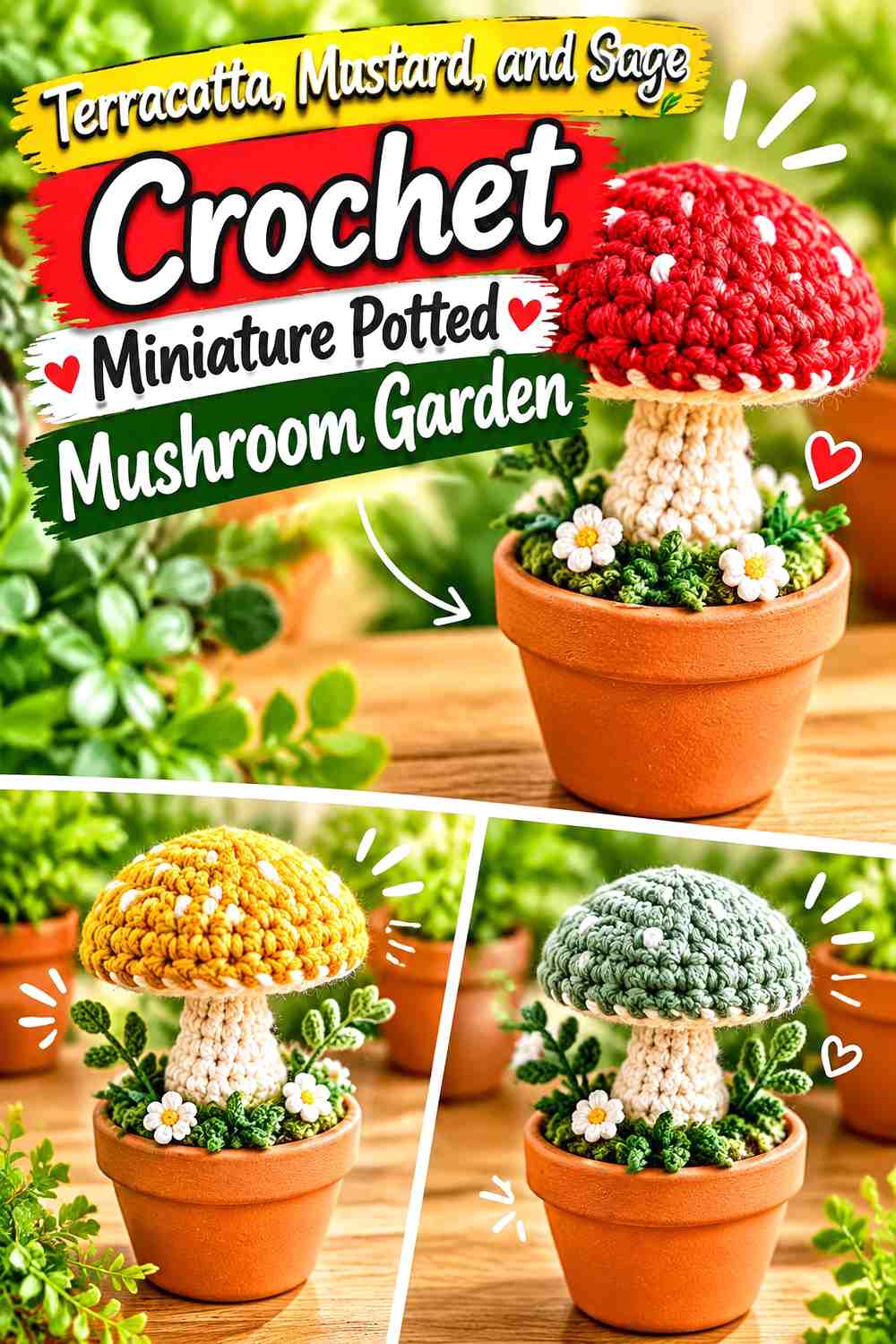
This palette works well for a tiny mushroom arrangement displayed inside a crocheted pot. Terracotta can define the container, sage can become the soil-covering foliage or moss, and mustard can give the mushrooms warmer caps without repeating the pot color exactly.
Cream or oatmeal stems can be added as a quiet neutral without competing with the three main shades. Keep enough sage between the pot rim and mushroom stems so the display does not look like several yellow shapes rising directly from terracotta.
Terracotta Should Frame the Mustard Crochet Mushroom Cluster
Let the pot carry most of the terracotta. Repeating the same color across every mushroom cap can make the container and mushrooms merge into one warm block.
Mustard provides a useful distinction while keeping the overall direction earthy. If the pot is particularly deep in color, choose a medium mustard rather than another very dark shade.
Sage Can Separate Mustard Mushrooms From Terracotta
Use sage across the visible upper surface of the miniature pot. The cooler green creates a visual pause between the warm container and warm mushroom caps.
If you add small leaves, keep them close to the sage base color instead of introducing multiple new greens.
Creator Credit: MummaJ Crochet
3. Dusty Rose, Ivory, and Olive Crochet Miniature Fairy-Ring Mushroom Garden

A fairy-ring layout benefits from repeated mushroom colors because the circular arrangement already provides plenty of visual movement. Dusty rose can lead the caps, ivory can define the stems, and olive can provide a darker ground that keeps the pale mushrooms visible.
Leave the center of the ring relatively open. That empty olive space makes the circular placement obvious and prevents the miniature scene from looking like a random cluster.
Dusty Rose Should Repeat Around the Crochet Fairy Ring
Use dusty rose on most or all of the cap family so the viewer can follow the ring around the base. One or two slightly lighter pink mushrooms can provide variation without breaking the repetition.
Avoid making every cap a different color. The circular arrangement is easier to recognize when the color sequence is controlled.
Olive Makes Ivory Mushroom Stems Easier to See
Ivory against olive creates clear light/dark separation at the base of each mushroom. That contrast is especially valuable when several stems are small.
If your olive is very dark, a few sage or moss details can soften the ground, but keep them subordinate to the main olive field.
Creator Credit: NobleKnits
4. Teal, Mint, and Cream Crochet Miniature Woodland Mushroom Garden
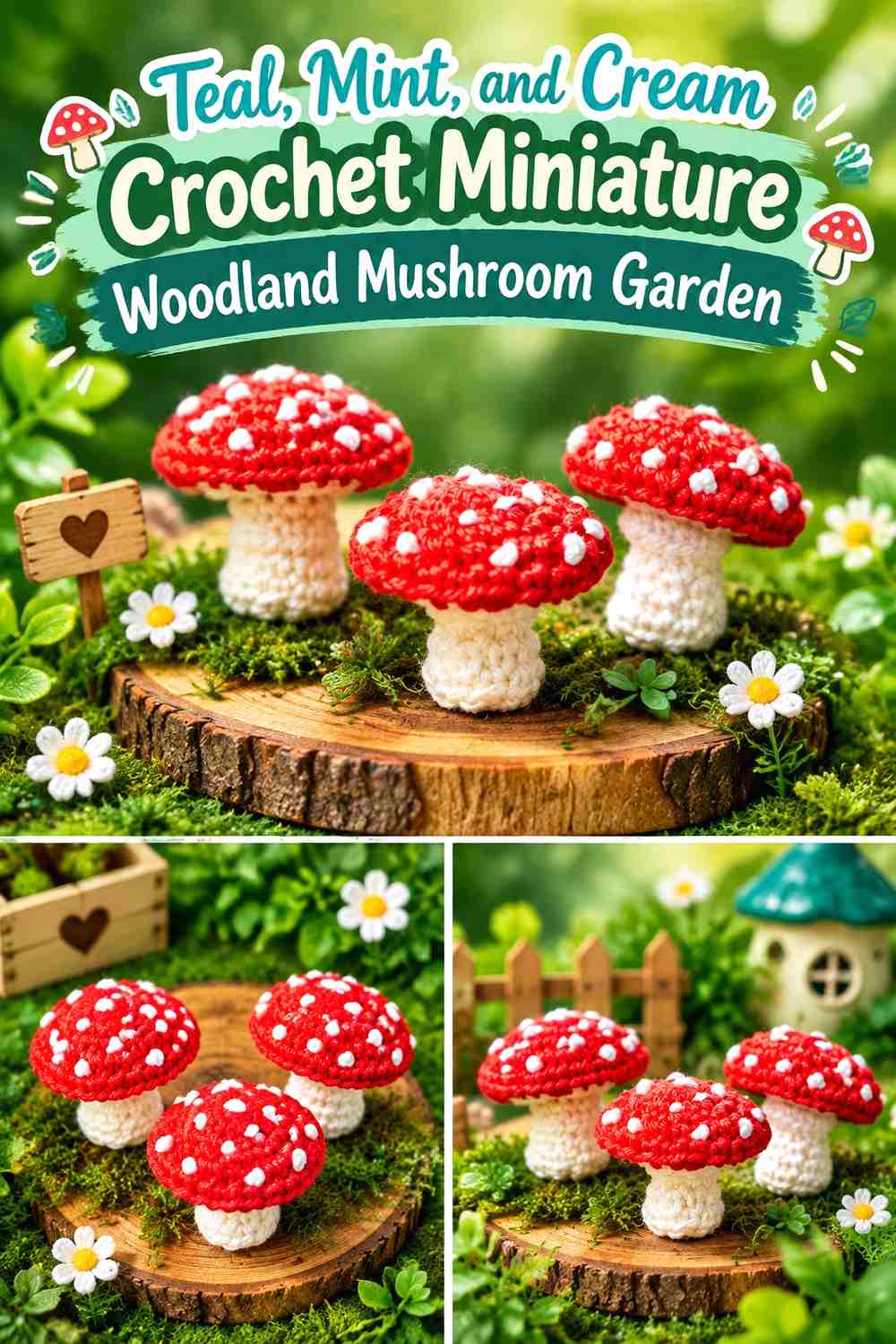
Teal gives miniature mushroom caps a cooler direction than traditional red or brown, while mint can appear in smaller caps, leaves, or tiny ground details. Cream stems keep both green-blue shades separated from one another.
This palette works best when teal clearly leads. If teal and mint occupy equal amounts across the caps and ground, the display can lose the contrast that helps the mushrooms stand out.
Teal Should Anchor the Crochet Woodland Mushroom Caps
Place teal on the largest mushroom or repeat it across several caps. Its deeper value gives the group a strong visual center.
Use mint on smaller mushrooms or details rather than outlining every teal cap. A narrow mint edge can reduce the clarity of the cap silhouette if the two values are too similar.
Cream Gives Teal and Mint Mushrooms a Neutral Break
Cream stems separate the two cooler colors and prevent the garden from becoming entirely green-blue. They can also make small cap shapes easier to identify from the side.
If the garden base is also cream, shift the base toward sage, gray-green, or another medium tone so the stems remain visible.
Creator Credit: Stella’s Yarn Universe
5. Plum, Lavender, and Moss Crochet Miniature Moonlit Mushroom Garden
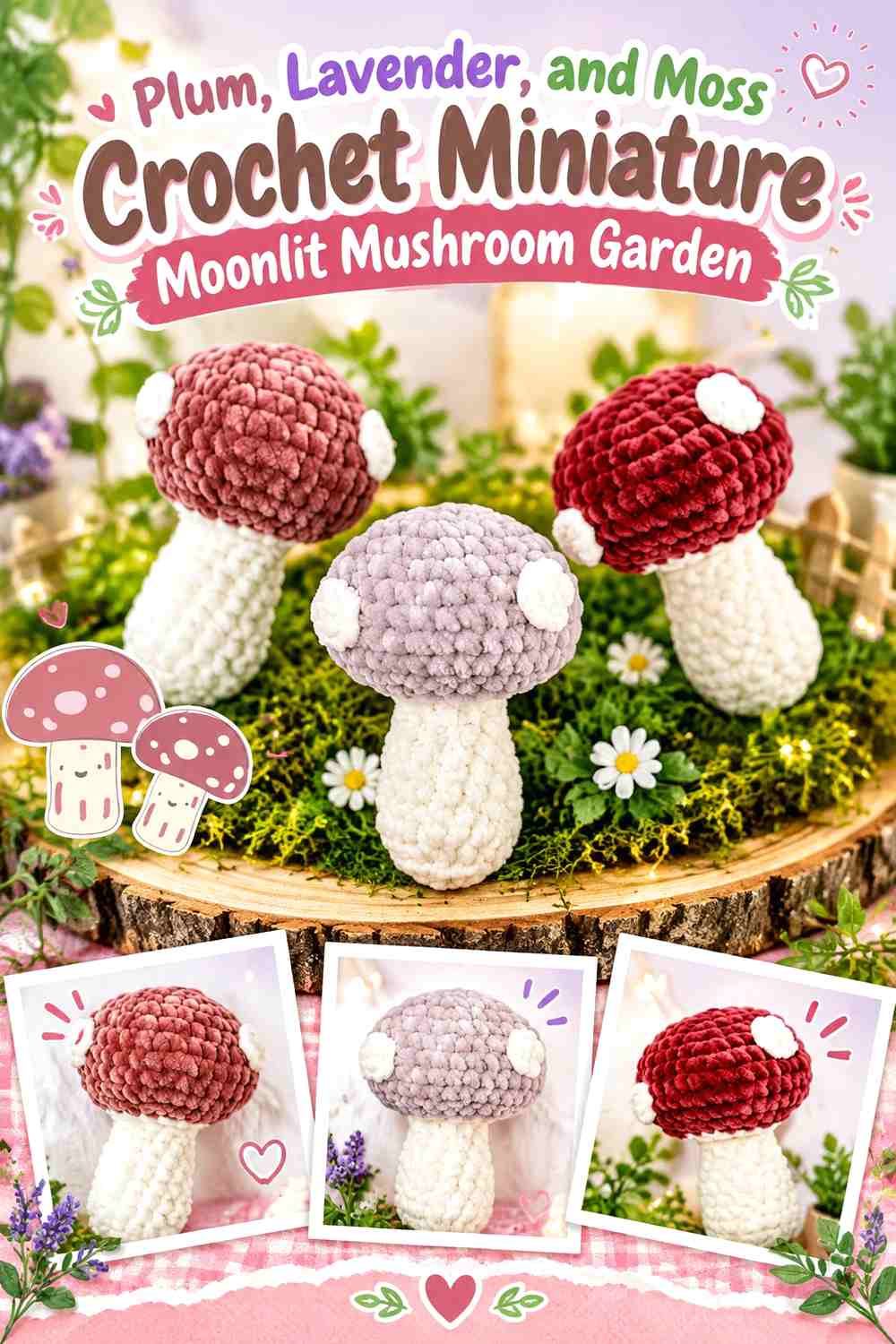
A plum-and-lavender palette creates a darker miniature garden without relying on black. Plum can lead the main mushroom caps, lavender can brighten smaller caps or cap details, and moss green can keep the woodland base natural enough to balance the purple family.
Use a lighter neutral for the stems so the mushrooms do not disappear into the darker ground. The color contrast should remain readable even when the finished garden is viewed from across a shelf.
Plum Should Give the Crochet Mushroom Garden Its Darkest Caps
Concentrate plum on the tallest or broadest mushroom caps. Those dark shapes can provide the visual anchors of the arrangement.
If every mushroom is equally dark plum, the individual caps may blend together. Reserve lavender for smaller neighboring mushrooms to create separation.
Lavender Can Keep Plum Mushrooms Visible Above Moss Green
Lavender introduces a lighter cap color without leaving the same color family. Place it beside plum mushrooms rather than grouping all the lavender on one side.
Moss green should remain mainly below the cap level. Too many raised green leaves around the stems can compete with the subtle purple contrast.
Creator Credit: Rose and Lily Amigurumi
6. Rust, Oatmeal, and Forest Green Crochet Miniature Log Mushroom Garden
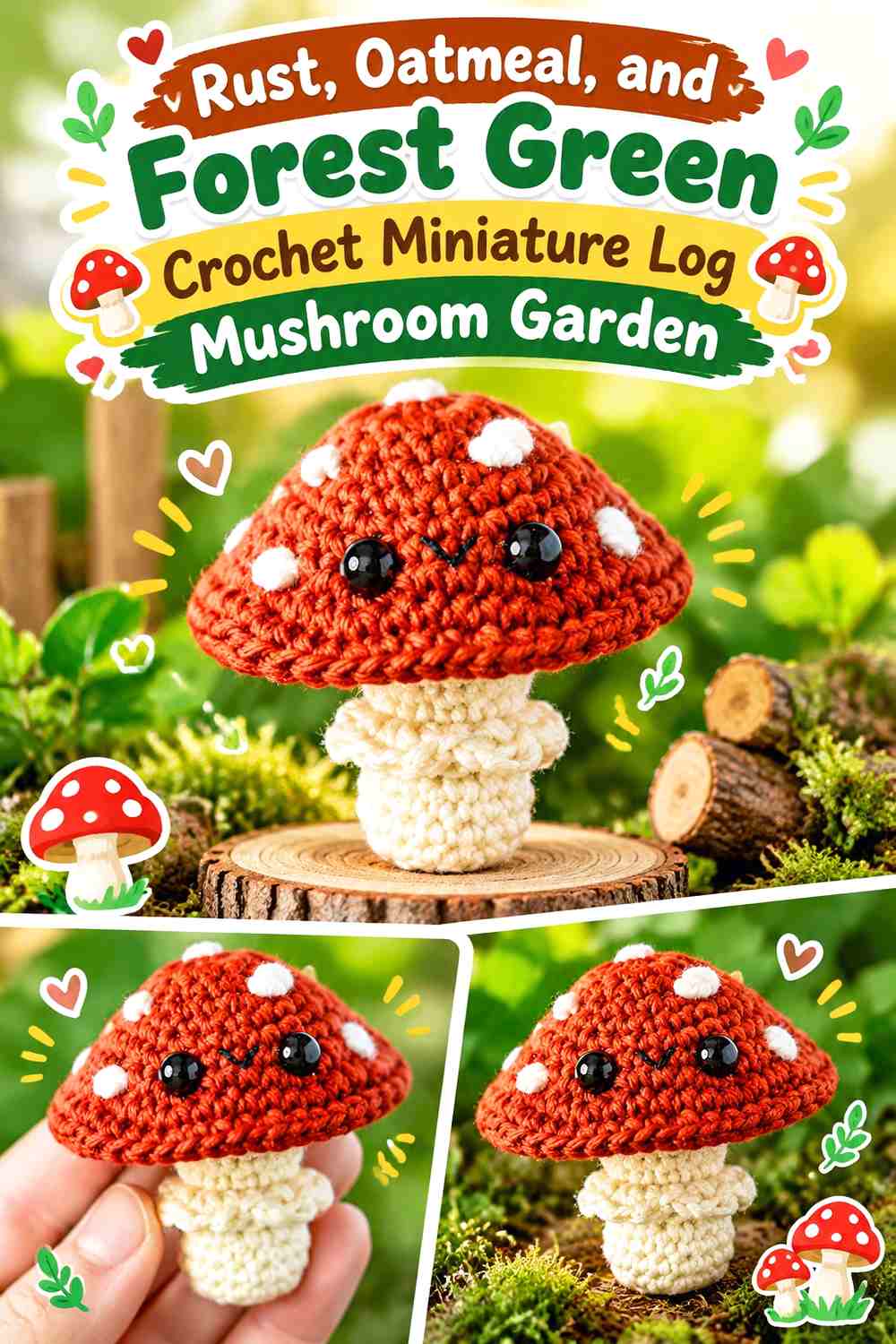
A log-style display can use dark brown or bark-colored crochet as its structural base while rust mushrooms rise from the top or sides. Oatmeal gives the stems enough lightness to separate from the log, and forest green can represent small moss patches.
Keep the green accents irregular rather than wrapping the whole log in the same color. The brown structure should remain visible so the garden still reads as mushrooms growing from a woodland log.
Rust Should Lead the Crochet Mushrooms Above the Brown Log
Rust is strongest when it occupies the caps rather than the log itself. The related warm colors then feel connected without merging into one surface.
If the log is very reddish brown, shift the mushroom caps slightly more orange or slightly deeper so their edges remain visible.
Forest Green Should Accent the Oatmeal Mushroom Stems
Place small forest-green moss sections around the base of selected oatmeal stems. This helps the pale stems connect visually to the log without hiding them.
Avoid covering the entire top of the log in dark green, which can reduce the contrast between the base and any smaller mushroom shapes.
Creator Credit: A Menagerie of Stitches
7. Coral, Peach, and Sage Crochet Miniature Flower-and-Mushroom Garden
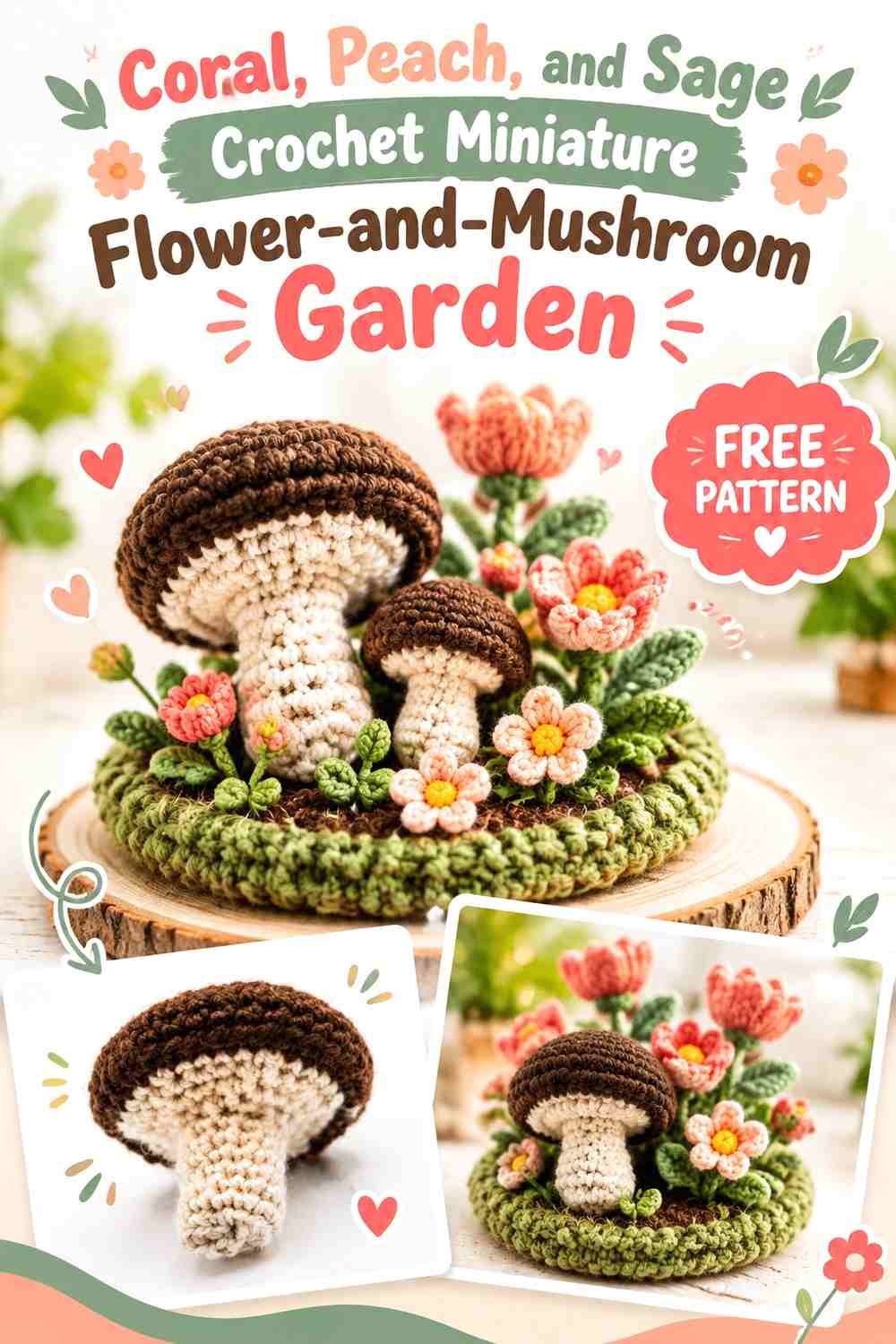
Combining tiny flowers with mushrooms creates more competition for attention, so the palette needs clear roles. Coral can lead the mushroom caps, peach can form the flowers or occasional lighter caps, and sage can control the ground and leaf details.
Do not make every flower as large or colorful as the mushrooms. Smaller peach blooms around the base can support the garden theme without turning the display into a flower patch with hidden mushrooms.
Coral Should Stay Stronger Than Peach on the Crochet Mushroom Caps
Use coral for the main mushroom family and reserve peach for smaller cap variations or flowers. The stronger coral gives the garden a recognizable focal color.
If your coral and peach scraps have nearly identical values, increase the amount of sage visible around them so their silhouettes remain distinct.
Sage Should Separate Coral Mushrooms From Peach Flowers
Sage is useful as the visual space between the two warm colors. Place leaves and ground sections where coral mushrooms meet peach flowers.
Avoid filling every empty area with a sage leaf. Some plain ground should remain visible so the miniature scene does not become overly textured.
Creator Credit: Jess Crafting
8. Chocolate Brown, Beige, and Cream Crochet Miniature Forest-Floor Mushroom Garden
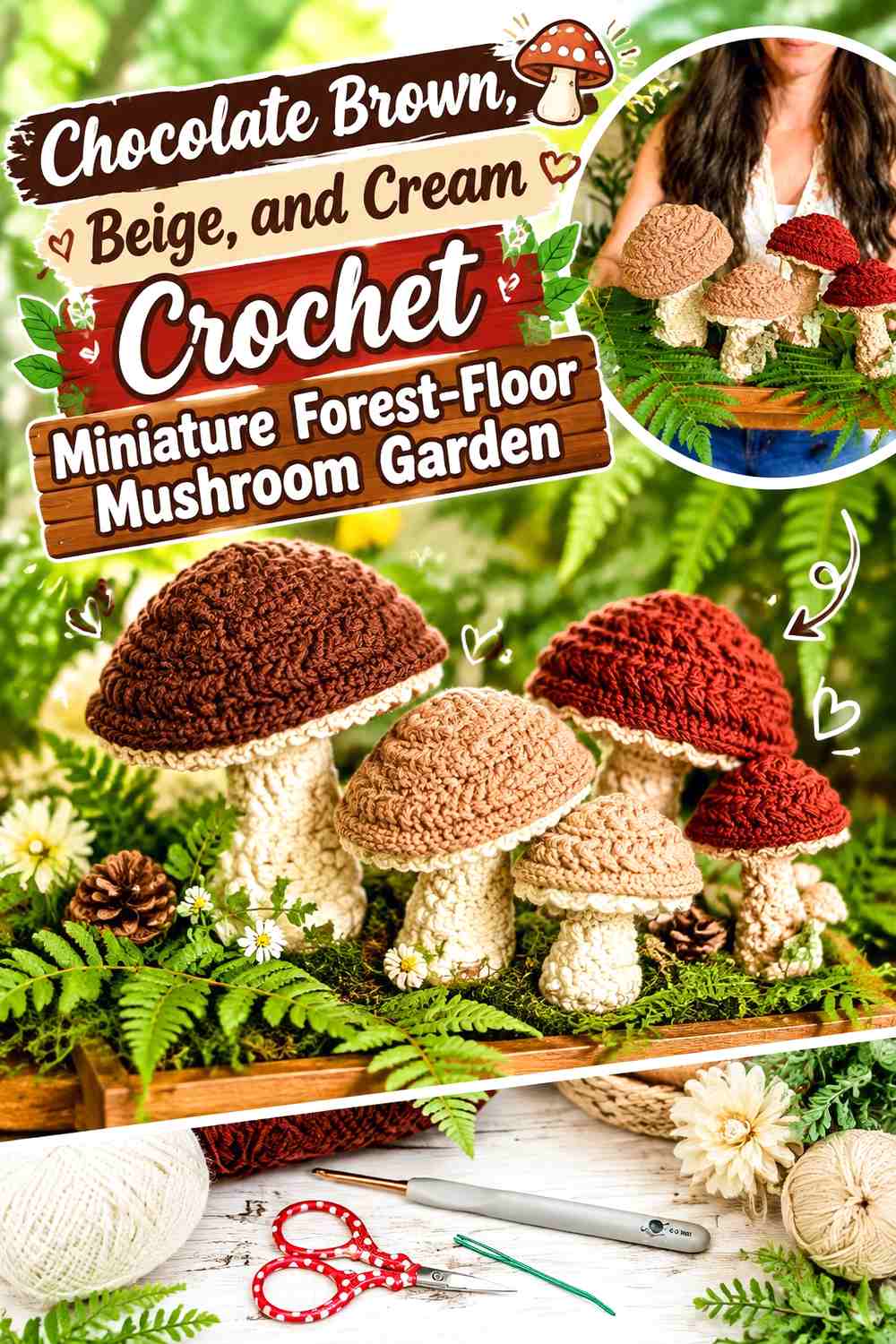
A neutral mushroom garden can rely on tonal contrast instead of bright cap colors. Chocolate brown can define the darkest caps and ground accents, beige can cover secondary mushrooms, and cream can keep the stems and smallest caps visible.
This palette works particularly well when several shapes or textures are present because the restrained colors prevent the garden from becoming visually crowded.
Chocolate Brown Should Anchor the Crochet Forest-Floor Mushrooms
Use chocolate brown on the largest cap or on several strategically spaced caps. The dark value gives the eye somewhere to settle within an otherwise neutral display.
Do not make the ground equally dark unless the cream stems provide enough contrast. A medium beige base often allows more of the mushroom structure to remain visible.
Cream Should Break Up Beige and Chocolate Brown Mushroom Groups
Place cream stems between darker caps and the neutral base. A few cream cap accents can also keep the arrangement from reading as one brown cluster.
If you want a softer effect, use cream sparingly and increase beige rather than eliminating the light shade entirely.
Creator Credit: Briana K Designs
9. Burgundy, Blush, and Cream Crochet Miniature Toadstool Garden
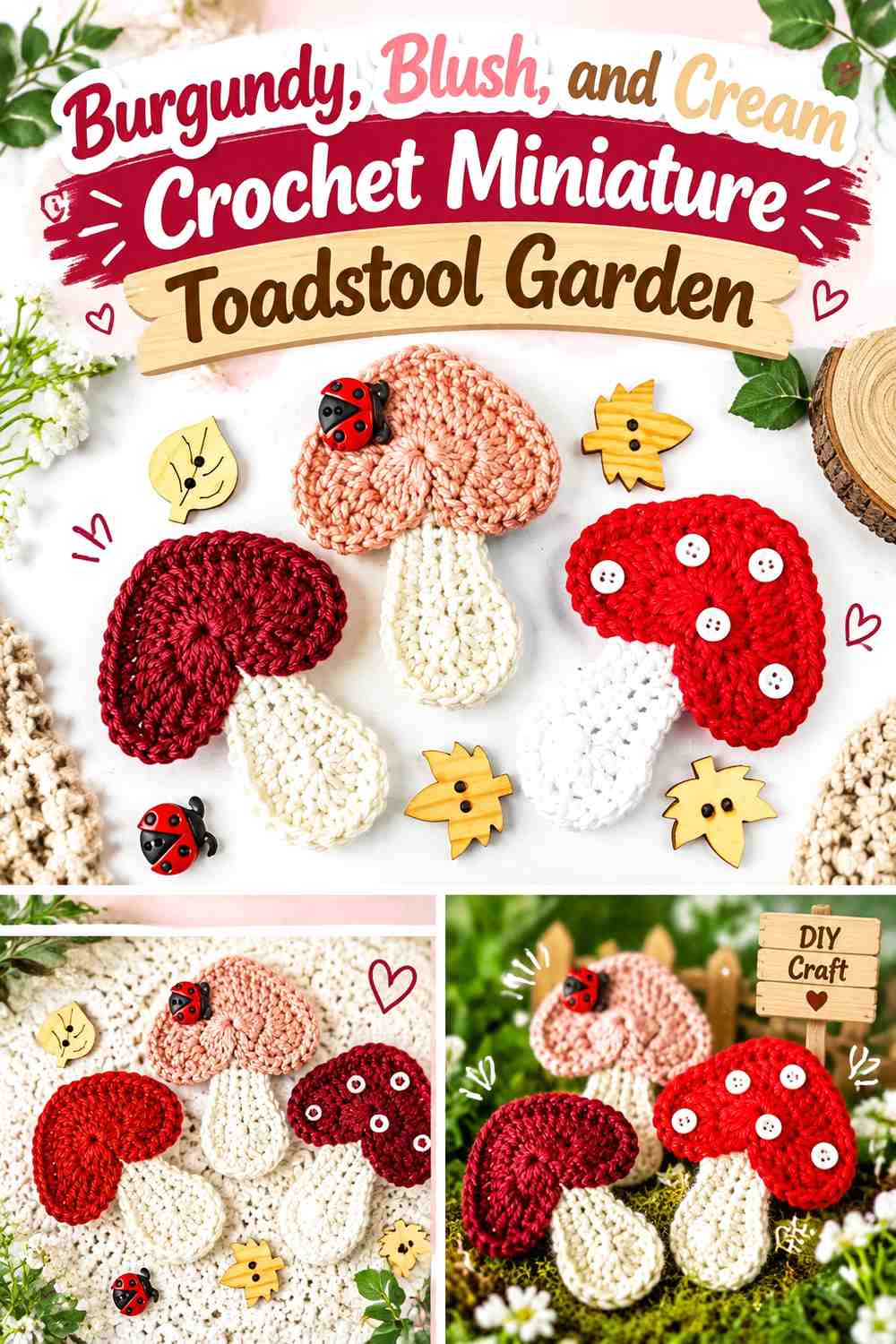
Burgundy provides a richer alternative to classic bright-red toadstools. Blush can soften smaller caps or decorative spots, while cream works naturally for stems and other light details.
Because burgundy is visually heavy, place the largest dark mushroom slightly off-center and use the blush mushrooms around it. That keeps the garden from becoming one dark central block.
Burgundy Should Lead the Crochet Toadstool Garden
Keep burgundy across the main caps and use blush selectively. The difference in value gives small mushrooms more separation than using several nearly identical dark reds.
Against a brown garden base, cream stems become especially important because they prevent the burgundy caps from appearing to float above another dark surface.
Blush Can Lighten the Burgundy Mushroom Cluster
Use blush on smaller toadstools or cap details near the front of the display. The lighter pink draws those smaller shapes forward visually.
Avoid making the blush ground accents too large. Burgundy should remain the color that identifies the mushroom family.
Creator Credit: GoldenLucyCrafts
10. Golden Yellow, Chocolate, and Moss Crochet Miniature Autumn Mushroom Garden

Golden-yellow mushrooms can make a miniature garden feel distinctly autumnal without relying on orange throughout the entire scene. Chocolate brown can provide the ground, log, or darker cap accents, while moss green keeps a small amount of living woodland color in the display.
The strongest yellow should remain concentrated near the mushrooms. A large yellow base would reduce the cap contrast and make the whole arrangement feel flatter.
Golden Yellow Should Stay on the Crochet Mushroom Caps
Use golden yellow across the main caps and let chocolate brown control the ground or darker companion mushrooms. This gives each color a separate visual job.
If you include yellow spots or small flowers, keep them smaller than the cap area so the eye still recognizes the mushrooms as the main feature.
Moss Green Can Soften the Golden Yellow and Chocolate Contrast
Small moss-green patches between yellow mushrooms and a brown base can make the palette feel more layered.
Do not place green equally around every stem. Irregular repetition gives the ground more variety without needing additional colors.
Creator Credit: Kerri’s Crochet
11. Sky Blue, White, and Sage Crochet Miniature Pastel Mushroom Garden
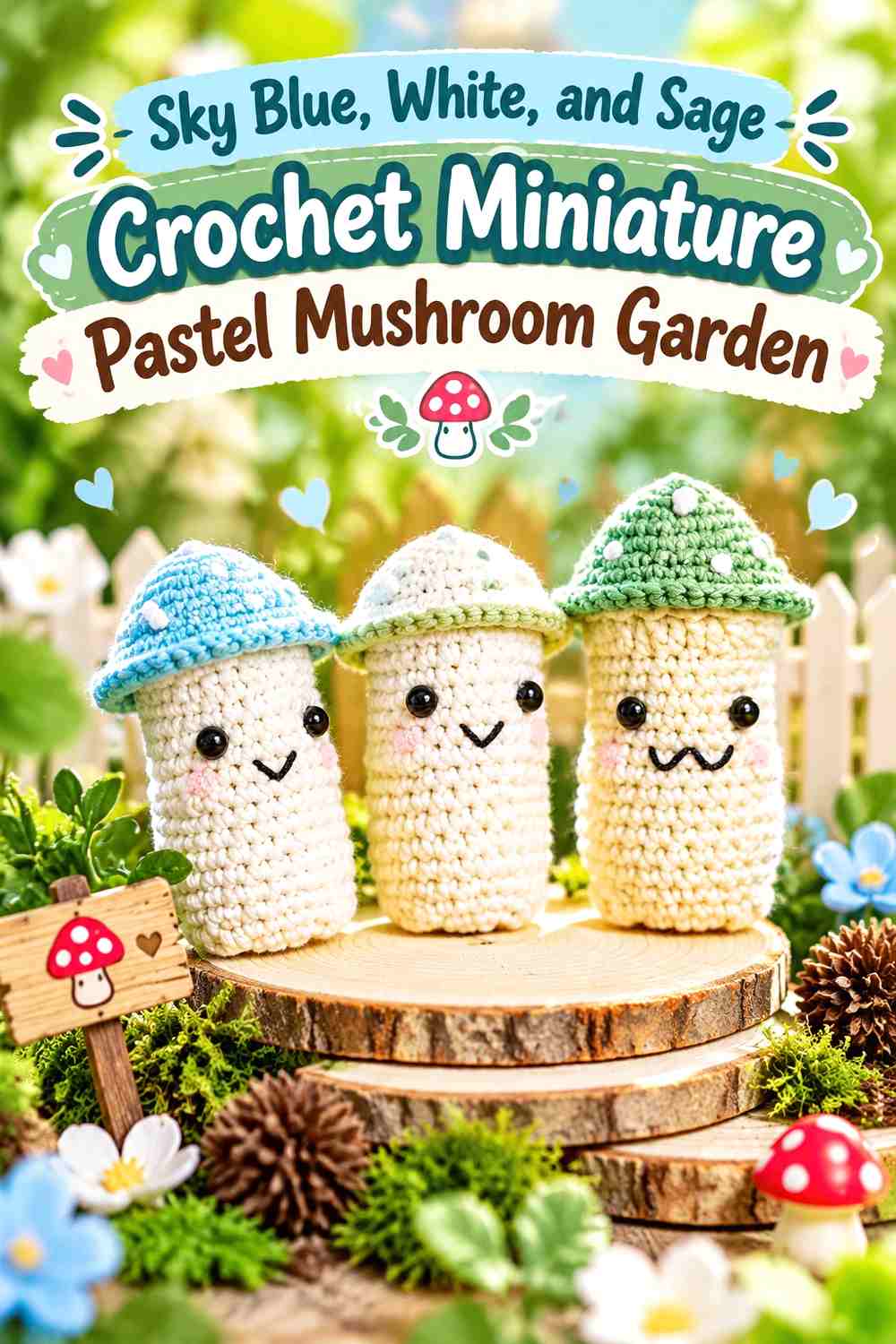
Sky-blue caps create a lighter fantasy direction for a miniature mushroom garden. White can form stems and cap spots, while sage provides enough grounding color to prevent the whole scene from becoming too pale.
Keep the sky blue on the mushrooms rather than spreading it across the garden floor. A sage base gives the pale caps something to contrast against.
Sky Blue Needs Sage Under the Crochet Mushroom Stems
A medium sage base can keep white stems and pale blue caps readable. If the ground is also very light, the separate mushroom parts may visually merge.
For a softer garden, use muted sage rather than adding gray or brown as another major color.
White Should Stay Smaller Than the Sky Blue Mushroom Caps
Use white for stems, spots, and perhaps one tiny accent mushroom. If white takes over most of the cap area, the palette shifts away from blue-led.
On a very pale display background, deepen the sky blue slightly rather than adding a dark outline to every mushroom.
Creator Credit: Amigurumi Forge
12. Black, Charcoal, and Ivory Crochet Miniature Gothic Mushroom Garden
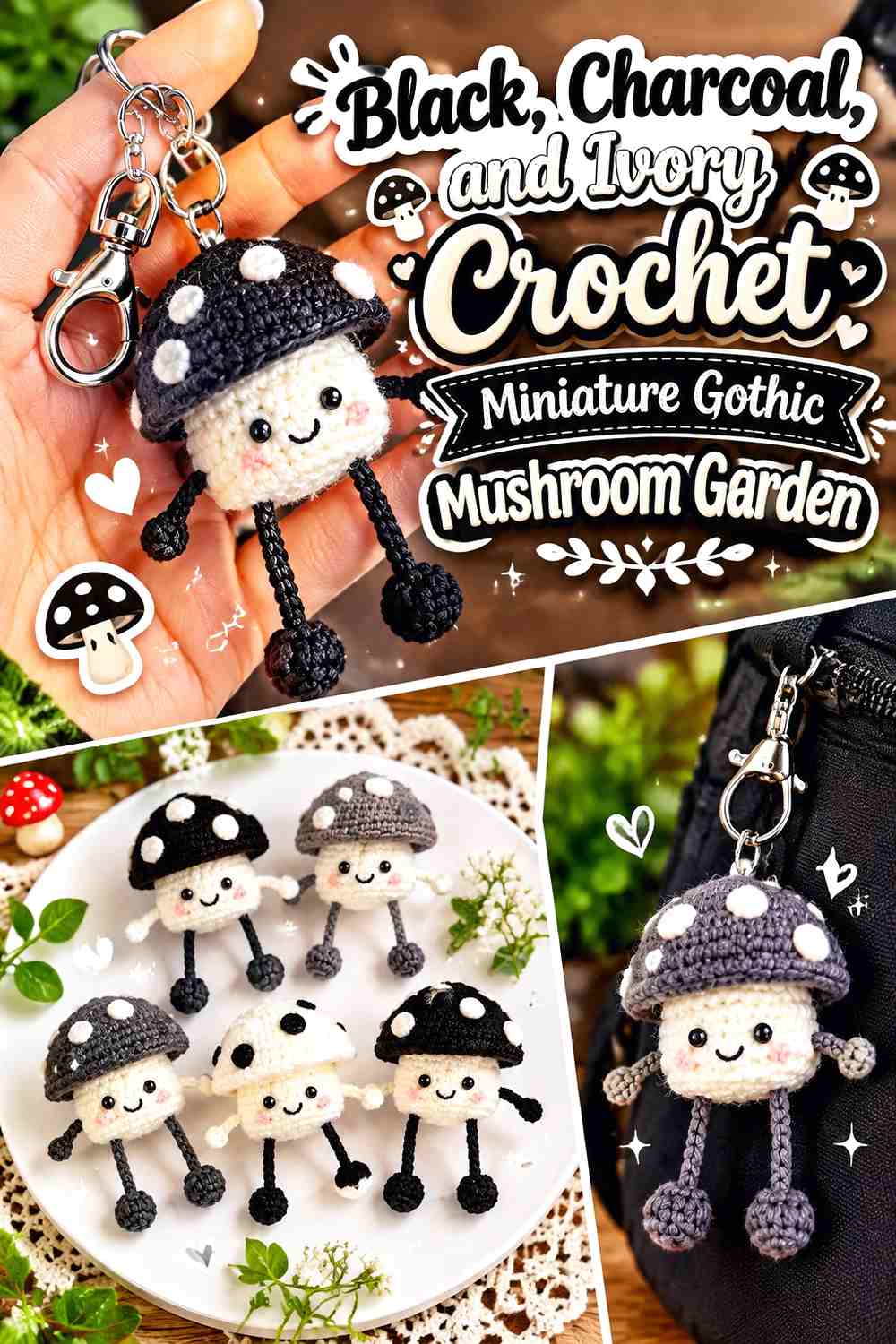
A dark miniature mushroom garden can still show plenty of detail when ivory is used deliberately. Black can create the deepest caps or garden edge, charcoal can cover the ground, and ivory can define stems, spots, and a few smaller mushrooms.
The palette depends more on light/dark value than hue, so placement is critical. Do not surround an ivory mushroom with additional ivory ground details if you want its silhouette to remain clear.
Black Should Be Concentrated on the Crochet Mushroom Caps
Use black for a few key caps rather than every part of the display. Charcoal beneath them allows enough tonal difference for the cap edges to remain visible.
A black ground and black cap can work only when the ivory stem or another lighter structural area clearly separates them.
Ivory Keeps Black and Charcoal Mushrooms Readable
Ivory stems provide the strongest contrast in this palette. Repeat ivory in small cap details or miniature stones to connect the light color across the scene.
Avoid using ivory equally with black. The garden keeps its dark direction when ivory remains a controlled highlight.
Creator Credit: Crochet Everyday
13. Copper, Rust, and Teal Crochet Miniature Woodland Tray Garden
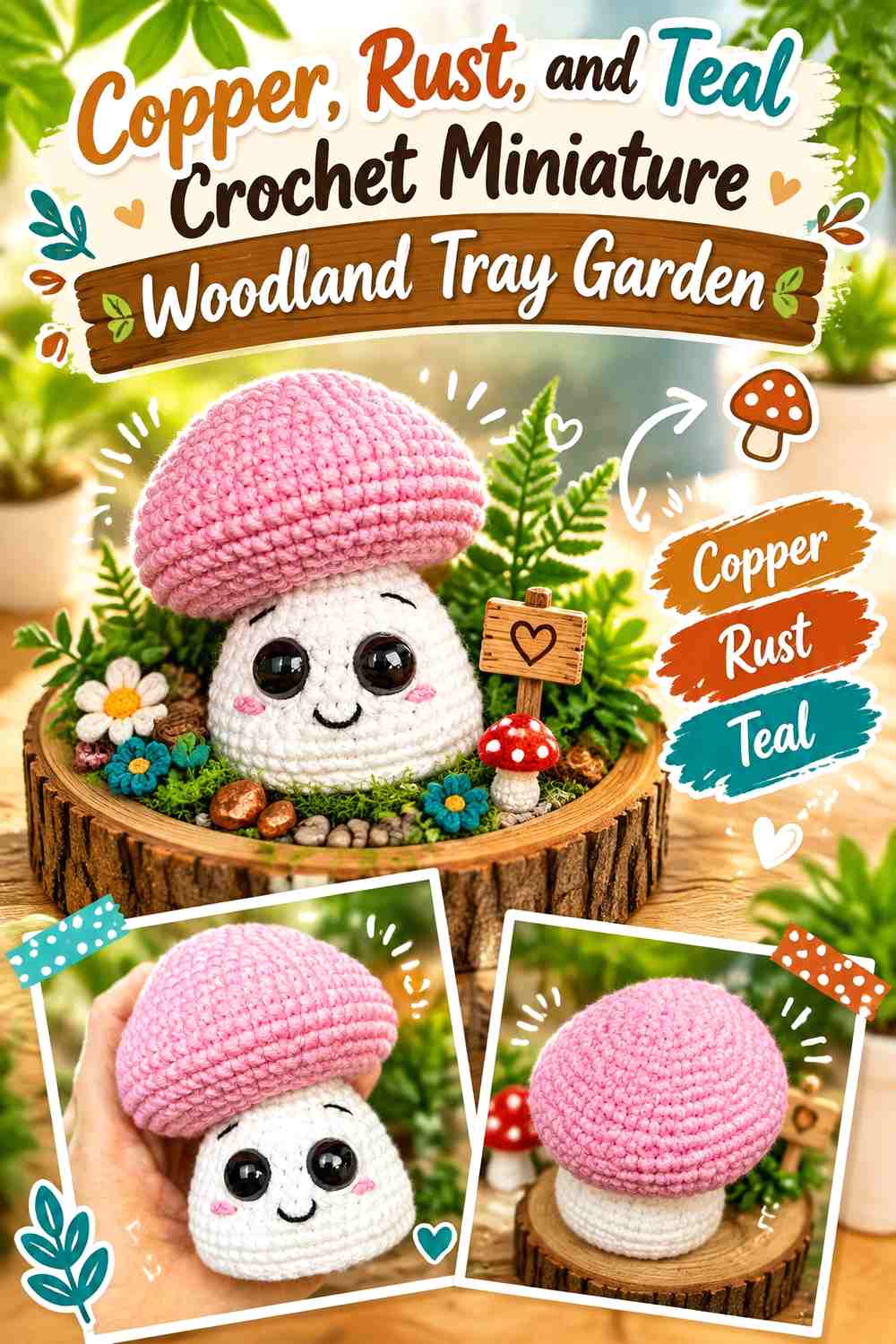
Copper and rust provide closely related warm cap colors, while teal introduces a cooler accent that prevents the garden from becoming entirely orange-brown. Use teal sparingly in tiny mushrooms, leaves, or a narrow edge around the tray.
A neutral brown or oatmeal ground can sit underneath the three-color palette without becoming another focal point.
Copper and Rust Need Different Roles on the Crochet Mushroom Caps
Use copper for the main mushroom family and rust for smaller or darker companions, or reverse those roles. Avoid alternating the two randomly on every tiny detail because their similarity can make the color plan difficult to read.
If they look nearly identical from a distance, place a light stem or neutral ground directly between neighboring mushrooms.
Teal Should Remain an Accent Against Copper and Rust
A few teal mushrooms or foliage details can provide a strong temperature contrast. Too much teal will divide the scene into two competing palettes.
Repeat teal in two or three separated locations rather than concentrating it in one corner of the tray.
Creator Credit: Tinunturu d’Alice
14. Cherry Red, White, and Leaf Green Crochet Miniature Fairy Garden

Cherry red, white, and leaf green create the clearest classic fairy-garden direction in the list. Red should dominate the caps, white should handle stems and spots, and green should build the visible ground and foliage.
Because the palette already carries strong contrast, the layout can stay simple. A small curved path or open patch between the mushrooms is enough to suggest a miniature garden without adding many extra colors.
Cherry Red Should Form the Main Crochet Fairy-Garden Mushrooms
Repeat cherry red across mushrooms of different sizes to make the group feel connected. White cap spots can vary slightly in placement without changing the overall palette.
If a large mushroom dominates too heavily, reduce its red surface visually by surrounding it with more green space rather than adding another cap color.
Leaf Green Should Frame the White Mushroom Stems
Use green around the stems so their light shape remains visible. Small leaves can extend toward the red caps, but the area immediately behind the white stems should remain relatively uncluttered.
This also helps prevent tiny flowers or fairy-garden accents from hiding the mushroom silhouettes.
Creator Credit: Hopeful Turns
15. Taupe, Mushroom Brown, and Dusty Green Crochet Miniature Farmhouse Mushroom Garden

Taupe and mushroom brown create a subdued neutral garden, while dusty green adds enough natural color to keep the display from becoming entirely beige. This direction works well for a miniature tray or shallow basket where the mushrooms are meant to coordinate with neutral decor.
Use the darker brown on selected caps, taupe on others, and a light neutral for stems. Dusty green can cover the base or appear as scattered fern-like accents.
Mushroom Brown Should Anchor the Taupe Crochet Garden
Place the darkest brown on the largest mushrooms or repeat it at intervals through the group. Taupe can then fill the secondary caps without competing for the same visual weight.
If the ground is also brown, use dusty green directly around the stems to keep the mushroom bases visible.
Dusty Green Keeps Taupe and Mushroom Brown From Blending Together
Use dusty green beneath the mushrooms and in a few small foliage details. Its muted character works with the neutral palette without creating a bright new focal point.
Keep some visible ground between the mushrooms. Neutral colors need space and value separation to show individual shapes clearly.
Creator Credit: MJ’s Off The Hook Designs
Which Crochet Miniature Mushroom Garden Palette Should You Choose?
For the most recognizable woodland look, red with cream and moss green gives the mushrooms immediate contrast. Rust, mustard, chocolate, golden yellow, and terracotta work well when you want a warmer autumn direction.
Pastel gardens need more attention to the base. Sky blue, dusty rose, lavender, and mint mushrooms generally become easier to see when they sit against olive, moss, sage, or another medium-value ground.
For a darker display, burgundy, plum, charcoal, or black can lead the caps as long as cream or ivory keeps the stems and small details visible. If you prefer neutral decor, taupe, beige, mushroom brown, and dusty green can create variation through value rather than strong hue changes.
Conclusion
The most convincing crochet miniature mushroom gardens use color to separate the different layers of the scene. Caps should usually carry the strongest palette choice, stems need enough contrast against the ground, and moss, leaves, flowers, logs, or pots should support the mushrooms rather than compete with them.
Choose the red-and-moss or cherry-red fairy gardens when you want classic toadstools, plum or black for a darker fantasy direction, teal or sky blue for cooler color, and brown, taupe, or rust for an earthy woodland display.
Before attaching the miniature pieces permanently, arrange the mushrooms on the finished base and check the spacing from several angles. Small changes in cap placement or ground color can make the individual mushrooms much easier to see. Follow each linked creator tutorial for its original construction, then adapt the surrounding garden arrangement to your chosen palette.
Frequently Asked Questions
How many colors should I use in a crochet miniature mushroom garden?
Three main colors are often enough to establish a clear palette: one for the dominant caps, one for stems or light details, and one for the ground. A fourth color can work as a small accent for flowers, leaves, spots, or secondary mushrooms.
How can I make tiny crochet mushrooms stand out from a moss-green base?
Check the value contrast between the stems, caps, and moss. Cream stems usually remain easier to distinguish from medium or dark green than sage or beige stems with similar lightness. You can also leave more visible ground around each mushroom instead of packing the cluster tightly.
Should every crochet mushroom in the miniature garden use the same colors?
No. Keeping one repeated element is usually enough to connect the group. For example, several mushrooms can have different cap colors while sharing cream stems, or all the caps can vary slightly while using the same spot color.
What colors work well for a realistic-looking crochet mushroom garden?
Earthy browns, rust, cream, oatmeal, moss, olive, muted red, and sage can create a more natural direction. The palette does not need to copy real mushroom species exactly; the important part is maintaining enough contrast for the miniature forms to remain visible.
How can I make a pastel crochet mushroom garden less washed out?
Use a medium or darker ground beneath pale caps and stems. Dusty rose, sky blue, mint, or lavender mushrooms often gain definition against olive, moss, medium sage, or muted brown.
Should the darkest color go on the crochet mushroom cap or the garden base?
Either can work, but avoid making both nearly identical in value unless the stem clearly separates them. A dark cap over a medium ground is easy to read, while a pale cap can work well against a darker base.
How do I keep a miniature crochet mushroom garden from looking too crowded?
Give one mushroom or small cluster the main visual role and leave visible ground around it. Reduce the number of equally strong colors, vary the spacing, and keep flowers, leaves, stones, or other supporting details smaller than the primary mushrooms.