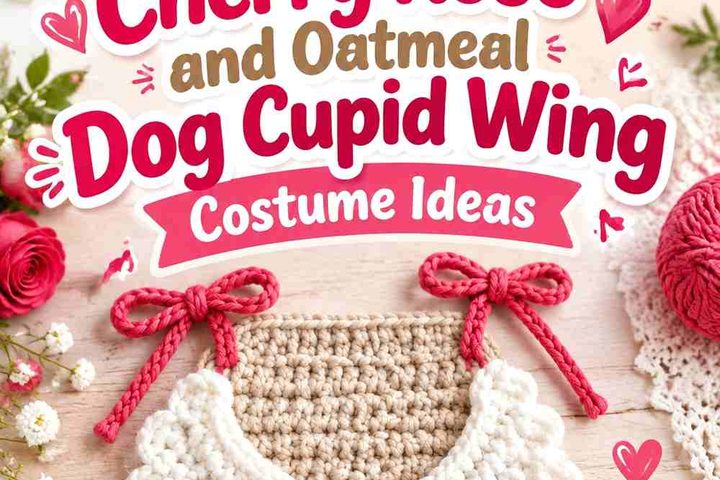
Scrap yarn is especially useful for clothing embellishments because a small amount of crochet can change a garment without requiring enough yarn for an entire wearable. A leftover ball might become one patch pocket, while shorter lengths can supply flower centers, stars, leaves, bows, or contrasting edging.

Color planning matters when the scraps come from unrelated projects. Instead of using every leftover shade equally, choose one color to lead each embellishment and let the smaller scraps become supporting or accent colors. The original garment also counts as part of the palette: cream crochet behaves differently on black denim than it does on a white T-shirt.
The tutorials linked below teach the crochet motif, trim, pocket, patch, or accessory concept behind each idea. The clothing placements and color schemes are independent adaptation suggestions, so check the scale and attachment method against the garment you actually want to embellish.
Quick List
- Rust, Mustard, and Cream Granny Square Crochet Jeans Patches
- Navy, Gold, and Ivory Star Crochet Sweater Appliqués
- White, Yellow, and Sage Daisy Crochet Cardigan Details
- Strawberry Red, Leaf Green, and Cream Crochet T-Shirt Appliqué
- Plum, Lavender, and Teal Butterfly Crochet Jacket Patch
- Olive, Moss, and Oatmeal Leaf-Vine Crochet Sweater Detail
- Blush Pink, Burgundy, and Cream Crochet Bow Shirt Detail
- Burgundy and Dusty Rose Vintage Crochet Collar Embellishment
- Ivory and Camel Crochet Lace Hem Clothing Trim
- Sunflower Yellow, Brown, and Sage Granny Square Crochet Pocket
- Rust, Cream, and Moss Mushroom Crochet Jacket Patch
- Coral, Peach, and Sage Crochet Flower Sweatshirt Embellishments
- Teal, Mustard, Rust, and Cream Rainbow Crochet Pocket Patch
- Cobalt and White Picot Crochet Cuff Edging
- Black, Cherry Red, and Cream Vintage Crochet Collar Detail
Sort Scrap Yarn by Color Role Before Crocheting
Scrap yarn does not need to match perfectly, but the finished embellishment benefits from a clear hierarchy. Choose one shade for the largest visual area, another for support, and use very short leftovers for centers, outlines, leaves, or other small accents.
Also compare the scraps with the garment itself. A black sweater already supplies a dark neutral, so black yarn may be unnecessary. A faded denim jacket already provides blue, which means warm rust, yellow, or cream scraps can do more useful work as contrast.
Check Scrap Yarn Contrast Against the Clothing
Different yarn colors can still blend when their lightness is similar. Before sewing a motif onto clothing, place it against the actual fabric and look from several feet away. If the shape disappears, changing the border or outer round may be enough to fix the problem.
This is especially important for small appliqués. A sage leaf on an olive sweater may need cream edging, while the same leaf could remain unbordered on a burgundy cardigan.
Keep Crochet Embellishments Proportional to the Garment
Small scraps naturally encourage small projects, but placement still matters. One substantial pocket may look more intentional than ten unrelated motifs spread across every available area. Similarly, a line of tiny stars along a shoulder can be more readable than placing them randomly over the front, sleeves, and back.
Lay the finished pieces on the garment before attaching them. Check seams, pockets, closures, cuffs, stretch areas, and places that bend frequently so the crochet does not interfere with normal wear.
1. Rust, Mustard, and Cream Granny Square Crochet Jeans Patches

Small granny squares are useful when worn jeans already need a visible patch or when you want to add color along one leg. Rust can lead the motifs, mustard can brighten selected rounds, and cream can create enough separation for the square structure to remain visible against denim.
Because jeans already supply blue, there is little need to force another blue yarn into the scraps. Let the denim act as the cool color and keep the crochet warmer.
Rust Should Lead the Granny Square Crochet Jeans Patch
Use rust through the largest motif sections if you want the patch to read as warm and intentional against blue denim. Scattering rust only in tiny centers gives mustard and cream more visual control than the palette needs.
For multiple patches, repeat rust in the same position so separate squares still look related.
Cream Keeps Mustard and Rust Visible Against Denim
Cream can separate two warm shades that otherwise merge at a distance. Place it between rust and mustard or along part of the outer edge where the square meets dark denim.
If the jeans are very pale, use less cream and let rust provide more of the outer definition.
Creator Credit: Fios Cruzados por Joana Gouveia
2. Navy, Gold, and Ivory Star Crochet Sweater Appliqués

Mini crochet stars can use extremely short yarn leftovers and work well as a grouped embellishment on a plain sweater. Navy can form the largest stars, gold can provide the strongest accent, and ivory can lighten the arrangement.
Instead of scattering stars over the entire garment, consider a cluster near one shoulder, pocket area, or lower front. Concentrated placement gives the small motifs more impact.
Navy Gives Gold Crochet Stars a Stronger Sweater Anchor
If the sweater is cream, gray, or another light neutral, navy makes a useful dark star that anchors the smaller gold details. Repeat navy more than once so it does not look like an isolated patch.
On a navy sweater, reverse the balance and make gold or ivory the leading star color.
Ivory Prevents Gold and Navy Stars From Feeling Too Dense
Ivory can be useful between high-contrast navy and gold stars. A few lighter motifs create breathing room without adding another saturated shade.
Keep ivory away from an identical ivory garment unless you intentionally want some stars to recede into the background.
Creator Credit: VivCrochets
3. White, Yellow, and Sage Daisy Crochet Cardigan Details
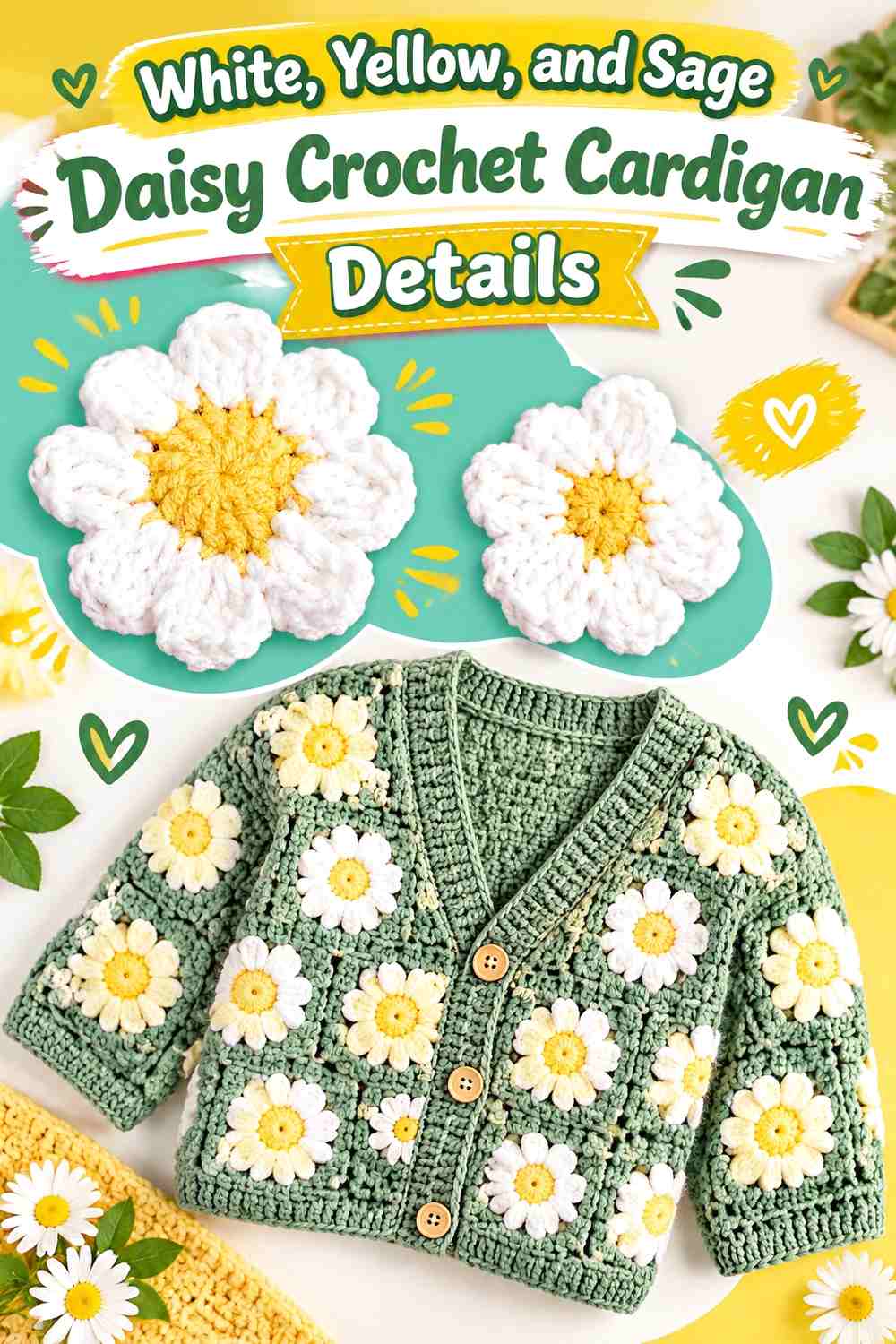
Daisies are well suited to scrap-yarn embellishment because their colors have obvious roles. White can form the petals, yellow can stay concentrated in the centers, and sage can appear in occasional leaves or surrounding crochet details.
On a cardigan, a few daisies around one pocket, shoulder, or lower front usually look more deliberate than covering both sides symmetrically with dozens of flowers.
White Daisy Petals Need Enough Contrast on the Cardigan
White petals show clearly against navy, green, burgundy, brown, and many medium or dark cardigan colors. On cream or white clothing, however, the petals can disappear.
In that case, use sage around the flower or choose a softer contrasting petal shade from the scrap basket rather than relying on white alone.
Yellow Centers Should Stay Smaller Than White Daisy Petals
Yellow works best as the focal point rather than the entire flower. Keeping it concentrated in the center preserves the recognizable light-petal structure and leaves room for sage accents.
If several yellows are available, repeat one similar yellow through the group instead of making every center unrelated.
Creator Credit: Just Be Crafty
4. Strawberry Red, Leaf Green, and Cream Crochet T-Shirt Appliqué

A strawberry appliqué gives a plain T-shirt a specific focal motif while using relatively little yarn. Let strawberry red dominate the fruit, leaf green define the top, and cream provide a small highlight or surrounding accent if the shirt color needs extra separation.
One strawberry can work at the chest or pocket area, while several smaller motifs can form a controlled cluster near the hem.
Strawberry Red Should Remain the Main T-Shirt Accent
The fruit shape is easiest to recognize when red occupies most of the motif. Avoid dividing the strawberry equally between several pink and red scraps unless a patchwork effect is intentional.
On a red shirt, choose a lighter or darker red with stronger value contrast, or move the motif to a contrasting patch first.
Leaf Green Gives Strawberry Red a Clear Top Edge
A small green section helps define the orientation of the motif and breaks up the large red area. It does not need to become a broad border around the fruit.
If your green and red are both dark, a small cream detail can provide extra separation at their meeting point.
Creator Credit: Fiber Flux
5. Plum, Lavender, and Teal Butterfly Crochet Jacket Patch
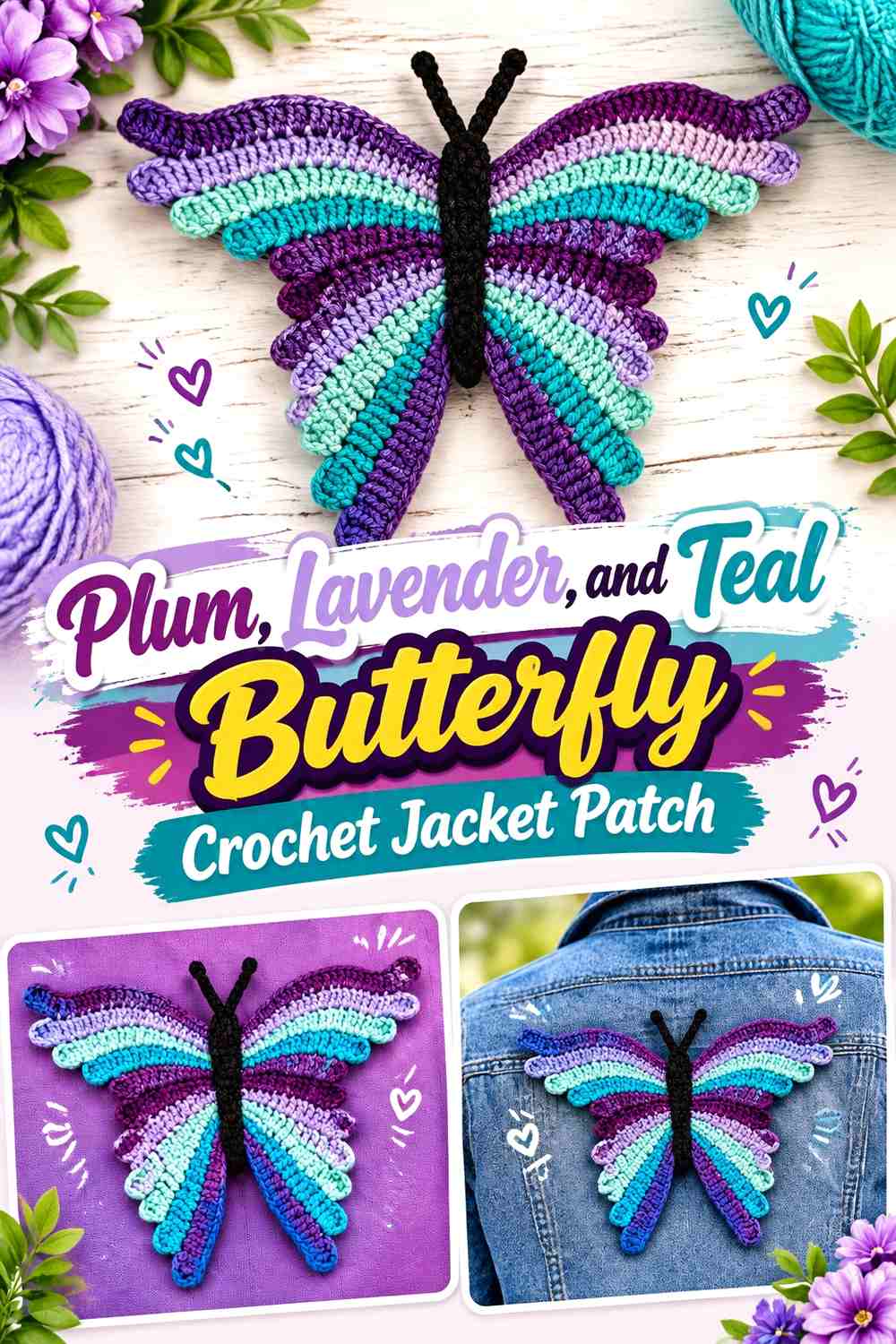
Butterfly motifs are useful when the scrap basket contains several related small quantities. Plum can establish the darkest wing sections, lavender can lighten the interior, and teal can provide a contrasting accent without needing enough yarn for the entire motif.
A jacket back or upper sleeve gives the wings more visual space than a narrow cuff. Check the motif against the garment before attaching it so the shape remains recognizable when the clothing is worn.
Plum Should Define the Butterfly Crochet Wing Shape
Use plum where you want the outer wing structure to remain readable. Its darker value can keep the motif visible against light denim, tan canvas, or cream knitwear.
On a black jacket, move lavender or teal toward the outer edge instead so the butterfly does not disappear.
Lavender Can Separate Plum From Teal Butterfly Details
Lavender provides a softer transition when both plum and teal are strong colors. Use it between darker wing sections or repeat it in matching areas on each side.
If the scraps are not exact matches, prioritize similar lightness on corresponding wings rather than forcing perfectly identical shades.
Creator Credit: Kerri’s Crochet
6. Olive, Moss, and Oatmeal Leaf-Vine Crochet Sweater Detail

Leaf motifs let several green scraps look intentional because small shade variations resemble a tonal botanical palette. Olive can carry the darkest leaves, moss can provide the middle tone, and oatmeal can appear in connecting details or as occasional contrast.
Arrange the leaves along a neckline, shoulder, or pocket edge rather than spreading them without direction. A visible path makes separate motifs read as one embellishment.
Olive Leaves Can Anchor the Moss Crochet Vine
Place the deeper olive leaves at key points, such as the beginning and end of a shoulder arrangement. Moss can fill the spaces between them without every leaf needing exactly the same color.
On an olive sweater, move oatmeal around selected motifs so their edges remain visible.
Oatmeal Keeps Olive and Moss Leaves Distinct on Dark Clothing
A small oatmeal stem, flower, or joining detail can prevent several green scraps from becoming one dark block.
Use the neutral sparingly. Too much oatmeal changes the embellishment from a green tonal vine into a neutral-led design.
Creator Credit: Edinir Croche
7. Blush Pink, Burgundy, and Cream Crochet Bow Shirt Detail

A small crochet bow can refresh a shirt collar, pocket, cuff, or center neckline without requiring a large amount of yarn. Blush can cover most of the bow, burgundy can define the center wrap, and cream can be used for a narrow accent if extra contrast is needed.
Because a bow is already dimensional, keep the surrounding embellishment simple. One strong bow often needs no additional appliqués nearby.
Blush Pink Should Cover Most of the Crochet Bow
Keeping the loops blush makes the silhouette easy to read and gives the small amount of burgundy a clear job.
If the shirt is pale pink, switch the balance and let burgundy lead so the bow does not visually disappear into the fabric.
Burgundy Can Define the Blush Pink Bow Center
Use the deeper shade around the center where the two sides visually meet. That dark point can make the bow look more structured without outlining every edge.
Cream is most useful when the garment itself is very dark and the pink-burgundy combination needs one lighter break.
Creator Credit: Neuzy Santana
8. Burgundy and Dusty Rose Vintage Crochet Collar Embellishment
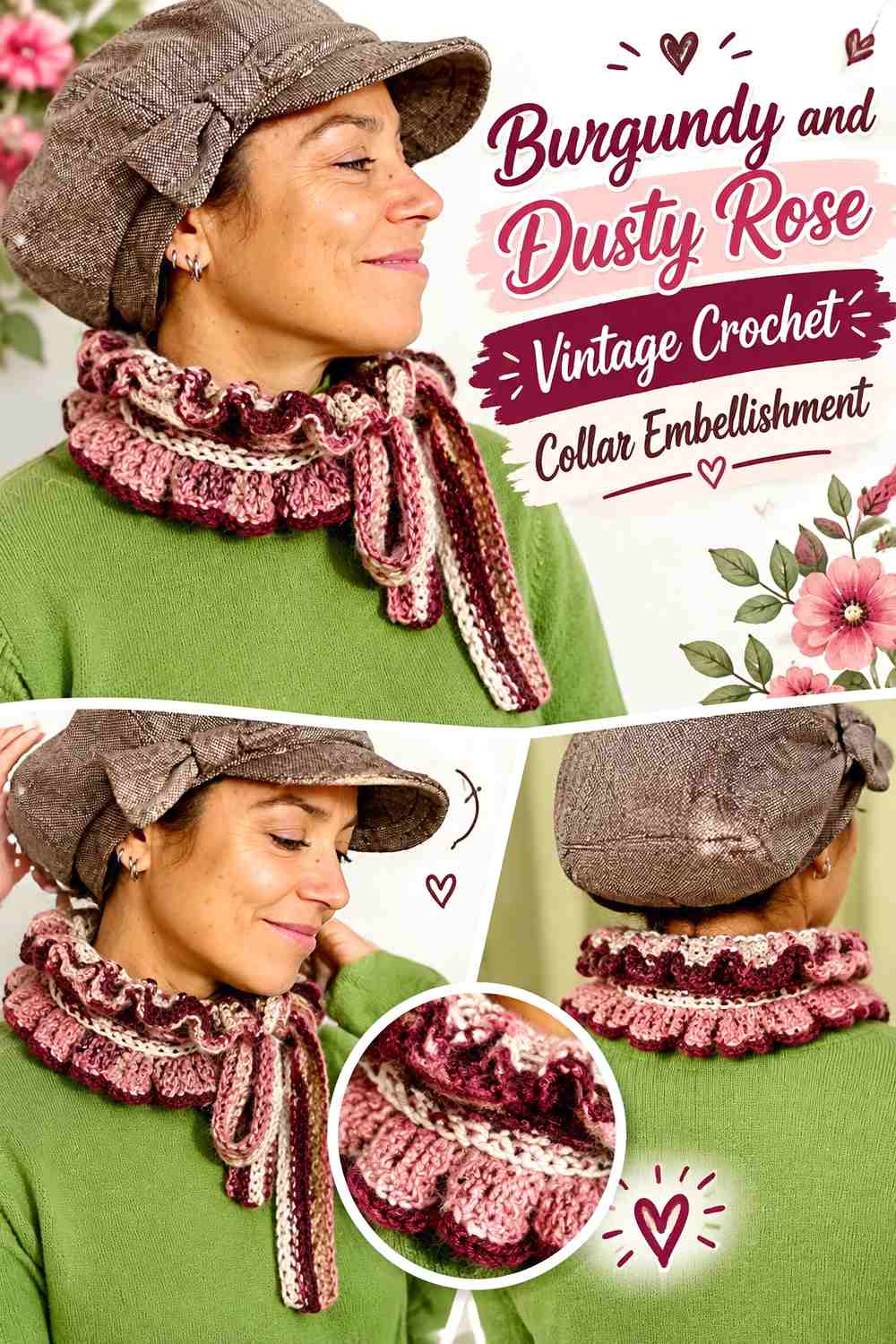
A removable or attached crochet collar can transform a simple sweater, blouse, or dress while still being small enough for partial skeins. Burgundy gives the collar depth, while dusty rose can appear along the decorative outer section or ties.
Because the collar frames the face and neckline, it already has a strong visual position. The rest of the garment can remain unembellished.
Burgundy Can Give the Crochet Collar a Defined Neckline
Use burgundy nearest the neckline if you want a clear boundary between the garment and crochet. It is especially effective on cream, tan, gray, or pale pink clothing.
Against black clothing, dusty rose may make a clearer inner edge.
Dusty Rose Can Lighten a Burgundy Crochet Collar Edge
Place dusty rose where the collar flares outward or develops decorative texture. The lighter shade helps the outer detail remain visible instead of allowing the whole collar to read as one dark band.
If the two scraps have similar value, increase the amount of whichever shade contrasts more clearly with the garment.
Creator Credit: Francesca Uncinettando Crochet&Love
9. Ivory and Camel Crochet Lace Hem Clothing Trim
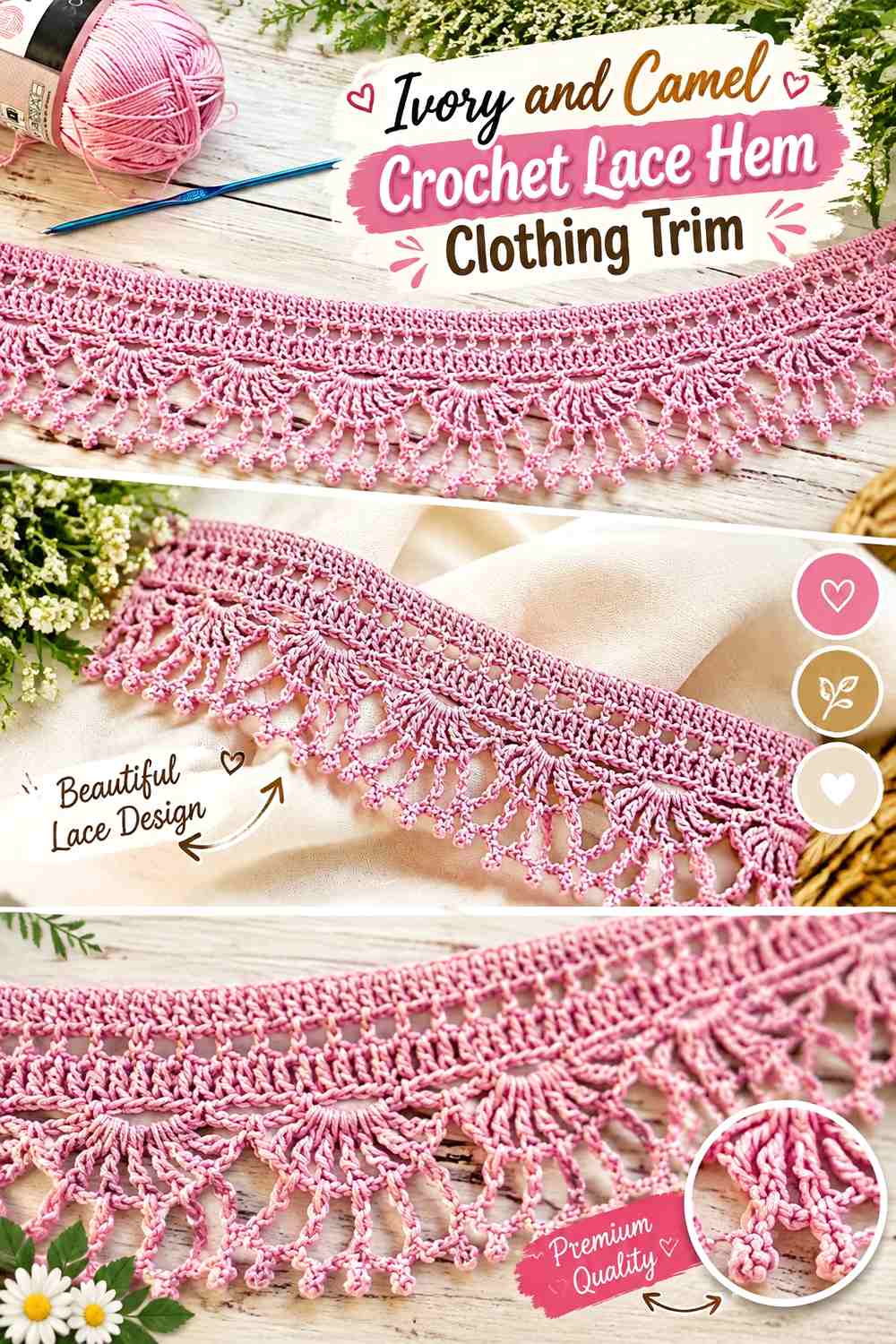
Long narrow scraps can sometimes be combined into a lace trim even when there is not enough yarn for a motif collection. Ivory can lead the edging, while camel can appear in an upper joining section, selected repeats, or a narrow border.
A lace hem is particularly useful on a plain top, skirt, or dress because the crochet creates a continuous horizontal finish rather than isolated patches.
Ivory Keeps the Crochet Lace Hem Visually Light
Use ivory through most of the open edging when you want the trim to feel distinct from a dark or medium garment without creating a heavy color band.
On white clothing, camel may need to move to the outer edge so the lace silhouette remains visible.
Camel Can Connect Ivory Crochet Lace to Warm Fabric
Camel works well between ivory and tan, rust, brown, or other warm garment colors. It reduces the abrupt jump from a pale lace edge to deeper fabric.
If the garment is cool gray or blue, use camel more sparingly and allow ivory to make the cleaner connection.
Creator Credit: Olga Poltava
10. Sunflower Yellow, Brown, and Sage Granny Square Crochet Pocket

One granny-square pocket is a practical way to use several scraps without turning an entire cardigan into patchwork. Sunflower yellow can form the decorative feature, brown can anchor the center, and sage can connect the pocket to an earthy garment palette.
Check the square against the existing pocket area before attaching it. A visually strong motif still needs to sit comfortably within the front panel.
Sunflower Yellow Should Stay Visible Across the Crochet Pocket
Give yellow enough area to make the pocket noticeably different from the garment. If it appears only in a tiny center, the darker brown and sage sections may dominate from normal viewing distance.
Against mustard clothing, let cream or another available light scrap replace part of the yellow role.
Brown Can Ground Sunflower Yellow While Sage Frames the Pocket
Brown works well in the central motif area, while sage can move toward the outer square where it meets the cardigan.
This creates a progression from strong flower center to calmer garment connection rather than using every color equally in every round.
Creator Credit: WickedlyHandmade
11. Rust, Cream, and Moss Mushroom Crochet Jacket Patch
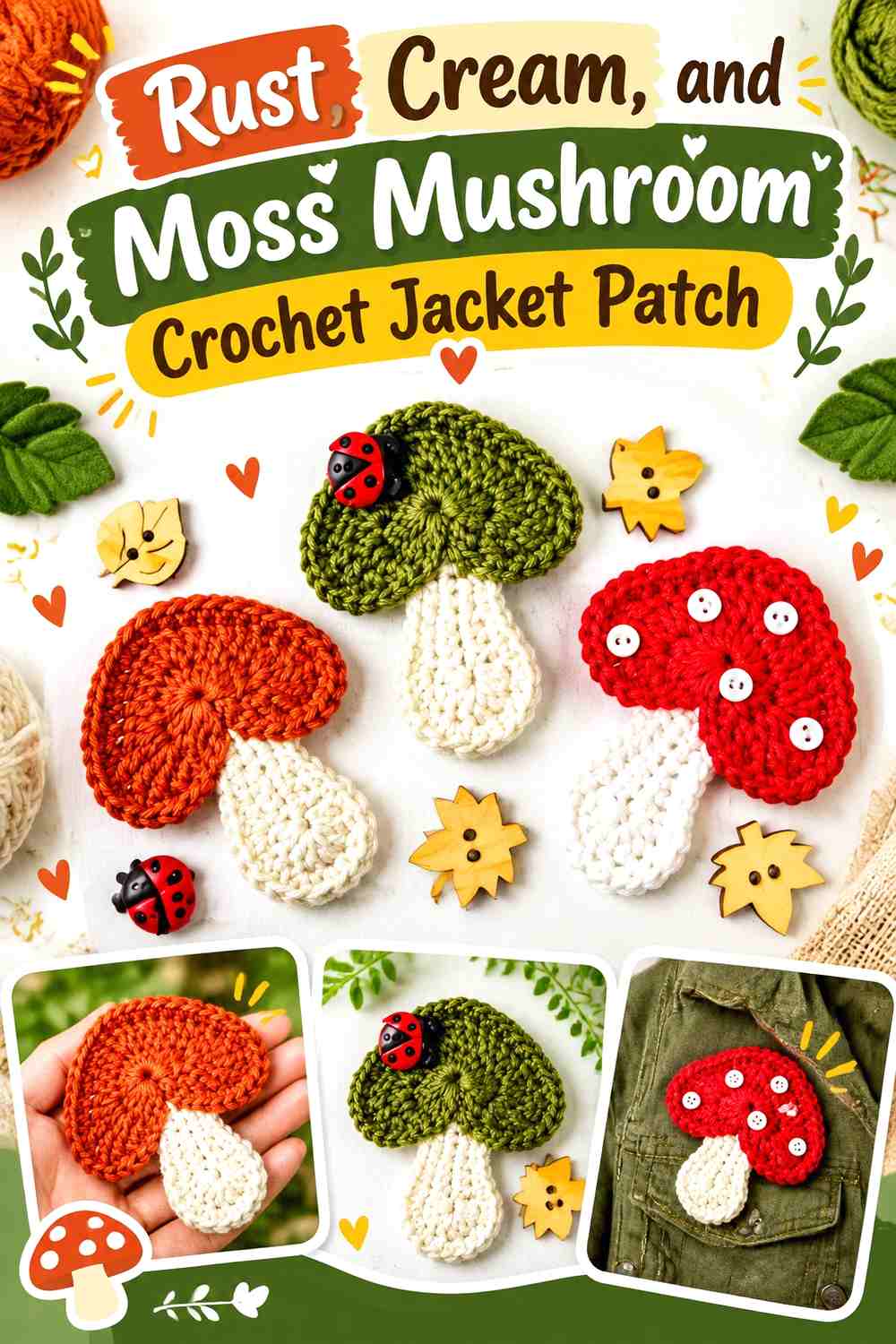
A mushroom appliqué gives earth-toned scraps an obvious structure. Rust can cover the cap, cream can form the stem and cap details, and moss can appear in a small surrounding leaf or ground accent.
Denim jackets, canvas overshirts, and plain cardigans provide enough stable visual space for one motif without requiring a large collection.
Rust Should Dominate the Mushroom Crochet Cap
Let rust take most of the cap so the motif has one clear focal color. Cream spots or details should stay smaller and should not divide the cap into equal blocks.
If the garment itself is rust, switch to a lighter cream cap with rust details instead of allowing the entire motif to disappear.
Moss Can Keep Cream Mushroom Details Connected to Earthy Clothing
Use moss in a small leaf, base detail, or nearby companion motif. It provides a cooler natural accent without competing with the rust cap.
On green clothing, keep moss away from the outermost edge and let cream provide the final separation.
Creator Credit: GoldenLucyCrafts
12. Coral, Peach, and Sage Crochet Flower Sweatshirt Embellishments

Simple crochet flowers are ideal for very small scraps because each motif can use only one or two colors. Coral can lead the flower group, peach can create lighter blossoms, and sage can appear in restrained leaf or center details.
A plain sweatshirt provides plenty of surface, but that does not mean every area needs decoration. A diagonal shoulder cluster or a small group near one pocket usually gives the flowers more visual purpose.
Coral Flowers Need Enough Space Between Peach Motifs
Coral and peach are closely related, so leave visible sweatshirt fabric between neighboring flowers when their values are similar. The empty background prevents the group from merging into one warm-colored patch.
You can also deepen one coral flower rather than introducing a new fourth shade.
Sage Can Break Up Coral and Peach Crochet Flowers
A few green details give the flower cluster a useful contrast and make the botanical theme easier to read.
Keep sage secondary. If green leaves occupy as much space as the flowers, the palette changes from warm-floral to green-dominant.
Creator Credit: HappyBerry Crochet
13. Teal, Mustard, Rust, and Cream Rainbow Crochet Pocket Patch
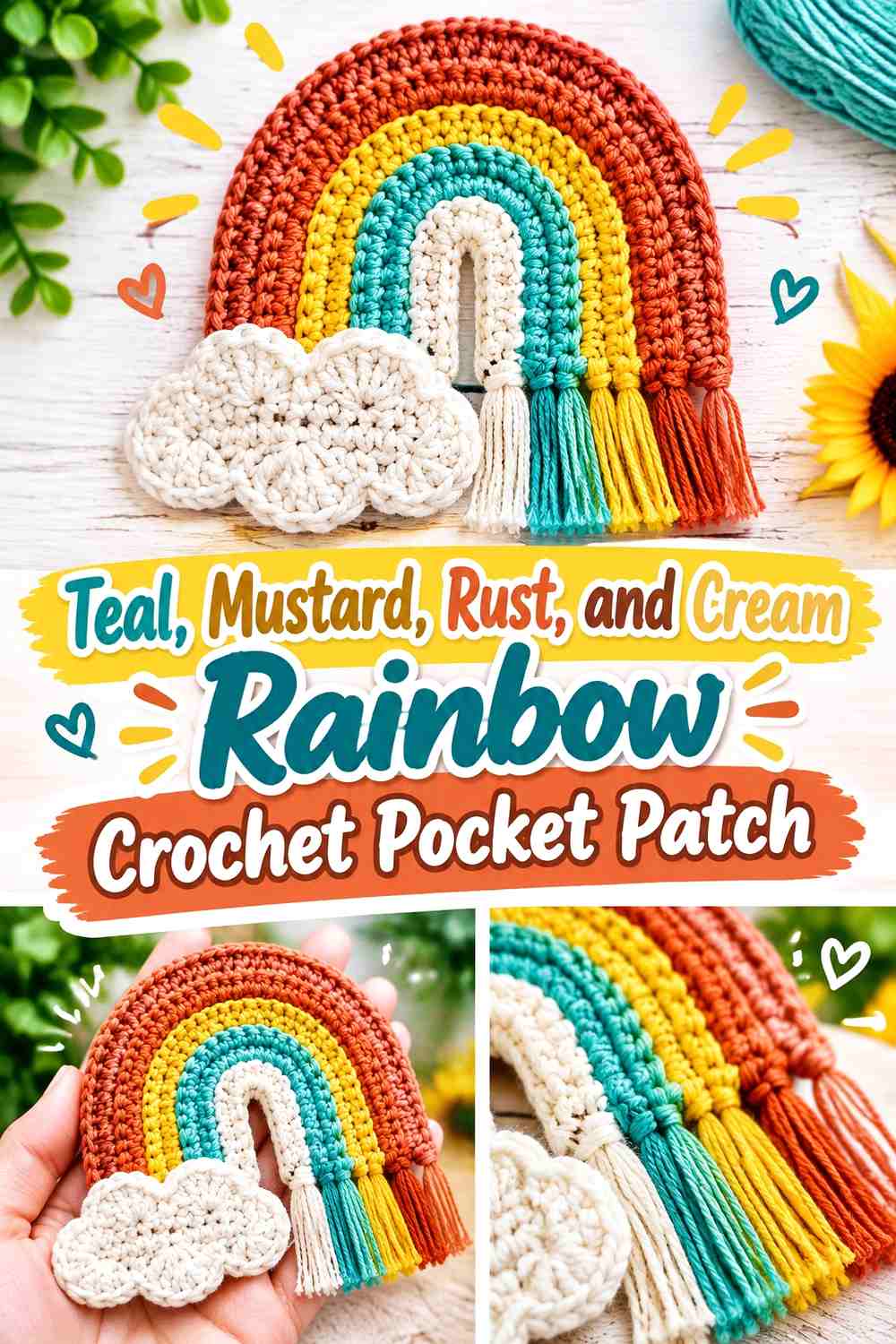
A rainbow appliqué can turn unrelated short scraps into a deliberate sequence. Teal supplies the cool end, mustard and rust create a warmer middle, and cream can form an outer section or small surrounding cloud-like accent.
Attach the rainbow to a pocket, chest area, or back yoke where the curved silhouette has enough surrounding fabric to remain recognizable.
Teal and Rust Should Sit Far Enough Apart in the Crochet Rainbow
Using the coolest and warmest shades in different bands makes the palette easier to read. Avoid placing all the darkest scraps next to one another or one side of the rainbow can become visually heavier.
Mustard can help bridge the transition.
Cream Can Give the Teal and Mustard Rainbow a Cleaner Outer Edge
Use cream where the motif needs separation from dark clothing. A light outer section can stop teal, rust, or mustard from disappearing into brown, navy, or black fabric.
On a white garment, let teal become the outermost visible shade instead.
Creator Credit: Crochet Lovers
14. Cobalt and White Picot Crochet Cuff Edging
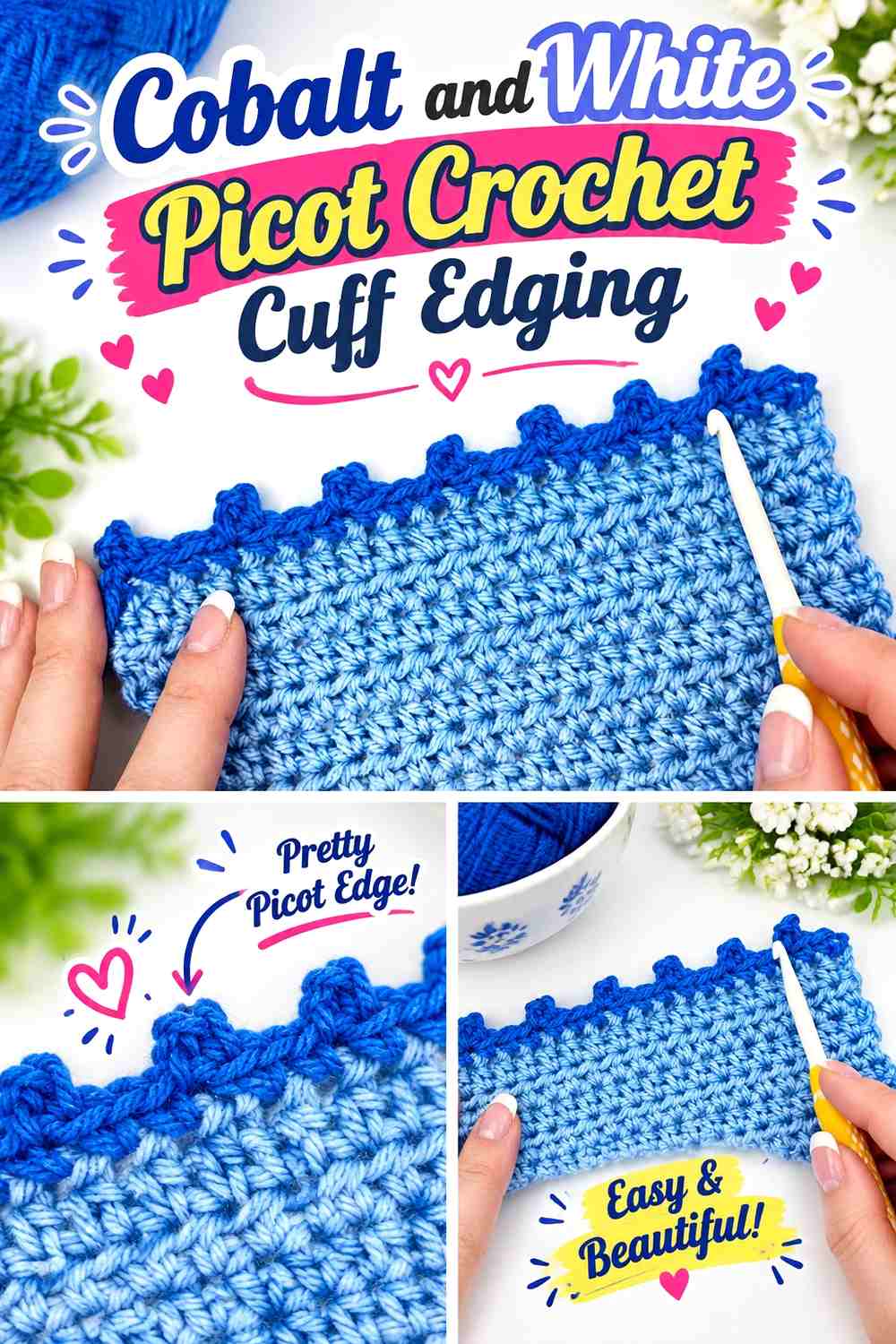
Picot edging is useful when the scraps are long enough for a narrow continuous trim but not large enough for a full cuff. Cobalt can create the main line around the sleeve, while white can appear in a smaller inner edge or occasional contrasting section.
This works best when the existing cuff is structurally sound. The crochet is an embellishment, not a replacement for worn-out fabric that can no longer support stitching.
Cobalt Makes a Small Crochet Cuff Edge Noticeable
A narrow edging needs enough contrast to be seen, and cobalt provides that definition against white, cream, gray, pale denim, or tan sleeves.
If the garment is already cobalt or navy, reverse the arrangement and use white as the visible outer picot.
White Can Keep Cobalt Picot Details From Looking Too Heavy
A small white transition row or repeated light detail can keep a deep blue cuff from turning into one solid dark band.
Keep the white consistent around both sleeves so the pair feels coordinated even when the scrap lengths require minor variation elsewhere.
Creator Credit: Yarndrasil
15. Black, Cherry Red, and Cream Vintage Crochet Collar Detail

This final collar direction uses much stronger contrast than the burgundy-and-dusty-rose version. Black can define the neckline, cream can create the main decorative collar surface, and cherry red can appear in ties, edging, or a controlled accent.
The palette suits a garment that needs a graphic focal point rather than a subtle tonal embellishment.
Cream Should Carry Most of the Black Crochet Collar Surface
Cream keeps the collar visible and prevents black from turning the entire neckline into one dark mass. Use black closer to the inner edge or in small structural sections.
On a cream blouse, reverse the balance and give black more of the visible crochet area.
Cherry Red Should Stay an Accent Against Black and Cream
A narrow red edge, tie, or repeated small detail adds enough color without competing with the high-contrast black-and-cream structure.
If the garment is already red, omit or reduce the red yarn and allow the fabric itself to supply that part of the palette.
Creator Credit: Hopeful Turns
Which Scrap Yarn Embellishment Works for Different Leftover Amounts?
Very short leftovers are most useful for details such as daisy centers, mushroom spots, leaf accents, bow centers, and individual star motifs. Slightly larger scraps can become butterflies, strawberries, rainbows, granny squares, or patch pockets.
Longer partial balls are more practical for continuous clothing edges such as lace hems, picot cuffs, and collars. When several scraps are similar in weight but not identical in color, a grouped appliqué design is usually easier to balance than repeatedly changing color through one narrow trim.
The garment color should help narrow the choice. Dark clothing can support pale flowers, cream motifs, or saturated stars, while pale garments give rust, burgundy, teal, cobalt, and forest tones more visual separation.
Conclusion
Scrap-yarn clothing embellishments work best when the amount of yarn guides the scale of the idea. Tiny leftovers can become flower centers, leaves, stars, or bow accents; larger scraps can form pockets, patches, collars, and continuous edging.
For a subtle update, try cobalt picot cuffs, an ivory lace hem, or one blush bow. For a stronger focal point, the rust granny-square jeans patch, sunflower pocket, teal rainbow, or plum butterfly creates more contrast without requiring enough yarn for an entire garment.
Before attaching anything permanently, place the finished crochet against the clothing and check the color contrast, scale, movement, and existing seams. Then use the linked creator tutorial for the original crochet construction while adapting the color and placement to your own scrap collection.
Frequently Asked Questions
What kinds of scrap yarn are useful for crochet clothing embellishments?
Scraps are particularly useful for small motifs, flowers, leaves, stars, bows, appliqués, pocket details, and short sections of edging. The amount required depends on the individual design, so avoid assuming that a particular leftover length will be sufficient until you compare it with the intended motif.
Do all the scrap yarn colors need to match?
No. They do need a visual relationship, though. You can connect unrelated scraps by repeating one dominant shade, grouping similar warm or cool colors, or using a neutral such as cream around several stronger colors.
How can I tell whether a crochet appliqué will show up on clothing?
Place it directly on the garment and view it from farther away. If the edge disappears, try changing the outermost color. A grayscale photo can also help reveal whether the motif and garment are too similar in light/dark value.
Should I use every available scrap color in one embellishment?
Usually not. A small clothing detail can become difficult to read when several strong shades occupy equal space. Give one color the dominant role and use the shortest scraps as smaller accents.
Where can crochet embellishments be placed on clothing?
Common options include pockets, shoulders, backs, knees, hems, collars, cuffs, chest areas, and stable sleeve sections. Check how the garment stretches and bends before attaching dimensional crochet to a high-movement area.
Can crochet scrap yarn be used to cover a hole in clothing?
A crochet patch can be part of a visible-mending design, but first check the condition of the surrounding fabric. The area supporting the patch needs to be stable enough for attachment; enlarging damage should be repaired appropriately rather than simply hidden underneath an embellishment.
How can I make several scrap-yarn motifs look coordinated?
Repeat one color, motif type, border treatment, or placement rhythm. For example, flowers can use different petal colors while sharing the same yellow center, or several unrelated granny-square centers can all use the same cream outer round.