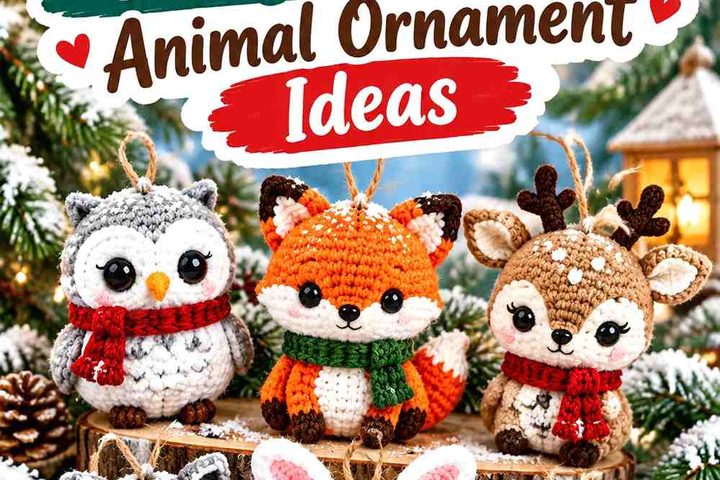
Mini Christmas amigurumi are useful handmade gifts because the color scheme can do much of the seasonal work. A snowman can stay mostly white while a teal scarf gives it personality, a reindeer can use warm camel and cranberry accents, and a tiny Christmas tree can rely on pine green with only small amounts of gold and red.

Small projects also make color hierarchy especially important. When a figure has only a little surface area, several equally strong shades can make its face, clothing, and accessories difficult to distinguish. Give one color the largest role, let a second support it, and save the brightest or darkest yarn for tiny details that need definition.
The tutorials below support the amigurumi character or Christmas object used for each gift idea. The proposed palettes are independent color adaptations, so the creators are not being credited with using these exact combinations.
Quick List
- Classic Red, White, and Black Crochet Mini Santa Amigurumi Gift
- Frost White, Teal, and Orange Crochet Mini Snowman Amigurumi Gift
- Camel, Cream, and Cranberry Crochet Mini Reindeer Amigurumi Gift
- Emerald, Cherry Red, and Cream Crochet Mini Elf Amigurumi Gift
- Gingerbread Brown, White, and Berry Red Crochet Mini Gingerbread Man Gift
- Pine Green, Gold, and Cranberry Crochet Mini Christmas Tree Amigurumi Gift
- Chocolate, Ivory, and Holly Green Crochet Mini Christmas Pudding Amigurumi Gift
- Black, White, and Cranberry Crochet Mini Penguin Amigurumi Gift
- Ivory, Ice Blue, and Cranberry Crochet Mini Polar Bear Amigurumi Gift
- Oatmeal, Forest Green, and Cranberry Crochet Mini Gnome Amigurumi Gift
- Cobalt, Gold, and White Crochet Mini Gift Box Amigurumi Gift
- Gold, Ivory, and Burgundy Crochet Mini Christmas Star Amigurumi Gift
- Peppermint Red, White, and Sage Crochet Mini Candy Cane Amigurumi Gift
- Dusty Rose, Sage, and Cream Crochet Mini Christmas Bauble Amigurumi Gift
- Cocoa Brown, Forest Green, and Cream Crochet Mini Christmas Bear Gift
- Lime Green, Red, and White Crochet Mini Grinch Amigurumi Gift
- Gold, Cranberry, and Forest Green Crochet Mini Christmas Bell Amigurumi Gift
- Ivory, Gold, and Blush Crochet Mini Christmas Angel Amigurumi Gift
- Soft Gray, Red, and Evergreen Crochet Mini Christmas Mouse Gift
Give Each Mini Amigurumi One Dominant Christmas Color
Tiny amigurumi usually look clearer when one color occupies most of the figure or its most recognizable feature. Santa benefits from a red-led outfit, a tree needs enough green to remain instantly recognizable, and a gingerbread figure usually needs brown to occupy far more area than its icing colors.
Accent colors can then have specific jobs. Gold can become a star, buckle, bell, or ribbon; white can define snow, icing, fur trim, or wings; and green or red can appear in a scarf, hat, bow, or tiny holly detail.
Check Light and Dark Contrast on Tiny Faces and Accessories
Miniature features have little room to communicate shape. A burgundy scarf on a dark brown bear may blend into the body, while cream or forest green may show more clearly. Two different hues can still look almost identical when their values are close.
Before finishing the face or attaching an accessory, place the colors together and look from a normal gift-opening distance. If a hat brim, scarf, wing, or facial feature disappears, changing its surrounding color can improve clarity without expanding the whole palette.
Think About the Recipient Before Adding Tiny Amigurumi Details
Mini amigurumi can become ornaments, stocking stuffers, gift toppers, desk companions, or small keepsakes. That intended use should influence finishing. A hanging ornament may benefit from a simple loop, while a desk figure needs its colors distributed so the important front details remain visible.
For gifts intended for very young children, consider whether small detachable embellishments or other components are appropriate. Embroidered features and carefully secured crochet details may be preferable depending on the intended recipient and use.
1. Classic Red, White, and Black Crochet Mini Santa Amigurumi Gift

A classic Santa palette works because every color has an immediately useful position. Red can cover the hat and suit, white can define the beard and trim, and black can stay limited to boots, belt details, or other small defining areas. Keeping red dominant prevents the tiny figure from turning into a patchwork of holiday colors.
For a gift set, repeat the same red across several small Christmas figures and change only secondary colors. That creates visual connection without making every amigurumi identical.
Classic Red Should Carry Most of the Crochet Mini Santa Outfit
Give red the broadest uninterrupted sections of the body and hat. White trim will look clearer when it breaks up a substantial red field rather than appearing between many short color changes.
If the Santa will hang against a red Christmas tree decoration or gift bag, increase the visible white around the outer silhouette.
White Should Separate Classic Red From Black Santa Details
White beard and trim can keep black belt or boot details from visually merging into the red suit.
Avoid letting black occupy too much of a very small Santa. Its strongest job is definition rather than overall color coverage.
Creator Credit: Francesca Uncinettando Crochet&Love
2. Frost White, Teal, and Orange Crochet Mini Snowman Amigurumi Gift

Frost white should control almost the entire snowman body, allowing teal to become the personality color through a scarf or hat. Orange then has one highly specific role on the carrot nose, so it does not need to appear elsewhere.
This palette creates a cooler alternative to red-and-green Christmas colors while remaining clearly seasonal.
Frost White Needs Teal Around the Crochet Snowman Face
A teal hat or scarf gives the white body an edge and keeps the head from visually disappearing against pale wrapping paper or a white Christmas display.
If the background will be dark, teal can stay smaller because the white silhouette already has strong contrast.
Orange Should Stay Small Against Frost White and Teal
Keep orange concentrated on the nose. Repeating it in the scarf, buttons, and hat can weaken the clean teal-and-white direction.
The tiny warm accent is more noticeable precisely because the rest of the figure remains cool.
Creator Credit: Lizzy Knit&Crochet
3. Camel, Cream, and Cranberry Crochet Mini Reindeer Amigurumi Gift

Camel provides a warm main body for a miniature reindeer, while cream can lighten the muzzle or inner-ear details. Cranberry gives the Christmas connection through a nose, scarf, collar, or another small accessory.
Keep the cranberry amount controlled so the reindeer remains brown-led rather than reading as another red Christmas character.
Camel Should Remain the Main Crochet Reindeer Color
Use camel across the head, body, and major limbs so the animal silhouette remains connected.
If darker antlers are part of the design, choose a deeper brown instead of using cranberry there; the red is more effective when reserved for a festive focal point.
Cranberry Needs Cream Separation From Camel
A cranberry nose or scarf can become clearer when cream appears nearby on the muzzle or neck.
If camel and cranberry are both dark, this light neutral prevents the front of the small reindeer from becoming one dense color block.
Creator Credit: Odinka Wisanindhi
4. Emerald, Cherry Red, and Cream Crochet Mini Elf Amigurumi Gift

Emerald gives a miniature elf a strong clothing color, while cherry red can appear in the hat, shoes, or small striped details. Cream is valuable for separating the two saturated Christmas shades.
Give either green or red the dominant role instead of dividing the outfit evenly. An emerald-led elf will look more organized when cherry red appears as a repeating accent.
Emerald Should Lead the Crochet Mini Elf Outfit
Use emerald on the largest clothing section and repeat it once elsewhere, such as the hat or sleeves.
This provides a stable background for smaller red accessories and keeps the figure recognizable when viewed at ornament scale.
Cream Should Keep Cherry Red and Emerald Elf Details Clear
Place cream between strong red and green sections when the colors meet around a collar, cuff, or hat edge.
The lighter break prevents classic Christmas colors from competing across every small part of the doll.
Creator Credit: Little Crochet Farm
5. Gingerbread Brown, White, and Berry Red Crochet Mini Gingerbread Man Gift
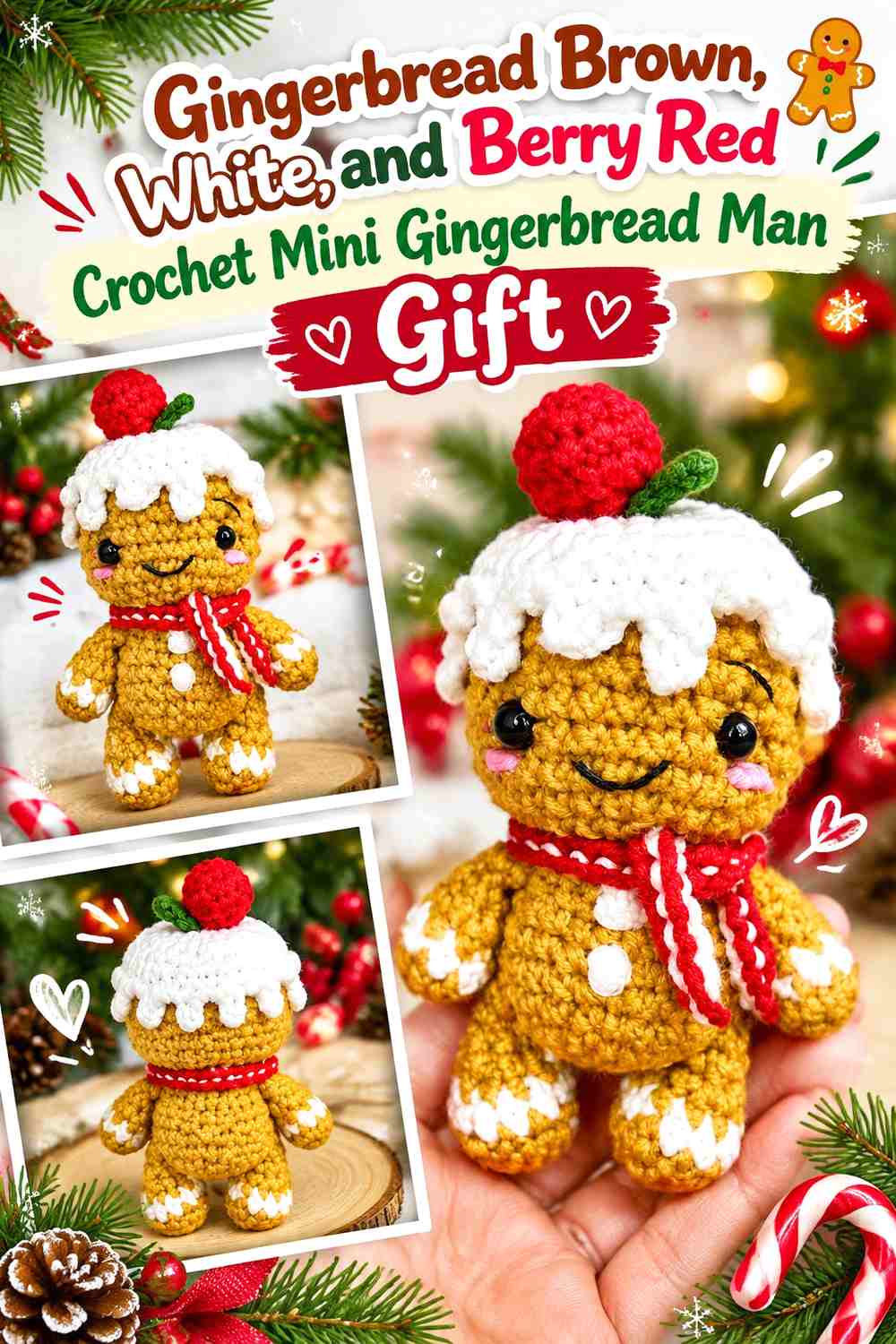
Gingerbread brown naturally needs to cover most of this figure. White can imitate decorative icing through small surface details, while berry red works in a bow, scarf, buttons, or another controlled accent.
This is one miniature where leaving a lot of brown visible is essential. Too many decorations can hide the cookie-like silhouette.
Gingerbread Brown Should Stay Visible Around the White Crochet Icing
Leave broad brown areas between white details so the icing appears decorative rather than becoming the figure’s main color.
This is especially important around the face, where too many pale additions can make small features difficult to read.
Berry Red Should Accent White and Gingerbread Brown
Use berry red in one or two repeated positions, such as a scarf and a small button.
Avoid distributing red through every white icing detail. The limited accent gives the tiny gift a clearer visual hierarchy.
Creator Credit: Gul’s Cozy Crochet
6. Pine Green, Gold, and Cranberry Crochet Mini Christmas Tree Amigurumi Gift

Pine green should cover most of the tree so the triangular evergreen silhouette remains immediate. Gold can define the topper, while cranberry works well as tiny ornaments or another repeated decoration.
Small trees do not need many ornament colors. Two accents are enough to create variety without hiding the green foundation.
Pine Green Needs to Dominate the Crochet Mini Christmas Tree
Keep broad green sections visible between decorative details. If every surface is covered by red, gold, white, and blue accents, the tree can lose its simple silhouette.
A darker pine green also helps pale or metallic-looking accents stand out.
Gold Should Stay Higher Than Cranberry on the Pine Green Tree
Use gold on the topper or one visually important upper detail and cranberry across smaller decorations below.
This creates a natural hierarchy from star to ornaments without requiring several additional colors.
Creator Credit: Po Handmade
7. Chocolate, Ivory, and Holly Green Crochet Mini Christmas Pudding Amigurumi Gift

Chocolate provides the unmistakable pudding base, ivory can form the light topping, and holly green adds a small botanical accent. A tiny cranberry-red berry detail can be added if desired, but the three main roles should remain easy to identify.
The broad dark base makes this mini especially suitable for pale gift wrap or an ivory stocking.
Chocolate Should Stay Visible Below the Ivory Crochet Pudding Topping
Avoid letting the ivory section travel so far down that the miniature reads as mostly pale.
A substantial chocolate lower half keeps the dessert shape clear and gives the lighter topping enough contrast.
Holly Green Should Stay Small Against Chocolate and Ivory
Use green only where a leaf or holiday garnish needs to register.
Too much green around the top can compete with the ivory layer, so keep it as a compact finishing color.
Creator Credit: A Menagerie of Stitches
8. Black, White, and Cranberry Crochet Mini Penguin Amigurumi Gift
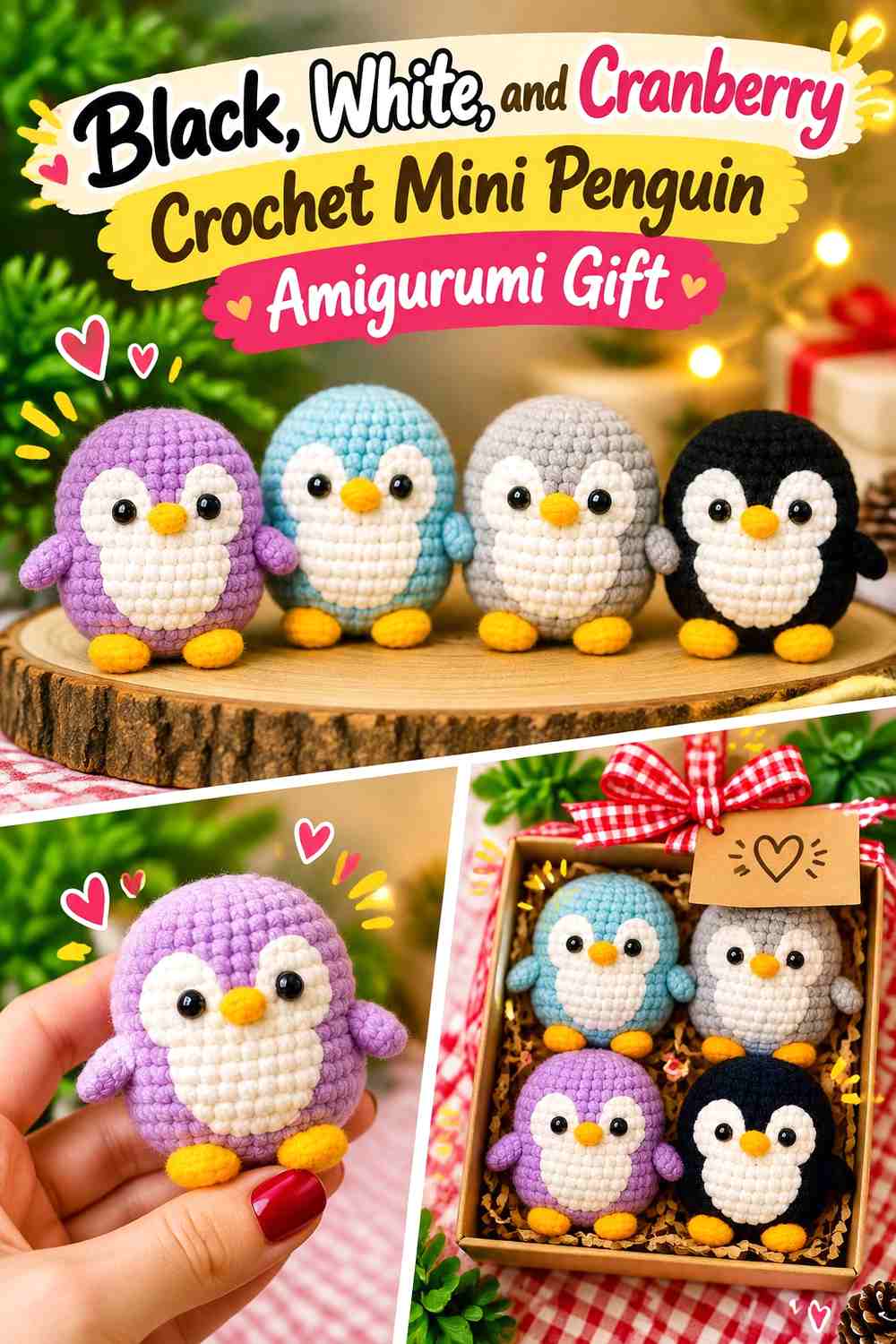
Black and white naturally define a penguin, while cranberry can convert the animal into a Christmas gift through a hat, scarf, or other winter accessory.
Keep the cranberry separate from the face. The high-contrast black-and-white head is already visually busy enough at miniature scale.
Black Should Frame the White Crochet Penguin Belly
Use black around enough of the outer body for the white front panel to remain recognizable.
If the penguin is displayed against a very dark background, cranberry accessories can also help reveal its outline.
Cranberry Should Accent the Black and White Penguin
A scarf or hat creates a clear holiday signal without changing the underlying penguin palette.
Avoid making both accessories different strong colors unless you intentionally want a more playful multicolor gift.
Creator Credit: Crochet with Eli
9. Ivory, Ice Blue, and Cranberry Crochet Mini Polar Bear Amigurumi Gift
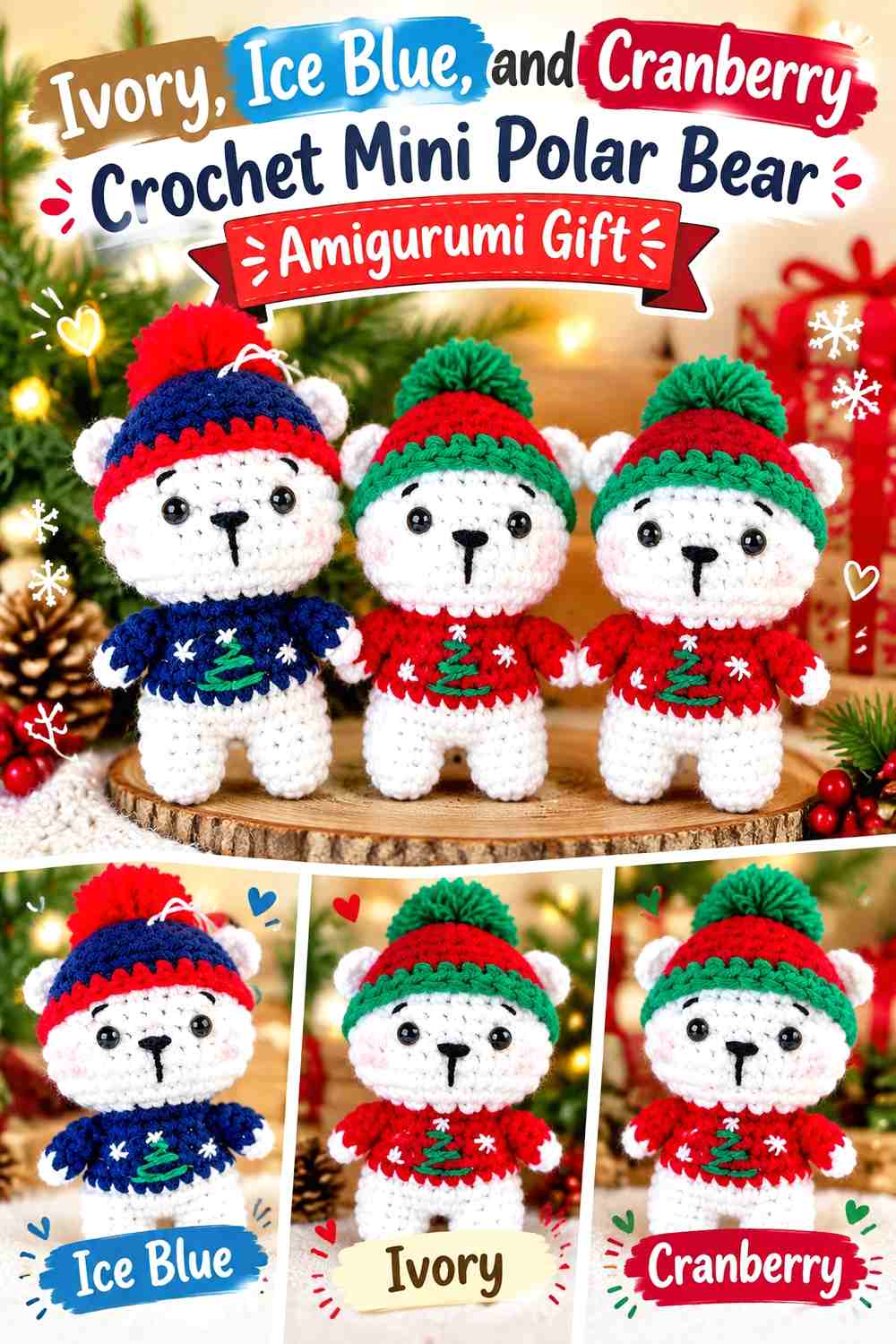
Ivory keeps the bear softer than stark white, while ice blue works naturally for a winter scarf or hat. Cranberry can then be introduced in a much smaller amount for a distinctly Christmas accent.
Because the body is pale, darker facial details need careful placement so they remain balanced rather than dominating the whole face.
Ivory Should Cover Most of the Crochet Mini Polar Bear
Keep the animal itself predominantly ivory and let the accessories supply color.
Large blue body patches can weaken the polar-bear identity and turn the palette into general winter color blocking.
Ice Blue Should Carry More Area Than Cranberry on the Ivory Bear
Use ice blue for the main accessory and cranberry as a tiny secondary detail.
The restrained red accent keeps the gift festive without overriding the quiet ivory-and-blue winter direction.
Creator Credit: Laly Crochet
10. Oatmeal, Forest Green, and Cranberry Crochet Mini Gnome Amigurumi Gift

An oatmeal gnome body or beard gives forest green and cranberry enough visual space to work as hat and clothing colors. Choose one of those saturated shades to lead and keep the other smaller.
This palette suits a more muted Christmas gift than bright red, white, and emerald.
Forest Green Can Lead the Oatmeal Crochet Gnome Hat
A green hat creates a broad color area above the neutral beard or body.
If the hat is long or pointed, avoid covering it in several equal stripes; its silhouette is clearer when green remains continuous.
Cranberry Should Stay Below the Forest Green Gnome Hat
Use cranberry on the body, shoes, or another small lower detail.
Separating the two strong shades with oatmeal keeps the miniature gnome from becoming one tightly packed red-and-green block.
Creator Credit: John´s Crochet
11. Cobalt, Gold, and White Crochet Mini Gift Box Amigurumi Gift
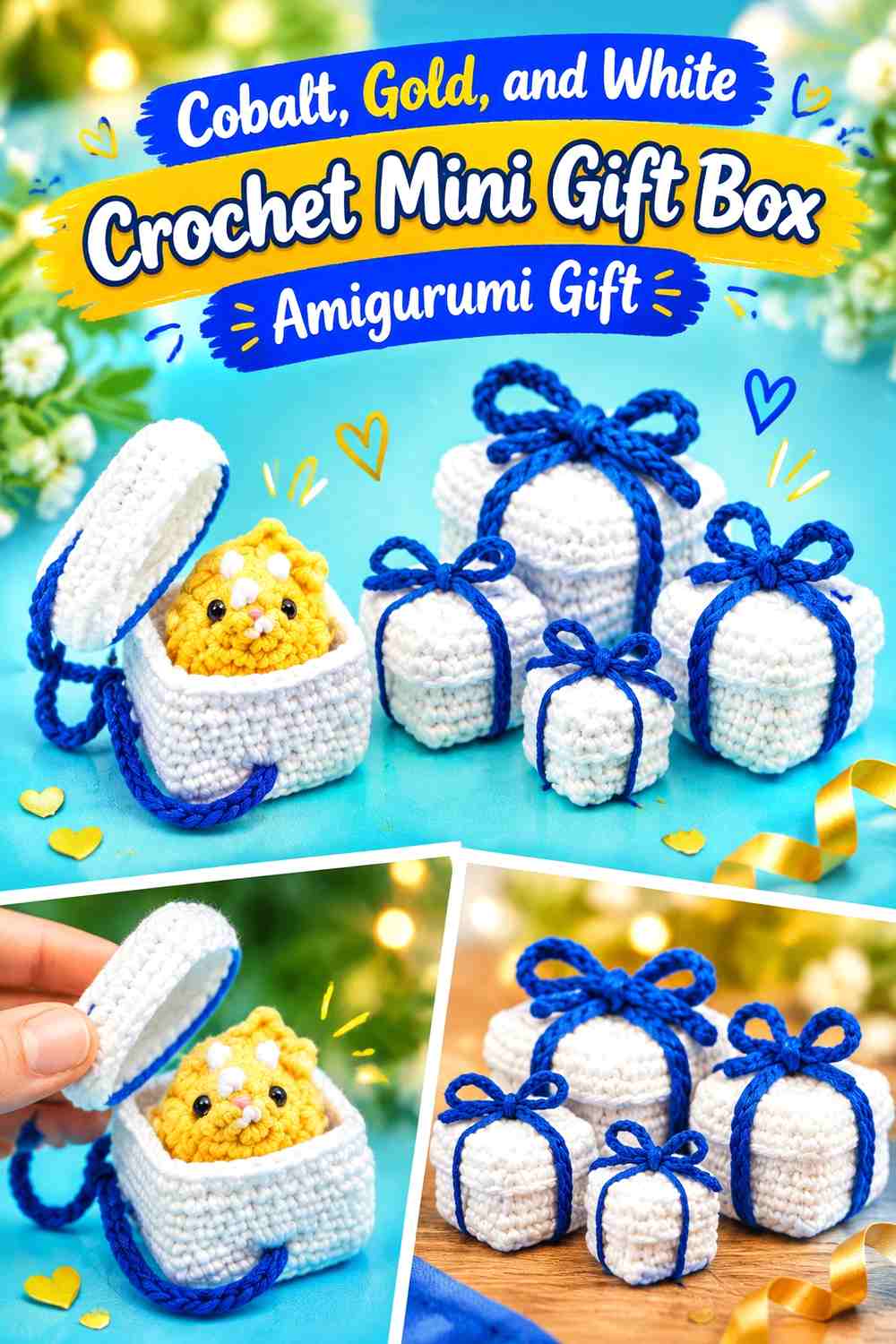
A crochet present is especially useful as a gift topper or small ornament because its palette does not need to imitate traditional wrapping paper. Cobalt can become the box itself, gold can define the ribbon, and white can provide a small contrasting detail.
Keep the ribbon visually separate from the box so the present shape remains obvious.
Cobalt Should Form the Main Crochet Gift Box
Use cobalt across the broad faces and avoid changing colors frequently on the box surface.
The uninterrupted blue lets the gold ribbon become the structural detail rather than another random stripe.
Gold Needs White or Cobalt Space Around the Crochet Ribbon
Give the gold ribbon enough surrounding blue to show its path clearly.
If a white tag or bow detail is added, keep it smaller than the gold so the ribbon remains the main accent.
Creator Credit: Club Crochet
12. Gold, Ivory, and Burgundy Crochet Mini Christmas Star Amigurumi Gift
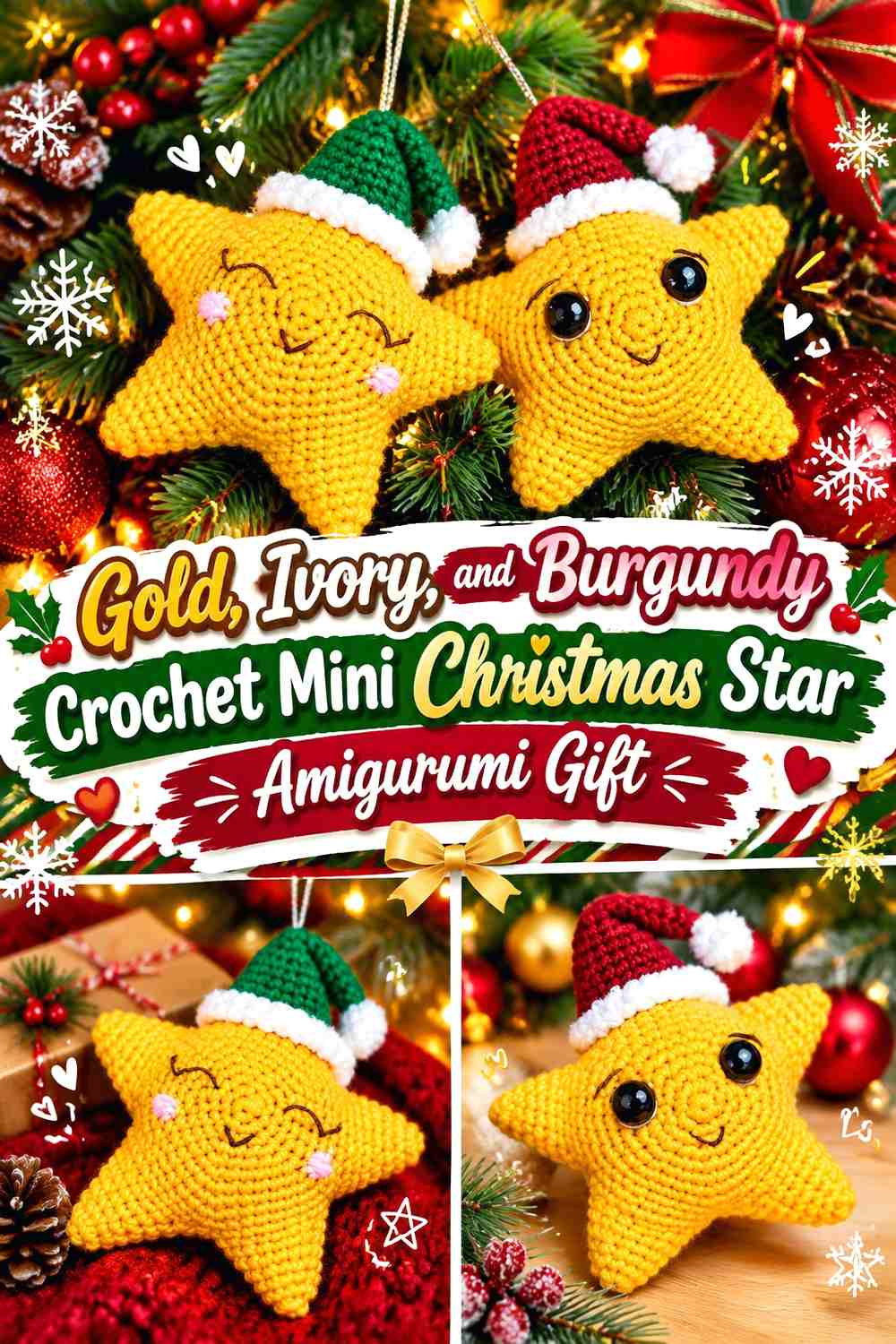
Gold naturally suits the main star surface, while ivory can brighten selected edges or a face area. Burgundy introduces a darker Christmas accent without using standard bright red.
For a stuffed star, the point shapes matter as much as the palette, so avoid breaking every point into unrelated colors.
Gold Should Run Across Most of the Crochet Christmas Star
Keep gold continuous from the center into the points if you want the silhouette to remain strong.
Small burgundy details can then be added without making individual points look disconnected.
Burgundy Should Stay Smaller Than Ivory and Gold on the Star
Use burgundy for one controlled accent, such as a hanging loop, tiny bow, or surface detail.
Ivory can provide the lighter contrast where finer features need to remain visible.
Creator Credit: Amigurumi rainbow
13. Peppermint Red, White, and Sage Crochet Mini Candy Cane Amigurumi Gift

Peppermint red and white need to remain the obvious main pair, while sage can appear in a small bow, holly-style detail, or hanging loop.
The candy-cane shape is already visually active, so the third color should stay limited.
Peppermint Red and White Need Consistent Crochet Striping
Keep the two main colors repeating clearly enough that the twisted candy identity remains visible.
If one color dominates too heavily, the cane may read as a solid curved object rather than a peppermint-inspired Christmas piece.
Sage Should Stay Outside the Peppermint Red and White Stripes
Place sage on a bow or decorative leaf rather than inserting it repeatedly between the main stripe colors.
That keeps the classic red-and-white sequence easy to recognize.
Creator Credit: atolye_masal
14. Dusty Rose, Sage, and Cream Crochet Mini Christmas Bauble Amigurumi Gift
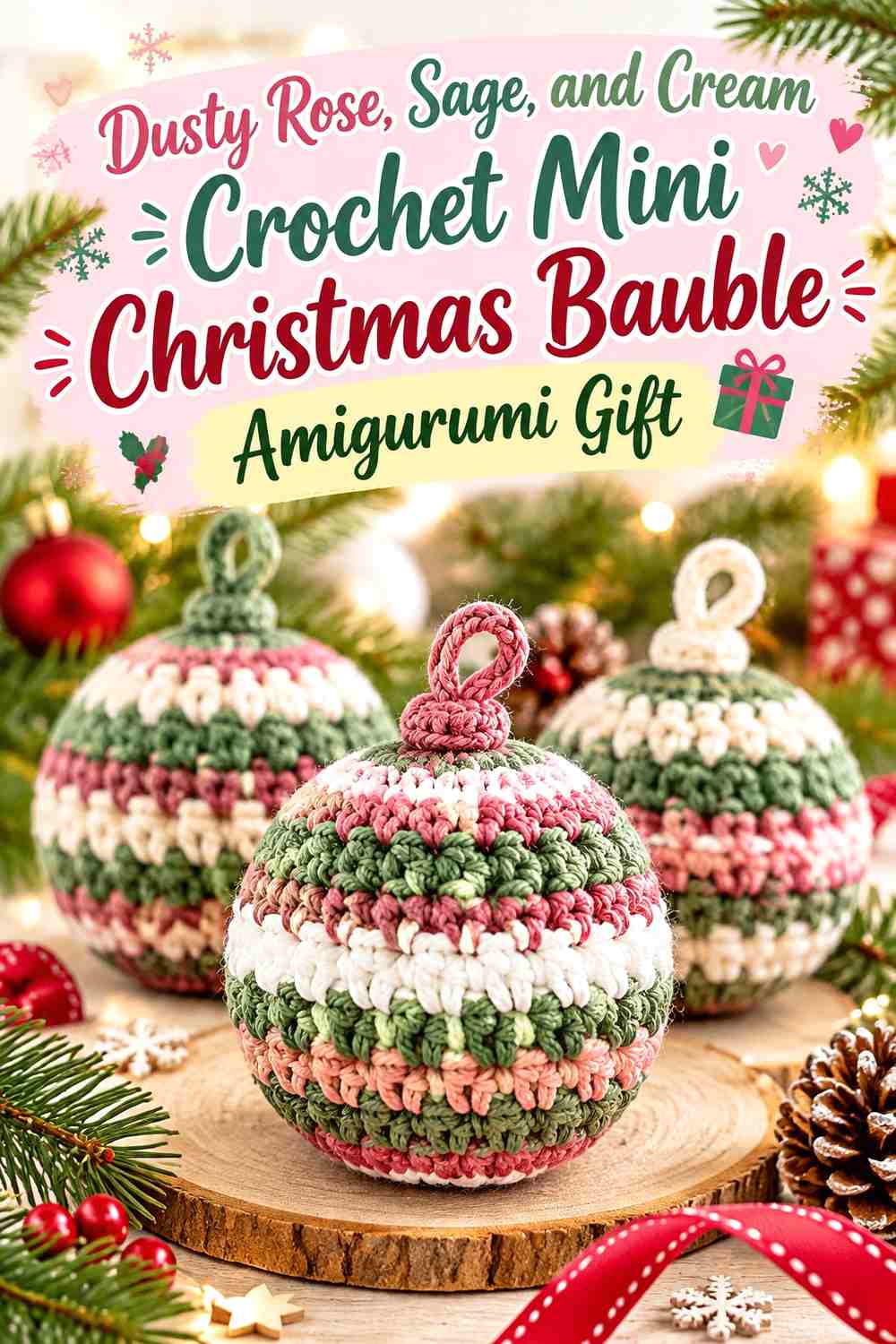
Dusty rose creates a softer ornament than classic bright red. Sage can form a contrasting band or selected texture, while cream keeps the two muted colors from blending.
Because the bauble is round, a clear repeating color plan usually works better than many isolated patches.
Dusty Rose Should Occupy the Largest Crochet Bauble Sections
Use rose through the broadest bands or majority of the sphere.
If sage occupies equal space, the ornament can lose its main color direction and become visually split.
Cream Should Separate Dusty Rose From Sage Bauble Details
Place cream between neighboring rose and green sections when their values are close.
The neutral break also helps textured stitches remain visible on a small stuffed ornament.
Creator Credit: Crochetpedia
15. Cocoa Brown, Forest Green, and Cream Crochet Mini Christmas Bear Gift
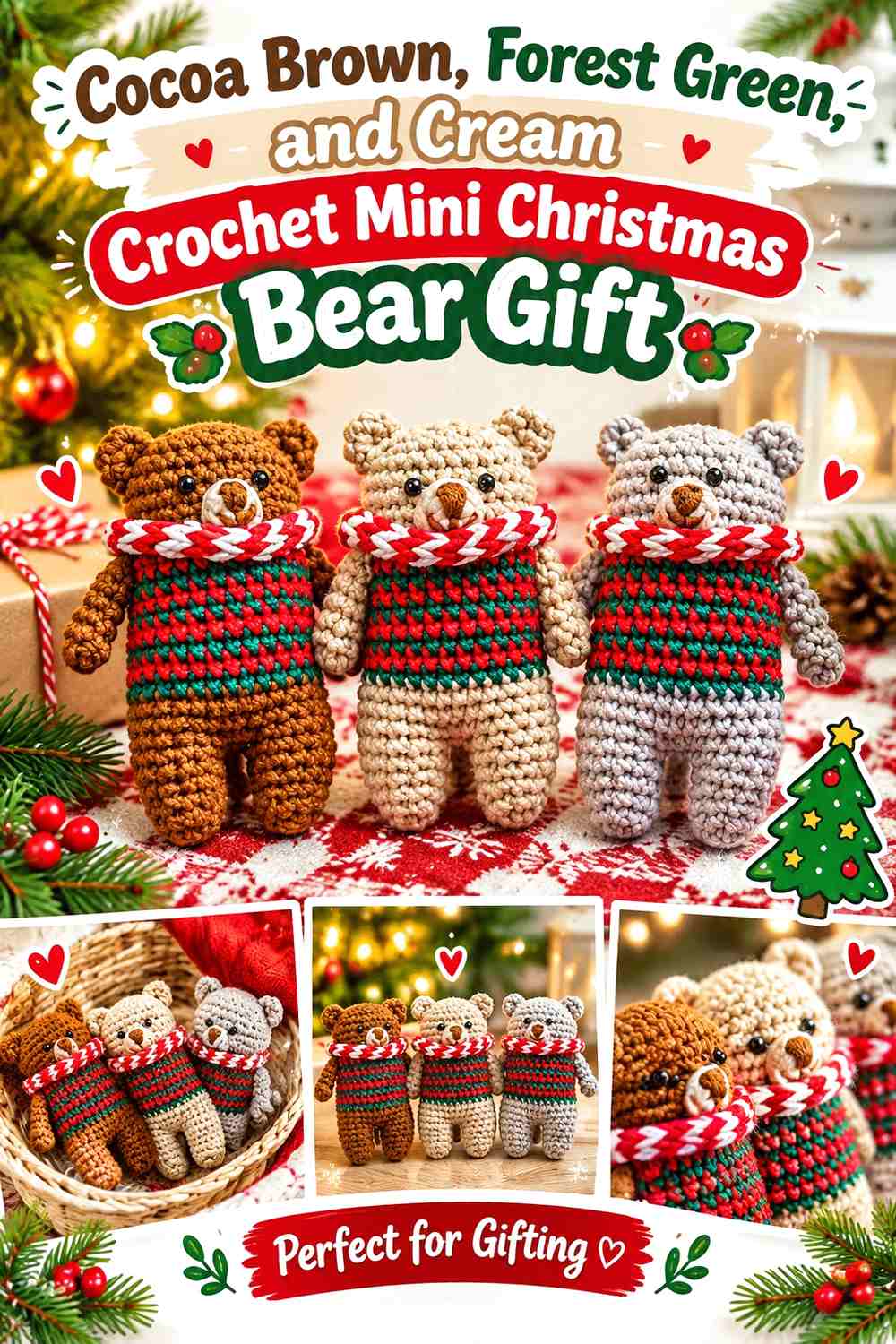
Cocoa gives this bear a warm body color, forest green can carry the scarf or sweater detail, and cream can lighten the muzzle, ears, or winter accessories.
The bear does not need red to look Christmas-ready when the green is used intentionally and the supporting neutrals stay warm.
Cocoa Brown Should Remain the Main Crochet Bear Color
Keep most of the head and body cocoa so the animal silhouette remains cohesive.
If a large sweater covers much of the torso, repeat cocoa on exposed limbs and head details to maintain balance.
Forest Green Needs Cream Separation From Cocoa Brown
A cream cuff, scarf edge, or muzzle can prevent forest green from becoming too dark against the brown body.
This is particularly useful when both the green and cocoa are deep shades.
Creator Credit: tinycrochet
16. Lime Green, Red, and White Crochet Mini Grinch Amigurumi Gift
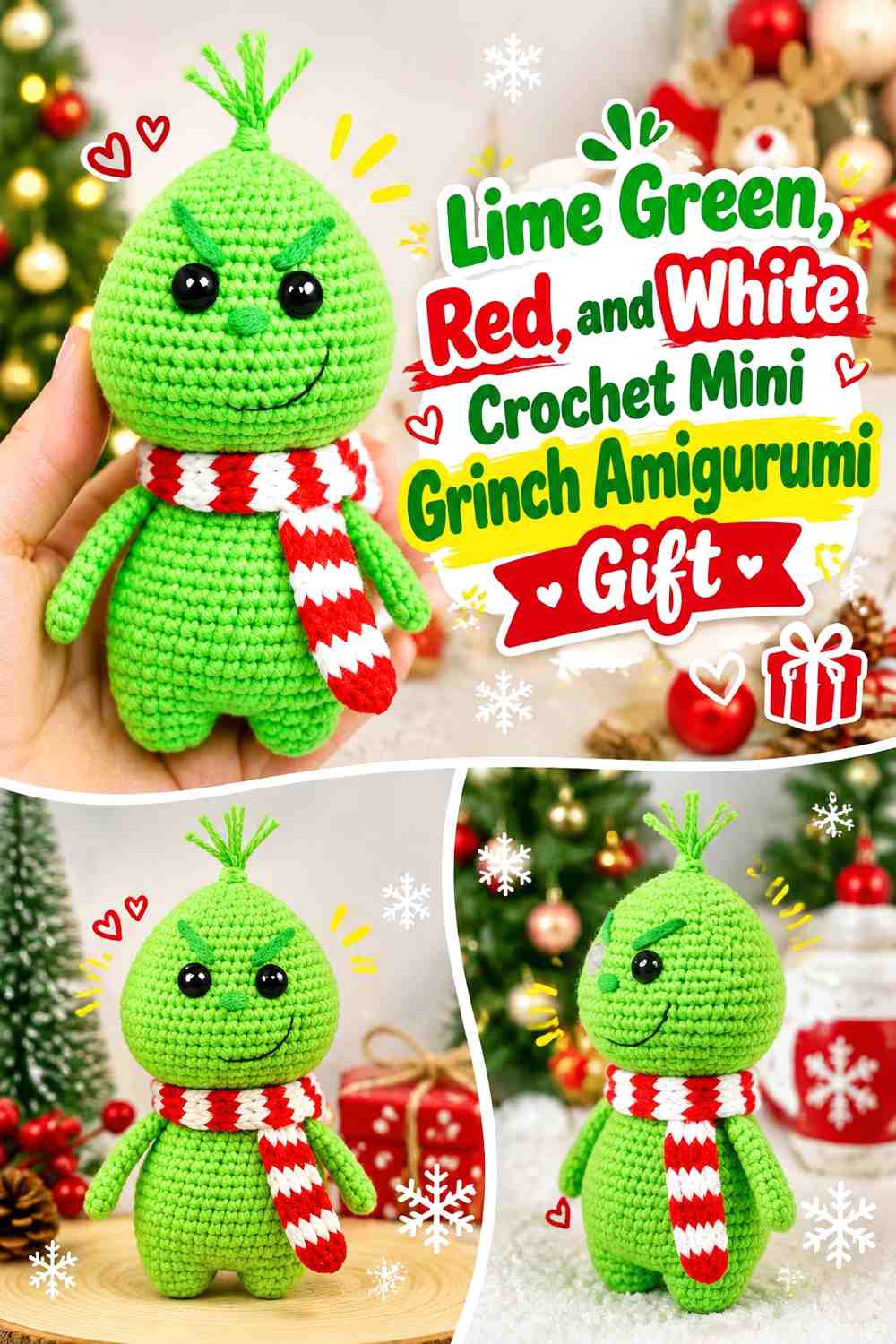
Lime green needs to dominate this character because the body color is its most recognizable feature. Red and white can then create the Christmas clothing without obscuring the green face and hands.
Keep the white trim narrow enough that red still reads clearly as the main clothing color.
Lime Green Must Stay Visible Around the Crochet Grinch Face
Do not crowd the face with oversized red or white hat details. Enough green needs to remain visible around the facial features for the character palette to read instantly.
If the hat hangs low, keep its brim relatively clean rather than adding another accent color.
Red Should Carry More Area Than White on the Lime Green Grinch
Use red for the main hat or clothing surface and white only for trim.
This gives the costume a simple hierarchy and prevents the small figure from becoming overly striped.
Creator Credit: Bonito día Crochet
17. Gold, Cranberry, and Forest Green Crochet Mini Christmas Bell Amigurumi Gift

Gold can make the bell itself the visual focal point, while cranberry provides a bow or ribbon and forest green can support a holly-style leaf detail.
The shape is compact, so keep the greenery particularly restrained.
Gold Should Cover Most of the Crochet Christmas Bell
Give gold the entire main bell body if possible. Breaking the bell into several strong color bands can make its shape less immediate.
Cranberry is more useful above the bell where a bow can act as a separate finishing element.
Cranberry and Forest Green Should Stay Above the Gold Bell
Concentrate red and green near the hanging point or decorative top.
That placement keeps the body visually clean while still creating a clearly Christmas-oriented palette.
Creator Credit: toygurumi
18. Ivory, Gold, and Blush Crochet Mini Christmas Angel Amigurumi Gift

Ivory makes a natural main color for the dress and wings, while gold can define the halo or small edging. Blush can remain a very limited accent on details that need warmth.
This is one palette where restraint is useful. The silhouette of the wings and dress can provide more visual interest than several additional colors.
Ivory Should Unite the Crochet Angel Dress and Wings
Repeating ivory across the largest sections keeps the figure light and cohesive.
If the wings need stronger definition, outline selected areas in gold rather than changing their entire color.
Gold Should Stay Smaller Than Ivory on the Christmas Angel
Reserve gold for the halo, trim, or another compact focal point.
A large gold dress can overpower the wing detail, while a controlled metallic-looking accent keeps the miniature gift lighter.
Creator Credit: Cositas a Crochet Monterrey
19. Soft Gray, Red, and Evergreen Crochet Mini Christmas Mouse Gift
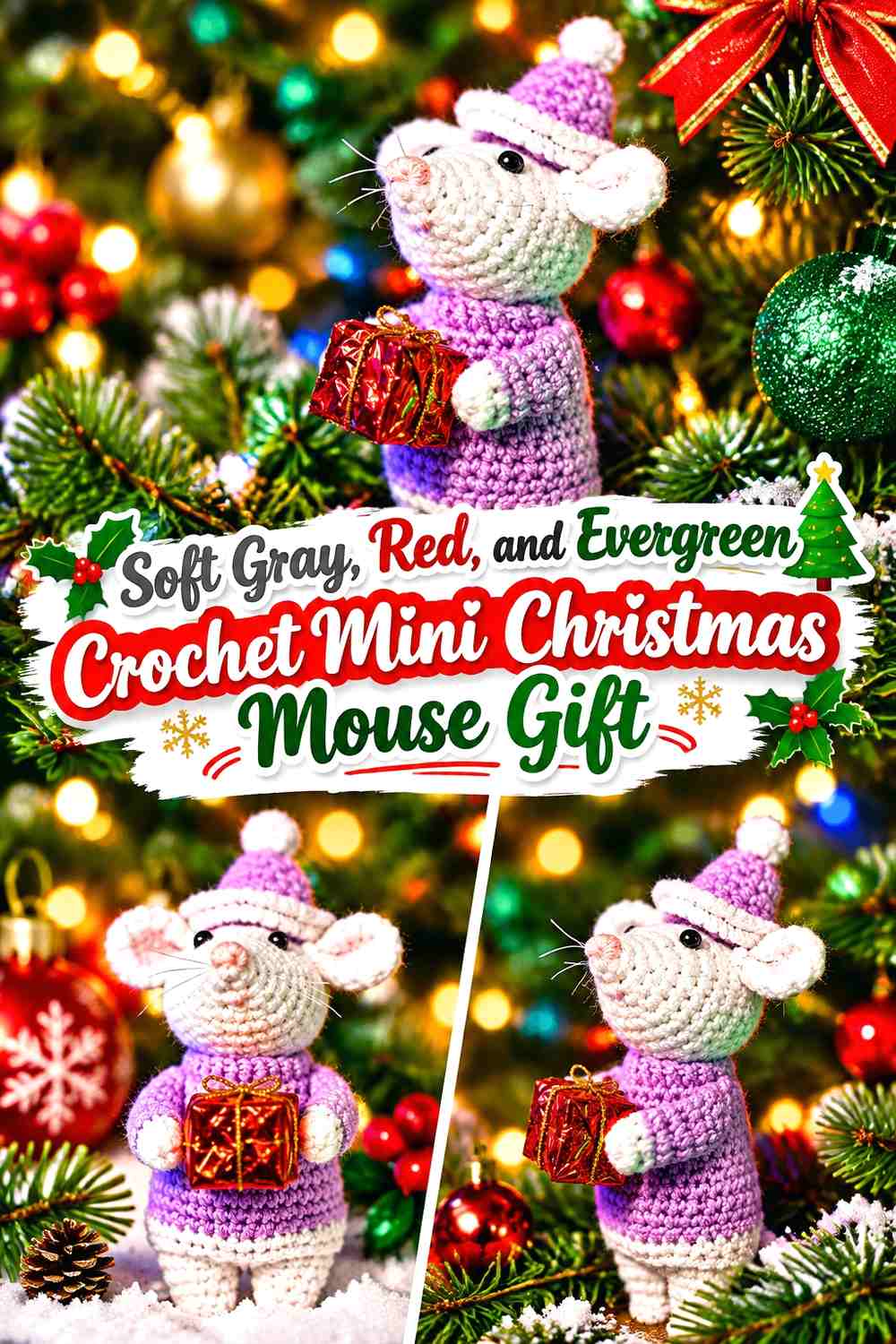
Soft gray gives the mouse a neutral body that leaves plenty of room for Christmas accessories. Red can lead through a Santa-style hat or scarf, while evergreen supplies a small secondary accent.
Pink can be used sparingly for ears or nose if needed, but it should remain subordinate to the main gray-red-green palette.
Soft Gray Should Remain Visible Around the Red Crochet Mouse Accessories
Keep enough gray visible across the head and body that the mouse does not look like a red ornament with small animal features.
The neutral body also makes the scarf and hat easier to distinguish at miniature scale.
Evergreen Should Stay Smaller Than Red on the Soft Gray Mouse
Use evergreen for one accessory detail rather than giving the mouse equally large red and green clothing sections.
That hierarchy keeps red as the Christmas focal shade and prevents the small figure from becoming visually crowded.
Creator Credit: DIY-100ideas
Which Mini Christmas Amigurumi Color Scheme Should You Choose?
For the most traditional Christmas look, the red-and-white Santa, red-and-green elf, gingerbread man, candy cane, and red-accessorized reindeer provide immediately recognizable seasonal color.
If you want cooler gifts, try the teal snowman, ice-blue polar bear, cobalt present, or dusty-rose-and-sage bauble. These still feel festive because the Christmas object or character carries the theme even when the palette moves away from bright red and emerald.
Earthier gifts can use cocoa, oatmeal, camel, forest green, chocolate, or cream. The bear, gnome, reindeer, and Christmas pudding are especially suited to these quieter palettes.
For a coordinated gift set, choose one connecting shade and repeat it across otherwise different projects. Cranberry could appear on the reindeer, penguin, polar bear, gnome, and bell while each figure retains its own dominant color.
Conclusion
Mini Christmas amigurumi make it possible to give several handmade gifts without making every project look the same. Santa and the elf can use familiar red-and-green color, while a teal snowman, pink bauble, cobalt present, ivory angel, or cocoa bear gives the collection much more variety.
Start with the color that defines the character or object: green for the tree, brown for gingerbread, white for the snowman, gold for the bell, or red for Santa. Then choose one supporting shade and keep the smallest accent for details that need attention.
When making several gifts, lay the finished figures together before adding final accessories. If one item looks much busier than the others, reducing an accent color can help the whole set feel intentional. Follow each linked creator’s tutorial for the original construction and use these palettes as independent color adaptations.
Frequently Asked Questions
What colors work well for crochet Christmas mini amigurumi gifts?
Red, green, white, cream, gold, brown, and black create familiar Christmas combinations, but they are not the only options. Dusty rose, teal, ice blue, burgundy, sage, and oatmeal can still look festive when the figure itself has a recognizable Christmas shape or accessory.
How many colors should I use in one mini Christmas amigurumi?
Three main colors are often enough for a very small figure. Give one the dominant role, use the second for clothing or supporting areas, and reserve the third for small accents. Additional facial or neutral details can be added when the design requires them.
How can I keep tiny amigurumi details from disappearing?
Check light/dark value as well as hue. A forest-green scarf can disappear on a dark brown bear even though green and brown are different colors. Cream edging or a lighter green can provide clearer separation.
Can I make several Christmas amigurumi gifts in one coordinated palette?
Yes. Repeat one connecting color while changing each project’s dominant shade. For example, cranberry can appear in a reindeer scarf, penguin hat, gnome body, and bell bow without making all four gifts look identical.
Which mini amigurumi ideas work well as stocking stuffers?
Compact character figures, gingerbread people, small trees, baubles, stars, bells, candy canes, and tiny animals can all suit stocking-stuffer presentations when their finished scale works for the recipient. Check the original tutorial before assuming a specific finished size.
Can I turn a mini Christmas amigurumi into an ornament?
Many small stuffed projects can be adapted with an appropriately secured hanging loop when the construction allows it. Place the loop so the figure hangs in the intended orientation rather than tilting forward or sideways.
What should I consider when giving mini amigurumi to children?
Consider the recipient’s age and how the item will be used. Tiny detachable decorations and some types of eyes or embellishments may not be suitable for very young children. Choose finishing methods and securely attached details appropriate to the intended recipient.