A woodland deer amigurumi becomes much more distinctive once its winter outfit has a clear color plan. A soft-brown deer can wear an oatmeal sweater and moss scarf for an earthy forest look, while charcoal with cranberry creates a deeper winter palette. Dusty blue, sage, burgundy, cream, rust, and plum can all work without turning every deer into a bright Christmas reindeer.

The outfit should remain visually separate from the deer body. Camel clothing on a tan deer may need cream trim, while a dark brown deer can carry pale oatmeal, dusty blue, or ivory without extra outlining. Antlers and ears also count as part of the palette, so avoid surrounding them with hats or hoods in nearly identical brown unless you intentionally want a very tonal result.
The tutorials below include full deer or reindeer amigurumi constructions as well as doll-size sweaters, coats, hats, boots, capes, and other garments that can inform the winter-outfit adaptations. The color schemes and dressed-deer combinations are independent editorial ideas; follow each creator’s tutorial for the construction it actually demonstrates.
Quick List
- Soft Brown, Oatmeal, and Moss Crochet Woodland Deer Amigurumi With Scarf
- Cocoa, Cranberry, and Cream Crochet Reindeer Amigurumi With Winter Scarf
- Camel, Forest Green, and Ivory Crochet Woodland Deer Amigurumi With Sweater
- Warm Brown, Dusty Blue, and Cream Crochet Woodland Deer Amigurumi With Beanie
- Chestnut, Burgundy, and Oatmeal Crochet Woodland Deer Amigurumi With Winter Coat
- Taupe, Sage, and Ivory Crochet Woodland Deer Amigurumi With Cape
- Fawn Brown, Rust, and Cream Crochet Woodland Deer Amigurumi With Cowl
- Chocolate, Evergreen, and Cranberry Crochet Woodland Reindeer Amigurumi With Bell Collar
- Soft Brown, Mustard, and Olive Crochet Woodland Deer Amigurumi With Sweater
- Caramel, Teal, and Cream Crochet Woodland Deer Amigurumi With Ribbed Sweater
- Cocoa, Dusty Rose, and Oatmeal Crochet Woodland Deer Amigurumi With Cardigan
- Warm Brown, Plum, and Cream Crochet Woodland Deer Amigurumi With Hooded Cape
- Fawn Brown, Forest Green, and Oatmeal Crochet Woodland Deer Amigurumi With Winter Boots
- Chestnut, Faded Blue, and Cream Crochet Woodland Deer Amigurumi With Poncho
- Soft Brown, Burgundy, and Moss Crochet Woodland Deer Amigurumi With Winter Vest
- Taupe, Lavender, and Ivory Crochet Woodland Deer Amigurumi With Shawl
- Chocolate, Rust, and Oatmeal Crochet Woodland Deer Amigurumi With Winter Jacket
- Caramel, Sage, and Cranberry Crochet Woodland Deer Amigurumi With Winter Sweater
- Fawn Brown, Navy, and Cream Crochet Woodland Deer Amigurumi With Winter Hat
Match Winter Outfit Contrast to the Deer Body
The deer body supplies the largest neutral in every project. If the amigurumi is medium brown, the outfit needs to be noticeably lighter, darker, cooler, or more saturated if you want the clothing silhouette to remain easy to see.
Cream, oatmeal, ivory, dusty blue, sage, and muted pink usually create visible separation from brown bodies without requiring harsh contrast. Forest green, burgundy, navy, and plum can also work, but darker clothing may need a pale collar, cuff, scarf edge, or button area when the deer itself is chocolate or cocoa brown.
Keep Hats and Hoods Clear of Crochet Deer Antlers
Antlers are a defining feature of woodland deer amigurumi, so winter headwear should work around them rather than visually burying them. A beanie can sit between or beneath the antlers, while a hood can frame the head with enough open space for the antler bases.
Color helps here too. Dark cocoa antlers against a navy hat may merge, while cream trim or a lighter crown can restore separation. Test the finished headwear on the deer before adding decorative pom-poms or earflaps that might crowd the ears and antlers.
Give Small Winter Accessories Clear Color Roles
Scarves, collars, boots, and hats occupy much less area than sweaters and coats, so they can carry stronger accent colors. Cranberry may feel overwhelming across an entire deer body but works well as a narrow scarf. Mustard can brighten a vest edge, and teal can make a small sweater stand apart from caramel fur.
Avoid placing every accent shade on every accessory. Repeating one color on a scarf and boot trim is often enough to connect an outfit without making the deer look overdecorated.
1. Soft Brown, Oatmeal, and Moss Crochet Woodland Deer Amigurumi With Scarf

Soft brown can cover the deer body, oatmeal can lighten the muzzle and scarf edge, and moss green can become the main winter scarf color. The palette stays woodland-focused because the strongest outfit color is a muted green rather than bright holiday red.
Keep the scarf narrow enough that soft brown remains visible around the neck and upper body. One moss accessory is enough to establish the winter styling without covering the small deer in clothing.
Moss Green Should Stand Apart From the Soft Brown Crochet Deer
Choose moss that is clearly greener or darker than the deer body. A brownish olive too close to soft brown may visually disappear, especially where the scarf overlaps the shoulders.
Oatmeal trim can provide a light break if you want to use a particularly muted moss.
Oatmeal Can Define the Moss Scarf Against Soft Brown
Place oatmeal along the scarf tips or one narrow edge instead of striping the entire accessory. The lighter accent helps the ends remain visible when they cross the brown torso.
Repeat oatmeal on the muzzle only if you want a stronger connection between face and clothing.
Creator Credit: Wonder Crochet
2. Cocoa, Cranberry, and Cream Crochet Reindeer Amigurumi With Winter Scarf
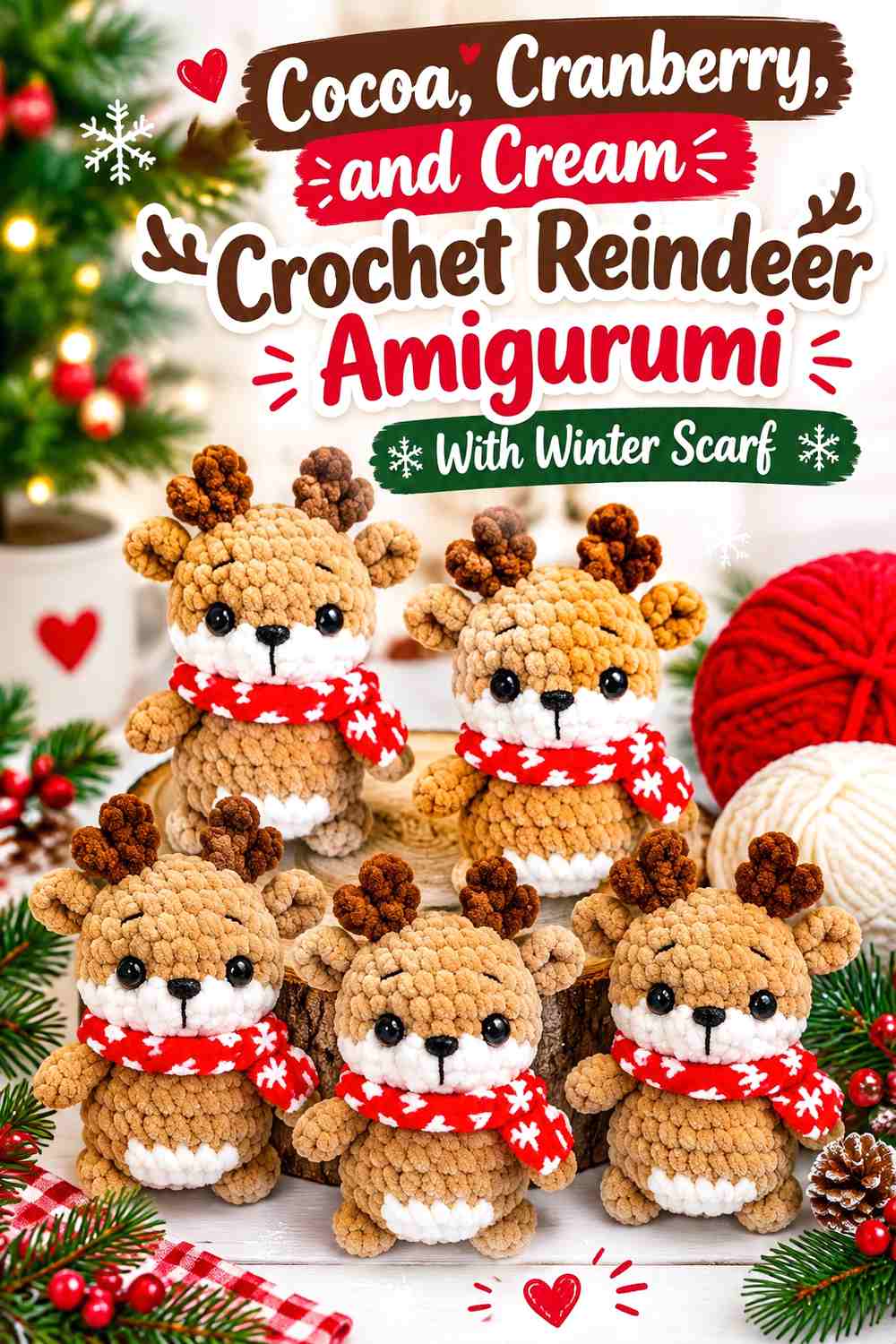
A cocoa deer gives cranberry a rich background, while cream prevents the two dark shades from merging. Use cranberry for the scarf and cream for a narrow edge, muzzle, or small scarf detail.
This is one of the more festive palettes, but keeping the body cocoa and limiting cranberry to the neck stops the deer from becoming entirely Christmas-red.
Cranberry Needs Cream Separation From the Cocoa Crochet Deer
A dark cranberry scarf can sit very close to cocoa in value. Add cream at the scarf end, collar edge, or immediately beside the neck so the accessory remains visible.
Do not widen the cream until it becomes the main scarf color if cranberry is meant to be the winter focal point.
Cocoa Should Remain Visible Around the Cranberry Winter Scarf
Leave enough body showing above and below the scarf so the deer retains its woodland character.
A scarf that covers most of the torso can make a tiny amigurumi appear more like a bundled doll than a deer in one winter accessory.
Creator Credit: CrochetGrams
3. Camel, Forest Green, and Ivory Crochet Woodland Deer Amigurumi With Sweater
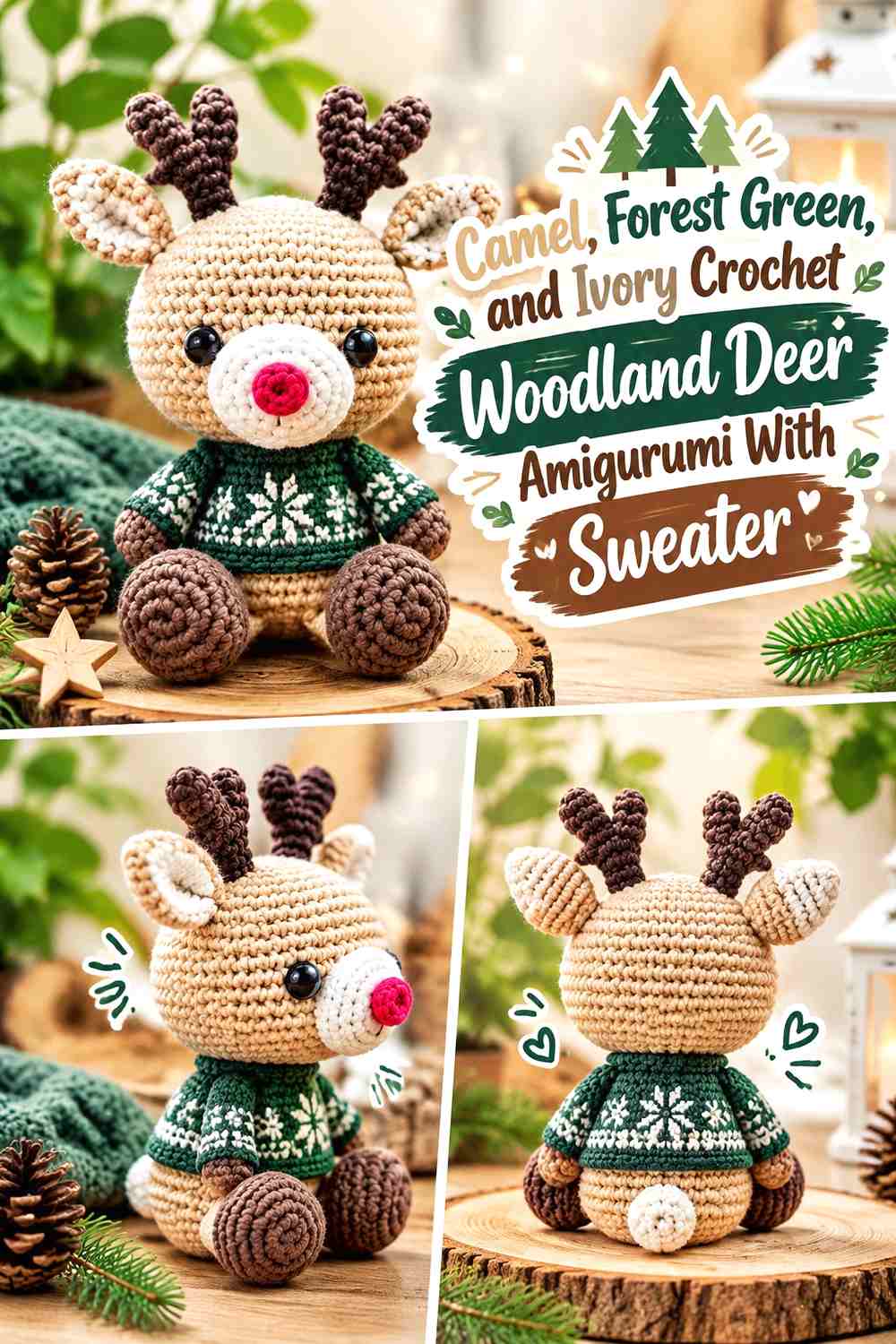
Camel provides a warm deer body, while forest green creates a strong sweater silhouette and ivory can define the neckline, cuffs, or lower edge. The dark green is distinct enough from camel that the outfit remains readable without needing a highly patterned sweater.
Let green occupy most of the clothing area and keep ivory concentrated at structural edges.
Forest Green Should Carry Most of the Camel Deer Sweater
A largely green sweater creates a clean visual block across the torso. Scattering ivory through many narrow stripes can make such a small garment look busier than the deer itself.
Use one or two ivory zones to expose the shape of the sleeves and neckline.
Ivory Can Separate Forest Green Sleeves From the Camel Deer Legs
If the front legs sit close to the sweater sleeves, pale cuffs can help clarify where clothing ends and fur begins.
This is especially useful when the camel deer has darker hooves and several brown values already competing near the lower body.
Creator Credit: Odinka Wisanindhi
4. Warm Brown, Dusty Blue, and Cream Crochet Woodland Deer Amigurumi With Beanie
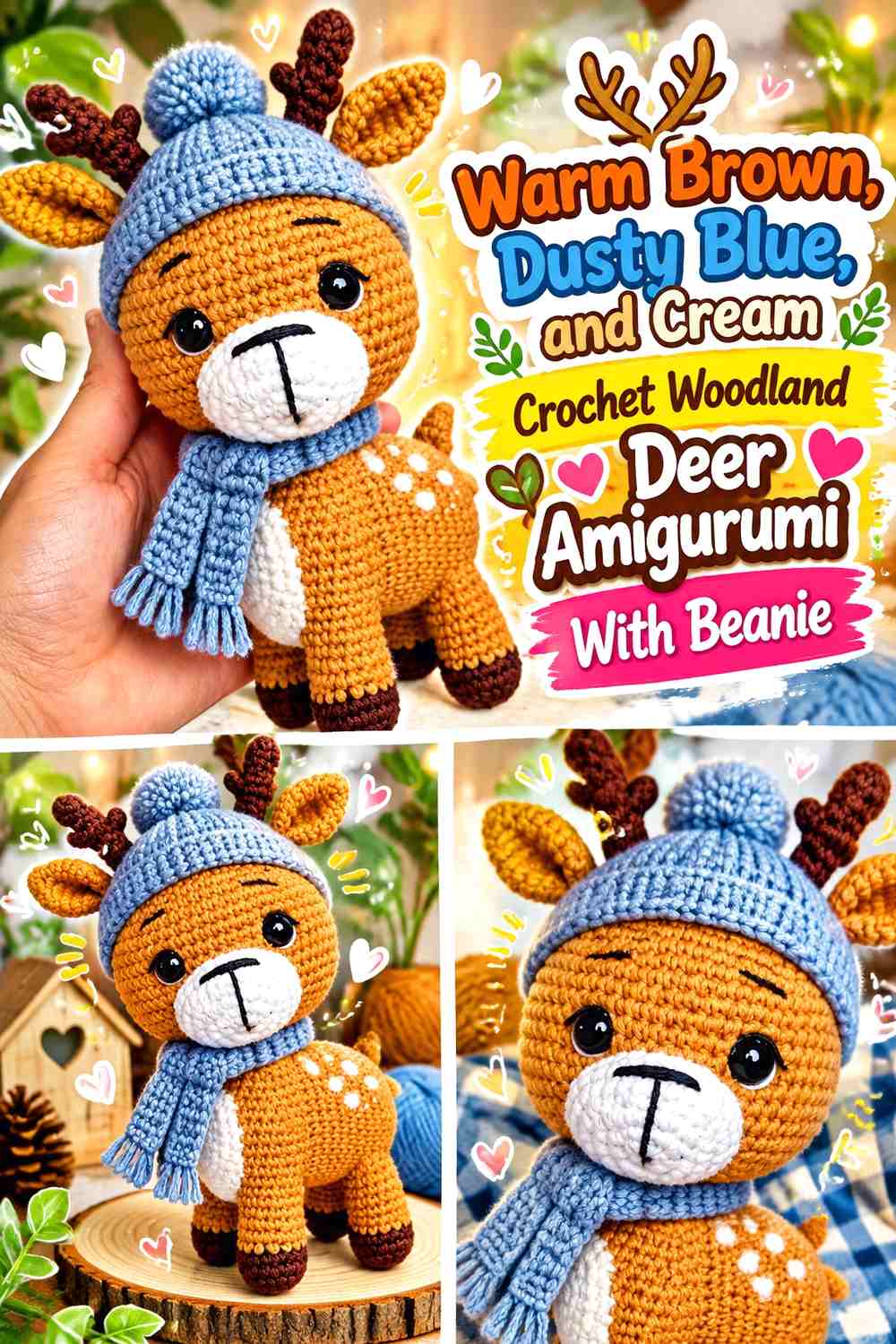
Dusty blue makes a warm-brown deer feel wintry without relying on traditional Christmas colors. Use blue for the beanie and cream for the brim or pom-pom so the hat remains distinct from brown ears and antlers.
Keep the hat fitted enough that the deer ears and antlers are still part of the visible silhouette.
Dusty Blue Should Sit Clearly Between the Warm Brown Deer Antlers
The blue crown provides useful contrast around brown or cocoa antlers. Leave enough blue visible between the antler bases so the hat reads as a separate winter garment.
A very dark blue may need more cream at the brim if the antlers are also deep brown.
Cream Should Define the Dusty Blue Beanie Above Warm Brown Ears
A cream brim can separate the blue crown from the deer’s forehead and ears.
Keep the cream edge narrow so the hat remains dusty-blue-led rather than appearing as a cream cap with a blue top.
Creator Credit: AmoreMioAmigurumi
5. Chestnut, Burgundy, and Oatmeal Crochet Woodland Deer Amigurumi With Winter Coat
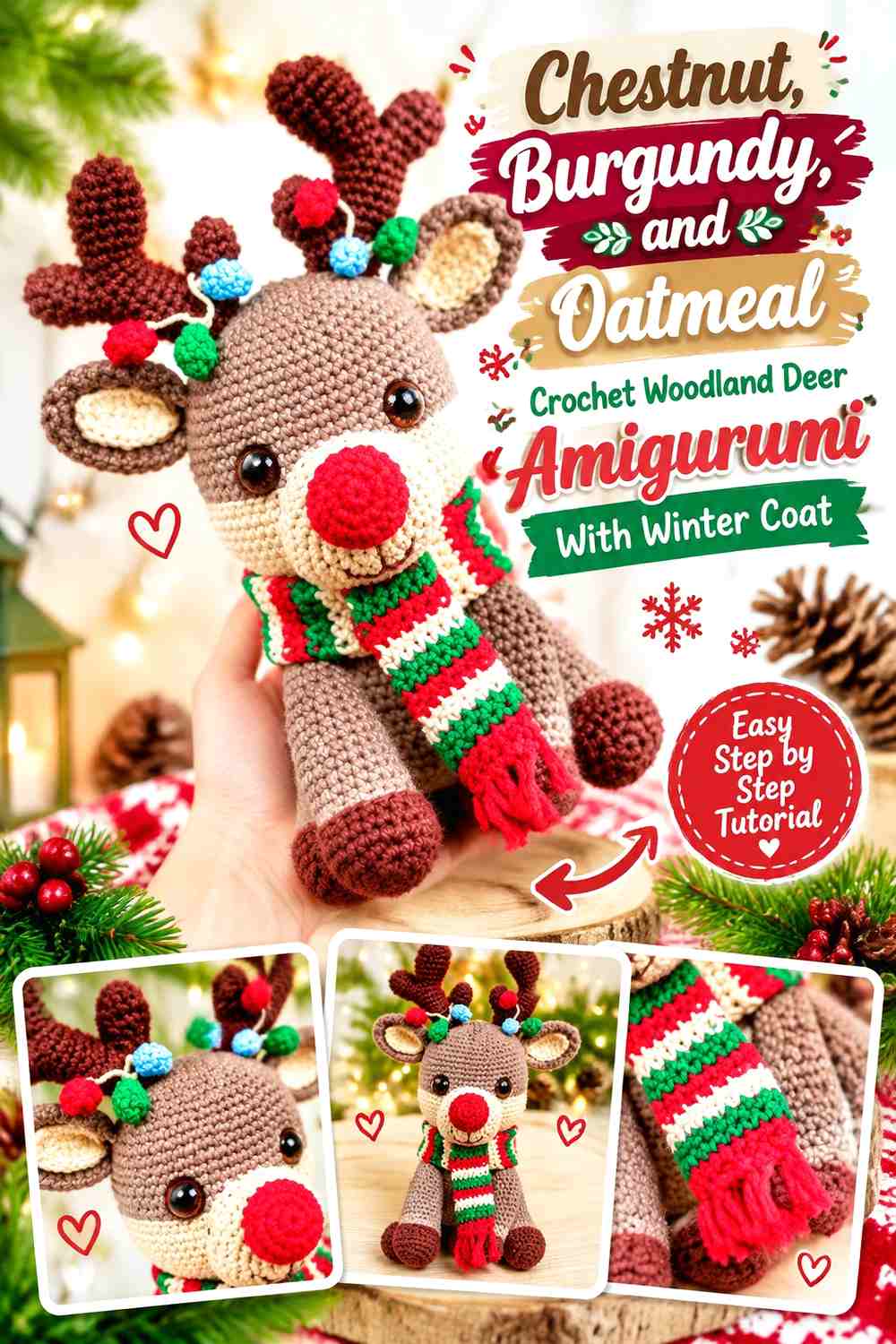
A chestnut deer can carry a burgundy coat when oatmeal is used around the collar or cuffs to stop the two warm dark shades from blending. Burgundy should dominate the coat body, while oatmeal provides only the light structural details.
This palette feels richer than a sweater-and-scarf combination and suits a deer intended to look fully dressed for winter.
Burgundy Should Be Darker Than the Chestnut Crochet Deer Coat Background
Make sure burgundy is visibly different from chestnut rather than simply redder. From a distance, similar values can make the coat outline disappear.
Oatmeal around the collar can restore definition, but the main coat-and-body contrast should still be apparent.
Oatmeal Can Clarify Burgundy Coat Edges on the Chestnut Deer
Use oatmeal at the neckline, cuffs, or front opening. These locations naturally explain why a lighter color is present.
Avoid placing oatmeal randomly through the coat body, where it may look decorative rather than structural.
Creator Credit: Amis Tejiendo Momentos
6. Taupe, Sage, and Ivory Crochet Woodland Deer Amigurumi With Cape
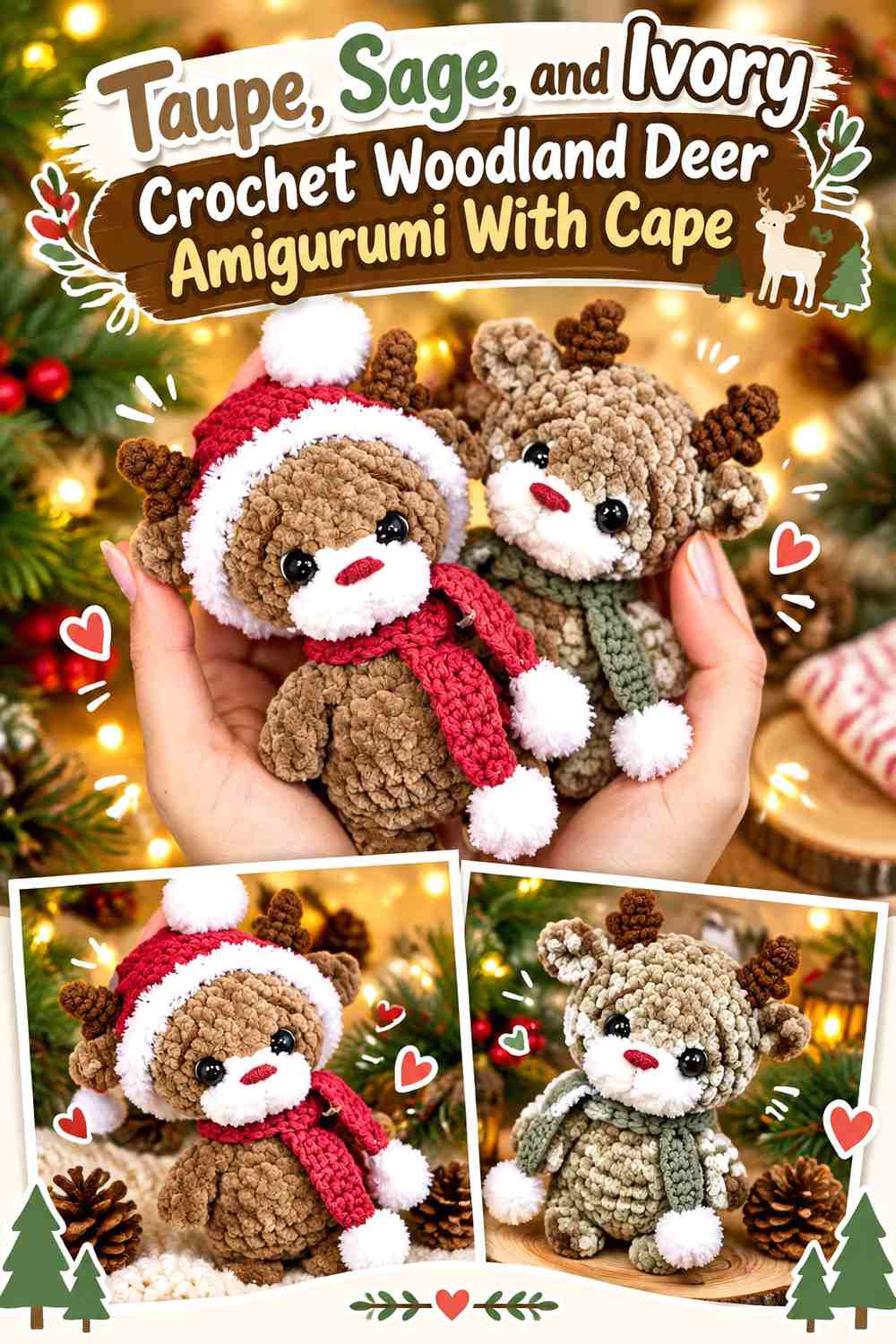
Taupe creates a quieter deer body, making sage a natural choice for a soft woodland cape. Ivory can define the neck tie or cape edge while keeping the whole palette muted.
A cape leaves the legs and much of the body visible, so the deer still reads clearly even when the clothing has a broad silhouette.
Sage Should Cover More Area Than Ivory on the Taupe Deer Cape
Keep sage across the main cape surface and move ivory to the edging or tie. Equal amounts of both can make the garment look striped rather than softly layered.
The green should remain muted enough to complement taupe without disappearing into it.
Ivory Can Lift Sage Away From the Taupe Crochet Deer Neck
A narrow ivory neckline gives the cape a visible upper edge and stops sage from blending into a similarly muted deer body.
If the muzzle is already ivory, this repeated light shade also helps connect the face and winter garment.
Creator Credit: DidyToys
7. Fawn Brown, Rust, and Cream Crochet Woodland Deer Amigurumi With Cowl
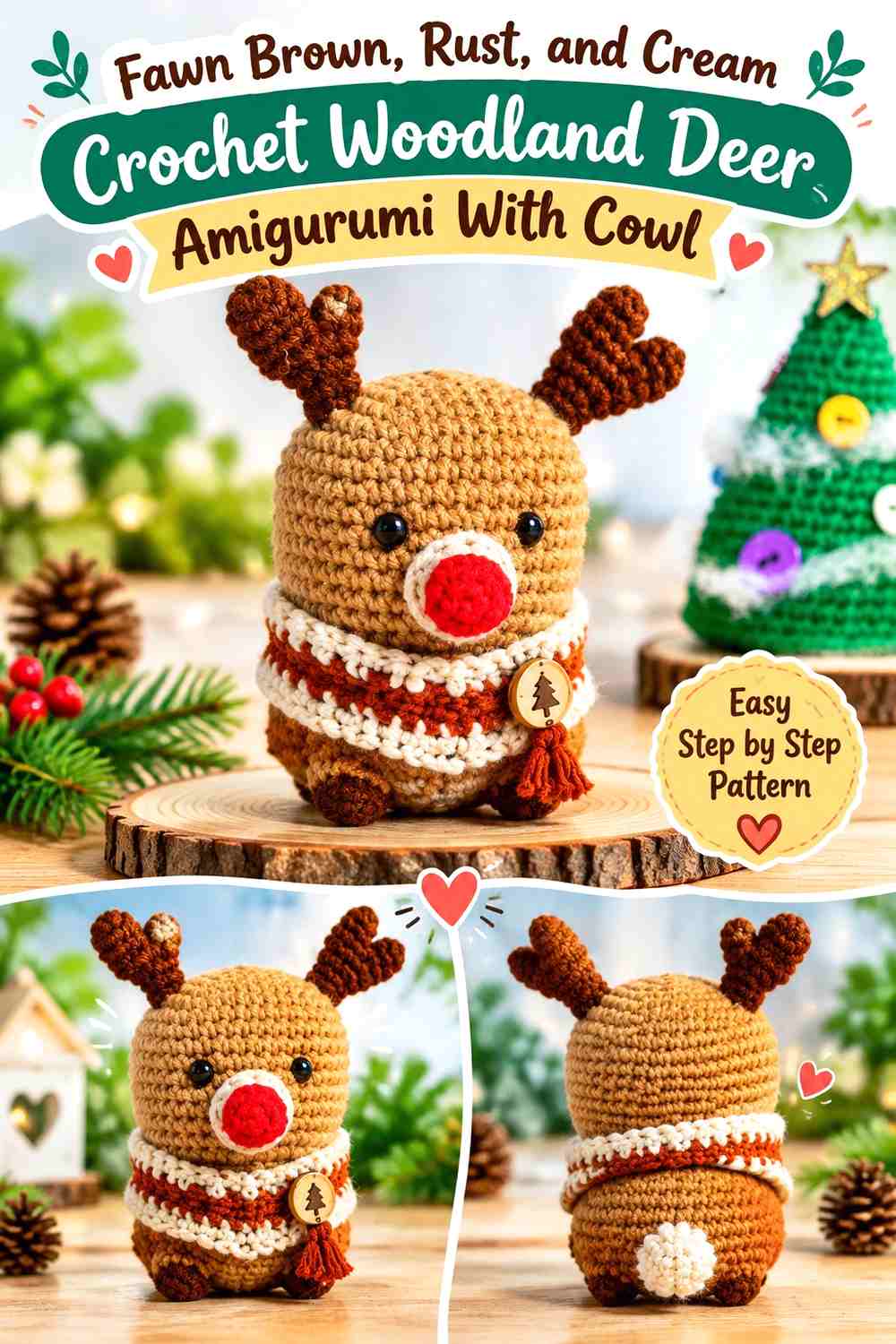
Rust adds warmth to a fawn-brown deer, but the similar color temperature means cream is useful for separating the cowl from the body. Keep rust concentrated around the neck and cream in one small edge or fastening area.
This creates a winter accessory that feels autumn-to-winter rather than strongly Christmas-themed.
Rust Needs Cream Contrast Against the Fawn Brown Crochet Deer
Place a narrow cream row where rust touches the brown neck if the two shades are too similar.
The goal is not a cream-led accessory; the lighter shade simply exposes the rust silhouette.
Fawn Brown Should Stay Visible Beneath the Rust Crochet Cowl
Keep the cowl compact enough that the chest and shoulders remain visible.
A bulky rust collar can visually shorten a tiny deer’s neck, especially if the antlers and ears already make the head area busy.
Creator Credit: Pops de Milk
8. Chocolate, Evergreen, and Cranberry Crochet Woodland Reindeer Amigurumi With Bell Collar
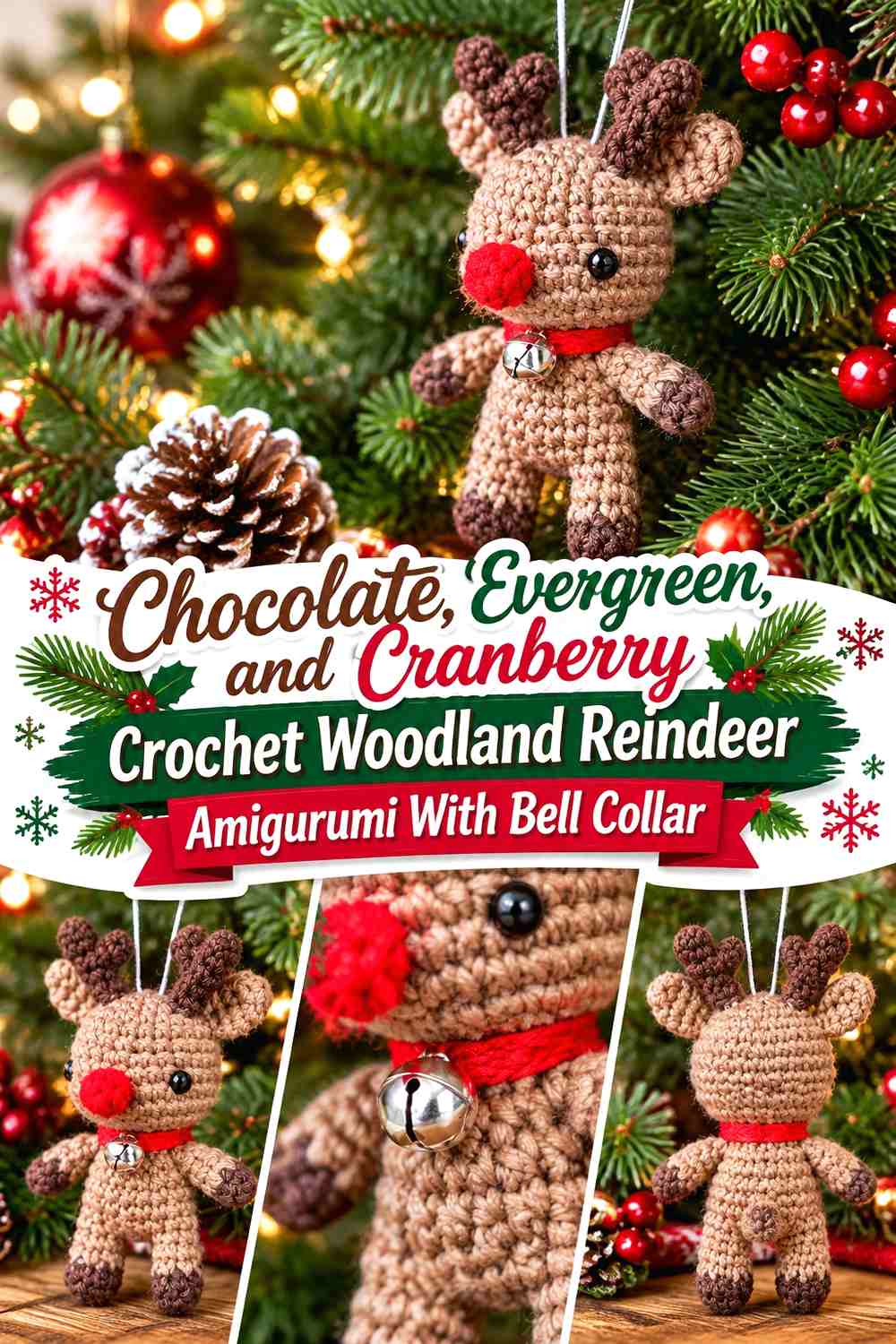
Chocolate gives this deer a dark woodland base, while evergreen can form a narrow collar and cranberry can supply one small focal accent. Cream or ivory may be used only when the collar needs more contrast from the body.
The collar should remain proportionally small so the neck does not become the most visually crowded part of the amigurumi.
Evergreen Needs Enough Contrast Against the Chocolate Crochet Deer
Select a green that stays visible beside deep brown. If evergreen and chocolate look almost identical in grayscale, a small cream break may be necessary.
Keep that cream localized instead of lightening the whole collar.
Cranberry Should Stay Smaller Than Evergreen on the Chocolate Deer Collar
Use cranberry for one bell-adjacent detail, tiny tie, or narrow accent rather than half of the collar.
The small warm focal point is more effective because the rest of the neck remains dark and woodland-toned.
Creator Credit: Sir Purl Grey
9. Soft Brown, Mustard, and Olive Crochet Woodland Deer Amigurumi With Sweater
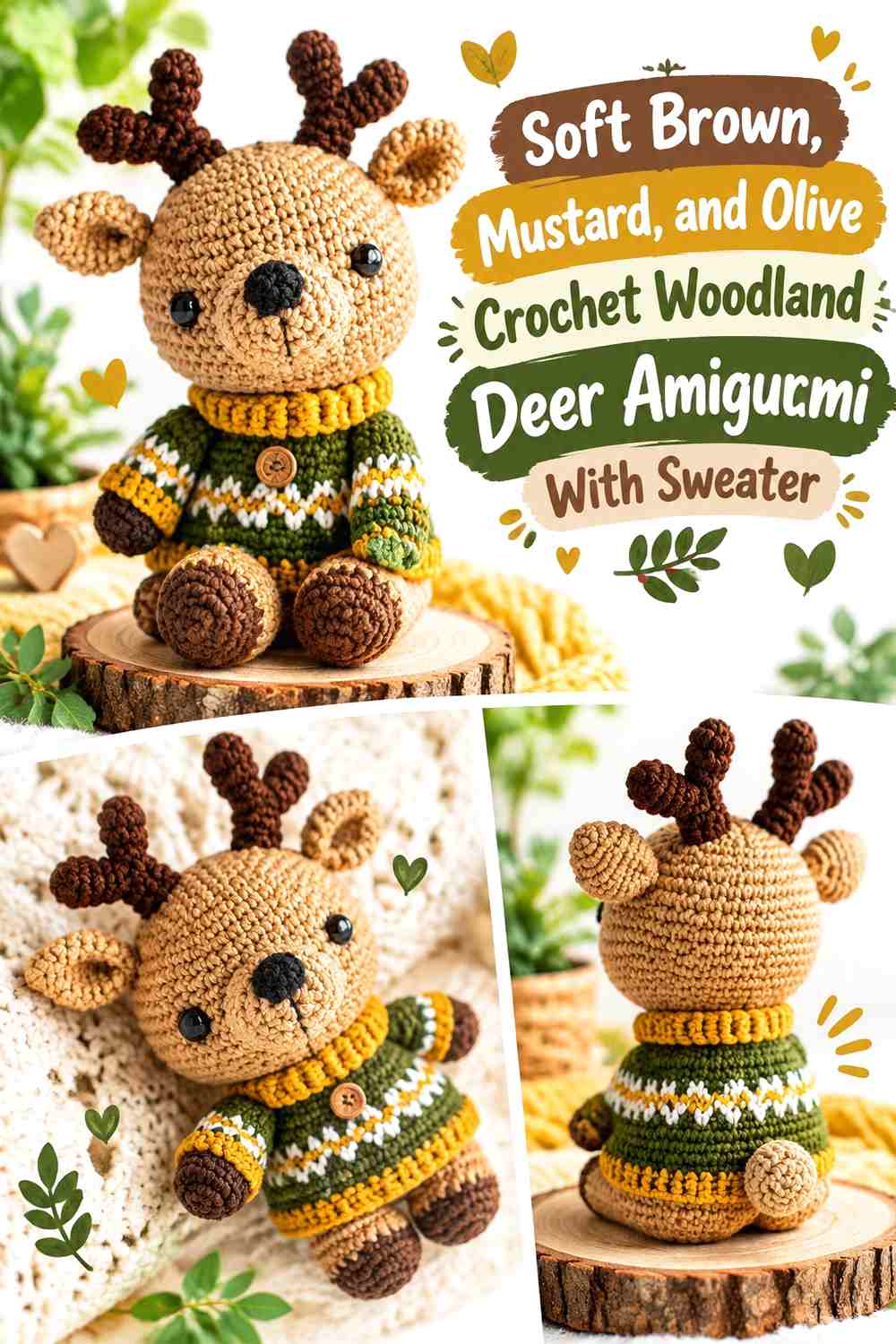
Mustard and olive give a soft-brown deer a distinctly retro woodland winter outfit. Let olive occupy most of the sweater and use mustard across a neckline, center stripe, or small cuff detail.
The deer body itself supplies another warm earthy color, so the sweater does not need cream unless the mustard and brown become difficult to distinguish.
Olive Should Be the Main Sweater Color on the Soft Brown Crochet Deer
A broad olive torso creates a calmer garment than alternating olive and mustard throughout every row.
The green also provides clearer hue contrast against brown while keeping the overall palette natural.
Mustard Should Stay Concentrated Against Olive and Soft Brown
Use mustard where it can be seen clearly—at the neckline, cuff, or one broad central section.
Tiny mustard details scattered across soft brown may disappear, while one deliberate area gives the outfit a stronger retro winter identity.
Creator Credit: DIY Fluffies
10. Caramel, Teal, and Cream Crochet Woodland Deer Amigurumi With Ribbed Sweater

Teal gives a caramel deer one of the strongest cool-versus-warm contrasts in the list. Use teal for most of the sweater and cream for ribbed-looking cuffs, neck, or hem details.
Because the sweater itself can carry visible texture, keep the color plan simple and let the stitch definition do additional visual work.
Teal Should Dominate the Caramel Crochet Deer Sweater
Give teal the large torso and sleeve sections so the winter garment remains cohesive.
Too many cream stripes can interrupt the sweater surface and distract from any ribbed or raised texture.
Cream Can Highlight Teal Sweater Edges Against the Caramel Deer
Use cream at the cuffs and neckline where the garment meets brown legs or neck.
This gives the outfit clear boundaries without requiring a dark outline around the entire sweater.
Creator Credit: Crochet Mama
11. Cocoa, Dusty Rose, and Oatmeal Crochet Woodland Deer Amigurumi With Cardigan
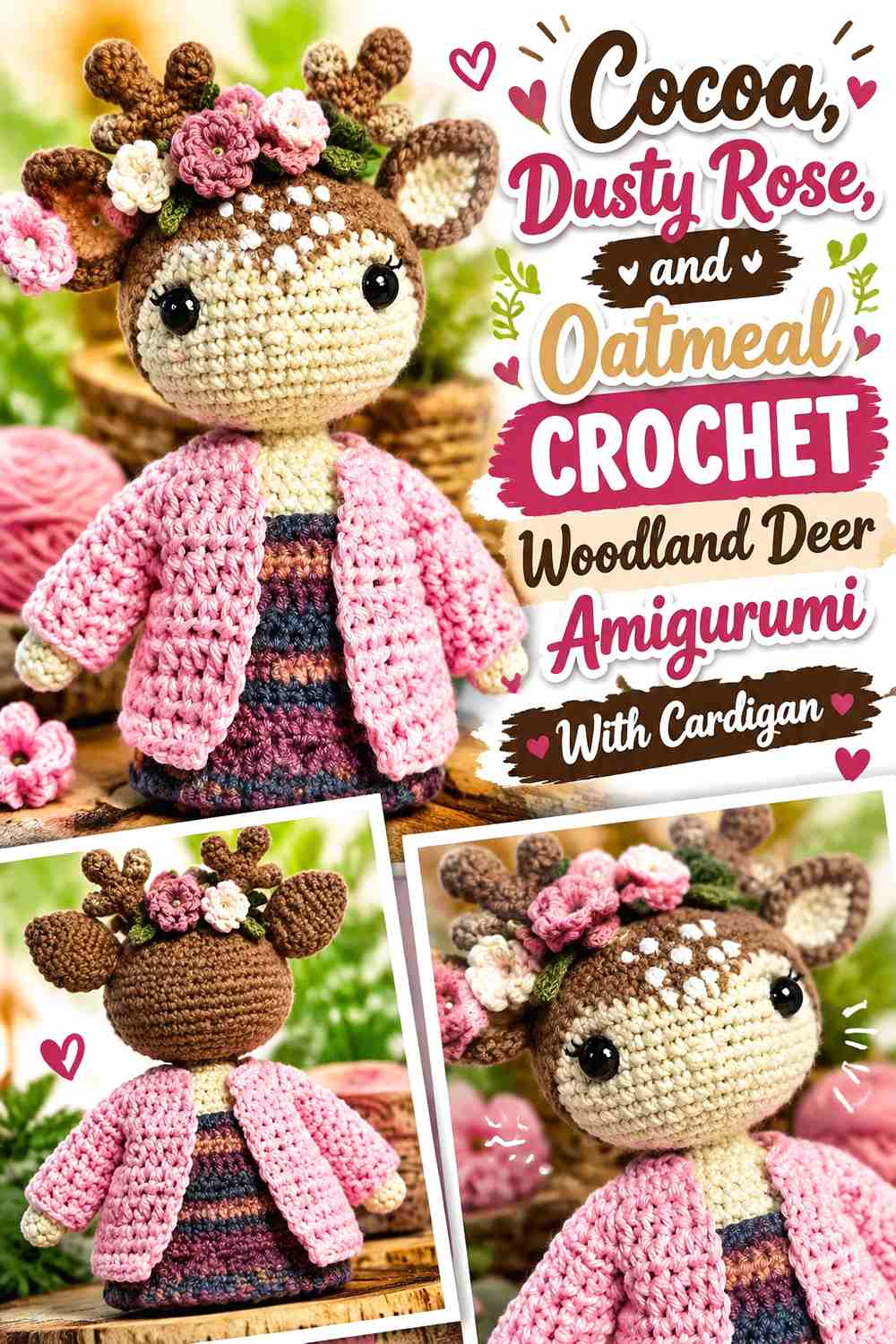
Dusty rose softens a cocoa deer while oatmeal gives the cardigan a lighter front edge. Keep the cardigan rose-led and use oatmeal for the neckline, cuffs, or opening.
This palette works particularly well when you want a winter outfit that feels woodland and gentle rather than overtly seasonal.
Dusty Rose Should Carry Most of the Cocoa Deer Cardigan
Use rose across the sleeves and body so it remains one recognizable garment.
If oatmeal fills too much of the front, the cardigan can begin to look cream-led and lose the muted pink direction.
Oatmeal Should Separate Dusty Rose From the Cocoa Crochet Deer
Place oatmeal where the cardigan meets the neck or along the opening. The lighter value protects the rose from blending into the darker brown body.
A small oatmeal cuff can repeat that separation around the legs.
Creator Credit: The Crochet Circle
12. Warm Brown, Plum, and Cream Crochet Woodland Deer Amigurumi With Hooded Cape
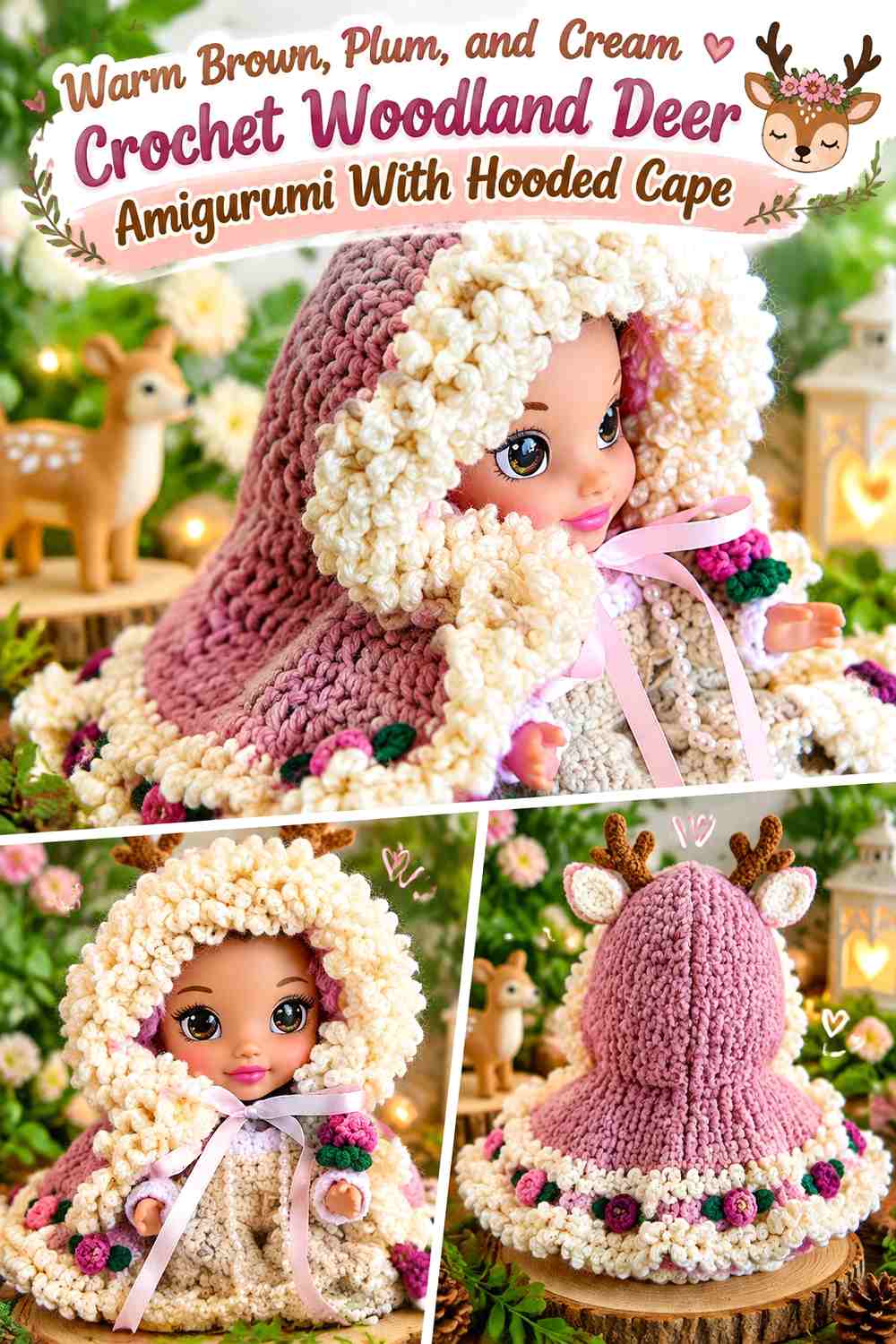
Plum makes a rich hooded cape for a warm-brown deer, while cream can line the hood visually or define its outer edge. The hood should frame the ears and antlers instead of covering them.
Keep the broad cape plum so the hood and body read as one winter garment.
Plum Should Stay Clear of the Warm Brown Deer Antler Tips
Concentrate the hood lower around the head so brown antlers remain visible above it.
If plum and dark antlers overlap visually, cream around the hood opening can provide a useful light boundary.
Cream Can Frame the Plum Hood Against the Warm Brown Deer Face
Use cream at the opening where the hood meets the muzzle, cheeks, or ears.
This gives the face more definition without turning the whole cape into a cream-trimmed costume.
Creator Credit: HelenMay Crochet
13. Fawn Brown, Forest Green, and Oatmeal Crochet Woodland Deer Amigurumi With Winter Boots

Winter boots add color low on the figure, so forest green can be stronger here without competing with the deer’s face and antlers. Use green for the boot bodies and oatmeal at the upper edge or sole detail.
Keep all four boots consistent if the deer construction uses visible feet; mixed colors can make such small accessories appear accidental.
Forest Green Should Stay Below the Fawn Brown Crochet Deer Legs
Allow brown leg sections to remain visible above the boots. This keeps the green from looking like part of the deer’s natural legs.
Oatmeal trim can mark the transition where the boot begins.
Oatmeal Should Clarify Forest Green Boots on the Fawn Brown Deer
Use oatmeal sparingly at the top edge or another structural line. The light contrast helps dark green boots remain readable against medium brown legs.
Avoid repeating oatmeal heavily across the body unless another outfit piece needs the same connection.
Creator Credit: Aprende Tejido Crochet | by Maricel
14. Chestnut, Faded Blue, and Cream Crochet Woodland Deer Amigurumi With Poncho
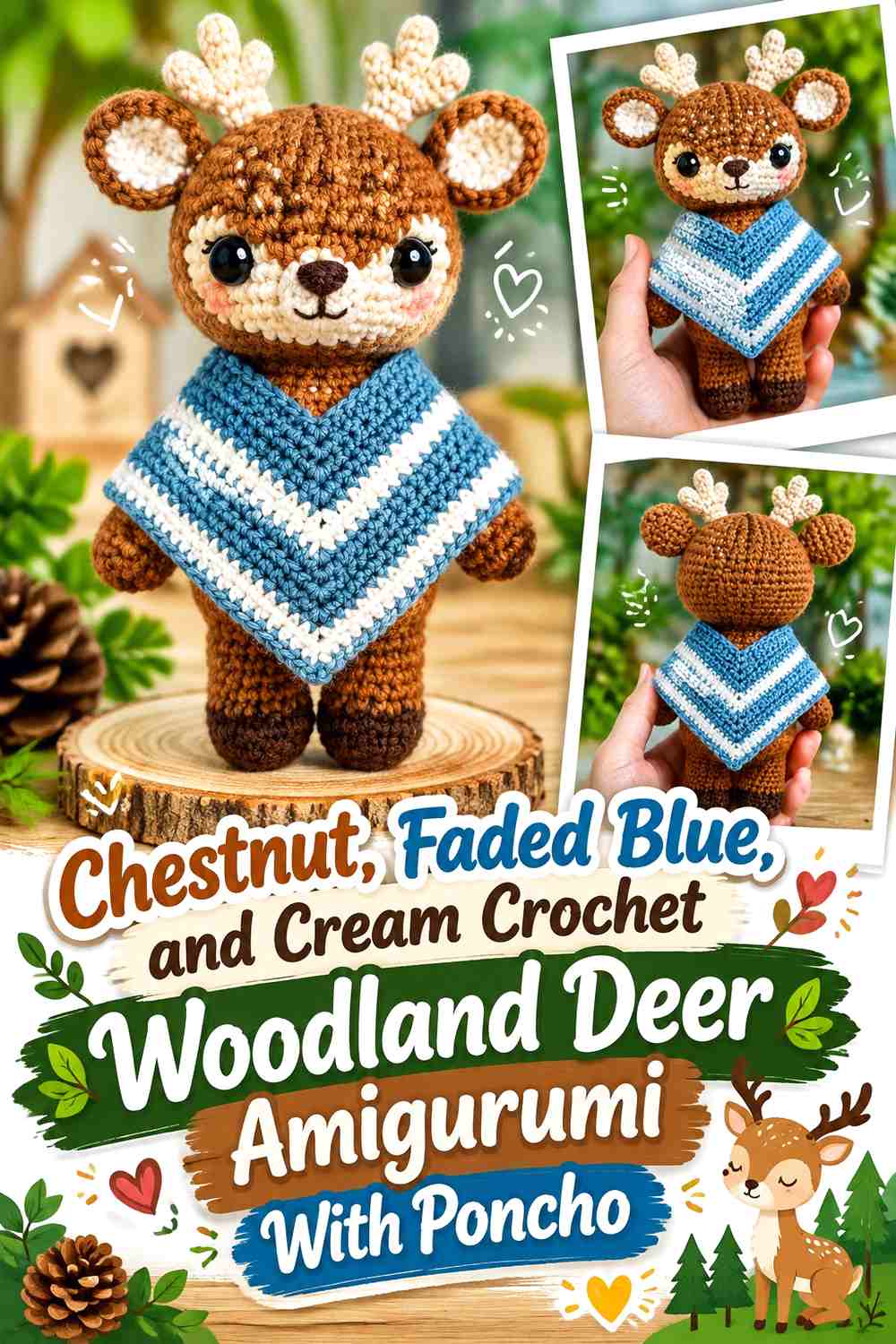
Faded blue creates a quiet winter poncho against a chestnut deer, while cream can define the neckline or lower edge. Because a poncho has a broad triangular or draped visual area, it can carry more of the outfit color than a scarf.
Let blue remain uninterrupted across most of that area so the shape stays clear.
Faded Blue Should Cover Most of the Chestnut Deer Poncho
Use cream only at structural edges rather than striping the whole garment.
The broad blue field gives the deer a stronger winter identity while chestnut remains visible on the head and lower body.
Cream Can Define the Faded Blue Poncho Against the Chestnut Deer
A cream neck edge separates the garment from the brown head and shoulders.
If the blue is already quite pale, use cream only at one location so the two light colors do not flatten into one large area.
Creator Credit: The Loopy Lamb
15. Soft Brown, Burgundy, and Moss Crochet Woodland Deer Amigurumi With Winter Vest
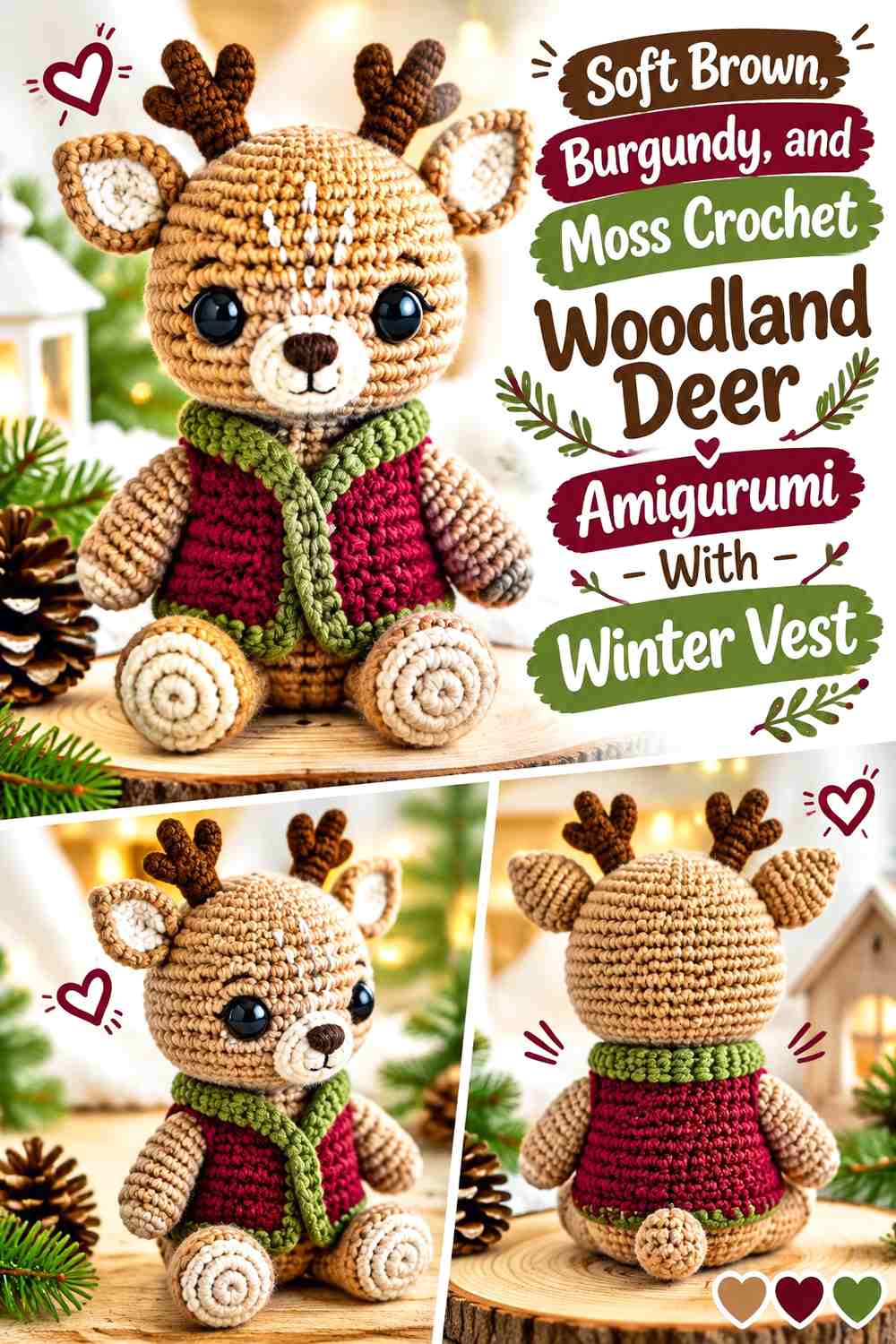
A vest leaves the legs and much of the shoulders exposed, making it useful when you want soft brown to remain prominent. Burgundy can form the vest body and moss can provide the edging or small button-like detail.
This is a more color-rich outfit, so avoid adding a separate scarf unless it repeats one of the same two garment colors.
Burgundy Should Form the Main Vest Against the Soft Brown Crochet Deer
Use burgundy continuously across the torso so the sleeveless garment remains recognizable.
Moss works better on the edge or front detail than as a second equal body color.
Moss Should Stay Smaller Than Burgundy on the Soft Brown Deer Vest
A narrow green edge gives the vest a woodland accent without turning it into a red-and-green holiday garment.
If burgundy is very dark, a small cream detail can be added near the neckline, but it should remain secondary.
Creator Credit: Rhonda Butler
16. Taupe, Lavender, and Ivory Crochet Woodland Deer Amigurumi With Shawl
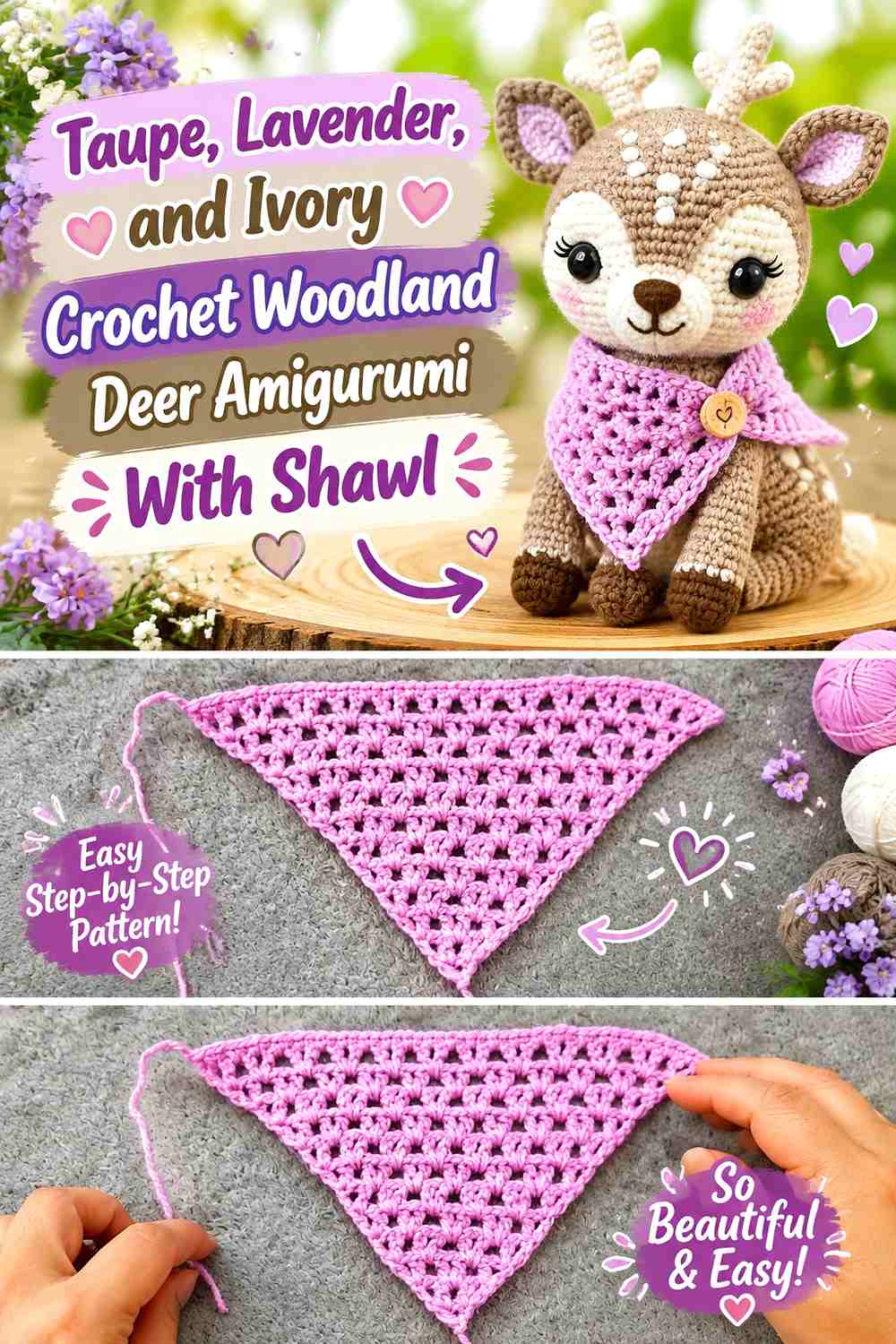
Lavender gives a taupe deer a cool, gentle winter layer, while ivory can define the shawl border. Because a shawl sits close to the shoulders rather than covering the whole torso, the pale purple can stay decorative without dominating the figure.
Let the shawl drape visibly across one area instead of wrapping the deer in several overlapping layers.
Lavender Should Remain Distinct Against the Taupe Crochet Deer
Choose lavender noticeably cooler or lighter than taupe. A very gray purple may blend into a muted brown body.
Ivory edging can strengthen the boundary if you prefer an especially dusty lavender.
Ivory Should Trace the Lavender Shawl Without Covering the Taupe Deer
Use ivory along a narrow edge or tie, leaving most of the shawl lavender.
The pale border should explain the garment shape rather than creating another large clothing block over the chest.
Creator Credit: Ginaz Kr8tion
17. Chocolate, Rust, and Oatmeal Crochet Woodland Deer Amigurumi With Winter Jacket

Rust creates a warm jacket against a chocolate deer, while oatmeal is useful along the collar, opening, and cuffs. Because rust and brown are related, the light trim is especially important for keeping the jacket readable.
This palette feels earthy and wintery without relying on evergreen or cranberry.
Rust Needs Oatmeal Separation From the Chocolate Crochet Deer
Place oatmeal where the jacket touches the neck and front legs. These high-contact areas are where similar warm shades are most likely to merge.
The body of the jacket should remain rust so the lighter trim stays purposeful.
Chocolate Should Stay Visible Around the Rust Winter Jacket
Do not cover every leg and the entire torso in rust. Exposed chocolate limbs and head keep the deer clearly woodland-inspired.
A shorter jacket can provide enough color while preserving more of the original body.
Creator Credit: Lizfaerie Crafts
18. Caramel, Sage, and Cranberry Crochet Woodland Deer Amigurumi With Winter Sweater
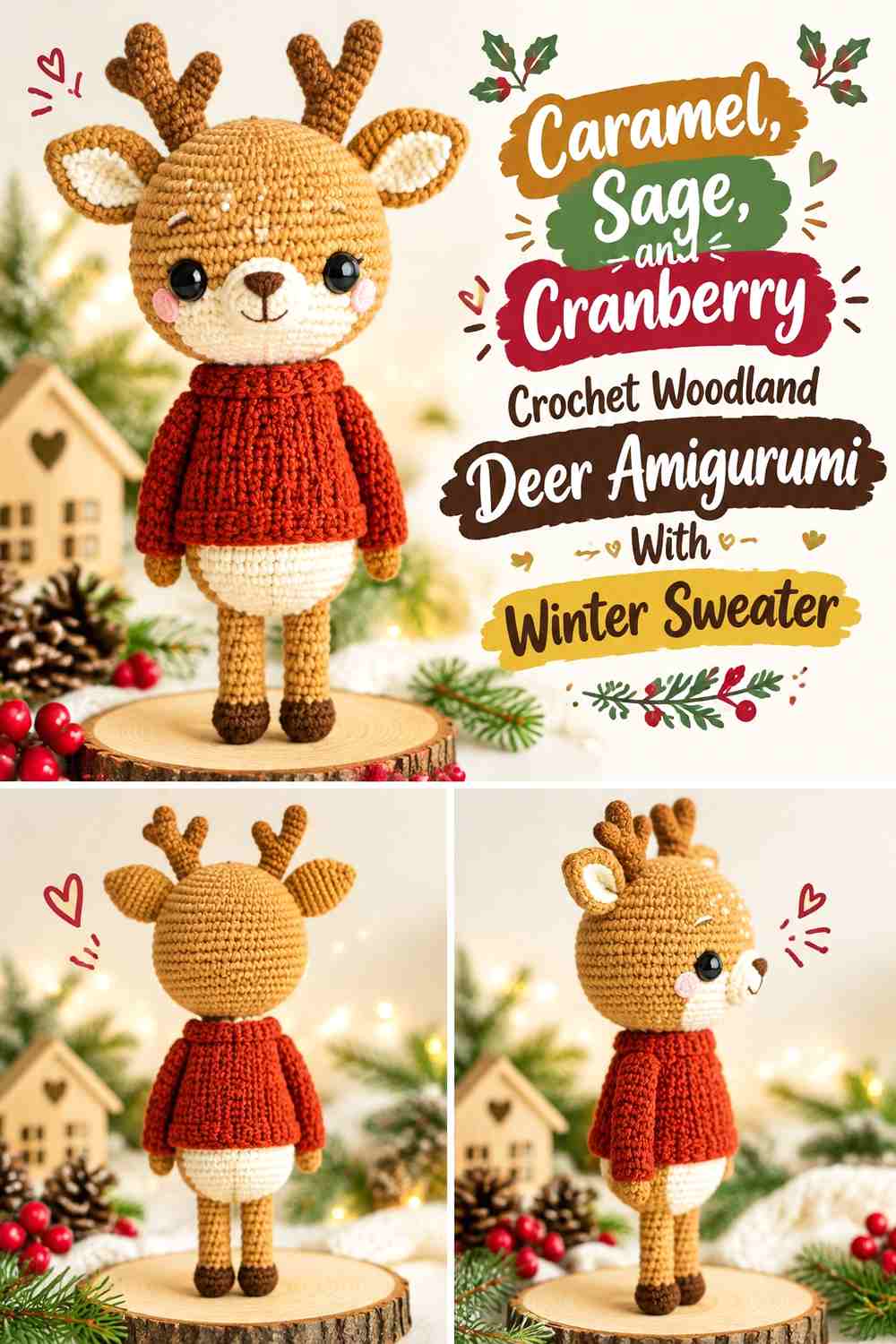
Sage provides the main sweater color, cranberry can create one broad winter accent, and caramel remains the deer body. This palette offers seasonal color without making bright red the dominant garment shade.
Keep the design simple: one cranberry band or neckline detail is more useful on a tiny sweater than several miniature pattern changes.
Sage Should Be the Main Sweater Color Against the Caramel Crochet Deer
Use sage through the torso and sleeves so the green remains soft and cohesive.
Its cooler hue already separates it from caramel, so it does not need a heavy cream outline unless the chosen sage is particularly muted.
Cranberry Should Stay Concentrated on the Sage and Caramel Deer Outfit
Use cranberry for one stripe, collar, or cuff family rather than scattering it across every available sweater section.
The smaller red area creates a winter focal point while sage keeps the outfit woodland-focused.
Creator Credit: Fluffy Tummy Crochet
19. Fawn Brown, Navy, and Cream Crochet Woodland Deer Amigurumi With Winter Hat
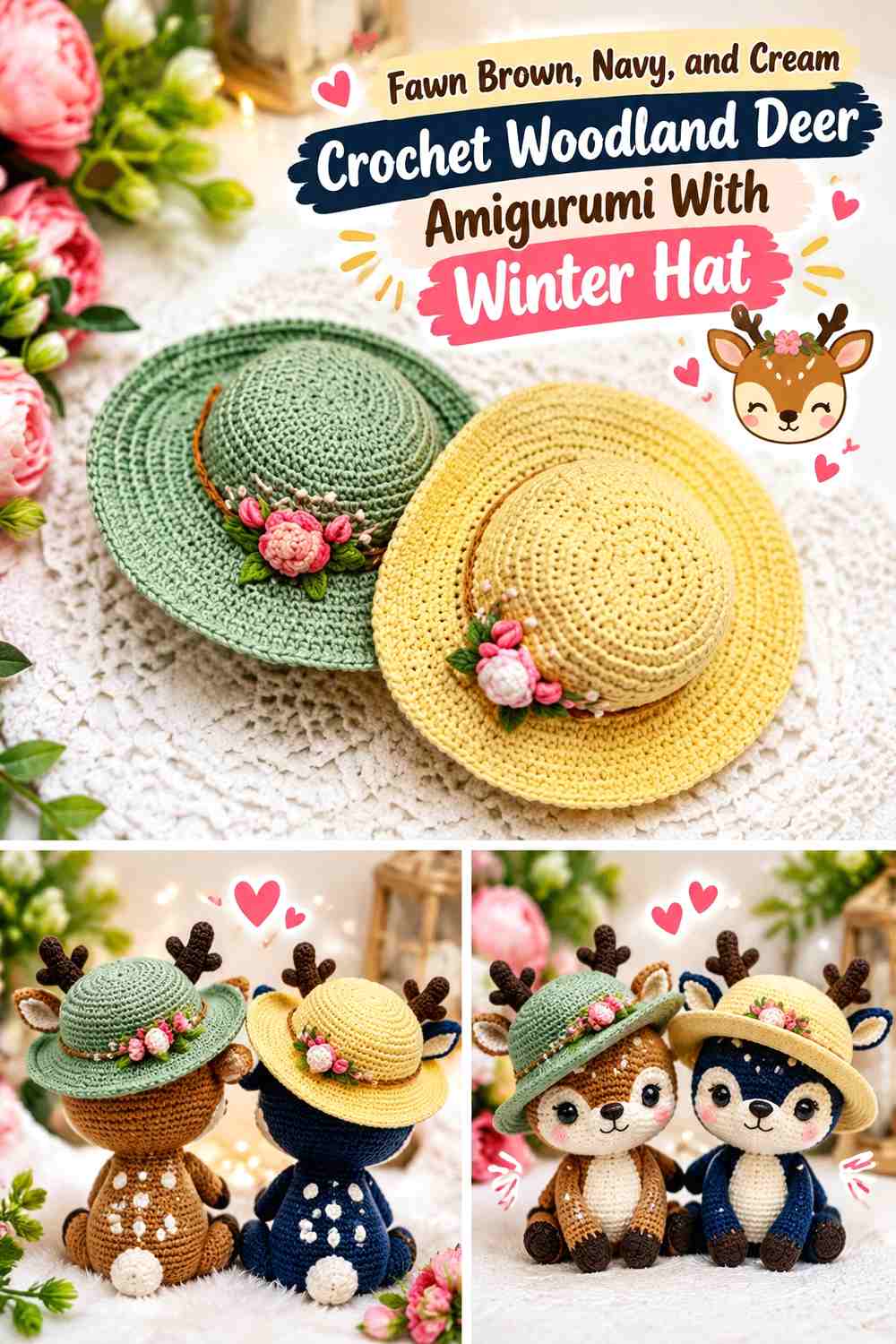
Navy creates a strong winter hat above a fawn-brown deer, while cream can define the brim or pom-pom. The contrast is stronger than dusty blue, making this idea useful when you want headwear to become the main outfit feature.
Keep the hat positioned so the ears and antlers remain visually separate rather than disappearing inside one dark upper shape.
Navy Should Sit Between the Fawn Brown Crochet Deer Antlers
A clear block of navy between brown antlers makes both colors easier to distinguish.
If the antlers are extremely dark, cream near their bases can prevent navy and brown from blending.
Cream Should Define the Navy Hat Above the Fawn Brown Deer Face
A cream brim creates a light break between the navy crown and brown forehead.
Keep the pom-pom cream or navy rather than adding a fourth winter color at the highest point of the amigurumi.
Creator Credit: Suwanna ‘s Crafts Room
Which Woodland Deer Winter Outfit Palette Should You Choose?
For the most natural woodland direction, combine brown deer bodies with moss, sage, olive, oatmeal, forest green, or rust. These palettes keep the clothing related to forest colors while still creating enough distinction between fur and garments.
Dusty blue, teal, lavender, and navy work when you want a cooler winter appearance. Pale blue and lavender are softer, while teal and navy produce much stronger outfit contrast against caramel or fawn brown.
Burgundy and cranberry provide the clearest seasonal warmth, but they do not have to dominate the entire deer. A narrow scarf, vest, sweater stripe, or collar can introduce red while brown, cream, and woodland greens keep the finished amigurumi grounded.
Conclusion
Woodland deer amigurumi can wear surprisingly varied winter outfits without losing their natural character. The key is letting the brown deer body remain visible while giving each scarf, sweater, coat, cape, vest, pair of boots, or hat its own clear color role.
Choose moss, sage, forest green, rust, and oatmeal for earthy woodland deer; dusty blue, teal, lavender, or navy for cooler winter characters; and burgundy or cranberry when you want a stronger seasonal accent.
Before permanently dressing the deer, place the finished garment on the amigurumi and check the ears, antlers, legs, and face from the front. Small outfits can alter the apparent proportions of a toy more than expected. Use the credited deer tutorials for their original amigurumi construction and the clothing tutorials for the garments they actually teach, then adapt fit and color placement to your own woodland deer.
Frequently Asked Questions
What winter outfit colors work well on a brown crochet deer?
Cream, oatmeal, sage, moss, forest green, dusty blue, teal, burgundy, cranberry, rust, lavender, plum, and navy can all work. Choose a shade noticeably different from the deer’s brown value so the garment remains visible.
How can I make a dark sweater visible on a chocolate-brown crochet deer?
Add a lighter structural detail such as cream or oatmeal at the neckline, cuffs, front opening, or hem. That creates separation without requiring the entire sweater to become pale.
Can a woodland deer amigurumi wear a hat if it has antlers?
Yes, but the hat should be planned around the antler and ear placement. Keep the antler bases visible and check how the headwear sits before adding a pom-pom, brim, or other details that could crowd the upper silhouette.
Which colors make a crochet deer look wintry without looking Christmas-themed?
Dusty blue, sage, moss, oatmeal, teal, lavender, plum, muted navy, and soft cream can create a winter direction without relying heavily on red and bright green.
How can I coordinate boots, a scarf, and a sweater on one woodland deer?
Repeat one outfit color rather than making every accessory different. For example, a sage sweater can pair with oatmeal boot trim, while the scarf repeats sage with a small oatmeal edge.
Should the crochet deer’s antlers match its winter outfit?
They do not need to. Keeping antlers in brown, cocoa, beige, or another natural neutral usually preserves the woodland character and prevents the outfit palette from taking over the entire animal.
Do all the linked tutorials make the exact dressed woodland deer described here?
No. Some teach complete deer or reindeer amigurumi, while others demonstrate doll-size sweaters, coats, hats, boots, capes, ponchos, vests, jackets, or shawls that can inform the outfit adaptation. Follow each creator’s original tutorial for its actual construction, then adjust the garment concept and palette for your deer.