Winter forest animal finger puppets work especially well when each character has a recognizable natural body color plus one small seasonal accent. Russet orange can define a fox, soft brown can keep a deer recognizable, and snowy ivory can give an owl a winter look, while scarves, collars, hats, or tiny chest details introduce pine green, cranberry, dusty blue, plum, or mustard.

Because finger puppets are small, color hierarchy matters more than elaborate patterning. If the face, ears, muzzle, scarf, and body all use equally strong colors, the animal can become difficult to read. Give the animal one dominant body shade, use a lighter or darker neutral for facial definition, and reserve the strongest accent for one winter detail.
The tutorials below include exact finger-puppet construction as well as full animal amigurumi tutorials that can support the head, ears, muzzle, antlers, wings, markings, or character concept. When a tutorial demonstrates a stuffed amigurumi rather than a puppet, the finger-opening body and winter accessories described here are independent adaptations.
Quick List
- Russet, Cream, and Pine Crochet Winter Fox Finger Puppet
- Soft Brown, Oatmeal, and Cranberry Crochet Winter Deer Finger Puppet
- Charcoal, Ivory, and Mustard Crochet Winter Woodland Owl Finger Puppet
- Cocoa, Cream, and Dusty Blue Crochet Winter Bear Finger Puppet
- Winter White, Sage, and Blush Crochet Rabbit Finger Puppet
- Chestnut, Cream, and Moss Crochet Winter Hedgehog Finger Puppet
- Caramel, Rust, and Oatmeal Crochet Winter Squirrel Finger Puppet
- Silver Gray, Charcoal, and Burgundy Crochet Winter Raccoon Finger Puppet
- Taupe, Cocoa, and Forest Green Crochet Winter Moose Finger Puppet
- Warm Gray, Blush, and Plum Crochet Winter Woodland Mouse Finger Puppet
- Cranberry Red, Charcoal, and Snow White Crochet Winter Cardinal Finger Puppet
- Snow White, Silver Gray, and Icy Blue Crochet Snowy Owl Finger Puppet
- Burnt Orange, Ivory, and Faded Blue Crochet Winter Fox Finger Puppet
- Cocoa, Oatmeal, and Sage Crochet Woodland Owl Finger Puppet
- Tawny Orange, Cream, and Mustard Crochet Winter Fox Finger Puppet
- Copper, Chocolate, and Moss Crochet Winter Fox Finger Puppet
- Soft Gray, Antique Cream, and Cranberry Crochet Winter Mouse Finger Puppet
- Oatmeal, Dusty Rose, and Sage Crochet Winter Rabbit Finger Puppet
Keep Winter Accessories Smaller Than the Animal Face
A tiny scarf, collar, hat brim, or ear warmer can establish the winter theme without covering the features that make a finger puppet recognizable. Fox ears, deer antlers, owl eyes, rabbit ears, and raccoon masks need enough visible space around them.
This is also where stronger colors work best. Cranberry can overwhelm a tiny brown deer if it covers half the body, but a narrow scarf creates a clear seasonal focal point. Dusty blue, forest green, plum, and mustard work the same way.
Use Light Neutrals to Separate Small Woodland Features
Cream, oatmeal, ivory, and soft white are especially useful on miniature muzzles, inner ears, eye surrounds, and chest patches. They can separate medium or dark body colors without adding another saturated shade.
The contrast should support the animal rather than create random striping. A cream fox muzzle has a recognizable purpose; several unrelated cream bands around the puppet body generally do not.
1. Russet, Cream, and Pine Crochet Winter Fox Finger Puppet
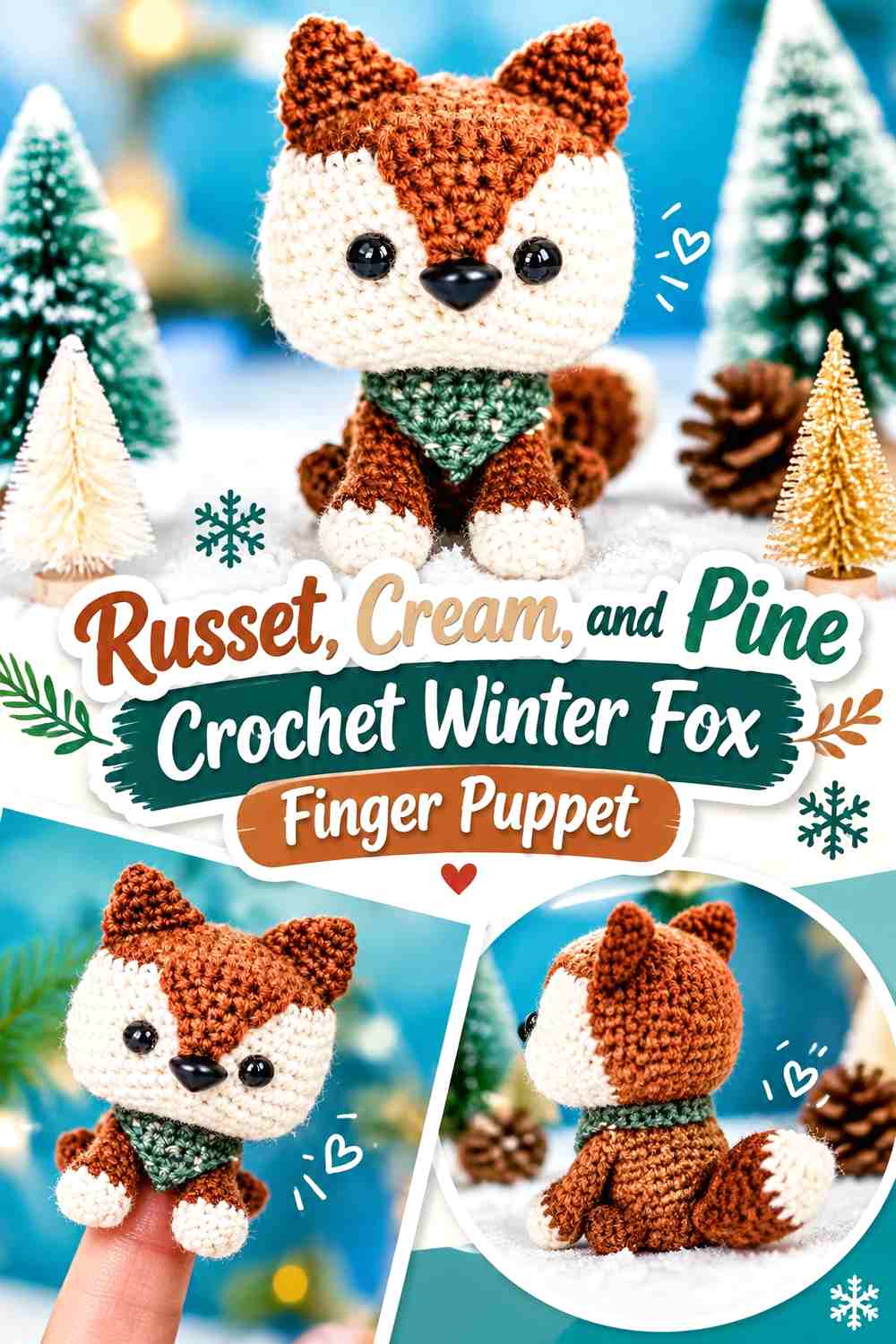
Russet orange gives this fox an immediate woodland identity, while cream can define the muzzle, inner ears, and chest. Pine green works best as the winter accent through a narrow scarf or collar around the finger-puppet body.
Keep the green below the face so the pointed ears and cream muzzle remain the first details the viewer reads.
Russet Should Carry Most of the Crochet Fox Head and Body
Use russet continuously around the face, ears, and main puppet body. That uninterrupted orange field keeps the fox recognizable even when the construction is simplified for a finger puppet.
Cream should stay concentrated on facial areas rather than breaking the russet into several body stripes.
Pine Green Should Stay Smaller Than Russet and Cream on the Fox Puppet
A narrow green scarf gives the fox its winter direction without turning the animal into a green-and-orange character.
If the puppet will be used against a dark backdrop, allow cream to reach the lower scarf edge for additional separation.
Creator Credit: Yarn Society
2. Soft Brown, Oatmeal, and Cranberry Crochet Winter Deer Finger Puppet

Soft brown should define the deer head and finger-puppet body, oatmeal can lighten the muzzle and inner ears, and cranberry can supply a small scarf or neck band. This combination feels seasonal without turning the deer into a bright red reindeer.
Keep antlers in brown or a deeper cocoa shade so they remain part of the animal rather than the outfit.
Soft Brown Should Remain Visible Around the Oatmeal Deer Face
Use oatmeal inside the ears and around the muzzle while leaving a clear brown border around both areas.
Too much pale yarn across the forehead can weaken the long, narrow deer-face silhouette.
Cranberry Should Accent Soft Brown Below the Deer Antlers
Place cranberry around the neck rather than near the antler bases. The strong red color remains easy to see even in a narrow band.
Keeping the accent low also prevents the top of the puppet from becoming crowded.
Creator Credit: Odinka Wisanindhi
3. Charcoal, Ivory, and Mustard Crochet Winter Woodland Owl Finger Puppet
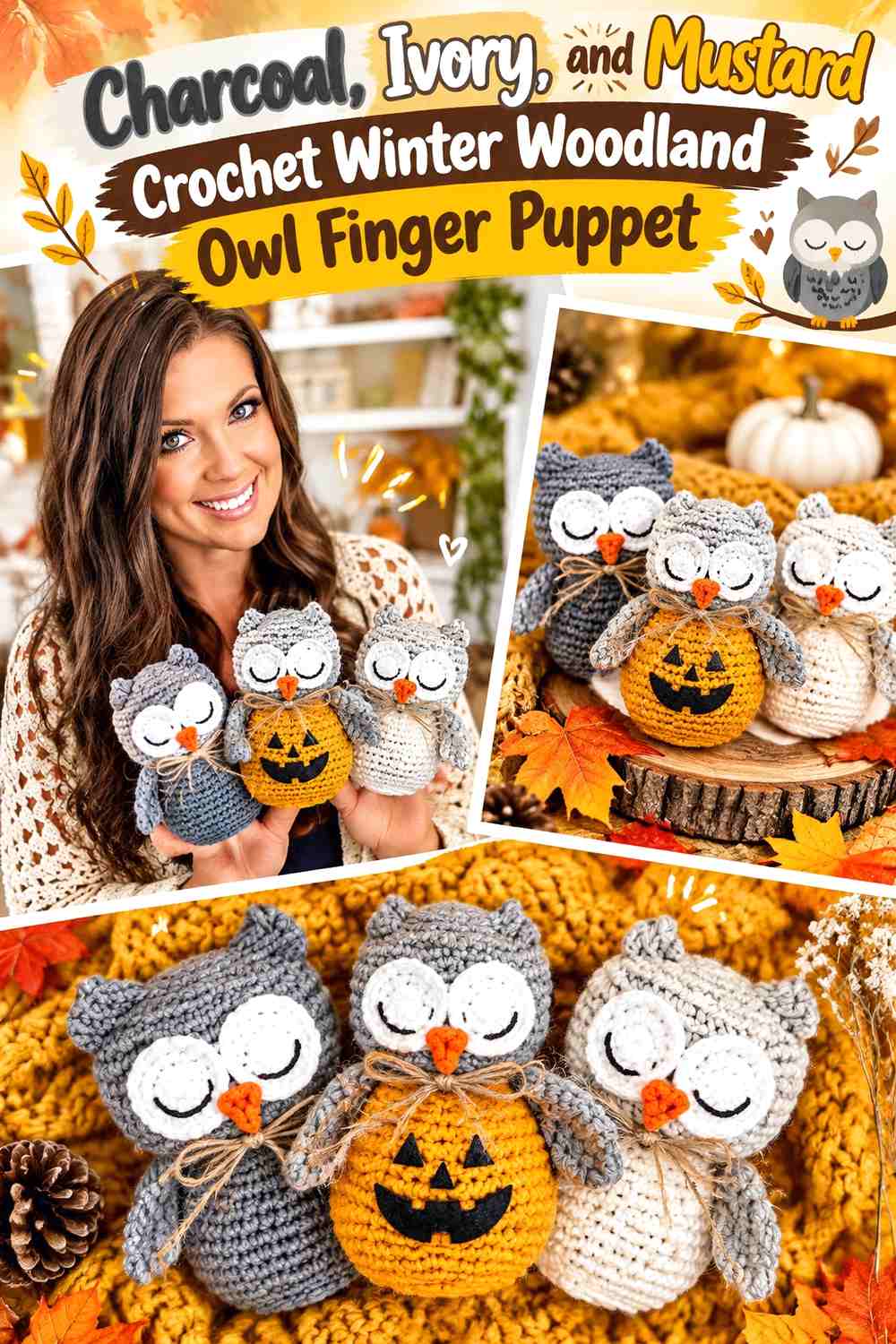
Charcoal can cover most of an owl puppet while ivory creates broad eye surrounds and mustard defines the beak. The winter effect comes from the cool dark-and-light contrast rather than from adding a separate holiday color.
If you want one clothing detail, keep it charcoal or ivory so the eyes and beak remain the main focal points.
Ivory Should Create Strong Eye Contrast Against the Charcoal Crochet Owl
Give each eye enough ivory space to remain distinct from the dark head. On a finger puppet, the eyes carry much of the animal’s identity because the body is so simplified.
Avoid placing additional ivory stripes directly below the eyes, where they can blur the facial structure.
Mustard Should Stay Tiny Against Charcoal and Ivory Owl Features
Use mustard only for the beak or another very small central point.
Its warm contrast becomes more noticeable when the rest of the owl remains charcoal and ivory.
Creator Credit: MJ’s Off The Hook Designs
4. Cocoa, Cream, and Dusty Blue Crochet Winter Bear Finger Puppet
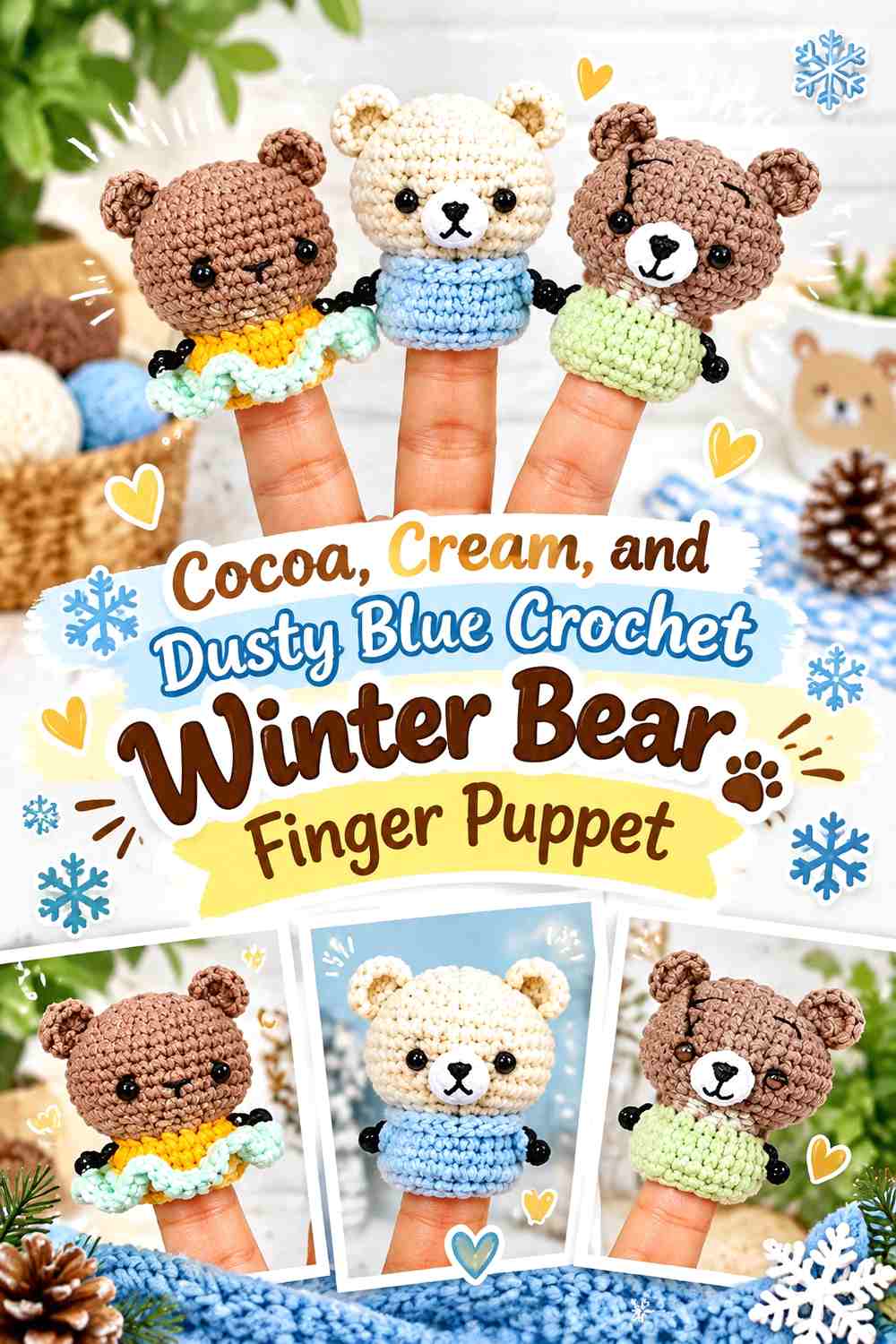
Cocoa creates a warm bear body, cream can define the muzzle and inner ears, and dusty blue can become a compact winter scarf. The blue introduces a cool seasonal note while leaving the natural brown-and-cream bear face intact.
This is also one of the strongest concepts for an actual finger-puppet construction because the supporting tutorial specifically demonstrates a bear finger puppet.
Cocoa Should Stay Continuous Around the Cream Crochet Bear Muzzle
Keep the head and puppet tube primarily cocoa so the cream muzzle reads as one clear facial feature.
A broad cream chest is optional, but it should not compete with the muzzle for attention.
Dusty Blue Should Sit Below the Cocoa and Cream Bear Face
Use blue as a neck band or small scarf where it cannot interfere with the ears.
The cool accent will remain distinct from cocoa even when only a small amount is visible.
Creator Credit: Amigurumi Land
5. Winter White, Sage, and Blush Crochet Rabbit Finger Puppet
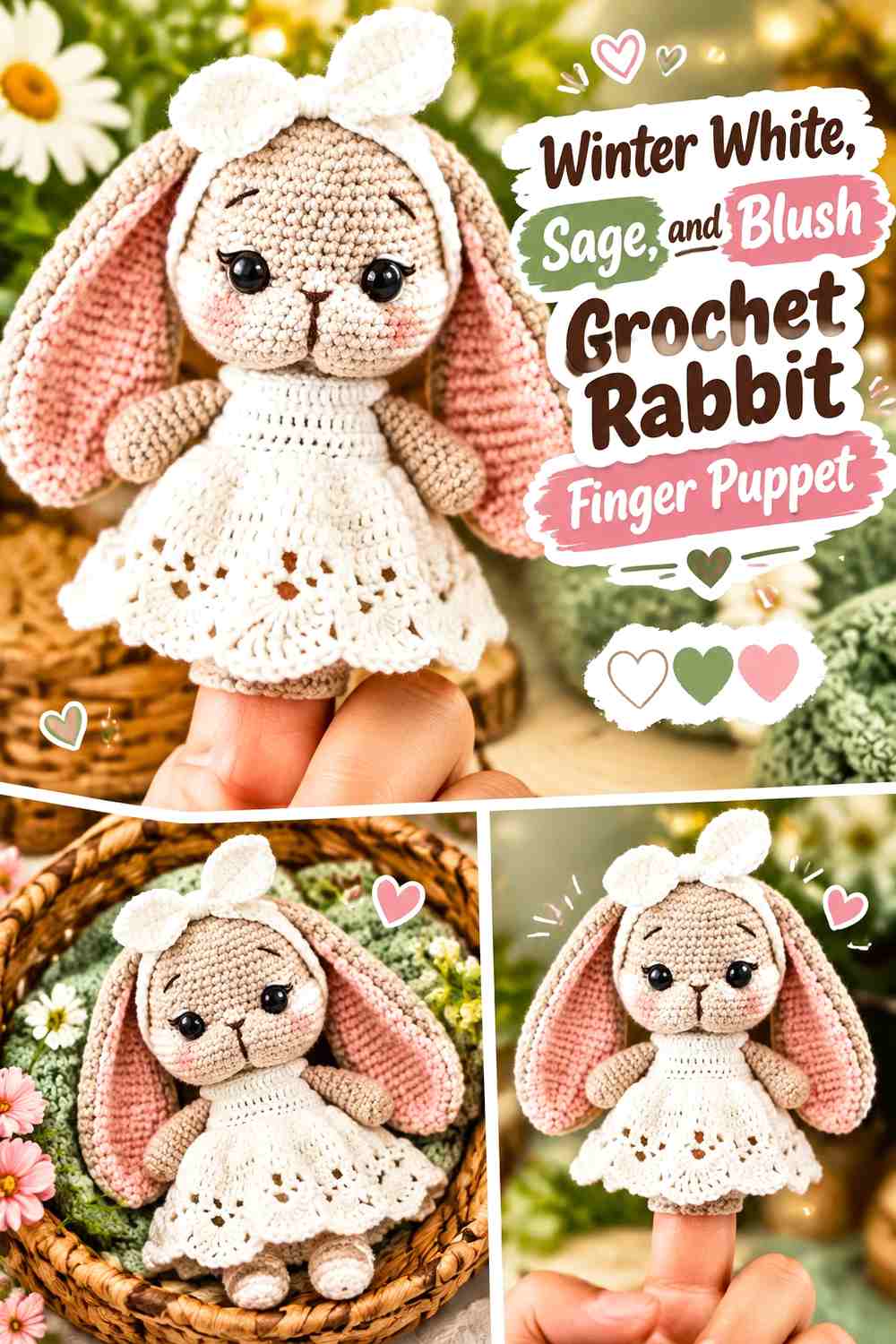
Winter white makes a rabbit finger puppet feel snowy, while sage can supply a tiny scarf and blush can stay inside the ears or around the nose. The two accents need clearly different roles so the pale animal does not become a pastel patchwork.
Keep most of the puppet white, especially around the long ears.
Winter White Should Dominate the Crochet Rabbit Ears and Face
Use white through the entire outer ear and head so the rabbit silhouette remains connected.
Blush belongs inside the ears, where it adds warmth without changing the animal’s overall winter-white appearance.
Sage Should Ground the Winter White and Blush Rabbit Puppet
A sage scarf or lower-body band gives the pale character enough contrast against white backgrounds or snowy displays.
Keep the green below the face rather than adding sage details to the ears.
Creator Credit: Hi DIY
6. Chestnut, Cream, and Moss Crochet Winter Hedgehog Finger Puppet
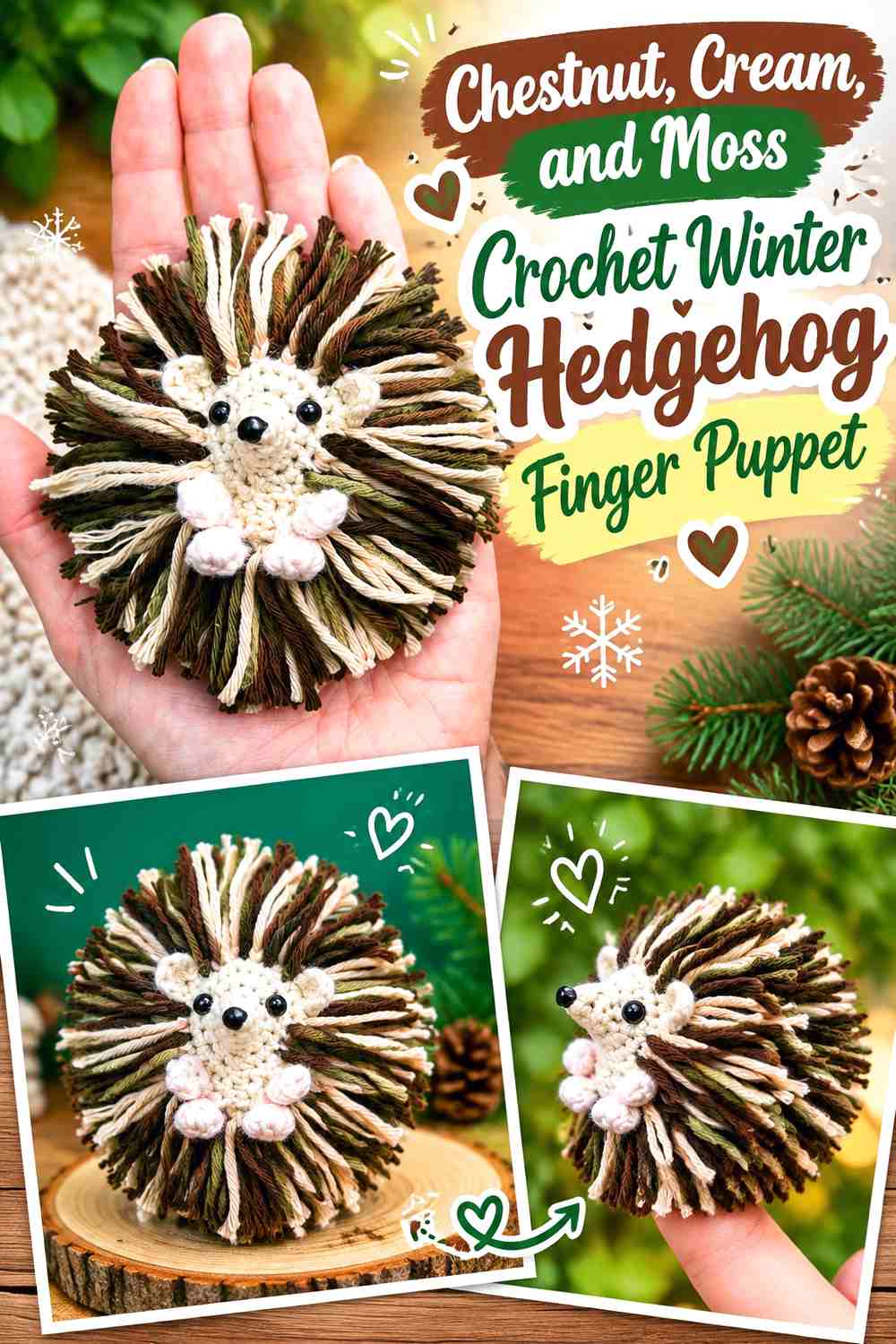
Chestnut can suggest the hedgehog’s darker textured back, cream can lighten the face, and moss green can become the winter scarf or woodland accent. The body needs enough contrast between face and “spines” for the animal to remain recognizable at puppet scale.
Avoid carrying moss through the spiny area, where it can interrupt the hedgehog texture.
Chestnut Should Frame the Cream Crochet Hedgehog Face
Use the deeper brown around the head perimeter and back so the pale face has a clear boundary.
If chestnut and cream are too close in value, shift the face slightly lighter rather than adding another body color.
Moss Should Stay Below the Chestnut and Cream Hedgehog Features
A narrow moss scarf connects the puppet to a winter forest palette without covering the defining face-to-spine contrast.
One small green detail is enough for this compact character.
Creator Credit: Stella’s Yarn Universe
7. Caramel, Rust, and Oatmeal Crochet Winter Squirrel Finger Puppet
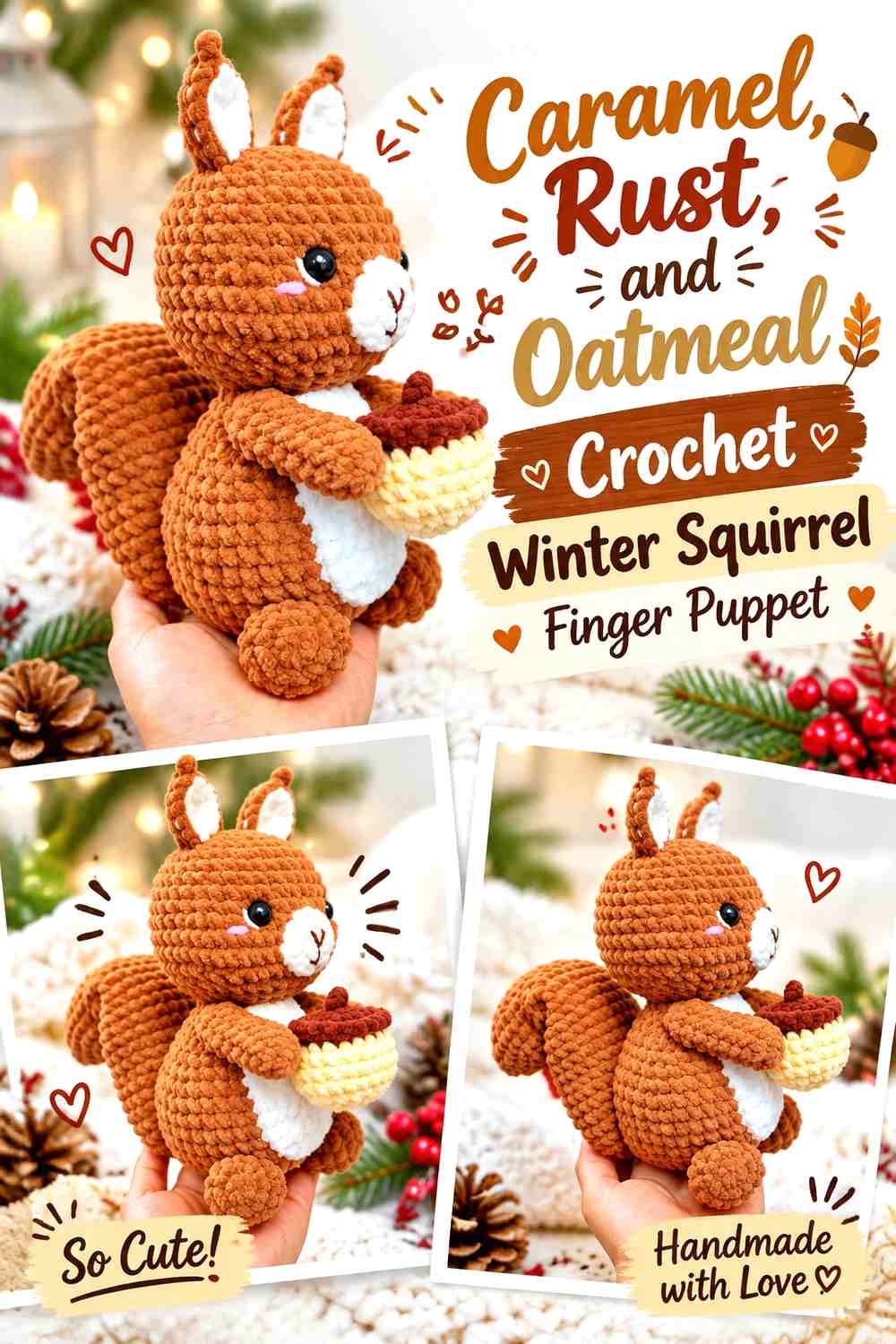
Caramel can lead the squirrel’s body, rust can deepen the tail or ear details, and oatmeal can define the muzzle and winter collar. Even if a finger puppet simplifies the large tail, repeating rust somewhere behind or beside the body keeps the squirrel identity stronger.
Use oatmeal sparingly so the warm brown relationship remains dominant.
Caramel Should Cover Most of the Crochet Squirrel Puppet
Keep caramel across the head and finger tube, then use rust on the tail-inspired back detail or ear edges.
This gives the puppet two related warm shades without making it look striped.
Oatmeal Should Separate Caramel and Rust Around the Squirrel Face
Use oatmeal on the muzzle or narrow collar where it naturally breaks up neighboring warm colors.
A large oatmeal body section would shift the puppet away from its earthy squirrel palette.
Creator Credit: Tata Crochet Patterns
8. Silver Gray, Charcoal, and Burgundy Crochet Winter Raccoon Finger Puppet

Silver gray should provide the main raccoon body, charcoal can create the recognizable eye mask and ear tips, and burgundy can supply a narrow scarf. The high-contrast facial pattern already provides plenty of detail, so the winter accent should remain simple.
Do not use burgundy around the eyes; the mask needs to stay clearly charcoal.
Charcoal Should Define the Silver Gray Crochet Raccoon Mask
Keep the darkest shade concentrated across the eye area and ears. That facial contrast does more to identify the raccoon than extra body details.
Silver gray should remain visible between the mask and any winter accessory.
Burgundy Should Stay Below the Silver Gray and Charcoal Raccoon Face
Place burgundy around the neck or lower puppet tube, where it adds warmth without confusing the mask.
A narrow scarf also keeps the palette appropriately wintery without turning the puppet red-led.
Creator Credit: Crocheting with Natasha
9. Taupe, Cocoa, and Forest Green Crochet Winter Moose Finger Puppet

Taupe gives the moose a muted body, cocoa can define the antlers and muzzle, and forest green can become the winter collar. The broad antlers already make the upper silhouette visually busy, so avoid additional hat details.
Keep the green entirely below the head to preserve the antler shape.
Cocoa Antlers Should Stay Darker Than the Taupe Crochet Moose Head
A clear value change keeps the antlers visible even when their simplified puppet version is small.
Use the same cocoa on the muzzle only if enough taupe remains around it to prevent the face from becoming too dark.
Forest Green Should Ground the Taupe and Cocoa Moose Puppet
A narrow green neck section adds winter color without extending into the antlers or ears.
If forest green is very dark, one oatmeal edge can separate it from cocoa details near the lower face.
Creator Credit: Acacia Copley
10. Warm Gray, Blush, and Plum Crochet Winter Woodland Mouse Finger Puppet
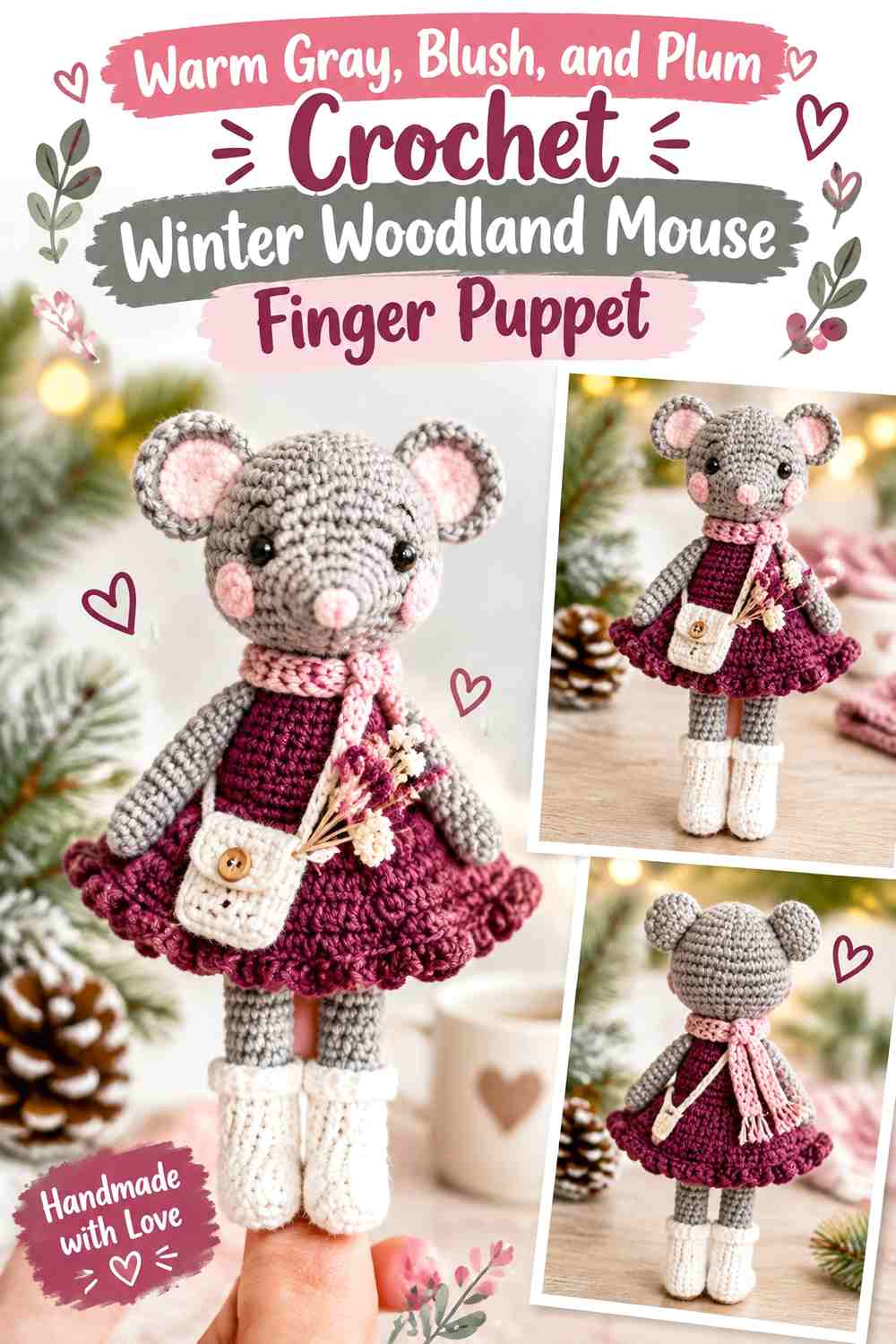
Warm gray can cover the mouse body, blush can stay inside the ears and at the nose, and plum can give the puppet a small scarf or winter coat-like lower band. The palette remains soft while still offering enough light-dark contrast around the face.
Keep the ears largely gray so they remain visually connected to the head.
Blush Should Stay Contained Inside the Warm Gray Crochet Mouse Ears
Use pink only where it has a clear anatomical role. Broad blush sections across the face can weaken the mouse silhouette.
A small matching nose is enough to repeat the color.
Plum Should Sit Below the Warm Gray and Blush Mouse Face
A plum scarf creates the darkest focal point low on the puppet and keeps the pale face easy to read.
Avoid repeating plum in the ears, where it could compete with the blush details.
Creator Credit: Studio İkikucuksevgi
11. Cranberry Red, Charcoal, and Snow White Crochet Winter Cardinal Finger Puppet

A cardinal adds a forest bird to the puppet collection and introduces a stronger winter color. Cranberry red can dominate the body, charcoal can define the face and beak area, and snow white can appear in a tiny chest or snow-inspired lower detail.
Keep most of the bird red so the silhouette remains immediately recognizable.
Cranberry Red Should Carry Most of the Crochet Cardinal Puppet
Use red across the head and finger body while keeping charcoal restricted to the face.
Large white areas can weaken the cardinal identity, so the pale shade should remain a small winter accent.
Charcoal Should Stay Crisp Against Cranberry Red and Snow White
Use charcoal in one compact facial area where it can provide strong contrast.
Do not scatter black-gray details throughout the body; the cardinal is strongest when red remains continuous.
Creator Credit: Amigurumi_Joys
12. Snow White, Silver Gray, and Icy Blue Crochet Snowy Owl Finger Puppet
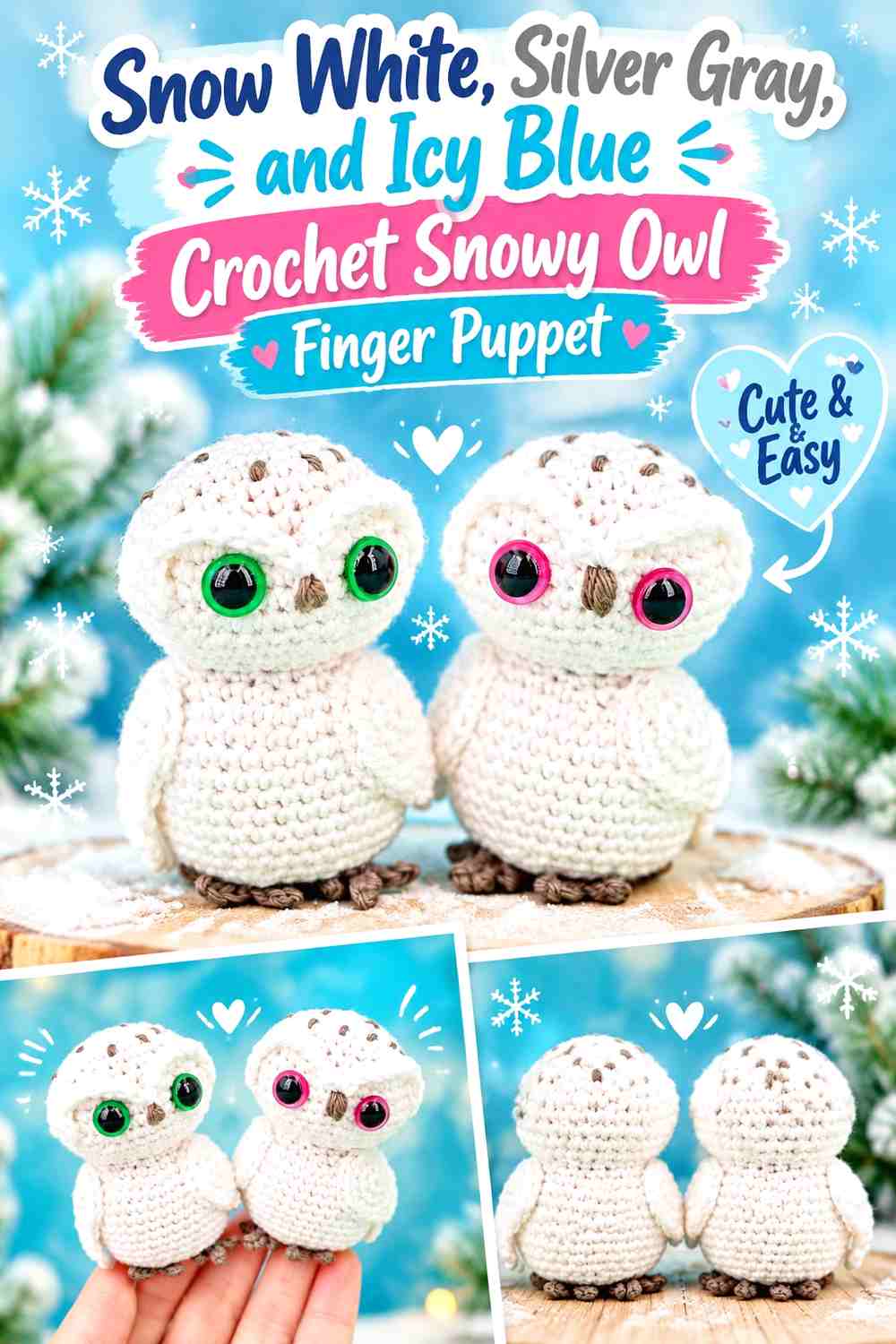
Snow white should dominate this winter owl, silver gray can provide small feather markings, and icy blue can appear as a tiny scarf or lower trim. Unlike the charcoal owl earlier, this version relies on subtle tonal contrast.
The eyes will need enough darker detail to remain visible against the pale face.
Snow White Should Remain the Largest Crochet Snowy Owl Color
Keep the head and puppet body predominantly white and add gray in selected markings rather than broad blocks.
This preserves the snowy appearance while still giving the surface definition.
Icy Blue Should Stay Smaller Than Snow White and Silver Gray
Use blue as a narrow winter accent around the lower body or neck.
Too much blue would shift the character away from a snowy owl toward a fantasy-colored bird.
Creator Credit: justMiko
13. Burnt Orange, Ivory, and Faded Blue Crochet Winter Fox Finger Puppet

Burnt orange gives this second fox a deeper, more muted woodland direction than bright russet. Ivory can define the face and chest, while faded blue provides a quiet winter scarf.
The cooler blue makes this palette noticeably different from the pine-green fox while preserving the same recognizable orange-and-cream animal structure.
Burnt Orange Should Dominate the Ivory Crochet Fox Face
Keep the orange around the forehead, cheeks, and ears so ivory remains a supporting facial color.
If ivory expands too far, the fox can begin to look cream-led rather than warmly woodland-toned.
Faded Blue Should Contrast Burnt Orange Below the Fox Muzzle
Use blue only at the neck, where its cool temperature naturally separates from the warm body.
A narrow ivory edge can connect the scarf back to the face if the transition feels abrupt.
Creator Credit: Rania Crochet Guide
14. Cocoa, Oatmeal, and Sage Crochet Woodland Owl Finger Puppet
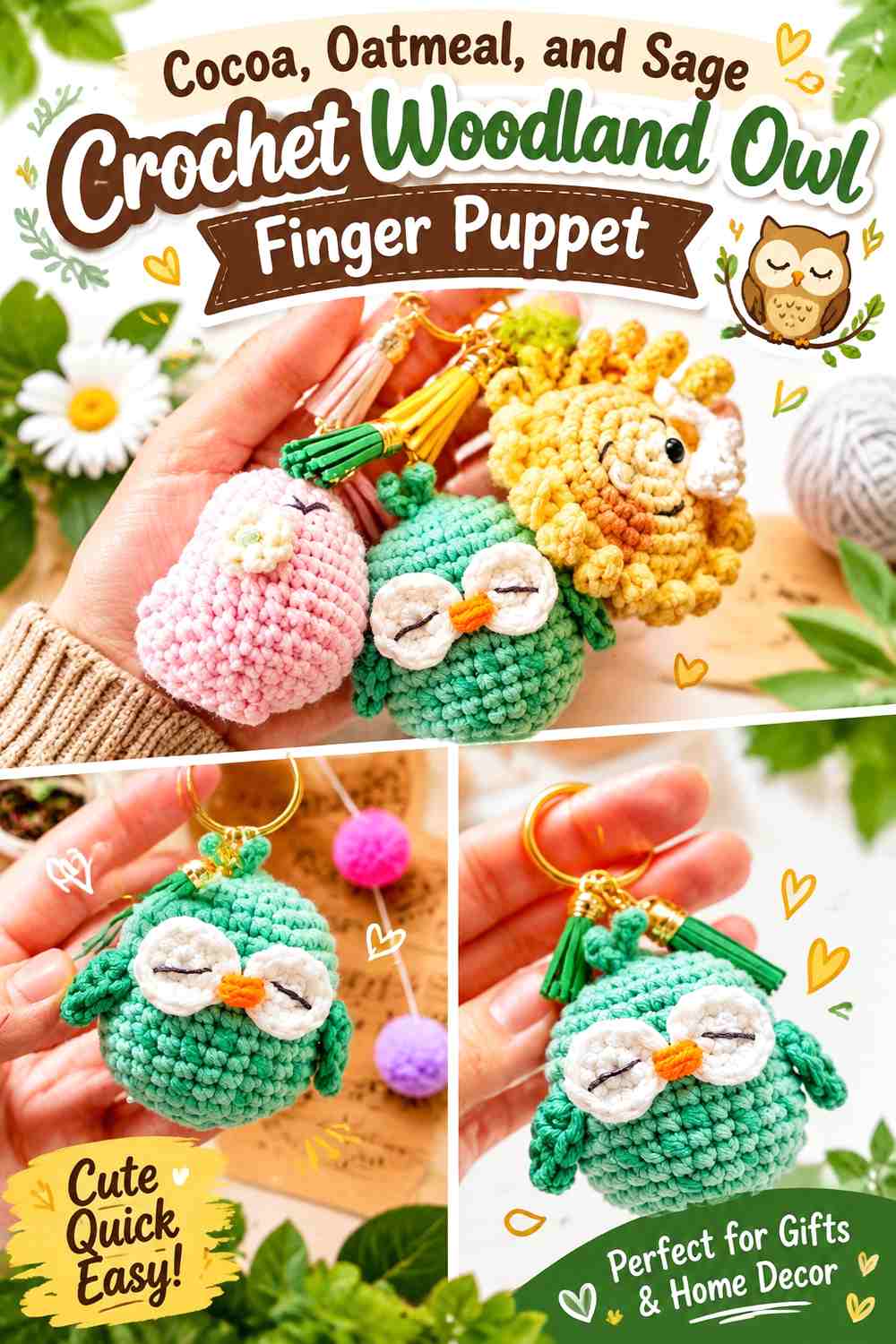
Cocoa creates a softer brown owl, oatmeal can surround the eyes, and sage can form a tiny scarf or lower chest accent. This palette suits a woodland owl that feels warm and earthy rather than snowy.
Keep the eye surrounds large enough to break up the brown face.
Oatmeal Should Brighten the Cocoa Crochet Owl Eyes
Use oatmeal around both eyes in balanced areas so the face reads symmetrically.
If the owl has a dark beak, keep enough oatmeal around it to prevent all central features from merging.
Sage Should Stay Quieter Than Cocoa and Oatmeal on the Owl Puppet
Use sage in one narrow winter section rather than through the wings or face.
The muted green adds forest color while leaving the brown-and-neutral owl identity intact.
Creator Credit: The Kindness Company
15. Tawny Orange, Cream, and Mustard Crochet Winter Fox Finger Puppet

Tawny orange can cover the fox body, cream can define the face, and mustard can create a scarf with a warmer winter feel than blue or green. Because tawny and mustard are both warm, the cream section becomes important for visual separation.
Keep the mustard low on the puppet and away from the ears.
Cream Should Separate Tawny Orange From the Mustard Crochet Fox Scarf
Use cream across the muzzle and chest area between the two warm shades.
Without that lighter break, mustard can visually merge with tawny orange at miniature scale.
Tawny Orange Should Remain Broader Than Mustard on the Fox Puppet
Let orange dominate the head and body, with mustard limited to the winter accessory.
This keeps the animal recognizable before the viewer notices the seasonal styling.
Creator Credit: ♡ Tejiendo con pasi♡n
16. Copper, Chocolate, and Moss Crochet Winter Fox Finger Puppet

Copper creates a darker fox body, chocolate can define the ear tips and lower legs or puppet edge, and moss can add one muted forest scarf. This is the earthiest fox palette in the set.
Cream can be used only if the muzzle needs more contrast, but the main three-color relationship should remain warm and woodland-focused.
Chocolate Should Define the Copper Crochet Fox Ear Tips
Keep the darker brown on small structural details rather than spreading it evenly across the entire puppet.
That concentrated contrast makes the pointed ears easier to see.
Moss Should Stay Smaller Than Copper and Chocolate on the Fox Puppet
Use moss at the neck or one narrow lower band.
The muted green provides a winter-forest cue without interrupting the warm fox coloring.
Creator Credit: Kitcroet Arts, Crafts & Sewing
17. Soft Gray, Antique Cream, and Cranberry Crochet Winter Mouse Finger Puppet

Soft gray creates a cooler mouse than the earlier warm-gray version. Antique cream can lighten the muzzle and inner ears, while cranberry provides one strong winter scarf.
This palette works best when cranberry stays clearly separated from the face.
Antique Cream Should Define the Soft Gray Crochet Mouse Muzzle
Use cream around the lower face and perhaps in a very small inner-ear area.
Too much cream through the puppet tube can make the gray head appear detached from the body.
Cranberry Should Stay Below the Soft Gray and Antique Cream Mouse Face
Use the red as a narrow neck accent or tiny coat-like lower band.
Its strong saturation means only a small amount is needed to make the puppet feel wintery.
Creator Credit: Magic Uncinetto
18. Oatmeal, Dusty Rose, and Sage Crochet Winter Rabbit Finger Puppet
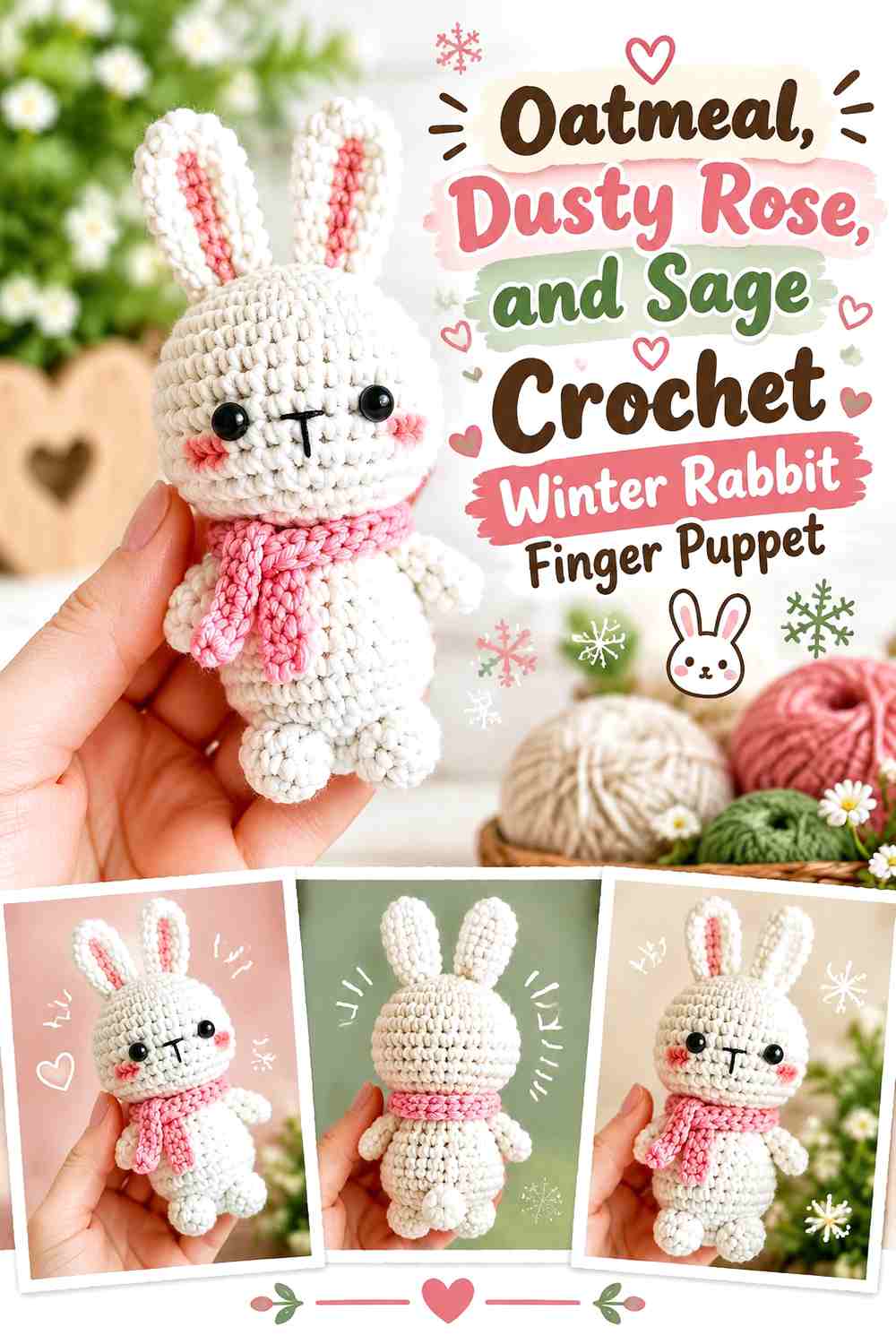
An oatmeal rabbit feels warmer than a pure-white bunny while still fitting a pale winter collection. Dusty rose can fill the inner ears and nose, while sage can become a small scarf.
This soft palette works especially well beside darker animals such as the raccoon, moose, and bear.
Dusty Rose Should Stay Inside the Oatmeal Crochet Rabbit Ears
Keep a visible oatmeal border around each pink ear center so the long ear silhouette remains defined.
Repeat dusty rose only at the nose if another touch of color is needed.
Sage Should Ground the Oatmeal and Dusty Rose Rabbit Puppet
A sage scarf adds the only cool color to an otherwise warm-neutral rabbit.
Keep it narrow enough that the oatmeal body remains visible below the head.
Creator Credit: Happygurumi
Which Winter Forest Finger Puppet Palette Should You Choose?
For the most natural woodland collection, start with russet, soft brown, cocoa, chestnut, warm gray, taupe, and cream. Those body colors allow the animals to remain recognizable even when simplified into finger-puppet shapes.
Then distribute winter accents rather than giving every animal the same scarf. Pine or forest green suits foxes, bears, and moose; dusty or faded blue works well against warm brown; cranberry gives deer, raccoons, and mice a stronger seasonal note; and sage keeps rabbits and owls softer.
For a coordinated puppet set, repeat cream or oatmeal across several muzzles and faces while changing the body and scarf colors. That one shared neutral can tie all 19 characters together without making them identical.
Conclusion
Winter forest animal finger puppets need clear silhouettes more than elaborate multicolor detail. Pointed fox ears, deer antlers, owl eyes, rabbit ears, raccoon masks, hedgehog texture, and moose antlers should remain visible before any scarf or winter trim is added.
Use natural browns, grays, russets, and whites for the main animals, then bring in cranberry, pine, moss, sage, dusty blue, plum, or mustard through small accessories. The strongest accent generally works best below the face where it will not compete with ears, eyes, or antlers.
When adapting a larger amigurumi tutorial, use the creator’s video for the relevant animal features and construction concept rather than trying to reproduce the entire stuffed body at miniature scale. Build your finger-puppet base independently and use these palettes as color-placement ideas.
Frequently Asked Questions
What colors work well for crochet winter forest animal finger puppets?
Russet, soft brown, cocoa, chestnut, taupe, gray, ivory, cream, and winter white work well for the animals themselves. Pine, moss, sage, cranberry, dusty blue, plum, mustard, and burgundy can add winter accents.
How can I make different crochet finger puppets look like one woodland set?
Repeat one neutral, such as cream or oatmeal, across several muzzles, eye areas, or inner ears. You can then vary the animal body colors and scarves without losing visual connection across the collection.
Where should winter accent colors go on a tiny animal finger puppet?
Scarves, collars, narrow lower-body bands, and small hat details are useful locations. Keep bright accents away from important facial markings unless they have a clear purpose there.
How can I keep dark woodland finger puppets easy to see?
Use cream, ivory, oatmeal, or silver gray on muzzles, eye surrounds, ear interiors, or small edges. A lighter facial area can reveal the animal without changing its dark overall palette.
Can foxes, bears, or owls appear more than once in a winter puppet set?
Yes. Color alone can create a meaningful difference when each version has a distinct palette and mood. A russet fox with pine green feels different from a burnt-orange fox with faded blue or a copper fox with moss.
Are finger puppets a good project for tiny winter scarves?
Yes, as long as the scarf remains proportionate and does not obscure the face or restrict the finger opening. A narrow color band is often enough to communicate the winter theme.
Do all the linked tutorials make the exact finger puppets described here?
No. One source demonstrates an actual bear finger puppet, while many others teach full woodland animal amigurumi such as foxes, deer, owls, rabbits, hedgehogs, squirrels, raccoons, moose, mice, and birds. Use those tutorials for the animal features or construction concepts they demonstrate, then adapt the body independently into a finger-puppet form.