Crochet flower charms can give plain sneakers, boots, or canvas shoes a cottagecore look without covering the entire shoe in decoration. A pair of cream daisies can sit near the lower lace crossings, dusty rose flowers can frame a bow, and tiny sage leaves can fill the spaces where a larger floral motif would feel bulky.
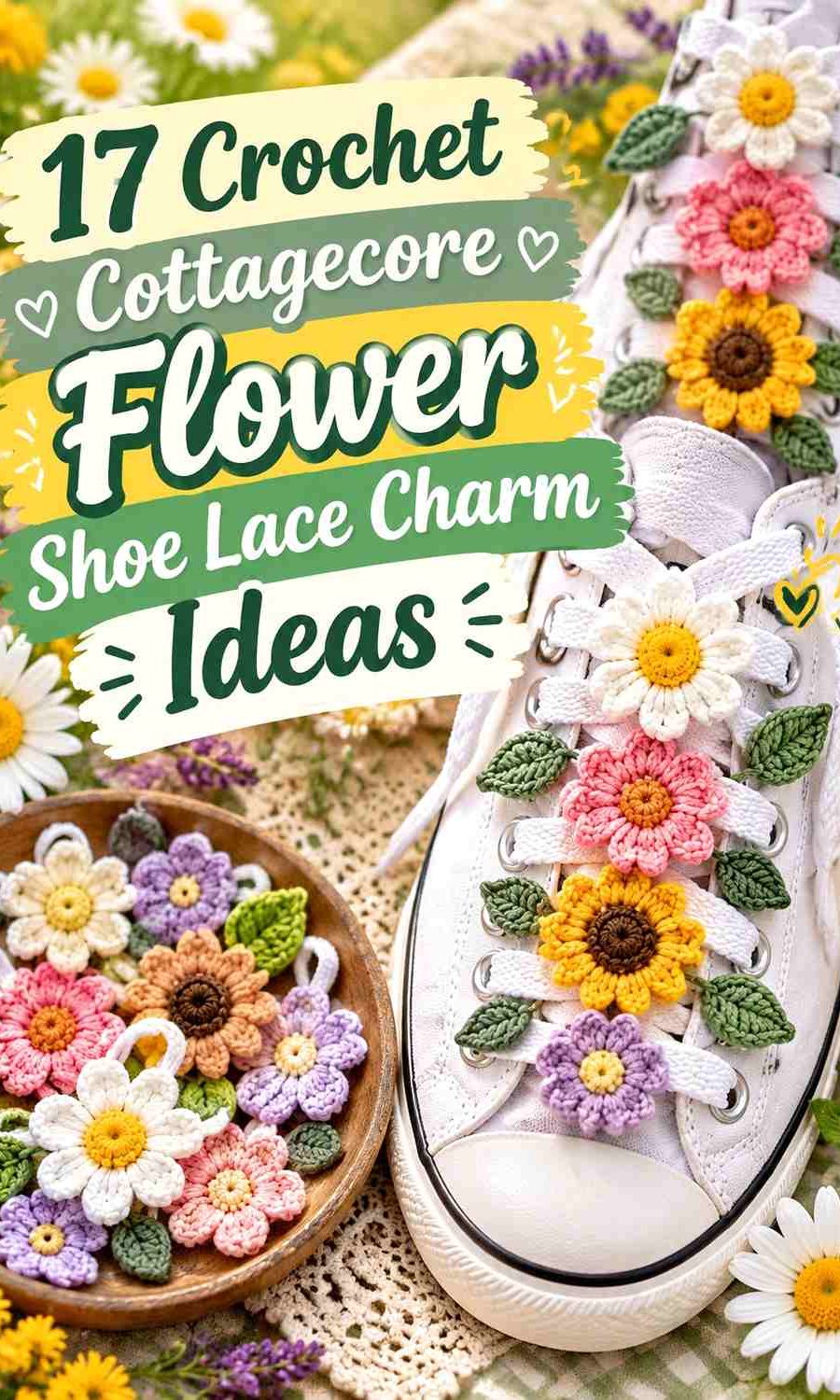
Color is especially important because shoe lace charms are small and viewed against several backgrounds at once: the lace, eyelets, shoe upper, and sometimes socks or pants. Pale flowers on white sneakers may need sage leaves or a deeper center for definition, while burgundy, rust, or dark-green charms can benefit from cream details when used on black shoes.
The tutorials below teach flowers, leaves, fruit, mushrooms, butterflies, bows, and other small crochet motifs that can be adapted into shoe lace decorations. The shoelace placement and cottagecore palettes are independent adaptations rather than claims that each creator originally designed a footwear charm.
Quick List
- Cream, Butter Yellow, and Sage Crochet Daisy Shoe Lace Charms
- Dusty Rose, Burgundy, and Moss Crochet Rose Shoe Lace Charms
- Peach, Cream, and Sage Crochet Tulip Shoe Lace Charms
- Faded Blue, Butter Yellow, and Leaf Green Crochet Forget-Me-Not Shoe Lace Charms
- Mustard, Cocoa, and Olive Crochet Sunflower Shoe Lace Charms
- Lavender, Sage, and Oatmeal Crochet Flower-Sprig Shoe Lace Charms
- Strawberry Red, Cream, and Moss Crochet Berry Shoe Lace Charms
- Rust, Cream, and Moss Crochet Mushroom Shoe Lace Charms
- Teal, Lilac, and Dusty Rose Crochet Butterfly Flower-Look Shoe Lace Charms
- Sage, Forest Green, and Cream Crochet Leaf Shoe Lace Charms
- Plum, Lavender, and Butter Yellow Crochet Pansy Shoe Lace Charms
- Blush, Dusty Pink, and Sage Crochet Cherry Blossom Shoe Lace Charms
- Cream, Dusty Rose, and Sage Crochet Floral Bow Shoe Lace Charms
- Moss, Clover Green, and Cream Crochet Clover Shoe Lace Charms
- Cranberry, Black, and Sage Crochet Poppy Shoe Lace Charms
- Butter Yellow, Cream, and Leaf Green Crochet Daffodil Shoe Lace Charms
- Antique Cream, Sage, and Soft Yellow Crochet Lily-of-the-Valley Shoe Lace Charms
Match the Crochet Charm to the Shoe and Lace Color
White or cream shoes can make pale flowers disappear, so use green leaves, darker flower centers, or a colored shoelace to create a boundary. On darker shoes, cream, yellow, blush, lavender, and faded blue usually remain easier to see.
The shoelace itself can also become part of the palette. Cream laces make sage and burgundy charms feel softer, while brown, olive, or dusty-pink laces can strengthen a cottagecore color scheme without requiring larger crochet motifs.
Keep Crochet Shoe Lace Charms Away From High-Friction Areas
The best visual placement is not always the most practical placement. Tiny charms usually make more sense around lace crossings, upper eyelets, bow loops, or lace ends than near the sole where they may brush against the ground.
Before securing a charm, lace the shoe normally and bend the foot. Check whether the flower folds under another lace section or rubs against the opposite shoe. Moving a motif only one eyelet higher can improve both visibility and comfort.
1. Cream, Butter Yellow, and Sage Crochet Daisy Shoe Lace Charms
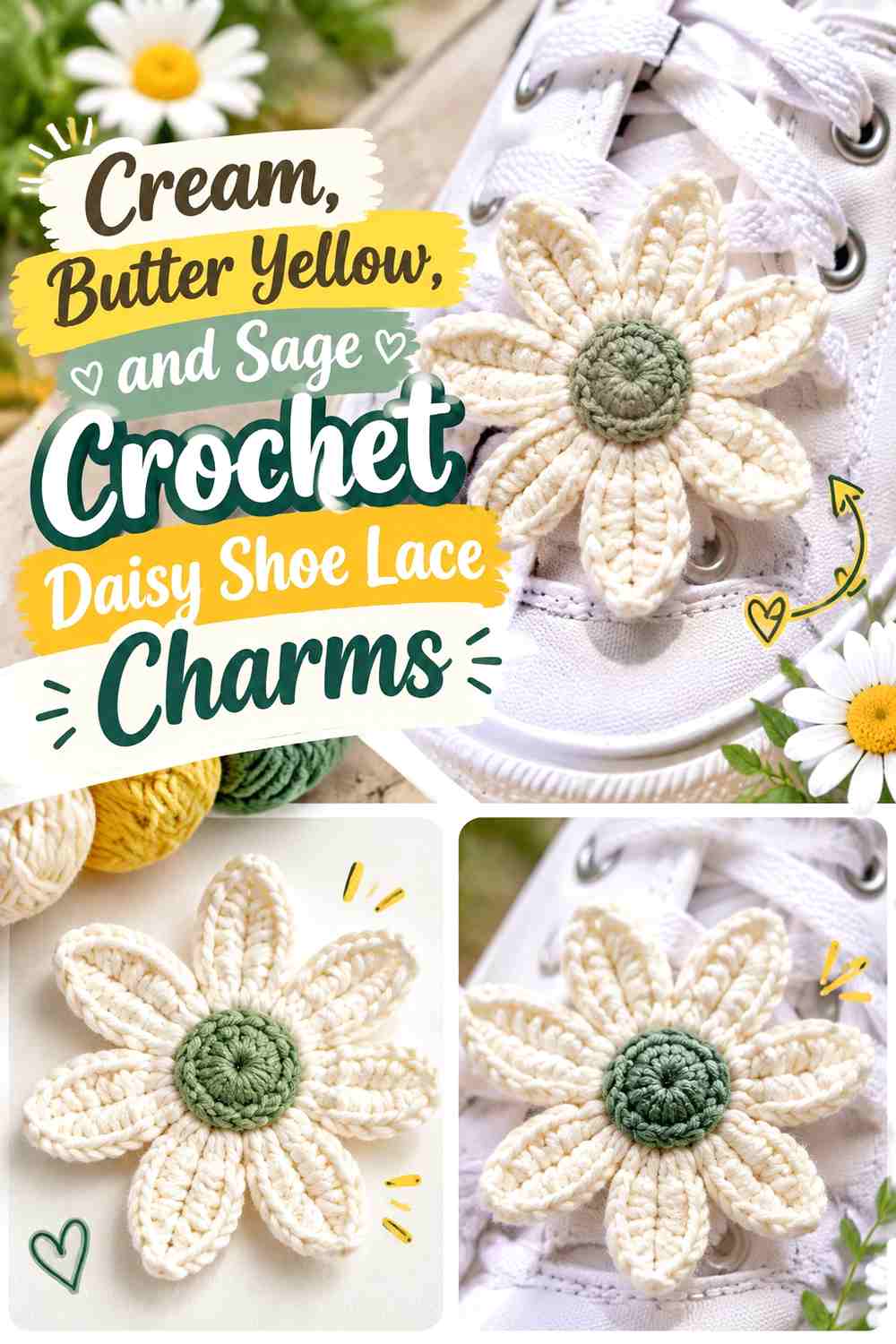
A daisy is one of the clearest cottagecore motifs because its light petals and round center stay recognizable even at a small scale. Cream can carry the petals, butter yellow can define the center, and sage can appear in a tiny leaf or connecting loop.
Place one daisy near each lower-to-middle lace crossing rather than covering every eyelet. The open space around the flowers keeps the shoe looking garden-inspired instead of densely embellished.
Cream Daisy Petals Need Sage Contrast on Pale Shoe Laces
If the shoes and laces are both white, cream petals may almost disappear. Add a small sage leaf behind the flower or let green reach the attachment point.
On darker canvas shoes, cream can remain completely unoutlined because the shoe already supplies enough contrast.
Butter Yellow Should Stay Central on the Cream Crochet Daisy
Keep yellow concentrated in the flower center so the daisy remains easy to read.
Repeating yellow throughout the sage leaf or attachment loop can weaken the simple flower hierarchy.
Creator Credit: Yarndrasil
2. Dusty Rose, Burgundy, and Moss Crochet Rose Shoe Lace Charms
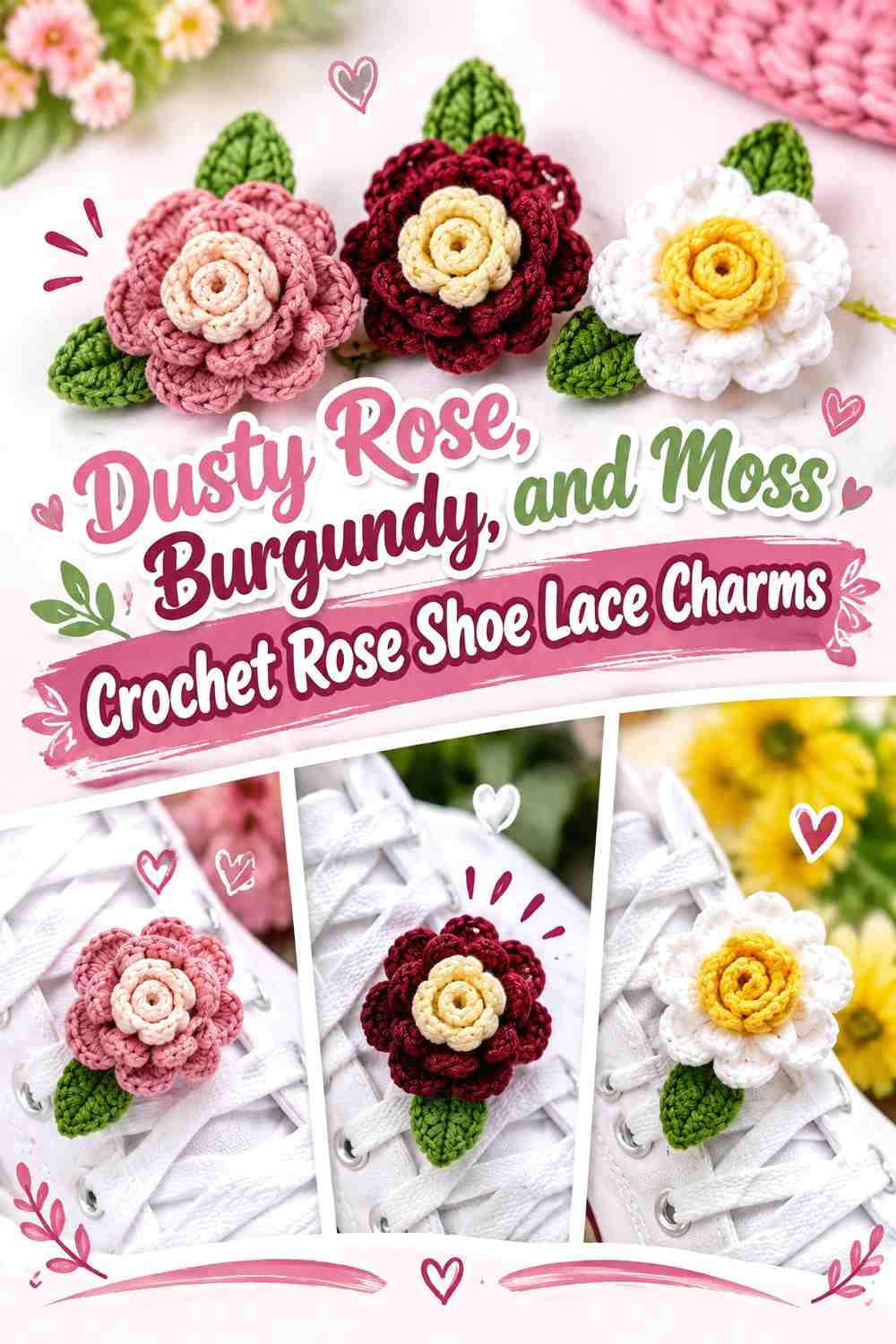
A small rolled or layered rose can create a more romantic cottagecore shoe than a flat daisy. Dusty rose should cover most of the petals, burgundy can deepen the center, and moss can supply one leaf or the attachment detail.
Because a rose is more dimensional, use fewer motifs. One rose near the outside upper lacing can make a stronger statement than several bulky flowers arranged down the entire shoe.
Dusty Rose Should Carry Most of the Crochet Rose Petals
Use dusty rose across the broadest visible petal layers and keep burgundy nearer the center.
If both shades alternate through every layer, the tiny flower can look striped rather than naturally layered.
Moss Should Separate Burgundy and Dusty Rose From the Shoe Lace
A small moss leaf creates a useful boundary between the warm flower and cream, blush, or brown laces.
On dark-green shoes, replace the outer moss detail with cream so the leaf does not disappear.
Creator Credit: Loopara
3. Peach, Cream, and Sage Crochet Tulip Shoe Lace Charms
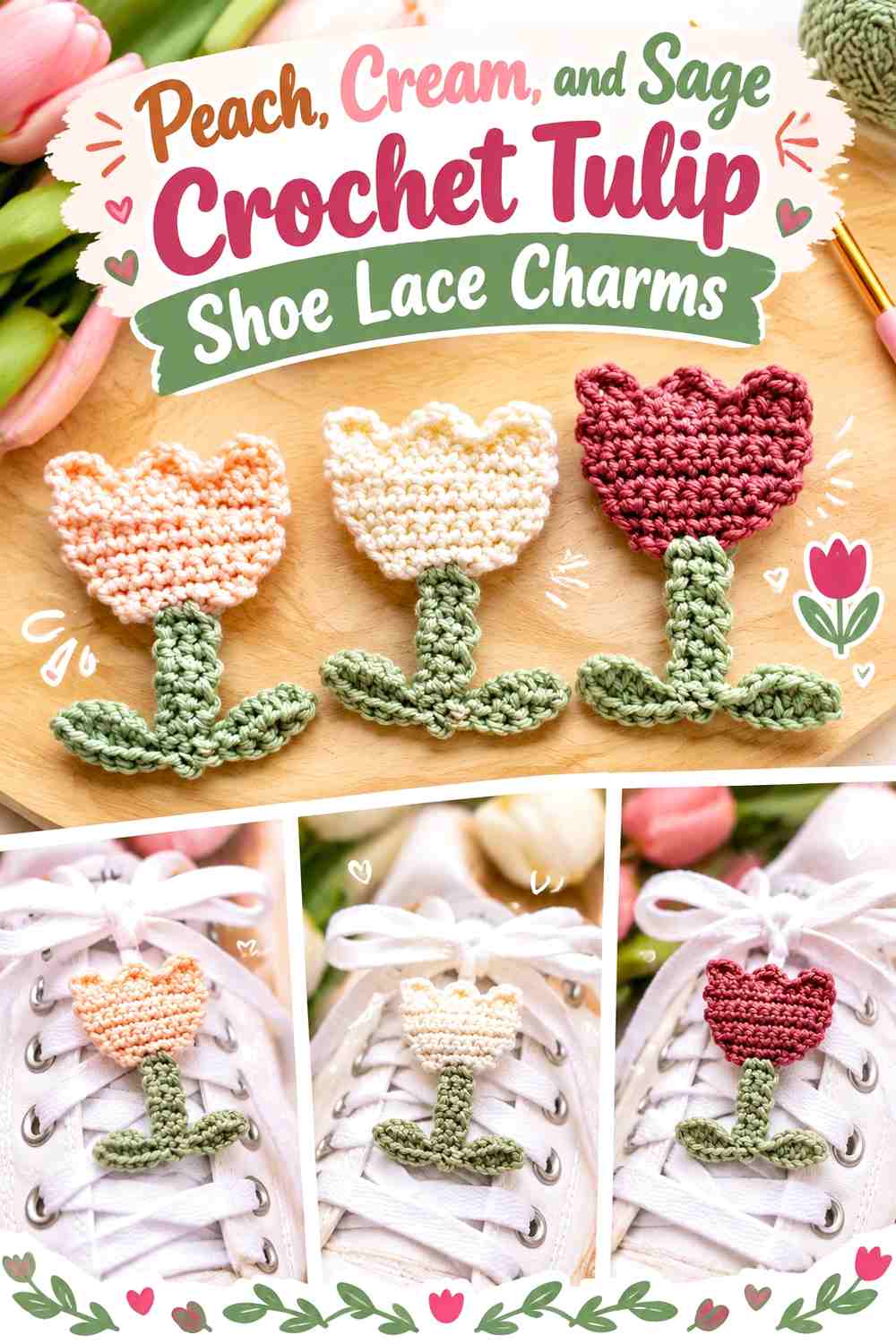
A tulip charm introduces a taller floral shape that can run alongside a shoelace instead of sitting directly over a crossing. Peach can form the flower, sage the stem and leaves, and cream can appear in the attachment loop or a small petal highlight.
Position the tulip so its stem follows the direction of the lace. That makes the narrow motif feel integrated with the shoe rather than hanging sideways from an eyelet.
Peach Should Stay Clear Above the Sage Crochet Tulip Stem
Keep the bloom peach-led so the flower head remains visually separate from the green lower section.
If the peach is very pale, a cream highlight inside the flower may not add enough contrast; deepen the peach instead of introducing another bright shade.
Sage Should Follow the Shoe Lace Direction Beneath the Peach Tulip
A narrow sage stem can visually connect the flower with the lacing pattern.
Avoid making the leaves much wider than the bloom, since broad foliage can hide neighboring lace crossings.
Creator Credit: E’Claire Makery
4. Faded Blue, Butter Yellow, and Leaf Green Crochet Forget-Me-Not Shoe Lace Charms

Faded blue makes tiny forget-me-not-style flowers especially suited to cottagecore shoes because it introduces color without becoming overly saturated. Butter yellow can define each center, while leaf green can connect a small pair or cluster.
A grouping of two or three small flowers near one eyelet usually reads more clearly than placing single tiny blossoms along the entire lace.
Faded Blue Should Repeat Across the Crochet Forget-Me-Not Cluster
Use the same blue on neighboring blossoms so they read as one small floral spray.
Changing every flower to a different pastel can turn the cluster into general rainbow decoration rather than a specific cottagecore floral motif.
Butter Yellow Should Stay Smaller Than Faded Blue and Leaf Green
Keep yellow confined to the flower centers. Its warm contrast will remain noticeable even in a very small amount.
Leaf green can then connect the flowers without competing with the blue petals.
Creator Credit: Unithread Crochet
5. Mustard, Cocoa, and Olive Crochet Sunflower Shoe Lace Charms

A miniature sunflower works best when mustard petals clearly surround a cocoa center. Olive can form one small leaf or the charm attachment, keeping the palette earthy rather than bright.
This is a strong motif, so one sunflower per shoe may be enough. Place it near the outer-middle lacing where the circular flower can remain fully visible.
Mustard Should Stay Broader Than Cocoa on the Crochet Sunflower
Let mustard occupy most of the visible flower surface and keep cocoa in the compact center.
A large dark center can make a miniature sunflower look heavy against a narrow lace.
Olive Should Support Mustard and Cocoa Without Covering the Shoe Lace
Use olive as a leaf or small loop instead of creating a wide green background behind the whole flower.
That preserves the lace crossing and lets the sunflower remain the focal point.
Creator Credit: Raji’s Craft Hobby
6. Lavender, Sage, and Oatmeal Crochet Flower-Sprig Shoe Lace Charms
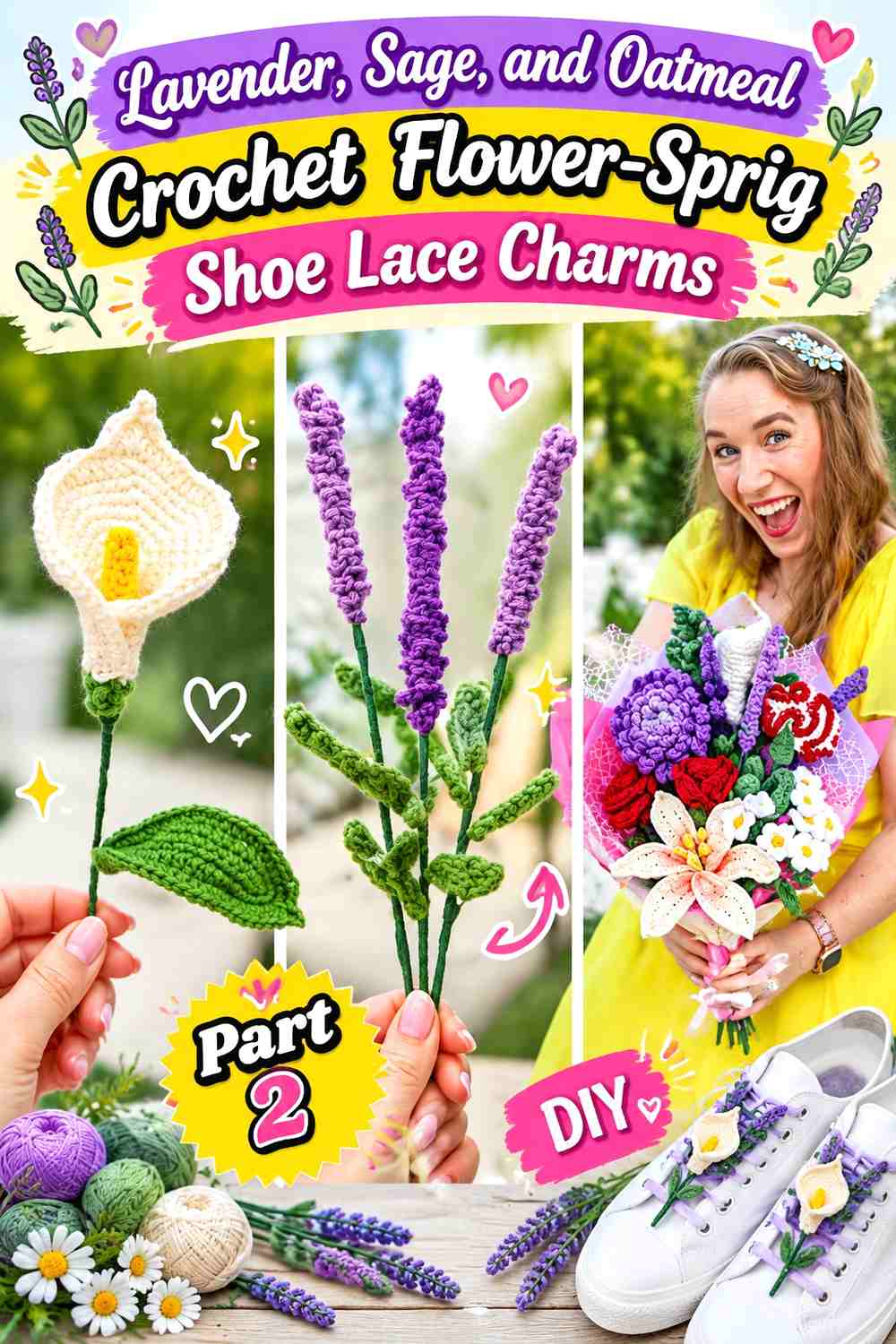
Lavender sprigs create a narrow charm that can follow the lacing vertically. Lavender can carry the flower sections, sage can form the foliage, and oatmeal can become the loop or tie where the sprig meets the lace.
Use the sprig near an upper eyelet where a slightly longer motif has room to lie against the shoe without brushing the ground.
Lavender Should Stay Concentrated Above the Sage Crochet Sprig
Keep most of the purple toward the flowering end and let the green remain visible lower down.
This color separation makes the miniature botanical form easier to understand than mixing lavender and sage equally through the whole length.
Oatmeal Should Keep Lavender and Sage Visible on Dark Shoe Laces
A small oatmeal attachment point can prevent the muted colors from disappearing against black, brown, or forest-green laces.
On cream laces, skip the oatmeal accent and let sage provide the necessary contrast.
Creator Credit: Nicki’s Homemade Crafts
7. Strawberry Red, Cream, and Moss Crochet Berry Shoe Lace Charms
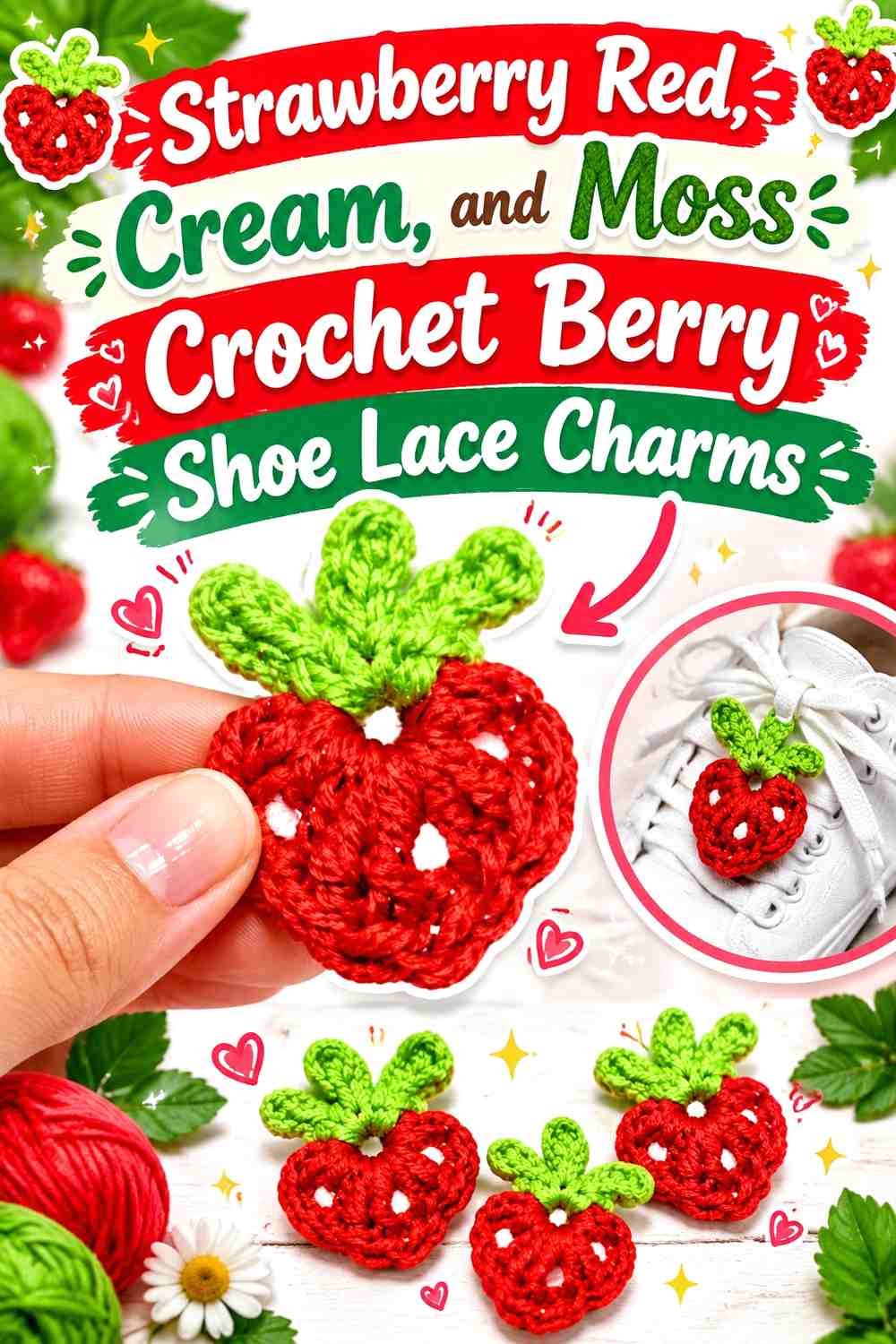
A strawberry adds cottage-garden color without relying on another flower shape. Strawberry red can form the berry, moss the leafy top, and cream can appear in tiny surface details or the attachment loop.
Use this motif as a companion to floral charms rather than repeating many strawberries down both shoes. One berry beside a daisy or leaf can make the pair feel like a tiny garden collection.
Strawberry Red Should Dominate the Crochet Berry Charm
Keep the berry body red and let cream remain a very small detail.
Too much pale decoration can interrupt the tapered strawberry shape at such a small scale.
Moss Should Clearly Separate Strawberry Red From the Shoe Lace
The leafy top creates a natural transition between the berry and the lace.
If the lace is green, move cream into the attachment loop so the top of the charm stays visible.
Creator Credit: Crochet Jewel
8. Rust, Cream, and Moss Crochet Mushroom Shoe Lace Charms

A mushroom introduces a woodland element that still fits comfortably beside flowers. Rust can form the cap, cream the stem and small cap details, and moss can provide a tiny leaf or attachment point.
Position the mushroom upright near a lace crossing where the cap can remain unobstructed. A motif tucked partly under another lace can lose its distinctive top-heavy silhouette.
Rust Should Carry the Crochet Mushroom Cap
Keep rust broad across the cap and use cream in smaller spots or the lower stem.
A cream-heavy cap may blend into pale shoes and weaken the earthy cottagecore effect.
Moss Should Stay Smaller Than Rust and Cream on the Mushroom Charm
Use moss as a small botanical connector rather than a full green backing.
The charm should still read first as a mushroom, with the green acting only as a woodland accent.
Creator Credit: GoldenLucyCrafts
9. Teal, Lilac, and Dusty Rose Crochet Butterfly Flower-Look Shoe Lace Charms
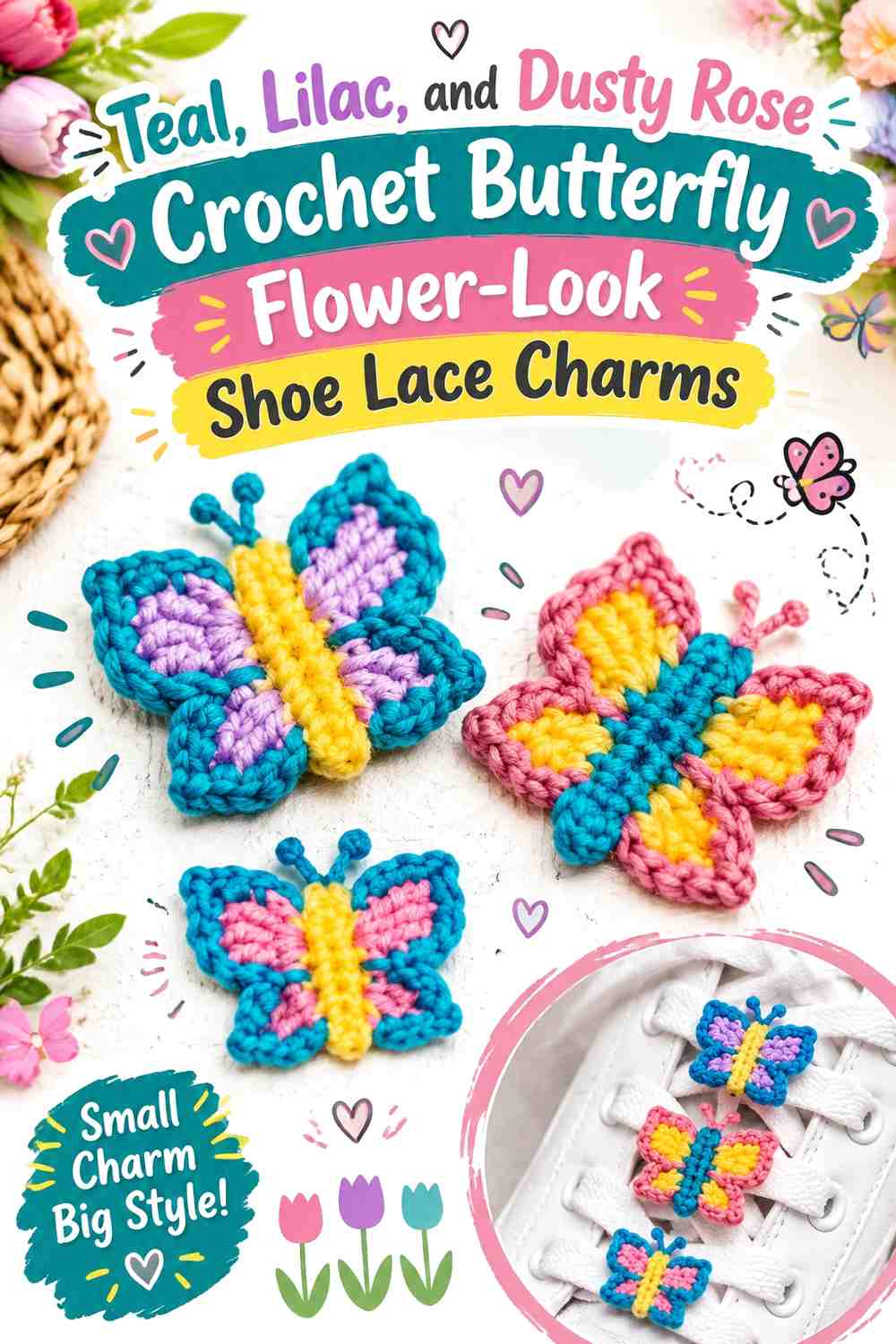
A butterfly can break up an otherwise all-floral shoe while keeping the garden theme. Teal can define the larger wing areas, lilac can lighten inner sections, and dusty rose can remain a small center or wing accent.
Place the butterfly on the outer side of the lacing rather than directly beneath a tight crossing. The full wing outline needs open space to remain recognizable.
Teal Should Define the Crochet Butterfly Wing Perimeter
Use teal around enough of the outer wings that the silhouette stays clear from normal standing distance.
Lilac is more useful inside the wings than as a competing outer color.
Dusty Rose Should Stay Small Against Teal and Lilac Wings
A small rose-colored body or marking gives the charm warmth without turning the butterfly into a three-way color split.
Repeat dusty rose in a neighboring flower only if you want the shoes to feel like a coordinated garden set.
Creator Credit: Jess Crafting
10. Sage, Forest Green, and Cream Crochet Leaf Shoe Lace Charms

Leaf-only charms are useful when flower-heavy shoes need visual rest. Sage can form the broad leaf, forest green can define a vein, edge, or second leaf, and cream can supply the attachment loop.
Try a pair of leaves beside one larger flower rather than treating foliage as filler on every eyelet.
Sage Should Carry Most of the Crochet Leaf Surface
Use sage across the main leaf area and keep forest green narrower.
This preserves the soft cottagecore look while still giving the leaf enough internal definition.
Cream Should Separate Sage and Forest Green From Dark Shoe Laces
A cream loop can keep both greens visible when the shoelace itself is black, olive, or dark brown.
On white laces, replace the cream loop with forest green so the attachment does not disappear.
Creator Credit: Made by Yuma
11. Plum, Lavender, and Butter Yellow Crochet Pansy Shoe Lace Charms
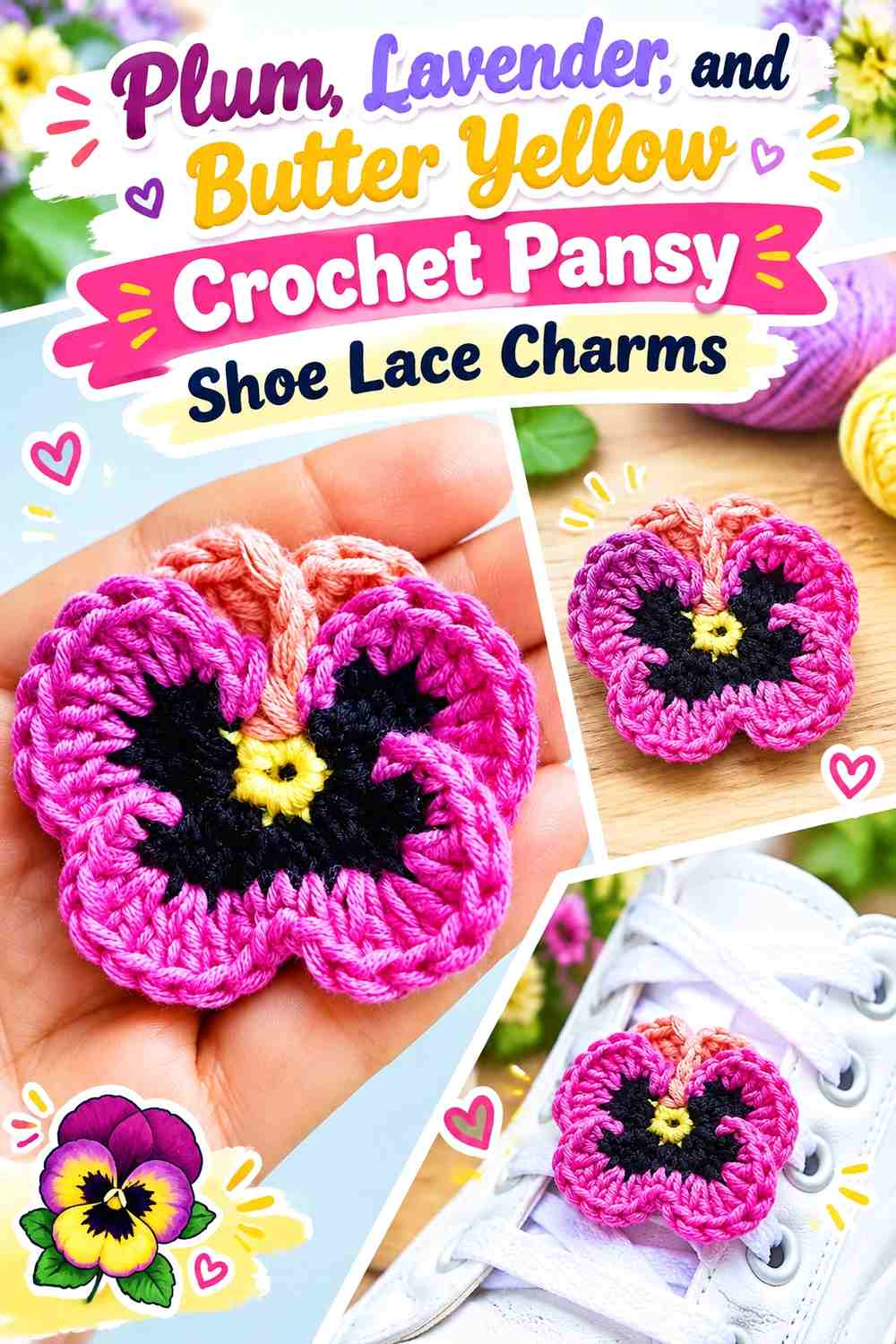
Pansies naturally support several colors within one compact flower. Plum can anchor the deeper petal sections, lavender can lighten the outer petals, and butter yellow can remain in the center.
Because the flower itself is visually detailed, use a simple shoelace color such as cream, brown, sage, or black behind it.
Plum Should Anchor the Lavender Crochet Pansy Petals
Keep plum concentrated in the deeper inner or lower petal areas so the flower has a clear visual center.
If plum reaches every outer edge, the pansy can look much darker and heavier than the intended cottagecore palette.
Butter Yellow Should Stay Central Between Plum and Lavender
Use yellow sparingly at the center, where its brightness naturally draws the eye.
Do not repeat wide yellow edging on the petals; the contrast is more effective when concentrated.
Creator Credit: Ahuyama Crochet
12. Blush, Dusty Pink, and Sage Crochet Cherry Blossom Shoe Lace Charms

A small cherry-blossom-inspired charm can use blush as the main petal color, dusty pink for the center, and sage for a small leaf or lace attachment. The related pink shades create a softer effect than a strongly outlined flower.
Use blossoms in pairs near neighboring lace crossings rather than creating one oversized cluster that hides the shoe lacing.
Blush Should Cover More Crochet Petal Area Than Dusty Pink
Let blush remain the overall flower color and keep dusty pink close to the center.
This tonal arrangement creates depth without dividing each tiny petal into several visible bands.
Sage Should Give Blush and Dusty Pink a Botanical Break
A tiny sage leaf or loop prevents an all-pink cluster from blending into blush shoelaces or pale shoes.
Keep the green small so the blossoms remain the main motif.
Creator Credit: Moara Crochet
13. Cream, Dusty Rose, and Sage Crochet Floral Bow Shoe Lace Charms
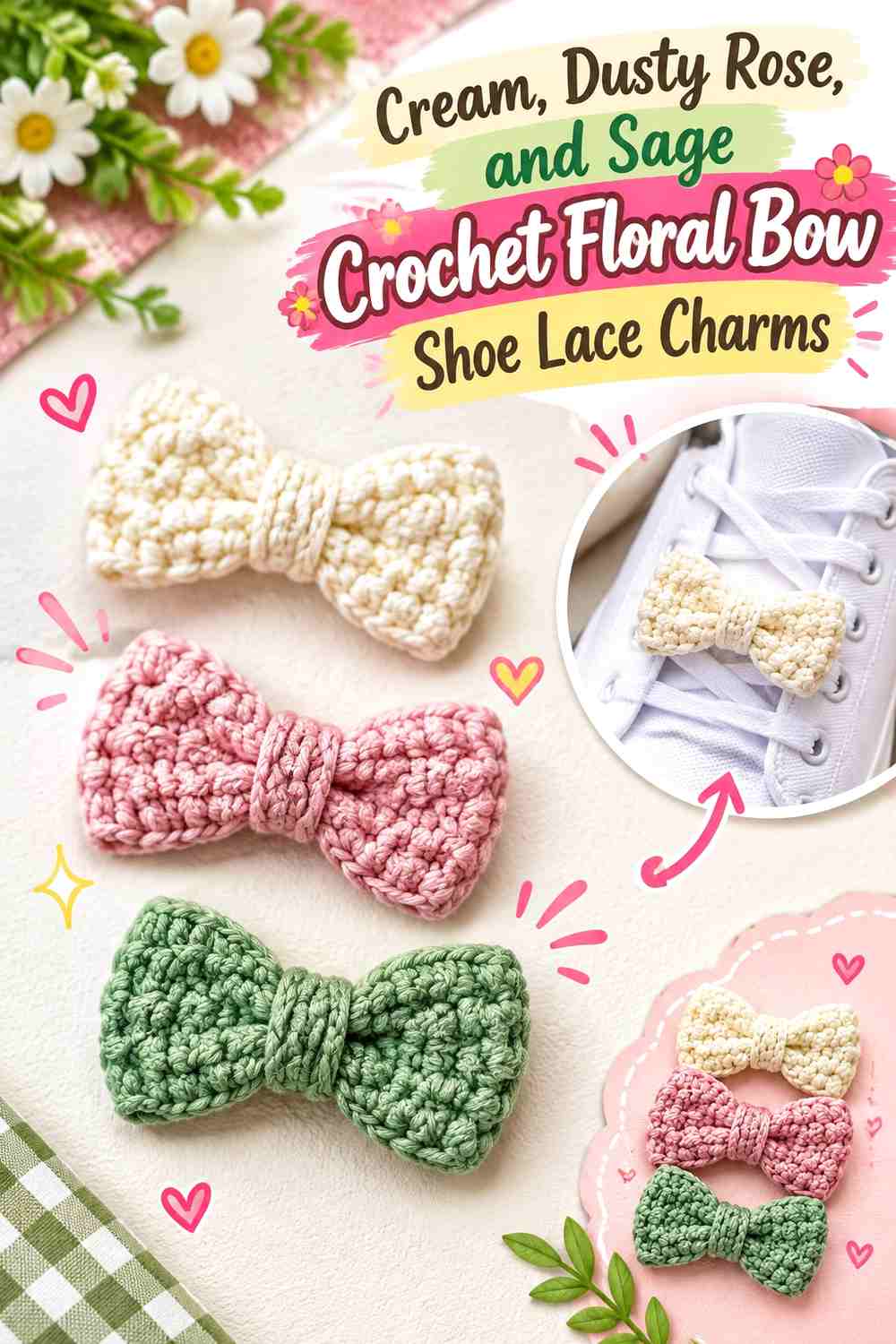
A crochet bow can act like a ribbon holding together a miniature cottage garden. Cream can form the main bow, dusty rose can create a small flower at the center, and sage can supply one leaf or tiny botanical accent.
Position the bow close to where the shoelaces are actually tied so its shape makes visual sense instead of appearing as an isolated decoration halfway down the shoe.
Cream Should Keep the Crochet Bow Light Around Dusty Rose
Use cream through both bow loops and keep the rose-colored detail concentrated at the middle.
A dusty-rose bow with a cream flower can also work on white shoes, but the darker bow will become the stronger focal point.
Sage Should Stay Smaller Than Cream on the Floral Shoe Lace Bow
Use sage only around the center or as one compact leaf.
Too much green across the bow can make the charm read as a multicolor ribbon rather than a flower-accented cottagecore detail.
Creator Credit: The Pink Craft Box
14. Moss, Clover Green, and Cream Crochet Clover Shoe Lace Charms
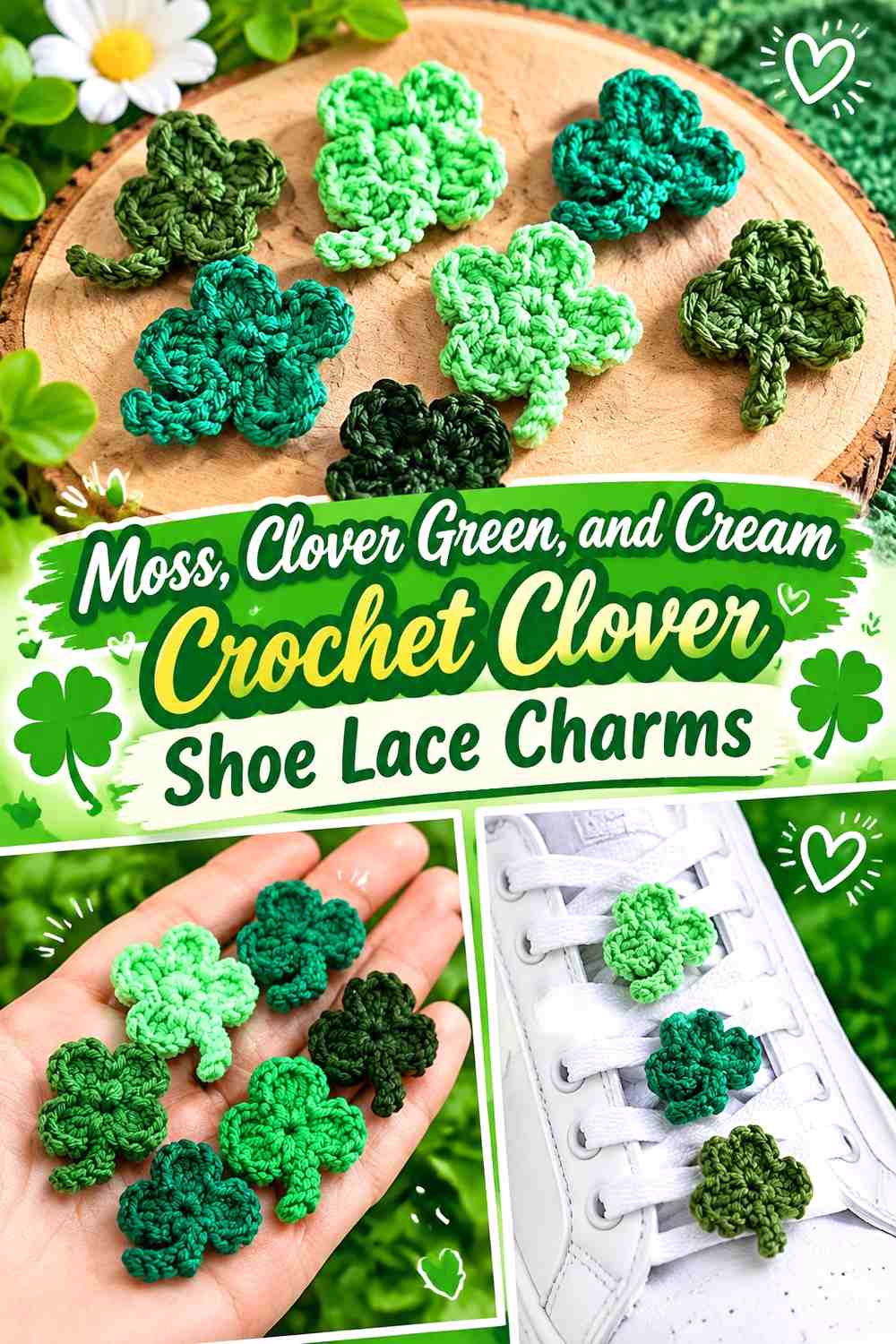
A clover charm adds a meadow-inspired shape to shoes that already have daisies or other flowers. Clover green can form the leaves, moss can deepen the stem or attachment point, and cream can provide a small outer or central detail when contrast is needed.
Place a clover on one side of a floral charm rather than stacking it directly beneath another green motif.
Clover Green Should Carry the Crochet Clover Leaves
Use the brighter green across the leaf lobes so the charm remains recognizable against moss or brown laces.
Moss works better on the stem or connector than as an equal leaf color.
Cream Should Stay Minimal Beside Clover Green and Moss
Use cream only where the motif needs separation from a green shoe or dark lace.
On white shoes, omit the cream entirely and let the two greens provide the structure.
Creator Credit: Posh Pooch Designs
15. Cranberry, Black, and Sage Crochet Poppy Shoe Lace Charms

A poppy gives the cottagecore palette a darker floral option. Cranberry can form the petals, black can define the center, and sage can appear on the stem, leaf, or attachment point.
Because both cranberry and black are visually strong, keep this charm isolated rather than surrounding it with several equally dark flowers.
Cranberry Should Remain Broad Around the Black Crochet Poppy Center
Use cranberry across most of the flower so the black center stays a focal detail rather than taking over the motif.
A larger black center can make the flower visually heavy when attached to narrow laces.
Sage Should Soften Cranberry and Black on the Shoe Lace
A small sage leaf creates a gentler transition into brown, cream, or green footwear.
Keep sage away from most of the petals so the poppy remains distinctly cranberry-led.
Creator Credit: Natagor Finlayson
16. Butter Yellow, Cream, and Leaf Green Crochet Daffodil Shoe Lace Charms
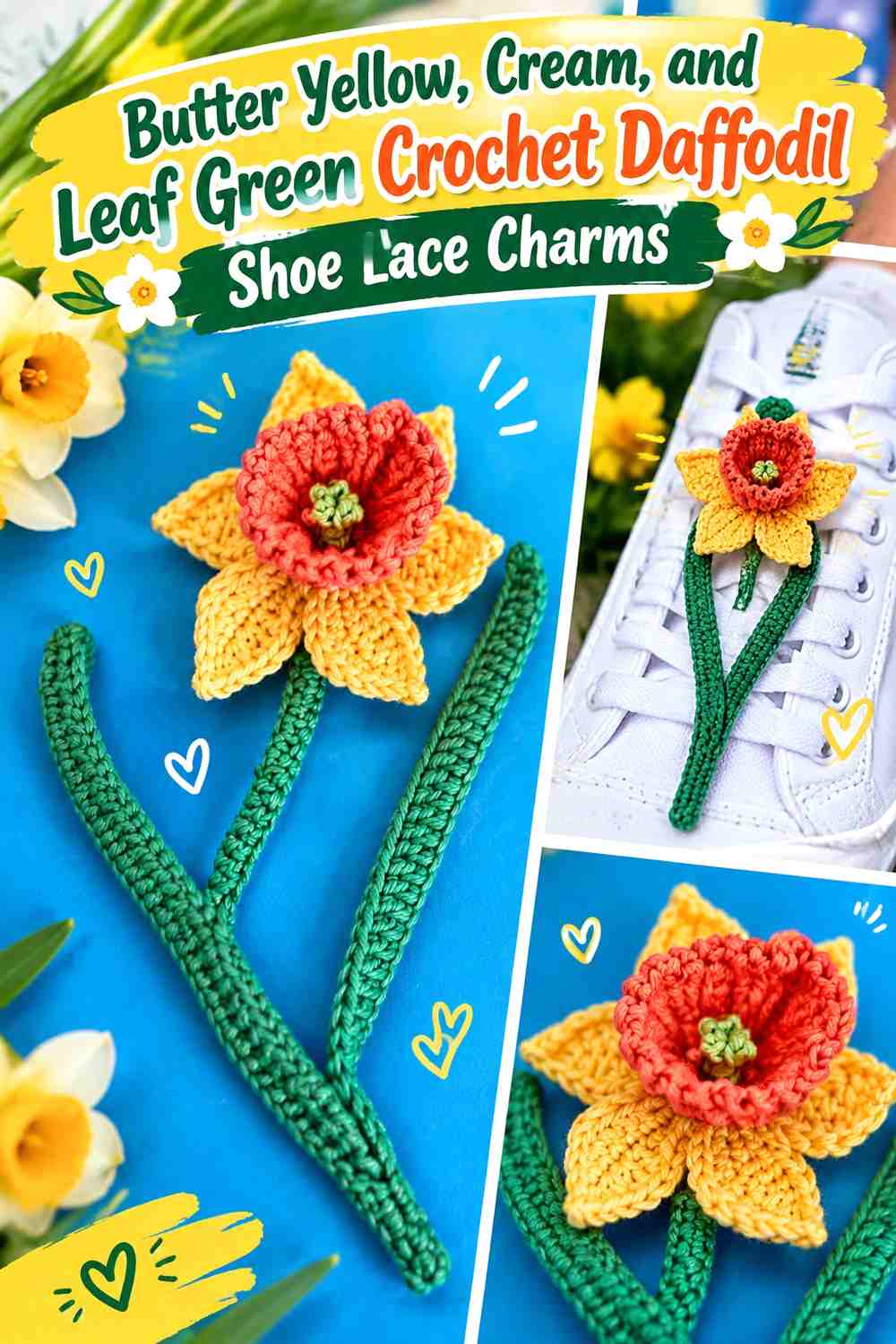
A daffodil introduces a bright spring flower without relying on pastel pink. Butter yellow can cover the petals, cream can lighten selected inner details, and leaf green can form the stem or attachment.
Use one small daffodil near the upper lacing where its projecting flower shape has room to remain visible.
Butter Yellow Should Lead the Cream Crochet Daffodil Petals
Keep yellow across the majority of the bloom and use cream in a smaller central or supporting role.
If cream reaches most of the outer petals, the daffodil may disappear against white sneakers.
Leaf Green Should Ground Butter Yellow Along the Shoe Lace
A short green stem or leaf can point in the same direction as the lacing, visually integrating the charm with the shoe.
Avoid extending the leaf too far across neighboring eyelets.
Creator Credit: Kerri’s Crochet
17. Antique Cream, Sage, and Soft Yellow Crochet Lily-of-the-Valley Shoe Lace Charms

Lily-of-the-valley-inspired charms create a delicate finish to the collection because several tiny pale flowers can hang from one green stem. Antique cream can form the blooms, sage can carry the stem and leaf, and soft yellow can remain an optional tiny center accent.
This motif works particularly well near the uppermost eyelets or lace bow, where the flowers can hang downward without being trapped under multiple crossings.
Antique Cream Flowers Need Sage Contrast on the Crochet Sprig
Keep the sage stem visible between the pale blooms so the small flowers do not merge into one cream cluster.
On cream shoes, a slightly deeper sage is more useful than adding a heavy dark outline to every flower.
Soft Yellow Should Stay Subtle Beside Antique Cream and Sage
Use yellow only in tiny center details if the flower construction benefits from them.
The charm should remain predominantly cream and green so it keeps its quiet cottage-garden character.
Creator Credit: Shelen Crochet
Which Cottagecore Shoe Lace Charm Color Scheme Should You Choose?
For the softest garden look, combine cream, blush, dusty rose, faded blue, lavender, sage, and butter yellow. These colors suit white, beige, faded denim, light-brown, and other neutral shoes particularly well when enough green is included to define pale petals.
For an earthier cottagecore direction, choose mustard sunflowers, rust mushrooms, moss leaves, clover green, cranberry poppies, or burgundy roses. Cream or oatmeal details can keep these deeper charms visible on brown and black footwear.
You can also make the two shoes coordinated without making them identical. One shoe might carry a daisy, tulip, and strawberry, while the other uses the same cream-and-sage base with a rose, mushroom, and leaf. Repeated colors create the pair; matching every motif is unnecessary.
Conclusion
Crochet cottagecore shoe lace charms work best when the flowers stay small enough for the lacing to remain functional and large enough for their color hierarchy to be visible. Daisies and forget-me-nots suit lighter palettes, roses and pansies can carry richer color, while leaves, clovers, mushrooms, strawberries, and butterflies add variety between floral motifs.
Start with the shoe color, then decide which shade needs to dominate the charm. Pale shoes often benefit from sage, burgundy, rust, teal, or other defining colors near the edges. Dark footwear can support cream daisies, butter-yellow daffodils, blush blossoms, and antique-ivory flowers without extra outlines.
Arrange the finished charms on fully laced shoes before securing them. Check the shoe from above, from the side, and while worn so motifs do not overlap heavily or fall into high-friction areas. Follow each credited tutorial for its original flower or motif construction, then adapt the attachment and cottagecore color placement to your shoelaces.
Frequently Asked Questions
What colors work well for cottagecore crochet shoe lace charms?
Cream, antique ivory, sage, moss, dusty rose, blush, lavender, faded blue, butter yellow, rust, burgundy, mustard, and soft green all suit cottagecore styling. Use one dominant flower color and one or two supporting shades rather than making every charm fully multicolored.
Where should I place crochet flower charms on shoe laces?
Lace crossings, upper eyelets, bow loops, and lace ends are useful visual positions. Avoid placements where a charm sits close to the sole, becomes trapped under very tight lace sections, or rubs against the opposite shoe.
How can I make cream crochet flowers visible on white shoes?
Add a sage leaf, colored flower center, darker attachment loop, or contrasting shoelace. A small amount of medium-value color around the pale flower can provide enough definition without changing the whole palette.
Should both shoes have matching crochet charms?
They can, but they do not need to. Repeating the same palette across different flowers often creates a more relaxed cottage-garden look. For example, both shoes can use cream, sage, and dusty rose while one has daisies and the other has roses.
Can I mix flowers, mushrooms, berries, and butterflies on the same shoes?
Yes, but repeat a limited palette so the motifs still feel related. A cream-sage-rust set might include daisies, leaves, mushrooms, and strawberries without looking like four separate decoration themes.
How can I keep colorful crochet shoe charms from looking too busy?
Leave undecorated lace crossings between larger motifs. Give each charm one dominant color, and repeat the same green or neutral across several motifs to visually connect them.
Do all the linked tutorials make finished shoe lace charms?
No. The tutorials teach the individual flowers, leaves, mushrooms, berries, butterfly, bow, clover, and other small crochet motifs. The cottagecore palettes and shoelace attachment placements in this article are independent adaptations of those constructions.