A miniature fairy bedroom works best when the crochet pieces feel as though they belong to the same tiny world rather than looking like unrelated full-size projects reduced at random. Moss green, mushroom brown, petal pink, lavender, moonlight cream, dusty blue, and faded botanical colors can connect the bed, bedding, rug, storage, furniture, flowers, and tiny woodland details.

Color also helps control scale. A bed covered in five equally strong shades can look visually oversized, while a quieter moss or cream base allows one lavender blanket or rose cushion to become the focal point. Tiny furniture benefits from the same hierarchy: give the largest object a stable color, then repeat smaller accents around the room.
The tutorials below support the miniature furniture, bedding, storage, flowers, or character concept behind each idea. Some are specifically designed for dolls or dollhouses, while other miniature projects may need resizing for your particular house. Use the linked creator for exact construction, then adapt the palette only after checking the finished proportions against the intended bedroom.
Quick List
- Moss Green, Mushroom Brown, and Cream Crochet Fairy Bed
- Lavender, Moonlight Cream, and Sage Crochet Fairy Bedspread
- Dusty Rose, Ivory, and Lilac Crochet Fairy Pillow Set
- Sage, Parchment, and Butter Yellow Crochet Round Fairy Rug
- Dusty Teal, Blush, and Cream Crochet Fairy Reading Armchair
- Walnut, Linen, and Moss Crochet Fairy Vanity Chair
- Oatmeal, Sage, and Petal Pink Crochet Fairy Bedside Basket
- Terracotta, Moss, and Cream Crochet Fairy Bedroom Plant
- Blush, Butter Yellow, and Leaf Green Crochet Fairy Flower Arrangement
- Rust, Cream, and Moss Crochet Mushroom Bedroom Corner
- Cocoa, Dusty Rose, and Oatmeal Crochet Fairy Teddy Bear
- Lilac, Sage, and Cream Crochet Fairy Bedroom Doll
- Dusty Blue, Cream, and Mauve Crochet Fairy Window-Seat Sofa
Let the Fairy Bed Establish the Bedroom Palette
The bed usually occupies more visual space than any other object in a miniature bedroom, so choose its dominant color before deciding on tiny flowers, baskets, mushrooms, or cushions. Moss, mushroom brown, cream, dusty blue, and muted lavender make useful foundations because they can support brighter accents without overwhelming a small room.
You do not need the bed frame, blanket, pillows, and rug to match exactly. Repeating one shade in smaller amounts is enough. A moss bed can connect to a sage basket and green flower stems, while lavender bedding can be echoed in one pillow or fairy dress.
Keep Light and Dark Values Clear at Dollhouse Scale
Tiny crochet details can disappear quickly. A mushroom-brown basket against a walnut chair may look like one dark shape, and a pale lavender pillow can vanish against cream bedding.
Check neighboring colors from the distance at which the dollhouse will normally be viewed. If two pieces merge, move the lighter color next to the detail you want noticed rather than adding more decoration. Clear value differences often do more for miniature realism than extra embellishment.
Repeat Fairy Colors in Small Bedroom Accents
Flowers, mushrooms, baskets, cushions, and tiny toys are useful places to repeat colors already present on larger furniture. A petal-pink flower can echo a rose pillow; cream mushroom stems can connect to a bedspread; dusty blue flowers can repeat the window-seat upholstery.
This repetition makes the room feel coordinated without turning every object into the same palette.
1. Moss Green, Mushroom Brown, and Cream Crochet Fairy Bed

Moss green gives the main crochet bed a woodland foundation, mushroom brown adds earthy structure, and cream can lighten the sleeping surface or edge. Let moss occupy the largest visible area if you want the bed to establish the room’s fairy-forest direction.
Moss Green Should Lead the Crochet Fairy Bed
Keep moss across the largest bed sections rather than splitting the frame into many tiny colors. A consistent green silhouette makes the furniture easier to recognize and creates a dependable background for lighter bedding.
Cream Can Separate Mushroom Brown From Moss Green
Use cream where the mattress, pillow, or edge needs distinction from the darker frame. Mushroom brown and moss can have similar visual weight, so the pale neutral prevents the structure and bedding from becoming one dense block.
Mushroom Brown Can Ground the Moss Green Fairy Bed
Reserve brown for selected edges, headboard details, or another structural area. Keeping it smaller than moss preserves the green-led woodland effect while adding enough earth tone to connect with other natural bedroom accents.
Creator Credit: crochet skills
2. Lavender, Moonlight Cream, and Sage Crochet Fairy Bedspread

Lavender creates the main magical color on this miniature bedspread, moonlight cream provides light separation, and sage can appear in a narrow border or botanical detail. Because bedding needs to look lighter than furniture, avoid making every color change heavily outlined.
Lavender Should Cover Most of the Crochet Fairy Bedspread
A broad lavender field gives the miniature textile a calm, continuous surface and stops the bed from looking fragmented. If the spread includes a granny-style structure, repeat lavender often enough that it still feels like one blanket.
Moonlight Cream Keeps Lavender Details Visible
Use cream around selected motifs or as a controlled edge where lavender needs definition against a dark bed. A narrow light border can be enough; an oversized cream edge may visually shrink the lavender center.
Sage Can Connect the Lavender Bedspread to Woodland Decor
Repeat sage in one small border, flower, or companion detail if the room includes green baskets or plants. Keeping sage restrained allows the bedspread to remain lavender-led.
Creator Credit: Loy Dollhouse
3. Dusty Rose, Ivory, and Lilac Crochet Fairy Pillow Set
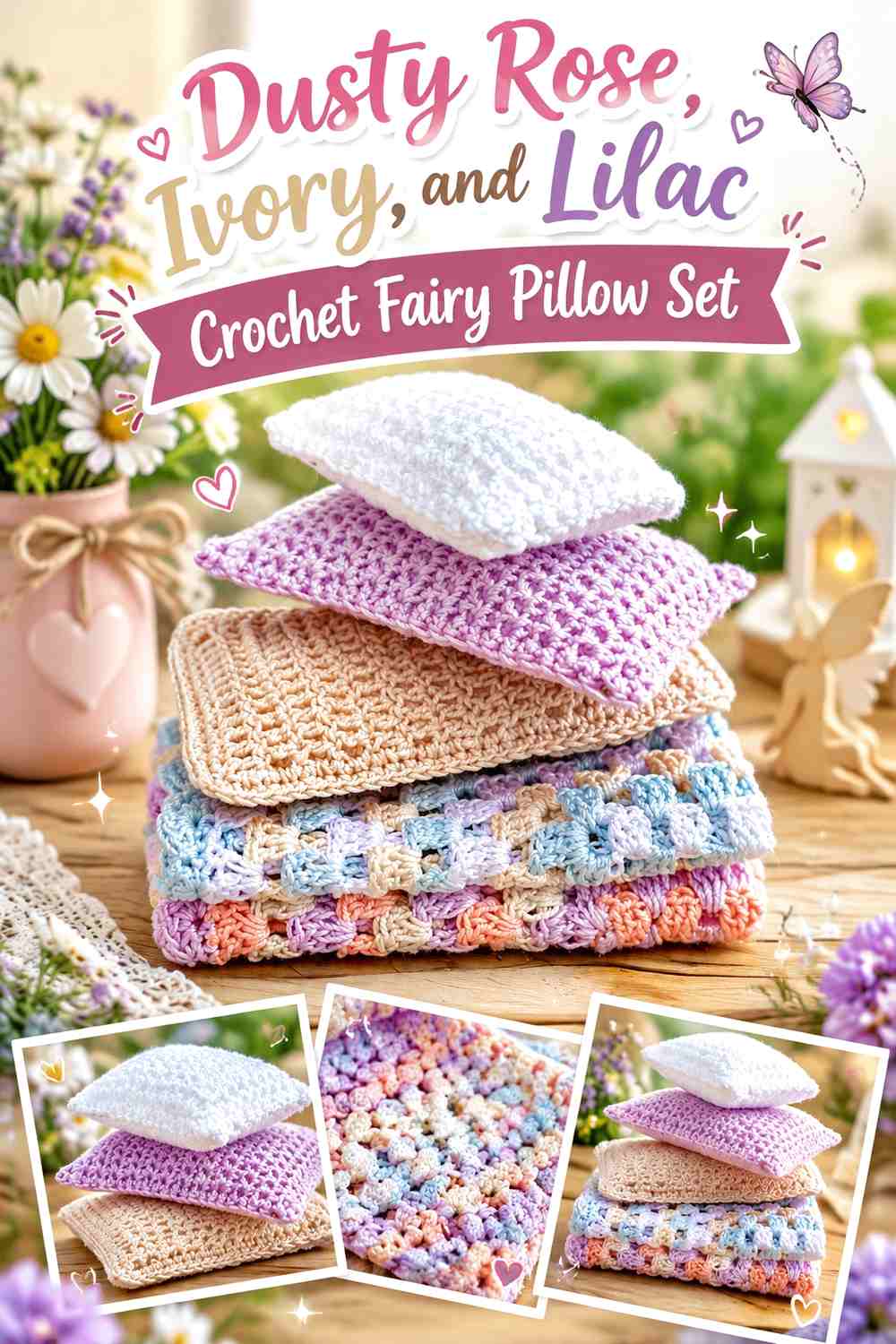
Dusty rose can lead the pillow group, ivory supplies a light neutral, and lilac provides a second floral tone. A small fairy bed usually needs only a few cushions, so color differences should be clear without turning each pillow into a separate statement piece.
Dusty Rose Should Anchor the Crochet Fairy Pillows
Use dusty rose on the largest pillow or repeat it across more than one cushion. This gives the group a dominant color and stops lilac and ivory from feeling randomly added.
Ivory Can Keep Dusty Rose and Lilac Pillows Distinct
Place an ivory cushion between the two floral shades if they look similar in value. The pale neutral creates separation and can also connect the pillows to cream bedding or furniture elsewhere in the room.
Lilac Should Stay Secondary to Dusty Rose on the Fairy Bed
Use lilac as one smaller cushion or detail rather than matching the rose coverage exactly. The unequal balance makes the pillow arrangement look collected rather than striped by color.
Creator Credit: uncinettofra
4. Sage, Parchment, and Butter Yellow Crochet Round Fairy Rug

A round rug can define the tiny floor area beside or beneath the bed. Sage gives it a botanical base, parchment keeps the edge light, and butter yellow adds one meadow-inspired accent without turning the floor into the brightest area of the room.
Sage Should Remain the Main Crochet Fairy Rug Color
Keep most of the round surface sage so the rug supports furniture instead of competing with it. A stable green floor accent also connects naturally with woodland plants and mushrooms.
Parchment Can Clarify the Sage Rug Edge
Use parchment around the outer area if the rug sits on a dark miniature floor. A visible pale rim makes the circle easier to read and prevents green from merging with surrounding brown furniture.
Butter Yellow Should Stay Small on the Sage Fairy Rug
Use yellow in one narrow round or small detail. At dollhouse scale, a little warm color attracts attention quickly, so it does not need equal space with sage.
Creator Credit: The Crochet Crowd
5. Dusty Teal, Blush, and Cream Crochet Fairy Reading Armchair

A tiny upholstered chair can turn an empty bedroom corner into a fairy reading nook. Dusty teal gives the chair a stronger cool base, blush softens a cushion or tufted detail, and cream can define the seat area or trim.
Dusty Teal Should Carry the Crochet Fairy Armchair Body
Keep teal through the arms, back, and main structure so the miniature furniture remains visually coherent. Too many color changes can make a tiny padded chair look patchy and larger than it is.
Blush Can Soften the Dusty Teal Fairy Reading Corner
Use blush on a small cushion or central detail rather than the whole seat. A concentrated soft pink accent gives the chair a floral fairy quality while allowing teal to remain dominant.
Cream Should Separate Dusty Teal From Dark Bedroom Furniture
If the chair sits beside a brown bed or wall, a cream cushion or narrow edge can prevent the silhouette from becoming visually heavy. Keep the light color connected to one functional area rather than scattering it everywhere.
Creator Credit: Doll Miniverse
6. Walnut, Linen, and Moss Crochet Fairy Vanity Chair
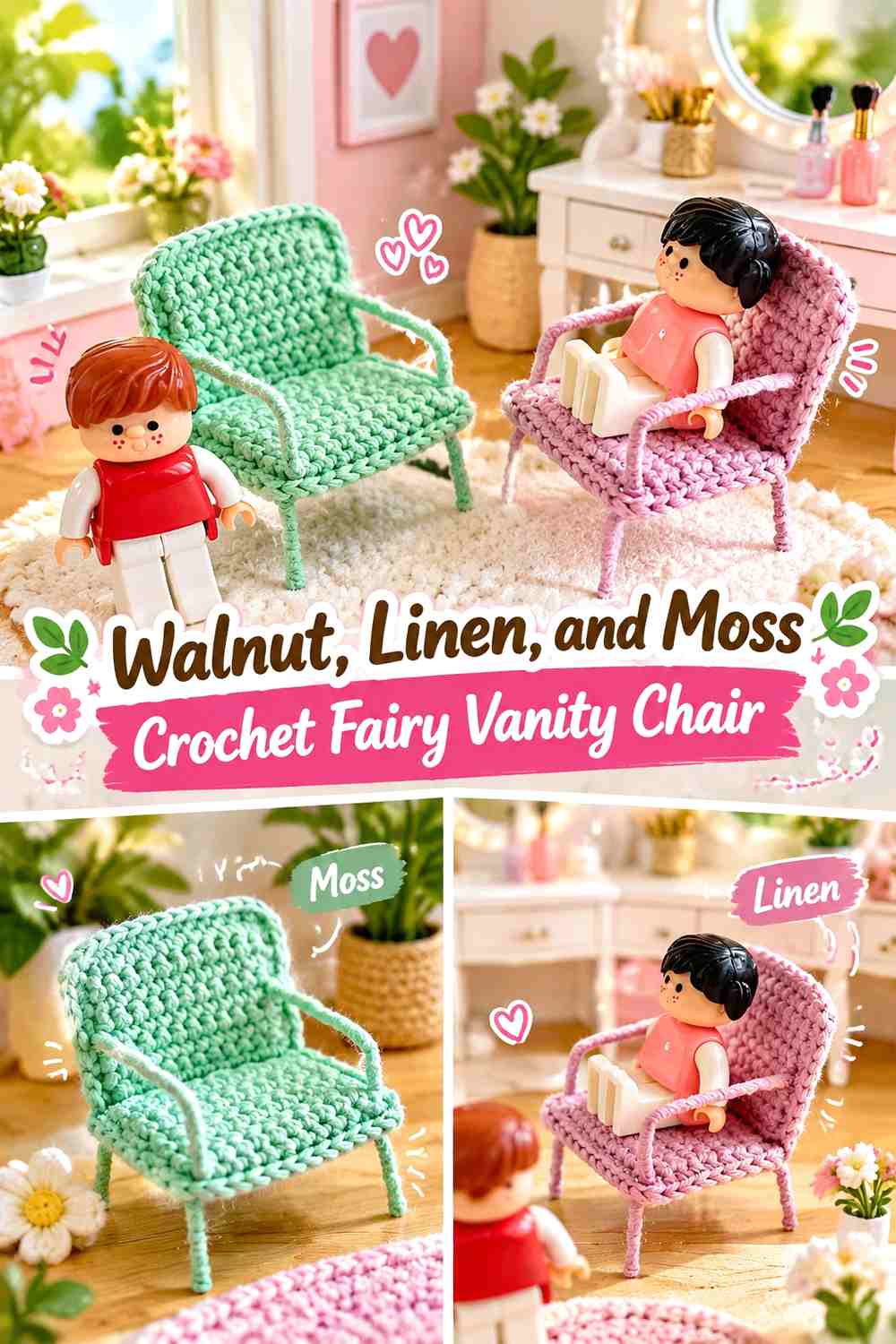
A lighter-frame chair works well beside a fairy vanity, desk, or bedside table. Walnut gives the miniature frame an earthy appearance, linen keeps the seat visually light, and moss provides a small woodland accent.
Walnut Should Define the Crochet Fairy Vanity Chair Frame
Keep walnut around the structural outline so the tiny legs and back remain easy to distinguish. The darker frame also creates useful contrast against pale miniature floors.
Linen Can Keep the Walnut Fairy Chair From Looking Heavy
Use linen on the seat or back detail where the chair needs a lighter center. This creates an upholstered effect without introducing another saturated color.
Moss Should Stay Smaller Than Walnut on the Fairy Chair
A moss seat stripe, flower, or tiny edge is enough to connect the chair with the rest of a woodland bedroom. Too much green can make the furniture compete with a moss bed or rug.
Creator Credit: Calm stitches
7. Oatmeal, Sage, and Petal Pink Crochet Fairy Bedside Basket

A miniature basket can hold pretend linens, flowers, or tiny bedroom accessories while filling very little floor space. Oatmeal gives the basket a woven-neutral effect, sage can mark the rim, and petal pink adds one fairy accent.
Oatmeal Should Keep the Crochet Fairy Basket Light
Use oatmeal throughout most of the basket body so the open top and small shape remain easy to see beside darker furniture. A multicolor body can make such a tiny container look busier than the items inside it.
Sage Can Define the Oatmeal Fairy Basket Rim
A green rim or handle gives the pale basket a clear top edge. This is especially useful when the basket sits beside cream bedding or another light object.
Petal Pink Should Stay Small Inside the Sage and Oatmeal Basket
Use pink as a tiny folded textile or decorative accent rather than another full basket band. The concentrated color can echo flowers or pillows elsewhere in the bedroom.
Creator Credit: LittleMaggieShop
8. Terracotta, Moss, and Cream Crochet Fairy Bedroom Plant
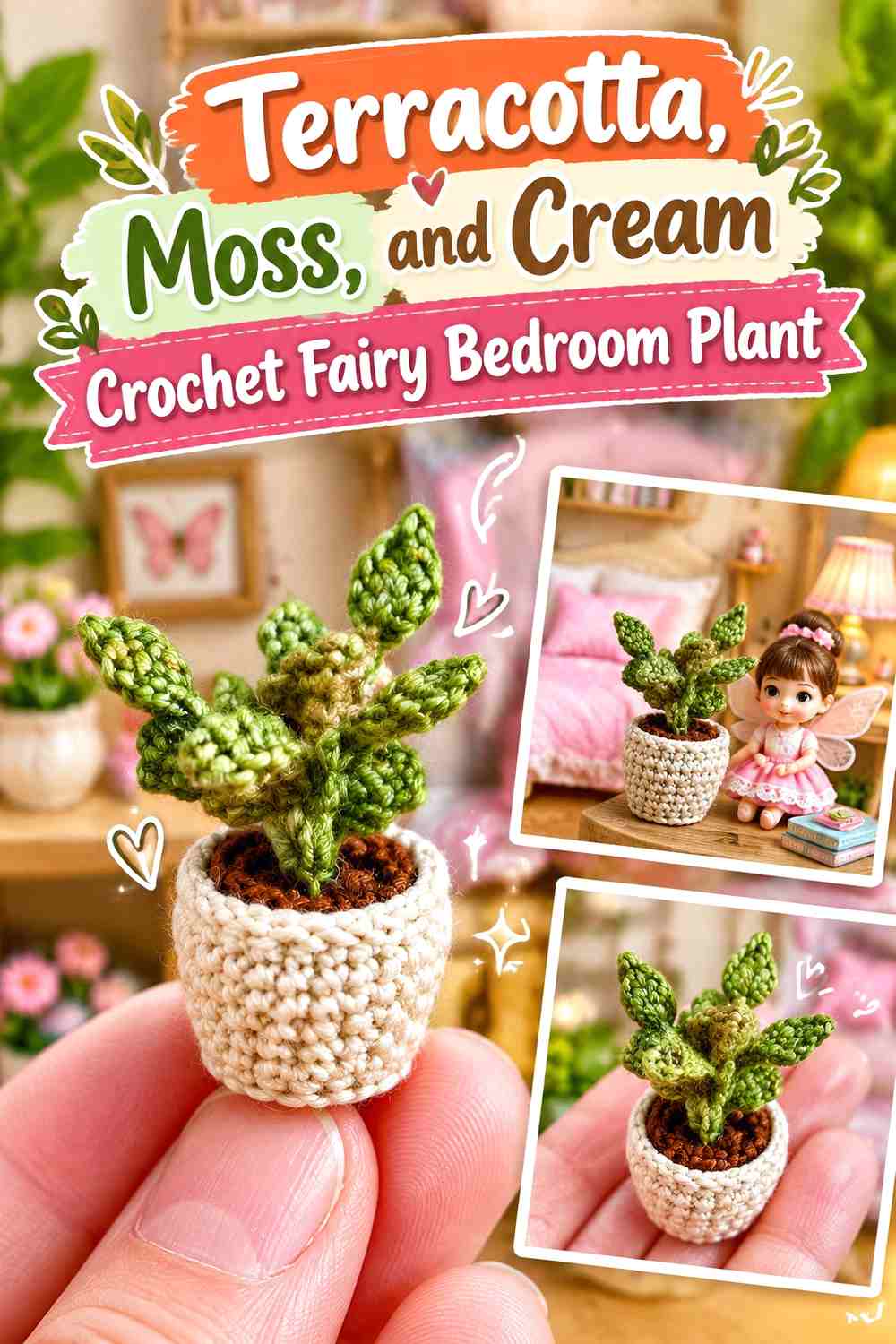
A tiny potted plant gives the fairy bedroom height without using much floor or tabletop space. Terracotta can form the pot, moss leads the foliage, and cream can provide one pale flower or decorative detail.
Terracotta Should Keep the Crochet Fairy Plant Pot Distinct
Let the warm pot color stay clearly separate from the moss foliage. This division helps the miniature read as a plant rather than one irregular green-brown shape.
Moss Should Dominate the Crochet Fairy Foliage
Use moss across most of the plant itself and avoid switching leaf colors too frequently. A consistent green crown looks more believable at small scale and gives the terracotta base enough visual contrast.
Cream Can Add One Light Detail to Terracotta and Moss
A tiny cream flower or edge is enough to brighten the plant. Keeping it small prevents the bedroom accent from competing with larger cream bedding or rugs.
Creator Credit: Small Hands Big Creations
9. Blush, Butter Yellow, and Leaf Green Crochet Fairy Flower Arrangement

Tiny flowers can bring the fairy theme to a bedside table, vanity, shelf, or headboard without requiring another piece of furniture. Blush can lead the petals, butter yellow defines small centers, and leaf green should remain narrow in stems or foliage.
Blush Should Lead the Crochet Fairy Flower Arrangement
Repeat blush across the largest or most visible blooms so the miniature bouquet has one obvious floral direction. Several equal flower colors can become visual noise at this scale.
Butter Yellow Should Stay Small Beside Blush Flowers
Use yellow primarily in centers or one tiny companion bloom. Its warmth gives the bouquet definition without replacing blush as the focal color.
Leaf Green Can Connect Blush Flowers Without Hiding Their Petals
Keep stems and leaves narrow enough that the green does not surround every flower. Visible space between blooms helps the individual shapes stay recognizable.
Creator Credit: Mary’s Knitting
10. Rust, Cream, and Moss Crochet Mushroom Bedroom Corner

Miniature mushrooms can make an otherwise ordinary bedroom corner feel distinctly fairy-like. Rust works well on the caps, cream keeps the stems visible, and moss can represent the surrounding woodland floor or a small botanical accent.
Rust Should Make the Crochet Fairy Mushroom Caps the Focal Point
Use rust consistently across the main mushroom caps so a tiny cluster looks related. Varying every cap color can weaken the strong woodland cue created by the repeated shape.
Cream Should Keep Rust Mushroom Stems Easy to See
Pale stems are particularly useful against a dark miniature floor or moss rug. Leave enough cream visible beneath each cap so the mushroom silhouette remains clear.
Moss Can Anchor the Rust and Cream Mushroom Corner
Use moss around a small base or nearby accent rather than covering the mushrooms themselves. The green visually connects the cluster to the larger fairy-bedroom palette.
Creator Credit: Scrappy Me
11. Cocoa, Dusty Rose, and Oatmeal Crochet Fairy Teddy Bear

A miniature teddy can sit against a pillow, rest on the bed, or occupy the reading chair as a tiny toy within the dollhouse scene. Cocoa gives the bear a classic neutral body, oatmeal can lighten the muzzle, and dusty rose provides a small bedroom-coordinating accent.
Cocoa Should Keep the Crochet Fairy Teddy Bear Recognizable
Use cocoa across most of the head and body so the tiny toy has a clear outline. Too many pale patches can make the bear’s miniature proportions harder to read.
Oatmeal Can Clarify the Cocoa Fairy Teddy Face
A lighter muzzle or inner-ear detail creates enough value separation for the face to remain visible. At this scale, one pale facial zone can be more useful than several decorative colors.
Dusty Rose Should Stay Small on the Cocoa Teddy Bear
A tiny bow, scarf, or heart-like accent can connect the bear to pink bedding or flowers. Keep the rose secondary so the teddy still reads as a cocoa toy rather than a pink character.
Creator Credit: Miniature Crochet by Microtoysby
12. Lilac, Sage, and Cream Crochet Fairy Bedroom Doll

A tiny crocheted resident can establish the scale of the entire bedroom and make the furniture arrangement feel purposeful. Lilac can lead the clothing, sage supplies a botanical accent, and cream can lighten selected details without covering the whole figure.
Lilac Should Define the Crochet Fairy Doll Clothing
Keep the strongest purple concentration in the dress or main garment so the figure has one clear color identity. This also makes it easier to coordinate the doll with lavender bedding without matching everything exactly.
Sage Can Connect the Lilac Fairy Doll to the Bedroom Plants
Use sage in a small clothing detail, accessory, or hair decoration rather than dividing the outfit equally between green and purple. The repeated botanical shade links the resident to the room.
Cream Should Give Lilac and Sage Fairy Details Breathing Room
A small cream trim or accessory can separate the two muted colors where needed. Keep it secondary so the doll remains visually distinct from cream bedding behind it.
Creator Credit: Mini Dolly
13. Dusty Blue, Cream, and Mauve Crochet Fairy Window-Seat Sofa

A tiny sofa can become a window seat or bedroom reading bench when the dollhouse has enough floor space. Dusty blue gives the furniture a soft cool base, cream can lighten the seat, and mauve provides a small floral accent.
Dusty Blue Should Carry the Crochet Fairy Window-Seat Sofa
Keep most of the arms, back, and lower body blue so the miniature furniture remains one clear shape. A stable dominant color is especially important on stuffed furniture where rounded edges already soften the silhouette.
Cream Can Open Up the Dusty Blue Fairy Seat
Use cream on one seat cushion or narrow trim where the furniture needs a lighter center. This prevents the blue sofa from becoming a single dense block in a dark corner.
Mauve Should Stay Smaller Than Dusty Blue on the Fairy Sofa
A mauve cushion or tiny throw detail can connect the sofa to lavender or rose bedroom accents. Keeping it concentrated makes the window seat look coordinated rather than multicolored.
Creator Credit: GratiaProject
How to Coordinate a Crochet Fairy Bedroom Without Overfilling It
Start with the bed, bedspread, and rug because those pieces control most of the room’s visual area. If the bed is moss and cream, the rug does not also need to be dark green; a lighter sage or parchment rug can create separation while repeating the same woodland family.
Then choose one secondary color to move through the smaller pieces. Lavender can appear in the bedding, fairy clothing, and one flower. Dusty rose can repeat on pillows and the teddy bear. Cream can connect the bed, mushrooms, flowers, and furniture without becoming the dominant color everywhere.
Finally, consider floor space. A bed, armchair, sofa, basket, plant, and mushroom cluster may each be appealing individually but may not fit the same miniature room convincingly. Treat these 13 ideas as options for composing a bedroom rather than a requirement to place every piece in one dollhouse.
Conclusion
A crochet miniature fairy bedroom becomes convincing when scale and color work together. Establish the room with one large piece—usually the bed—then use bedding and a rug to set the main palette before adding tiny storage, plants, flowers, mushrooms, furniture, and character details.
For an earthy woodland room, choose moss, mushroom brown, oatmeal, walnut, rust, and cream. For a softer fairy bedroom, lavender, dusty rose, lilac, blush, and sage create more floral color. Dusty teal and blue are useful when you want a cooler enchanted-forest direction.
Because miniature tutorials can target different doll sizes, compare every new piece with your actual bed, doll, walls, and floor before building a complete matching set. Use each linked tutorial for its original construction and treat the palettes above as separate color adaptations.
Frequently Asked Questions
What colors work well for a crochet fairy dollhouse bedroom?
Moss, sage, mushroom brown, cream, oatmeal, lavender, dusty rose, lilac, faded blue, terracotta, and muted yellow all work well. Choose one dominant room color and repeat the others in smaller accents rather than giving every shade equal coverage.
How can I make crochet furniture look small enough for a dollhouse?
Compare each project directly with the intended doll and room before making a coordinated set. “Miniature” can refer to different scales, so a project labeled mini may still be too large for a particular dollhouse.
Should all the crochet furniture in a fairy bedroom match?
No. Coordinating one or two repeated colors usually looks more natural than making every object identical. A moss bed, dusty-blue chair, and oatmeal basket can still belong together if cream, sage, or another shared shade appears across several pieces.
What should be the main focal point in a miniature fairy bedroom?
The bed usually makes the strongest anchor because it occupies substantial visual space. A reading chair, mushroom cluster, or flower arrangement can become the secondary focal point, but avoid making every object equally colorful.
How can I keep tiny crochet flowers and mushrooms visible?
Use enough light-dark contrast between the object and its background. Cream mushroom stems show more clearly against moss, while blush flowers often benefit from a quieter cream, brown, or green area behind them.
Can I use full-size yarn for dollhouse crochet furniture?
The important question is the finished proportion, not simply the yarn label. A material that creates convincing furniture for one doll scale may look bulky in another. Make or estimate one test piece and compare it with the actual dollhouse before producing a full room.
How do I make several fairy-bedroom miniatures feel like one collection?
Repeat colors by role. Cream can appear in bedding and mushroom stems, moss can move between the bed and plants, and dusty rose can connect pillows, flowers, and a tiny toy. Repetition in small amounts creates cohesion without making every miniature the same.