Mushroom Taupe gives an oversized crochet hood a quiet neutral base that can handle a generous amount of fabric without making every fold compete for attention. Here, Mushroom Taupe refers to a muted taupe direction with gray-brown or beige-brown character rather than one exact commercial yarn shade.
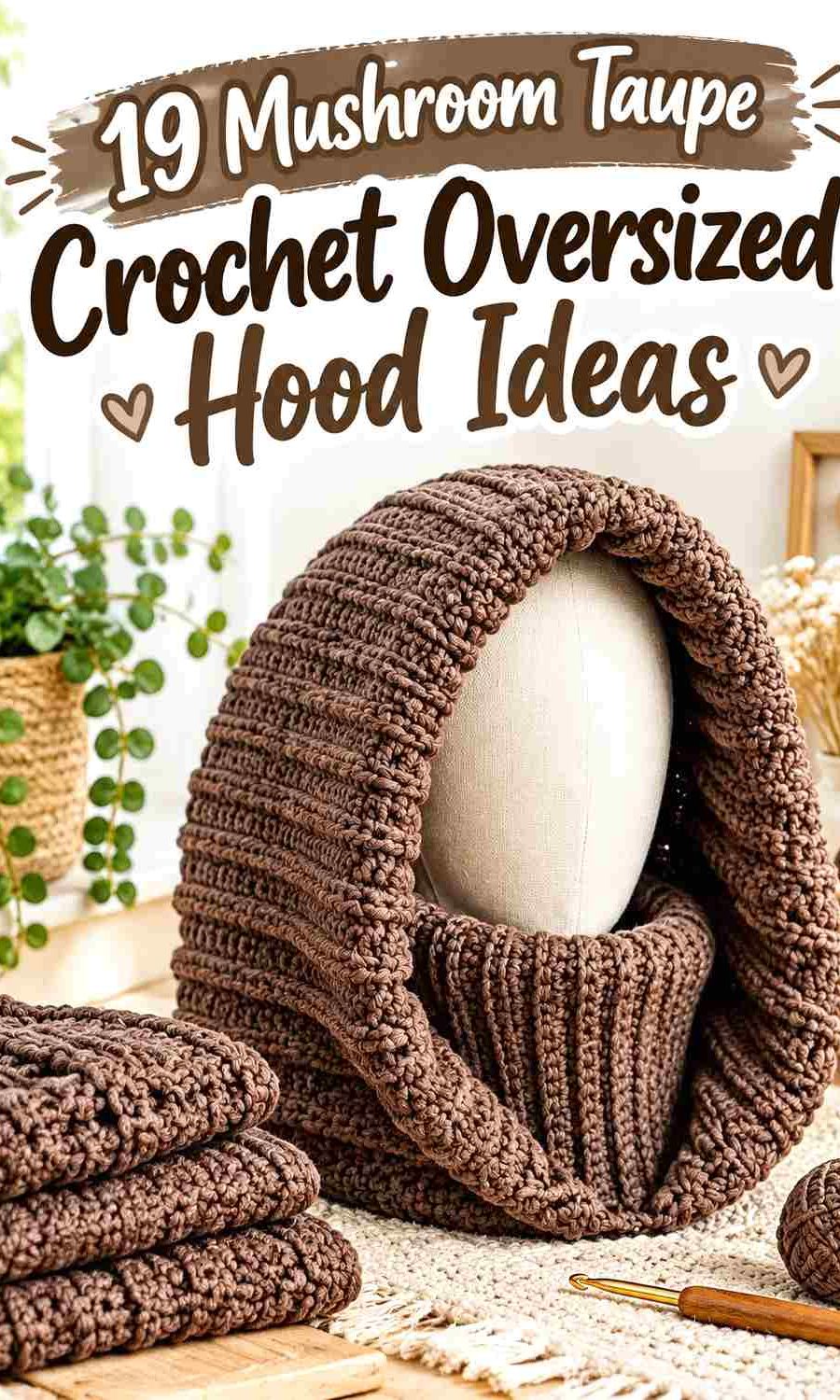
That neutrality makes color placement especially important. A pale face border can make the hood opening more distinct, while charcoal, espresso, navy, or plum can add definition around a deep crown or substantial neck section. Muted greens, rose tones, rust, and burgundy introduce color without requiring the entire oversized hood to become highly saturated.
Oversized hoods also create more color zones than a fitted hat. The crown, face frame, lower hood, neck or cowl section, ties, scarf extensions, granny-square joins, and textured panels can each carry a different role. The strongest palettes give Mushroom Taupe enough uninterrupted area to establish the hood first, then place contrast where it helps the generous silhouette remain clear.
The tutorials credited below support crochet hoods, hooded cowls, balaclavas, granny-square hoods, or hooded scarves. Not every original tutorial produces an oversized fit, so use the creator’s own construction and sizing guidance rather than enlarging every dimension indiscriminately. The Mushroom Taupe palettes are independent color adaptations.
Quick List
- Mushroom Taupe And Cream Crochet Oversized Hood
- Mushroom Taupe And Charcoal Crochet Oversized Hood
- Mushroom Taupe And Dusty Rose Crochet Oversized Hood
- Mushroom Taupe And Black Crochet Oversized Hood
- Mushroom Taupe And Soft Sage Crochet Oversized Hood
- Mushroom Taupe And Antique Ivory Crochet Oversized Hood
- Mushroom Taupe And Espresso Crochet Oversized Hood
- Mushroom Taupe And Deep Plum Crochet Oversized Hood
- Mushroom Taupe And Moss Green Crochet Oversized Hood
- Mushroom Taupe And Oatmeal Crochet Oversized Hood
- Mushroom Taupe And Burgundy Crochet Oversized Hood
- Mushroom Taupe And Midnight Navy Crochet Oversized Hood
- Mushroom Taupe And Rust Crochet Oversized Hood
- Mushroom Taupe And Stone Gray Crochet Oversized Hood
- Mushroom Taupe And Muted Lavender Crochet Oversized Hood
- Mushroom Taupe And Camel Crochet Oversized Hood
- Mushroom Taupe Cream And Charcoal Crochet Oversized Hood
- Mushroom Taupe Olive And Oatmeal Crochet Oversized Hood
- Tonal Mushroom Taupe And Cocoa Crochet Oversized Hood
Keep Mushroom Taupe Broad Enough to Show the Oversized Hood Shape
A roomy hood creates folds around the crown, temples, neck, and shoulders. If those areas change color too frequently, the palette can break the silhouette into separate pieces and make it harder to see the generous hood shape.
Keeping Mushroom Taupe across the crown and one or both side panels gives the folds a continuous background. A contrasting shade can then define the face opening, lower cowl, or scarf extensions without interrupting every change in direction.
This matters especially for granny-square and striped hoods. Modular construction naturally creates more visual divisions, so repeating Mushroom Taupe around motif borders or across several connected sections can keep the finished hood cohesive.
Use Mushroom Taupe Face Borders to Control the Visual Weight
The face opening is one of the highest-impact places for contrast because it remains visible whether the hood is pulled forward or allowed to sit farther back.
Cream, ivory, oatmeal, and pale gray can create a lighter Mushroom Taupe face frame. Charcoal, black, espresso, navy, and plum produce a darker outline. Neither approach is automatically better; the useful choice depends on whether you want the edge to blend gently into the hood or become a clearly defined boundary.
For a genuinely roomy silhouette, avoid assuming that a tighter-looking dark border should also be physically tighter. Color can provide definition without changing fit. Follow the tutorial’s edging and sizing guidance for the actual opening.
Balance Mushroom Taupe Across Cowls, Ties, and Scarf Extensions
An oversized hood often continues below the chin. Hooded cowls create a substantial neck section, while scoodies and hooded scarves add long tails that can occupy as much visual space as the hood itself.
If Mushroom Taupe dominates the crown but disappears completely below the neck, the accessory may look like two separate color stories. Repeating the main taupe in a cowl band, scarf tail, pocket, or tie can connect the upper and lower portions.
Conversely, a solid Mushroom Taupe hood can support contrasting scarf extensions when the transition is deliberate. The important checkpoint is the worn view: drape the complete accessory rather than judging the color proportions only while it lies flat.
1. Mushroom Taupe And Cream Crochet Oversized Hood
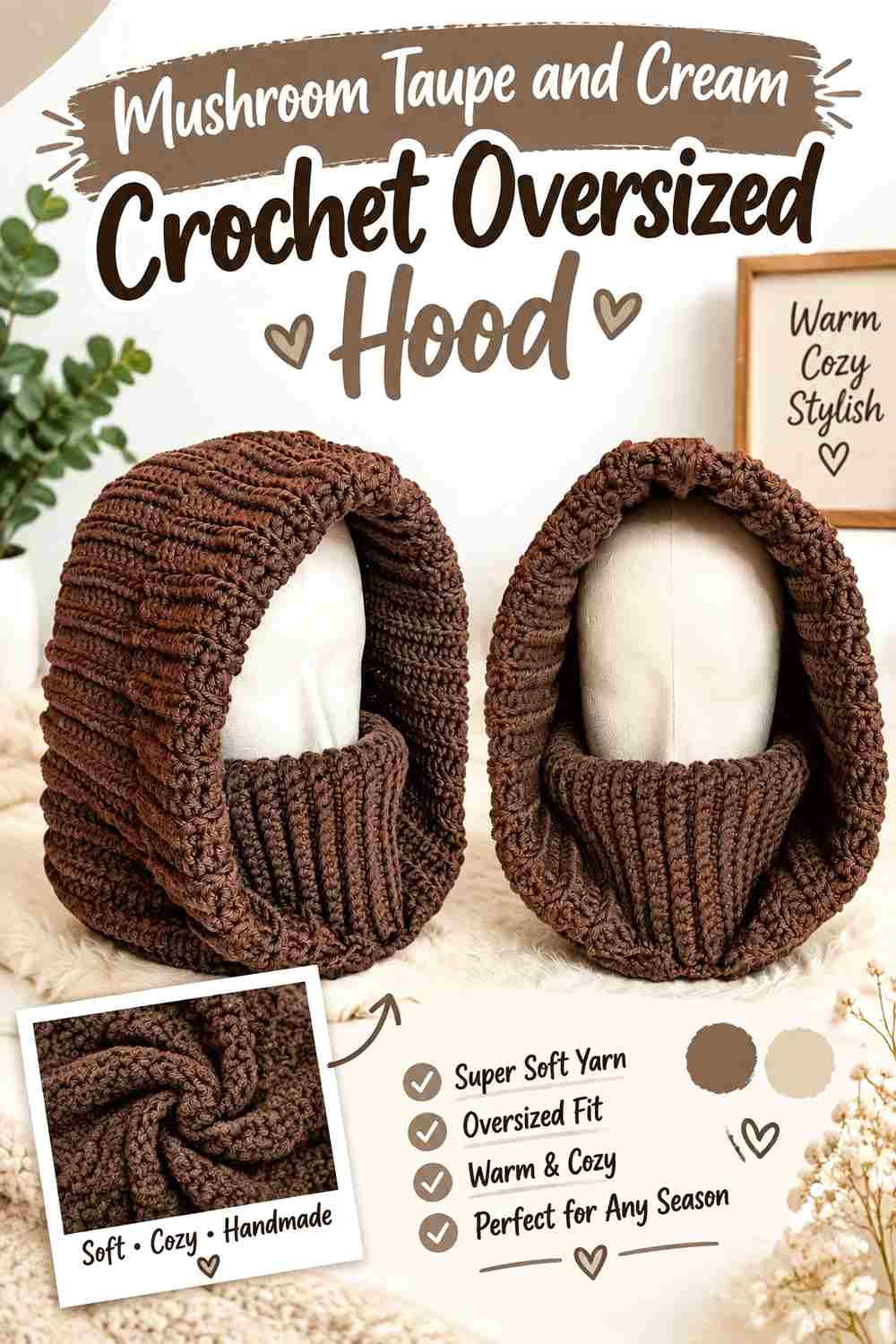
Mushroom Taupe and cream create a low-pressure neutral combination that suits a deep, loose hood particularly well. Use Mushroom Taupe through the crown and side panels, with cream concentrated around the face frame or lower neck edge. The lighter shade can reveal the hood opening without turning the accessory into broad alternating stripes.
Let Mushroom Taupe Cover the Deep Crown
Keep Mushroom Taupe uninterrupted over the largest folds at the back and top of the hood. This lets shadow and crochet texture describe the oversized shape instead of relying on frequent color changes.
If the hood includes ties, repeating Mushroom Taupe through most of their length keeps the larger accessory visually connected.
Use Cream to Lighten the Mushroom Taupe Face Frame
A cream border can separate the face opening from the surrounding taupe while remaining softer than bright white. Keep it relatively concentrated around the opening or one lower band so Mushroom Taupe still controls the overall surface.
Creator Credit: Diving Ducks Crochet
2. Mushroom Taupe And Charcoal Crochet Oversized Hood
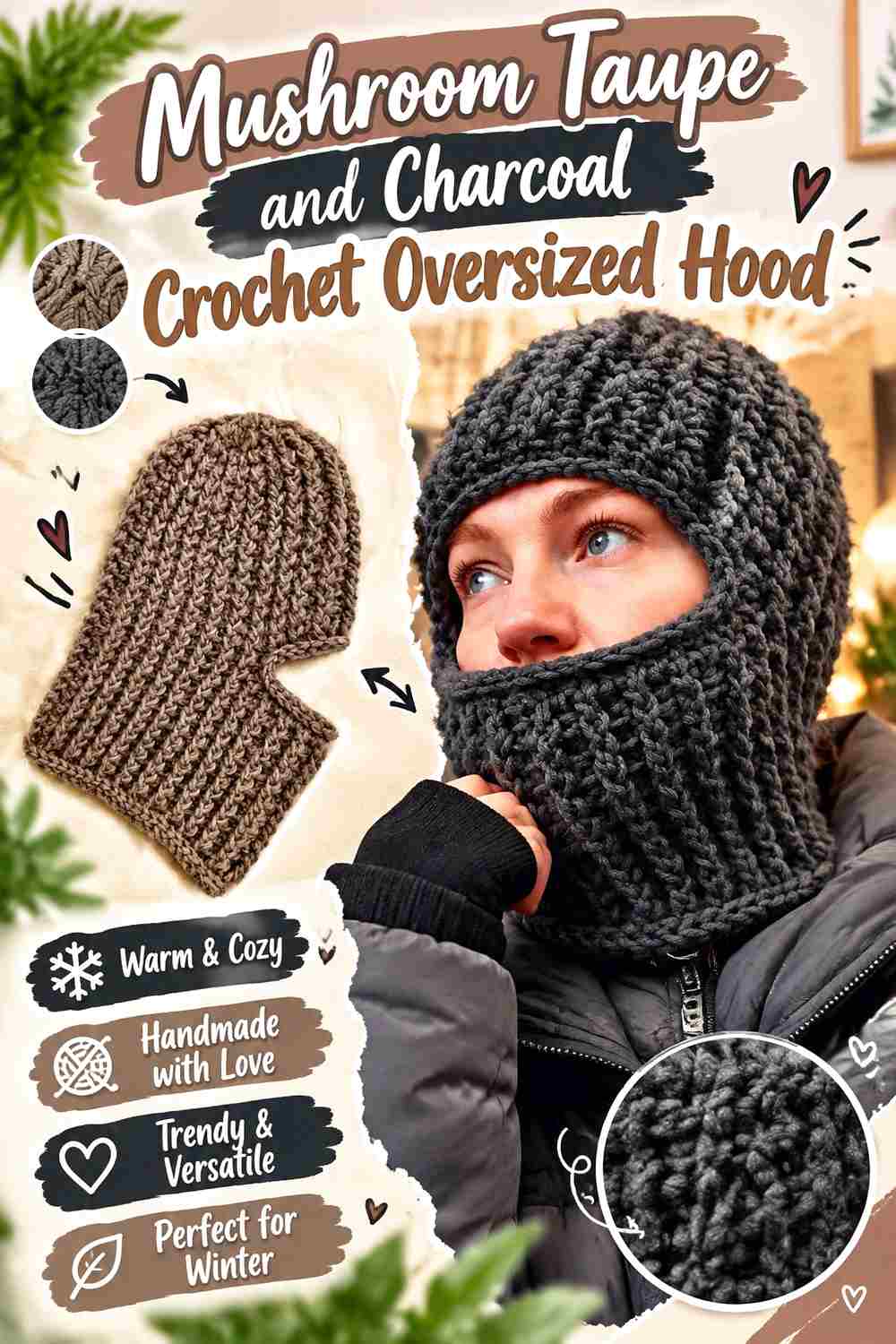
Charcoal gives Mushroom Taupe a deeper neutral anchor. This pairing works well for a hood with a substantial neck or cowl section because charcoal can sit lower on the accessory while Mushroom Taupe remains around the head and face.
Keep Mushroom Taupe Around the Main Hood Volume
Use Mushroom Taupe across the roomy crown and most of the side area. Charcoal already carries more visual weight, so a smaller amount can define the neck without requiring an equal two-color split.
Put Charcoal Below Mushroom Taupe for a Grounded Cowl
A charcoal lower cowl can give the oversized hood a clear endpoint when it is worn over a coat or sweater. Repeating a narrow charcoal face edge can connect the lower section without cutting the Mushroom Taupe crown into multiple dark bands.
Creator Credit: Serafima Crochet & Knitting
3. Mushroom Taupe And Dusty Rose Crochet Oversized Hood
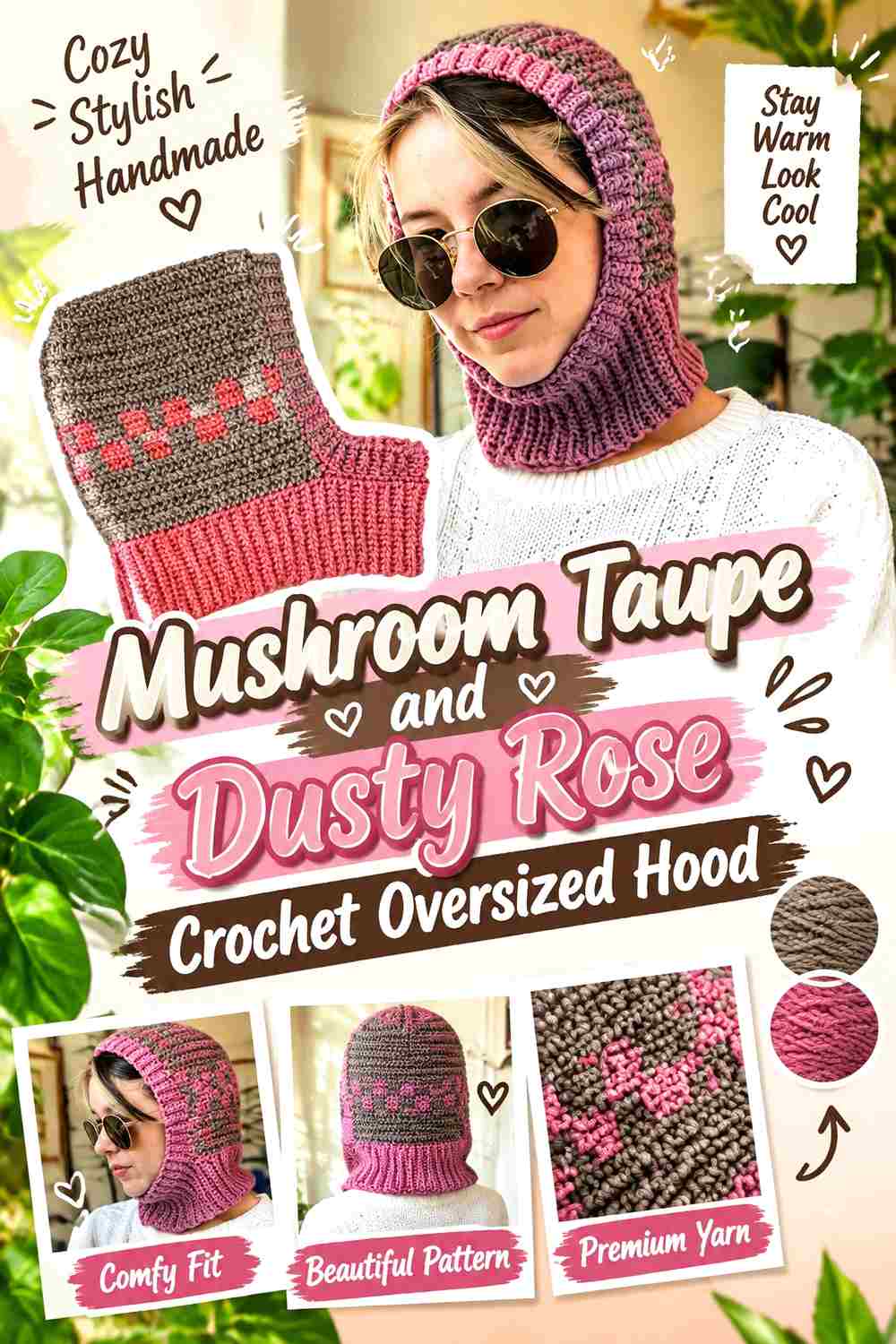
Dusty rose adds muted warmth without overwhelming Mushroom Taupe. It works particularly well in a hood with one decorative section, where the pink can occupy a checker, edge, tie, or secondary panel while taupe remains responsible for the overall silhouette.
Keep Mushroom Taupe Dominant Beside Dusty Rose
Give Mushroom Taupe the larger panels and use dusty rose in one recognizable area rather than scattering small pink changes across every section. This keeps a roomy hood from appearing visually fragmented.
Use Dusty Rose to Soften the Mushroom Taupe Face Edge
A dusty rose border can warm the area around the face without producing the sharp contrast of black or cream. Choose a rose that remains distinguishable from Mushroom Taupe when the purpose is to make the opening visually clearer.
Creator Credit: made in the moment
4. Mushroom Taupe And Black Crochet Oversized Hood
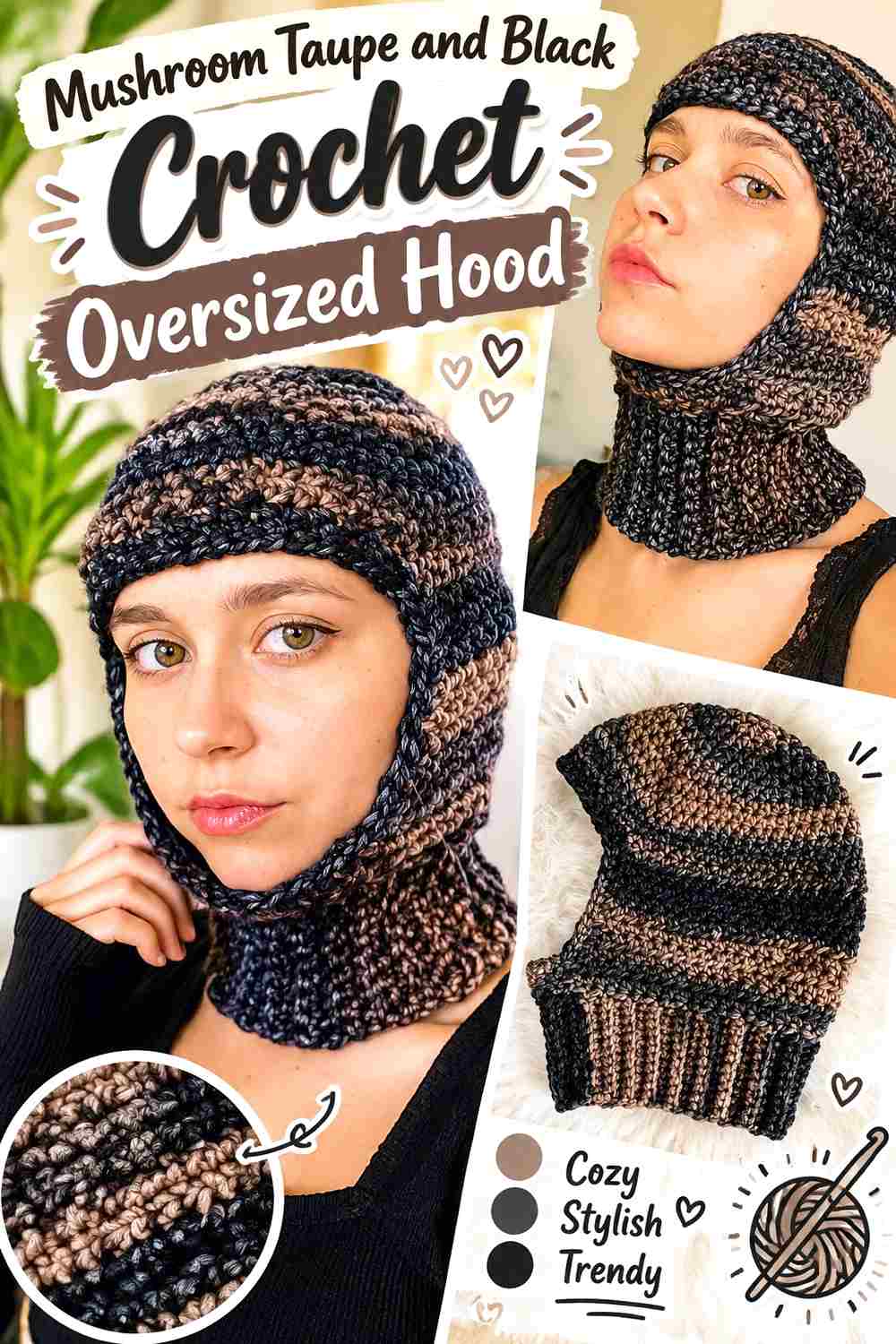
Black creates the strongest dark contrast in the collection. Mushroom Taupe should occupy most of the crown and side panels, while black can define the face opening, lower neck section, or ties. Too much black can quickly make the accessory look dark-led rather than Mushroom Taupe-led.
Keep Mushroom Taupe Broader Than Black Around the Crown
A large Mushroom Taupe crown allows the oversized folds to remain visible. Black is strong enough to define narrower sections, so it does not need equal surface area.
Use Black to Outline the Mushroom Taupe Opening
A black border can sharpen the face frame of a simple hood. If the opening already has pronounced ribbing or another textured edge, keep the color change controlled rather than adding black to every nearby row.
Creator Credit: brittanyalicecrochet
5. Mushroom Taupe And Soft Sage Crochet Oversized Hood
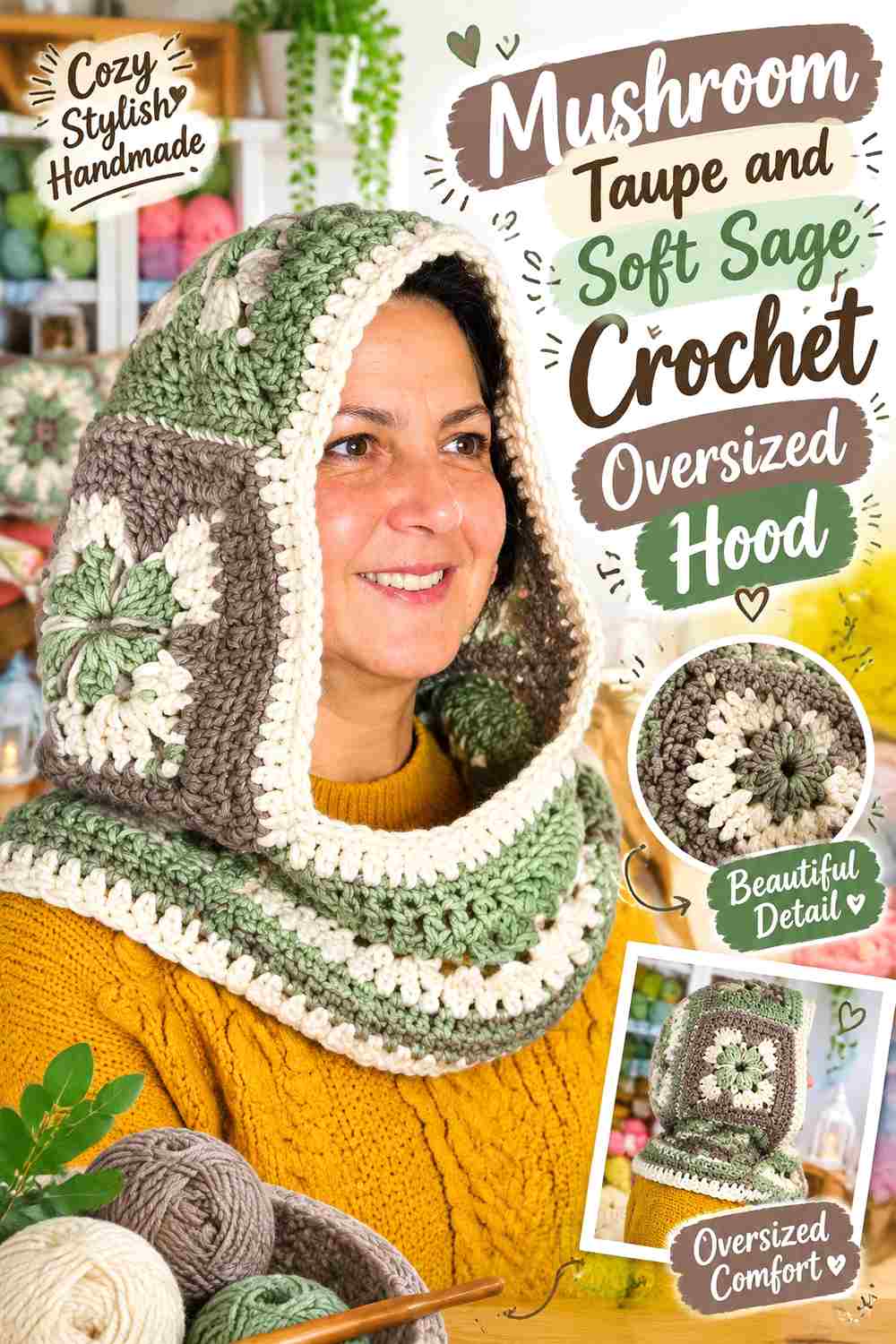
Soft sage keeps the palette earthy and muted. Pair it with Mushroom Taupe when you want color without a hard neutral contrast. The two shades work especially well on a slouchier hood where larger panels give subtle differences enough room to remain visible.
Let Mushroom Taupe Anchor the Slouchy Crown
Keep the extra crown volume Mushroom Taupe so the folds remain unified. Sage can move toward the lower hood or face edge instead of breaking up the area where the fabric naturally gathers.
Keep Soft Sage Distinct From Mushroom Taupe at the Face
Muted sage and taupe may be close in value. Compare them directly before using sage for a narrow border; if they merge, use the green in a wider section where its hue becomes easier to see.
Creator Credit: Sirin’s Crochet
6. Mushroom Taupe And Antique Ivory Crochet Oversized Hood

Antique ivory creates a stronger light contrast while remaining warmer than stark white. It is especially useful for granny-square construction, where a repeating pale detail can organize several Mushroom Taupe motifs.
Repeat Mushroom Taupe Across the Large Granny Hood Sections
Keep Mushroom Taupe in the most visually connected parts of the motifs or their borders. Large granny squares already create strong panel divisions, so a repeated taupe element helps the hood read as one accessory.
Use Antique Ivory to Separate Mushroom Taupe Motif Edges
Antique ivory can clarify joins or selected motif centers without requiring every round to change color. A controlled pale repeat is usually enough to make the modular construction visible.
Creator Credit: vivi e cuci
7. Mushroom Taupe And Espresso Crochet Oversized Hood
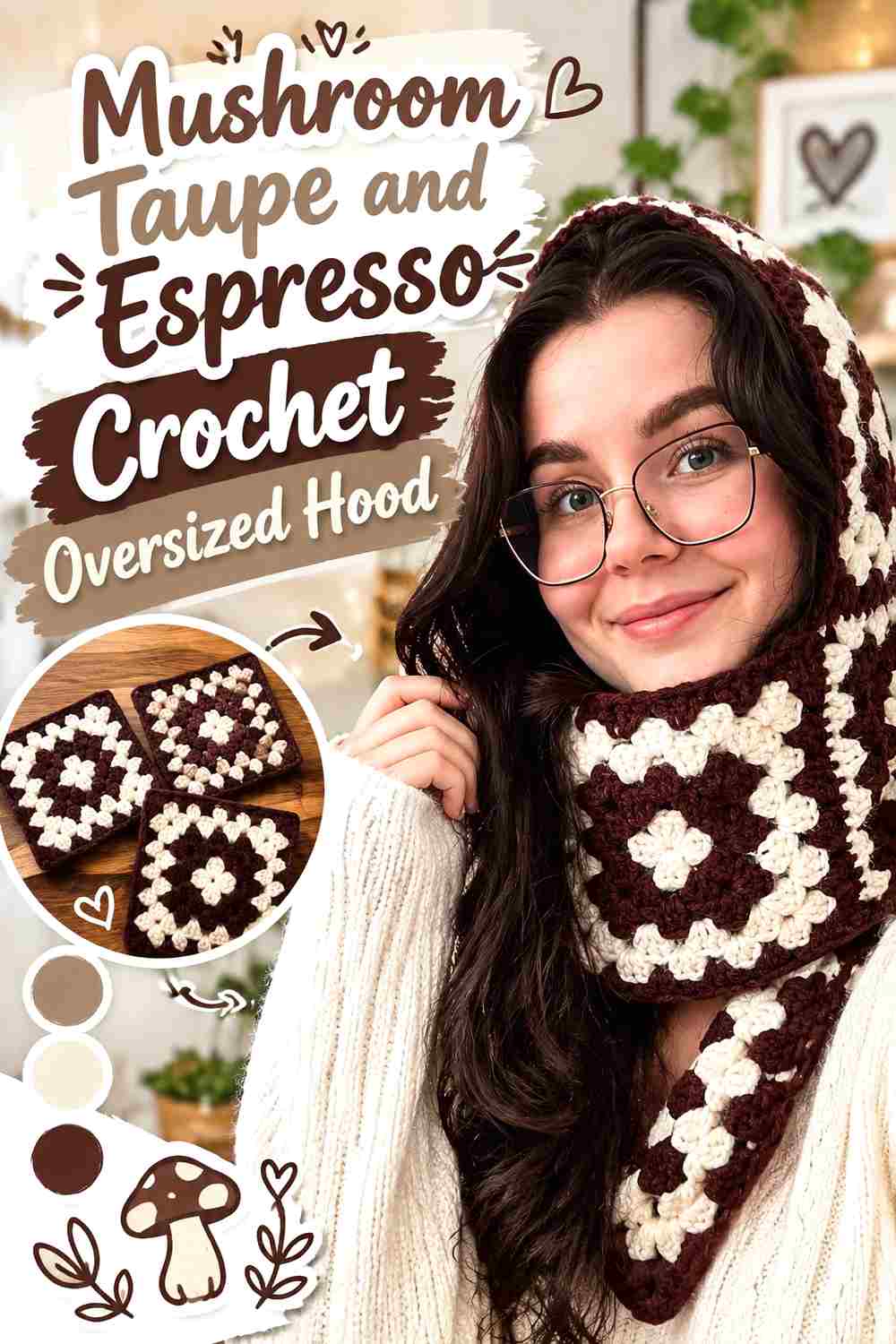
Espresso produces a dark earthy version of Mushroom Taupe rather than a high-contrast black-and-beige effect. Use taupe across most motifs or panels, then place espresso around joins, lower edging, or a face frame.
Keep Mushroom Taupe Visible Across Patchwork Panels
A modular hood can become busy quickly when every square uses a different balance. Repeating Mushroom Taupe across the majority of motifs gives the patchwork a common visual base.
Use Espresso to Join Mushroom Taupe Without Creating a Heavy Grid
Dark joins can define each motif, but they also create strong lines around every square. If you want a softer oversized hood, use espresso selectively or keep the joining area narrower so Mushroom Taupe remains visually connected.
Creator Credit: Sznurki Studio
8. Mushroom Taupe And Deep Plum Crochet Oversized Hood
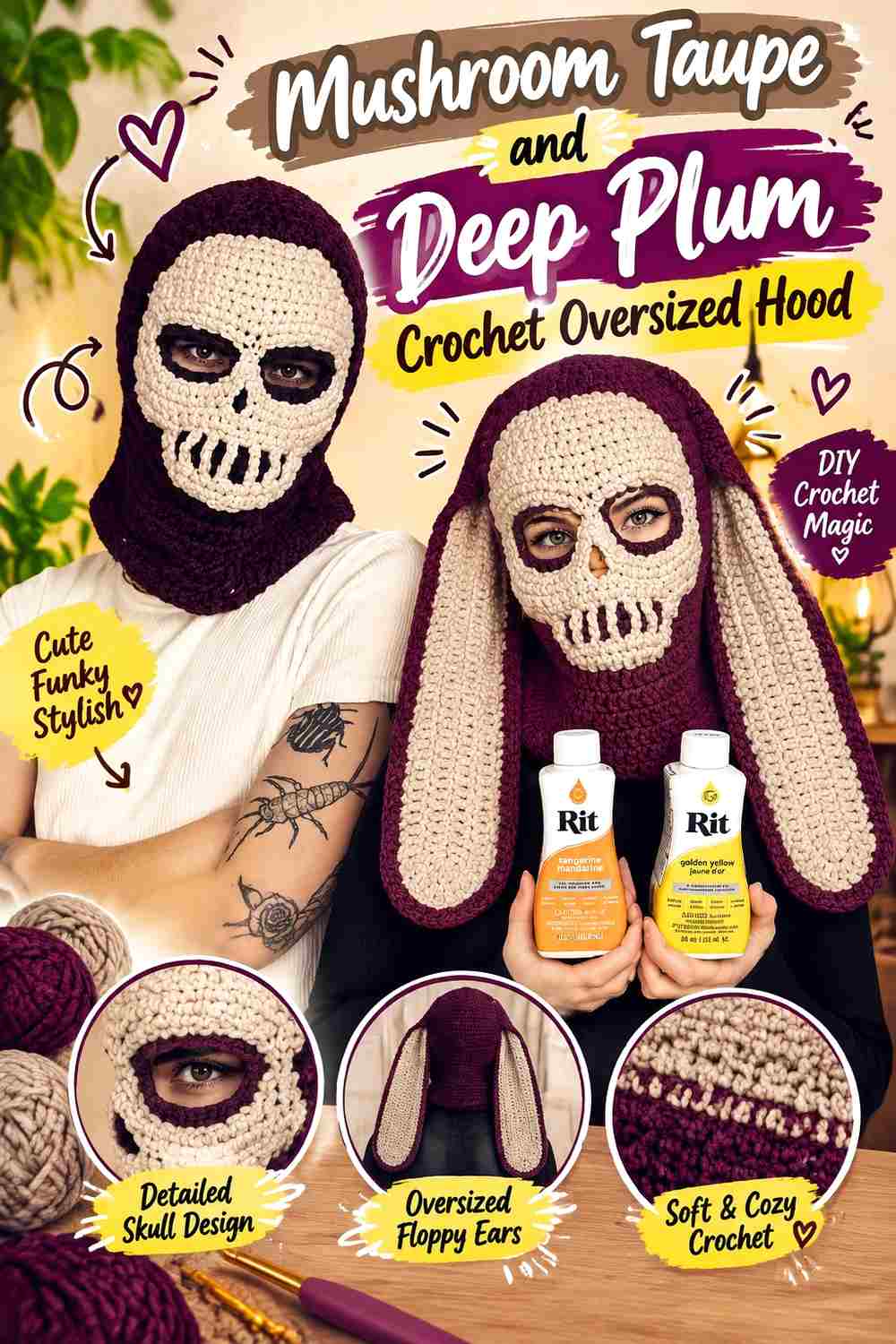
Deep plum adds a dark colored accent while keeping the palette subdued. On a sculptural or statement hood, Mushroom Taupe can cover the broad shape and plum can emphasize only the most important edges or raised details.
Let Mushroom Taupe Carry the Main Sculptural Hood Shape
Large Mushroom Taupe sections allow shadows to reveal dimensional crochet without introducing competing color blocks. This is useful when the hood itself already contains unusual shaping.
Keep Deep Plum Focused Against Mushroom Taupe
Use plum around one edge, selected raised details, or the lower hood rather than distributing it everywhere. Concentrated color gives the accent a purpose and leaves Mushroom Taupe responsible for the overall silhouette.
Creator Credit: Alexandria Masse
9. Mushroom Taupe And Moss Green Crochet Oversized Hood

Moss gives Mushroom Taupe a darker botanical partner and works well for hoods with distinctive crown features. Keep Mushroom Taupe across the main hood and place moss around smaller silhouette details or edges.
Keep Mushroom Taupe Broad Beneath Moss Crown Details
If the hood includes ears or another crown feature, using Mushroom Taupe across the main head section keeps those details connected to the base. Moss can then mark smaller edges without visually splitting the crown.
Use Moss to Define Mushroom Taupe Without Overloading the Crown
A moss face edge or small crown repeat can provide enough contrast. Avoid making every attached feature a separate dark-green block if the Mushroom Taupe hood shape should remain the strongest element.
Creator Credit: Kazclops
10. Mushroom Taupe And Oatmeal Crochet Oversized Hood
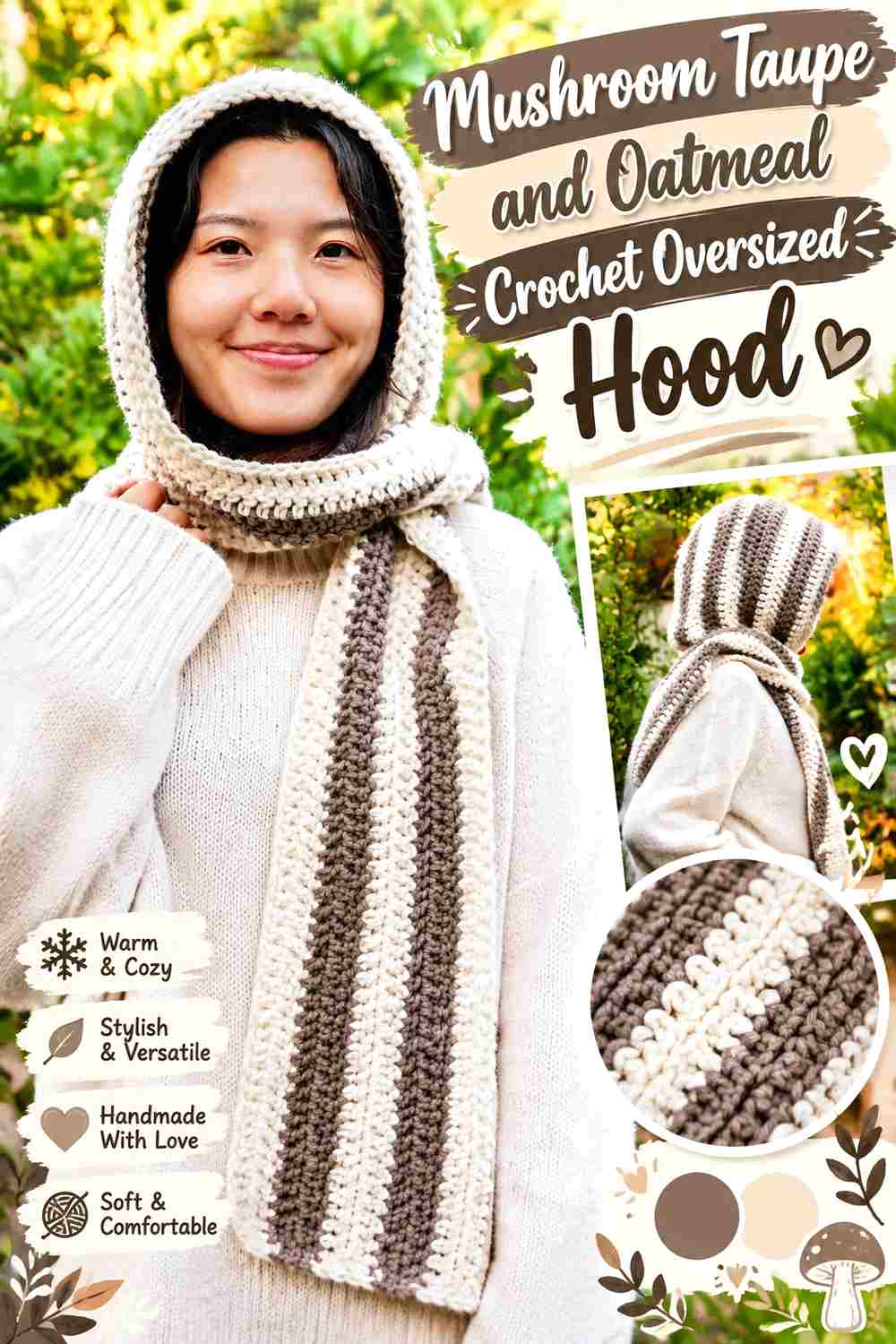
Oatmeal creates a very soft tonal-neutral palette. This works particularly well for a hooded scarf where color can move continuously from the head into the long scarf sections without creating strong stripes.
Keep Mushroom Taupe Across the Hood and Main Scarf Areas
Use Mushroom Taupe as the repeated base through both the hood and tails. This prevents the scarf extensions from feeling disconnected from the upper portion once they hang down the front.
Use Oatmeal to Break Up Mushroom Taupe Along the Scarf Length
A few broader oatmeal bands can create rhythm without turning the entire accessory into narrow stripes. Check the complete worn length before deciding how often the light neutral should repeat.
Creator Credit: VivCrochets
11. Mushroom Taupe And Burgundy Crochet Oversized Hood

Burgundy supplies a deep warm accent to Mushroom Taupe and suits a tapered hooded-scarf silhouette particularly well. Taupe can dominate the hood while burgundy becomes more noticeable toward the narrower extensions.
Keep Mushroom Taupe Around the Hood Before Introducing Burgundy
Establish the oversized or relaxed head section in Mushroom Taupe first so the central wearable remains neutral-led. Burgundy can then appear in a border or scarf extension without competing with the crown.
Repeat Burgundy Along Mushroom Taupe Scarf Ends
If burgundy appears around the face, echo it farther down the scarf so the accent does not stop abruptly at the neck. Keep enough Mushroom Taupe between repetitions to preserve the dominant neutral.
Creator Credit: Passionate Crafter
12. Mushroom Taupe And Midnight Navy Crochet Oversized Hood
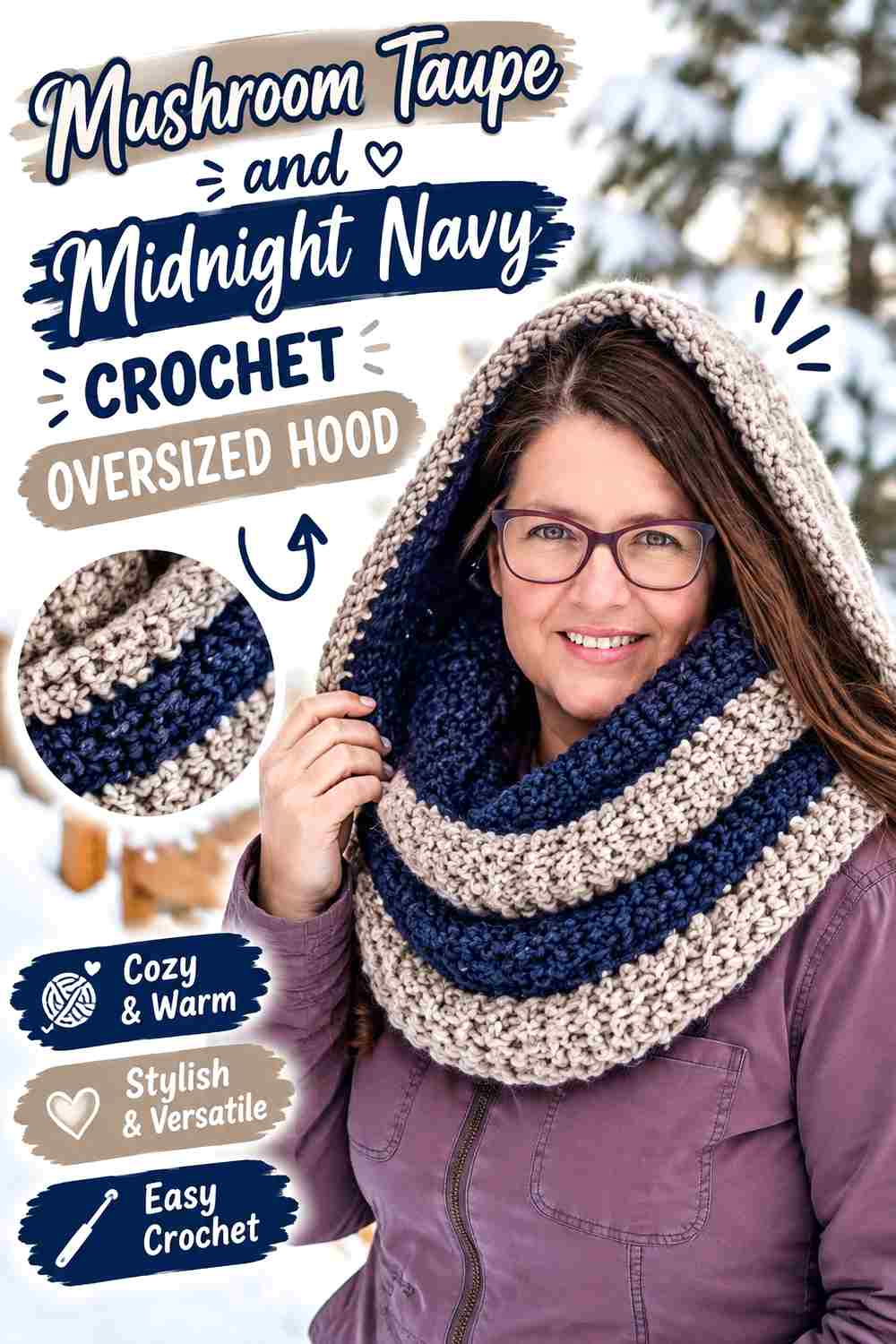
Midnight navy gives Mushroom Taupe a cool, dark framework. It is well suited to a substantial hooded cowl because the navy can define the lower neck section while the softer taupe controls the head coverage.
Keep Mushroom Taupe Through the Main Hood Above Midnight Navy
Let Mushroom Taupe cover most of the hood and move navy toward the cowl or ribbed finishing section. This arrangement keeps the darker shade from visually shrinking the roomy crown.
Use Midnight Navy to Frame Mushroom Taupe Without Tightening the Look
A navy face border creates definition through color alone. Follow the original tutorial for actual edge tension and fit rather than making the border physically firmer simply because it is visually darker.
Creator Credit: A Crocheted Simplicity – Jennifer Renaud
13. Mushroom Taupe And Rust Crochet Oversized Hood
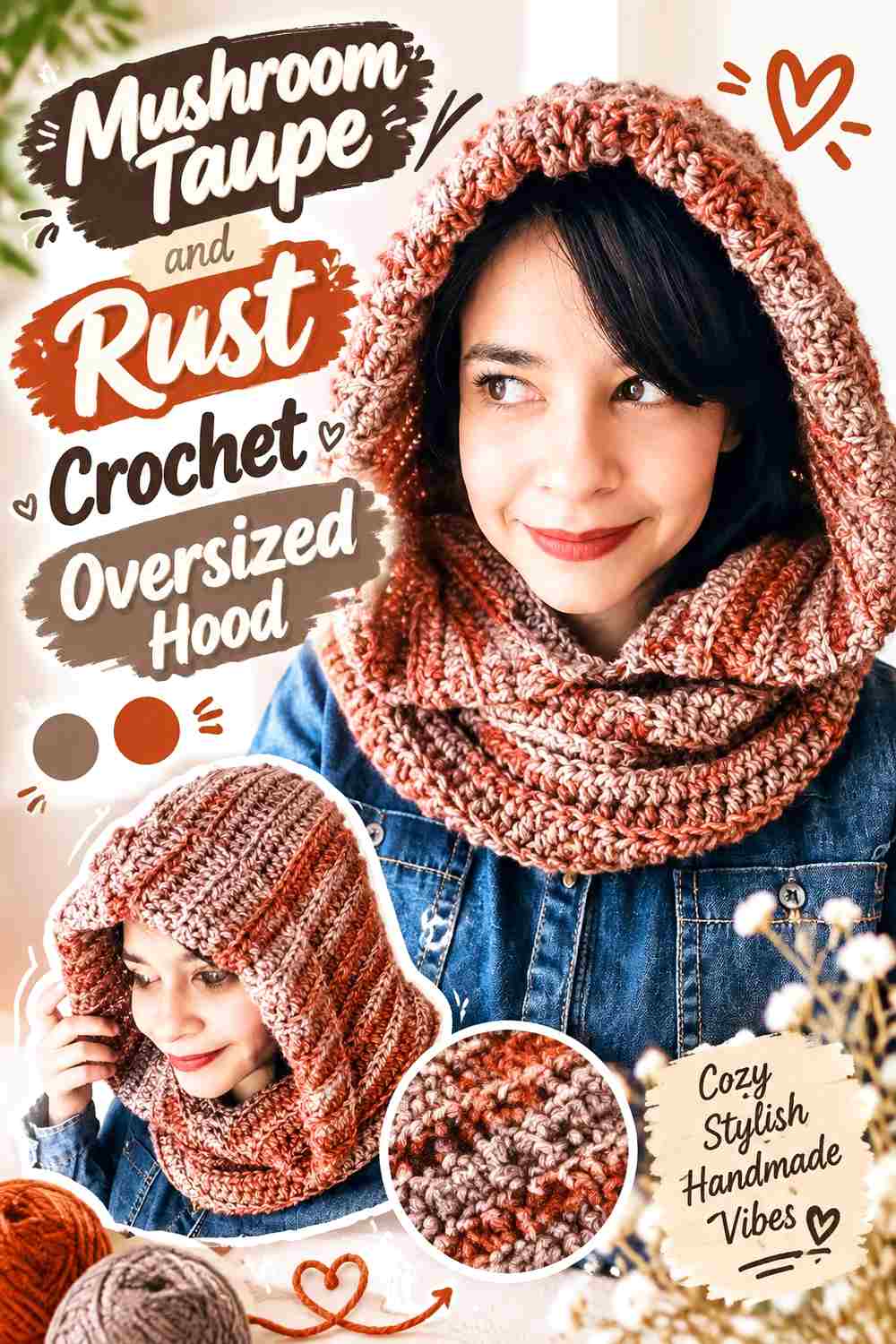
Rust gives Mushroom Taupe a warm earthy accent with more saturation than camel or oatmeal. It works best when confined to a few broad areas, such as the lower cowl, face border, or one repeated textured section.
Give Mushroom Taupe the Largest Adjustable Hood Area
When the construction allows fit customization, preserve Mushroom Taupe across the largest head section so any added depth remains visually continuous. Rust can define the lower portion without turning the hood into equal two-color halves.
Keep Rust Broad Enough to Show Against Mushroom Taupe
Some muted rusts can sit surprisingly close to Mushroom Taupe in value. Use rust in a complete band or border if a thin line disappears from normal viewing distance.
Creator Credit: Kiri Kiri
14. Mushroom Taupe And Stone Gray Crochet Oversized Hood
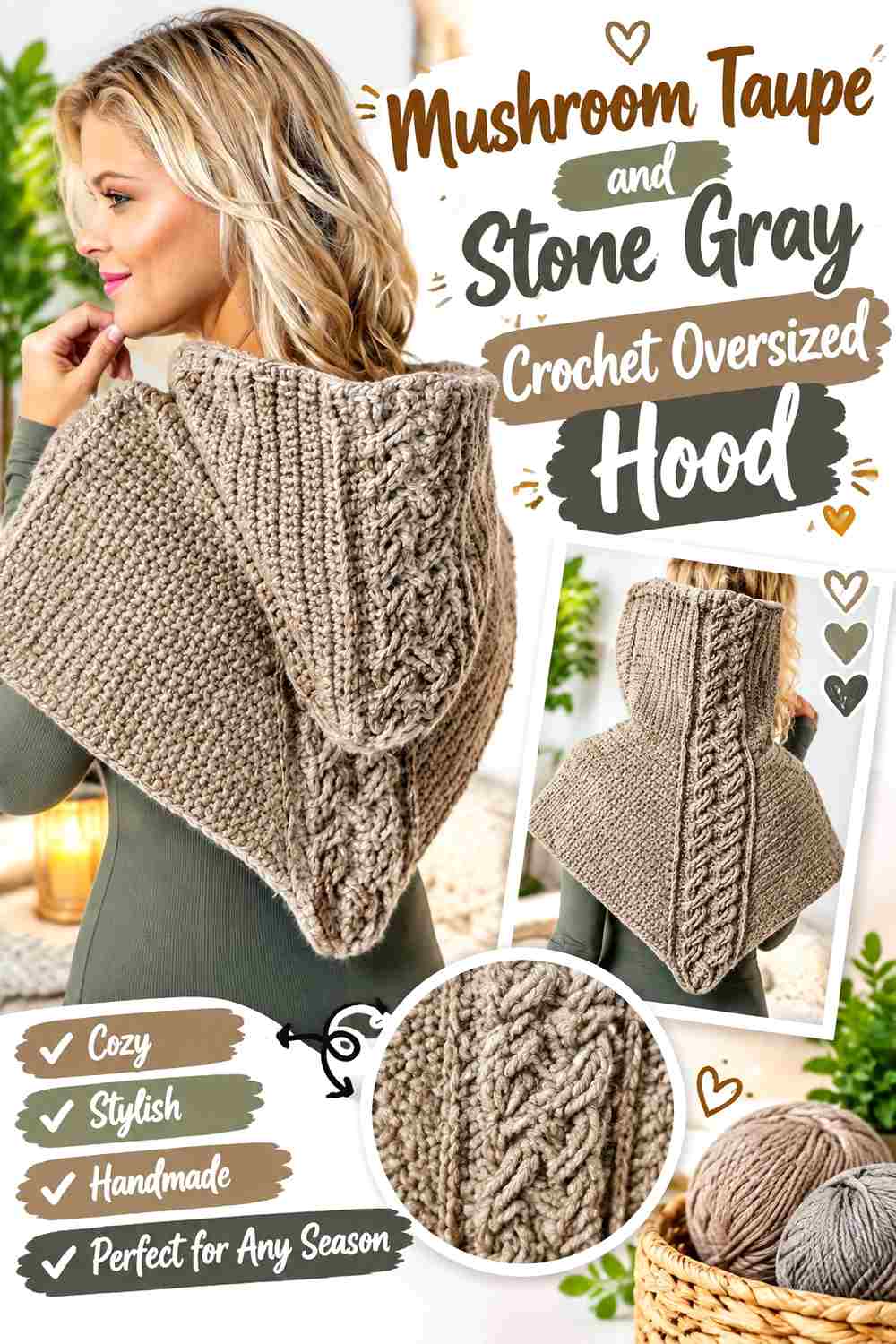
Stone gray creates a restrained cool-neutral palette that puts crochet texture ahead of obvious color contrast. This is especially effective on cable-textured hoods because the raised surface can provide most of the visual interest.
Let Mushroom Taupe Carry the Main Cable Texture
Use Mushroom Taupe across the broadest cable or raised-texture sections so changes in light and shadow remain continuous. Frequent gray interruptions can compete with the relief pattern.
Put Stone Gray Around Mushroom Taupe Cable Borders
Stone gray can mark the face opening, cowl edge, or simpler areas surrounding a textured panel. This preserves a tonal palette while giving the cable section a recognizable boundary.
Creator Credit: Marly Bird
15. Mushroom Taupe And Muted Lavender Crochet Oversized Hood

Muted lavender adds a cool color shift while remaining gentle enough for a broad scoodie or hooded scarf. Mushroom Taupe can cover the rounded hood, while lavender appears through scarf ends or a substantial outer trim.
Keep Mushroom Taupe Across the Rounded Hood Crown
A rounded oversized hood benefits from one continuous main color because the curve and folds already provide visual movement. Use lavender lower down rather than interrupting every crown section.
Carry Muted Lavender Into Mushroom Taupe Scarf Extensions
Repeat lavender along both scarf sides or ends so the secondary color feels balanced when the scoodie is worn. View the hood and scarf together; equal color areas while flat may not look equal once the tails hang vertically.
Creator Credit: 24 Carat Crochet
16. Mushroom Taupe And Camel Crochet Oversized Hood
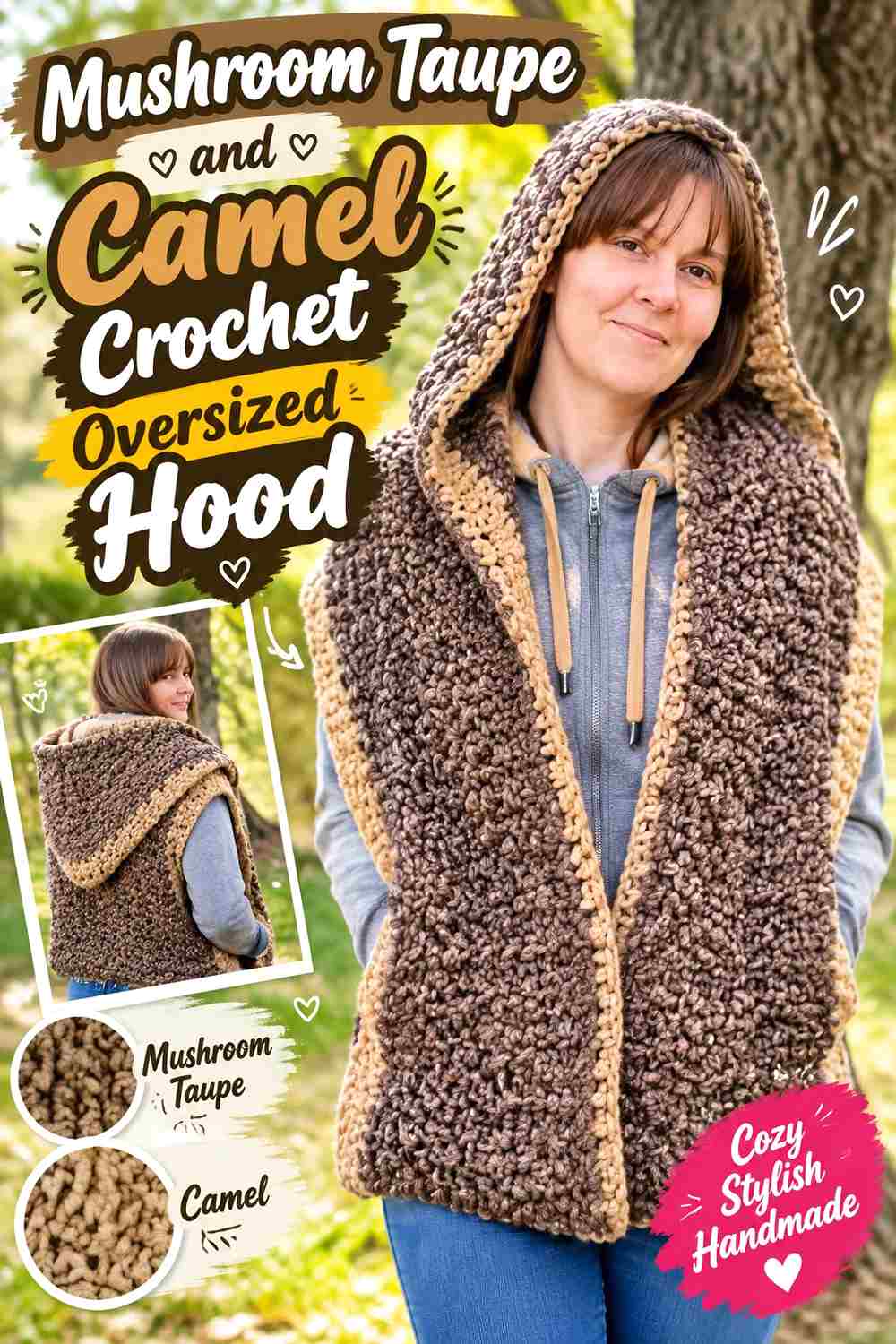
Camel creates a warmer tonal neutral that works well for an oversized hooded scarf with substantial fabric below the shoulders. The two colors can divide the long accessory without producing strong contrast.
Keep Mushroom Taupe Across the Hood Above Camel Scarf Sections
Use Mushroom Taupe around the head and transition into camel farther down the scarf. This gives the hood a clear identity while allowing the long lower sections to introduce warmth.
Repeat Mushroom Taupe Around Camel Pockets or Ends
If the design includes pockets or broad scarf ends, a Mushroom Taupe edge can reconnect them to the hood. That repetition matters because large lower sections can otherwise visually outweigh the head portion.
Creator Credit: Bag-O-Day Crochet
17. Mushroom Taupe Cream And Charcoal Crochet Oversized Hood
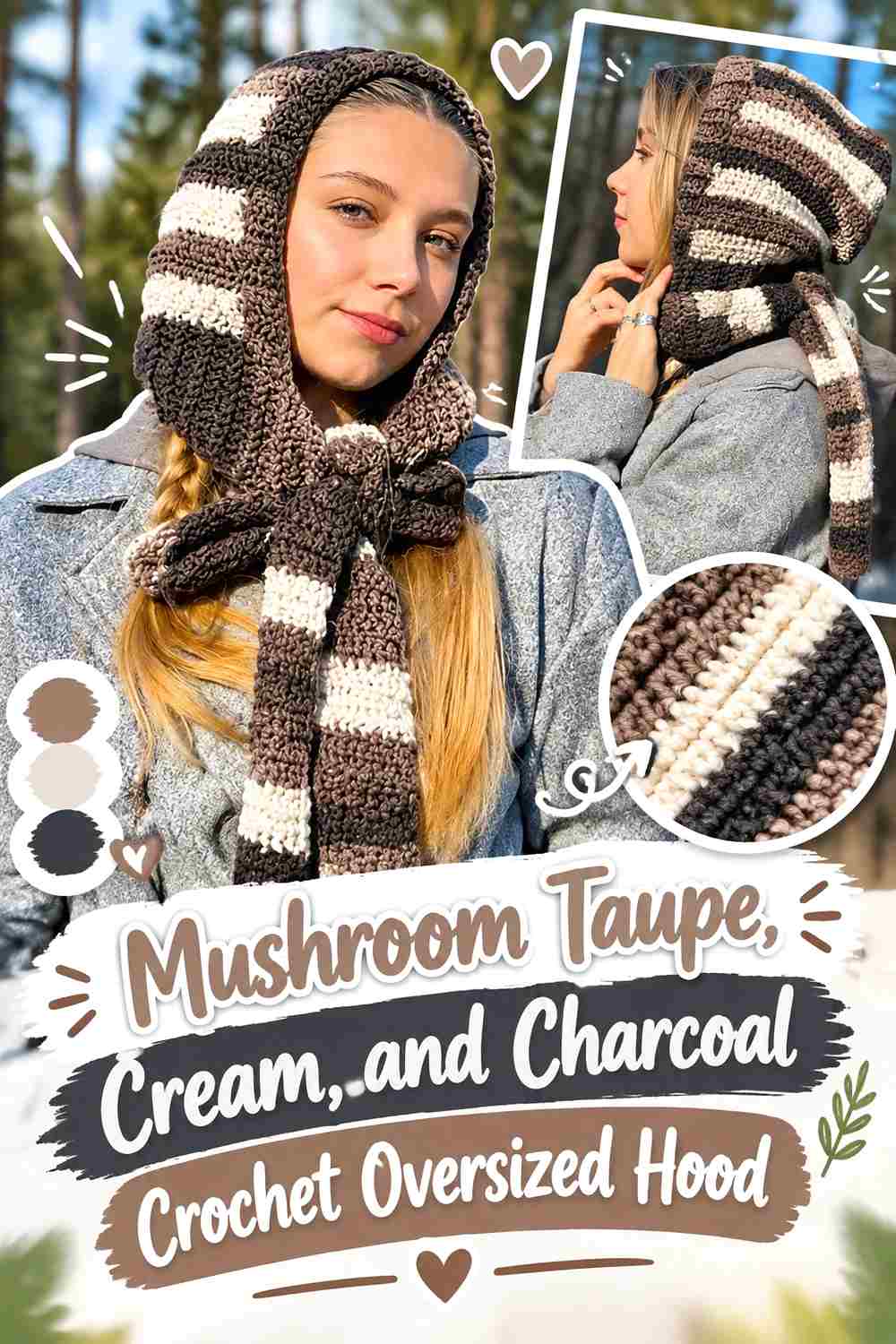
This three-color scheme gives Mushroom Taupe both a light and a dark supporting shade. Use taupe for the main hood, cream for selective face framing, and charcoal for the lower neck or narrow structural accents.
Keep Mushroom Taupe Between Cream and Charcoal
Mushroom Taupe should occupy the largest area and function as the visual middle of the palette. Cream can brighten the opening while charcoal anchors the lower hood.
Use Cream to Open the Mushroom Taupe Face Frame
A cream border can make the front edge easy to identify without introducing a second saturated color. Keep it narrow enough that the face frame does not overpower the deep Mushroom Taupe crown.
Put Charcoal Below Mushroom Taupe for Neck Definition
Charcoal can work around ties, a lower edge, or the neck section. Separating the dark and light accents into different zones keeps the three-color design orderly.
Creator Credit: Wool Reef
18. Mushroom Taupe Olive And Oatmeal Crochet Oversized Hood

Olive and oatmeal give Mushroom Taupe an earthy dark-light framework. Mushroom Taupe can dominate the roomy hood, olive can define the cowl or face edge, and oatmeal can provide a limited highlight.
Let Mushroom Taupe Lead the Olive Oversized Hood
Keep Mushroom Taupe across the crown and sides so olive does not turn the hood predominantly green. A darker olive lower section can provide enough color contrast with less surface area.
Use Oatmeal to Separate Olive From Mushroom Taupe
If Mushroom Taupe and olive are similar in value, oatmeal can provide a narrow visual pause at one important transition, such as the face edge or top of the neck section.
Keep Mushroom Taupe Repeated Below the Olive Cowl
A small Mushroom Taupe repetition along the lower finishing edge can reconnect the cowl to the crown, particularly when olive occupies a substantial neck area.
Creator Credit: LisaAuch Crochet
19. Tonal Mushroom Taupe And Cocoa Crochet Oversized Hood
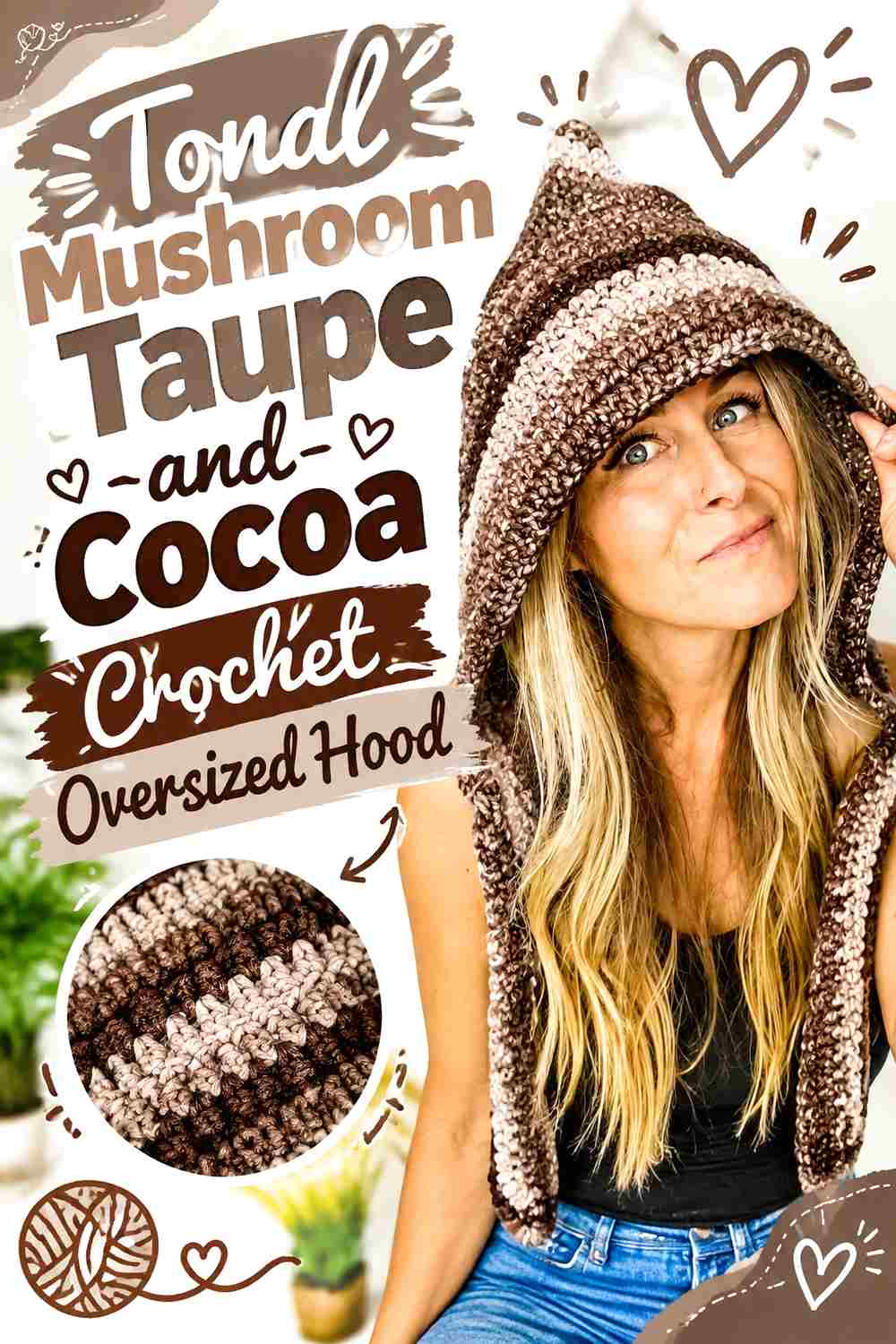
The final idea stays almost entirely within a neutral taupe-brown family. Use Mushroom Taupe as the middle and dominant shade, a lighter mushroom-beige direction where you want highlights, and cocoa for the deepest edge or ties. This puts the emphasis on folds and texture rather than obvious color blocking.
Keep Mushroom Taupe Central Across the Tonal Hood
Use Mushroom Taupe for the largest crown and side panels. A related lighter neutral can appear around the face while cocoa is saved for the smallest dark details.
This approach lets the oversized shape remain visually continuous even though three tonal values are present.
Use Cocoa to Anchor Mushroom Taupe Ties and Edging
Cocoa can finish a pointed or roomy hood through a narrow face border or darker tie ends. Keep it controlled so the deep brown acts as an anchor rather than turning the whole accessory into a dark color-block design.
Creator Credit: Lovable Loops by Melissa Hassler
Comparing the Mushroom Taupe Oversized Hood Palettes
For the lightest face framing, cream, antique ivory, oatmeal, and lighter tonal mushroom shades create useful separation without taking the hood far from a neutral palette. They are especially effective when the crown is already large and you only need a clear boundary around the opening.
Charcoal, black, espresso, midnight navy, deep plum, and cocoa create more visual weight. These shades are useful for lower cowls, borders, ties, and narrow face edges because they can provide definition without needing half of the hood’s surface.
Soft sage, moss, olive, dusty rose, burgundy, rust, and muted lavender introduce color while allowing Mushroom Taupe to remain the wardrobe-neutral anchor. On an oversized silhouette, using these colors in broad but secondary zones is usually easier to read than switching shades every few rows.
For granny-square or patchwork hoods, repetition matters more than the number of colors. Keeping Mushroom Taupe in the same part of several motifs can visually connect the individual pieces before they are joined into the hood.
Conclusion
Mushroom Taupe is particularly adaptable to oversized crochet hoods because the subdued color gives deep crowns, broad face openings, neck cowls, and scarf extensions room to create the shape. Cream, ivory, and oatmeal brighten the face frame, while charcoal, black, espresso, navy, plum, and cocoa can anchor the lower or outer edges.
For a little more color, sage, moss, olive, dusty rose, burgundy, rust, and muted lavender can occupy secondary panels without requiring Mushroom Taupe to give up its dominant role. Tonal taupe combinations put the greatest emphasis on crochet texture and natural folds.
Before finishing the color placement, try the developing hood in the way it will actually be worn. A shade that looks balanced on a flat rectangle may occupy much more or less visual area once the crown falls backward, the cowl bunches at the neck, or scarf tails hang below the shoulders. Follow each credited tutorial for its original construction and sizing guidance, then adapt the palette without assuming that “oversized” means every measurement should simply be increased.
Frequently Asked Questions
What colors contrast clearly with Mushroom Taupe on an oversized crochet hood?
Cream, antique ivory, black, charcoal, espresso, midnight navy, and deep plum can all create useful light-dark contrast. The actual yarns should still be compared side by side because shade names do not guarantee a particular value difference.
Where should Mushroom Taupe go on an oversized crochet hood?
The crown and main side panels are useful places for Mushroom Taupe because they give the dominant shade enough uninterrupted area to show the hood’s depth and folds. Secondary colors can then move to the face edge, lower cowl, ties, or scarf extensions.
How do I make a Mushroom Taupe hood look oversized without making the colors look bulky?
Keep large areas in Mushroom Taupe and limit strong contrast to selected edges or lower sections. Frequent dark stripes can visually divide a roomy hood, while broader uninterrupted panels make the silhouette easier to see.
Can Mushroom Taupe and sage be used together on a crochet hood?
Yes. The combination creates a muted earthy palette. Check that the sage remains sufficiently different from Mushroom Taupe if it will form a narrow face border; similar values are easier to distinguish when used in larger sections.
Should a Mushroom Taupe face border be lighter or darker?
Either can work. Cream or ivory produces a lighter frame, while charcoal, espresso, black, or navy creates a darker outline. Choose according to the amount of contrast you want rather than treating one direction as a rule.
How should I color a Mushroom Taupe granny-square hood?
Repeat Mushroom Taupe consistently across motif centers, outer rounds, or another shared location. That repetition can unify several squares even when supporting colors change from motif to motif.
Can I adapt a fitted hood tutorial into a Mushroom Taupe oversized look?
Use the tutorial’s own sizing and adjustment guidance where available rather than enlarging every dimension equally. A roomier crown, face opening, and neck section affect one another, so fit should be checked on the wearer as the project develops.