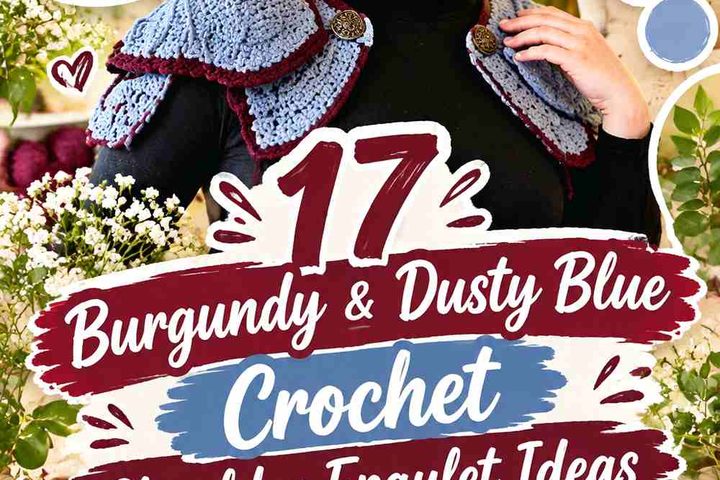
Burgundy and antique ivory are well suited to Victorian-inspired crochet boot cuffs because the two colors can separate structure from decoration. Burgundy can give the main cuff a deep, continuous foundation, while antique ivory can reveal lace, scallops, picots, buttons, or other ornamental details that might disappear in an all-dark design.

The key is deciding where the contrast belongs. Antique ivory concentrated along an ornate upper edge produces a very different result from ivory used through the main lace body. Likewise, a mostly ivory cuff with burgundy trim feels lighter and more decorative than a burgundy-led cuff with only narrow pale accents.
These 15 ideas vary the color hierarchy, trim placement, texture emphasis, and Victorian styling while keeping the burgundy-and-antique-ivory palette central.
Quick List
- Burgundy Victorian Crochet Boot Cuffs With Antique Ivory Picot Lace
- Burgundy Ribbed Crochet Boot Cuffs With Antique Ivory Buttons
- Burgundy And Antique Ivory C2c Victorian Crochet Boot Cuffs
- Burgundy Crochet Victorian Edge Boot Cuffs With Antique Ivory Trim
- Burgundy And Antique Ivory Reversible Crochet Boot Cuffs
- Burgundy Knit Look Crochet Boot Cuffs With Antique Ivory Borders
- Burgundy Crochet Lace Boot Cuffs With Antique Ivory Openwork
- Antique Ivory Crochet Boot Cuffs With Burgundy Victorian Bands
- Burgundy Super Ribbed Crochet Boot Cuffs With Antique Ivory Edging
- Burgundy Crochet Ruffled Boot Cuffs With Antique Ivory Flounces
- Burgundy Crochet Button Boot Cuffs With Antique Ivory Accents
- Burgundy Puff Stitch Crochet Boot Cuffs With Antique Ivory Details
- Burgundy Crochet Scalloped Boot Cuffs With Antique Ivory Edges
- Burgundy Victorian Crochet Boot Toppers With Antique Ivory Lace Panels
- Antique Ivory Lace Crochet Boot Cuffs With Burgundy Framing
Let Burgundy and Antique Ivory Have Separate Jobs
For a Victorian-inspired cuff, contrast works especially well when each color has a defined role. Burgundy can cover the structural portion—the ribbed band, main body, or fitted lower section—while antique ivory highlights decorative areas that remain visible above the boot.
Using both colors equally in every row can weaken that hierarchy. If the cuff already includes lace, buttons, scallops, or dimensional texture, concentrating antique ivory around those features can make the ornamentation easier to read without turning the whole cuff into alternating stripes.
Use Antique Ivory to Reveal Burgundy Crochet Detail
Dark burgundy can make intricate texture look rich, but small stitch details may visually merge when everything is the same deep value. Antique ivory provides a lighter neighboring value that can outline a picot edge, frame a lace section, or separate one decorative band from another.
Before committing to the entire pair, crochet enough of both colors together to see whether the ivory is warm and muted enough for the antique direction you want. A very bright white creates a sharper, more modern contrast than a softened ivory.
Keep Victorian Burgundy and Antique Ivory Details Above the Boot
Decorative color placement matters because only part of a boot cuff may remain visible once the boots are on. An antique-ivory scallop or lace border loses its purpose if it sits mostly inside the boot shaft.
Plan the visible section first. Place the strongest burgundy-and-ivory contrast where it will sit above the boot opening, then let the less decorative portion extend downward if the construction requires it.
1. Burgundy Victorian Crochet Boot Cuffs With Antique Ivory Picot Lace
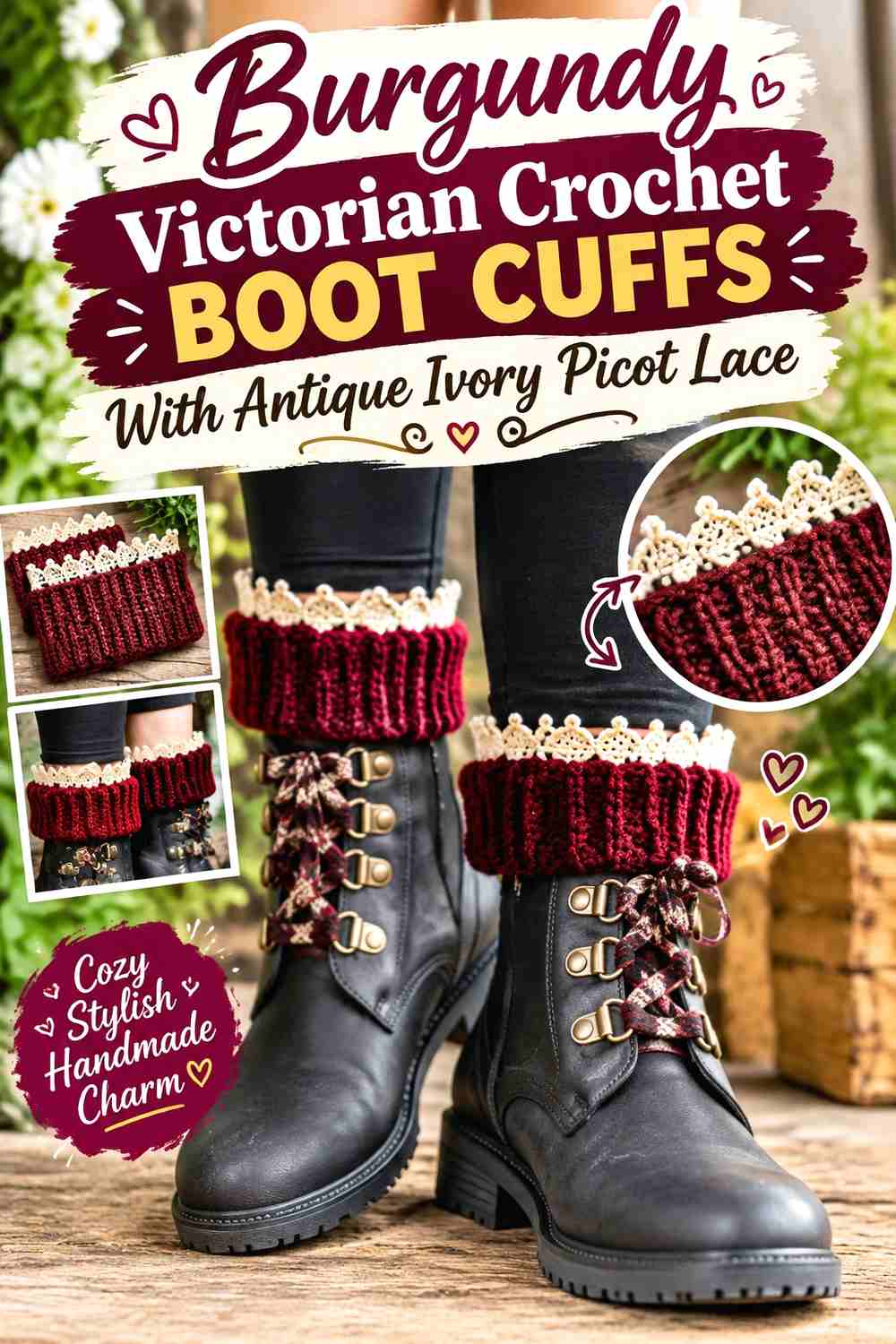
This palette keeps burgundy dominant across the ribbed cuff while reserving antique ivory for a small pointed edge. The narrow pale trim gives the upper silhouette a vintage decorative finish without dividing the main fabric into competing blocks of color.
Burgundy Should Carry the Main Victorian Crochet Cuff
Keeping the ribbed or fitted body burgundy creates a dark visual base that can coordinate with brown, black, or other neutral boots without relying on the ivory for structure.
The uninterrupted burgundy area also gives the picot edge room to stand out. If antique ivory is repeated too frequently through the body, the small points at the top become less distinctive.
Antique Ivory Picots Give Burgundy a Lighter Victorian Finish
Place antique ivory where the picots or small decorative points remain visible above the boot. The light edge outlines the cuff without requiring a wide lace section.
Because picots are small, check the color from normal standing distance. If the ivory points seem disconnected, a narrow ivory transition line beneath them can visually connect the edging.
Creator Credit: Yay For Yarn
2. Burgundy Ribbed Crochet Boot Cuffs With Antique Ivory Buttons
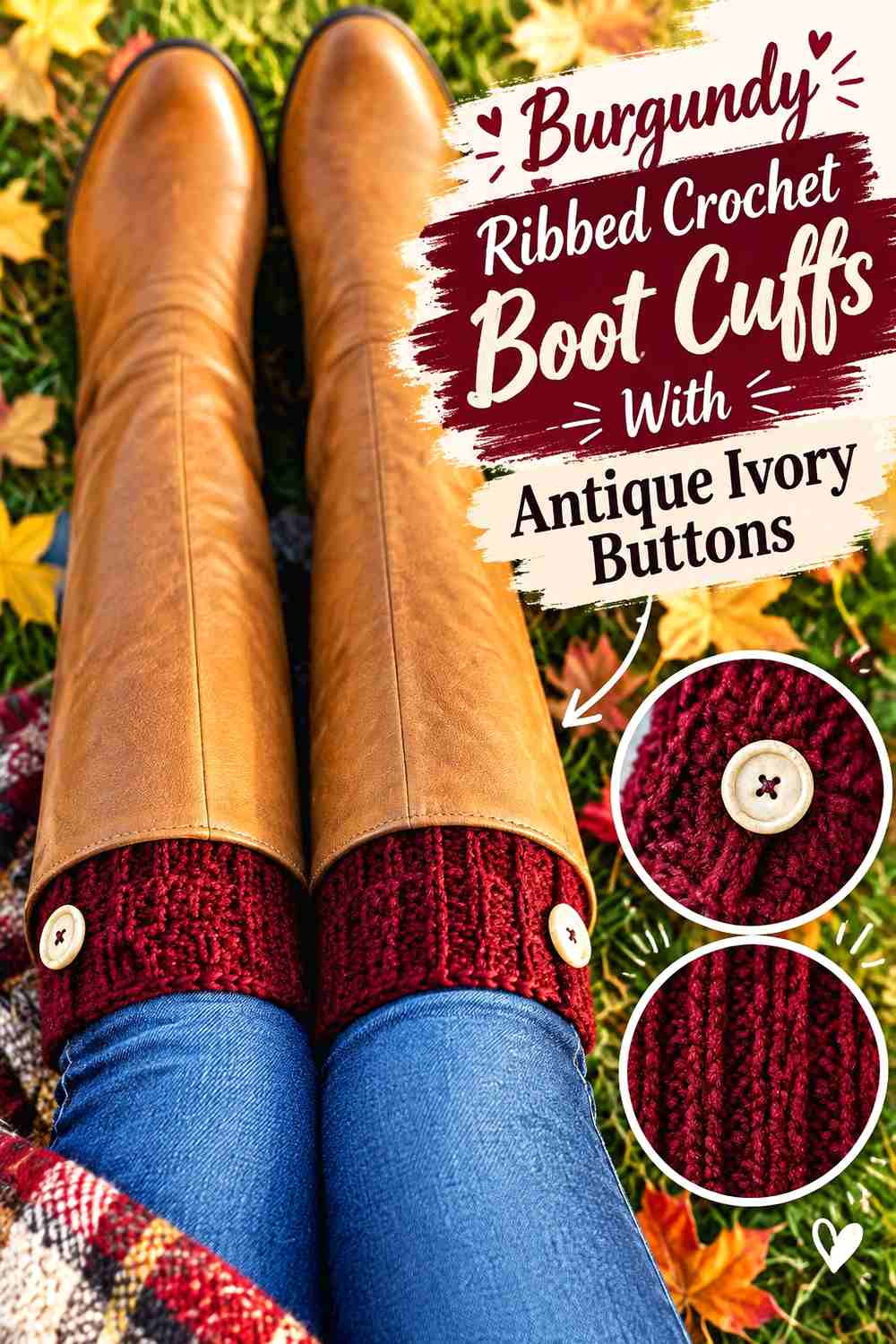
This idea relies on burgundy ribbing for most of the visible texture and uses antique ivory around the button area. The light accents interrupt the dark vertical lines just enough to establish a decorative side detail.
Burgundy Ribbing Keeps the Crochet Boot Cuffs Visually Grounded
Use burgundy across the repeated ribs so the cuff reads as one continuous accessory rather than several decorative bands stacked together.
Strong ribbing already creates substantial light and shadow. Keeping it in one deep color lets that physical texture show without needing constant color changes.
Antique Ivory Buttons Need Clear Placement Against Burgundy
Antique-ivory buttons or ivory crochet details near darker buttons can provide a focused contrast point. Place them high enough to remain clear of the boot opening and any zipper or buckle hardware.
If you use more than one button, repeat the spacing consistently on both cuffs so the pale details look deliberate rather than randomly attached.
Creator Credit: MJ’s Off The Hook Designs
3. Burgundy And Antique Ivory C2c Victorian Crochet Boot Cuffs
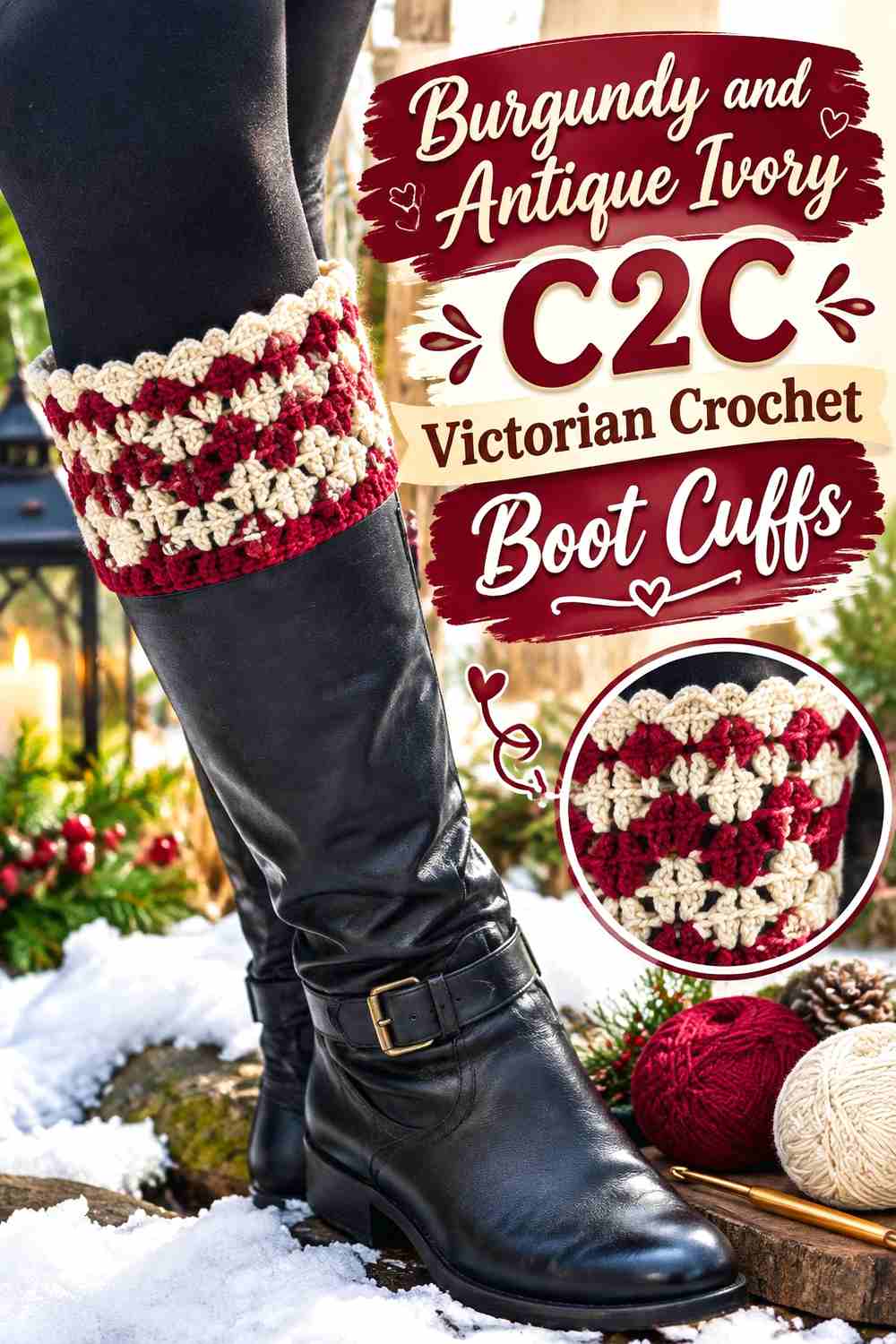
Corner-to-corner texture creates diagonal movement, which gives this two-color palette another way to work besides horizontal striping. Burgundy can dominate the C2C blocks while antique ivory appears in a controlled diagonal section or narrow border.
Burgundy Should Dominate the C2C Crochet Texture
C2C already creates a visible directional pattern, so using burgundy for most blocks keeps the cuff from becoming overly fragmented.
A dark continuous majority also helps the diagonal construction remain identifiable even when antique ivory is introduced for contrast.
Antique Ivory Can Mark One Burgundy C2C Direction
Use antique ivory along one diagonal movement, at the upper edge, or within a limited group of blocks. This lets color reinforce the construction rather than compete with it.
Avoid alternating every small block unless you deliberately want a highly graphic result; a Victorian palette usually reads more coherently when one shade remains dominant.
Creator Credit: The Crochet Crowd
4. Burgundy Crochet Victorian Edge Boot Cuffs With Antique Ivory Trim

This direction puts most of the decorative emphasis exactly where the Victorian character belongs: the upper edge. Burgundy forms a comparatively quiet body, while antique ivory traces an ornate band and provides a lighter setting for button details.
Burgundy Keeps the Victorian Crochet Body From Competing With the Edge
Let burgundy fill the simpler portion of the cuff so the upper decorative section remains the focal point.
This is especially useful when the edge already contains curves, posts, or other noticeable crochet detail. Adding frequent ivory stripes through the lower body could compete with the very feature the palette is meant to highlight.
Antique Ivory Makes the Burgundy Victorian Edge Easier to See
Work the primary decorative border in antique ivory or use ivory immediately beside a burgundy ornamental edge. The value difference helps the contour remain readable against the darker body.
Keep the light color concentrated near the top rather than extending it far below the boot line.
Creator Credit: AllFreeCrochet
5. Burgundy And Antique Ivory Reversible Crochet Boot Cuffs
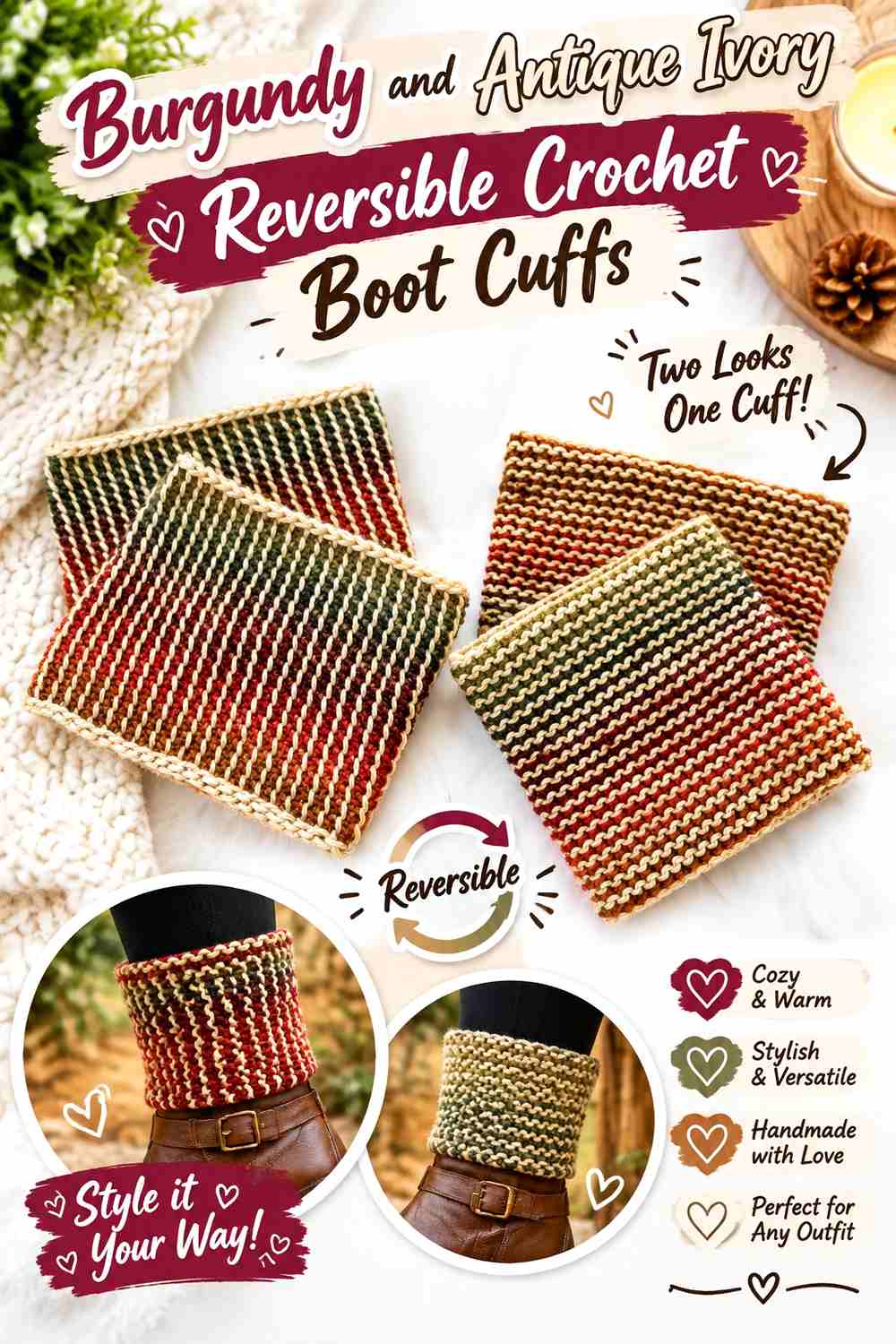
A reversible cuff creates an opportunity to give each side a different color emphasis. One face can appear predominantly burgundy, while the other allows more antique ivory to show.
Burgundy Can Lead One Reversible Crochet Cuff Face
Use the burgundy-forward side when you want a darker accessory with quieter contrast. The deeper surface works well when the texture itself should provide most of the visible interest.
The useful distinction here is that burgundy remains dominant without eliminating ivory from the construction completely.
Antique Ivory Can Make the Reverse Side Feel More Ornamental
Allowing additional antique ivory to appear on the reverse creates a lighter alternative without changing the basic cuff.
When planning the color relationship, check both faces before finishing. Reversibility adds the most value when each side looks intentionally composed rather than when one appears to be merely the inside of the other.
Creator Credit: B.Hooked Crochet
6. Burgundy Knit Look Crochet Boot Cuffs With Antique Ivory Borders
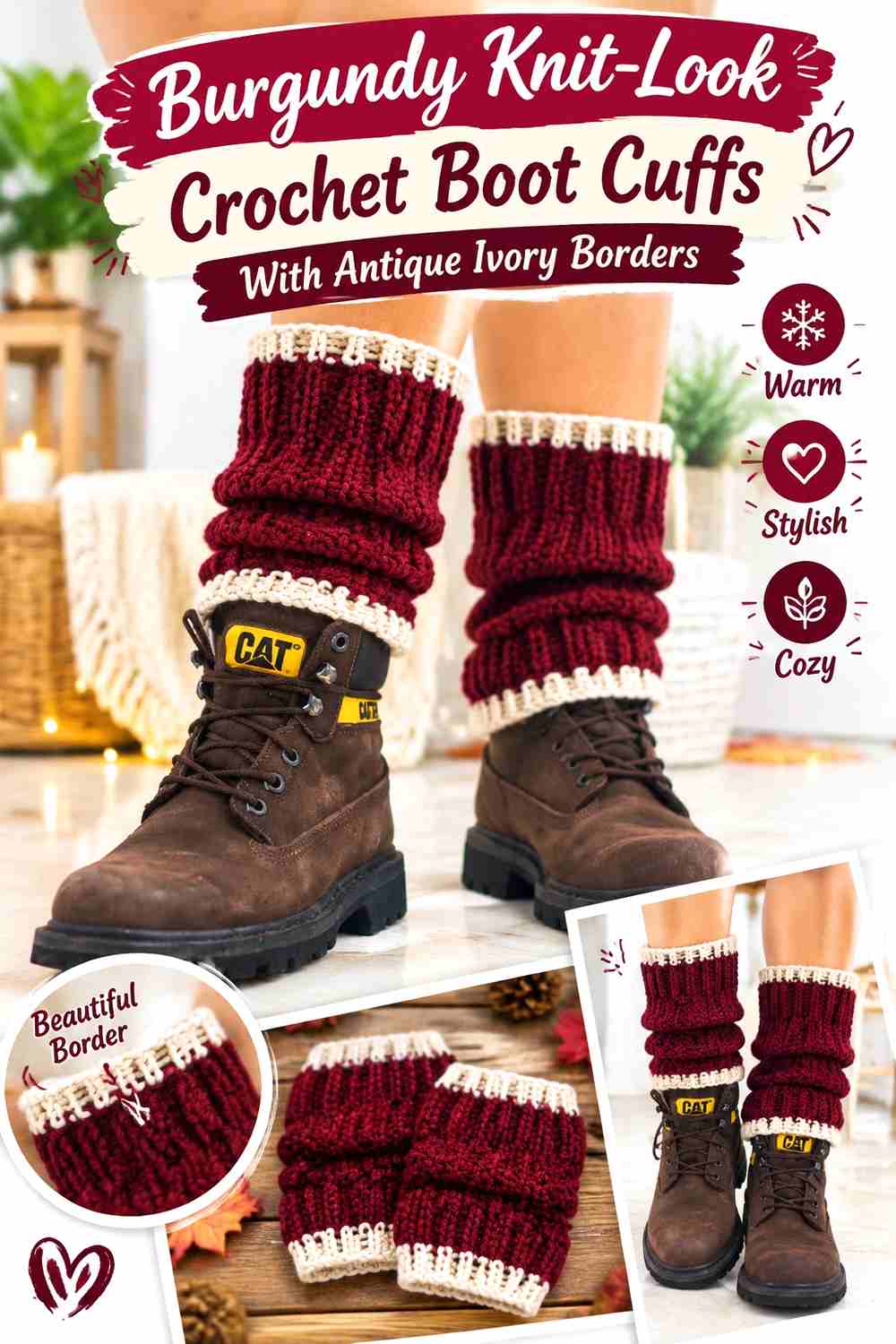
A knit-look crochet surface benefits from restrained color placement because its vertical texture is already visually active. Burgundy can cover the principal fabric while antique ivory frames the top and bottom.
Burgundy Keeps Knit-Look Crochet Texture Continuous
Use burgundy throughout the central fabric so the stitch pattern can create uninterrupted lines around the leg.
Breaking those lines with frequent color changes may make the knit-like surface less obvious, particularly when viewed from several feet away.
Antique Ivory Borders Give Burgundy a Defined Victorian Frame
Add antique ivory as a narrow edge rather than a broad stripe. This frames the dark center and can create the appearance of a deliberately finished cuff.
For a Victorian direction, a softened ivory generally maintains a gentler transition than a stark bright white.
Creator Credit: Sirin’s Crochet
7. Burgundy Crochet Lace Boot Cuffs With Antique Ivory Openwork
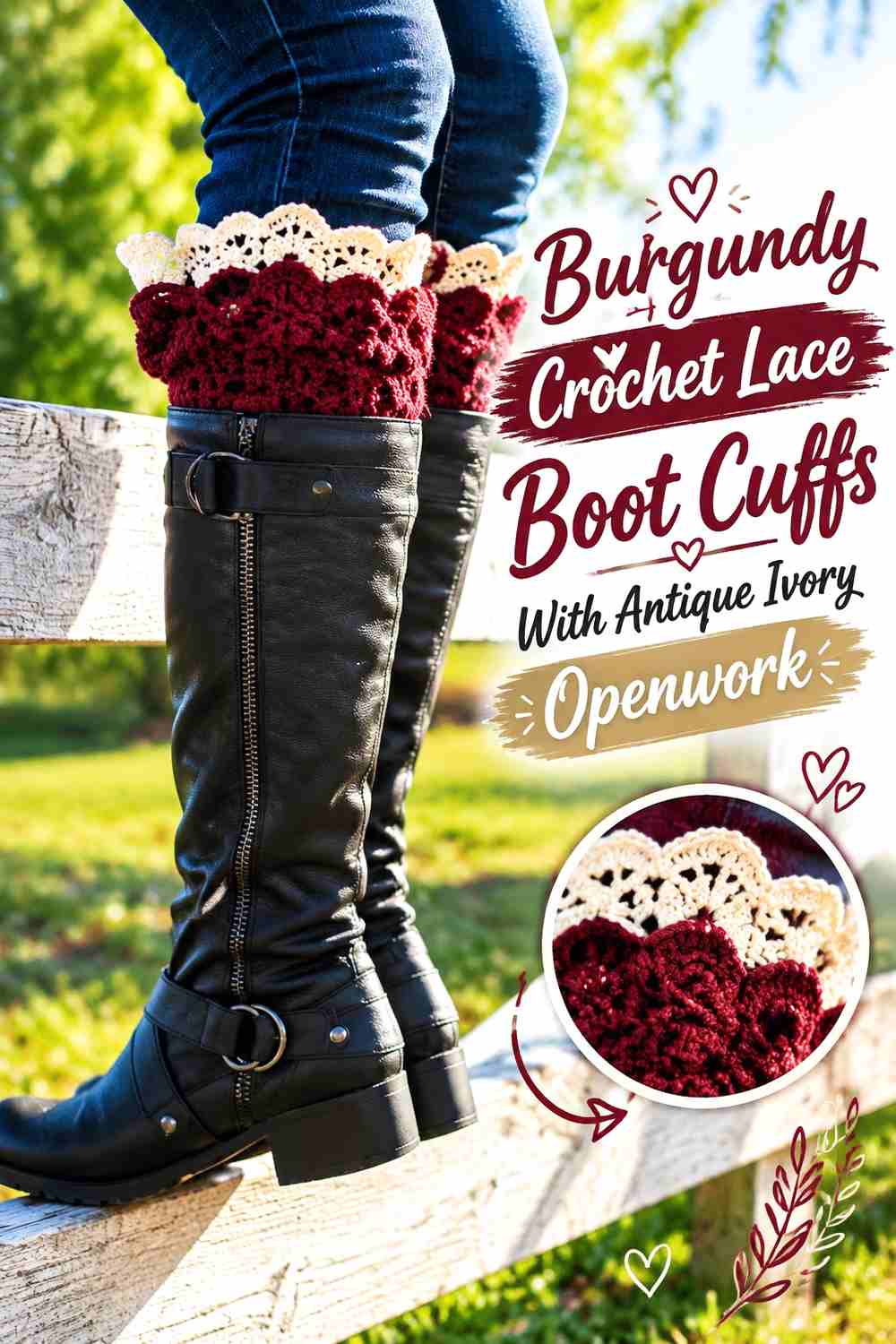
Lace provides one of the strongest opportunities for this palette because the openings themselves become part of the design. Burgundy can define the denser bands while antique ivory forms the most decorative open sections.
Burgundy Gives Antique Ivory Crochet Lace a Dark Anchor
Place burgundy at the fitted edge, between lace sections, or in another continuous structural band. That dark anchoring area prevents the cuff from looking visually weightless.
It also creates a clear transition between the boot and lighter Victorian-inspired lace.
Antique Ivory Makes the Burgundy Lace Pattern More Noticeable
Antique ivory can cover the principal openwork section when the goal is to showcase the lace rather than create an all-dark cuff.
Keep the ivory lace above the boot opening whenever possible so the negative spaces are not compressed or hidden inside the shaft.
Creator Credit: Jonna Martinez
8. Antique Ivory Crochet Boot Cuffs With Burgundy Victorian Bands
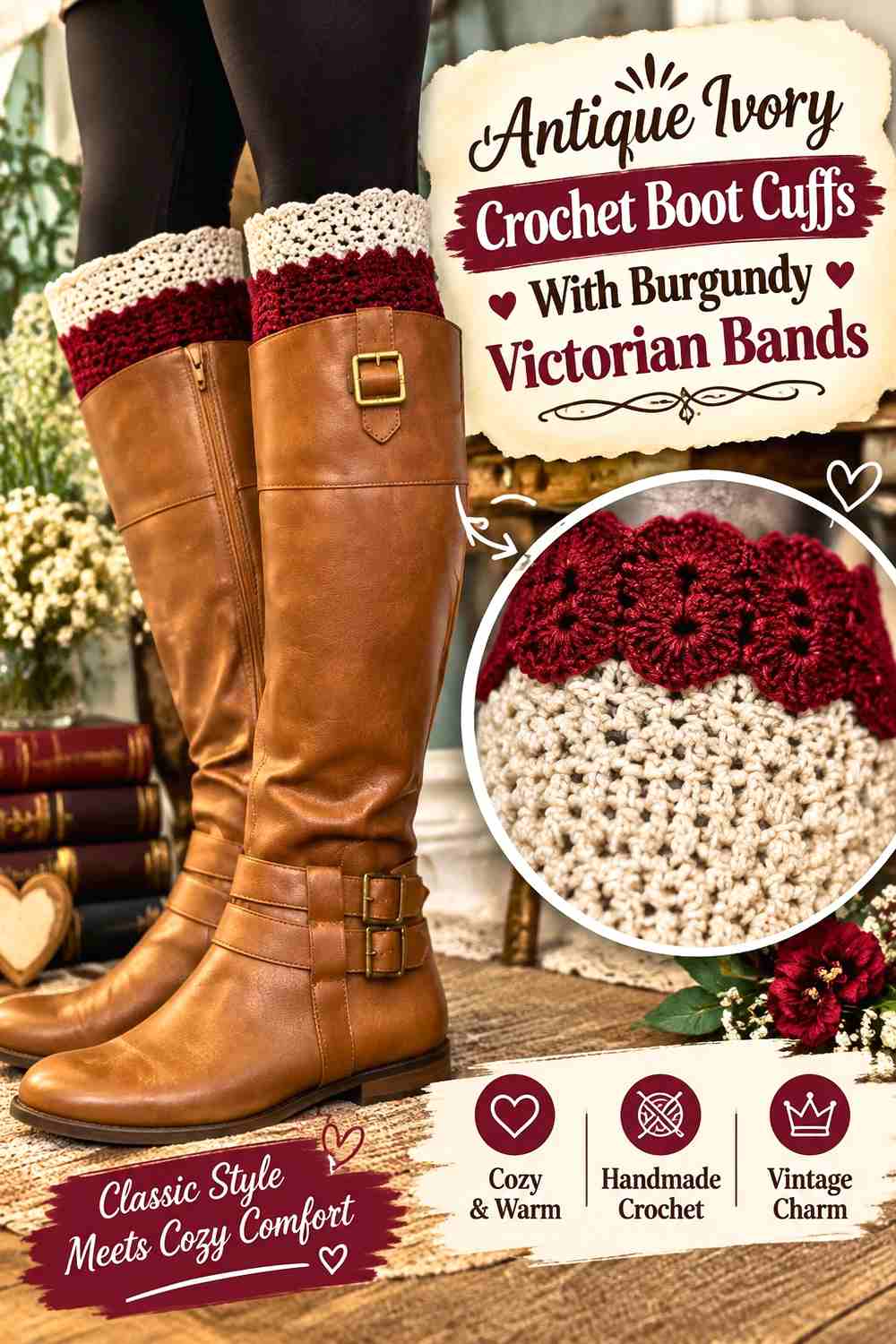
This idea reverses the usual hierarchy. Antique ivory covers most of the cuff, while burgundy is reserved for narrow structural bands and ornamental framing.
Antique Ivory Can Lead a Lighter Victorian Crochet Cuff
Using antique ivory as the dominant shade makes the crochet texture easier to see from a distance because shadows fall across a lighter surface.
To keep the result from becoming visually flat, reserve burgundy for locations that explain the shape of the cuff.
Burgundy Bands Give Antique Ivory More Structure
Place burgundy at the upper edge, lower edge, or both. These dark lines visually contain the pale central section and prevent antique ivory from blending into light-colored leggings or socks.
A narrow burgundy band is often enough; the purpose is definition rather than equal color coverage.
Creator Credit: DIY FROM HOME CROCHET
9. Burgundy Super Ribbed Crochet Boot Cuffs With Antique Ivory Edging

Deep ribbing gives burgundy plenty of natural dimension, so this palette works best with restrained ivory placement. A thin antique-ivory edge creates a clean finish without competing with the raised lines.
Burgundy Should Cover the Super-Ribbed Crochet Surface
Let burgundy run continuously through the ribs from one side of the cuff to the other. The changing highlights and shadows across the deep color already provide enough variation.
Adding alternating ivory ribs can make the pattern more graphic, but it changes the emphasis from Victorian texture to strong striping.
Antique Ivory Should Finish Rather Than Interrupt Burgundy Ribbing
Use antique ivory at the visible top edge or as a narrow decorative transition. This keeps the rib structure intact and gives the cuff a lighter endpoint.
Repeat the ivory in the same position on both cuffs so it acts like intentional trim.
Creator Credit: Make, Do & Craft – Crochet
10. Burgundy Crochet Ruffled Boot Cuffs With Antique Ivory Flounces
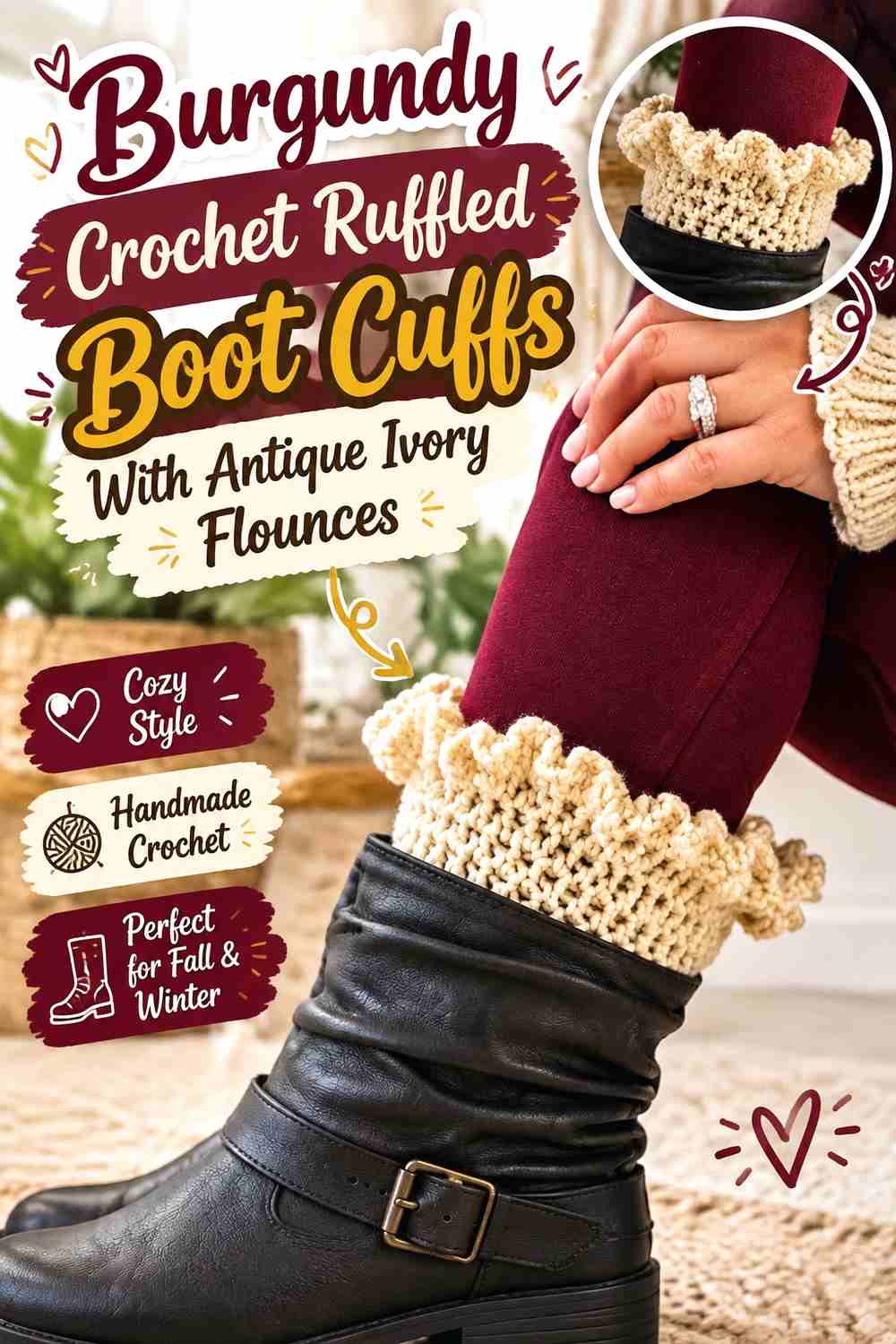
Ruffles create enough physical volume that the contrast can be concentrated entirely in the flounced section. A burgundy base paired with antique-ivory ruffles makes the upper edge the obvious focal point.
Burgundy Keeps the Crochet Cuff Base Visually Controlled
Use burgundy below the ruffle so the fitted section stays quieter and supports the more elaborate upper edge.
This distribution also prevents two different sources of visual activity—strong contrast and three-dimensional folds—from covering the entire cuff.
Antique Ivory Gives Burgundy Ruffles a Softer Victorian Contrast
Make the flounce antique ivory when you want its folds to remain clearly visible against the dark base.
Check how far the ruffle extends above the boot. If only a narrow section remains visible, a smaller amount of ivory may provide better proportion than an oversized pale flounce.
Creator Credit: Made With Love By Glama
11. Burgundy Crochet Button Boot Cuffs With Antique Ivory Accents
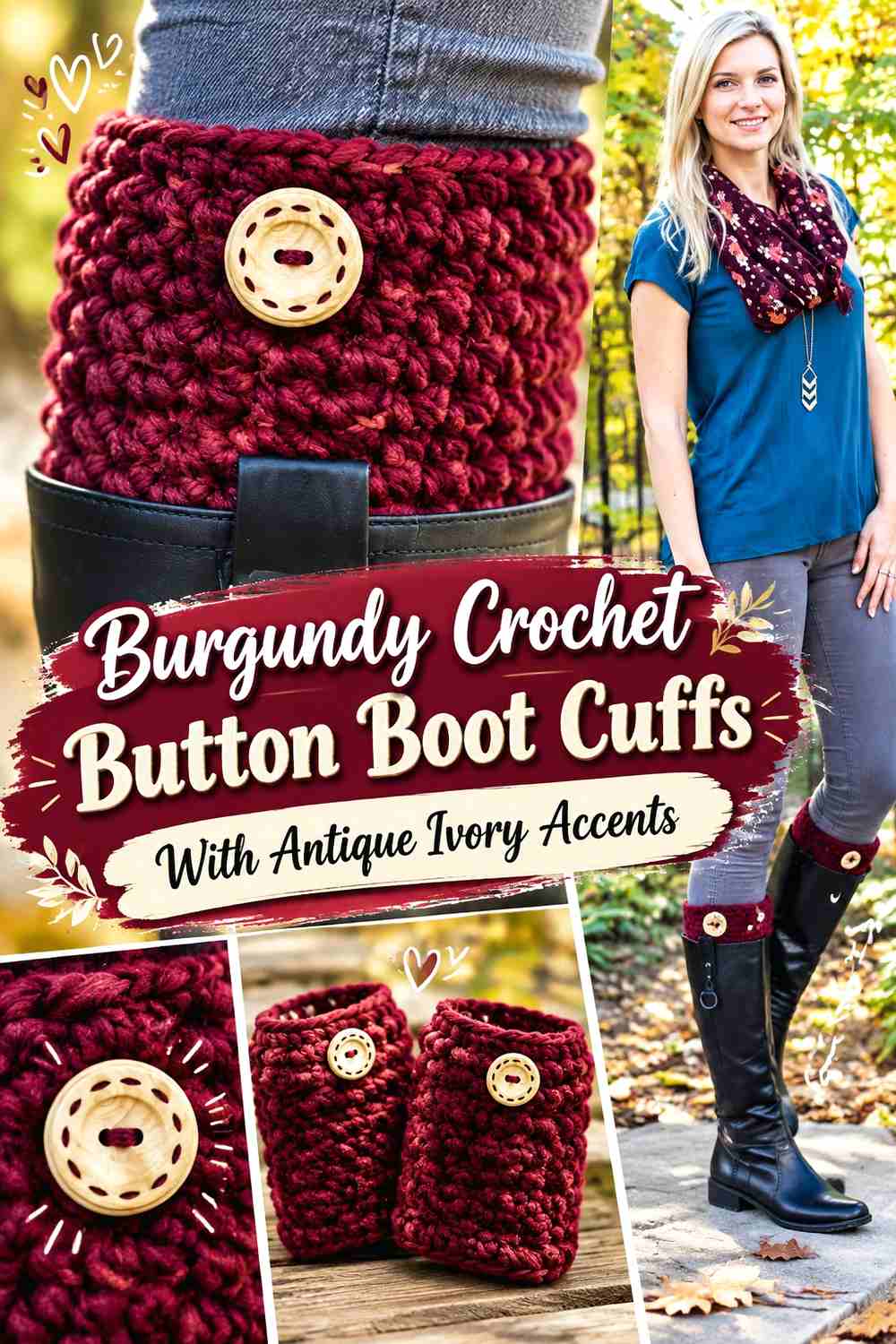
A relatively smooth crochet body allows color and buttons to carry more of the styling. Burgundy can dominate the simple fabric while antique ivory appears in button thread, narrow bands, or small decorative details.
Burgundy Gives Simple Crochet Boot Cuffs More Visual Depth
When the stitch surface is straightforward, a deep burgundy prevents the cuff from appearing visually empty while still leaving room for embellishment.
The dark field also provides an effective background for pale accent details.
Antique Ivory Details Should Stay Small Against Burgundy
Use antique ivory in a limited area near the button feature instead of adding it everywhere simply because the base fabric is simple.
A narrow trim, small crochet loop, or controlled band can connect the pale accent to the buttons without turning the entire cuff into broad two-color stripes.
Creator Credit: Melanie Ham
12. Burgundy Puff Stitch Crochet Boot Cuffs With Antique Ivory Details
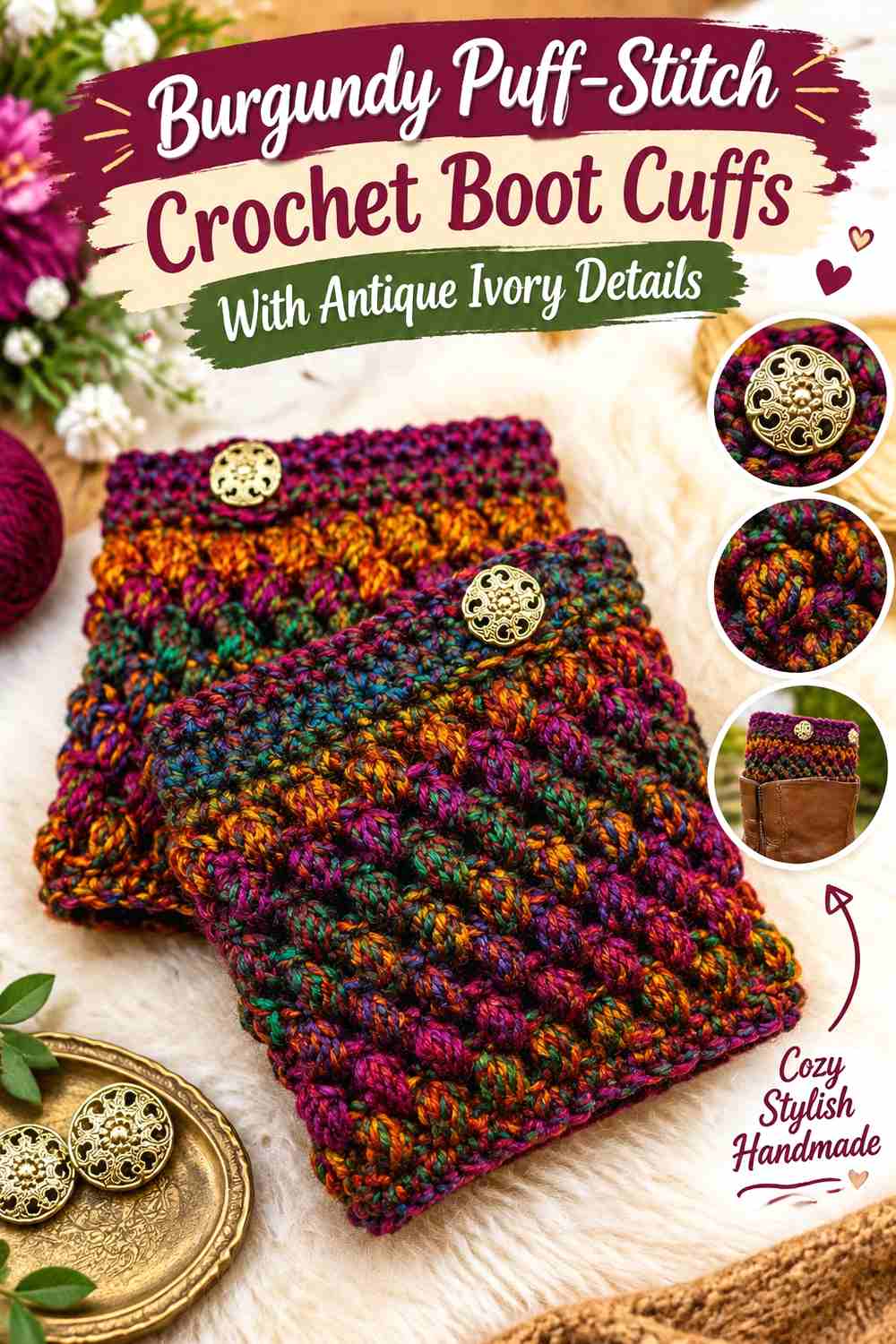
Puff stitches create separate raised areas across the cuff, making them natural points for controlled color emphasis. Burgundy can remain the field color, with antique ivory appearing only in selected texture bands or edging.
Burgundy Lets Puff-Stitch Crochet Shadows Stay Visible
Using burgundy continuously across most puff stitches allows the three-dimensional structure to produce its own variation through light and shadow.
That makes the cuff visually rich without requiring every puff to change color.
Antique Ivory Can Highlight Selected Burgundy Puff Rows
If you want more contrast, place antique ivory in one narrow puff band near the upper section instead of alternating every row.
This creates a recognizable light accent while allowing burgundy to remain the primary Victorian color.
Creator Credit: Bag-O-Day Crochet
13. Burgundy Crochet Scalloped Boot Cuffs With Antique Ivory Edges
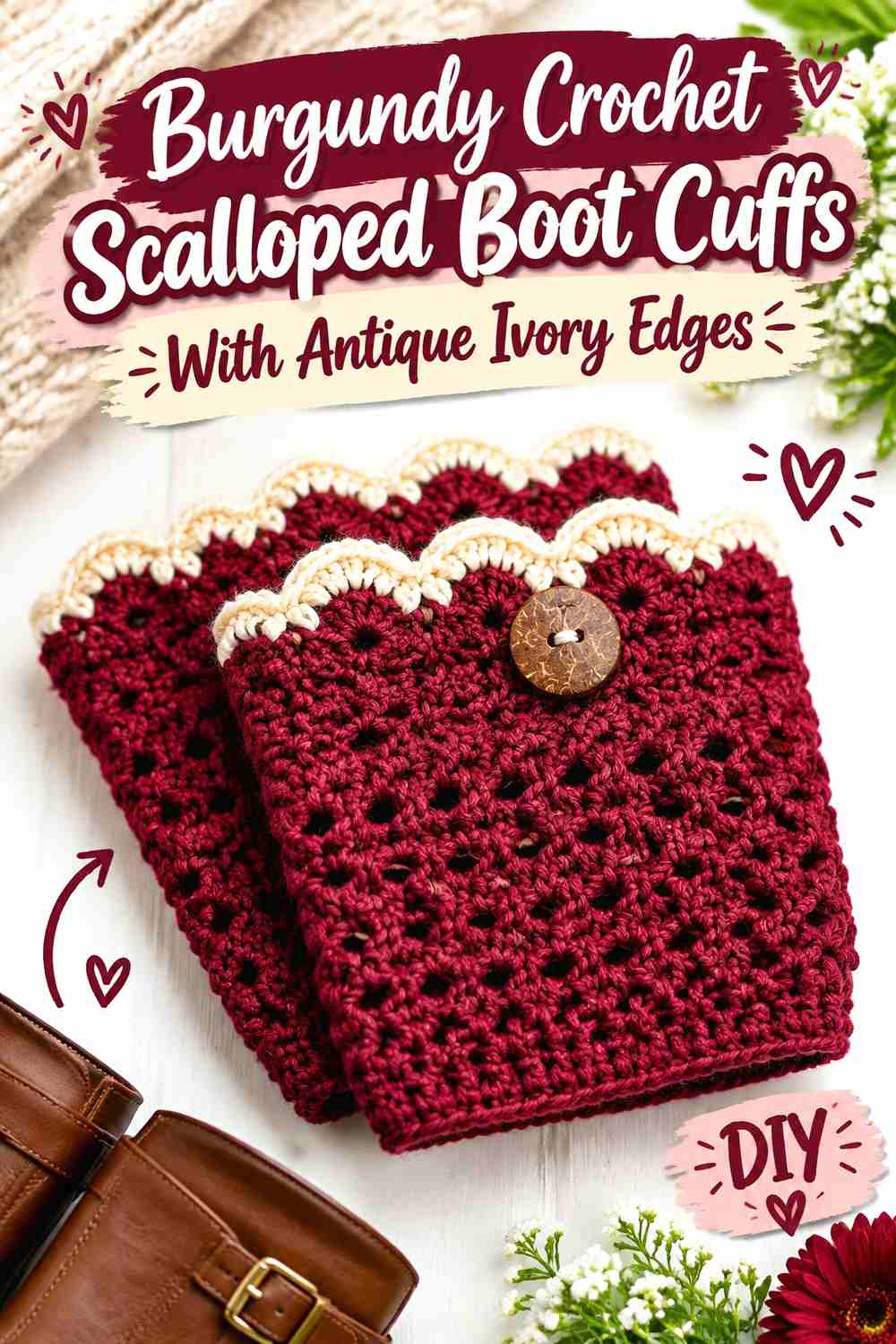
Scallops work especially well with a two-color palette because their curved outline provides an obvious location for contrast. Burgundy forms the cuff, and antique ivory traces the rounded edge.
Burgundy Keeps the Crochet Scallops Connected to the Main Cuff
Use burgundy through the body and the foundation of the scallops so they appear to grow naturally from the cuff rather than looking like separate pale appliqués.
The dark continuity also prevents a decorative edge from visually overpowering the smaller accessory.
Antique Ivory Should Follow the Burgundy Scalloped Silhouette
Place antique ivory along the outermost curved edge or the tips of the scallops. This makes the shape visible without requiring large pale sections.
Keep the edging even around both cuffs because irregular ivory placement will be particularly noticeable along repeated curves.
Creator Credit: iKNITS
14. Burgundy Victorian Crochet Boot Toppers With Antique Ivory Lace Panels

This arrangement divides the cuff into a solid burgundy foundation and a more decorative antique-ivory lace panel. It produces stronger color blocking than the narrow-edged ideas but still maintains a clear hierarchy.
Burgundy Should Anchor the Lower Victorian Boot Topper
Keep the section nearest the boot opening burgundy so the cuff has a dark structural base.
This also provides separation between the boot itself and the pale lace above it, particularly when the footwear is brown or another medium-to-dark neutral.
Antique Ivory Lace Should Sit Clearly Above Burgundy
Place the ivory openwork where it remains visible above the boot rather than burying the strongest color contrast inside the shaft.
If the lace section feels too visually large, repeat a thin burgundy line at its upper edge to connect it back to the base.
Creator Credit: Knotting Hook Crochet
15. Antique Ivory Lace Crochet Boot Cuffs With Burgundy Framing
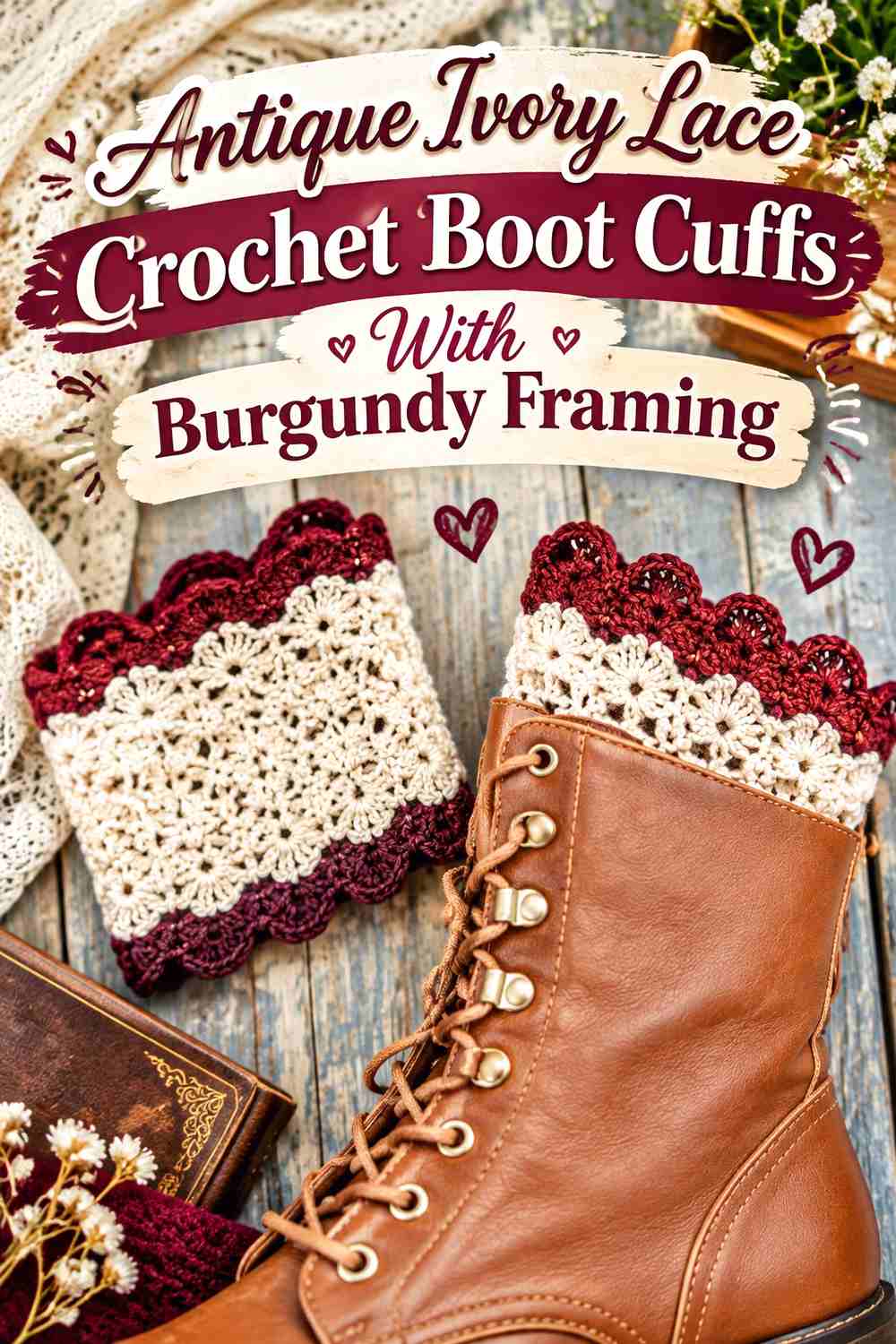
The final idea makes antique ivory the main decorative surface and uses burgundy as a dark frame. This creates the lightest overall palette in the collection while still keeping burgundy important.
Antique Ivory Can Carry the Main Victorian Crochet Lace
A larger antique-ivory lace field allows the open pattern and individual stitch shapes to remain easy to see.
Because this shade covers more visual space, avoid adding several extra light neutrals that would weaken the simple two-color relationship.
Burgundy Frames Antique Ivory Without Hiding the Lace
Use burgundy along the neckline-style upper border, lower edge, or a narrow vertical joining area. The goal is to define the pale lace rather than divide it into many small sections.
When you view the finished cuff against your boots, the burgundy frame should help the ivory panel read as one coherent decorative area.
Creator Credit: Carolynn Markey
Comparing the Burgundy and Antique Ivory Victorian Boot Cuff Ideas
For the darkest burgundy-led direction, Ideas 1, 2, 9, 11, and 12 keep antique ivory relatively restrained. They work well when you want texture and silhouette to remain more prominent than the contrasting color.
For lace-focused Victorian styling, Ideas 4, 7, 14, and 15 place much more attention on antique-ivory openwork or decorative edges.
Ideas 8 and 15 are the strongest options when you want antique ivory to dominate, while Ideas 3 and 5 distribute the two colors more dynamically through directional or reversible fabric.
For a highly visible top edge, Ideas 10 and 13 use ruffles or scallops to make the burgundy-and-ivory transition part of the silhouette itself.
Conclusion
The most effective burgundy and antique ivory Victorian boot cuffs do not need both colors in equal amounts. A burgundy-dominant cuff can use antique ivory to expose picots, lace, scallops, or buttons, while an antique-ivory cuff can rely on burgundy framing to keep pale openwork clearly defined.
If you prefer a darker, more restrained look, start with burgundy ribbing or texture and limit ivory to the edge. For a more decorative Victorian direction, increase the amount of antique-ivory lace while keeping burgundy at structural bands or borders.
Whichever palette arrangement you choose, position the strongest contrast where it will remain visible above the boot and use the credited tutorial for the original construction details.
Frequently Asked Questions
Should burgundy or antique ivory dominate Victorian crochet boot cuffs?
Either can lead, but burgundy is useful when you want a darker structured cuff, while antique ivory makes lace and ornamental stitchwork more immediately visible. Establishing one dominant color usually gives the small accessory a clearer visual hierarchy than dividing the surface equally.
Where should antique ivory go on burgundy crochet boot cuffs?
Useful locations include picot edges, scallops, ruffles, lace panels, decorative bands, or details near buttons. Concentrating ivory around features that deserve attention generally provides more definition than scattering small pale areas randomly.
Does antique ivory work better than bright white with burgundy?
Antique ivory creates a softer value transition and supports the vintage direction suggested by Victorian styling. Bright white produces a sharper contrast. The better choice depends on whether you want a muted historical-inspired palette or a crisper graphic result.
How can I tell if burgundy crochet texture is disappearing?
Look at the cuff from several feet away rather than only close up. If ribs, puffs, or lace sections merge into one dark block, antique ivory placed around a border or neighboring detail can increase separation without requiring the entire texture to change color.
Can I make antique ivory the main color of Victorian boot cuffs?
Yes. Antique ivory can carry the main lace or crochet body while burgundy frames the upper edge, lower edge, or structural bands. Keeping burgundy connected in at least one repeated area prevents it from appearing like an unrelated accent.
Should burgundy and antique ivory alternate in every crochet row?
Not necessarily. Row-by-row alternation produces a more striped or graphic look, which may compete with lace, ribbing, scallops, or other Victorian-inspired details. Larger color zones often let the crochet structure remain clearer.
How do I keep burgundy and antique ivory boot cuffs from looking too busy?
Assign each shade a specific job. For example, use burgundy for the main ribbed body and antique ivory only for lace edging. If the cuff already contains ruffles, buttons, scallops, or puff stitches, avoid adding several additional color divisions unless those divisions help explain the structure.