A raised cable can give a crochet dog sweater the structured, knit-inspired look people often associate with classic winter pullovers. In this article, “cable knit” describes that visual effect made with crochet techniques rather than knitting needles.
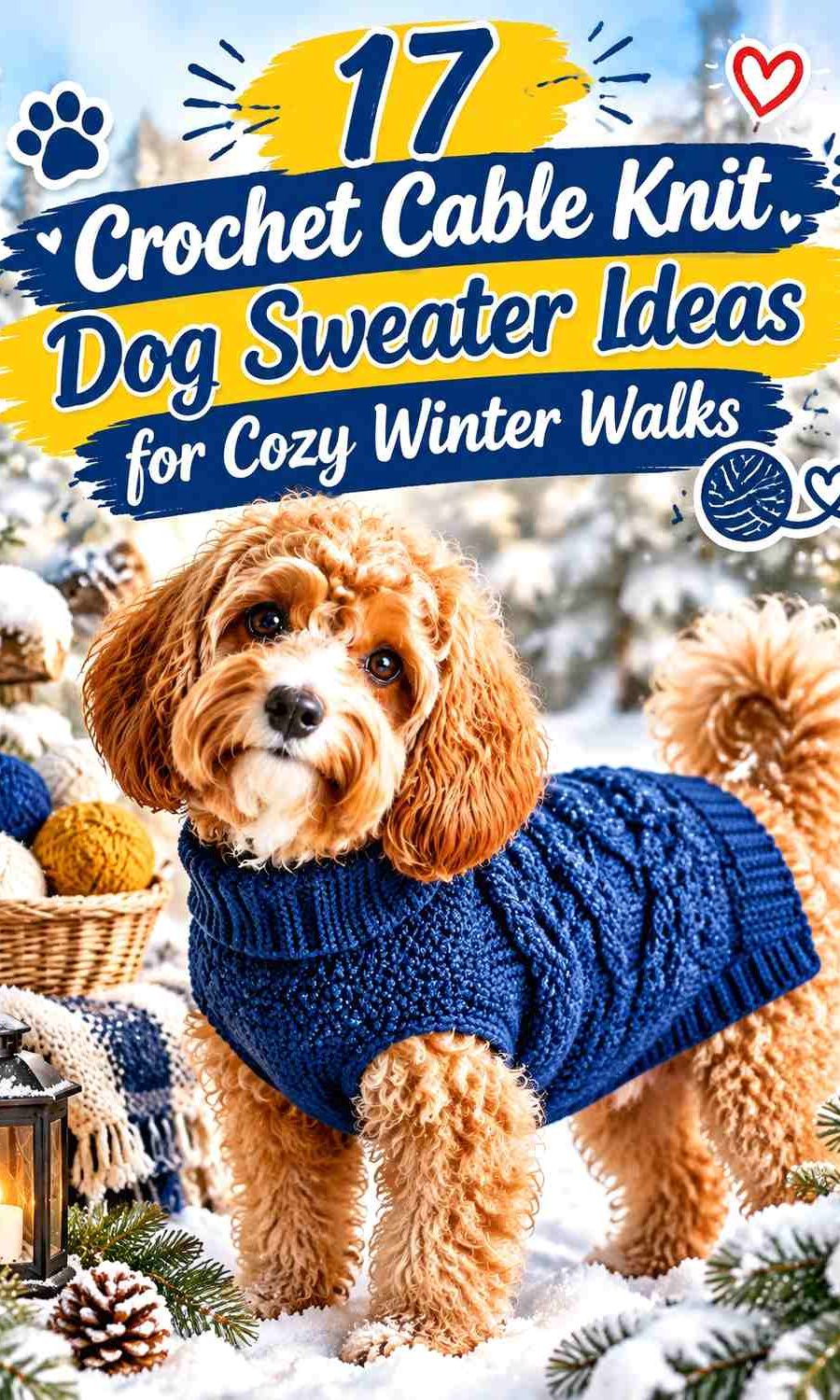
Color matters especially with cables because the raised texture needs enough visual separation to remain readable. A dark body with a lighter cable can emphasize the center panel, while a tonal palette creates a quieter sweater where texture does more of the work. Collar ribbing, leg openings, belly sections, and back edging also give you useful places to repeat a supporting shade without covering the sweater in equal amounts of every color.
The palettes below are editorial color adaptations. The linked tutorials provide crochet dog-sweater construction references, but the creators are not being credited with these exact palettes or cable placements unless their tutorial specifically shows them. Always follow the chosen tutorial for construction and check the sweater on your dog for comfortable movement around the neck, chest, and front legs.
Quick List
- Oatmeal and Chestnut Cable-Look Crochet Dog Sweater
- Forest Green and Cream Cable-Look Crochet Dog Sweater
- Burgundy, Dusty Rose, and Oatmeal Cable-Look Crochet Dog Sweater
- Navy and Camel Cable-Look Crochet Dog Sweater
- Charcoal and Mustard Cable-Look Crochet Dog Sweater
- Rust and Sage Cable-Look Crochet Dog Sweater
- Deep Teal and Sand Cable-Look Crochet Dog Sweater
- Cranberry and Cream Cable-Look Crochet Dog Sweater
- Chocolate Brown and Caramel Cable-Look Crochet Dog Sweater
- Slate Blue and Silver Gray Cable-Look Crochet Dog Sweater
- Olive and Terracotta Cable-Look Crochet Dog Sweater
- Plum and Mauve Cable-Look Crochet Dog Sweater
- Black and Camel Cable-Look Crochet Dog Sweater
- Cream and Moss Green Cable-Look Crochet Dog Sweater
- Denim Blue and Ivory Cable-Look Crochet Dog Sweater
- Brick Red and Charcoal Cable-Look Crochet Dog Sweater
- Taupe and Soft Blue Cable-Look Crochet Dog Sweater
Choose Colors That Keep Crochet Cables Visible
Crochet cables create shadows and raised lines, but color can either reinforce or flatten that texture. If the cable and surrounding body are different colors, compare their lightness as well as their hue. Two colors can look very different in the skein yet become difficult to distinguish when their light and dark values are similar.
For a strong cable statement, reserve the lighter or darker shade for the raised center panel and repeat it in one smaller area such as the collar or lower edging. For a quieter sweater, keep the cable and body in related values and let the relief of the stitches create most of the definition.
Place Accent Colors Where a Dog Sweater Naturally Changes Structure
The central back panel is an obvious place for a cable color because it stays visually prominent when the dog is viewed from above or from the side. Collar ribbing, leg-opening trim, belly edging, and the back hem can then repeat that color in smaller amounts.
Avoid scattering a strong accent randomly across every section. A cable sweater already has substantial surface texture, so a limited placement plan usually makes it easier to see both the color hierarchy and the raised stitchwork.
Check the Dog Sweater Fit Before Finalizing High-Contrast Edging
A contrasting border draws attention to every edge, including the neckline and front-leg openings. That makes fit more visually noticeable, so check those areas before committing to a bold finishing color.
The sweater should not depend on tight edging to stay in place. Check your dog’s movement using the construction guidance in the selected tutorial, especially around the chest and front legs. Color can refine the look, but it should not be used to disguise a fit issue.
1. Oatmeal and Chestnut Cable-Look Crochet Dog Sweater
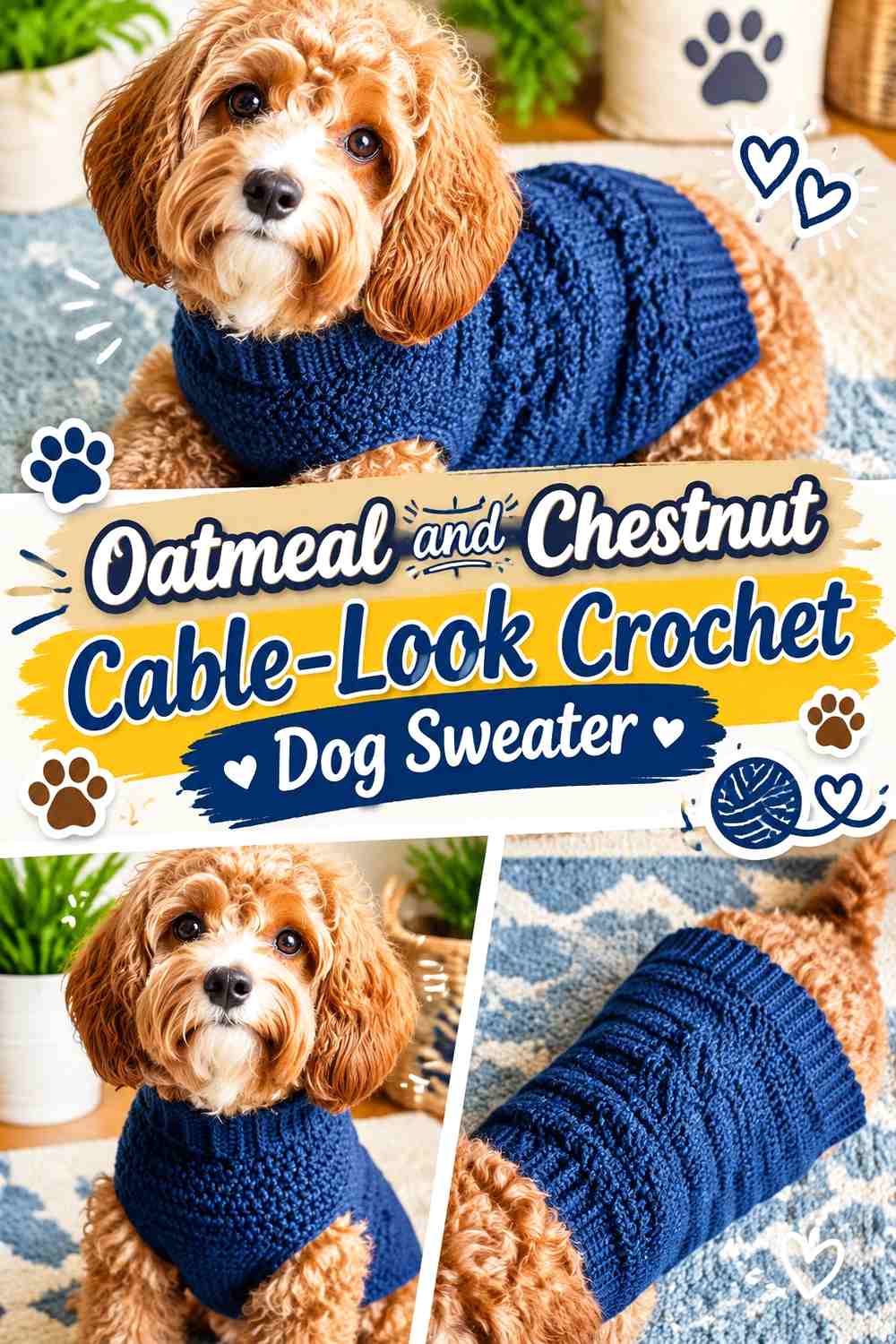
Oatmeal makes a useful main field when you want the raised crochet texture to remain easy to inspect, while chestnut can define the cable panel, collar, and lower trim. Keep oatmeal across most of the back and belly so the darker brown reads as deliberate structure rather than scattered contrast.
Chestnut Makes the Oatmeal Cable Panel More Defined
Run chestnut through the main cable area or immediately beside it if you want the cable to become the sweater’s focal point. The darker value can help separate crossings and raised lines from an oatmeal background, especially when the surrounding fabric also has noticeable texture.
Oatmeal Keeps Chestnut Ribbing From Taking Over the Sweater
If chestnut appears at the collar, leg openings, and hem, repeat oatmeal across the larger body sections. This keeps the dark finishing areas connected while preventing them from visually dividing the sweater into several separate brown bands.
Creator Credit: Maria’s Blue Crayon
2. Forest Green and Cream Cable-Look Crochet Dog Sweater

Forest green gives the sweater a dark winter base, while cream offers clear separation for a central cable or narrow trim. Let green cover most of the body and use cream selectively so the lighter shade directs attention to the texture instead of becoming a second competing field.
Cream Can Pull the Forest Green Cable Area Forward
A cream cable against forest green produces a much stronger light-and-dark division than two medium-value colors. Use that contrast when the cable itself is the feature you want noticed first, particularly along the back panel.
Forest Green Works Better When Cream Repeats in Small Sweater Details
If cream appears only once, the cable can look detached from the rest of the garment. A small repeat at the neckline or back edging can connect the cream cable to the complete sweater without turning the design into broad stripes.
Creator Credit: it’s erin b.
3. Burgundy, Dusty Rose, and Oatmeal Cable-Look Crochet Dog Sweater
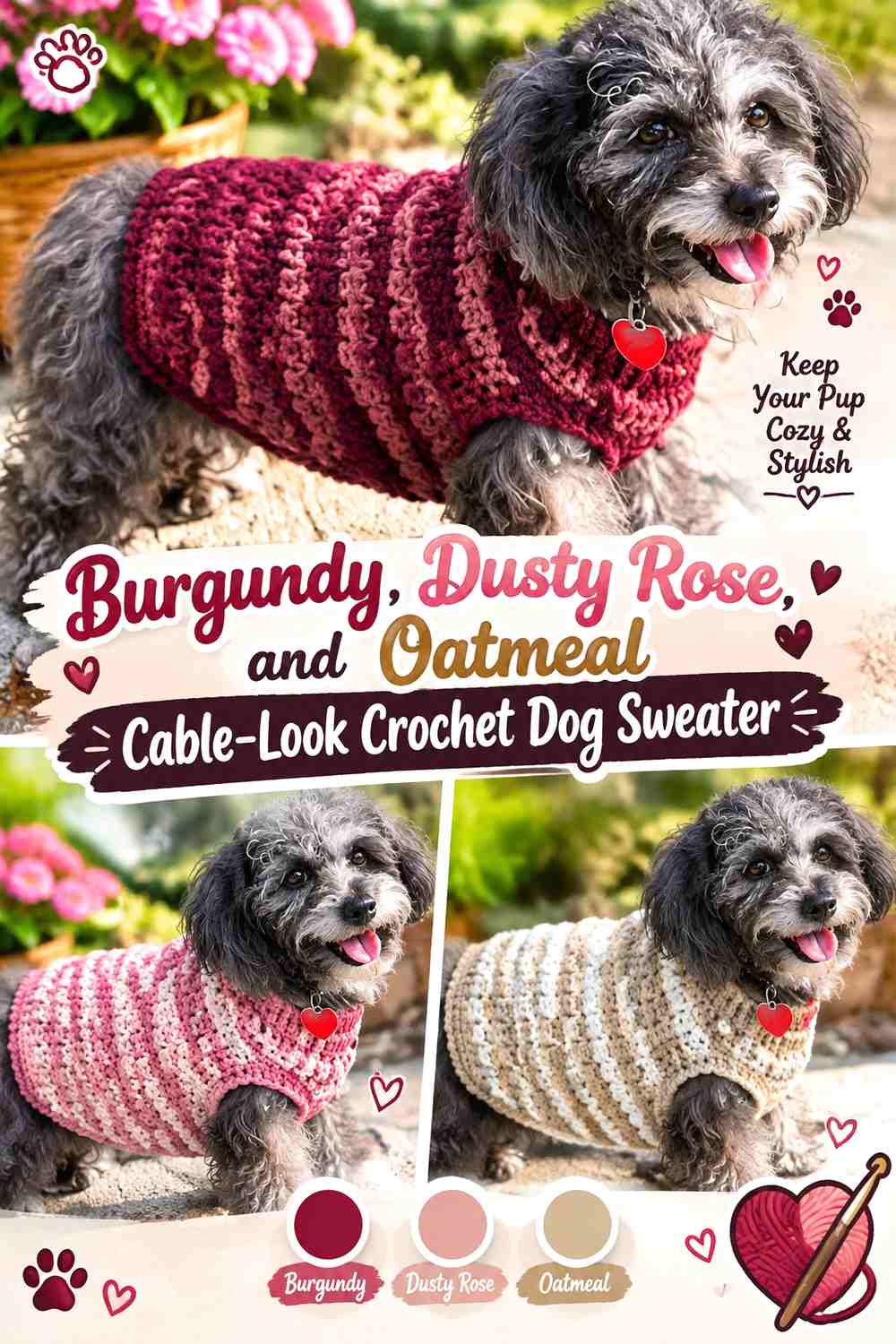
This three-color palette needs a clear hierarchy. Burgundy can carry the main body, dusty rose can soften the cable area, and oatmeal can handle a narrow finishing role. Keeping oatmeal limited is important because a very light third shade can otherwise compete with the cable.
Dusty Rose Softens a Burgundy Crochet Cable Panel
Dusty rose provides a gentler transition than cream against a burgundy body. Use it when you want the cable to remain distinct without creating the strongest possible contrast across the entire back.
Oatmeal Should Stay Secondary to Burgundy and Dusty Rose
Reserve oatmeal for a thin collar edge, small hem detail, or another controlled repeat. If oatmeal occupies several wide areas, it can visually break apart the burgundy-and-dusty-rose relationship that makes this palette feel cohesive.
Creator Credit: The Crochet Crowd
4. Navy and Camel Cable-Look Crochet Dog Sweater
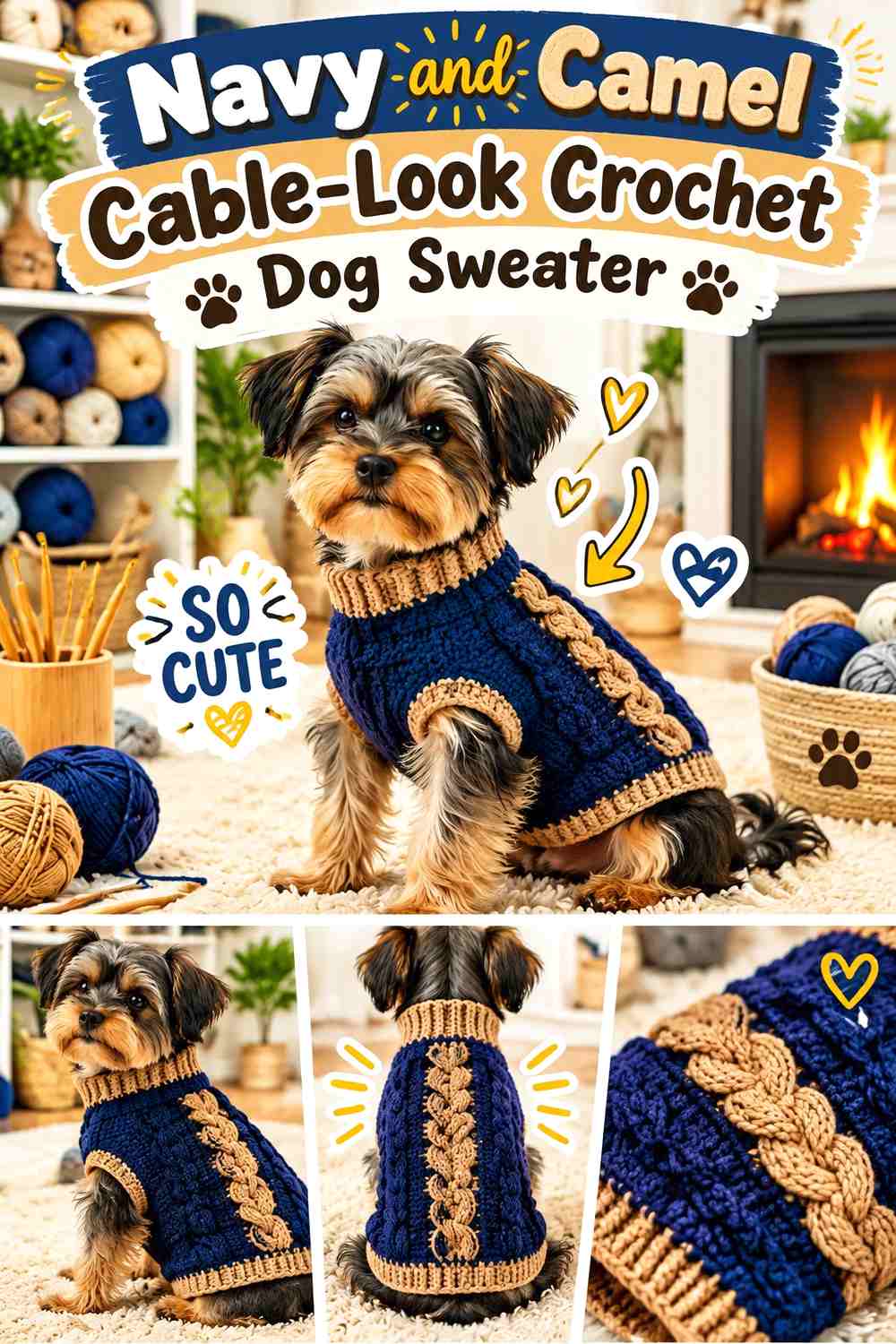
Navy can act as the deep background while camel highlights a central cable and selected ribbing. This arrangement gives the cable strong definition without relying on bright color, making it useful when you want a traditional winter-pullover direction.
Camel Gives Navy Crochet Cables Strong Light-Dark Separation
Place camel where the raised cable deserves attention and keep the adjacent fabric navy. The difference in value helps the cable remain legible even when both areas contain substantial stitch texture.
Navy Can Frame Camel Without Covering Every Dog Sweater Edge
Repeating navy around every edge is unnecessary when navy already dominates the body. A camel collar or small camel hem repeat may be enough to connect the center cable to the finishing while keeping navy visually dominant.
Creator Credit: Alextitia Tuto Crochet
5. Charcoal and Mustard Cable-Look Crochet Dog Sweater
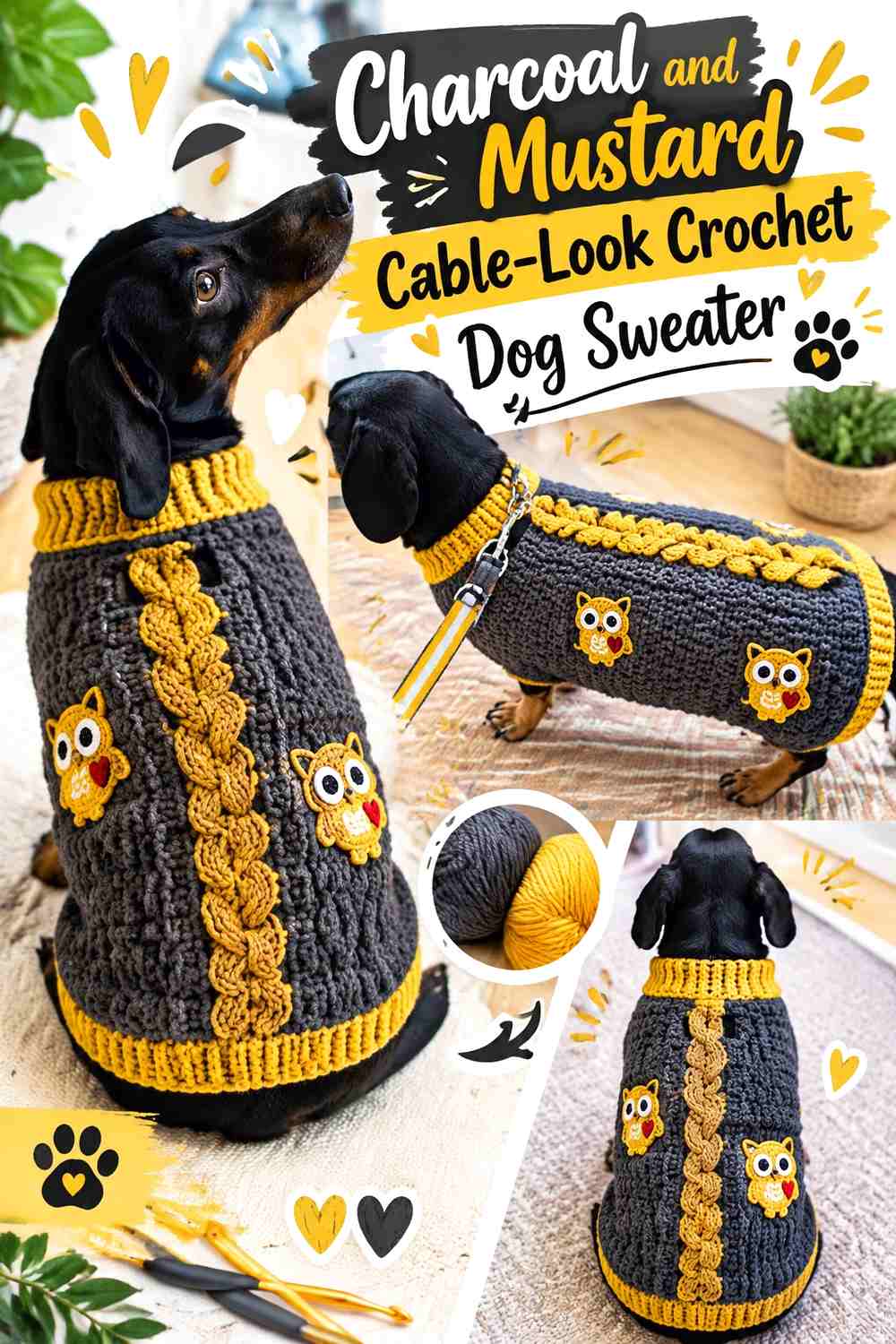
Charcoal gives the sweater a dark neutral foundation, while mustard provides a warmer accent that is easy to restrict to the most important areas. A mustard cable, collar line, or narrow back border can stand out clearly without requiring large blocks of color.
Mustard Should Be Concentrated Against Charcoal
Because mustard attracts more attention than charcoal, giving the two colors equal surface area can weaken the cable-focused design. Let charcoal control the main body and use mustard where you specifically want the eye to stop.
Charcoal Can Keep Mustard Trim From Feeling Disconnected
If the cable is mustard, repeat charcoal immediately around it or along the side sections. That dark framing helps the raised panel look integrated with the full sweater rather than like a separate stripe placed on top.
Creator Credit: Elfriede Van Geffen
6. Rust and Sage Cable-Look Crochet Dog Sweater
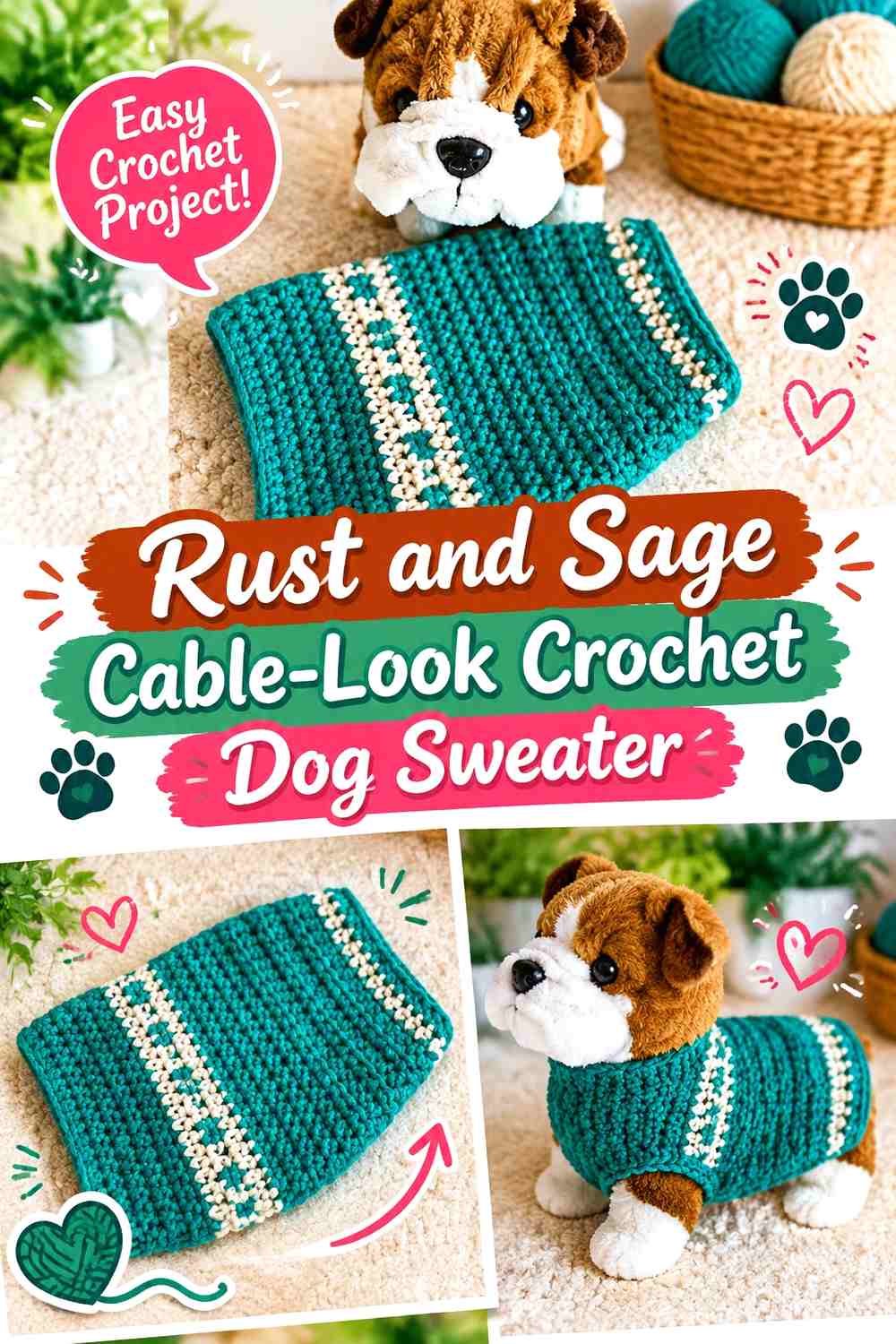
Rust and sage create a more muted two-color direction than cream paired with a dark shade. Rust can lead the body while sage defines the cable, collar, or edging, but their values should be compared before you commit because some rust and sage yarns can be surprisingly close in lightness.
Sage Needs Enough Contrast to Read Against Rust Cables
Place the two yarns next to each other or view them in grayscale before starting a large color section. If they merge, choose a lighter sage or deeper rust so the cable crossings remain visible from more than a few inches away.
Rust Can Keep Sage Focused on the Dog Sweater’s Structure
Let rust continue across the belly and side areas while sage remains concentrated on the back cable and one finishing detail. This gives the sweater a clear dominant color instead of splitting it into equal green and orange-brown blocks.
Creator Credit: LittleGemsCreations – Fibre Artist
7. Deep Teal and Sand Cable-Look Crochet Dog Sweater
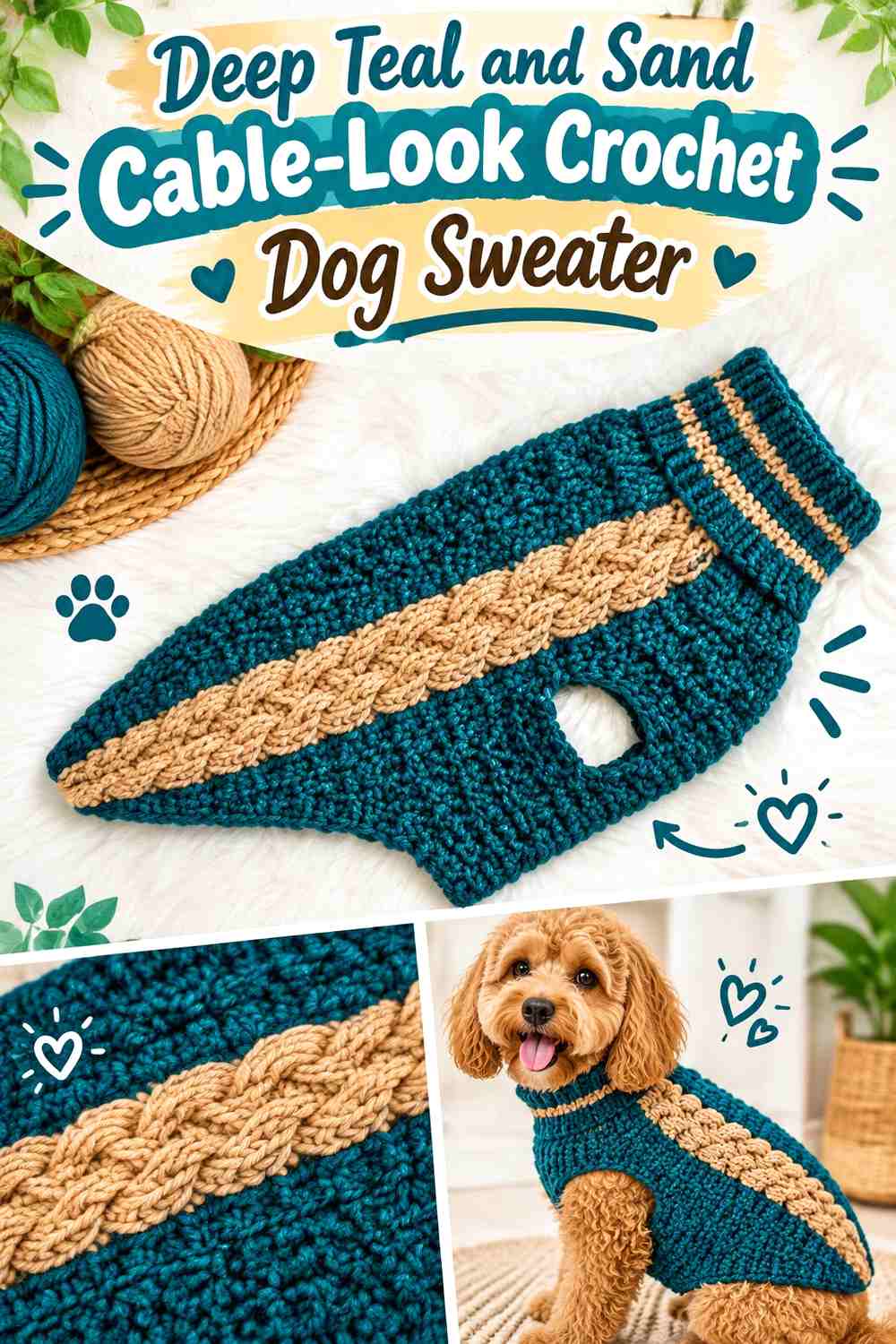
Deep teal creates a saturated base, while sand gives the cable area a quiet neutral contrast. This works especially well when you want color in the main sweater without asking the accent shade to be equally strong.
Sand Makes Deep Teal Crochet Texture Easier to Separate
Use sand on the raised cable or immediately around it when a deep teal body feels visually dense. The lighter neutral creates breathing room around the texture and can prevent the center panel from disappearing into the surrounding stitches.
Deep Teal Should Remain the Largest Color Area
Keep teal across the main body and belly rather than repeating sand in wide blocks. Sand is most effective here as a supporting shade that clarifies structure, not as an equal partner covering half the sweater.
Creator Credit: Loops Only Crochet
8. Cranberry and Cream Cable-Look Crochet Dog Sweater
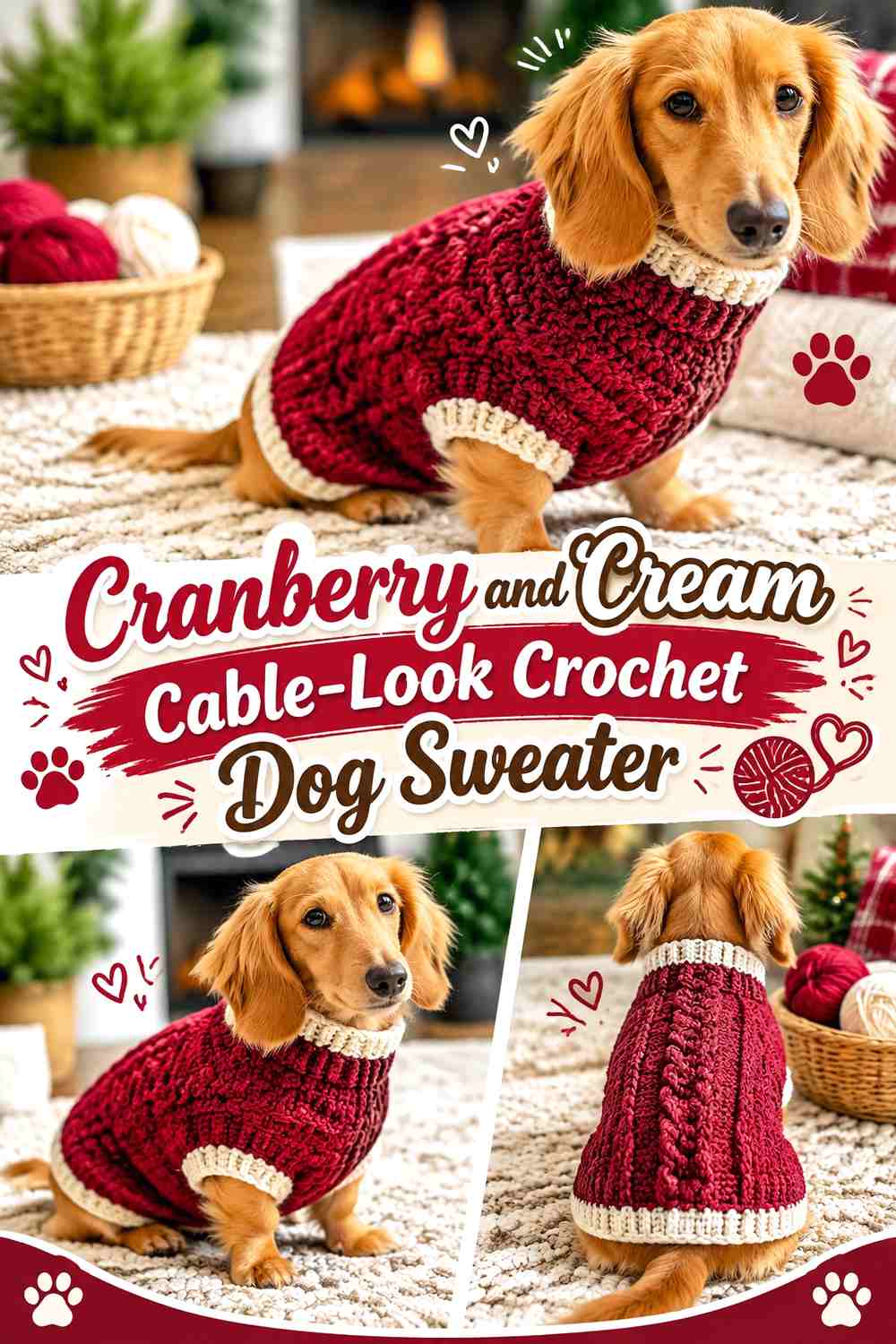
Cranberry and cream give the sweater a clear winter-season direction without requiring additional decorative motifs. Cranberry can dominate the body while cream defines the cable and smaller finishing areas.
Cream Gives Cranberry Crochet Cables a Crisp Outline
A cream cable against cranberry creates strong value contrast, so keep the cable width controlled. A very broad light panel can overpower the richer body color and make the sweater look more color-blocked than cable-focused.
Cranberry Can Repeat Around Cream Without Creating Stripes
When the center cable is cream, continue cranberry through the side body and belly. If you want another cream repeat, use a narrow collar or hem detail instead of a full second band.
Creator Credit: Crochet with Tiffany
9. Chocolate Brown and Caramel Cable-Look Crochet Dog Sweater
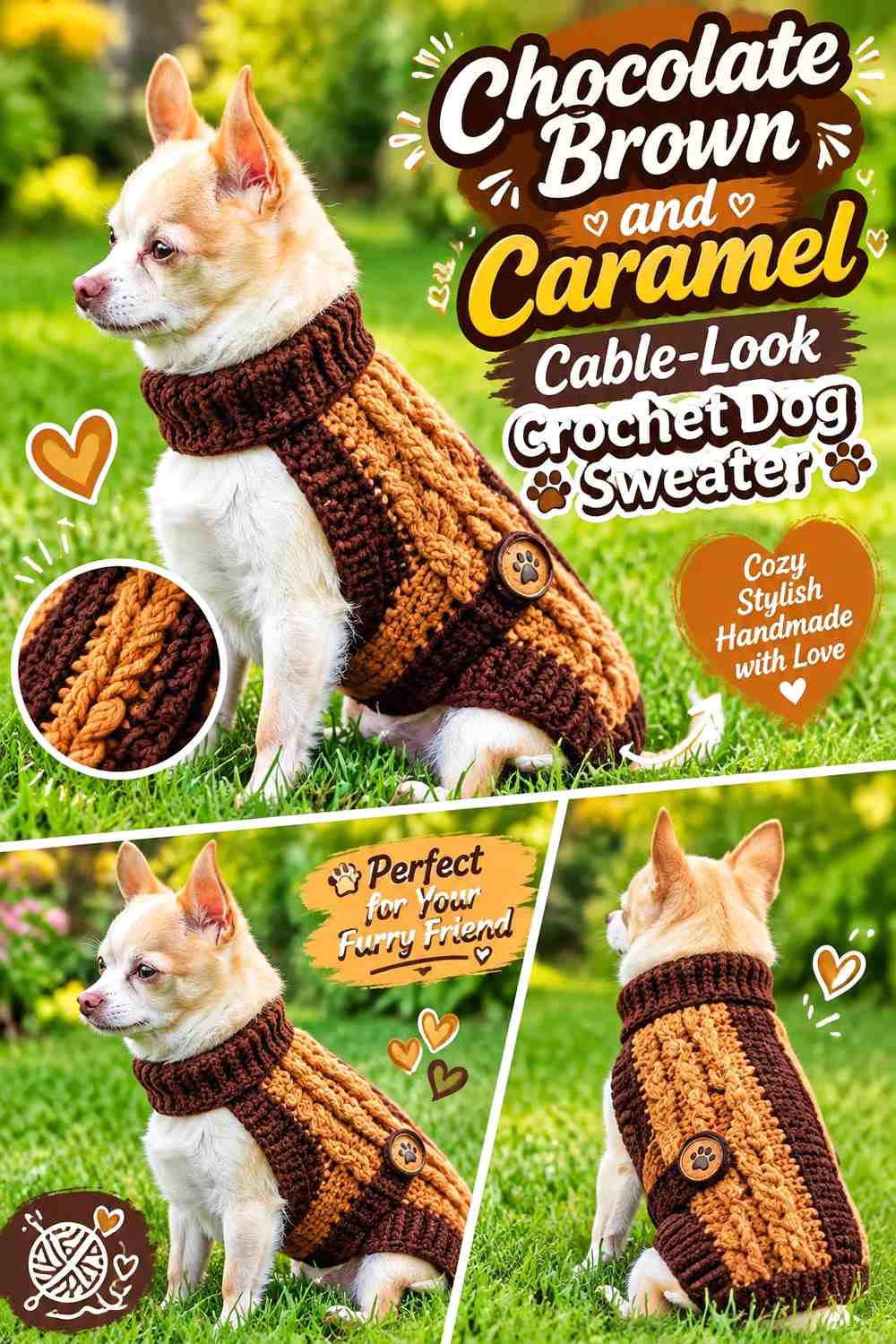
Chocolate brown and caramel produce a tonal sweater where the cable remains noticeable but less graphic than cream against a dark background. Chocolate can carry the body while caramel highlights the raised work and warm finishing details.
Caramel Keeps Chocolate Brown Cables Visible Without Harsh Contrast
Choose caramel that is clearly lighter than the chocolate body. If the two browns are too similar, the cable may still be attractive up close but lose its definition when viewed from a normal walking distance.
Chocolate Brown Can Ground Caramel at the Collar and Hem
If caramel appears on the cable and collar, return to chocolate at the lower body or back edge. That repetition gives the darker shade enough visual weight to remain the clear foundation of the sweater.
Creator Credit: Last Minute Laura
10. Slate Blue and Silver Gray Cable-Look Crochet Dog Sweater
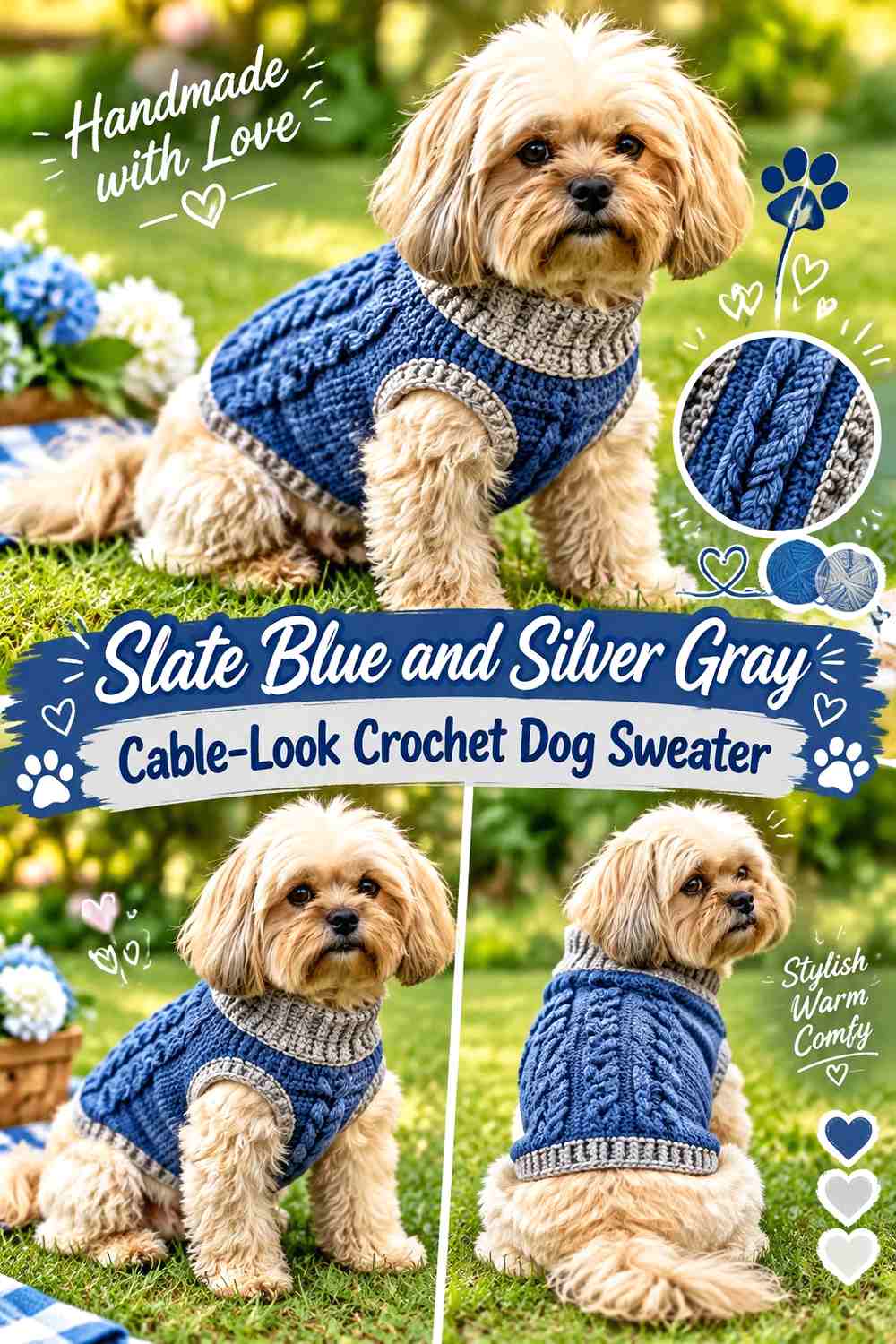
Slate blue and silver gray create a cooler, quieter winter palette. Slate can cover the main body, while silver gray lightens the cable panel and ribbed details without creating the stark separation of white.
Silver Gray Can Clarify Slate Blue Cable Crossings
Use silver gray where the stitch texture is most complex. The lighter value can help individual raised lines remain distinct against a medium-to-dark slate background.
Slate Blue Needs Enough Surface Area to Anchor Silver Gray
Keep the belly, sides, and most of the back in slate blue if silver gray already occupies the cable. This stops several light trim areas from competing with the central texture.
Creator Credit: Crochet It
11. Olive and Terracotta Cable-Look Crochet Dog Sweater
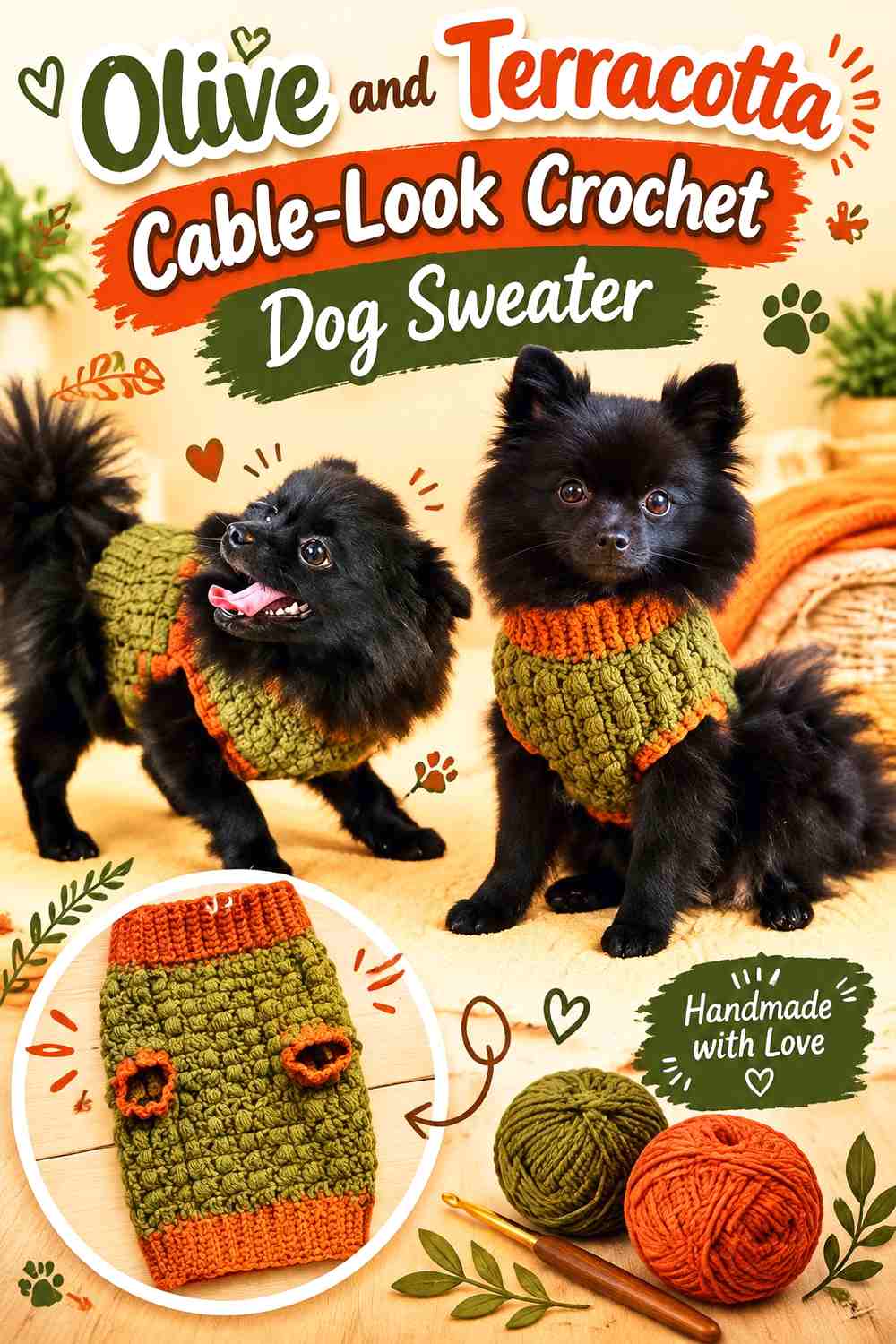
Olive and terracotta give the sweater an earthy two-color direction with less light-dark contrast than cream-based palettes. Olive can serve as the broader field while terracotta marks the cable and selected edges.
Terracotta Needs Clear Placement Against Olive
Because both shades can carry similar visual weight, avoid alternating them in many small sections. A defined terracotta cable against an olive body creates a cleaner hierarchy than scattered blocks around the collar, legs, and hem.
Olive Can Simplify a Busy Terracotta Cable Area
If the cable contains several raised crossings, keep the surrounding olive fabric consistent. Adding more frequent color changes next to complex texture can make both the cable structure and the palette harder to read.
Creator Credit: SheiLa Teré
12. Plum and Mauve Cable-Look Crochet Dog Sweater
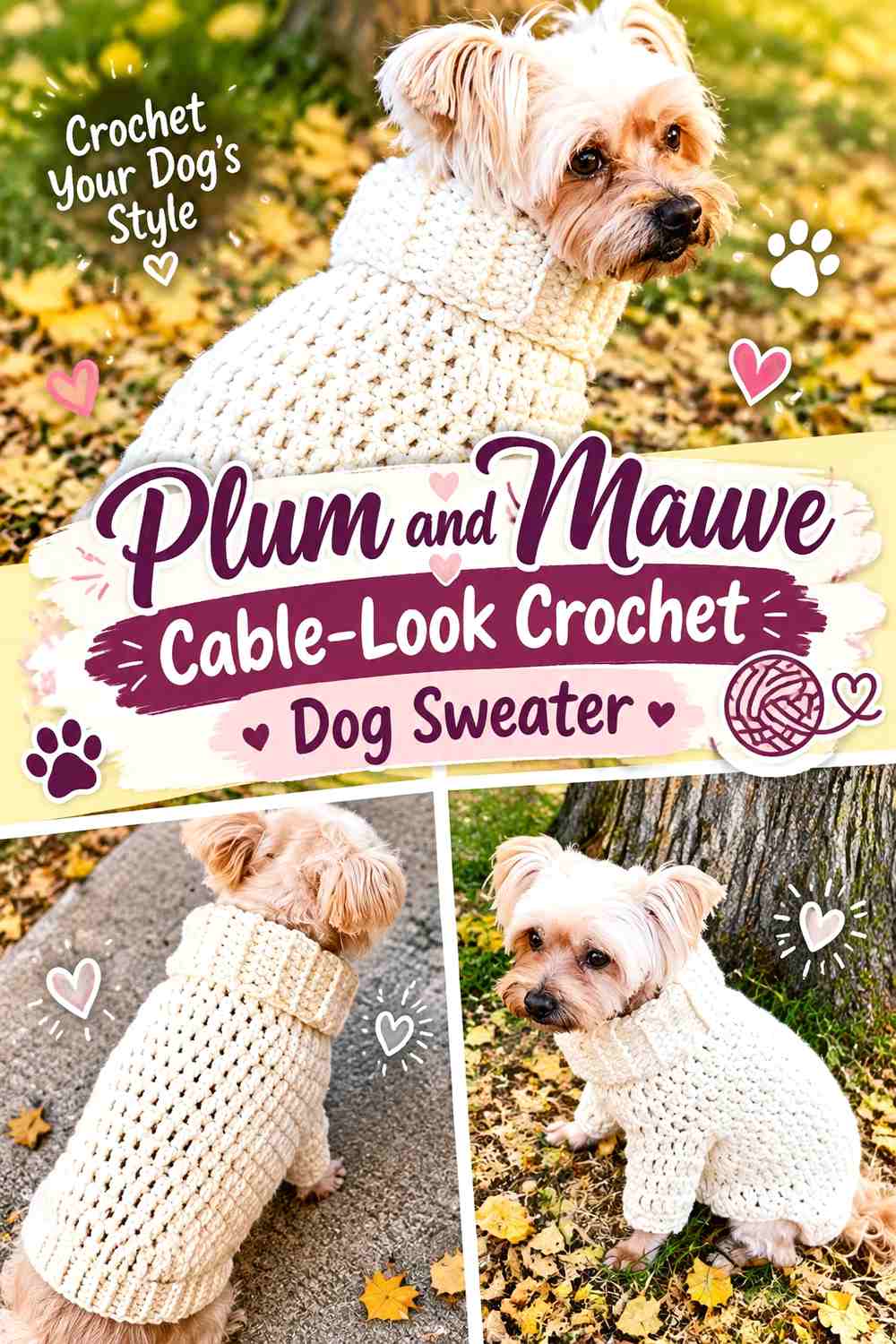
Plum and mauve create a tonal purple palette where texture becomes more important than strong color contrast. Plum can ground the body, while mauve gives the cable just enough separation to stand apart without becoming a bright stripe.
Mauve Creates a Softer Cable Transition Against Plum
Use mauve when you want the raised stitches to be noticed after the overall sweater shape rather than before it. This lower-contrast relationship is especially effective when the cable itself is broad enough to remain visible through texture.
Plum Should Define the Main Dog Sweater Silhouette
Keep plum on the side body, belly, and other larger sections. When mauve is limited to the back cable and a small finishing repeat, the sweater retains a strong outline instead of looking evenly split between two purples.
Creator Credit: Vibes with Dani
13. Black and Camel Cable-Look Crochet Dog Sweater
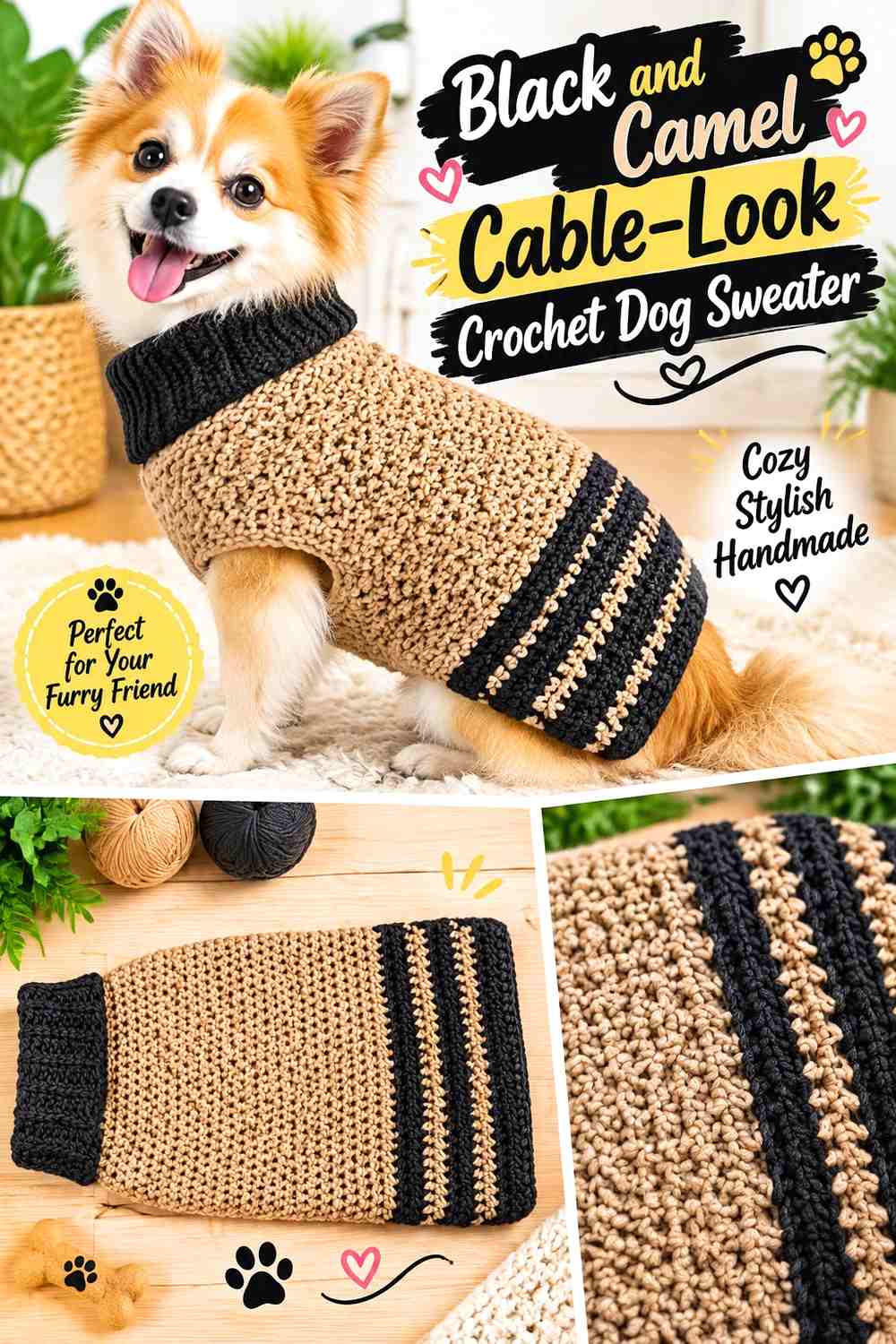
Black and camel create one of the strongest contrast options in this collection. Rather than placing black in the cable itself, consider camel for the textured back panel and black for the surrounding body so the raised stitches remain easy to see.
Camel Gives Black a Clear Crochet Cable Focal Point
A camel center panel can prevent detailed cable work from disappearing into an all-black surface. Keep black immediately beside the panel so the lighter texture has a defined frame.
Black Should Not Overwhelm Camel Dog Sweater Details
If black covers the main body, allow camel to repeat once at the collar or lower edge. A single small repeat connects the back panel to the rest of the sweater without introducing unnecessary additional color blocks.
Creator Credit: Woolpedia
14. Cream and Moss Green Cable-Look Crochet Dog Sweater
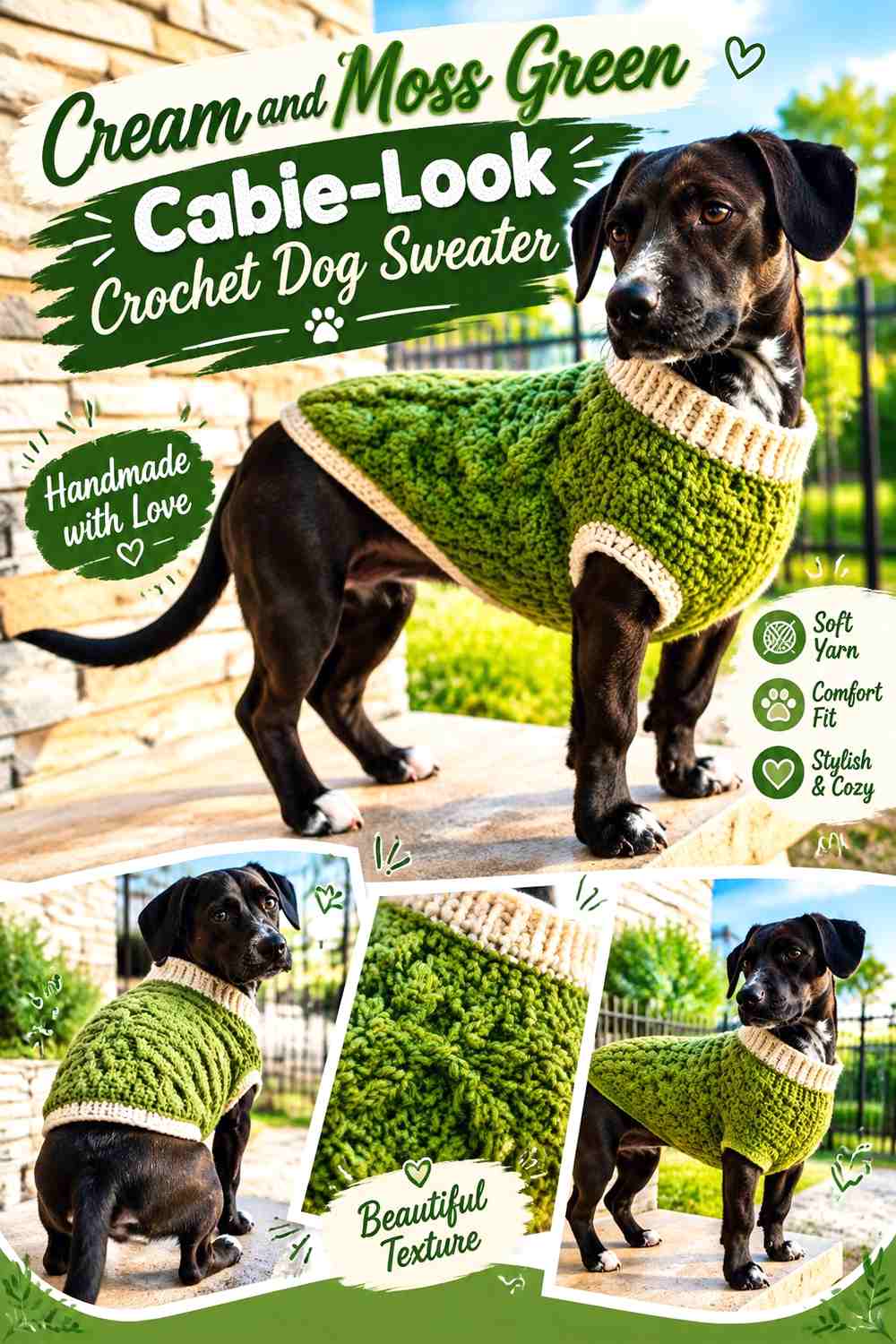
Cream can lead this palette for a light sweater, while moss green supplies the cable and structural accents. The darker green is useful for outlining the center texture without making the entire garment visually heavy.
Moss Green Can Define a Cream Crochet Cable Without Extra Colors
Use moss green for the cable and one secondary area such as the collar. Two colors are enough here because the raised stitchwork already provides additional surface detail.
Cream Needs Repetition Around Moss Green Edging
If moss green appears on several edges, leave enough cream between those areas to keep them visually separate. Continuous dark trim around every opening can make the borders compete with the back cable.
Creator Credit: Heart Hook Home
15. Denim Blue and Ivory Cable-Look Crochet Dog Sweater
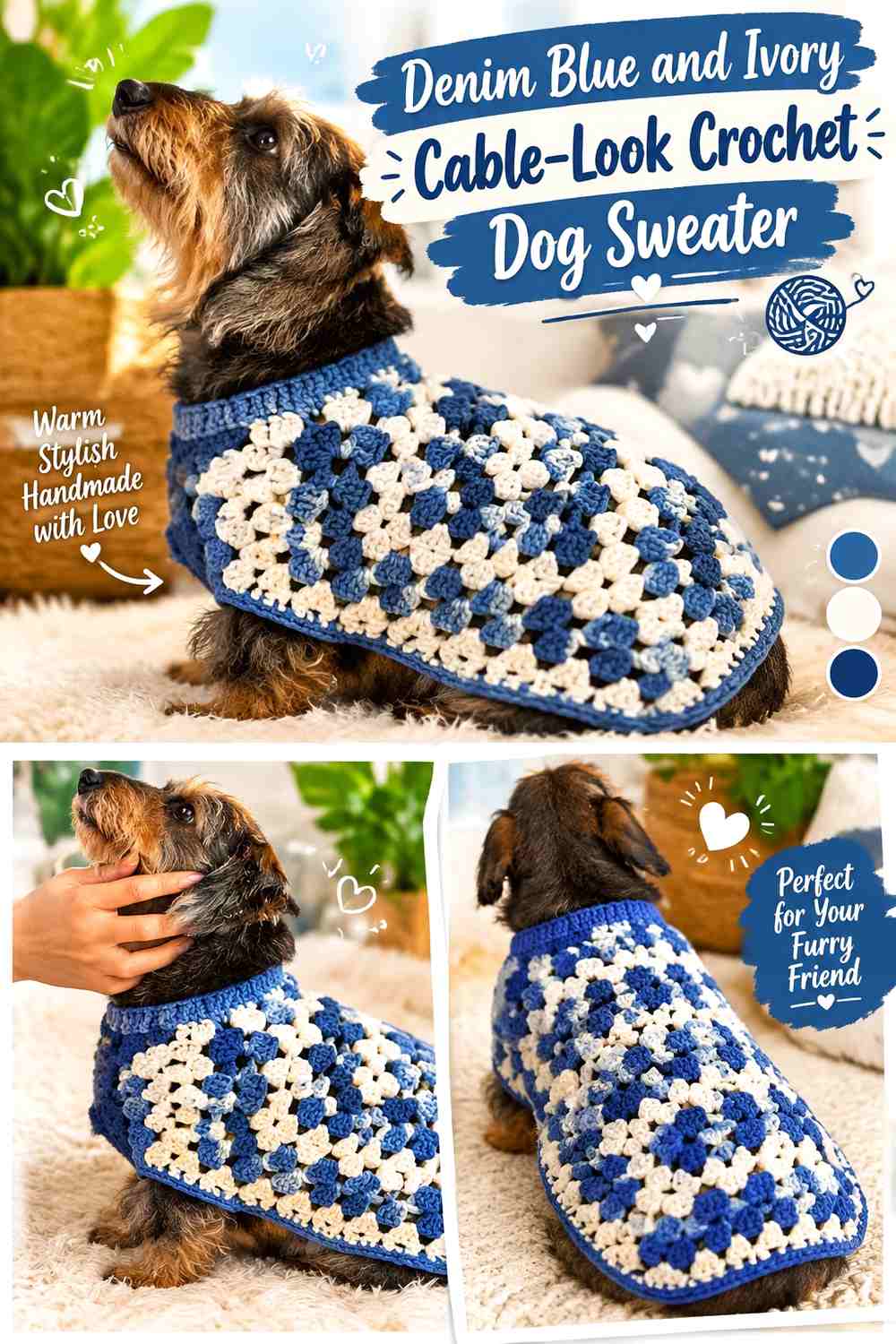
Denim blue provides a medium-value base while ivory brightens the cable and small finishing details. The result has clearer contrast than a blue-and-gray palette but is softer than using bright white.
Ivory Helps Denim Blue Cable Texture Read From a Distance
Put ivory on the central raised section when the cable is the design feature you most want to preserve. Because ivory is much lighter, even a relatively narrow cable can become visually prominent.
Denim Blue Can Control How Much Ivory the Sweater Needs
Once the cable is ivory, avoid adding wide ivory sections at every opening. Keeping most of the body denim blue makes the lighter cable feel intentional and leaves the dog’s sweater with one obvious focal area.
Creator Credit: Fifty Shades of Yarn
16. Brick Red and Charcoal Cable-Look Crochet Dog Sweater
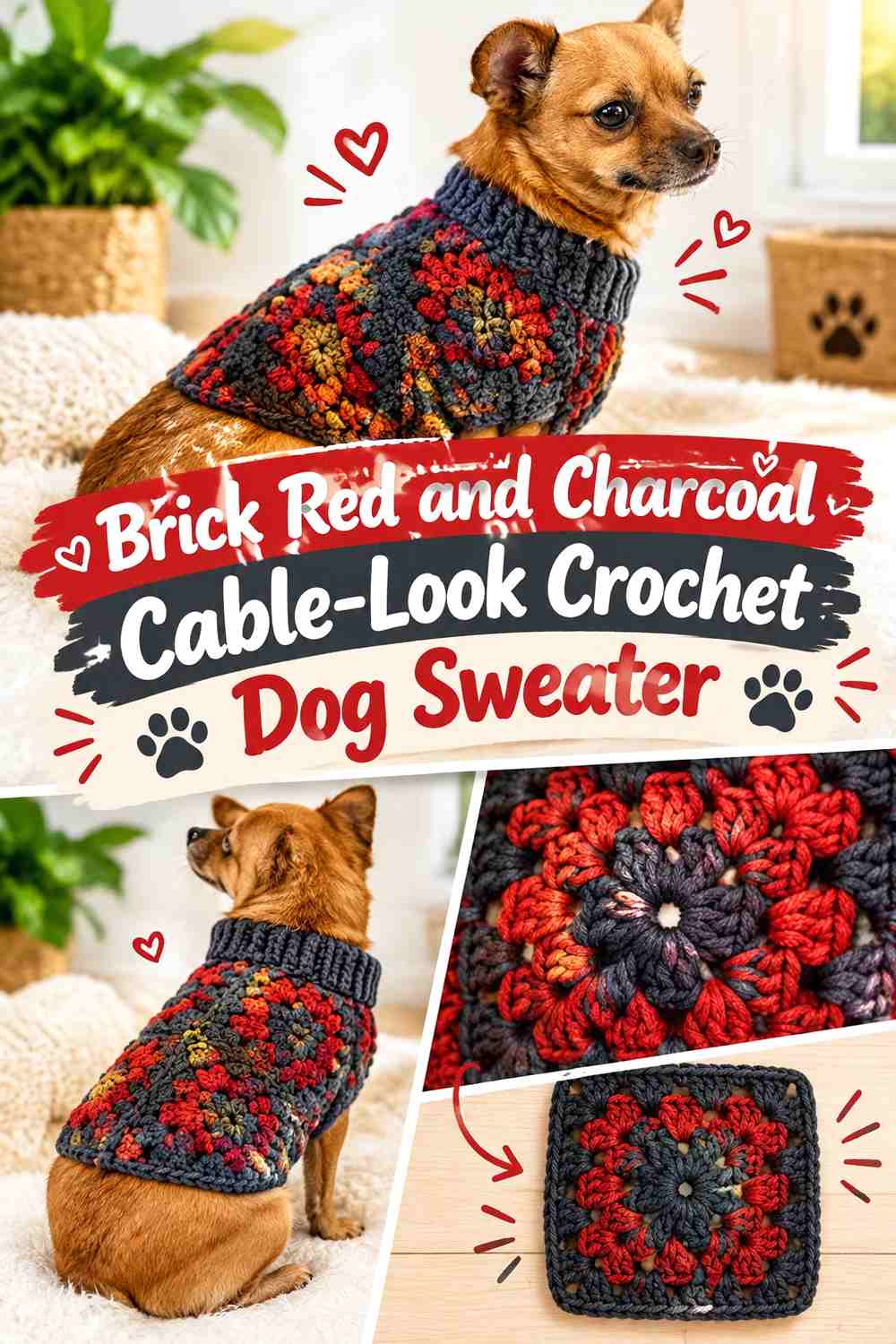
Brick red and charcoal offer a deeper, more subdued alternative to bright red and black. Charcoal can dominate the body while brick red forms the cable panel, or the roles can be reversed if you want the sweater to read warmer overall.
Brick Red Can Warm Up a Charcoal Crochet Cable Panel
Using brick red for the cable concentrates the warmer color directly on the sweater’s most textured area. Keep the adjacent fabric charcoal so the cable has a clear border rather than blending into another reddish section.
Charcoal Should Repeat Around Brick Red in Larger Areas
When brick red is the accent, charcoal needs to remain continuous across the sides and belly. That larger neutral field prevents the strong red cable from becoming one of several equally prominent colored sections.
Creator Credit: Kaylin Cierra Rose
17. Taupe and Soft Blue Cable-Look Crochet Dog Sweater

Taupe and soft blue produce the lowest-key palette in this collection. Taupe can form the body while soft blue marks the cable and collar, creating visible but restrained color separation.
Soft Blue Needs Enough Value Difference From Taupe
Before starting the cable, compare the yarns from a distance. If the soft blue and taupe have almost identical lightness, choose a slightly lighter blue or deeper taupe if clear cable visibility matters to you.
Taupe Can Keep Soft Blue Focused on the Crochet Texture
Use taupe across the major body sections and limit soft blue to the cable plus one small repeat. This restrained distribution lets the cable remain the main color event without making the sweater look heavily color-blocked.
Creator Credit: ALEX CROCHET UNCINETTO MODERNO DI ALEX
Which Crochet Cable Dog Sweater Color Scheme Should You Choose?
For the strongest cable contrast, start with black and camel, forest green and cream, cranberry and cream, or deep teal and sand. These palettes create obvious light-and-dark separation around raised stitchwork.
For a quieter cable effect, chocolate and caramel, plum and mauve, or taupe and soft blue place more emphasis on texture than dramatic color changes. Rust and sage or olive and terracotta work well when you want an earthy palette but still need enough separation to define the back panel.
Three-color schemes require more control. Burgundy, dusty rose, and oatmeal works best when burgundy clearly dominates and oatmeal remains a small finishing shade rather than competing with the cable.
Conclusion
A crochet cable dog sweater does not need many colors to look detailed. The raised stitchwork already contributes a strong surface pattern, so two colors with clearly assigned roles are often enough.
Choose a high-contrast palette such as forest green and cream when you want the cable to be obvious, or move toward chocolate and caramel, plum and mauve, or taupe and soft blue when you prefer a more blended result. Whichever palette you choose, decide where the dominant, cable, and trim colors belong before starting large sections.
Use the credited tutorials for the actual dog-sweater construction, measurements, and shaping appropriate to the project you select, then adapt the color placement without replacing the creator’s instructions.
Frequently Asked Questions
How do I make crochet cables stand out on a dog sweater?
Use either light-dark color separation or a solid color with strong stitch definition. If the cable is a different color from the body, compare the two yarns in grayscale or from a distance to make sure they do not have nearly identical values.
Should the crochet dog sweater cable be lighter or darker than the body?
Either can work. A lighter cable on a dark body creates an obvious focal panel, while a dark cable on a light body creates a stronger outlined effect. Choose based on which color you want to dominate the complete sweater.
Can I make a cable-look crochet dog sweater in one color?
Yes. A single color puts all the emphasis on the raised crochet texture rather than color contrast. Clear stitch definition becomes more important because color will not separate the cable from the surrounding fabric.
Where should I repeat the cable color on a crochet dog sweater?
The collar, narrow hem edging, or leg-opening trim are practical places to repeat it. Usually one small secondary repeat is enough to connect the cable to the rest of the sweater.
How can I tell whether two dog sweater colors have enough contrast?
Place the yarns side by side, step back, and compare their lightness rather than relying only on hue. A grayscale photo can also reveal whether two apparently different colors have almost the same value.
Can I substitute different colors without changing the cable sweater idea?
Yes. Preserve the role of each shade rather than trying to match an exact name. If the original concept uses a dark dominant color and a lighter cable accent, choose replacement shades that maintain that relationship.
What should I check before using a crochet dog sweater for winter walks?
Follow the selected construction tutorial and check the finished garment around the neck, chest, belly, and front-leg openings. The dog should be able to move naturally, and loose decorative pieces should be avoided where they could be pulled or chewed. Color and cable texture affect appearance; they do not replace proper fit or an appropriate fabric for the conditions.