Striping gives a crochet cat sweater more than extra color. On the compact body of a hairless cat sweater, changing the width, contrast, and repetition of the bands can make the finished garment look quiet and tonal, graphic and modern, earthy, playful, or distinctly seasonal.

Hairless cats also make garment finishing especially important because there is no coat between the crochet fabric and the skin. Keep color-change joins tidy, check that edges around the neck and front legs do not feel bulky, and make sure the finished sweater allows normal movement. A cat that resists the garment or appears uncomfortable should not be forced to wear it.
The color schemes below are editorial adaptations rather than claims about the palettes used in the credited videos. Some of the tutorials are specifically for cats or small pets, while others demonstrate small-animal sweater construction that should only be adapted after checking your cat’s actual measurements and comfort.
These visual references show how dramatically stripe width and contrast can change the look of clothing on a hairless cat:
Quick List
- Oatmeal and Chestnut Crochet Striped Cat Sweater
- Black and Mustard Crochet Striped Cat Sweater
- Dusty Rose and Charcoal Crochet Striped Cat Sweater
- Sage and Cream Crochet Striped Cat Sweater
- Navy and Camel Crochet Striped Cat Sweater
- Rust and Deep Teal Crochet Striped Cat Sweater
- Lavender and Silver Gray Crochet Striped Cat Sweater
- Burgundy, Blush, and Oatmeal Crochet Striped Cat Sweater
- Chocolate, Caramel, and Cream Crochet Striped Cat Sweater
- Denim Blue and Ivory Crochet Striped Cat Sweater
- Olive and Terracotta Crochet Striped Cat Sweater
- Plum, Mauve, and Charcoal Crochet Striped Cat Sweater
- Cranberry, Forest Green, and Cream Crochet Striped Cat Sweater
Plan Stripe Width Around a Hairless Cat Sweater’s Small Surface
Wide stripes behave differently on a cat sweater than they do on a blanket or human pullover. Only a few broad bands may fit between the neckline and back hem, so every color change becomes visually important.
Narrower stripes create more repetition, but they can make the sweater look crowded when the collar, leg openings, belly section, and edging introduce additional lines. Decide whether you want the stripes or the sweater’s shape to command more attention before distributing the colors.
Use Light and Dark Contrast to Keep Crochet Stripes Distinct
Different hues do not automatically create strong stripes. A muted green and muted brown can have almost the same lightness and visually merge once crocheted.
Compare the yarns side by side and, when necessary, look at a grayscale photo. Stronger light-dark separation is useful for crisp bands, while closer values produce a softer transition. Neither is automatically better; the choice should support the look you want.
Keep Strong Stripe Colors Away From Every Cat Sweater Edge
The neckline, front-leg openings, and hem already create natural visual boundaries. Using the strongest accent at every one of those points can make a small sweater appear fragmented.
A calmer trim color often lets the body stripes remain the main feature. For a hairless cat, simpler edging also gives you a clearer area to inspect for comfortable fit without bold color distracting from how the garment actually sits.
1. Oatmeal and Chestnut Crochet Striped Cat Sweater
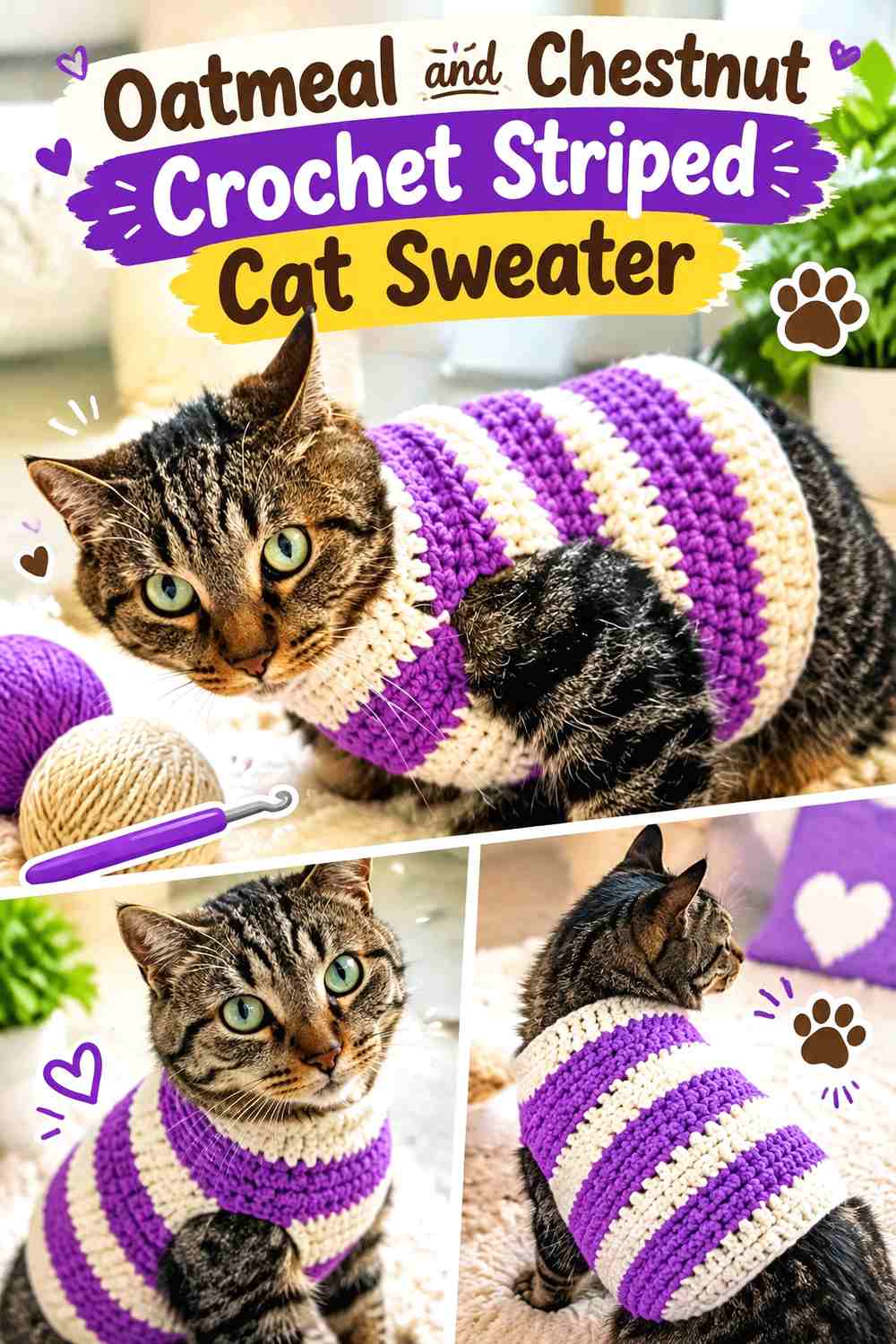
Oatmeal can cover most of this sweater while chestnut forms narrower horizontal bands across the back and sides. The difference between the light neutral and deeper brown makes the striping visible without adding a bright accent, and a solid oatmeal belly can keep the design from becoming busy underneath the cat.
Chestnut Works Well as the Narrower Oatmeal Stripe
Let oatmeal occupy the wider bands and use chestnut more selectively. This keeps the sweater light overall while giving the darker brown enough repetition to define the stripe sequence from neckline to back hem.
If the chestnut bands become as wide as the oatmeal ones, the two colors will compete equally. That can work for a bold rugby-stripe effect, but narrower chestnut sections make oatmeal the obvious dominant color.
Oatmeal Can Simplify the Chestnut Cat Sweater Edges
Keep the collar and front-leg edging oatmeal if the body already has several chestnut bands. A quiet edge separates fit details from decorative striping and avoids creating another dark line immediately beside each opening.
Creator Credit: LittleGemsCreations – Fibre Artist
2. Black and Mustard Crochet Striped Cat Sweater

Black and mustard create one of the strongest contrast schemes in this collection. Use black as the dominant field and mustard as a repeated accent rather than dividing the sweater exactly in half. On a small cat sweater, a few mustard bands are enough to establish the palette.
Mustard Needs Controlled Repetition Against Black
Place mustard bands at recognizable intervals along the main body instead of introducing yellow at every possible edge. The strong color difference already makes each mustard section prominent, so additional repetitions quickly increase visual activity.
A mustard stripe near the upper back and another toward the lower body can establish rhythm while black connects the sweater between them.
Black Can Keep Mustard Away From Sensitive-Looking Openings
A solid black neckline and leg trim visually separate the bright stripes from the garment openings. This gives the sweater a calmer frame and makes it easier to see whether those edges are lying smoothly against a hairless cat’s skin.
Creator Credit: Montana Crochet Creations
3. Dusty Rose and Charcoal Crochet Striped Cat Sweater
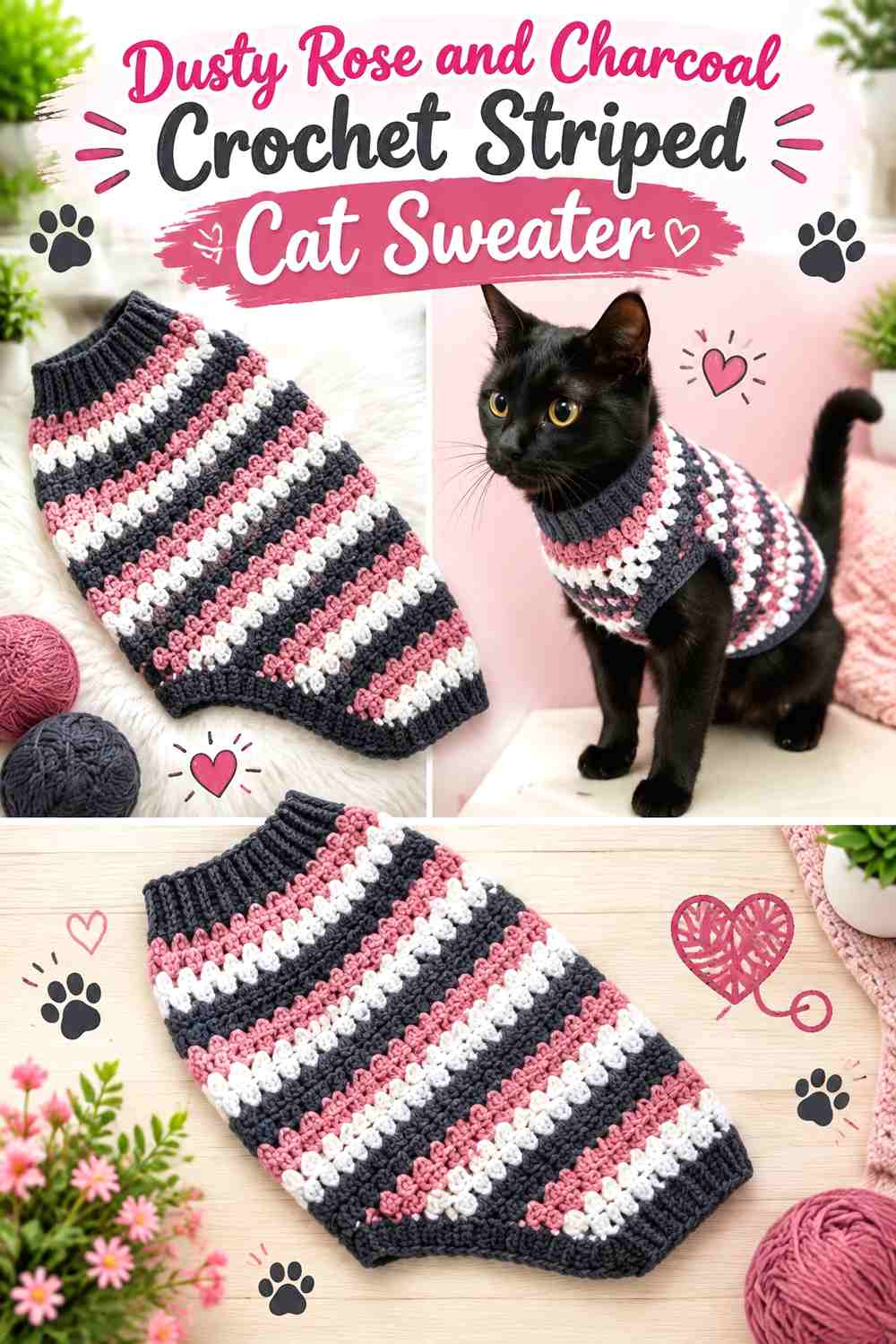
Dusty rose softens the overall sweater while charcoal gives the stripes a darker anchor. This palette works well with medium-width bands because neither color needs to appear as a tiny accent. Let dusty rose lead and use charcoal often enough to keep the sweater from becoming one uninterrupted pink field.
Charcoal Gives Dusty Rose Stripes a Clear Boundary
Charcoal bands can visually divide larger dusty rose sections without requiring bright white or black. Use them where you want the striped construction to remain obvious from across a room rather than only at close range.
If your particular dusty rose is quite dark, compare it with the charcoal before starting. Two similarly dark yarns can lose the clear banding that makes this palette useful.
Dusty Rose Can Carry the Charcoal Collar More Gently
If the collar is charcoal, return to dusty rose immediately below it before beginning the first dark body stripe. That short visual break keeps the neckline from merging with the first charcoal band and appearing heavier than intended.
Creator Credit: Zlatapryaja_animals
4. Sage and Cream Crochet Striped Cat Sweater
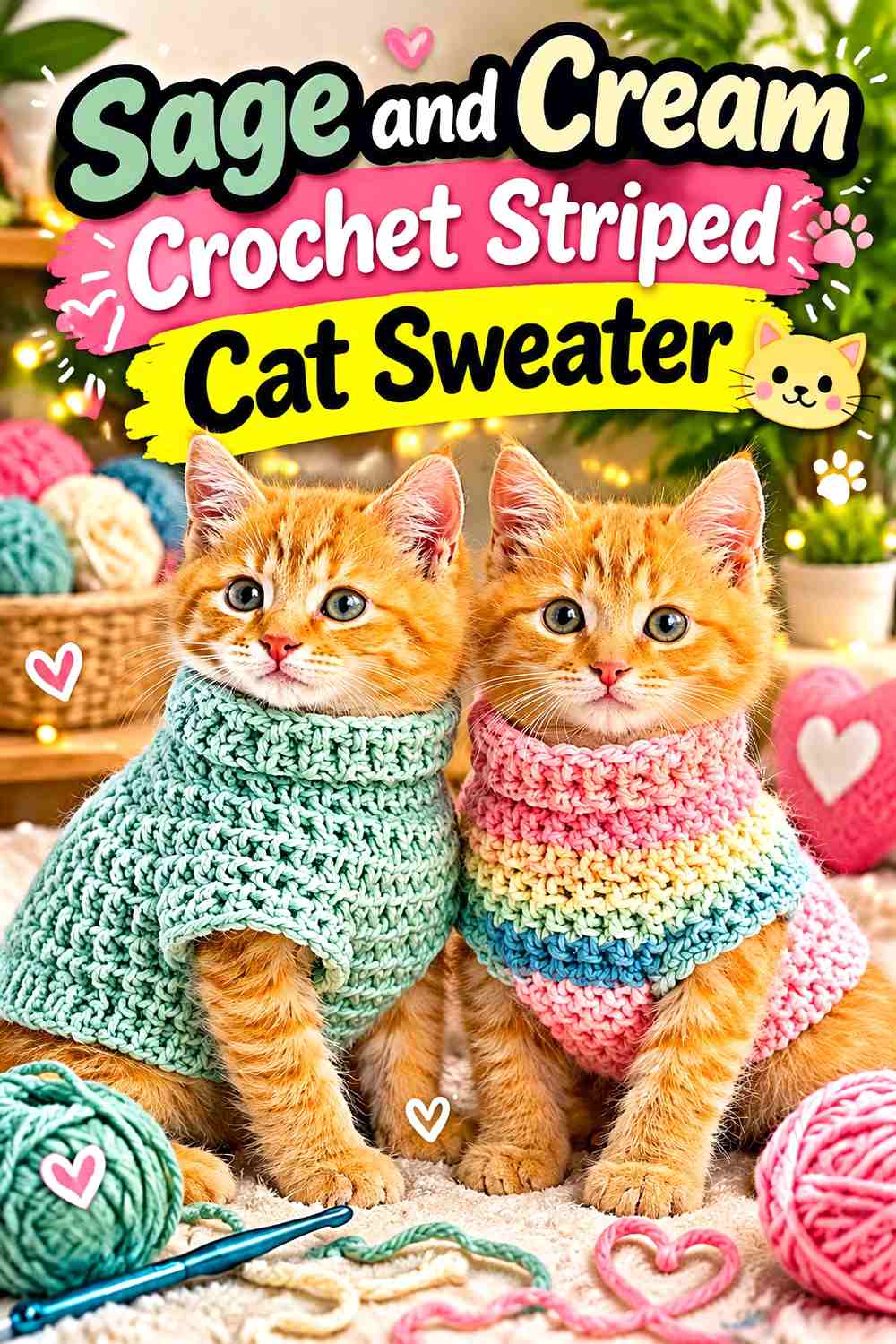
Sage and cream create a softer, lower-drama stripe pattern that suits narrow or medium bands. Cream can brighten the sweater without creating the starkness of pure black-and-white contrast, while sage provides enough color to keep the result from reading as mostly neutral.
Sage Should Lead When Cream Stripes Are Frequent
If you plan to repeat cream often, make the sage sections wider. Cream’s lighter value can attract a surprising amount of attention even when it covers less area, so broader sage bands help maintain the green direction of the sweater.
Cream Can Keep Sage Away From a Heavy-Looking Hem
A final cream band near the lower back can give a sage-dominant sweater a lighter finish. You do not need to repeat cream around every opening; keeping the leg trim sage can preserve continuity through the middle of the garment.
Creator Credit: Punto a punto y más
5. Navy and Camel Crochet Striped Cat Sweater
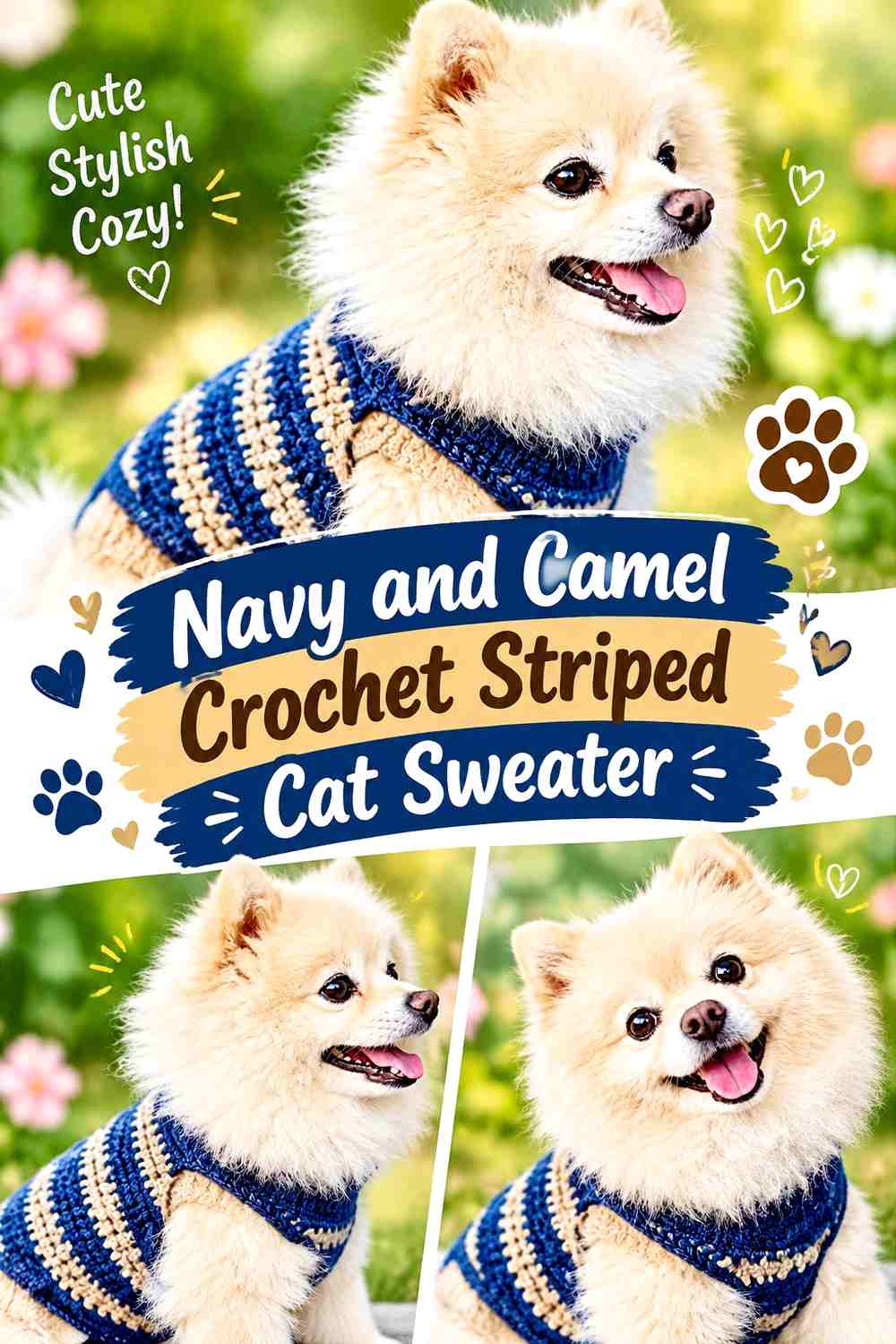
Navy and camel give stripes a classic winter-pullover direction without relying on very bright shades. Navy can dominate the body while camel appears in fewer, wider bands, making each warm stripe look intentional rather than decorative filler.
Camel Bands Can Break Up a Navy Cat Sweater Without Taking Over
Use camel at two or three major points across the sweater body rather than as a narrow stripe every few rows. Broad camel sections create a slower visual rhythm and keep navy recognizable as the main shade.
Navy Makes a Practical Visual Frame for Camel Stripes
Keeping the neckline and hem navy creates a dark frame around the warmer camel bands. This is especially useful if the first and last camel stripes sit near the sweater edges, where another camel trim could make those bands appear larger than the rest.
Creator Credit: TheHappyHues🍁
6. Rust and Deep Teal Crochet Striped Cat Sweater
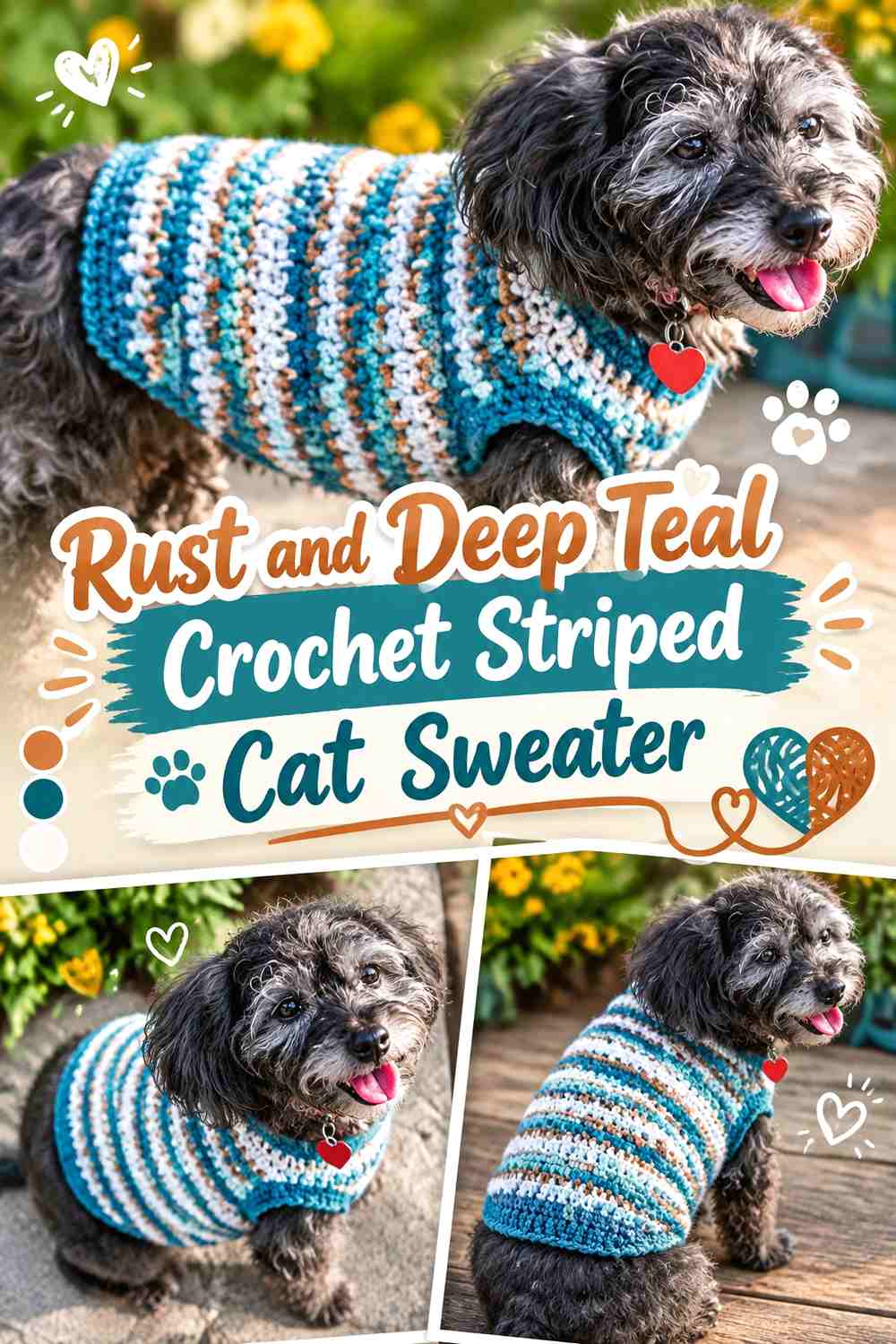
Rust and deep teal create a more saturated two-color scheme without using a neutral. Because both colors have substantial visual weight, this sweater needs a deliberate dominant shade. Let rust cover the larger bands and use teal as the repeating interruption, or reverse the roles rather than splitting them evenly by default.
Deep Teal Needs Enough Value Difference From Rust
Rust and teal are very different hues, but particular yarn choices can still be similar in lightness. Check them together before crocheting several bands.
If they visually merge, preserve the palette by choosing a darker teal or lighter rust instead of adding an unrelated third color solely to create separation.
Rust Can Calm a Deep Teal Collar With a Warm First Stripe
When the neckline is teal, begin the body with rust before repeating teal farther down. That prevents the collar and first stripe from merging into one large dark section around the shoulders.
Creator Credit: The Crochet Crowd
7. Lavender and Silver Gray Crochet Striped Cat Sweater

Lavender and silver gray give a hairless cat sweater a cool, tonal direction. The contrast is intentionally gentler than black with mustard or navy with ivory, so stripe width and repetition become more important for keeping the design legible.
Lavender Should Be Noticeably Different From Silver Gray
Choose a lavender that remains visibly distinct from the gray when the yarns are viewed from several feet away. If both colors are very pale, the sweater can look almost solid once crochet texture introduces small shadows across the surface.
Silver Gray Can Make Lavender Stripes Feel More Continuous
Use silver gray consistently at the collar and between every lavender band rather than introducing a new neutral at the edges. The repeated gray acts as a connector, which helps a low-contrast palette look deliberate instead of faded.
Creator Credit: Crochet with Tiffany
8. Burgundy, Blush, and Oatmeal Crochet Striped Cat Sweater

A three-color striped sweater needs stronger hierarchy than a two-color version. Let burgundy carry the darkest and widest sections, use blush as the secondary stripe, and reserve oatmeal for narrow separators or limited trim.
Blush Can Bridge Burgundy and Oatmeal Without Harsh Jumps
Placing blush beside burgundy produces a softer transition than jumping directly from deep red to oatmeal every time. Use oatmeal less frequently so its light value remains an accent instead of breaking the sweater into many pale lines.
Oatmeal Should Stay Smaller Than Burgundy on the Cat Sweater
Oatmeal can work at the neckline, a thin body stripe, or the lower edge, but avoid giving it the same total surface area as burgundy if you want a rich color-led sweater. The lightest shade will naturally command attention even in smaller amounts.
Creator Credit: Last Minute Laura
9. Chocolate, Caramel, and Cream Crochet Striped Cat Sweater
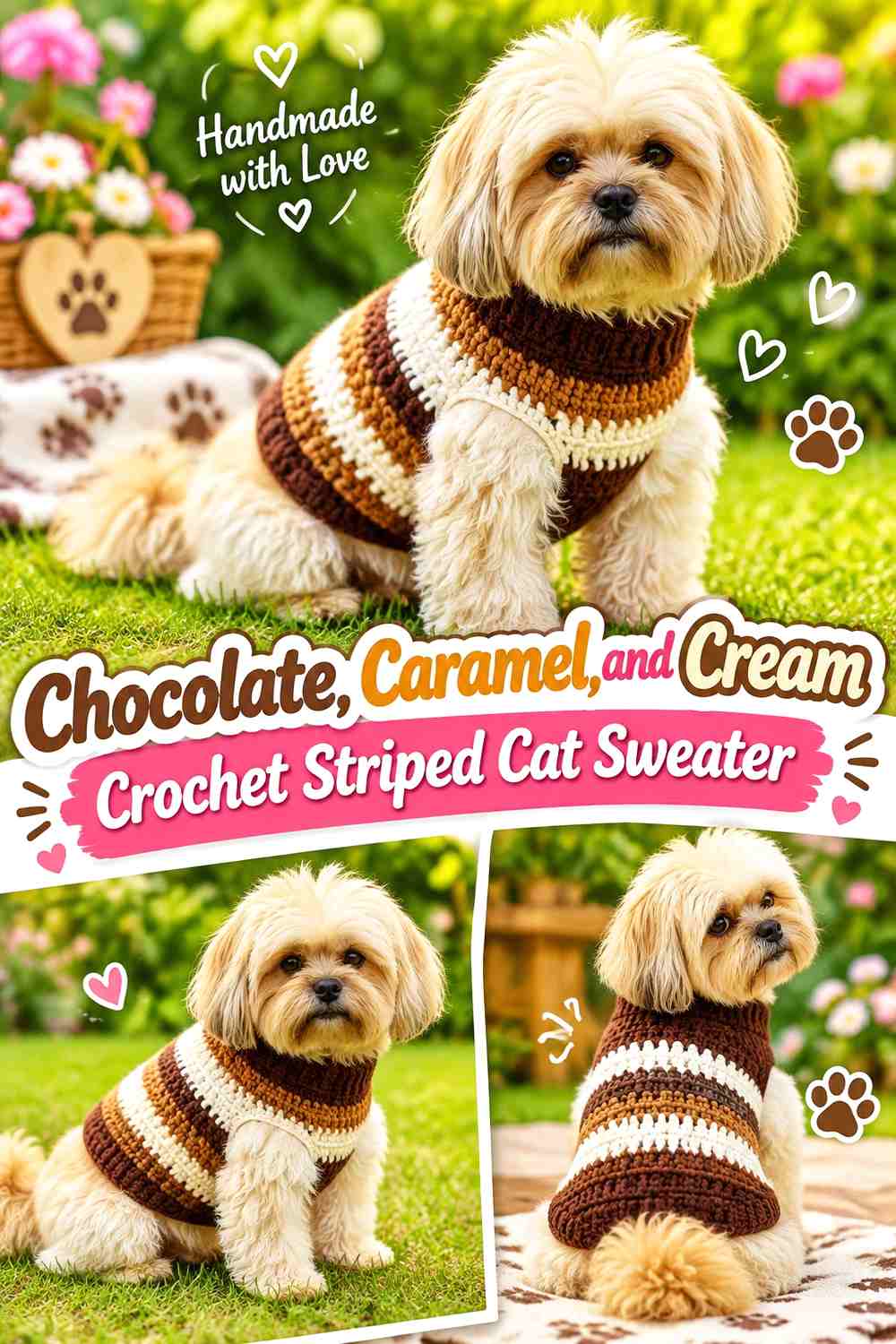
This palette uses three values from the same warm family. Chocolate provides the deepest bands, caramel forms the middle transition, and cream supplies the lightest stripe. The result can feel cohesive even with frequent color changes because the colors share a related direction.
Caramel Should Connect Chocolate and Cream Stripes
Rather than alternating chocolate directly with cream through the entire body, let caramel appear between some of the darkest and lightest sections. The middle value reduces the graphic jump and gives the stripe sequence more variation.
Cream Needs Restraint Beside Chocolate Cat Sweater Bands
Cream will create the most obvious contrast against chocolate. Keep those high-contrast meetings in selected places if you want the sweater to remain tonal overall. Too many thin chocolate-and-cream alternations will change the look from blended to strongly graphic.
Creator Credit: Crochet It
10. Denim Blue and Ivory Crochet Striped Cat Sweater

Denim blue and ivory create clean, recognizable stripes without the severity of navy and bright white. Denim can handle most of the body, while ivory works well as a recurring narrow band or one broader statement stripe.
Ivory Gives Denim Blue Stripes Stronger Separation
If your crochet fabric has noticeable texture, ivory can keep the stripe pattern readable despite the shadows created by the stitches. Use it where you want a particularly clear break between denim sections.
Denim Blue Can Keep Ivory Away From Every Cat Sweater Opening
Leave the front-leg trim denim if the body already contains several ivory stripes. Repeating ivory around the neck, legs, and hem as well as throughout the body can create too many competing outlines on a small garment.
Creator Credit: SheiLa Teré
11. Olive and Terracotta Crochet Striped Cat Sweater
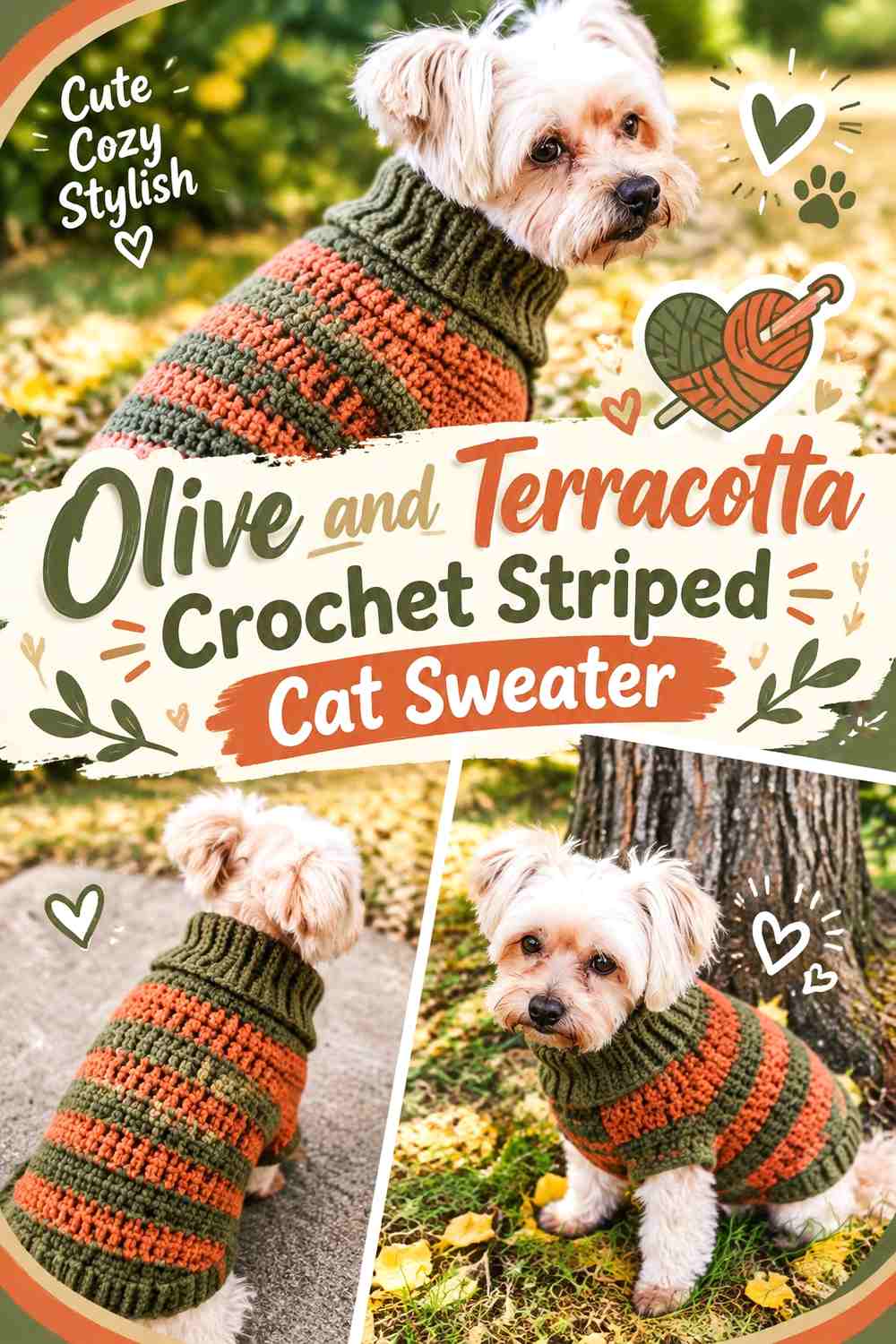
Olive and terracotta create an earthy palette where color difference matters more than extreme light-dark contrast. Wider bands suit this combination because they give each muted shade enough space to register before the next change.
Terracotta Works Better as a Deliberate Olive Accent
Let olive dominate the neckline, belly, and several body bands, then introduce terracotta in fewer sections. This prevents two similarly strong earthy colors from competing in equal amounts across such a small sweater.
Olive Can Unify Terracotta Stripes Around the Leg Openings
Use olive around the front legs even when a terracotta band passes nearby. Keeping those openings one consistent color prevents the body stripe from appearing visually interrupted or accidentally enlarged at the sides.
Creator Credit: Vibes with Dani
12. Plum, Mauve, and Charcoal Crochet Striped Cat Sweater
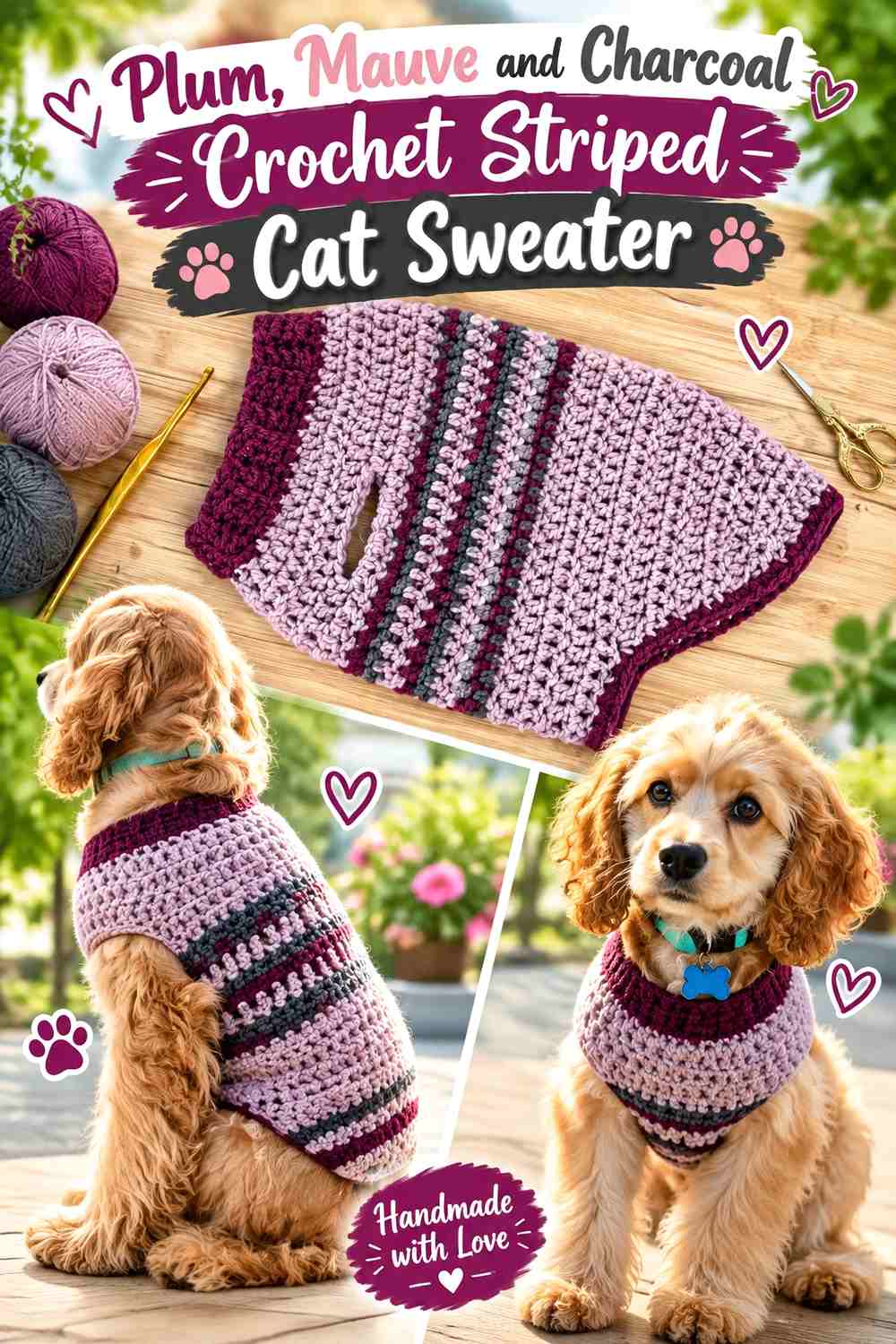
Plum and mauve provide the main tonal relationship, while charcoal supplies a deeper neutral anchor. Instead of repeating all three colors equally, let plum dominate, use mauve for softer intermediate bands, and reserve charcoal for a few points of definition.
Mauve Can Keep Plum Stripes From Feeling Too Dark
Alternating some plum bands with mauve reduces the amount of uninterrupted deep color while preserving the purple direction. This is useful when you want multiple stripes without turning each transition into strong contrast.
Charcoal Should Define Plum and Mauve Rather Than Compete
Use charcoal at the collar or as one narrow separator instead of making it every third band throughout the sweater. A small amount of charcoal is enough to create definition because it is the darkest member of the palette.
Creator Credit: it’s erin b.
13. Cranberry, Forest Green, and Cream Crochet Striped Cat Sweater
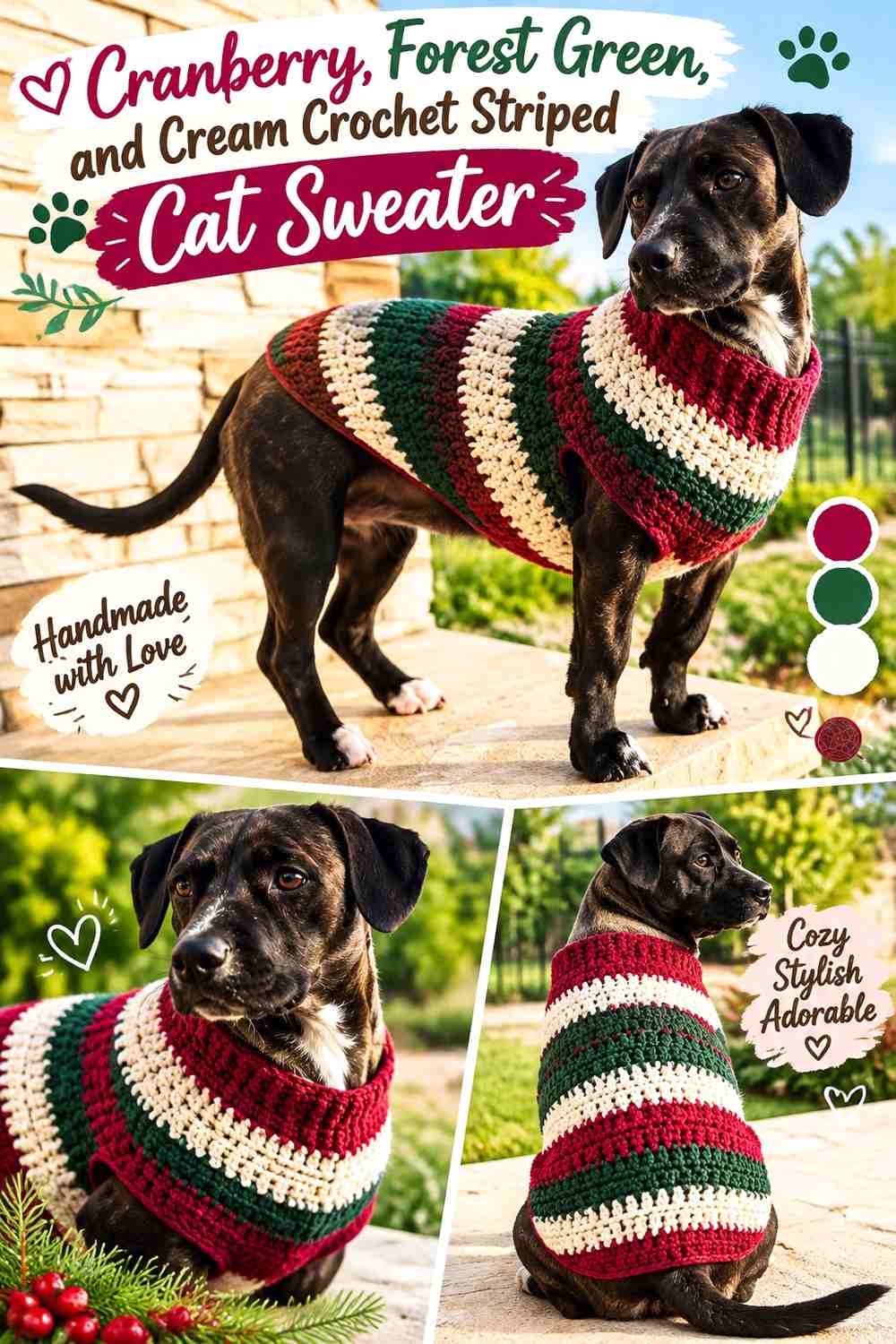
Cranberry and forest green create a strongly seasonal combination, while cream can prevent the two dark colors from visually running together. Keep one of the saturated colors dominant and treat cream as spacing rather than giving all three equal-width stripes.
Cream Can Separate Cranberry From Forest Green
A narrow cream band between cranberry and forest green creates clearer boundaries when the red and green are similar in value. You do not need cream between every pair, but strategic separation can make the stripe order easier to read.
Forest Green Should Support Cranberry Without Splitting the Sweater Equally
If cranberry is the main color, keep its bands wider and let forest green appear less often. Equal red and green bands produce a much stronger holiday statement; reducing the green creates a more restrained winter palette.
Creator Credit: Heart Hook Home
Which Striped Crochet Cat Sweater Palette Should You Choose?
For the strongest graphic contrast, black and mustard, denim blue and ivory, or navy and camel make the stripe sequence obvious even when the bands are relatively narrow. Sage and cream or oatmeal and chestnut give you visible stripes with a softer neutral balance.
For a blended look, lavender and silver gray, chocolate and caramel, or plum and mauve rely more on tonal shifts. Wider bands generally help those close-value colors register as intentional sections.
Choose rust and deep teal or olive and terracotta when you want two strong colors without relying on a pale neutral. For a clearly seasonal sweater, cranberry, forest green, and cream gives you the most direct winter-holiday direction, while burgundy, blush, and oatmeal is easier to carry beyond a specific season.
Conclusion
A striped crochet sweater for a hairless cat works best when the palette and stripe scale are planned together. Strongly contrasting colors can handle narrow repetitions, while muted or closely related shades often benefit from broader bands that give each color enough visual space.
For a calmer sweater, start with oatmeal and chestnut, sage and cream, lavender and silver gray, or chocolate and caramel. For stronger contrast, look toward black and mustard, denim and ivory, or navy and camel. If you want three colors, establish one dominant shade first and use the other two for support rather than automatically dividing the garment into equal bands.
Most importantly, treat the color plan separately from fit. Follow the selected construction tutorial carefully, adapt only after measuring your own cat, keep joins and edges smooth, and check that the finished sweater does not restrict normal movement.
Frequently Asked Questions
How wide should stripes be on a crochet sweater for a hairless cat?
There is no universal stripe width because sweater length and crochet gauge vary. Decide visually after considering how many bands can fit between the neckline and lower back. Fewer broad stripes create a calmer design; frequent narrow stripes create more movement and require stronger control of the trim colors.
How can I tell whether two yarn colors will make clear crochet stripes?
Compare both hue and light-dark value. Put the yarns together and step back, or view a photo in grayscale. If the shades merge in grayscale, the stripe effect will be softer even when the yarns are different colors.
Should the collar match one of the body stripes?
Usually, yes. Reusing a palette color at the collar helps connect the neckline to the body. On a busy multicolor sweater, choosing the dominant or neutral shade for the collar can prevent another strong band from competing with the stripes.
Are wide or narrow stripes better for a Sphynx cat sweater?
Neither is automatically better. Wide stripes show each color clearly and reduce the number of color changes. Narrow stripes provide stronger repetition but can look busy around the short distance between the neck, front legs, and hem. Choose according to the contrast and number of colors in your palette.
Should I stripe the belly section of a crochet cat sweater too?
You can, but it is not necessary for the color scheme to work. Keeping the belly in the dominant color can simplify the garment while concentrating the decorative stripes across the more visible back and side areas.
How do I substitute colors without losing the original striped effect?
Preserve the relationship between the colors. If the idea uses a dark dominant shade and a much lighter accent, choose substitutes with a comparable value difference. For a tonal palette, keep the replacement shades relatively close in lightness rather than introducing a dramatically contrasting color.
What should I check before putting a crochet sweater on a hairless cat?
Check the neckline, chest, belly, front-leg openings, joins, and any yarn ends for areas that feel bulky or restrictive. Make sure your cat can move normally and remove the sweater if the cat appears uncomfortable or tries persistently to escape it.