Jade green gives crochet projects a saturated green direction that can feel rich without becoming as dark as forest green. The exact appearance varies from yarn to yarn, so the most useful way to plan with jade green is to decide what role you want it to play: uninterrupted main color, contrast block, motif center, border, or accent.
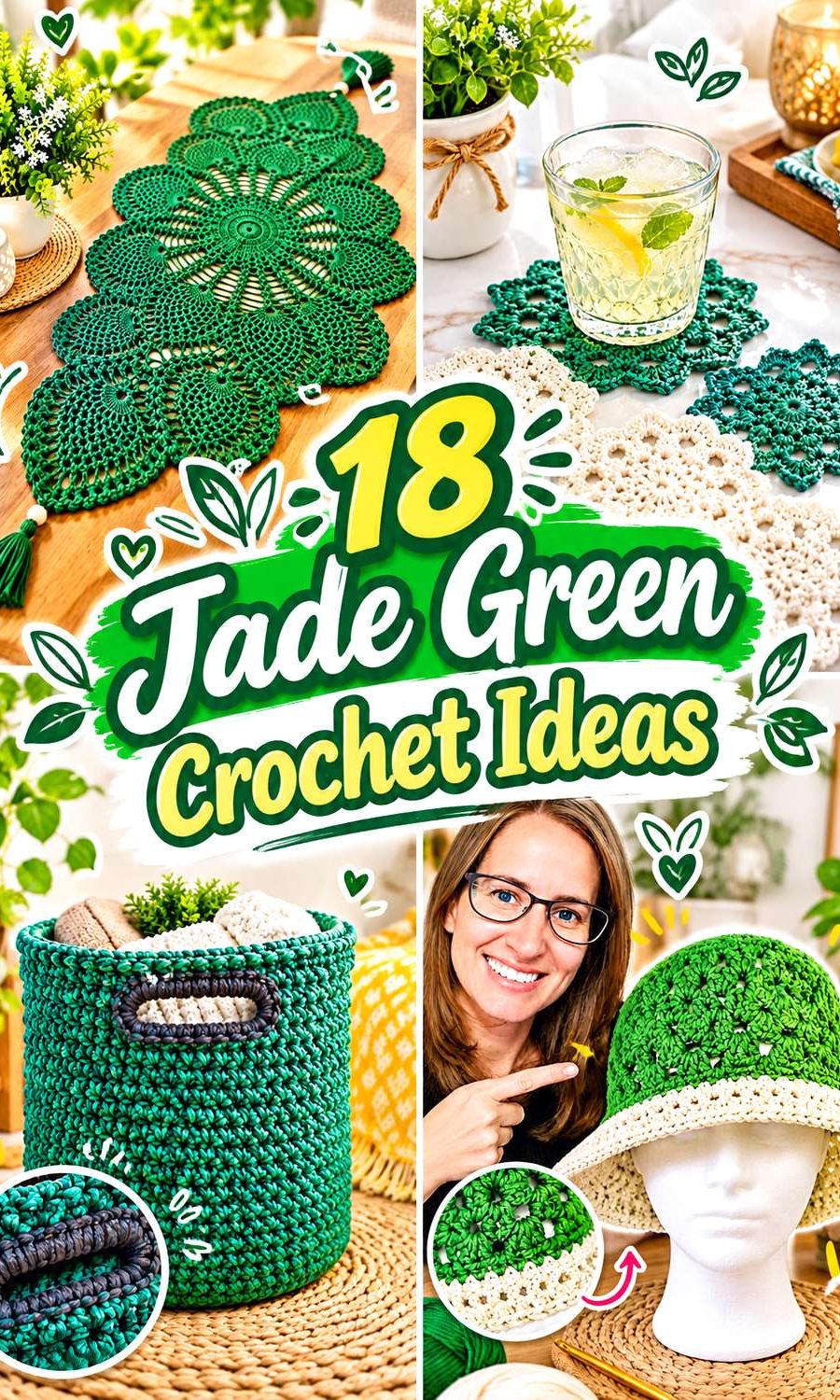
Jade green can carry an entire project on its own, but supporting colors change how clearly the crochet structure reads. Cream and oatmeal create obvious light-dark separation. Charcoal produces a deeper, more dramatic edge. Tan and natural neutrals can soften the transition without pulling attention away from the green.
The 18 ideas below use those differences deliberately across blankets, garments, accessories, bags, and home decor. The linked tutorials support the crochet construction concepts; the jade green color arrangements are independent palette adaptations rather than claims about the creators’ original colors.
Quick List
- Jade Green and Cream Striped Crochet Blanket
- Jade Green Crochet Cocoon Cardigan with Charcoal Edging
- Jade Green Crochet Market Tote with Natural Handles
- Jade Green and Cream Celtic-Weave Crochet Pillow
- Jade Green Crochet Beanie with Deep Green Brim
- Jade Green Crochet Scarf with Oatmeal Ends
- Jade Green and Cream Checkerboard Crochet Vest
- Jade Green Granny-Square Crochet Bucket Hat with Cream Brim
- Jade Green Crochet Bandana with Cream Picot Edge
- Jade Green Crochet Storage Basket with Charcoal Handles
- Jade Green Crochet Poncho with Cream Border
- Jade Green Crochet Tote Bag with Tan Handles
- Jade Green Crochet Cropped Sweater with Charcoal Trim
- Jade Green and Charcoal Crochet Balaclava
- Jade Green Crochet Slippers with Cream Cuffs
- Jade Green and Oatmeal Granny-Square Crochet Bag
- Jade Green Crochet Table Runner with Cream Tassels
- Jade Green and Cream Crochet Coaster Set
Decide How Much Jade Green Should Dominate
Jade green is strong enough to occupy most of a crochet surface without needing another saturated shade beside it. For garments, that might mean keeping the body panels jade green and reserving the second color for cuffs, ribbing, or edging. On bags, the body can remain green while handles, bases, or joins carry a neutral.
Equal color distribution creates a different effect. Checkerboards and repeated motifs can give jade green and a neutral almost the same visual importance, which makes contrast more critical. Decide whether you want a clearly jade-led item or a balanced multicolor design before distributing the yarn.
Protect Jade Green Crochet Texture with the Right Contrast
Highly textured crochet already contains shadows. Cables, waffle surfaces, ribbing, and raised stitches can look flatter if the jade green yarn is very dark or fuzzy. A lighter supporting shade can be placed near detailed areas when you want stronger definition.
You can check this before committing to the whole project. Crochet a small swatch and view it in ordinary room lighting rather than only under a bright work lamp. If the stitch pattern disappears from a few feet away, preserve more uninterrupted jade green around the texture or introduce a lighter edge where the detail needs separation.
Use Cream, Charcoal, and Natural Shades Differently with Jade Green
Cream creates the clearest light contrast and is useful around motifs, checkerboards, borders, and small details. Charcoal keeps the palette deeper and works particularly well where you want edges, cuffs, handles, or garment openings to feel defined.
Oatmeal, tan, and other natural neutrals sit between those extremes. They can soften jade green without creating a sharp graphic boundary, making them useful for scarves, bags, baskets, and home decor where you want the green to remain the obvious focal color.
1. Jade Green and Cream Striped Crochet Blanket

A striped blanket gives jade green enough surface area to establish itself strongly while cream introduces light breaks between larger green sections. Let jade green occupy more of the blanket if you want the finished piece to read primarily green rather than as an equal two-color design.
Make Jade Green the Wider Crochet Blanket Stripe
Use jade green for several of the broadest bands so the color controls the blanket from a normal viewing distance. Large sections also let the underlying crochet texture continue without being interrupted by constant color changes.
If your jade green is especially dark, broader bands are also more likely to show subtle stitch definition than a pattern made from many narrow stripes.
Use Cream to Separate Jade Green Crochet Blanket Sections
Cream can divide selected jade green areas when repeated green bands begin to feel visually heavy. It does not have to alternate after every section; occasional light bands can be enough to create breathing room.
Consider repeating cream in the outer border if it already appears inside the blanket. That connects the perimeter to the stripe plan rather than introducing a separate finishing color.
Creator Credit: Daisy Farm Crafts
2. Jade Green Crochet Cocoon Cardigan with Charcoal Edging
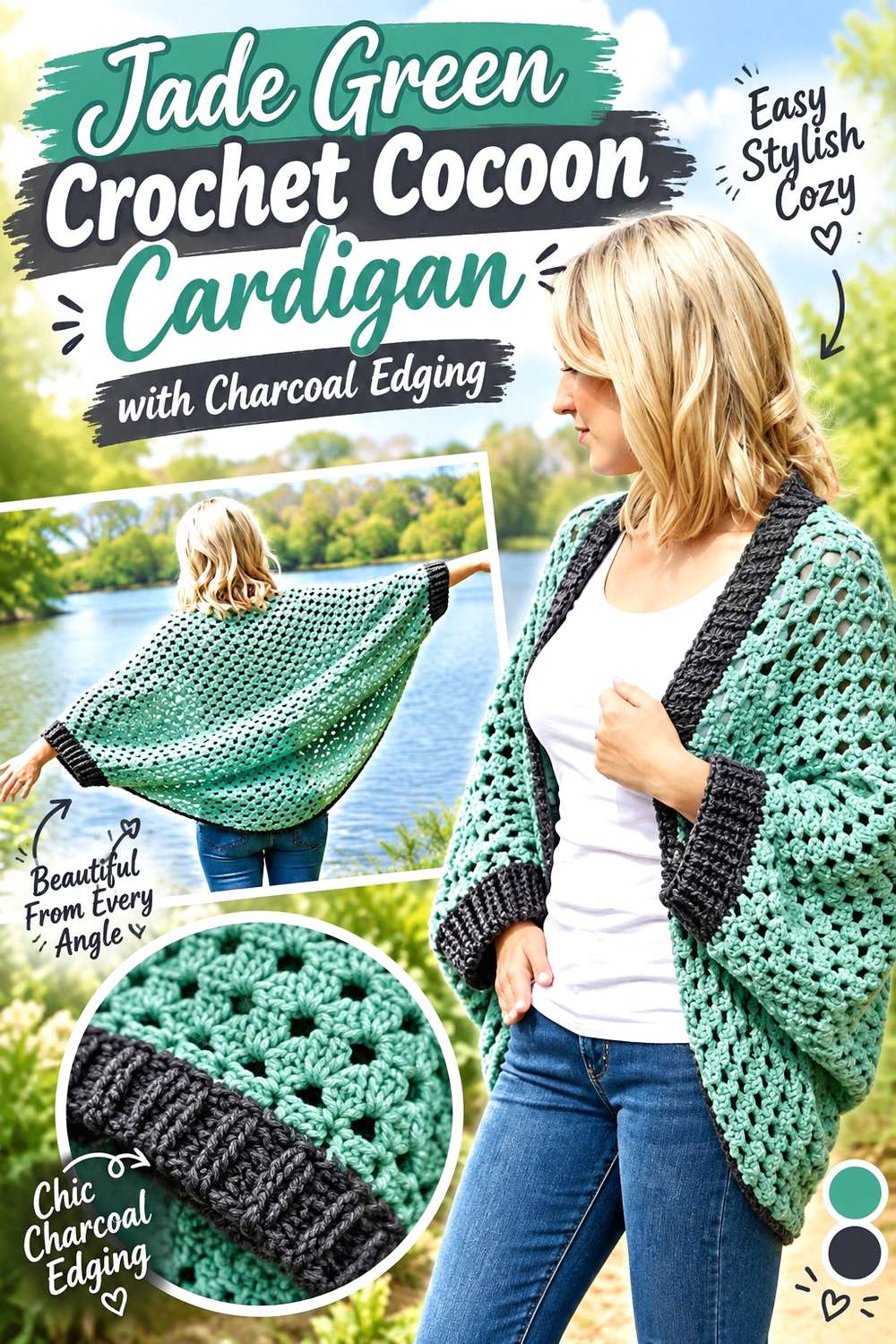
A cocoon cardigan has a broad body where jade green can remain largely uninterrupted. Charcoal is useful around the opening and cuffs because those edges already have structural importance, letting the dark accent define the garment without dividing its main surface.
Keep Jade Green Across the Main Crochet Cardigan Body
Use jade green over the largest panel to preserve the cardigan’s broad silhouette. Frequent charcoal stripes across the body can break that shape into smaller visual sections and reduce the impact of the green.
If the crochet fabric has noticeable texture, a single jade green field also lets the texture provide variation instead of relying on color changes.
Let Charcoal Frame the Jade Green Crochet Cardigan
Repeat charcoal along more than one edge, such as the opening and cuffs. Those separated dark details will then relate to one another and look planned.
A very dark charcoal produces a stronger outline, while a softer gray-charcoal keeps the transition closer to the jade green. Choose according to how graphic you want the garment edges to appear.
Creator Credit: Bella Coco
3. Jade Green Crochet Market Tote with Natural Handles

A market tote can take a large amount of jade green because open crochet breaks up the apparent weight of the color. Natural or oatmeal handles provide a lighter structural detail without competing strongly with the main green body.
Let Jade Green Dominate the Crochet Market Tote Body
Keep the main bag surface jade green so the openwork pattern remains consistent. Alternating colors through every open section can make both the stitch pattern and the palette busier than necessary.
If you want more than one shade in the body, consider one substantial neutral band rather than many narrow changes.
Connect Natural Handles to the Jade Green Crochet Market Tote
Repeat the natural shade around the bag opening or in a small lower band if the handles otherwise look detached from the jade green body.
The goal is not equal color distribution. A small amount of repeated neutral can be enough to explain why the handles differ from the rest of the bag.
Creator Credit: Winding Road Crochet
4. Jade Green and Cream Celtic-Weave Crochet Pillow
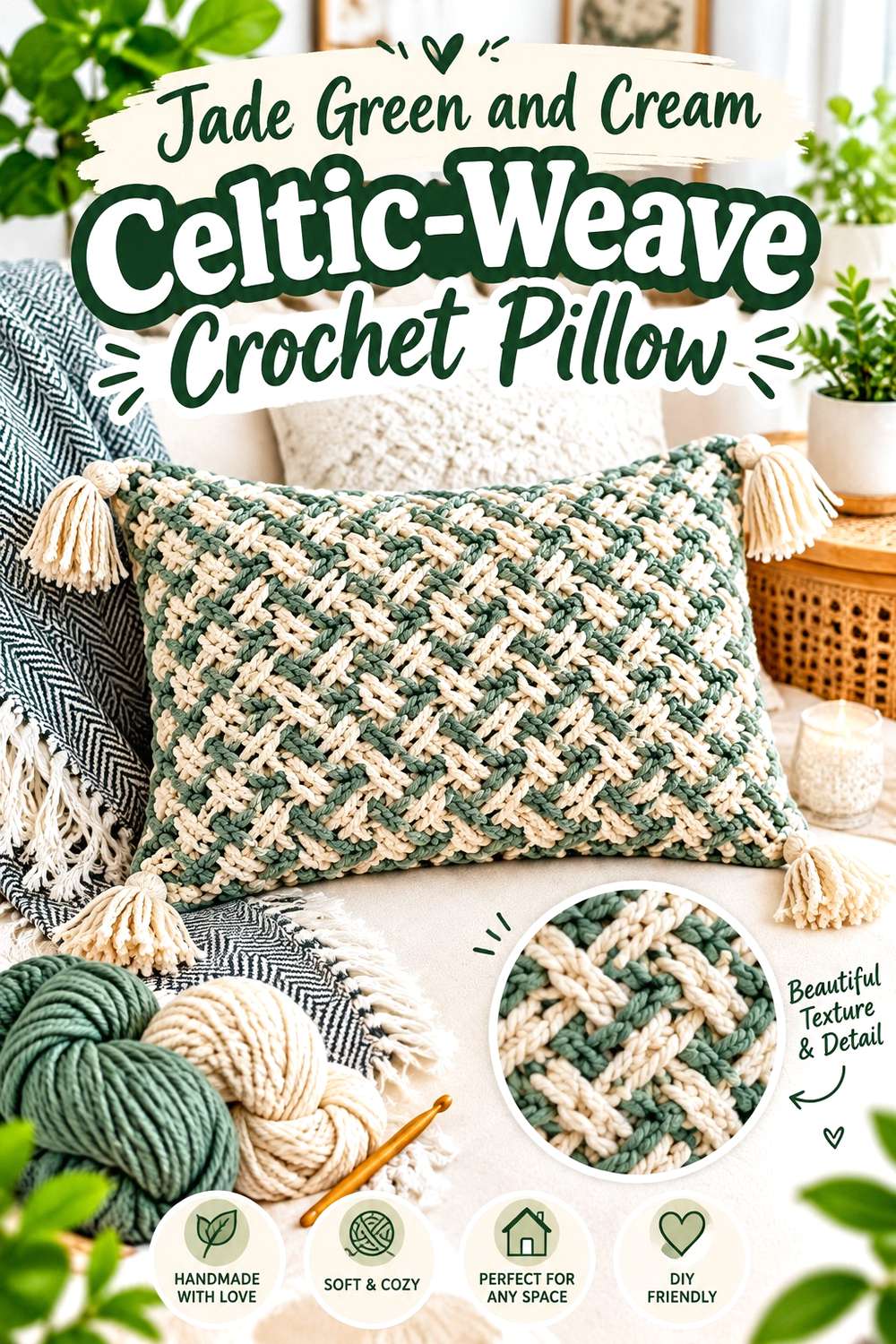
A cable-heavy pillow already creates substantial visual movement, so jade green and cream should support the texture rather than compete with it. Jade green can cover the main woven face while cream is concentrated at the border or another simpler area.
Keep Jade Green Continuous Through the Crochet Pillow Cables
Using one jade green across the main cable field allows the crossings and shadows to remain connected. Changing color inside every raised section can make the woven effect harder to follow.
If your jade green is extremely deep, crochet a swatch first. The best color placement is one that still lets the raised surface remain visible in the room where the pillow will be used.
Use Cream Around the Jade Green Crochet Pillow Edge
Cream edging gives the saturated green face a noticeably lighter boundary and can make the pillow shape clearer against dark furniture.
Keep the cream controlled when you want jade green to stay dominant. A narrow repeated frame usually changes the definition more than the overall color identity.
Creator Credit: MJ’s Off The Hook Designs
5. Jade Green Crochet Beanie with Deep Green Brim
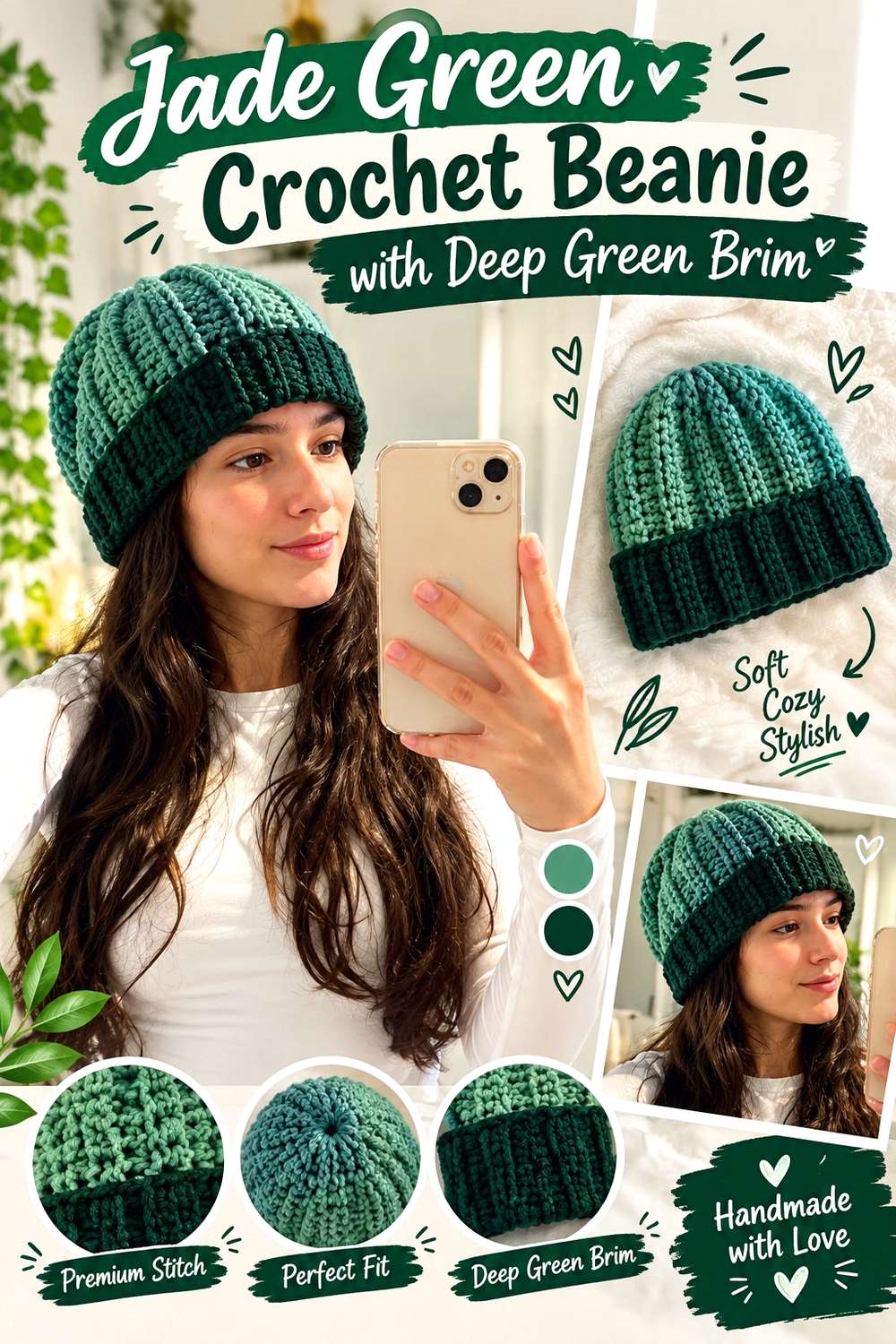
A tonal jade green beanie can use a deeper green rather than a neutral to create separation. The result is subtler than pairing jade with cream but still gives the crown and brim distinct roles.
Keep Jade Green Across the Crochet Beanie Crown
Let jade green occupy most of the crown so the hat remains clearly centered on the requested color. This is particularly useful when the body has visible ribbing or another repeated texture.
Avoid adding several similar greens throughout the crown unless you want an intentionally blended tonal effect.
Use Deep Green to Ground the Jade Green Crochet Beanie
A darker green brim can anchor the lower edge without introducing a completely different hue. The relationship remains tonal, so the beanie feels more unified than it would with a high-contrast neutral.
Make sure the two greens are different enough to separate. If they merge at a distance, widen the dark brim or choose a deeper supporting green.
Creator Credit: crochet daniela
6. Jade Green Crochet Scarf with Oatmeal Ends
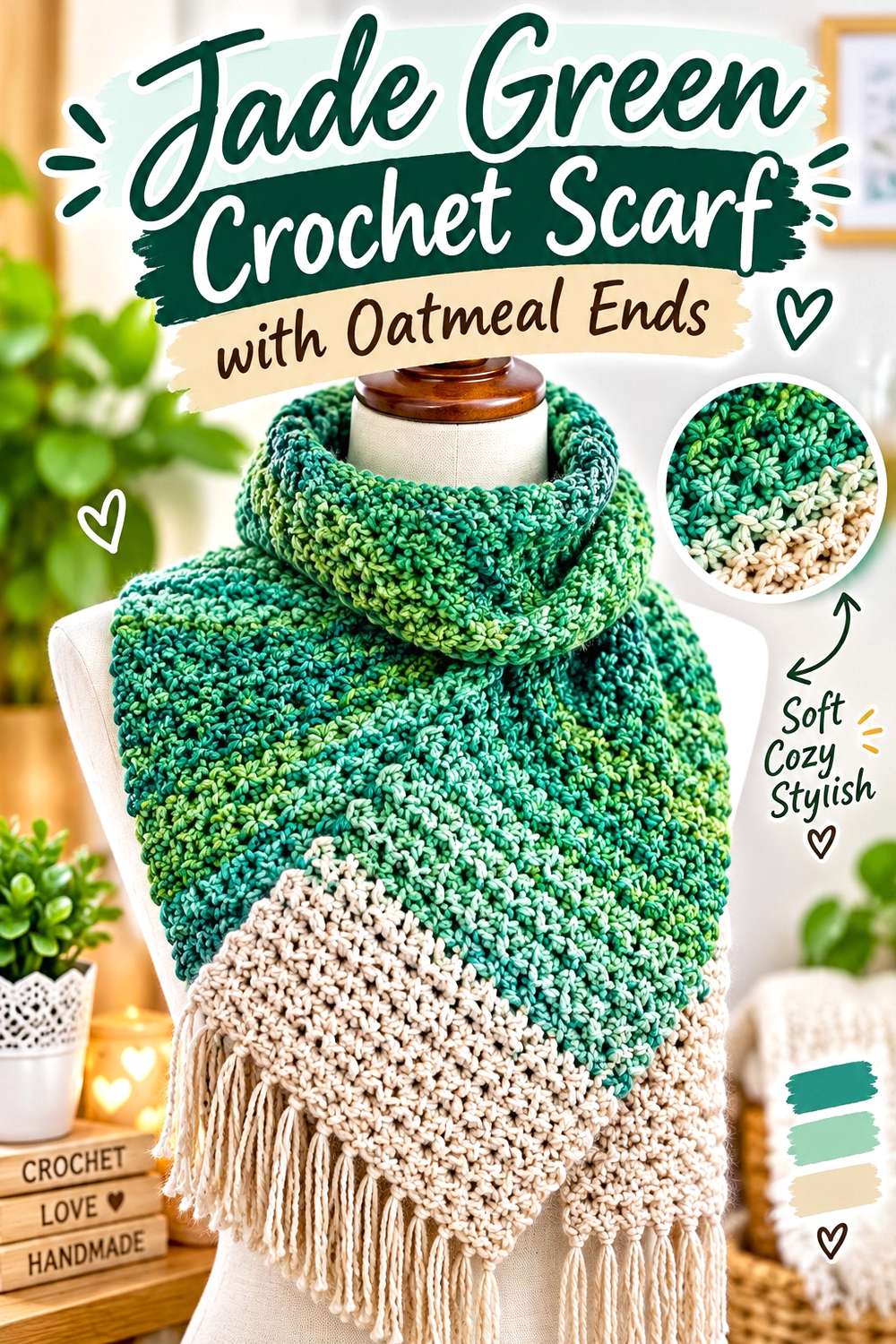
A long scarf can carry large jade green sections without needing frequent contrast. Oatmeal works particularly well at the ends because it softens the saturated green while staying light enough to create visible separation.
Keep Jade Green Through Most of the Crochet Scarf Length
Using jade green across the majority of the scarf keeps the color recognizable after the fabric is wrapped and layered. Numerous short color changes can disappear once different parts overlap.
A broad green middle also gives stitch texture more continuity than an all-over narrow stripe plan.
Put Oatmeal Where the Jade Green Crochet Scarf Ends Stay Visible
The ends of a scarf often remain visible at the front even after wrapping, so oatmeal placed there can create repeated light accents.
Consider the finished scarf while worn rather than only laid flat. The most balanced arrangement is the one that still distributes jade green and oatmeal deliberately after folding and wrapping.
Creator Credit: Hooked by Robin
7. Jade Green and Cream Checkerboard Crochet Vest
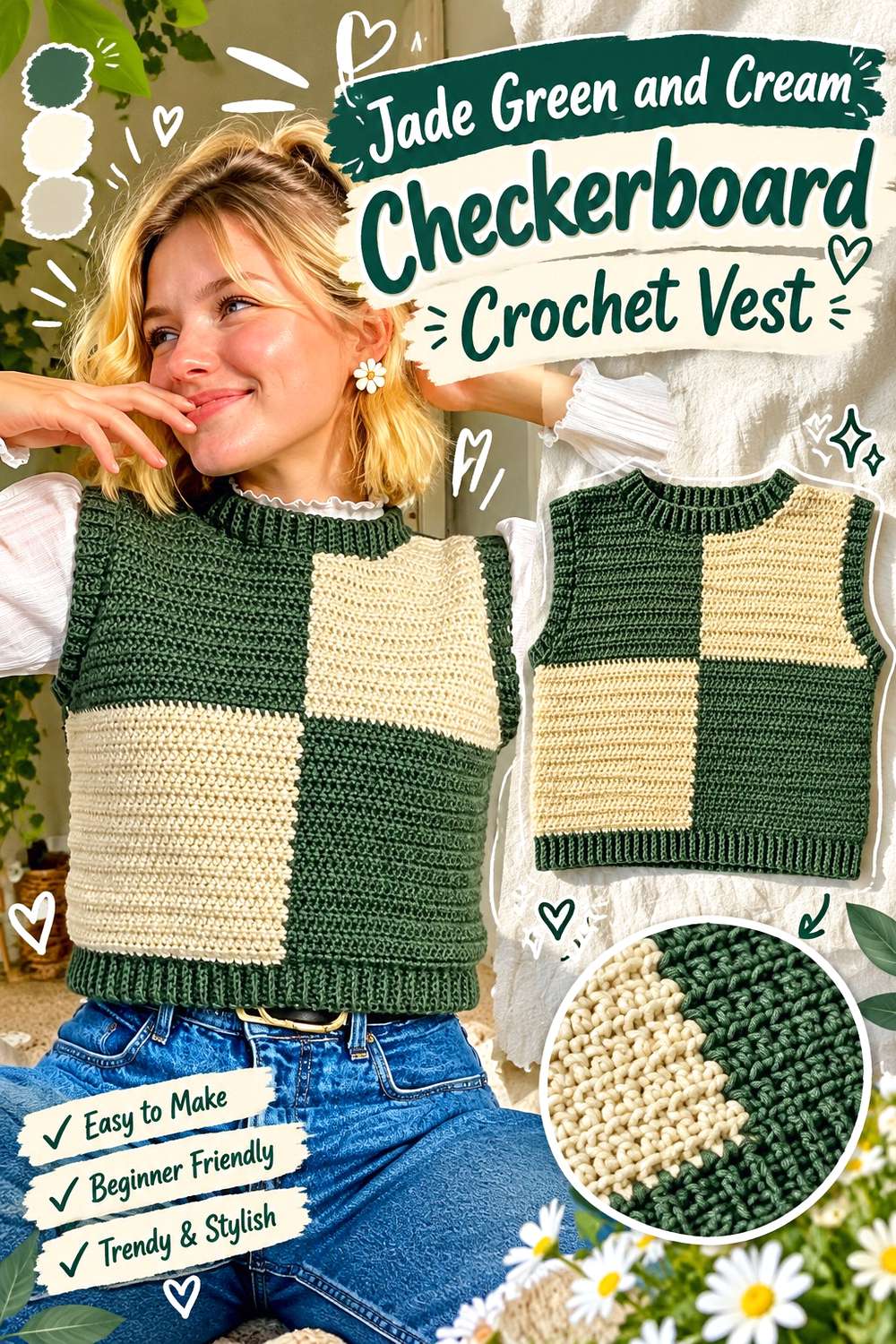
A checkerboard makes cream almost as visually important as jade green because every block depends on its neighbor. This is one of the strongest graphic options in the collection and requires clear value contrast.
Check Jade Green and Cream Before Crocheting the Vest Blocks
Cream should remain noticeably lighter than jade green so the checkerboard boundaries are visible. If you substitute beige or another darker neutral, compare the yarns from several feet away before committing to full panels.
A grayscale photo can help confirm whether the blocks still separate by lightness rather than hue alone.
Use Jade Green for the Crochet Vest Ribbing to Shift the Balance
When the checkerboard itself is close to 50/50, jade green ribbing can move the overall garment back toward a green-dominant result.
Use jade green consistently around related edges such as the neckline, armholes, and hem. Switching between cream and green from edge to edge can weaken the clear hierarchy.
Creator Credit: Hayhay Crochet
8. Jade Green Granny-Square Crochet Bucket Hat with Cream Brim

A granny-square bucket hat naturally divides color into motifs, sides, and brim. Jade green can repeat through the square centers or dominant rounds while cream provides separation and a lighter lower edge.
Repeat Jade Green Consistently Across the Crochet Bucket Hat Squares
If jade green appears in every granny square, place it in the same motif role—such as the center or a substantial outer round—to make the separate squares feel connected.
Randomly changing jade green’s position from square to square can work in a scrap-style hat, but it creates a much busier result.
Use Cream to Separate Jade Green on the Crochet Bucket Hat Brim
A cream brim creates a clear break from jade green motifs and prevents the lower half of the hat from becoming too saturated.
If cream already outlines the squares, repeating it in the brim is especially effective because the supporting color is carried from the motif structure into the final silhouette.
Creator Credit: Crochet with Clare
9. Jade Green Crochet Bandana with Cream Picot Edge
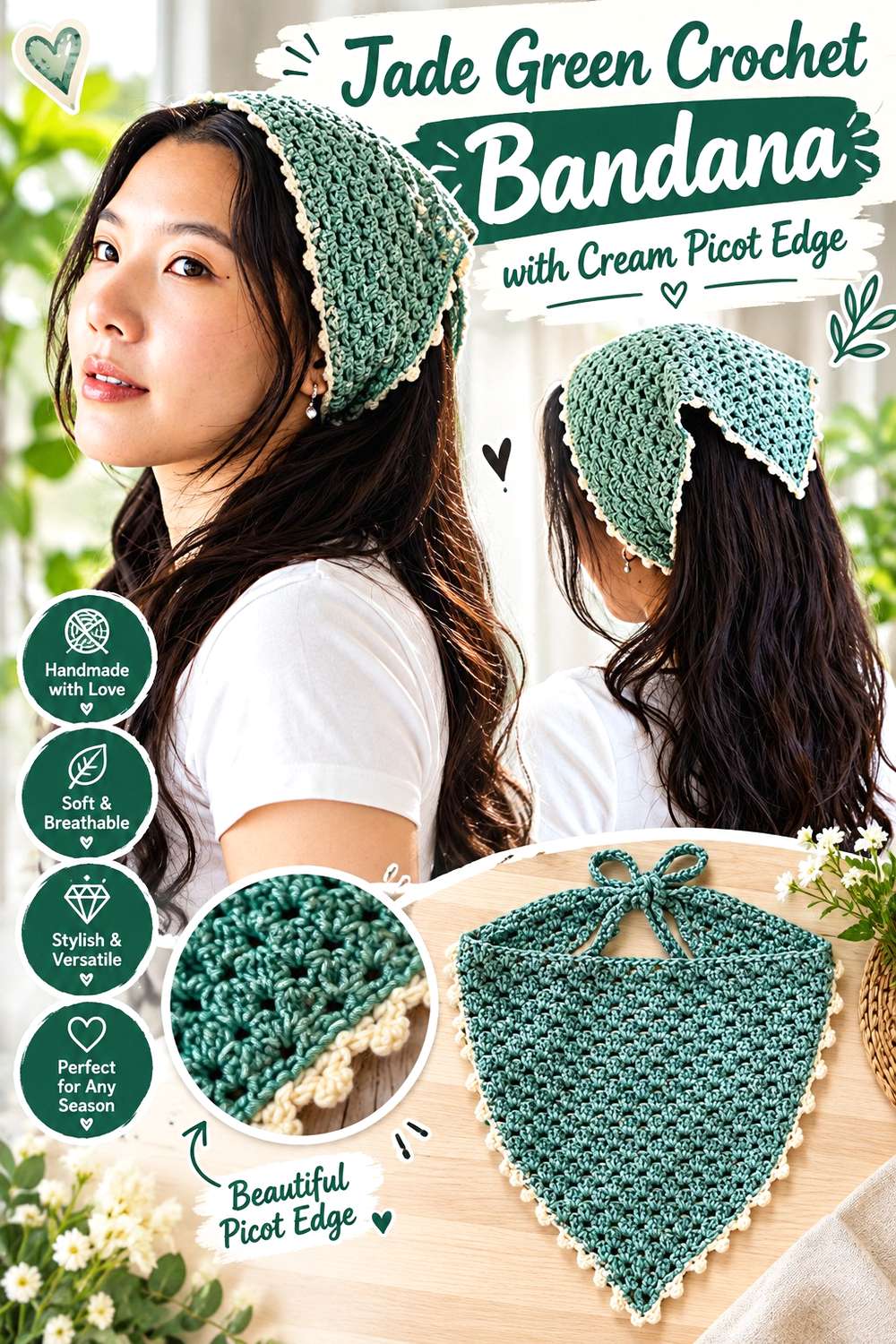
A bandana has limited surface area, so one dominant color and one controlled edge are usually enough. Jade green can cover the center while cream highlights the decorative outer line and ties.
Keep Jade Green Across the Crochet Bandana Center
A continuous jade green center lets any openwork or repeated stitch pattern provide the internal detail. Adding cream to every small section can make a compact triangular piece unnecessarily busy.
If the fabric is open, remember that hair or clothing behind it will also affect the perceived depth of the green.
Continue Cream Around the Jade Green Crochet Bandana Ties
Carry the cream edge into the ties when possible so the light accent forms a connected perimeter rather than appearing only on one side.
If the picot or decorative edge is narrow, cream provides enough light contrast to remain visible without taking much visual space away from jade green.
Creator Credit: VivCrochets
10. Jade Green Crochet Storage Basket with Charcoal Handles
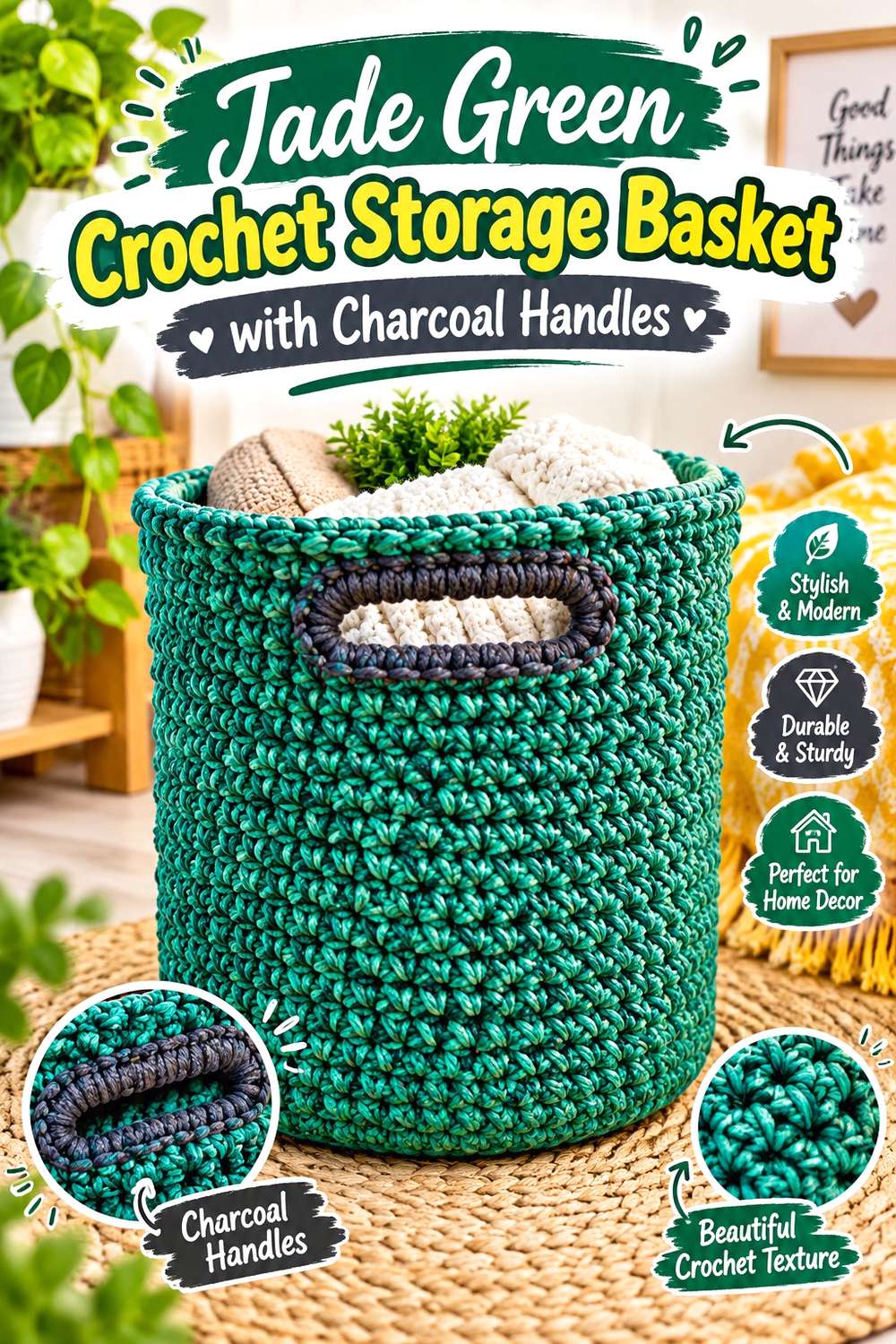
A storage basket benefits from large, simple color zones. Jade green can cover the walls while charcoal appears at the handles or base, providing dark definition without turning a practical decor item into a heavily striped project.
Give Jade Green Most of the Crochet Basket Walls
A broad jade green body keeps the color visible even when the basket is filled. Small interior accents may disappear once objects are stored inside, so prioritize the outside walls when planning the palette.
If your basket will sit against a green or dark background, check whether the outline still has enough visual separation.
Repeat Charcoal Around the Jade Green Crochet Basket Handles
Charcoal handles will feel more connected if the same shade appears at the base, rim, or another structural point.
Keep those dark sections controlled if you want the basket to remain clearly jade green. The charcoal should define useful boundaries rather than become a competing main color.
Creator Credit: Jayda InStitches
11. Jade Green Crochet Poncho with Cream Border
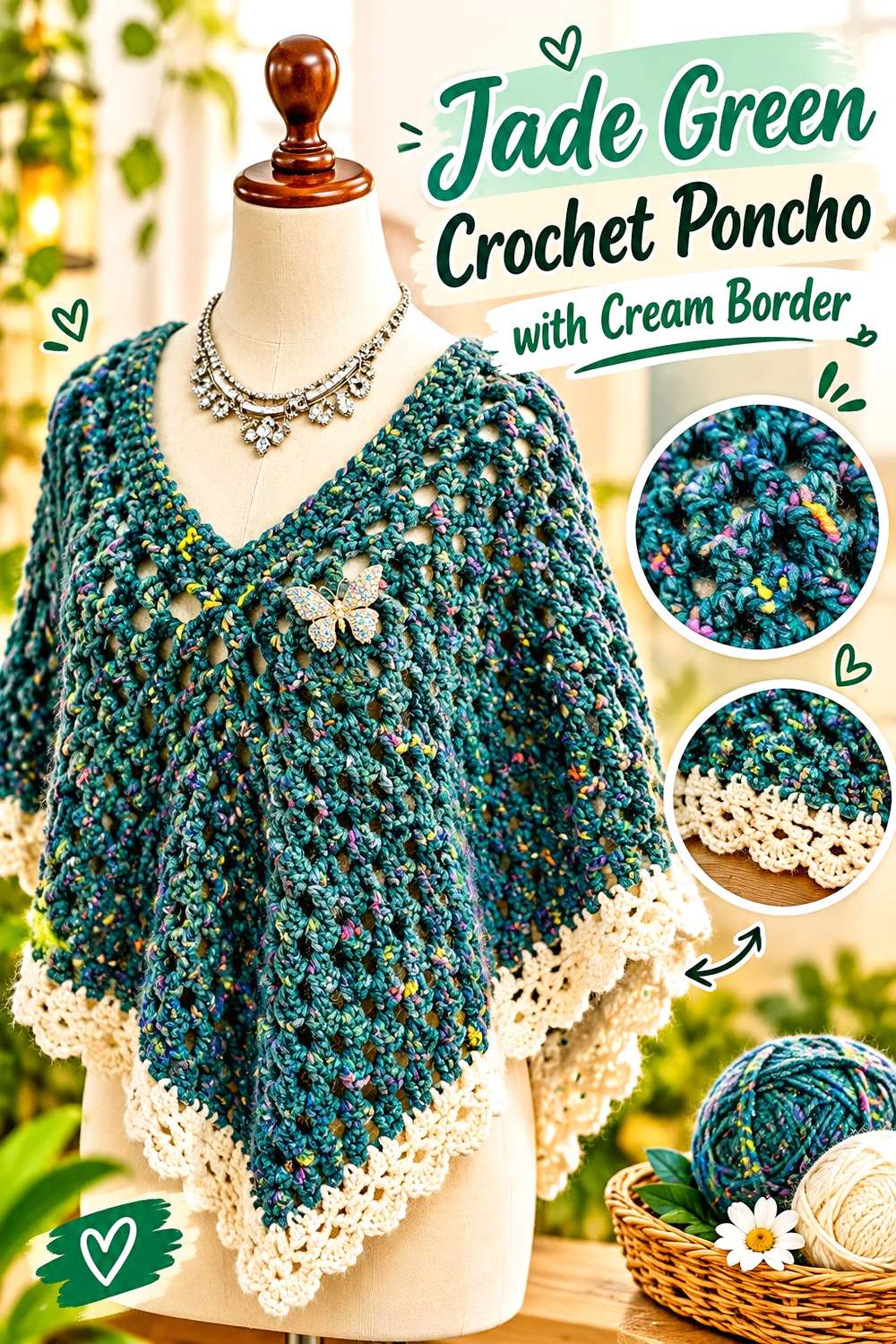
A poncho creates a large field of fabric where jade green can be uninterrupted across most of the garment. Cream is most useful at the perimeter because the contrast follows the natural outline instead of dividing the drape into many horizontal sections.
Keep Jade Green Broad Across the Crochet Poncho Body
Use jade green through the central body to preserve the wide silhouette. Stitch pattern and drape already provide movement, so several interior colors are not necessary.
If some textured areas need more definition, introduce cream selectively rather than converting the entire body into stripes.
Carry Cream Around the Jade Green Crochet Poncho Perimeter
A cream lower border creates a long, consistent line against the jade green surface. Repeating cream at the neckline can connect the top and bottom of the garment.
Keep the border proportionate to the body. A very broad cream section can shift the project from jade-dominant to a more evenly divided two-color design.
Creator Credit: Bag-O-Day Crochet
12. Jade Green Crochet Tote Bag with Tan Handles
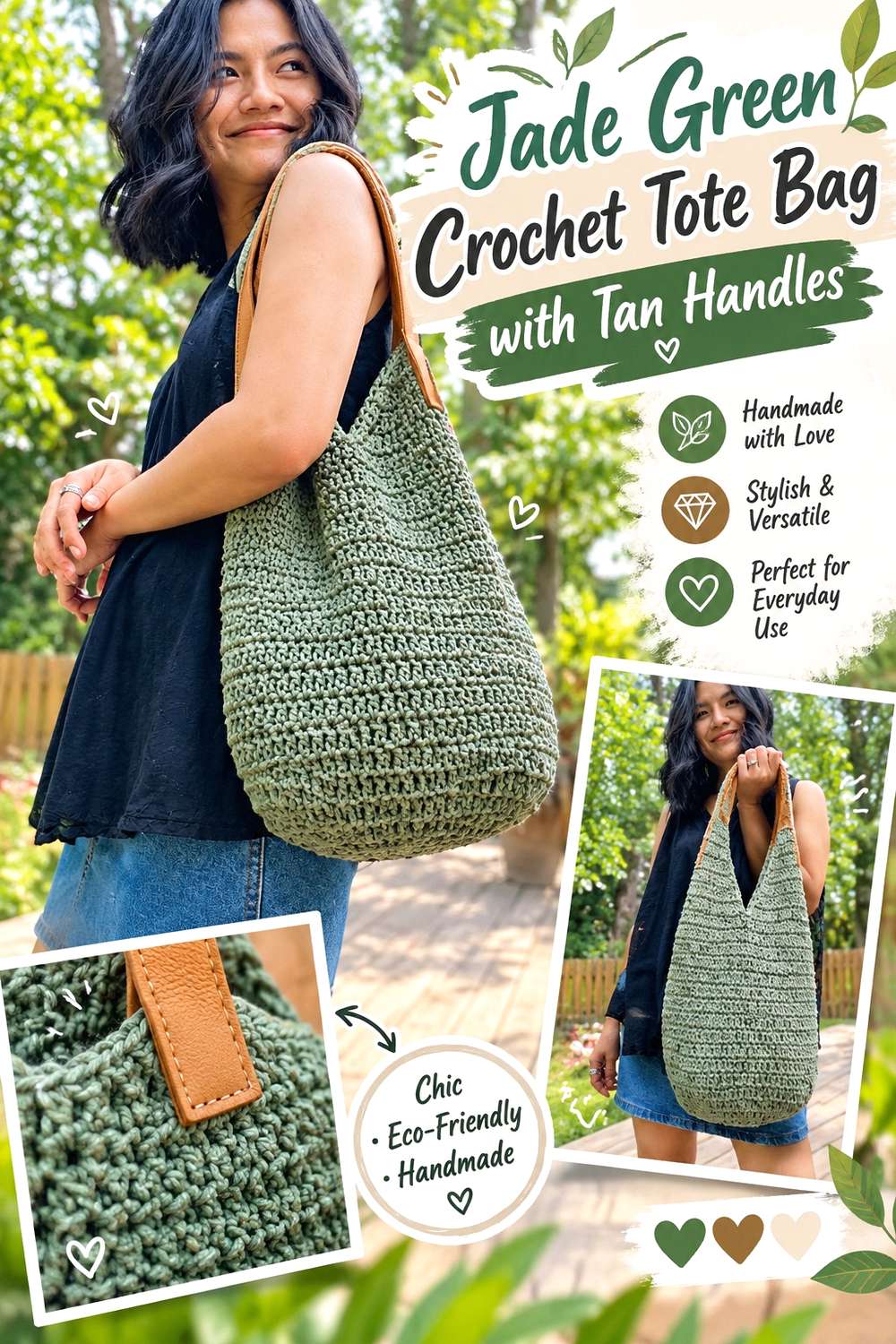
Tan changes jade green differently from white or charcoal. It adds a softer earthy contrast, which suits a tote when you want the handles and upper edge to look distinct without creating a stark graphic frame.
Keep Jade Green Across the Main Crochet Tote Bag
Use jade green over the front, back, and sides so the tote remains visually consistent from several angles. A bag should be planned as a three-dimensional object rather than only as a front panel.
If you want an additional tan section, the base is a more structural placement than scattered stripes.
Repeat Tan Beyond the Jade Green Crochet Tote Handles
Tan handles can be connected to a tan upper band or small base detail. That repetition makes the neutral look like part of the palette rather than a handle-only necessity.
Because tan is softer than cream, give it enough width to remain visible against a medium or muted jade green.
Creator Credit: KnitcroAddict
13. Jade Green Crochet Cropped Sweater with Charcoal Trim
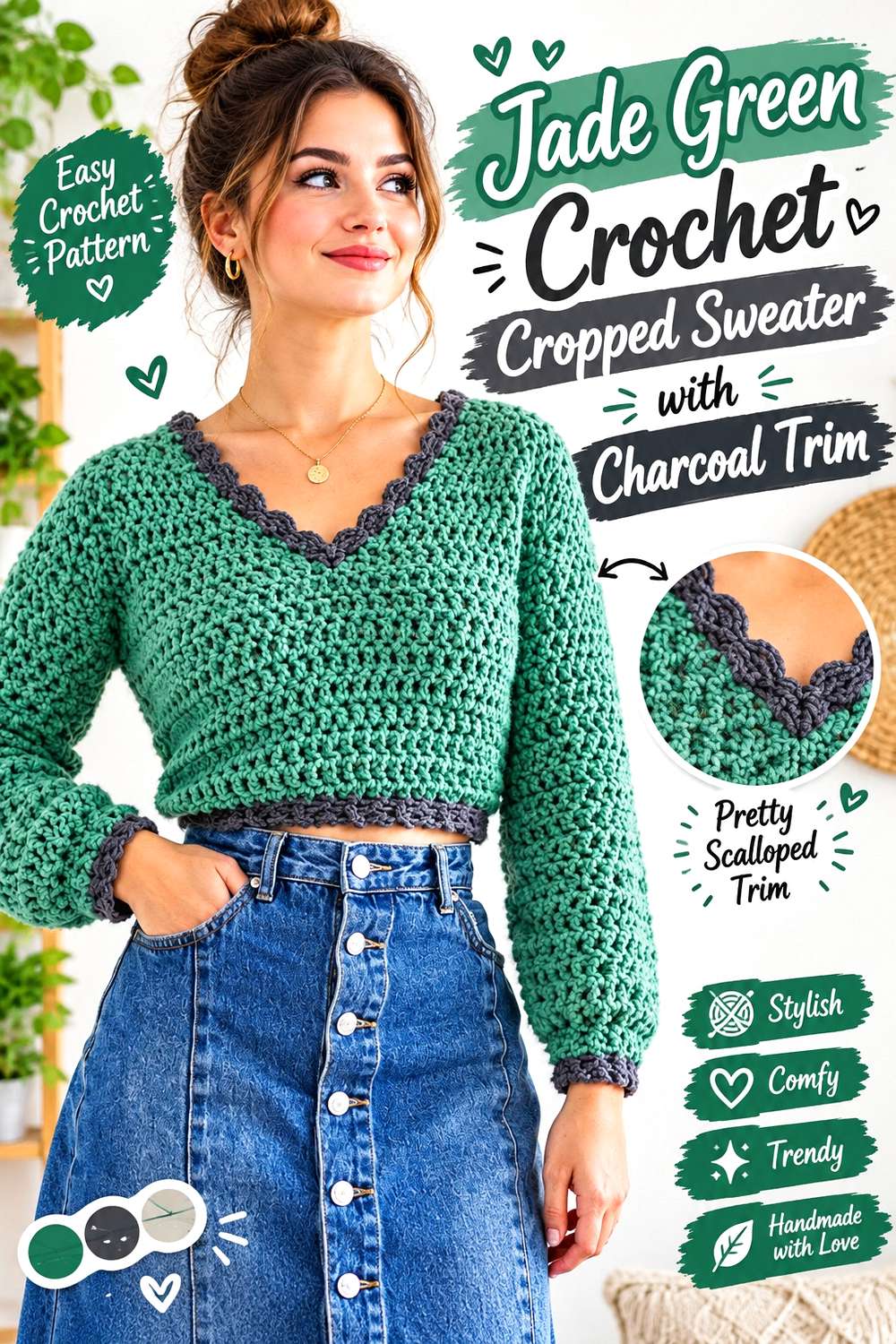
A cropped sweater has less torso area than a long pullover, so cuffs and edging occupy a relatively noticeable share of the finished garment. Keeping jade green broad through the body prevents charcoal trim from visually taking over.
Let Jade Green Lead the Crochet Cropped Sweater Body
Use jade green consistently across the main front, back, and substantial sleeve areas. This preserves one clear dominant shade even if the edges are strongly contrasted.
A solid green body is also useful when the sweater includes shaping or decorative stitchwork that already provides visual interest.
Connect Charcoal Around Jade Green Crochet Sweater Edges
Charcoal can repeat at the cuffs and neckline, with the lower edge added if you want a more complete dark frame.
If all three areas make the garment feel too charcoal-heavy, keep the hem jade green. The main color should still occupy clearly more visual space if a jade-led result is the goal.
Creator Credit: forthefrills
14. Jade Green and Charcoal Crochet Balaclava
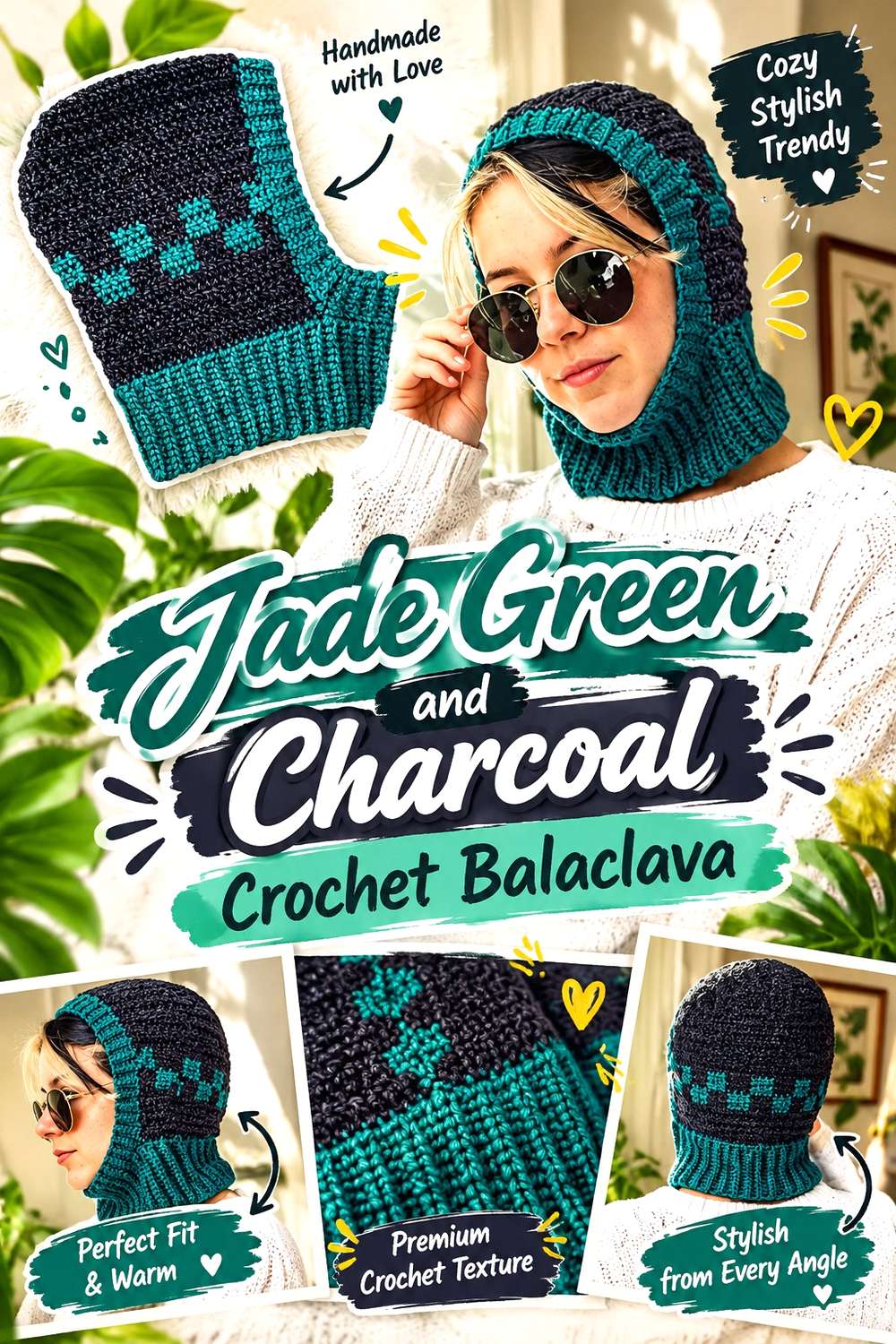
A balaclava offers natural boundaries around the crown, face opening, and lower edge. Jade green can dominate the hood while charcoal outlines the face and repeats near the bottom.
Keep Jade Green Across the Crochet Balaclava Crown
A jade green crown and upper hood keep the color visible from multiple angles. This also avoids dividing shaping areas with too many closely spaced changes.
If you want checker or graphic detail, limit charcoal to a controlled section rather than covering every part of the hood.
Use Charcoal Around the Jade Green Crochet Balaclava Opening
Charcoal creates a strong outline around the face opening and gives the darkest shade a clear structural role.
Repeat charcoal near the lower edge so the face trim is not the only dark detail. Two related placements usually look more deliberate than one isolated outline.
Creator Credit: made in the moment
15. Jade Green Crochet Slippers with Cream Cuffs
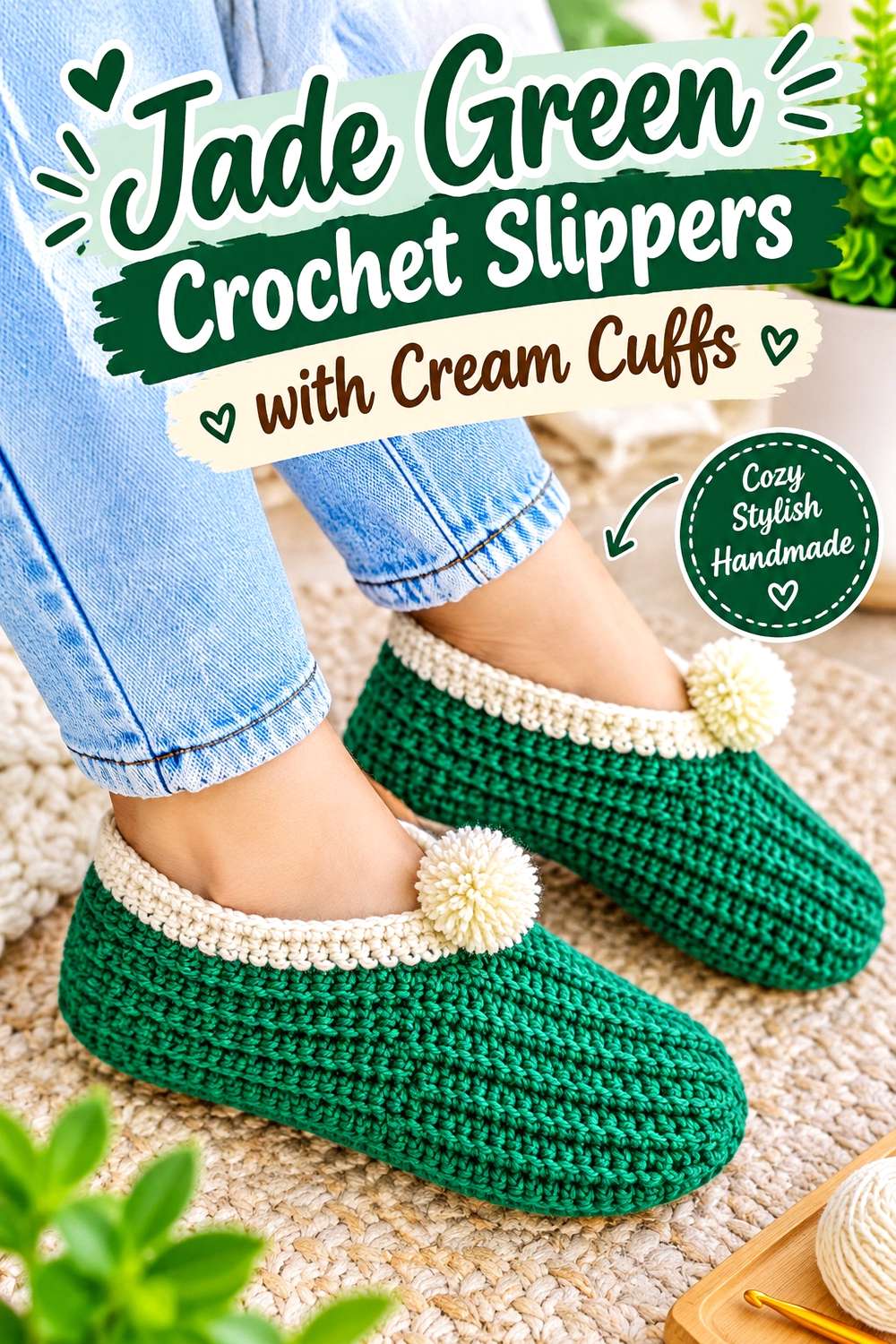
Slippers are small enough that a simple two-zone palette is usually more effective than complicated colorwork. Jade green can cover most of each slipper while cream defines the opening.
Match Jade Green Placement Across Both Crochet Slippers
Treat the pair as one composition. Keep the jade green-to-cream transition at a similar point on each slipper so they look intentionally matched.
Compare both pieces side by side as you work rather than relying on memory for how much green each one contains.
Let Cream Frame the Jade Green Crochet Slipper Opening
A cream cuff or edge gives the foot opening clear separation from the jade green body. The lighter shade can also make ribbing or finishing stitches easier to see.
If the cuff is narrow, cream still provides enough contrast to register without substantially reducing the amount of jade green.
Creator Credit: naztazia
16. Jade Green and Oatmeal Granny-Square Crochet Bag

Granny squares allow jade green to repeat as a motif color rather than one continuous field. Oatmeal can surround or join the motifs, giving the green enough separation to remain visible across multiple squares.
Repeat Jade Green in the Same Crochet Bag Motif Position
Place jade green consistently in motif centers, outer rounds, or another repeated role. That repetition helps separate squares read as one coordinated bag rather than a collection of unrelated color combinations.
If you vary the motif order, keep the total amount of jade green similar across the most visible panels.
Use Oatmeal to Separate Jade Green Crochet Bag Squares
Oatmeal can soften the joins without creating the stark effect of bright white. This is useful when you want motif boundaries to remain visible but still prefer an earthy overall palette.
If the oatmeal becomes too dominant through wide joining sections, bring jade green back at the opening or strap to restore the main-color emphasis.
Creator Credit: The Loopy Lamb
17. Jade Green Crochet Table Runner with Cream Tassels
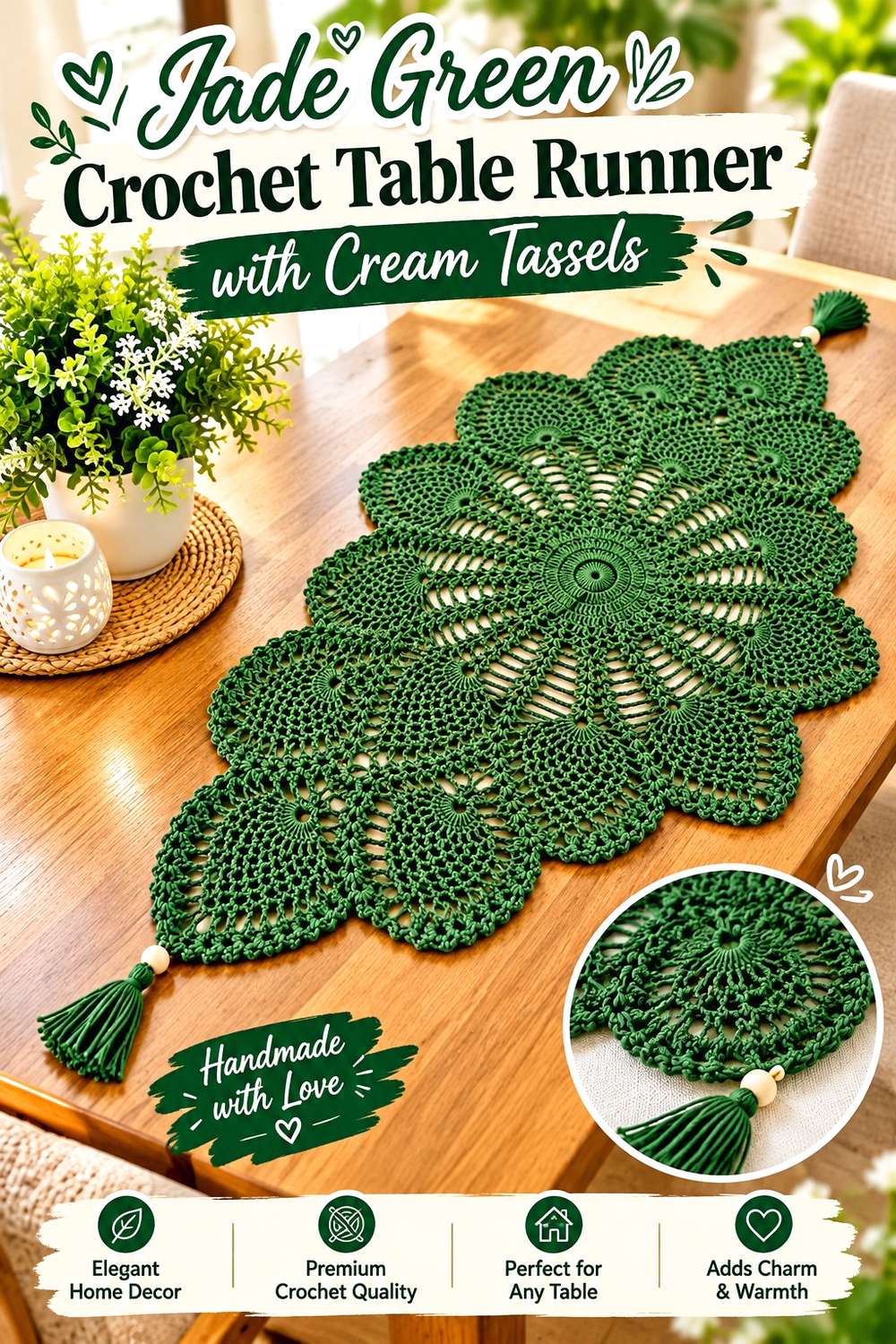
A table runner gives jade green a long uninterrupted decor surface. Cream can be reserved for tassels or selected edging so the runner remains strongly green while still having a lighter finishing detail.
Keep Jade Green Through the Crochet Table Runner Center
A continuous jade green center gives lace, fans, or other repeated stitchwork enough space to remain the focus. Frequent color changes along a narrow runner can make the length look visually fragmented.
Consider the table underneath as part of the contrast. Open crochet will allow the surface color to show through.
Use Cream at the Ends of the Jade Green Crochet Table Runner
Cream tassels or end details create matching light accents at opposite sides of the runner. This is an efficient way to introduce contrast without interrupting the central green stitch pattern.
If you add cream edging as well, keep it narrow so jade green still defines most of the runner when viewed from above.
Creator Credit: Crochet by Glau
18. Jade Green and Cream Crochet Coaster Set
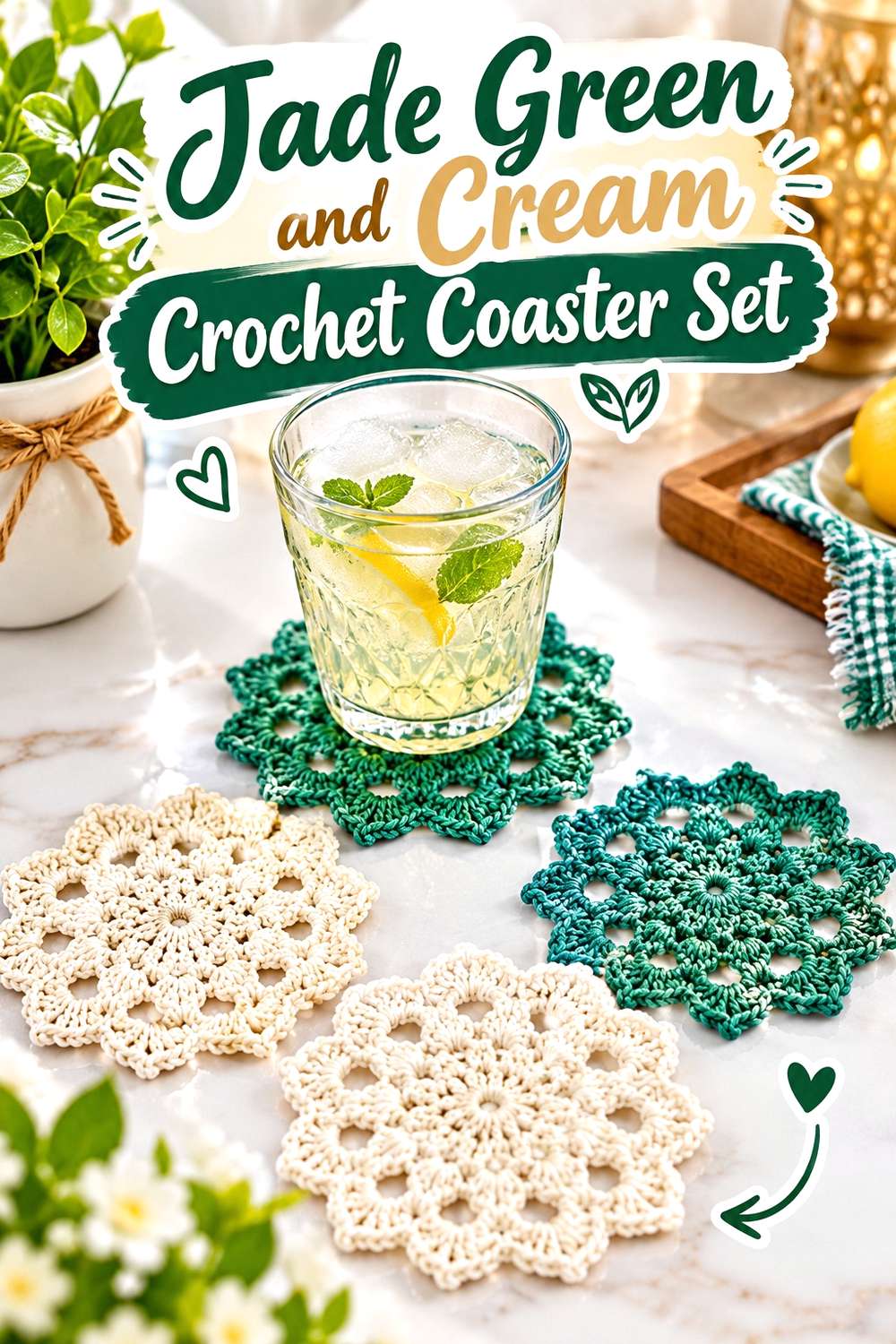
Coasters are small enough to experiment with proportion before committing to a larger jade green project. A jade green center with cream edging gives each piece a clear two-color structure, while reversing a few coasters can create variety within the set.
Keep Jade Green Consistent Across the Crochet Coaster Set
Choose one repeating jade green role so the individual coasters belong together. For example, keep jade green in every center even if the width of the cream edge varies.
Using the main shade consistently is more effective than giving every coaster a completely different color arrangement.
Use Cream to Define the Jade Green Crochet Coaster Edge
Cream can separate the jade green coaster from a dark tabletop and make scalloped or shaped edging easier to see.
If the table itself is very light, consider using jade green on the outermost edge instead. Color placement should take the surrounding surface into account, especially on small home-decor pieces.
Creator Credit: Crochet MC
Comparing Jade Green Crochet Color Directions
For a mostly solid jade green look, the cardigan, scarf, poncho, cropped sweater, and table runner give the color broad uninterrupted areas. These projects rely more on stitch texture and shape than on multicolor patterning.
For high contrast, the cream-striped blanket, Celtic-weave pillow, checkerboard vest, bucket hat, bandana, slippers, and coasters place a noticeably lighter neutral next to jade green. This approach is especially useful when motif or edge visibility matters.
For a deeper palette, charcoal on the cardigan, basket, sweater, or balaclava defines structural areas without lightening the entire project. The tonal beanie goes even further by pairing jade with a darker green rather than a neutral.
For a softer earthy direction, natural, tan, and oatmeal on the market tote, scarf, tote bag, and granny-square bag reduce the jump between colors. These combinations let jade green remain saturated while avoiding the sharp boundary created by cream.
Conclusion
Jade green can carry much more than a small accent. On broad surfaces such as blankets, cardigans, ponchos, sweaters, and table runners, it works well as the dominant field while borders and structural details provide controlled contrast. On smaller accessories, assigning jade green one clear region usually produces a more readable result than changing colors constantly.
Choose the supporting color according to the job it needs to do. Cream gives jade green the strongest light separation. Charcoal deepens and frames it. Oatmeal and tan soften the palette, while another deep green creates a tonal result.
The most important check is the actual yarn in front of you. Jade green varies considerably between yarn ranges, so compare the chosen shades together and look at a swatch in ordinary lighting before deciding how narrow borders, checks, stripes, or textured details should be.
Frequently Asked Questions
What colors work with jade green crochet?
Cream, oatmeal, tan, charcoal, and darker greens can all play useful supporting roles. Cream produces stronger light contrast, charcoal creates dark definition, and warmer neutrals such as oatmeal or tan give jade green a softer transition.
Should jade green be the main crochet color?
It works well as a dominant color because it can cover large areas without requiring another saturated shade. If you want a clearly jade-focused project, keep most of the body green and use other colors at borders, cuffs, handles, motif outlines, or similar structural areas.
How can I make jade green crochet texture easier to see?
First check the yarn in a small swatch. If cables, ribbing, or raised stitches appear flat, use a smoother jade green yarn appearance, increase contrast around the textured section, or place a lighter supporting color near its edge rather than changing colors inside every stitch repeat.
Does cream work better than white with jade green crochet?
Cream generally creates a slightly softer transition than a very bright white while still offering strong light-dark contrast. The better choice depends on the effect you want and the exact jade green yarn, so compare both beside the green before deciding.
Can I use two greens in one jade green crochet project?
Yes. Pairing jade green with a noticeably deeper green can produce a tonal palette. Make sure the two shades are different enough in value if you need borders, stripes, or other details to remain clearly visible.
How do I choose a border color for jade green crochet?
Think about whether the border should lighten, deepen, or simply continue the main surface. Cream makes the boundary more obvious, charcoal creates a dark frame, and jade green itself gives a quieter continuous finish.
How can I substitute a different jade green yarn?
Preserve the color role rather than trying to match a name exactly. If jade green is supposed to be the saturated dominant shade, choose another medium-to-deep green with enough contrast against the supporting colors you already selected.