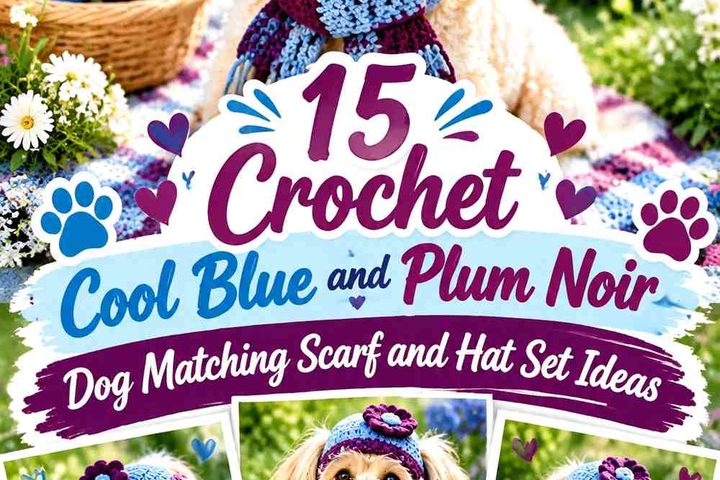
Dachshunds need more than a standard small-dog sweater scaled up or down. Their long backs, relatively short legs, and distinctive chest proportions make body length, belly clearance, and leg-opening placement especially important. Color planning can help that elongated sweater shape look balanced rather than visually stretched from neck to tail.
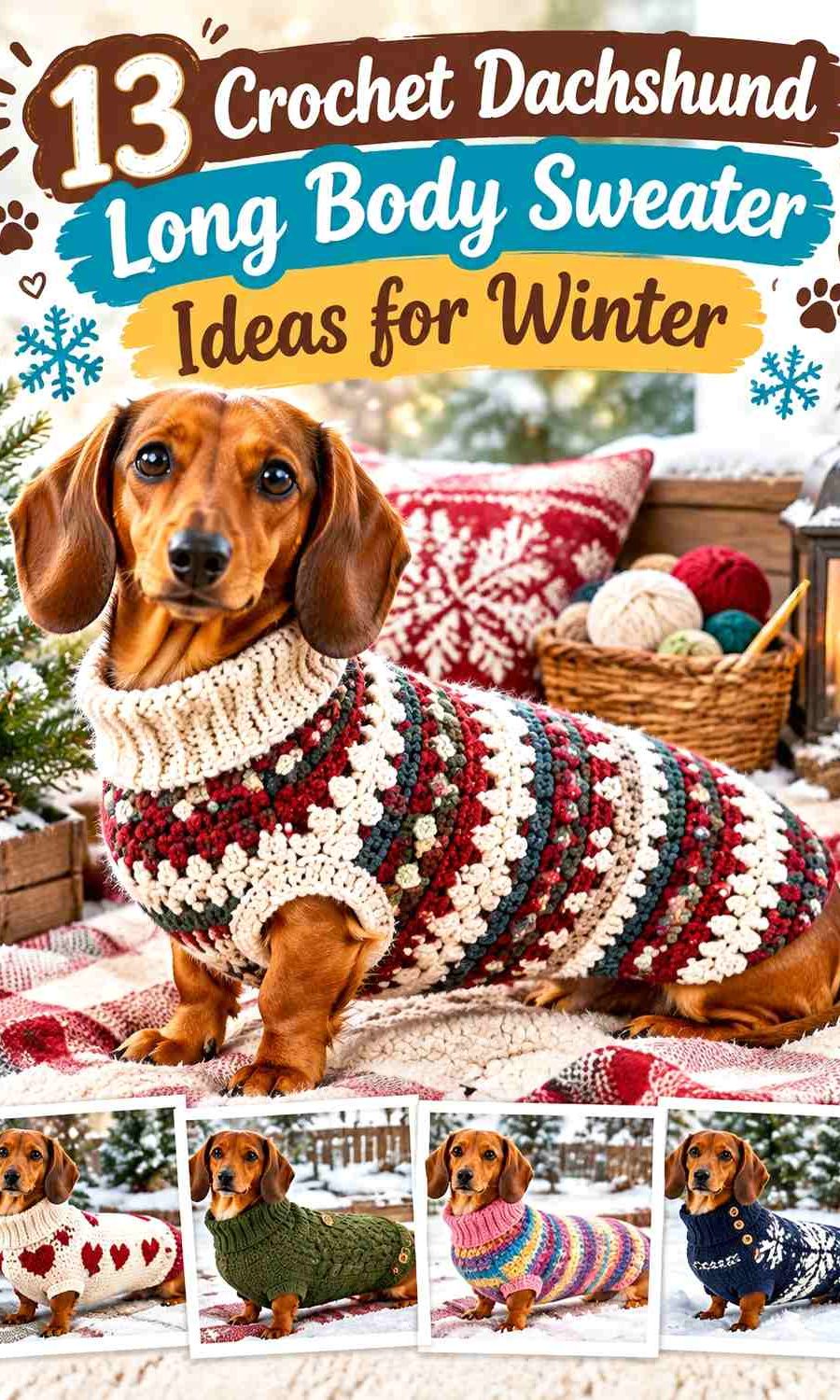
For winter styling, deeper greens, browns, burgundies, blues, and charcoals can anchor the long back panel, while cream, oatmeal, camel, blush, or gray can separate collars, chest sections, ribbing, and edging. The strongest palettes give each shade a clear job instead of breaking an already long garment into too many unrelated blocks.
The tutorials below provide useful dog-sweater construction approaches, including small-dog and made-to-measure options. Not every tutorial is designed specifically for a dachshund, so compare the tutorial construction with your own dog’s neck, chest, back length, leg placement, and belly clearance before adapting it.
Quick List
- Chestnut Brown, Cream, and Espresso Crochet Dachshund Long Body Sweater
- Forest Green, Oatmeal, and Camel Crochet Dachshund Long Body Sweater
- Burgundy, Blush, and Cream Crochet Dachshund Long Body Sweater
- Navy Blue, Camel, and Oatmeal Crochet Dachshund Long Body Sweater
- Rust, Mustard, and Cream Crochet Dachshund Long Body Sweater
- Charcoal Gray, Silver, and Icy Blue Crochet Dachshund Long Body Sweater
- Cranberry, Oatmeal, and Evergreen Crochet Dachshund Long Body Sweater
- Deep Teal, Camel, and Cream Crochet Dachshund Long Body Sweater
- Plum, Dusty Rose, and Taupe Crochet Dachshund Long Body Sweater
- Black, Tan, and Cream Crochet Dachshund Long Body Sweater
- Moss Green, Rust, and Oatmeal Crochet Dachshund Long Body Sweater
- Cocoa Brown, Sage Green, and Ivory Crochet Dachshund Long Body Sweater
- Midnight Blue, Burgundy, and Soft Gray Crochet Dachshund Long Body Sweater
Plan Color Along a Dachshund’s Long Crochet Back
A dachshund sweater has a much longer visual line than many small-dog garments. Covering most of that back panel with one dominant shade usually creates a cleaner shape than changing colors every few sections.
Supporting colors can be concentrated around the collar, chest, front-leg openings, and lower edging. This gives the eye clear stopping points without chopping the long back into multiple competing bands.
If you do want stripes, consider how they affect proportion. Several high-contrast horizontal bands can emphasize the dog’s length differently from a mostly solid body with restrained contrasting trim.
Use Winter Contrast Without Losing Crochet Texture
Very dark winter colors can make raised or textured crochet details harder to distinguish, particularly across a long uninterrupted back panel. Pairing charcoal, navy, espresso, burgundy, or deep green with a lighter collar or edge gives the garment visual separation without requiring a complicated multicolor body.
Check the yarns beside one another before committing. Two different colors can still have very similar lightness, so viewing them in grayscale can help determine whether cuffs, edging, or chest details will actually remain visible.
Check Long-Body Fit Before Adding Contrasting Edging
For a dachshund, back length is only one part of fit. Check the chest, neck, front-leg placement, underside length, and freedom of movement before adding decorative borders that may alter the finished dimensions.
The sweater should not drag near the ground, interfere with normal leg movement, or extend too far underneath the body. Male dogs in particular may require more belly clearance. If the dog wears a harness, also check whether the sweater construction and any leash opening work with that specific setup.
1. Chestnut Brown, Cream, and Espresso Crochet Dachshund Long Body Sweater
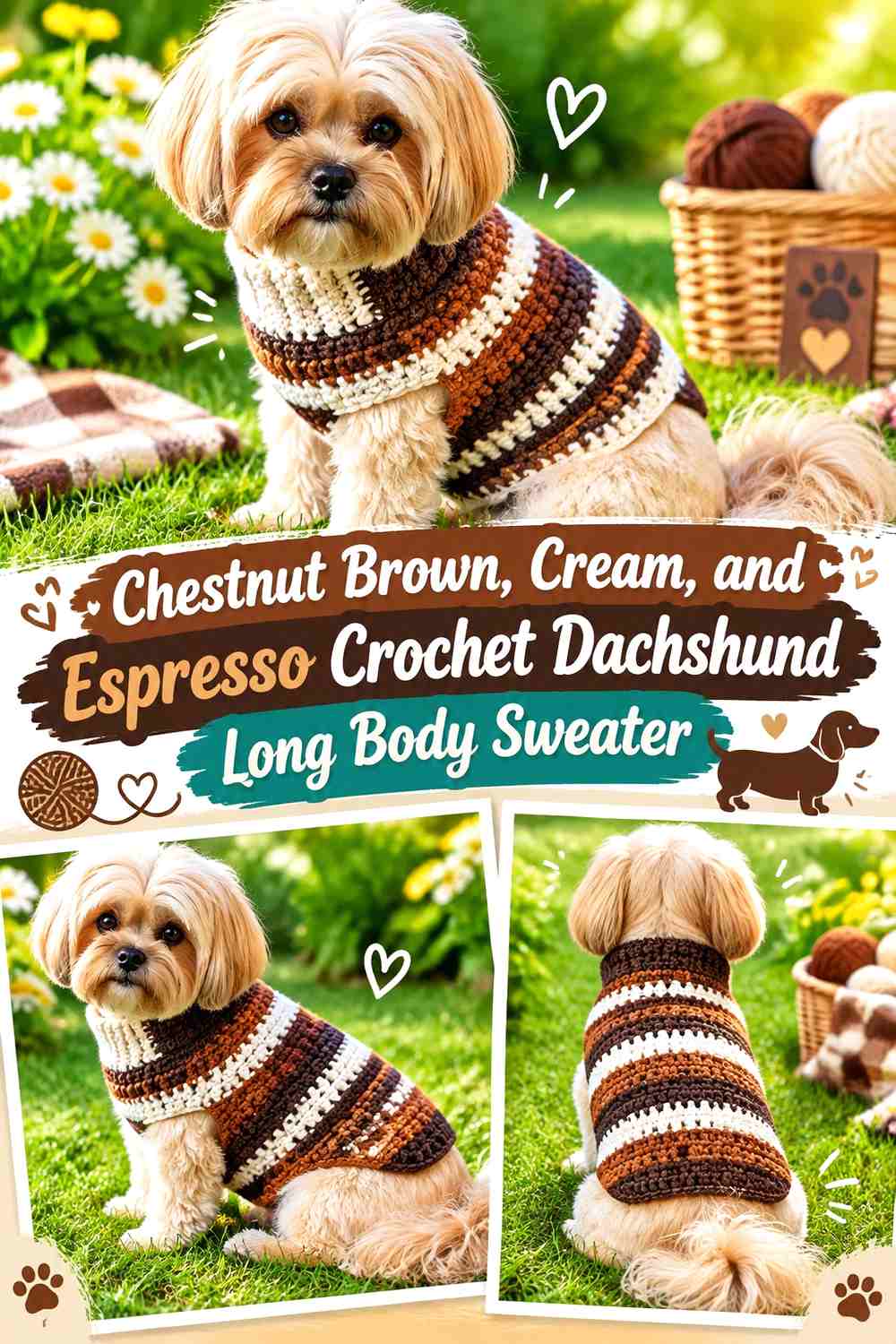
Chestnut is a natural choice for a long dachshund sweater because it can cover the extended back without making every section compete for attention. Use cream around the collar or chest for a lighter break, then reserve espresso for narrow edging or another small detail that benefits from stronger definition.
Chestnut Brown Should Lead the Long Crochet Back
Let chestnut cover most of the back from the shoulder area toward the rear of the sweater. Keeping this large section consistent emphasizes the clean shape of the garment rather than dividing the dachshund’s already long body into several visual pieces.
Chestnut can also continue around the sides until the construction transitions toward the chest panel.
Cream Can Break Up Chestnut Brown Around the Dachshund Collar
A cream collar gives the eye a clear starting point before the long brown back begins. The same cream can be repeated around the front-leg openings or narrow lower edge so the lighter color feels connected rather than isolated.
Avoid making every border equally wide. A broad cream collar with smaller repeated cream details can create a clearer hierarchy.
Espresso Can Finish Chestnut Brown Without Shortening the Visual Line
Use espresso as a narrow outline rather than another major body color. It can frame the lower back edge or another selected finish while leaving chestnut responsible for most of the visible length.
If espresso and chestnut look nearly identical from a distance, choose a darker brown or skip the third color.
Creator Credit: Crochet It
2. Forest Green, Oatmeal, and Camel Crochet Dachshund Long Body Sweater

Forest green creates a dark woodland-style winter base, while oatmeal supplies clear light contrast and camel adds a warmer middle value. On a dachshund sweater, keep green across most of the back and use the two neutrals strategically around the shorter front section.
Forest Green Gives the Crochet Dachshund Back a Continuous Winter Base
A long forest-green back panel creates one uninterrupted visual field from shoulders toward the rear. This is useful when the crochet fabric already contains noticeable texture and does not need frequent color changes for interest.
Continue green through the sides if you want the long-body shape to feel especially unified.
Oatmeal Can Clarify Forest Green Around the Chest and Leg Openings
The front of a dachshund sweater contains several structural changes in a relatively small area. Oatmeal around the neckline, chest, or front-leg openings can make those sections easier to distinguish against the dark green body.
Repeating oatmeal in two places usually feels more intentional than introducing it once and never using it again.
Camel Softens the Jump Between Forest Green and Oatmeal
Camel works as an intermediate accent when the forest-green-to-oatmeal contrast feels too sharp. It can appear in a narrow collar stripe or small section of trim without becoming a third competing body color.
Preserve the value hierarchy when substituting shades: dark green, middle-value camel, and substantially lighter oatmeal.
Creator Credit: it’s erin b.
3. Burgundy, Blush, and Cream Crochet Dachshund Long Body Sweater

Burgundy brings depth to a winter dachshund sweater, but using it across every section can make smaller details disappear. Blush introduces a softer transition, while cream can be saved for the strongest highlights.
Burgundy Works Well Across the Long Crochet Dachshund Back
Use burgundy as the main back and side color rather than distributing it equally with blush. The continuous deep shade gives the sweater a strong center and allows the elongated body to look deliberate.
If the stitch texture is subtle, check a sample under normal indoor light to make sure the dark yarn does not visually flatten it.
Blush Can Separate Burgundy Around the Dachshund Neck and Chest
Blush provides more distinction than another dark red while remaining related to burgundy. It can work on the collar, front chest, or small ribbed areas.
Keeping blush concentrated toward the front also provides a visual counterweight to the long burgundy back.
Cream Should Highlight Only Selected Burgundy and Blush Details
Cream has the strongest contrast in this scheme. A narrow cream edge or small repeated accent can therefore be more effective than a large cream body section.
If cream begins to dominate, reduce its surface area and let blush handle more of the supporting role.
Creator Credit: Heart Hook Home
4. Navy Blue, Camel, and Oatmeal Crochet Dachshund Long Body Sweater
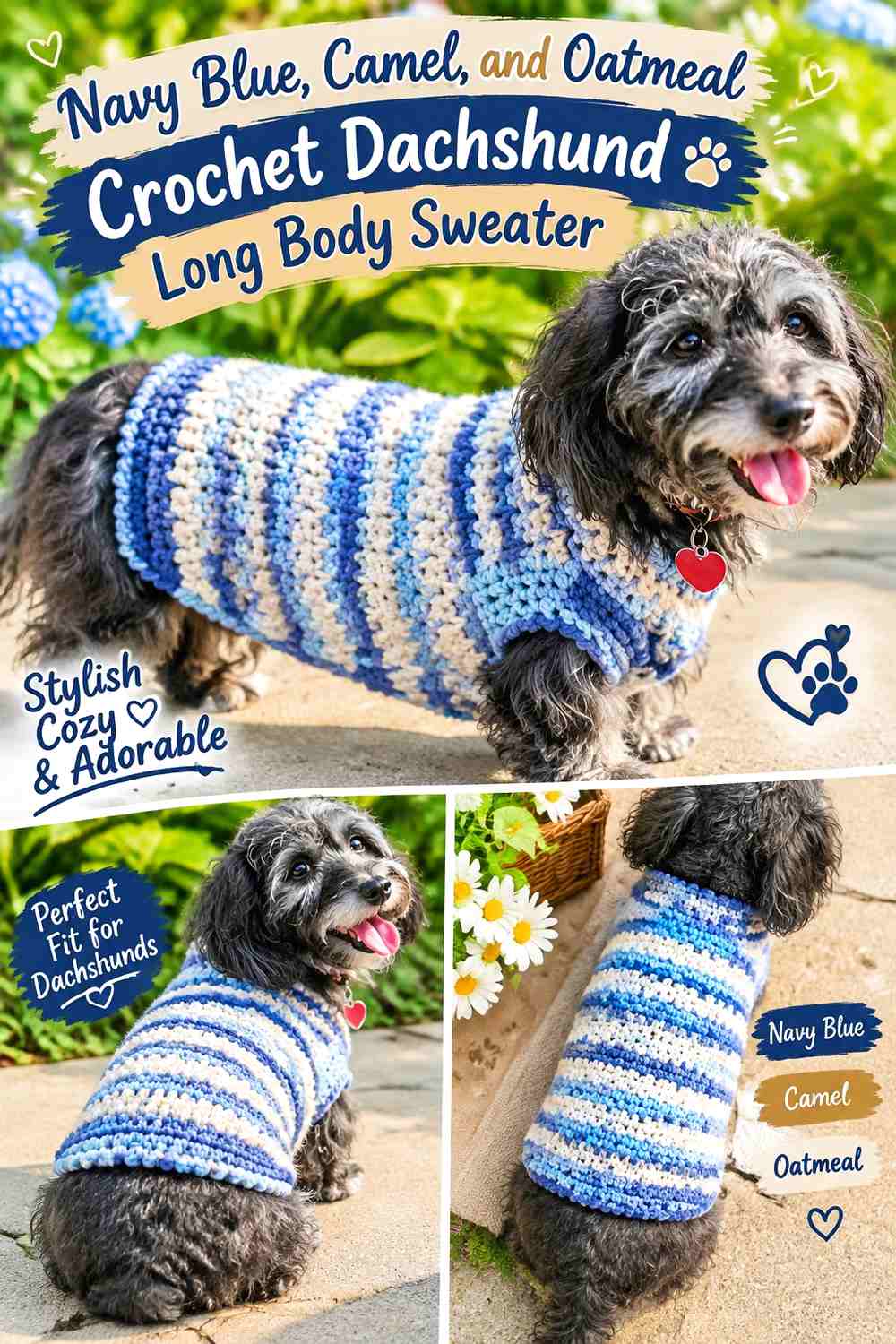
Navy produces a dark classic base that can make the long sweater appear particularly streamlined. Camel adds warmth around structural details, while oatmeal supplies a lighter accent where visibility matters most.
Navy Blue Can Keep the Long Crochet Dachshund Body Visually Simple
Use navy across the back and most of the side panels. This keeps the elongated area from becoming too segmented and gives contrasting front details more purpose.
Navy can also help textured collars or edging stand out when those areas use a noticeably lighter color.
Camel Gives Navy Blue Dachshund Sweater Edges a Warmer Break
Camel works well on a collar, chest panel, or front-leg edging because it remains distinct without creating the sharper contrast of cream.
If you use camel around the leg openings, repeat a small amount near the neckline so the supporting color appears intentionally placed.
Oatmeal Can Rescue Small Navy Blue Details That Lack Contrast
Reserve oatmeal for places where navy and camel do not separate enough. A narrow oatmeal accent can clarify a collar edge or small piece of trim.
Do not automatically add oatmeal to every border. First determine which sections are actually difficult to read.
Creator Credit: The Crochet Crowd
5. Rust, Mustard, and Cream Crochet Dachshund Long Body Sweater
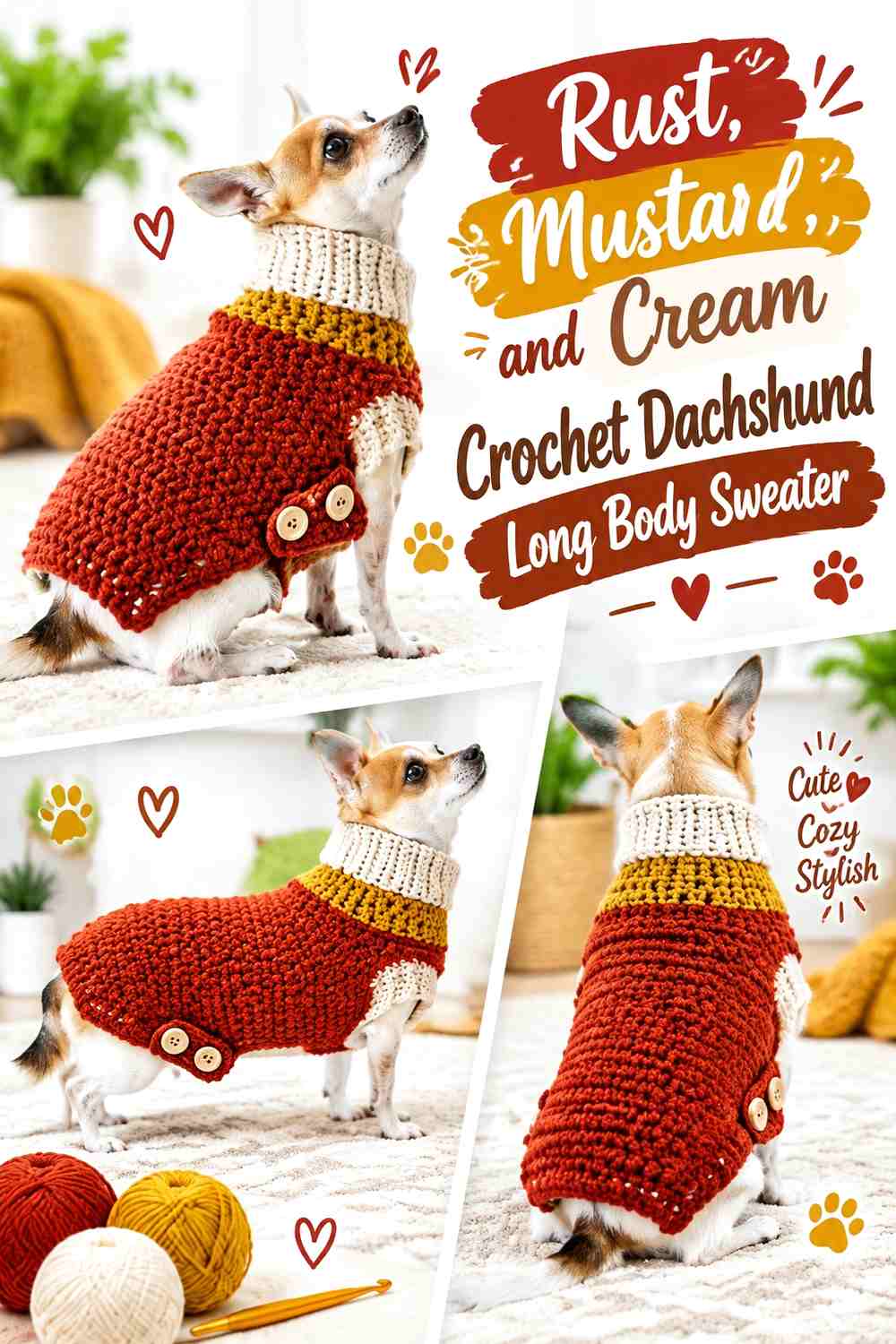
Rust and mustard create a warmer winter palette with more saturation than neutral-heavy combinations. Give rust most of the back, let mustard support the front details, and use cream to keep the two warm shades from blending together.
Rust Should Carry Most of the Crochet Dachshund Back Length
A rust back panel creates a strong uninterrupted warm field. Because the color already has plenty of visual presence, the long body does not need extra stripes or multiple competing accents.
Keep larger side areas rust as well if you want the garment to look cohesive from above.
Mustard Can Add Controlled Contrast Against the Rust Collar and Chest
Mustard works well on a collar or chest section because it is related in warmth but clearly different in hue. Limit it to defined areas instead of alternating rust and mustard repeatedly along the entire back.
This keeps the dachshund’s length from becoming the main visual feature of the color layout.
Cream Helps Rust and Mustard Crochet Edges Stay Distinct
If rust and mustard appear too similar in grayscale, place cream near the smaller details where separation matters.
A little cream around an edge or neckline can do more visual work than expanding it across a large panel.
Creator Credit: Marly Bird
6. Charcoal Gray, Silver, and Icy Blue Crochet Dachshund Long Body Sweater
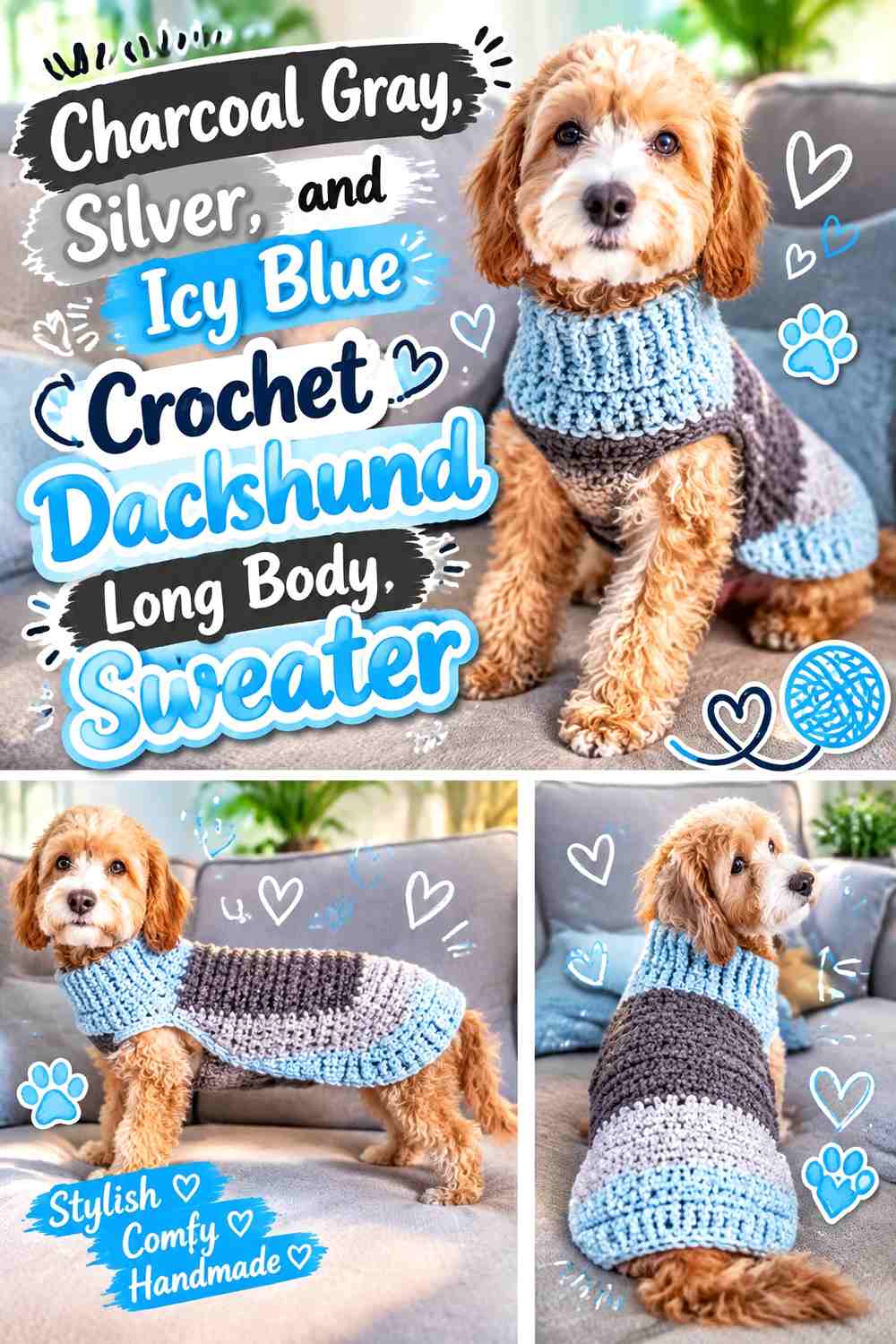
This cool winter palette uses charcoal for depth, silver or soft light gray as a bridge, and icy blue as the restrained accent. It works especially well when the sweater has noticeable crochet texture that you do not want hidden by excessive color changes.
Charcoal Gray Gives the Long Crochet Dachshund Back a Strong Dark Anchor
Use charcoal over most of the back, where its depth can emphasize the clean silhouette of an elongated sweater. Keep the body mostly solid if the stitch pattern already provides visual detail.
Because charcoal is dark, check whether raised areas remain visible before committing to the full back section.
Silver Can Separate the Charcoal Gray Collar From the Body
A lighter gray collar gives definition without introducing a completely unrelated hue. Silver can also repeat around the leg openings for a balanced front section.
Choose a silver or gray that is clearly lighter than charcoal; two near-identical grays will not provide much useful separation.
Icy Blue Should Stay a Small Accent Against Charcoal Gray
Icy blue can appear in a narrow neckline detail, small stripe, or selected edging. Keeping it limited allows the cool accent to remain noticeable without turning the long sweater into a multicolor striped piece.
If your blue is extremely pale, compare it with silver first to make sure they do not merge.
Creator Credit: Maria’s Blue Crayon
7. Cranberry, Oatmeal, and Evergreen Crochet Dachshund Long Body Sweater

Cranberry and evergreen give this palette a distinct winter-season direction, while oatmeal keeps the two saturated colors from competing directly everywhere. Avoid splitting the long back evenly into red and green sections; one color should lead.
Cranberry Can Lead the Crochet Dachshund Back Without Becoming Too Busy
Use cranberry across most of the back and sides. This creates a clear dominant field while leaving evergreen available for smaller structural accents.
The long shape benefits from this restraint because large alternating blocks could emphasize length more than the sweater construction itself.
Evergreen Works Better as a Controlled Accent Against Cranberry
Evergreen can define a collar, narrow front section, or selected border. Repeating it once elsewhere keeps the green from feeling disconnected.
Avoid making every piece of ribbing green unless you specifically want strong color blocking.
Oatmeal Can Separate Cranberry and Evergreen at the Dachshund Neckline
Where cranberry and evergreen meet, oatmeal can provide a lighter visual pause. This is particularly useful around the neckline, where multiple shaping details may already be present.
If the two darker colors remain clearly distinct on their own, keep oatmeal even more restrained.
Creator Credit: Crochet with Tiffany
8. Deep Teal, Camel, and Cream Crochet Dachshund Long Body Sweater
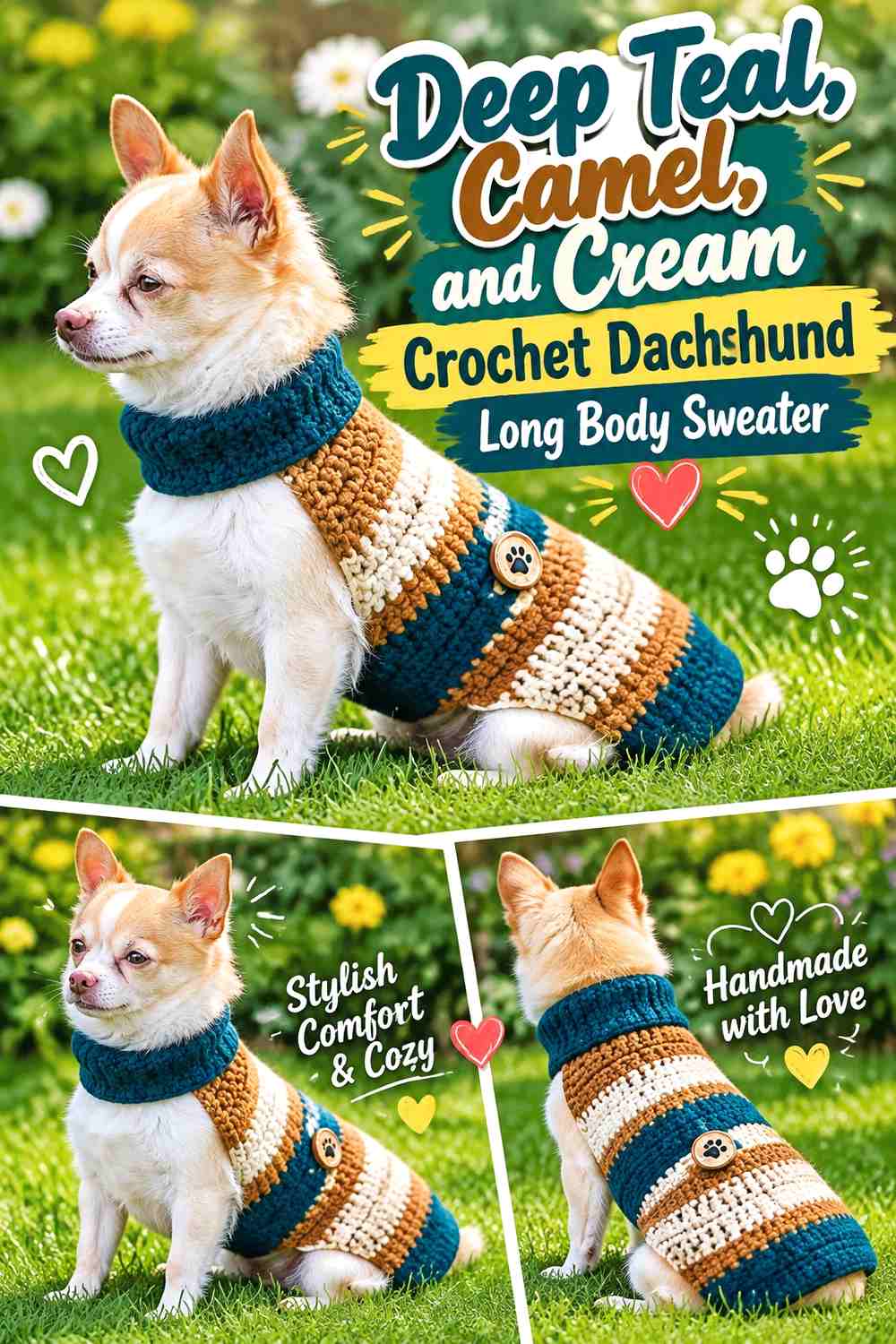
Deep teal supplies a rich cool base, camel introduces warmth, and cream can clarify the smallest trim details. The contrast works best when teal occupies most of the sweater instead of sharing the back equally with camel.
Deep Teal Should Dominate the Long Crochet Dachshund Back
Carry teal from the shoulders along the back to maintain a clean continuous line. This gives the long garment a stable color foundation and leaves the shorter chest area available for contrast.
If your teal is particularly dark, assess stitch visibility before deciding whether edging should also remain teal.
Camel Can Warm the Deep Teal Collar and Front Chest
Camel makes a useful collar or chest color because it creates a clear warm-cool contrast with teal. Keeping most camel toward the front can visually anchor the neck and shoulder region.
Repeat only a small amount farther back if you need to connect the palette.
Cream Should Clarify Deep Teal and Camel Rather Than Compete With Them
Cream can outline a collar edge, leg opening, or lower finish where more value contrast is needed.
If teal and camel are already easy to distinguish, cream does not need to appear in every section. Treat it as a functional highlight.
Creator Credit: Last Minute Laura
9. Plum, Dusty Rose, and Taupe Crochet Dachshund Long Body Sweater

Plum creates a darker purple winter base, dusty rose lightens the palette without introducing a stark neutral, and taupe keeps the combination grounded. This is a softer contrast scheme than black-and-cream or navy-and-oatmeal.
Plum Gives the Crochet Dachshund Back Its Deepest Visual Weight
Let plum cover the long back and most side areas so the strongest shade clearly leads. On such an elongated sweater, this avoids a patchwork effect.
If plum hides too much crochet texture, move the lighter colors closer to textured borders rather than interrupting the entire back.
Dusty Rose Can Lighten the Plum Collar and Leg Openings
Dusty rose is useful around the front because it remains visibly lighter than plum without creating extreme contrast.
Using rose on both the collar and a small piece of lower trim can make the color feel deliberately repeated.
Taupe Can Neutralize Plum and Dusty Rose Around the Chest
A taupe chest section or narrow edge can keep the pink-purple relationship from covering every visible area.
Choose taupe according to value rather than name. It should remain different enough from dusty rose and plum to have a clear role.
Creator Credit: SheiLa Teré
10. Black, Tan, and Cream Crochet Dachshund Long Body Sweater
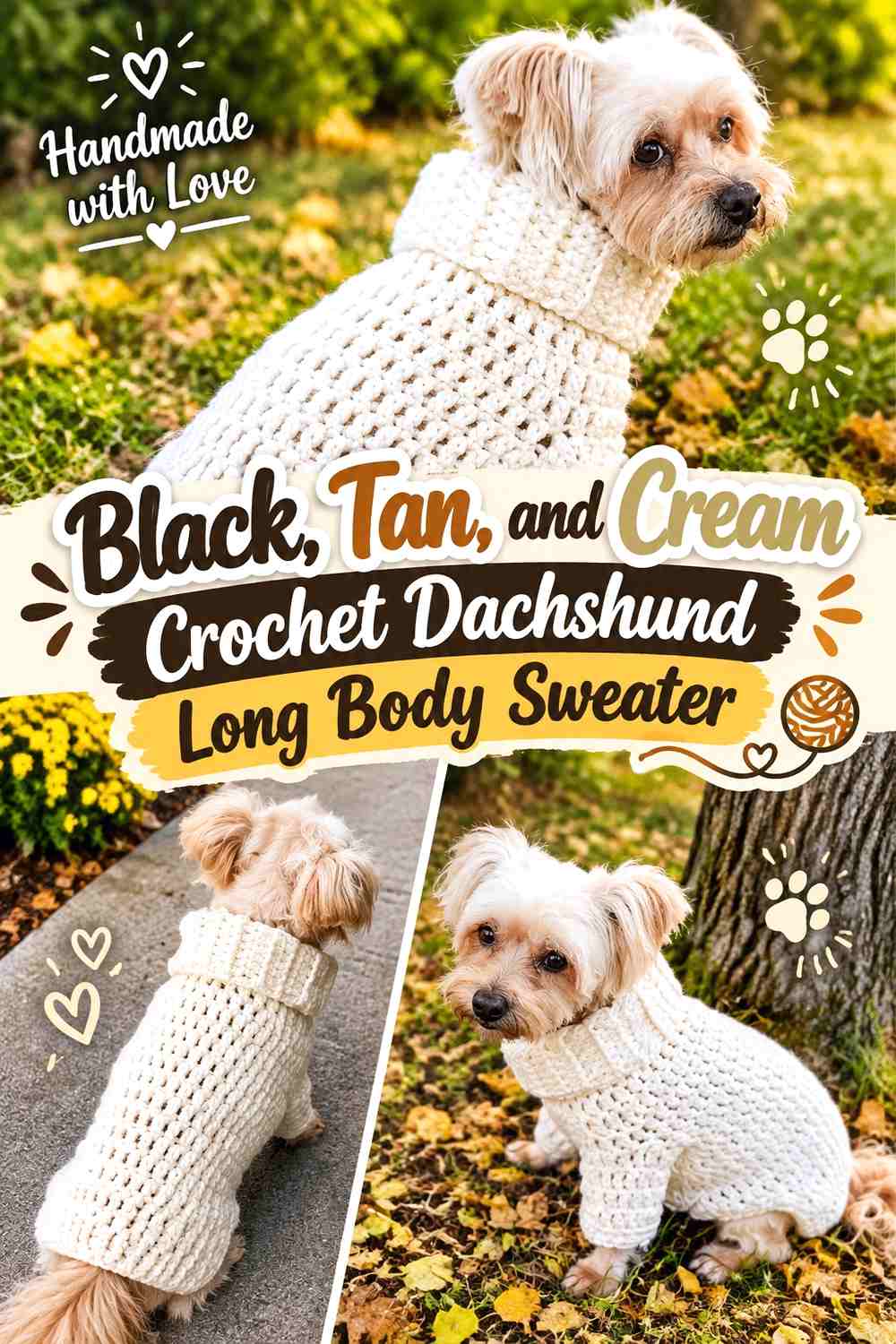
Black gives this sweater the strongest possible dark foundation, so the supporting colors need thoughtful placement. Tan can carry more secondary area than cream, while cream should be kept for the clearest highlights.
Black Creates a Clean Long Crochet Dachshund Silhouette
Use black over most of the back and sides. The continuous dark body keeps the elongated construction looking unified instead of overly sectioned.
Because black can hide stitch definition, a textured collar or border may benefit from switching to tan.
Tan Can Define the Black Dachshund Collar Without Harsh Contrast
Tan works on the neckline, chest, or front-leg edging where it separates clearly from black while maintaining a warm neutral look.
Repeating tan in a second smaller area helps integrate it with the long black body.
Cream Needs Only a Small Area Against Black and Tan
Cream is visually powerful next to black, so a thin edge or small accent is usually enough.
If cream covers the collar, chest, leg openings, and lower border simultaneously, it can become a second dominant color. Reduce it where a quieter winter palette is preferred.
Creator Credit: Vibes with Dani
11. Moss Green, Rust, and Oatmeal Crochet Dachshund Long Body Sweater
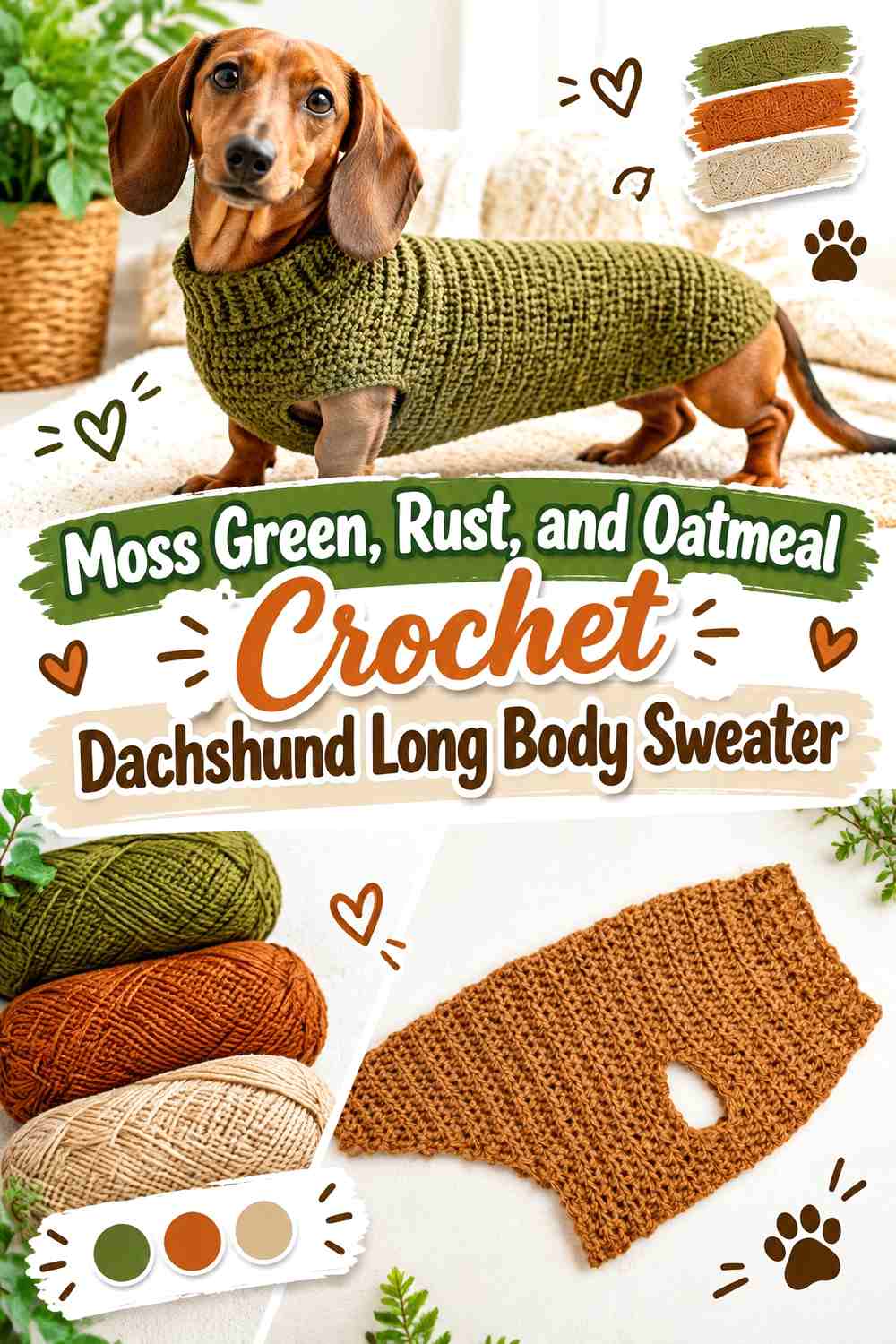
Moss and rust create an earthy winter combination with lower saturation than bright green and orange. Oatmeal can provide the light separation needed around smaller structural parts.
Moss Green Can Cover the Long Crochet Dachshund Body Without Looking Flat
Use moss across the extended back and sides, especially when the crochet fabric contains enough texture to keep a solid color interesting.
Because moss is muted, it can support a larger rust accent without the two colors feeling equally intense.
Rust Can Focus Attention Near the Moss Green Dachshund Collar
Place rust toward the neck, shoulder, or chest area. This draws visual attention forward and keeps the long back from becoming the only strong design feature.
You can repeat rust at the rear edge, but keep that repeat narrower than the front section.
Oatmeal Gives Moss Green and Rust Crochet Details a Lighter Boundary
If the moss and rust are close in value, oatmeal can separate them around a collar edge or another junction.
When substituting, preserve oatmeal’s role as the lightest color rather than choosing a beige that is almost as dark as moss.
Creator Credit: Loops Only Crochet
12. Cocoa Brown, Sage Green, and Ivory Crochet Dachshund Long Body Sweater
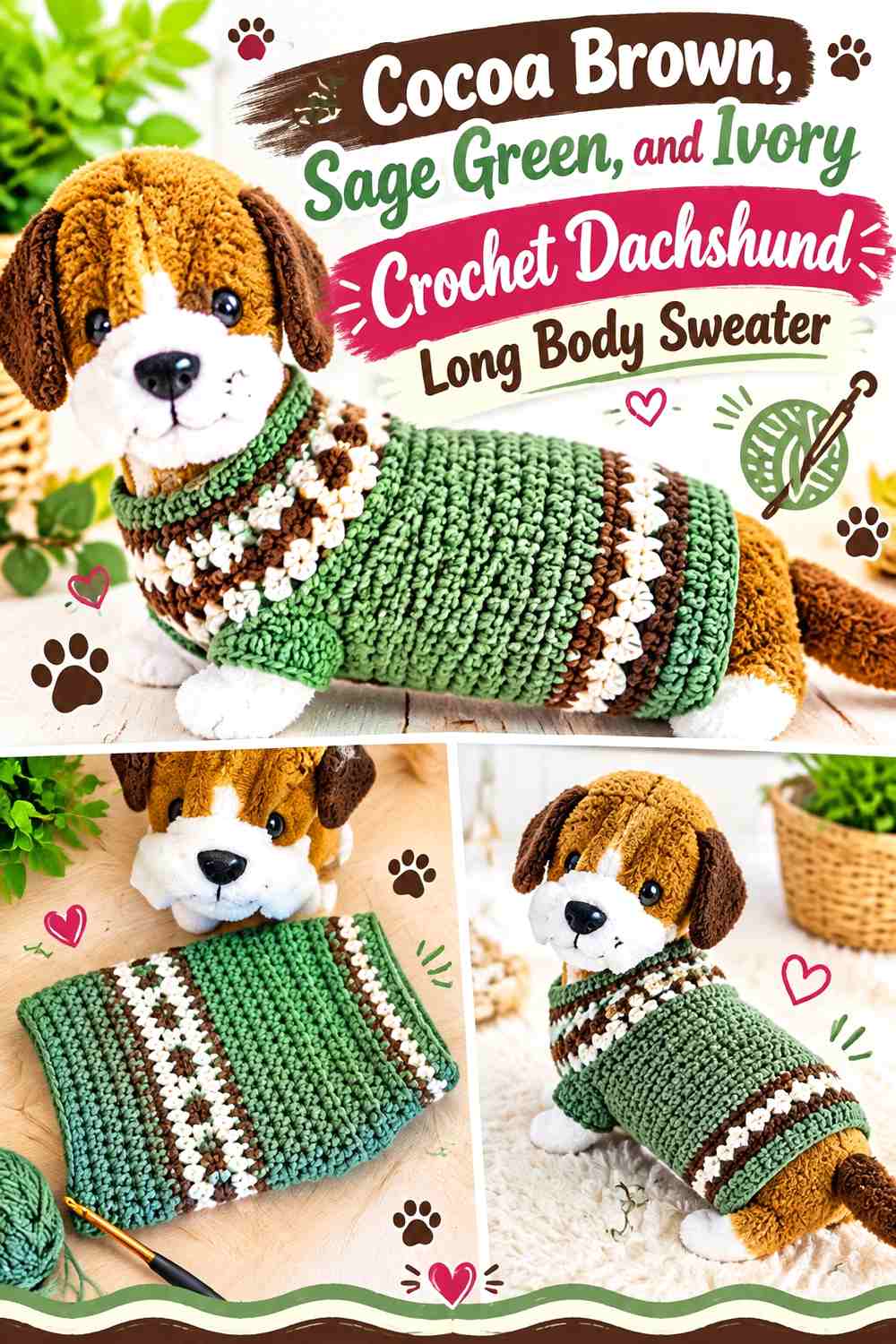
Cocoa creates a traditional earthy base, but sage changes the sweater’s character more than simply adding another brown. Ivory supplies the lightest point and is most useful in small sections where definition matters.
Cocoa Brown Can Anchor the Long Crochet Dachshund Back
Use cocoa across the majority of the back so the longest part of the garment has one reliable visual anchor.
A mostly cocoa body also gives you room to introduce sage around the front without turning the entire sweater into alternating green-and-brown blocks.
Sage Green Can Freshen the Cocoa Brown Collar and Chest
Sage works particularly well as a collar, chest, or front-leg accent because its muted quality sits comfortably beside brown.
Keep sage repeated enough to look intentional but allow cocoa to remain the dominant color from above.
Ivory Can Keep Cocoa Brown and Sage Green Crochet Edges Visible
Use ivory where the darker or muted colors meet small structural details. A narrow ivory border around the collar or selected edge can improve separation.
If ivory appears too sharp, choose another pale warm neutral rather than reducing the contrast until the details disappear.
Creator Credit: LittleGemsCreations – Fibre Artist
13. Midnight Blue, Burgundy, and Soft Gray Crochet Dachshund Long Body Sweater
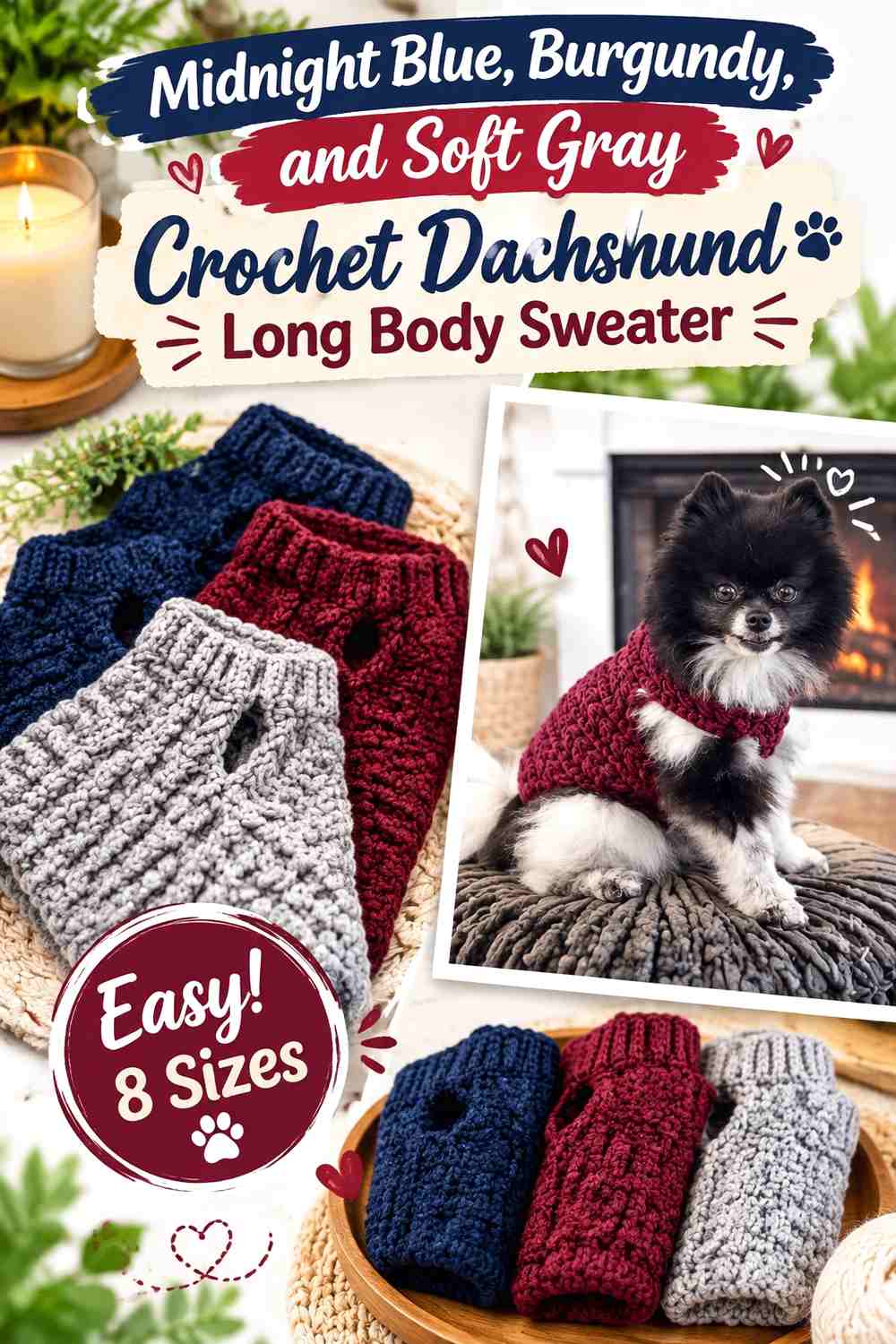
Midnight blue and burgundy create the deepest two-color combination in this collection, while soft gray prevents the sweater from becoming one uninterrupted dark mass. The key is giving midnight blue the main role and letting burgundy occupy controlled secondary areas.
Midnight Blue Should Define the Long Crochet Dachshund Back
Keep the extended back panel predominantly midnight blue. This provides continuity and lets the dark winter color act as the garment’s strongest anchor.
If both midnight and burgundy are used in large back sections, their similar visual weight can make the color division harder to read.
Burgundy Can Add Depth to a Midnight Blue Dachshund Collar
A burgundy collar or chest detail provides hue contrast without creating a bright interruption. Repeat burgundy in one smaller area if the front accent otherwise feels isolated.
Compare the two dark yarns under normal lighting before starting; they need enough difference to remain visibly distinct.
Soft Gray Should Separate Midnight Blue and Burgundy Details
Soft gray can outline a collar, front-leg opening, or lower finish where the two deep colors need a lighter boundary.
Do not make gray equal in area to midnight blue. Its main purpose here is separation, not competition.
Creator Credit: Briana K
Which Winter Dachshund Sweater Palette Should You Choose?
For a traditional earthy look, chestnut and cream or cocoa and sage keep the long sweater grounded in natural neutrals. Forest green, moss, rust, and oatmeal push that direction toward a stronger woodland or autumn-to-winter palette.
For deeper winter color, navy, midnight blue, charcoal, burgundy, cranberry, and teal give the long back a darker visual foundation. Pairing these shades with camel, oatmeal, gray, blush, or cream makes collars and leg openings easier to distinguish.
If you prefer softer color, plum with dusty rose provides lower contrast without becoming entirely neutral. Whatever palette you choose, decide which shade owns the long back first. Once that role is clear, collar, chest, edging, and leg-opening colors become much easier to place.
Conclusion
A successful crochet dachshund sweater needs both proportion and color hierarchy. The elongated back generally benefits from one dominant shade, while lighter or contrasting colors can be concentrated around the collar, chest, front legs, and finishing edges.
Chestnut, cocoa, forest green, and moss offer understated earthy directions. Navy, teal, charcoal, midnight blue, burgundy, and cranberry create deeper winter looks. Rust, mustard, blush, sage, camel, and oatmeal are useful when you want supporting colors to remain visible without taking over the long body.
Most importantly, adapt the construction to the individual dachshund rather than relying on a generic size label. Use the credited creator’s original tutorial for the actual construction method, then adjust only where the design and your dog’s measurements allow.
Frequently Asked Questions
Why does a crochet sweater need different proportions for a dachshund?
A dachshund’s back is long in relation to its legs and overall height, so a standard small-dog sweater may reach the chest correctly while providing less back coverage than you want. Measure the individual dog and compare those measurements with the tutorial or pattern rather than choosing only by a general small, medium, or breed label.
Which color should cover most of a long crochet dachshund sweater?
The dominant shade usually works well across most of the long back and sides. Keeping that extended area consistent prevents the sweater from looking overly segmented. Supporting colors can then define the collar, chest, leg openings, or edging.
Do horizontal stripes work on a crochet dachshund sweater?
They can, but consider how much contrast and repetition you want across an already elongated body. Several strong alternating stripes create a much busier effect than a solid back with a contrasting collar or border. If you want stripes, establish one dominant color so every shade does not compete equally.
How can I check whether winter yarn colors have enough contrast?
Place the yarns beside each other and view them both close up and from several feet away. A grayscale photo is another useful check because it reveals differences in light and dark value. If two colors merge, substitute a noticeably lighter or darker shade rather than simply choosing another hue of similar value.
Where should the lightest color go on a dachshund sweater?
The lightest shade is especially useful around small structural areas such as a collar edge, chest detail, front-leg opening, or narrow lower border. These locations often benefit more from contrast than the large back panel does.
Should a dachshund crochet sweater cover the entire belly?
Do not determine underside length from appearance alone. The sweater needs appropriate clearance for the individual dog, including normal movement and toileting. Male dogs often require a shorter underside. Follow the construction guidance in the selected pattern or tutorial and test the fit on the dog before completing edging.
Can I adapt a regular crochet dog sweater tutorial for a dachshund?
Potentially, particularly when the construction allows the body length to be customized. The important point is not simply adding length everywhere. Check neck fit, chest circumference, front-leg placement, belly coverage, and back length separately so extending the back does not create an incorrectly proportioned underside or leg section.